

Submitted:
23 March 2025
Posted:
26 March 2025
You are already at the latest version
Abstract
Water bacteria research is very important for environmental sustainability and public health. Some bacteria, such as Shewanella oneidensis, aid in heavy metal removal, while others, like Escherichia coli, pose health risks by contaminating drinking water. This study employs bibliographic analysis using VOSviewer to examine recent advancements in water bacteria research. By analyzing citation networks and research trends, we identify key bacterial species and their applications, including wastewater treatment, bioremediation, and bio-based materials. Additionally, we explore the utilization of big data and machine learning in this field. Traditional methods rely on isolated studies, but AI-driven models trained on extensive datasets can optimize microbial water treatment strategies, predict contamination risks, and enhance decision-making. The findings highlight the potential of interdisciplinary approaches in water bacteria research, paving the way for more effective and sustainable water management solutions. This study provides insights into both current progress and future directions in the field.
Keywords:
Water Bacteria
; Bibliography
; VOSviewer
; Big Data
; Machine Learning
1. Introduction
Water bacteria research is a critical field with significant environmental, industrial, and public health implications [1,2]. Some bacteria found in water play beneficial roles, such as Shewanella oneidensis, which is known for its ability to remove heavy metal contaminants from aquatic environments through extracellular electron transfer [3]. This bioremediation potential makes it a valuable tool for cleaning polluted water sources [4,5]. On the other hand, certain bacteria pose severe risks to human health, such as Escherichia coli [6,7]. High concentrations of Escherichia coli in drinking water can lead to serious gastrointestinal illnesses, making effective monitoring and treatment strategies essential for ensuring water safety [8,9]. Given these diverse roles, understanding and managing water bacteria is crucial for both environmental sustainability and public health protection [10,11].
In this study, we employ bibliographic analysis to examine recent advances in water bacteria research. Using VOSviewer [12,13], a widely used software for mapping and visualizing scientific literature, we systematically analyze the key trends, influential research institutions, and major contributors in this field. Bibliographic analysis enables us to identify the most impactful studies and highlight emerging areas of research. By evaluating citation networks and co-occurrence patterns, we provide a comprehensive overview of the current state of water bacteria research, shedding light on the most promising bacterial species and their applications. This structured approach offers valuable insights into the progress made in harnessing beneficial bacteria [14,15] while addressing challenges posed by harmful ones [16,17].
Finally, this study introduces an emerging direction for water bacteria research: the utilization of big data and machine learning. Traditional research methods often rely on case-specific studies, limiting the ability to generalize findings across diverse environmental conditions. However, by leveraging big data [18,19], researchers can compile vast datasets on water pollution, bacterial activity, and treatment outcomes, allowing for more robust and predictive models. Machine learning algorithms [20,21], particularly neural networks, can be trained on these datasets to optimize water treatment strategies, predict bacterial behavior, and improve contamination response efforts. By exploring the potential of AI-driven solutions, this study highlights the transformative role of data science in advancing water bacteria research and its applications.
2. Materials and Methods
The bibliographic analysis follows the previous studies with slightly modifications [22,23]. To explore the research landscape of water bacteria, we conducted a comprehensive bibliographic analysis using data from the Web of Science Core Collection [24,25]. Our search, performed on March 23, 2025, using the term “Water Bacteria,” yielded a total of 157,032 documents. Given the vast dataset, we extracted a manageable subset by exporting the default 1,000 documents for analysis. These documents provided a representative sample of high-impact research contributions in this field. By leveraging bibliometric techniques, we aimed to uncover key research trends, influential institutions, and geographical distribution of studies on water bacteria. The selected dataset was analyzed through VOSviewer version 1.6.20 [26], a widely used tool for bibliometric mapping and network visualization. This approach allowed us to systematically identify research hotspots, collaboration networks, and thematic patterns, providing valuable insights into the evolution of water bacteria research and its industrial and environmental significance.
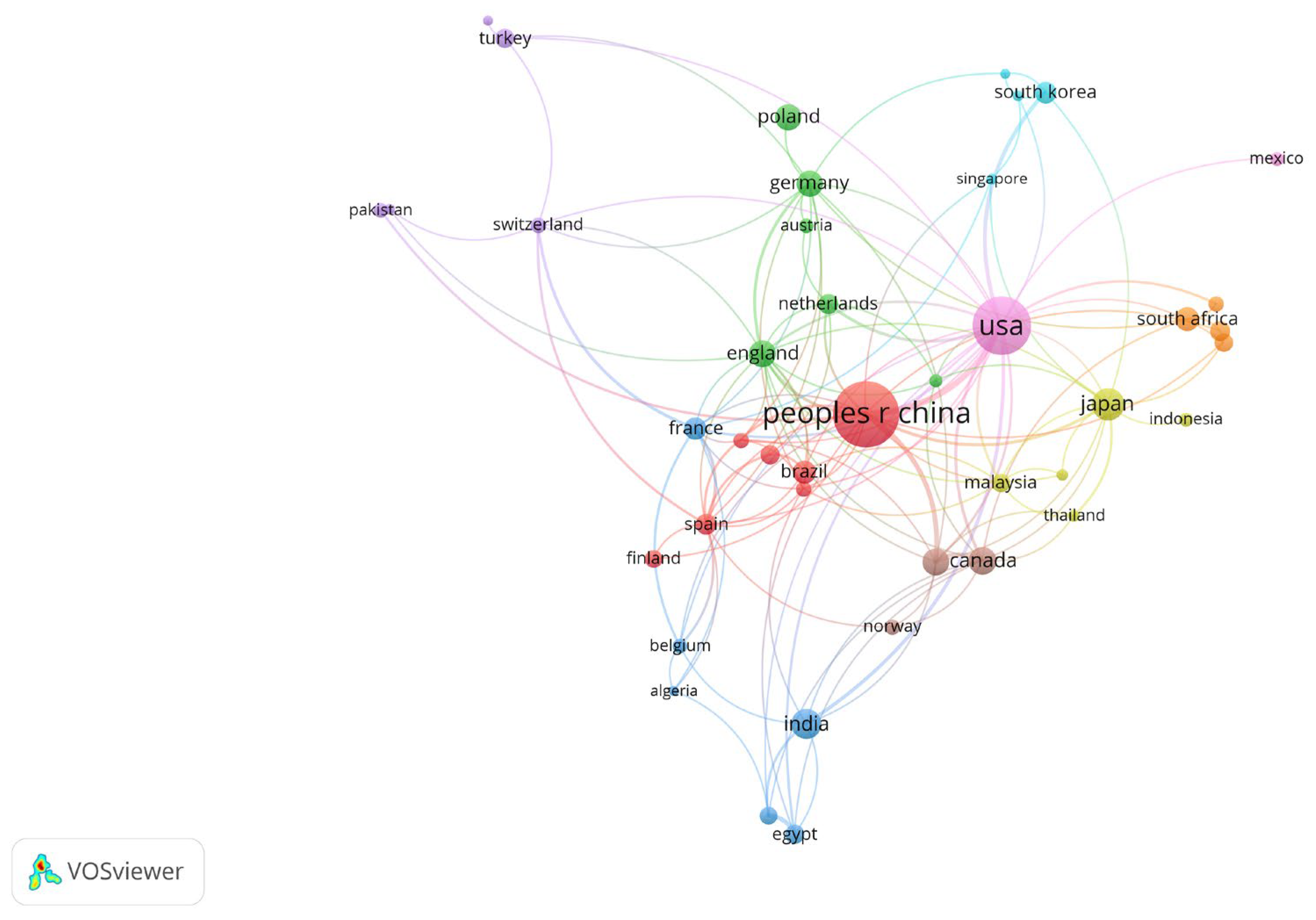
To ensure meaningful and interpretable results, we applied specific selection criteria across different analytical dimensions. For the keyword co-occurrence analysis, we set a minimum threshold of five occurrences per keyword, ensuring that only frequently studied topics were included in the analysis. This enabled us to highlight dominant themes and emerging research areas. Similarly, in the organizational analysis, we set a minimum document threshold of five publications per institution, allowing us to identify the leading research organizations actively contributing to this field. This helped pinpoint key academic and research institutions driving scientific advancements in water bacteria studies. Furthermore, in the country/region-level analysis, we applied the same threshold of five publications, which facilitated the identification of nations with significant contributions to water bacteria research. This geographic mapping provided a clear picture of the global research landscape, revealing the countries at the forefront of studies on water bacteria and their role in addressing water quality, pollution, and public health concerns. Through these bibliometric analyses, our study sheds light on the intellectual structure of water bacteria research and its broader implications in environmental and microbial sciences.
3. Results
Figure 1 illustrates the most significant keywords in the field of water bacteria research, offering valuable insights into the major themes and research focuses within this discipline. One of the primary observations from the keyword analysis is the strong association between bacteria and different water media and environmental contexts. Keywords such as "drinking-water," "fresh-water," "coastal water," "potable water," and "tap water" frequently appear, indicating a substantial research interest in how bacteria interact with various water sources. These keywords highlight concerns related to water quality, contamination, and public health, emphasizing the need for effective monitoring and management strategies to ensure safe water supplies.
Another notable category of keywords pertains to experimental techniques and research methodologies commonly used in water bacteria studies. Terms like "16S rRNA," "PCR," "assay," "optimization," and "purification" indicate the extensive application of molecular biology techniques in bacterial identification, genetic analysis, and environmental monitoring. The frequent occurrence of these methodological keywords underscores the growing reliance on advanced molecular and biochemical approaches to study bacterial communities, detect pathogens, and assess microbial diversity in water systems. These techniques are crucial in understanding the dynamics of bacterial populations and their role in waterborne diseases and ecosystem functions.
Additionally, the keyword analysis reveals a significant focus on chemical factors, water pollution, and contamination-related issues. Keywords such as "nitrite," "toxicity," "pollution," and "heavy-metals" highlight the concerns surrounding the presence of harmful substances in water and their effects on bacterial communities and human health. The co-occurrence of these terms suggests that researchers are actively investigating the interactions between waterborne bacteria and chemical pollutants, aiming to identify potential risks and develop strategies for water treatment and pollution mitigation. This emphasis reflects the broader environmental and public health implications of water bacteria research, particularly in the context of increasing industrialization and anthropogenic pollution.
In addition to environmental and chemical factors, many keywords relate specifically to different bacterial groups and classifications. Terms such as "marine bacteria," "sulfur bacteria," "sulfate-reducing bacteria," "fecal bacteria," and "gram-negative bacteria" indicate the diverse range of bacterial species studied within water microbiology. These keywords suggest an interest in both beneficial and harmful bacteria, including those involved in biogeochemical cycles, wastewater treatment, and disease transmission. Understanding the ecological roles of these bacterial groups helps researchers assess water quality, manage microbial populations, and develop strategies for preventing bacterial contamination in natural and engineered water systems.
Finally, several keywords are directly associated with specific bacterial species, reinforcing the importance of pathogen identification in water microbiology research. Significant cases are "Escherichia coli," "Pseudomonas aeruginosa," and "Enterococci," which are well-known indicators of water contamination and human health risks. The prevalence of these species-specific keywords highlights the ongoing focus on microbial water quality assessments, disease prevention, and regulatory standards for water safety. By analyzing the distribution and presence of these bacterial species in various water sources, researchers can develop more effective public health interventions, improve water treatment technologies, and mitigate the risks associated with bacterial contamination in drinking and recreational waters.
Figure 2 presents the results of the organizational analysis in the field of water bacteria research, highlighting the most influential institutions contributing to this area. At the center of the analysis, the Chinese Academy of Sciences (Chinese Acad Sci) and its affiliated University of Chinese Academy of Sciences (Univ Chinese Acad Sci) appear as the leading research institutions in this domain. Their central positioning suggests a significant volume of research output and strong collaboration networks within the global scientific community. The prominence of these institutions reflects China's growing investment in environmental microbiology and water quality studies, particularly in addressing pollution, contamination, and microbial ecology in various water systems.
Beyond the central institutions, several other key research organizations play a crucial role in advancing water bacteria studies. Notable contributors include Technical University of Denmark (Tech Univ Denmark) and Delft University of Technology (Delft Univ Technol), both of which are recognized for their expertise in environmental engineering and microbial water quality research. Additionally, leading Chinese universities such as Tsinghua University (Tsinghua Univ) and Xiamen University (Xiamen Univ) have established themselves as important centers for studying waterborne bacteria, reflecting China's strong academic contributions to this field. These institutions often collaborate on projects related to wastewater treatment, microbial risk assessment, and innovative water purification technologies.
Apart from academic institutions, government and national research organizations are also prominent in water bacteria research. The Russian Academy of Sciences (Russian Acad Sci) and National Research Center (Natl Res Ctr) are key players in microbiological and environmental studies. In the United States, the Environmental Protection Agency (US EPA) and the Agricultural Research Service of the U.S. Department of Agriculture (USDA ARS) contribute significantly to research on waterborne pathogens, pollution monitoring, and public health interventions. These governmental organizations focus on developing policies and regulatory frameworks to ensure safe drinking water and minimize microbial contamination. The presence of such a diverse range of institutions in the analysis underscores the interdisciplinary and global nature of water bacteria research, involving experts from microbiology, environmental science, engineering, and public health.
Figure 3 presents the most influential countries and regions in water bacteria research, highlighting the global distribution of contributions in this field. At the center of the analysis, China, the United States, and the United Kingdom emerge as the most prominent contributors. These countries have established themselves as global leaders in water microbiology research, producing a high volume of studies on topics such as bacterial contamination in drinking water, wastewater treatment technologies, and microbial ecology. Their strong research output reflects the significant investments made by governments, universities, and research institutions to address waterborne diseases and environmental pollution. The presence of these nations at the core of the analysis underscores their leading roles in shaping the scientific discourse around water bacteria and public health.
Beyond the central contributors, several other countries and regions have also played important roles in advancing water bacteria research. Turkey, Poland, South Korea, Mexico, Singapore, Germany, Austria, Switzerland, Pakistan, the Netherlands, South Africa, Japan, and Indonesia are among the key players in this field. These nations contribute valuable research on various aspects of water microbiology, such as identifying novel bacterial strains, studying antibiotic resistance in aquatic environments, and developing innovative purification techniques. Many of these countries have diverse water ecosystems and varying levels of industrialization, which provide unique research opportunities for studying microbial dynamics in different water sources. Their active participation in this research area reflects the global recognition of water bacteria as a critical issue for both environmental sustainability and human health.
Additionally, a broad range of other countries, including France, Brazil, Malaysia, Thailand, Canada, Spain, Finland, Norway, Belgium, Algeria, India, and Egypt, have made notable contributions to water bacteria research. Their involvement highlights the worldwide effort to understand and mitigate microbial contamination in water systems. Many of these countries face challenges related to water pollution, climate change, and population growth, which drive the need for robust scientific investigations and technological advancements. The presence of both developed and developing nations in the analysis demonstrates the universal importance of water bacteria research, as countries across different economic and environmental contexts work toward improving water quality and public health.
4. Discussion
4.1. Advances in Water Bacteria Applications
Water bacteria play a crucial role in various environmental and industrial applications, with some species exhibiting remarkable abilities to remove pollutants, generate energy, or even contribute to structural materials. Shewanella oneidensis is a particularly well-studied bacterium due to its capability to remove heavy metals from contaminated water sources [27,28]. This bacterium reduces metal ions through extracellular electron transfer, making it an effective candidate for bioremediation strategies aimed at purifying water supplies. Additionally, recent studies suggest that Shewanella oneidensis can be utilized in the production of microbial fuel cells (MFCs), which harness bacterial metabolism to generate electricity [29,30]. This innovative approach presents a sustainable energy solution by converting organic matter in wastewater into usable power [31,32]. Furthermore, researchers have explored its potential in extracellular nanoparticle production, wherein the bacterium facilitates the synthesis of nanoparticles with applications in medicine, catalysis, and environmental cleanup [33,34].
Another notable bacterium with significant industrial applications is Bacillus halodurans, which has gained attention for its ability to enhance the mechanical properties of cement and concrete. In humid environments, Bacillus halodurans can actively alter the structural integrity of cementitious materials, leading to improved durability and resilience [35,36]. More importantly, this bacterium is involved in the self-healing of concrete cracks, a groundbreaking technology aimed at extending the lifespan of buildings and infrastructure. When moisture enters a crack in the concrete, dormant Bacillus halodurans spores become active, triggering a biochemical process that precipitates calcium carbonate, effectively sealing the crack [37]. This bio-based self-repair mechanism reduces maintenance costs, enhances structural stability, and promotes sustainable construction practices.
In contrast to these beneficial applications, some bacteria pose significant health risks. Pseudomonas aeruginosa, for instance, is a well-known opportunistic pathogen capable of forming biofilms in various environments, including medical devices and water systems [17,38]. Biofilms provide a protective layer for bacterial communities, making them highly resistant to antibiotics and disinfectants. One of the most concerning implications of Pseudomonas aeruginosa is its role in lung infections [39,40], particularly in immunocompromised individuals, such as cystic fibrosis patients. Due to its strong resistance mechanisms, extensive research is being conducted to develop anti-biofilm technologies, including novel antimicrobial coatings, enzymatic treatments, and targeted drug delivery systems. Controlling Pseudomonas aeruginosa biofilms is essential for preventing persistent infections and improving water safety.
Another widely studied bacterium in water microbiology is Escherichia coli, which is often associated with human diarrheal diseases caused by contaminated drinking water or food [41,42]. Pathogenic strains of Escherichia coli, such as enterohemorrhagic Escherichia coli, can cause severe gastrointestinal illnesses, posing significant public health risks [43,44]. Given the widespread occurrence of Escherichia coli in water sources, researchers have explored various disinfection techniques to mitigate its presence [45,46]. One promising approach involves incorporating titanium dioxide (TiO₂) nanoparticles into concrete surfaces [47,48]. When exposed to ultraviolet (UV) light, TiO₂ nanoparticles generate reactive oxygen species (ROS), which effectively kill Escherichia coli bacteria upon contact [49,50]. This photocatalytic disinfection method offers a sustainable and passive solution for preventing bacterial contamination in water distribution systems and public infrastructure.
Overall, the study of water bacteria encompasses both beneficial and harmful species, each with unique implications for environmental and industrial applications [51,52]. While some bacteria contribute to pollutant removal, energy generation, and self-healing materials, others pose health hazards and require advanced mitigation strategies. The integration of biotechnology, nanotechnology, and bioengineering continues to drive innovative solutions for harnessing the positive attributes of bacteria while mitigating their risks. As research progresses, interdisciplinary collaborations will be essential for unlocking new applications and developing safer, more sustainable technologies for water quality management and infrastructure development.
4.2. Transforming Water Bacteria Research with Big Data and Machine Learning
The future of water bacteria research hinges on the integration of big data and machine learning, which have the potential to transform how microbial solutions are analyzed and applied in water treatment. These technologies have already been successfully implemented in various fields, such as autonomous driving [53,54], facial recognition [55,56], global species distribution modeling [57], educational outcome prediction [58], and virus outbreak forecasting [59]. Given their proven capabilities, we believe that big data holds significant promise in advancing research on water bacteria, enabling more precise and data-driven approaches to water quality management and pollution remediation [60,61].
Traditional research methods rely on isolated experiments and case studies, limiting the ability to generalize findings across diverse environmental conditions. By leveraging big data, researchers can compile vast amounts of information on water pollution, microbial activity, treatment outcomes, and environmental factors, creating a comprehensive database that captures the complexity of water contamination. This wealth of information can serve as the foundation for more sophisticated and data-driven decision-making in microbial-based water purification strategies.
One potential application of this approach is the development of machine learning models capable of predicting optimal water treatment methods based on pollution characteristics. By utilizing neural networks [56,62], these models can be trained on extensive datasets that include variables such as pollutant type, concentration levels, microbial species involved, and remediation success rates. With continuous learning from real-world data, these models can improve their accuracy over time, identifying patterns and relationships that may not be immediately apparent through conventional analysis. This predictive capability would enable researchers and environmental engineers to tailor microbial treatment methods to specific contamination scenarios with greater precision and efficiency.
In the future, advanced machine learning models could surpass even experienced scientists in determining the best strategies for water pollution remediation. These AI-driven systems could assess new pollution cases in real time, recommending the most effective bacteria and their required concentrations for optimal cleanup. By automating and optimizing decision-making processes, such models would not only enhance the effectiveness of microbial-based water treatment but also accelerate response times to contamination events. As the synergy between water bacteria research, big data, and artificial intelligence continues to evolve, this interdisciplinary approach holds immense potential for sustainable water management and environmental protection.
5. Conclusions
Water bacteria research plays a critical role in environmental protection and public health. This study highlights key bacterial species, their applications, and the potential of using big data and machine learning for improved water management. By leveraging bibliographic analysis, we identified significant research trends and advancements in microbial water treatment. Future developments will rely on AI-driven models to optimize bacterial applications and enhance decision-making in pollution remediation. The combination of microbiology, big data, and machine learning offers promising solutions for sustainable water management. Continued interdisciplinary research will be essential for addressing global water challenges effectively and efficiently.
References
- Cabral, J.P.S. Water microbiology. Bacterial pathogens and water. International journal of environmental research and public health 2010, 7, 3657–3703. [Google Scholar] [CrossRef] [PubMed]
- Hammes, F.; Egli, T. Cytometric methods for measuring bacteria in water: advantages, pitfalls and applications. Analytical and bioanalytical chemistry 2010, 397, 1083–1095. [Google Scholar] [CrossRef]
- Ding, Y.; Peng, N.; Du, Y.; Ji, L.; Cao, B. Disruption of putrescine biosynthesis in Shewanella oneidensis enhances biofilm cohesiveness and performance in Cr (VI) immobilization. Applied and environmental microbiology 2014, 80, 1498–1506. [Google Scholar] [CrossRef]
- Yeferni, M.; Saïd, O.B.; Mahmoudi, E.; Essid, N.; Hedfi, A.; Almalki, M.; Pacioglu, O.; Dervishi, A.; Boufahja, F. Effectiveness of Shewanella oneidensis bioaugmentation in the bioremediation of phenanthrene-contaminated sediments and possible consortia with omnivore-carnivore meiobenthic nematodes. Environmental Pollution 2022, 292, 118281. [Google Scholar] [CrossRef] [PubMed]
- Yam, H.M.; Leong, S.K.W.; Qiu, X.; Zaiden, N. Bioremediation of Arsenic-contaminated water through application of bioengineered Shewanella oneidensis. 2021; pp. 559-574.
- Cabrera-Sosa, L.; Ochoa, T.J. Escherichia coli diarrhea. In Hunter's tropical medicine and emerging infectious diseases; Elsevier: 2020; pp. 481-485.
- Aydin, O.; Ulas, N.; Genc, A.; Baysal, S.; Kandemir, O.; Aktas, M.S. Investigation of hemogram, oxidative stress, and some inflammatory marker levels in neonatal calves with escherichia coli and coronavirus diarrhea. Microbial Pathogenesis 2022, 173, 105802. [Google Scholar] [CrossRef] [PubMed]
- Robins-Browne, R.M.; Hartland, E.L. Escherichia coli as a cause of diarrhea. Journal of gastroenterology and hepatology 2002, 17, 467–475. [Google Scholar] [CrossRef]
- Zhou, S.-X.; Wang, L.-P.; Liu, M.-Y.; Zhang, H.-Y.; Lu, Q.-B.; Shi, L.-S.; Ren, X.; Wang, Y.-F.; Lin, S.-H.; Zhang, C.-H. Characteristics of diarrheagenic Escherichia coli among patients with acute diarrhea in China, 2009‒2018. Journal of Infection 2021, 83, 424–432. [Google Scholar] [CrossRef]
- Nnachi, R.C.; Sui, N.; Ke, B.; Luo, Z.; Bhalla, N.; He, D.; Yang, Z. Biosensors for rapid detection of bacterial pathogens in water, food and environment. Environment international 2022, 166, 107357. [Google Scholar] [CrossRef]
- Qu, W.; Zhang, C.; Chen, X.; Ho, S.-H. New concept in swine wastewater treatment: development of a self-sustaining synergetic microalgae-bacteria symbiosis (ABS) system to achieve environmental sustainability. Journal of hazardous materials 2021, 418, 126264. [Google Scholar] [CrossRef]
- Bukar, U.A.; Sayeed, M.S.; Razak, S.F.A.; Yogarayan, S.; Amodu, O.A.; Mahmood, R.A.R. A method for analyzing text using VOSviewer. MethodsX 2023, 11, 102339. [Google Scholar] [CrossRef]
- Kirby, A. Exploratory bibliometrics: using VOSviewer as a preliminary research tool. Publications 2023, 11, 10. [Google Scholar] [CrossRef]
- Zhang, J.; Wu, D.; Zhao, Y.; Liu, D.; Guo, X.; Chen, Y.; Zhang, C.; Sun, X.; Guo, J.; Yuan, D. Engineering Shewanella oneidensis to efficiently harvest electricity power by co-utilizing glucose and lactate in thin stillage of liquor industry. Science of The Total Environment 2023, 855, 158696. [Google Scholar] [CrossRef]
- Zhang, K.; Chen, J.; Zou, L.; Shi, C.; Li, X.; Shi, Y.; Liu, M.; Duan, Y.; Wang, Q.; Ding, C. Electricity-powered cryptic CO2 fixation pathway in heterotrophic Shewanella oneidensis for acetate synthesis. Bioresource Technology 2025, 132324. [Google Scholar] [CrossRef] [PubMed]
- Wood, S.J.; Kuzel, T.M.; Shafikhani, S.H. Pseudomonas aeruginosa: infections, animal modeling, and therapeutics. Cells 2023, 12, 199. [Google Scholar] [CrossRef]
- Tuon, F.F.; Dantas, L.R.; Suss, P.H.; Tasca Ribeiro, V.S. Pathogenesis of the Pseudomonas aeruginosa biofilm: a review. Pathogens 2022, 11, 300. [Google Scholar] [CrossRef] [PubMed]
- Nair, J.P.; Vijaya, M.S. Predictive models for river water quality using machine learning and big data techniques-a Survey. 2021; pp. 1747-1753.
- Kamyab, H.; Khademi, T.; Chelliapan, S.; SaberiKamarposhti, M.; Rezania, S.; Yusuf, M.; Farajnezhad, M.; Abbas, M.; Jeon, B.H.; Ahn, Y. The latest innovative avenues for the utilization of artificial Intelligence and big data analytics in water resource management. Results in Engineering 2023, 20, 101566. [Google Scholar] [CrossRef]
- Wang, C.; Mao, G.; Liao, K.; Ben, W.; Qiao, M.; Bai, Y.; Qu, J. Machine learning approach identifies water sample source based on microbial abundance. Water Research 2021, 199, 117185. [Google Scholar] [CrossRef]
- Kang, J.; Zhang, Z.; Chen, Y.; Zhou, Z.; Zhang, J.; Xu, N.; Zhang, Q.; Lu, T.; Peijnenburg, W.; Qian, H. Machine learning predicts the impact of antibiotic properties on the composition and functioning of bacterial community in aquatic habitats. Science of the Total Environment 2022, 828, 154412. [Google Scholar] [CrossRef]
- Chen, S.; Ding, Y. From bibliography to understanding: water microbiology and human health. Journal of Water and Health 2024, 22, 1911–1921. [Google Scholar] [CrossRef]
- Chen, S.; Ding, Y. Bibliographic Insights into Biofilm Engineering. Acta Microbiologica Hellenica 2024, 69, 3–13. [Google Scholar] [CrossRef]
- Boudry, C. Availability of ORCIDs in publications archived in PubMed, MEDLINE, and Web of Science Core Collection. Scientometrics 2021, 126, 3355–3371. [Google Scholar] [CrossRef]
- Ge, M.; Zhang, Y.; Li, Y.; Feng, C.; Tian, J.; Huang, Y.; Zhao, T. Publication Trends and hot spots in subacromial impingement syndrome research: A bibliometric analysis of the Web of Science Core Collection. Journal of Pain Research 2022, 837–856. [Google Scholar] [CrossRef] [PubMed]
- Saiz-Alvarez, J.M. Innovation Management: A Bibliometric Analysis of 50 Years of Research Using VOSviewer® and Scopus. World 2024, 5, 901–928. [Google Scholar] [CrossRef]
- Ding, Y.; Zhou, Y.; Yao, J.; Szymanski, C.; Fredrickson, J.; Shi, L.; Cao, B.; Zhu, Z.; Yu, X.-Y. In situ molecular imaging of the biofilm and its matrix. Analytical chemistry 2016, 88, 11244–11252. [Google Scholar] [CrossRef] [PubMed]
- Ding, Y.; Zhou, Y.; Yao, J.; Xiong, Y.; Zhu, Z.; Yu, X.-Y. Molecular evidence of a toxic effect on a biofilm and its matrix. Analyst 2019, 144, 2498–2503. [Google Scholar] [CrossRef]
- Zhao, C.e.; Wu, J.; Ding, Y.; Wang, V.B.; Zhang, Y.; Kjelleberg, S.; Loo, J.S.C.; Cao, B.; Zhang, Q. Hybrid conducting biofilm with built-in bacteria for high-performance microbial fuel cells. ChemElectroChem 2015, 2, 654–658. [Google Scholar] [CrossRef]
- Yang, Y.; Ding, Y.; Hu, Y.; Cao, B.; Rice, S.A.; Kjelleberg, S.; Song, H. Enhancing bidirectional electron transfer of Shewanella oneidensis by a synthetic flavin pathway. ACS synthetic biology 2015, 4, 815–823. [Google Scholar] [CrossRef]
- Dai, H.N.; Nguyen, T.-A.D.; Le, L.-P.M.; Van Tran, M.; Lan, T.-H.; Wang, C.-T. Power generation of Shewanella oneidensis MR-1 microbial fuel cells in bamboo fermentation effluent. International Journal of Hydrogen Energy 2021, 46, 16612–16621. [Google Scholar] [CrossRef]
- Yin, Y.; Liu, C.; Zhao, G.; Chen, Y. Versatile mechanisms and enhanced strategies of pollutants removal mediated by Shewanella oneidensis: A review. Journal of Hazardous Materials 2022, 440, 129703. [Google Scholar] [CrossRef]
- Ng, C.K.; Sivakumar, K.; Liu, X.; Madhaiyan, M.; Ji, L.; Yang, L.; Tang, C.; Song, H.; Kjelleberg, S.; Cao, B. Influence of outer membrane c-type cytochromes on particle size and activity of extracellular nanoparticles produced by Shewanella oneidensis. Biotechnology and Bioengineering 2013, 110, 1831–1837. [Google Scholar] [CrossRef]
- Ng, C.K.; Mohanty, A.; Cao, B. Biofilms in Bio-Nanotechnology: Opportunities and Challenges. Bio-Nanoparticles: Biosynthesis and Sustainable Biotechnological Implications, 2015; 83–100. [Google Scholar]
- Zhang, Z.; Ding, Y.; Qian, S. Influence of bacterial incorporation on mechanical properties of engineered cementitious composites (ECC). Construction and Building Materials 2019, 196, 195–203. [Google Scholar] [CrossRef]
- Zhang, Z.; Liu, D.; Ding, Y.; Wang, S. Mechanical performance of strain-hardening cementitious composites (SHCC) with bacterial addition. Journal of Infrastructure Preservation and Resilience 2022, 3, 3. [Google Scholar] [CrossRef]
- Zhang, Z.; Weng, Y.; Ding, Y.; Qian, S. Use of genetically modified bacteria to repair cracks in concrete. Materials 2019, 12, 3912. [Google Scholar] [CrossRef] [PubMed]
- Li, X.; Gu, N.; Huang, T.Y.; Zhong, F.; Peng, G. Pseudomonas aeruginosa: A typical biofilm forming pathogen and an emerging but underestimated pathogen in food processing. Frontiers in Microbiology 2023, 13, 1114199. [Google Scholar] [CrossRef]
- Faure, E.; Kwong, K.; Nguyen, D. Pseudomonas aeruginosa in chronic lung infections: how to adapt within the host? Frontiers in immunology 2018, 9, 2416. [Google Scholar] [CrossRef]
- van Heeckeren, A.M.; Schluchter, M.D. Murine models of chronic Pseudomonas aeruginosa lung infection. Laboratory animals 2002, 36, 291–312. [Google Scholar] [CrossRef]
- Zhao, X.; Zhao, H.; Zhou, Z.; Miao, Y.; Li, R.; Yang, B.; Cao, C.; Xiao, S.; Wang, X.; Liu, H. Characterization of extended-spectrum β-Lactamase-producing Escherichia coli isolates that cause Diarrhea in Sheep in Northwest China. Microbiology Spectrum 2022, 10, e01595–01522. [Google Scholar] [CrossRef]
- Manhique-Coutinho, L.; Chiani, P.; Michelacci, V.; Taviani, E.; Bauhofer, A.F.L.; Chissaque, A.; Cossa-Moiane, I.; Sambo, J.; Chilaúle, J.; Guimarães, E.L. Molecular characterization of diarrheagenic Escherichia coli isolates from children with diarrhea: A cross-sectional study in four provinces of Mozambique: Diarrheagenic Escherichia coli in Mozambique. International Journal of Infectious Diseases 2022, 121, 190–194. [Google Scholar] [CrossRef]
- Pakbin, B.; Brück, W.M.; Rossen, J.W.A. Virulence factors of enteric pathogenic Escherichia coli: A review. International journal of molecular sciences 2021, 22, 9922. [Google Scholar] [CrossRef]
- Zhao, Z.; Xu, S.; Zhang, W.; Wu, D.; Yang, G. Probiotic Escherichia coli NISSLE 1917 for inflammatory bowel disease applications. Food & Function 2022, 13, 5914–5924. [Google Scholar]
- Niveditha, A.; Pandiselvam, R.; Prasath, V.A.; Singh, S.K.; Gul, K.; Kothakota, A. Application of cold plasma and ozone technology for decontamination of Escherichia coli in foods-a review. Food control 2021, 130, 108338. [Google Scholar] [CrossRef]
- Bharti, B.; Li, H.; Ren, Z.; Zhu, R.; Zhu, Z. Recent advances in sterilization and disinfection technology: A review. Chemosphere 2022, 308, 136404. [Google Scholar] [CrossRef] [PubMed]
- Hamdany, A.H.; Ding, Y.; Qian, S. Mechanical and antibacterial behavior of photocatalytic lightweight engineered cementitious composites. Journal of Materials in Civil Engineering 2021, 33, 04021262. [Google Scholar] [CrossRef]
- Hamdany, A.H.; Ding, Y.; Qian, S. Cementitious Composite Materials for Self-Sterilization Surfaces. ACI Materials Journal 2022, 119, 197–210. [Google Scholar] [CrossRef]
- Hamdany, A.H.; Ding, Y.; Qian, S. Visible light antibacterial potential of graphene-TiO2 cementitious composites for self-sterilization surface. Journal of Sustainable Cement-Based Materials 2023, 12, 972–982. [Google Scholar] [CrossRef]
- Hamdany, A.H.; Ding, Y.; Qian, S. Graphene-based TiO2 cement composites to enhance the antibacterial effect of self-disinfecting surfaces. Catalysts 2023, 13, 1313. [Google Scholar] [CrossRef]
- Kotsiri, Z.; Vidic, J.; Vantarakis, A. Applications of biosensors for bacteria and virus detection in food and water–A systematic review. journal of environmental sciences 2022, 111, 367–379. [Google Scholar] [CrossRef]
- Sreedevi, P.R.; Suresh, K.; Jiang, G. Bacterial bioremediation of heavy metals in wastewater: a review of processes and applications. Journal of Water Process Engineering 2022, 48, 102884. [Google Scholar] [CrossRef]
- Bachute, M.R.; Subhedar, J.M. Autonomous driving architectures: insights of machine learning and deep learning algorithms. Machine Learning with Applications 2021, 6, 100164. [Google Scholar] [CrossRef]
- Kiran, B.R.; Sobh, I.; Talpaert, V.; Mannion, P.; Al Sallab, A.A.; Yogamani, S.; Pérez, P. Deep reinforcement learning for autonomous driving: A survey. IEEE transactions on intelligent transportation systems 2021, 23, 4909–4926. [Google Scholar] [CrossRef]
- Khan, A.R. Facial emotion recognition using conventional machine learning and deep learning methods: current achievements, analysis and remaining challenges. Information 2022, 13, 268. [Google Scholar] [CrossRef]
- Tabassum, F.; Islam, M.I.; Khan, R.T.; Amin, M.R. Human face recognition with combination of DWT and machine learning. Journal of King Saud University-Computer and Information Sciences 2022, 34, 546–556. [Google Scholar] [CrossRef]
- Chen, S.; Ding, Y. Machine learning and its applications in studying the geographical distribution of ants. Diversity 2022, 14, 706. [Google Scholar] [CrossRef]
- Chen, S.; Ding, Y. A machine learning approach to predicting academic performance in Pennsylvania’s schools. Social Sciences 2023, 12, 118. [Google Scholar] [CrossRef]
- Chen, S.; Ding, Y. The feasibility of using machine learning to predict COVID-19 cases. International Journal of Medical Informatics 2025, 105786. [Google Scholar] [CrossRef]
- Zhu, M.; Wang, J.; Yang, X.; Zhang, Y.; Zhang, L.; Ren, H.; Wu, B.; Ye, L. A review of the application of machine learning in water quality evaluation. Eco-Environment & Health 2022, 1, 107–116. [Google Scholar]
- Nasir, N.; Kansal, A.; Alshaltone, O.; Barneih, F.; Sameer, M.; Shanableh, A.; Al-Shamma'a, A. Water quality classification using machine learning algorithms. Journal of Water Process Engineering 2022, 48, 102920. [Google Scholar] [CrossRef]
- Radhakrishnan, A.; Beaglehole, D.; Pandit, P.; Belkin, M. Mechanism for feature learning in neural networks and backpropagation-free machine learning models. Science 2024, 383, 1461–1467. [Google Scholar] [CrossRef]
Figure 1.
The keyword analysis in the water bacteria research field.
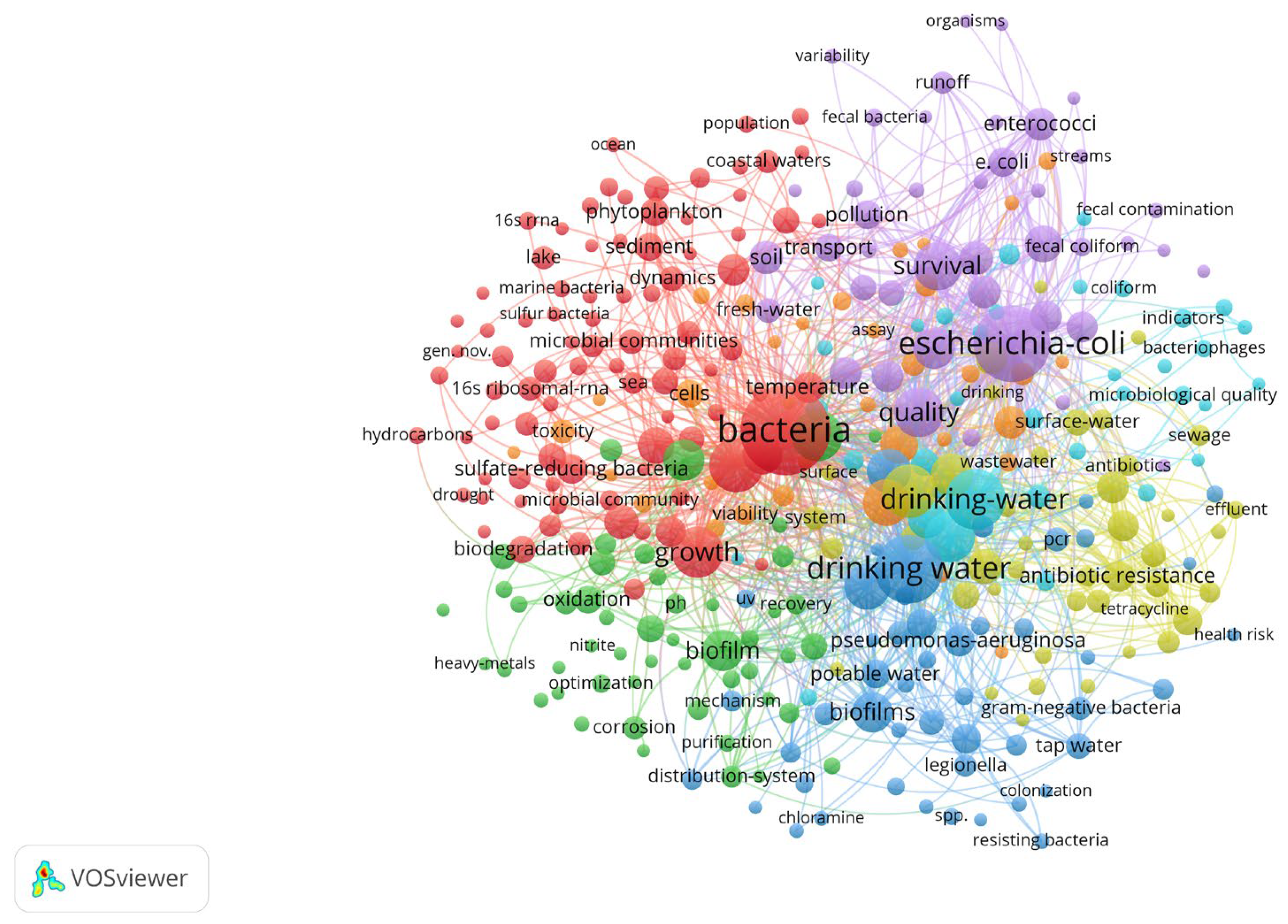
Figure 2.
Organization analysis in the water bacteria research field.
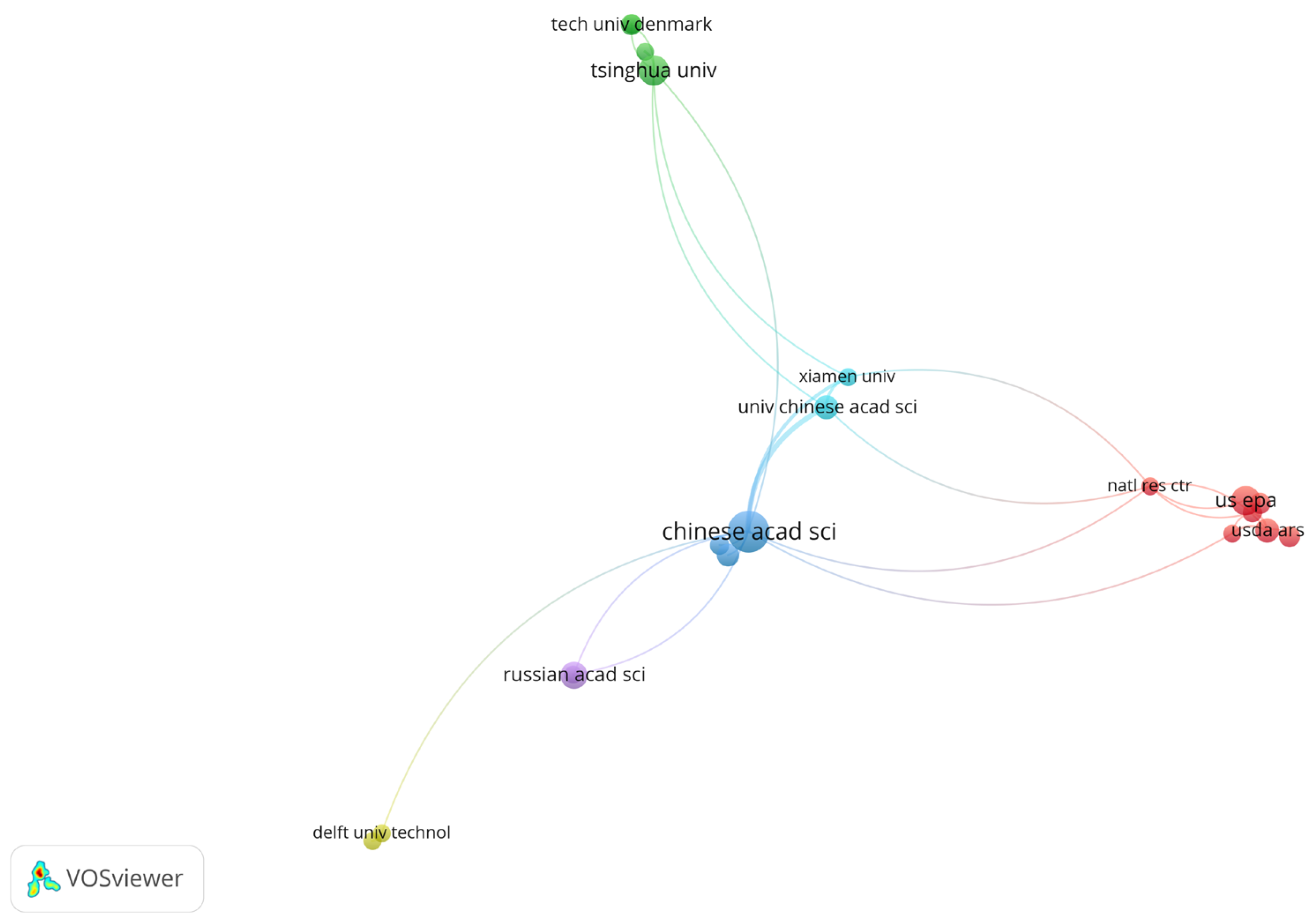
Figure 3.
Country/region analysis in the water bacteria field.
Disclaimer/Publisher’s Note: The statements, opinions and data contained in all publications are solely those of the individual author(s) and contributor(s) and not of MDPI and/or the editor(s). MDPI and/or the editor(s) disclaim responsibility for any injury to people or property resulting from any ideas, methods, instructions or products referred to in the content. |
© 2025 by the authors. Licensee MDPI, Basel, Switzerland. This article is an open access article distributed under the terms and conditions of the Creative Commons Attribution (CC BY) license (http://creativecommons.org/licenses/by/4.0/).
Copyright: This open access article is published under a Creative Commons CC BY 4.0 license, which permit the free download, distribution, and reuse, provided that the author and preprint are cited in any reuse.


