

Submitted:
01 January 2024
Posted:
03 January 2024
You are already at the latest version
Abstract
Biofilm serves as the residence for bacteria, wherein bacteria attach to surfaces and produce extracellular polymeric substances, including proteins, polysaccharides, and extracellular DNA. In recent years, biofilm reactors have gained increasing significance, playing a crucial role, for instance, in immobilizing heavy metals from waterways. This paper employs a bibliographic study to analyze the most important keywords and organizations in the field of biofilm reactors, identifying recent significant papers. Additionally, the paper discusses the opportunities for the future development of biofilm reactors. Through this study, a better understanding of key factors in biofilm reactor research is achieved, providing valuable guidance for future studies and applications in this field.
Keywords:
Biofilm reactors
; Extracellular polymeric substances
; Heavy metal immobilization
; Bibliographic study
; VOSviewer
1. Introduction
Biofilm, a complex matrix of microorganisms encased in extracellular polymeric substances (EPS), stands as an intriguing microcosm within the microbial world [1,2]. It acts as a haven for bacteria, providing them with a specialized residence where attachment to surfaces triggers the production of intricate polymeric substances [3,4]. This unique ecological niche, characterized by the synergy of various components, including proteins, polysaccharides, and extracellular DNA, has garnered increasing attention in recent years [5,6,7].
At the core of biofilm dynamics lies its role as a specialized residence for bacteria [8,9]. This intricate microbial community forms when bacteria adhere to surfaces, initiating a cascade of events that lead to the production of EPS [10]. The resulting biofilm structure encapsulates the bacterial community, creating a matrix of polymeric substances that enhances their survival and adaptability [11].
The components of EPS, including proteins, polysaccharides, and extracellular DNA, contribute to the stability and functionality of the biofilm [12,13]. Proteins play a crucial role in structural integrity and adhesion [14], polysaccharides provide a protective matrix [15], and extracellular DNA acts as a stabilizing factor [16]. This symbiotic relationship within the biofilm microenvironment not only facilitates bacterial survival but also fosters resistance to external stresses [17].
The emergence of biofilm reactors as pivotal tools in various applications further underscores the significance of understanding the dynamics of biofilm formation and function [18,19]. Among the myriad roles biofilm reactors play, their contribution to immobilizing heavy metals, pollutants affecting public health in many countries [20], from waterways has been particularly noteworthy [21]. As the demand for sustainable and efficient water treatment strategies intensifies, the study of biofilm reactors becomes paramount [22].
This paper embarks on a comprehensive exploration of the intricate world of biofilm reactors [23], employing a bibliographic study to unravel the essential components that shape their research landscape [22]. By delving into the most important keywords and organizations in this field, along with the identification of recent significant papers, we aim to provide a holistic understanding of the current state of biofilm reactor research [24]. Furthermore, this introduction sets the stage for a discussion on the future development opportunities within the realm of biofilm reactors [25].
To comprehend the multifaceted nature of biofilm reactors, this paper employs a bibliographic study, a methodological approach that scrutinizes existing literature, keywords, and organizations within the field [26]. By delving into the most crucial keywords associated with biofilm reactors, we aim to uncover the underlying themes and focal points that have shaped research discussions [27].
Simultaneously, the analysis extends to the identification of organizations contributing significantly to biofilm reactor research [28]. Recognizing the collaborative efforts and research hubs in this domain is essential for fostering a comprehensive understanding of the diverse perspectives and approaches within the field [29].
2. Material and methods
The bibliographic method followed previous studies with slightly modifications [30,31]. In the year 2024, a comprehensive data collection initiative was undertaken utilizing the widely recognized bibliographic database, Web of Science, which comprises various subdatabases. This selection was made with the intention of ensuring the reliability and extensive utilization of the collected data. The search profile specifically concentrated on "Biofilm reactor," and a curated set of 1000 articles was chosen. The decision to use Web of Science as the primary database was rooted in its esteemed reputation as a trusted resource widely embraced within the academic community.
To perform bibliographic analysis and generate visual representations, the robust data visualization tool, VOSviewer, was employed [32]. The data files obtained were imported into VOSviewer, allowing for the manipulation and adjustment of parameters tailored to the specific analysis objectives and the diverse data sources available. It is crucial to acknowledge that the creation of maps using web data often necessitates data cleaning processes to ensure accuracy and reliability. Therefore, VOSviewer facilitated the efficient handling of such data cleaning procedures, contributing to the creation of robust and meaningful visualizations.
Unless explicitly specified, the mapping conducted using VOSviewer adhered to the default settings established by previous studies [33,34]. In the keyword study, a minimum keyword occurrence of "15" was chosen. For the country study, a minimum requirement of "5" documents from a particular country was stipulated for inclusion. Similarly, in the organization study, a minimum of "5" documents from an organization were considered eligible for analysis.
3. Results
In our comprehensive bibliographic study, we conducted an in-depth analysis of the most crucial keywords in the field, as depicted in Figure 1. This analysis revealed a diverse array of keywords that play pivotal roles in understanding the intricacies of biofilm reactor research.
One notable category of keywords centers around the chemical processes inherent in biofilm reactors. Keywords such as "mass transfer," "fermentation," "diffusion," "reduction," "digestion," "nitrification," and "denitrification" highlight the emphasis on chemical transformations within biofilm systems. These keywords underscore the significance of processes involved in substance transfer, microbial activity, and nutrient transformations, showcasing the breadth and complexity of biofilm reactor studies.
Another cluster of keywords revolves around the working conditions influencing biofilm reactors. Terms such as "pH," "temperature," and "COD" (Chemical Oxygen Demand) emphasize the environmental factors that significantly impact the performance and efficiency of biofilm reactors. Understanding and optimizing these working conditions are critical for achieving desired outcomes in various applications, ranging from wastewater treatment to bioremediation.
In the realm of study methods, several keywords emerged, shedding light on the diverse approaches employed in biofilm reactor research. Keywords like "simulation," "kinetics," "design," and "modeling" indicate the utilization of advanced tools and methodologies to simulate, analyze, and design biofilm systems. These methods contribute to a deeper comprehension of the underlying mechanisms and aid in the development of efficient and sustainable biofilm reactor technologies.
Furthermore, our keyword analysis identified a distinct set of keywords related to specific microbial species, with "Pseudomonas aeruginosa" standing out prominently. This underscores the focus on studying the behavior, interactions, and applications of particular microbial species within biofilm reactor environments. Understanding the unique characteristics of such species is crucial for tailoring biofilm reactor systems to specific needs, whether in environmental applications or industrial processes.
This comprehensive examination of keywords provides valuable insights into the multidimensional nature of biofilm reactor research. It showcases the diverse facets of chemical processes, working conditions, study methods, and specific microbial species that researchers in the field explore. Recognizing the significance of these keywords contributes to the foundation of knowledge required for advancing biofilm reactor technology, paving the way for innovative applications and sustainable solutions in various domains.
Figure 2 provides a visual representation of the primary countries or regions at the forefront of biofilm reactor research. The United States and China stand out prominently, playing central roles and contributing the highest number of published papers in this field. However, the global landscape of biofilm reactor research extends far beyond these two key players, as evidenced by the substantial contributions from a diverse array of nations.
Countries such as Japan, South Korea, Thailand, New Zealand, Brazil, Saudi Arabia, Poland, India, Turkey, Denmark, Norway, Germany, the Netherlands, Iran, France, Spain, Canada, Argentina, and Mexico are also significant contributors to the body of knowledge in biofilm reactor studies. Their active involvement reflects a global recognition of the importance of investigating biofilm systems across various applications, spanning environmental remediation, industrial processes, and healthcare.
It is noteworthy that the study of biofilm reactors is inherently interdisciplinary and multifaceted, requiring expertise from diverse regions to address the complexity of biofilm systems comprehensively. Biofilm reactor research is not confined to the boundaries of a single country; rather, it thrives on international collaboration, which enhances research efficiency and brings about a more nuanced understanding of the subject matter.
The collaboration among countries in biofilm reactor research is driven by the recognition that pooling global expertise leads to more robust insights and innovative solutions. The complexities associated with biofilm systems, from their formation to their applications, necessitate a collective effort that transcends national borders.
By fostering international collaboration, researchers can tap into a wealth of diverse perspectives, methodologies, and approaches, enriching the global knowledge pool in biofilm reactor research. This collaborative ethos not only accelerates scientific progress but also fosters a sense of shared responsibility in addressing global challenges related to microbial biofilms.
Figure 2 highlights the interconnected and collaborative nature of biofilm reactor research on a global scale. The diverse contributions from various countries underscore the importance of international cooperation in advancing our understanding of biofilm systems and leveraging this knowledge for practical applications. As the biofilm reactor research landscape continues to evolve, the emphasis on collaboration remains a driving force in achieving higher research efficiency and efficacy.
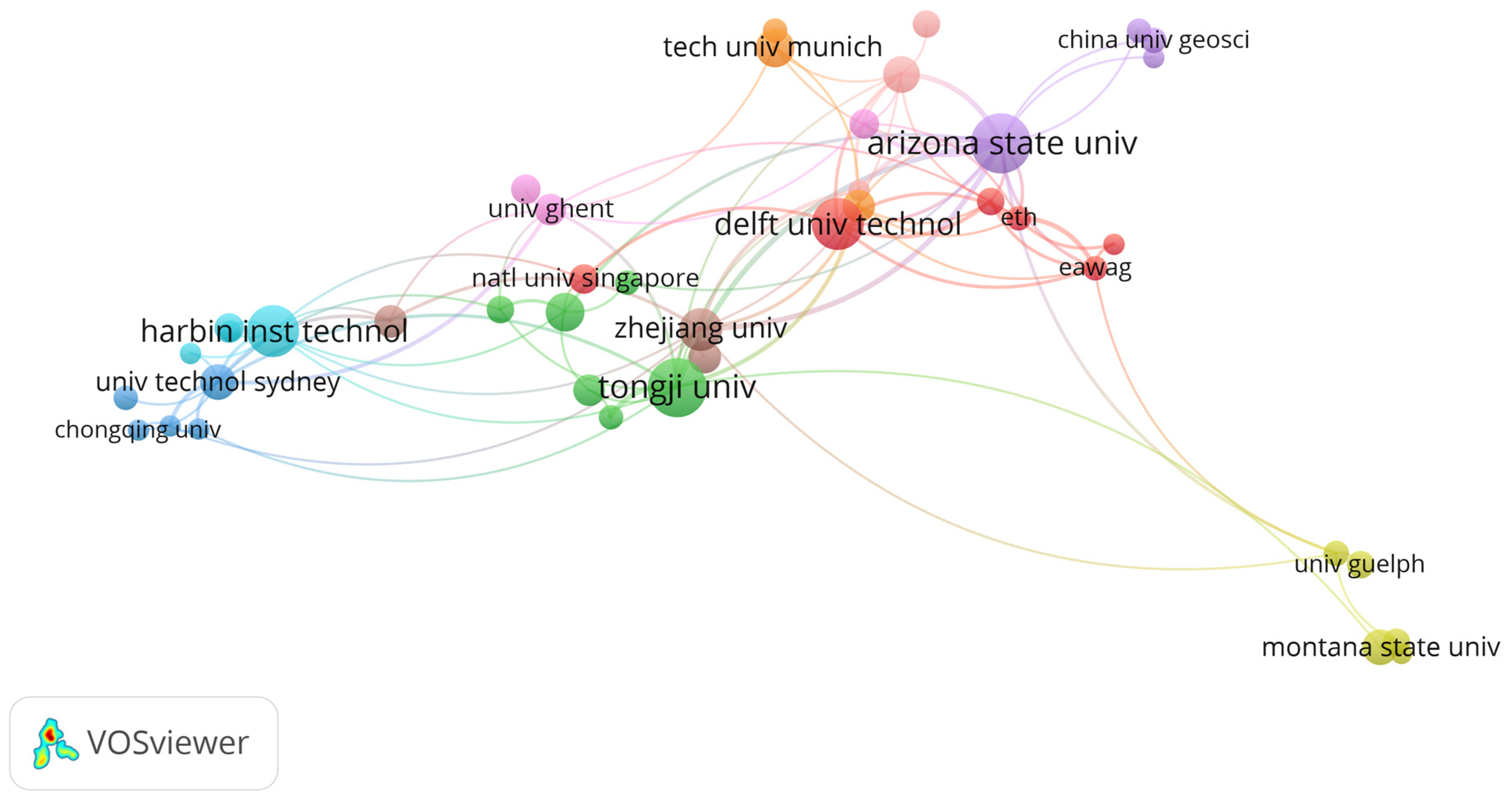
Figure 3 presents a comprehensive overview of the most influential organizations in the field of biofilm reactors. Positioned at the epicenter of research are several leading universities, demonstrating their pivotal roles in advancing knowledge and innovation in this domain. Notable among these are Delft University of Technology, Arizona State University, National University of Singapore, Zhejiang University, and Tongji University.
Beyond these academic giants, other key contributors include Harbin Institute of Technology, Chongqing University, University of Technology Sydney, Ghent University, Technical University of Munich, ETH Zurich, Swiss Federal Institute of Aquatic Science and Technology, University of Guelph, and Montana State University. Each of these organizations has played a crucial role in shaping the landscape of biofilm reactor research, contributing valuable insights and pushing the boundaries of scientific exploration.
A closer examination of organizational collaborations within the biofilm reactor research landscape reveals a dynamic network of cooperation. The strategic positioning of these organizations in Figure 3 reflects not only their individual contributions but also the interconnected nature of collaborative efforts. The collaborative synergy between different organizations serves as a catalyst for research advancements, fostering an environment where collective expertise converges to address complex challenges associated with biofilm reactor studies.
Importantly, the collaborative dynamics extend beyond national boundaries. The cooperation between institutions from both developing and developed countries is evident in the organizational research findings. This cross-border collaboration underscores the global nature of biofilm reactor research, with partnerships between organizations from diverse backgrounds contributing to a more comprehensive understanding of biofilm systems.
In particular, the collaboration between institutions in developed countries and those in developing nations is a noteworthy aspect. This cooperative engagement not only promotes knowledge transfer but also aids in bridging gaps in resources and expertise. The inclusive nature of these collaborations enhances the diversity of perspectives and approaches, ultimately enriching the entire field of biofilm reactor research.
The symbiotic relationship between universities, research institutes, and other organizations highlights the collective effort required to tackle the multifaceted challenges posed by biofilm systems. The collaborative ethos within the organizational landscape mirrors the intricate interplay of microorganisms within biofilm matrices, emphasizing the necessity of teamwork and shared goals.
Figure 3 provides a visual testament to the collaborative spirit that drives biofilm reactor research forward. The diverse array of organizations, spanning universities and research institutes globally, underscores the interdisciplinary nature of this field. As the biofilm reactor research community continues to evolve, these collaborative networks are poised to play an instrumental role in addressing emerging challenges and unlocking new possibilities for sustainable technologies and applications.
4. Discussion
4.1. Versatility in Action: Biofilm Reactors for a Sustainable Future
The comprehensive exploration of diverse bacterial species within the intricate realm of biofilm reactors has not only deepened our understanding but has also marked a monumental leap forward in harnessing the immense potential harbored by these microbial communities. Each bacterial species scrutinized in these investigations unfolds distinctive capabilities and applications, thereby enriching the versatility and broadening the utility spectrum of biofilm technology.
Standing out prominently in the domain of environmental remediation, Shewanella oneidensis, celebrated for its exceptional adaptability, assumes a central role. The notable proficiency of its mutant biofilm in effectively removing heavy metals accentuates the promising applications of this technology in mitigating metal pollution, thereby playing a pivotal role in the sustainable management of contaminated environments [35,36,37].
Further accentuating its versatility, Shewanella oneidensis extends its prowess to the realm of sustainable energy solutions. The application of its biofilm-based microbial fuel cells not only underscores its effectiveness in electricity generation but also demonstrates the adaptability of biofilm reactors beyond the conventional boundaries of wastewater treatment [38,39,40].
In a parallel vein, Comamonas testosterone stands as a testament to the efficiency of its biofilm in the biodegradation of 3-chloroaniline, thereby emphasizing the broader applications of biofilm-based systems in pollutant remediation. This groundbreaking finding opens up potential solutions for a myriad of environmental cleanup scenarios, showcasing the versatility inherent in biofilm technology [41].
The groundbreaking study involving Bacillus halodurans introduces a novel application of biofilm technology in the arena of construction materials. The remarkable ability of its biofilm to mend cracks in cementitious materials not only suggests practical applications in infrastructure maintenance but also positions biofilm technology as an eco-friendly alternative to conventional repair methods [42,43,44].
Escherichia coli contributes significantly to our nuanced understanding of biofilm dynamics. The comparison of oxygen availability's impact on in vitro biofilm formation for Escherichia coli K-12 and clinical strains reveals intricate strain-dependent variations under anaerobic conditions. This complexity underscores the need for tailored approaches based on the specific characteristics of bacterial strains, shedding light on the intricate interplay within biofilm behaviors [45].
The investigation into a push-flow microalgae-bacteria biofilm reactor signifies a groundbreaking leap forward in sustainable wastewater treatment. The enhanced biofilm characteristics and nitrogen metabolisms observed in this innovative system not only contribute to efficient greywater treatment but also showcase the immense potential for reducing energy inputs in wastewater treatment processes [46].
The emergence of particle-based biofilm reactors heralds a transformative era in biofilm technology. These reactors offer compact, high-rate processes with substantial biomass content and specific surface area, thereby revolutionizing various fields, particularly wastewater treatment. The imperative efficiency of these reactors is poised to address the escalating challenges associated with wastewater treatment in a manner that is both innovative and sustainable [47].
In sum, the amalgamation of findings from diverse studies on different bacterial species in biofilm reactors signifies not merely a step but a robust stride forward in biofilm technology. The versatility demonstrated across applications, spanning from environmental remediation to energy generation and infrastructure maintenance, positions biofilm reactors as indispensable tools in addressing contemporary challenges across a multitude of domains. The ongoing research endeavors, characterized by their depth and breadth, are poised to unlock new dimensions in biofilm technology, contributing to the creation of sustainable and innovative solutions for a myriad of global challenges.

Table 1.
Significant development of biofilm reactor.
| Species | Key findings | Reference |
|---|---|---|
| Shewanelle oneidensis | The capability of Shewanella oneidensis and its mutant biofilm for effectively removing heavy metals is notable. | [35,36,37] |
| Shewanella oneidensis | The utilization of Shewanella oneidensis biofilm-based microbial fuel cells proves to be effective in generating electricity. | [38,39,40] |
| Comamonas testosteroni | The biofilm formed by Comamonas testosteroni demonstrates efficiency in the biodegradation of 3-chloroaniline. | [41] |
| Bacillus halodurans | Bacillus halodurans biofilm serves to mend cracks in cementitious materials. | [42,43,44] |
| Escherichia coli | Oxygen availability's impact on in vitro biofilm formation by Escherichia coli K-12 and clinical strains was compared, revealing strain-dependent variations in anaerobic conditions. | [45] |
| Possible multiple species (Activated sludge) | A push-flow microalgae-bacteria biofilm reactor demonstrated efficient greywater treatment with enhanced biofilm characteristics and nitrogen metabolisms, reducing energy input for wastewater treatment. | [46] |
| Possible multiple species (Nitrifiers) | Particle-based biofilm reactors offer compact, high-rate processes with large biomass content (up to 30 g/l) and specific surface area (up to 3000 m2/m3). | [47] |
4.2. The Future Landscape: Big Data and Machine Learning in Biofilm Reactor Research
The field of biofilm reactor research is poised for significant future development, with a notable focus on big data and machine learning [48,49]. The widespread application of big data and machine learning has already revolutionized various domains, including facial recognition [50], autonomous driving [51], predicting global distribution of biological species [52], and forecasting educational outcomes [53]. With the ongoing digitization and networking of processes, we have gained the capability to acquire vast amounts of data and integrate them into interconnected systems [54]. This capability opens the door to constructing machine learning models that can predict the performance of biofilm reactors [55].
In essence, we can conduct numerous experiments involving different temperatures, flow rates, reactor sizes, bacterial strains, and combinations of these factors to assess the efficacy of heavy metal removal. Building on this wealth of experimental data, big data and machine learning models can be developed to predict the outcomes of future experiments related to heavy metal removal in biofilm reactors. Moreover, these models can identify the key factors influencing heavy metal removal, providing valuable insights for scientists and researchers.
To illustrate, consider a scenario where a comprehensive dataset is collected through experiments varying parameters such as temperature, flow rate, reactor dimensions, and bacterial species, all while measuring heavy metal removal efficiency. This dataset becomes the foundation for creating big data and machine learning models. These models, once trained, can then be used to forecast the expected outcomes of new experiments, guiding scientists on which specific factors play the most crucial role in influencing heavy metal removal.
The integration of big data and machine learning into biofilm reactor research represents a paradigm shift. It not only enhances the efficiency of experiments but also enables a deeper understanding of the complex interplay between various factors within biofilm reactors. Scientists can leverage this approach to design more targeted experiments, optimize reactor performance, and uncover intricate patterns that may not be apparent through traditional methods.
As we progress further into the era of data-driven research, the application of big data and machine learning in biofilm reactor studies holds tremendous promise. It not only streamlines experimental processes but also lays the groundwork for innovative and sustainable advancements in the field, ultimately contributing to the development of more efficient and environmentally friendly biofilm reactor technologies.
References
- Flemming, H.-C.; Wingender, J. The biofilm matrix. Nature reviews microbiology 2010, 8, 623–633. [Google Scholar] [CrossRef]
- Salama, Y.; Chennaoui, M.; Sylla, A.; Mountadar, M.; Rihani, M.; Assobhei, O. Characterization, structure, and function of extracellular polymeric substances (EPS) of microbial biofilm in biological wastewater treatment systems: a review. Desalination and Water Treatment 2016, 57, 16220–16237. [Google Scholar] [CrossRef]
- Flemming, H.-C.; Neu, T.R.; Wozniak, D.J. The EPS matrix: the “house of biofilm cells”. Journal of bacteriology 2007, 189, 7945–7947. [Google Scholar] [CrossRef]
- Nagar, S.; Antony, R.; Thamban, M. Extracellular polymeric substances in Antarctic environments: A review of their ecological roles and impact on glacier biogeochemical cycles. Polar Science 2021, 30, 100686. [Google Scholar] [CrossRef]
- Das, T.; Sehar, S.; Manefield, M. The roles of extracellular DNA in the structural integrity of extracellular polymeric substance and bacterial biofilm development. Environmental microbiology reports 2013, 5, 778–786. [Google Scholar] [CrossRef]
- Li, W.; Wang, J.J.; Qian, H.; Tan, L.; Zhang, Z.; Liu, H.; Pan, Y.; Zhao, Y. Insights into the role of extracellular DNA and extracellular proteins in biofilm formation of Vibrio parahaemolyticus. Frontiers in Microbiology 2020, 11, 813. [Google Scholar] [CrossRef]
- Liu, H.; Fang, H.H.P. Extraction of extracellular polymeric substances (EPS) of sludges. Journal of biotechnology 2002, 95, 249–256. [Google Scholar] [CrossRef]
- Stoodley, P.; Sauer, K.; Davies, D.G.; Costerton, J.W. Biofilms as complex differentiated communities. Annual Reviews in Microbiology 2002, 56, 187–209. [Google Scholar] [CrossRef]
- Franklin, M.J.; Chang, C.; Akiyama, T.; Bothner, B. New technologies for studying biofilms. Microbial Biofilms 2015, 1–32. [Google Scholar]
- Kumar, M.A.; Anandapandian, K.T.K.; Parthiban, K. Production and characterization of exopolysaccharides (EPS) from biofilm forming marine bacterium. Brazilian archives of biology and technology 2011, 54, 259–265. [Google Scholar] [CrossRef]
- Mahto, K.U.; Priyadarshanee, M.; Samantaray, D.P.; Das, S. Bacterial biofilm and extracellular polymeric substances in the treatment of environmental pollutants: Beyond the protective role in survivability. Journal of Cleaner Production 2022, 134759. [Google Scholar] [CrossRef]
- Rusanowska, P.; Cydzik-Kwiatkowska, A.; Wojnowska-Baryła, I. Microbial origin of excreted DNA in particular fractions of extracellular polymers (EPS) in aerobic granules. Water, Air, & Soil Pollution 2019, 230, 1–9. [Google Scholar]
- Di Martino, P. Extracellular polymeric substances, a key element in understanding biofilm phenotype. AIMS microbiology 2018, 4, 274. [Google Scholar] [CrossRef]
- Xiong, Y.; Liu, Y. Importance of extracellular proteins in maintaining structural integrity of aerobic granules. Colloids and Surfaces B: Biointerfaces 2013, 112, 435–440. [Google Scholar] [CrossRef]
- Vu, B.; Chen, M.; Crawford, R.J.; Ivanova, E.P. Bacterial extracellular polysaccharides involved in biofilm formation. Molecules 2009, 14, 2535–2554. [Google Scholar] [CrossRef]
- Panlilio, H.; Rice, C.V. The role of extracellular DNA in the formation, architecture, stability, and treatment of bacterial biofilms. Biotechnology and bioengineering 2021, 118, 2129–2141. [Google Scholar] [CrossRef]
- Morcillo, R.J.L.; Manzanera, M. The effects of plant-associated bacterial exopolysaccharides on plant abiotic stress tolerance. Metabolites 2021, 11, 337. [Google Scholar] [CrossRef]
- Lu, D.; Bai, H.; Kong, F.; Liss, S.N.; Liao, B. Recent advances in membrane aerated biofilm reactors. Critical Reviews in Environmental Science and Technology 2021, 51, 649–703. [Google Scholar] [CrossRef]
- Brading, M.G.; Jass, J.; Lappin-Scott, H.M. Dynamics of bacterial biofilm formation. Microbial biofilms 1995, 46. [Google Scholar]
- Ding, Y. Heavy metal pollution and transboundary issues in ASEAN countries. Water Policy 2019, 21, 1096–1106. [Google Scholar] [CrossRef]
- Diep, P.; Mahadevan, R.; Yakunin, A.F. Heavy metal removal by bioaccumulation using genetically engineered microorganisms. Frontiers in bioengineering and biotechnology 2018, 6, 157. [Google Scholar] [CrossRef]
- Moga, I.C.; Ardelean, I.; Petrescu, G.; Crăciun, N.; Popa, R. The potential of biofilms from moving bed bioreactors to increase the efficiency of textile industry wastewater treatment. Industria textila 2018, 69, 412–418. [Google Scholar]
- Nicolella, C.; Van Loosdrecht, M.C.M.; Heijnen, J.J. Wastewater treatment with particulate biofilm reactors. Journal of biotechnology 2000, 80, 1–33. [Google Scholar] [CrossRef]
- Boltz, J.P.; Smets, B.F.; Rittmann, B.E.; Van Loosdrecht, M.C.M.; Morgenroth, E.; Daigger, G.T. From biofilm ecology to reactors: a focused review. Water Science and Technology 2017, 75, 1753–1760. [Google Scholar] [CrossRef]
- Muffler, K.; Lakatos, M.; Schlegel, C.; Strieth, D.; Kuhne, S.; Ulber, R. Application of biofilm bioreactors in white biotechnology. Productive biofilms 2014, 123–161. [Google Scholar]
- Saidulu, D.; Majumder, A.; Gupta, A.K. A systematic review of moving bed biofilm reactor, membrane bioreactor, and moving bed membrane bioreactor for wastewater treatment: Comparison of research trends, removal mechanisms, and performance. Journal of Environmental Chemical Engineering 2021, 9, 106112. [Google Scholar] [CrossRef]
- Parsek, M.R.; Fuqua, C. Biofilms 2003: emerging themes and challenges in studies of surface-associated microbial life. Journal of bacteriology 2004, 186, 4427–4440. [Google Scholar] [CrossRef]
- Wang, L.; Li, Y.; Wang, L.; Zhu, M.; Zhu, X.; Qian, C.; Li, W. Responses of biofilm microorganisms from moving bed biofilm reactor to antibiotics exposure: Protective role of extracellular polymeric substances. Bioresource technology 2018, 254, 268–277. [Google Scholar] [CrossRef]
- Tan, C.H.; Lee, K.W.K.; Burmølle, M.; Kjelleberg, S.; Rice, S.A. All together now: experimental multispecies biofilm model systems. Environmental Microbiology 2017, 19, 42–53. [Google Scholar] [CrossRef]
- Chen, S.; Ding, Y. A bibliography study of Shewanella oneidensis biofilm. FEMS Microbiology Ecology 2023, 99, fiad124. [Google Scholar] [CrossRef]
- Chen, S.; Ding, Y. Tackling Heavy Metal Pollution: Evaluating Governance Models and Frameworks. Sustainability 2023, 15, 15863. [Google Scholar] [CrossRef]
- Yu, Y.; Li, Y.; Zhang, Z.; Gu, Z.; Zhong, H.; Zha, Q.; Yang, L.; Zhu, C.; Chen, E. A bibliometric analysis using VOSviewer of publications on COVID-19. Annals of translational medicine 2020, 8. [Google Scholar] [CrossRef]
- Van Eck, N.J.; Waltman, L. Citation-based clustering of publications using CitNetExplorer and VOSviewer. Scientometrics 2017, 111, 1053–1070. [Google Scholar] [CrossRef]
- Wong, D. VOSviewer. Technical Services Quarterly 2018, 35, 219–220. [Google Scholar] [CrossRef]
- Ding, Y.; Peng, N.; Du, Y.; Ji, L.; Cao, B. Disruption of putrescine biosynthesis in Shewanella oneidensis enhances biofilm cohesiveness and performance in Cr (VI) immobilization. Applied and environmental microbiology 2014, 80, 1498–1506. [Google Scholar] [CrossRef]
- Ding, Y.; Zhou, Y.; Yao, J.; Xiong, Y.; Zhu, Z.; Yu, X.-Y. Molecular evidence of a toxic effect on a biofilm and its matrix. Analyst 2019, 144, 2498–2503. [Google Scholar] [CrossRef]
- Ding, Y.; Zhou, Y.; Yao, J.; Szymanski, C.; Fredrickson, J.; Shi, L.; Cao, B.; Zhu, Z.; Yu, X.-Y. In situ molecular imaging of the biofilm and its matrix. Analytical chemistry 2016, 88, 11244–11252. [Google Scholar] [CrossRef]
- Zhao, C.e.; Wu, J.; Ding, Y.; Wang, V.B.; Zhang, Y.; Kjelleberg, S.; Loo, J.S.C.; Cao, B.; Zhang, Q. Hybrid conducting biofilm with built-in bacteria for high-performance microbial fuel cells. ChemElectroChem 2015, 2, 654–658. [Google Scholar] [CrossRef]
- Zhao, C.-e.; Chen, J.; Ding, Y.; Wang, V.B.; Bao, B.; Kjelleberg, S.; Cao, B.; Loo, S.C.J.; Wang, L.; Huang, W. Chemically functionalized conjugated oligoelectrolyte nanoparticles for enhancement of current generation in microbial fuel cells. ACS Applied Materials & Interfaces 2015, 7, 14501–14505. [Google Scholar]
- Yang, Y.; Ding, Y.; Hu, Y.; Cao, B.; Rice, S.A.; Kjelleberg, S.; Song, H. Enhancing bidirectional electron transfer of Shewanella oneidensis by a synthetic flavin pathway. ACS synthetic biology 2015, 4, 815–823. [Google Scholar] [CrossRef]
- Wu, Y.; Ding, Y.; Cohen, Y.; Cao, B. Elevated level of the second messenger c-di-GMP in Comamonas testosteroni enhances biofilm formation and biofilm-based biodegradation of 3-chloroaniline. Applied microbiology and biotechnology 2015, 99, 1967–1976. [Google Scholar] [CrossRef]
- Zhang, Z.; Weng, Y.; Ding, Y.; Qian, S. Use of genetically modified bacteria to repair cracks in concrete. Materials 2019, 12, 3912. [Google Scholar] [CrossRef]
- Zhang, Z.; Ding, Y.; Qian, S. Influence of bacterial incorporation on mechanical properties of engineered cementitious composites (ECC). Construction and Building Materials 2019, 196, 195–203. [Google Scholar] [CrossRef]
- Zhang, Z.; Liu, D.; Ding, Y.; Wang, S. Mechanical performance of strain-hardening cementitious composites (SHCC) with bacterial addition. Journal of Infrastructure Preservation and Resilience 2022, 3, 1–11. [Google Scholar] [CrossRef]
- Bjergbæk, L.A.; Haagensen, J.A.J.; Reisner, A.; Molin, S.; Roslev, P. Effect of oxygen and growth medium on in vitro biofilm formation by Escherichia coli. Biofilms 2006, 3, 1–10. [Google Scholar] [CrossRef]
- Wu, B.; Ran, T.; Liu, S.; Li, Q.; Cui, X.; Zhou, Y. Biofilm bioactivity affects nitrogen metabolism in a push-flow microalgae-bacteria biofilm reactor during aeration-free greywater treatment. Water Research 2023, 244, 120461. [Google Scholar] [CrossRef]
- Nicolella, C.; van Loosdrecht, M.C.M.; Heijnen, S.J. Particle-based biofilm reactor technology. Trends in Biotechnology 2000, 18, 312–320. [Google Scholar] [CrossRef]
- Zhou, L.; Pan, S.; Wang, J.; Vasilakos, A.V. Machine learning on big data: Opportunities and challenges. Neurocomputing 2017, 237, 350–361. [Google Scholar] [CrossRef]
- L’heureux, A.; Grolinger, K.; Elyamany, H.F.; Capretz, M.A.M. Machine learning with big data: Challenges and approaches. Ieee Access 2017, 5, 7776–7797. [Google Scholar] [CrossRef]
- Raju, K.; Chinna Rao, B.; Saikumar, K.; Lakshman Pratap, N. An optimal hybrid solution to local and global facial recognition through machine learning. A fusion of artificial intelligence and internet of things for emerging cyber systems 2022, 203–226. [Google Scholar]
- Bachute, M.R.; Subhedar, J.M. Autonomous driving architectures: insights of machine learning and deep learning algorithms. Machine Learning with Applications 2021, 6, 100164. [Google Scholar] [CrossRef]
- Chen, S.; Ding, Y. Machine Learning and Its Applications in Studying the Geographical Distribution of Ants. Diversity 2022, 14, 706. [Google Scholar] [CrossRef]
- Chen, S.; Ding, Y. A Machine Learning Approach to Predicting Academic Performance in Pennsylvania’s Schools. Social Sciences 2023, 12, 118. [Google Scholar] [CrossRef]
- Kagermann, H. Change through digitization—Value creation in the age of Industry 4.0. In Management of permanent change; Springer, 2014; pp. 23–45. [Google Scholar]
- Shi, S.; Xu, G. Novel performance prediction model of a biofilm system treating domestic wastewater based on stacked denoising auto-encoders deep learning network. Chemical Engineering Journal 2018, 347, 280–290. [Google Scholar] [CrossRef]
Figure 1.
Keyword clusters.
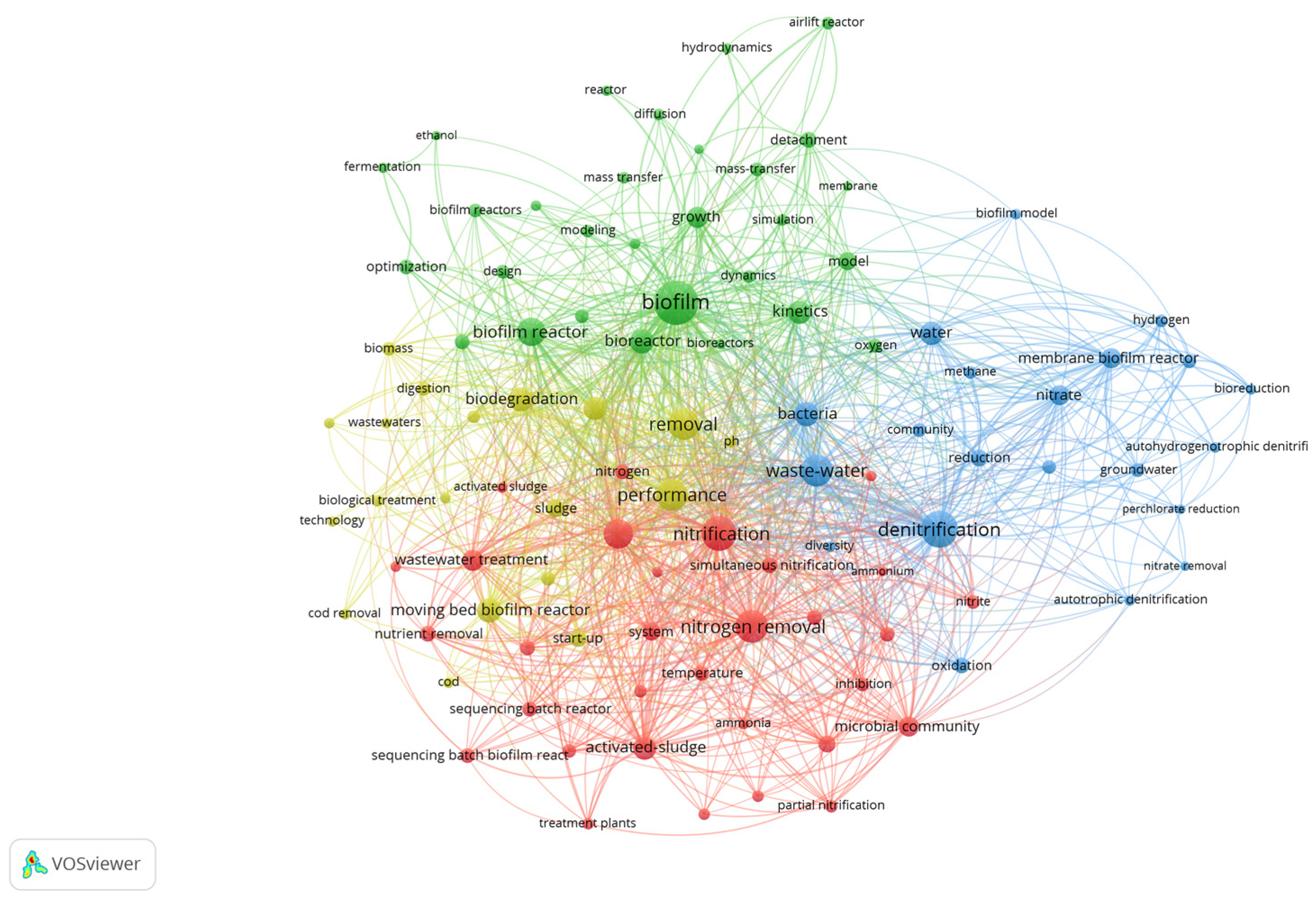
Figure 2.
Country/Region cluster. The line suggests the research collaboration.
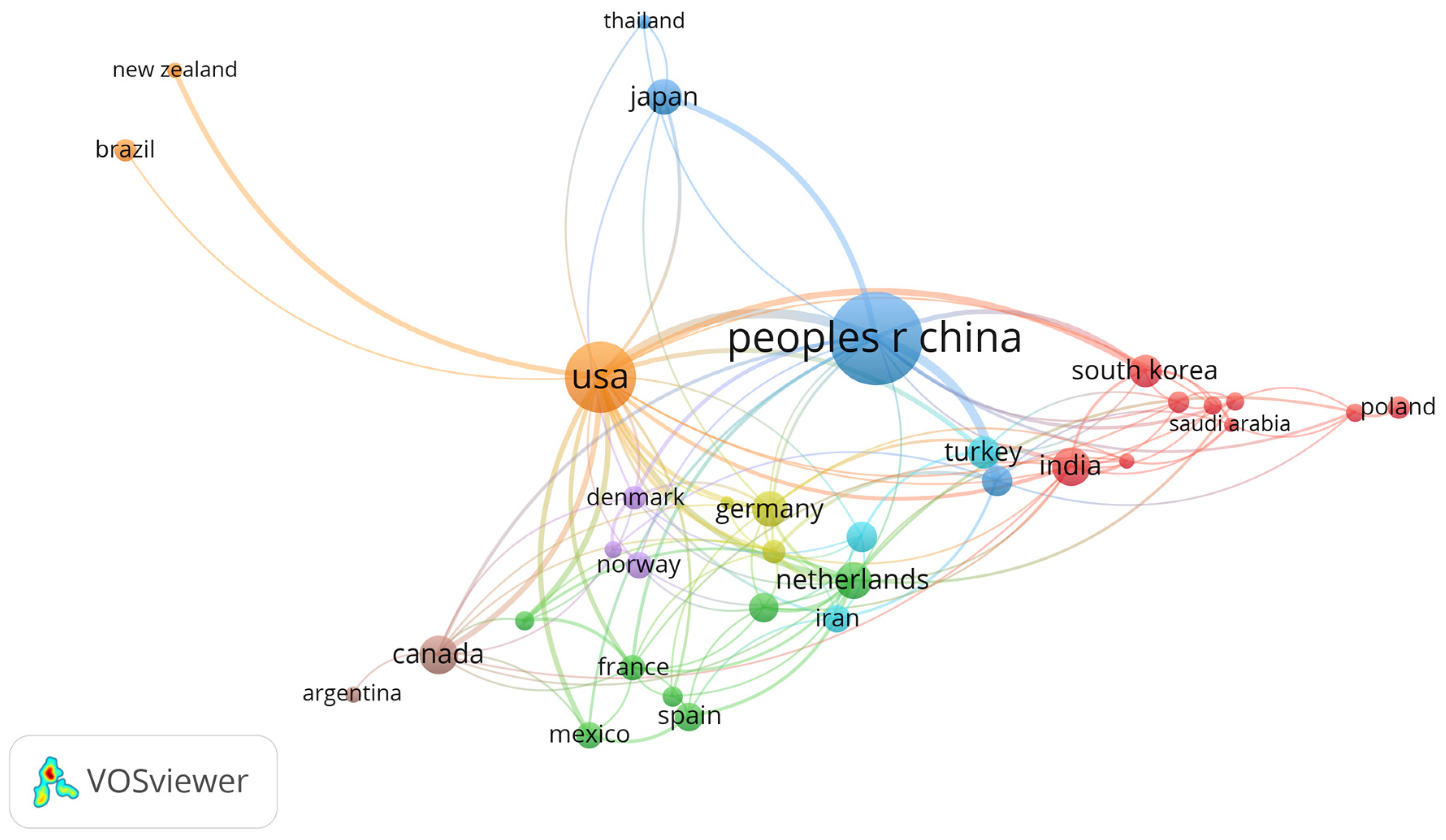
Figure 3.
Organization cluster. The line suggests the research collaboration.
Disclaimer/Publisher’s Note: The statements, opinions and data contained in all publications are solely those of the individual author(s) and contributor(s) and not of MDPI and/or the editor(s). MDPI and/or the editor(s) disclaim responsibility for any injury to people or property resulting from any ideas, methods, instructions or products referred to in the content. |
© 2024 by the authors. Licensee MDPI, Basel, Switzerland. This article is an open access article distributed under the terms and conditions of the Creative Commons Attribution (CC BY) license (http://creativecommons.org/licenses/by/4.0/).
Copyright: This open access article is published under a Creative Commons CC BY 4.0 license, which permit the free download, distribution, and reuse, provided that the author and preprint are cited in any reuse.


