

Submitted:
21 January 2024
Posted:
22 January 2024
You are already at the latest version
Abstract
This paper explores the intricate world of microbial life, focusing on biofilm as a dynamic consortium of bacteria forming complex networks within a self-produced matrix of extracellular polymeric substances (EPS). Analogous to a bacterial house, these structures provide both shelter and support, playing a pivotal role in the microbial realm with dual effects on human and environmental contexts. Biofilm's significance extends beyond its microcosmic architecture, positively contributing to heavy metal removal, electricity generation through microbial fuel cells, and structural remediation, while also posing threats with detrimental formations implicated in conditions from lung to urinary tract infections. Control of biofilm becomes imperative to unlock its positive attributes and mitigate potential negatives, serving as a cornerstone for environmental remediation, sustainable energy, and infrastructure maintenance. Employing a comprehensive bibliographic approach, this study identifies keywords, countries, and organizations influencing biofilm research, proposing innovative avenues like machine learning for future exploration. The aim is not only to contribute to existing knowledge but to pioneer cutting-edge strategies for biofilm optimization and challenge mitigation, shaping its trajectory towards sustainable applications across diverse fields.
Keywords:
Biofilm Control
; Extracellular Polymeric Substances (EPS)
; Microbial Architecture
; Environmental Applications
; Future Directions
1. Introduction
In the intricate tapestry of microbial life, biofilm emerges as a dynamic consortium of bacteria that intricately anchor themselves onto surfaces [1], creating a complex network ensconced within a self-produced matrix of extracellular polymeric substances (EPS) [2,3]. This architectural marvel can be metaphorically likened to a bacterial house, wherein microorganisms collaboratively fashion intricate structures that provide both shelter and support [4,5]. Within the microbial world, biofilms play a pivotal role, showcasing a duality of effects with constructive contributions and potential detrimental consequences in human and environmental contexts [6].
The significance of biofilm transcends its microcosmic architecture, influencing the broader landscape of our world [7]. On the positive spectrum, biofilm functionality manifests in various beneficial ways [8], including its capacity to act as a natural agent for removing heavy metals from waterways [9]. However, the flip side of biofilm dynamics introduces a potential threat, with detrimental biofilm formations implicated in a spectrum of conditions, spanning lung infections [10,11,12] to urinary tract infections [13,14,15].
The imperative control of biofilm is paramount to unlocking its positive attributes while mitigating potential negative impacts [16]. Effective biofilm management becomes a cornerstone in leveraging the vast potential of biofilms for industrial application [17]. This paper employs a comprehensive bibliographic approach [18], delving into the nuanced intricacies of biofilm control [19]. It meticulously identifies crucial keywords, examines the prominence of countries and regions, and highlights noteworthy organizations actively contributing to advancements in biofilm research. Moreover, this research seeks to chart the course for future endeavors, proposing innovative avenues such as the integration of machine learning to propel our understanding and mastery of biofilm control concepts to new heights.
Through this in-depth exploration, our aim is not only to contribute to the existing body of knowledge but also to pioneer cutting-edge strategies for optimizing biofilm utility and mitigating the challenges associated with its multifaceted nature [20,21]. By fostering a deeper understanding of biofilm dynamics and control mechanisms, we endeavor to shape the trajectory of biofilm research towards sustainable and transformative applications in diverse fields [22,23].
2. Materials and methods
The bibliographic investigation conducted in this study builds upon prior research with subtle adjustments [24,25]. Specifically, in the year 2024, an extensive exploration was undertaken by querying the term "biofilm control" within the Web of Science database [26,27,28]. Then the results were visualized in the VOSviewer [29,30].
To ensure the robustness and reliability of the results, certain criteria were established. A minimum threshold of 10 occurrences of a keyword was set, aiming to focus on substantial and recurrent themes within the literature. Additionally, a stipulation was imposed on the minimum number of documents attributed to a specific country/region, requiring a count of at least 5 documents to be considered for inclusion in the analysis. Similarly, a comparable threshold of a minimum of 5 documents was set for organizations, ensuring that entities contributing significantly to the discourse on biofilm control were adequately represented in the study.
3. Results
Figure 1 provides a visual representation of the critical keywords within the domain of "biofilm control," offering valuable insights into the diverse facets of research in this area. The identified keywords span a spectrum of topics, reflecting the multidimensional nature of biofilm-related investigations. Notably, several keywords are intricately linked to specific microbial species, elucidating the focus on understanding the dynamics of particular organisms. Examples include "Pseudomonas aeruginosa," "Staphylococcus aureus," "Escherichia coli," and "Candida albicans," each representing a distinct avenue of study within the broader context of biofilm control.
Furthermore, the array of keywords encompasses those associated with bacterial processes, shedding light on the intricate molecular and physiological aspects under scrutiny. Terms such as "motility," "growth," "expression," "identification," "virulence," and "infection" signify the diversity of inquiries into biofilm-related phenomena, encompassing both fundamental processes and their implications in various biological contexts.
Beyond species and bacterial processes, certain keywords pivot towards practical applications, reflecting the tangible outcomes and implications of biofilm research. Noteworthy terms in this category include "biofilm reactor," "sludge," "nitrogen removal," and "waste-water treatment." These keywords underscore the practical relevance of biofilm studies, highlighting their potential contributions to environmental engineering, biotechnology, and wastewater management.
The intricate interplay between species-related, bacterial process-related, and application-related keywords showcased in Figure 1 suggests a holistic approach to biofilm control research. This comprehensive perspective not only delves into the intricacies of microbial behavior and molecular processes but also extends its reach to address real-world challenges and applications. As researchers navigate this multifaceted landscape, the identified keywords serve as guideposts, directing investigations towards a nuanced understanding of biofilm dynamics and, ultimately, informing strategies for effective biofilm control in various contexts.
Figure 2 illustrates the prominent countries actively engaged in the field of "biofilm control," offering a comprehensive view of the global landscape of research endeavors. Notably, the United States and China emerge as pivotal contributors, assuming central roles in advancing biofilm control research. However, the global collaborative nature of this scientific pursuit is vividly highlighted by the active participation of several countries.
Among these contributors, Thailand, the Netherlands, Brazil, Saudi Arabia, Indonesia, Australia, India, Malaysia, South Korea, the United Kingdom, Germany, Canada, Denmark, Belgium, Italy, Austria, Spain, Mexico, New Zealand, Northern Ireland, Ireland, Japan, and Romania have all played significant roles. This extensive list underscores the widespread international engagement in biofilm control research, reflecting a diverse and collaborative network of scientific exploration.
The collaborative synergy among these nations is a testament to the interconnected nature of biofilm control research, transcending geographical boundaries for optimal research efficiency. The exchange of knowledge, expertise, and resources among these countries fosters a dynamic global research environment, enriching the depth and breadth of insights into biofilm dynamics and control mechanisms.
In essence, the research landscape in the biofilm control field is characterized by a rich tapestry of contributions from various corners of the globe. The collective efforts of these nations underscore the importance of international collaboration in addressing the multifaceted challenges posed by biofilm-related phenomena. As researchers from diverse cultural and scientific backgrounds come together, the potential for groundbreaking discoveries and innovative solutions in biofilm control is amplified, reinforcing the collaborative spirit that defines this dynamic scientific field.
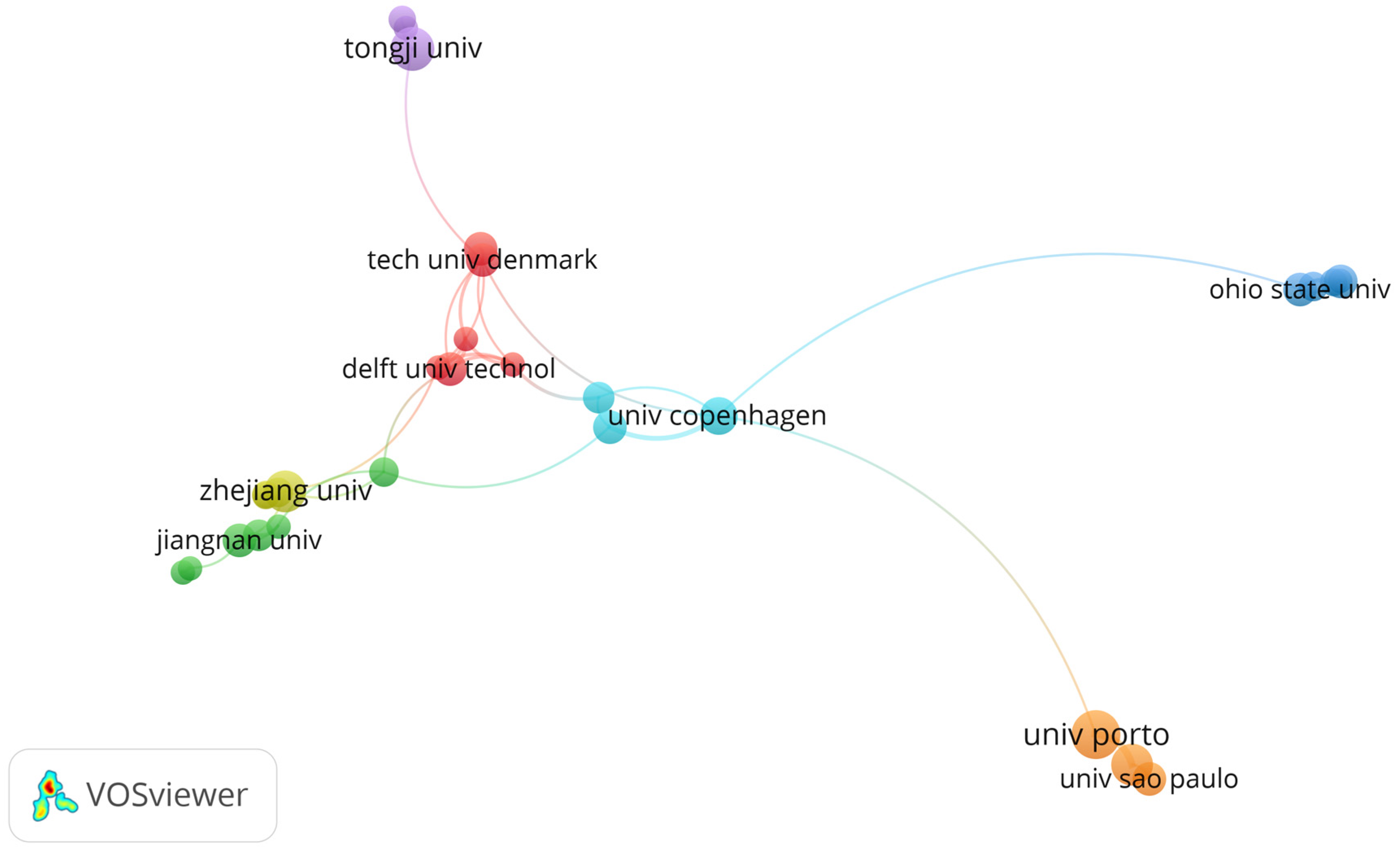
Figure 3 serves as a visual representation highlighting the key organizations at the forefront of research within the dynamic domain of biofilm control. Notably, Delft University of Technology, Technical University of Denmark, and the University of Copenhagen emerge as central pillars, occupying pivotal positions in advancing the understanding and management of biofilm-related phenomena. These institutions play a vital role in shaping the trajectory of research efforts in this field.
In addition to these cornerstone organizations, significant contributions are observed from a diverse array of institutions worldwide. Tongji University, Ohio State University, Zhejiang University, Jiangnan University, the University of Porto, and the University of São Paulo are among the noteworthy entities that have played crucial roles in advancing biofilm control research. This global collaboration among organizations establishes a network of expertise and knowledge exchange, fostering a synergistic approach to tackling the intricate challenges posed by biofilm dynamics.
The collaborative spirit among these organizations underscores the collective nature of biofilm control research, with each institution bringing its unique strengths and perspectives to the table. This collaborative framework facilitates a comprehensive exploration of biofilm-related phenomena, encompassing diverse methodologies and approaches. Through shared resources, joint initiatives, and collaborative projects, these organizations collectively contribute to the advancement of biofilm control knowledge.
In essence, the landscape of biofilm control research is characterized by a tapestry of contributions from leading organizations worldwide. The collaborative efforts of these institutions not only enhance the depth of understanding of biofilm dynamics but also contribute to the development of innovative strategies for effective control. As these organizations continue to collaborate and share insights, the biofilm control field is poised to witness further advancements, with the potential for groundbreaking discoveries and transformative applications in diverse scientific and practical arenas.
4. Discussion
4.1. Biofilm Control Study: Implications and Applications
The study of biofilm is undeniably crucial, given its far-reaching implications and applications in various domains. Positive biofilm formations present avenues for industrial development, exemplified by their potential to generate electricity through microbial fuel cells [33,34,35], contribute to concrete repair by healing cracks [36,37,38], and act as natural agents for removing heavy metals from water [39,40]. Conversely, the existence of detrimental biofilms poses significant health risks to humans, as evidenced by the potential for causing lung infections [10,11,12] or urinary tract infections [13,14,15].
The imperative to control biofilm has emerged as a focal point in research, driven by the dual objectives of harnessing the positive attributes of beneficial biofilms [41,42,43] and eradicating harmful biofilms [44,45,46]. To enhance the positive aspects, genetic modification stands out as a promising avenue. Strengthening biofilms through genetic modifications can result in more robust structures, amplifying their effectiveness in processes such as the removal of heavy metals from waterways [9]. This genetic approach offers a targeted means of optimizing biofilm utility while minimizing potential risks.
Another promising strategy in biofilm control involves surface modification. Introducing materials like graphene-based TiO2 to surfaces where biofilm attachment occurs can render these surfaces less conducive to biofilm formation [47,48]. This innovation aims to create self-sterilizing surfaces, preventing or minimizing biofilm development and reducing the need for external interventions [49,50].
The discussion on biofilm control extends beyond theoretical considerations to practical applications, offering tangible solutions for environmental remediation, healthcare, and infrastructure maintenance. As researchers delve deeper into genetic modification [9] and surface engineering [47,48], the potential for groundbreaking advancements in biofilm control becomes evident. These innovative approaches not only contribute to the optimization of beneficial biofilms but also pave the way for mitigating the adverse impacts of harmful biofilms [51,52]. Moving forward, continued exploration and implementation of these strategies hold the key to unlocking the full potential of biofilm control for diverse applications, ensuring a balanced and sustainable approach to managing these intricate microbial communities [53,54].
4.2. Big Data and Machine Learning: Revolutionary Biofilm Control
The future of biofilm control research holds extensive opportunities, with the potential integration of cutting-edge technologies such as big data and machine learning. These technologies have already found widespread applications in diverse fields, ranging from facial recognition [55,56,57] and autonomous driving [58,59,60] to global species distribution predictions [61] and educational performance forecasting [62].
The application of big data and machine learning in the realm of biofilm control opens up a realm of possibilities [63,64,65]. For instance, the establishment of a comprehensive database incorporating various media types, compositions, additives, their proportions, and anti-biofilm performances presents a promising avenue. By creating a big data repository, researchers can systematically capture and analyze vast amounts of information, paving the way for a more nuanced understanding of the intricate interactions within biofilms.
Machine learning models can then be deployed on this extensive dataset, enabling the identification of patterns, correlations, and predictive insights. Such an approach allows for a more informed understanding of which materials exhibit superior anti-biofilm properties under specific conditions. By discerning the optimal combinations and compositions, researchers can potentially unlock groundbreaking solutions for biofilm control, particularly in the biomedical domain.
References
- Salama, Y.; Chennaoui, M.; Sylla, A.; Mountadar, M.; Rihani, M.; Assobhei, O. Characterization, structure, and function of extracellular polymeric substances (EPS) of microbial biofilm in biological wastewater treatment systems: A review. Desalination Water Treat. 2016, 57, 16220–16237. [Google Scholar] [CrossRef]
- Flemming, H.-C.; Neu, T.R.; Wozniak, D.J. The EPS matrix: The “house of biofilm cells”. J. Bacteriol. 2007, 189, 7945–7947. [Google Scholar] [CrossRef] [PubMed]
- Flemming, H.-C. EPS—Then and now. Microorganisms 2016, 4, 41. [Google Scholar] [CrossRef] [PubMed]
- Czaczyk, K.; Myszka, K. Biosynthesis of extracellular polymeric substances (EPS) and its role in microbial biofilm formation. Pol. J. Environ. Stud. 2007, 16, 799. [Google Scholar]
- Kreft, J.U.; Wimpenny, J.W. Effect of EPS on biofilm structure and function as revealed by an individual-based model of biofilm growth. Water Sci. Technol. 2001, 43, 135. [Google Scholar] [CrossRef] [PubMed]
- Hall-Stoodley, L.; Costerton, J.W.; Stoodley, P. Bacterial biofilms: From the natural environment to infectious diseases. Nat. Rev. Microbiol. 2004, 2, 95–108. [Google Scholar] [CrossRef] [PubMed]
- Goller, C.C.; Romeo, T. Environmental influences on biofilm development. Bact. Biofilms 2008, 322, 37–66. [Google Scholar]
- Maurya, A.; Raj, A. Recent advances in the application of biofilm in bioremediation of industrial wastewater and organic pollutants. Microorg. Sustain. Environ. Health 2020, 81–118. [Google Scholar] [CrossRef]
- Ding, Y.; Peng, N.; Du, Y.; Ji, L.; Cao, B. Disruption of putrescine biosynthesis in Shewanella oneidensis enhances biofilm cohesiveness and performance in Cr (VI) immobilization. Appl. Environ. Microbiol. 2014, 80, 1498–1506. [Google Scholar] [CrossRef]
- Maurice, N.M.; Bedi, B.; Sadikot, R.T. Pseudomonas aeruginosa biofilms: Host response and clinical implications in lung infections. Am. J. Respir. Cell Mol. Biol. 2018, 58, 428–439. [Google Scholar] [CrossRef]
- Kolpen, M.; Kragh, K.N.; Enciso, J.B.; Faurholt-Jepsen, D.; Lindegaard, B.; Egelund, G.B.; Jensen, A.V.; Ravn, P.; Mathiesen, I.H.M.; Gheorge, A.G. Bacterial biofilms predominate in both acute and chronic human lung infections. Thorax 2022, 77, 1015–1022. [Google Scholar] [CrossRef]
- Stewart, P.S. Biophysics of biofilm infection. Pathog. Dis. 2014, 70, 212–218. [Google Scholar] [CrossRef]
- Trautner, B.W.; Darouiche, R.O. Role of biofilm in catheter-associated urinary tract infection. Am. J. Infect. Control 2004, 32, 177–183. [Google Scholar] [CrossRef] [PubMed]
- Nickel, J.C.; Costerton, J.W.; McLean, R.J.C.; Olson, M. Bacterial biofilms: Influence on the pathogenesis, diagnosis and treatment of urinary tract infections. J. Antimicrob. Chemother. 1994, 33, 31–41. [Google Scholar] [CrossRef]
- Tenke, P.; Kovacs, B.; Jäckel, M.; Nagy, E. The role of biofilm infection in urology. World J. Urol. 2006, 24, 13–20. [Google Scholar] [CrossRef] [PubMed]
- Høiby, N.; Ciofu, O.; Johansen, H.K.; Song, Z.j.; Moser, C.; Jensen, P.Ø.; Molin, S.; Givskov, M.; Tolker-Nielsen, T.; Bjarnsholt, T. The clinical impact of bacterial biofilms. Int. J. Oral Sci. 2011, 3, 55–65. [Google Scholar] [CrossRef]
- Li, X.Z.; Hauer, B.; Rosche, B. Single-species microbial biofilm screening for industrial applications. Appl. Microbiol. Biotechnol. 2007, 76, 1255–1262. [Google Scholar] [CrossRef]
- Garratt, A.; Schmidt, L.; Mackintosh, A.; Fitzpatrick, R. Quality of life measurement: Bibliographic study of patient assessed health outcome measures. Bmj 2002, 324, 1417. [Google Scholar] [CrossRef] [PubMed]
- Simões, M.; Simões, L.C.; Vieira, M.J. A review of current and emergent biofilm control strategies. LWT-Food Sci. Technol. 2010, 43, 573–583. [Google Scholar] [CrossRef]
- Koo, H.; Allan, R.N.; Howlin, R.P.; Stoodley, P.; Hall-Stoodley, L. Targeting microbial biofilms: Current and prospective therapeutic strategies. Nat. Rev. Microbiol. 2017, 15, 740–755. [Google Scholar] [CrossRef]
- Kasza, K.; Gurnani, P.; Hardie, K.R.; Camara, M.; Alexander, C. Challenges and solutions in polymer drug delivery for bacterial biofilm treatment: A tissue-by-tissue account. Adv. Drug Deliv. Rev. 2021, 178, 113973. [Google Scholar] [CrossRef] [PubMed]
- Jiang, Z.; Fu, L.; Wei, C.; Fu, Q.; Pan, S. Antibacterial micro/nanomotors: Advancing biofilm research to support medical applications. J. Nanobiotechnol. 2023, 21, 388. [Google Scholar] [CrossRef] [PubMed]
- McQuarrie, J.P.; Boltz, J.P. Moving bed biofilm reactor technology: Process applications, design, and performance. Water Environ. Res. 2011, 83, 560–575. [Google Scholar] [CrossRef] [PubMed]
- Chen, S.; Ding, Y. Tackling Heavy Metal Pollution: Evaluating Governance Models and Frameworks. Sustainability 2023, 15, 15863. [Google Scholar] [CrossRef]
- Chen, S.; Ding, Y. A bibliography study of Shewanella oneidensis biofilm. FEMS Microbiol. Ecol. 2023, 99, fiad124. [Google Scholar] [CrossRef] [PubMed]
- Pranckutė, R. Web of Science (WoS) and Scopus: The titans of bibliographic information in today’s academic world. Publications 2021, 9, 12. [Google Scholar] [CrossRef]
- Franceschini, F.; Maisano, D.; Mastrogiacomo, L. Empirical analysis and classification of database errors in Scopus and Web of Science. J. Informetr. 2016, 10, 933–953. [Google Scholar] [CrossRef]
- Soosaraei, M.; Khasseh, A.A.; Fakhar, M.; Hezarjaribi, H.Z. A decade bibliometric analysis of global research on leishmaniasis in Web of Science database. Ann. Med. Surg. 2018, 26, 30–37. [Google Scholar] [CrossRef]
- Yu, Y.; Li, Y.; Zhang, Z.; Gu, Z.; Zhong, H.; Zha, Q.; Yang, L.; Zhu, C.; Chen, E. A bibliometric analysis using VOSviewer of publications on COVID-19. Ann. Transl. Med. 2020, 8, 816. [Google Scholar] [CrossRef]
- Van Eck, N.J.; Waltman, L. Citation-based clustering of publications using CitNetExplorer and VOSviewer. Scientometrics 2017, 111, 1053–1070. [Google Scholar] [CrossRef]
- Hjollund, N.H.; Andersen, J.H.; Bech, P. Assessment of fatigue in chronic disease: A bibliographic study of fatigue measurement scales. Health Qual. Life Outcomes 2007, 5, 1–5. [Google Scholar] [CrossRef]
- Steuer, R.E.; Na, P. Multiple criteria decision making combined with finance: A categorized bibliographic study. Eur. J. Oper. Res. 2003, 150, 496–515. [Google Scholar] [CrossRef]
- Zhao, C.-e.; Chen, J.; Ding, Y.; Wang, V.B.; Bao, B.; Kjelleberg, S.; Cao, B.; Loo, S.C.J.; Wang, L.; Huang, W. Chemically functionalized conjugated oligoelectrolyte nanoparticles for enhancement of current generation in microbial fuel cells. ACS Appl. Mater. Interfaces 2015, 7, 14501–14505. [Google Scholar] [CrossRef]
- Zhao, C.e.; Wu, J.; Ding, Y.; Wang, V.B.; Zhang, Y.; Kjelleberg, S.; Loo, J.S.C.; Cao, B.; Zhang, Q. Hybrid conducting biofilm with built-in bacteria for high-performance microbial fuel cells. ChemElectroChem 2015, 2, 654–658. [Google Scholar] [CrossRef]
- Yang, Y.; Ding, Y.; Hu, Y.; Cao, B.; Rice, S.A.; Kjelleberg, S.; Song, H. Enhancing bidirectional electron transfer of Shewanella oneidensis by a synthetic flavin pathway. ACS Synth. Biol. 2015, 4, 815–823. [Google Scholar] [CrossRef] [PubMed]
- Zhang, Z.; Liu, D.; Ding, Y.; Wang, S. Mechanical performance of strain-hardening cementitious composites (SHCC) with bacterial addition. J. Infrastruct. Preserv. Resil. 2022, 3, 1–11. [Google Scholar] [CrossRef]
- Zhang, Z.; Weng, Y.; Ding, Y.; Qian, S. Use of genetically modified bacteria to repair cracks in concrete. Materials 2019, 12, 3912. [Google Scholar] [CrossRef] [PubMed]
- Zhang, Z.; Ding, Y.; Qian, S. Influence of bacterial incorporation on mechanical properties of engineered cementitious composites (ECC). Constr. Build. Mater. 2019, 196, 195–203. [Google Scholar] [CrossRef]
- Ding, Y.; Zhou, Y.; Yao, J.; Xiong, Y.; Zhu, Z.; Yu, X.-Y. Molecular evidence of a toxic effect on a biofilm and its matrix. Analyst 2019, 144, 2498–2503. [Google Scholar] [CrossRef] [PubMed]
- Ding, Y.; Zhou, Y.; Yao, J.; Szymanski, C.; Fredrickson, J.; Shi, L.; Cao, B.; Zhu, Z.; Yu, X.-Y. In situ molecular imaging of the biofilm and its matrix. Anal. Chem. 2016, 88, 11244–11252. [Google Scholar] [CrossRef]
- Philipp, L.-A.; Bühler, K.; Ulber, R.; Gescher, J. Beneficial applications of biofilms. Nat. Rev. Microbiol. 2023, 1–15. [Google Scholar] [CrossRef]
- Morikawa, M. Beneficial biofilm formation by industrial bacteria Bacillus subtilis and related species. J. Biosci. Bioeng. 2006, 101, 1–8. [Google Scholar] [CrossRef]
- Rossi, F. Beneficial biofilms for land rehabilitation and fertilization. FEMS Microbiol. Lett. 2020, 367, fnaa184. [Google Scholar] [CrossRef] [PubMed]
- Yin, W.; Xu, S.; Wang, Y.; Zhang, Y.; Chou, S.-H.; Galperin, M.Y.; He, J. Ways to control harmful biofilms: Prevention, inhibition, and eradication. Crit. Rev. Microbiol. 2021, 47, 57–78. [Google Scholar] [CrossRef] [PubMed]
- Moser, C.; Pedersen, H.T.; Lerche, C.J.; Kolpen, M.; Line, L.; Thomsen, K.; Høiby, N.; Jensen, P.Ø. Biofilms and host response–helpful or harmful. Apmis 2017, 125, 320–338. [Google Scholar] [CrossRef]
- Yan, J.; Bassler, B.L. Surviving as a community: Antibiotic tolerance and persistence in bacterial biofilms. Cell Host Microbe 2019, 26, 15–21. [Google Scholar] [CrossRef]
- Hamdany, A.H.; Ding, Y.; Qian, S. Graphene-Based TiO2 Cement Composites to Enhance the Antibacterial Effect of Self-Disinfecting Surfaces. Catalysts 2023, 13, 1313. [Google Scholar] [CrossRef]
- Hamdany, A.H.; Ding, Y.; Qian, S. Visible light antibacterial potential of graphene-TiO2 cementitious composites for self-sterilization surface. J. Sustain. Cem.-Based Mater. 2023, 12, 972–982. [Google Scholar] [CrossRef]
- Hamdany, A.H.; Ding, Y.; Qian, S. Cementitious Composite Materials for Self-Sterilization Surfaces. ACI Mater. J. 2022, 119, 197–210. [Google Scholar] [CrossRef]
- Hamdany, A.H.; Ding, Y.; Qian, S. Mechanical and antibacterial behavior of photocatalytic lightweight engineered cementitious composites. J. Mater. Civ. Eng. 2021, 33, 04021262. [Google Scholar] [CrossRef]
- Muhammad, M.H.; Idris, A.L.; Fan, X.; Guo, Y.; Yu, Y.; Jin, X.; Qiu, J.; Guan, X.; Huang, T. Beyond risk: Bacterial biofilms and their regulating approaches. Front. Microbiol. 2020, 11, 928. [Google Scholar] [CrossRef]
- Elbourne, A.; Truong, V.K.; Cheeseman, S.; Rajapaksha, P.; Gangadoo, S.; Chapman, J.; Crawford, R.J. The use of nanomaterials for the mitigation of pathogenic biofilm formation. In Methods in Microbiology; Elsevier: Amsterdam, The Netherlands, 2019; Volume 46, pp. 61–92. [Google Scholar]
- Niranjan, V.; Setlur, A.S.; Skariyachan, S.; Chandrashekar, K. Applications of Microbial Consortia consortia and Microbiome microbiome Interactions for Augmenting Sustainable Agrobiology agrobiology. In Sustainable Agrobiology: Design and Development of Microbial Consortia; Springer: Berlin/Heidelberg, Germany, 2023; pp. 275–316. [Google Scholar]
- Kennedy, A.C.; Smith, K.L. Soil microbial diversity and the sustainability of agricultural soils. Plant Soil 1995, 170, 75–86. [Google Scholar] [CrossRef]
- Raju, K.; Chinna Rao, B.; Saikumar, K.; Lakshman Pratap, N. An optimal hybrid solution to local and global facial recognition through machine learning. In A Fusion of Artificial Intelligence and Internet of Things for Emerging Cyber Systems; Springer: Cham, Switzerland, 2022; pp. 203–226. [Google Scholar]
- Coe, J.; Atay, M. Evaluating impact of race in facial recognition across machine learning and deep learning algorithms. Computers 2021, 10, 113. [Google Scholar] [CrossRef]
- Kaur, P.; Krishan, K.; Sharma, S.K.; Kanchan, T. Facial-recognition algorithms: A literature review. Med. Sci. Law 2020, 60, 131–139. [Google Scholar] [CrossRef]
- Bachute, M.R.; Subhedar, J.M. Autonomous driving architectures: Insights of machine learning and deep learning algorithms. Mach. Learn. Appl. 2021, 6, 100164. [Google Scholar] [CrossRef]
- Garcia Cuenca, L.; Sanchez-Soriano, J.; Puertas, E.; Fernandez Andres, J.; Aliane, N. Machine learning techniques for undertaking roundabouts in autonomous driving. Sensors 2019, 19, 2386. [Google Scholar] [CrossRef]
- Grigorescu, S.; Trasnea, B.; Cocias, T.; Macesanu, G. A survey of deep learning techniques for autonomous driving. J. Field Robot. 2020, 37, 362–386. [Google Scholar] [CrossRef]
- Chen, S.; Ding, Y. Machine Learning and Its Applications in Studying the Geographical Distribution of Ants. Diversity 2022, 14, 706. [Google Scholar] [CrossRef]
- Chen, S.; Ding, Y. A Machine Learning Approach to Predicting Academic Performance in Pennsylvania’s Schools. Soc. Sci. 2023, 12, 118. [Google Scholar] [CrossRef]
- Rickert, C.A.; Hayta, E.N.; Selle, D.M.; Kouroudis, I.; Harth, M.; Gagliardi, A.; Lieleg, O. Machine learning approach to analyze the surface properties of biological materials. ACS Biomater. Sci. Eng. 2021, 7, 4614–4625. [Google Scholar] [CrossRef]
- Dimauro, G.; Deperte, F.; Maglietta, R.; Bove, M.; La Gioia, F.; Renò, V.; Simone, L.; Gelardi, M. A novel approach for biofilm detection based on a convolutional neural network. Electronics 2020, 9, 881. [Google Scholar] [CrossRef]
- Ragi, S.; Rahman, M.H.; Duckworth, J.; Kalimuthu, J.; Chundi, P.; Gadhamshetty, V. Artificial intelligence-driven image analysis of bacterial cells and biofilms. IEEE/ACM Trans. Comput. Biol. Bioinform. 2021, 20, 174–184. [Google Scholar] [CrossRef] [PubMed]
Figure 1.
Main keywords of VOSviewer.
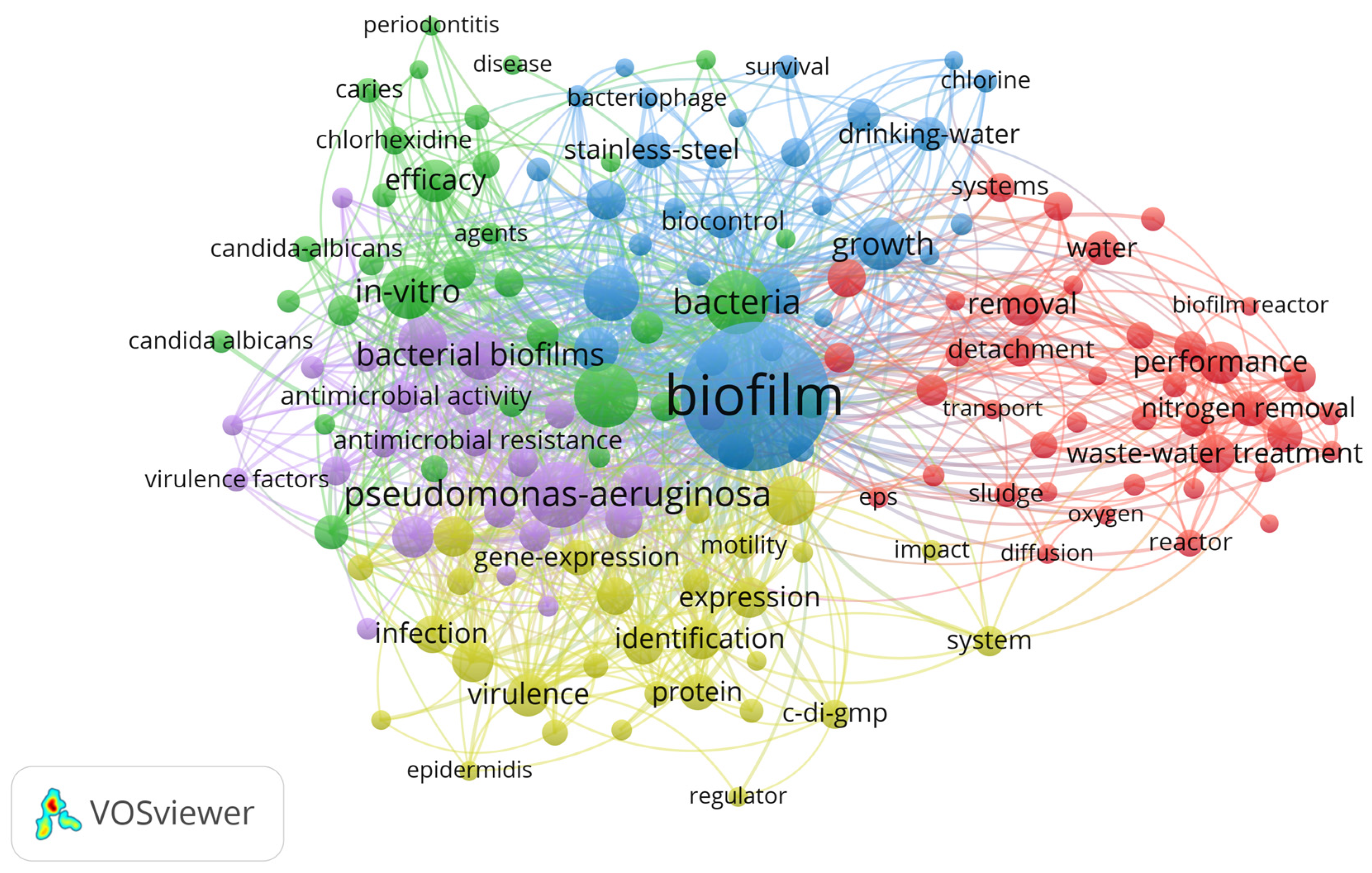
Figure 2.
Main countries/regions working in the biofilm control field. The line suggests the research collaboration.
Figure 2.
Main countries/regions working in the biofilm control field. The line suggests the research collaboration.
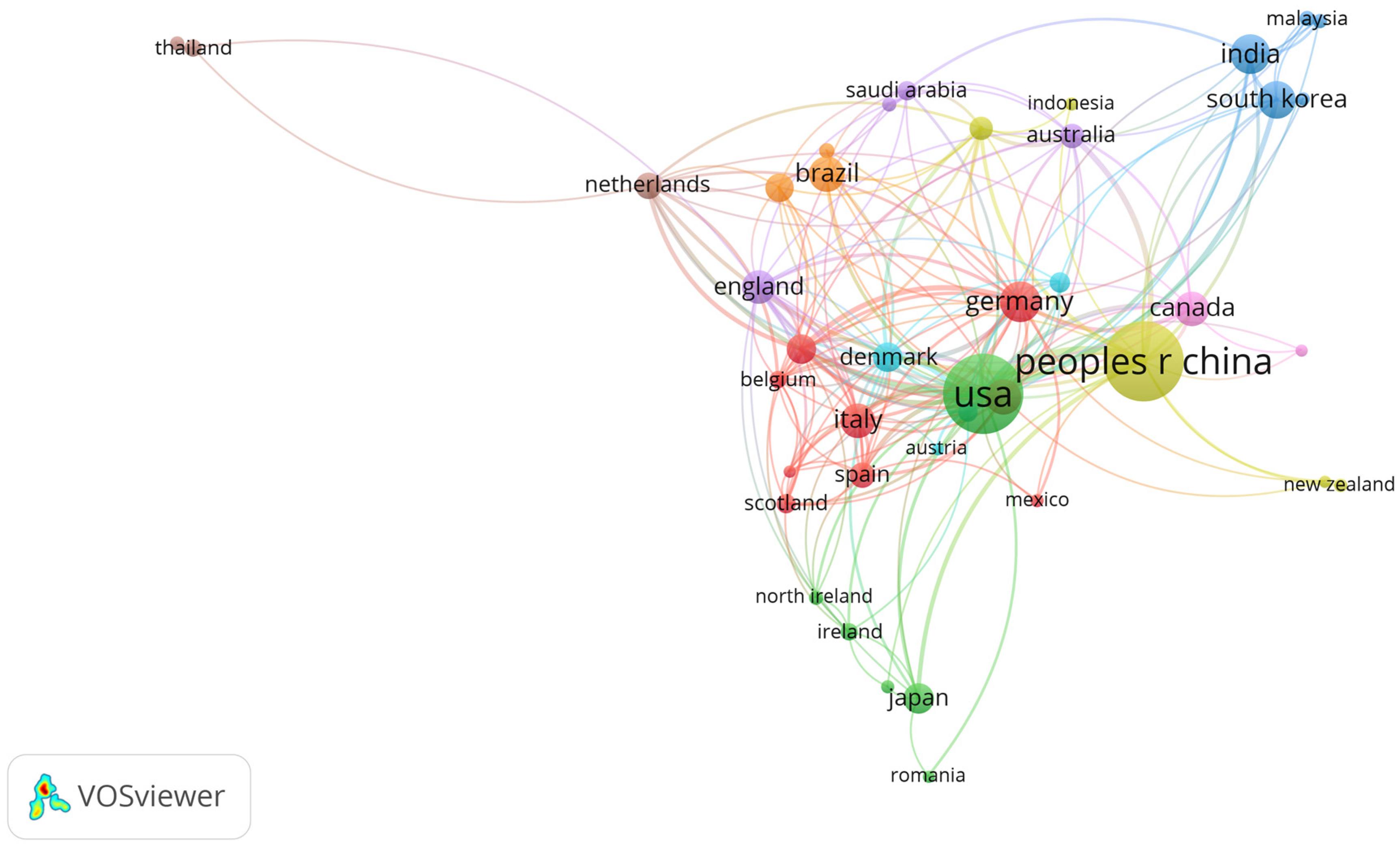
Figure 3.
The main organizations working in the biofilm control field. The lines suggest the research collaboration.
Figure 3.
The main organizations working in the biofilm control field. The lines suggest the research collaboration.
Disclaimer/Publisher’s Note: The statements, opinions and data contained in all publications are solely those of the individual author(s) and contributor(s) and not of MDPI and/or the editor(s). MDPI and/or the editor(s) disclaim responsibility for any injury to people or property resulting from any ideas, methods, instructions or products referred to in the content. |
© 2024 by the authors. Licensee MDPI, Basel, Switzerland. This article is an open access article distributed under the terms and conditions of the Creative Commons Attribution (CC BY) license (http://creativecommons.org/licenses/by/4.0/).
Copyright: This open access article is published under a Creative Commons CC BY 4.0 license, which permit the free download, distribution, and reuse, provided that the author and preprint are cited in any reuse.


