

Submitted:
11 January 2025
Posted:
14 January 2025
You are already at the latest version
Abstract
Biofilms are structured microbial communities embedded in self-produced extracellular polymeric substances (EPS), offering protection and resilience in diverse environments. While harmful biofilms can cause antibiotic-resistant infections, beneficial biofilms have transformative industrial applications, such as pollutant removal, bioremediation, and electricity generation through microbial fuel cells. These applications utilize biofilms' natural capabilities, including pollutant degradation and electron transfer. This paper investigates biofilm industrial applications by conducting a bibliographic analysis of 1,000 recent studies. It identifies key research trends, organizations, and countries/regions leading biofilm innovation. Case studies highlight biofilm-based technologies and their integration into environmental and energy solutions. Additionally, the study explores the potential of big data and machine learning to enhance biofilm applications, suggesting a future where predictive models based on extensive biofilm databases optimize performance and efficiency. This research provides critical insights into biofilm applications, offering a roadmap for advancing sustainable innovations and addressing global challenges effectively.
Keywords:
Biofilm Application
; Bibliography
; VOSviewer
; Big Data
; Machine Learning
1. Introduction
Biofilms, often likened to “houses” for bacteria [1], are structured communities of microorganisms that adhere to surfaces and are encased within a self-produced extracellular polymeric substance (EPS) matrix [2,3]. This EPS, primarily composed of polysaccharides, proteins, lipids, and nucleic acids, serves as a protective barrier and structural support for the microorganisms, allowing them to survive in hostile environments [4,5]. Biofilm formation is a natural phenomenon, occurring in a variety of contexts, from natural ecosystems to industrial settings [6,7]. This adaptability is driven by the ability of biofilms to regulate microbial interactions and promote collective resilience [8,9]. However, biofilms are not merely biological curiosities; they have profound implications for human health and industry [10,11].
The study of biofilms is critical due to their dual nature: harmful biofilms can lead to severe infections, such as lung infections [12,13] or urinary tract infections [14,15], which are often resistant to antibiotics and difficult to eradicate [16,17]. Conversely, beneficial biofilms are harnessed in various industrial applications, including pollutant removal from wastewater, bioremediation of contaminated environments, and electricity generation through microbial fuel cells [18,19]. These applications leverage the natural capabilities of biofilms, such as their ability to degrade complex pollutants [20] and facilitate electron transfer [21]. Understanding biofilms’ mechanisms and dynamics is essential to mitigating their negative impacts while optimizing their beneficial uses, making biofilm research an interdisciplinary priority with significant societal implications [22].
This paper focuses on the industrial applications of biofilms, employing bibliographic analysis to identify and examine the 1,000 most relevant recent studies in the field [23]. By analyzing keywords, key organizations, and leading countries/regions in biofilm research, this study aims to summarize critical trends and case studies in biofilm-based industrial applications [24]. Furthermore, the paper explores the future potential of biofilm technologies, emphasizing the transformative possibilities of integrating big data and machine learning to advance research and application efficiency. This comprehensive approach provides a roadmap for leveraging biofilms in addressing global challenges and fostering sustainable technological innovation.
2. Materials and Methods
The bibliographic method followed previous papers with slightly modifications [25,26]. On December 12, 2024, we conducted a comprehensive search using the term “biofilm industry application” in the Web of Science database [27,28]. This search yielded information on a total of 1,841 articles, representing a robust dataset for bibliometric analysis. To focus our analysis on the most relevant and impactful research, we selected the default limit of 1,000 articles for further examination using VOSviewer, version 1.6.20 [29,30].
Keyword analysis was performed by setting a threshold of a minimum of five occurrences for a keyword to be included in the analysis. This allowed us to identify frequently discussed topics and themes within the selected dataset, revealing patterns and trends in biofilm industrial applications. The results highlighted key areas of focus, such as biofilm formation, microbial interactions, and applications in biotechnology and healthcare industries.
For organizational analysis, we applied a threshold of at least three documents per organization to identify institutions that contributed significantly to the field. This provided insights into the leading research organizations driving innovation and advancing knowledge in biofilm-related technologies. The analysis revealed a diverse mix of universities and research institutes actively publishing in this area.
In country and region analysis, a minimum threshold of 14 documents per country or region was set to highlight nations with substantial contributions to the research landscape. This analysis underscored the global nature of biofilm research, with leading contributions from regions such as North America, Europe, and Asia. The findings provide a detailed view of the collaborative and geographically diverse efforts in advancing biofilm applications in industry.
3. Results
Figure 1 highlights the primary keywords in the field of “biofilm industry application,” showcasing diverse research focuses and applications. A significant portion of the keywords relates to bacterial species commonly studied in biofilm research. For instance, species like Staphylococcus aureus, Pseudomonas aeruginosa, Escherichia coli, and Bacillus subtilis frequently appear, reflecting their importance in both pathogenic biofilm studies and industrial applications. These bacteria are pivotal due to their ability to form robust biofilms, which can have both beneficial and harmful implications, depending on the context.
Another cluster of keywords is associated with media where biofilms are studied or applied. Terms such as “drinking water,” “wastewater,” “bioreactor,” and “sludge” highlight the relevance of biofilms in environmental and industrial processes. These keywords underscore biofilm research’s critical role in addressing challenges like water purification, wastewater treatment, and bioreactor efficiency. The analysis suggests a strong focus on utilizing biofilms for sustainable solutions in environmental engineering.
Chemical-related keywords form another significant category, including terms like “chemical composition,” “acid,” “components,” and “nanocomposites.” These keywords point to the intersection of biofilm research with materials science and chemistry. Studies in this area often explore the chemical interactions within biofilms, the effects of various compounds on biofilm behavior, and the development of novel materials like nanocomposites to enhance biofilm applications or mitigate their negative impacts.
Lastly, some keywords reflect the relevance of biofilms in the food industry. Terms such as “milk,” “food,” “food industry,” and “seafood” illustrate the focus on biofilm formation on food surfaces, processing equipment, and the implications for food safety and spoilage. This category highlights the dual nature of biofilms in the food sector, where they are both a challenge in contamination control and a potential tool for food preservation and bioengineering. These diverse keyword groups collectively provide a comprehensive overview of the multifaceted nature of biofilm research in industrial applications.
Figure 2 highlights the leading organizations contributing to the field of “biofilm industry application.” At the core of this research network is the Chinese Academy of Sciences, which plays a central role in driving innovation and producing influential studies. Surrounding this central node are other significant institutions, such as King Saud University, Nanyang Technological University, the University of Queensland, the University of Porto, the University of São Paulo, Yonsei University, South China University of Technology, and Jiangnan University. These institutions have established themselves as key players by consistently publishing high-quality research and collaborating on global projects.
The figure also underscores the importance of international collaboration among organizations. Research in biofilm industrial applications often involves interdisciplinary efforts, bringing together expertise in microbiology, materials science, environmental engineering, and industrial processes. For example, partnerships between universities in Asia, Europe, and the Americas facilitate knowledge exchange and innovation, leading to breakthroughs in areas like wastewater treatment, food safety, and bioreactor optimization. This interconnected network of organizations illustrates how global challenges are addressed through shared knowledge and cooperative research.
Furthermore, the geographic distribution of these institutions highlights the global interest in biofilm applications. While the Chinese Academy of Sciences leads in terms of influence, institutions from countries such as Saudi Arabia, Singapore, Australia, Portugal, Brazil, and South Korea demonstrate the diversity of contributions to this field. This global participation not only accelerates scientific progress but also ensures that solutions are adaptable to the unique environmental, economic, and industrial contexts of different regions. The collaborative efforts among these organizations emphasize the field’s potential to develop innovative solutions for sustainable and efficient industrial applications.
Figure 3 illustrates the most prominent countries and regions contributing to the field of “biofilm industry application,” with China, the United States, and India occupying central positions. These three nations play a pivotal role in driving research and innovation in this area, thanks to their extensive resources, robust research ecosystems, and significant industrial applications. China’s leadership reflects its emphasis on industrial microbiology and sustainable technologies, while the United States showcases strength in biotechnology and environmental science. India’s contribution underscores its focus on addressing local challenges, such as water treatment and public health, through biofilm applications.
Beyond these leading nations, other countries such as Thailand, South Korea, Japan, Malaysia, Saudi Arabia, Egypt, Singapore, France, Australia, Germany, Canada, Belgium, the United Kingdom, Iran, Spain, Italy, Poland, Brazil, Portugal, and others also play essential roles in advancing the field. Their contributions highlight the global nature of biofilm research, where diverse regions address unique environmental and industrial challenges. For instance, European countries like Germany and France contribute heavily to materials science and bioreactor optimization, while nations like Saudi Arabia and Egypt focus on water management in arid climates. Similarly, Southeast Asian countries such as Thailand, Malaysia, and Singapore leverage biofilm technologies to tackle food safety and marine ecosystem challenges.
The interconnected efforts among these countries emphasize the collaborative nature of this field, where shared knowledge and joint research initiatives are key to progress. International collaborations allow for the pooling of expertise, funding, and resources, accelerating advancements and enabling the development of scalable and adaptable solutions. This global partnership not only strengthens the research foundation of biofilm applications but also fosters innovations tailored to regional and international needs, making the field both dynamic and impactful.
4. Discussion
4.1. Recent Biofilm Industry Application Summary
After reviewing the recent literatures in the biofilm industry application area, we summarized the examples of progress in the Table 1.
The incorporation of Bacillus halodurans into engineered cementitious composites (ECCs) has shown promising results in enhancing the mechanical properties of concrete, particularly in the areas of crack healing and tensile strength improvement [31]. Research has demonstrated that the presence of Bacillus halodurans bacteria accelerates the self-healing process of cracks in concrete by producing calcium carbonate through microbial-induced calcite precipitation (MICP). This biochemical reaction effectively seals cracks, restoring the structural integrity of the material. Furthermore, studies have indicated that Bacillus halodurans enhances the tensile strength of ECCs, which is critical for improving the durability and longevity of concrete structures. This is particularly valuable for applications where concrete is subjected to repetitive stress, such as in bridges, pavements, and buildings.
A significant breakthrough in this field has been the genetic modification of Bacillus halodurans to expedite the crack-repair process [32]. By employing transposon mutagenesis, researchers have developed genetically modified strains of Bacillus halodurans with enhanced calcium carbonate production. These modified strains demonstrate a superior ability to catalyze the precipitation of calcium carbonate, leading to faster and more efficient crack healing in concrete. Such advancements have the potential to revolutionize the use of bacteria in self-healing concrete, making it a more viable solution for large-scale infrastructure projects.
In addition to its role in crack healing, Bacillus halodurans has been shown to significantly improve the fracture toughness and strength of strain-hardening cementitious composites (SHCCs) [33]. SHCCs are known for their ability to undergo large strains before failure, making them an ideal choice for high-performance applications. The addition of Bacillus halodurans enhances the material’s fracture resistance, providing improved crack bridging capabilities and overall mechanical performance. This enhancement is especially important for applications requiring high durability and resistance to environmental stresses.
The role of Comamonas testosteroni in biofilm formation and biodegradation has also been studied extensively, particularly in its ability to degrade harmful compounds such as 3-chloroaniline [34]. The presence of cyclic di-GMP (c-di-GMP), a secondary messenger molecule, plays a crucial role in promoting biofilm formation in Comamonas testosteroni. This biofilm-mediated process facilitates the degradation of toxic substances, making it a valuable tool for bioremediation efforts. The ability of bacteria to form stable biofilms in the presence of c-di-GMP enhances their resilience in degrading persistent environmental pollutants, providing a sustainable solution for contamination management.
In the field of Escherichia coli research, photocatalytic lightweight engineered cementitious composites (ECCs) have been tested for their antibacterial behavior [35]. The incorporation of photocatalysts like titanium dioxide (TiO2) into lightweight ECCs significantly enhances their ability to inactivate Escherichia coli under visible light. Studies have shown that Escherichia coli inactivation is more efficient when TiO2 is incorporated into the cement matrix, with the material exhibiting antibacterial properties due to the photocatalytic activity of TiO2 under light exposure. This technology holds great potential for creating self-sterilizing concrete surfaces that can reduce bacterial growth in public and healthcare settings.
Additionally, the use of fine-particulate TiO2 has been shown to outperform other forms of TiO2 in terms of antibacterial performance [36]. This fine-particulate form has a higher surface area, leading to increased radical production under visible light, which enhances its ability to degrade Escherichia coli. The ability to integrate such materials into cementitious composites provides an innovative approach to developing antibacterial surfaces for construction materials, which can be particularly beneficial in environments that require constant disinfection.
Escherichia coli inactivation has also been studied in graphene oxide-titanium dioxide (GO-TiO2) composites, which are synthesized using a hydrothermal process [37,38]. These composites exhibit superior photocatalytic activity under visible light, making them highly effective in the degradation of Escherichia coli. The addition of graphene oxide to TiO2 enhances the photocatalytic efficiency by facilitating better electron transfer and increasing the light absorption capacity. This combination of materials not only improves antibacterial performance but also reduces the energy required for photoexcitation, further boosting the material’s efficiency in disinfection applications.
In addition to the antibacterial properties of Escherichia coli, Shewanella oneidensis has been studied for its potential in environmental remediation, particularly for chromium (Cr(VI)) reduction [39]. This bacterium forms biofilms that enhance its ability to remediate Cr(VI), a toxic contaminant commonly found in industrial wastewater. The formation of cohesive mutant biofilms in Shewanella oneidensis improves its ability to reduce Cr(VI), making it an effective tool for bioremediation. The molecular responses of Shewanella oneidensis biofilms to Cr(VI) stress have been analyzed using advanced techniques like mass spectrometry imaging, providing insights into the biochemical pathways involved in heavy metal remediation [40,41].
Furthermore, Shewanella oneidensis biofilms have been shown to enhance microbial fuel cell (MFC) efficiency by improving extracellular electron transfer (EET) [42]. This process is crucial for the effective operation of MFCs, which rely on bacteria to transfer electrons from organic substrates to an electrode [43]. The expression of synthetic flavin biosynthesis pathways in Shewanella oneidensis has been found to significantly improve EET, boosting the current densities produced by biofilms in MFCs [44]. This innovation has the potential to optimize energy generation from microbial sources, paving the way for more sustainable energy production methods.
4.2. Future Opportunities with Big Data and Machine Learning
The integration of big data and machine learning into biofilm industry applications represents a groundbreaking direction for future research and innovation [45,46]. Biofilms, known for their diverse applications in wastewater treatment, microbial fuel cells, and bioremediation, involve highly complex microbial communities whose behaviors are influenced by numerous environmental and operational factors [47,48]. By leveraging big data [49,50], researchers could systematically collect and analyze vast datasets encompassing information such as microbial species, optimal environmental conditions (e.g., temperature and humidity), experimental durations, functional outputs (e.g., pollutant removal or energy generation), and the methods used to achieve specific outcomes. The structured collection of such data would enable the development of predictive tools and facilitate more efficient experimentation and optimization of biofilm-based technologies [51,52].
Big data and machine learning have already transformed other domains, including facial recognition [53,54], autonomous driving [55,56], and species distribution prediction [57]. These successes underscore their potential to revolutionize the biofilm industry. By employing machine learning algorithms, such as neural networks [58,59], researchers could develop predictive models capable of identifying the best combinations of microbial species and environmental conditions to achieve desired outcomes. For instance, machine learning could analyze patterns in the data to optimize biofilm performance for pollutant degradation or enhance the energy efficiency of microbial fuel cells. Furthermore, the ability to simulate outcomes using trained models would reduce the time and costs associated with trial-and-error experimentation, accelerating advancements in the field.
In practical terms, a comprehensive database and machine learning framework would allow scientists to predict the potential effectiveness of biofilm-based solutions for new industrial challenges [60,61]. For example, when facing an uncharacterized contaminant in wastewater, researchers could query the database and model to determine the most promising microbial consortium and operational conditions. Similarly, in microbial fuel cell applications, machine learning could optimize electron transfer pathways to maximize energy output. These predictive capabilities would represent a significant leap forward, enabling biofilm applications to be rapidly tailored to specific industrial needs with high confidence in their effectiveness.
The broader implications of combining big data and machine learning with biofilm research extend beyond individual applications [62,63]. Such advancements could establish a new standard for data-driven microbial engineering, fostering interdisciplinary collaborations and attracting investments in biofilm technologies. The integration of computational and experimental approaches would enhance the scalability of biofilm applications, enabling their deployment in diverse industries, including renewable energy, environmental protection, and pharmaceuticals. Ultimately, these innovations would not only streamline research and development but also address critical global challenges by providing efficient, sustainable, and adaptable biofilm-based solutions.
5. Conclusions
This study utilized bibliographic analysis to examine 1,000 recent publications related to biofilm industry applications, identifying key keywords, organizations, and contributing countries or regions. The analysis highlighted the global research landscape and the diversity of applications within this field. Specific examples of microbial strains and their applications in industry were discussed, showcasing advancements such as enhanced pollutant removal, energy generation, and bioremediation. The study also emphasized future research directions, particularly the integration of big data and machine learning. These technologies were identified as transformative tools that can optimize biofilm performance by enabling predictive modeling and streamlining experimental design. By creating comprehensive databases of microbial properties and environmental conditions, researchers can harness machine learning to accelerate innovations and expand biofilm applications. This interdisciplinary approach underscores the potential for significant breakthroughs, providing sustainable solutions to global challenges while advancing the efficiency and scalability of biofilm-based technologies.
References
- Flemming, H.-C.; Neu, T.R.; Wozniak, D.J. The EPS matrix: the “house of biofilm cells”. Journal of bacteriology 2007, 189, 7945–7947. [Google Scholar] [CrossRef]
- Flemming, H.-C.; Wingender, J. The biofilm matrix. Nature reviews microbiology 2010, 8, 623–633. [Google Scholar] [CrossRef]
- Liu, Y.-Q.; Liu, Y.; Tay, J.-H. The effects of extracellular polymeric substances on the formation and stability of biogranules. Applied Microbiology and Biotechnology 2004, 65, 143–148. [Google Scholar] [CrossRef]
- Flemming, H.-C. EPS—then and now. Microorganisms 2016, 4, 41. [Google Scholar] [CrossRef] [PubMed]
- Izadi, P.; Izadi, P.; Eldyasti, A. Holistic insights into extracellular polymeric substance (EPS) in anammosx bacterial matrix and the potential sustainable biopolymer recovery: A review. Chemosphere 2021, 274, 129703. [Google Scholar] [CrossRef]
- Bjarnsholt, T.; Buhlin, K.; Dufrêne, Y.F.; Gomelsky, M.; Moroni, A.; Ramstedt, M.; Rumbaugh, K.P.; Schulte, T.; Sun, L.; Åkerlund, B. Biofilm formation–what we can learn from recent developments. 2018, 284, 332–345. [Google Scholar] [CrossRef]
- O’Toole, G.; Kaplan, H.B.; Kolter, R. Biofilm formation as microbial development. Annual Reviews in Microbiology 2000, 54, 49–79. [Google Scholar] [CrossRef]
- Martin, M.; Hölscher, T.; Dragoš, A.; Cooper, V.S.; Kovács, Á.T. Laboratory evolution of microbial interactions in bacterial biofilms. Journal of bacteriology 2016, 198, 2564–2571. [Google Scholar] [CrossRef]
- de Vos, M.G.J.; Zagorski, M.; McNally, A.; Bollenbach, T. Interaction networks, ecological stability, and collective antibiotic tolerance in polymicrobial infections. Proceedings of the National Academy of Sciences 2017, 114, 10666–10671. [Google Scholar] [CrossRef]
- Shineh, G.; Mobaraki, M.; Perves Bappy, M.J.; Mills, D.K. Biofilm formation, and related impacts on healthcare, food processing and packaging, industrial manufacturing, marine industries, and sanitation–a review. Applied Microbiology 2023, 3, 629–665. [Google Scholar] [CrossRef]
- Vishwakarma, V. Impact of environmental biofilms: Industrial components and its remediation. Journal of basic microbiology 2020, 60, 198–206. [Google Scholar] [CrossRef]
- Ciofu, O.; Tolker-Nielsen, T.; Jensen, P.Ø.; Wang, H.; Høiby, N. Antimicrobial resistance, respiratory tract infections and role of biofilms in lung infections in cystic fibrosis patients. Advanced drug delivery reviews 2015, 85, 7–23. [Google Scholar] [CrossRef]
- Kolpen, M.; Kragh, K.N.; Enciso, J.B.; Faurholt-Jepsen, D.; Lindegaard, B.; Egelund, G.B.; Jensen, A.V.; Ravn, P.; Mathiesen, I.H.M.; Gheorge, A.G. Bacterial biofilms predominate in both acute and chronic human lung infections. Thorax 2022, 77, 1015–1022. [Google Scholar] [CrossRef]
- Tenke, P.; Köves, B.; Nagy, K.; Hultgren, S.J.; Mendling, W.; Wullt, B.; Grabe, M.; Wagenlehner, F.M.E.; Cek, M.; Pickard, R. Update on biofilm infections in the urinary tract. World journal of urology 2012, 30, 51–57. [Google Scholar] [CrossRef] [PubMed]
- Soto, S.M. Importance of biofilms in urinary tract infections: new therapeutic approaches. Advances in biology 2014, 2014, 543974. [Google Scholar] [CrossRef]
- González, M.J.; Robino, L.; Iribarnegaray, V.; Zunino, P.; Scavone, P. Effect of different antibiotics on biofilm produced by uropathogenic Escherichia coli isolated from children with urinary tract infection. Pathogens and disease 2017, 75, ftx053. [Google Scholar] [CrossRef]
- Pinto, H.; Simões, M.; Borges, A. Prevalence and impact of biofilms on bloodstream and urinary tract infections: a systematic review and meta-analysis. Antibiotics 2021, 10, 825. [Google Scholar] [CrossRef]
- Philipp, L.-A.; Bühler, K.; Ulber, R.; Gescher, J. Beneficial applications of biofilms. Nature Reviews Microbiology 2023, 1–15. [Google Scholar] [CrossRef]
- Li, Z.; Wang, X.; Wang, J.; Yuan, X.; Jiang, X.; Wang, Y.; Zhong, C.; Xu, D.; Gu, T.; Wang, F. Bacterial biofilms as platforms engineered for diverse applications. Biotechnology advances 2022, 57, 107932. [Google Scholar] [CrossRef]
- Mishra, S.; Huang, Y.; Li, J.; Wu, X.; Zhou, Z.; Lei, Q.; Bhatt, P.; Chen, S. Biofilm-mediated bioremediation is a powerful tool for the removal of environmental pollutants. Chemosphere 2022, 294, 133609. [Google Scholar] [CrossRef]
- Philips, J.; Verbeeck, K.; Rabaey, K.; Arends, J.B.A. Electron transfer mechanisms in biofilms. In Microbial electrochemical and fuel cells; Elsevier, 2016; pp. 67–113. [Google Scholar]
- Cámara, M.; Green, W.; MacPhee, C.E.; Rakowska, P.D.; Raval, R.; Richardson, M.C.; Slater-Jefferies, J.; Steventon, K.; Webb, J.S. Economic significance of biofilms: a multidisciplinary and cross-sectoral challenge. npj Biofilms and Microbiomes 2022, 8, 42. [Google Scholar] [CrossRef] [PubMed]
- Chen, S.; Ding, Y. From bibliography to understanding: water microbiology and human health. Journal of Water and Health 2024, 22, 1911–1921. [Google Scholar] [CrossRef]
- Chen, W.; Fu, B.; Ma, F.; He, Z.; Li, M. Hot spots and trends in microbial disease research on cultural heritage: a bibliometric analysis. Environmental Science and Pollution Research 2024, 1–19. [Google Scholar] [CrossRef] [PubMed]
- Chen, S.; Ding, Y. A bibliography study of Shewanella oneidensis biofilm. FEMS Microbiology Ecology 2023, 99, fiad124. [Google Scholar] [CrossRef] [PubMed]
- Chen, S.; Ding, Y. Tackling heavy metal pollution: evaluating governance models and frameworks. Sustainability 2023, 15, 15863. [Google Scholar] [CrossRef]
- Wang, B.; Pan, S.-Y.; Ke, R.-Y.; Wang, K.; Wei, Y.-M. An overview of climate change vulnerability: a bibliometric analysis based on Web of Science database. Natural hazards 2014, 74, 1649–1666. [Google Scholar] [CrossRef]
- Mongeon, P.; Paul-Hus, A. The journal coverage of Web of Science and Scopus: a comparative analysis. Scientometrics 2016, 106, 213–228. [Google Scholar] [CrossRef]
- Saiz-Alvarez, J.M. Innovation Management: A Bibliometric Analysis of 50 Years of Research Using VOSviewer® and Scopus. World 2024, 5, 901–928. [Google Scholar] [CrossRef]
- Fenfen, Z.; Guoshuang, Z.; Jiali, C.; Jianhong, Z.; Sihui, D.; Shaomin, C. Current status and trends in the modernization of pulse diagnosis research: a bibliometric analysis based on Citespace and VOSviewer. Digital Chinese Medicine 2023, 6, 405–415. [Google Scholar] [CrossRef]
- Zhang, Z.; Ding, Y.; Qian, S. Influence of bacterial incorporation on mechanical properties of engineered cementitious composites (ECC). Construction and Building Materials 2019, 196, 195–203. [Google Scholar] [CrossRef]
- Zhang, Z.; Weng, Y.; Ding, Y.; Qian, S. Use of genetically modified bacteria to repair cracks in concrete. Materials 2019, 12, 3912. [Google Scholar] [CrossRef] [PubMed]
- Zhang, Z.; Liu, D.; Ding, Y.; Wang, S. Mechanical performance of strain-hardening cementitious composites (SHCC) with bacterial addition. Journal of Infrastructure Preservation and Resilience 2022, 3, 3. [Google Scholar] [CrossRef]
- Wu, Y.; Ding, Y.; Cohen, Y.; Cao, B. Elevated level of the second messenger c-di-GMP in Comamonas testosteroni enhances biofilm formation and biofilm-based biodegradation of 3-chloroaniline. Applied microbiology and biotechnology 2015, 99, 1967–1976. [Google Scholar] [CrossRef]
- Hamdany, A.H.; Ding, Y.; Qian, S. Mechanical and antibacterial behavior of photocatalytic lightweight engineered cementitious composites. Journal of Materials in Civil Engineering 2021, 33, 04021262. [Google Scholar] [CrossRef]
- Hamdany, A.H.; Ding, Y.; Qian, S. Cementitious Composite Materials for Self-Sterilization Surfaces. ACI Materials Journal 2022, 119, 197–210. [Google Scholar] [CrossRef]
- Hamdany, A.H.; Ding, Y.; Qian, S. Visible light antibacterial potential of graphene-TiO2 cementitious composites for self-sterilization surface. Journal of Sustainable Cement-Based Materials 2023, 12, 972–982. [Google Scholar] [CrossRef]
- Hamdany, A.H.; Ding, Y.; Qian, S. Graphene-Based TiO2 Cement Composites to Enhance the Antibacterial Effect of Self-Disinfecting Surfaces. Catalysts 2023, 13, 1313. [Google Scholar] [CrossRef]
- Ding, Y.; Peng, N.; Du, Y.; Ji, L.; Cao, B. Disruption of putrescine biosynthesis in Shewanella oneidensis enhances biofilm cohesiveness and performance in Cr (VI) immobilization. Applied and environmental microbiology 2014, 80, 1498–1506. [Google Scholar] [CrossRef]
- Ding, Y.; Zhou, Y.; Yao, J.; Szymanski, C.; Fredrickson, J.; Shi, L.; Cao, B.; Zhu, Z.; Yu, X.-Y. In situ molecular imaging of the biofilm and its matrix. Analytical chemistry 2016, 88, 11244–11252. [Google Scholar] [CrossRef]
- Ding, Y.; Zhou, Y.; Yao, J.; Xiong, Y.; Zhu, Z.; Yu, X.-Y. Molecular evidence of a toxic effect on a biofilm and its matrix. Analyst 2019, 144, 2498–2503. [Google Scholar] [CrossRef] [PubMed]
- Zhao, C.e.; Wu, J.; Ding, Y.; Wang, V.B.; Zhang, Y.; Kjelleberg, S.; Loo, J.S.C.; Cao, B.; Zhang, Q. Hybrid conducting biofilm with built-in bacteria for high-performance microbial fuel cells. ChemElectroChem 2015, 2, 654–658. [Google Scholar] [CrossRef]
- Zhao, C.-e.; Chen, J.; Ding, Y.; Wang, V.B.; Bao, B.; Kjelleberg, S.; Cao, B.; Loo, S.C.J.; Wang, L.; Huang, W. Chemically functionalized conjugated oligoelectrolyte nanoparticles for enhancement of current generation in microbial fuel cells. ACS Applied Materials & Interfaces 2015, 7, 14501–14505. [Google Scholar]
- Yang, Y.; Ding, Y.; Hu, Y.; Cao, B.; Rice, S.A.; Kjelleberg, S.; Song, H. Enhancing bidirectional electron transfer of Shewanella oneidensis by a synthetic flavin pathway. ACS synthetic biology 2015, 4, 815–823. [Google Scholar] [CrossRef]
- Wang, J.; Jiang, Z.; Wei, Y.; Wang, W.; Wang, F.; Yang, Y.; Song, H.; Yuan, Q. Multiplexed identification of bacterial biofilm infections based on machine-learning-aided lanthanide encoding. ACS nano 2022, 16, 3300–3310. [Google Scholar] [CrossRef]
- Papa, R.; Garzoli, S.; Vrenna, G.; Sabatino, M.; Sapienza, F.; Relucenti, M.; Donfrancesco, O.; Fiscarelli, E.V.; Artini, M.; Selan, L. Essential oils biofilm modulation activity, chemical and machine learning analysis—Application on Staphylococcus aureus isolates from cystic fibrosis patients. International journal of molecular sciences 2020, 21, 9258. [Google Scholar] [CrossRef]
- Yang, Z.; Pei, H.; Hou, Q.; Jiang, L.; Zhang, L.; Nie, C. Algal biofilm-assisted microbial fuel cell to enhance domestic wastewater treatment: nutrient, organics removal and bioenergy production. Chemical Engineering Journal 2018, 332, 277–285. [Google Scholar] [CrossRef]
- Zhou, M.; Wang, H.; Hassett, D.J.; Gu, T. Recent advances in microbial fuel cells (MFCs) and microbial electrolysis cells (MECs) for wastewater treatment, bioenergy and bioproducts. Journal of Chemical Technology & Biotechnology 2013, 88, 508–518. [Google Scholar]
- Sousa, A.M.; Ferreira, A.; Azevedo, N.F.; Pereira, M.O.; Lourenço, A. Computational approaches to standard-compliant biofilm data for reliable analysis and integration. Journal of Integrative Bioinformatics 2012, 9, 57–68. [Google Scholar] [CrossRef]
- Martins, F.G.; Melo, A.; Sousa, S.F. Databases for the study of biofilms: current status and potential applications. Biofouling 2021, 37, 96–108. [Google Scholar] [CrossRef] [PubMed]
- Magalhães, R.P.; Vieira, T.F.; Fernandes, H.S.; Melo, A.; Simões, M.; Sousa, S.F. The biofilms structural database. Trends in biotechnology 2020, 38, 937–940. [Google Scholar] [CrossRef] [PubMed]
- Zhang, Z.; Pan, Y.; Hussain, W.; Chen, G.; Li, E. BBSdb, an open resource for bacterial biofilm-associated proteins. Frontiers in Cellular and Infection Microbiology 2024, 14, 1428784. [Google Scholar] [CrossRef]
- Chen, J.; Jenkins, W.K. Facial recognition with PCA and machine learning methods. 2017; pp. 973–976.
- Sharma, S.; Bhatt, M.; Sharma, P. Face recognition system using machine learning algorithm. 2020; pp. 1162–1168.
- Bachute, M.R.; Subhedar, J.M. Autonomous driving architectures: insights of machine learning and deep learning algorithms. Machine Learning with Applications 2021, 6, 100164. [Google Scholar] [CrossRef]
- Dogan, Ü.; Edelbrunner, J.; Iossifidis, I. Autonomous driving: A comparison of machine learning techniques by means of the prediction of lane change behavior. 2011; pp. 1837–1843.
- Chen, S.; Ding, Y. Machine learning and its applications in studying the geographical distribution of ants. Diversity 2022, 14, 706. [Google Scholar] [CrossRef]
- Lesnik, K.L.; Liu, H. Predicting microbial fuel cell biofilm communities and bioreactor performance using artificial neural networks. Environmental science & technology 2017, 51, 10881–10892. [Google Scholar]
- Buetti-Dinh, A.; Galli, V.; Bellenberg, S.; Ilie, O.; Herold, M.; Christel, S.; Boretska, M.; Pivkin, I.V.; Wilmes, P.; Sand, W. Deep neural networks outperform human expert’s capacity in characterizing bioleaching bacterial biofilm composition. Biotechnology Reports 2019, 22, e00321. [Google Scholar] [CrossRef] [PubMed]
- Zhang, Z.; Chen, G.; Hussain, W.; Pan, Y.; Yang, Z.; Liu, Y.; Li, E. Machine learning and network analysis with focus on the biofilm in Staphylococcus aureus. Computational and Structural Biotechnology Journal 2024, 23, 4148–4160. [Google Scholar] [CrossRef] [PubMed]
- Rickert, C.A.; Hayta, E.N.; Selle, D.M.; Kouroudis, I.; Harth, M.; Gagliardi, A.; Lieleg, O. Machine learning approach to analyze the surface properties of biological materials. ACS Biomaterials Science & Engineering 2021, 7, 4614–4625. [Google Scholar]
- Qamar, A.; Kerdi, S.; Amin, N.; Zhang, X.; Vrouwenvelder, J.; Ghaffour, N. A deep neural networks framework for in-situ biofilm thickness detection and hydrodynamics tracing for filtration systems. Separation and Purification Technology 2022, 301, 121959. [Google Scholar] [CrossRef]
- Dimauro, G.; Deperte, F.; Maglietta, R.; Bove, M.; La Gioia, F.; Renò, V.; Simone, L.; Gelardi, M. A novel approach for biofilm detection based on a convolutional neural network. Electronics 2020, 9, 881. [Google Scholar] [CrossRef]
Figure 1.
Keyword analysis by VOSviewer. The lines indicate the connections between keywords.
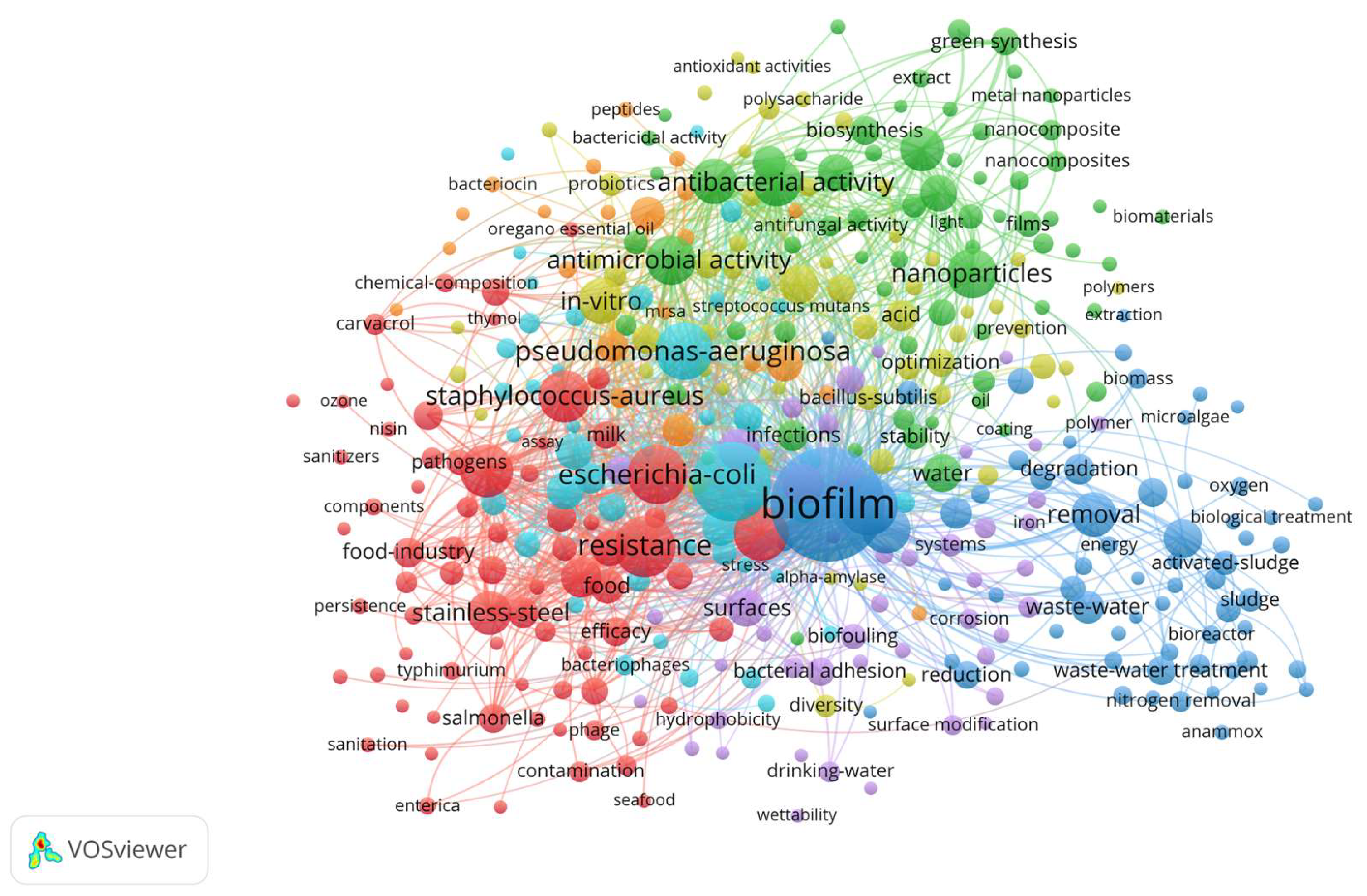
Figure 2.
Organization analysis by VOSviewer. The lines indicate the research collaboration.
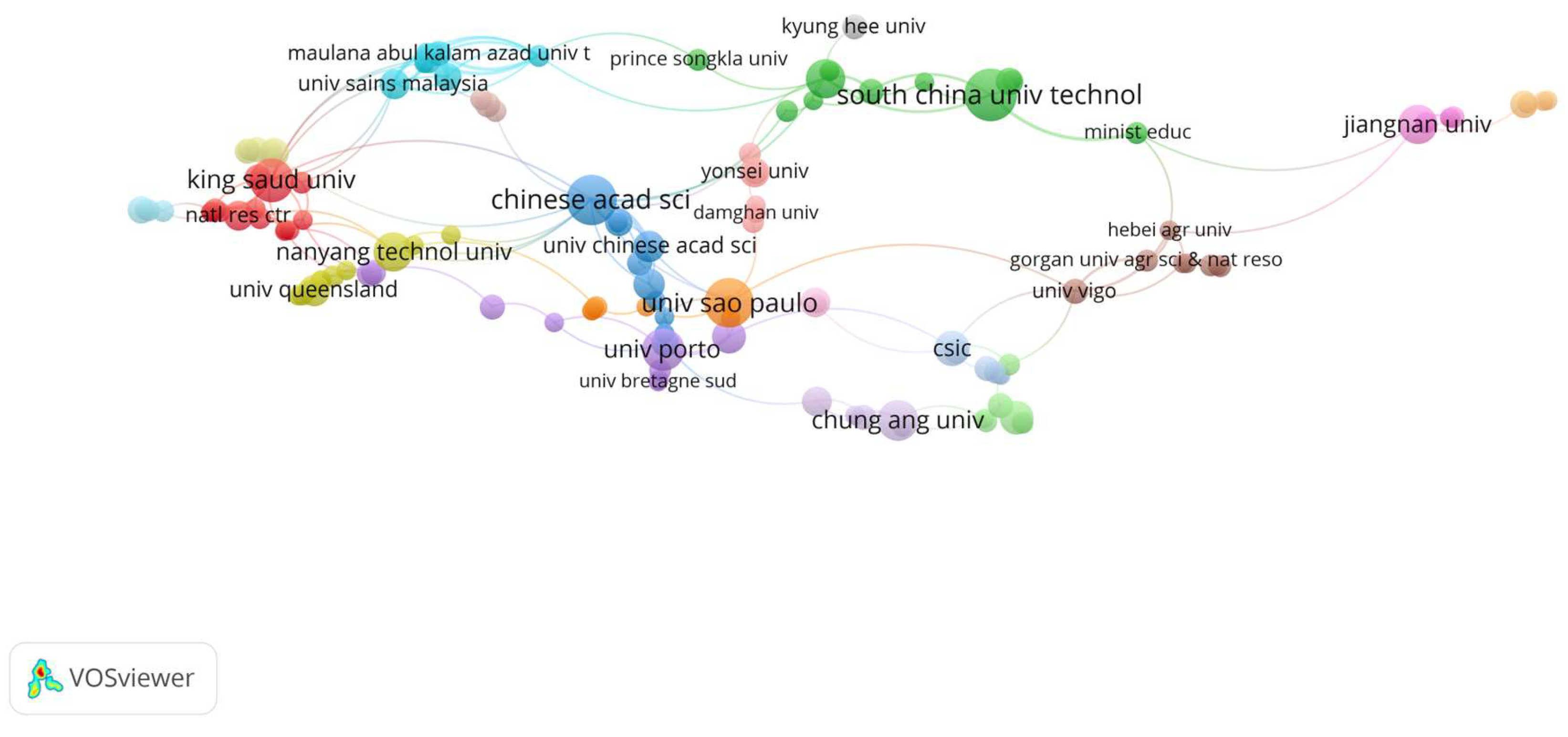
Figure 3.
The country/region analysis by VOSviewer. The lines indicate the research collaboration.
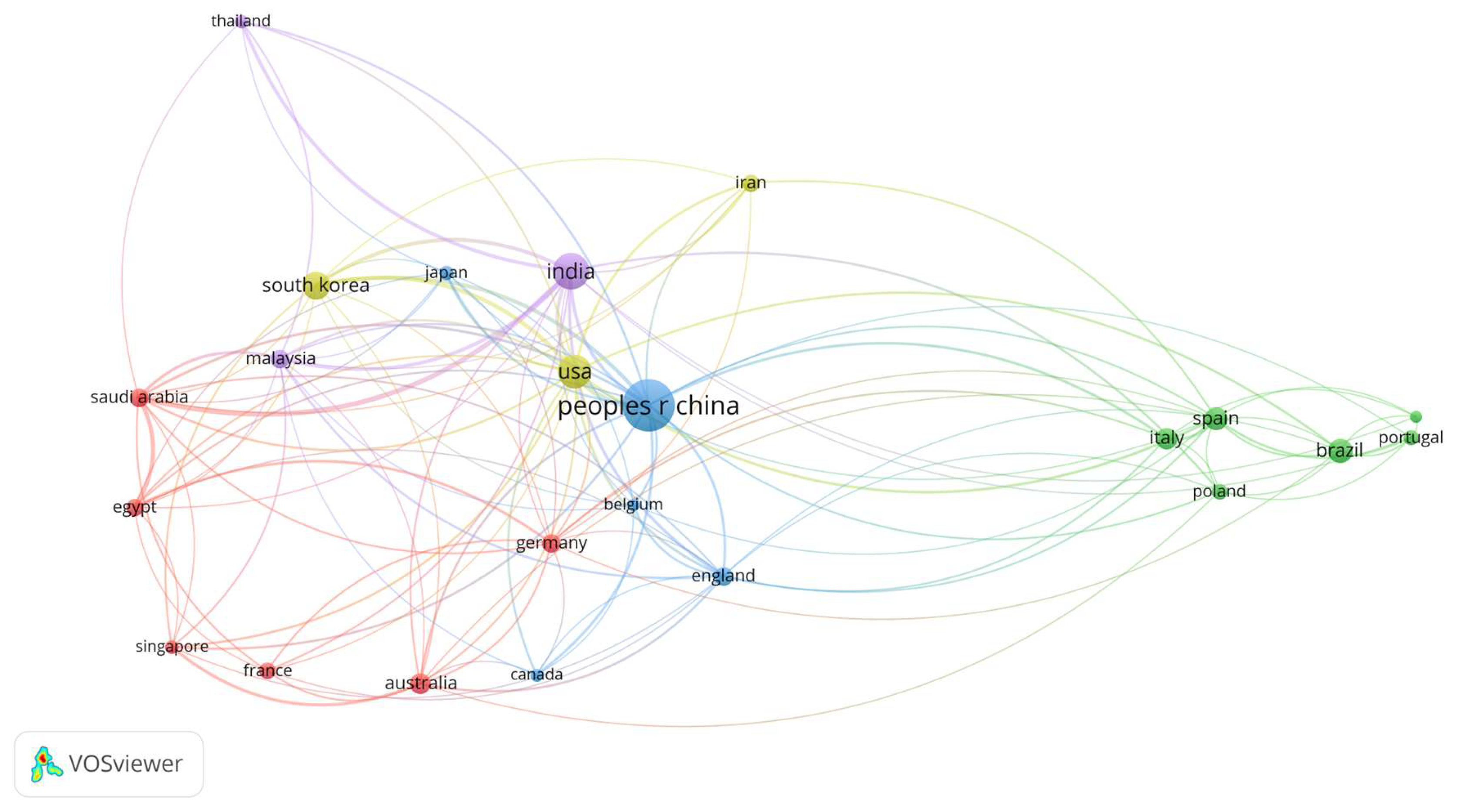

Table 1.
Model biofilm species and its major industry applications.
| Model Species | Main Contribution | Reference |
|---|---|---|
| Bacillus halodurans | Bacillus halodurans bacteria improves crack healing and tensile strength in engineered cementitious composites. | [31] |
| Bacillus halodurans | Bacillus halodurans genetically modified for faster crack repair in concrete. | [32] |
| Bacillus halodurans | Bacillus halodurans enhances fracture toughness and strength in strain hardening cementitious composites. | [33] |
| Comamonas testosteroni | Comamonas testosteroni enhanced biofilm formation and biodegradation of 3-chloroaniline with c-di-GMP. | [34] |
| Escherichia coli | Escherichia coli used to test antibacterial behavior of photocatalytic lightweight engineered cementitious composites. | [35] |
| Escherichia coli | Escherichia coli testing shows fine-particulate TiO2’s superior antibacterial performance. | [36] |
| Escherichia coli | Escherichia coli inactivation enhanced by graphene oxide-titanium dioxide composite under visible light. | [37] |
| Escherichia coli | Escherichia coli decomposition improved using graphene-based TiO2 under visible light. | [38] |
| Shewanella oneidensis | Shewanella oneidensis shows improved Cr(VI) remediation with cohesive mutant biofilms developed | [39] |
| Shewanella oneidensis | Shewanella oneidensis biofilms analyzed for molecular responses to environmental Cr(VI) stress. | [40] |
| Shewanella oneidensis | Shewanella oneidensis biofilm responses to Cr(VI) analyzed via mass spectrometry imaging. | [41] |
| Shewanella oneidensis | Shewanella oneidensis hybrid biofilms improve microbial fuel cell efficiency and performance. | [42] |
| Shewanella oneidensis | Shewanella oneidensis achieves spontaneous nanoparticle accumulation, boosting biofilm-driven microbial fuel cell current densities. | [43] |
| Shewanella oneidensis | Shewanella oneidensis enhances extracellular electron transfer through synthetic flavin biosynthesis pathway expression. | [44] |
Disclaimer/Publisher’s Note: The statements, opinions and data contained in all publications are solely those of the individual author(s) and contributor(s) and not of MDPI and/or the editor(s). MDPI and/or the editor(s) disclaim responsibility for any injury to people or property resulting from any ideas, methods, instructions or products referred to in the content. |
© 2025 by the authors. Licensee MDPI, Basel, Switzerland. This article is an open access article distributed under the terms and conditions of the Creative Commons Attribution (CC BY) license (http://creativecommons.org/licenses/by/4.0/).
Copyright: This open access article is published under a Creative Commons CC BY 4.0 license, which permit the free download, distribution, and reuse, provided that the author and preprint are cited in any reuse.


