

Submitted:
17 January 2025
Posted:
17 January 2025
You are already at the latest version
Abstract
Bioremediation is an increasingly important field in environmental science, offering solutions to address pollution challenges, particularly in developing countries. During industrial development, heavy metal water pollution often becomes a significant issue. Bioremediation presents a promising approach to mitigate this pollution. This study uses bibliographic analysis to explore the latest advancements in bioremediation technologies, focusing on the treatment of heavy metals. By reviewing recent publications, this study examines innovative methods and key research trends in the field. One notable example discussed is the use of Shewanella oneidensis, a microorganism capable of immobilizing heavy metal pollutants, thereby reducing their impact on water systems. Additionally, the paper explores the future potential of bioremediation, specifically the integration of big data and machine learning. These technologies could enhance the effectiveness of bioremediation strategies by providing predictive models and optimizing solutions for a wide range of environmental conditions.
Keywords:
Bioremediation
; Bibliography
; VOSviewer
; Big Data
; Machine Learning
1. Introduction
Bioremediation has emerged as an increasingly significant field in environmental science, addressing pressing challenges posed by industrialization and urbanization [1,2]. As developing countries progress, their rapid industrial growth often leads to severe water pollution, particularly from heavy metals [3,4]. These pollutants, including hexavalent chromium, lead, and cadmium, pose serious risks to ecosystems and human health [5,6]. Among the many solutions for mitigating heavy metal pollution, bioremediation stands out as a promising, cost-effective, and sustainable approach that utilizes natural biological processes to detoxify contaminated environments [7,8].
Heavy metal water pollution is a critical issue, especially in developing regions, where industrial discharge, mining activities, and inadequate waste management contribute to environmental degradation [9,10]. Addressing this challenge requires innovative and effective technologies [11,12]. Bioremediation offers a solution by employing microorganisms capable of degrading or transforming harmful pollutants into less toxic forms [13,14]. For instance, certain bacterial species, such as Shewanella oneidensis, have shown remarkable potential in immobilizing heavy metals, reducing their mobility and bioavailability in water systems [15,16]. This highlights the practical applications of bioremediation in tackling pollution at its source [17,18].
To understand the latest advancements in bioremediation technology, this study employs bibliographic analysis [19,20]. Conducted in January 2025, the analysis reviews the most recent and influential publications in the field. By systematically examining trends, key contributors, and innovative techniques, this study provides insights into how bioremediation research has evolved and identifies areas of focus that are shaping its future. This bibliographic approach offers a comprehensive view of the current state of the field, enabling researchers to assess its progress and potential applications.
In addition to exploring existing methods, such as the use of Shewanella oneidensis for immobilizing heavy metal pollutants, this study also proposes future directions for bioremediation research [21,22]. Specifically, it emphasizes the integration of bioremediation with big data and machine learning technologies [23,24]. By leveraging these advanced tools, researchers can enhance the precision and efficiency of bioremediation strategies, enabling the development of predictive models and optimized solutions. This forward-looking perspective highlights the transformative potential of combining biological and computational approaches to address complex environmental challenges.
2. Materials and Methods
In this study, we performed a bibliographic analysis on the topic of "Bioremediation" using the Web of Science database [25,26]. The search was conducted on January 13, 2025, and yielded a total of 40,380 articles relevant to this field. To focus our analysis and make it manageable, we selected the first 1,000 articles based on the database’s default sorting. These articles were analyzed using VOSviewer (Version 1.6.20) [27,28], a powerful tool for visualizing bibliometric networks. This approach allowed us to explore patterns in the scientific literature, uncovering significant keywords, influential organizations, and prominent countries or regions contributing to bioremediation research [29,30].
For the keyword analysis, we set the minimum number of occurrences of a keyword at "10." This threshold was chosen to capture the most commonly used terms, highlighting the major themes and research focus areas within bioremediation. By identifying frequently occurring keywords, we were able to map the conceptual structure of the field and pinpoint the primary topics driving research interest. This step not only provided insights into established areas of study but also revealed potential gaps and emerging trends that could shape the future direction of bioremediation research.
When analyzing the contributions of organizations, we established a minimum threshold of "4" documents per organization. This criterion ensured that only institutions with a notable level of research output were included in the analysis. By doing so, we identified leading organizations that are actively advancing bioremediation studies. Mapping these institutions provided valuable insights into the key contributors to the field and underscored the role of institutional expertise and collaboration in driving innovation and addressing global environmental challenges.
Similarly, we applied a threshold of "20" documents to analyze the contributions of countries and regions. This criterion enabled us to examine the global distribution of bioremediation research efforts and identify regions that are most actively engaged in this area. The analysis highlighted the leading nations driving progress in bioremediation, as well as the extent of international collaboration in addressing complex environmental issues. By focusing on these geographic trends, we gained a deeper understanding of the global landscape of bioremediation research and the partnerships that underpin its advancement.
3. Results
Figure 1 illustrates the keyword analysis conducted using VOSviewer in the field of bioremediation, highlighting the primary focus areas and trends within this domain. A significant portion of the keywords is associated with bioremediation methods used for site remediation, including terms such as "biodegradation," "biostimulation," "removal," and "detoxification." These keywords reflect the diverse techniques and processes employed to treat and mitigate environmental contaminants, emphasizing the practical applications of bioremediation in addressing site-specific pollution issues. The clustering of these terms showcases the importance of developing and optimizing strategies to enhance the efficiency of bioremediation technologies in various environmental contexts.
Figure 1.
VOSviewer analysis on keyword in the bioremediation research field. The lines indicate the connection.
Figure 1.
VOSviewer analysis on keyword in the bioremediation research field. The lines indicate the connection.
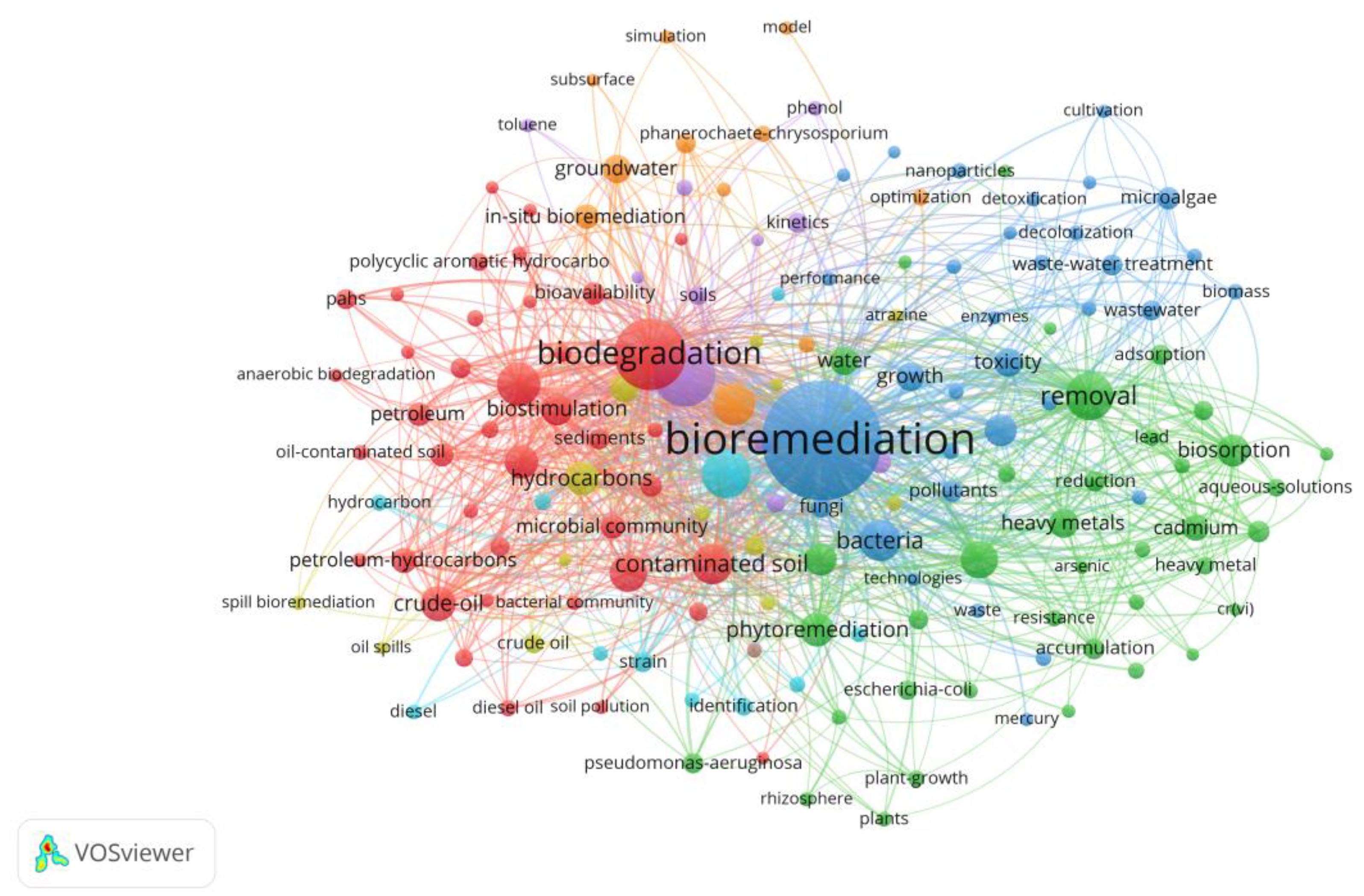
Another subset of keywords is related to the media where bioremediation is applied, such as "groundwater," "wastewater," "soils," and "sediments." These terms highlight the diverse environments in which bioremediation processes are implemented, underscoring the adaptability of these techniques to various ecological and industrial settings. The inclusion of these media-specific keywords in the analysis demonstrates the widespread relevance of bioremediation across different sectors, from agricultural and industrial wastewater treatment to the rehabilitation of polluted natural ecosystems. These findings emphasize the critical role of bioremediation in managing pollution in diverse environmental matrices.
A third group of keywords focuses on the types of pollutants addressed by bioremediation, including terms such as "phenol," "oil spills," "crude oil," "heavy metal," and "pollution." These keywords represent the variety of contaminants that bioremediation seeks to degrade, remove, or neutralize. The prominence of these terms in the analysis reflects the growing interest in tackling complex pollution challenges, particularly those involving hazardous substances like heavy metals and hydrocarbons. The inclusion of keywords related to oil spills and crude oil highlights the importance of bioremediation in addressing large-scale environmental disasters, while terms like "phenol" and "pollution" point to its applicability in routine industrial pollution management.
Lastly, the analysis also reveals the presence of keywords linked to computational methods, such as "simulation," "model," "kinetics," and "optimization." These terms indicate the increasing integration of computer-based approaches in bioremediation research and practice. The application of simulations, modeling techniques, and kinetic studies allows researchers to predict the outcomes of bioremediation processes more accurately, optimize treatment conditions, and enhance the overall efficiency of bioremediation strategies. This trend signifies a shift toward more data-driven and technology-enabled solutions in the field, paving the way for innovative approaches to address complex environmental challenges.
Figure 2 illustrates the VOSviewer analysis of key organizations contributing to the bioremediation research field, showcasing the diversity and breadth of institutional involvement. Leading universities and research institutes have emerged as central contributors, driving advancements in bioremediation technologies and methodologies. Institutions such as Tsinghua University, the Chinese Academy of Sciences, and the University of Delhi play prominent roles in publishing impactful research and spearheading innovations in this field. Their work addresses critical environmental challenges and enhances the understanding and application of bioremediation techniques.
Figure 2.
VOSviewer analysis on organization in the bioremediation research field. The lines indicate the research collaboration.
Figure 2.
VOSviewer analysis on organization in the bioremediation research field. The lines indicate the research collaboration.
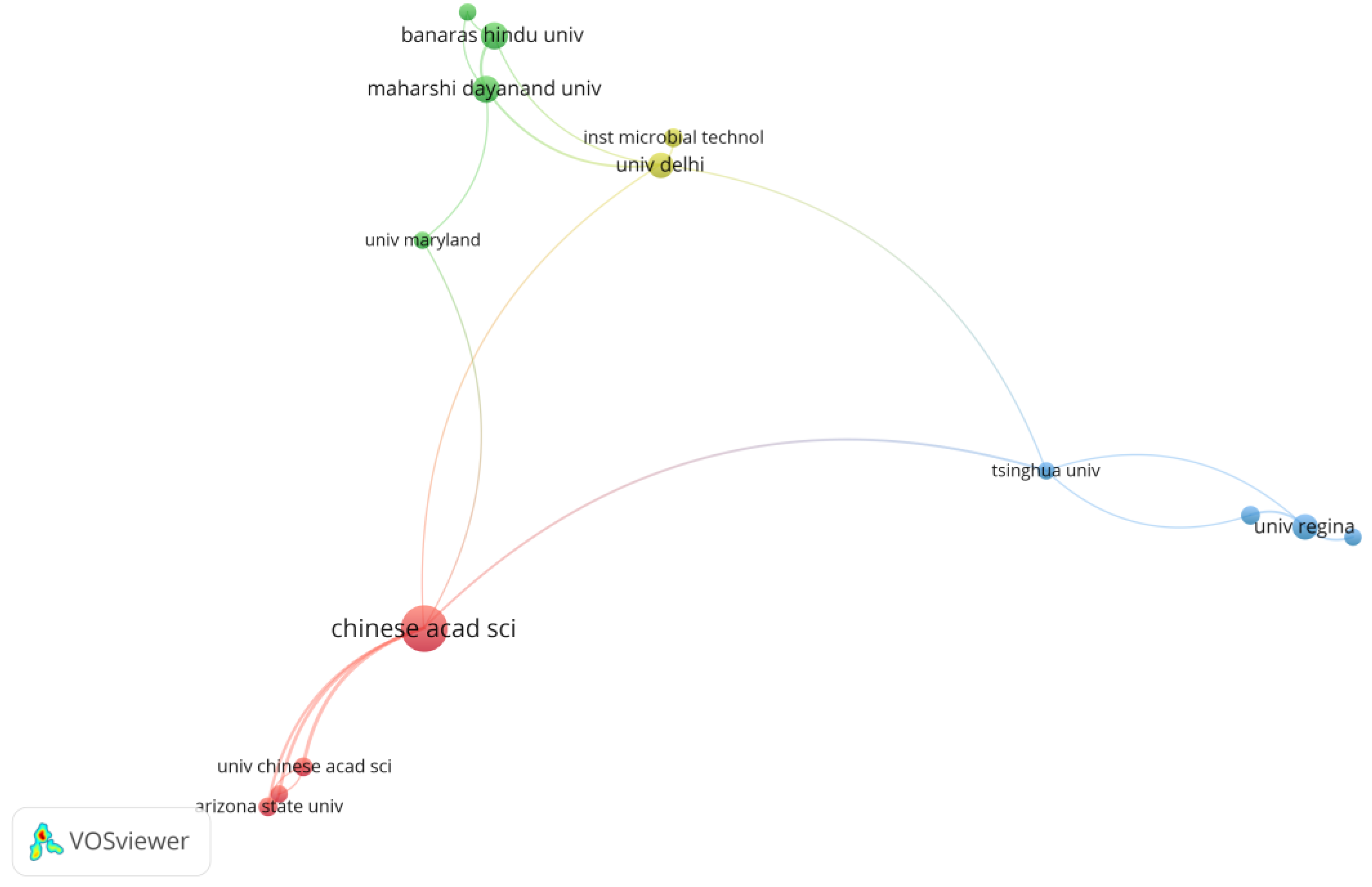
The analysis highlights the interconnectedness of these organizations within the broader research network. Collaboration between institutions fosters the exchange of ideas, sharing of resources, and joint development of solutions to complex environmental problems. These partnerships are essential in bridging gaps between theoretical research and practical applications, enabling advancements that are both scientifically rigorous and highly applicable. The dynamic interplay between institutions creates a robust foundation for innovation, driving the field forward through collective efforts and shared expertise.
The contributions of these organizations underscore the importance of a multidisciplinary approach in bioremediation research. Drawing expertise from fields such as microbiology, environmental science, and engineering, these institutions integrate knowledge to address pollution and ecological restoration comprehensively. Their collaborative endeavors reflect a commitment to addressing global environmental challenges through scientific discovery and practical solutions. As a result, the research network established by these organizations continues to expand the boundaries of bioremediation, ensuring its relevance and effectiveness in diverse contexts.
Figure 3 highlights the key countries and regions contributing to bioremediation research, with the most prominent being the United States, India, and China. These nations are central to advancing bioremediation, each bringing unique strengths to the field. The United States leads in technological innovation and research infrastructure, while India and China contribute significantly due to their urgent need for solutions to widespread pollution challenges. Beyond these core contributors, other important nations include Poland, Brazil, Italy, Nigeria, Japan, Malaysia, South Korea, the United Kingdom, Australia, Canada, Spain, and Iran. This diverse representation underscores the global nature of bioremediation research, as countries across continents work together to address shared environmental concerns.
Figure 3.
VOSviewer analysis on country/region in the bioremediation research field. The lines indicate the research collaboration.
Figure 3.
VOSviewer analysis on country/region in the bioremediation research field. The lines indicate the research collaboration.
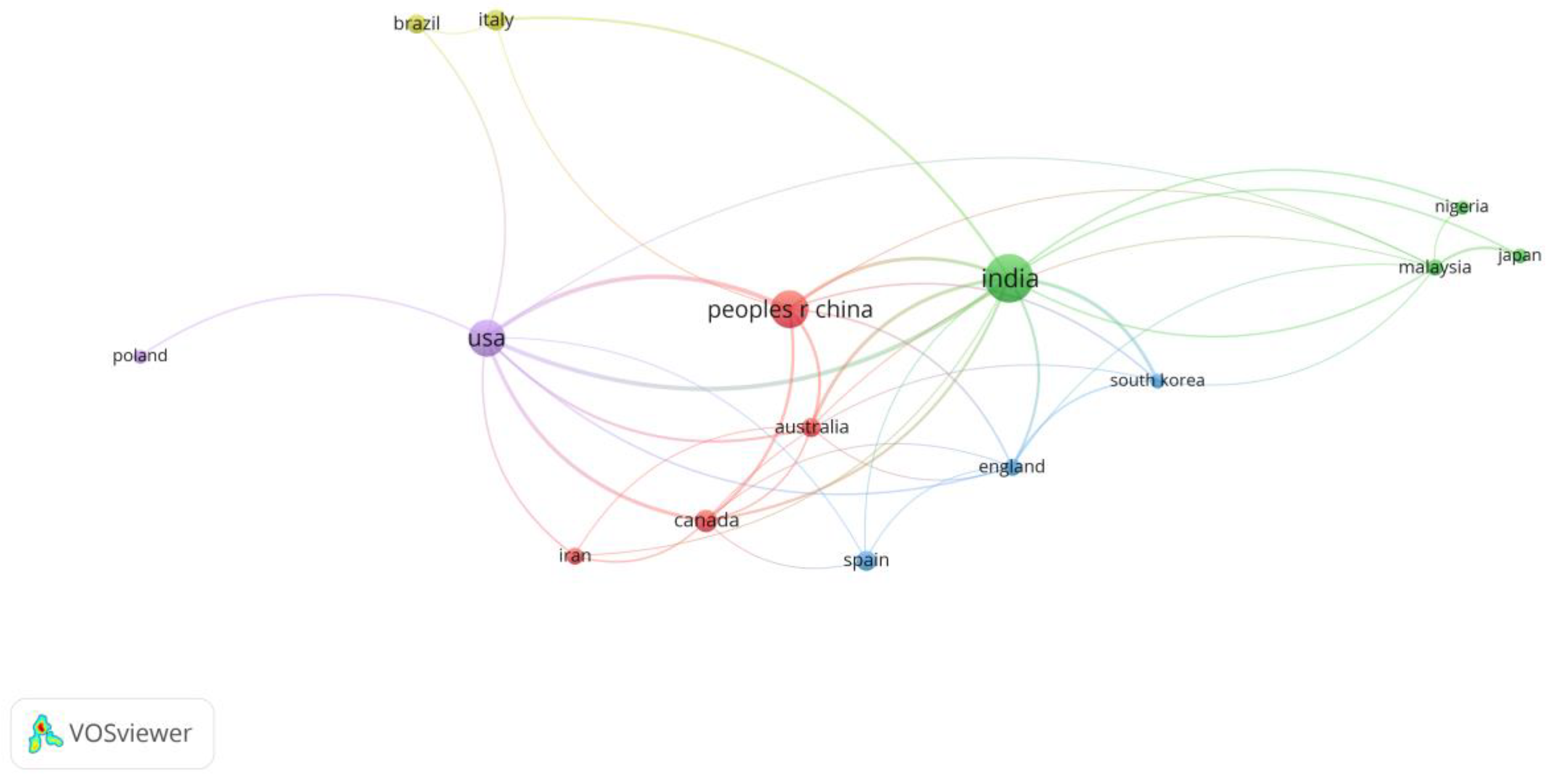
The global collaboration evident in the bioremediation research field reflects the complementary roles of developed and developing nations. Developed countries, such as the United States, the United Kingdom, and Australia, often focus on advancing cutting-edge technologies, theoretical frameworks, and methodological innovations. Meanwhile, developing nations like India, China, and Brazil provide critical real-world applications and case studies. These countries face severe environmental pollution issues, making them important testing grounds for bioremediation strategies. The interplay between technical expertise and practical application ensures that research is both innovative and grounded in addressing real-world challenges, fostering the advancement of bioremediation as a practical solution.
International cooperation has emerged as a cornerstone of bioremediation research, enabling the pooling of resources, expertise, and data from across the globe. Such collaboration is vital for tackling the complex and interconnected nature of environmental problems that transcend national boundaries. For instance, partnerships between technologically advanced nations and regions facing acute pollution crises can accelerate the development and deployment of effective bioremediation techniques. The findings in Figure 3 emphasize the importance of fostering a global network of collaboration to address pressing environmental challenges. This shared effort not only strengthens scientific outcomes but also ensures the global applicability and scalability of bioremediation solutions, creating a foundation for sustainable environmental management worldwide.
4. Discussion
4.1. The Case for Effective Bioremediation Methods
Through bibliographic analysis, heavy metals emerge as significant environmental pollutants, posing substantial risks to ecosystems and human health [31,32]. Among these, hexavalent chromium (Cr(VI)) is particularly hazardous due to its high toxicity and carcinogenic properties [33,34]. Excessive exposure to Cr(VI) can lead to severe health issues, including gastrointestinal diseases and an increased risk of cancer [35,36]. These findings underscore the urgent need for effective remediation methods to address heavy metal contamination in water and soil, which are critical to safeguarding public health and environmental integrity [37,38].
Bioremediation presents a promising approach for addressing the challenges posed by heavy metal pollution [39,40]. Among various techniques, the use of microorganisms such as Shewanella oneidensis, environmental bacteria with electron transfer capability [41,42], has demonstrated significant potential in mitigating heavy metal contamination [43]. This bacterium has the ability to reduce Cr(VI) to its less toxic and insoluble form, Cr(III) [44,45], thereby immobilizing chromium and preventing its spread in water systems [46]. The application of Shewanella oneidensis and similar microorganisms offers a natural, cost-effective, and sustainable solution for water purification and environmental restoration [47]. These biological processes leverage nature's inherent mechanisms to counteract the harmful effects of industrial and agricultural pollutants [48].
Looking ahead, bioremediation holds immense potential for tackling an increasing array of environmental pollution challenges [49,50]. As research in this field continues to advance, novel microbial strains and engineered biotechnologies are likely to emerge, further enhancing the effectiveness of bioremediation strategies [51,52]. By harnessing the power of bioremediation, it is possible to pave the way for a cleaner and more sustainable future, addressing both current and emerging pollution threats [53,54].
4.2. Big Data and Machine Learning for Future Bioremediation Research
The future development of bioremediation lies in its integration with big data and machine learning [55,56]. These technologies, which have already revolutionized fields such as facial recognition [57,58], autonomous driving [59,60], cancer prediction [61], global species distribution [62], and educational outcome forecast [63], hold significant potential for transforming bioremediation practices. By leveraging the strengths of big data and machine learning, bioremediation can become more precise, efficient, and adaptable to a wide range of environmental challenges.
Big data provides the foundation for building comprehensive datasets that capture critical information from bioremediation experiments [64]. These datasets can include variables such as temperature, humidity, rainfall, types of pollutants, pollutant concentrations, microbial species, and the outcomes of microbial treatments. By compiling this information on a large scale, researchers can create a robust knowledge base that serves as a foundation for advanced analytics. Machine learning models, such as neural networks, can then be trained on this data to identify patterns and relationships that may not be immediately apparent through traditional methods. These models can help predict the effectiveness of bioremediation under various conditions and guide future applications.
One of the most transformative applications of machine learning in bioremediation could be its ability to provide recommendations for addressing previously unknown pollutants [65]. By analyzing the vast dataset and applying trained models, machine learning could determine whether bioremediation is suitable for a particular pollutant and, if so, suggest the optimal microbial species and concentrations for treatment. Over time, these models, through continuous training and refinement, might surpass even the expertise of seasoned scientists in identifying effective solutions. This level of predictive capability could significantly accelerate the response to environmental contamination and improve the success rate of bioremediation efforts.
The combination of big data and machine learning represents a promising frontier in the field of bioremediation [66]. As these technologies continue to evolve, they are poised to play a pivotal role in addressing the complexities of environmental pollution. By integrating data-driven insights with the natural processes of microbial treatment, the field of bioremediation can unlock unprecedented potential, paving the way for innovative solutions to safeguard ecosystems and promote sustainability.
5. Conclusions
In conclusion, bioremediation has proven to be an increasingly crucial solution for addressing environmental pollution, particularly in developing countries where heavy metal contamination of water resources is a growing concern. Through bibliographic analysis, this study highlights key advancements in bioremediation technologies, focusing on innovative approaches for tackling heavy metal pollution. The use of Shewanella oneidensis as a biological agent to immobilize heavy metals showcases the potential of microbial bioremediation in environmental restoration. Furthermore, the study emphasizes the future direction of bioremediation, proposing the integration of big data and machine learning to enhance the effectiveness of these techniques. By utilizing data-driven models, it is possible to predict and optimize bioremediation strategies, thereby improving their efficiency and adaptability to various environmental challenges. As research in this field continues to progress, bioremediation is poised to play a key role in addressing global environmental pollution in the years to come.
References
- Bala, S.; Garg, D.; Thirumalesh, B.V.; Sharma, M.; Sridhar, K.; Inbaraj, B.S.; Tripathi, M. Recent strategies for bioremediation of emerging pollutants: a review for a green and sustainable environment. Toxics 2022, 10, 484. [Google Scholar] [CrossRef] [PubMed]
- Kour, D.; Kaur, T.; Devi, R.; Yadav, A.; Singh, M.; Joshi, D.; Singh, J.; Suyal, D.C.; Kumar, A.; Rajput, V.D. Beneficial microbiomes for bioremediation of diverse contaminated environments for environmental sustainability: present status and future challenges. Environmental Science and Pollution Research 2021, 28, 24917–24939. [Google Scholar] [CrossRef] [PubMed]
- Ding, Y. Heavy metal pollution and transboundary issues in ASEAN countries. Water Policy 2019, 21, 1096–1106. [Google Scholar] [CrossRef]
- Bharti, R.; Sharma, R. Effect of heavy metals: An overview. Materials Today: Proceedings 2022, 51, 880–885. [Google Scholar]
- Zerizghi, T.; Guo, Q.; Tian, L.; Wei, R.; Zhao, C. An integrated approach to quantify ecological and human health risks of soil heavy metal contamination around coal mining area. Science of the Total Environment 2022, 814, 152653. [Google Scholar] [CrossRef] [PubMed]
- Chen, S.; Ding, Y. Systematic bibliographic analysis of heavy metal remediation. Water Science & Technology, 2024, wst2024396.
- Sayqal, A.; Ahmed, O.B. [Retracted] Advances in Heavy Metal Bioremediation: An Overview. Applied Bionics and Biomechanics 2021, 2021, 1609149. [Google Scholar] [CrossRef]
- Sreedevi, P.R.; Suresh, K.; Jiang, G. Bacterial bioremediation of heavy metals in wastewater: a review of processes and applications. Journal of Water Process Engineering 2022, 48, 102884. [Google Scholar] [CrossRef]
- Chen, S.; Ding, Y. Tackling heavy metal pollution: evaluating governance models and frameworks. Sustainability 2023, 15, 15863. [Google Scholar] [CrossRef]
- Liu, Y.; Wang, P.; Gojenko, B.; Yu, J.; Wei, L.; Luo, D.; Xiao, T. A review of water pollution arising from agriculture and mining activities in Central Asia: Facts, causes and effects. Environmental Pollution 2021, 291, 118209. [Google Scholar] [CrossRef]
- Wang, Z.; Luo, P.; Zha, X.; Xu, C.; Kang, S.; Zhou, M.; Nover, D.; Wang, Y. Overview assessment of risk evaluation and treatment technologies for heavy metal pollution of water and soil. Journal of Cleaner Production 2022, 379, 134043. [Google Scholar] [CrossRef]
- Zamora-Ledezma, C.; Negrete-Bolagay, D.; Figueroa, F.; Zamora-Ledezma, E.; Ni, M.; Alexis, F.; Guerrero, V.H. Heavy metal water pollution: A fresh look about hazards, novel and conventional remediation methods. Environmental Technology & Innovation 2021, 22, 101504. [Google Scholar]
- Sharma, P.; Singh, S.P.; Parakh, S.K.; Tong, Y.W. Health hazards of hexavalent chromium (Cr (VI)) and its microbial reduction. Bioengineered 2022, 13, 4923–4938. [Google Scholar] [CrossRef] [PubMed]
- Chen, J.; Tian, Y. Hexavalent chromium reducing bacteria: mechanism of reduction and characteristics. Environmental Science and Pollution Research 2021, 28, 20981–20997. [Google Scholar] [CrossRef] [PubMed]
- Yin, Y.; Liu, C.; Zhao, G.; Chen, Y. Versatile mechanisms and enhanced strategies of pollutants removal mediated by Shewanella oneidensis: A review. Journal of Hazardous Materials 2022, 440, 129703. [Google Scholar] [CrossRef] [PubMed]
- Munoz-Cupa, C.; Bassi, A. Investigation of heavy metal removal from salty wastewater and voltage production using Shewanella oneidensis MR-1 nanowires in a dual-chamber microbial fuel cell. Environmental Progress & Sustainable Energy 2024, 43, e14237. [Google Scholar]
- Zhang, P.; Liu, W.-P.; Zhao, T.-L.; Yao, Q.-Z.; Li, H.; Fu, S.-Q.; Zhou, G.-T. Biomineralization of struvite by Shewanella oneidensis MR-1 for phosphorus recovery: Cr (VI) effect and behavior. Journal of Environmental Chemical Engineering 2022, 10, 106923. [Google Scholar] [CrossRef]
- Li, D.; He, H.; Xu, Z.; Deng, H. Investigation on the effect of Cu2+, Mn2+ and Fe3+ on biotreatment of Cr (VI) by Shewanella oneidensis and Bacillus subtilis in bimetallic system. Surfaces and Interfaces 2024, 44, 103742. [Google Scholar] [CrossRef]
- Chen, S.; Ding, Y. Bibliographic Insights into Biofilm Engineering. Acta Microbiologica Hellenica 2024, 69, 3–13. [Google Scholar] [CrossRef]
- Ding, Y.; Chen, S. A Bibliographic Outlook: Machine Learning on Biofilm. Research Directions: Biotechnology Design, 2024; 1–22. [Google Scholar]
- Ma, L.; Du, Y.; Chen, S.; Du, D.; Ye, H.; Zhang, T.C. Highly efficient removal of Cr (VI) from aqueous solution by pinecone biochar supported nanoscale zero-valent iron coupling with Shewanella oneidensis MR-1. Chemosphere 2022, 287, 132184. [Google Scholar] [CrossRef]
- Zhang, L.; Xi, L.; He, S.; Wen, H.; Tan, S.; Chen, S. Riboflavin derivatives as a novel electron transfer mediator for enhancing Cr (VI) removal by Shewanella oneidensis MR-1. International Biodeterioration & Biodegradation 2024, 195, 105892. [Google Scholar]
- Baskaran, D.; Byun, H.-S. Current trend of polycyclic aromatic hydrocarbon bioremediation: Mechanism, artificial mixed microbial strategy, machine learning, ground application, cost and policy implications. Chemical Engineering Journal 2024, 155334. [Google Scholar] [CrossRef]
- Sounderarajan, S.; Karuppusamy, K.; Surya, A.P.V.; Puchalapalli, D.S.R.; Sethi, G.; Ayothiraman, S. Machine learning approach for the effectual production of a novel esterase and its application in bioremediation of dairy effluent. Process Biochemistry 2024, 144, 20–37. [Google Scholar] [CrossRef]
- Singh, V.K.; Singh, P.; Karmakar, M.; Leta, J.; Mayr, P. The journal coverage of Web of Science, Scopus and Dimensions: A comparative analysis. Scientometrics 2021, 126, 5113–5142. [Google Scholar] [CrossRef]
- Alviz-Meza, A.; Orozco-Agamez, J.; Quinayá, D.C.P.; Alviz-Amador, A. Bibliometric analysis of fourth industrial revolution applied to material sciences based on Web of Science and Scopus databases from 2017 to 2021. ChemEngineering 2023, 7, 2. [Google Scholar] [CrossRef]
- Chen, S.; Ding, Y. From bibliography to understanding: water microbiology and human health. Journal of Water and Health 2024, 22, 1911–1921. [Google Scholar] [CrossRef]
- Chen, S.; Ding, Y. A bibliography study of Shewanella oneidensis biofilm. FEMS Microbiology Ecology 2023, 99, fiad124. [Google Scholar] [CrossRef]
- Bukar, U.A.; Sayeed, M.S.; Razak, S.F.A.; Yogarayan, S.; Amodu, O.A.; Mahmood, R.A.R. A method for analyzing text using VOSviewer. MethodsX 2023, 11, 102339. [Google Scholar] [CrossRef]
- Kumar, R.; Saxena, S.; Kumar, V.; Prabha, V.; Kumar, R.; Kukreti, A. Service innovation research: a bibliometric analysis using VOSviewer. Competitiveness Review: An International Business Journal 2024, 34, 736–760. [Google Scholar] [CrossRef]
- Mitra, S.; Chakraborty, A.J.; Tareq, A.M.; Emran, T.B.; Nainu, F.; Khusro, A.; Idris, A.M.; Khandaker, M.U.; Osman, H.; Alhumaydhi, F.A. Impact of heavy metals on the environment and human health: Novel therapeutic insights to counter the toxicity. Journal of King Saud University-Science 2022, 34, 101865. [Google Scholar] [CrossRef]
- Gong, Y.; Wang, Y.; Lin, N.; Wang, R.; Wang, M.; Zhang, X. Iron-based materials for simultaneous removal of heavy metal (loid) s and emerging organic contaminants from the aquatic environment: Recent advances and perspectives. Environmental Pollution 2022, 299, 118871. [Google Scholar] [CrossRef]
- Azeez, N.A.; Dash, S.S.; Gummadi, S.N.; Deepa, V.S. Nano-remediation of toxic heavy metal contamination: Hexavalent chromium [Cr (VI)]. Chemosphere 2021, 266, 129204. [Google Scholar] [CrossRef] [PubMed]
- Wise Jr, J.P.; Young, J.L.; Cai, J.; Cai, L. Current understanding of hexavalent chromium [Cr (VI)] neurotoxicity and new perspectives. Environment international 2022, 158, 106877. [Google Scholar] [CrossRef] [PubMed]
- den Braver-Sewradj, S.P.; van Benthem, J.; Staal, Y.C.M.; Ezendam, J.; Piersma, A.H.; Hessel, E.V.S. Occupational exposure to hexavalent chromium. Part II. Hazard assessment of carcinogenic effects. Regulatory Toxicology and Pharmacology 2021, 126, 105045. [Google Scholar] [CrossRef]
- Behrens, T.; Ge, C.; Vermeulen, R.; Kendzia, B.; Olsson, A.; Schüz, J.; Kromhout, H.; Pesch, B.; Peters, S.; Portengen, L. Occupational exposure to nickel and hexavalent chromium and the risk of lung cancer in a pooled analysis of case-control studies (SYNERGY). International journal of cancer 2023, 152, 645–660. [Google Scholar] [CrossRef]
- Ding, Y.; Zhou, Y.; Yao, J.; Xiong, Y.; Zhu, Z.; Yu, X.-Y. Molecular evidence of a toxic effect on a biofilm and its matrix. Analyst 2019, 144, 2498–2503. [Google Scholar] [CrossRef]
- Alvarez, C.C.; Gómez, M.E.B.; Zavala, A.H. Hexavalent chromium: Regulation and health effects. Journal of trace elements in medicine and biology 2021, 65, 126729. [Google Scholar] [CrossRef]
- Ghosh, S.; Jasu, A.; Ray, R.R. Hexavalent chromium bioremediation with insight into molecular aspect: an overview. Bioremediation Journal 2021, 25, 225–251. [Google Scholar] [CrossRef]
- Bhunia, A.; Lahiri, D.; Nag, M.; Upadhye, V.; Pandit, S. Bacterial biofilm mediated bioremediation of hexavalent chromium: a review. Biocatalysis and Agricultural Biotechnology 2022, 43, 102397. [Google Scholar] [CrossRef]
- Yang, Y.; Ding, Y.; Hu, Y.; Cao, B.; Rice, S.A.; Kjelleberg, S.; Song, H. Enhancing bidirectional electron transfer of Shewanella oneidensis by a synthetic flavin pathway. ACS synthetic biology 2015, 4, 815–823. [Google Scholar] [CrossRef]
- Zhao, C.e.; Wu, J.; Ding, Y.; Wang, V.B.; Zhang, Y.; Kjelleberg, S.; Loo, J.S.C.; Cao, B.; Zhang, Q. Hybrid conducting biofilm with built-in bacteria for high-performance microbial fuel cells. ChemElectroChem 2015, 2, 654–658. [Google Scholar] [CrossRef]
- Ding, Y.; Zhou, Y.; Yao, J.; Szymanski, C.; Fredrickson, J.; Shi, L.; Cao, B.; Zhu, Z.; Yu, X.-Y. In situ molecular imaging of the biofilm and its matrix. Analytical chemistry 2016, 88, 11244–11252. [Google Scholar] [CrossRef] [PubMed]
- Liang, J.; Huang, X.; Yan, J.; Li, Y.; Zhao, Z.; Liu, Y.; Ye, J.; Wei, Y. A review of the formation of Cr (VI) via Cr (III) oxidation in soils and groundwater. Science of The Total Environment 2021, 774, 145762. [Google Scholar] [CrossRef]
- Farooqi, Z.H.; Akram, M.W.; Begum, R.; Wu, W.; Irfan, A. Inorganic nanoparticles for reduction of hexavalent chromium: Physicochemical aspects. Journal of Hazardous Materials 2021, 402, 123535. [Google Scholar] [CrossRef] [PubMed]
- Ding, Y.; Peng, N.; Du, Y.; Ji, L.; Cao, B. Disruption of putrescine biosynthesis in Shewanella oneidensis enhances biofilm cohesiveness and performance in Cr (VI) immobilization. Applied and environmental microbiology 2014, 80, 1498–1506. [Google Scholar] [CrossRef]
- Xi, L.; He, S.; Qin, Y.; Chen, L.; Tan, S.; Chen, S. Biosynthesis of biogenic ferrous sulfide as a potential electron shuttle for enhanced Cr (VI) removal by Shewanella oneidensis MR-1. Journal of Water Process Engineering 2024, 57, 104725. [Google Scholar] [CrossRef]
- Ma, L.; Chen, N.; Feng, C.; Yang, Q. Recent advances in enhanced technology of Cr (VI) bioreduction in aqueous condition: A review. Chemosphere 2024, 141176. [Google Scholar] [CrossRef]
- Patel, A.K.; Singhania, R.R.; Albarico, F.P.J.B.; Pandey, A.; Chen, C.-W.; Dong, C.-D. Organic wastes bioremediation and its changing prospects. Science of the Total Environment 2022, 824, 153889. [Google Scholar] [CrossRef]
- Ayilara, M.S.; Babalola, O.O. Bioremediation of environmental wastes: the role of microorganisms. Frontiers in Agronomy 2023, 5, 1183691. [Google Scholar] [CrossRef]
- Sharma, B.; Shukla, P. Futuristic avenues of metabolic engineering techniques in bioremediation. Biotechnology and Applied Biochemistry 2022, 69, 51–60. [Google Scholar] [CrossRef]
- Arunraja, D.; Romauld, S.I.; Devi, P.B.; Thiruvengadam, S.; Kumar, V. Genetically engineered microbes for bioremediation and phytoremediation of contaminated environment. In Metagenomics to bioremediation; Elsevier: 2023; pp. 709-721.
- Kuppan, N.; Padman, M.; Mahadeva, M.; Srinivasan, S.; Devarajan, R. A comprehensive review of sustainable bioremediation techniques: Eco friendly solutions for waste and pollution management. Waste Management Bulletin 2024. [Google Scholar] [CrossRef]
- Yadav, A.N.; Suyal, D.C.; Kour, D.; Rajput, V.D.; Rastegari, A.A.; Singh, J. Bioremediation and waste management for environmental sustainability. Journal of Applied Biology and Biotechnology 2022, 10, 1–5. [Google Scholar] [CrossRef]
- Nti, I.K.; Quarcoo, J.A.; Aning, J.; Fosu, G.K. A mini-review of machine learning in big data analytics: Applications, challenges, and prospects. Big Data Mining and Analytics 2022, 5, 81–97. [Google Scholar] [CrossRef]
- Lampropoulos, G. Artificial intelligence, big data, and machine learning in industry 4.0. In Encyclopedia of data science and machine learning; IGI Global: 2023; pp. 2101-2109.
- Raju, K.; Chinna Rao, B.; Saikumar, K.; Lakshman Pratap, N. An optimal hybrid solution to local and global facial recognition through machine learning. A fusion of artificial intelligence and internet of things for emerging cyber systems 2022, 203–226. [Google Scholar]
- Geetha, M.; Latha, R.S.; Nivetha, S.K.; Hariprasath, S.; Gowtham, S.; Deepak, C.S. Design of face detection and recognition system to monitor students during online examinations using Machine Learning algorithms. 2021; pp. 1-4.
- Bachute, M.R.; Subhedar, J.M. Autonomous driving architectures: insights of machine learning and deep learning algorithms. Machine Learning with Applications 2021, 6, 100164. [Google Scholar] [CrossRef]
- Cai, X.; Giallorenzo, M.; Sarabandi, K. Machine learning-based target classification for MMW radar in autonomous driving. IEEE Transactions on Intelligent Vehicles 2021, 6, 678–689. [Google Scholar] [CrossRef]
- Ding, Y. Machine Learning Model Construction and Testing: Anticipating Cancer Incidence and Mortality. Diseases 2024, 12, 139. [Google Scholar] [CrossRef]
- Chen, S.; Ding, Y. Machine learning and its applications in studying the geographical distribution of ants. Diversity 2022, 14, 706. [Google Scholar] [CrossRef]
- Chen, S.; Ding, Y. A machine learning approach to predicting academic performance in Pennsylvania’s schools. Social Sciences 2023, 12, 118. [Google Scholar] [CrossRef]
- Kumari, P.; Kumar, Y. Bioinformatics and computational tools in bioremediation and biodegradation of environmental pollutants. In Bioremediation for environmental sustainability; Elsevier: 2021; pp. 421-444.
- Singh, A.K.; Bilal, M.; Iqbal, H.M.N.; Raj, A. Trends in predictive biodegradation for sustainable mitigation of environmental pollutants: Recent progress and future outlook. Science of The Total Environment 2021, 770, 144561. [Google Scholar] [CrossRef]
- Gupta, P.K.; Yadav, B.; Kumar, A.; Himanshu, S.K. Machine learning and artificial intelligence application in constructed wetlands for industrial effluent treatment: advances and challenges in assessment and bioremediation modeling. Bioremediation for Environmental Sustainability 2021, 403–414. [Google Scholar]
Disclaimer/Publisher’s Note: The statements, opinions and data contained in all publications are solely those of the individual author(s) and contributor(s) and not of MDPI and/or the editor(s). MDPI and/or the editor(s) disclaim responsibility for any injury to people or property resulting from any ideas, methods, instructions or products referred to in the content. |
© 2025 by the author. Licensee MDPI, Basel, Switzerland. This article is an open access article distributed under the terms and conditions of the Creative Commons Attribution (CC BY) license (https://creativecommons.org/licenses/by/4.0/).
Copyright: This open access article is published under a Creative Commons CC BY 4.0 license, which permit the free download, distribution, and reuse, provided that the author and preprint are cited in any reuse.


