

Submitted:
20 January 2025
Posted:
20 January 2025
You are already at the latest version
Abstract
Hexavalent chromium contamination poses significant environmental and health challenges, particularly in developing regions where industrial and mining activities pollute water sources. Rainfall and surface runoff transport this toxic compound into groundwater and waterways, leading to severe health risks such as cancer in communities relying on untreated well water. This study employs bibliographic analysis to explore recent advancements in hexavalent chromium remediation technologies. Key approaches include physical methods like activated carbon adsorption, chemical methods such as redox reactions using zero-valent iron, and biological methods leveraging microorganisms like Shewanella oneidensis. Beyond technological solutions, governance frameworks addressing cross-border contamination and national pollution management are critical for sustainable remediation efforts. The study also highlights the future potential of integrating big data and machine learning to optimize remediation strategies. Predictive models trained on extensive datasets can revolutionize contamination management, providing scalable, efficient solutions for mitigating the global risks of hexavalent chromium pollution.
Keywords:
Hexavalent Chromium
; Bibliography
; VOSviewer
; Big Data
; Machine Learning
1. Introduction
Hexavalent chromium is a critical concern in the environmental and water pollution sectors due to its toxic nature and severe health implications [1,2]. In many developing countries and regions, mining and industrial production activities release substantial amounts of hexavalent chromium into the environment [3,4]. This pollutant often infiltrates groundwater or waterway systems through rainfall and surface runoff, posing a significant risk to human health [5,6]. The issue is particularly pronounced in underdeveloped areas where communities rely on well water for their daily needs, making them vulnerable to contamination from polluted upstream sources [7]. Exposure to hexavalent chromium has been linked to severe health conditions, including cancer, underscoring the urgent need for effective remediation and management strategies [8,9].
To address the challenges posed by hexavalent chromium contamination, this study employs bibliographic analysis to explore recent advancements and critical findings in this field [10,11]. By systematically analyzing the literature, the research identifies and evaluates the most prominent technological solutions for hexavalent chromium remediation [12,13]. These solutions can be broadly categorized into three primary methods: physical, chemical, and biological. Physical methods, such as adsorption using activated carbon, have been widely utilized due to their efficiency in removing hexavalent chromium from water [14,15]. Chemical methods, including redox reactions, demonstrate significant potential, with materials like zero-valent iron playing a pivotal role [16,17]. Biological approaches leverage the capabilities of microorganisms, such as Shewanella oneidensis, which can immobilize hexavalent chromium through biofilm formation [18]. These diverse methodologies provide a comprehensive framework for tackling contamination in various environmental contexts.
Beyond technological approaches, effective governance strategies are essential to manage hexavalent chromium pollution effectively [19,20]. This includes addressing cross-border contamination issues, where pollution generated in one country adversely affects downstream regions in another [21,22]. Resolving such challenges requires international cooperation and the establishment of transnational agreements to ensure equitable and sustainable solutions. Within national boundaries, designing robust regulatory frameworks is vital to enforce pollution controls, promote technological innovations, and facilitate timely interventions [23,24]. Governance strategies must balance the complexities of environmental, social, and economic factors to create effective and sustainable management practices for hexavalent chromium contamination.
Looking forward, the study also highlights the transformative potential of integrating big data and machine learning into hexavalent chromium research and remediation [25,26]. These advanced technologies have already demonstrated significant success in fields such as autonomous driving [27], facial recognition [28], and ecological prediction [29]. Applying these tools to hexavalent chromium research could enable the development of predictive models based on extensive datasets that capture contamination patterns, environmental variables, and remediation outcomes. Such models could optimize remediation strategies for unique contamination scenarios and offer scalable solutions for global applications. By combining cutting-edge technologies with robust policy frameworks, this study aims to provide a comprehensive roadmap for addressing the multifaceted challenges posed by hexavalent chromium pollution.
2. Materials and Methods
The bibliographic analysis methods followed previous studies with slightly modifications [30,31]. To investigate the research landscape of hexavalent chromium, we conducted a comprehensive bibliometric analysis using the Web of Science database [32,33]. On January 20, 2025, we performed a keyword search with the term "hexavalent chromium," which yielded a total of 18,098 articles. For the purpose of our study, we limited the analysis to the default selection of the 1,000 most relevant articles provided by the platform.
For the keyword co-occurrence analysis, we utilized the bibliometric software VOSviewer (Version 1.6.20) to identify patterns and trends in the literature [34]. A threshold of a minimum of five occurrences per keyword was applied, allowing us to focus on terms with substantial representation across the dataset. This criterion ensured that the analysis captured the most prominent research topics and thematic clusters while excluding infrequently mentioned terms that might introduce noise.
The organizational analysis involved examining the contributions of institutions to hexavalent chromium research. To identify the leading organizations, we applied a threshold requiring each organization to have published a minimum of four documents within the selected dataset. This threshold provided a balanced representation of institutional contributions without overemphasizing institutions with minimal engagement in the topic.
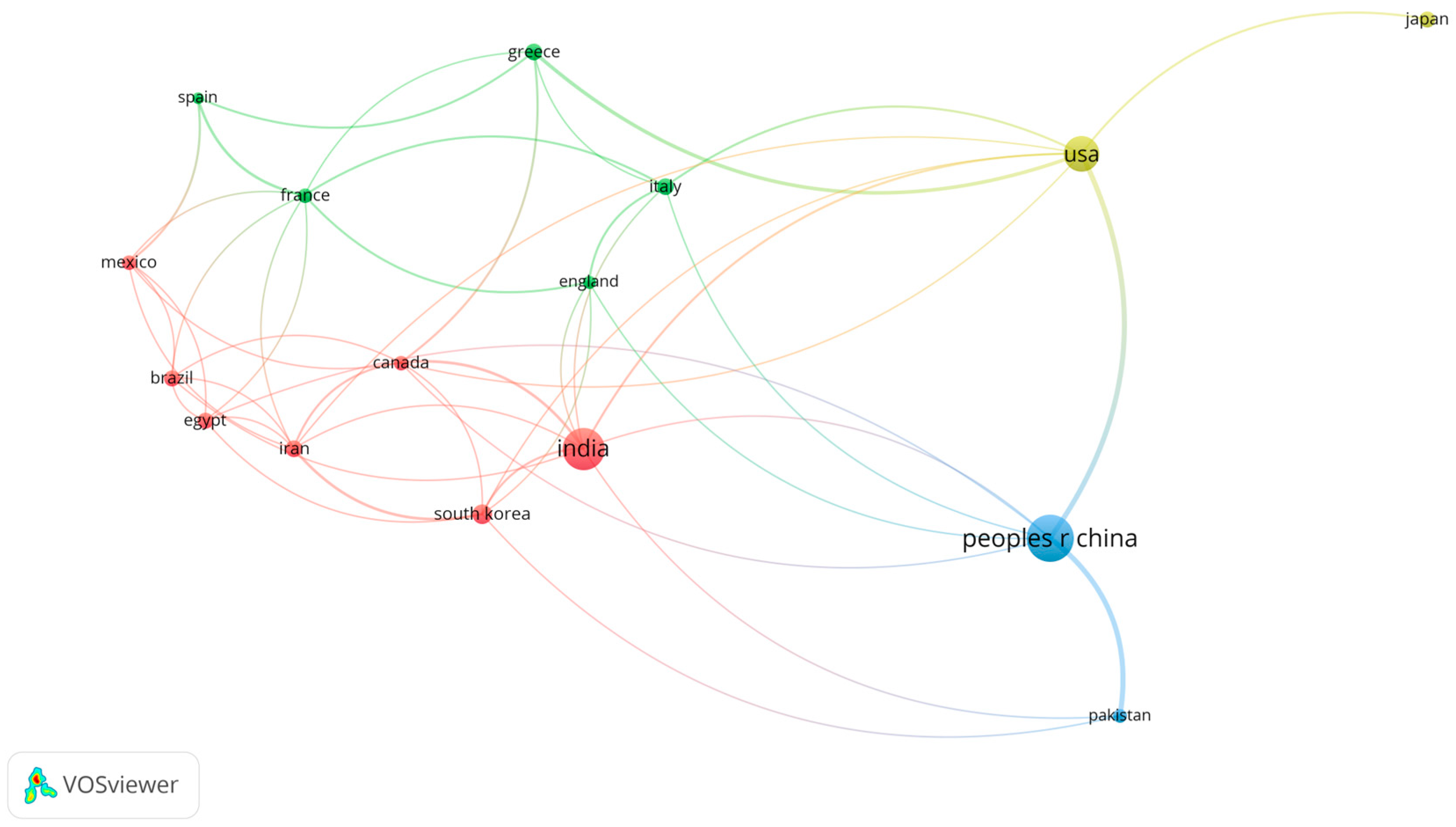
In the country and region analysis, we aimed to evaluate the geographical distribution of research activity. A threshold of a minimum of 15 publications per country or region was set to highlight areas with significant research output. This approach allowed us to identify global hotspots for hexavalent chromium research and assess the collaborative dynamics among different regions. Together, these criteria and analytical methods facilitated a robust understanding of the research trends and contributions in the field.
3. Results
Figure 1 illustrates the prominent keywords within the research field of hexavalent chromium, revealing their intricate connections and diverse implications. Among these, several keywords are closely linked to various elements, highlighting the intersection of hexavalent chromium research with studies on metals like "aluminum", "cadmium", "copper", and "nickel". This association reflects the multifaceted nature of hexavalent chromium's interactions with other chemical substances, which is critical for understanding its behavior in different environments and its role in industrial processes. These connections underscore the need for comprehensive studies that consider the interplay between hexavalent chromium and other elements, as this knowledge is essential for developing effective strategies for monitoring and mitigating its impacts.
In addition to its elemental associations, certain keywords in the analysis point to hexavalent chromium's relationship with diseases and its implications for human health. Terms such as "damage," "DNA-damage," "cancer," and "carcinogenicity" highlight the toxicological concerns surrounding exposure to this compound. These keywords signify its potential to cause severe harm at both molecular and systemic levels, including its role as a known carcinogen. The prominence of these terms in the research indicates a significant focus on understanding the health risks posed by hexavalent chromium and developing measures to prevent its adverse effects. This area of study is critical for informing public health policies and setting safety standards to protect communities and ecosystems from its harmful impacts.
The analysis also reveals a strong emphasis on methodologies and technologies for addressing hexavalent chromium contamination. Keywords such as "biosorption," "biosorbent," "degradation," "separation," and "removal" underscore the active exploration of remediation techniques aimed at mitigating the environmental and health challenges posed by this compound. These terms reflect an ongoing effort to innovate and refine methods for effectively removing hexavalent chromium from contaminated sites, including water, soil, and industrial waste streams. The focus on these remediation strategies highlights the importance of integrating scientific advancements with practical applications to address the global challenges associated with hexavalent chromium pollution. Together, these findings provide a comprehensive overview of the research priorities and key themes within this critical area of study.
Figure 2 presents a detailed visualization of the leading organizations contributing to research on hexavalent chromium, with significant insights into the global landscape of academic and institutional collaboration. At the core of this network is the Chinese Academy of Sciences, which emerges as a central hub, reflecting its substantial influence and prolific output in this field. This prominence highlights the academy’s pivotal role in driving innovation and advancing the understanding of hexavalent chromium, including its environmental behavior, toxicological impacts, and remediation strategies. The central positioning of this institution underscores the emphasis placed by China on addressing environmental challenges and the critical role of its scientific community in shaping global research directions.
Beyond the Chinese Academy of Sciences, other organizations also make notable contributions to hexavalent chromium research. Institutions such as the National University of Singapore and the Chinese Research Academy of Environmental Sciences demonstrate their strong presence in the network. These organizations play critical roles in fostering collaborative efforts and expanding the scope of research, particularly in areas like environmental remediation, material innovation, and toxicology. Their active engagement underscores the importance of a multidisciplinary approach to tackling the complexities of hexavalent chromium contamination, with a focus on generating solutions that are not only effective but also sustainable in the long term.
In addition to these leading institutions, several universities, including the University of Hong Kong, Central South University, and Huazhong Agricultural University, contribute significantly to the field. These universities act as key nodes in the research network, bringing together expertise across disciplines and facilitating knowledge exchange on a global scale. Their involvement highlights the collaborative nature of research on hexavalent chromium, as diverse academic institutions contribute to advancing scientific understanding and developing innovative technologies. Collectively, the contributions of these organizations reflect a robust and interconnected research community, emphasizing the global importance of addressing hexavalent chromium pollution and fostering sustainable environmental practices.
Figure 3 illustrates the primary countries and regions contributing to research on hexavalent chromium, highlighting the global nature of this field. At the core of the research network are the United States, China, and India, which emerge as the most prominent contributors. These nations demonstrate their leadership through extensive publication records, advanced research facilities, and a concerted focus on tackling environmental pollution.
Beyond the three leading nations, other countries also play significant roles in the research landscape. Spain, Greece, Japan, France, Italy, the United Kingdom, Mexico, Canada, Brazil, Egypt, Iran, South Korea, and Pakistan have all made notable contributions to advancing knowledge in this area. These nations bring diverse perspectives and expertise, enriching the field through regional research initiatives and innovative approaches.
Developed countries often leverage their advanced scientific capabilities to develop new remediation technologies and deepen the understanding of hexavalent chromium’s environmental impact. Simultaneously, many developing countries focus on addressing local contamination issues, reflecting the global urgency of managing and mitigating the risks associated with this pollutant. The interconnectedness of countries in this field highlights the importance of international collaboration in overcoming the challenges posed by hexavalent chromium.
4. Discussion
4.1. Addressing Environmental Challenges of Hexavalent Chromium
After reviewing the literature on hexavalent chromium, it is evident that this pollutant poses significant environmental challenges [13,35]. Hexavalent chromium contamination often originates from mining activities and various industrial processes, releasing harmful levels of this compound into the environment [36,37]. The situation is particularly concerning in less developed areas where groundwater is a primary drinking water source [38,39]. Rainwater and subsurface flows can transport hexavalent chromium into wells, resulting in contaminated drinking water [40,41]. This contamination has been linked to severe health risks, including cancer and other diseases [42,43]. Such scenarios highlight the urgent need for effective remediation techniques and prevention strategies, especially in regions with limited access to clean water and robust environmental regulations [44,45].
Technological approaches to addressing hexavalent chromium contamination can be broadly categorized into physical, chemical, and biological methods [46]. Physical methods, such as adsorption techniques, are widely used, with activated carbon being a powerful adsorbent for removing hexavalent chromium from water [47,48]. Recent advances in materials science have introduced innovative options, such as biowaste-derived magnetic carbonaceous materials [49], which show great promise for future applications. Chemical methods frequently utilize redox reactions, with zero-valent iron, which can be delivered via foam-assisted techniques [50,51], proving highly effective for hexavalent chromium remediation due to its strong reducing properties [52,53]. Biological methods, on the other hand, leverage the natural processes of microorganisms. For instance, Shewanella oneidensis, a bacterium capable of electron transfer [54,55], has shown potential in immobilizing hexavalent chromium through its biofilm formation [56,57]. These varied technological strategies provide a multi-faceted approach to tackling contamination, each with unique advantages depending on the context [58,59].
Beyond technological solutions, effective governance and policy frameworks are critical for managing hexavalent chromium contamination [60,61]. Addressing cross-border pollution requires international cooperation and agreements, as upstream activities in one country can have downstream consequences for another [62]. Negotiating solutions to such disputes demands robust diplomatic and scientific engagement. Within national borders, developing efficient regulatory systems is essential for ensuring rapid and effective response to contamination incidents. Policymakers must prioritize creating frameworks that promote accountability, foster innovation in remediation technologies, and encourage public awareness [63]. Comprehensive solutions to hexavalent chromium pollution require not only advancements in science and technology but also the establishment of governance models capable of addressing the complex, interconnected challenges of environmental management [64,65].
4.2. Future in Hexavalent Chromium Research with Big Data and Machine Learning
The future of hexavalent chromium research lies in the intersection of big data and machine learning. These technologies have already demonstrated remarkable success in fields such as facial recognition [66,67], autonomous driving [68,69], global species distribution prediction [70], and education performance forecast [71]. In the context of hexavalent chromium contamination, the integration of big data and machine learning holds great promise for revolutionizing how we approach the identification, analysis, and remediation of this toxic pollutant [26,72]. By harnessing large datasets and sophisticated algorithms, we can create more efficient, accurate, and scalable solutions to combat hexavalent chromium contamination.
One potential approach involves building a massive global database that tracks the spread of hexavalent chromium contamination across various regions [73,74]. This database could store a wide range of data, such as the specific locations of contamination, the concentration levels of hexavalent chromium, and relevant environmental factors like temperature, humidity, rainfall, and soil composition. Additionally, information on existing remediation methods, their effectiveness, and environmental variables associated with these approaches could be incorporated. By accumulating such data, we could gain a deeper understanding of the factors that influence the distribution and persistence of hexavalent chromium in different environments, thus enabling more informed decision-making in addressing this issue.
Machine learning algorithms, such as neural networks [75,76], could then be applied to this vast repository of data. By training these models on historical cases, they could learn to predict the most effective remediation strategies based on specific conditions. For example, if a new contamination event occurs in an area with limited historical data, the machine learning model could recommend an appropriate method for remediation by drawing on similar cases and environmental factors. This approach could help overcome the challenges posed by unique contamination scenarios and optimize the response strategies, providing valuable insights and solutions that may not have been considered by traditional methods. Ultimately, the fusion of big data and machine learning could significantly enhance our ability to manage and mitigate the environmental and health risks associated with hexavalent chromium contamination.
5. Conclusions
Hexavalent chromium remains a critical environmental and public health concern, especially in regions where industrial and mining activities contaminate water sources. This study highlights the importance of effective remediation technologies and governance strategies to address the widespread challenges posed by this pollutant. Physical methods, such as activated carbon adsorption, and chemical approaches, like redox reactions using zero-valent iron, offer promising solutions. Biological methods, including the use of microorganisms like Shewanella oneidensis, present innovative opportunities for sustainable remediation. Additionally, addressing governance challenges, such as cross-border pollution and the establishment of national regulatory frameworks, is vital for ensuring equitable and effective solutions. Future research should focus on integrating big data and machine learning to enhance remediation efforts. Predictive models trained on diverse environmental datasets can identify optimal strategies for unique contamination scenarios, offering scalable and efficient approaches. These advancements hold the potential to significantly reduce the environmental and health risks associated with hexavalent chromium pollution.
References
- Saha, R.; Nandi, R.; Saha, B. Sources and toxicity of hexavalent chromium. Journal of Coordination Chemistry 2011, 64, 1782–1806. [Google Scholar] [CrossRef]
- Mohanty, S.; Benya, A.; Hota, S.; Kumar, M.S.; Singh, S. Eco-toxicity of hexavalent chromium and its adverse impact on environment and human health in Sukinda Valley of India: A review on pollution and prevention strategies. Environmental Chemistry and Ecotoxicology 2023, 5, 46–54. [Google Scholar] [CrossRef]
- Castro-Rodríguez, A.; Carro-Pérez, M.E.; Iturbe-Argüelles, R.; González-Chávez, J.L. Adsorption of hexavalent chromium in an industrial site contaminated with chromium in Mexico. Environmental Earth Sciences 2015, 73, 175–183. [Google Scholar] [CrossRef]
- Dhal, B.; Thatoi, H.N.; Das, N.N.; Pandey, B.D. Chemical and microbial remediation of hexavalent chromium from contaminated soil and mining/metallurgical solid waste: a review. Journal of hazardous materials 2013, 250, 272–291. [Google Scholar] [CrossRef]
- Alvarez, C.C.; Gómez, M.E.B.; Zavala, A.H. Hexavalent chromium: Regulation and health effects. Journal of trace elements in medicine and biology 2021, 65, 126729. [Google Scholar] [CrossRef]
- Sharma, P.; Singh, S.P.; Parakh, S.K.; Tong, Y.W. Health hazards of hexavalent chromium (Cr (VI)) and its microbial reduction. Bioengineered 2022, 13, 4923–4938. [Google Scholar] [CrossRef]
- Sedman, R.M.; Beaumont, J.A.Y.; McDonald, T.A.; Reynolds, S.; Krowech, G.; Howd, R. Review of the evidence regarding the carcinogenicity of hexavalent chromium in drinking water. Journal of environmental science and health part C 2006, 24, 155–182. [Google Scholar] [CrossRef]
- Suh, M.; Wikoff, D.; Lipworth, L.; Goodman, M.; Fitch, S.; Mittal, L.; Ring, C.; Proctor, D. Hexavalent chromium and stomach cancer: a systematic review and meta-analysis. Critical Reviews in Toxicology 2019, 49, 140–159. [Google Scholar] [CrossRef]
- Park, R.M.; Bena, J.F.; Stayner, L.T.; Smith, R.J.; Gibb, H.J.; Lees, P.S.J. Hexavalent chromium and lung cancer in the chromate industry: a quantitative risk assessment. Risk Analysis: An International Journal 2004, 24, 1099–1108. [Google Scholar] [CrossRef]
- Leonidou, C.N.; Leonidou, L.C. Research into environmental marketing/management: a bibliographic analysis. European Journal of Marketing 2011, 45, 68–103. [Google Scholar] [CrossRef]
- Caschili, S.; De Montis, A.; Ganciu, A.; Ledda, A.; Barra, M. The Strategic Environment Assessment bibliographic network: A quantitative literature review analysis. Environmental Impact Assessment Review 2014, 47, 14–28. [Google Scholar] [CrossRef]
- Assefa, H.; Singh, S.; Olu, F.E.; Dhanjal, D.S.; Mani, D.; Khan, N.A.; Singh, J.; Ramamurthy, P.C. Advances in adsorption technologies for hexavalent chromium removal: Mechanisms, materials, and optimization strategies. Desalination and Water Treatment 2024, 319, 100576. [Google Scholar] [CrossRef]
- Xie, S. Water contamination due to hexavalent chromium and its health impacts: exploring green technology for Cr (VI) remediation. Green Chemistry Letters and Reviews 2024, 17, 2356614. [Google Scholar] [CrossRef]
- Mohan, D.; Pittman Jr, C.U. Activated carbons and low cost adsorbents for remediation of tri-and hexavalent chromium from water. Journal of hazardous materials 2006, 137, 762–811. [Google Scholar] [CrossRef]
- Di Natale, F.; Erto, A.; Lancia, A.; Musmarra, D. Equilibrium and dynamic study on hexavalent chromium adsorption onto activated carbon. Journal of hazardous materials 2015, 281, 47–55. [Google Scholar] [CrossRef]
- Gheju, M. Hexavalent chromium reduction with zero-valent iron (ZVI) in aquatic systems. Water, Air, & Soil Pollution 2011, 222, 103–148. [Google Scholar]
- Di Palma, L.; Gueye, M.T.; Petrucci, E. Hexavalent chromium reduction in contaminated soil: a comparison between ferrous sulphate and nanoscale zero-valent iron. Journal of hazardous materials 2015, 281, 70–76. [Google Scholar] [CrossRef]
- Ding, Y.; Peng, N.; Du, Y.; Ji, L.; Cao, B. Disruption of putrescine biosynthesis in Shewanella oneidensis enhances biofilm cohesiveness and performance in Cr (VI) immobilization. Applied and environmental microbiology 2014, 80, 1498–1506. [Google Scholar] [CrossRef]
- Prasad, S.; Yadav, K.K.; Kumar, S.; Gupta, N.; Cabral-Pinto, M.M.S.; Rezania, S.; Radwan, N.; Alam, J. Chromium contamination and effect on environmental health and its remediation: A sustainable approaches. Journal of Environmental Management 2021, 285, 112174. [Google Scholar] [CrossRef]
- Shammout, M.a.W. Management Options for Heavy Metals and Hexavalent Chromium Cr (VI) in the Zarqa River Basin of Jordan for Efficient Water Resources Use. 2024; pp. 229–239.
- Kadel, E. Contamination: crossing social borders. International Journal of Qualitative Studies in Education 2002, 15, 33–42. [Google Scholar] [CrossRef]
- Hatzipanayotou, P.; Lahiri, S.; Michael, M.S. Cross-border pollution, terms of trade, and welfare. Environmental and Resource Economics 2008, 41, 327–345. [Google Scholar] [CrossRef]
- Singh, A.; Singh, B.P.; Raghav, Y.; Mishra, V. Regulatory Frameworks and Guidelines Aimed at Controlling and Minimizing Heavy Metals Exposure. In Heavy Metal Contamination in the Environment; CRC Press: 2024; pp. 171–179.
- Yang, S.; Sun, L.; Sun, Y.; Song, K.; Qin, Q.; Zhu, Z.; Xue, Y. Towards an integrated health risk assessment framework of soil heavy metals pollution: Theoretical basis, conceptual model, and perspectives. Environmental Pollution 2023, 316, 120596. [Google Scholar] [CrossRef] [PubMed]
- Zhou, L.; Pan, S.; Wang, J.; Vasilakos, A.V. Machine learning on big data: Opportunities and challenges. Neurocomputing 2017, 237, 350–361. [Google Scholar] [CrossRef]
- Zafar, M.; Aggarwal, A.; Rene, E.R.; Barbusiński, K.; Mahanty, B.; Behera, S.K. Data-driven machine learning intelligent tools for predicting chromium removal in an adsorption system. Processes 2022, 10, 447. [Google Scholar] [CrossRef]
- Mao, Z.; Liu, Y.; Qu, X. Integrating big data analytics in autonomous driving: An unsupervised hierarchical reinforcement learning approach. Transportation Research Part C: Emerging Technologies 2024, 162, 104606. [Google Scholar] [CrossRef]
- Zhu, Y.; Jiang, Y. Optimization of face recognition algorithm based on deep learning multi feature fusion driven by big data. Image and Vision Computing 2020, 104, 104023. [Google Scholar] [CrossRef]
- Peters, D.P.C.; Havstad, K.M.; Cushing, J.; Tweedie, C.; Fuentes, O.; Villanueva-Rosales, N. Harnessing the power of big data: infusing the scientific method with machine learning to transform ecology. Ecosphere 2014, 5, 1–15. [Google Scholar] [CrossRef]
- Chen, S.; Ding, Y. A bibliography study of Shewanella oneidensis biofilm. FEMS Microbiology Ecology 2023, 99, fiad124. [Google Scholar] [CrossRef]
- Chen, S.; Ding, Y. From bibliography to understanding: water microbiology and human health. Journal of Water and Health 2024, 22, 1911–1921. [Google Scholar] [CrossRef]
- Zhu, J.; Liu, W. A tale of two databases: the use of Web of Science and Scopus in academic papers. Scientometrics 2020, 123, 321–335. [Google Scholar] [CrossRef]
- Mongeon, P.; Paul-Hus, A. The journal coverage of Web of Science and Scopus: a comparative analysis. Scientometrics 2016, 106, 213–228. [Google Scholar] [CrossRef]
- Saiz-Alvarez, J.M. Innovation Management: A Bibliometric Analysis of 50 Years of Research Using VOSviewer® and Scopus. World 2024, 5, 901–928. [Google Scholar] [CrossRef]
- Mishra, S.; Bharagava, R.N. Toxic and genotoxic effects of hexavalent chromium in environment and its bioremediation strategies. Journal of Environmental Science and Health, Part C 2016, 34, 1–32. [Google Scholar] [CrossRef] [PubMed]
- Séby, F.; Vacchina, V. Critical assessment of hexavalent chromium species from different solid environmental, industrial and food matrices. TrAC Trends in Analytical Chemistry 2018, 104, 54–68. [Google Scholar] [CrossRef]
- Beszedits, S. Chromium removal from industrial wastewaters. Chromium in the natural and human environments 1988, 13, 232–263. [Google Scholar]
- Hausladen, D.M.; Alexander-Ozinskas, A.; McClain, C.; Fendorf, S. Hexavalent chromium sources and distribution in California groundwater. Environmental science & technology 2018, 52, 8242–8251. [Google Scholar]
- Oze, C.; Bird, D.K.; Fendorf, S. Genesis of hexavalent chromium from natural sources in soil and groundwater. Proceedings of the National Academy of Sciences 2007, 104, 6544–6549. [Google Scholar] [CrossRef]
- Alvarado, T.R.; Austin, R.E.; Bradley, P.J.; Eaves, L.A.; Fry, R.C.; George, A.; Gray, K.M.; Osborne, J.A.; Stýblo, M.; Vinson, D.S. Geologic predictors of drinking water well contamination in North Carolina. PLOS Water 2024, 3, e0000194. [Google Scholar] [CrossRef]
- Levin, R.; Villanueva, C.M.; Beene, D.; Cradock, A.L.; Donat-Vargas, C.; Lewis, J.; Martinez-Morata, I.; Minovi, D.; Nigra, A.E.; Olson, E.D. US drinking water quality: exposure risk profiles for seven legacy and emerging contaminants. Journal of exposure science & environmental epidemiology 2024, 34, 3–22. [Google Scholar]
- Katsas, K.; Diamantis, D.V.; Linos, A.; Psaltopoulou, T.; Triantafyllou, K. The impact of exposure to hexavalent chromium on the incidence and mortality of Oral and gastrointestinal cancers and benign diseases: a systematic review of observational studies, reviews and meta-analyses. Environments 2024, 11, 11. [Google Scholar] [CrossRef]
- Jiang, Z.; Person, R.; Lundh, T.; Pineda, D.; Engfeldt, M.; Krais, A.M.; Hagberg, J.; Ricklund, N.; Vogel, U.; Saber, A.T. Circulating lung-cancer-related non-coding RNAs are associated with occupational exposure to hexavalent chromium–A cross-sectional study within the SafeChrom project. Environment International 2024, 190, 108874. [Google Scholar] [CrossRef] [PubMed]
- Paul, A.; Dey, S.; Ram, D.K.; Das, A.P. Hexavalent chromium pollution and its sustainable management through bioremediation. Geomicrobiology Journal 2024, 41, 324–334. [Google Scholar] [CrossRef]
- Wang, D.; Li, G.; Qin, S.; Tao, W.; Gong, S.; Wang, J. Remediation of Cr (VI)-contaminated soil using combined chemical leaching and reduction techniques based on hexavalent chromium speciation. Ecotoxicology and Environmental Safety 2021, 208, 111734. [Google Scholar] [CrossRef]
- Chen, S.; Ding, Y. Systematic bibliographic analysis of heavy metal remediation. Water Science & Technology 2025, 91, 56–68. [Google Scholar]
- Wijaya, R.A.; Nakagoe, O.; Sano, H.; Tanabe, S.; Kamada, K. Superior comprehensive performance of modified activated carbon as a hexavalent chromium adsorbent. Heliyon 2024, 10. [Google Scholar] [CrossRef]
- Abewaa, M.; Arka, A.; Haddis, T.; Mengistu, A.; Takele, T.; Adino, E.; Abay, Y.; Bekele, N.; Andualem, G.; Girmay, H. Hexavalent Chromium adsorption from aqueous solution utilizing activated carbon developed from Rumex abyssinicus. Results in Engineering 2024, 22, 102274. [Google Scholar] [CrossRef]
- Zhang, B.; Jiang, Y.; Ding, Y.; Zhang, J.; Balasubramanian, R. Iron-catalyzed synthesis of biowaste-derived magnetic carbonaceous materials for environmental remediation applications. Separation and Purification Technology 2022, 295, 121321. [Google Scholar] [CrossRef]
- Ding, Y.; Liu, B.; Shen, X.; Zhong, L.; Li, X. Foam-assisted delivery of nanoscale zero valent iron in porous media. Journal of Environmental Engineering 2013, 139, 1206–1212. [Google Scholar] [CrossRef]
- Shen, X.; Zhao, L.; Ding, Y.; Liu, B.; Zeng, H.; Zhong, L.; Li, X. Foam, a promising vehicle to deliver nanoparticles for vadose zone remediation. Journal of hazardous materials 2011, 186, 1773–1780. [Google Scholar] [CrossRef]
- Saad, E.M.; Abd-Elhafiz, M.F.; Ahmed, E.M.; Markeb, A.A. Hexavalent chromium ion removal from wastewater using novel nanocomposite based on the impregnation of zero-valent iron nanoparticles into polyurethane foam. Scientific Reports 2024, 14, 5387. [Google Scholar] [CrossRef]
- Ren, Z.; Tang, H.; Li, H.; Jing, Q. Column experimental study on the removal of hexavalent chromium from water by modified cellulose filter paper loaded with nano zero-valent iron. Journal of Water Process Engineering 2024, 59, 104920. [Google Scholar] [CrossRef]
- Yang, Y.; Ding, Y.; Hu, Y.; Cao, B.; Rice, S.A.; Kjelleberg, S.; Song, H. Enhancing bidirectional electron transfer of Shewanella oneidensis by a synthetic flavin pathway. ACS synthetic biology 2015, 4, 815–823. [Google Scholar] [CrossRef] [PubMed]
- Zhao, C.e.; Wu, J.; Ding, Y.; Wang, V.B.; Zhang, Y.; Kjelleberg, S.; Loo, J.S.C.; Cao, B.; Zhang, Q. Hybrid conducting biofilm with built-in bacteria for high-performance microbial fuel cells. ChemElectroChem 2015, 2, 654–658. [Google Scholar] [CrossRef]
- Ding, Y.; Zhou, Y.; Yao, J.; Szymanski, C.; Fredrickson, J.; Shi, L.; Cao, B.; Zhu, Z.; Yu, X.-Y. In situ molecular imaging of the biofilm and its matrix. Analytical chemistry 2016, 88, 11244–11252. [Google Scholar] [CrossRef]
- Ding, Y.; Zhou, Y.; Yao, J.; Xiong, Y.; Zhu, Z.; Yu, X.-Y. Molecular evidence of a toxic effect on a biofilm and its matrix. Analyst 2019, 144, 2498–2503. [Google Scholar] [CrossRef]
- Djellabi, R.; Su, P.; Elimian, E.A.; Poliukhova, V.; Nouacer, S.; Abdelhafeez, I.A.; Abderrahim, N.; Aboagye, D.; Andhalkar, V.V.; Nabgan, W. Advances in photocatalytic reduction of hexavalent chromium: from fundamental concepts to materials design and technology challenges. Journal of Water Process Engineering 2022, 50, 103301. [Google Scholar] [CrossRef]
- Ukhurebor, K.E.; Aigbe, U.O.; Onyancha, R.B.; Nwankwo, W.; Osibote, O.A.; Paumo, H.K.; Ama, O.M.; Adetunji, C.O.; Siloko, I.U. Effect of hexavalent chromium on the environment and removal techniques: a review. Journal of Environmental Management 2021, 280, 111809. [Google Scholar] [CrossRef]
- Sahoo, S.; Goswami, S. Theoretical framework for assessing the economic and environmental impact of water pollution: A detailed study on sustainable development of India. Journal of Future Sustainability 2024, 4, 23–34. [Google Scholar] [CrossRef]
- Xiao, L.; Liu, J.; Ge, J. Dynamic game in agriculture and industry cross-sectoral water pollution governance in developing countries. Agricultural Water Management 2021, 243, 106417. [Google Scholar] [CrossRef]
- Ding, Y. Heavy metal pollution and transboundary issues in ASEAN countries. Water Policy 2019, 21, 1096–1106. [Google Scholar] [CrossRef]
- Chen, S.; Ding, Y. Tackling heavy metal pollution: evaluating governance models and frameworks. Sustainability 2023, 15, 15863. [Google Scholar] [CrossRef]
- Tseng, C.-H.; Lee, I.H.; Chen, Y.-C. Evaluation of hexavalent chromium concentration in water and its health risk with a system dynamics model. Science of the Total Environment 2019, 669, 103–111. [Google Scholar] [CrossRef] [PubMed]
- Acharyya, S.; Das, A.; Thaker, T.P. Remediation processes of hexavalent chromium from groundwater: a short review. AQUA—Water Infrastructure, Ecosystems and Society 2023, 72, 648–662. [Google Scholar] [CrossRef]
- Fola-Rose, A.; Solomon, E.; Bryant, K.; Woubie, A. A Systematic Review of Facial Recognition Methods: Advancements, Applications, and Ethical Dilemmas. 2024; pp. 314–319.
- Anusudha, K. Real time face recognition system based on YOLO and InsightFace. Multimedia Tools and Applications 2024, 83, 31893–31910. [Google Scholar]
- Yu, H.; Huo, S.; Zhu, M.; Gong, Y.; Xiang, Y. Machine Learning-Based Vehicle Intention Trajectory Recognition and Prediction for Autonomous Driving. 2024; pp. 771–775.
- Reda, M.; Onsy, A.; Haikal, A.Y.; Ghanbari, A. Path planning algorithms in the autonomous driving system: A comprehensive review. Robotics and Autonomous Systems 2024, 174, 104630. [Google Scholar] [CrossRef]
- Chen, S.; Ding, Y. Machine learning and its applications in studying the geographical distribution of ants. Diversity 2022, 14, 706. [Google Scholar] [CrossRef]
- Chen, S.; Ding, Y. A machine learning approach to predicting academic performance in Pennsylvania’s schools. Social Sciences 2023, 12, 118. [Google Scholar] [CrossRef]
- Jiang, M.; Fu, W.; Wang, Y.; Xu, D.; Wang, S. Machine-learning-driven discovery of metal–organic framework adsorbents for hexavalent chromium removal from aqueous environments. Journal of Colloid and Interface Science 2024, 662, 836–845. [Google Scholar] [CrossRef]
- Kumar, V.; Parihar, R.D.; Sharma, A.; Bakshi, P.; Sidhu, G.P.S.; Bali, A.S.; Karaouzas, I.; Bhardwaj, R.; Thukral, A.K.; Gyasi-Agyei, Y. Global evaluation of heavy metal content in surface water bodies: A meta-analysis using heavy metal pollution indices and multivariate statistical analyses. Chemosphere 2019, 236, 124364. [Google Scholar] [CrossRef]
- Seidel, C.J.; Corwin, C.J. Total chromium and hexavalent chromium occurrence analysis. Journal-American Water Works Association 2013, 105, E310–E319. [Google Scholar] [CrossRef]
- Choi, R.Y.; Coyner, A.S.; Kalpathy-Cramer, J.; Chiang, M.F.; Campbell, J.P. Introduction to machine learning, neural networks, and deep learning. Translational vision science & technology 2020, 9, 14–14. [Google Scholar]
- Mishra, C.; Gupta, D.L. Deep machine learning and neural networks: An overview. IAES international journal of artificial intelligence 2017, 6, 66. [Google Scholar] [CrossRef]
Figure 1.
Keyword analysis generated by VOSviewer, with lines representing keyword correlations.
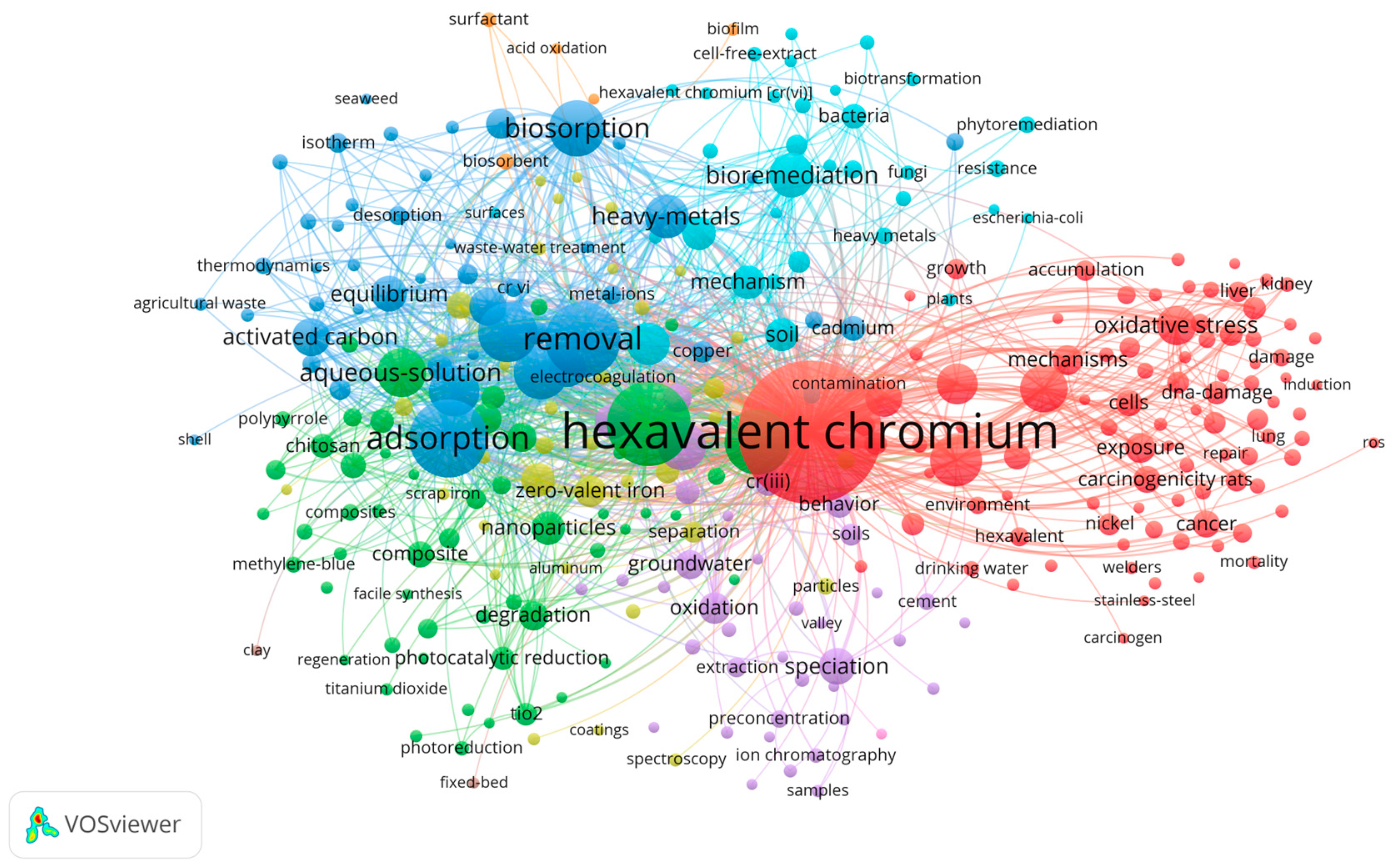
Figure 2.
Organization analysis generated by VOSviewer, with lines representing research collaboration.
Figure 2.
Organization analysis generated by VOSviewer, with lines representing research collaboration.
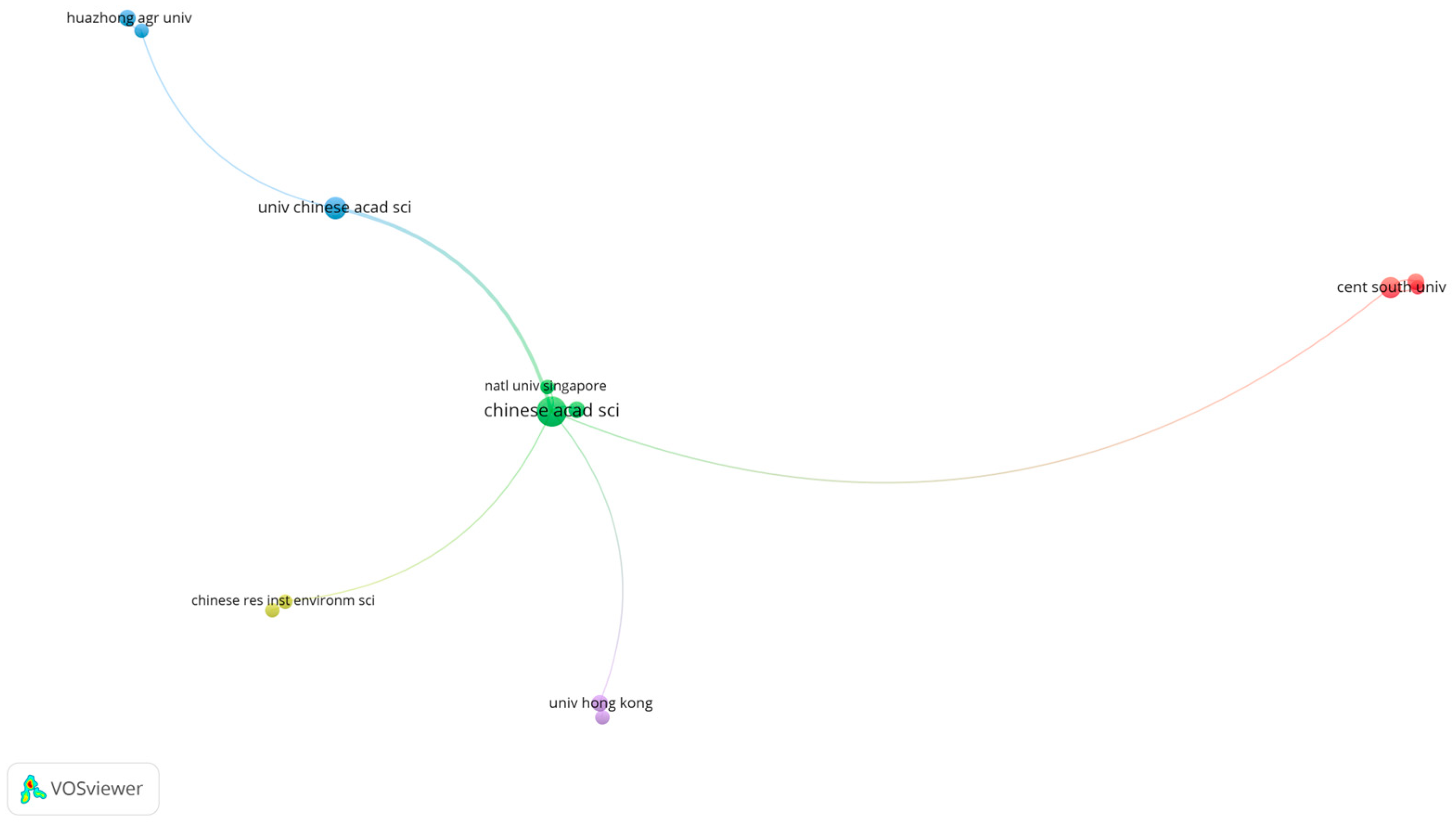
Figure 3.
Country/region analysis generated by VOSviewer, with lines representing research collaboration.
Figure 3.
Country/region analysis generated by VOSviewer, with lines representing research collaboration.
Disclaimer/Publisher’s Note: The statements, opinions and data contained in all publications are solely those of the individual author(s) and contributor(s) and not of MDPI and/or the editor(s). MDPI and/or the editor(s) disclaim responsibility for any injury to people or property resulting from any ideas, methods, instructions or products referred to in the content. |
© 2025 by the authors. Licensee MDPI, Basel, Switzerland. This article is an open access article distributed under the terms and conditions of the Creative Commons Attribution (CC BY) license (http://creativecommons.org/licenses/by/4.0/).
Copyright: This open access article is published under a Creative Commons CC BY 4.0 license, which permit the free download, distribution, and reuse, provided that the author and preprint are cited in any reuse.


