

Submitted:
30 January 2025
Posted:
03 February 2025
You are already at the latest version
Abstract
Enhancing rice (Oryza sativa L.) productivity and optimizing water use efficiency (WUE) are critical for advancing sustainable agricultural practices. This study selected six mid-season indica rice varieties to investigate the impacts of alternate wetting and drying irrigation (AWD) and conventional irrigation (CI) on grain yield, WUE, grain filling, and root traits. A two-year field experiment demonstrated that AWD significantly enhanced grain yield and WUE. Flag leaf photosynthetic rate and root characteristics, including root weight, root length, root absorbing surface area, root oxidation activity, and zeatin (Z) + zeatin riboside (ZR) contents in panicles, roots, and root bleeding, were superior under AWD across early, mid, and late grain filling stages. The flag leaf photosynthetic rate and root traits, such as root weight, root length, root absorbing surface area, root oxidation activity, and zeatin (Z) + zeatin riboside (ZR) contents in panicles, roots, and root exudates, were found to be superior under AWD during the early, mid, and late grain filling stages. Notably, AWD delayed root senescence during the grain filling stage, which sustained root activity and promoted grain filling, particularly in inferior spikelets. These results indicate that AWD is a promising irrigation regime to improve rice yield and WUE by optimizing grain filling and root traits.
Keywords:
rice
; alternate wetting and drying irrigation
; grain yield
; water use efficiency
; grain filling
; root traits
1. Introduction
As population grows and the economy develops rapidly, the demand for food continues to rise. To meet human needs by the mid-21st century, the production of major crops must increase by an estimated 1.1% to 1.3% annually [1,2]. Rice (Oryza sativa L.) represents an essential cereal crop cultivated worldwide and serves as the main food source for 60% of China’s population. In 2023, China accounted for 17.3% of the global rice-growing regions and produced 26% of the world’s total rice yield [3]. Rice production in China has grown significantly over the past 60 years, this is primarily attributed to increased productivity per unit area rather than the expansion of arable land. From the 1950s to the 1980s, the introduction of the dwarfing gene increased the rice harvest index, which played a key role in improving yields [4,5]. Rice production has improved due to the development of high-yielding varieties, especially hybrids, and advancements in crop management techniques since the 1980s [6,7]. Yield is primarily influenced by variety improvement. Ensuring a consistent rise in rice output is crucial for China's food security. Therefore, developing rice varieties with high and stable yields remains a key strategy for increasing rice yield [8,9,10].
Grain filling is influenced by the intricate interplay between source and sink [11]. Grain filling in rice is observed to differ between superior and inferior spikelets, with these differences being especially noticeable in large panicle rice varieties. In modern large panicle rice, the asynchronous filling of superior and inferior spikelets can reduce yield. Whereas, underlying causes of this asynchronicity remain unclear. Such differences limit the full realization of the crop's yield potential. The performance of inferior spikelets is closely linked to both yield and resource use efficiency [12,13]. Now, few studies focus on the grain filling of rice during variety improvement. Investigating inferior spikelets during variety improvement holds considerable importance.
Plant roots are essential for the absorption of water and nutrients and function as critical sites for the production of plant hormones, organic acids, and amino acids. The structure and physiological traits of roots are strongly connected to the growth of aboveground parts, as well as to yield and quality formation [14,15,16]. Since Weaver first studied the connection between roots and ecology in 1919, research on plant roots has advanced significantly [17]. Key areas of progress include root structure and function , research methods, growth and metabolism, stress responses, and interactions between roots and soil within ecological systems [18,19,20,21,22]. However, compared to aboveground parts, rice root characteristics and their role in yield formation have received less attention. During the improvement of rice varieties, limited research has examined how underground roots contribute to aboveground yield and their impact on grain filling.
Rice is the cereal crop that requires the most irrigation, using about 30% of global irrigation water [23]. To mitigate water scarcity and enhance water use efficiency (WUE) in rice farming, researchers have introduced several water-saving irrigation techniques. Such techniques encompass the implementation of alternate wetting and drying (AWD) [24], overhead irrigation [25], film-covering cultivation [26], and drought tolerance strategies [27]. Among these, AWD is highly recommended and widely adopted, with over 12 million hectares of rice fields using this method annually, especially in China [28,29]. This irrigation regime involves alternating between flooding, drying, and rehydrating the soil based on specific moisture levels [30]. Previous studies showed that AWD could reduce 19–30 % of irrigation water and enhance WUE by 17%–40% [31,32]. It was reported that AWD could either maintain or increase rice yield [33]. However, other studies suggest that AWD may lead to a reduction in yield. Carrijo et al. [34] found that AWD was associated with yield reductions, which ranged between 3% and 23%, when comparison with continuous flooding. The mechanisms behind the changes in rice yield under AWD irrigation are still not fully understood. How AWD regulates root growth to promote aboveground growth and development, especially its impact on grain filling, as well as its role in increasing yield and WUE, requiring further investigation.
This study investigated the potential of AWD applied to various rice varieties to simultaneously enhance grain yield and WUE.The focus was on grain filling characteristics, as well as the physiological and agronomic traits of the shoots and roots. This research aimed to establish a theoretical foundation and provide practical guidance for enhancing rice yield and water use efficiency (WUE) through improved irrigation strategies and the selection of high-yielding rice cultivars.
2. Results
2.1. Grain yield, its yield components, and water use efficiency (WUE)
The grain yields and WUE were progressively enhanced through varietal improvements over the two-year period (2022 and 2023). Yields achieved under AWD were significantly higher than those obtained under CI over the two-year period. In two years, compared to CI, AWD significantly increased grain yield by an average of 14.13%, 19.58%, and 23.80% in DV, SDV, and SDH, respectively (Figure 1A). Over a two-year period, grain yield was significantly enhanced by mean values of 14.13%, 19.58%, and 23.80% for DV, SDV, and SDH, respectively, in comparison with CI (Figure 1A). In terms of yield components, the increase in grain yield was mainly attributed to an increase in the total number of spikelets, calculated as panicles multiplied by spikelets per panicle. In two years, compared to CI, AWD significantly increased the number of total spikelets by an average of 3.08%, 11.11%, and 6.11% in DV, SDV, and SDH, respectively (Table 2). When compared with CI, AWD led to a reduction in panicle number but resulted in increases in spikelets per panicle, filled grain rate, and 1000-grain weight across all rice varieties examined. It was observed that the increase in spikelets per panicle exceeded the reduction in panicle numbers, resulting in an overall increase in grain yield (Table 2).

Table 1.
Mid-season indica rice varieties evaluated in this study.
| Year of Release | Variety | Type | Growth Period (d) |
|---|---|---|---|
| 1960s–1970s | Taizhongxian | Dwarf variety (DV) | 130 |
| 1960s–1970s | Zhenzhu'ai | Dwarf variety (DV) | 130 |
| 1980s–1990s | Yangdao 2 | Semi-dwarf variety (SDV) | 145 |
| 1980s–1990s | Yangdao 6 | Semi-dwarf variety (SDV) | 145 |
| 2000– | Yangliangyou 6 | Semi-dwarf hybrid rice (SDH) | 150 |
| 2000– | Liangyoupeijiu | Semi-dwarf hybrid rice (SDH) | 150 |
The improvement of rice varieties also led to a significant increase in WUE. Over two years, WUE observed under AWD was significantly greater compared to that under CI. Compared to CI, AWD significantly increased WUE by an average of 59.35%, 66.95%, and 72.86% in DV, SDV, and SDH, respectively (Figure 2B).
2.2. Grain filling
Under two irrigation regimes, a rapid initial increase, followed by a plateau, was observed in the grain filling of superior grains across all rice varieties. With improvement in varieties, the grain weight of superior and inferior types was progressively enhanced. Compared with CI, AWD enhanced the superior grain weight during the mid-grain filling stage and markedly improved the inferior grain weight. Similar trends in the grain filling processes of superior and inferior grains were observed over the two years (Figure 2).
With the improvement of varieties, the maximum grain filling rate (Gmax) and mean grain filling rate (Gmean) for both superior and inferior grains were progressively enhanced throughout the grain filling stage. Under the same treatment, inferior grains reached their Gmax later than superior grains in all rice varieties. Compared to CI, AWD prolonged the time to reach the maximum grain filling rate (Tmax) and lengthened the effective grain filling period for both superior and inferior grains, leading to a notable increase in the Gmax of inferior grains (Table 3).
2.3. Aboveground dry matter accumulation and crop growth rate (CGR)
With improvement in varieties, both aboveground dry matter accumulation and the CGR showed a significant increase under the two irrigation regimes during the main growth stages. From MT to MA, AWD led to higher aboveground dry matter accumulation across all three types (DV, SDV, and SDH) compared to CI (Figure 3A–D). The CGR under CI was lower compared to AWD. It initially increased, followed by a decline during the progression of the growth stages (Figure 3E–H).
2.4. Leaf photosynthesis
Under two irrigation regimes, the photosynthetic rate of rice flag leaves increased progressively with improvement in rice varieties. Compared to CI, AWD led to a significant increase in the flag leaf photosynthetic rate throughout the entire grain filling stage (Figure 4). Over two years, the photosynthetic rate of flag leaves under AWD increased on average by 11.58%, 7.03%, and 3.31% in DV, SDV, and SDH, respectively, compared to CI (Figure 4).
2.5. Root weight and root length
The root weight and root length increased progressively with the improvement of rice varieties under both AWD and CI (Figure 5). In two years, the root weight under AWD increased on average by 9.15%, 15.27%, and 4.94% in DV, SDV, and SDH, respectively, compared to CI (Figure 5A–C). Compared to CI, the root length under AWD increased on average by 7.93%, 20.88%, and 9.43% in DV, SDV, and SDH, respectively (Figure 5D–F).
2.6. Root absorbing surface area, root oxidation activity (ROA), and root bleeding rate
With improvement in varieties, the root absorbing surface area, ROA, and root bleeding rate gradually increased under the two irrigation regimes (Figure 6 and Figure 7). In two years, compared to CI, the above-mentioned four parameters of DV under AWD increased by an average of 9.59%, 14.31%, 14.81%, and 18.60%, respectively. For SDV under AWD, these parameters showed average increases of 18.63%, 21.32%, 8.84%, and 5.04%, respectively, compared to CI. For SDH under AWD, these parameters showed average increases of 15.05%, 8.93%, 6.38%, and 26.92%, respectively, compared to CI (Figure 6 and Figure 7).
2.7. Zeatin (Z) + zeatin riboside (ZR) in panicles, roots, and root bleeding
The contents of zeatin (Z) and zeatin riboside (ZR) in panicles, roots, and root exudates varied significantly among different irrigation regimes during the grain filling stage (Figure 8). Similar trends in the contents of zeatin (Z) and zeatin riboside (ZR) were observed in panicles, roots, and root bleeding. As rice varieties improved and grain filling progressed, Z + ZR contents gradually decreased. Over two years, compared to CI, the Z + ZR contents in panicles, roots, and root bleeding of DV under AWD increased by an average of 15.84%, 14.42%, and 14.75%, respectively. For SDV under AWD, these parameters showed average increases of 24.40%, 23.38%, and 17.62%, respectively, compared to CI. Compared to CI, AWD significantly increased above-mentioned three parameters of SDH by an average of 32.66%, 16.65%, and 29.80%, respectively (Figure 8).
2.8. Relationships between grain yield, WUE, grain filling characteristics, and main agronomic and physiological traits
Aboveground dry matter accumulation and crop growth rate at main growth stage, flag leaf photosynthetic rate, root weight, root length, root total absorbing surface area, root active absorbing surface area, ROA, root bleeding rate, and Z + ZR contents in panicles, roots, and root bleeding during grain filling stage were significantly or very significant and positively correlated with grain yield, WUE, and Gmean of inferior grains (Figure 9). Partial least squares path modeling (PLS-PM) was applied to explore the relationships between various factors. The model's goodness of fit reached 0.647, indicating that its predictive accuracy was 64.7%. Results from the simulation demonstrated that yield and WUE were influenced both directly and indirectly by AWD, variety improvement, shoot biomass and photosynthesis, grain filling characteristics, and root characteristics. Among these, grain filling, shoot biomass and photosynthesis, and root characteristics positively impacted yield and WUE, while AWD and variety positively influenced these factors (Figure 10).
3. Discussion
In rice production, the maintenance of both productivity and stability is supported by high-yielding varieties. Compared to traditional varieties, modern varieties generally demonstrate higher yields [42]. This study observed that rice yield was progressively enhanced through variety improvements, primarily due to the increase in the total number of spikelets (Figure 1A, Table 2). The increase in total spikelets was primarily attributed to a significant rise in the spikelets per panicle. This finding indicates that rice yield improvements are achievable in the rice-growing regions of the middle and lower reaches of the Yangtze River, stabilizing the number of panicles while substantially increasing the spikelets per panicle to expand yield sink capacity (i.e., increasing total spikelets) is a crucial strategy for achieving high and even higher yields (Table 2). In general, the number of grains per panicle is strongly inversely associated with the number of panicles per unit area [43,44]. How to increase the number of spikelets per panicle while simultaneously improving the filled grain rate is a critical issue for achieving higher yields. Increasing rice yield often requires the consumption of more agricultural water resources [45]. Consequently, enhancing the WUE of rice while maintaining high yields is crucial. It was reported that modern rice varieties generally exhibit higher WUE [46]. In this study, WUE improved significantly with the improvement in varieties (Figure 1B). The results indicated that genetic improvement and breeding strategies could simultaneously enhance both efficiency and yield of rice.
Balancing the benefits of water conservation against potential yield reductions remains a key challenge in scaling up the application of AWD. To prevent yield losses, various thresholds have been suggested. It has been reported that a field water depth threshold of −15 cm, or 15 cm below the ground surface, was recommended for the AWD scheme to prevent yield loss [47]. Other studies identified safe soil water potential-based AWD thresholds ranging from −15 to −20 kPa [31,34]. The impact of AWD on yield was investigated in this study, with the optimal soil water potential ranging from −15 to −20 kPa. Significant increases in both yield and WUE were observed across all rice varieties under AWD, and modern varieties exhibiting a more pronounced positive response (Figure 1). Monaco et al. [48] reported that modern rice varieties generally achieve higher yields and WUE under AWD. Similar results were found in our research (Figure 1). The results indicate that effective water-saving irrigation strategies may enhance the storage potential of modern varieties, leading to improved yields and efficiency.
Rice grain filling process is influenced by the application of water and fertilization [11]. Studies demonstrated that once rice reaches the heading and grain filling stage, drought stress speeds up plant aging, lowers biomass production, shortens the grain filling period, and reduces grain weight. Although drought stress can raise the translocation amount of non-structural carbohydrates (NSC) from stems and sheaths to grains, promoting grain filling, the increased NSC translocation is insufficient to compensate for the reduced biomass production and the shortened grain filling duration, resulting in lower grain weight and reduced yield [49,50]. Yang et al. [51] found that AWD did not significantly inhibit rice plant photosynthesis and helped restore the plant's water status during the night. The treatment enhanced the translocation of NSC from stems and sheaths to grains, thereby compensating for the losses caused by reduced photosynthesis and a shorter grain filling period. AWD did not result in a significant reduction in the grain filling rate and even promoted rice grain filling, which led to an increase in grain weight and yield. It was observed that the Gmax, Gmean, and grain weight of inferior grains were significantly enhanced, while the Tmax of inferior grains was significantly reduced under AWD. Compared with superior grains, the grain filling characteristics of inferior grains showing a more positive response to AWD (Table 3). The results indicated that grain filling in inferior grains could be improved by AWD, the grain filling process could be accelerated, the filled grain rate increased, and higher yield and efficiency achieved. Additionally, AWD could increase the Z + ZR contents in panicles (Figure 8A–C), encouraging cell division in the endosperm, improving the movement of stored nutrients from the nutritional tissues to the grains, and significantly increasing grain filling rate, thus leading to a higher yield.
Rice yield is predominantly derived from pre-anthesis carbohydrates accumulated within stems and sheaths, contributing around 10–30% of the total yield. The remaining 70–90% is attributed to post-anthesis photosynthates synthesized. Therefore, increasing post-anthesis photosynthetic performance of leaves is the key to obtain high yield [52]. Liu et al. [53] reported that maintaining daily biomass production helps reduce yield losses during the grain filling stage. In this study, it was observed that aboveground dry matter accumulation, crop growth rate (CGR), and flag leaf photosynthetic rate were significantly enhanced through the improvement of varieties, and these parameters were significantly enhanced across all rice varieties under AWD (Figure 3 and Figure 4). The correlation analysis and partial least squares path modeling (PLS-PM) revealed significant and highly significant correlations between aboveground dry matter accumulation, CGR, flag leaf photosynthetic rate, and grain yield as well as WUE (Figure 9 and Figure 10). These results indicated that enhanced shoot biomass and photosynthesis is important in realizing high yield and high resource use efficiency.
It has been demonstrated in previous studies that root trait is closely connected to the shoots growth. Photosynthesis in the aboveground tissues produces sufficient assimilates for the roots, supporting and enhancing root function. At the same time, increased root activity provides essential nutrients for the growth of aboveground parts. Good root growth promotes the accumulation of aboveground biomass and contributes to high yield. The establishment of a strong root system helps resist soil drought stress, and the impact of water on root growth and development directly affects nutrient uptake [54,55,56]. Moderate soil drought conditions can promote rapid root growth and deep rooting, which in turn increases root weight, root volume, and enhances root activity. However, excessive reduction of soil moisture suppresses root activity. A reasonable irrigation regime helps maintain rice root vitality and delays root aging [57,58]. Our findings revealed that root weight, root length, absorbing surface area of root, ROA, root bleeding rate, and roots Z +ZR contents and root bleeding increased with the improvement in rice varieties, and AWD significantly improved the root characteristics in all rice varieties (Figure 5, Figure 6 and Figure 7, and 8D–I). Therefore, AWD could coordinate aboveground and root growth, improve root systems, promote grain filling, delay plant senescence, and enhance yield formation (Figure 10).
It was observed that during the late grain filling stage, the leaf photosynthetic rate, ROA, and root absorbing surface area of semi-dwarf hybrid rice varieties declined at a faster rate than those of other rice types. This suggests that semi-dwarf hybrid rice varieties experience faster senescence of both leaves and roots during the grain filling stage, which is hypothesized to be a major factor contributing to their lower filled grain rate (Table 2). The filled grain rate is influenced not only by the genotype and intrinsic factors of the grains but also by the overall plant growth status, water and nutrient supply, and environmental conditions. Therefore, understanding the mechanisms underlying the low filled grain rate of semi-dwarf hybrid rice varieties requires further extensive research.
4. Materials and Methods
4.1. Cultivation
Field trials were conducted at the research farm of Yangzhou University, situated in Jiangsu Province, China (32°30′N, 119°25′E), over the rice cultivation period (May to October) during 2022 and 2023. The experimental field soil was classified as sandy loam in texture, characterized by 22.5 g kg−1 of organic matter, 101.9 mg kg−1 of alkali hydrolyzable nitrogen (N), 23.4 mg kg−1 of Olsen phosphorus (P), and 91.2 mg kg−1 of exchangeable potassium (K). Weather parameters, such as precipitation, solar radiation, and mean air temperature, were monitored over a two-year period at a meteorological station near the experimental site (Table A1).
Six mid-season indica rice varieties, including hybrid combinations, were utilized in this research, cultivated in the lower Yangtze River basin during the past 80 years. The varieties were classified into three groups: dwarf variety (DV), semi-dwarf variety (SDV), and semi-dwarf hybrid (SDH), as presented in Table 1. In 2022 and 2023, the seedlings were initially grown in a seedbed, sown on May 15, followed by transplanting on June 10 of both years. Transplanting was conducted with a hill spacing of 30.0 cm × 11.0 cm, with two seedlings placed per hill. Each experimental plot measured 5.0 m × 3.0 m. A total of 240 kg N ha−1 was applied at a ratio of 4:2:2:2 during the pre-transplanting, mid-tillering, panicle initiation, and spikelet differentiation stages. One day prior to transplanting, phosphorous (P2O5 13.5%) as calcium superphosphate (CaH6O9P2) and potassium chloride (K2O 52.0%) were applied at rates of 300 kg ha−1 and 195 kg ha−1, respectively.
4.2. Treatment
The field trial utilized a split-plot design with two replications, where the main plot was designated for the irrigation treatment and the subplots were assigned to different varieties. Each plot measured 5 m × 3 m. We applied two irrigation treatments: conventional irrigation (CI) and alternate wetting and drying irrigation (AWD), starting 10 days after transplanting and continuing until maturity. In the CI treatment, a water layer of 2.0–3.0 cm depth was maintained for one week before the final harvest, except during the mid-tillering stage when drainage occurred. For the AWD treatment, irrigation was withheld until the soil water potential at 15–20 cm depth reached (–15 ± 5) kPa. In each plot, five tension meters were installed, and readings were recorded at 1200 h. When the soil water potential met the threshold, water at 1.0–2.0 cm depth was applied through flooding. Water management, along with control of weeds, insects, and diseases, was strictly regulated to minimize the risk of yield loss.
4.3. Sampling and measurements
From each plot, 200 panicles that flowered on the same day were selected and marked. The date of flowering and the location of each spikelet on the marked panicles were documented. Every 4 days, a sample of ten to twelve marked panicles was collected from each plot, starting from anthesis and continuing until maturity. Superior spikelets, flowering within the first 2 days of a panicle, and inferior spikelets, flowering within the last 2 days, were separated from the sampled panicles. Each panicle consisted of 120–150 spikelets (grains) at each sampling point. The difference in flowering dates between superior and inferior spikelets was 3 days within a panicle. The sampled spikelets were dried at 70 ℃ until achieving a stable weight, then dehulled and weighed. The grain filling processes were modeled with Richards' growth equation [35], as outlined by Zhang et al. [36]:
The grain filling rate (R) was calculated using Equation (1)
where W represents the value of grain weight, A denotes the maximum grain weight, t represents the number of days elapsed since anthesis, and B, k, and N refer to the coefficients determined via regression analysis.
In each plot, samples were taken from five hills, and plants were separated into roots, leaves, stems and sheaths, and panicles to measure the dry weights of root and shoot components at different growth stages: mid-tillering (MT), panicle initiation (PI), heading (HD), and maturity (MA). Following a drying process at 70 ℃ for 72 hours, the dry weights of individual components were recorded.
The photosynthetic rate of the flag leaf was assessed during the early, middle, and late grain filling stage. The LI-6400 portable photosynthesis system (LiCor Corp., Lincoln, NE, USA) was employed to measure the rate. The data collection took place between 0900 and 1200 h, under photosynthetically active radiation levels ranging from 1300 to 1500 μmol m–2 s–1 above the canopy. For each variety, measurements were taken using ten leaves.
In root sample, a soil sample with dimensions of 20 cm × 20 cm × 20 cm was collected from the vicinity of each plant hill during the three grain-filling stages: early, middle, and late. The roots were carefully separated from the soil core through a hydropneumatic elutriation process (Gillison’s Variety Fabrications, Benzonia, MI, USA). Subsequently, the roots were arranged in a glass dish (30 cm × 30 cm) with a shallow water layer to avoid overlapping of roots. After the root image was scanned using an Epson Expression 1680 Scanner (Seiko Epson Corp., Tokyo, Japan), root length was determined with the WinRHIZO root analysis system (Regent Instruments Inc., Quebec, Canada). The sample was baked in an oven at 105 ℃ for 30 minutes and subsequently dried at 75 ℃ until a stable weight was achieved before being weighed.
The total and active root absorbing surface areas were determined using the methylene blue method following Liu et al. [37]. Root oxidation activity (ROA) was determined by α-NA oxidation, following Ramasamy et al. [38], and expressed as μg α-NA g−1 DW h−1.
At the measurement stage, five plants per variety were trimmed 10 cm above the soil surface at 1800 h. The severed stems were covered with absorbent cotton and a polyethylene sheet. To protect against dew and sunlight, a paper bag was placed over the cotton-coated stems. At 0600 h the following morning, absorbent cotton with sap was collected, and root bleeding rate was determined from the increase in cotton weight. The panicles, roots, and root bleeding from each sample were preserved at −80 ℃ after freezing in liquid nitrogen for Z + ZR content determination. The extraction methods for Z + ZR were described by Pan et al. [39] and Müller et al. [40].
For the calculation of water use efficiency and crop growth rate, we employed the following formulas:
Water use efficiency (kg m–3) = grain yield / the amount of irrigation water.
Crop growth rate (g m–2 d–1) = (W2 – W1) / (t2 – t1)
W1 refers to the initial measurement of shoot biomass (in g m–2), whereas W2 indicates the later shoot biomass measurement (also in g m–2). The time points t1 and t2 represent the respective days when these measurements were recorded.
4.4. Harvest
Panicle number, filled grain rate, and grain weight were measured from 50 randomly chosen non-border plants in each plot. Grain yield was determined from plants in a 5 m² area excluding border rows and normalized to a moisture level of 0.14 g H2O g−1 fresh weight. Grain fill percentage and spikelets per panicle were calculated following the method described by Zhang et al. [41].
4.5. Statistic analysis
All data were analyzed using Microsoft Office Excel 2021 (Microsoft Corp., Redmond, WA, USA), and analysis of variance (ANOVA) was conducted with IBM SPSS Statistics 27 software (IBM Corp., Armonk, NY, USA). Plotting was carried out using Origin 2021 software (OriginLab Corp., Northampton, MA, USA). Mantel test and partial least squares path modeling (PLS-PM) were conducted using the “ggcor” package (https://github.com/houyunhuang/ggcor) and “plspm” package (https://github.com/gastonstat/plspm) in RStudio software (version 4.2.1), respectively. The least significant difference at p ≤ 0.05 (LSD0.05) was used to test the means. A three-way ANOVA was applied to evaluate the effects of year (Y), treatment (T), variety (V), and their interactions (Y × T, Y × V, T × V, and Y × T × V) in Table A2.
5. Conclusions
Significant variations in grain yield and water use efficiency (WUE) were observed among rice varieties, with modern varieties demonstrating a clear advantage. Compared to conventional irrigation (CI), alternate wetting and drying irrigation (AWD) enhance both grain yield and WUE. This indicates that enhancing the physiological metabolic capacity of rice roots through cooperative effect of suitable variety and irrigation regime, while coordinating the growth of both shoots and roots, will promote grain filling and improve both yield and efficiency.
Supplementary Materials
The following supporting information can be downloaded at: www.mdpi.com/xxx/s1, Table A1: Weather conditions during the rice growing season; Table A2: Analysis of variance of grain yield and main measurements.
Author Contributions
Conceptualization, H.Z., W.J., and Q.M.; methodology, H.Z. and W.J.; software, W.J.; validation, H.Z. and L.L.; data curation, N.Z., R.S., J.Y. and Y.Z.; writing—original draft preparation, Q.M. and W.J.; writing—review and editing, H.Z.; supervision, H.Z.; project administration, H.Z. and J.Z. All authors have read and agreed to the published version of the manuscript.
Funding
This research was funded by the National Natural Science Foundation of China (32272197, 32071944), the Training Programs of Innovation and Entrepreneurship for Undergraduates of Jiangsu Province (202411117026Z), Agronomy Major in the Yangzhou University Funded by Industry-Education Integration Brand Program Construction Project of Jiangsu Province (2023-4-89), the Hong Kong Research Grants Council (GRF 14177617, 12103219, 12103220, AoE/M-403/16), the State Key Laboratory of Agrobiotechnology (Strategic Collaborative Projects) in the Chinese University of Hong Kong, the Priority Academic Program Development of Jiangsu Higher Education Institutions (PAPD).
Data Availability Statement
The data presented in this study are available on request from the corresponding author.
Conflicts of Interest
The authors declare no conflicts of interest.
Appendix A
Table A1.
Weather conditions during the rice growing season.
| Month | Precipitation † (mm per Month) |
Solar Radiation ‡ (MJ m–2 per Month) |
Mean Temperature § (℃) | |||
|---|---|---|---|---|---|---|
| 2022 | 2023 | 2022 | 2023 | 2022 | 2023 | |
| May | 14.32 | 74.09 | 635.97 | 424.13 | 20.80 | 21.03 |
| June | 92.46 | 126.41 | 616.04 | 413.75 | 27.42 | 24.68 |
| July | 160.71 | 199.59 | 594.25 | 325.64 | 29.60 | 27.94 |
| August | 40.07 | 79.65 | 557.83 | 435.29 | 30.00 | 27.15 |
| September | 54.76 | 56.76 | 429.92 | 290.57 | 23.10 | 23.92 |
| October | 69.05 | 7.58 | 414.91 | 355.48 | 16.85 | 18.56 |
† Precipitation value is monthly total. ‡ Solar radiation value is monthly total. § Mean temperature value is the monthly average.
Table A2.
Analysis of variance of grain yield and main measurements.
| Grain Yield and Main Measurements | Year (Y) | Treatment (T) | Variety (V) |
Y × T | Y × V | T × V | Y × T × V |
|---|---|---|---|---|---|---|---|
| Grain yield | ** | ** | ** | NS | NS | * | NS |
| Number of panicles | ** | NS | ** | NS | ** | ** | ** |
| Spikelets per panicle | ** | ** | ** | NS | ** | NS | NS |
| Total spikelets | NS | ** | ** | NS | ** | ** | ** |
| Filled grain rate | ** | ** | ** | * | ** | ** | NS |
| 1000-grain weight | ** | ** | ** | NS | ** | * | ** |
| Water use efficiency | ** | ** | ** | NS | NS | ** | NS |
| Aboveground dry matter at MT | NS | NS | ** | NS | NS | NS | NS |
| Aboveground dry matter at PI | NS | NS | ** | NS | NS | NS | NS |
| Aboveground dry matter at HD | NS | * | ** | NS | NS | NS | NS |
| Aboveground dry matter at MA | * | ** | ** | NS | NS | NS | NS |
| Crop growth rate at BMT | NS | NS | ** | NS | NS | NS | NS |
| Crop growth rate at MT–HD | NS | NS | ** | NS | NS | NS | NS |
| Crop growth rate at PI–HD | ** | ** | ** | ** | ** | ** | ** |
| Crop growth rate at HD–MA | NS | ** | ** | NS | NS | NS | NS |
| Flag leaf photosynthetic rate at EF | NS | ** | ** | NS | ** | ** | NS |
| Flag leaf photosynthetic rate at MF | ** | ** | ** | NS | * | * | NS |
| Flag leaf photosynthetic rate at LF | ** | ** | ** | NS | ** | NS | * |
| Root weight at EF | ** | ** | ** | NS | NS | * | NS |
| Root weight at MF | ** | ** | ** | NS | NS | * | NS |
| Root weight at LF | ** | ** | ** | NS | NS | * | NS |
| Root length at EF | ** | ** | ** | NS | NS | ** | NS |
| Root length at MF | ** | ** | ** | NS | NS | ** | NS |
| Root length at LF | ** | ** | ** | NS | NS | NS | NS |
| Root total absorbing surface area at EF | ** | ** | ** | NS | NS | ** | NS |
| Root total absorbing surface area at MF | ** | ** | ** | NS | NS | NS | NS |
| Root total absorbing surface area at LF | ** | ** | ** | NS | NS | NS | NS |
| Root active absorbing surface area at EF | ** | ** | ** | NS | NS | NS | NS |
| Root active absorbing surface area at MF | * | ** | ** | NS | NS | NS | NS |
| Root active absorbing surface area at LF | NS | ** | ** | NS | NS | NS | NS |
| Root oxidation activity at EF | ** | ** | ** | NS | NS | ** | NS |
| Root oxidation activity at MF | ** | ** | ** | NS | NS | ** | NS |
| Root oxidation activity at LF | ** | ** | ** | NS | NS | * | NS |
| Root bleeding rate at EF | ** | ** | ** | NS | * | ** | * |
| Root bleeding rate at MF | ** | ** | ** | NS | ** | ** | ** |
| Root bleeding rate at LF | ** | ** | ** | NS | NS | NS | NS |
| Z + ZR in panicles at EF | ** | ** | ** | NS | ** | ** | * |
| Z + ZR in panicles at MF | ** | ** | ** | NS | ** | ** | NS |
| Z + ZR in panicles at LF | ** | ** | ** | NS | ** | ** | ** |
| Z + ZR in roots at EF | ** | ** | ** | NS | * | ** | NS |
| Z + ZR in roots at MF | ** | ** | ** | NS | ** | ** | NS |
| Z + ZR in roots at LF | ** | ** | ** | NS | NS | NS | NS |
| Z + ZR in root bleeding at EF | * | ** | ** | NS | NS | * | NS |
| Z + ZR in root bleeding at MF | * | ** | ** | NS | NS | ** | NS |
| Z + ZR in root bleeding at LF | NS | ** | ** | NS | NS | NS | NS |
References
- Abberton, M.; Batley, J.; Bentley, A.; Bryant, J.; Cai, H.; Cockram, J.; Costa De Oliveira, A.; Cseke, L.J.; Dempewolf, H.; De Pace, C.; et al. Global agricultural intensification during climate change: A role for genomics. Plant Biotechnol. J. 2016, 14, 1095–1098. [Google Scholar] [CrossRef] [PubMed]
- Cai, S.; Zhao, X.; Pittelkow, C.M.; Fan, M.; Zhang, X.; Yan, X. Optimal nitrogen rate strategy for sustainable rice production in China. Nature 2023, 615, 73–79. [Google Scholar] [CrossRef] [PubMed]
- FAOSTA, 2023. FAO Statistical Databases. Food and Agriculture Organization (FAO) of the United Nations, Rome. http://www.fao.org/faostat/en/#data/OA.
- Peng, S.; Khush, G.S.; Virk, P.; Tang, Q.; Zou, Y. Progress in ideotype breeding to increase rice yield potential. Field Crop. Res. 2008, 108, 32–38. [Google Scholar] [CrossRef]
- Cheng, X.; Huang, Y.; Tan, Y.; Tan, L.; Yin, J.; Zou, G. Potentially useful dwarfing or semi-dwarfing genes in rice breeding in addition to the sd1 gene. Rice 2022, 15, 66. [Google Scholar] [CrossRef]
- Peng, S.; Tang, Q.; Zou, Y. Current status and challenges of rice production in China. Plant Prod. Sci. 2009, 12, 3–8. [Google Scholar] [CrossRef]
- Chen, L.; Xie, H.; Wang, G.; Yuan, L.; Qian, X.; Wang, W.; Xu, Y.; Zhang, W.; Zhang, H.; Liu, L.; et al. Reducing environmental risk by improving crop management practices at high crop yield levels. Field Crop. Res. 2021, 265, 108123. [Google Scholar] [CrossRef]
- Bin Rahman, A.N.M.R.; Zhang, J. Trends in rice research: 2030 and beyond. Food Energy Secur. 2023, 12, e390. [Google Scholar] [CrossRef]
- Zhang, Z.; Gao, S.; Chu, C. Improvement of nutrient use efficiency in rice: Current toolbox and future perspectives. Theor. Appl. Genet. 2020, 133, 1365–1384. [Google Scholar] [CrossRef]
- Zeng, D.; Tian, Z.; Rao, Y.; Dong, G.; Yang, Y.; Huang, L.; Leng, Y.; Xu, J.; Sun, C.; Zhang, G.; et al. Rational design of high-yield and superior-quality rice. Nat. Plants 2017, 3, 17031. [Google Scholar] [CrossRef]
- Okamura, M.; Arai-Sanoh, Y.; Yoshida, H.; Mukouyama, T.; Adachi, S.; Yabe, S.; Nakagawa, H.; Tsutsumi, K.; Taniguchi, Y.; Kobayashi, N.; et al. Characterization of high-yielding rice cultivars with different grain-filling properties to clarify limiting factors for improving grain yield. Field Crop. Res. 2018, 219, 139–147. [Google Scholar] [CrossRef]
- Chen, L.; Deng, Y.; Zhu, H.; Hu, Y.; Jiang, Z.; Tang, S.; Wang, S.; Ding, Y. The initiation of inferior grain filling is affected by sugar translocation efficiency in large panicle rice. Rice 2019, 12, 75. [Google Scholar] [CrossRef] [PubMed]
- Yang, J.; Zhang, J. Grain-filling problem in ‘super’ rice. J. Exp. Bot. 2010, 61, 1–5. [Google Scholar] [CrossRef]
- Yang, J.; Zhang, H.; Zhang, J. Root morphology and physiology in relation to the yield formation of rice. J. Integr. Agric. 2012, 11, 920–926. [Google Scholar] [CrossRef]
- Liu, K.; Chen, Y.; Li, S.; Wang, W.; Zhang, W.; Zhang, H.; Gu, J.; Yang, J.; Liu, L. Differing responses of root morphology and physiology to nitrogen application rates and their relationships with grain yield in rice. Crop J. 2023, 11, 618–627. [Google Scholar] [CrossRef]
- Liu, K.; Li, T.; Chen, Y.; Huang, J.; Qiu, Y.; Li, S.; Wang, H.; Zhu, A.; Zhuo, X.; Yu, F.; et al. Effects of root morphology and physiology on the formation and regulation of large panicles in rice. Field Crop. Res. 2020, 258, 107946. [Google Scholar] [CrossRef]
- Maherali, H. The evolutionary ecology of roots. New Phytol. 2017, 215, 1295–1297. [Google Scholar] [CrossRef] [PubMed]
- Long, R.W.; Medeiros, J.S. Water in, water out: Root form influences leaf function. New Phytol. 2021, 229, 1186–1188. [Google Scholar] [CrossRef]
- Freschet, G.T.; Roumet, C.; Comas, L.H.; Weemstra, M.; Bengough, A.G.; Rewald, B.; Bardgett, R.D.; De Deyn, G.B.; Johnson, D.; Klimešová, J.; et al. Root traits as drivers of plant and ecosystem functioning: Current understanding, pitfalls and future research needs. New Phytol. 2021, 232, 1123–1158. [Google Scholar] [CrossRef]
- Ephrath, J.E.; Klein, T.; Sharp, R.E.; Lazarovitch, N. Exposing the hidden half: Root research at the forefront of science. Plant Soil 2020, 447, 1–5. [Google Scholar] [CrossRef]
- Karlova, R.; Boer, D.; Hayes, S.; Testerink, C. Root plasticity under abiotic stress. Plant Physiol. 2021, 187, 1057–1070. [Google Scholar] [CrossRef] [PubMed]
- Marschner, P.; Crowley, D.; Rengel, Z. Rhizosphere interactions between microorganisms and plants govern iron and phosphorus acquisition along the root axis–model and research methods. Soil Biol. Biochem. 2011, 43, 883–894. [Google Scholar] [CrossRef]
- Yuan, S.; Linquist, B.A.; Wilson, L.T.; Cassman, K.G.; Stuart, A.M.; Pede, V.; Miro, B.; Saito, K.; Agustiani, N.; Aristya, V.E.; et al. Sustainable intensification for a larger global rice bowl. Nat. Commun. 2021, 12, 7163. [Google Scholar] [CrossRef] [PubMed]
- Rejesus, R.M.; Palis, F.G.; Rodriguez, D.G.P.; Lampayan, R.M.; Bouman, B.A.M. Impact of the alternate wetting and drying (AWD) water-saving irrigation technique: Evidence from rice producers in the Philippines. Food Policy 2011, 36, 280–288. [Google Scholar] [CrossRef]
- Borrell, A.; Garside, A.; Fukai, S. Improving efficiency of water use for irrigated rice in a semi-arid tropical environment. Field Crop. Res. 1997, 52, 231–248. [Google Scholar] [CrossRef]
- Li, S.; Zuo, Q.; Jin, X.; Ma, W.; Shi, J.; Ben-Gal, A. The physiological processes and mechanisms for superior water productivity of a popular ground cover rice production system. Agric. Water Manag. 2018, 201, 11–20. [Google Scholar] [CrossRef]
- Lou, D.; Chen, Z.; Yu, D.; Yang, X. SAPK2 Contributes to rice yield by modulating nitrogen metabolic processes under reproductive stage drought stress. Rice 2020, 13, 35. [Google Scholar] [CrossRef] [PubMed]
- Li, L.; Huang, Z.; Mu, Y.; Song, S.; Zhang, Y.; Tao, Y.; Nie, L. Alternate wetting and drying maintains rice yield and reduces global warming potential: A global meta-analysis. Field Crop. Res. 2024, 318, 109603. [Google Scholar] [CrossRef]
- Cheng, H.; Shu, K.; Zhu, T.; Wang, L.; Liu, X.; Cai, W.; Qi, Z.; Feng, S. Effects of alternate wetting and drying irrigation on yield, water and nitrogen use, and greenhouse gas emissions in rice paddy fields. J. Clean. Prod. 2022, 349, 131487. [Google Scholar] [CrossRef]
- Setyanto, P.; Pramono, A.; Adriany, T.A.; Susilawati, H.L.; Tokida, T.; Padre, A.T.; Minamikawa, K. Alternate wetting and drying reduces methane emission from a rice paddy in Central Java, Indonesia without yield loss. Soil Sci. Plant Nutr. 2018, 64, 23–30. [Google Scholar] [CrossRef]
- Zhang, Y.; Wang, W.; Li, S.; Zhu, K.; Hua, X.; Harrison, M.T.; Liu, K.; Yang, J.; Liu, L.; Chen, Y. Integrated management approaches enabling sustainable rice production under alternate wetting and drying irrigation. Agric. Water Manag. 2023, 281, 108265. [Google Scholar] [CrossRef]
- Li, Z.; Shen, Y.; Zhang, W.; Wang, Z.; Gu, J.; Yang, J.; Zhang, J. A moderate wetting and drying regime produces more and healthier rice food with less environmental risk. Field Crop. Res. 2023, 298, 108954. [Google Scholar] [CrossRef]
- Song, T.; Das, D.; Hu, Q.; Yang, F.; Zhang, J. Alternate wetting and drying irrigation and phosphorus rates affect grain yield and quality and heavy metal accumulation in rice. Sci. Total Environ. 2021, 752, 141862. [Google Scholar] [CrossRef]
- Carrijo, D.R.; Lundy, M.E.; Linquist, B.A. Rice yields and water use under alternate wetting and drying irrigation: A meta-analysis. Field Crop. Res. 2017, 203, 173–180. [Google Scholar] [CrossRef]
- Richards, F.J. A flexible growth function for empirical use. J. Exp. Bot. 1959, 10, 290–301. [Google Scholar] [CrossRef]
- Zhang, H.; Chen, T.; Wang, Z.; Yang, J.; Zhang, J. Involvement of cytokinins in the grain filling of rice under alternate wetting and drying irrigation. J. Exp. Bot. 2010, 61, 3719–3733. [Google Scholar] [CrossRef] [PubMed]
- Liu, K.; Li, T.; Chen, Y.; Huang, J.; Qiu, Y.; Li, S.; Wang, H.; Zhu, A.; Zhuo, X.; Yu, F.; et al. Effects of root morphology and physiology on the formation and regulation of large panicles in rice. Field Crop. Res. 2020, 258, 107946. [Google Scholar] [CrossRef]
- Ramasamy, S.; Ten Berge, H.F.M.; Purushothaman, S. Yield formation in rice in response to drainage and nitrogen application. Field Crop. Res. 1997, 51, 65–82. [Google Scholar] [CrossRef]
- Pan, X.; Welti, R.; Wang, X. Quantitative analysis of major plant hormones in crude plant extracts by high-performance liquid chromatography–mass spectrometry. Nat. Protoc. 2010, 5, 986–992. [Google Scholar] [CrossRef]
- Müller, M.; Munné-Bosch, S. Rapid and sensitive hormonal profiling of complex plant samples by liquid chromatography coupled to electrospray ionization tandem mass spectrometry. Plant Methods 2011, 7, 37. [Google Scholar] [CrossRef]
- Zhang, H.; Yu, C.; Kong, X.; Hou, D.; Gu, J.; Liu, L.; Wang, Z.; Yang, J. Progressive integrative crop managements increase grain yield, nitrogen use efficiency and irrigation water productivity in rice. Field Crop. Res. 2018, 215, 1–11. [Google Scholar] [CrossRef]
- Wang, X.; Jing, Z.-H.; He, C.; Liu, Q.-Y.; Jia, H.; Qi, J.-Y.; Zhang, H.-L. Breeding rice varieties provides an effective approach to improve productivity and yield sensitivity to climate resources. Eur. J. Agron. 2021, 124, 126239. [Google Scholar] [CrossRef]
- Wei, H.; Zhang, H.; Blumwald, E.; Li, H.; Cheng, J.; Dai, Q.; Huo, Z.; Xu, K.; Guo, B. Different characteristics of high yield formation between inbred japonica super rice and inter-sub-specific hybrid super rice. Field Crop. Res. 2016, 198, 179–187. [Google Scholar] [CrossRef]
- Meng, T.; Zhang, X.; Ge, J.; Chen, X.; Zhu, G.; Chen, Y.; Zhou, G.; Wei, H.; Dai, Q. Improvements in grain yield and nutrient utilization efficiency of japonica inbred rice released since the 1980s in eastern China. Field Crop. Res. 2022, 277, 108427. [Google Scholar] [CrossRef]
- Liang, H.; Yang, S.; Xu, J.; Hu, K. Modeling water consumption, N fates, and rice yield for water-saving and conventional rice production systems. Soil Tillage Res. 2021, 209, 104944. [Google Scholar] [CrossRef]
- Nawaz, A.; Rehman, A.U.; Rehman, A.; Ahmad, S.; Siddique, K.H.M.; Farooq, M. Increasing sustainability for rice production systems. J. Cereal Sci. 2022, 103, 103400. [Google Scholar] [CrossRef]
- Bo, Y.; Wang, X.; Van Groenigen, K.J.; Linquist, B.A.; Müller, C.; Li, T.; Yang, J.; Jägermeyr, J.; Qin, Y.; Zhou, F. Improved alternate wetting and drying irrigation increases global water productivity. Nat. Food 2024, 5, 1005–1013. [Google Scholar] [CrossRef]
- Monaco, S.; Volante, A.; Orasen, G.; Cochrane, N.; Oliver, V.; Price, A.H.; Teh, Y.A.; Martínez-Eixarch, M.; Thomas, C.; Courtois, B.; et al. Effects of the application of a moderate alternate wetting and drying technique on the performance of different European varieties in Northern Italy rice system. Field Crop. Res. 2021, 270, 108220. [Google Scholar] [CrossRef]
- Asseng, S.; Van Herwaarden, A.F. Analysis of the benefits to wheat yield from assimilates stored prior to grain filling in a range of environments*. Plant Soil 2003, 256, 217–229. [Google Scholar] [CrossRef]
- Yang, J.; Zhang, J.; Wang, Z.; Zhu, Q.; Liu, L. Water deficit–induced senescence and its relationship to the remobilization of pre-stored carbon in wheat during grain filling. Agron. J. 2001, 93, 196–206. [Google Scholar] [CrossRef]
- Yang, J.; Zhang, J.; Wang, Z.; Zhu, Q.; Wang, W. Remobilization of carbon reserves in response to water deficit during grain filling of rice. Field Crop. Res. 2001, 74, 47–55. [Google Scholar] [CrossRef]
- Gu, J.; Yin, X.; Stomph, T.-J.; Wang, H.; Struik, P.C. Physiological basis of genetic variation in leaf photosynthesis among rice (Oryza Sativa L.) introgression lines under drought and well-watered conditions. J. Exp. Bot. 2012, 63, 5137–5153. [Google Scholar] [CrossRef] [PubMed]
- Liu, H.; Won, P.L.P.; Banayo, N.P.M.; Nie, L.; Peng, S.; Kato, Y. Late-season nitrogen applications improve grain yield and fertilizer-use efficiency of dry direct-seeded rice in the tropics. Field Crop. Res. 2019, 233, 114–120. [Google Scholar] [CrossRef]
- Yang, C.; Yang, L.; Yang, Y.; Ouyang, Z. Rice root growth and nutrient uptake as influenced by organic manure in continuously and alternately flooded paddy soils. Agric. Water Manag. 2004, 70, 67–81. [Google Scholar] [CrossRef]
- Fan, J.; McConkey, B.; Wang, H.; Janzen, H. Root distribution by depth for temperate agricultural crops. Field Crop. Res. 2016, 189, 68–74. [Google Scholar] [CrossRef]
- Chen, X.; Liu, P.; Zhao, B.; Zhang, J.; Ren, B.; Li, Z.; Wang, Z. Root physiological adaptations that enhance the grain yield and nutrient use efficiency of maize (Zea Mays L) and their dependency on phosphorus placement depth. Field Crop. Res. 2022, 276, 108378. [Google Scholar] [CrossRef]
- Kano, M.; Inukai, Y.; Kitano, H.; Yamauchi, A. Root plasticity as the key root trait for adaptation to various intensities of drought stress in rice. Plant Soil 2011, 342, 117–128. [Google Scholar] [CrossRef]
- Li, S.; Chen, Y.; Li, T.; Yu, F.; Zhang, Y.; Liu, K.; Zhang, H.; Gu, J.; Yang, J.; Liu, L. Alternate wetting and moderate soil drying irrigation counteracts the negative effects of lower nitrogen levels on rice yield. Plant Soil 2022, 481, 367–384. [Google Scholar] [CrossRef]
Figure 1.
Grain yield (A) and water use efficiency (B) of rice varieties under different irrigation regimes. Alternate wetting and drying irrigation (AWD) and conventional irrigation (CI) denote two distinct water management regimes. DV, SDV, and SDH refer to the dwarf variety, semi-dwarf variety, and semi-dwarf hybrid, respectively. Vertical bars denote the ± standard error of the mean (n = 4) when exceeding the size of the symbol. Significant differences (p ≤ 0.05) within the same year are indicated by different letters above the columns.
Figure 1.
Grain yield (A) and water use efficiency (B) of rice varieties under different irrigation regimes. Alternate wetting and drying irrigation (AWD) and conventional irrigation (CI) denote two distinct water management regimes. DV, SDV, and SDH refer to the dwarf variety, semi-dwarf variety, and semi-dwarf hybrid, respectively. Vertical bars denote the ± standard error of the mean (n = 4) when exceeding the size of the symbol. Significant differences (p ≤ 0.05) within the same year are indicated by different letters above the columns.
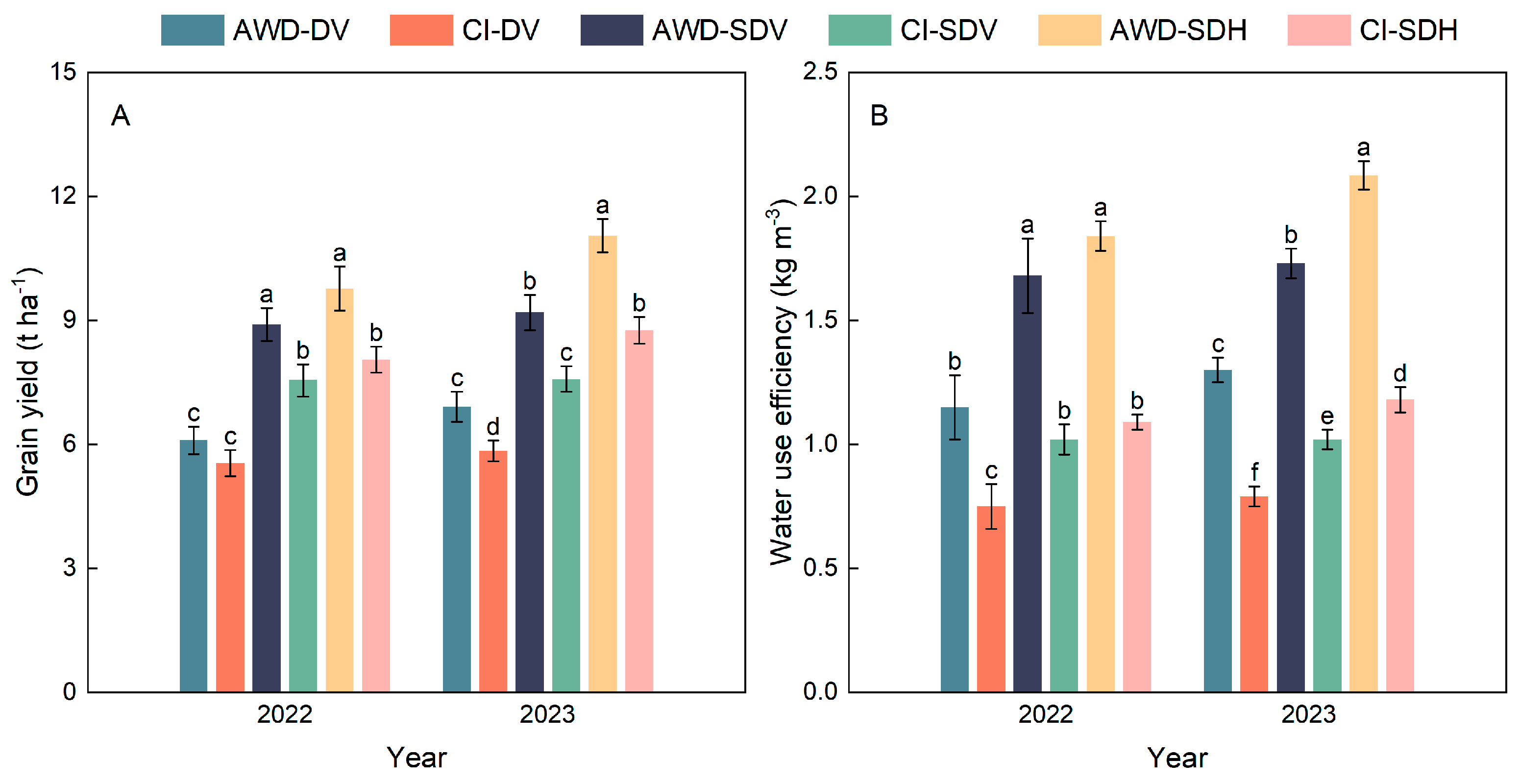
Figure 2.
Grain filling processes of superior (A and C) and inferior grains (B and D) of rice varieties under different irrigation regimes. Alternate wetting and drying irrigation (AWD) and conventional irrigation (CI) denote two distinct water management regimes. DV, SDV, and SDH refer to the dwarf variety, semi-dwarf variety, and semi-dwarf hybrid, respectively.
Figure 2.
Grain filling processes of superior (A and C) and inferior grains (B and D) of rice varieties under different irrigation regimes. Alternate wetting and drying irrigation (AWD) and conventional irrigation (CI) denote two distinct water management regimes. DV, SDV, and SDH refer to the dwarf variety, semi-dwarf variety, and semi-dwarf hybrid, respectively.
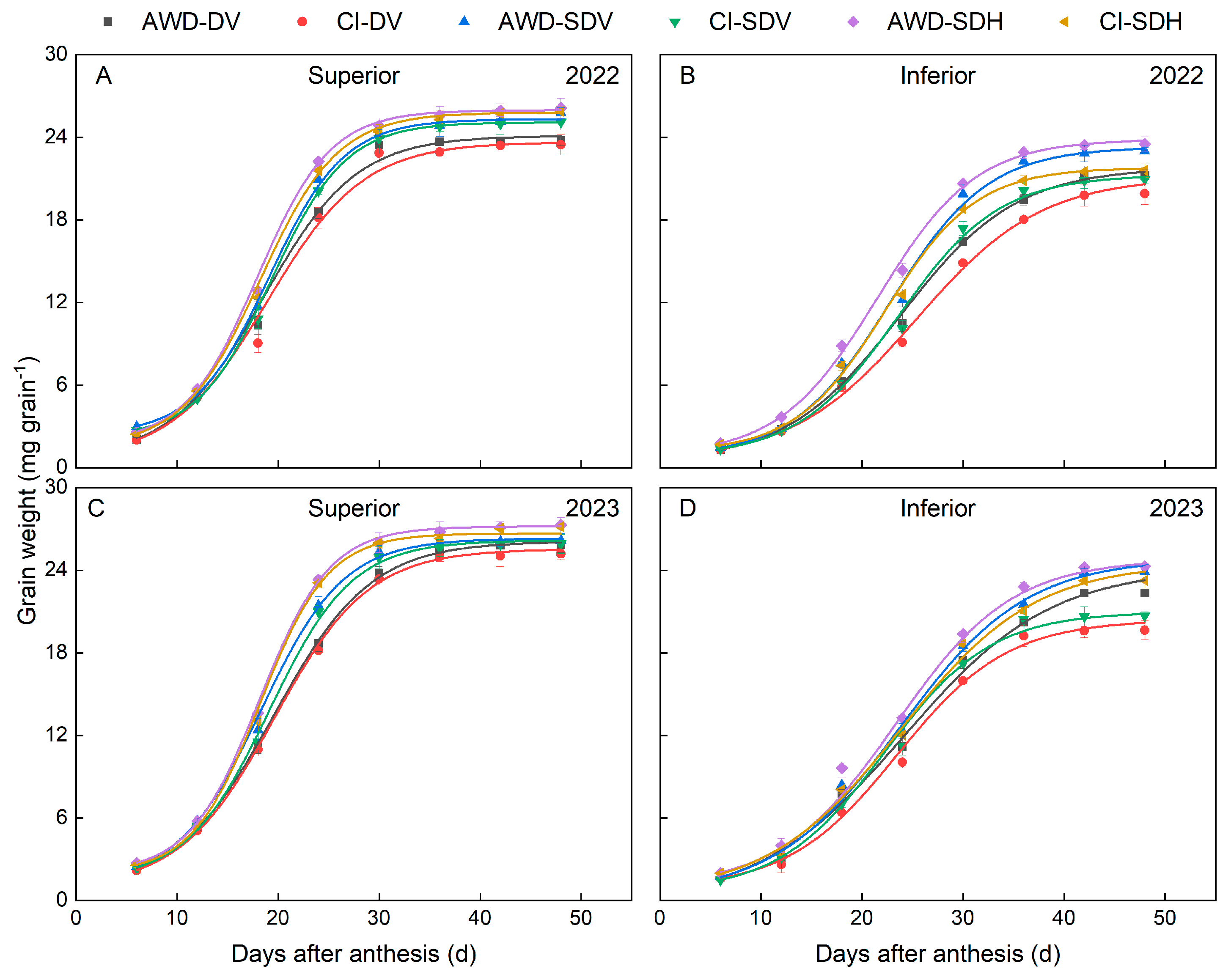
Figure 3.
Aboveground dry matter accumulation (A–D) and crop growth rate (E–H) of rice varieties under different irrigation regimes. Alternate wetting and drying irrigation (AWD) and conventional irrigation (CI) denote two distinct water management regimes. DV, SDV, and SDH refer to the dwarf variety, semi-dwarf variety, and semi-dwarf hybrid, respectively. MT, PI, HD, MA, and BMT are used to denote mid-tillering, panicle initiation, heading, the maturity stage, as well as the stage before mid-tillering, respectively. Vertical bars denote the ± standard error of the mean (n = 4) when exceeding the size of the symbol. Significant differences (p ≤ 0.05) within the same year are indicated by different letters above the columns.
Figure 3.
Aboveground dry matter accumulation (A–D) and crop growth rate (E–H) of rice varieties under different irrigation regimes. Alternate wetting and drying irrigation (AWD) and conventional irrigation (CI) denote two distinct water management regimes. DV, SDV, and SDH refer to the dwarf variety, semi-dwarf variety, and semi-dwarf hybrid, respectively. MT, PI, HD, MA, and BMT are used to denote mid-tillering, panicle initiation, heading, the maturity stage, as well as the stage before mid-tillering, respectively. Vertical bars denote the ± standard error of the mean (n = 4) when exceeding the size of the symbol. Significant differences (p ≤ 0.05) within the same year are indicated by different letters above the columns.
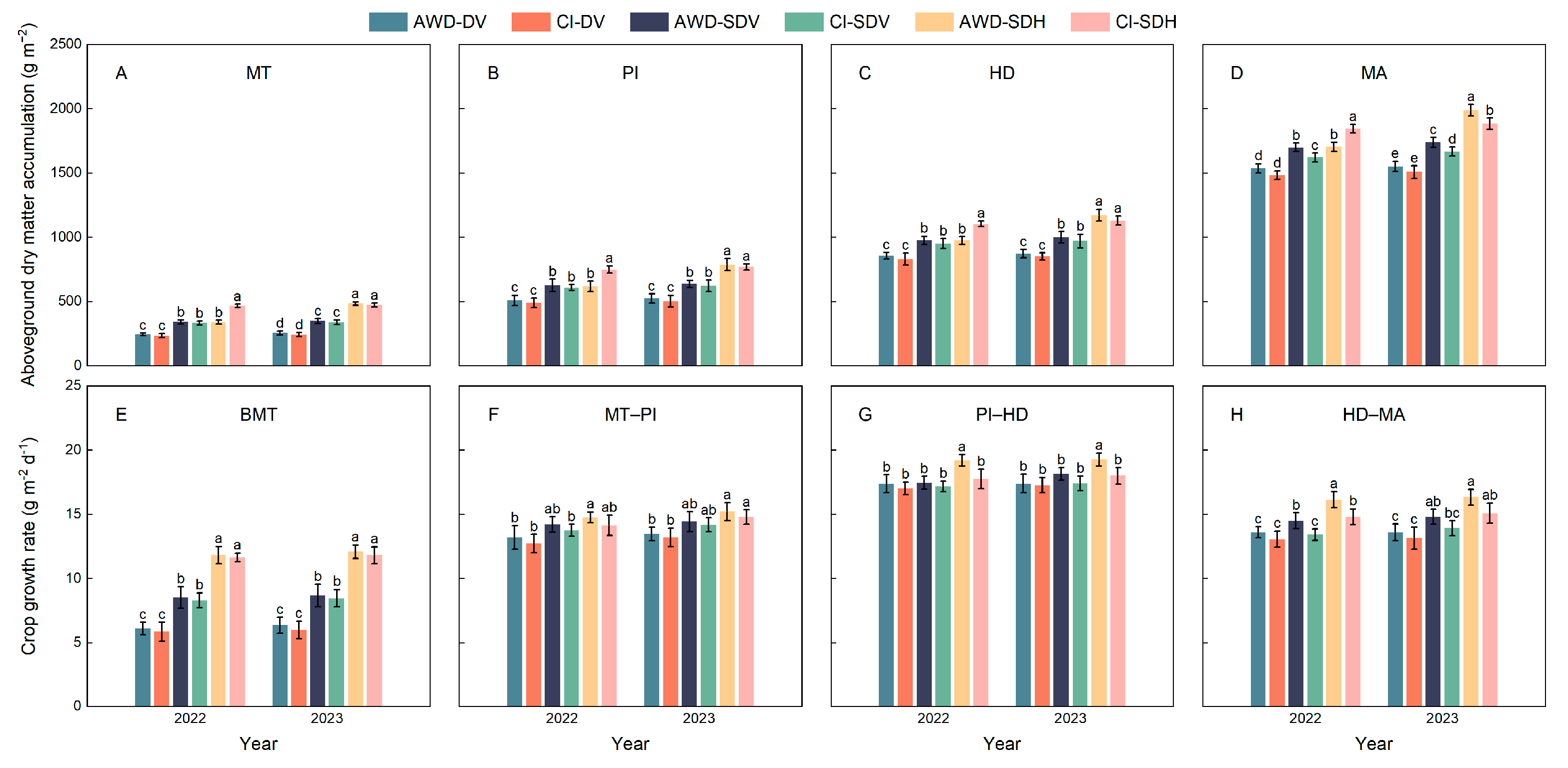
Figure 4.
Flag leaf photosynthetic rate (A–C) of rice varieties under different irrigation regimes. Alternate wetting and drying irrigation (AWD) and conventional irrigation (CI) denote two distinct water management regimes. DV, SDV, and SDH refer to the dwarf variety, semi-dwarf variety, and semi-dwarf hybrid, respectively. EF, MF, and LF denote the early, middle, and late grain filling stages, respectively. Vertical bars denote the ± standard error of the mean (n = 4) when exceeding the size of the symbol. Significant differences (p ≤ 0.05) within the same year are indicated by different letters above the columns.
Figure 4.
Flag leaf photosynthetic rate (A–C) of rice varieties under different irrigation regimes. Alternate wetting and drying irrigation (AWD) and conventional irrigation (CI) denote two distinct water management regimes. DV, SDV, and SDH refer to the dwarf variety, semi-dwarf variety, and semi-dwarf hybrid, respectively. EF, MF, and LF denote the early, middle, and late grain filling stages, respectively. Vertical bars denote the ± standard error of the mean (n = 4) when exceeding the size of the symbol. Significant differences (p ≤ 0.05) within the same year are indicated by different letters above the columns.
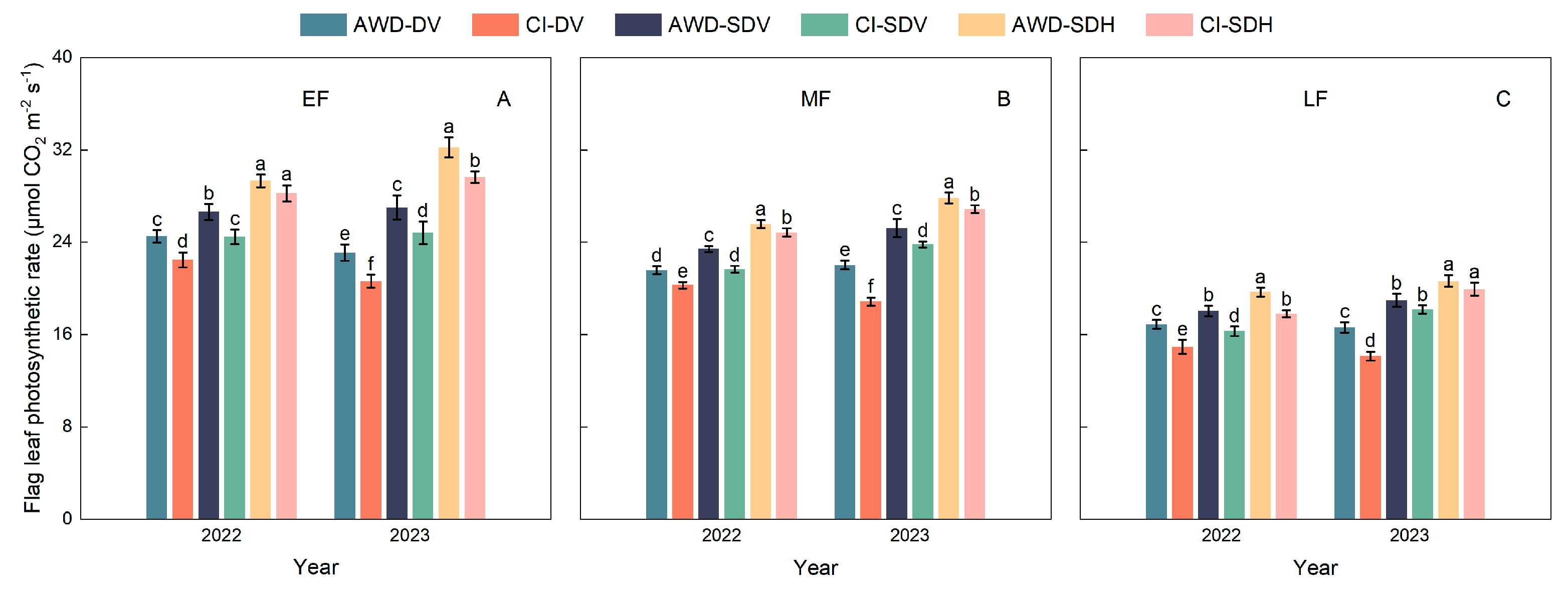
Figure 5.
Root weight (A–C) and root length (D–F) of rice varieties under different irrigation regimes. Alternate wetting and drying irrigation (AWD) and conventional irrigation (CI) denote two distinct water management regimes. DV, SDV, and SDH refer to the dwarf variety, semi-dwarf variety, and semi-dwarf hybrid, respectively. EF, MF, and LF denote the early, middle, and late grain filling stages, respectively. Vertical bars denote the ± standard error of the mean (n = 4) when exceeding the size of the symbol. Significant differences (p ≤ 0.05) within the same year are indicated by different letters above the columns.
Figure 5.
Root weight (A–C) and root length (D–F) of rice varieties under different irrigation regimes. Alternate wetting and drying irrigation (AWD) and conventional irrigation (CI) denote two distinct water management regimes. DV, SDV, and SDH refer to the dwarf variety, semi-dwarf variety, and semi-dwarf hybrid, respectively. EF, MF, and LF denote the early, middle, and late grain filling stages, respectively. Vertical bars denote the ± standard error of the mean (n = 4) when exceeding the size of the symbol. Significant differences (p ≤ 0.05) within the same year are indicated by different letters above the columns.
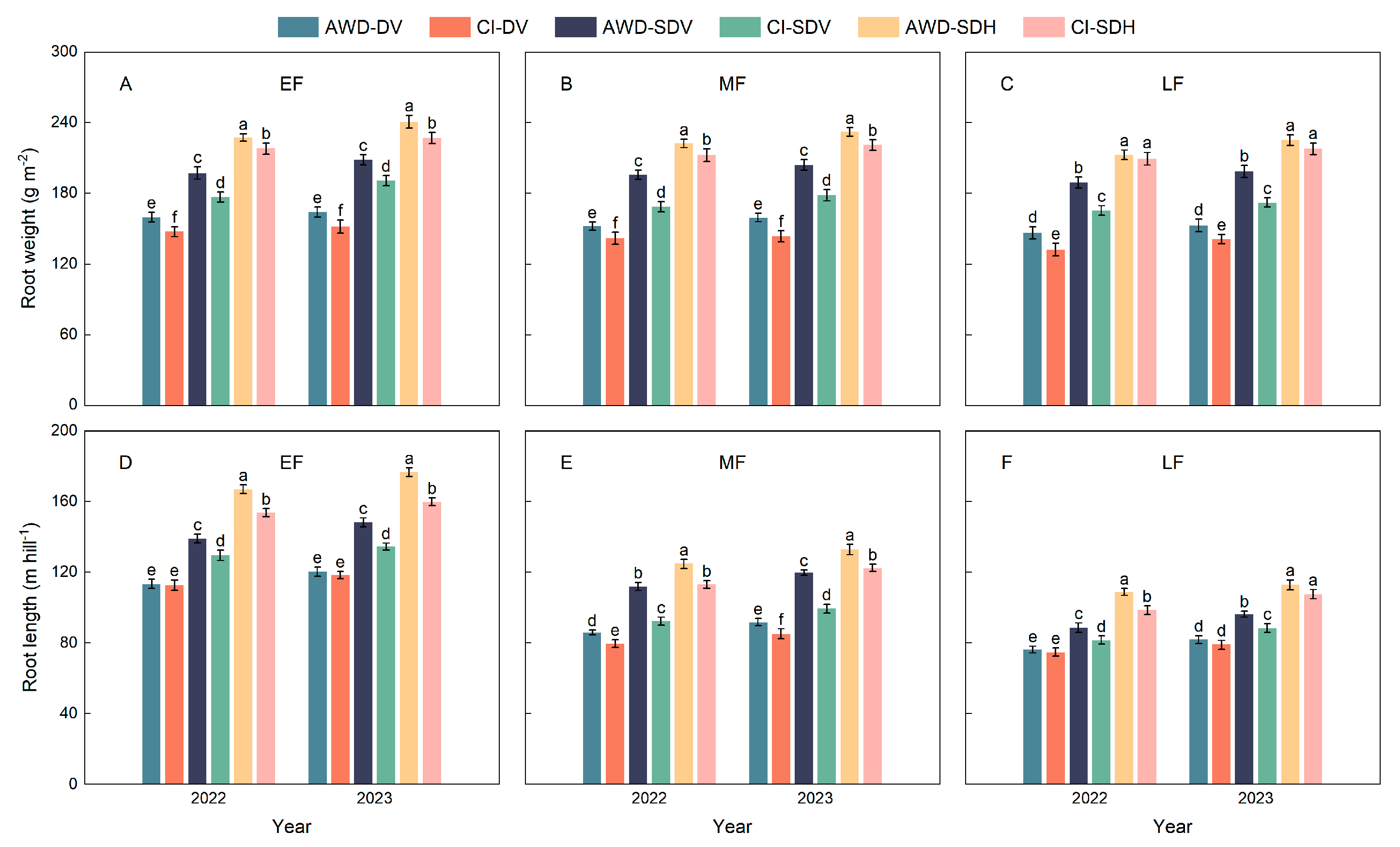
Figure 6.
Root total absorbing surface area (A–C) and active absorbing surface area (D–F) of rice varieties under different irrigation regimes. Alternate wetting and drying irrigation (AWD) and conventional irrigation (CI) denote two distinct water management regimes. DV, SDV, and SDH refer to the dwarf variety, semi-dwarf variety, and semi-dwarf hybrid, respectively. EF, MF, and LF denote the early, middle, and late grain filling stages, respectively. Vertical bars denote the ± standard error of the mean (n = 4) when exceeding the size of the symbol. Significant differences (p ≤ 0.05) within the same year are indicated by different letters above the columns.
Figure 6.
Root total absorbing surface area (A–C) and active absorbing surface area (D–F) of rice varieties under different irrigation regimes. Alternate wetting and drying irrigation (AWD) and conventional irrigation (CI) denote two distinct water management regimes. DV, SDV, and SDH refer to the dwarf variety, semi-dwarf variety, and semi-dwarf hybrid, respectively. EF, MF, and LF denote the early, middle, and late grain filling stages, respectively. Vertical bars denote the ± standard error of the mean (n = 4) when exceeding the size of the symbol. Significant differences (p ≤ 0.05) within the same year are indicated by different letters above the columns.
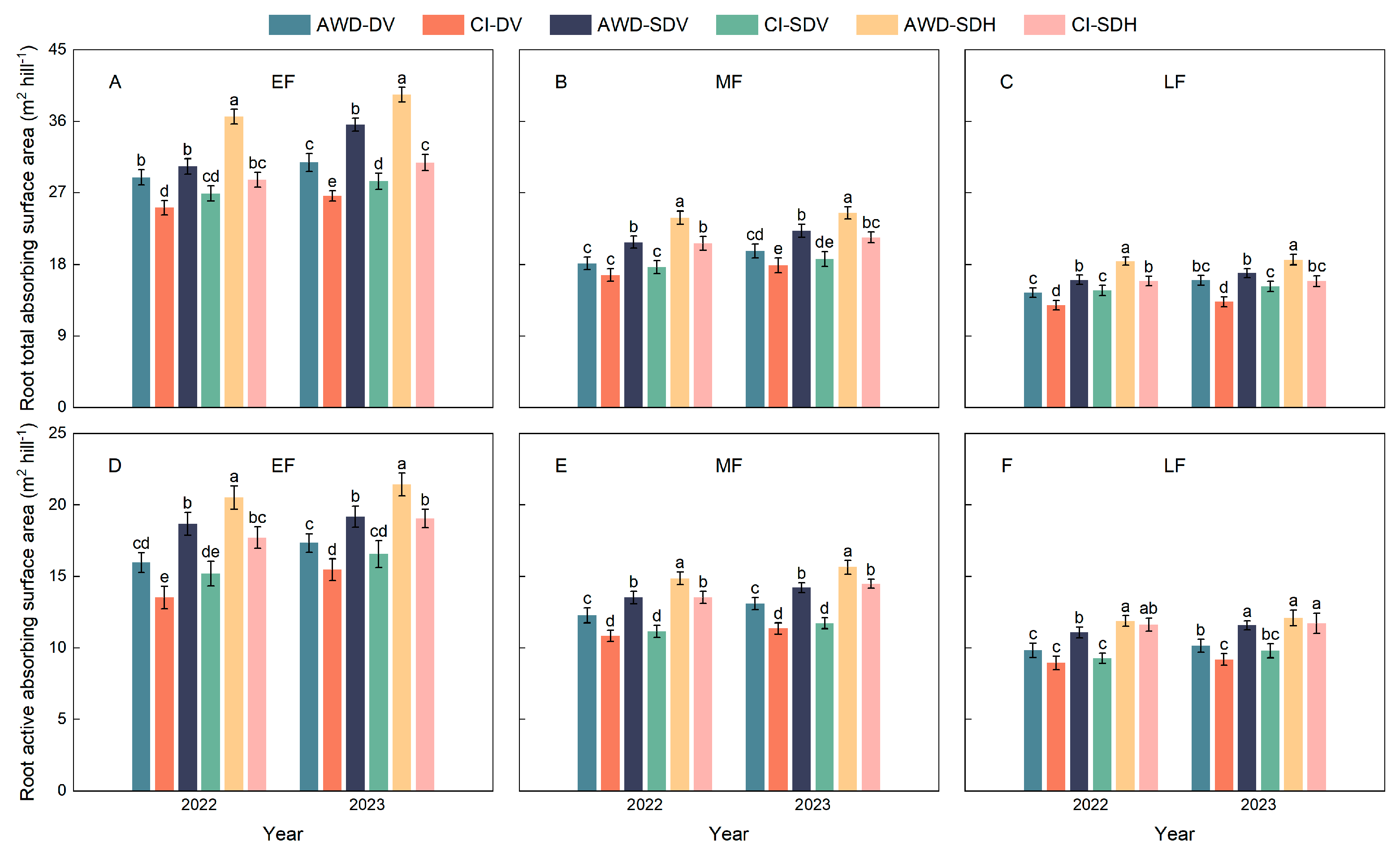
Figure 7.
Root oxidation activity and root bleeding rate of rice varieties under different irrigation regimes. Alternate wetting and drying irrigation (AWD) and conventional irrigation (CI) denote two distinct water management regimes. DV, SDV, and SDH refer to the dwarf variety, semi-dwarf variety, and semi-dwarf hybrid, respectively. EF, MF, and LF denote the early, middle, and late grain filling stages, respectively. Vertical bars denote the ± standard error of the mean (n = 4) when exceeding the size of the symbol. Significant differences (p ≤ 0.05) within the same year are indicated by different letters above the columns.
Figure 7.
Root oxidation activity and root bleeding rate of rice varieties under different irrigation regimes. Alternate wetting and drying irrigation (AWD) and conventional irrigation (CI) denote two distinct water management regimes. DV, SDV, and SDH refer to the dwarf variety, semi-dwarf variety, and semi-dwarf hybrid, respectively. EF, MF, and LF denote the early, middle, and late grain filling stages, respectively. Vertical bars denote the ± standard error of the mean (n = 4) when exceeding the size of the symbol. Significant differences (p ≤ 0.05) within the same year are indicated by different letters above the columns.
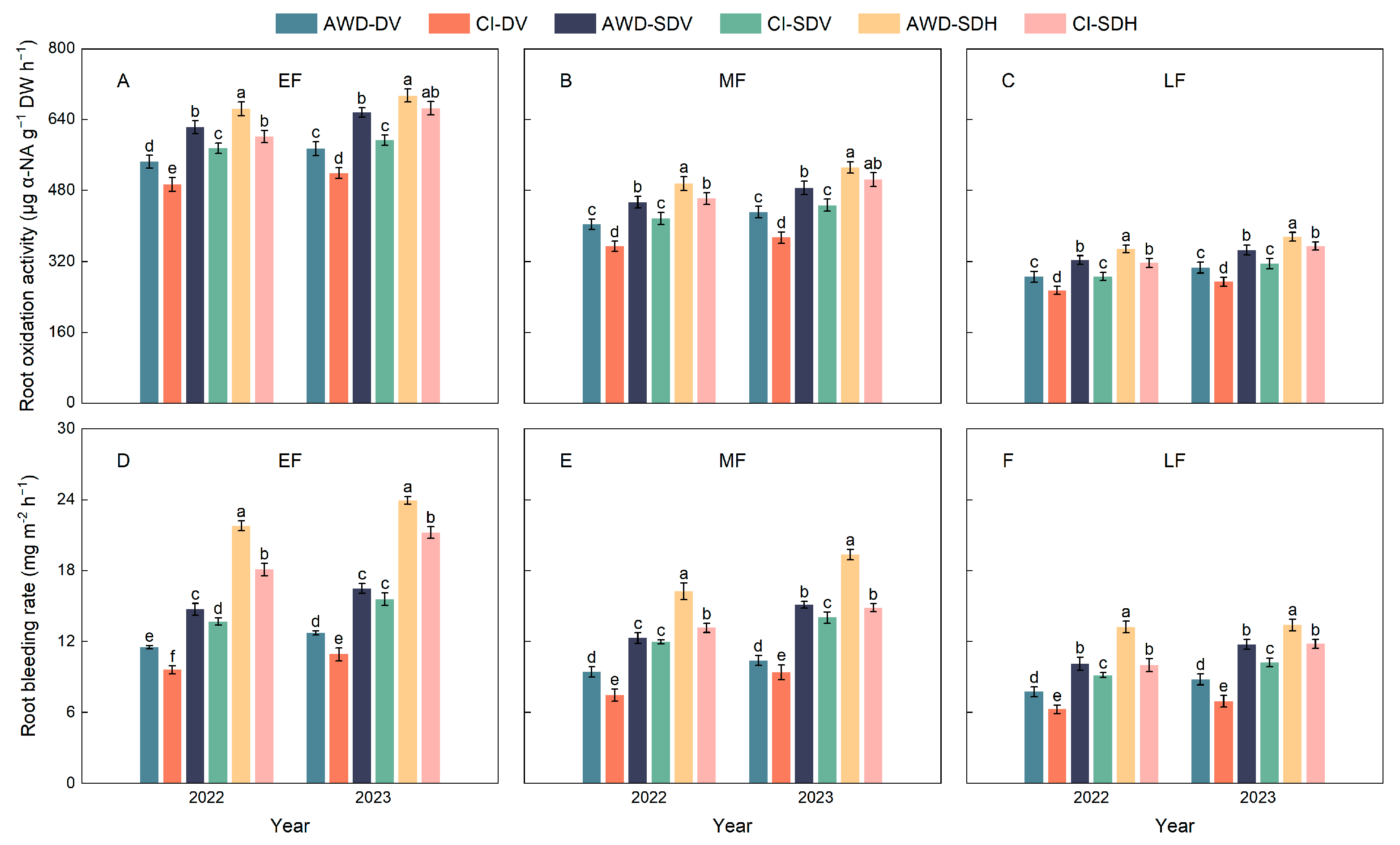
Figure 8.
Z +ZR contents in panicles (A–C), roots (D–F), and root bleeding (G–I) of rice varieties under different irrigation regimes. Alternate wetting and drying irrigation (AWD) and conventional irrigation (CI) denote two distinct water management regimes. DV, SDV, and SDH refer to the dwarf variety, semi-dwarf variety, and semi-dwarf hybrid, respectively. EF, MF, and LF denote the early, middle, and late grain filling stages, respectively. Vertical bars denote the ± standard error of the mean (n = 4) when exceeding the size of the symbol. Significant differences (p ≤ 0.05) within the same year are indicated by different letters above the columns.
Figure 8.
Z +ZR contents in panicles (A–C), roots (D–F), and root bleeding (G–I) of rice varieties under different irrigation regimes. Alternate wetting and drying irrigation (AWD) and conventional irrigation (CI) denote two distinct water management regimes. DV, SDV, and SDH refer to the dwarf variety, semi-dwarf variety, and semi-dwarf hybrid, respectively. EF, MF, and LF denote the early, middle, and late grain filling stages, respectively. Vertical bars denote the ± standard error of the mean (n = 4) when exceeding the size of the symbol. Significant differences (p ≤ 0.05) within the same year are indicated by different letters above the columns.
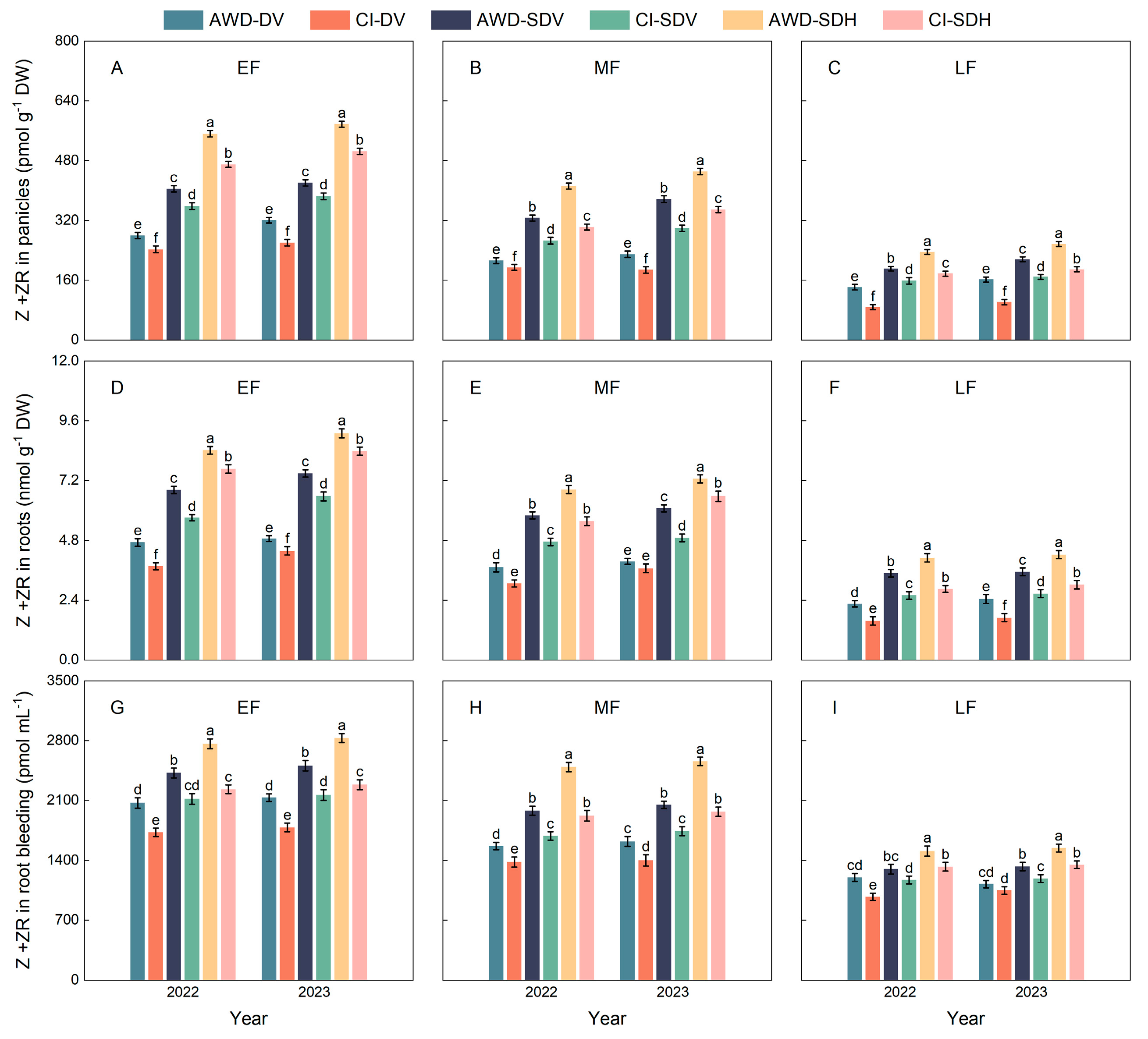
Figure 9.
Relationships between grain yield, water use efficiency, and mean grain filling rate (Gmean) with main agronomic and physiological traits.
Figure 9.
Relationships between grain yield, water use efficiency, and mean grain filling rate (Gmean) with main agronomic and physiological traits.
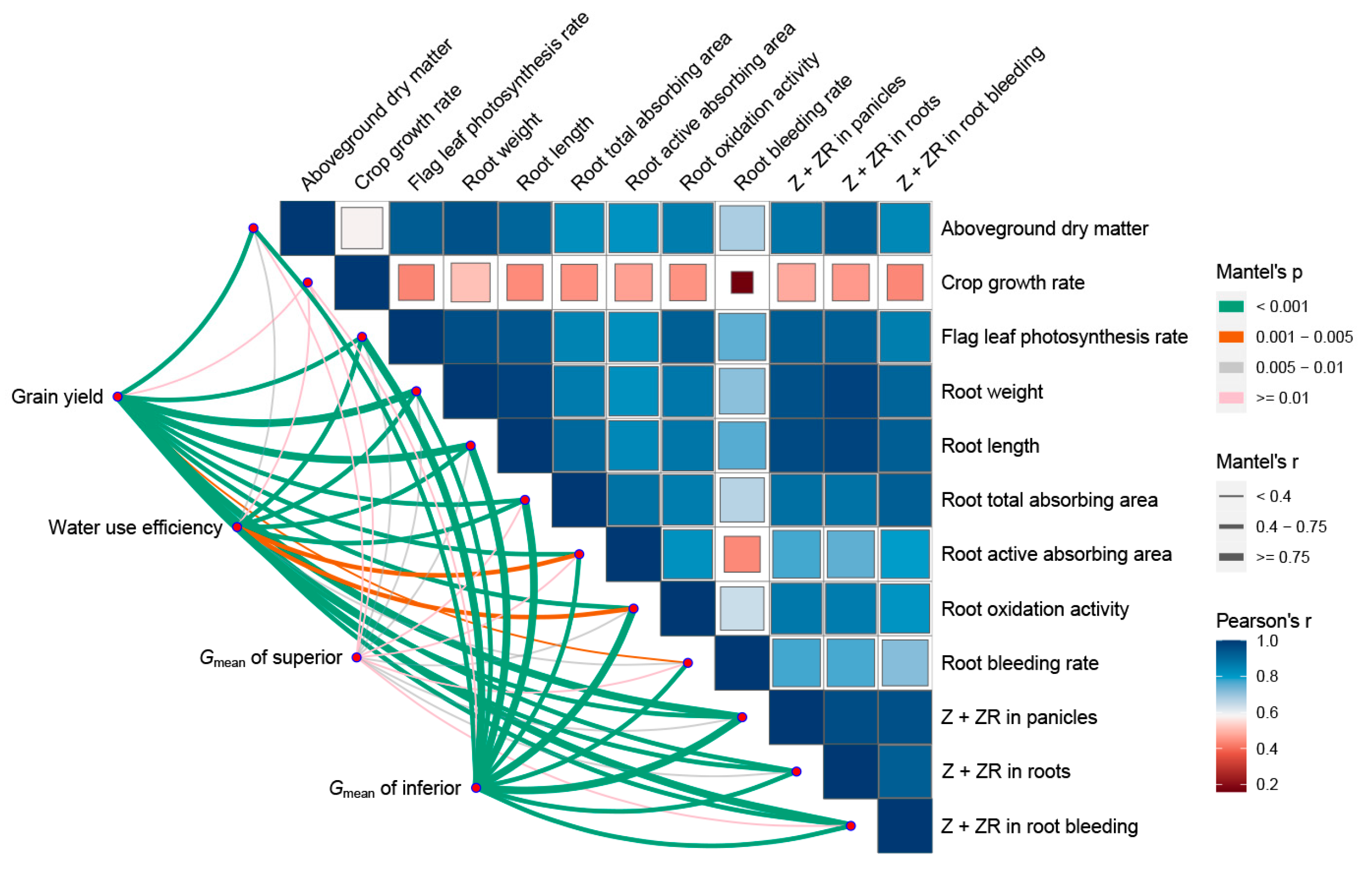
Figure 10.
Path diagram to illustrate the direct and indirect effects of various factors on yield and water use efficiency (WUE). AWD, alternate wetting and drying irrigation. Black arrow lines represent the positive causal relationship between each two modules, and numbers associated with arrows represent path coefficients. R2 represents the amount of variance in the endogenous latent variable accounted for by the independent latent variables. ** indicates significant differences at p ≤ 0.01.
Figure 10.
Path diagram to illustrate the direct and indirect effects of various factors on yield and water use efficiency (WUE). AWD, alternate wetting and drying irrigation. Black arrow lines represent the positive causal relationship between each two modules, and numbers associated with arrows represent path coefficients. R2 represents the amount of variance in the endogenous latent variable accounted for by the independent latent variables. ** indicates significant differences at p ≤ 0.01.
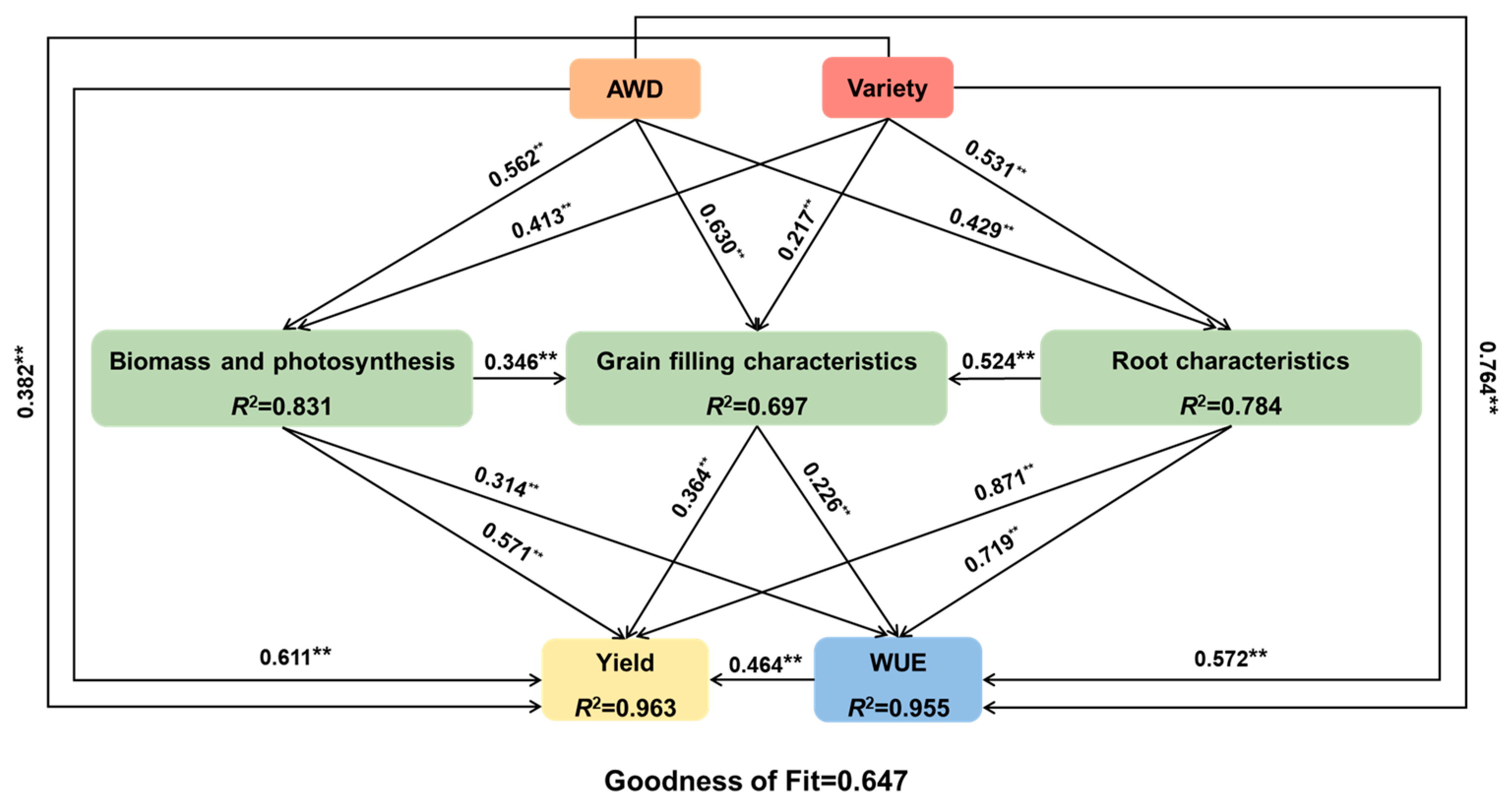
Table 2.
The grain yield components of various rice varieties evaluated under distinct irrigation regimes.
Table 2.
The grain yield components of various rice varieties evaluated under distinct irrigation regimes.
| Year/ Treatment † |
Type ‡ | Variety | Number of Panicles (× 104 ha−1) |
Spikelets per Panicle |
Total Spikelets (× 106 ha−1) |
Filled Grain Rate (%) |
1000-Grain Weight (g) |
|---|---|---|---|---|---|---|---|
| 2022/AWD | DV | Taizhongxian | 249.22 d § | 134.44 j | 335.06 j | 66.53 d | 25.93 f |
| Zhenzhu'ai | 255.45 b | 147.08 h | 375.73 h | 64.35 de | 26.53 e | ||
| Mean | 252.34 | 140.76 | 355.40 | 65.44 | 26.23 | ||
| SDV | Yangdao 2 | 239.88 f | 174.06 e | 460.71 b | 77.12 a | 29.45 a | |
| Yangdao 6 | 245.22 e | 166.18 g | 414.15 g | 73.40 bc | 27.78 c | ||
| Mean | 242.55 | 170.12 | 437.43 | 75.26 | 28.62 | ||
| SDH | Yangliangyou 6 | 228.07 i | 193.53 c | 422.03 e | 74.46 b | 28.00 c | |
| Liangyoupeijiu | 230.53 h | 203.22 a | 468.47 a | 75.67 ab | 29.17 ab | ||
| Mean | 229.30 | 198.38 | 445.25 | 75.07 | 28.59 | ||
| 2022/CI | DV | Taizhongxian | 255.45 b | 129.06 k | 329.69 k | 65.98 de | 25.85 f |
| Zhenzhu'ai | 261.68 a | 134.93 j | 353.08 i | 58.53 f | 26.52 e | ||
| Mean | 258.57 | 132.00 | 341.39 | 62.26 | 26.19 | ||
| SDV | Yangdao 2 | 246.11 e | 169.77 f | 417.82 f | 75.73 ab | 26.98 d | |
| Yangdao 6 | 252.34 c | 140.68 i | 354.98 i | 63.82 e | 28.97 b | ||
| Mean | 249.23 | 155.23 | 386.40 | 69.78 | 27.98 | ||
| SDH | Yangliangyou 6 | 227.41 i | 197.55 b | 449.26 c | 59.74 f | 29.07 ab | |
| Liangyoupeijiu | 233.64 g | 184.26 d | 430.50 d | 71.92 c | 26.77 de | ||
| Mean | 230.53 | 190.91 | 439.88 | 65.83 | 27.92 | ||
| 2023/AWD | DV | Taizhongxian | 255.66 e | 151.27 f | 386.30 g | 66.46 h | 24.97 f |
| Zhenzhu'ai | 269.78 b | 147.91 g | 339.42 j | 68.78 f | 26.98 d | ||
| Mean | 262.72 | 149.59 | 362.86 | 67.62 | 25.98 | ||
| SDV | Yangdao 2 | 264.27 d | 159.34 e | 407.37 e | 85.69 a | 26.85 d | |
| Yangdao 6 | 243.76 g | 143.31 h | 386.62 g | 84.94 a | 29.32 a | ||
| Mean | 254.02 | 151.33 | 397.00 | 85.32 | 28.09 | ||
| SDH | Yangliangyou 6 | 255.37 e | 190.41 b | 492.63 a | 84.91 a | 28.05 bc | |
| Liangyoupeijiu | 229.48 i | 196.84 a | 479.82 b | 83.37 b | 27.92 bc | ||
| Mean | 242.43 | 193.63 | 486.23 | 84.14 | 27.99 | ||
| 2023/CI | DV | Taizhongxian | 267.42 c | 134.36 j | 362.75 h | 63.39 i | 23.60 g |
| Zhenzhu'ai | 278.16 a | 125.21 k | 348.28 i | 67.52 g | 26.77 d | ||
| Mean | 272.79 | 129.79 | 355.52 | 65.46 | 25.19 | ||
| SDV | Yangdao 2 | 269.98 b | 148.69 g | 401.43 f | 71.02 e | 28.35 b | |
| Yangdao 6 | 236.12 h | 138.46 i | 326.93 k | 77.72 c | 27.84 c | ||
| Mean | 253.05 | 143.58 | 364.18 | 74.37 | 28.10 | ||
| SDH | Yangliangyou 6 | 235.83 h | 186.87 c | 440.70 c | 76.56 d | 26.07 e | |
| Liangyoupeijiu | 248.49 f | 175.24 d | 435.45 d | 69.22 f | 28.93 a | ||
| Mean | 242.16 | 181.06 | 438.08 | 72.89 | 27.50 |
† Alternate wetting and drying irrigation (AWD) and conventional irrigation (CI) denote two distinct water management regimes. ‡ DV, SDV, and SDH refer to the dwarf variety, semi-dwarf variety, and semi-dwarf hybrid, respectively. § Statistical significance at the p ≤ 0.05 level (n = 4) for comparisons conducted within the same year is denoted by different letters.
Table 3.
Grain filling characteristics of various rice varieties evaluated under distinct irrigation regimes.
Table 3.
Grain filling characteristics of various rice varieties evaluated under distinct irrigation regimes.
| Treatment † | Type ‡ | Variety | Maximum Grain Filling Rate (mg grain-1 d-1) | Mean Grain Filling Rate (mg grain-1 d-1) |
Time to Reach the Maximum Grain Filling Rate (d) |
|||
|---|---|---|---|---|---|---|---|---|
| Superior | Inferior | Superior | Inferior | Superior | Inferior | |||
| AWD | DV | Taizhongxian | 1.32 b § | 0.97 de | 1.22 e | 0.39 efg | 16.49 de | 17.77 f |
| Zhenzhu'ai | 1.30 b | 0.95 ef | 1.20 e | 0.36 g | 16.26 e | 17.18 g | ||
| Mean | 1.31 | 0.96 | 1.21 | 0.38 | 16.38 | 17.48 | ||
| SDV | Yangdao 2 | 1.70 a | 1.06 c | 1.52 cd | 0.41 cde | 16.52 de | 18.69 e | |
| Yangdao 6 | 1.68 a | 1.08 bc | 1.55 abc | 0.44 bc | 16.69 cde | 19.11 d | ||
| Mean | 1.69 | 1.07 | 1.54 | 0.43 | 16.61 | 18.90 | ||
| SDH | Yangliangyou 6 | 1.71 a | 1.15 ab | 1.57 a | 0.46 b | 16.54 de | 19.95 c | |
| Liangyoupeijiu | 1.73 a | 1.18 a | 1.56 ab | 0.49 a | 16.79 bcd | 20.02 c | ||
| Mean | 1.72 | 1.165 | 1.57 | 0.48 | 16.67 | 19.99 | ||
| CI | DV | Taizhongxian | 1.31 b | 0.88 fg | 1.20 e | 0.33 h | 16.59 de | 19.41 d |
| Zhenzhu'ai | 1.29 b | 0.86 g | 1.19 e | 0.31 h | 16.75 cd | 19.11 d | ||
| Mean | 1.30 | 0.87 | 1.20 | 0.32 | 16.67 | 19.26 | ||
| SDV | Yangdao 2 | 1.68 a | 0.95 ef | 1.51 d | 0.37 fg | 17.12 bc | 21.18 b | |
| Yangdao 6 | 1.66 a | 0.97 de | 1.53 bcd | 0.4 def | 17.21 b | 20.97 b | ||
| Mean | 1.67 | 0.96 | 1.52 | 0.39 | 17.17 | 21.08 | ||
| SDH | Yangliangyou 6 | 1.72 a | 1.07 bc | 1.54 abcd | 0.43 bcd | 17.83 a | 22.04 a | |
| Liangyoupeijiu | 1.70 a | 1.05 cd | 1.55 abc | 0.42 cde | 18.15 a | 21.88 a | ||
| Mean | 1.71 | 1.06 | 1.55 | 0.43 | 17.99 | 21.96 | ||
† Alternate wetting and drying irrigation (AWD) and conventional irrigation (CI) denote two distinct water management regimes. ‡ DV, SDV, and SDH refer to the dwarf variety, semi-dwarf variety, and semi-dwarf hybrid, respectively. § Statistical significance at the p ≤ 0.05 level (n = 4) for comparisons conducted within the same column is denoted by different letters.
Disclaimer/Publisher’s Note: The statements, opinions and data contained in all publications are solely those of the individual author(s) and contributor(s) and not of MDPI and/or the editor(s). MDPI and/or the editor(s) disclaim responsibility for any injury to people or property resulting from any ideas, methods, instructions or products referred to in the content. |
© 2025 by the authors. Licensee MDPI, Basel, Switzerland. This article is an open access article distributed under the terms and conditions of the Creative Commons Attribution (CC BY) license (http://creativecommons.org/licenses/by/4.0/).
Copyright: This open access article is published under a Creative Commons CC BY 4.0 license, which permit the free download, distribution, and reuse, provided that the author and preprint are cited in any reuse.


