Preprint
Article

This version is not peer-reviewed.

Photosynthetic Performance of Two Wheat Varieties with Different Drought Tolerance Under Water Stress

Submitted:

25 October 2025

Posted:

27 October 2025

You are already at the latest version

Abstract

Drought represents one of the most critical environmental constraints limiting plant growth and productivity. During early developmental stages, plants exhibit heightened sensitivity to soil water availability. In crop species such as winter wheat (Triticum aestivum L.), overcoming water deficit at the seedling stage is vital for plant establishment and achieving stable yields. Drought tolerance is therefore a primary agronomic and economic trait. Water shortage affects numerous physiological and biochemical processes, particularly photosynthesis, which is essential for plant metabolism and carbon assimilation. Under drought, plants initiate multiple adaptive responses to optimize water use efficiency while maintaining basic metabolic activity. This study aimed to evaluate the impact of drought stress on growth, chlorophyll content, and photosynthetic performance in two winter wheat varieties—Katya (tolerant) and Zora (sensitive). A controlled pot experiment was conducted in which two-week-old plants at the third-leaf stage were subjected to a seven-day drought period followed by rehydration. Chlorophyll a fluorescence, thermoluminescence, and pigment content were measured to assess photosystem II functionality and recovery potential. The results revealed distinct varietal responses: Katya maintained greater photosynthetic stability and recovery, while Zora exhibited reduced chlorophyll content and incomplete restoration. These findings underscore Katya’s superior drought resilience, crucial for sustaining wheat productivity under changing climatic conditions.

Keywords: 
;  ;  ;  ;  ;  

1. Introduction

Climate change is increasingly acknowledged as one of the most significant challenges facing global agriculture and food security in the 21st century. Rising temperatures and altered precipitation patterns have profound implications for crop productivity worldwide.
The availability of water is a key factor determining the structure of ecosystems, the functioning of economies, and the well-being of human populations. In particular, drought can severely disrupt agriculture, energy production, industry, and household water supply, highlighting the central importance of water for the sustainability and progress of societies [1]. Among these, drought stands out as a critical stress factor, threatening not only agricultural yields but also the sustainability of food systems and rural societies [2].
Wheat (Triticum aestivum L.) is a staple crop for much of the world’s population, valued for its high nutritional content. It is the world’s leading cereal crop, recognized for its nutritional value, extensive cultivation, and global consumption [3,4]. Several developmental stages in wheat are particularly vulnerable to water deficit, including germination, crop establishment, anthesis, and grain filling, each contributing distinctly to final yield [5]. According to data on the website https://www.statista.com/, in the 2024/25 marketing year, global wheat production reached nearly 793 million metric tons, an increase of approximately two million tons compared to the previous year. Wheat is particularly vulnerable to water scarcity during key developmental stages [6]. Drought stress significantly influences both morphological and phenological traits of the plants [7]. Among these, crop establishment is especially critical, as it determines early canopy development, root system architecture, and the potential for productive tillering. Drought stress during this phase can hinder leaf expansion, reduce biomass accumulation, and disrupt physiological processes essential for uniform crop establishment and subsequent yield formation. Specifically, water-deficit conditions during early vegetative growth impair key biochemical and physiological functions, leading to reductions in relative water content, osmotic and leaf water potential, leaf turgor, and chlorophyll level, while increasing diffusive resistance. These changes collectively suppress leaf transpiration, destabilize photosynthetic machinery, and inhibit the activity of enzymes vital for carbon assimilation and energy metabolism [8,9,10]. Additionally, in drought conditions, plants have a more difficult time absorbing nutrients [11]. Drought impairs photosynthetic machinery and disrupts the activity of key enzymes, such as Rubisco, leading to lower grain yields [12].
The development and identification of drought-tolerant wheat varieties are, therefore, crucial strategies for mitigating the adverse impacts of climate change on crop production. A deeper physiological and biometric understanding of how different wheat genotypes respond to drought during crop establishment provides valuable insight into early-stage resilience mechanisms and supports breeding strategies aimed at improving adaptation to water-limited environments. To assess drought stress intensity, classical physiological indicators such as leaf water potential and water content (WC) are commonly used, with WC considered one of the most reliable metrics of plant water status [13,14]. In parallel, leaf chlorophyll content (LCC) is often measured as a baseline indicator of pigment concentration. Chlorophyll levels are influenced by nitrogen availability and are highly sensitive to environmental stresses such as drought, salinity, disease, and pest pressure [15]. As the primary pigments responsible for capturing light energy and converting it into carbohydrates, chlorophylls are essential for maintaining crop productivity under adverse conditions [16].
Beyond pigment quantification, chlorophyll a (Chl a) fluorescence provides a powerful, non-invasive tool for studying the functional state of the photosynthetic apparatus. This fluorescence, emitted in the red-to-far-red region (400–700 nm), reflects the fate of absorbed light energy [17]. Although Chl a fluorescence accounts for only a small fraction of absorbed energy (0.5–10%), its intensity is inversely related to photochemical efficiency due to redox dynamics within the photosystems [18].
Over recent decades, Chl a fluorescence has been employed as a rapid, information-rich method for assessing photosynthetic function across plants, bacteria, and algae that contain chlorophyll [19]. Fluorescence kinetics are typically captured using either continuous or modulated excitation systems [20]. Under continuous excitation, the resulting induction curves, first described by Kautsky and Hirsch [21], are known as OJIP transients or Kautsky curves, and are recorded during prompt fluorescence (PF). These transients reflect sequential electron transport events in Photosystem II (PSII) and are interpreted using the energy flux theory developed by Reto Strasser [22,23], which enables the calculation of multiple parameters describing photochemical efficiency, energy dissipation, and reaction center dynamics. Another valuable approach is thermoluminescence (TL), which involves cooling pre-illuminated samples and gradually reheating them to detect recombination of trapped charge pairs as distinct emission bands [24]. TL analysis provides further insight into the integrity and dynamics of the photosynthetic electron transport chain under stress conditions.
In our study, to provide a detailed analysis of the photosynthetic apparatus, we performed, in addition to the JIP test, statistical and multivariate analyses of the induction curves. By analyzing the curves—not only specific points, as in the JIP test—we obtain detailed information about the state of the photosynthetic apparatus, as well as the phases of the curves in which changes occur due to the applied stress. This is a new approach for studying prompt fluorescence induction curves, which would be suitable for relatively rapid analysis of the photosynthetic apparatus, without the need to calculate JIP parameters and their interpretation.
Taken together, these complementary measurements spanning physiological indicators, pigment content, and biophysical diagnostics offer a comprehensive framework for evaluating the impact of drought on photosynthetic function and overall plant health. Comparing drought-tolerant and drought-sensitive wheat genotypes provides a more detailed understanding of how water stress alters photosynthetic efficiency, water status, and growth-related traits. In the present study, we applied this integrated approach to investigate drought-induced changes in wheat during early vegetative development, with the aim of elucidating additional key mechanisms of drought tolerance, thus providing insights that may contribute to the development of more resilient cereal crops in response to a changing climate.

2. Results

2.1. Fresh and Dry Weight

To calculate the fresh and dry weight, measurements of the fresh and dry weight of control plants, dehydrated plants, and rehydrated plants of both wheat varieties were made with five replicates each. All data have a normal distribution, and a single-factor ANOVA was applied to it. Summary statistics for the two varieties are given in Tables S1 and S2.
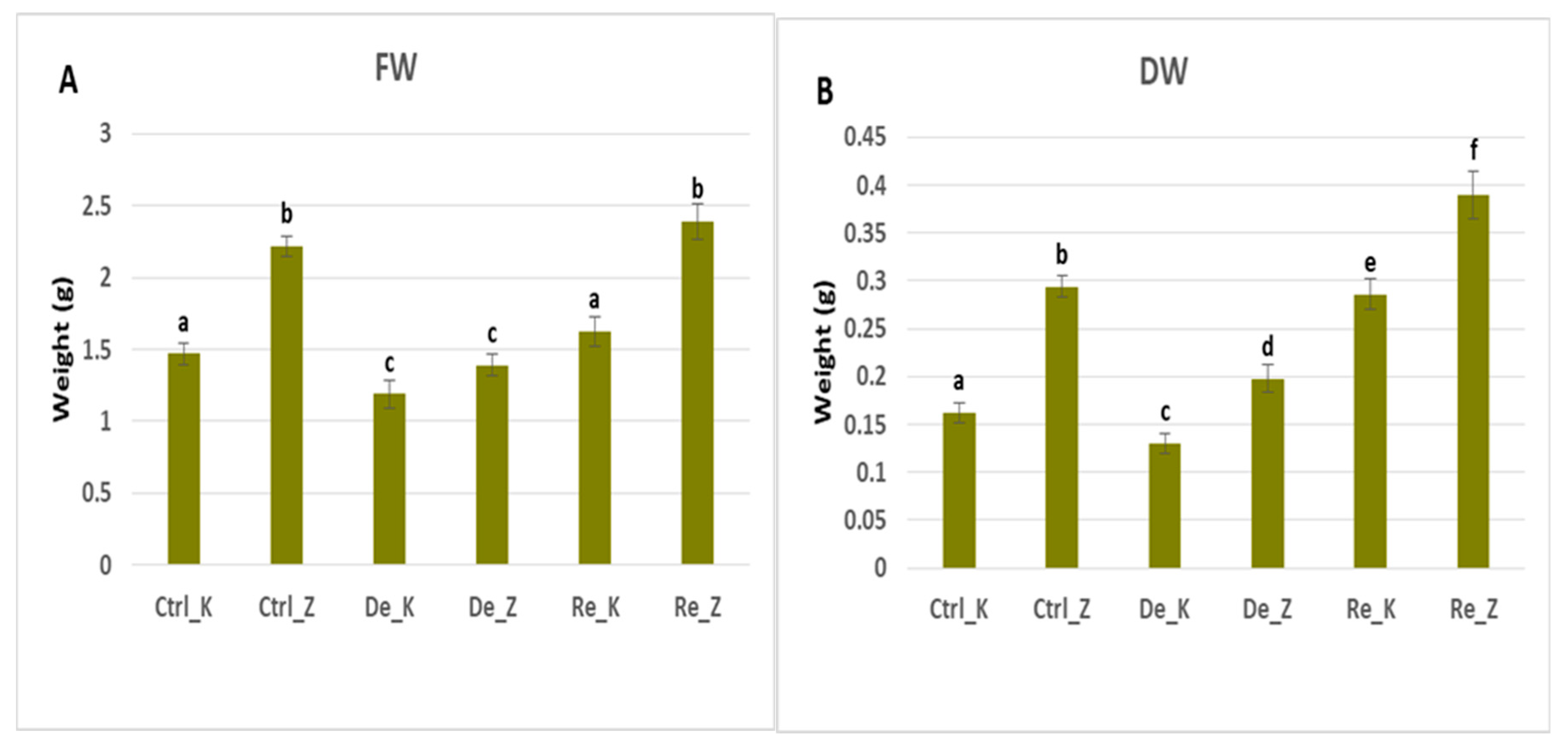
Figure 1А and Table 1 show that the fresh and dry weights of Zora wheat were higher than those of Katya. Still, during drought, representatives of the Zora variety lose a greater portion of their weight than representatives of the Katya variety. The average fresh weight of the Katya variety is 1.47 g, while that of the Zora variety is 2.22 g. The fresh weight of rehydrated wheat of the Zora variety is 2.39 g, while that of representatives of the Katya variety is 1.63 g. A similar ratio is also observed in the average dry weight values of the two wheat varieties (Figure 1B). After rehydration, both varieties regained their fresh and dry weight, even slightly exceeding the weight of the control plants, although it was not statistically significant. One-way ANOVA was used to assess statistical differences between varieties.

2.2. Water Content (WC)

To assess whether they differed in percentage water content, the controls were compared with the dehydrated and rehydrated ones, using Mann-Whitney U test. The water content (WC) in the wheat variety Katya differed statistically between the control plants, the dried ones, and the rehydrated ones. The controls had 85% water content, while the dehydrated plants had 42%, and the rehydrated plants had 60%.
To assess the differences between dried and rehydrated plants, a Wilcoxon signed-rank test was used, as the same plants were dried and then rehydrated. Dried and then rehydrated wheat varieties of the Katya variety show statistical differences, with the recovered ones reaching 60% relative water content.
In Zora wheat, 81% WC was observed for the control plants and 46% and 42% for dehydrated and rehydrated, respectively, with no statistical significance between dehydrated and rehydrated.
The water content values for both varieties are shown in Figure 2A and in Table 2. There were no statistical differences between the values of the controls for both varieties. In contrast, the water content of the dehydrated plants of the Katya variety differed significantly from both the rehydrated and the controls. Summary statistics for the two varieties are given in Tables S3 and S4.

2.3. Specific Leaf Area (SLA)

To statistically assess whether the values of the SLA parameter differ for the three variants we studied - control, dried, and rehydrated wheat of two varieties, two statistical methods were used. Control plants were compared with dehydrated and rehydrated plants using the Mann-Whitney U-test, since they are from different groups. In contrast, for the statistical assessment between dehydrated and rehydrated plants, the Wilcoxon signed-rank test method was used, because dehydrated and rehydrated plants are the same. The specific leaf area values for both varieties are shown in Figure 2B and in Table 2. The value of the SLA for the control plants of the wheat genotype Katya is 476.4 cm2/gDW. In comparison, that of the dehydrated and rehydrated ones is 388.4 cm2/gDW and 326.9 cm2/gDW, respectively. Only the SLA values for rehydrated wheat are statistically different from the control and dehydrated plants. The SLA values for the Zora variety are 418.9 cm2/gDW, 444.1 cm2/gDW, and 437.6 cm2/gDW for controls, dehydrated, and rehydrated, respectively, and there is no statistical difference for this variety. Summary statistics for the two varieties are given in Tables S5 and S6.

2.4. Leaf Chlorophyll Content

According to the Shapiro–Wilk test, all data are normally distributed. Single-factor ANOVA was used for statistical analysis of chlorophyll content. The leaf chlorophyll content values for both varieties are shown in Figure 2C and in Table 2. The chlorophyll content in the control plants of the Katya genotype is lower than the chlorophyll content in the dehydrated and rehydrated plants. The chlorophyll in the controls was 312.6 mg/m2, while in the dehydrated wheat it was 387.9 mg/m2, and in the rehydrated wheat it was 382 mg/m2. The values between the controls and the dehydrated and rehydrated are statistically different, while there was no statistical difference in the chlorophyll values between the dehydrated and rehydrated wheat.
In the Zora variety, there were statistical differences in chlorophyll content between the three variations - controls, dehydrated, and rehydrated plants. Control wheat had the highest value of 467.4 mg/m2, dehydrated had a value equal to 426.1 mg/m2, and rehydrated had the lowest chlorophyll content - 391.7 mg/m2.
The Katya variety had lower chlorophyll content than the Zora variety in the control and drought-exposed plants and almost equal chlorophyll content in the rehydrated plants, as can be seen in Figure 2C. Summary statistics for the two varieties are given in Tables S7 and S8.

2.5. Thermoluminescence

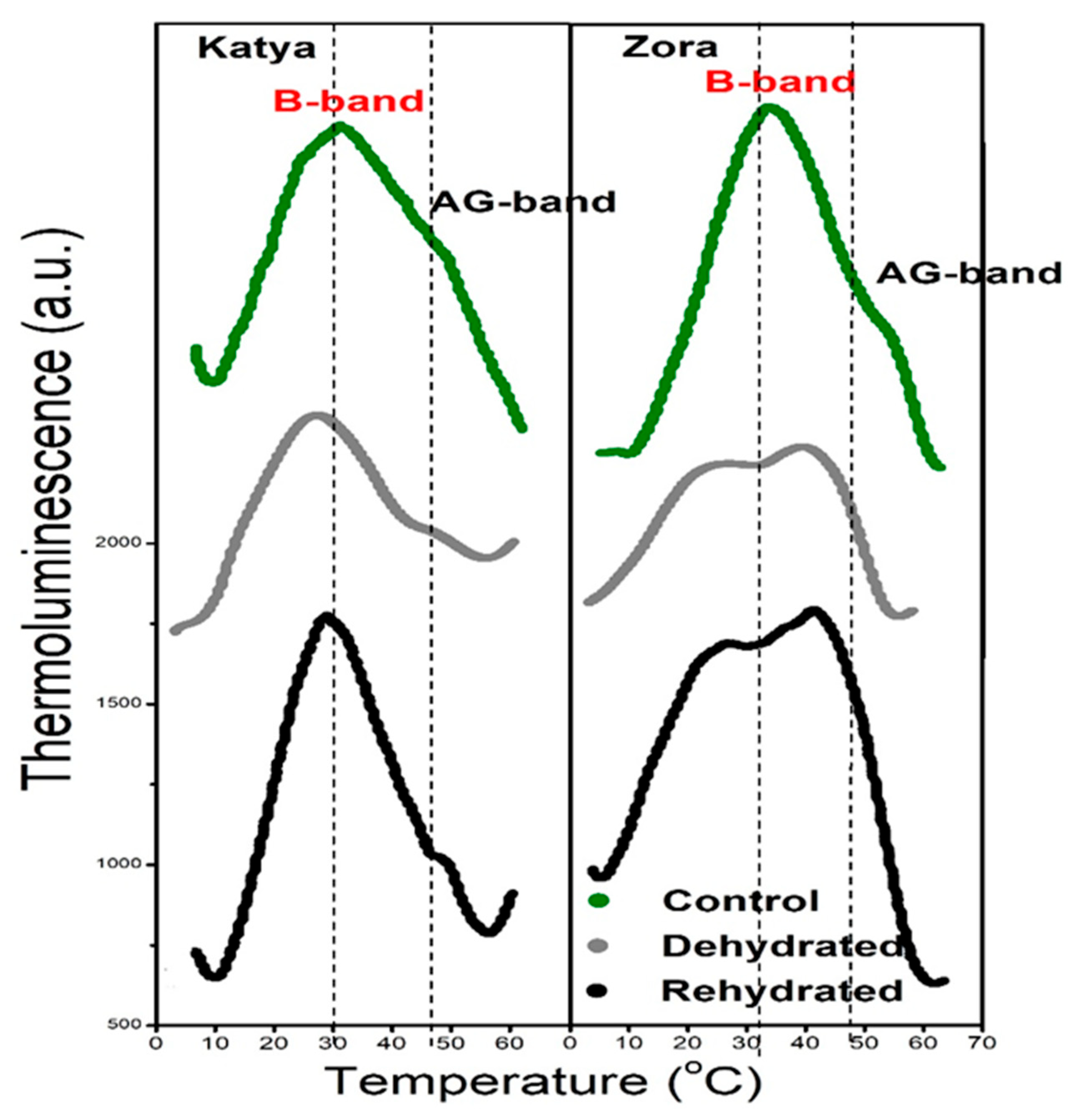
Thermoluminescence measurements from control wheat leaves var. Katya and Zora showed that excitation by 2 flashes produced similar curves with a main B band (S2/3QB-) which maximum peaked at about 30 ± 1.5oC and a small afterglow band (AG) noticeable as a shoulder at around 47 ± 2oC (Figure 3). In Katya variety, a certain decrease of the emission of B and AG bands was observed in leaves under drought, but B band temperature maximumTmax was only slightly downshifted with no statistical difference from the control. No change in the temperature of AG was observed. In Zora dramatic changes in thermoluminescence curve of dehydrated leaves, including considerable shifts in bands peak positions and variations in intensities were observed. In this treatment (Zora, DeH) B and AG bands had almost similar proportions of the total emission, and also both of the bands were stronglysignificantly shifted to the lower temperature region by 7-8oC compared to control. Rehydration led to the restoration of the initial thermoluminescence emission in Katya. Although rehydration caused an increase in the number of recombining pairs in Zora, the characteristics of the thermoluminescence bands remained altered with downshifted peak temperatures and prevailing AG band, indicating an incomplete recovery.

2.5. Prompt Chlorophyll Fluorescence (PF)

All fluorescence parameters have a normal distribution and were statistically evaluated by single-factor ANOVA. To track the dynamics of the effect of drought on the photosynthetic apparatus of the studied wheat varieties, we conducted a comparative analysis of the studied wheat varieties in two periods of their development: in the middle (fourth day for dehydrated plants and third day for rehydrated) of the drought/rehydration, and at the end of the drought/rehydration period (seventh day for dehydrated plants and fifth day for rehydrated). Key parameters obtained from prompt fluorescence (PF) induction curves using the JIP assay [25], F0, Fm, Fv/F0, Vj, Vi, φP(0), ψ0, ABS/RC, TR0/RC, ET0/RC, DI0/RC, φE0, φD0, and PIABS were used to analyze the photosynthetic apparatus of the two wheat varieties. We have analyzed only the parameters that change statistically during dehydration and rehydration of the studied plants. To assess differences between varieties, fluorescence transients were analyzed using curve-based statistical methods, including Functional data analysis (FDA), point-by-point Welch’s t-tests, Area under the curve (AUC), and functional Principal component analysis (fPCA).

2.5.1. JIP Parameters Analysis of Katya Varieties

  • Analysis of the JIP parameters on the fourth/ third day of drying/rehydration
On the fourth day of dehydration and third day of rehydration, only 6 JIP parameters (Fm, Fv/F0, Vi, ABS/RC, TR0/RC, ET0/RC) were statistically different (Table 3 and Figure 4A,C). In the dried plants, a decrease in the maximum fluorescence values was observed compared to the values in the control and rehydrated plants. The average Fm value in control plants was 51269.4 a.u. (arbitrary units) and was statistically different from the value of dehydrated plants – 47085.4 a.u. After rehydration, the Fm value recovered, reaching a value of 53093.4 a.u. , which was statistically not different from the value of the controls. Reduced Fm indicates that the plant cannot reach the maximum fluorescence that is achieved under optimal conditions, which usually suggests stress or damage in the photosynthetic apparatus.
The parameter Fv/F0 reflects the ratio of photochemical to non-photochemical use of light energy in RC Photosystem II. In wheat plants subjected to drought, this parameter has a minimal value compared to the values in controls and rehydrated plants. The value of dehydrated wheat is 4.74 and is statistically different only from the value of rehydrated wheat - 5.12, which is higher than that of the controls (4.87), but the difference is not statistically significant.
The parameters that reflect the energy flows, per QA-reduced PSII reaction center ABS/RC, TR0/RC, ET0/RC, change similarly. ABS/RC decreased from 2.55 in control plants to 2.43 in plants subjected to drought. When rehydrating wheat, the value of this parameter is still 2.43. Only the values between the controls and the dried plants were statistically different.
Relative variable fluorescence at the I step (after 30 ms), Vi has a lower value in control plants (0.80) than in dehydrated (0.83 ) and rehydrated (0.83) plants.
  • Analysis of the JIP parameters on the seventh/fifth day of drying/rehydration
At the end of a period of drought and, respectively, rehydration, more parameters change in the Katya wheat variety than in the initial period of dehydration (Table 4, Figure 4B,D). The parameters that are changed are F0, Fm, Vj, Vi, ψ0, ET0/RC, ϕE0, and PI(abs). No statistical differences were observed between the parameter values of the control plants and those obtained in the drought-recovered plants. Unlike the initial stage of dehydration, in the final stage, the values of the JIP parameter ET0/RC are higher for dried wheat than for the control and rehydrated plants. In dehydrated plants, its value is 1.10, while in controls and rehydrated plants, the values are 0.97 and 1.00, respectively.
The parameter that changes most strongly during drought is PI(abs), which reflects the functional activity of PS II, related to the absorbed energy. Dehydrated plants have a value equal to 2.52, while the values of the controls and rehydrated plants are 2.10 and 2.04, respectively. The parameter ψ0 gives the probability of electron transport outside QA−. The control plants have a value for this JIP parameter of 0.49, while for the rehydrated ones, it is 0.5, and for the dehydrated ones, it is 0.54.
The parameter φ(E0) provides information about the quantum efficiency of electron transfer in the electron transport chain (ETC) after QA, or the quantum yield of the ETC at t = 0. The values of this parameter for the control and rehydrated plants are 0.41, but are lower than the value of the parameter for dehydrated wheat (0.45). Higher values of this parameter in the early stage of drought indicate that the Katya variety is trying to adapt to stress conditions.

2.5.2. JIP Parameters Analysis of Zora Varieties

  • Analysis of the JIP parameters on the fourth/ third day of drying/rehydration
Dehydration and rehydration of Zora wheat varieties lead to changes in the values of all studied JIP parameters. See Table 5, Figure 5A,C. The values of the parameter F0 for the dehydrated plants are 9811.1 a.u., for the rehydrated ones 10682.1 a.u., while for the control plants they are 9572.4 a.u. There is a statistical difference between dehydrated and rehydrated plants and between controls and rehydrated ones.
The parameter Fv/F0 does not change in the initial stage of drought compared to the controls, with its value for the controls being 5.18 and for the dehydrated wheats being 5.17. In the initial stage of rehydration, this parameter remains low with a value of 4.7.
In the first few days of dehydration of Zora wheat, no statistical changes were observed between the control and dried plants in all parameters except for Vi. The values for this parameter for the control, dehydrated, and rehydrated plants are, respectively 0.83, 0.84, 0.88.
  • Analysis of the JIP parameters on the seventh/fifth day of drying/rehydration
In the Zora variety, only four parameters managed to restore their values at the end of the rehydration period. These are: F0, Fm, TR0/RC, ET0/RC. Dehydration of Zora wheat varieties has the most substantial impact on the parameters ABS/RC, TR0/RC, ET0/RC, which give information about the energy flux per reaction center of Photosystem II. For control plants, ABS/RC has a value 2.54, for dehydrated plants, it is 3.08, and for rehydrated plants, the value is 2.69. The value of TR0/RC in drought plants is 2.54, and it is also larger than the values of controls and rehydrated plants, which are 2.12 and 2.19, respectively. These higher values indicate fewer active PSII reaction centers. For greater clarity, see Figure 5B,D and Table 6.
Table 6. The effect of drought and rehydration on wheat plant Zora measured on the seventh day of drought and on the fifth day of rehydration analyzed by the JIP parameters. Kruskal-Wallis one-way analysis of variance by ranks was applied. Only parameters that are statistically different from each other are presented. (Significant differences at p<0.05).
Ctrl De Re
F0 10014.5±201 8874±303.6 10481.5±238.2
Fm 60290.3±1027.5 51358.4±1235.1 57631.9±992.6
Fv/F0 5.03±0.08 4.88±0.12 4.52±0.1
Vj 0.52±0.006 0.48±0.005 0.56±0.008
Vi 0.87±0.007 0.86±0.004 0.88±0.007
φ(p0) 0.83±0.002 0.82±0.005 0.81±0.003
ψ0 0.47±0.006 0.51±0.005 0.44±0.008
ABS/RC 2.54±0.04 3.08±0.07 2.69±0.04
TR0/RC 2.12±0.03 2.54±0.04 2.19±0.03
ET0/RC 1.01±0.01 1.29±0.01 0.98±0.02
DI0/RC 0.42±0.01 0.54±0.03 0.49±0.01
ϕE0 0.39±0.006 0.42±0.006 0.36±0.007
ϕD0 0.16±0.002 0.17±0.005 0.18±0.003
PI(abs) 1.85±0.08 1.75±0.09 1.39±0.08

2.5.3. Comparing the JIP Parameters of Katya and Zora Varieties

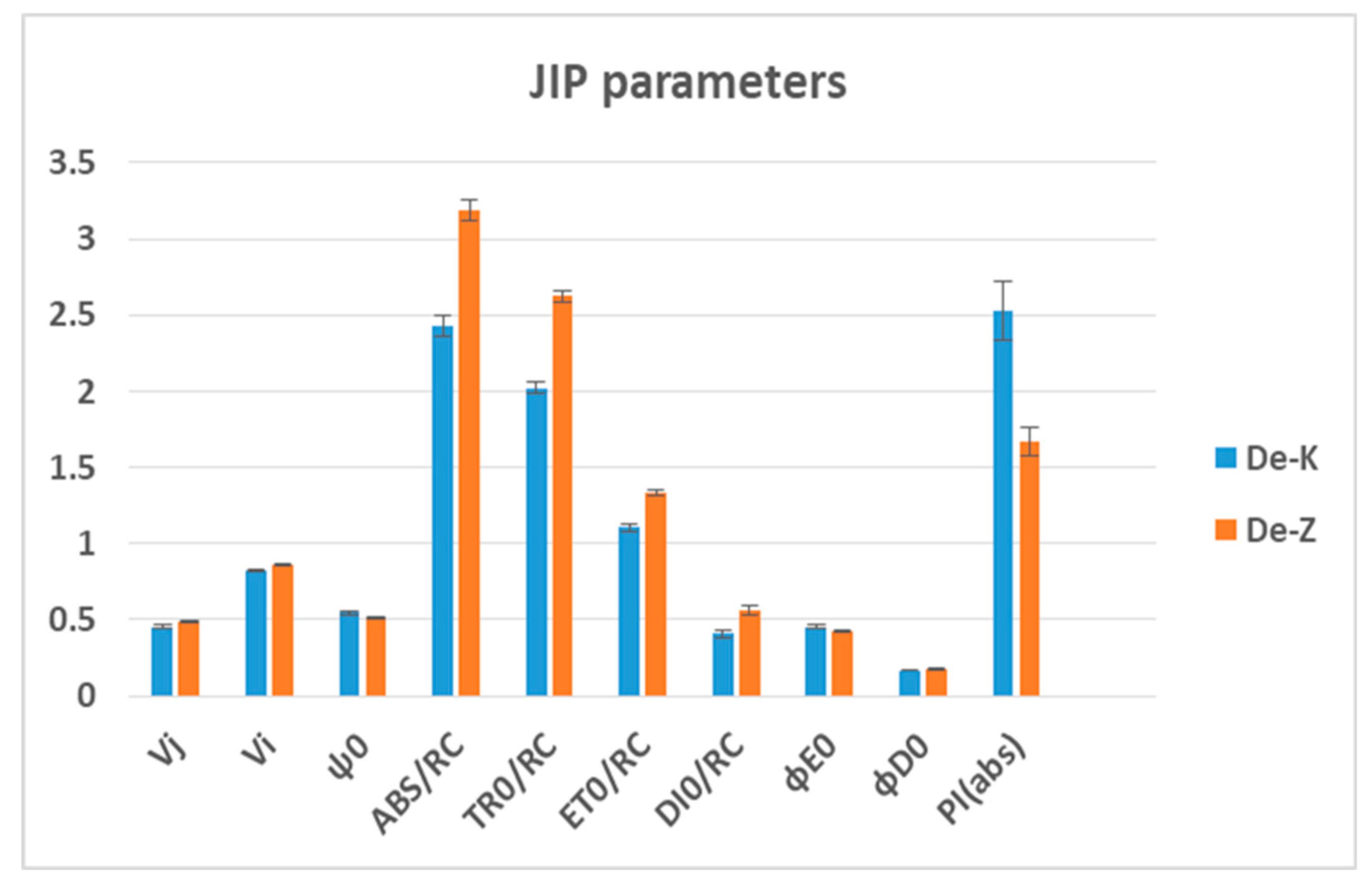
For a better understanding of the effect of drought, the JIP parameters between the two varieties, Katya and Zora, were compared in dehydrated and rehydrated plants. Comparisons of JIP parameters between the two varieties were made, obtained upon complete dehydration and subsequent rehydration of the plants. The parameters affecting energy flows ABS/RC, TR0/RC, ET0/RC, and DI0/RC, have higher values in the Zora wheat variety compared to the values of these parameters in the Katya variety. The productivity index PI(abs), which provides information about the functional activity of Photosystem II, has a significantly higher value in drought-exposed wheat varieties of the Katya variety compared to those of the Zora variety. These results indicate that the reaction centers of photosystem II in wheat of the Katya variety work much more efficiently under drought conditions. See Figure 6.
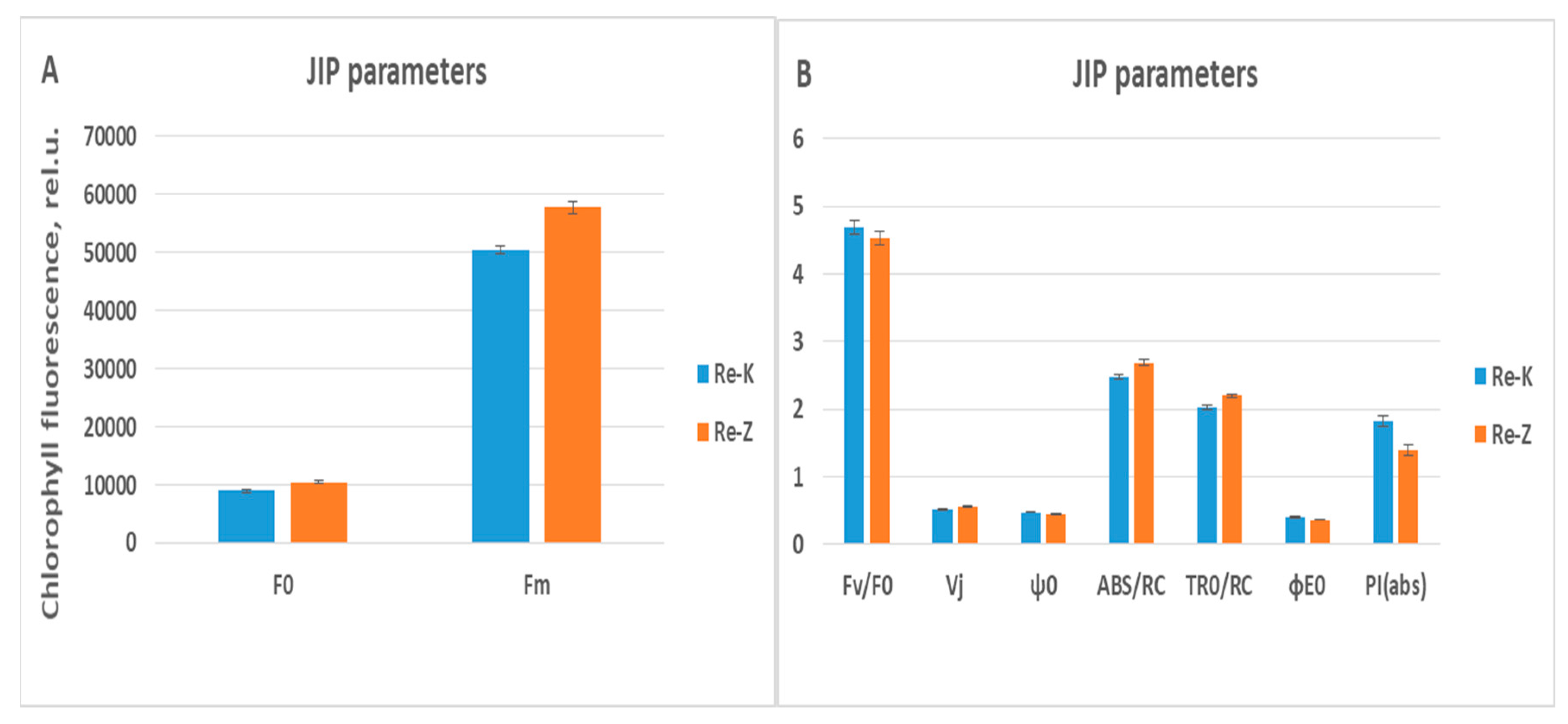
In rehydrated plants, the parameters with statistical differences are fewer in number than the parameters in dehydrated plants, and change similarly (Figure 7A,B).

2.6. Analysis of Induction Curves of Katya and Zora

To study in detail the physiological state of the photosynthetic apparatus during drought, the JIP test was complemented by analyzing the induction curves themselves. We compare the curves directly for statistical significance (functional data analysis (FDA)), PCA, Area Under the Curve (AUC), Direct Point-by-Point Comparison.

2.6.1. Comparing the Induction Curves of the Control Plants ot Katya and Zora Varieties

  • Functional Data Analysis (FDA) — Katya vs. Zora (OJIP curves)
Functional data analysis (FDA) comparing OJIP curves as full functions.
Each replicate curve as a function (smoothed with a Savitzky–Golay filter).
Computed the pointwise Welch t-curve over time.
Performed a permutation-based functional test using the max |t| statistic (controls the family wise error across the whole curve).
B = 1000 label permutations, α = 0.05.
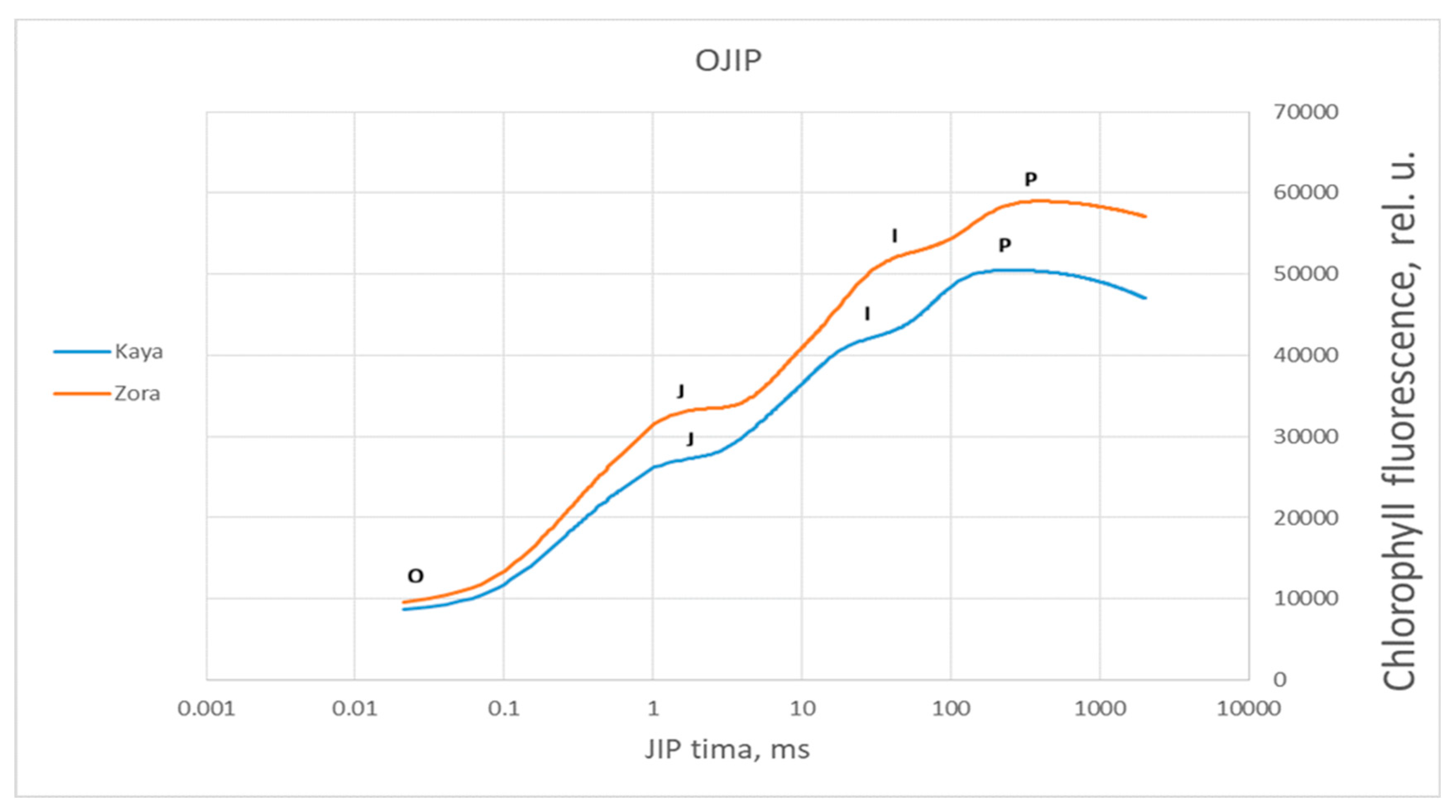
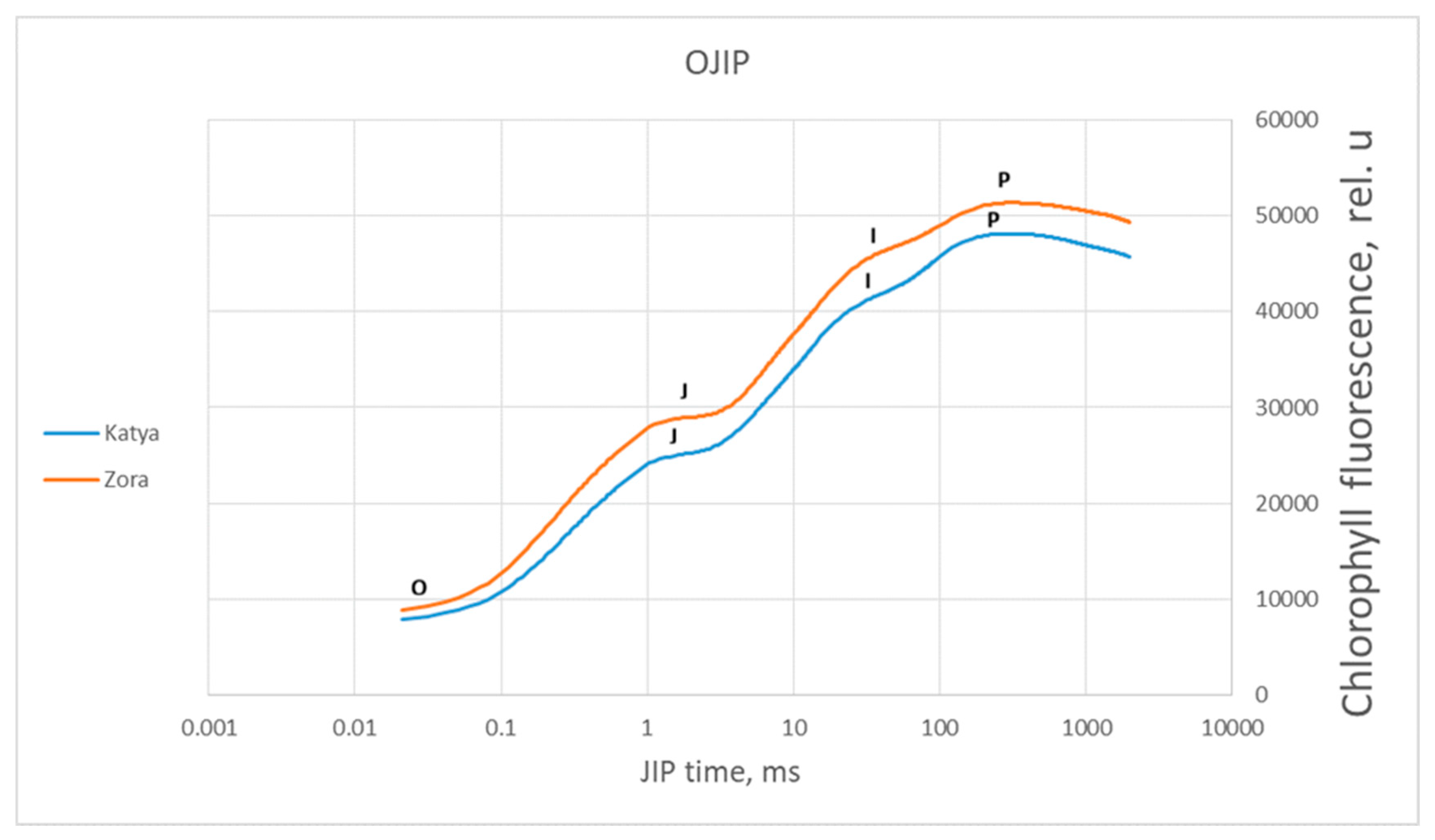
Figure 8 represents the averaged OJIP fluorescence induction curves between the control plants of both varieties.
A total of 457 time points were tested. The maximum absolute t-value was 4.89, exceeding the critical threshold (|t| = 2.51, FWER 0.05, B = 2000 permutations). The permutation test yielded a global p-value of 0.001, indicating a highly significant overall difference between the two varieties.
The critical pointwise threshold was p = 0.04829*. Out of 457 tested points, 453 were FDA-significant, forming a single continuous significant interval spanning from 131 µs to 2001.621 ms.
Thus, FDA confirmed a statistically significant difference in OJIP fluorescence kinetics between Katya (drought-tolerant) and Zora (drought-sensitive) at α = 0.05.
Table 7. Functional data analysis (FDA) of OJIP induction curves by phase for control plants of wheat varieties Katya and Zora.
Phase Time range Points in phase FDR critical p* FDR-significant points Significant intervals
O–J 20 µs–3 ms 70 0.04059 65 / 70 1
J–I 3–30 ms 135 0.00306 135 / 135 whole phase
I–P 30–300 ms 151 0.00103 151 / 151 whole phase
All three phases show strong, phase-localised differences after FDR correction, with the J–I and I–P phases especially decisive (all points significant at FDR 0.05). This complements the global FDA result and pinpoints where the curves diverge.
  • Area Under the Curve (AUC) Analysis — Katya vs. Zora
Phase-wise AUC comparisons revealed significant differences between the two varieties across all fluorescence phases. In the O–J phase (20 µs–3 ms), the Welch t-test yielded t = −3.64, p = 0.00135, indicating a significant difference. Similarly, for the J–I phase (3–30 ms), the result was t = −3.60, p = 0.00136, and for the I–P phase (30–300 ms), t = −4.55, p = 0.000147, both highly significant.
Effect size analysis confirmed the magnitude and robustness of these differences. For the O–J phase, the effect size was Cohen’s d = −1.30 (95% CI [−2.42, −0.54]). The J–I phase showed d = −1.25 (95% CI [−2.35, −0.53]), while the I–P phase exhibited the strongest effect, d = −1.64 (95% CI [−2.65, −0.97]).
Since all confidence intervals excluded zero, these results demonstrate large and consistent differences across all phases, with negative values indicating that the AUC for Katya was consistently lower than that for Zora.
  • Functional PCA (fPCA) by phase — Katya vs. Zora
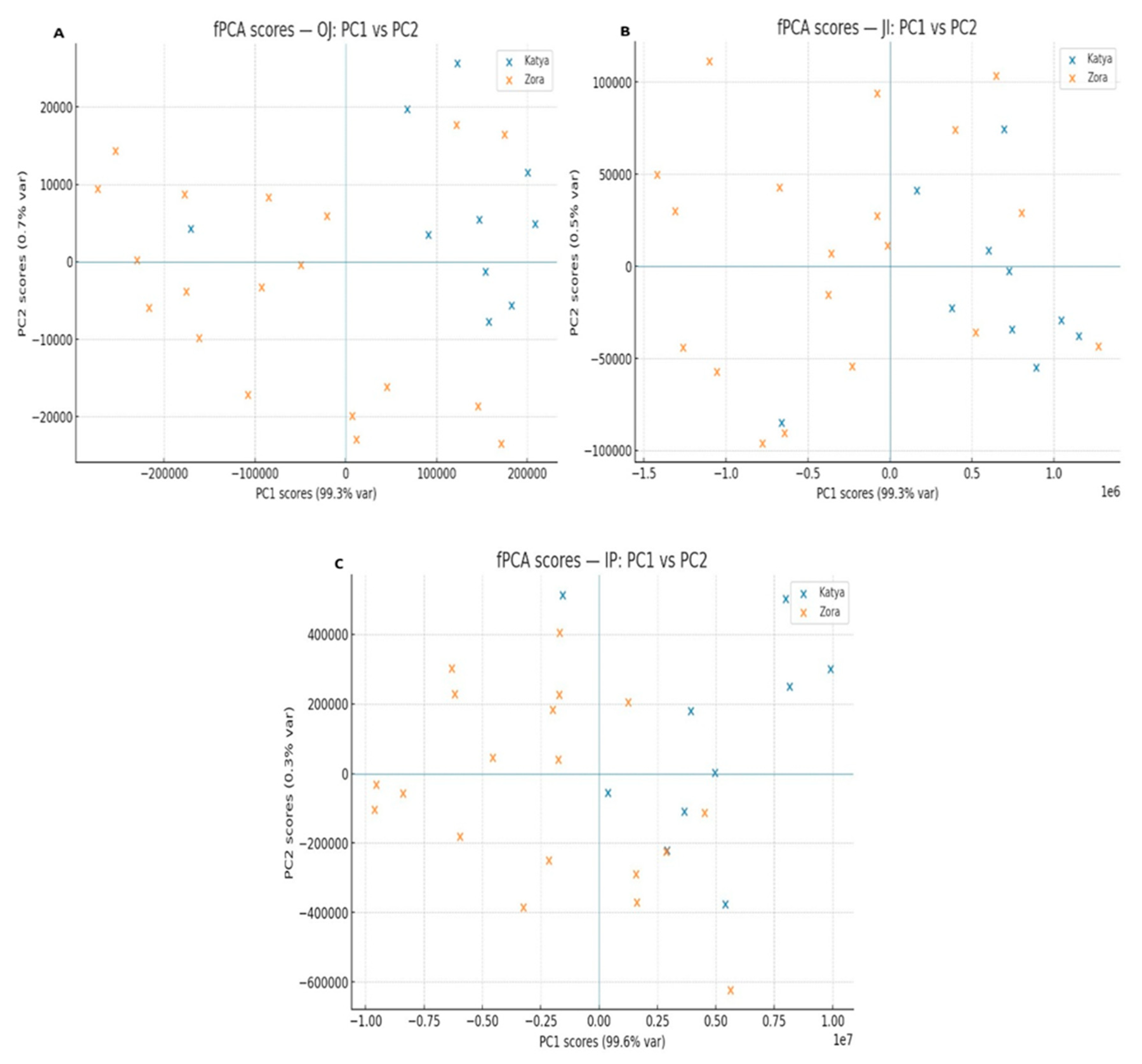
PC1: 99.61%
PC2: 0.26%
PC3: 0.10%
This means almost all variation in the curves is captured by the first component. Separation (if any) between varieties will primarily show up in PC1 scores.
The PC1 eigenfunction shows the dominant time-shape pattern across all curves.
Each curve’s PC1 score tells how strongly it expresses that pattern. If Katya and Zora separate in the PC1 vs PC2 scatter, that indicates systematic shape differences, consistent with our FDA/FDR and AUC results.
We ran fPCA separately within each OJIP phase (using trapezoidal weighting on your native time grid and Savitzky–Golay–smoothed curves, same as before).
Table 8. Functional principal component analysis of OJIP induction curves by phase for control plants of wheat varieties Katya and Zora.
Phase Time range Points PC1 variance explained PC2 variance explained
O–J 20 µs–3 ms 70 99.25% 0.70%
J–I 3–30 ms 135 99.32% 0.51%
I–P 30–300 ms 151 99.61% 0.28%
Across phases, PC1 dominates (>99%), which is typical for OJIP where most variation follows one principal kinetic pattern.
Group separation (if any) will appear primarily in PC1 scores; the PC1 eigenfunction curves show where in time that dominant variation lies within each phase.
Figure 9. (A) Functional principal component analysis of the variability of chlorophyll fluorescence induction curves in the OJ phase measured from control plants of wheat varieties Katya and Zora. (B) Functional principal component analysis of the variability of chlorophyll fluorescence induction curves in the JI phase measured from control plants of wheat varieties Katya and Zora. (C) Functional principal component analysis of the variability of chlorophyll fluorescence induction curves in the IP phase measured from control plants of wheat varieties Katya and Zora.
Preprints 182327 g009

2.6.2. Comparing the Induction Curves of the Dehydrated Plants of Katya and Zora Varieties

  • Functional Data Analysis (FDA) — Katya vs. Zora (OJIP curves)
Figure 10 represents the averaged OJIP fluorescence induction curves between the dehydrated plants of both varieties.
A total of 457 time points were evaluated. The maximum absolute t-value was 2.89, which exceeded the critical threshold (|t| = 2.71, FWER 0.05, B = 2000 permutations). The global permutation test yielded p = 0.0355, indicating a statistically significant overall difference between varieties.
Phase-wise analysis showed that in the O–J phase (20 µs–3 ms), 69 of 70 points were significant at the FDR-adjusted threshold (p = 0.0470*), forming one continuous significant interval. In contrast, no significant differences were detected in the J–I (3–30 ms, 135 points) or I–P (30–300 ms, 151 points) phases, where all points failed to reach significance (FDR p* = 0.0000). Overall, FDA identified one significant time interval confined to the O–J phase, confirming that varietie-specific differences in fluorescence kinetics were restricted to the early stages of the OJIP transient.
Table 9. Functional data analysis (FDA) of OJIP induction curves by phase for dehydrated plants of wheat varieties Katya and Zora.
Phase Time range Points in phase FDR critical p* FDR-significant points Significant intervals
O–J 20 µs–3 ms 70 0.0470 69 / 70 1
J–I 3–30 ms 135 0.0000 0 / 135 0
I–P 30–300 ms 151 0.0000 0 / 151 0
A total of 457 time points were tested, comparing Katya (n = 8) and Zora (n = 35). The Benjamini–Hochberg FDR procedure at α = 0.05 yielded a critical threshold of p = 0.0000*. No points passed this threshold (0 of 457 significant), and consequently, no significant time intervals were detected.
While the global FDA found a significant overall difference (FWER-controlled), the per-time-point FDR (which penalizes multiple comparisons) did not detect any specific time windows at p ≤ 0.05.
The between-variety differences are localized to the O–J rise; J–I and I–P do not survive phase-wise FDR at p≤0.05. This complements the global FDA finding (a significant overall difference) by pinpointing early photochemical events (O–J) as the primary driver.
  • Area Under the Curve (AUC) Analysis — Katya vs. Zora
Phase-specific AUC comparisons showed that differences between the two varieties were primarily concentrated in the early O–J phase. For the O–J phase (20 µs–3 ms), the Welch t-test yielded t = −2.64, p = 0.0207, indicating a significant difference, with Katya exhibiting lower mean AUC than Zora. In contrast, no significant differences were detected in the later phases: J–I (3–30 ms; t = −1.89, p = 0.0841) and I–P (30–300 ms; t = −1.29, p = 0.224). This pattern is consistent with the phase-wise FDA, where only the O–J phase survived FDR correction.
Effect size estimates supported these findings. In the O–J phase, the difference was large (Cohen’s d = −0.88, 95% CI [−1.56, −0.32]), with the confidence interval excluding zero. The J–I phase showed a moderate effect (d = −0.67, 95% CI [−1.39, −0.02]), where the CI narrowly excluded zero. The I–P phase displayed only a small-to-moderate effect (d = −0.49, 95% CI [−1.29, 0.18]), with the CI overlapping zero.
Overall, the results demonstrate that the strongest and most reliable difference between Katya and Zora occurs in the O–J phase, with weaker evidence for a difference in J–I and no apparent effect in the I–P phase.
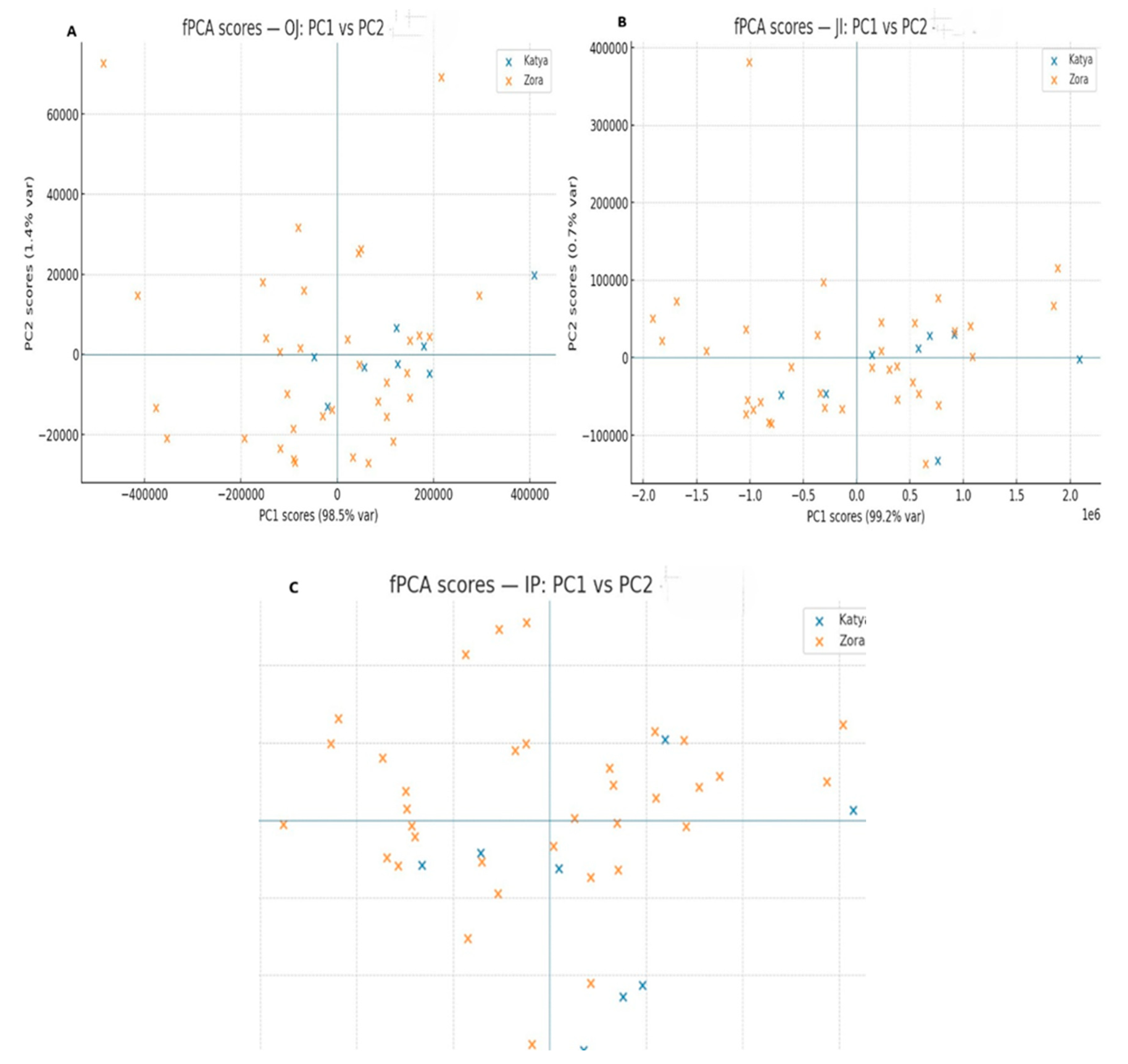
  • Functional PCA (fPCA) by phase — Katya vs. Zora
PC1: 99.77%, PC2: 0.12%, PC3: 0.06% of variance.
Table 10. Functional principal component analysis fPCA of OJIP induction curves by phase for dehydrated plants of wheat varieties Katya and Zora.
Phase Time range Points PC1 variance explained PC2 variance explained
O–J 20 µs–3 ms 70 98.50% 1.41%
J–I 3–30 ms 135 99.53% 0.36%
I–P 30–300 ms 151 99.81% 0.13%
PC1 scores carry almost all structure; comparing PC1 score distributions between Katya and Zora is an efficient scalar test.
The PC1 eigenfunctions indicate which parts of each phase contribute the most to the variance.
Welch tests on PC1 scores:
Overall PC1 scores: t = 1.36, p = 0.201 → not significant
O–J (20 µs–3 ms): t = 2.64, p = 0.0208 → significant
J–I (3–30 ms): t = 1.88, p = 0.0858 → not significant
I–P (30–300 ms): t = 1.29, p = 0.225 → not significant
This matches the earlier findings: group differences are localized to the O–J phase; however, whole-curve PC1 does not significantly separate the varieties.
Figure 11. (A) Functional principal component analysis of the variability of chlorophyll fluorescence induction curves in the OJ phase measured from dehydrated plants of wheat varieties Katya and Zora. (B) Functional principal component analysis of the variability of chlorophyll fluorescence induction curves in the JI phase measured from dehydrated plants of wheat varieties Katya and Zora. (C) Functional principal component analysis of the variability of chlorophyll fluorescence induction curves in the IP phase measured from dehydrated plants of wheat varieties Katya and Zora.
Preprints 182327 g011

2.6.3. Comparing the Induction Curves of the Rehydrated Plants of Katya and Zora Varieties

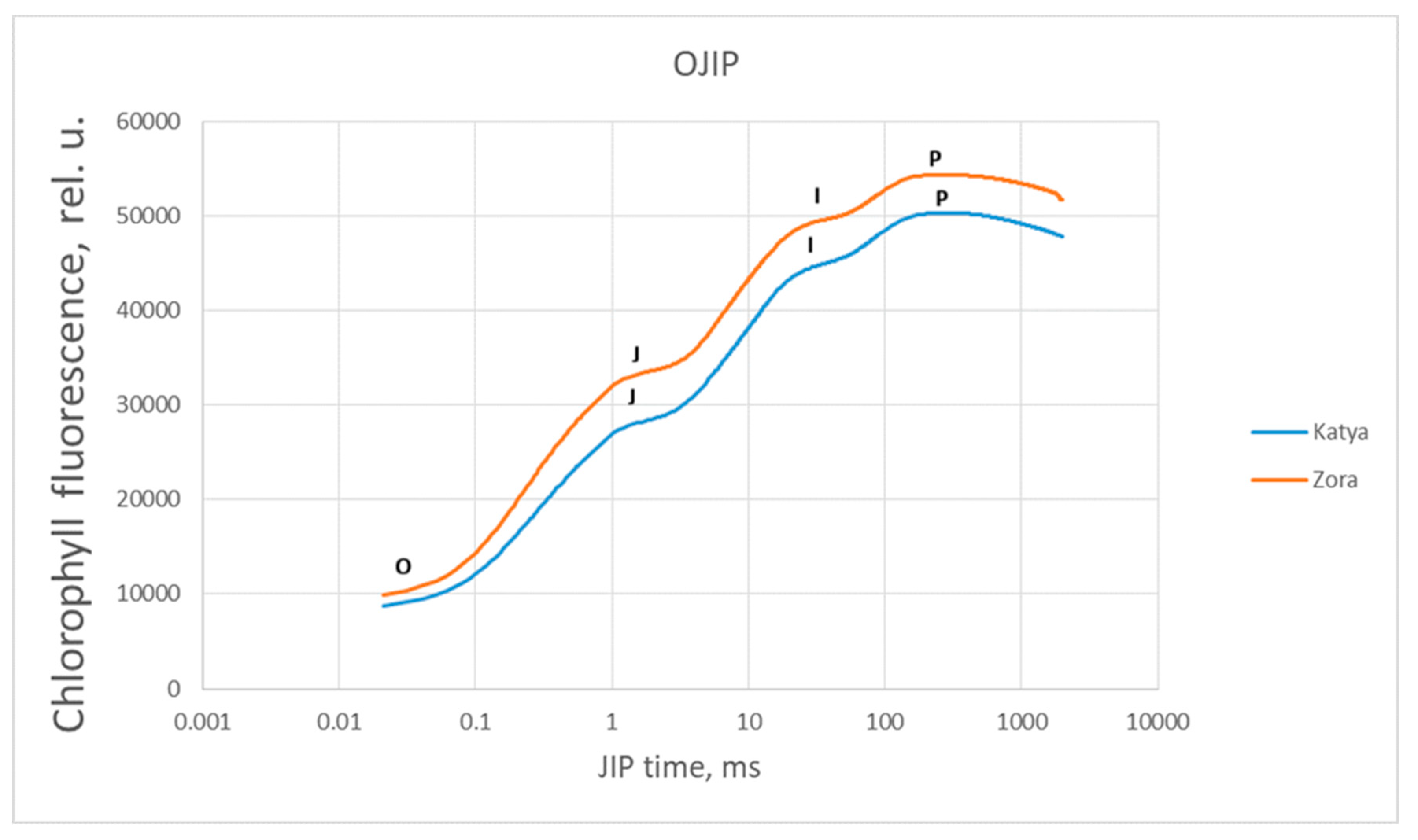
Figure 12 represents the averaged OJIP fluorescence induction curves between the rehydrated plants of both varieties.
  • Functional Data Analysis (FDA) — Katya vs. Zora (OJIP curves)
A total of 457 time points were tested. The maximum absolute t-value was 8.92, far exceeding the critical threshold (|t| = 2.44, FWER 0.05, B = 2000 permutations). The global permutation test returned p < 1 × 10⁻⁴, indicating a highly significant overall difference between the two varieties.
The permutation-based FDA shows a strong global difference between Katya and Zora across the fluorescence induction trajectory, with one continuous interval exceeding the FDA critical band (shaded in the difference plot). This indicates systematic, time-localized divergence between the varieties.
Table 11. Functional data analysis (FDA) of OJIP induction curves by phase for rehydrated plants of wheat varieties Katya and Zora.
Phase Time range Points in phase FDR critical p* FDR-significant points Significant intervals
O–J 20 µs–3 ms 70 3.62×10⁻⁶ 70 / 70 1
J–I 3–30 ms 135 2.52×10⁻⁶ 135 / 135 1
I–P 30–300 ms 151 1.98×10⁻⁶ 151 / 151 1
All three phases (O–J, J–I, I–P) show pervasive, highly significant differences after FDR correction.
Across 457 time points, the Benjamini–Hochberg procedure at α = 0.05 yielded a critical threshold of p* = 8.75 × 10⁻⁶. All points were significant after correction (457 of 457), forming one continuous significant interval spanning the entire OJIP trajectory.
These results confirm pervasive and highly significant differences between the two varieties across the whole fluorescence induction curve, consistent with the outcomes of both FDA and phase-wise FDR analyses.
  • Area Under the Curve (AUC) Analysis — Katya vs. Zora
Comparisons of phase-specific AUCs revealed strong and consistent differences between varieties across all phases of the OJIP curve.
O–J phase (20 µs–3 ms):
Welch’s t-test indicated a highly significant difference (t = −8.39, p = 5.62 × 10⁻¹⁰). The effect size was very large (Cohen’s d = −2.22, 95% CI [−3.08, −1.63]). Mean AUCs were 4.94 × 10⁷ for Katya and 6.20 × 10⁷ for Zora.
J–I phase (3–30 ms):
A similarly strong effect was detected (t = −7.27, p = 1.67 × 10⁻⁸), with a large effect size (d = −1.87, 95% CI [−2.60, −1.34]). Mean AUCs were 1.14 × 10⁹ for Katya and 1.35 × 10⁹ for Zora.
I–P phase (30–300 ms):
The difference remained highly significant (t = −5.87, p = 1.39 × 10⁻⁶), with a large effect size (d = −1.61, 95% CI [−2.35, −1.07]). Mean AUCs were 4.84 × 10¹⁰ for Katya and 5.53 × 10¹⁰ for Zora.
Across all phases, Katya consistently exhibited lower AUC values than Zora, with effect sizes in the large range and confidence intervals excluding zero, confirming robust varietie-specific differences. All three phases show large, highly significant differences, with Zora having higher AUCs than Katya across O–J, J–I, and I–P.
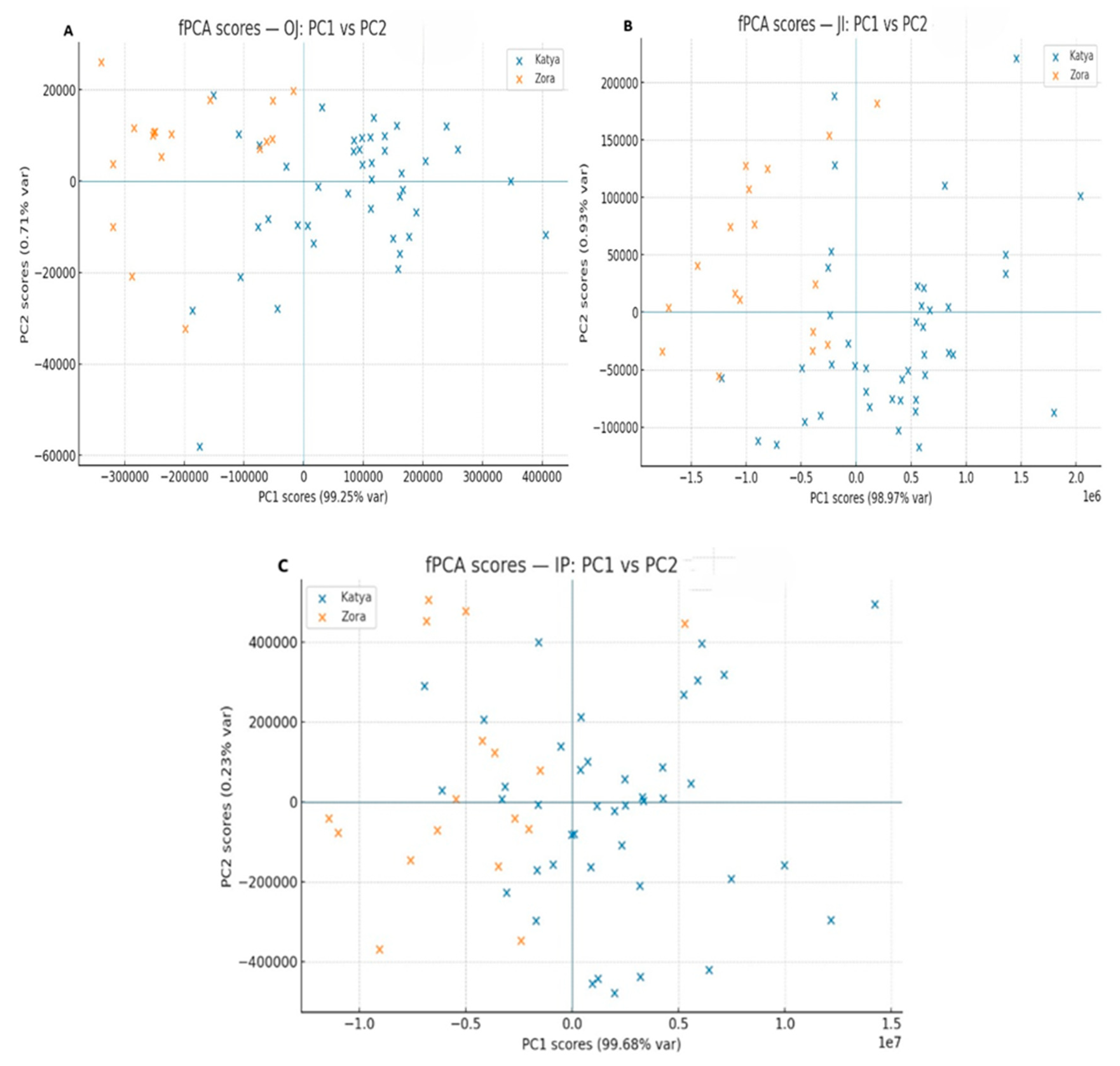
  • Functional PCA (fPCA) by phase — Katya vs. Zora
Variance explained — PC1: 99.47%, PC2: 0.26%, PC3: 0.15%.
Table 12. Functional principal component analysis of OJIP induction curves by phase for rehydrated plants of wheat varieties Katya and Zora.
Phase Time range Points PC1 variance explained PC2 variance explained
O–J 20 µs–3 ms 70 99.25% 0.71%
J–I 3–30 ms 135 99.46% 0.45%
I–P 30–300 ms 151 99.68% 0.23%
Analysis of the first principal component (PC1) scores revealed strong and consistent differences between varieties.
Overall PC1 scores: Welch’s t-test indicated a highly significant difference (t = 5.96, p = 1.17 × 10⁻⁶).
O–J phase (20 µs–3 ms): The separation was strongest in this early phase (t = 8.42, p = 5.09 × 10⁻¹⁰).
J–I phase (3–30 ms): A robust difference was also detected (t = 7.14, p = 1.79 × 10⁻⁸).
I–P phase (30–300 ms): The difference remained significant (t = 5.87, p = 1.40 × 10⁻⁶).
Together, these results confirm that PC1 effectively discriminates Katya and Zora across all phases of the OJIP transient, with the most substantial divergence occurring during the O–J rise.
Figure 13. (A) Functional principal component analysis of the variability of chlorophyll fluorescence induction curves in the OJ phase measured from rehydrated plants of wheat varieties Katya and Zora. (B) Functional principal component analysis of the variability of chlorophyll fluorescence induction curves in the JI phase measured from rehydrated plants of wheat varieties Katya and Zora. (C) Functional principal component analysis of the variability of chlorophyll fluorescence induction curves in the IP phase measured from rehydrated plants of wheat varieties Katya and Zora.
Preprints 182327 g013

3. Discussion

Drought stress is one of the premier limitations to global agricultural production due to the complexity of the water-limiting environment and changing climate [26]. Drought can affect wheat plants at any point in their life cycle, but the seedling stage appears to be highly vulnerable to water deficit.
Drought stress causes significant impacts on the morphology, biochemistry, and physiology of wheat. Drought also causes to a loss of turgor pressure and a reduction in plant height [27]. On the other hand, when wheat height decreases under drought stress conditions, it leads to reduced spike length [28]. Lack of water triggers serious disruptions in metabolic activity in wheat [29]. Low water potential reduces stomatal conductance, resulting in diminished CO2 uptake and lowered photosynthetic rate [30]. These conditions increase the demand in ATP and might favor the alternative electron pathways. Moreover, the decline in photosynthetic activity restricts carbon assimilation and reduces sugar accumulation [31]. Identifying physiological and biophysical markers associated with drought tolerance at the seedling stage is crucial for developing drought-resistant varieties with high yield.
In this study, we investigated two Bulgarian wheat varieties, Katya and Zora, which were exposed to drought, and after seven days of dehydration, they were rehydrated. Previous studies have found that Katya is drought-tolerant, while Zora is a sensitive variety [32,33].
Our results showed that Zora loses approximately 40% of its fresh weight and 30% of its dry weight during the drought period, while Katya loses only 20%. These differences in dry and fresh weight loss between the two varieties suggest that Katya can retain more water than Zora, which is probably due to better stomatal control leading to an increase in water use efficiency and proline synthesis [34]. Both varieties fully recovered their fresh weight after rehydration, and the dry weight of the rehydrated plants was greater than that of the controls, which means the plants restored their growth rate after resumption of watering. The fresh weight of the rehydrated plants was 10% higher than that of the controls for the Katya and 7% higher for Zora. The dry weight of the rehidrated plants from Katya variety was 75% higher than the dry weight of the controls, while that of Zora increased only 32% after restoring the water supply. These results show that Katya is much more drought-resistant than Zora, as it has much better rehydration compensatory mechanisms which can be associated with the synthesis of phytohormones such as indoleacetic acid (IAA), abscisic acid (ABA), jasmonic acid (JA), gibberellins (GA), and silicic acid (SA) during the stage of drought [35].
These results are consistent with the water content measurements obtained in both varieties across control, dehydrated, and rehydrated plants. Both wheat varieties had approximately the same water content, losing about 45% of it during the drought. However, Katya was able to recover up to 60% of its water content during the rehydration period, while Zora was not able to.
The specific leaf area decreased slowly only in Katya variety. Still, the differences in this indicator are not significant between the control and dried plants. Statistical differences were observed only between rehydrated plants on the one hand and controls and dehydrated plants on the other. This means that the dry matter in the leaves of the rehydrated plants is more than that in the leaves of the controls and the dried ones, which corresponds to previous results. In Zora varietie, no significant changes between control, dehydrated and rehydrated plants in the SLA were observed. Conversely, Katya reduced SLA during dehydration as a strategy of investment in structural support.
In Zora wheat, chlorophyll content decreases during drought and continues to decline even during the rehydration period. During the drought period, the chlorophyll content decreases by 10% compared to plants not subjected to this stress, which aligns with results from previous studies [36,37]. During rehydration, Zora did not restore its chlorophyll content, but, on the contrary, lost another 10% compared to control plants. This ongoing degradation of chlorophyll in Zora variety may be due to oxidative damage or upregulation of the enzyme chlorophyllase during drought [38,39].
On the other hand, Katya showed an 18% increase in chlorophyll content during drought compared to control plants. This level also maintained during the rehydration period. That kind of behavior is typicall for drought-tolerant species, which use light very efficiently during drought [40].
The decrease in SLA and the increase in chlorophyll indicate that wheat of the Katya variety retains its chlorophyll content during the drought, which allows for faster recovery upon rehydration [41].
In dark adapted leaves, TL bands in result of flash excitation are associated with the recombination of charge pairs within the photosynthetic apparatus, particularly in PSII, which is the B band (S2/3QB-), but also afterglow (AG) band (S2/3Q B +e) may appear, which is connected to electron transfer capacity and activation of cyclic electron flow around PSI, or a strong NADPH + ATP assimilatory potential [42].
In the Katya variety, a decrease in the B and AG bands intensities, without a downshift in Tmax were observed during drought. That means there is a decline in the number of recombining pairs, but there are no disturbances in the functionality of photosynthetic reactions. During rehydration, they both bands recovered and assumed values close to those of the control plants.
Unlike in Katya, dehydration produced significant downshifts in TmaxB and TmaxAG in Zora variety of wheat and the intensity of AG increased. The downshift of the B band is due to a decrease in lumen pH and leads to disturbances in the charge recombination, which is not restored in the rehydrated plants [43,44]. AG increased and represents the more intensive band in the curve of rehydrated leaves, simultaneously TmaxAG remains downshifted, indicating that cyclic pathways are stimulated after rehydration.
In the initial drought period, only six JIP parameters changed statistically in Katya compared to control plants. Chlorophyll fluorescence reached its maximum Fm upon complete reduction of QA molecules. In dehydrated plants, Fm decreased by approximately 10% compared to non-stressed plants, due to disruption of the ETC, leading to fewer reduced QA molecules, and an increase in non-photochemical quenching. The parameter Fv/F0 decreased by 3% compared to non-dehydrated plants. This parameter provides information about the maximum efficiency of the water diffusion reaction on the donor side of PS II, and its slight decrease in the initial stage of drought indicates that minor disturbances occur in the electron transport chain of the photosynthetic apparatus. The parameter Vi reflects the ability of PS I acceptors to oxidize the plastoquinone pool. Its value increased by 3% under drought conditions. Although the lower Vi could in principle reflect accelerated oxidation of the PQ pool by PSI, the simultaneous increase in Vi with unchanged F0 and reduced Fm - together with the weakened AG-band - indicated disturbances in PS II operation and enhanced non-photochemical quenching. The parameter ABS/RC gives information about absorbed light energy per active PSII reaction center, TR0/RC refers to energy trapped at t₀ per RC, and ET0/RC shows the level of electron transport beyond Qᴀ⁻ per RC. In the initial stage of drought, the parameters ABS/RC, TR0/RC, and ET0/RC decreased slightly compared to that calculated for the control plants, with ABS/RC and ET0/RC decreasing by 5% and TR0/RC by 10%. These results align with those of Ghaffar [45], who compared drought-tolerant and drought-intolerant wheat varieties. The decline in these parameters is considered to be a mechanism by which drought-tolerant plants adapt to drought conditions by limiting electron transport and reducing the photochemical activity of photosystem II [46].
After seven days of dehydration, the parameters F0, Fm, Vj, Vi, ψ0, ET0/RC, ϕE0, and PI(abs) in Katya statistically change their values compared to the same parameters measured in plants not subjected to drought. F0 and Vj, decrease by 10% and 11% respectively, while the parameters ψ0, ϕE0 and PI(abs) increased by 14%, 11% and 20% respectively. The JIP parameters Fm, Vi and ET0/RC did not change from the values in the initial stage of the drought. F0 is the fluorescence intensity when all reaction centers are “open” and provides information about the emission from excited chlorophyll a molecules on the antenna before the excitation reaches the reaction centers [47]. Low F0 values under stress are associated with reduced chlorophyll content, which is not the case according to our results, or with low light absorption capacity due to disorders in the light-harvesting complexes [48]. In the Katya variety, these lower values of the minimal fluorescence of dried plants are due to the high adaptability of photosystem II to the applied stress. Reducing the value of the parameter Vj leads to an increase in the probability that an exciton moves an electron beyond Qᴀ⁻. Also, the parameter φE0, which indicates the quantum efficiency of electron transfer in the ETC after QA, increased in dried plants compared to controls. The parameter that increased its value the most under drought is PI(abs), which is an indication of high efficiency of photosystem II during dehydration.
In the initial period of rehydration, the parameters that restored the values are Fm and Vi, which means that the Katya variety very quickly begins to regain its photosynthetic activity. After 7 days of rehydration, the JIP parameters assumed values that were statistically indistinguishable from those measured in the control plants, indicating that after one week of rehydration, the Katya variety fully restored its photosynthetic activity.
Unlike Katya, Zora showed poor adaptability to drought. On the fourth day under stress, only one JIP parameter, Vi, had changed its value, with an increase by 1%. On the 7th day of drought, 14 parameters had statistically changed their values compared to the values of the same parameters calculated in the control plants. The parameters that change the most are ABS/RC, TR0/RC, ET0/RC and DI0/RC, which increased their values by 21%, 20%, 27%, and 29%, respectively. The change in these parameters indicates disturbances in the entire electron transport chain.
Although PI(abs) decreased by 5% on the seventh day of dehydration, its values were 25% lower than that of unstressed plants. This drop in the values of the index indicates that, as a result of dehydration, the photosynthetic apparatus of Zora has suffered irreversible damage. A similar trend is observed for some of the other studied JIP parameters, which confirms this assumption. Only Vi and φ(p0) did not undergo profound changes during the drought and subsequent rehydration of the plants. TR0/RC and ET0/RC are the parameters that during the rehydration process, take on values close to those of the control plants.
A comparison of the JIP parameters and the induction curves of chlorophyll a fluorescence between the two wheat varieties clearly demonstrates the high drought adaptability of the Katya variety. Under drought stress, Zora had higher ABS/RC, TR0/RC, ET0/RC and DI0/RC values, but significantly lower PI(abs) values, indicating less active PSII centers and reduced photochemical efficiency. In contrast, Katya maintained higher RC/ABS and a more balanced energy distribution, consistent with better drought tolerance.
To obtain more detailed information about the differences in the photosynthetic apparatus of the two wheat varieties during drought, methods for analyzing the induction curves were employed. The induction curves between control, dried, and rehydrated plants of the two varieties were compared. The comparison of the induction curves of the control plants between Katya and Zora showed statistical differences in all phases. This means that they react differently to light when optimally watered.
Under drought conditions, the two varieties showed statistical differences only in the OJ phase. This phase is mainly associated with the accumulation of reduced QA. Additionally, during the OJ phase, primary photochemistry takes place [49]. According to the JIP test, F0 decreases in Katya. It increases in Zora, with the increase in F0 likely due to difficulties in electron transfer from QA to QB, disconnection of LHCII from the PSII RC, and loss of both functional and structural integrity of PSI II [50].
Rehydrated plants of both genotypes showed significant differences across all phases of the OJIP induction curves, indicating distinct responses of the two wheat varieties to drought and the high adaptability of Katya to this type of stress. The most significant differences again appear in the OJ phase, indicating that in Zora, severe structural and functional disorders occur in photosystem II. In contrast, in Katya, photosynthetic activity is fully restored.

4. Materials and Methods

4.1. Plant Materials and Growth Conditions

In this study, we compared two Bulgarian wheat varieties with contrasting responses to drought: Katya, noted for its drought tolerance, and Zora, characterized as susceptible to water deficit conditions. Varietie Katya is described by breeders as having high to excellent drought tolerance, based on yield performance and a high stress-tolerance index under water-limited conditions. Both varieties carry the Rht8 gene for reduced final plant height, which contributes to the development of longer roots, coleoptiles, and shoots, thereby providing an advantage for improved seedling emergence and crop establishment under early-season drought [52].
Seeds were grown in 3 L pots (19 cm diameter × 15.5 cm height) filled with a commercial peat-based soil mixture (Klasmann-Deilmann GmbH, Germany), supplemented with 1.5% perlite and 15% sand. Plants were cultivated in a growth chamber under controlled conditions: 20/18 °C day/night temperature, a 16/8 h light/dark photoperiod, photosynthetic photon flux density (PPFD) of 380 μmol m⁻² s⁻¹ from LED tubes (4000 K), and 70% relative humidity.
Seedlings were grown for 14 days, and at the stage of third leaf development, watering was withheld for seven days. After the drought period, the water supply was restored. Measurements were performed at the end of the dehydration period and five days after the rehydration to evaluate the effects of water-deficit stress on the plants and their recovery capacity, respectively. During the experiment, one-third of the pots were watered daily, maintained under full irrigation, and served as controls. For all physiological and biochemical analyses, the middle segment of the third leaf was used.
The experiment was repeated twice. For each treatment (control, dehydrated, and rehydrated), four pots were used as replicates. In each pot, 15 plants were planted.

4.2. Determination of Dry and Fresh Plant Weights

Plant samples (four plants per pot)—including controls, drought-stressed, and rehydrated individuals—were cut into small segments to reduce evaporative losses and immediately weighed to determine their fresh mass. Subsequently, the wheat samples were oven-dried at 70 °C for 24 hours and transferred to a desiccator. This drying procedure was repeated twice to ensure complete desiccation. The fully dried samples were then weighed to obtain their dry mass.

4.3. Determination of WC

Leaf water content (WC) was measured using a gravimetric method, where leaves were weighed both before and after being oven-dried at 80 °C until reaching a constant weight. WC was then calculated as the percentage of water in dehydrated tissue relative to fully saturated tissue according to the equation:
WC(%)=(FW-DW)/FW
where FW—fresh weight, DW—dry weight. For each treatment (control, dehydrated, and rehydrated), four plants per pot were used as replicates.

4.4. Determination of Specific Leaf Area (SLA)

To determine SLA, fully expanded third leaves from four plants per pot were selected as biological replicates for each variant and genotype. Then the leaves were dried in an oven at 65oC until they reached a constant weight. The leaf surface was determined by analyzing images using ImageJ (Image Analysis Software, USA). The dried leaves were weighed using an analytical balance (in grams), and this is the dry mass in the formula:
SLA= Leaf Area (cm2)/Leaf Dry Mass (g)

4.5. Leaf Chlorophyll Content Measurement

Chlorophyll content was measured with the CCM-300 chlorophyll meter developed by the company Opti-Sciences, Inc. The CCM-300 is a portable instrument for the direct determination of chlorophyll content in plant samples, utilizing a proven fluorescence ratio technique (F735/F700) as described by Gitelson [53]. Unlike absorption-based chlorophyll meters, the CCM-300 enables reliable measurements even in very small, thick, curved, or otherwise difficult-to-measure samples. For this parameter, chlorophyll measurements were performed on the middle segment of the third leaf from four plants per pot per genotype and variant (control, dehydrated, and rehydrated).

4.6. Evaluation of Photosynthetic Activity

Induction curves of prompt fluorescence PF were measured with the fluorometer FluorPen FP 110 (PSI (Photon Systems Instruments) Drásov, Czech Republic). The FluorPen FP 110 is a compact, battery-operated PAM fluorometer designed for rapid and accurate assessment of chlorophyll fluorescence parameters in various settings, including the lab, greenhouse, and field. Before starting the measurements, the plants were dark-adapted for 20 minutes. Measurements were conducted for an induction period of 1 s., and then leaves were illuminated by red light of 3000 μmol m−2 s−1. The OJIP parameters derive from [54], and induction curves were calculated and visualized with the Excel package of Microsoft Office 13 and with R software.
Five measurements were made per pot for each variant (control, dehydrated, and rehydrated plants) for both wheat varieties. Four pots were used for each variant.
Measurements were made on the fourth and seventh (last) days from the start of drought, and on the third and fifth (last) days of rehydration, for control, dried, and rehydrated plants.

4.7. Thermoluminescence Measurements

Thermoluminescence (TL) emission from wheat leaves was measured using a custom-built instrument device as described in Zeinalov and Maslenkova [55]. Briefly, freshly cut two leaf segments (2 cm lenght) from the middle section of the leaf were placed on an aluminium sample holder at 20 oC and covered with a plexiglas window. The samples were then cooled to 1 °C with liquid nitrogen and illuminated with two saturating (4J) single-turnover xenon flashes (10 μs half-band, 1 Hz frequency). Following illumination, the samples were gradually heated to 60 °C at a rate of 0.5 °C/s. Leaf temperature was recorded by a miniature thermocouple, inserted in the sample holder. Luminescence was detected by a HR943-02 photomultiplier (Hamamatsu Photonics, Japan). Data acquisition and signal processing were performed using in-house software, with the temperature maxima (Tmax) of individual bands determined through signal decomposition using Origin 8.5 Multiple peak fit (OriginLab Corporation, Northampton, MA, USA). The plants used in this measurements were dark-adapted for at least three hours.

4.8. Statistical Analysis

All statistical analyses were performed using R Studio (version 4.5.1) and Microsoft Excel 2013. The studies we have conducted contain different amounts and types of data, which necessitate the use of various statistical methods. The data from the measurements of the amount of chlorophyll in wheat leaves, as well as the data from the fluorescence measurements, were tested for normal distribution by the Shapiro–Wilk test (“shapiro.test” function in R Studio) [56]. ANOVA, Pearson correlation, and Principal Component Analysis (PCA) were performed with MVAPP in the R environment [57]. The Mann-Whitney U-test, the Wilcoxon signed-rank test, and point-by-point Welch’s t-tests were performed in R using the functions “wilcox.test()”, “wsrTest()”, and “test.welch”, respectively [58,59]. Statistical analysis of the induction curves of prompt fluorescence was done by R packages “fda” for functional data analysis [60], “pROC” [61] for estimation of area under the curve, and “fdapace” for functional principal component analysis [62].
Summary statistics for all data were generated using Microsoft Excel 2013.

5. Conclusions

Our results indicate that varietie divergence under drought is primarily localized to the initial phases of PSII photochemistry. Significant differences were observed only in the O–J region of the induction kinetics, indicating that primary charge separation, QA→QB turnover, antenna/connectivity, and donor-side (OEC) stability are the principal loci of stress sensitivity. Downstream phases (J–I and I–P) were essentially indistinguishable between varieties under stress, suggesting convergence of later electron-transport steps and PSI acceptor-side status at the imposed drought intensity.
Across the JIP-test, the sensitive genotype Zora exhibited a characteristic signature of reaction-center loss and overload of the remaining centers: ABS/RC, TR0/RC, ET0/RC, and DI0/RC were all elevated relative to Katya, consistent with a larger apparent antenna per active RC, greater per-RC trapping and transport, and enhanced thermal dissipation. Despite these per-RC increases, global photochemical performance declined sharply in Zora, as reflected by a markedly lower PI(abs), indicating a reduced probability of driving electrons beyond QA⁻. By contrast, the tolerant genotype Katya maintained a higher RC/ABS and a more balanced partitioning of absorbed energy between photochemistry and heat dissipation, thereby supporting sustained photosynthetic function under drought conditions.
With F0 unchanged but Fm depressed under drought, the normalized Vi increased (~3.9%; 0.80→0.83) even as the absolute Fi decreased (~5.1%; 42 836→40 668), implicating both enhanced non-photochemical quenching/photoinhibition (smaller Fm−F0 window) and a genuine slowdown of electron flow beyond QB. In early or mild stress instances, decreases in F0 and Vj are accompanied by slight reductions in ABS/RC, TR0/RC, and ET0/RC, together with increases in ψE0, φE0, and PI(abs), a pattern consistent with photoprotective antenna down-regulation that lowers the excitation pressure per RC rather than structural PSII damage.
Independent thermoluminescence measurements corroborated these fluorescence-based conclusions. Drought suppressed both the B and AG bands, with stronger post-rehydration recovery in Katya. In Zora, a downshifted split B-band revealed heterogeneous PSII populations and persistent charge-recombination instability, aligning with reaction-center loss, elevated dissipation, and weaker functional recovery. Collectively, these findings suggest that drought tolerance in wheat is associated with the preservation of PSII reaction-center density, balanced energy partitioning, homogeneous PSII behavior, and superior recovery capacity. In contrast, drought sensitivity is characterized by reaction-center depletion, heightened dissipation, impaired downstream transport, and persistent heterogeneity of PSII function.

Supplementary Materials

The following supporting information can be downloaded at: Preprints.org; Table S1: Summary statistics on the fresh weight and dry weight of wheat variety Katya. Ctrl is for control plants, De – dehydrated plants, and Re – rehydrated plants; Table S2: Summary statistics on the fresh weight (FW) and dry weight (DW) of wheat variety Zora. Ctrl is for control plants, De – dehydrated plants, and Re – rehydrated plants; Table S3: Summary statistics on the water content (WC) of wheat variety Katya. Ctrl is for control plants, De – dehydrated plants, and Re – rehydrated plants; Table S4: Summary statistics on the water content (WC) of wheat variety Zora. Ctrl is for control plants, De – dehydrated plants, and Re – rehydrated plants; Table S5: Summary statistics on specific leaf content (SLA) of wheat variety Katya. Ctrl is for control plants, De – dehydrated plants, and Re – rehydrated plants; Table S6: Summary statistics on specific leaf content (SLA) of wheat variety Zora. Ctrl is for control plants, De – dehydrated plants, and Re – rehydrated plants; Table S7: Summary statistics on the chlorophyll content of wheat variety Katya. Ctrl is for Control plants, De – dehydrated plants, and Re – rehydrated plants; Table S8: Summary statistics on the chlorophyll content of wheat variety Zora. Ctrl is for control plants, De -dehydrated plants, and Re-rehydrated plants.

Author Contributions

Conceptualization, V.A.; methodology, V.A., V.P., D.D., S.M.; formal analysis, V.A., V.P., D.D., K.P., A.A.; investigation, V.A.,V.P., D.D., A.A.; data curation, V.A., D.D., V.P.; writing—original draft preparation, V.A.; writing—review and editing, V.P.,D.D.,S.M.,V.A; visualization, V.A., V.P. All authors have read and agreed to the published version of the manuscript.

Funding

This research was funded by BULGARIAN NATIONAL SCIENCE FUND; grant number КP-06-H81/1.

Institutional Review Board Statement

Not applicable.

Informed Consent Statement

Not applicable.

Data Availability Statement

The raw data supporting the conclusions of this article are available by request from the corresponding author.

Acknowledgments

The authors thank the Department of Biophysics and Radiobiology, Faculty of Biology, Sofia University “St. Kliment Ohridski,” for assistance with fluorescence measurements.

Conflicts of Interest

The authors declare no conflict of interest.

References

  1. Gebrechorkos S H., Sheffield J., Vicente-Serrano SM., Funk C., Miralles DG., Peng J., Dyer E., Talib J., Beck HE., Singer MB., Dadson SJ. 2025. “Warming accelerates global drought severity.” Nature 642 (8068):628-635. [CrossRef]
  2. Hultgren A., Carleton T., Delgado M., Gergel DR., Greenstone M., Houser T., Hsiang S., Jina A., Kopp RE., Malevich SB., McCusker KE., Mayer T., Nath I., Rising J., Rode A., Yuan J. 2025. “Impacts of climate change on global agriculture accounting for adaptation.” Nature 642 (8068):644-652. [CrossRef]
  3. Arzani A., and Ashraf M. 2017. “Cultivated Ancient Wheats (Triticum spp.): A Potential Source of Health-Beneficial Food Products.” Comprehensive Reviews in Food Science and Food Safety 16 (3):477-488. [CrossRef]
  4. Reynolds, M.P., Braun, HJ. (eds) „Wheat Improvement: Food Security in a Changing Climate” 2022. Springer, Cham. [CrossRef]
  5. Ribaut J.M. Drought Adaptation in Cereals. 2006. (ed.) Food Products Press, Haworth Press, Inc.
  6. Nyaupane S., Poudel MR., Panthi B., Dhakal A., Paudel H., Bhandari R. 2024. “Drought stress effect, tolerance, and management in wheat – a review.” Cogent Food & Agriculture 10 (1):2296094. [CrossRef]
  7. Poudel M.R., Ghimire l, S., . Dhakal K.H.,Thapa D.B. ,Poudel H.K.” Evaluation of wheat genotypes under irrigated, heat stress and drought conditions”, J. Biol. Today’s World, 9 (1) (2020), pp. 1-1.
  8. Zivcak M., Kalaji H.M., Shao H.-B., Olsovska K., Brestic M. 2014. Photosynthetic proton and electron transport in wheat leaves under prolonged moderate drought stress, J. Photochem. Photobiol. B: Biol. [CrossRef]
  9. Demirevska K, Simova-Stoilova L., Vassileva V., Feller U. 2008. Rubisco and some chaperone protein responses to water stress and rewatering at early seedling growth of drought sensitive and tolerant wheat varieties. Plant Growth Regul. 56:97–106. [CrossRef]
  10. Ahmad, A., Aslam Z, Javed T., Hussain S., Raza A., Shabbir R., Mora-Poblete F., Saeed T., Zulfiqar F., Ali MM., Nawaz M., Rafiq M., Osman HS., Albaqami M., Ahmed ., Tauseef M. 2022. “Screening of Wheat (Triticum aestivum L.) Genotypes for Drought Tolerance through Agronomic and Physiological Response.” Agronomy 12 (2):287.
  11. Fierer N., Schimel JP. 2002. “Effects of drying–rewetting frequency on soil carbon and nitrogen transformations.” Soil Biology and Biochemistry 34 (6):777-787. [CrossRef]
  12. Sharifi P., Mohammadkhani N. 2016. “Effects of Drought Stress on Photosynthesis Factors in Wheat Genotypes during Anthesis.” Cereal Research Communications Cereal Research Communications 44 (2):229-239. [CrossRef]
  13. Hassanzadeh M., Ebad iA., Panahyan-E-Kivi M., Gharibeshghi A., Jamaati-E-Somarin Sh., Saeidi M., Zabihi-E-Mahmoodabad R. 2009. “Evaluation of Drought Stress on Relative Water Content and Chlorophyll Content of Sesame (Sesamum indicum L.) Genotypes at Early Flowering Stage.” Research Journal of Environmental Sciences 3:345-350. [CrossRef]
  14. Ceccato P., Flasse S., Tarantola S., Jacquemoud S., Grégoire JM. 2001. “Detecting vegetation leaf water content using reflectance in the optical domain.” Remote Sensing of Environment 77 (1):22-33. [CrossRef]
  15. Zhang J., Blackmer AM., Ellsworth JW., Koehler. 2008. “Sensitivity of Chlorophyll Meters for Diagnosing Nitrogen Deficiencies of Corn in Production Agriculture.” Agronomy Journal 100 (3):543-550. [CrossRef]
  16. Monteoliva M., Guzzo M., Posada G. 2021.” Breeding for Drought Tolerance by Monitoring Chlorophyll Content.” Gene Technology Volume 10, Issue 3. [CrossRef]
  17. McCree KJ. 1971. “The action spectrum, absorptance and quantum yield of photosynthesis in crop plants.” Agricultural Meteorology 9:191-216. [CrossRef]
  18. Porcar-Castell A., Tyystjärvi E., Atherton J., Tol C., Flexas J., Pfündel EE., Moreno J., Frankenberg C., Berry JA. 2014. “Linking chlorophyll a fluorescence to photosynthesis for remote sensing applications: mechanisms and challenges.” Journal of Experimental Botany 65 (15):4065-4095. [CrossRef]
  19. Kalaji HM., Schansker G., Brestic M., Bussotti F., Calatayud A., Ferroni L., Goltsev V., Guidi L., Jajoo A., Li P., Losciale P., Mishra VK., Misra AN., Nebauer SG., Pancaldi S., Penella C., Pollastrini M., Suresh ., Tambussi E., Yanniccari M., Zivcak M., Cetner MD., Samborska IA., Stirbet A., Olsovska K., Kunderlikova K., Shelonzek H., Rusinowski S., Bąba W. 2017. “Frequently asked questions about chlorophyll fluorescence, the sequel.” Photosynthesis Research 132 (1):13-66. [CrossRef]
  20. Strasser RJ., M. Tsimilli-Michael, Srivastava A. 2004. “Analysis of the Chlorophyll a Fluorescence Transient.” In Chlorophyll a Fluorescence: A Signature of Photosynthesis, edited by George Christos Papageorgiou and Govindjee, 321-362. Dordrecht: Springer Netherlands.
  21. Kautsky, H., Hirsch A. 1931. “Neue Versuche zur Kohlensäureassimilation.” Naturwissenschaften 19 (48):964-964. [CrossRef]
  22. Strasser RJ., The grouping model of plant photosynthesis, in: G. Akoyunoglou (Ed.), Chloroplast Development, Elsevier, North Holland, 1978, pp. 513–524.
  23. Strasser RJ.(1981) The grouping model of plant photosynthesis:heterogeneity of photosynthetic units in thylakoids. In: Akoyu-noglou G (ed) Photosynthesis. Proceedings of the fifth interna-tional congress on photosynthesis, Halkidiki, Greece 1980.Structure and molecular organisation of the photosyntheticapparatus, vol III. Balaban International Science Services,Philadelphia, pp 727–737 (PDF) Estimation of the energetic connectivity of PS II centres in plants using the fluorescence rise O–J–I–P. Available from: https://www.researchgate.net/publication/229342500_Estimation_of_the_energetic_connectivity_of_PS_II_centres_in_plants_using_the_fluorescence_rise_O-J-I-P.
  24. Ducruet, JM. 2003. “Chlorophyll thermoluminescence of leaf discs: simple instruments and progress in signal interpretation open the way to new ecophysiological indicators.” Journal of Experimental Botany 54 (392):2419-2430. [CrossRef]
  25. Strasser RJ., M. Tsimilli-Michael, Srivastava A. 2004. “Analysis of the Chlorophyll a Fluorescence Transient.” In Chlorophyll a Fluorescence: A Signature of Photosynthesis, edited by George Christos Papageorgiou and Govindjee, 321-362. Dordrecht: Springer Netherlands.
  26. Fang Y, Xiong L. (2015). General mechanisms of drought response and their application in drought resistance improvement in plants. Cell. Mol. Life sci. 72, 673–689. [CrossRef]
  27. Salam A., Ali A., Afridi MS., Ali S., Ullah Z. 2022. Agrobiodiversity: Effect of Drought Stress on the Eco-physiology and Morphology of Wheat. In: Öztürk M, Khan SM, Altay V, Efe R, Egamberdieva D, Khassanov FO (eds), Biodiversity, Conservation and Sustainability in Asia. Cham: Springer. [CrossRef]
  28. Mathew I., Shimelis H., Mutema M., Clulow A., Zengeni R., Mbava N., Chaplot V. 2019. Selection of wheat genotypes for biomass allocation to improve drought tolerance and carbon sequestration into soils. Journal of Agronomy and Crop Science 205: 385–400.
  29. Bhandari U, Gajurel A, Khadka B, Thapa l, Chand I, Bhatta D, Shrestha J. 2023. Morpho-physiological and biochemical response of rice (Oryza sativa L.) to drought stress: A review. Heliyon 9: 13744.
  30. Liang Z., Zhang F., Shao M., Zhang J. 2002. The relations of stomatal conductance, water consumption, growth rate to leaf water potential during soil drying and rewatering cycle of wheat (Triticum aestivum). Botanical Bulletin of Academia Sinica 43.
  31. Davies WJ, Kudoyarova G, Hartung W. 2005. Long-distance ABA signalling and its relation to other signalling pathways in the detection of soil drying and the mediation of the plant’s response to drought. Journal of Plant Growth Regulation 24: 285–295.
  32. Doneva D, Pál M, Brankova L, Szalai G, Tajti J, Khalil R, Ivanovska B, Velikova V, Misheva S, Janda T, Peeva V. The effects of putrescine pre-treatment on osmotic stress responses in drought-tolerant and drought-sensitive wheat seedlings. Physiol Plant. 2021 Feb;171(2):200-216. [CrossRef]
  33. Yordanov I., Georgieva K., Velikova V., Tsonev T., Ivanov P., Tsenov N., Petrova T. (2001) Responses of photosynthetic apparatus of different wheat (Triticum aestivum L.) genotypes to drought under field conditions. II. Changes in O2 evolution and chlorophyll fluorescence parameters – a possible basis for screening of drought tolerance. Genet Breed 31: 21-30.
  34. Dietz K. J., Zörb C., Geilfus C. M. (2021). Drought and crop yield. Plant Biol. 23, 881–893. [CrossRef]
  35. Liu X., Wang X., Liu P., Bao X., Hou X., Yang M., Zhen W. (2022). Rehydration Compensation of Winter Wheat Is Mediated by Hormone Metabolism and De-Peroxidative Activities Under Field Conditions. Frontiers in Plant Science, 13, 823846. [CrossRef]
  36. Nikolaeva MK, Maevskaya SN, Shugaev AG, Bukhov NG. 2010. Effect of drought on chlorophyll content and antioxidant enzyme activities in leaves of three wheat cultivars varying in productivity. Russian Journal of Plant Physiology 57: 87–95.
  37. Qayyum A., Al Ayoubi S., Sher A., Bibi Y., Ahmad S., Shen Z., Jenks MA. Improvement in drought tolerance in bread wheat is related to an improvement in osmolyte production, antioxidant enzyme activities, and gaseous exchange. Saudi J Biol Sci. 2021 Sep;28(9):5238-5249. [CrossRef]
  38. Li, DX., Lou RT.,Li Y.B. Effects of Multi-Stage Continuous Drought on Photosynthetic Characteristics, Yield and Water Use Efficiency of Winter Wheat. Phyton 2020, 89, 691–703.
  39. Li D., Liu H., Gao S., Leghari SJ., Hou, H., Li Y. Effect of Post-Drought Rehydration on Winter Wheat Fluorescence and Photosynthetic Indices under Different Levels of Nitrogen Application. Water 2023, 15, 305. [CrossRef]
  40. Monteoliva M., Guzzo M., Posada G. 2021.” Breeding for Drought Tolerance by Monitoring Chlorophyll Content.” Gene Technology Volume 10, Issue 3. [CrossRef]
  41. Legardón, A., García-Plazaola, J.I. “Gesneriads, a source of resurrection and double-tolerant species: proposal of new desiccation and freezing-tolerant plants and their physiological adaptations.” Biology. 2023, 12, 107.
  42. Ducruet, JM. Pitfalls, artefacts and open questions in chlorophyll thermoluminescence of leaves or algal cells. Photosynth Res 115, 89–99 (2013). [CrossRef]
  43. Roncel M, Ortega JM. “Afterglow thermoluminescence band as a possible early indicator of changes in the photosynthetic electron transport in leaves.” Photosynth Res. 2005 Jun;84(1-3):167-72. [CrossRef]
  44. Bürling K, Ducruet JM, Cornic G, Hunsche M, Cerovic ZG. “Assessment of photosystem II thermoluminescence as a tool to investigate the effects of dehydration and rehydration on the cyclic/chlororespiratory electron pathways in wheat and barley leaves.” Plant Sci. 2014 Jun;223:116-23. [CrossRef]
  45. Ghaffar A , Hussain N , Ajaj R , Shahin S M , Bano H , Javed M, Khalid A , Yasmin M , Shah K Hussain , Zaheer M , Iqbal M , Zafar Z U , Athar Habib-ur-Rehman. (2023).” Photosynthetic activity and metabolic profiling of bread wheat cultivars contrasting in drought tolerance.” Frontiers in Plant Science. V 14. [CrossRef]
  46. Meng LL.,Song JF., Wen J., Zhang J., Wei JH.” Effects of drought stress on fluorescence characteristics of photosystem II in leaves of Plectranthus scutellarioides”.2016. Photosynthetic 54(3): 414-421. [CrossRef]
  47. Georgieva K., Yordanov I.(1993).” Temperature Dependence of Chlorophyll Fluorescence Parameters of Pea Seedlings”. Journal of Plant Physiology 1993 Vol. 142 Issue 2 Pages 151-155. [CrossRef]
  48. Matorin DN., Antal TK., Ostrowska M., Rubin AB., Ficek D., Majchrowski R.” Chlorophyll fluorimetry as a method for studying light absorption by photosynthetic pigments in marine algae”.(2004). Oceanologia. Volume 46 Issue 4 Pages 519 – 531.
  49. Schreiber U. Pulse-amplitude-modulation (PAM) fluorometry and saturation pulse method: An overview. In Chlorophyll a Fluorescence: A Signature of Photosynthesis; Springer: Dordrecht, The Netherlands, 2004; Volume 19, pp. 279–319.
  50. Chen, Y.-E.; Cui, J.-M.; Su, Y.-Q.; Zhang, C.-M.; Ma, J.; Zhang, Z.-W.; Yuan, M.; Liu, W.-J.; Zhang, H.-Y.; Yuan, S. Comparison of phosphorylation and assembly of photosystem complexes and redox homeostasis in two wheat cultivars with different drought resistance. Sci. Rep. 2017, 7, 1–16. [CrossRef]
  51. Popova AV., Mihailova G., Geneva M., Peeva V., Kirova .E, Sichanova M., Dobrikova A., Georgieva K. Different Responses to Water Deficit of Two Common Winter Wheat Varieties: Physiological and Biochemical Characteristics. Plants (Basel). 2023 Jun 7;12(12):2239. [CrossRef]
  52. Landjeva S., Karceva T., Korzun V., Ganeva G. (2012) Seedling growth under osmotic stress and agronomic traits in Bulgarian semi-dwarf wheat: comparison of genotypes with Rht8 and/or Rht-B1 genes. Crop and Pasture Science 62, 1017-1025. [CrossRef]
  53. Gitelson AA., Buschmann C., Lichtenthaler H. K. (1999) “The Chlorophyll Fluorescence Ratio F735/F700 as an Accurate Measure of Chlorophyll Content in Plants” Remote Sens. Enviro. 69:296-302 (1999).
  54. Strasser RJ., Srivastava A., Tsimilli-Michael M. (2000): The fluorescence transient as a tool to characterize and screen photosynthetic samples. In: Probing Photosynthesis: Mechanism, Regulation and Adaptation (M. Yunus, U. Pathre and P. Mohanty, eds.), Taylor and Francis, UK, Chapter 25, pp 445-483.
  55. Zeinalov Y., Maslenkova L. (1996) A computerized equipment for thermoluminescence investigations. Bulg J Plant Physiol 22: 88–94.
  56. Royston P. “Remark AS R94: A Remark on Algorithm AS 181: The W-Test for Normality.” Journal of the Royal Statistical Society. Series C (Applied Statistics) 44, no. 4 (1995): 547–51. [CrossRef]
  57. Julkowska, M.; Saade, S.; Agarwal, G.; Gao, G.; Pailles, Y.; Morton, M.; Awlia, M.; Tester, M. MVAPP – Multivariate analysis application for streamlined data analysis and curation 2018. [CrossRef]
  58. Pratt JW (1959). Remarks on zeros and ties in the Wilcoxon signed rank procedures. JASA 54(287) 655-667.
  59. Mann HB., Whitney DR. “On a Test of Whether one of Two Random Variables is Stochastically Larger than the Other.” Ann. Math. Statist. 18 (1) 50 - 60, March, 1947. [CrossRef]
  60. Ramsay JO., Giles H., , Spencer G. (2009), Functional data analysis with R and Matlab, Springer, New York.
  61. Robin X., Turck N., Hainard A., Tiberti N., Lisacek F., Sanchez J.C. and Müller M.; (2011). pROC: an open-source package for R and S+ to analyze and compare ROC curves. BMC Bioinformatics, 12, p. 77. [CrossRef]
  62. Gajardo A., Bhattacharjee S., Carroll C., Chen Y., Dai X., Fan J., Hadjipantelis PZ., et al. 2021. fdapace: Functional Data Analysis and Empirical Dynamics. https://CRAN.R-project.org/package=fdapace.
Figure 1. Fresh (FW) and dry weight (DW) measured on control plants, dehydrated and rehydrated plants on two wheat varieties - Katya and Zora. Single-factor ANOVA was applied to estimate the difference among all the variants. Different lowercase letters denote statistically significant differences. (Ctrl_K and Ctrl_Z – controls Katya and Zora plants respectively; De_K and De_Z - dehydrated Katya and Zora plants respectively, Re_K and Re_Z - rehydrated Katya and Zora plants respectively.).
Preprints 182327 g001
Figure 2. (A) Water content (WC) in percentages measured on control plants, dehydrated and rehydrated plants on two wheat varieties - Katya and Zora. Mann-Whitney U test was applied to estimate the difference among control plants and dehydrated and rehydrated plants. Wilcoxon signed-rank was used to calculate the difference between rehydrated and dehydrated plants. Different lowercase letters denote statistically significant differences. For both tests, statistically significant values are those with p<0.05. (B) Specific leaf area (SLA) in cm2/gDW measured on control plants, dehydrated and rehydrated plants on two wheat varieties - Katya and Zora. Mann-Whitney U test was applied to estimate the difference among control plants and dehydrated and rehydrated plants. Wilcoxon signed-rank was used to calculate the difference between rehydrated and dehydrated plants. Different lowercase letters denote statistically significant differences. For both tests, statistically significant values are those with p<0.05. (C) Leaf chlorophyll content in mg/m2 measured on control plants, dehydrated and rehydrated plants on two wheat varieties - Katya and Zora. Single-factor ANOVA was applied to estimate the difference among all the variants. Different lowercase letters denote statistically significant differences.
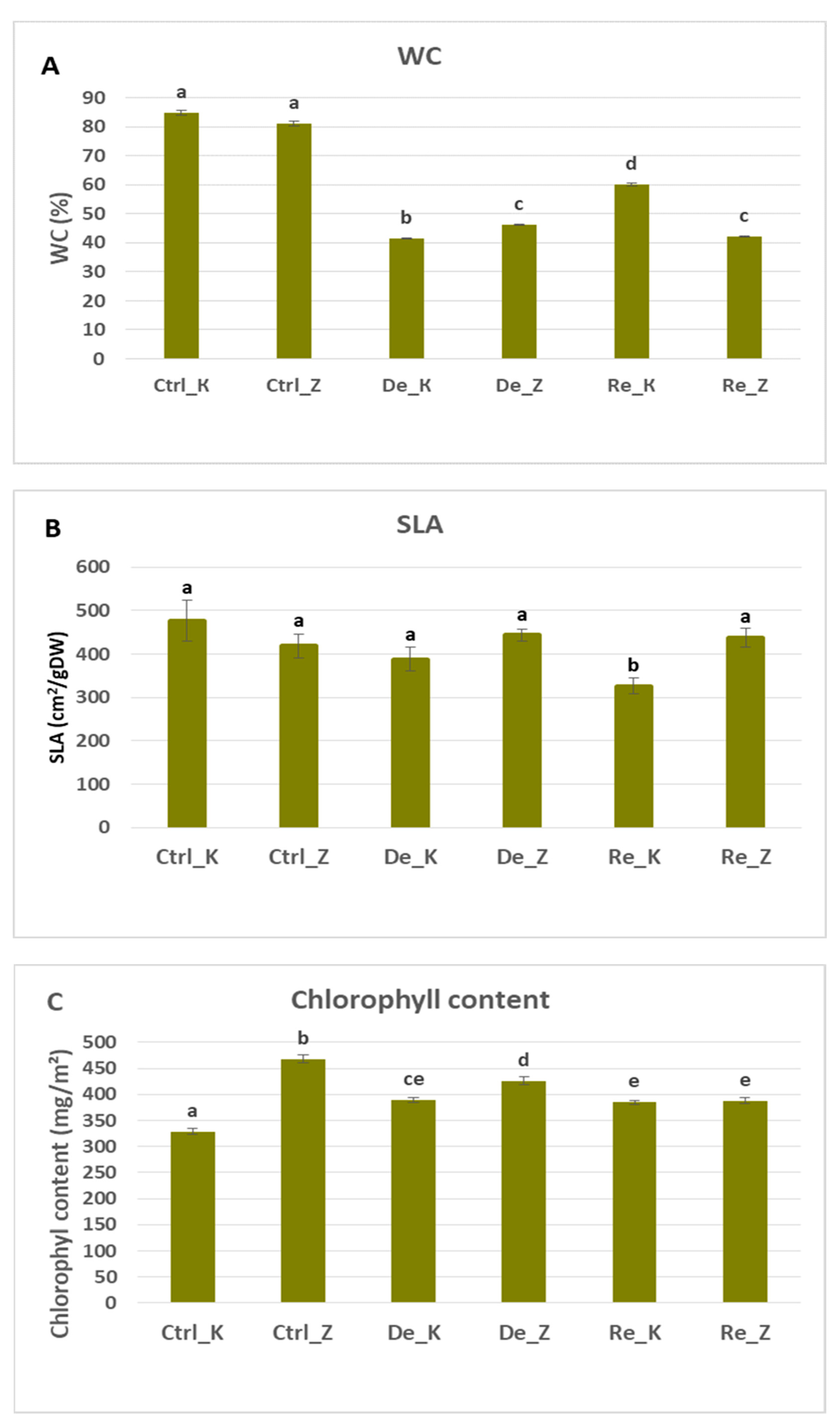
Preprints 182327 g002
Figure 3. Thermoluminescence glow curves from Katya and Zora wheat leaves of control, dehydrated, and rehydrated plants. The signals were obtained after excitation by two single saturation xenon flashes. The curves are vertically arranged, and the scale is the same for all curves.
Preprints 182327 g003
Figure 4. (A) Maximal chlorophyll fluorescence in relative units (rel.u.) measured on the fourth day of dehydration and the third day of rehydration. Statistically significant differences when comparing control plants, dehydrated plants, and rehydrated plants are indicated by different lowercase letters (p ≤ 0.05). (B) Maximal and minimal chlorophyll fluorescence in relative units (rel.u.) measured on the seventh day of dehydration and the fifth day of rehydration. Statistically significant differences when comparing control plants, dehydrated plants, and rehydrated plants are indicated by different lowercase letters (p ≤ 0.05). (C) Chlorophyll fluorescence parameters (Fv/F0, Vi, ABS/RC, TR0/RC, ET0/RC) obtained from OJIP induction curves measured on the fourth day of dehydration and the third day of rehydration. Statistically significant differences compared to control plants, dehydrated plants, and rehydrated plants are shown with different small letters (* p ≤ 0.05). (D) Chlorophyll fluorescence parameters (Vj, Vi, ψ0, ET0/RC, ϕE0, and PI(abs)) obtained from OJIP induction curves measured on the seventh day of dehydration and the fifth day of rehydration.. Statistically significant differences compared to control plants, dehydrated plants, and rehydrated plants are shown with different small letters (p ≤ 0.05).
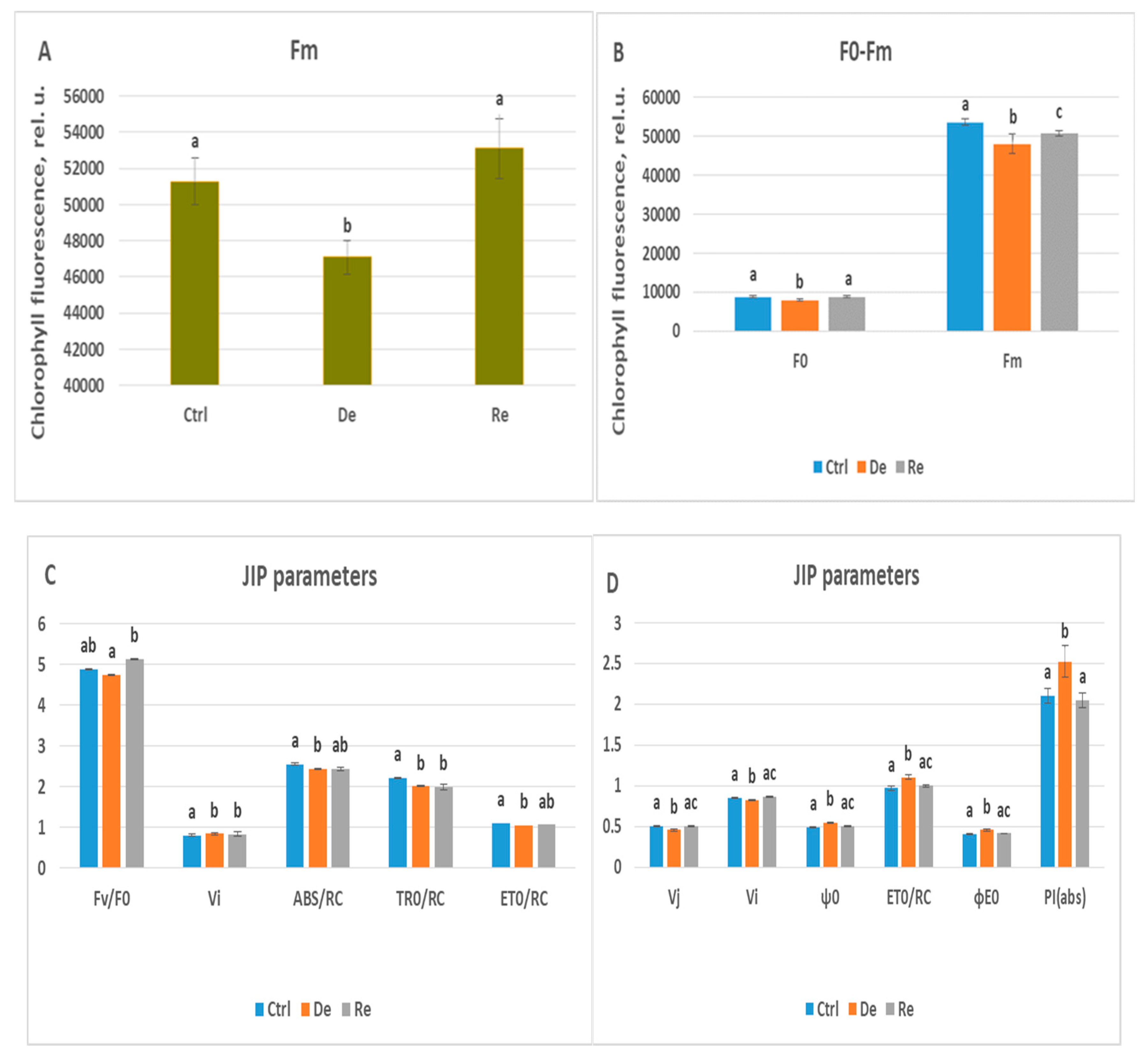
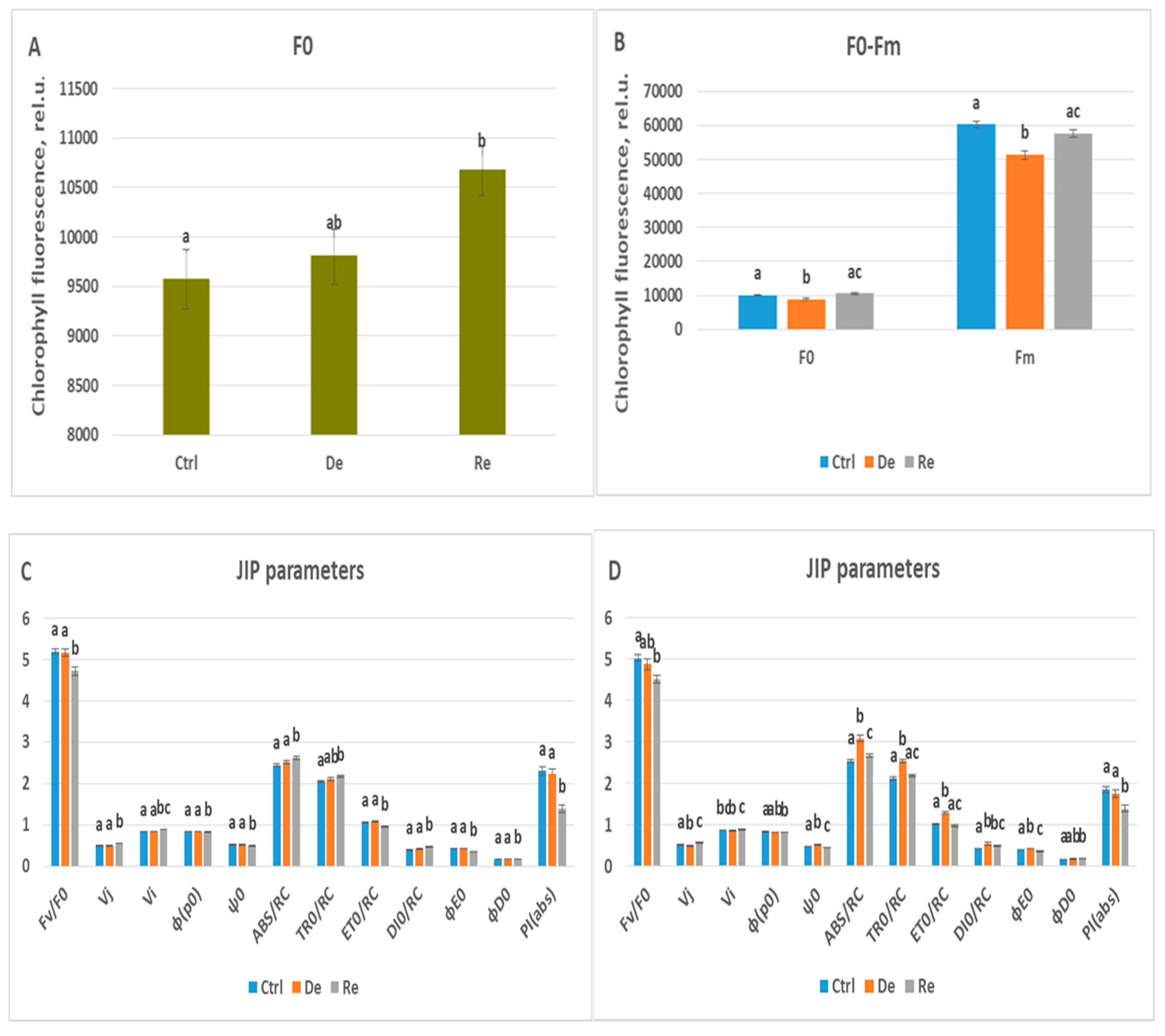
Preprints 182327 g004
Figure 5. (A) Minimal chlorophyll fluorescence in relative units (rel.u.) measured on the fourth day of dehydration and the third day of rehydration. Statistically significant differences when comparing control plants, dehydrated plants, and rehydrated plants are indicated by different lowercase letters (p ≤ 0.05). (B) Maximal and minimal chlorophyll fluorescence in relative units (rel.u.) measured on the seventh day of dehydration and the fifth day of rehydration. Statistically significant differences when comparing control plants, dehydrated plants, and rehydrated plants are indicated by different lowercase letters (p ≤ 0.05). (C) Chlorophyll fluorescence parameters (Fv/F0, Vj, Vi, ϕp(0), ψ0, (ABS/RC, TR0/RC, ET0/RC, DI0/RC, ϕE0, ϕD0, and PI(abs)) obtained from OJIP induction curves measured on the fourth day of dehydration and the third day of rehydration. Statistically significant differences compared to control plants, dehydrated plants, and rehydrated plants are shown with different small letters (p ≤ 0.05). (D) Chlorophyll fluorescence parameters (Fv/F0, Vj, Vi, ϕp(0), ψ0, (ABS/RC, TR0/RC, ET0/RC, DI0/RC, ϕE0, ϕD0, and PI(abs)) obtained from OJIP induction curves measured on the seventh day of dehydration and the fifth day of rehydration. Statistically significant differences compared to control plants, dehydrated plants, and rehydrated plants are shown with different small letters (p ≤ 0.05).
Preprints 182327 g005
Figure 6. Comparison of statistically significant values of chlorophyll fluorescence parameters (Vj, Vi, ψ0, ABS/RC, TR0/RC, ET0/RC, DI0/RC, ϕE0, ϕD0, and PI(abs)) obtained from OJIP induction curves measured on full dehydrated wheat varieties Katya and Zora (p ≤ 0.05).
Preprints 182327 g006
Figure 7. (A) Comparison of statistically significant values of maximal and minimal chlorophyll fluorescence in relative units (rel.u.) measured on full rehydrated wheat varieties Katya and Zora (p ≤ 0.05). (B) Comparison of statistically significant values of chlorophyll fluorescence parameters (Vj, ψ0, ABS/RC, TR0/RC, ϕE0, and PI(abs)) obtained from OJIP induction curves measured on full rehydrated wheat varieties Katya and Zora (p ≤ 0.05).
Preprints 182327 g007
Figure 8. Averaged chlorophyll a fluorescence induction curve for the specific steps of the OJIP test, measured in control plants of wheat varieties Katya and Zora with a red actinic light irradiation intensity of 3000 µmol photons m−2 s−1 for a measurement period of 1 s.
Preprints 182327 g008
Figure 10. Averaged chlorophyll a fluorescence induction curve for the specific steps of the OJIP test, measured in dehydrated plants of wheat varieties Katya and Zora with a red actinic light irradiation intensity of 3000 µmol photons m−2 s−1 for a measurement period of 1 s.
Preprints 182327 g010
Figure 12. Averaged chlorophyll a fluorescence induction curve for the specific steps of the OJIP test, measured in rehydrated plants of wheat varieties Katya and Zora with a red actinic light irradiation intensity of 3000 µmol photons m−2 s−1 for a measurement period of 1 s.
Preprints 182327 g012
Table 1. Values of fresh and dry weight with standard error for Katya and Zora genotypes for controls, dehydrated, and rehydrated plants.
Control plants Dehydrated plants Rehydrated plants
Fresh weight (g) Katya 1.47±0.06 1.19±0.02 1.63±0.08
Zora 2.22±0.08 1.39±0.1 2.39±0.1
Dry weight (g) Katya 0.16±0.01 0.13±0.005 0.29±0.02
Zora 0.29±0.01 0.2±0.01 0.39±0.03
Table 2. Values of water content, specific leaf area and leaf chlorophyll content with standard error for Katya and Zora genotypes for controls, dehydrated, and rehydrated plants.
Control plants Dehydrated plants Rehydrated plants
Water content(%) Katya 8.5±0.85 (85%) 4.2±0.1 (42%) 6.0±0.35 (60%)
Zora 8.1±0.97 (81%) 4.6±0.2 (46%) 4.2±0.14 (42%)
Specific leaf area(cm2/gDW) Katya 476.4±47.3 388.4±28 326.9±19.3
Zora 418.9±53 444.1±14.1 437.6±41.2
Leaf chlorophyll content (mg/m2) Katya 312.6±4.3 387.9±4.5 382±3.9
Zora 467.4±7.6 426.1±8 391.7±5.9
Table 3. The effect of drought and rehydration on wheat plant Katya measured on the fourth day of drought and on the third day of rehydration analyzed by the JIP parameters. Kruskal-Wallis one-way analysis of variance by ranks was applied. Only parameters that are statistically different from each other are presented. (Significant differences at p<0.05).
Ctrl De Re
Fm 51269.4±1304 47085.4±934.9 53093.4±1651
Fv/F0 4.87±0.081 4.74±0.04 5.12±`0.05
Vi 0.80±0.007 0.83±0.007 0.83±0.008
ABS/RC 2.55±0.033 2.43±0.028 2.43±0.049
TR0/RC 2.20±0.028 2.00±0.022 1.98±0.039
ET0/RC 1.09±0.009 1.04±0.015 1.06±0.073
Table 4. The effect of drought and rehydration on wheat plant Katya measured on the seventh day of drought and on the fifth day of rehydration, and analyzed by the JIP parameters. Kruskal-Wallis one-way analysis of variance by ranks was applied. Only parameters that are statistically different from each other are presented. (Significant differences at p<0.05).
Ctrl De Re
F0 8819.7±214.9 7972.7±`192.1 8823.1±188.4
Fm 53597.1±907.6 47965.5±2466.3 50616.8±707.9
Vj 0.51±0.007 0.45±0.009 0.50±0.006
Vi 0.85±0.005 0.82±0.01 0.86±0.006
ψ0 0.49±0.007 0.54±0.009 0.5±0.006
ET0/RC 0.97±0.026 1.10±0.02 1.00±0.01
ϕE0 0.41±0.006 0.45±0.01 0.41±0.0061
PI(abs) 2.10±0.09 2.52±0.19 2.04±0.09
Table 5. The effect of drought and rehydration on wheat plant Zora measured on the fourth day of drought and on the third day of rehydration analyzed by the JIP parameters. Kruskal-Wallis one-way analysis of variance by ranks was applied. Only parameters that are statistically different from each other are presented. (Significant differences at p<0.05).
Ctrl De Re
F0 9572.4±297.8 9811.1±260.1 10682.1±238.2
Fv/F0 5.18±0.07 5.17±0.08 4.7±0.1
Vj 0.48±0.007 0.49±0.006 0.55±0.008
Vi 0.83±0.005 0.84±0.004 0.88±0.007
φ(p0) 0.84±0.002 0.84±0.002 0.82±0.003
ψ0 0.52±0.007 0.51±0.006 0.48±0.008
ABS/RC 2.44±0.04 2.53±0.04 2.61±0.04
TR0/RC 2.05±0.03 2.11±0.03 2.17±0.03
ET0/RC 1.05±0.02 1.08±0.01 0.96±0.02
DI0/RC 0.39±0.01 0.41±0.01 0.46±0.01
ϕE0 0.43±0.006 0.43±0.006 0.35±0.007
ϕD0 0.16±0.002 0.16±0.002 0.17±0.003
PI(abs) 2.30±0.1 2.23±0.1 1.39±0.08
Disclaimer/Publisher’s Note: The statements, opinions and data contained in all publications are solely those of the individual author(s) and contributor(s) and not of MDPI and/or the editor(s). MDPI and/or the editor(s) disclaim responsibility for any injury to people or property resulting from any ideas, methods, instructions or products referred to in the content.
Copyright: This open access article is published under a Creative Commons CC BY 4.0 license, which permit the free download, distribution, and reuse, provided that the author and preprint are cited in any reuse.
Prerpints.org logo

Preprints.org is a free preprint server supported by MDPI in Basel, Switzerland.

Subscribe

Disclaimer

Terms of Use

Privacy Policy

Privacy Settings

© 2025 MDPI (Basel, Switzerland) unless otherwise stated