

Submitted:
09 October 2024
Posted:
10 October 2024
You are already at the latest version
Abstract
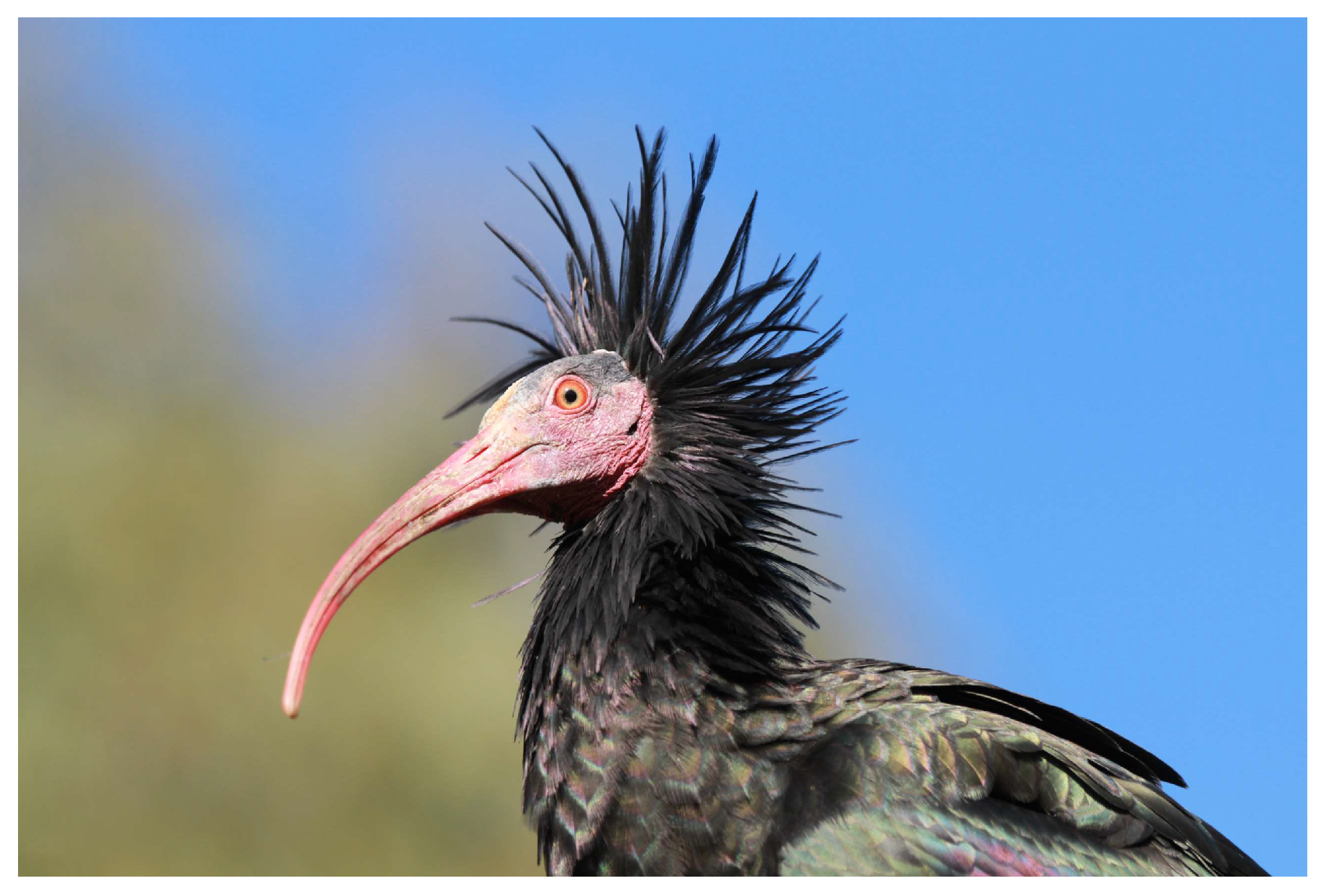
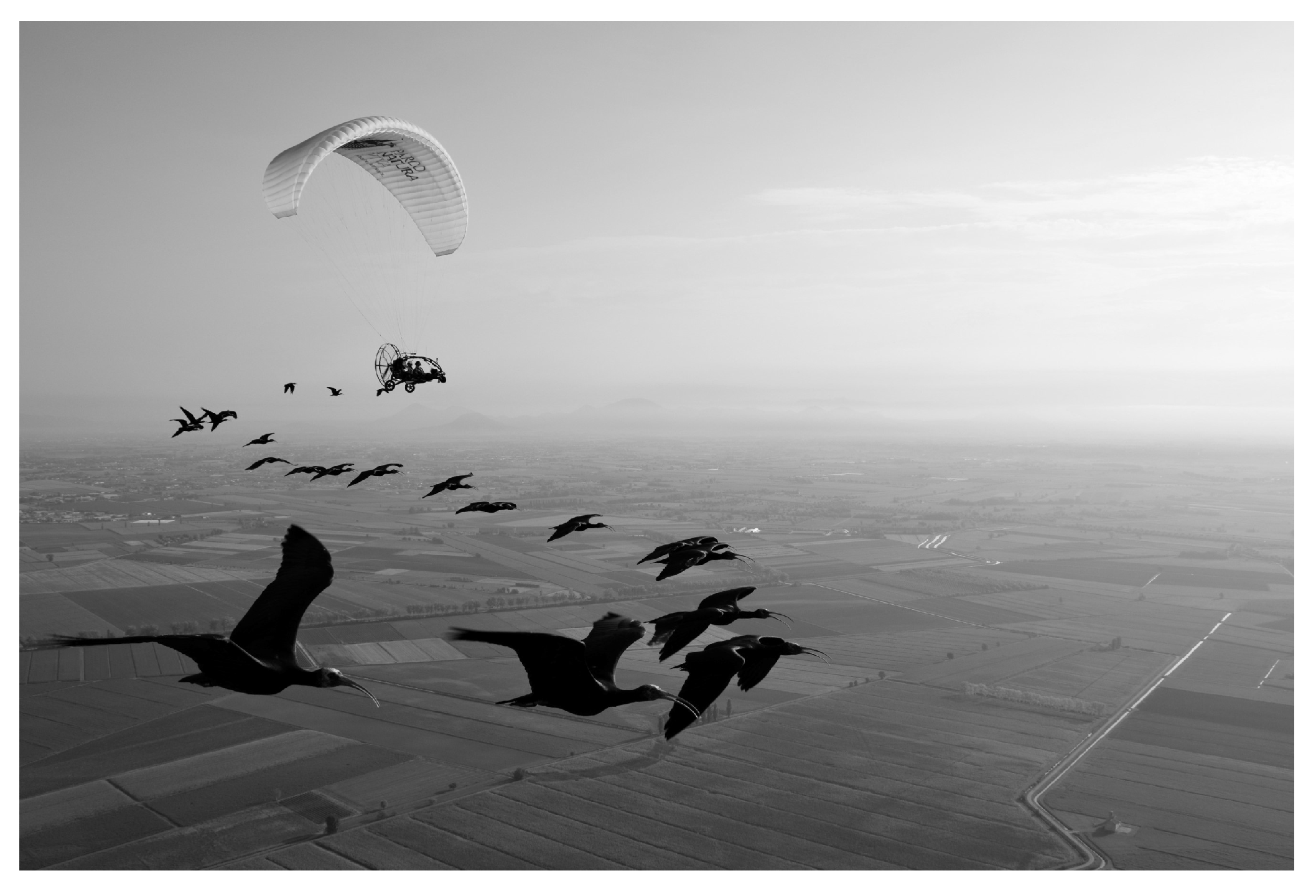
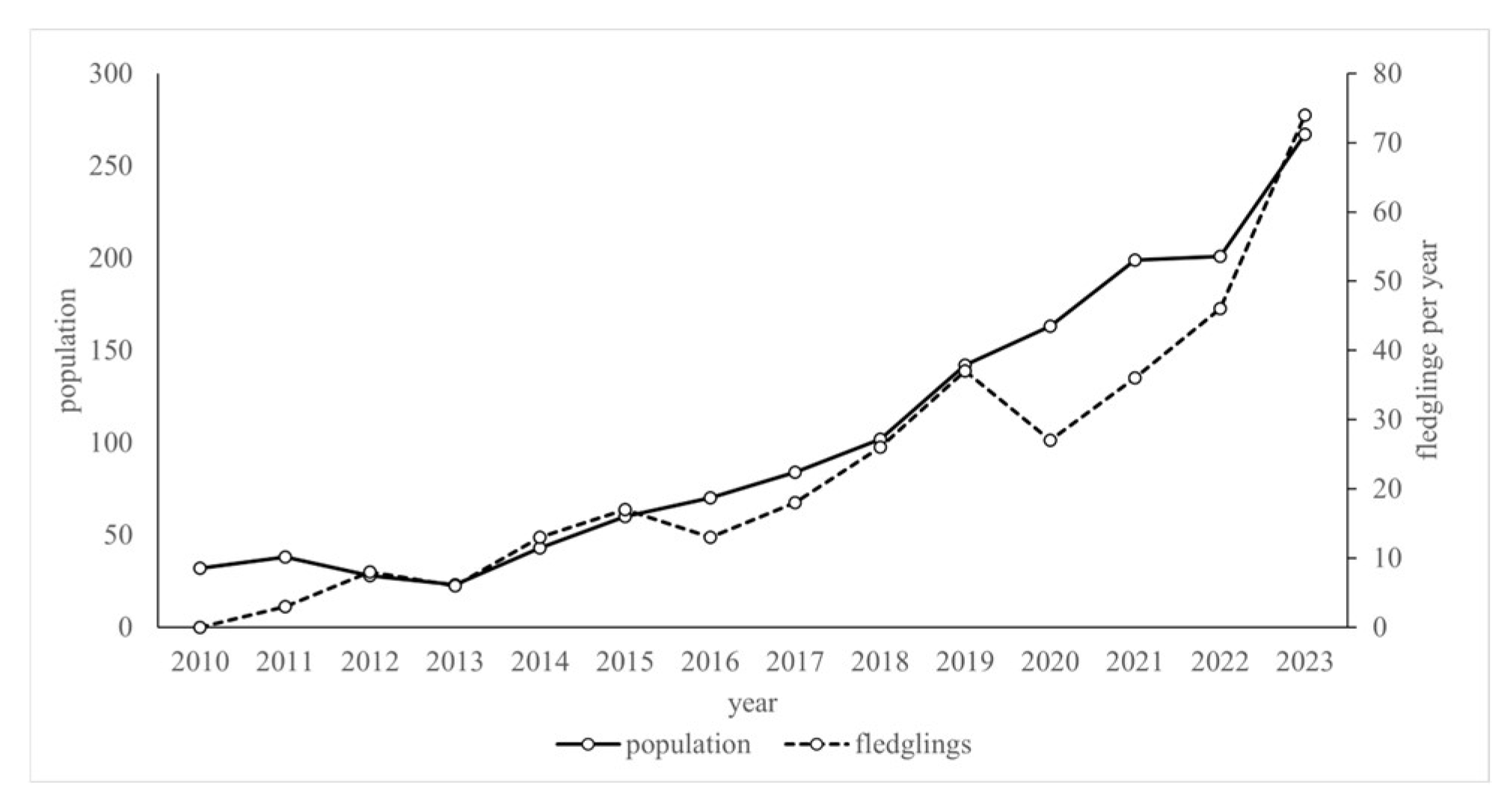
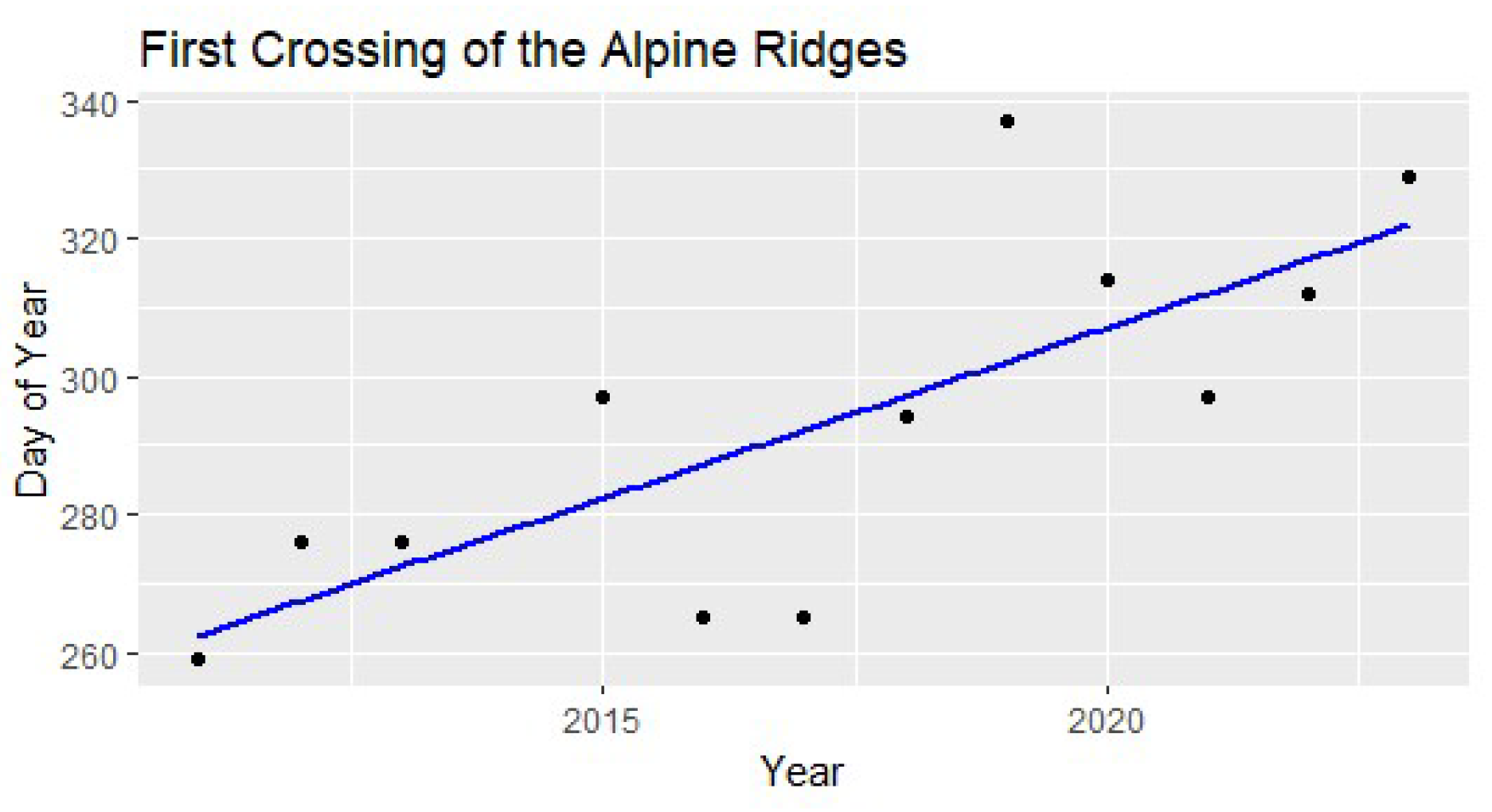
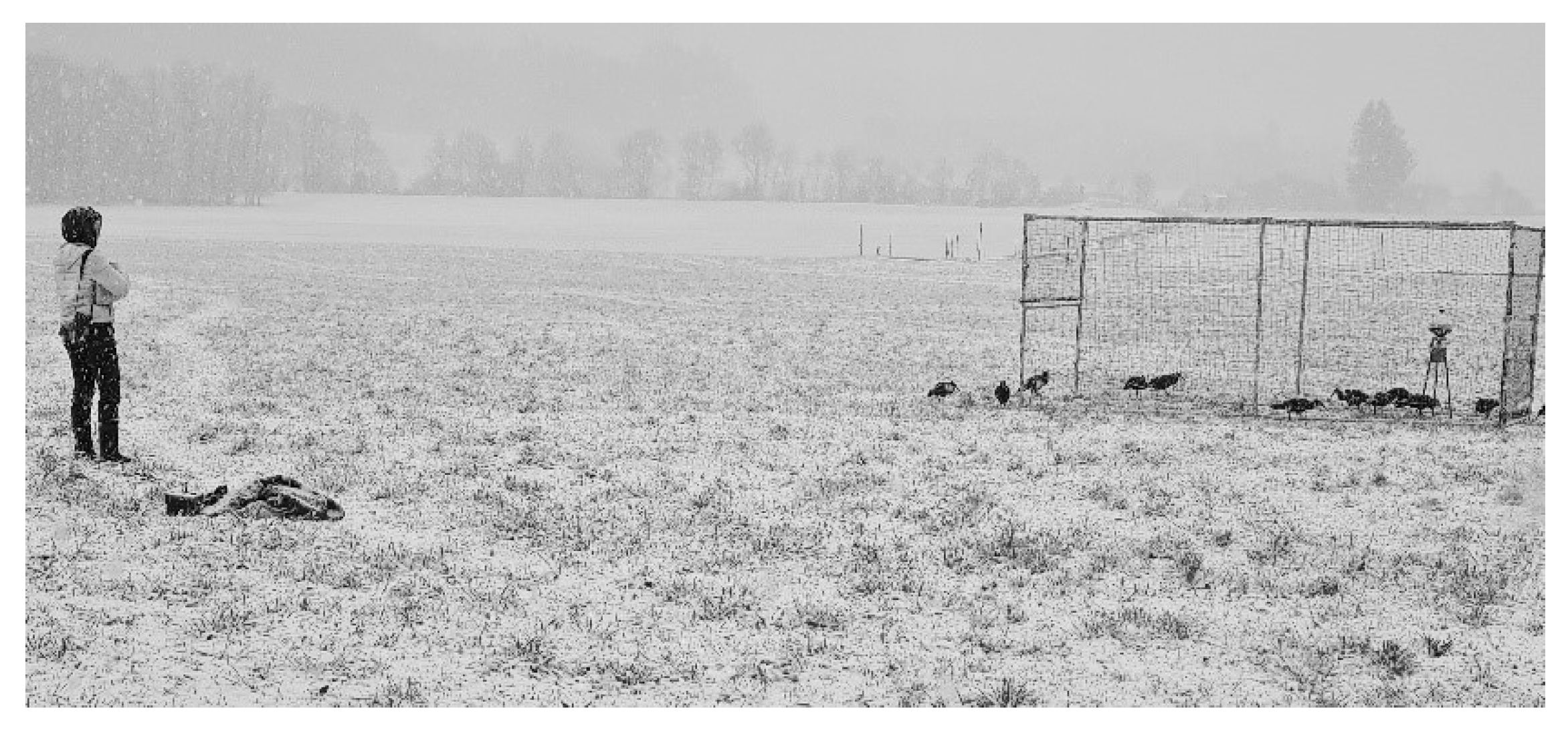
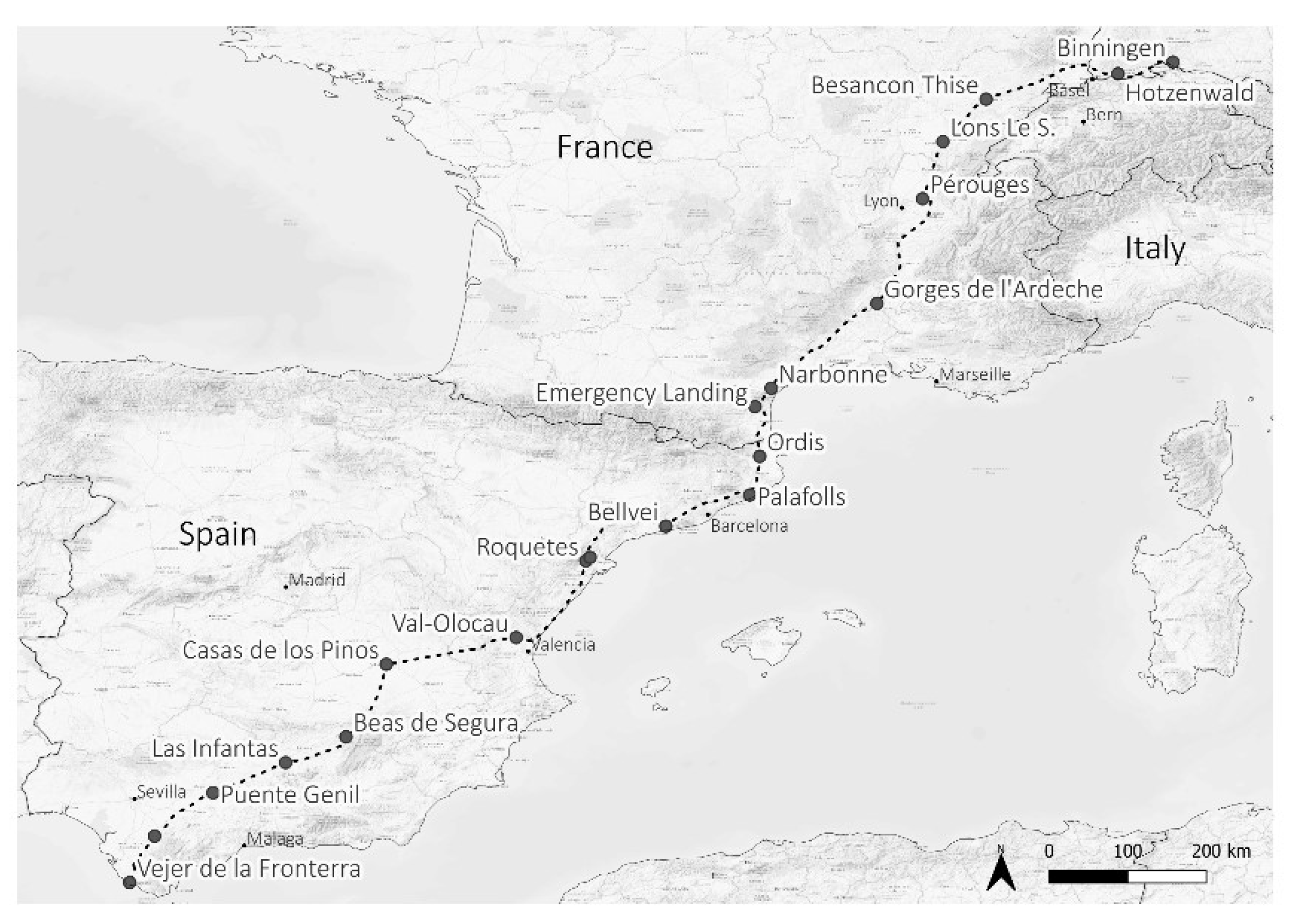
For the past 20 years, reintroduction efforts have been underway to reestablish a migratory population of Northern Bald Ibises (Geronticus eremita) in Central Europe, which now consists of more than 250 birds. They breed both north and south of the Alps and migrate to a common wintering ground in Tuscany. Recently, the start of autumn migration is increasingly delayed, which correlates with extended warm periods in autumn. Later in the year, however, the birds no longer find sufficient thermals to cross the Alps and remain in the northern Alpine foothills. In order to save their lives, we had to capture the affected birds before onset of winter, which is not a sustainable solution. A new approach to solving the problem is the establishment of a second migration route to a wintering area in Andalusia, Spain, connecting our population with a sedentary population there. The new migration route bypasses mountain barriers and allows the birds to reach the wintering grounds also later in the year. The modelling of a pan-European population will provide the birds with high ecological and spatial flexibility. Our project exemplifies the consequences of advancing global warming for animal populations and the associated challenges for conservation projects.
Keywords:
1. Introduction
2. Materials and Methods
3. Results
3.1. Reintroduction of a Migratory Population
3.2. Timing of the Autumn Migration and Immediate Emergency Measures
3.3. Initial Human-Led Migration to Andalusia
4. Discussion
Author Contributions
Funding
Conflicts of Interest
References
- Moehrenschlager, A. (2021) Can conservation translocation turn desperation to inspiration? IUCN Blog.
- Armstrong, D.P. & Seddon, P.J. (2008) Directions in reintroduction biology. Trends in Ecology and Evolution, 23, 20–25. [CrossRef]
- Habibullah, M.S., Din, B.H., Tan, S.-H. & Zahid, H. (2022) Impact of climate change on biodiversity loss: global evidence. Environmental Science and Pollution Research, 29, 1073–1086. [CrossRef]
- Soorae, P.S. (2021) Global conservation translocation perspectives: 2021. IUCN Global conservation translocation perspectives: 2021, 353.
- Schenker, A. (1977) Das ehemalige Verbreitungsgebiet des Waldrapps Geronticus eremita in Europa. Der Ornithologische Beobachter, 74, 13–30.
- Schenker, A. & Serra, G. (2021) Review of historical breeding sites of the Northern Bald Ibis Geronticus eremita in Syria and south-eastern Turkey. Bird Conservation International, 1–10. [CrossRef]
- Fritz, J. & Janák, J. (2022) Tracing the Fate of the Northern Bald Ibis over Five Millennia : An Interdisciplinary Approach to the Extinction and Recovery of an Iconic Bird Species. Animal Training 101, 12, 1–17. [CrossRef]
- Akçakaya, H.R. (1990) Bald Ibis Geronticus eremita population in Turkey: An evaluation of the captive breeding project for reintroduction. Biological Conservation, 51, 225–237. [CrossRef]
- Bowden, C.G.R., Smith, K.W., Bekkay, M. El, Oubrou, W., Aghnaj, A. & Jimenez-Armesto, M. (2008) Contribution of research to conservation action for the Northern Bald Ibis Geronticus eremita in Morocco. Bird Conservation International, 18, 74–90. [CrossRef]
- Yeniyurt, C., Oppel, S., Isfendiyaroglu, S., Özkinaci, G., Erkol, I.L. & Bowden, C. (2016) Influence of feeding ecology on breeding success of a semi-wild population of the critically endangered Northern Bald Ibis Geronticus eremita in southern Turkey. Bird Conservation International, 1–13. [CrossRef]
- Boehm, C., Bowden, C.G.R., Seddon, P.J., Hatipoǧlu, T., Oubrou, W., El Bekkay, M., et al. (2021) The northern bald ibis Geronticus eremita: History, current status and future perspectives. Oryx, 55, 934–946.
- Gross, M. (2015) Can zoos offer more than entertainment? Current Biology, 25, R391–R394. Elsevier.
- Wirtz, S., Boehm, C., Fritz, J., Kotrschal, K., Veith, M. & Hochkirch, A. (2018) Optimizing the genetic management of reintroduction projects: Genetic population structure of the captive Northern Bald Ibis population Sarah Wirtz. Conservation Genetics, 19, 853–864.
- Fritz, J., Feurle, A. & Kotrschal, K. (2006) Corticosterone pattern in Northern Bald Ibises during a human-led migration. Journal of Ornithology, 147, 168.
- Portugal, S.J., Hubel, T.Y., Fritz, J., Heese, S., Trobe, D., Voelkl, B., et al. (2014) Upwash exploitation and downwash avoidance by flap phasing in ibis formation flight. Nature, 505, 399–402. [CrossRef]
- Sperger, C., Heller, A., Voelkl, B. & Fritz, J. (2017) Flight Strategies of Migrating Northern Bald Ibises – Analysis of GPS Data During Human-led Migration Flights. AGIT ‒ Journal für Angewandte Geoinformatik, 3, 62–72.
- Wehner, H., Fritz, J. & Voelkl, B. (2022) Soaring and intermittent flap-gliding during migratory flights of Northern Bald Ibis. Journal of Ornithology, 163, 671–681. Springer Berlin Heidelberg. [CrossRef]
- Mizrahy-Rewald, O., Perinot, E., Fritz, J., Vyssotski, A.L., Fusani, L., Voelkl, B. & Ruf, T. (2022) Empirical Evidence for Energy Efficiency Using Intermittent Gliding Flight in Northern Bald Ibises. Frontiers in Ecology and Evolution, 10. [CrossRef]
- Perinot, E., Fritz, J., Fusani, L., Voelkl, B. & Nobile, M.S. (2023) Characterization of bird formations using fuzzy modelling. Journal of the Royal Society, Interface, 20, 20220798. [CrossRef]
- González, A., Quevedo, M.Á. & Cuadrado, M. (2020) Comparison of reproductive success between parent-reared and hand-reared northern bald ibis Geronticus eremita in captivity during Proyecto Eremita. Journal of Zoo and Aquarium Research, 8, 246–252.
- Ellis, D.H., Sladen, W.J.L., Lishman, W. a., Clegg, K.R., Duff, J.W., Gee, G.F. & Lewis, J.C. (2003) Motorized Migrations: The Future or Mere Fantasy? BioScience, 53, 260.
- Fritz, J., Kramer, R., Hoffmann, W., Trobe, D. & Unsoeld, M. (2017) Back into the wild: establishing a migratory Northern bald ibis Geronticus eremita population in Europe. International Zoo Yearbook, 51, 107–123. [CrossRef]
- Fritz, J., Unsoeld, M. & Voelkl, B. (2019) Back into European Wildlife: The Reintroduction of the Northern Bald Ibis (Geronticus eremita). In Scientific Foundations of Zoos and Aquariums: Their Role in Conservation and Research (eds A. Kaufman, M. Bashaw & T. Maple), pp. 339–366. Cambridge University Press.
- Hartup, B.K., Olsen, G.H. & Czekala, N.M. (2005) Fecal corticoid monitoring in whooping cranes (Grus americana) undergoing reintroduction. Zoo Biology, 24, 15–28. [CrossRef]
- Eikenaar, C., Müller, F., Rüppel, G. & Stöwe, M. (2018) Endocrine regulation of migratory departure from stopover: Evidence from a longitudinal migratory restlessness study on northern wheatears. Hormones and Behavior, 99, 9–13. Elsevier. [CrossRef]
- Wehner, H., Huchler, K. & Fritz, J. (2022) Quantification of Foraging Areas for the Northern Bald Ibis (Geronticus eremita) in the Northern Alpine Foothills: A Random Forest Model Fitted with Optical and Actively Sensed Earth Observation Data. Remote Sensing, 14, 1015.
- Fritz, J., Eberhard, B., Esterer, C., Goenner, B., Trobe, D., Unsoeld, M., et al. (2020) Biologging is suspect to cause corneal opacity in two populations of wild living Northern Bald Ibises (Geronticus eremita). Avian Research, 11, 38.
- Mizrahy-Rewald, O., Winkler, N., Amann, F., Neugebauer, K., Voelkl, B., Grogger, H.A., et al. (2023) The impact of shape and attachment position of biologging devices in Northern Bald Ibises. Animal Biotelemetry, 11.
- Bowden, C.G.R., Aghnaj, A., Smith, K.W. & Ribi, M. (2003) The status and recent breeding performance of the critically endangered Northern Bald Ibis Geronticus eremita population on the Atlantic coast of Morocco. Ibis, 145, 419–431.
- Aourir, M., Bousadik, H., El Bekkay, M., Oubrou, W., Znari, M. & Qninba, A. (2017) New Breeding Sites of the Critically Endangered Northern Bald Ibis Geronticus Eremita on the Moroccan Atlantic Coast. International Journal of Avian & Wildlife Biology, 2, 1–4.
- Unsoeld, M. & Fritz, J. (2011) Der Waldrapp-ein Vogel zwischen Ausrottung und Wiederkehr. Wildbiologie, 2, 1–16.
- Lindsell, J.A., Serra, G., Peške, L., Abdullah, M.S., Al Qaim, G., Kanani, A. & Wondafrash, M. (2009) Satellite tracking reveals the migration route and wintering area of the Middle East population of Critically Endangered northern bald ibis Geronticus eremita. Oryx, 43, 329–335.
- Serra, G. (2015) The Northern Bald Ibis is extinct in the Middle East - but we can’t blame it on IS. Ecologist.
- Bairlein, F., Fritz, J., Scope, A., Schwendenwein, I., Stanclova, G., Van Dijk, G., et al. (2015) Energy expenditure and metabolic changes of free-flying migrating northern bald ibis. PLoS ONE, 10.
- Stanclova, G., Schwendenwein, I., Merkel, O., Kenner, L., Dittami, J., Fritz, J. & Scope, A. (2017) The effect of migratory flight on hematologic parameters in northern bald ibises (Geronticus eremita). Journal of Zoo and Wildlife Medicine, 48, 1154–1164.
- Voelkl, B., Portugal, S.J., Unsoeld, M., Usherwood, J.R., Wilson, A.M. & Fritz, J. (2015) Matching times of leading and following suggest cooperation through direct reciprocity during V-formation flight in ibis. Proceedings of the National Academy of Sciences, 112, 2115–2120.
- Drenske, S., Radchuk, V., Scherer, C., Esterer, C., Kowarik, I., Fritz, J. & Kramer-Schadt, S. (2023) On the road to self-sustainability: reintroduced migratory European northern bald ibises Geronticus eremita still need management interventions for population viability. Oryx, 1–12.
- Fritz, J. (2003) The Scharnstein Project: Establishing a migratory Waldrapp colony by introducing a new migration route with ultra-light planes. In Proceedings of the IAGNBI Meeting; C Bowden & C Böhm (Eds.) p. .
- Fritz, J. (2009) On the experimental introduction of migratory Northern Bald Ibis colonies. In Proceedings of the International Advisory Group for the Northern Bald Ibis (IAGNBI) meeting Palmyra, Syria p. .
- Unsoeld, M. & Fritz, J. (2016) Artenschutzprojekt Waldrappteam: Potenzial und Risiken von Prägung als Methode für den Artenschutz. Vogelwarte, 54, 365–366.
- Voelkl, B. & Fritz, J. (2017) Relation between travel strategy and social organization of migrating birds with special consideration of formation flight in the northern bald ibis. Philosophical Transactions of the Royal Society B: Biological Sciences, 372, 20160235.
- Gordo, O. (2007) Why are bird migration dates shifting? A review of weather and climate effects on avian migratory phenology. Climate Research, 35, 37–58.
- Visser, M.E., Perdeck, A.C., van Balen, J.H. & Both, C. (2009) Climate change leads to decreasing bird migration distances. Global Change Biology, 15, 1859–1865.
- Schilling, J., Freier, K.P., Hertig, E. & Scheffran, J. (2012) Climate change, vulnerability and adaptation in North Africa with focus on Morocco. Agriculture, Ecosystems and Environment, 156, 12–26. Elsevier B.V.
- Zaifman, J., Shan, D., Ay, A. & Jimenez, A.G. (2017) Shifts in Bird Migration Timing in North American Long-Distance and Short-Distance Migrants Are Associated with Climate Change. International Journal of Zoology, 2017.
- Pinszke, A. & Remisiewicz, M. (2023) Long-term changes in autumn migration timing of Garden Warblers Sylvia borin at the southern Baltic coast in response to spring, summer and autumn temperatures. European Zoological Journal, 90, 283–295. Taylor and Francis Ltd.
- Møller, A.P., Rubolini, D. & Lehikoinen, E. (2008) Populations of migratory bird species that did not show a phenological response to climate change are declining. Proceedings of the National Academy of Sciences of the United States of America, 105, 16195–16200.
- Radchuk, V., Reed, T., Teplitsky, C., van de Pol, M., Charmantier, A., Hassall, C., et al. (2019) Adaptive responses of animals to climate change are most likely insufficient. Nature Communications, 10, 3109.
- Kotrschal, K. (2004) The Grünau Project: Establishing a semi-wild colony of Waldrapp Ibis. WAZA Magazinzine, 5, 12–15.
- IUCN/SSC (2013) Guidelines for Reintroductions and Other Conservation Translocations. Version 1.0. Gland, Switzerland.
Disclaimer/Publisher’s Note: The statements, opinions and data contained in all publications are solely those of the individual author(s) and contributor(s) and not of MDPI and/or the editor(s). MDPI and/or the editor(s) disclaim responsibility for any injury to people or property resulting from any ideas, methods, instructions or products referred to in the content. |
© 2024 by the authors. Licensee MDPI, Basel, Switzerland. This article is an open access article distributed under the terms and conditions of the Creative Commons Attribution (CC BY) license (http://creativecommons.org/licenses/by/4.0/).


