

Submitted:
28 June 2024
Posted:
01 July 2024
You are already at the latest version
Abstract
Water supply policy is closely linked to sustainability as it directly influences the conservation and management of vital natural resources. This policy focuses on developing regulations and designing various activities related to the preser-vation of water resources, which can promote both ecological and economic sustainability. This study focuses on the Challenges of the Israeli Water Sector in Times of Emergency. In a time of growing climate crisis and despite the global warming trend, Israeli citizens routinely enjoy a regular constant supply of clean fresh water, thanks to local desalina-tion plants. Establishment of the desalination plants has become a model of water management for many countries in an era of growing climate crisis. At the same time, Israel’s water sector is faced with challenges and threats related to earthquakes and various states of warfare and security confrontations. In such times of emergency, Israel’s water sector is particularly vulnerable to disruptions of the water infrastructure and it’s adequate operation, by both contamination of the water sources and damage to the desalination plants. This study examines the challenges of the Israeli water sec-tor that require it to contend with these emergency situations in an era of reliance on desalination plants. The research method combines analysis of statistical data extracted from Israel’s Central Bureau of Statistics, Government Water and Sewage Authority, and Meteorological Service, in addition to reading and analyzing primary documents generated by various government ministries and government organs related to Israel’s water policy. The research findings lead to the conclusion that public policy on managing the water sector, manifested in the development and establishment of water desalination plants, has resolved Israel’s water crisis, put an end to its dependency on the amount of precipitation and on natural water sources, and allowed an increase in water production to match the rise in consumption. Nonetheless, as successful as this public policy may be, it does not consider the possibility of extreme scenarios and does not develop the entire range of steps necessary to confront them, and thus undermines the ability of the Israeli water sector to provide its citizens with water in times of emergency.
Keywords:
Water Sector
; Sustainability
; Public Policy
; Seawater Desalination
; Times of Emergency
; Groundwater
Introduction
Water supply policy is closely linked to sustainability as it directly influences the conservation and management of vital natural resources. This policy focuses on developing regulations and designing various activities related to the preservation of water resources, which can promote both ecological and economic sustainability:
- 1.
- Conservation and Protection of Natural Water Sources: This includes lakes, rivers, and groundwater sources, aimed at ensuring these resources remain available for future generations.
- 2.
- Development and Implementation of Efficient Water Use Practices: This involves promoting the use of water-efficient technologies, utilizing recycled water, and implementing water reuse systems to optimize water usage.
- 3.
- Protection of Water Quality: Innovative technologies are adopted to enhance drinking water cleanliness, improve groundwater quality, and similar measures to safeguard water quality.
These policies are crucial for ensuring sustainable management of water resources, balancing environmental preservation with socio-economic needs. This issue becomes even more critical in light of the demographic and geological shifts occurring in the world in recent decades, associated with the population growth (1), global warming (2), dehydration (3), and drought (4), constitute a real challenge for policymakers around the world occupied with the management of local water sectors. The Mediterranean region, where Israel is located, is undergoing rapid local and global social and environmental changes as well. Different measures indicate the projected emergence of common events involving grave water shortages, which will have severe implications for local residents’ quality of life. Accordingly, water management in Mediterranean countries constitutes a considerable challenge for decisionmakers, who strive to allow continued population growth while maintaining sufficient access to fresh water (5).
To reduce the gap between the demand for water and the available supply, the Israeli government decided several years ago that it must prepare for desalinating seawater. The decisionmakers saw in their mind’s eye the consequences of excessively exploiting the Sea of Galilee and the groundwater reservoirs, leading to their salinization and the need for regeneration. Policymakers recognized that the benefits of producing water through desalination plants do not end with reducing the water scarcity, the possibility of regenerating the natural reservoirs, and maintaining their water levels, rather desalination alsohas other benefits for the local water sector as well. Desalination can help improve the quality of the water by reducing the salinity of natural water through mixing it with water from the National Water Carrier and well water, as well as diminishing the need to lay fallow agricultural fields and gardens and avoiding the destruction of natural water sources and adjacent natural ecological systems.
Israel’s need to ensure a robust water supply and its success in doing so is indisputable, as thanks to the desalination plants it is currently extremely well prepared for climate change and drought by virtue of its supply of water for drinking and industry. Israel is among the top countries in the use of recycled water and is considered a leading force in seawater desalination and use of treated wastewater for agricultural purposes. In addition, Israel has a successful water management system and it serves as a model for many countries worldwide on managing the water sector in a time of growing climate crisis. Its residents routinely enjoy a regular constant supply of clean fresh water directly to their homes and to any spot, building, institution, or organ that is a site of social or business activity (6,7). Despite global warming (8), the concern of providing a regular supply of water to residents’ homes has been significantly reduced, as stated, thanks to the desalination plants operating in Israel.
Nevertheless, Israel must not develop exclusive dependence on these water desalination plants, while neglecting the preservation and operation of natural water sources. This concern arises since beside the various environmental challenges affecting the Israeli water sector, it is also confronted by challenges and threats related to earthquakes and various states of warfare and security confrontations. In these emergency periods, Israel’s water sector is particularly vulnerable to disruption of the water infrastructure and its adequate activity, by both contamination of the water sources and damage to the desalination plants. Accordingly, the outbreak of the war in Gaza (against Hamas) in October 2023 created a significant challenge for Israel’s water sector, raising the concern that if the war would continue or even expand to the northern front (against Hezbollah in Lebanon), Israel would be in real danger of exposure to guided missiles, which might hit and even halt the operation of its desalination plants. In such a case, Israel would be compelled to rely on the groundwater accumulating in wells and on pumping drinking water from the Sea of Galilee in the country’s north. Therefore, the aim of this study is to examine Israel’s preparedness for managing the water sector in times of emergency in general and in wartime in particular, in an era of desalination plants.
Water Management Policy in Israel
Over the years, the issue of the quality and quantity of water has been one of the important challenges encountered by Israel, located as it is in a semi-arid region and coping with a continuous decline in precipitation (9), a rise in life expectancy (10), and a consistent increase in the size of the population (11–13). In 1959 Israel enacted a comprehensive Water Law,[1] which includes regulations for water management, maintaining its quality, and supplying to the population. According to the Water Law, Israel’s water sources are considered public property managed by the authorities. Therefore, the supply of water for various usages is a distinctly public action essential for the proper healthy existence of a civilized society, one that must be carried out even in the absence of any economic benefits. Hence, Israel’s regulator must manage the quantity and quality of the domestic water sector, while ensuring the supply of water to the country’s citizens in times of routine and of emergency, as well as protecting the existing fresh water resources from contamination (14).
Israel’s Water Crisis in the Early 2000s
Since enaction of the Water Law and until the late 1990s, the Israeli water sector suffered from a deterioration in the quantity and quality of its natural water sources and from deficiencies related to the decentralized authority of the different government ministries and the inability to reach decisions and devise long-term plans for the water sector. At that time, there was a considerable shortage of fresh water in Israel, due to the overuse of this resource for agricultural purposes (15) and as a result of the failure to plan and apply a more efficient policy for supplying water to meet the needs of the economy (Feitelson, 2005). Hence, in 1999 the Israeli government declared a state of emergency in the Israeli water sector.[2]
The decline in the quantity and quality of Israel’s natural water sources began in effect towards the end of the last century, as a result of two factors: One is related to the contamination of water sources by saltwater bodies (via the entrance of seawater), among other things as a result of groundwater overutilization, which disrupted the natural balance between fresh water and salt water (17). The second is related to the dropping level of the Sea of Galilee, at that time an important source of drinking water (18). This drop is explained both by the decline in precipitation due to climate change and by the increased rate of water pumping from this reservoir (19).
In 2001, the parliamentary committee established to inquire into the subject submitted its final conclusions regarding the management of Israel’s water sector.[3] The conclusions posed very grave criticism of the government and of the little done over the years regarding managing the domestic water sector, and described the situation as on the verge of collapse and disaster. Most of the criticism related to the decision making process in the water sector, the relations between the authorities in charge of the subject, who refrained from defining an inclusive policy, and the lack of a source or authority responsible for all planning and execution of plans for the water sector.[4] Due to the division of authority between the different ministries, each was able to reach decisions regarding a different aspect of the water sector, such that one ministry’s disagreement with the decision of another would cancel it and thus hamper the proper management of Israel’s water sector.
The committee’s conclusions showed that the dwindling of Israel’s water sources at that time[5] was the direct result of a continuous oversight by Israel’s governments rather than (7)of climate changes (leading to a decline in the amount of rain) or of the sharp increase in the population. Moreover, in 2008[6] the State Control Committee decided to establish a national commission of inquiry to examine the management of Israel’s water sector, with the aim of clarifying the reasons that had led to the water crisis and inspecting the functioning of the government ministries and other relevant organs.
Seawater Desalination Policy as a Solution for the Crisis in Israel’s Water Sector
The technology of desalinating seawater was first developed in Israel in 1965, when “Mekorot” (Israel’s national water company) established the first plant for desalinating seawater using evaporation technology in the southern city of Eilat (20). However, Israel’s masterplan for integrating seawater desalination plants within the national water supply system on a larger scale was formulated several decades later, in 1997 (7).
To provide a response to the water shortage experienced by Israel in the early 2000s, as stated, the Ministerial Committee for Social and Economic Affairs decided in 2003 that it is necessary to prepare for seawater desalination as the main way of meeting Israel’s water needs. This relevance of this alternative policy rose due to the significant decline in the costs of desalinating seawater at that time, thanks to technological developments (21–24). Therefore, the committee determined that in a matter of one year seven desalination plants would be established, which would provide 315 million cubic meters (mcm) of desalinated water. However, the State Comptroller’s report for 2005 determined that this decision had not been fully executed and in practice the first desalination plant in Israel was established in 2005 and began supplying desalinated water just in 2006 and in a smaller quantity than required )only some 100 cubic meters of water(. These circumstances led in 2005 to a government decision to establish a Water Authority in charge of regulating, supervising, and developing the Israeli water sector, including sewage and drainage, as well as carrying out the government’s policy when it has implications for the water sector. Indeed, in that year Israel expanded the use of desalination plants with the aim of increasing its limited supply of natural water (11).
Nonetheless, as early as 2008[7] the challenges occasioned by Israel’s demographic increase obliged the government to arrange for another gradual expansion of seawater desalination, to reach up to 750 mcm by 2020. This decision paved the way for the establishment of another three seawater desalination plants,[8] where from 2017 to the present (2023) five seawater desalination plants have been operating in Israel, currently providing more than 500 mcm a year, constituting some 60% of Israel’s total consumption of drinking water. These circumstances allow long-term planning of the water sector and ensuring a constant and safe supply, such that Israel’s water sector is not dependent on its natural water reservoirs in general and on the Sea of Galilee in particular, making Israel a model for emulation by other countries. Moreover, the significance of the desalination plants is even more conspicuous in light of the extreme heat waves that have been afflicting the European continent and its environs since the beginning of the current century (25,26). The heat waves, and the extensive drying up of many water sources on the continent (27), have led to problems with the water supply to certain parts of countries in the south of the continent, such as Italy (28,29) and France (30).
At the same time, putting an end to the Israeli water sector’s dependence on natural water sources and its reliance, as stated, on seawater desalination plants had no significant contribution to the state of these natural water sources or impact on the declining amount of precipitation collected in the groundwater reservoirs and the damage to their quality (31). Moreover, in recent years it has emerged that natural water sources in the Mediterranean region are becoming increasingly rare, where millions of people in this area have no access to water for drinking and for sanitary purposes, and the dwindling of natural water resources is a significant problem that might intensify in time (Bozorg-Haddad et al., 2019).
Political Aspects Related to Managing Israel’s Water Sector
Managing Israel’s water sector has political aspects as well, which influence and are related to Israel’s relations with its different neighbors (32,33). In addition to the increasing needs and challenges of the Israeli water sector, stemming from the growing population and the diminishing natural water sources, Israel is required to provide a certain amount of water to its neighbors as well, as part of political agreements. Israel supplies water to the Palestinian Authority under the Oslo Accords signed in 1993 (34,35)[9] and also supplies water (from the Sea of Galilee) to Jordan[10] as part of the peace agreement signed between the countries in 1994 (36). Therefore, Israel is required to manage its water sector properly and effectively so that it will be able to uphold its political commitments (37).
The Water Sector in Times of Emergency as Reflected in the Research Literature
The water sectors in the different countries have been repeatedly challenged by large disasters, such as hurricanes (Landsman et al., 2019; Schafer et al., 2020), floods (41), fires (38), and epidemics (42). The failed responses on one hand and the successes on the other are a lesson for decisionmakers, requiring them to examine the local water sector’s preparedness for such challenges (43). Similarly, military confrontations too have the potential to disrupt water systems that are vital for the welfare of the environment and of human beings in times of routine in general and in wartime in particular. The research literature is replete with studies examining conflicts between countries based on disputes over water resources and even wars that broke out due to these conflicts (44–47). Nevertheless, a review of the literature on the effect of armed conflicts on water resources and their management shows that it is limited and not extensive. Notable in this context is the article by Schillinger et al., which examined the role of the water sector in armed conflicts, whether as a target or as a weapon utilized by one of the parties to the conflict, and the implications of the armed conflict for the management of water resources, such as providing basic services and a water regimen (48). In the Israeli context it is possible to mention the article by Zeitoun et al. that examined the association between the supply of water and armed conflict and applied it to the Second Lebanon War that broke out between Israel and Lebanon (Hezbollah) in summer 2006 (49).
Other previous studies examined the Israeli policy on managing the water sector (Auerbach & Karassin, 2002; Kislev, 2001; Plaut, 2000) and some even analyzed this policy with a critical view of decisionmakers and their interests (53). However, no study has yet examined the preparedness of the Israeli water sector for emergency in general and in the current era of the desalination plants in particular. Therefore, the aim of this study is to cover the existing gap in the literature on this subject and examine the preparedness of the Israeli water sector, which relies at present mostly on the desalination plants, for emergencies that might occur in the future.
Methodology
This study combines the quantitative method and the qualitative method. The combination allows broad observation of Israel’s policy on producing and supplying water and reduces the possible bias that may have resulted from using only one research method. At the base of the combination is the wish to enjoy the benefits of both of these methods (54). The quantitative part of the study includes analyzing statistical data extracted from Israel’s Central Bureau of Statistics, Government Water and Sewage Authority, Meteorological Service, and others. These data help present the extent of water desalination in Israel and its proportion of all water produced annually, with the related increase or decrease. They also allow analysis of the benefits and shortcomings deriving from this state of affairs, in the context of the resilience and preparedness of the Israeli water sector for dealing with emergencies.
The qualitative part of the study is based on reading and analyzing primary documents of the different government ministries, reports of the State Comptroller, publications by the Knesset Research and Information Center, and so on, related to the water policy, as well as publications in the media on this issue. This qualitative analysis allows in-depth understanding of the economic and political factors affecting the shaping of related public policy and the resulting incentives and obstacles to retaining the existing policy or replacing it with another (respectively). These insights will serve as a source for generating suggestions for focused and effective public policy on the issue of the water sector’s preparedness for efficient coping in emergencies.
Findings
Production and Consumption of Water in the Israeli Economy
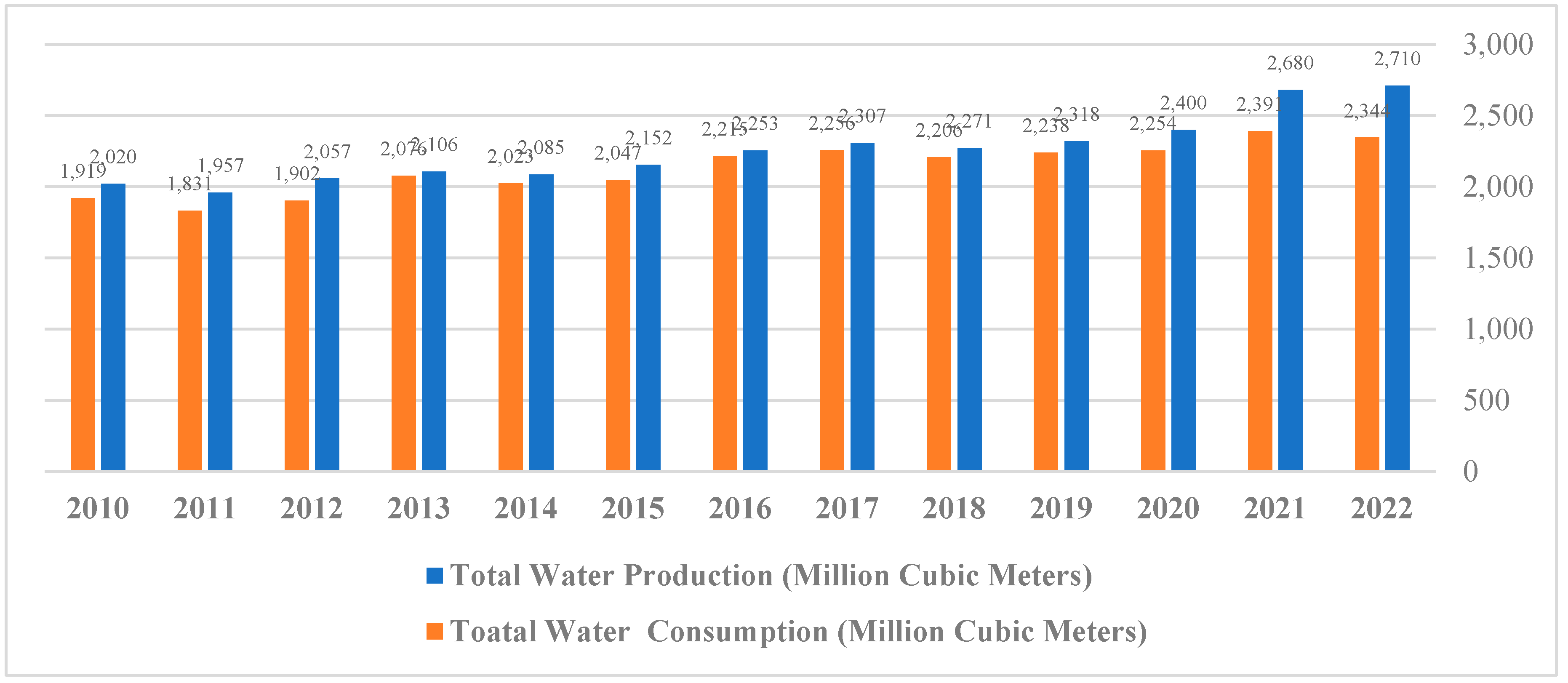
Over the years, the Israeli water sector produced water from several sources, including well water (the aquifer); surface water from streams, springs, and the Sea of Galilee; and treated wastewater, where from the beginning of the current century these sources were enhanced by seawater desalination plants. The consistent and continuous demographic growth of Israel’s population expanded the demand for water for different needs and usages (for the purpose of drinking, industrial use, and agricultural use), requiring an increase in the production of this vital resource. Indeed, as evident from the data in Figure 1 below, from the beginning of the previous decade to the beginning of the current one, an increase in the demand for water is evident, in addition to an increase in the production of water. It seems, however, that over the years the extent of water production was only slightly higher than the demand, and only at the beginning of the current decade did a certain gap emerge between the supply and demand.
Figure 1.
Total water production and consumption in Israel 2010-2022 (by million cubic meters). Source: Central Bureau of Statistics, Table 23.6: Water production and consumption.
Figure 1.
Total water production and consumption in Israel 2010-2022 (by million cubic meters). Source: Central Bureau of Statistics, Table 23.6: Water production and consumption.
As stated, Israel has a variety of sources for water production, and these can be classified as belonging to two categories: natural water sources and artificial water sources. While the natural sources (well water, water from springs and streams, and the Sea of Galilee) depend on the amount of precipitation and cannot be controlled or regulated, the artificial sources of production (wastewater and desalinated seawater) are controlled by the state.
Natural Sources of Water Production in Israel
The existence of natural water sources in Israel is an outcome of the amount of precipitation. Water from these sources fills the streams, rivers, springs, and lakes, providing potential drinking water. Due to global warming and the drop in the amount of rain, the condition of Israel’s water sector has become gradually more problematic and the natural water sources are disappearing in a systematic and concerning manner. On one hand, there is less rain (even in the coldest winter months); on the other, water consumption by the economy and by the Israeli public is growing annually. Figure 2 shows the gradual decline in the average quantity of seasonal precipitation in Israel in recent years.
Figure 2.
Precipitation in Israel in 1990-2022 (by billion cubic meters).[11] Source: Central Bureau of Statistics, Table 2: Precipitation volume 1981-2022 (data obtained from the Israeli Meteorological Service).
Figure 2.
Precipitation in Israel in 1990-2022 (by billion cubic meters).[11] Source: Central Bureau of Statistics, Table 2: Precipitation volume 1981-2022 (data obtained from the Israeli Meteorological Service).
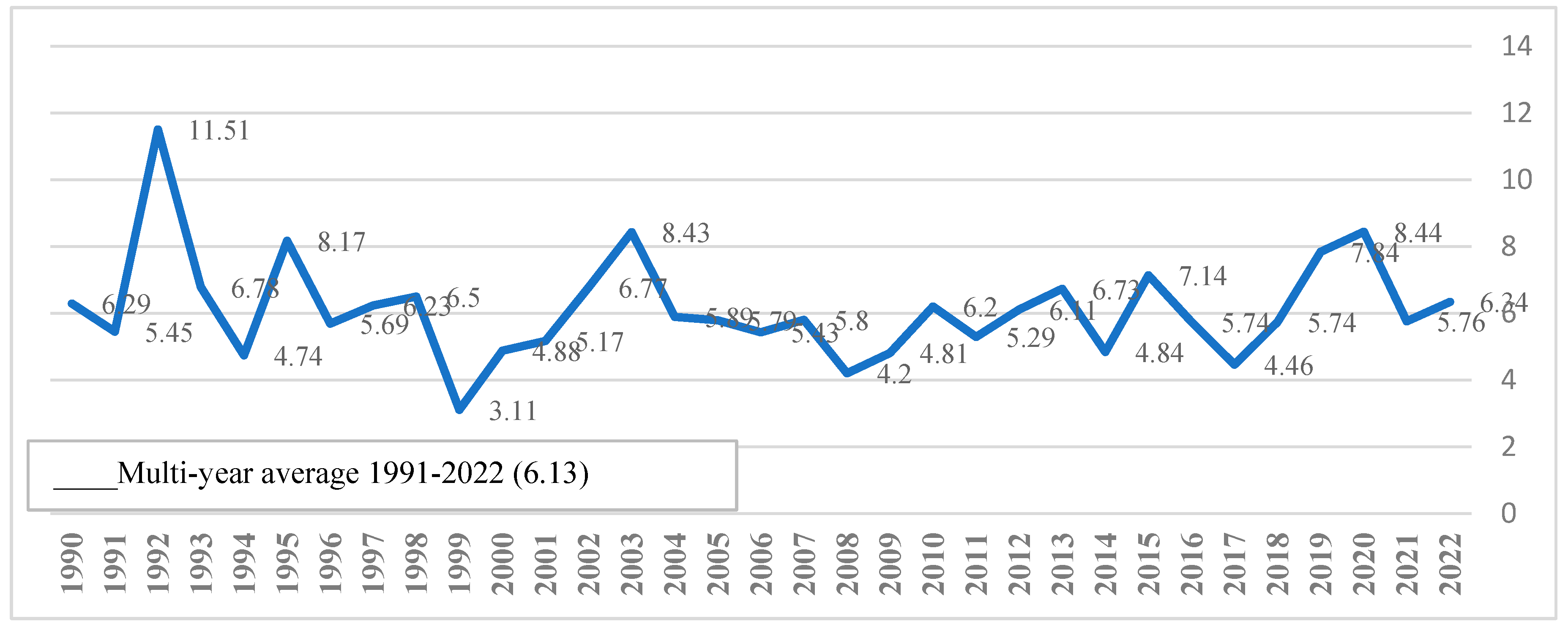
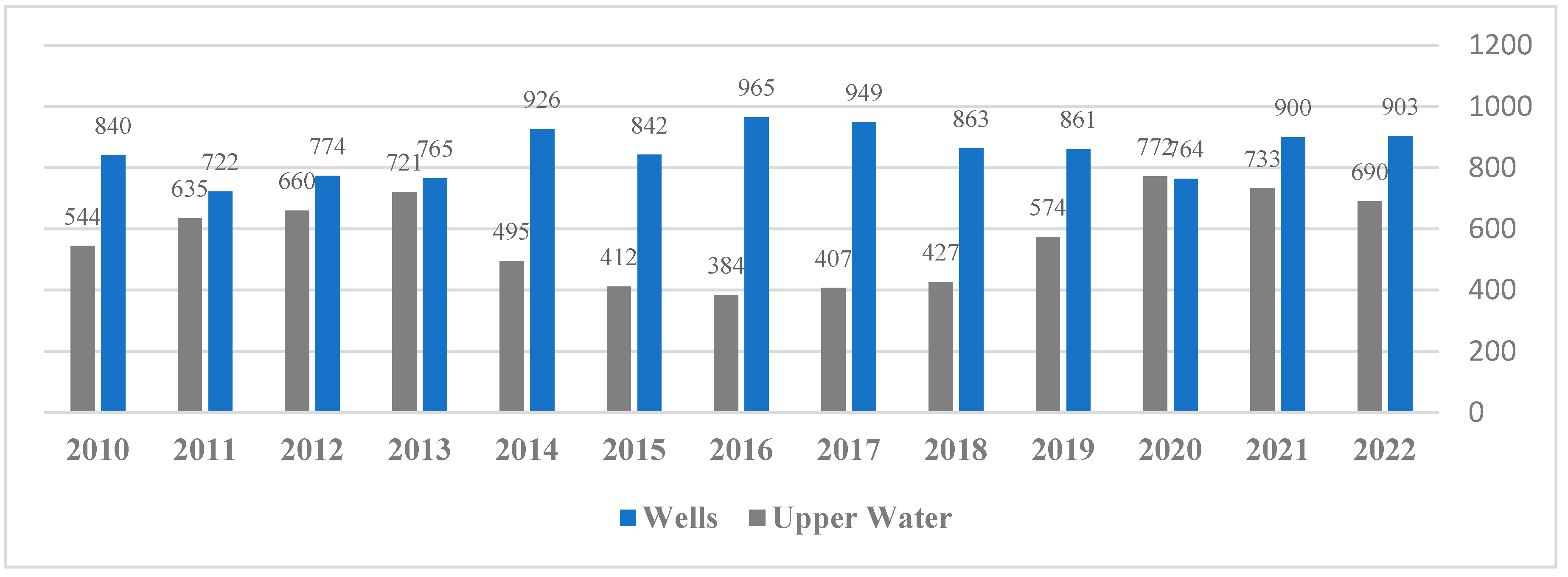
An examination of the amount of seasonal precipitation in Israel in recent decades indicates a gradual decline. The average amount of rain (in a multi-year calculation) from the early 1990s to 2022 (incl.) was 6.13 mcm. However, from the beginning of the current century until recently (aside from specific years[12]) the average amount of precipitation recorded in Israel was lower than the multi-year average (or slightly above the average). This fact is probably associated with the global warming trend that is expected to continue in the next years as well. The seasonal amount of precipitation accumulated in the natural sources probably affects the volume of water produced from these sources. Therefore, Figure 3 shown below lists the changes in the volume of water produced[13] from natural sources in recent years.
As evident from the figure above, the multi-year average of the annual amount of water drawn from the wells is about 870 million meters and of the amount of water drawn from surface water sources about 570 mcm a year. In total, natural water sources provide the Israeli economy with a multi-year average of about 1,440 mcm, which constitute about half the total amount of annual water produced in Israel (amounting to 2,720 mcm ,as shown in Figure 1).
Figure 3.
Production from natural water sources in Israel 2010-2022 (by million cubic meters). Source: Central Bureau of Statistics, Table 23.6: Water production and consumption; Water Authority, Water Production Survey.
Figure 3.
Production from natural water sources in Israel 2010-2022 (by million cubic meters). Source: Central Bureau of Statistics, Table 23.6: Water production and consumption; Water Authority, Water Production Survey.
The Coastal Aquifer (Groundwater)
One of the natural sources for producing water for the Israeli economy is, as stated, groundwater accumulating in the different underground aquifers. Israel’s groundwater is located in eight basins[14] that belong to two main aquifers: the mountain aquifer and the coastal aquifer, where the coastal aquifer[15] is the main source of groundwater from which water is produced. As shown in Figure 3, from the beginning of the previous decade the volume of groundwater drawn in Israel (wells) was more or less stable, and in recent years (2021 and 2022) a certain increase is evident in the volume of groundwater drawn from the wells. Drawing water from the groundwater lowers the water levels in the aquifer (until precipitation trickles down once again and refills it) and raises the salinity of the groundwater. When the volume of precipitation diminishes and the water drawn from the aquifer is not reduced accordingly, salinity increases too, detracting from the quality of the water. Figure 4 presented below lists the changes in salinity within the coastal aquifer from the middle of the previous century to the present.
Figure 4.
Average salinity in the coastal aquifer (chloride concentration) in miligrams/ liters) during the years 1960-2022. Source: Central Bureau of Statistics, Table 23.1: Water level in the aquifers. .
Figure 4.
Average salinity in the coastal aquifer (chloride concentration) in miligrams/ liters) during the years 1960-2022. Source: Central Bureau of Statistics, Table 23.1: Water level in the aquifers. .
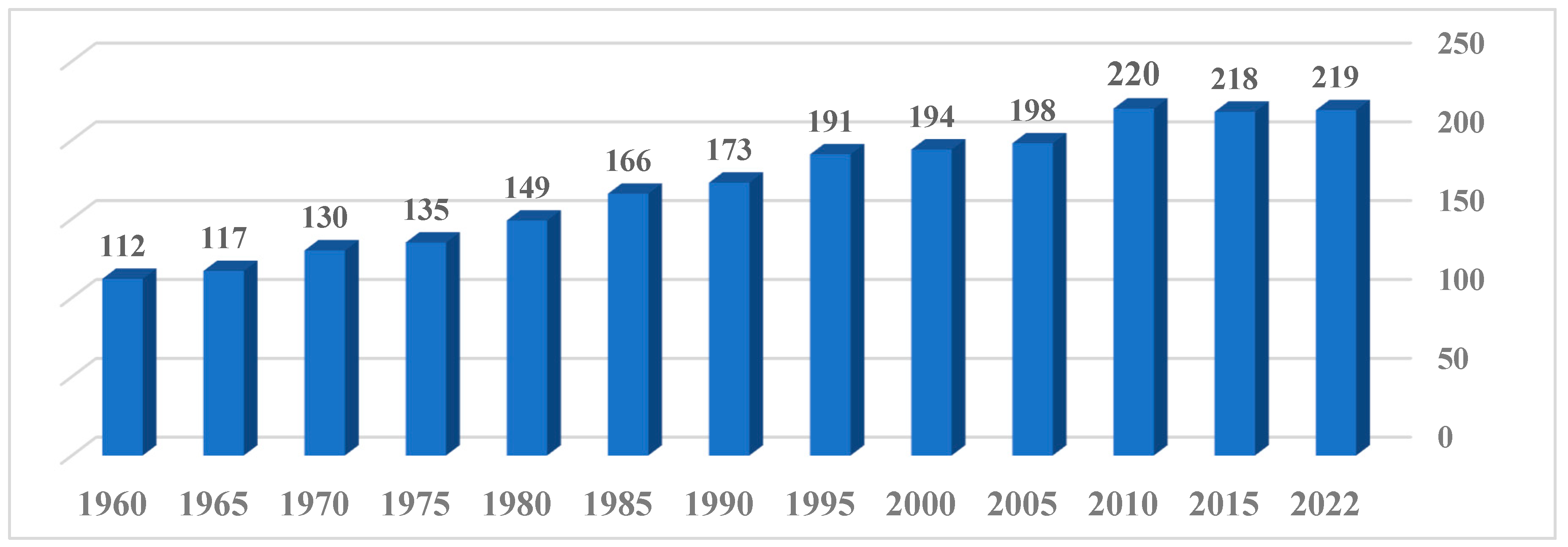
As evident from the data in the figure above, over the years there was a conspicuous rise in the salinity of the groundwater in Israel’s coastal aquifer, deriving from constant (and even rising) drawing of groundwater, beside a decline in the volume of precipitation, which is detrimental to the quantity and quality of Israel’s groundwater and might limit the volume of water produced from these natural sources.
The Sea of Galilee
The Sea of Galilee is one of the sources utilized to supply water to local consumers and the Jordanian Kingdom, at a gradually decreasing rate. The surface level of the Sea of Galilee is affected on one hand by the amount of precipitation received directly, and primarily by the amount of water that flows into it from the streams to the north,[16] and on the other by the amount of water that leaves it through evaporation from the surface of the lake and by pumping. As stated, before Israel’s water sector began to produce water from artificial sources (such as the desalination plants) it relied heavily on the Sea of Galilee for producing drinking water. Nevertheless, the volume of water drawn was limited by setting red lines to define the level of the water. The upper red line was set at 208.8 meters under sea level and the bottom red line at 212 meters under sea level, where the volume of water drawn from the sea was regulated accordingly. In winter 2019 the water level sprung by about 3.5 meters: from a historical low in December 2018 (-214.65) to an annual high in early June 2019 (-211.18), thanks to the large amount of precipitation recorded that year, facilitating an increased flow of water in the streams leading to the Sea of Galilee. Data on the highest water levels are presented in figure 5:
Figure 5.
Water level of the Sea of Galilee (in meters below the mean sea level) during the years 2010-2022. Source: Central Bureau of Statistics, Table 23.2: Water level in the Sea of Galilee.
Figure 5.
Water level of the Sea of Galilee (in meters below the mean sea level) during the years 2010-2022. Source: Central Bureau of Statistics, Table 23.2: Water level in the Sea of Galilee.
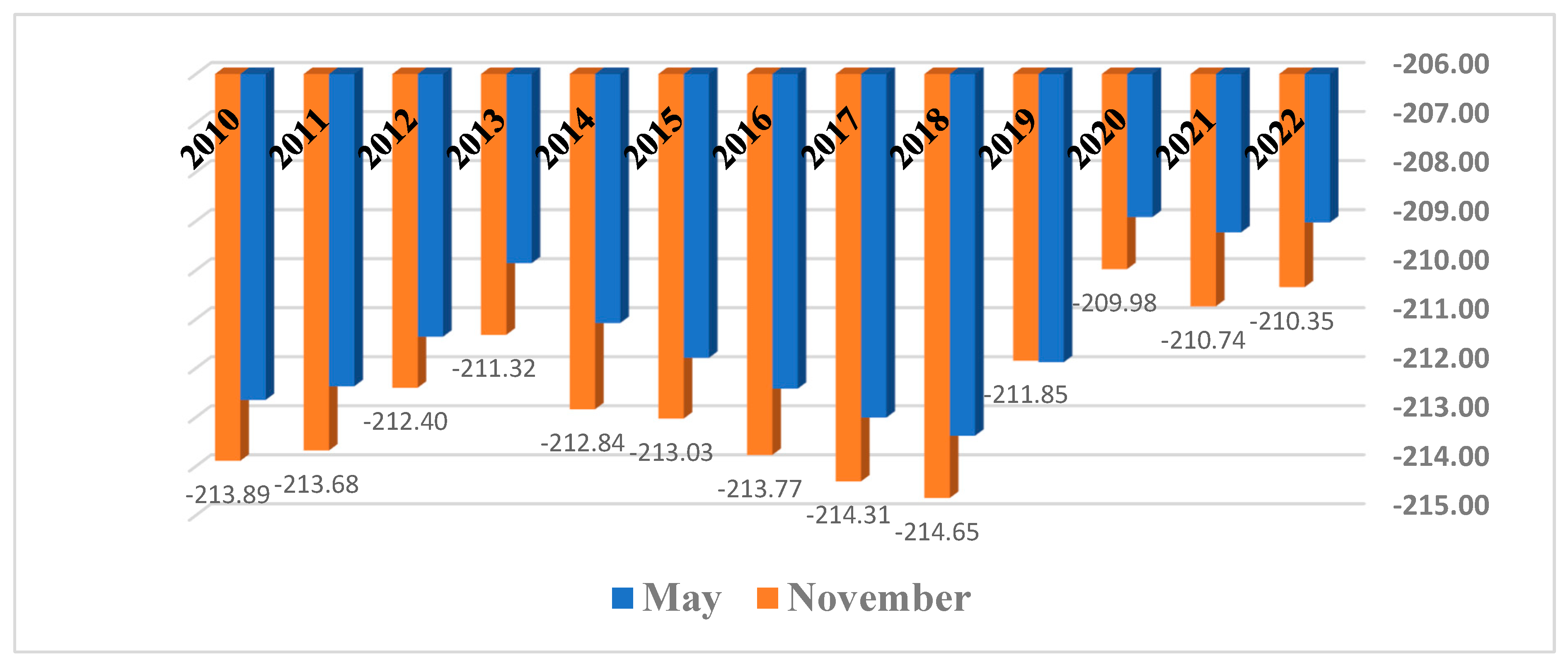
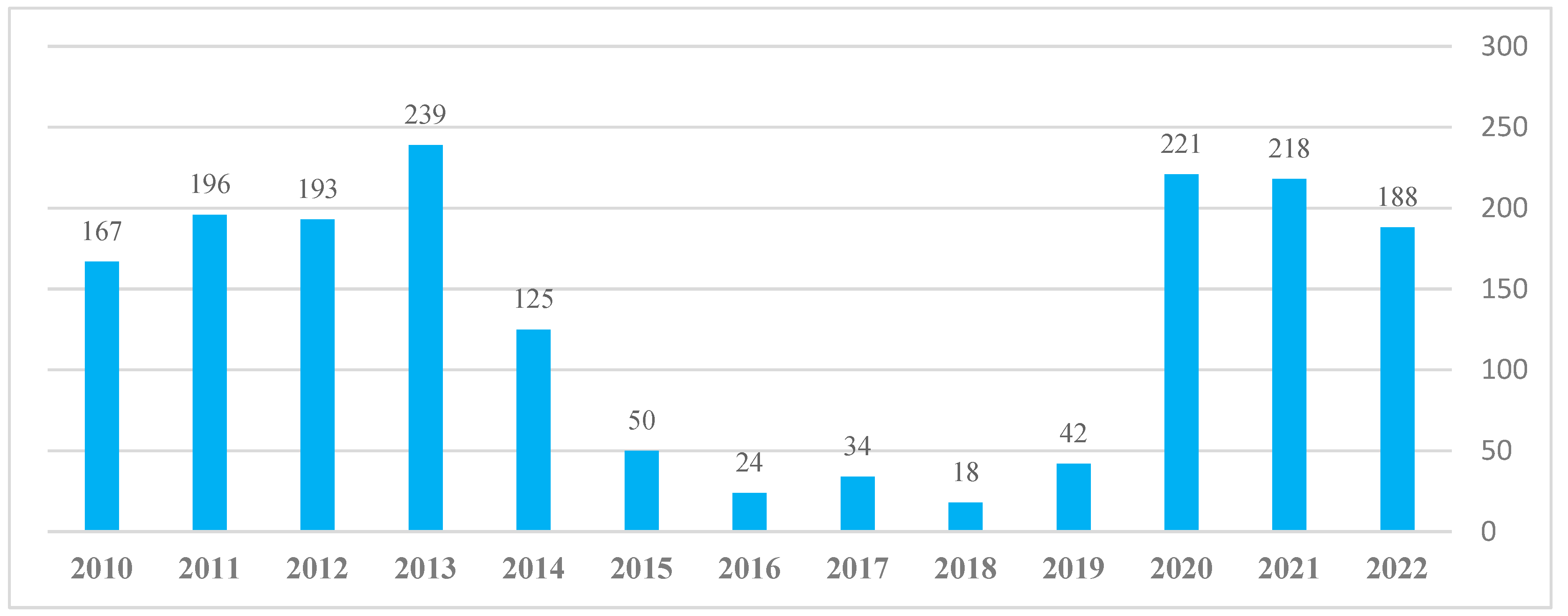
The data in the figure above show that until 2018 (incl.)[17] the water level in the Sea of Galilee passed the lower red line by the end of the dry summer season. As a result and as shown below, drawing water from the Sea of Galilee to the National Water Carrier dropped significantly in 2018, accounting for only 18 mcm. The establishment of additional seawater desalination plants in this period probably contributed to the diminished drawing from the Sea of Galilee. From 2019, however, there was a renewed increase in the volume of water produced from the Sea of Galilee, which reached 42.2 mcm that year. This trend continued in 2020-2022 as well, when 221, 218, and 188 mcm (respectively) were drawn from the Sea of Galilee to the National Water Carrier. This trend was facilitated by the high level of water in the Sea of Galilee in those years (since the winters were rainier than average) as well as following the decision to keep the Degania Dam closed and increase the drawing of water to the national system. Accordingly, Figure 6 below presents the annual volume of water drawn from the Sea of Galilee to the national system[18] in the years 2011-2022.
Figure 6.
Water pumping from the Sea of Galilee in 2011-2022 (by million cubic meters). Source: Central Bureau of Statistics, Table 23.6: Water production and consumption.
Figure 6.
Water pumping from the Sea of Galilee in 2011-2022 (by million cubic meters). Source: Central Bureau of Statistics, Table 23.6: Water production and consumption.
Artificial Sources of Water Production in Israel
As stated, Israel is located in an area characterized by a scarcity of natural water sources, such that it encounters various challenges when managing its water sector, with the aim of adapting it to the needs of humans and of the environment. Israel does this, among other things, by more efficient use of water, reuse of treated wastewater, and desalinating seawater. Figure 7 presented below depicts the amount of water produced from artificial sources, which includes treating wastewater and desalinating seawater.
Figure 7.
Desalination of sea water and effluent water in Israel in 2010-2022 (by million cubic meters). Source: Central Bureau of Statistics, Table 23.6: Water production and consumption.
Figure 7.
Desalination of sea water and effluent water in Israel in 2010-2022 (by million cubic meters). Source: Central Bureau of Statistics, Table 23.6: Water production and consumption.
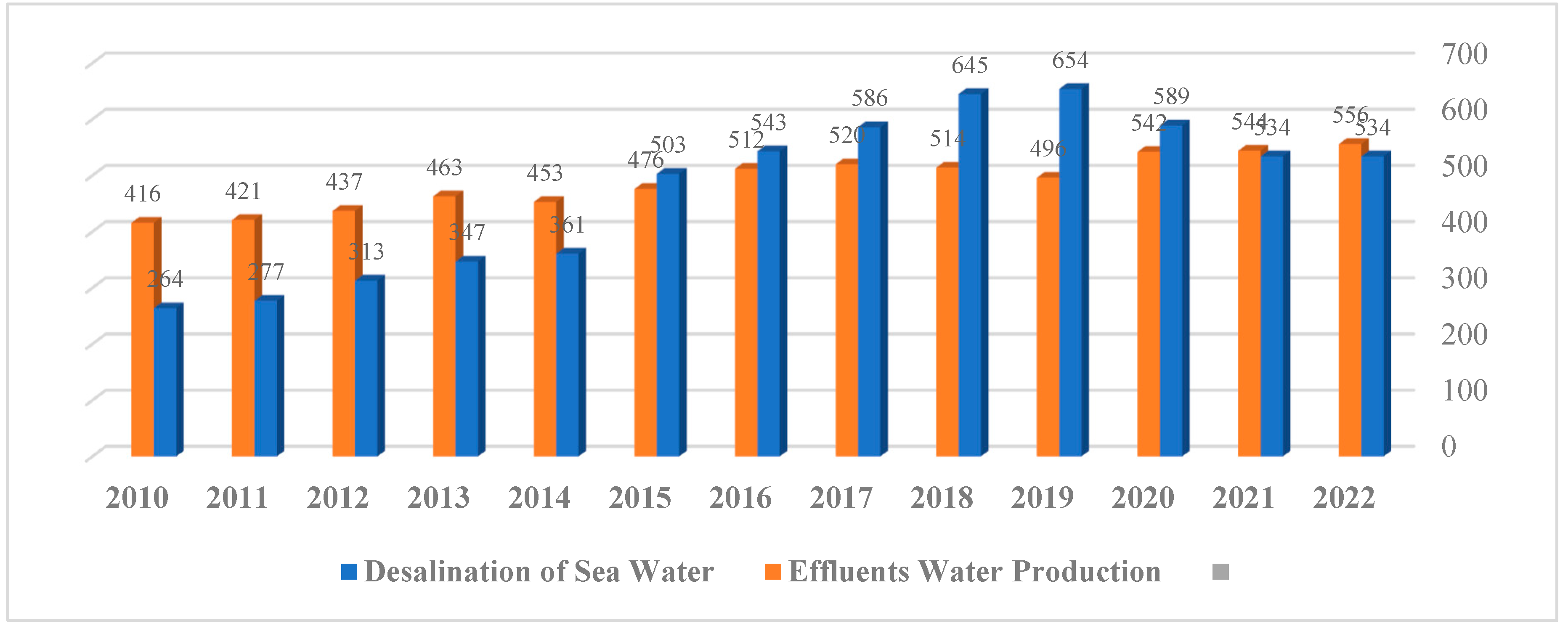
The figure presented above shows that from the beginning of the previous decade the Israeli water sector produced more water by wastewater treatment plants that by seawater desalination plants. Since the middle of that decade, however, the amount of water produced by the various desalination plants has been higher than that produced by the wastewater treatment plants. Moreover, the increase in the amount of water produced by desalination plants from the middle of the previous decade to 2018 (incl.) was greater than the increase in the volume of water produced by wastewater treatment plants in those years. Nonetheless, in 2020-2022 there was an apparent decline in the total amount of water produced by desalination plants. One way or another, these sources of water production are unlimited, and it is in fact possible to increase the amount of water produced by building additional seawater desalination plants and adding wastewater treatment plants. Therefore, since Israel’s water consumption will probably continue to rise, with a concurrent continued declining trend in the amount of precipitation, the Israeli water sector will be required to gradually focus its sources of water production on artificial sources of production and particularly desalination plants that utilize unlimited seawater.
The Amount of Desalinated Water of all Drinking Water Produced in Israel in the Last Decade
Israel is contending, as stated, with a limited amount of natural water resources and a growing population. The growing population, as well as the rising quality of life, have led to an increase in total annual water production, which has increased by about 33% in the past decade (Figure 1). Furthermore, in these years the mix of water sources has changed, where in 2001 the water sector relied primarily on producing water from groundwater and surface water, while in 2022[19] some 20% of the water produced was from seawater desalination plants (Figure 7). Water produced in Israel has various usages: agriculture, transfers to neighboring countries (Jordan and the Palestinian Authority), as well as for domestic and industrial consumption that utilizes drinkable water. Therefore, to examine the contribution of the desalination plants to the consumption of drinking water in Israel, Figure 8 below will show the relative proportion of desalinated water from all drinkable water provided for domestic or other consumption in the last decade.
Figure 8.
The proportion of desalinated water from the total drinking water consumed in 2010-2022. Source: Consumption survey, Israel Water Authority.
Figure 8.
The proportion of desalinated water from the total drinking water consumed in 2010-2022. Source: Consumption survey, Israel Water Authority.
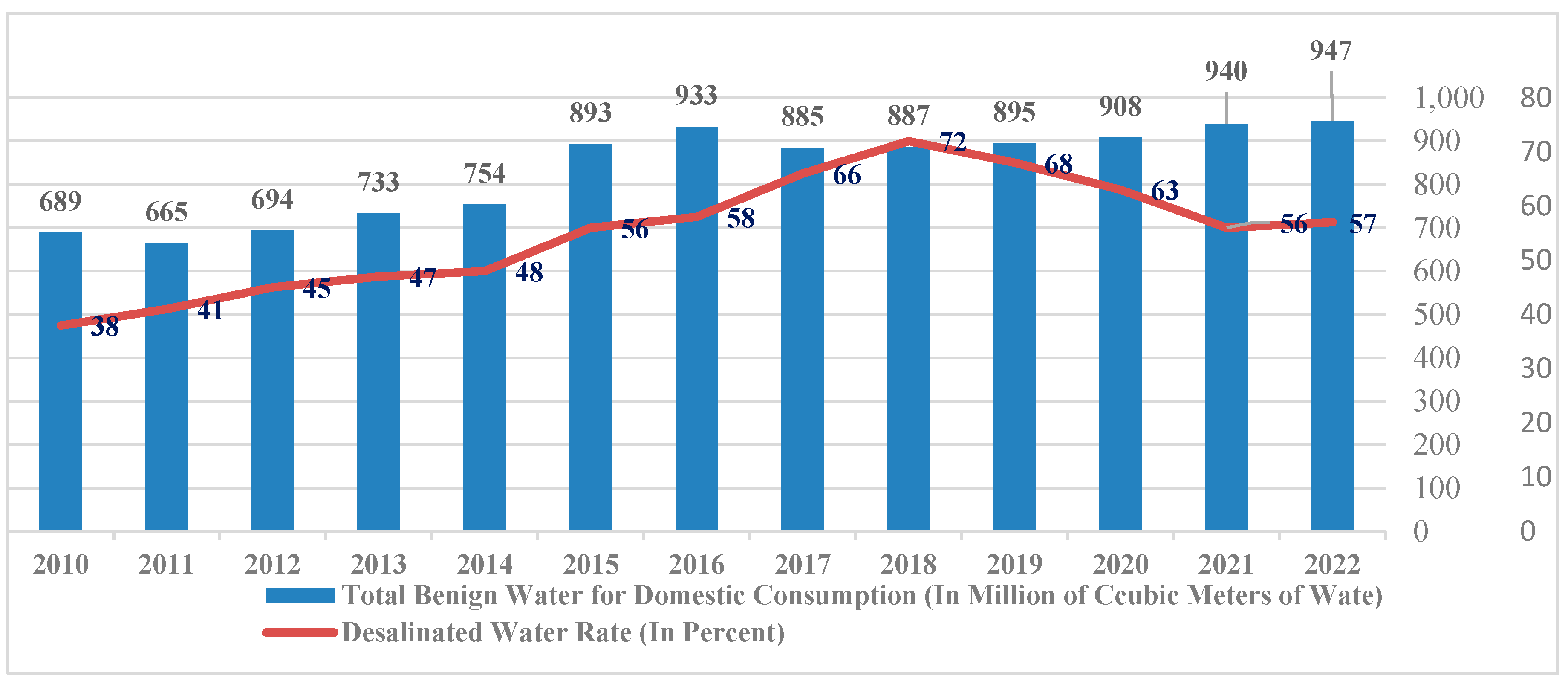
As evident from the figure above, at the beginning of the previous decade the proportion of desalinated water was about 40% of all drinking water produced in Israel. Since then, however, its proportion grew continuously, reaching more than 70% of all drinking water by 2018. Indeed, in recent years (2020-2022), in addition to the increase in the quantity of drinking water produced, there is an obvious drop in the relative proportion of desalinated water from all drinkable water. This trend matches the decline in the quantity of desalinated seawater produced in these years (Figure 7). Moreover, these years were characterized by a larger amount of precipitation (Figure 2), a higher water level in the Sea of Galilee (Figure 5), and accordingly, also more pumping from the Sea of Galilee (Figure 6). It is reasonable to assume that once additional desalination plants will be established, as planned, the proportion of the water produced by these plants from all drinkable water supplied in Israel will increase as well.
Israel’s Public Policy on Managing the Water Sector in an Emergency
Israel’s public policy on managing the water sector has been explored multiple times and by different research bodies: civil,[20] academic,[21] and governmental.[22] However, examining the preparedness of this sector for an emergency was not on the agenda of these research bodies. An exception is the State Comptroller’s office, which in 2022 published a report examining the supply of drinking water in an emergency.[23] The findings of the report state that in conditions of massive harm to infrastructure (as a result of an earthquake or war), there may be a temporary water shortage in various areas of Israel due to the need to supply them with water from unaffected areas. In addition, the report’s findings indicated that some 2.4 million Israeli residents live in areas managed by authorities that are not adequately prepared for supplying water in an emergency. Thirty-six of the 95 local municipalities that are served by a water corporation (about 38%) have no plan for distributing water to the population in case of damage to the water supply, and the Water Authority has no national system facilitating optimal management of an emergency in the water sector. Moreover, the Comptroller’s report indicates that 30%[24] of supervised hospitals have no system for accumulating water necessary to function in an emergency. In addition, only 68% of hospitals that have emergency water reservoirs have earthquake protection.
Despite the criticism leveled against the government authorities for their deficient and limited preparation for emergencies in the Israeli water sector (as detailed in the State Comptroller’s report), the research findings show that the preparedness of the Israeli water sector for emergencies is an issue that is familiar to policymakers. The findings show that the Government Water and Sewage Authority has a Division for Water Security, Emergency, Information, and Cyber, whose official function is to instruct all organs of the water sector in times of routine on how to prevent and deal with incidents of damage to the water system. Moreover, the division is responsible for verifying the steps taken by all parts of the economy to prepare for emergency and coordinating the activity of all factors involved in treating incidents of damage to the water system (government ministries, local authorities, water corporations, water plants, companies that supply water, etc.). In addition, the division has the ability (reservoirs) to help water suppliers who may find it difficult to provide the necessary services in an emergency.[25]
Despite the above, a publication of the Zalul NGO (from November 2023) claims that the water sector is not adequately prepared to respond to an event of oil pollution of the sea that might compromise the activity of the desalination plants. According to the NGO, the desalination plants do not contain smart-sensor gas detection technology that can detect the entrance of pollutants through the suction pipes of the desalination plants. Therefore, even a slight concern of contamination due to a spill incident is enough to halt the activity of the desalination plants until the issue is clarified. Part of the problem regarding preparedness for dealing with a marine pollution incident is that Israel has not yet enacted the law called “Law of Preparedness and Response to Oil Pollution of the Seas”, which dictates a comprehensive plan for all elements involved in dealing with marine pollution. Notably, the Ministry for Environmental Protection has been trying to promote this law for years with no success.
In addition, in November 2023 other environmental organizations, headed by EcoOcean,[26] submitted to the Knesset Internal Affairs and Environment Committee a demand to promptly advance the budgeting of the neglected national emergency plan for dealing with marine pollution, to prevent potential harm to national security during the war in Gaza.
Neglect of Natural Sources for Producing Water
Once the Israeli water sector entered the desalination era which, as stated, saved it from a grave existential crisis, the government became “addicted” to the desalination policy while neglecting other water sources. This neglect was manifested in the closure of more than 200 wells (of 1,850 in Israel) following contamination, where another 800 are candidates for closure due to their advanced age.[27]
The research findings show that the State Comptroller’s report for 2018[28] criticized the Government Water and Sewage Authority for not preserving the natural water sources. The comptroller writes: “In the years 2013 to 2017 the Water Authority allowed exploitation of the natural water reservoirs (sometimes even against the recommendations of the Hydrological Service), resulting in the dwindling of these reservoirs, so much so that they were at a risk of irreversible damage. The Water Authority did not regenerate the natural water reservoirs and did not act to preserve them as long-term viable water sources, allowing the water levels of the Sea of Galilee to descend below the bottom line (a decline that might cause this water source grave and perhaps even irreversible hydrological damage), without government approval. Moreover, the Water Authority did not set operational lines (red lines) for each of Israel’s natural water reservoirs (aside from the Sea of Galilee), in contradiction of the government decision from October 2010, the recommendations by the Hydrological Service, and the comments of the State Comptroller in previous reports. Neglecting to set operational lines as stated and not strictly enforcing their maintenance are leading to harm to the aquifers and might cause irreversible damage and even endanger their very existence”. Therefore, the research findings indicate that the Government Water and Sewage Authority did not prepare a plan for regeneration of the wells, as required by the government and as written in the State Comptroller’s report, but rather left this up to the private well operators in the free market. This state of affairs resulted in neglect of the wells and increased the water sector’s reliance on the desalination plants.
Examining the reason for the low incentive of private well operators to regenerate the wells identifies the limitations of the incentive mechanism applied, as follows: At present, a private element seeking to produce water from an old contaminated well is compensated by the Government Water and Sewage Authority, which recognizes the costs of the production and betterment activity undertaken (by three components: type of contaminant, intensity, and quantity of water produced). When a new well is dug, the recognition is for the costs involved in establishing and operating the well. Directors of corporations and private operators claim that the payment offered by the Authority is too low and does not form an incentive to regenerate wells or establish new ones. In this way, the Government Water and Sewage Authority signals to corporations and private well owners that it is not interested in regenerating wells, and this is leading to the closure of more and more wells.
Hence, it seems that beside the development of additional desalination plants over the years, which make it possible to increase the annual volume of water produced independent of the amount of precipitation, Israel’s public policy on managing its water sector is leading to the neglect of natural sources for water production and thus increasing the Israeli water sector’s dependence on desalination plants.
Conclusions
The research findings presented in the different figures above listed the amount of water produced from various natural sources (groundwater drilling and surface water) and from artificial sources (wastewater treatment plants and seawater desalination plants), side by side with the annual amount of precipitation and groundwater salinity indices. These data may lead to the conclusion that over the years the Israeli water sector has become gradually more dependent on artificial water production sources in general and seawater desalination plants in particular. The research findings indicate that some 60% of all fresh water provided at present for drinking in Israel originates from the desalination plants. This proportion has grown significantly since the beginning of the previous decade and is expected to rise even further with the establishment of additional desalination plants.
Israel is dealing with a gradual decline in the annual amount of precipitation, anticipated to continue in the next years as well in light of the global warming trend. This trend has a negative effect on groundwater levels and on the water level in the Sea of Galilee and in certain cases is leading to decelerated pumping from these sources, or in other cases to continued pumping despite the reduced precipitation to the degree of harm to the water quality, manifested in increased salinity. In addition, due to the limited ability of the natural water sources to provide water in the amount necessary for Israel’s increasing population (resulting from their complete dependence on the amount of precipitation, which cannot be regulated or controlled), Israel is compelled to focus its policy for management of the water sector on the development of seawater desalination plants, while neglecting the natural reservoirs as a source of water production.
It is well known that efficient public policy is tested not necessarily by the ability of the authorities to deal with problems after they are formed but rather by their ability to prevent them from emerging to begin with. Therefore, public policy should be seen not only as a response to an event or crisis, but rather primarily as an effort to anticipate states that may be detrimental to society, individuals, and the public interest. Namely, it is possible to shape policy in a certain area before a specific problem has been identified, with the aim of preventing a potential problem. Following this insight, the current study attempted to answer the following question: Are the seawater desalination plants operating in Israel an asset for the domestic water economy or do they also limit the functioning of this economy in an emergency?
Seawater Desalination Plants as an Asset in Times of Routine and a Burden in Emergencies
As stated, the desalination plants operating in Israel might be damaged by an earthquake or even serve as a target for purposeful destruction in wartime, whether by bombing or by intentional pollution of the seawater in their vicinity or by a cyberattack that will take them out of order. The research findings attest to Israel’s lack of preparedness for pollution of the seawater, which might lead to the immediate and full stoppage of the various desalination plants. Hence, the Israeli water sector is in fact dependent on the adequate functioning of these sources. Indeed, in an emergency Israel can increase its use of water from the Sea of Galilee and from groundwater, but as stated, these sources can provide only limited quantities, leading to the real concern of whether the Israeli water sector will be able to meet all needs of the economy in such an emergency.
In Israel, a country that is subject to many security threats and whose infrastructure facilities, and primarily the desalination plants along the coast, are in the direct sights of its enemies, it is extremely important to maintain a variety of water sources. Israel’s emergency regulations indeed require the local authorities to provide the public with a predetermined amount of water in case of war, earthquake, or terror attack, but they do not state the source of this water. Moreover, they do not mention the great significance of wells for providing an immediate response in a state of damage to the desalination plants. The result is the closure of many wells over the years and the compromised resilience of the domestic water sector (for example, in Tel Aviv some 30 wells have been closed over the years, which could have provided a response to the quality and security needs of residents in an emergency). Hence, it can be said that the almost complete dependence of the Israeli water sector on the adequate functioning of the desalination plants that are a national asset in times of routine transforms these plants into a real burden in times of emergency.
To prevent this dependence, the state is obliged to act in two parallel courses: First, to promote the necessary legislation to regulate the preparedness and response of the water sector for oil pollution of the sea, in order to prevent stoppage of the desalination plants in an emergency, which would lead to an immediate grave shortage of water in the domestic economy. Second, to change the incentive mechanism offered to corporations and private operators for renewing, establishing, and operating wells, with the aim of halting the continuous trend of closing wells and maybe even bringing about an increase in their number. This, in recognition of the great significance of the wells as a meaningful source for producing water side by side with the desalination plants in general and in times of emergency in particular.
In summary, previous studies that examined Israel’s public policy in different areas of the economy (55–57) attested to the short-sighted approach of decisionmakers, stemming from positivist thought patterns (58) that began to develop in Israeli politics, among other things as a result of its characteristic government instability (59). Unlike these, the current study describes policy steps that take into account on one hand Israel’s demographic growth that is affecting the increasing demand for water, and on the other the global warming trend that is affecting the decline in the water supply by natural sources. These policy steps, manifested in the development and establishment of seawater desalination plants, managed to resolve Israel’s water crisis, put an end to the dependence of the Israeli water sector on the quantity of precipitation and natural water sources, and made it possible to increase water production to match the rise in consumption levels.
At the same time, the research findings indicate that this public policy, successful as it may be, does not reflect the possibility of extreme scenarios and does not develop all the courses necessary to deal with them. Therefore, policymakers in Israel must recognize the potential threats to Israel due to its geographical location on the Syrian-African rift (which increases the likelihood of an earthquake) and its presence as a country involved in frequent military confrontations. These threats (if realized) might lead to damage to the desalination plants and their paralysis, and ultimately to a shortage of drinking water, resulting from the considerable dependence of the water economy on these sources. Such recognition obligates policymakers to operate, as stated, to regulate the desalination plants and prepare them for emergency, and also to preserve and develop the wells as an alternative during such times.
Declarations:
Funding
The authors declare that no funds, grants, or other support were received during the preparation of this manuscript.
Competing Interests
The authors have no relevant financial or non-financial interests to disclose.
| 1 | |
| 2 | In government decision no. 4895 (March 7, 1999). |
| 3 | |
| 4 | The responsibility for managing the water sector was divided between several ministries. |
| 5 | Reaching an accumulated deficit of 2 billion cubic meters in the water reservoirs. |
| 6 | In a meeting held on July 28, 2008. |
| 7 | |
| 8 | The desalination plants in Hadera, Sorek, and Ashdod. |
| 9 | About 240 mcm a year. |
| 10 | About 100 mcm a year. |
| 11 | The data on precipitation relate to a rain year, defined as a year that begins in August and ends in July. |
| 12 | 2015, 2019, and 2020. |
| 13 | From all the different suppliers. |
| 14 | Western Galilee, Eastern Mountain, Coastal, Yarkon, Kinneret, Carmel, Negev and Arava, and Mountain Edge. |
| 15 | Primarily from the Coastal basin and the Yarkon basin. |
| 16 | The Dan and Banyas springs and the Snir stream. |
| 17 | Excluding 2013. |
| 18 | These data do not include the water produced from the Sea of Galilee and transferred to Jordan. |
| 19 | In this year 556 mcm of seawater were desalinated, from a total of 2,710 mcm produced. |
| 20 | Such as the Taub Center for Social Policy Studies in Israel, which in November 2011 published a policy paper entitled “The water economy of Israel”. |
| 21 | Such as a document entitled “The water sector in Israel – examination of the feasibility of seawater desalination”, published in 2017 by the Reichman University. |
| 22 | Such as a report by the Knesset Research and Information Center, entitled “Description and economic analysis of the urban water system”, published in December 2014. |
| 23 | Source: State Comptroller’s report, November 2022, “Government Water and Sewage Authority – Supply of drinking water in an emergency”. |
| 24 | Eighteen of the 59 hospitals supervised by the Israeli Ministry of Health. |
| 25 | |
| 26 | Website: https://www.ecoocean.org/en
|
| 27 | Most were dug prior to the 1970s. |
| 28 | Source: State Comptroller’s report for 2018: “Planning the water sector and its management”, p. 8. |
References
- O’Sullivan, JN. Demographic Delusions: World Population Growth Is Exceeding Most Projections and Jeopardising Scenarios for Sustainable Futures. World. 2023 Sep;4(3):545–68.
- Kim JB, Kim SH, Bae DH. The impacts of global warming on arid climate and drought features. Theor Appl Climatol. 2023 Apr 1;152(1):693–708.
- Ripple WJ, Wolf C, Gregg JW, Levin K, Rockström J, Newsome TM, et al. World Scientists’ Warning of a Climate Emergency 2022. BioScience. 2022 Dec 1;72(12):1149–55.
- Vicente-Serrano SM, Peña-Angulo D, Beguería S, Domínguez-Castro F, Tomás-Burguera M, Noguera I, et al. Global drought trends and future projections. Philos Trans R Soc Math Phys Eng Sci. 2022 Oct 24;380(2238):20210285.
- Iglesias A, Garrote L, Flores F, Moneo M. Challenges to Manage the Risk of Water Scarcity and Climate Change in the Mediterranean. Water Resour Manag. 2007 May 1;21(5):775–88.
- Feitelson E, Rosenthal G. Desalination, space and power: The ramifications of Israel’s changing water geography. Geoforum. 2012 Mar 1;43(2):272–84.
- Tenne A, Hoffman D, Levi E. Quantifying the actual benefits of large-scale seawater desalination in Israel. Desalination Water Treat. 2013 Jan 1;51(1–3):26–37.
- Schoeberl MR, Dessler AE. Dehydration of the stratosphere. Atmospheric Chem Phys. 2011 Aug 18;11(16):8433–46.
- Hochman A, Kunin P, Alpert P, Harpaz T, Saaroni H, Rostkier-Edelstein D. Weather regimes and analogues downscaling of seasonal precipitation for the 21st century: A case study over Israel. Int J Climatol. 2020;40(4):2062–77.
- Dwolatzky T, Brodsky J, Azaiza F, Clarfield AM, Jacobs JM, Litwin H. Coming of age: health-care challenges of an ageing population in Israel. The Lancet. 2017 Jun 24;389(10088):2542–50.
- Kramer I, Tsairi Y, Roth MB, Tal A, Mau Y. Effects of population growth on Israel’s demand for desalinated water. Npj Clean Water. 2022 Dec 27;5(1):1–7.
- Weinreb, A. Demographic Trends in Israel: An Overview. 2020. [Google Scholar]
- Weinreb A, Shraberman K. Demographic Trends in Israel: An Overview. 2021.
- Meir MB. Water Management Policy in Israel: A Comprehensive Approach. In: Isaac J, Shuval H, editors. Studies in Environmental Science [Internet]. Elsevier; 1994 [cited 2023 Nov 26]. p. 33–9. (Water and Peace in the Middle East; vol. 58). Available from: https://www.sciencedirect.com/science/article/pii/S0166111608713980.
- Kartin, A. Water scarcity problems in Israel. GeoJournal. 2001 Mar 1;53(3):273–82.
- FEITELSON, E. Political Economy of Groundwater Exploitation: The Israeli Case. Int J Water Resour Dev. 2005 Sep 1;21(3):413–23.
- Vengosh A, Rosenthal E. Saline groundwater in Israel: its bearing on the water crisis in the country. J Hydrol. 1994 Apr 1;156(1):389–430.
- Feitelson E, Gazit T, Fischhendler I. The Role of “Red Lines” in Safeguarding the Sea of Galilee (Lake Kinneret).
- Wine ML, Rimmer A, Laronne JB. Agriculture, diversions, and drought shrinking Galilee Sea. Sci Total Environ. 2019 Feb 15;651:70–83.
- Spiritos E, Lipchin C. Desalination in Israel. In: Becker N, editor. Water Policy in Israel: Context, Issues and Options [Internet]. Dordrecht: Springer Netherlands; 2013 [cited 2023 Nov 27]. p. 101–23. (Global Issues in Water Policy). [CrossRef]
- Becker N, Lavee D, Katz D. Desalination and Alternative Water-Shortage Mitigation Options in Israel: A Comparative Cost Analysis. J Water Resour Prot. 2010;02(12):1042–56.
- Garb Y. Desalination in Israel: Status, Prospects, and Contexts. In: Tal A, Rabbo AA, editors. Water Wisdom [Internet]. Rutgers University Press; 2019 [cited 2023 Nov 28]. p. 238–45. Available from: https://www.degruyter.com/document/doi/10.36019/9780813549774-034/html.
- Nir B, Doron L, David K. Desalination and Alternative Water-Shortage Mitigation Options in Israel: A Comparative Cost Analysis. J Water Resour Prot [Internet]. 2010 Dec 30 [cited 2023 Nov 27];2010. Available from: http://www.scirp.org/journal/PaperInformation.aspx?PaperID=3509.
- Teschner N, Garb Y, Paavola J. The Role of Technology in Policy Dynamics: The Case of Desalination in Israel. Environ Policy Gov. 2013;23(2):91–103.
- Kew SF, Philip SY, Jan Van Oldenborgh G, Van Der Schrier G, Otto FEL, Vautard R. The Exceptional Summer Heat Wave in Southern Europe 2017. Bull Am Meteorol Soc. 2019 Jan;100(1):S49–53.
- Lhotka O, Kyselý J. The 2021 European Heat Wave in the Context of Past Major Heat Waves. Earth Space Sci. 2022;9(11):e2022EA002567.
- García-Herrera R, Díaz J, Trigo RM, Luterbacher J, Fischer EM. A Review of the European Summer Heat Wave of 2003. Crit Rev Environ Sci Technol. 2010 Mar 9;40(4):267–306.
- Cassardo C, Mercalli L, Berro D. Characteristics of the Summer 2003 Heat Wave in Piedmont, Italy, and its Effects on Water Resources. J Korean Meteorol Soc. 2007 Aug 31;43:195–221.
- Pollastrini M, Bussotti F, Iacopetti G, Puletti N, Mattioli W, Selvi F. Forest tree defoliation and mortality in Tuscany (central Italy) connected to extreme drought and heat wave in the 2017 summer: a preliminary report. 2018 Apr 1;9958.
- Poumadère M, Mays C, Le Mer S, Blong R. The 2003 Heat Wave in France: Dangerous Climate Change Here and Now. Risk Anal. 2005;25(6):1483–94.
- Daghara A, Al-Khatib IA, Al-Jabari M. Quality of Drinking Water from Springs in Palestine: West Bank as a Case Study. J Environ Public Health. 2019 Jun 23;2019:e8631732.
- Fisher FM, Arlosoroff S, Eckstein Z, Haddadin M, Hamati SG, Huber-Lee A, et al. Optimal water management and conflict resolution: The Middle East Water Project. Water Resour Res. 2002;38(11):25-1-25–17.
- Gvirtzman, H. The Israeli-Palestinian Water Conflict: An Israeli Perspective.
- Selby, J. Cooperation, Domination and Colonisation: The Israeli-Palestinian Joint Water Committee. 2013;6(1).
- Weinthal E. Water as a basic human right within the Israeli-Palestinian conflict. Am Dipl [Internet]. 2016 Oct 5 [cited 2023 Dec 3]; Available from: https://go.gale.com/ps/i.do?p=AONE&sw=w&issn=10948120&v=2.1&it=r&id=GALE%7CA577909951&sid=googleScholar&linkaccess=abs.
- Elmusa, SS. The Jordan-Israel Water Agreement: A Model or an Exception? J Palest Stud. 1995 Apr 1;24(3):63–73.
- Becker N, Ward FA. Adaptive water management in Israel: structure and policy options. Int J Water Resour Dev. 2015 Oct 2;31(4):540–57.
- Hohner AK, Rhoades CC, Wilkerson P, Rosario-Ortiz FL. Wildfires Alter Forest Watersheds and Threaten Drinking Water Quality. Acc Chem Res. 2019 May 21;52(5):1234–44.
- Landsman MR, Rowles LS, Brodfuehrer SH, Maestre JP, Kinney KA, Kirisits MJ, et al. Impacts of Hurricane Harvey on drinking water quality in two Texas cities. Environ Res Lett. 2019 Dec;14(12):124046.
- Schafer T, Ward N, Julian P, Reddy KR, Osborne TZ. Impacts of Hurricane Disturbance on Water Quality across the Aquatic Continuum of a Blackwater River to Estuary Complex. J Mar Sci Eng. 2020 Jun;8(6):412.
- Njogu, HW. Effects of floods on infrastructure users in Kenya. J Flood Risk Manag. 2021;14(4):e12746.
- Antwi SH, Getty D, Linnane S, Rolston A. COVID-19 water sector responses in Europe: A scoping review of preliminary governmental interventions. Sci Total Environ. 2021 Mar 25;762:143068.
- Bowen, CL. Emergency Drinking Water Supply Challenges for Public Health. 2012 Apr 26;3811–6.
- Barnaby, W. Do nations go to war over water? Nature. 2009 Mar;458(7236):282–3.
- Gleick, PH. Water, War & Peace in the Middle East. Environ Sci Policy Sustain Dev. 1994 Apr 1;36(3):6–42.
- Shultz, J. Bolivia: The Water War Widens. NACLA Rep Am. 2003 Jan;36(4):34–7.
- Starr, JR. Water Wars. Foreign Policy. 1991;(82):17–36.
- Schillinger J, Özerol G, Güven-Griemert Ş, Heldeweg M. Water in war: Understanding the impacts of armed conflict on water resources and their management. WIREs Water. 2020;7(6):e1480.
- Zeitoun M, Eid-Sabbagh K, Loveless J. The analytical framework of water and armed conflict: a focus on the 2006 Summer War between Israel and Lebanon. Disasters. 2014;38(1):22–44.
- Auerbach O, Karassin AO. Management of Water Resources in Israel. Paths Sustain. 2002;144.
- Kislev, Y. The water economy of Israel. 2001 [cited 2023 Nov 30]; Available from: https://ageconsearch.umn.edu/record/14995/files/dp0111.pdf.
- Plaut, S. WATER POLICY IN ISRAEL.
- Mizrahi, S. The Political Economy of Water Policy in Israel: Theory and Practice. J Comp Policy Anal Res Pract. 2004 Dec 1;6(3):275–90.
- Hall RP, Hall R. Mixing Methods in Social Research: Qualitative, Quantitative and Combined Methods. SAGE; 2020. 273 p.
- Cohen, E. The Nature of Israel’s Public Policy Aimed at Curbing the Rise in Property Prices from 2008-2015, as a Derivative of the Country’s Governance Structure. Econ Sociol. 2016;9(2):73.
- Cohen, E. Traffic congestion on Israeli roads: faulty public policy or preordained? Isr Aff. 2019 Mar 4;25(2):350–65.
- Cohen, E. Israel’s public policy for long-term care services. Isr Aff. 2020 Nov 1;26(6):889–911.
- Çelik S, Çorbacıoğlu S. MULTIPLE APPROACHES IN PUBLIC POLICY ANALYSIS: A CRITIQUE OF POSITIVIST APPROACH. Sos Bilim DergisiJournal Soc Sci [Internet]. 2008 [cited 2023 Dec 21];32(1). Available from: https://search.ebscohost.com/login.aspx?direct=true&profile=ehost&scope=site&authtype=crawler&jrnl=13055143&AN=33767830&h=z5zoAII%2FnbRXaI%2FOexF5QalKxEeu93mStLTQGdJ%2BwIBE8e0QxODHDt9XHUtOuo0rqyalS5fDDy10qrb7nlKI0Q%3D%3D&crl=c.
- Cohen, E. Political instability in Israel over the last decades – Causes and consequences. Cogent Soc Sci. 2024 Dec 31;10(1):2293316.
Disclaimer/Publisher’s Note: The statements, opinions and data contained in all publications are solely those of the individual author(s) and contributor(s) and not of MDPI and/or the editor(s). MDPI and/or the editor(s) disclaim responsibility for any injury to people or property resulting from any ideas, methods, instructions or products referred to in the content. |
© 2024 by the authors. Licensee MDPI, Basel, Switzerland. This article is an open access article distributed under the terms and conditions of the Creative Commons Attribution (CC BY) license (http://creativecommons.org/licenses/by/4.0/).
Copyright: This open access article is published under a Creative Commons CC BY 4.0 license, which permit the free download, distribution, and reuse, provided that the author and preprint are cited in any reuse.


