

Submitted:
31 October 2023
Posted:
01 November 2023
You are already at the latest version
Abstract
This study examines the DCMA concerning the future risk of the water security status. We considered three risk factors: population growth, economic growth, and natural water supply demand differences. In the risk analysis part, we consulted with experts from several sectors including academia, Non-Governmental Organization (NGOs), and industry, to predict that the probability of future water stresses in high, medium, and low scenarios are 0.73, 0.24, and 0.03, respectively. In the decision analysis part, we adopted two Multiple Criteria Decision Analysis (MCDA) approaches that include Multiple Attribute Value Theory (MAVT) and Analytic Hierarchy Process (AHP) methods to evaluate the best alternative decision to alleviate future water stresses in the DCMA. The sensitivity analysis demonstrates the best option closely connects to the weighting scheme of the criteria considered in the framework. This study provides a valuable risk and decision analysis framework to analyze the water security status associated with the future water supply and demand gap decrease caused by three risk factors: population growth, climate change, and natural water supply.
Keywords:
water supply and demand
; risk analysis
; decision analysis
; climate change
; multi-criteria decision analysis (MCDA)
; Denver-Colorado Metro Area (DCMA)
1. Introduction
Water scarcity and drought have been severe problems for Colorado state historically. It is reported that the Colorado River basin is one of the most highly water-stressed places in the world (Maddocks and Reig, 2014). Although the improved water management strategy has relieved the state’s water usage stresses, the region is still likely to suffer from future water shortages (Hernández-Cruz et al., 2023). Combined with recent population growth, economic expansion, as well as climate change, it is believed that water stresses will be one of the most critical threats to all Colorado people without an appropriate integrated urban water management strategy. Thus, developing an urban water management strategy and analyzing future water resource risks under climate and anthropogenic risk factors is imperative for local decision-makers.
Population growth enforces water scarcity. In the 2018 edition of the United Nations (UN) World Water Development Report (WWDR), they updated that nearly 6 billion people will likely suffer from clean water scarcity by 2050 (World Water Assessment Programme, 2018). This is because the population will demand more clean water access and cause a higher probability of water pollution simultaneously, which can enlarge the water supply and demand gap. Driven by the inter-linkage between population expansion, economic growth, and water pollution at the same, Boretti and Rosa (2019) further discussed that the water scarcity situation may be even worse than what was presented in the 2018 report. In terms of the Colorado River basin region, Richter (2022) found that cities that depend on the Colorado River and its tributaries are significantly reducing their per capita water usage to adapt to the dilemma between the growing needs of clean water resources and declining reservoir levels. They pointed out that opportunity may exist to develop better water management strategies for the region, such as increasing utility usage of other water sources consisting of water reuse, desalination, and stormwater capture to reduce pressure on the Colorado River Basin if per capita water usage rates continue to decline (Richter, 2022). With more uncertainties in future anthropogenic activity factors, similar results can also be identified in Hung et al. (2022).
Additionally, climate change plays a critical part in determining future water stresses. Previous studies have identified the importance of regional climate change to local water supply, such as precipitation. (He and Ding, 2021, 2023; He and Guan, 2022a). For example, He and Ding (2021, 2023) adopted a global climate model-regional climate model (GCM-RCM) to recognize the importance of regional climate change that will significantly impact the natural water supply to an area, leading to severe water stresses or even extreme weather events like drought. Meanwhile, Camp et al. (2023), He (2023), and He et al. (2023) pointed out that climate change can also cause water-related climate disasters, such as inland-waterway floods, leading to a region’s higher social vulnerability. Thus, it is believed that climate change closely connects to a region’s water-related climatic system that directly determines its water security and vulnerabilities. Similarly, research has a long history of identifying the relationship between the effects of climate change on the water resources of the Colorado River basin (Christensen, et al., 2004). For example, Christensen et al. (2004) study evaluated the potential effects of climate change on the hydrology and water supply of the Colorado River Basin by comparing simulated hydrologic and water resources scenarios derived from downscaled climate simulations of the Department of Energy (DoE). It illustrated that future temperature increase is a critical reason for the reduction of future basin storage (Christensen et al., 2004).
Multicriteria decision analysis (MCDA) has been adopted in the previous study to support clean water resources management (Peters et al., 2019). For example, Peters et al. (2019) adopted multiple MCDA approaches to assess the probable success of these drinking water sources based on various technical, economic, social, and environmental factors across numerous stakeholders that including locals, nongovernmental organizations, and ecological science academies in the southwestern Bangladesh communities. While their case study demonstrated how decision modeling and alternative evaluation can be an excellent first step to analyzing complicated water management problems, they didn’t incorporate any risk analysis in the evaluation framework. As in He and Guan (2021b) research has exhibited the importance of combining risk analysis and decision analysis as a comprehensive framework to evaluate an environmental justice problem. Similar framework can also be applied in water management strategy. Although He and Guan (2021b) developed a risk and analysis framework to evaluate future air quality risk in the Los Angeles-Long Beach Metro Area (LA-LBMA), they only adopted a single approach of MCDA in the decision analysis part, making the whole framework monotonous rather than refined.
Thus, the objective of this study is to develop a comprehensive risk and decision analysis framework to evaluate the integrated urban water management strategy in the Colorado-Denver Metro Area (CDMA). Specifically, we compared two MCDA approaches in the decision analysis section that include Multiple Attribute Value Theory (MAVT) and Analytic Hierarchy Process (AHP) methods. The rest of the paper is organized as the follows. Section 2 elaborates on the methodology of the risk and decision analysis framework developed in this study to assess the integrated urban water management strategy. Following, section 3 illustrates the results and discussions associated with the developed risk and decision analysis framework’s application on CDMA’s integrated urban water management strategy. Finally, section 4 delivers some of the conclusions and future research direction.
2. Methods
We combined risk and decision analysis in this framework to evaluate an integrated water management strategy (Figure 1). Additionally, a sensitivity analysis was incorporated to assess the stakeholder’s best interest based on different subjective criteria preferences. Figure 1 shows the multi-criterion decision analysis (MCDA) process combined with the risk analysis framework adopted in this study.
2.1. Study Area
In this study, we choose the Denver Colorado Metro Area (DCMA) to serve as the study area because many studies have identified a severe possible water shortage scenario under the ongoing climate change circumstance for the area (Christensen et al., 2004; Lai, 2022). Thus, the urban water management strategy in the DCMA has a rich history of being studied in the previous study (Sullivan et al., 2017). The Denver-Aurora-Lakewood Colorado metro area consists of ten Colorado counties, including the City and County of Denver, Arapahoe County, Jefferson County, Adams County, Douglas County, the City and County of Broomfield, Elbert County, Park County, Clear Creek County, and Gilpin County that have a total of population over 2.96 million as of the 2020 (Star, 2020). Here, two major water providers in the DCMA are focused on the following integrated urban water strategy management analysis: Aurora Water and Dominion Water (Figure 1). Figure 1 is adapted from Denver Water: Water, Infrastructure and Supply Efficiency: WISE: https://www.denverwater.org/your-water/water-supply-and-planning/wise
Aurora water is the most critical water supply to Colorado’s third largest city, the City of Aurora. Aurora Water's initiative, the Prairie Waters Project (PWP), is a testament to the city's proactive approach toward securing a sustainable water supply (Aurora Water, 2015). Given its vision to accommodate future growth while recognizing its limitations, the incorporation of diverse water resources and the pursuit of strategic partnerships are commendable. The city's reliance on senior water rights highlights its long-term commitment to ensuring a stable water supply. At the same time, its collaboration with the WISE (2012) partnership reflects its willingness to support neighboring regions during the interim period.
However, the financial constraints that Aurora faces underscore the importance of balanced financial planning and debt management. As the city prepares to cater to the needs of a growing population and to potentially support the water requirements of other regions, it becomes crucial to maintain a sustainable financial trajectory. Exploring alternative funding mechanisms or optimizing existing resources could possibly alleviate some of the financial burden, ensuring that the city can continue its water management endeavors without compromising its fiscal stability.
Dominion Water is a relatively new water supplier in Douglas County that was formed to serve the needs of Sterling Ranch. Sterling Ranch is a new development in the northwest corner of Douglas County that will be home to some 12,050 residences by 2020 in addition to commercial, school, and medical space. Over the last decade, Sterling Ranch and Dominion Water have studied water supply and demand needs associated with the new development. Sterling Ranch exists in an area previously not served by water utilities. This is mainly because water rights in Douglas County are fully encumbered (there are no remaining rights for new developments), which precludes new developers from acquiring water supply unless they can purchase rights from existing owners (Douglas County, 2016).
In conclusion, several key points are noteworthy in understanding the clean water dynamics in the DCMA:
- Water Rights Limitations: The critical issue of fully encumbered water rights in Douglas County has created a barrier to new developments in acquiring water supply. Without the possibility of accessing additional rights, new developers must resort to alternative strategies to meet the water demand of their projects.
- Reliance on Groundwater: Douglas County's heavy reliance on groundwater, particularly from the Denver Basin Aquifer, poses sustainability challenges due to its limited or negligible annual recharge. Decreasing this dependence is contingent on the exploration of new surface water resources.
- Diversified Water Management Approach: Dominion Water has adopted a multi-pronged approach to meet the water demand of Sterling Ranch. This includes utilizing junior rights to surface flows, reclaimed effluent, groundwater, potential rainwater harvesting, and the purchase of WISE water, reflecting a comprehensive strategy that integrates multiple water sources.
- WISE Partnership (2012): The Water Infrastructure Supply and Efficiency partnership, involving Aurora Water, Denver Water, and several communities in the Douglas County South Metro Water Supply Authority, including Dominion Water, highlights the collaborative effort to manage and distribute water resources efficiently. This intergovernmental agreement is aimed at optimizing the use of water resources and ensuring that excess water from Aurora and Denver is made available to other participating communities.
- Long-term Implications: While developers and water providers initially bear the capital risk, the long-term implications of water management fall on customers who will face potential challenges related to utilities and fees.
2.2. Risk Analysis
Figure 2 displays the risk and decision analysis framework developed in this study. In the risk analysis section, we first defined decision goals, constraints, alternatives, and criteria to guide the construction of the risk factors analysis. For example, we devised the decision analysis framework based on the probability of future water security scenarios in this study. Thus, we consider several risk factors that, including population growth, climate change, and natural water supply and demand, to determine the probability of risk structure of the region’s future water security (Figure 2). Specifically, we consulted several expert’s opinions as well as Global Climate Model (GCM) – Regional Climate Model (RCM) simulations to help construct the cumulative distribution function (CDF) of those risk factors. In this study, total of 30 experts from academia, Non-Governmental Organization (NGO), and industry were consulted. Additionally, a total of 8 CMIP6 GCM-RCM climate models were consulted to evaluate the risk of future climate change for the area. Detailed information regarding the experts and climate models’ consultation is summarized in the supplementary material.
Additionally, we adopted the event tree approach to manage the uncertainty analysis of the future water security scenarios (Figure 3). The probability of the future water security scenario was calculated based on each risk factors (Figure 3). Specifically, we constructed three scenarios for each risk factors that include increase, decrease, and no change scenarios. Additionally, the probability of each scenario was assigned for each risk factor based on the CDF information associated with each risk factor. Finally, the probability distribution of future water security scenarios can be evaluated based on the probability distribution of each risk factor and their combinations. The detailed information of calculation results is elaborated in the following results section.
2.3. Decision Analysis
We constructed the decision analysis framework and investigated two MDCA approaches that include Multiple Attribute Value Theory (MAVT) and Analytic Hierarchy Process (AHP) in this study. Additionally, we conducted a sensitivity analysis to illustrate how decision alternatives can be perceived and assessed based on different criterion weighting spaces. Here, we first briefly review the Multiple Attribute Value Theory (MAVT) and Analytic Hierarchy Process (AHP) methods adopted in this study.
2.3.1. Multiple Attribute Value Theory (MAVT)
MAVT is a popular method to quantitatively assess the performance of the alternative decisions. Specifically, each decision alternative’s total score is assigned a weighted summation by:
In Eq. (1), the alternative’s total score is a summation of the products between weights for the th criterion and the normalized performance scores for the decision alternative . The weights variable ranges from 0 to 1 and follows the total sum equals to one rule: . Additionally, the variable is designed to range from 1 to , based on the performance ranking of each attribute criterion. It should be noted that it is appropriate to assume mutual preferential independence between attributes that preference between any of two attributes is not influenced by the value of any of the other attributes (Angelis and Kanavos, 2017).
2.3.2. Analytic Hierarchy Process (AHP)
The Analytic Hierarchy Process (AHP) is a widely utilized pairwise comparison technique developed by Saaty (1992, 2008). It is commonly employed in decision-making processes that involve complex multiple criteria. AHP is especially useful when there is a need to prioritize and select from various alternatives in a structured and logical manner. The method helps to quantify subjective judgments, which are then used to derive priorities and make informed decisions.
The process involves constructing a hierarchical structure of decision criteria and alternatives, followed by pairwise comparisons of the elements within each level of the hierarchy. Saaty's (1992) 9-point scale is typically used to assign values that represent the relative importance of one element compared to another. The comparisons are usually made in terms of how much one criterion is more important than another.
After the pairwise comparisons, the geometric mean of the elements is calculated, and the priorities are determined. The priorities of the higher-level criterion categories are used to weigh the criteria priorities, ultimately resulting in a global priority or weight for each criterion. These weights are then applied to the scores of the alternatives, aiding in decision-making based on the derived priorities.
The use of AHP is particularly beneficial when dealing with complex decision-making scenarios that involve multiple criteria and alternatives. It allows decision-makers to structure their judgments and preferences systematically, thus facilitating a more informed and rational decision-making process.
Here, for the sake of simplicity, we only briefly review the AHP process. For more comprehensive understanding and implementation details of the AHP method, it is advisable to refer to the works of Thomas L. Saaty, such as "The Analytic Hierarchy Process" (Saaty, 1988) and "Decision Making for Leaders: The Analytical Hierarchy Process for Decisions in a Complex World" (Saaty, 1992, 2008).
4. Results and Discussions
4.1. Risk and Uncertainty Analysis
The approximated cumulative probability distributions of the three risk factors associated with future water stress in the DCMA are summarized in Figure 4. Population in the DCMA is expected to increase at a modest rate. The current annual population growth rate in the DCMA is around 1.2%/year (Macrotrends, 2023). Based on historical data and experts’ assumptions as well as predictions, there are 50% likely that the population increase rate will be larger than 0.44 by the year 2050 (Figure 4a).
Projected climate change was assessed based on daily maximum near-surface temperature from 2020 – 2050 in Fahrenheit degrees across 225 square miles of grids that cover the counties of Adams, Arapahoe, Denver, and Douglas. The U.S. Department of Energy (DOE) CMIP6 climate data was used to evaluate changes in daily maximum near-surface temperature changes across the grid’s areas under moderate (RCP45) or conservative (RCP85) scenarios. Additionally, experts’ opinions were consulted to construct the CDF of the temperature metric. Detailed information regarding the Global Climate Model – Regional Climate Model (GCM-RCM) selection and expert’s consultation process are included in the supplementary material. Based on the information of experts’ opinions and model simulations, Figure 4b shows that there is 50% likely daily that the maximum temperature will be larger than 63 degrees Fahrenheit degree.
In terms of water supply and demand, given that the City of Aurora has conducted extensive studies comparing current and projected water needs and acts as the primary supplier for both Denver and Douglas County (Dominion Water) through augmentation, all calculations regarding supply and demand were based on Aurora. When a shortfall in water supply arises, it was assumed that water may not be accessible for use by Denver and Dominion. Consequently, all involved parties would have to employ existing and additional strategies for conserving and acquiring water. The projections for supply and demand are established according to Aurora's 2050 estimations, with an initial supply of 95,272 acre-feet and an initial demand of 77,389 acre-feet (Aurora Water 2015). Also, experts provided sufficient information in this process to help construct the CDF of future water supply gap approximation shown in Figure 4c.
Based on these prior assumptions, we consulted with experts to define the change levels based on the average annual change rate of these risk factors and water supply-demand gap decreases. The detailed information regarding these definitions is summarized in Table 1 and Table 2.
A completed event tree using the information provided above is presented in Figure 5. Precisely, the probability of high, medium, and low scenarios of water supply demand gap decrease is calculated as 0.73, 0.24, and 0.03, respectively. The advantage of the event tree is that it can exhibit the potential future pathways toward water security scenarios and the probability associated with each pathway. For instance, the high increase rate scenario for the population growth is defined as 30 – 50% based on Table 1. Meanwhile, Figure 4a can be consulted to derive the probability value for the high increase rate scenario for population growth risk factor, which is around 0.7. Similar calculations can be conducted to derive the probability of each scenario of the other risk factors. It should be noted that the final comprehensive probability of each scenario of future water stresses is summed up by all the probabilities of the paths corresponding to that scenario.
Additionally, two conditional probabilities were calculated to determine the most critical risk factor in the future water security condition. Here, the scenario of a high decrease in water supply and demand gap is defined as the scenario of the most interest. Based on the calculation results shown in Table 3, climate change is the primary concern of the risk factor as it has the most significant probability of causing a high decrease in future water supply and demand gap in the DCMA compared to the other two risk factors.
4.2. Decision Analysis
Figure 6 displays the influence diagram associated with the decision analysis evaluated in this study. The goal of the decision analysis is to evaluate the effectiveness of decision alternatives that can be invested to alleviate future water stresses in DCMA under the circumstances of the three risk factors identified in the risk analysis section. Based on the consultation with experts from multiple sectors that including academic, NGO, and industry sectors, we recognized a potential total of 10 decision selection criteria that are categorized into four sectors consisting of economic, technical, environmental, and social aspects shown in Figure 7. For simplicity, we only consider four decision criteria in this study that including mean capital cost, mean time to be effective, maintenance cost to mitigate risks, and susceptibility to disruption, as shown in Figure 6. Meanwhile, a total of 3 decision alternatives that include purchasing water rights, groundwater pumping and recharging, and expanding existing storage reservations in this study served as examples to elaborate the methodology. In terms of the multiple criteria considered, the detailed information associated with each alternative and the estimated monetary cost for each decision alternative are summarized in Table 4. Specifically, the monetary cost range for each decision alternative is estimated based on the defined level of water supply-demand gap decreases summarized in Table 2. For example, the monetary cost range of each selected decision alternative can be obtained by the multiplication between the water gap amount estimated associated with each scenario and the mean capital cost estimated associated with that specific alternative decision. Following, based on the monetary cost of each decision alternative, valuation ranges and the ranking of each decision alternative were determined based on the consultation with experts (Table 5). Thus, alternative decisions can be evaluated and compared based on the decision analysis approaches selected. Here, to assess the effectiveness of the decision alternatives, two approaches were adopted in this study: MAVT and AHP.
Figure 8 reveals the decision alternative scores based on the two approaches as well as sensitivity analysis results based on the MAVT method. Figure 8a exhibits MAVT alternative scores across three groups: academia, industry, and NGO. The circle dot represents the mean value of MAVT scores of each decision alternative across all three groups. Additionally, the vertical variation line indicates the uncertainties caused by criterion weighting variations within each group. From Figure 8a, the decision to expand the existing storage reservation has the highest scores, the decision to groundwater pumping and recharging gets the middle scores, and the decision to purchase water rights has the lowest scores. In terms of score distribution within each alternative decision, NGO produced the highest scores in the decision to expand existing storage reservations, and the industry sector had the highest scores in the decision to purchase water rights.
The decision alternative scores of AHP across the three groups are summarized in Figure 8b. Like MAVT scores, the decision to expand existing storage reservations obtained the highest scores, while the decision to purchase water rights got the lowest scores. Nonetheless, we identify more considerable uncertainties of scores within each group for each decision (Figure 8b). Besides, the industry group produced the highest score for the decision to expand existing storage reservations instead of the NGO sector compared to MAVT scores. Additionally, the academic group assigned the lowest AHP scores for all those alternatives compared to the other groups (Figure 8b). Based on the alternative scores from both MAVT and AHP methods, we can conclude that the decision of expanding existing storage reservation is the most preferrable decision across the three groups.
A sensitivity analysis was conducted on the MAVT scores, and the results are shown in Figure 8c. To better visualize the relationship between the MAVT scores and the criteria weighting space, we only consider three criteria here. In Figure 8c, the three independent variables are the three criteria selected here, including mean capital cost, mean time to be effective, and maintenance cost to mitigate risks. From Figure 8c, the different colors of dots indicate the best decision selected based on the MAVT scores evaluated at those different criteria weighting positions. The size of the dots indicates the value of calculated MAVT decision scores. For the sake of simplification, only 16 weighting scenarios were selected to show in this figure. Specifically, these 16 weighting scenarios were also evaluated by the experts. Although we only show those decision selection results at 16 specific criteria weighting positions, certain trend can be identified that the decision to expand existing storage reservation and purchase water rights are the best decisions to alleviate future water stresses in the DCMA, echoing the findings shown in Figure 8a,b. Additionally, from inspecting the dots in Figure 8c, we see that the decision to purchase water rights is superior to expanding existing storage reservations when the criterion of maintenance cost to mitigate risks is assigned a higher weight (Figure 8c). Nonetheless, the decision to expand the existing storage reservation is superior to purchasing water rights when the criterion of capital cost is assigned a heavier weight. Figure 8c straightforwardly shows how the best decision can change based on different criteria weighting combinations. Thus, the results of decision analysis are only meaningful and referential when considering the stakeholder’s points of interest.
5. Conclusion and Future Direction
In this study, we assessed an uncertainty analysis incorporated risk and decision evaluation framework to alleviate future water stresses in the DCMA. Recent literature specific to the DCMA confirmed the importance of developing a better water management strategy to help the region sustain a better water security system in the future. Based on the three risk factors considered in this study, we conclude that temperatures are continuously increasing, the population is also going to grow, and the natural water supply and demand gap is going to shrink. The risk analysis here results show that there will be over 70% probability that the DCMA will suffer from water scarcity compared to the current situation. Unlike temperature, the CMIP6 GCM-RCM model simulation predicts that the precipitation is not expected to increase over time within the Denver Metro geographic area. While there may be seasonal shifts in precipitation and snowmelt, the total amount of precipitation is not expected to change. It is more likely that future climate scenarios will include hotter and drier conditions than hotter and wetter conditions.
We also illustrated the importance of considering criterion weighing of different stakeholders in evaluating the potential best alternative in decision-making process. Given the decision alternatives considered in this study, all options are expensive in terms of monetary costs. Generally, if minimizing mean cost per Acre-Foot is a primary objective in the decision-making process, preferred alternatives always tend to avoid the most expensive option, such as directly purchasing water rights. Similarly, if minimizing maintenance cost is a primary objective in the decision-making process, then preferred alternatives tend to avoid the most expensive maintenance cost, such as expanding water storage reservation. The sensitivity analysis elaborated in this study has successfully highlighted this point, and the decision-makers can easily understand the reason for preferring one decision alternative over the other.
In conclusion, the developed risk and decision analysis in this study highlights the effectiveness of thorough data collection, climate modeling, and experts’ consultation to better understand the risk factors in devising an urban integrated water management strategy. Although decision analysis modeling can be performed by a specific approach, stakeholders’’ preferences, modeling simulation and data, experts’ knowledge, and sensitivity analysis can certainly help ensure for more robust results. Although the developed risk and decision analysis framework presented in this study can quickly ensemble information resources from experts, climate model simulations, and data from other studies to accelerate the forming of scientific-based decisions associated with alleviating future water stresses, we acknowledge that the case study elaborated here significantly simplifies the real-world decision-making context, only considering very limited risk factors from limited perspectives. Moreover, the efficiency and validity of this proposed decision analysis framework cannot be sufficiently tested because it involves many subjective judgments by individual persons. Future research can work towards building a solid database to ensemble extensive model simulations and more experts’ knowledge to improve the data quality and the comprehensiveness of the consulting process. Additionally, incorporating more risk factors from more aspects and stakeholders, such as politician’s knowledge and opinions, into the current risk and decision analyses framework is expected to enrich the current framework’s validity.
Supplementary Materials
Supplementary material includes Appendix Table S1 – S4. It is available online.
Author Contributions
Conceptualization, B.H and Q.G.; methodology, B.H. and Q.G.; validation, B.H. and H.Z.; formal analysis, B.H. and H.Z.; investigation, B.H; data curation, B.H.; writing-original draft preparation. B.H.; writing-review and editing, H.Z.; visualization, B.H.; supervision, Q.G.; project administration, Q.G. and H.Z.; funding acquisition, Q.G.
Funding
This work is supported by Anhui Natural Science Foundation, project number: 2108085MD136.
Data Availability Statement
Data is available upon on request.
Acknowledgments
We would like to thank several anonymous reviewers for their valuable thoughts and suggestions during the preparation of this manuscript. Also, we would like to thank all the experts who kindly participate in this study to provide with their valuable thoughts and opinions. Finally, we would also thank Anhui Natural Science Foundation for the support of this work.
Conflicts of Interest
Authors declare no conflicts of interests.
References
- Angelis, A. , & Kanavos, P. Multiple criteria decision analysis (MCDA) for evaluating new medicines in health technology assessment and beyond: the advance value framework. Social Science & Medicine 2017, 188, 137–156. [Google Scholar]
- Aurora Water. (2015). Municipal Water Efficiency Plan Aurora Water City of Aurora, Colorado. Aurora Water.
- Boretti, A., & Rosa. Reassessing the projections of the world water development report. NPJ Clean Water 2019, 2, 15. [Google Scholar] [CrossRef]
- Camp, J. , Gilligan, J., & He, B. (2023). The Unintended Consequences of Flood Mitigation along Inland Waterways–a Look at Resilience and Social Vulnerabilities through a Case Study Analysis.
- Choy, I. , McGhee, G., Rohde, M. (2014). Recharge: Groundwater’s Second Act. Water in the West. Stanford Woods Institute for the Environment. Retrieved from: http://waterinthewest.stanford.edu/groundwater/recharge/.
- Christensen, N. S. , Wood, A. W., Voisin, N., Lettenmaier, D. P., & Palmer, R. N. The effects of climate change on the hydrology and water resources of the Colorado River basin. Climatic change 2004, 62, 337–363. [Google Scholar]
- Douglas County. (2016). Retrieved from: http://www.douglas.co.us/water/water-supply/.
- He, B. , & Ding, K. J. Localize the Impact of Global Greenhouse Gases Emissions under an Uncertain Future: A Case Study in Western Cape, South Africa. Earth 2021, 2, 111–123. [Google Scholar]
- He, B. (2023). Efficient Computational Evaluation Tools to Accelerate the Planning of Vulnerability, Resilience, and Sustainability of the Social-Environmental Systems in the City of Nashville (Doctoral dissertation).
- He, B., & Guan, Q. A mathematical approach to improving the representation of surface water–groundwater exchange in the hyporheic zone. Journal of Water and Climate Change 2021, 12, 1788–1801. [Google Scholar] [CrossRef]
- He, B. , & Guan, Q. A Risk and Decision Analysis Framework to Evaluate Future PM2.5 Risk: A Case Study in Los Angeles-Long Beach Metro Area. International journal of environmental research and public health 2021, 18, 4905. [Google Scholar] [PubMed]
- He, B. , & Ding, K. J. Global greenhouse gases emissions effect on extreme events under an uncertain future: A case study in Western Cape, South Africa. PLOS Climate 2023, 2, e0000107. [Google Scholar]
- He, B. , Gilligan, J. M., & Camp, J. V. An index of social fabric for assessing community vulnerability to natural hazards: Model development and analysis of uncertainty and sensitivity. International Journal of Disaster Risk Reduction, 2023; 103913. [Google Scholar]
- He, B. , and Guan, Q. Analysis and prediction of the correlation between environmental ecology and future global climate change. Journal of HFUT: Natural Science 2022, 6, 818–824. [Google Scholar]
- He, B., & Guan, Q. The statistical analysis and prediction associated with nuclear meltdown accidents risk evaluation. International Journal of Nuclear Safety and Security 2022, 1, 104–123. [Google Scholar] [CrossRef]
- Hernández-Cruz, A., Sandoval-Solís. Assessing Water Management Strategies under Water Scarcity in the Mexican Portion of the Colorado River Basin. Journal of Water Resources Planning and Management 2023, 149, 04023042. [Google Scholar] [CrossRef]
- Hung, F. , Son, K., & Yang, Y. E. Investigating uncertainties in human adaptation and their impacts on water scarcity in the Colorado river Basin, United States. Journal of Hydrology 2022, 612, 128015. [Google Scholar]
- Lai, Olivia (2022). The looming Colorado water shortage crisis. Climate change, policy & economics at Earth.org. Available at: https://earth.org/colorado-water-shortage/ (Accessed in Oct. 2023).
- Macrotrends. (2023). Denver Metro Area Population 1950 – 2023. Available at: https://www.macrotrends.net/cities/22972/denver/population#:~:text=The%20current%20metro%20area%20population,a%201.22%25%20increase%20from%202021 (Accessed in Oct. 2023).
- Maddocks, A. , & Reig, P. (2014). World’s 18 most water-stressed rivers.
- Payne, T. , Smith, M., Landry, C. Price Determination and Efficiency in the Market for South Platte Basin Ditch Company Shares. Journal of the American Water Resources Association 2014, 50, 1488–1500. [Google Scholar] [CrossRef]
- Peters, C. N., Baroud, H., & Hornberger, G. M. Multicriteria decision analysis of drinking water source selection in southwestern Bangladesh. Journal of Water Resources Planning and Management 2019, 145, 05019004. [Google Scholar] [CrossRef]
- Richter, B. D. Decoupling urban water use from population growth in the Colorado River basin. Journal of Water Resources Planning and Management 2023, 149, 04022082. [Google Scholar] [CrossRef]
- Saaty, T. L. (1992). Multicriteria decision making: The analytic hierarchy process. Pittsburgh: RWS Publications.
- Saaty, T. L. Decision making with the analytic hierarchy process. Int. J. Serv. Sci. 2008, 1, 83–98. [Google Scholar] [CrossRef]
- Star, Indianapolis (2020). Denver-Aurora-Lakewood, CO Metro Area Demographics and Housing 2020 Decennial Census. Indianapolis Star. Available at: https://data.indystar.com/census/total-population/total-population-change/denver-aurora-lakewood-co-metro-area/320-19740/ (Accessed in Oct. 2023).
- Sullivan, A., White, D. D., Larson, K. L., & Wutich, A. Towards water sensitive cities in the Colorado River Basin: A comparative historical analysis to inform future urban water sustainability transitions. Sustainability 2017, 9, 761. [Google Scholar] [CrossRef]
- WISE Agreement. (2012). WISE Partnership – Water Delivery Agreement between Denver Water, the City of Aurora, Acting by and through its Utility Enterprise, and the South Metro Water Supply Authority (DRAFT 6/19/2012). City of Aurora, Colorado.
- World Water Assessment Programme (Nations Unies) (2018), The United Nations World Water Development Report 2018 (United Nations Educational, Scientific and Cultural Organization, New York, United States).
- Available at: www.unwater.org/publications/world-water-development-report-2018/.
Figure 1.
Study area-Denver-Colorado Metro Area (DCMA).
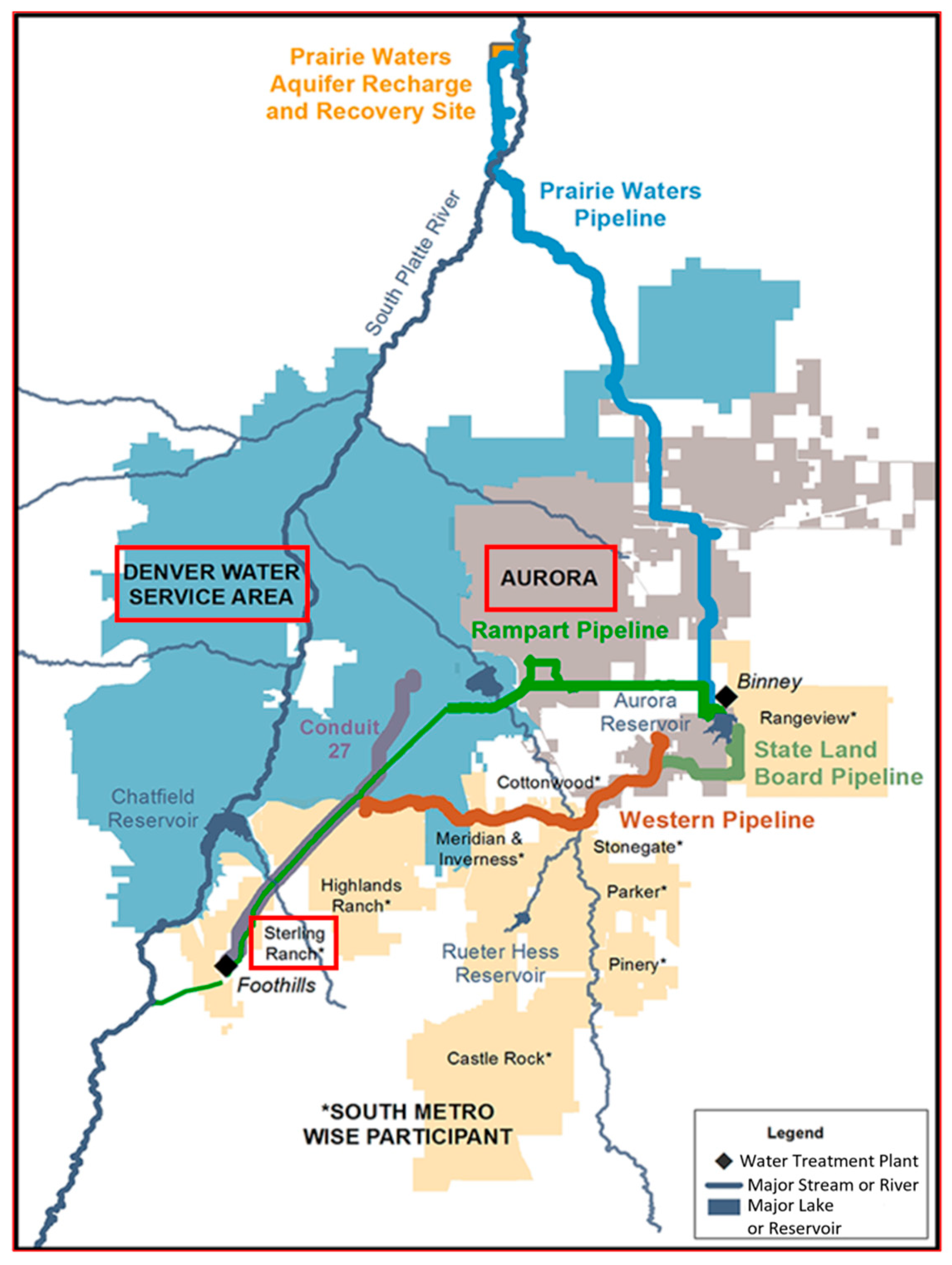
Figure 2.
Risk and decision analysis associated with integrated urban water management studied in this study.
Figure 2.
Risk and decision analysis associated with integrated urban water management studied in this study.
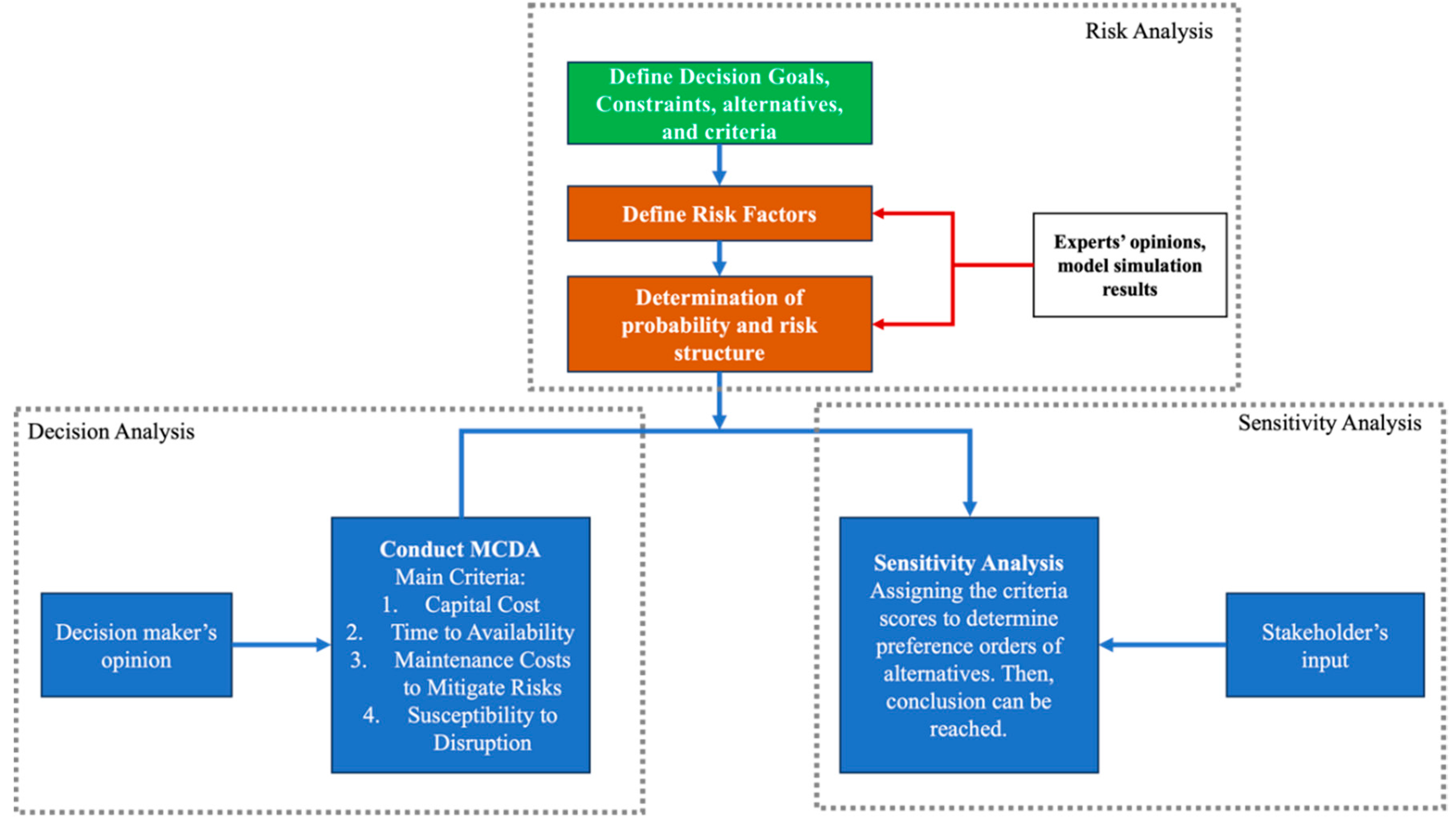
Figure 3.
Event tree for the assessment of future water demand-supply management.
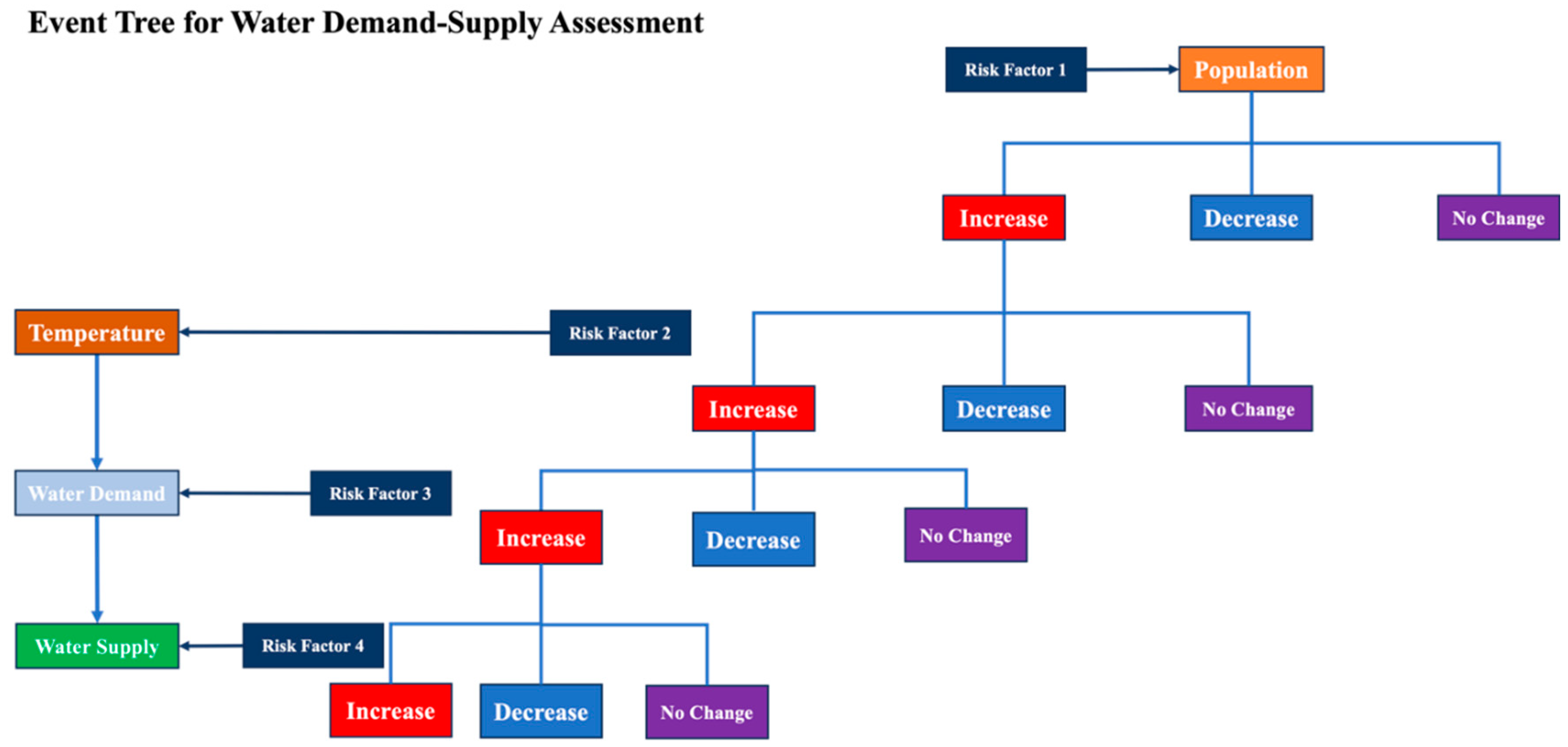
Figure 4.
Cumulative probability distribution of three risk factors associated with future water stresses in DCMA: (a) cumulative probability of total population increase percentage in DCMA; (b) cumulative probability of daily maximum temperature (Deg. F) in DCMA; (c) cumulative probability of future water supply gap in DCMA.
Figure 4.
Cumulative probability distribution of three risk factors associated with future water stresses in DCMA: (a) cumulative probability of total population increase percentage in DCMA; (b) cumulative probability of daily maximum temperature (Deg. F) in DCMA; (c) cumulative probability of future water supply gap in DCMA.
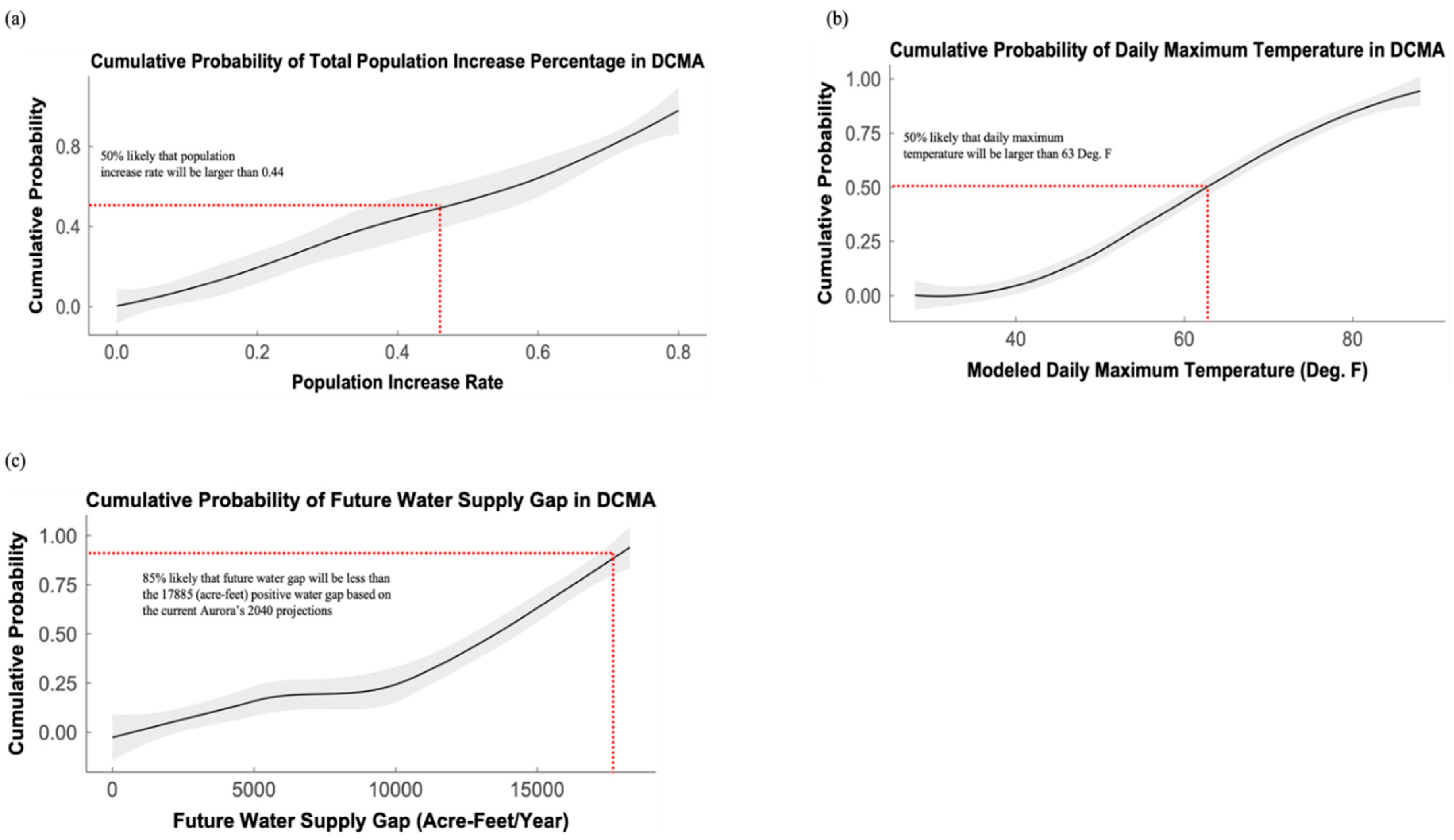
Figure 5.
Complete event tree of future water security risk analysis.
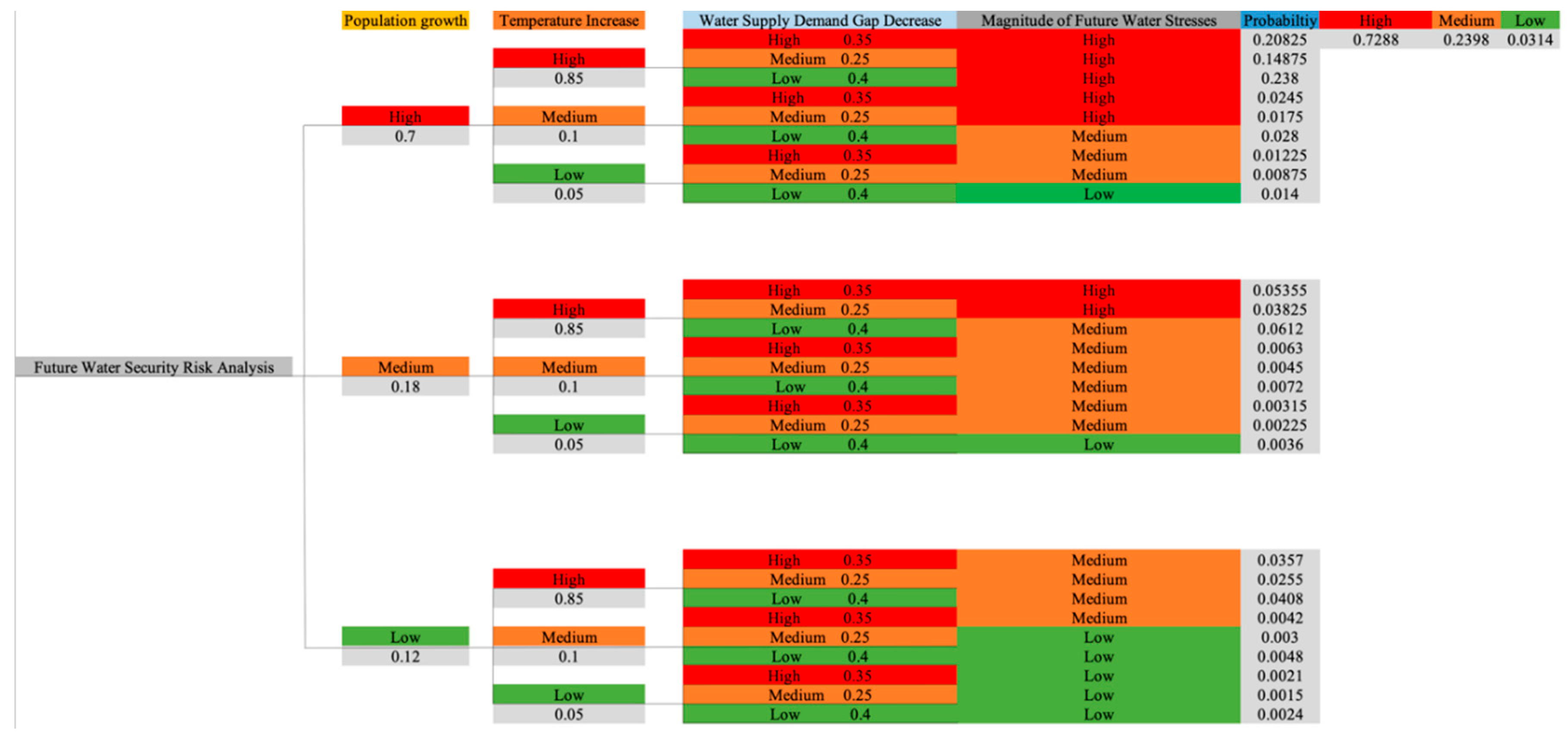
Figure 6.
Influence diagram associated with quantitative decision analysis.
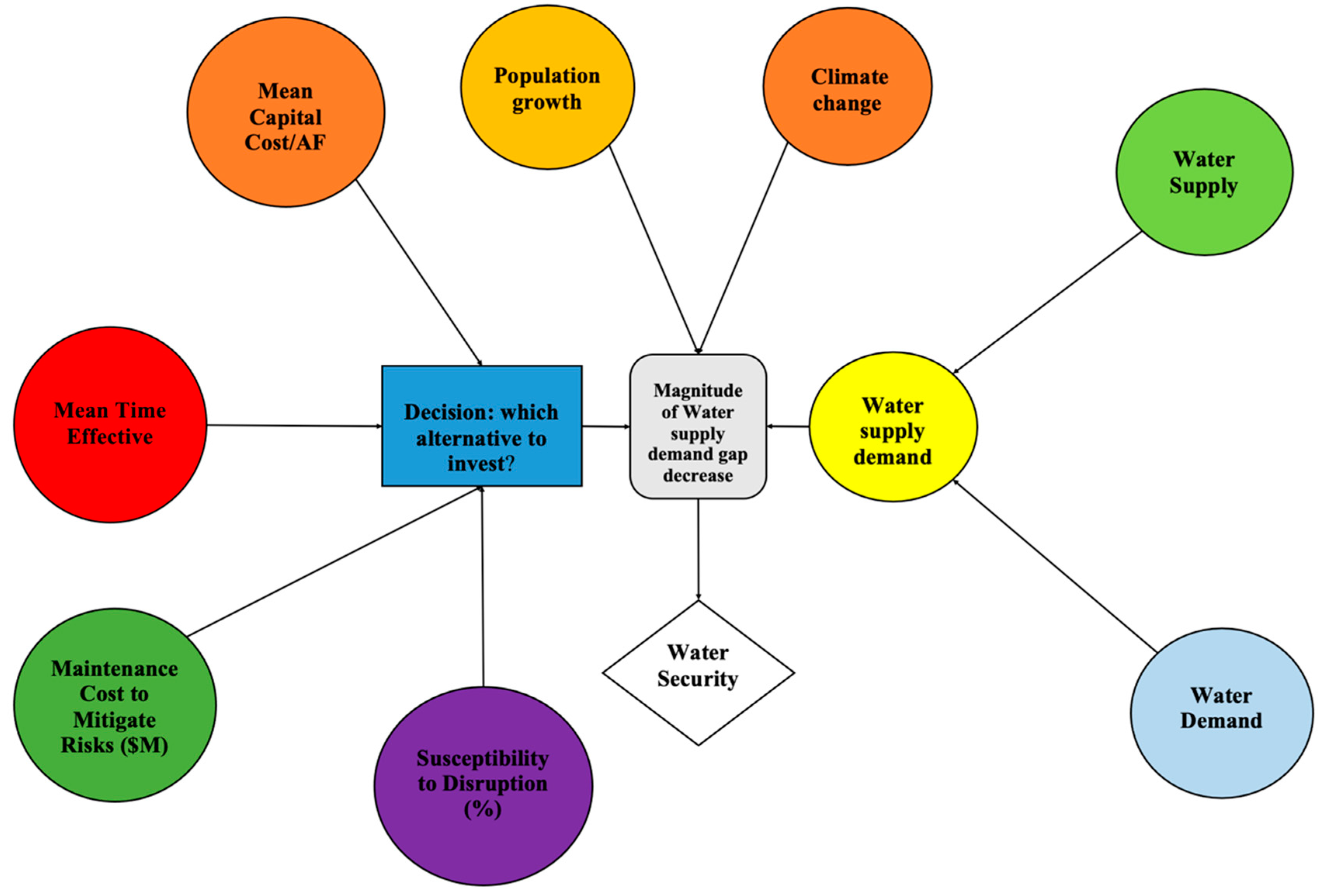
Figure 7.
Objective and criteria used for the assessment of alternatives to relieve future water stresses in the MCDA.
Figure 7.
Objective and criteria used for the assessment of alternatives to relieve future water stresses in the MCDA.
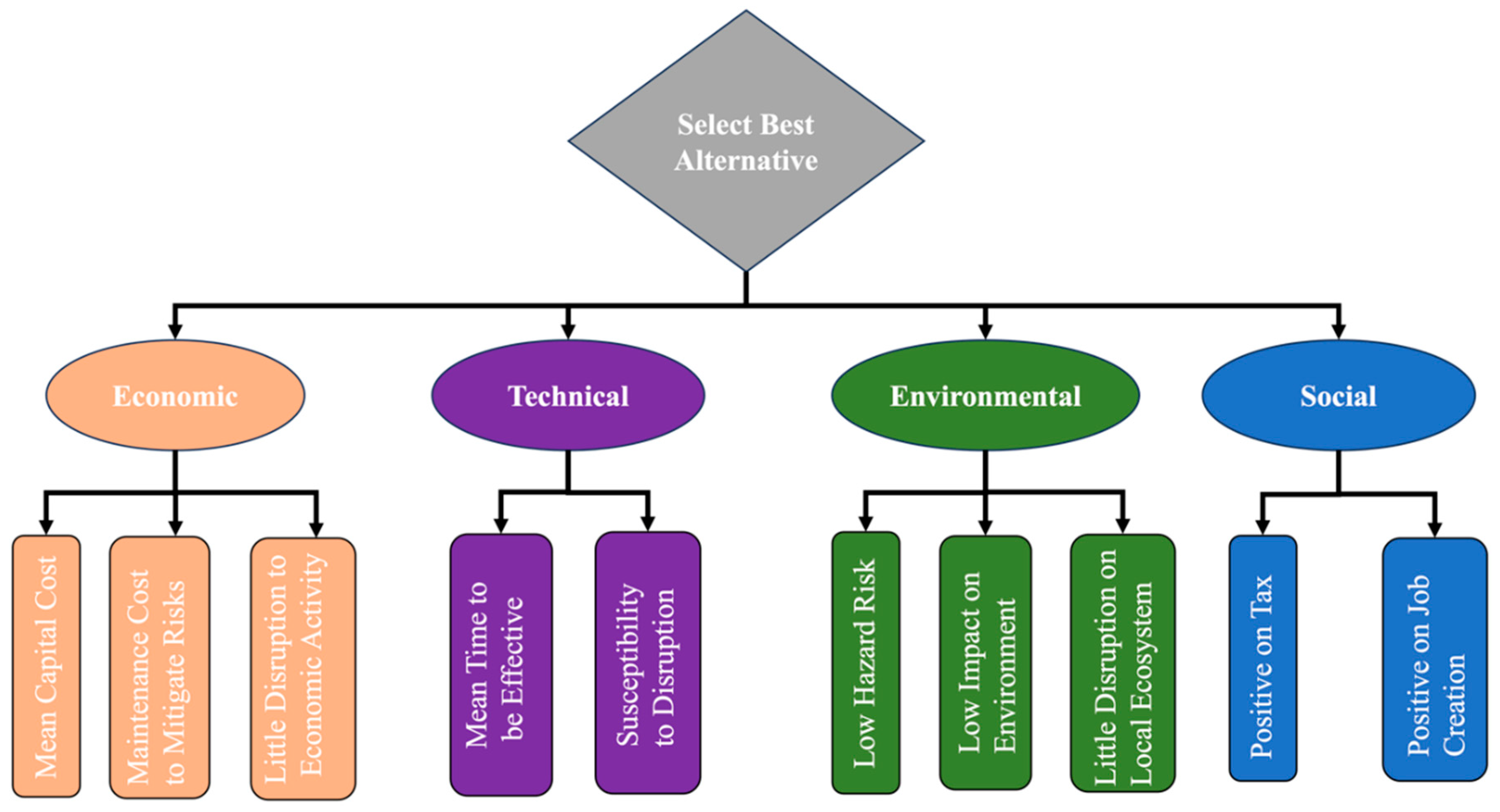
Figure 8.
Alternative scores and MCDA sensitivity analysis results: (a) MAVT alternative scores; (b) AHP alternative scores; (c) MCDA sensitivity analysis on the MACT method.
Figure 8.
Alternative scores and MCDA sensitivity analysis results: (a) MAVT alternative scores; (b) AHP alternative scores; (c) MCDA sensitivity analysis on the MACT method.
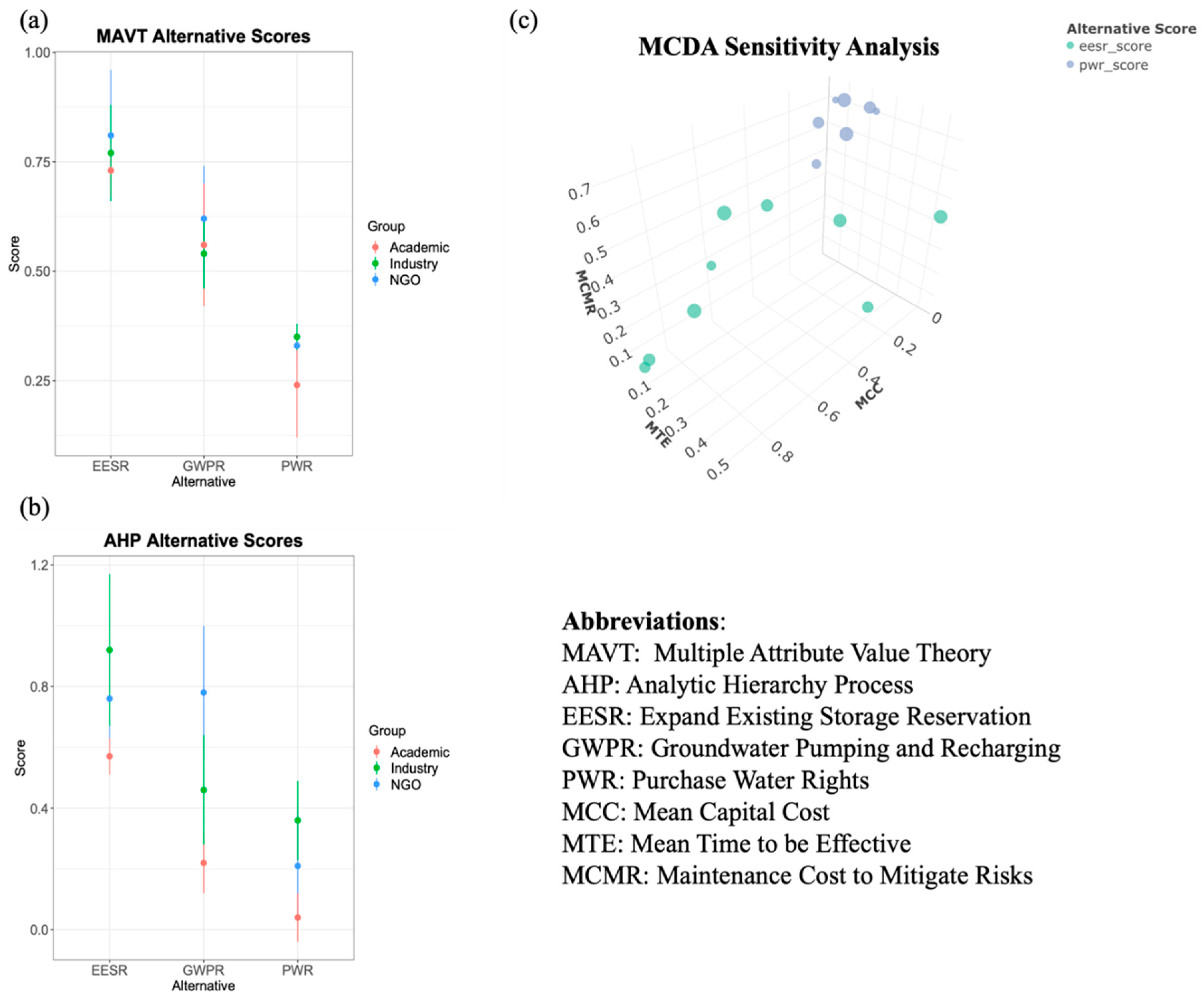

Table 1.
Defined change level based on average annual change rage of risk factors.
| Future Water Supply Demand Risk Factor | ||
|---|---|---|
| Gap (Acre-Feet/Year) | Decrease rate* | Decrease Level* |
| 30 – 50% | High | |
| 15 – 30% | Medium | |
| 0 – 15% | Low | |
| Factors | Increase Rate* | Definition of Increase Level* |
| Population | 30 - 50% | High |
| 15 - 30% | Medium | |
| 8 - 15% | Low | |
| Temperature | 2 - 3% | High |
| 1 - 2% | Medium | |
| 0 - 1% | Low |
*We consulted experts’ opinions regarding the definition of the change rate for each of these risk factor.
Table 2.
Defined level of water supply demand gap decreases within next 30 years.
| Decrease Level | Decrease Rate | Water Supply Demand Gap Decrease |
|---|---|---|
| High | 50% | 8943 (Acre-Feet/Year) |
| Medium | 30% | 5366 (Acre-Feet/Year) |
| Low | 20% | 2683 (Acre-Feet/Year) |
Table 3.
Conditional probability associated with future water risk rating.
| P [Stress = High | Risk Factor = (High, Medium, Low)] | P (Risk Factor = High | Stress = High) |
|---|---|
| P (stress = high | population growth = high) = 0.64 | P (population growth = high | stress = high) = 0.6147 |
| P (stress = high | population growth = medium) = 0.09 | |
| P (stress = high | population growth = low) = 0 | |
| P (stress = high | temperature increase = high) = 0.687 | P (temperature increase = high | stress = high) = 0.8012 |
| P (stress = high | temperature increase = medium) = 0.042 | |
| P (stress = high | temperature increase = low) = 0 | |
| P (stress = high | water supply demand gap decrease = high) = 0.286 | P (water supply demand gap decrease = high | stress = high) = 0.1373 |
| P (stress = high | water supply demand gap decrease = medium) = 0.205 | |
| P (stress = high | water supply demand gap decrease = low) = 0.238 |
Table 4.
Estimated costs associated with selected risk mitigation decision alternatives.
| Alternative | Risks | Mean Capital Cost per Acre-Foot (AF) | High Negative Water Gap* | Medium Negative Water Gap* | Low Negative Water Gap* | Cost Range |
|---|---|---|---|---|---|---|
| Purchase Water Rights | Junior rights; Competing agricultural needs; timing of availability; susceptibility to disruption | $7,417** | 8943 AF | 5366 AF | 2683 AF | $20-66M |
| Ground Water Pumping and Recharge | Efficacy and cost of recharge; impacts to human health; susceptibility to disruption | $3,795** | 8943 AF | 5366 AF | 2683 AF | $10-34M |
| Expand Existing Storage Reservoirs | Need for infrastructure; impacts to environment; susceptibility to disruption | $2,200** | 8943 AF | 5366 AF | 2683 AF | $5-19M |
*Based on negative water supply gaps calculated in event tree. **Mean cost per acre-foot (AF) for purchase of water rights (Payne et al. 2014); Mean cost per AF for both ground water with recharge and reservoir expansion (Choy et al. 2014).
Table 5.
Criteria valuation ranges and their corresponding ranking.
| Mean Capital Cos ($M) | Rank |
| 5 - 20 | 1 |
| 21 - 35 | 2 |
| 36 - 50 | 3 |
| 51 - 65 | 4 |
| 66 - 80 | 5 |
| Mean Time to be Effective (Years) | Rank |
| 0 - 5 | 1 |
| 6 - 10 | 2 |
| 11 - 15 | 3 |
| 16 - 20 | 4 |
| 21 - 25 | 5 |
| Maintenance Cost to Mitigate Risks ($M) | Rank |
| 0-5 | 1 |
| 6-10 | 2 |
| 11-15 | 3 |
| 16-20 | 4 |
| 21-25 | 5 |
| Susceptibility to Disruption (%) | Rank |
| 0-20 | 1 |
| 21-40 | 2 |
| 41-60 | 3 |
| 61-80 | 4 |
| 81-100 | 5 |
Disclaimer/Publisher’s Note: The statements, opinions and data contained in all publications are solely those of the individual author(s) and contributor(s) and not of MDPI and/or the editor(s). MDPI and/or the editor(s) disclaim responsibility for any injury to people or property resulting from any ideas, methods, instructions or products referred to in the content. |
© 2023 by the authors. Licensee MDPI, Basel, Switzerland. This article is an open access article distributed under the terms and conditions of the Creative Commons Attribution (CC BY) license (http://creativecommons.org/licenses/by/4.0/).
Copyright: This open access article is published under a Creative Commons CC BY 4.0 license, which permit the free download, distribution, and reuse, provided that the author and preprint are cited in any reuse.


