

Submitted:
15 September 2025
Posted:
16 September 2025
You are already at the latest version
Abstract
Pakistan is vulnerable to climate actions as despite being consecrated with profuse water re-sources, it is facing water scarcity due to the cumulative effects of climate change, lack of storage facilities, and inefficient water governance. The burgeoning population and lack of rationalization in the sectoral distribution of water usage are putting stress on limited water resources. Irregular weather pattern causing droughts and floods at regular intervals is worrisome development. The study explores the impact of rapid urbanization coupled with climate actions on Pakistan’s water security and recommends measures for climate resilience ensuring efficient water management and sustainable water supply for achieving UNSDG 6 and 13 by 2030. Pakistan’s transboundary water sharing with India was formalized with Indus Water Treaty (IWS), which has been unilat-erally held in abeyance by India on 26 April 2025, which has compounded Pakistan’s water security challenges. The study fulfils twofold aims of ensuring efficient water governance with existing infrastructure and futuristic plans to address water management challenges on sustainable basis.
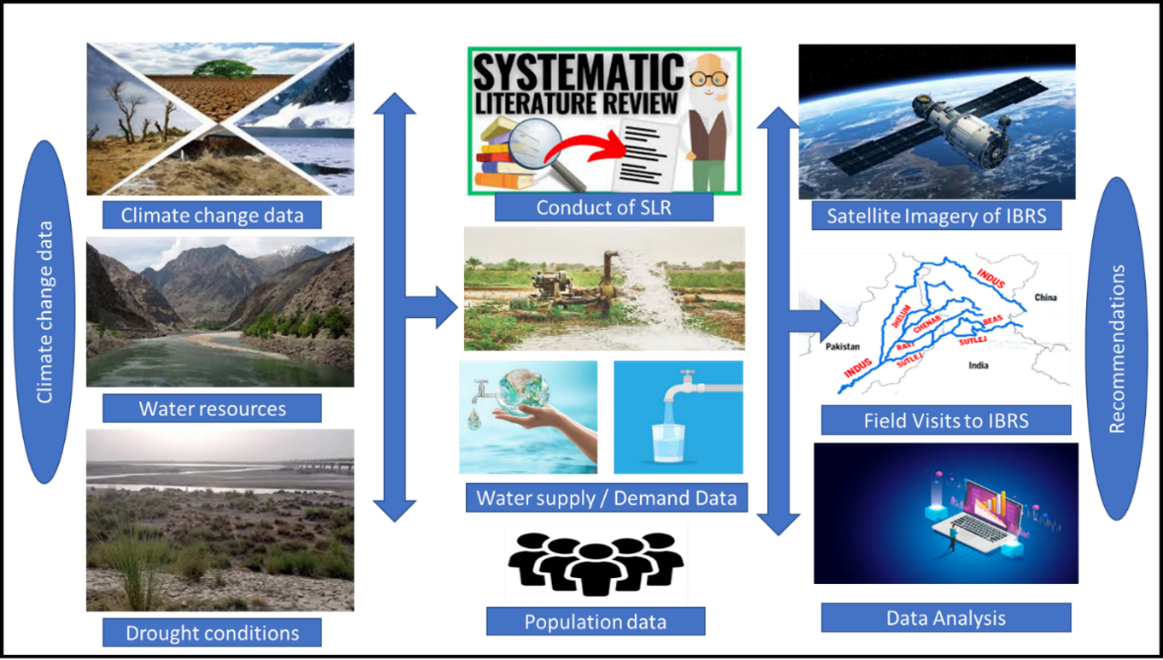
Keywords:
climate adaptability
; climate resilience
; urbanization
; water scarcity
; water management
1. Introduction
Pakistan is vulnerable to negative implications of climate change [1]. According to global climate index, Pakistan ranks 8th most susceptible country [2]. This vulnerability is manifested in intense and devastating weather pattern like the appalling floods witnessed in, 2010, 2022 and 2023. The floods have caused significant damage to the tune of PKR 3.2 trillion (US$14.9 billion) and affected 30 million population [3]. Pakistan experiences perpetual and unpredictable occurrences of both floods and droughts on almost annual basis. Hence, it is imperative to recognize the significance of climate-resilient urban design and to integrate the aspects of climate change into development initiatives on one hand and formulate appropriate governance strategy for conservation, distribution, utilization of precious water resources. The northern regions of Pakistan are home to estimated 7259 glaciers. These glaciers span an area of 11780 km2 and possess a collective ice volume of 2066 km2 with snow occurring from December to February [4]. Climate change poses several challenges to the agricultural sector. These challenges encompass rising temperatures, uncertainties surrounding the availability of irrigation water, heightened variability of monsoon patterns, intensified water stress conditions in arid and semi-arid regions, and the occurrence of extreme weather events such as floods, droughts, heat waves, cold waves, and cyclones [5]. These factors have the potential to significantly impact both crop and animal production in Pakistan. The repercussions will have adverse effects on both human health and social life. The impact of climate change has been linked to an increased frequency of floods, necessitating the development of new reservoirs to effectively store and manage water resources for future consumption. The existing climate models exhibit limitations in accurately representing seasonal variations especially in the northern regions of Pakistan [6], which generate two significant issues as we confront climatic changes. Firstly, there is an increased occurrence of both floods and droughts. Secondly, the existing reservoirs face a lack of capacity to hold the surplus water, which could otherwise be utilized during dry seasons. The mountainous regions of the Upper Indus Basin exhibited a statistically insignificant upward trend in average temperature. Nevertheless, the temperature increase was found to be noteworthy in Baluchistan with a rise of 1.5°C, as well as in Punjab and Sindh with increases of 0.56°C and 0.44°C, respectively, during the period spanning from 1965 to 2023 [7]. There exists a divergence of opinion among scientists on the retreat of glaciers in the Himalaya-Karakoram Hindukush regions, where a notable rise in the yearly temperature trend across all three sites in the northwestern Himalayan region was discovered [8]. In contrast, a decrease in summer temperatures between 1961 and 2000, as well as an upward trend in the formation of glaciers in the Karakoram region was detected [9]. Constant monitoring and regular investigations are necessary to provide a comprehensive update on the glacier’s ecosystem in the Himalayan region, as it remains quite unexplored.
In his address to international water conference at Karachi on 28 November 2023, President of Pakistan, Dr. Arif Alvi indicated that “water scarcity as a biggest challenge for climate hit Pakistan” [10], warranting immediate attention by the current and future governments. Multidimensional approaches are needed for water conservation, recycling, usage and storge, apart for developing a civic sense for water emergency. Over the course of the past 75 years, the per capita water availability in the country has experienced a significant decline, decreasing from 5,260 cubic meters to 908 cubic meters [11]. Without the formulation of a viable policy for water conservation, the per capita water availability is projected to decline to 860 cubic meters and by 2040, it is anticipated that, the per capita availability of water will decrease further to 500 cubic meters [12]. Based on the international practices, the mean quantity of water accessible per individual is 1800 cubic metres. A country is deemed to be experiencing water scarcity if its total water availability falls below 1000 cubic meters [13]. Pakistan is presently positioned at the 23rd out of 167 countries that are confronted with the issue of water scarcity, and it is included among the 33 countries that are projected to have severe water scarcity in the next few years [14]. Expert’s studies conducted by leading international organizations like the World Bank and several national experts, it is imperative for Pakistan to establish emergency reserves to mitigate the risk of water scarcity and enhance the replenishment of underground water resources. There are several factors that contribute to the escalation of water demand, which encompass urbanization, rapid population growth, inadequate water consumption efficiency, an economy that heavily relies on water-intensive activities, insufficient management of available water resources, and the absence of a comprehensive national water policy implementation mechanism. Pakistan's agricultural sector is the primary consumer of water resources, contributing significantly to the issue of water scarcity, while at the same time contributing 20% to Pakistan’s Gross Domestic Product (GDP) annually and employing around 40% of work force [15]. Therefore, it is imperative to develop strategies to enhance the efficiency of crop irrigation to accommodate the needs of both home and industrial water supply. It is projected that by the year 2025, there will be a rise in the demand for water, reaching a total of 274 million acre-feet (MAF), while the supply of water is anticipated to remain same at 191 MAF resulting in a deficit of 83 MAF [16].
The study has been developed with a focus on the issues of climate change and its impacts on urbanization, water management, rationale distribution, and the utilization of technology for use of agriculture water. The study also recommends best practices for addressing Pakistan’s water governance issues on sustainable basis and meet UNSDG 6 and 13 by 2030.
Objectives of the study. The study aims to comprehensively investigate the nexus between climate change and water management in Pakistan’s environmental and socio-economic dynamics. The study seeks to;
- Assess the current state of water resources in Pakistan, considering factors such as availability, distribution, and quality in the context of rapidly changing climatic conditions.
- Analyze the impacts of climate change on Pakistan’s water security, including changes in precipitation patterns, glacial melting, and changes in the river flows.
- Identify the vulnerabilities and challenges posed by climate change on urbanization and water dependent sectors such as agriculture, industry, and human settlements.
- Propose policy recommendations and climate and adaptation strategies for efficient water management on a sustainable basis.
- Achieve UNSDG 6 and 13 by 2030.
Research questions (RQs). The research questions have provided a framework for analysing the complex interactions between climate change and water management in Pakistan generating insights to inform evidence-based decision making and policy formulation;
Q.1. What are the contemporary trends and patterns of climate change impacting water management in Pakistan?
Q.2. How is climate change impacting water availability, quality and distribution to different regions of Pakistan?
Q.3. What are the socio-economic and environmental impacts of climate change induced water management challenges in Pakistan?
Q.4. What are the existing vulnerabilities and best adaptation strategies for climate resilient Pakistan?
2. Literature Review
Pakistan, with its diverse geography ranging from the high mountains in the north to the vast plains and coastline in the south, is particularly vulnerable to the impacts of climate change. The literature review synthesizes the existing research on the effects of climate change on Pakistan, encompassing its environmental, socio-economic, and health implications. Water security is regarded as an evolving and emerging national security challenge for Pakistan [17] affecting human security in many dimensions [18]. Pakistan's glaciers, particularly in the Himalayas and Karakoram ranges, are experiencing accelerated melting due to rising temperatures, which has severe consequences, including increased risk of glacial lake outburst resulting in excessive floods (GLOFs), which Pakistan is facing on regular basis since last four years and altered river flows affecting millions of people dependent on glacial melt water for agriculture and drinking purposes [19]. Changes in precipitation patterns and glacial melt cause unusual drought experienced during the same year of 2022 and 2023, have significant implications for Pakistan's limited water resources and the exacerbation of water scarcity, particularly in arid and semi-arid regions, leading to reduced agricultural productivity, increased competition for water resources, and potential conflicts over water allocation among the provinces [20]. Recent standoff during the month of May 2025 between the federal government and province of Sindh on development of new canals in Punjab province resulted in province wise protests in Sindh, which created many challenges for both federal government and Punjab government in handling Sindh’s concerns amicably. Climate change is associated with an increase in frequency and intensity of extreme weather events such as floods, droughts, and heatwaves, which underscores the devastating impact of these events on communities, infrastructure, agriculture, and livelihoods, exacerbating poverty and food insecurity [21]. Pakistan's agriculture is susceptible to negative impacts of climate change affecting crop yields, shifts in cropping patterns, increased pest outbreaks, and loss of livestock, threatening food security and rural livings [22]. Climate-induced environmental degradation, such as water scarcity, floods, and land degradation, is contributing to internal displacement and migration in Pakistan [23], presenting dire consequences like socio-economic difficulties faced by displaced population, including loss of livelihoods, social tensions, and pressure on urban infrastructure and services [24]. Climate change affects public health through various pathways, including heat stress, vector-borne diseases, and food insecurity [25] thereby, increasing the cases of heat-related illnesses, waterborne diseases, malnutrition, and mental health issues, particularly among vulnerable populations, amplifying existing health disparities. The climate change has seriously impacted the water quality in Pakistan as well, especially for drinking purposes [26]. Climate change poses significant challenges to water governance in Pakistan, affecting water availability, quality, and distribution. Critical investigation on the implications of climate change on water governance, emphasizes the need for adaptive strategies, infrastructure resilience, and policy integration to address emerging water management challenges [27]. It is highlighted that Pakistan possesses the distinction of having the most water-intensive economy globally, which implies that the quantity of water consumed per unit of GDP is the greatest in the world, indicating a remarkably low level of productivity and efficiency [28]. Given that Pakistan allocates 93% of its freshwater resources to agricultural activities [29], it is imperative to enhance the existing efficiency rate, which currently stands at 50%. Several research studies have indicated that the efficiency levels for canal irrigation can be as low as 33%, which indicates that a mere 33% of the water that is discharged into canals successfully reaches its intended destination at the farm gate [30]. Inadequate water infrastructure and suboptimal project implementation are among the factors contributing to low levels of efficiency. Inadequate water reservoirs, ineffective water management in agriculture and households, scarce wastewater recycling, and the contamination of drinking water have become major health risks, creating national security challenges for Pakistan [31]. The transboundary water sharing between India and Pakistan was firmly in place since the implementation of Indus Water Treaty (IWT) in 1960, but during the current conflict in May 2025, India has unilaterally put IWT in abeyance and yet not ready to restore, therefore, multiplying Pakistan’s water security dilemma being a lower riparian country [32].
3. Materials and Methods
The detailed methodology, data collection, investigation process and statistical analysis are given in a systematic manner in the undermentioned sub paragraphs.
3.1. Introducing Geographical Regions of Pakistan
Pakistan has three distinct geographical zones as shown in Figure 1, moving from the north: the northern highland, which contains the regions of Kashmir and Gilgit-Baltistan [33]. The northern regions are widely recognized for their high mountain ranges, namely Hindukush, Karakoram, and Pamir, which are renowned for high peaks like, K2 and Nanga Parbat. The Indus plain has a network of rivers that originate from the region of Kashmir and reach to the Arabian Sea traversing the entire length of country. The Baluchistan Plateau is located positioned in the western region, Thar Desert is situated in Sindh and Cholistan Desert in the Punjab Province. Pakistan exhibits a diverse climatic profile, characterized by the presence of all four seasons spread over the year [34]. The climatic conditions vary from tropical to temperate. The northern glaciated regions experience low temperatures and heavy snowfall during winters, while southern coastal areas face arid climate. Monsoon takes place each year between July and September in the remaining country, however, this pattern is also changing since last three years. The Indus River System (IRS) serves as the lifeline of Pakistan [35], however, declining snowfall in the Himalayas and Karakorum mountains, increasing population, inordinate agricultural practices and asymmetry in sectoral water distribution [36] have exacerbated water management in Pakistan [37].
3.2. Climatic Conditions
Pakistan experience monsoon from July to September, which corresponds to the ideal time of snow and glacier melting in the northern regions. Agriculture largely happens in the lower Indus plains, where summers span from April to September with temperatures varying from 21°C to 49°C and winters from December to February, with daytime temperatures ranging between 25 °C to 27 °C. The region receives an average annual rainfall of around 250 mm/year, with more than 75% occurring during monsoon. In the overall context, Pakistan has two agriculture seasons: Kharif from April to September and Rabi from October to March. Wheat is the chief crop during the dry Rabi season, and cotton, rice, and maize are the principal crops during rainy Kharif season. Sugarcane and a variety of feed crops are grown round the year. For determining the average rainfall of last ten years, the metrological department of Pakistan’s survey stations as highlighted in Figure 2. were investigated for obtaining the rain data, which has been dovetailed in this study to validate the arguments of climate change impacts on Pakistan.
3.3. Study Area and Model Setting
An analysis of Pakistan's water resources, population, and water requirements for human consumption, agriculture, and non-agricultural purposes was conducted using primary data obtained from the Ministry of Energy, the Water and Power Development Authority (WAPDA), and the Indus River System Authority (IRSA). The field visits to dams and barrages of Chashma, Tarbela, Mangla, Panjnad, Sulemnaki, Guddu, Sukkur, and Kotri were conducted for obtaining the first-hand knowledge on research questions. Figure 3. shows the stretch of field visits commencing from northern regions of Skardu, Gilgit and Neelum-Jhelum rivers in Kashmir moving down south along the entire swath of Indus Basin delta. This route showcased a distinctive combination of natural resources, excellent engineering and irrigation systems containing a web of canals and link canals. The physical manifestation of Indus Water Treaty (IWT) was also observed. The water storage reservoirs, inter province water distribution mechanisms and water management regulations have been aptly examined and incorporated in the study.
3.4. Systematic Literature Review (SLR)
The SLR technique was adopted to systematically examine relevant literature. The primary objective of the SLR is to examine the current volume of research on climate change, water management and efficient water consumption approaches. The aim was to identify and classify crucial aspects of management, existing deficiencies to propose an efficient governance framework for water resources management in Pakistan. The SLR model is often preferred for analysing large volumes of literature in a structured way. The distinguished researchers have delineated a five-step methodology for conducting a systematic literature review (SLR), which involves establishing the scope, creating a plan, doing a comprehensive search, filtering, and analysing the literature, and presenting the crystalized findings of the review. The SLR examined the existing research on Pakistan's water resources, management, including their consumption, complications, and challenges. The volume of existing research contains Pakistan's water resources, their allocation to different sectors, water quality and water storage, generally in a disjointed manner, while this study examines the water status, water management and governance issues in Pakistan in holistic manner and suggests policy recommendations for ensuring water security in Pakistan on sustainable basis.
3.5. Data Investigation Including Statistical Analysis
This study centres around the objective of adopting best practices for developing effective water governance to promote sustainable development in Pakistan. To do this, data collected from a review of literature, field visits, onsite briefings and interviews has been analysed using qualitative and quantitative research methods. The statistical analysis for determining the average rainfall for the last 20 years was conducted using standard ANOVA test on SPSS version 29 using Dunnett T3 test for multiple comparison of alpha 0.05. The results and discussion part provides an explanation of the findings, while the final part of the study offers policy recommendations.
4. Results and Discussion
4.1. Climate Change Vulnerbalities
Pakistan experiences a wide range of negative effects from climate change, including droughts and floods. These impacts have become a recurring occurrence, as shown in the year 2022. Mr. Antonio Gutters, the Secretary-General of the United Nations, visited Pakistan on 9-10 September 2002 to show support for the flood victims and assess the damage by visiting the affected areas and attending official briefings. As per the UN Secretary General, Pakistan, despite its contribution of less than 1% to global emissions, is experiencing negative consequences due to the emissions and climate pollution caused by wealthier nations [38]. He strongly criticized the demotion of efforts to reduce greenhouse gas emissions, highlighting the potential repercussions for both Pakistan and other states. The Global Climate Index (GCI) for 2021 reveals that Pakistan is very susceptible to climate-related hazards, as it holds the 8th position in the vulnerability index [39]. The data provided clarifies the significant consequences of climate change on Pakistan, including a range of negative impacts such as heightened heatwaves, extended periods of drought, and disastrous flooding incidents. Therefore, the sustainability of water supplies in Pakistan is greatly affected by variations in weather patterns. The results of mean rainfall data as result of 20 years statistical analysis using Mean and Median process at the observation points using ANOVA and SPSS are enumerated at Table 1. For calculation purposes, the statistical indicators like; standard error and deviation, 5% trimmed mean and median and skewness were calculated using the F=72.53 and =0.00. Year 2022 and 2023 have proved to be catastrophic in terms of flooding due to extensive rains as shown in Figure 4.
4.2. Water Resources Distribution
The issue of water scarcity has been a persistent and significant concern in Pakistan since its establishment in 1947. The Indus River System (IRS) serves as a major water resource for population and agricultural [40]. Pakistan’s population is growing rapidly putting extra stress on water consumption for drinking and other uses, while the availability of water is constantly declining. Pakistan has agro based economy, which consumes 90% of available water [41], as the lack of smart technology and non-existent recycling of water are putting extra burden on fresh wate resources. Pakistan is positioned at the 80th rank out of 122 nations worldwide in terms of the availability of potable water [42]. The graphical representation of water supply and demand status in Pakistan by 2025 is depicted in Figure 5.
The development of water reservoirs for the purpose of storing and subsequently distributing water continues to exhibit an imbalance, despite the increasing demand. Figure 6. highlight the gravity of water scarcity over coming years. It is evident that the disparity between water availability, storage, and sectoral consumption is expanding, thereby highlighting the significance of water security as a critical national security concern.
4.3. Sources of Water Supply in Pakistan
The Indus basin covers approximately 1127000 square kilometres and is shared among Pakistan, India, Afghanistan, and China. The Hindu-Kush, Karakoram, and Western Himalayan Mountain ranges are the primary sources of water for the Indus River and its six main tributaries: Kabul, Jhelum, Chenab, Ravi, Beas, and Sutlej, as depicted in Figure 9. The Indus River empties into the Arabian Sea near Karachi. Pakistan acquired the majority of the Indus Basin River System (IBRS) territory in 1947 following the partition of India and Pakistan since it depended on water flowing from surrounding countries as a downstream riparian. Following the partition, the Pakistan IBRS relied on surface water supplies that were not under its jurisdiction. The 1960 Indus Waters Treaty (IWT) awarded Pakistan control of the surface water from the Indus, Jhelum, and Chenab rivers, which amounts for 75% of the water in the basin. India was assigned the Ravi, Beas, and Sutlej rivers. The IWT does not address the distribution of groundwater resources from the vast unconfined transboundary aquifer situated between India and Pakistan. Pakistan does not have any further water agreements with other neighboring countries Afghanistan and China. The 1960 treaty regarding the distribution of Indus water resulted in the creation of two significant reservoirs and other link canals in Pakistan. This was done to redirect water from the eastern rivers to the western rivers to provide irrigation to lands in southern Punjab. Pakistan mostly depends on the Indus River and its associated groundwater system for its water supply. 71% of the average annual inflow of 167 km3 to the IBRS from 1976 to 2022 is designated for agricultural purposes, with a smaller amount utilized for industrial and domestic use. Approximately 60% of irrigation water in Pakistan is sourced from surface water, with the remaining portion primarily coming from fresh groundwater in Punjab and certain regions of Sindh province. The winter season, occurring from October to March each year, experiences a significant snowfall in the northern glaciated regions. The melting process strats from May to August, providing considerable water to the Indus River Systems (IRS). The river Kabul complimnets water for the Indus River System (IRS) when it enters Pakistan by the Unai Pass in the southern Hindukush region, north of the Khyber Pass in the Khyber Pakhtunkhwa (KPK) Province, at an elevation of 3000 meters above sea level. Monsoon rains also provide ample water supplies to the Indus River System (IRS). Nationally, the groundwater accounts for 70% of the residential water supply, with around 50% designated for agricultural use. The main processes by which groundwater is refilled involve the intrusion of water from the Indus Basin Irrigation System (IBIS). This system, situated in arid regions of Pakistan, consists of a layer of freshwater resting on top of saline water. Due to the unpredictable availability of canal water, farmers across Pakistan have progressively resorted to extracting groundwater via unregulated pumping methods. The unregulated tubewells in the Indus Basin Irrigation System (IBIS) estimated to 500,000, extract approximately 50 billion cubic meters (BCM) of water [43] against resorvoir capacity of 55 million acre-feet (MAF) [44]. Figure 7. highlights the sources of ground water.
Surface water in Pakistan mostly comes from the Indus River System (IRS), which relies on river inflows and is monitored at specific rim stations. Rim stations are control structures built as dams, barrages, or reservoirs. Key rim stations in the Indus River System are Mangla and Tarbela Dams, Marala on the Chenab River, Marala reservoir on the Jhelum River, Sulemanki Headworks on the Sutlej River, and Baloki on the Ravi River. Figure 8. shows the spatial arrangement of various rivers in the Indus River System.
4.4. Water Reservoirs and Transboundry Water Sharing with India
The water storage capacity in Pakistan is limited to three main reservoirs, which are considered extremely insufficient. The Mangla dam constructed in 1967, Chashma reservoir in 1971 and Tarbela dam in 1978 are major storage facilities in Pakistan , which were initially built with a combined capacity of 15.75 million acre-feet (MAF). However, because of sedimentation, the effective capacity of these reservoirs has reduced to 13.1 million acre-feet (MAF), resulting into storage sustenance of 30 days, which is significantly below the globally accepted standard of at least 120 days. Additionally, the canals and link canals have developed seepage of irrigation water due to poor maintenance. The farmers mostly rely on the use of conventional farming methods and flood irrigation instead of adopting a drip irrigation system. The excessive water utilization has led water exhaustion for agriculture water in Pakistan, especially during non-monsoon periods. India-Pakistan water sharing was agreed through a formal treaty called Indus Water Treaty (IWT) on September 19, 1960. According to which, India was granted exclusive rights to two rivers located in the eastern region, specifically Beas/Sutlej and Ravi and Pakistan was granted the rights to three rivers situated in the western area, Jhelum, Chenab, and Indus. Although there have been three major wars and two instances of standoff with India, the Indus Waters Treaty (IWT) has prevailed [45]. Despite concerns over the dam construction on river flow in Indian Occupied Kashmir by India, it has largely achieved success [46]. Figure 9. shows distribution of rivers outlined in the Indus Waters Treaty (IWT) between India and Pakistan.
4.5. Sustainable Water Management
Since 2001, the responsibility for managing and regulating water resources in Pakistan has been decentralized to provinces and municipal governments [47]. One of the primary issues in water management in Pakistan arises from the disparity in per capita water usage between urban and rural areas. The National Water Policy was issued by the Ministry of Water Resources in April 2018 for addressing water resource management concerns in Pakistan. The National Water Policy of 2018 placed greater emphasis on the sustainable exploitation of water resources and introduced the notion of maximizing agricultural productivity per unit of water, sometimes referred to as 'growing more crop per drop' [48]. The floods have resulted in an estimated damage of PKR 3.2 trillion (US$14.9 billion) and affected 30 million population [49]. Pakistan experiences perpetual and unpredictable occurrences of both floods and droughts on almost annual basis. Hence, it is imperative to recognize the significance of climate-resilient urban design and to integrate the aspect of climate change into development initiatives on one hand and formulate appropriate governance strategy for conservation, distribution, utilization, and preservation of precious water resources. Water scarcity and water quality issues have become major concerns in Pakistan in recent years. The prevailing problems have been intensified in recent decades because of causes such as population expansion, industrialization, and the increasing demand for food. The Pakistani government has intermittently enacted many legislative measures and regulatory frameworks regarding the accessibility, retention, allocation, and exploitation of water resources. Considering the importance of climate change, limitations in storage capacity, and the urgent need to achieve the Sustainable Development Goals (SDGs) related to water, which include ensuring universal access to safe and clean drinking water by 2030, regulatory measures have been put in place. The publication of these measures has been achieved through an agreement reached among the provinces and the Economic Coordination Council (ECC). However, the successful implementation of these policies appears to be a significant problem for both federal and provincial governments.
4.6. Inadequate Recycling of Waste Water for Agricultural Purposes
The adoption of recycled wastewater for agricultural, washing, cleaning, and other non-potable uses, is on the rise in developed countries. Developing nations are also adapting to similar process, but Pakistan appears to be an exception. A major challenge is the lack of consciousness by the public for recycling of wastewater, therefore, in coming few years water scarcity in Pakistan will be phenomenal.
4.7. Unplanned Transformative Urbanization
Unplanned urbanization in Pakistan has significantly undermined water security by exacerbating resource depletion, pollution, and inequitable access. Rapid urban growth, particularly in major cities like Karachi, Lahore, and Islamabad, has outpaced infrastructure development, leading to inefficient water distribution networks, unregulated groundwater extraction, and contamination of freshwater sources [50]. Unchecked construction and encroachments on natural drainage systems have disrupted recharge zones and increased urban flooding, further diminishing water availability and quality [51]. The lack of integrated urban planning and poor enforcement of environmental regulations has allowed industrial and domestic waste to pollute rivers and aquifers, making potable water increasingly scarce. Moreover, the over-reliance on groundwater in urban centers, without adequate recharge mechanisms, has led to a sharp decline in water tables, threatening long-term sustainability [52]. These challenges, compounded by climate change and population pressure, highlight the urgent need for holistic urban water management policies that integrate land use planning, water conservation, and institutional reform [53]. The filed visits were also conducted in Islamabad defence housing, naval anchorage, Bahria towns, Bahria enclave, Gulberg green and capital smart city. In Lahore and Karachi, defence housing and Bahria towns were visited. The study reveals that there is long term plan for sustainable water management. Hardly any mechanism exists on preserving rainwater, recycling wastewater for agriculture usage and preserving fresh water for drinking purposes. Such cases when averaged at provincial and federal levels pose significant water management challenges in times to come.
5. Policy Recommendations
To make the study comprehensive and useful by the relevant government institutions in Pakistan, a set of recommendations are proffered to create climate resilient Pakistan, ensuring efficient water management for assured water supply and addressing water scarcity challenges on sustainable basis.
5.1. Water Management and Sustainable Development
Pakistan has promulgated appropriate laws covering the storage, distribution, and use of water. However, there are multiple difficulties in terms of coordination and management at both the national and regional levels. While the discussion forums and coordination councils are available, but underutilized. Therefore, it is appropriate to develop robust dispute resolution mechanism based on consensus, which would allow stakeholders to engage in productive discussions and tackle the emerging water-related problems in a frank discussion instead of relying on press briefings. Pakistan's vulnerability to climate change has been revealed by the floods of 2022, 2023 and unusual spring floods of 2024. Therefore, it is crucial to reevaluate and revise the current legislation and Standard Operating Procedures (SOPs) to effectively tackle the evolving challenges. The proposed water governance model involves collaborative endeavours of stakeholders, legislative framework, and strong leadership commitments to achieve the desired results. The capacity development of relevant institutions, the proactive engagement of stakeholders, and appropriate use of technology to optimize water resources management are viable options.
5.2. Alternatives and Distributions of Agricultural Water Resources
Due to inadequate irrigation water management technologies, every province exhausts its assigned water quota prematurely. The main cash crops undergo water scarcity during critical periods of the year. The adoption of a drip irrigation system to efficiently utilize the available water resources is highly recommended. The province of Sindh often voices complaints regarding the alleged unfair distribution of water resources by the central government. According to [54], it was found that Sharjeel Memon, the former Sindh Information Minister, submitted a formal request to the federal government, requesting them to take immediate action in resolving the acute water scarcity problem that is widespread in the Sindh province. The individual in issue also brought attention to the government over the 1991 water accord, a strategy designed to promote fair allocation of water resources among all provinces. The Pakistan Water Apportionment Accord of 1991 was enacted with the aim of distributing water resources fairly among all provinces. However, the agreement lacks a specific allocation ratio for distributing water across the provinces [55]. To properly manage and oversee the allocation of water resources among the provinces, the Indus River System Authority (IRSA) was established with the purpose of formulating uniform procedures. Unfortunately, the varied agricultural needs and demographic changes among provinces create additional difficulties in understanding and implementing the agreement. Therefore, it is advisable to prioritize the implementation of efficient irrigation systems to ensure judicious use of water for agriculture. Similarly, the establishment of wastewater recycling facilities should be considered at priority, starting with large metropolitan areas, and gradually extending to other urban and rural areas. The recycled water should be distributed for irrigation, sanitation, industrial uses, and domestic usage other than drinking purposes.
5.3. Construction of New Wtaer Resorvoirs on Urgent Basis as a National Priority
While the whole nation acknowledges the need for constructing more dams to prevent excessive flooding and address water scarcity during critical cropping periods, yet they have failed in developing inter provincial consensus on mega projects which have instead created inter provincial disharmony. Considering the evolving water scarcity around the corner, it is important to mobilize all elements of national power (ENP) by promoting dialogue and developing consensus for constructing more dams on urgent basis. The ongoing projects of Diemer and Bhasha should be completed on priority and preliminary work for new sites should be undertaken at priority . China-Pakistan Economic Corridor (CPEC) proejcts should also be reassessed to incorporate the establishment of water reservoirs. The Planning Commission of Pakistan should develop a comprehensive roadmap focusing on the development, storage and judicious distribution of water resources. The existing storage capacity of the Mangla, Tarbela, and Chashma reservoirs which should be restored at priority in coming financial year 2025/26.
5.4. Preserving Precious Ground Water Resources
The unregulated installation of tubewells for agriculture use have consumed significant subsurface water. It is suggested that prior to installing tube wells, a no objection certificate (NOC) should be mandatory and across the board installation should be discouraged. It is also imperative to establish a monitoring mechanism to mitigate depletion of groundwater resources. Similarly, the growth of water-intensive crops should be restricted to those geographical areas where water is relatively in a better state. Ideally, if it could be stopped for a short to medium term period, will enable building subsurface water sources for subsequent usage. For efficient water supply to fields, the canals and water channels should be cemented to prevent seepage and waste of precious water. The has been successfully adopted in Punjab province and same can be replicated all around the country for developing and sustaining water security in a graduated manner.
5.5. Stringent Regulatory Framework to Check Urbanization
The field visits indicated that though robust mechanism exist for permission to estbalish new housing societies, however, deforestation and depletion of ground water has remained the weakest link. The government through exisiting mechanisms should encourage reforestation through adequate incentives and stringent measures for preserving ground water should be enforced.
Conclusion
Pakistan is facing serious water security challenges, which are anticipated to deteriorate further due to negative impacts of climate change, burgeoning population, inefficient water governance and insufficient reservoirs. The federation-provinces often disagree on construction of new dams, rationale water distribution and inconsistent policies which are multiplying Pakistan’s climate related vulnerabilities. The study has examined in detail the implications of climate change on Pakistan and how efficient water management can mitigate its impact for ensuring water security on sustainable basis. The policy recommendations are concise and actionable feedback for relevant government institutions in formulating measures for conservation and judicious use of water for ensuring water security on sustainable basis.
Funding
No funding was provided for this study.
Data Availability
The author declares that the data and empirical analyses supporting the findings of this research article are available within this article in the form of figures and tables.
Conflicts of Interest
No conflict of Interest has reported by the author.
Ethics Committee Approval
The study has been approved by Ethics Committee of National University of Modern Languages (NUML), Islamabad.
References
- Waseem, Ishaque; et al. , Climate Change and Water Crises in Pakistan: Implications on Water Quality and Health Risks. Journal of Environmental and Public Health 2022, 2022, 5484561. [Google Scholar]
- Jumaina Siddiqui, Pakistan’s Climate Challenges Pose a National Security Emergency. United States Institute of Peace, July 7, 2022, https://www.usip.org/publications/2022/07/pakistans-climate-challenges-pose-national-security-emergency.
- Zaira, Manzoor; et al. , Floods and Flood Management and Its Socio-Economic Impact on Pakistan: A Review of the Empirical Literature. Frontiers in Environmental Science 2022, 10, 2480. [Google Scholar]
- G. Rasul, Implications of Climate Change for Pakistan. Proceedings of AASSA—PAS Regional Workshop on Challenges in Water Security to Meet the Growing Food Requirement.
- Muhammad Umar, Munir; et al. Water Scarcity Threats to National Food Security of Pakistan—Issues, Implications, and Way Forward. Emerging Challenges to Food Production and Security in Asia, Middle East, and Africa: Climate Risks and Resource Scarcity, Springer, 2021, 241–66.
- Shaukat, Ali; et al. , 21st Century Precipitation and Monsoonal Shift over Pakistan and Upper Indus Basin (UIB) Using High-Resolution Projections. Science of The Total Environment 2021, 797, 149139. [Google Scholar]
- S. M. A. Shah and M. F. Ahmad, Minimum Temperature Analysis and Trends in Pakistan. Pakistan Journal of Meteorology 13, no. 26 (2017).
- M. R Bhutiyani, Vishawas S. Kale, and N. J. Pawar, Climate Change and the Precipitation Variations in the Northwestern Himalaya: 1866–2006. International Journal of Climatology: A Journal of the Royal Meteorological Society 2010, 30, 535–48. [CrossRef]
- H. J. Fowler and D. R. Archer, Conflicting Signals of Climatic Change in the Upper Indus Basin. Journal of Climate 2006, 19, 4276–93. [CrossRef]
- Shumaila Andleeb, Nature-Based Solutions, Civic Sense on Water Conservation Crucial to Address Pakistan’s Water Scarcity: President. National, Associated Press of Pakistan (Islamabad), November 28, 2023.
- Saiqa Imran, Lubna Naheed Bukhari, and Samar Gul, Water Quality Assessment Report along the Banks of River Kabul Khyber Pakhtunkhwa (KPK). Water report (Pakistan Council of Research on Water Resources (PCWR), March 1, 2018), chrome-extension://efaidnbmnnnibpcajpcglclefindmkaj/https://www.researchgate.net/profile/Pakistan-Council-Of-Research-In-Water-Resources-Islamabad/publication/ 360256080 _Water_Quality_Assessment_ Report_ Along_ the_Banks_of_River_Kabul_Khyber_Pakhtunkhwa/links/626b8967d99ac24cc472be1b/Water-Quality-Assessment-Report-Along-the-Banks-of-River-Kabul-Khyber-Pakhtunkhwa.pdf.
- Abdul Ghani, Soomro; et al. , Cascade Reservoirs: An Exploration of Spatial Runoff Storage Sites for Water Harvesting and Mitigation of Climate Change Impacts, Using an Integrated Approach of GIS and Hydrological Modeling. Sustainability 2022, 14, 13538. [Google Scholar]
- Simon Damkjaer and Richard Taylor, The Measurement of Water Scarcity: Defining a Meaningful Indicator. Ambio 2017, 46, 513–31. [CrossRef]
- Muhammad, Sibtain; et al. , Hydropower Exploitation for Pakistan’s Sustainable Development: A SWOT Analysis Considering Current Situation, Challenges, and Prospects. Energy Strategy Reviews 2021, 38, 100728. [Google Scholar]
- Awais Piracha and Zahid Majeed, Water Use in Pakistan’s Agricultural Sector: Water Conservation under the Changed Climatic Conditions. International Journal of Water Resources and Arid Environments 2011, 1, 170–79.
- Muhammad Umar, Munir; et al. Water Scarcity Threats to National Food Security of Pakistan—Issues, Implications, and Way Forward. Emerging Challenges to Food Production and Security in Asia, Middle East, and Africa: Climate Risks and Resource Scarcity, Springer, 2021, 241–66.
- Muhammad Zia Ur, Rehman; et al. , Emerging Dynamics and National Security of Pakistan: Challenges and Strategies. Research Consortium Archive 2025, 3, 228–40. [Google Scholar]
- Waseem Ishaque and Saima Shaikh, WATER AND ENERGY SECURITY FOR PAKISTAN A RETROSPECTIVE ANALYSIS.. Grassroots (17260396) 51, no. 1 (2017).
- Suhaib Bin, Farhan; et al. , Assessing the Impacts of Climate Change on the High Altitude Snow-and Glacier-Fed Hydrological Regimes of Astore and Hunza, the Sub-Catchments of Upper Indus Basin. Journal of Water and Climate Change 2020, 11, 479–90. [Google Scholar]
- Areeja, Syed; et al. , Climate Impacts on the Agricultural Sector of Pakistan: Risks and Solutions. Environmental Challenges 2022, 6, 100433. [Google Scholar]
- Mudassar, Hussain; et al. A Comprehensive Review of Climate Change Impacts, Adaptation, and Mitigation on Environmental and Natural Calamities in Pakistan. Environmental Monitoring and Assessment 192 (2020): 1–20.
- Shujaat Abbas, Climate Change and Major Crop Production: Evidence from Pakistan. Environmental Science and Pollution Research 2022, 29, 5406–14. [CrossRef]
- Shakeel, Ahmad; et al. Water Resources and Their Management in Pakistan: A Critical Analysis on Challenges and Implications. Water-Energy Nexus, Elsevier, 2023.
- Els, Bekaert; et al. , Domestic and International Migration Intentions in Response to Environmental Stress: A Global Cross-Country Analysis. Journal of Demographic Economics 2021, 87, 383–436. [Google Scholar]
- Waseem Ishaque and Muhammad Zia ur Rehman, Impact of Climate Change on Water Quality and Sustainability in Baluchistan: Pakistan’s Challenges in Meeting United Nations Sustainable Development Goal (UNSDG) Number 6. Sustainability 2025, 17, 2553. [CrossRef]
- Waseem Ishaque and Khalid Sultan, Water Management and Sustainable Development in Pakistan: Environmental and Health Impacts of Water Quality on Achieving the UNSDGs by 2030. Frontiers in Water 2024, 6, 1267164. [CrossRef]
- Hafiz Qaisar, Yasin; et al. Climate-Water Governance: A Systematic Analysis of the Water Sector Resilience and Adaptation to Combat Climate Change in Pakistan. Water Policy 23, no. 1 (2021): 1–35.
- Tariq, Ali; et al. , Sustainable Water Use for International Agricultural Trade: The Case of Pakistan. Water 2019, 11, 2259. [Google Scholar]
- Asad Sarwar, Qureshi; et al. , Challenges and Prospects of Sustainable Groundwater Management in the Indus Basin, Pakistan. Water Resources Management 2010, 24, 1551–69. [Google Scholar]
- Mohammad, A. Mojid and Mohammed Mainuddin, Water-Saving Agricultural Technologies: Regional Hydrology Outcomes and Knowledge Gaps in the Eastern Gangetic Plains—a Review. Water 2021, 13, 636. [Google Scholar]
- Waseem, Ishaque; et al. Pakistan’s Water Resource Management: Ensuring Water Security for Sustainable Development. Frontiers in Environmental Science 11 (2023), https://www.frontiersin.org/articles/10.3389/fenvs.2023.1096747.
- Mubashar Rizvi, Can the Indus Waters Treaty Be Held in Abeyance? What the Law Allows. Stimson Center, South Asian Voices, /: 2025, https, 9 May 2025.
- Hasan, H. Karrar and Till Mostowlansky, Assembling Marginality in Northern Pakistan. Political Geography 2018, 63, 65–74. [Google Scholar]
- Safdar, Sidra; et al. , Seasonal Variation of Fine Particulate Matter in Residential Micro–Environments of Lahore, Pakistan. Atmospheric Pollution Research 2015, 6, 797–804. [Google Scholar]
- Irfan Ahmad, Baig; et al. Groundwater Markets in the Indus Basin Irrigation System, Pakistan. Water Markets: A Global Assessment, Edward Elgar Publishing, 2021, 126.
- Narmeen Taimur, List of Famous Dams in Pakistan. Graana.Com Blog, March 3, 2022, https://www.graana.com/blog/dams-in-pakistan/.
- Fazlullah Akhtar and Usman Shah, Emerging Water Scarcity Issues and Challenges in Afghanistan. Water Issues in Himalayan South Asia: Internal Challenges, Disputes and Transboundary Tensions, Springer, 2020, 1–28.
- Antonio Guterres, ‘Don’t Flood the World Today; Don’t Drown It Tomorrow’, UN Chief Implores Leaders. UN News, September 14, 2022, https://news.un.org/en/story/2022/09/1126601.
- David, Eckstein; et al. , Global Climate Risk Index 2021 (German Watch, 2021), 1–50, https://www.germanwatch.org/sites/default/files/Global%20Climate%20Risk%20Index%202021_2.pdf.
- Gregory Pappas, Pakistan and Water: New Pressures on Global Security and Human Health. American Journal of Public Health, 2011; 101, 786–788. [CrossRef]
- Daniya Khalid, Pakistan’s National Water Policy. News, The Express Tribune, July 28, 2017, http://tribune.com.pk/story/1469030/pakistans-national-water-policy.
- Azizullah, Azizullah; et al. Water Pollution in Pakistan and Its Impact on Public Health--a Review. Environment International 37, no. 2 (2011): 479–97. [CrossRef]
- Ayaz, Ahmed; et al. Water Resources and Conservation Strategy of Pakistan. The Pakistan Development Review 46, no. 4 (2007): 997–1009.
- Zofeen, T. Ebrahim, Is Pakistan Running out of Fresh Water?. DAWN.COM, March 30, 2018, https://www.dawn.com/news/1398499.
- Saqib, Riaz; et al. Indian Aqua Aggression: Investigating the Impact of Indus Water Treaty (IWT) on Future of India Pakistan Water Disputes. NDU Journal 14, no. XXXIV (2020): 131–46.
- Waseem Ishaque and Saima Shaikh, Water and Energy Security for Pakistan a Retrospective Analysis. Grassroots 51, no. 1 (2017).
- Amit Ranjan, Inter-Provincial Water Sharing Conflicts in Pakistan. Pakistaniaat: A Journal of Pakistan Studies 4, no. 2 (2012): 102–22.
- National Water Policy of Pakistan 2018. Ministry of Water Resources, Government of Pakistan, April 2018, https://mowr.gov.pk/SiteImage/Policy/National-Water-Policy.pdf.
- Manzoor et al., Floods and Flood Management and Its Socio-Economic Impact on Pakistan: A Review of the Empirical Literature.
- Michael Kugelman, Pakistan’s Runaway Urbanization: What Can Be Done? (Asia Program, Woodrow Wilson International Center for Scholars, 2014).
- Asad Sarwar Qureshi, Groundwater Governance in Pakistan: From Colossal Development to Neglected Management. Water, 2020; 12, 11. [CrossRef]
- Muhammad Abo ul Hassan Rashid et al., Urbanization and Its Effects on Water Resources: An Exploratory Analysis. Asian Journal of Water, Environment and Pollution 15, no. 1 (2018): 67–74. [CrossRef]
- Muhammad Tayyab, Sohail; et al. Impacts of Urbanization, LULC, LST, and NDVI Changes on the Static Water Table with Possible Solutions and Water Policy Discussions: A Case from Islamabad, Pakistan. Frontiers in Environmental Science 11 (February 2023). [CrossRef]
- Mumtaz Alvi, CCI Meeting: Centre Stands for Judicious Water Distribution among Provinces, Says PM Imran Khan, (Islamabad), December 24, 2019, https://www.thenews.com.pk/print/587796-cci-meeting-centre-stands-for-judicious-water-distribution-among-provinces-says-pm-imran-khan.
- IRSA, Apportionment of the Waters of Indus River System Between Provinces of Pakistan. March 21, 1991, http://pakirsa.gov.pk/WAA.aspx.
Figure 1.
depicts the geographical regions of Pakistan with a unique blend of high mountains and glaciated region in the north, plains in Punjab and Sindh central parts, deserts in southern Punjab and South-eastern Sindh and medium range mountains in Baluchistan and Khyber Pakhtunkhwa (KPK) provinces. Indus basin river system originating from the north passes through entire length of country and ends up at Arabian sea.
Figure 1.
depicts the geographical regions of Pakistan with a unique blend of high mountains and glaciated region in the north, plains in Punjab and Sindh central parts, deserts in southern Punjab and South-eastern Sindh and medium range mountains in Baluchistan and Khyber Pakhtunkhwa (KPK) provinces. Indus basin river system originating from the north passes through entire length of country and ends up at Arabian sea.
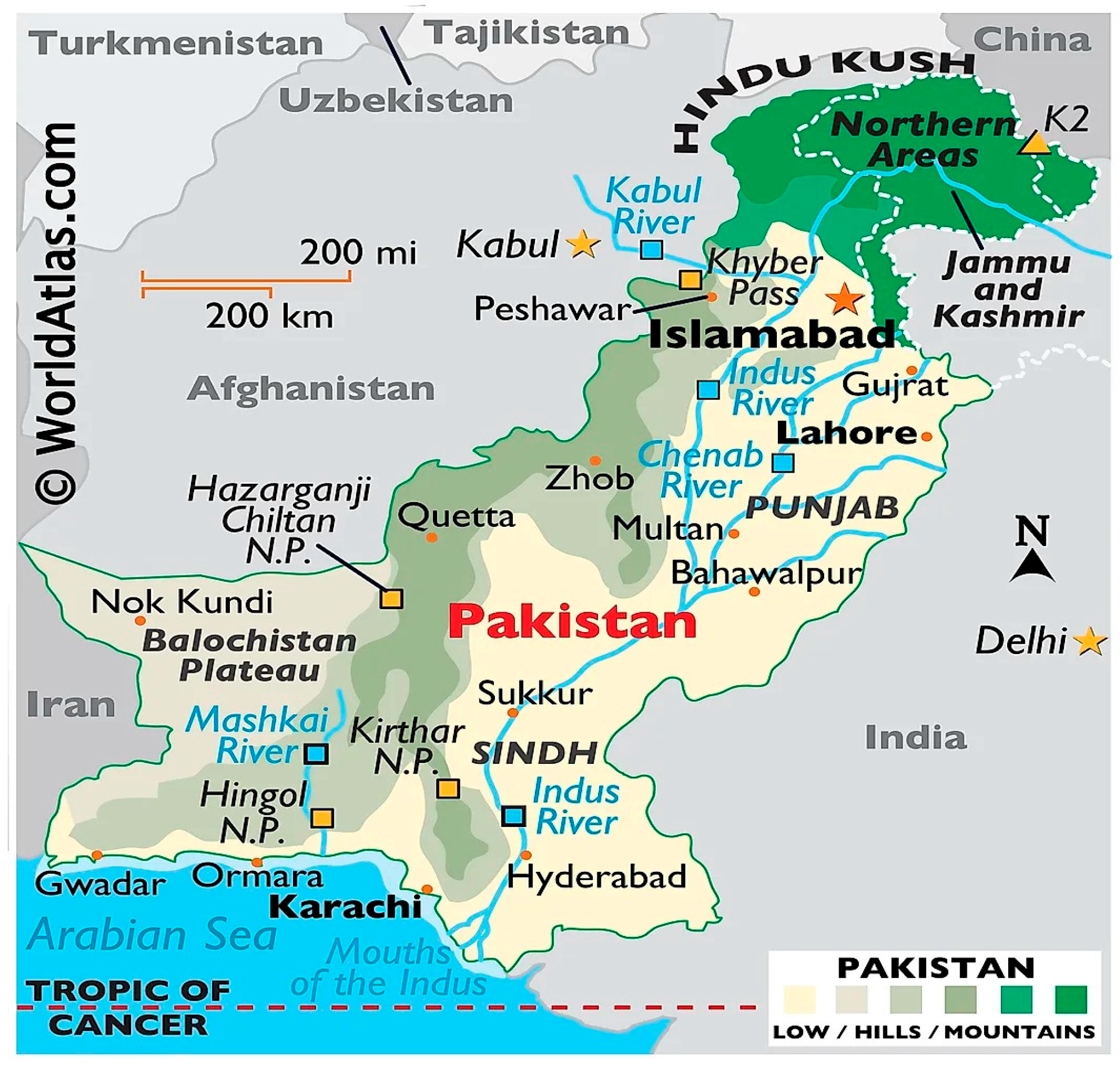
Figure 2.
Rainfall data stations were established across all provinces in consultation with metrological department for modelling of annual precipitation patterns and building a comprehensive picture of overall rain situation across Pakistan.
Figure 2.
Rainfall data stations were established across all provinces in consultation with metrological department for modelling of annual precipitation patterns and building a comprehensive picture of overall rain situation across Pakistan.
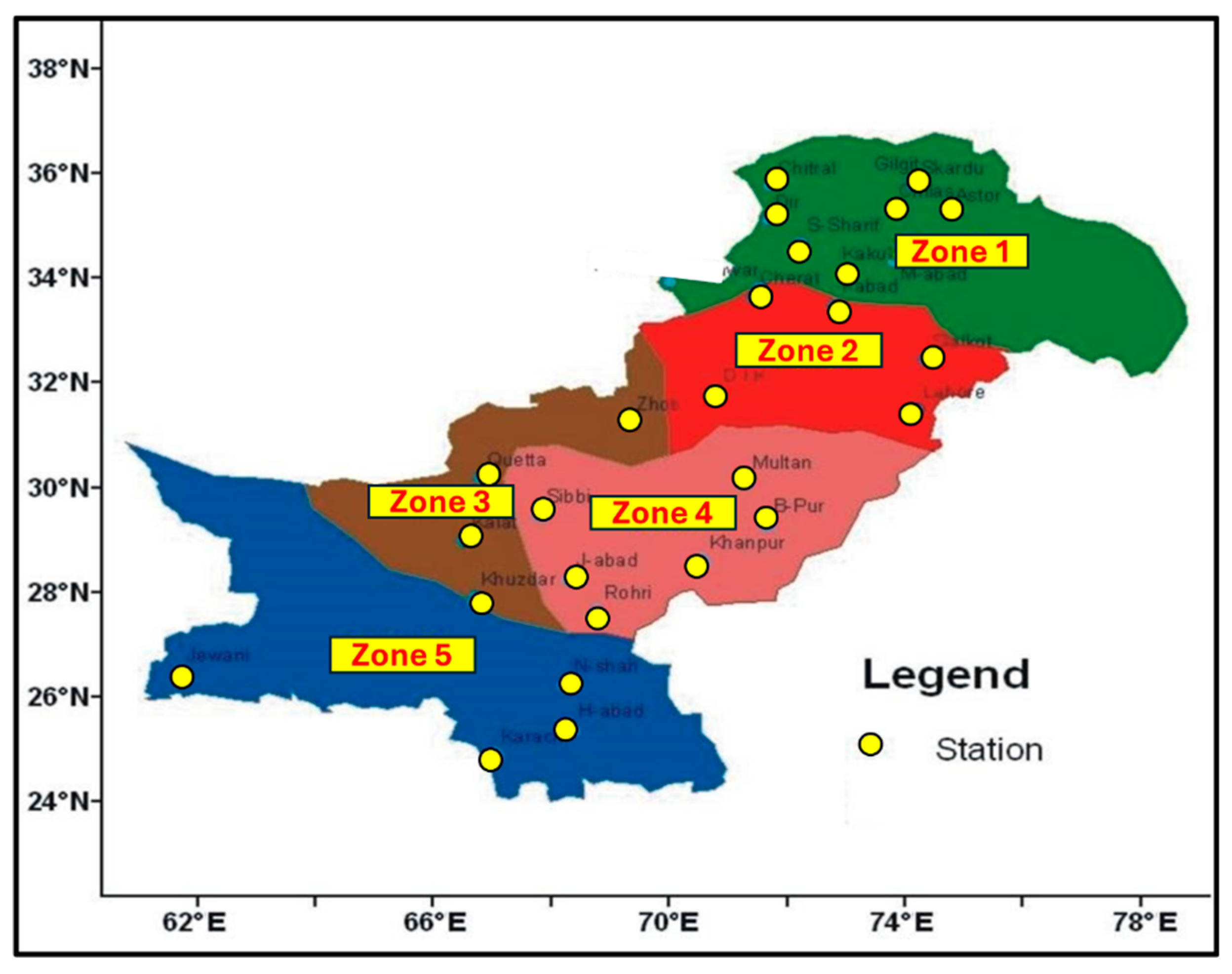
Figure 3.
Indus basin area of field visits staring from Skardu/ Gilgit in the north along the Indus valley covering 3 major dams, Mangla, Tarbela and Chashma, barrages and Headworks, Panjnad where all five rivers converge in Punjab before moving as one artery of River Indus to Arabian sea. The field visits helped in investigating the water management in Pakistan in a structured manner.
Figure 3.
Indus basin area of field visits staring from Skardu/ Gilgit in the north along the Indus valley covering 3 major dams, Mangla, Tarbela and Chashma, barrages and Headworks, Panjnad where all five rivers converge in Punjab before moving as one artery of River Indus to Arabian sea. The field visits helped in investigating the water management in Pakistan in a structured manner.
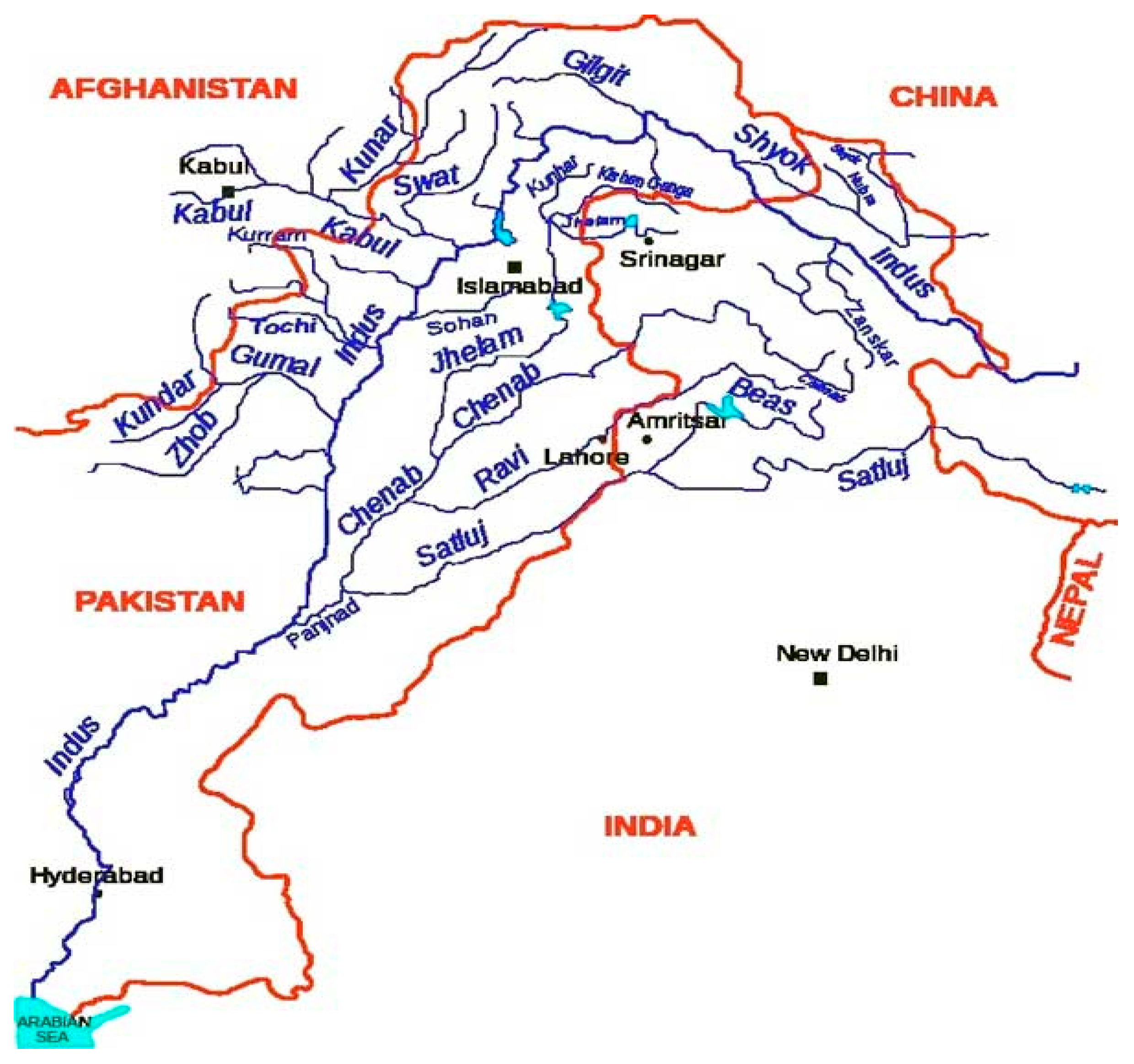
Figure 4.
Comparative rainfall graph showing the average monsoon rains in Pakistan in last 3 years (Source: Pakistan metrological department).
Figure 4.
Comparative rainfall graph showing the average monsoon rains in Pakistan in last 3 years (Source: Pakistan metrological department).
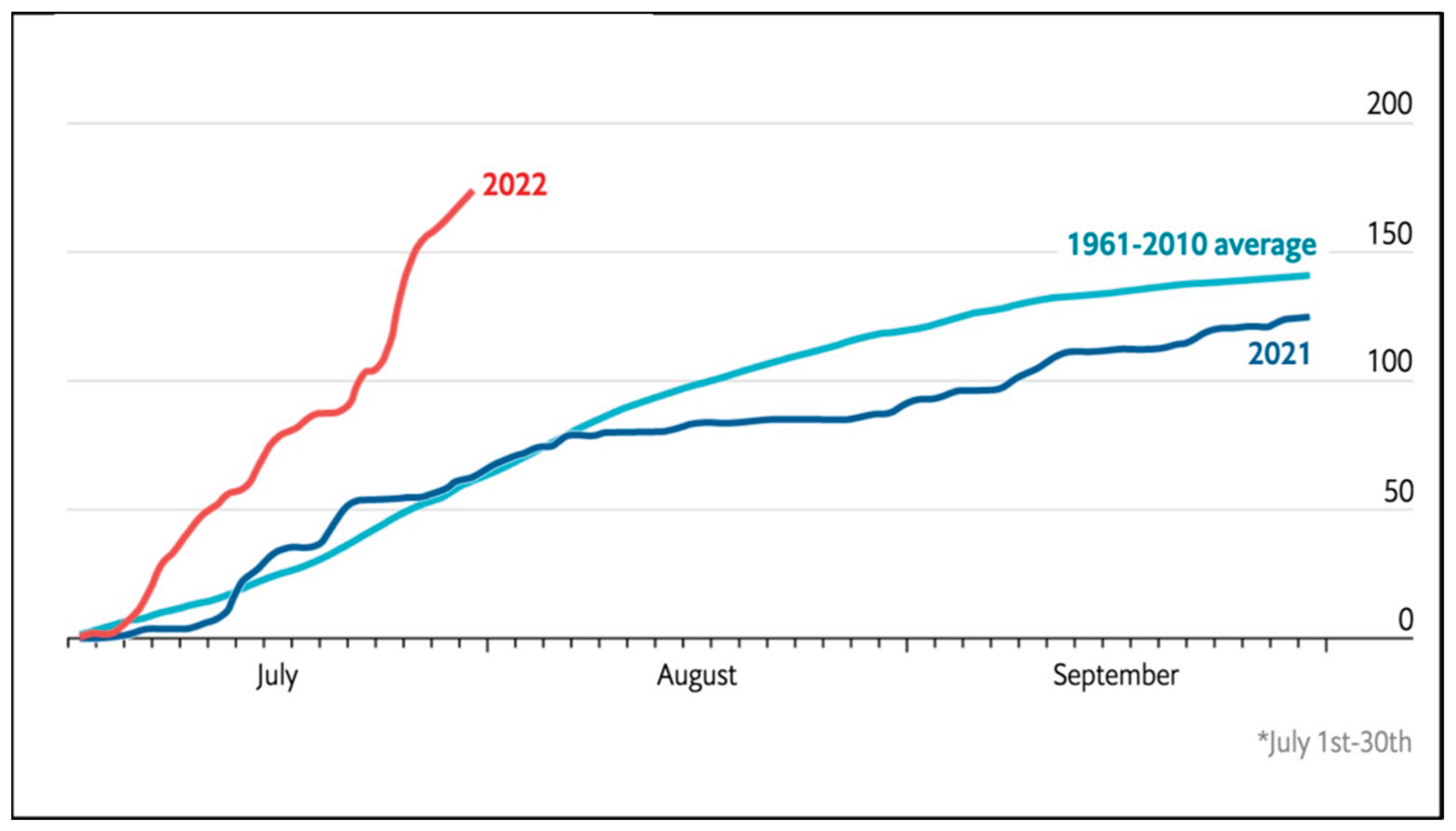
Figure 5.
Water situation in Pakistan by 2025. The population graph is going up and water availability is declining every year, therefore, by 2025 the situation will be grave where Pakistan may transit from water stress to water scarce country.
Figure 5.
Water situation in Pakistan by 2025. The population graph is going up and water availability is declining every year, therefore, by 2025 the situation will be grave where Pakistan may transit from water stress to water scarce country.
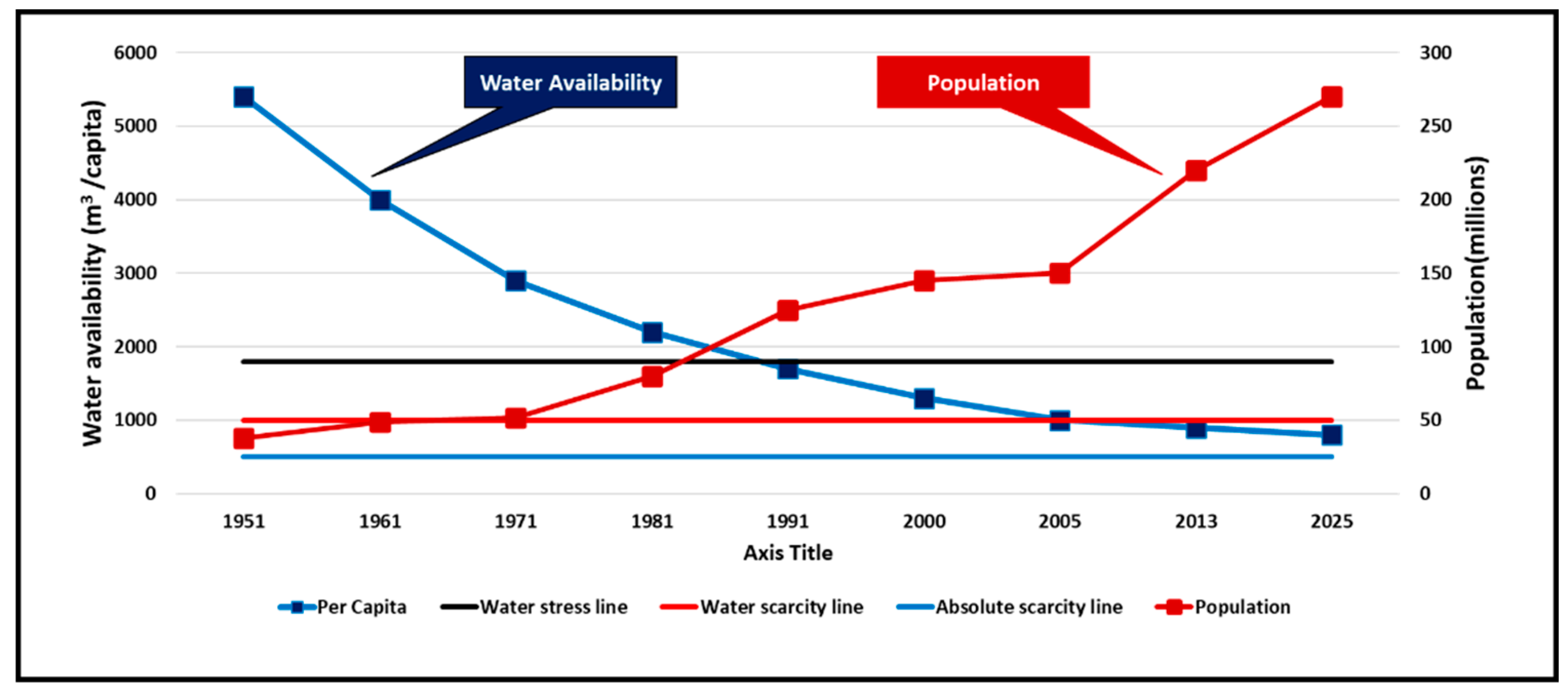
Figure 6.
Projected water situation in Pakistan by 2025, where per capita availability of water will drop significantly as compared to 1960s and 1970s, pointing towards alarming proposition.
Figure 6.
Projected water situation in Pakistan by 2025, where per capita availability of water will drop significantly as compared to 1960s and 1970s, pointing towards alarming proposition.
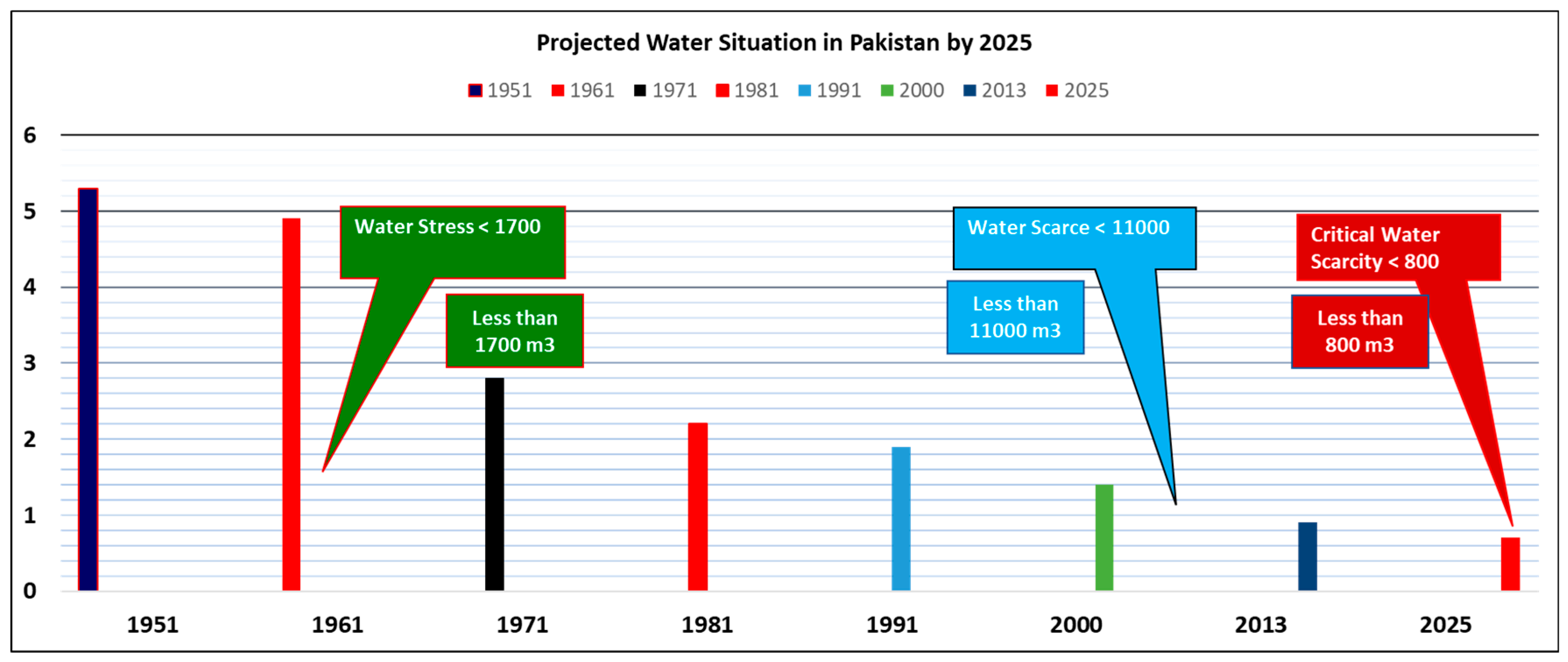
Figure 7.
Indicate the sources of groundwater and its sectoral distribution.
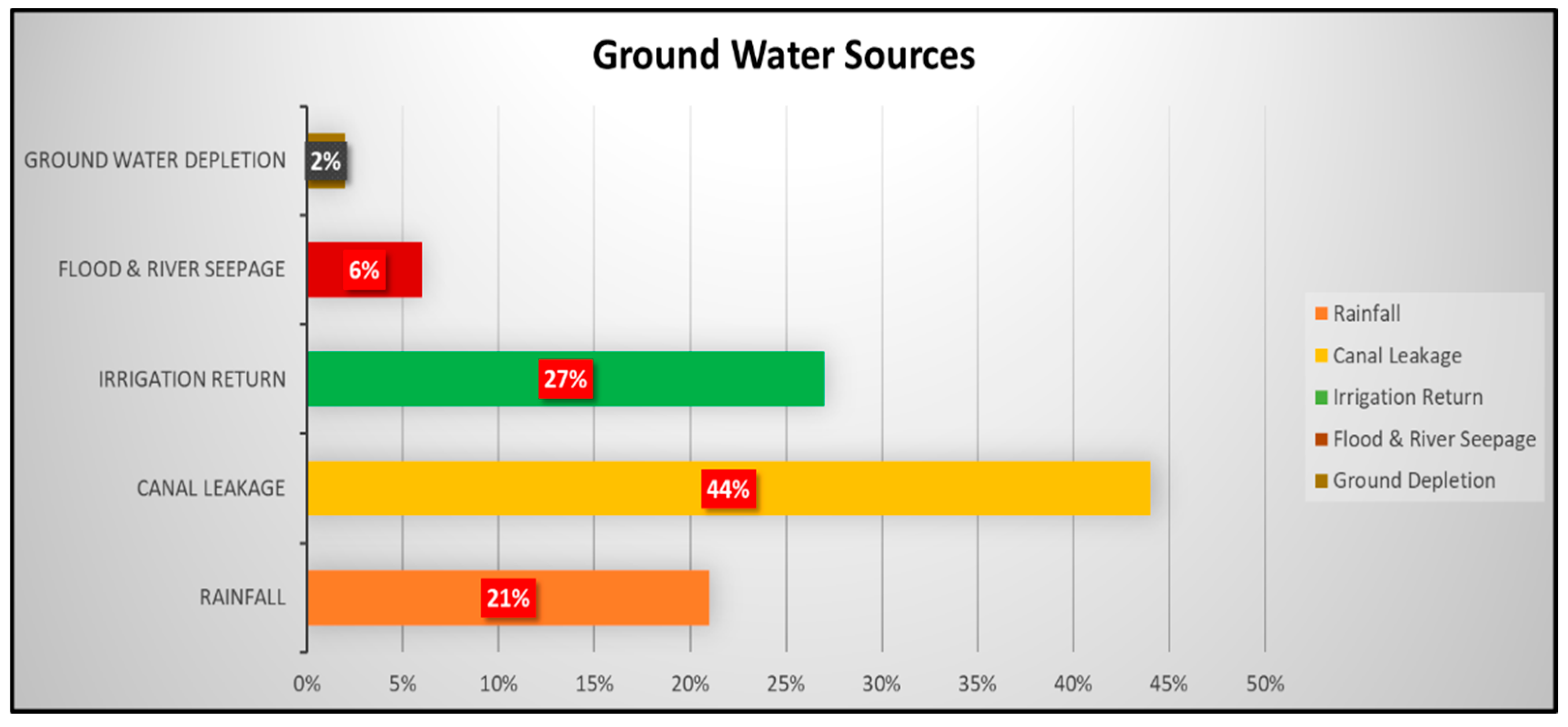
Figure 8.
Indus Rivers System in Pakistan and spatial distribution of various rivers passing across the length and breadth of Pakistan.
Figure 8.
Indus Rivers System in Pakistan and spatial distribution of various rivers passing across the length and breadth of Pakistan.
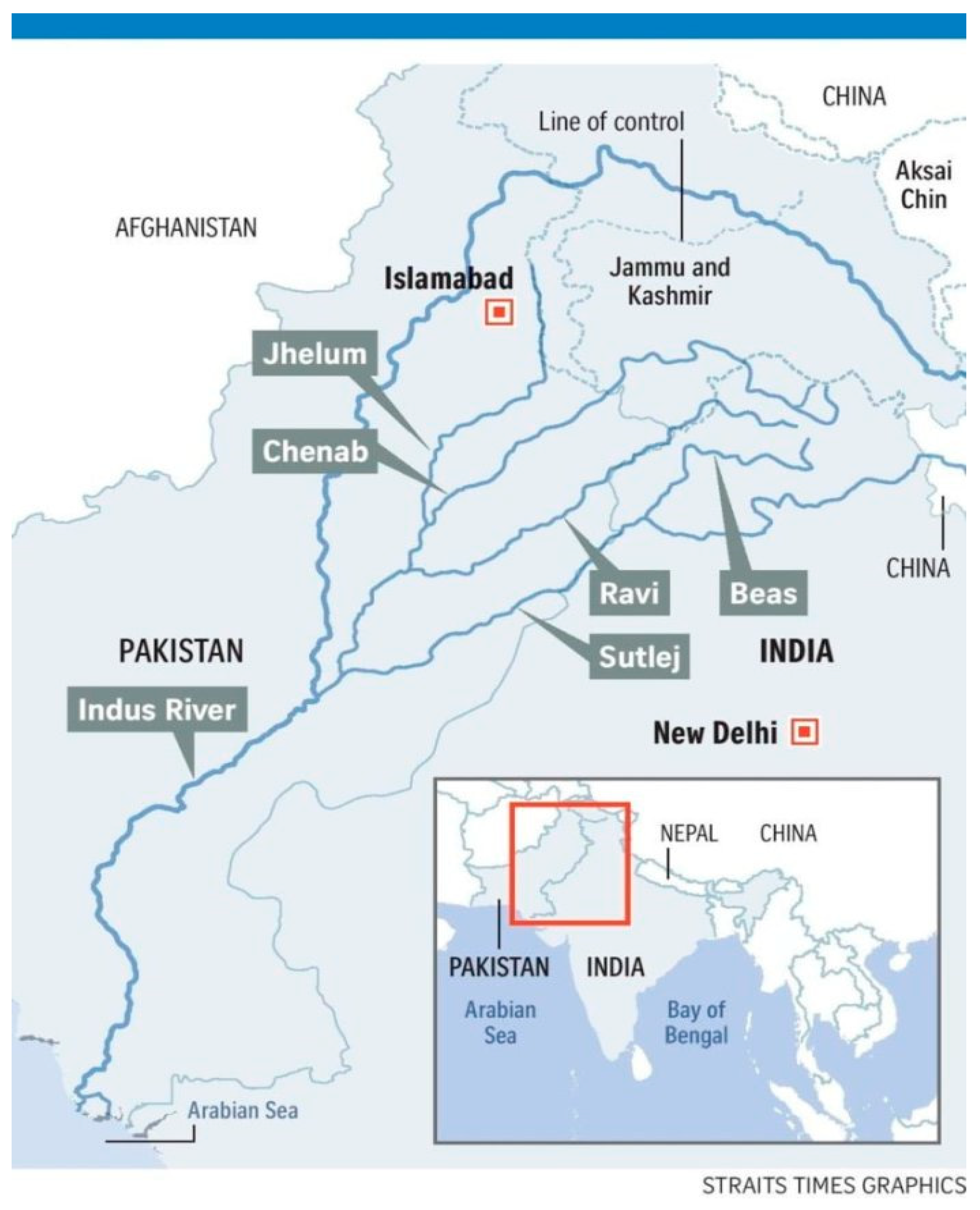
Figure 9.
Shows transboundary river water distribution between India and Pakistan through Indus water treaty (IWT), which was concluded in 1960 and stood the test of times during past wars with India in 1965 and 1971. This was guaranteed by world bank and provides robust water distribution mechanism and water related dispute resolution platform for both countries.
Figure 9.
Shows transboundary river water distribution between India and Pakistan through Indus water treaty (IWT), which was concluded in 1960 and stood the test of times during past wars with India in 1965 and 1971. This was guaranteed by world bank and provides robust water distribution mechanism and water related dispute resolution platform for both countries.
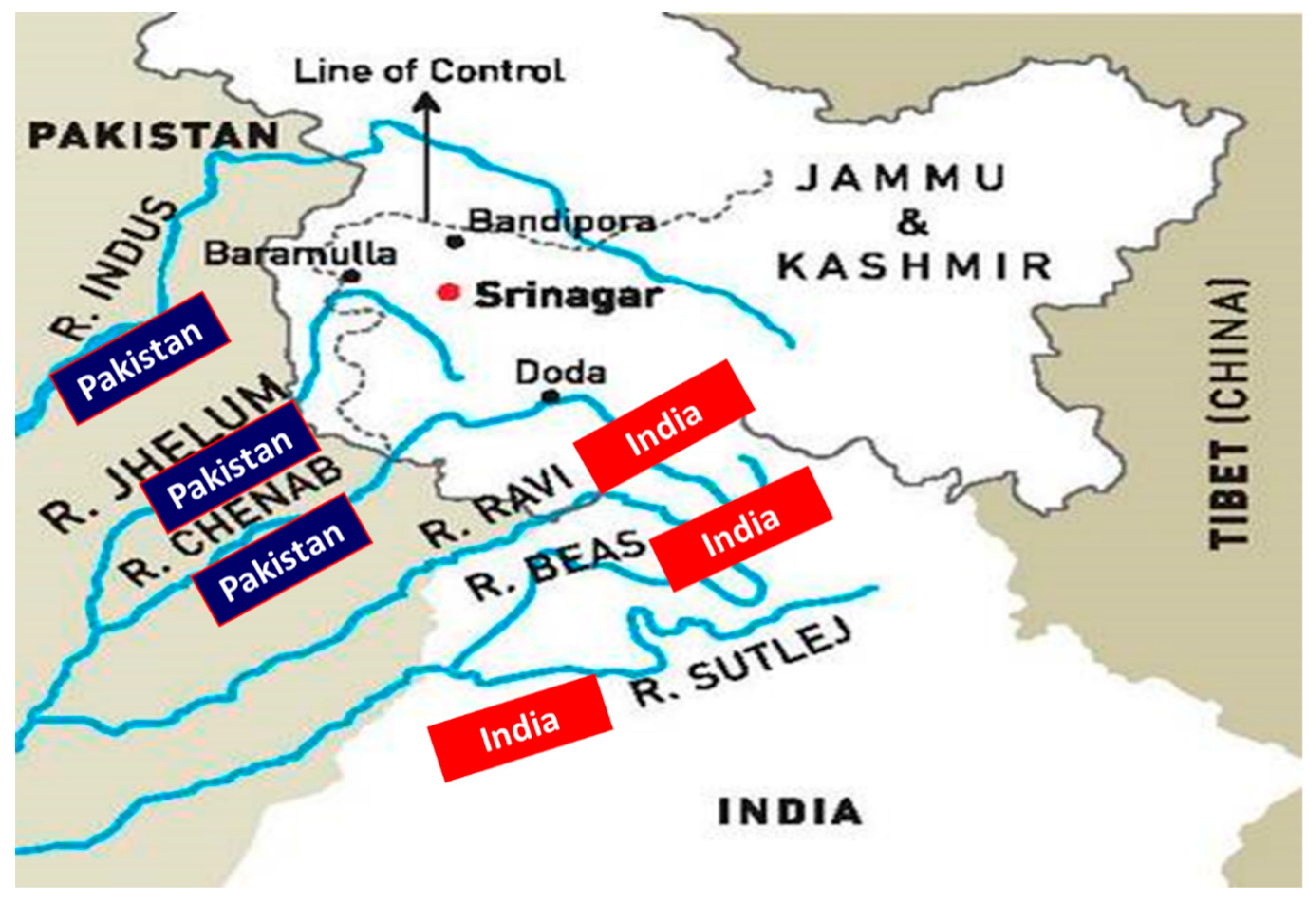

Table 1.
ANOVA results of average rainfall for ascertaining the changing weather precipitation patterns due to impacts of climate change on Pakistan.
Table 1.
ANOVA results of average rainfall for ascertaining the changing weather precipitation patterns due to impacts of climate change on Pakistan.
| Description | Values | Zone 1 | Zone 2 | Zone 3 | Zone 4 | Zone 5 |
| Observation points | 12 | 5 | 5 | 8 | 5 | |
| 20 years average | valid/ missing values | 296/4 | 178/6 | 119/5 | 176/7 | 120/1 |
| Mean | Used values | 69.53 | 65.80 | 35.78 | 24.45 | 33. 15 |
| 5% trimmed Mean | 67.43 | 63.67 | 34.53 | 22.34 | 30.73 | |
| Median | 61.13 | 59.05 | 31.40 | 20.20 | 26.00 | |
| Std. Error | 3.71 | 3.70 | 1.28 | 1.05 | 3.30 | |
| 95%CI | Lower Bound | 62.28 | 60.42 | 29.10 | 21.47 | 28.25 |
| Upper Bound | 72.80 | 73.40 | 34.48 | 23.63 | 37.60 | |
| Skewness | 0.40 | 1.10 | 1.28 | 1.05 | 1.36 | |
| F- Value | 1.85 | 0.89 | 3.65 | 1.33 | 5.79 | |
| Sig. | 0.16 | 0.42 | 0.05 | 0.23 | 0.00 |
Disclaimer/Publisher’s Note: The statements, opinions and data contained in all publications are solely those of the individual author(s) and contributor(s) and not of MDPI and/or the editor(s). MDPI and/or the editor(s) disclaim responsibility for any injury to people or property resulting from any ideas, methods, instructions or products referred to in the content. |
© 2025 by the authors. Licensee MDPI, Basel, Switzerland. This article is an open access article distributed under the terms and conditions of the Creative Commons Attribution (CC BY) license (http://creativecommons.org/licenses/by/4.0/).
Copyright: This open access article is published under a Creative Commons CC BY 4.0 license, which permit the free download, distribution, and reuse, provided that the author and preprint are cited in any reuse.


