

Submitted:
19 December 2023
Posted:
21 December 2023
You are already at the latest version
Abstract
Emollients are valued ingredients of many cosmetic products and medical devices used to support the treatment and prevention of many skin diseases. Despite the fact that they are one of the oldest cosmetic ingredients, raw materials as well as new recipe solutions are constantly being sought, the main goal of which is to obtain products with the most favorable physicochemical properties while improving the hydration of the stratum corneum and softening and smoothing the skin. This article presents the results of physicochemical tests of selected emollients: natural [Macadamia Integrifolia Seed Oil, Ricinus Communis Seed Oil, Prunus Amygdalus Dulcis, Vitis Vinifera (Grape) Seed Oil], semi-synthetic Caprylic/Capric Triglyceride and synthetic (Octyldodecanol, Dicaprylyl Carbonate, Dibutyl Adipate). Then, recipes for cosmetic oils were developed, differing in the type and concentration of emollients used. The obtained formulations were subjected to physicochemical tests (dynamic viscosity, surface tension, wetting angle, color assessment) and selected parameters of the epidermal barrier function (skin hydration and lubrication) were assessed. By appropriately selecting the type and concentration of emollients in the cosmetic oil recipe, it is possible to obtain products with the appropriate ability to spread on the skin, form a uniform protective layer on the skin and remain on the skin for a sufficiently long time. The observed improvement in skin hydration and the level of lubrication after using formulations containing mixtures of natural and semi-synthetic/synthetic emollients confirms that both groups of these raw materials can be components of cosmetic body oil recipes with an emollient effect, and the products themselves constitute an important element of the care of skin affected by the disease process.
Keywords:
emollients
; vegetable oils
; body oils
; skin hydration
; skin lubrication
; physicochemical properties
1. Introduction
Emollients are multifunctional, lipophilic, water-insoluble raw materials used in cosmetology, dermocosmetology and dermatology [1]. Emollients can also be defined as: “cosmetics ingredients which help to maintain the soft, smooth, and pliable appearance of the skin. “Emollients function by their ability to remain of skin surface or in stratum corneum to act as lubricant, to reduce flaking, and to improve the appearance of the skin” by CTFA dictionary [2,3]. They are therefore key raw materials used in the formulations of care products such as body oils, balms, milks, creams, and ointments [4]. They are also present in the formula of rinse-off cosmetics, e.g. bath liquids, shower gels, shampoos, bath oils and in color cosmetics, e.g. lipsticks, lip glosses and powders [5,6,7]. Typically, emollient ingredients constitute from a few to even 30% of the composition in o/w emulsions, while in the case of w/o emulsions and anhydrous formulations it is over 50% of the composition. Taking their chemical structure as the division criterion, emollients can be divided into 4 main groups: hydrocarbons, fatty alcohols, esters and silicone derivatives [8]. Emollients with high molecular weights and low polarity (such as Vaseline, mineral oil, paraffin, alcohols and fatty acids) mainly have an occlusive, epidermal effect. They remain on the surface of the epidermis and do not penetrate the structures of the stratum corneum [8,9]. Emollients may also interact with the intercellular cement structures of the stratum corneum. Then they partly remain on the skin surface, creating an occlusive barrier, and partly penetrate the intercellular cement structures of the stratum corneum. The condition for such a mechanism of action is the ability of the substance to dissolve in lipids. Examples include lanolin, sterols and ceramides, which, as a result of penetration into the intercellular cement structures of the stratum corneum, lead to the reconstruction of the epidermal barrier. This applies to compounds of moderate polarity and not very large (average) molecular weights [10]. There is also a group of emollients that have biological activity in the living layers of the epidermis, e.g. essential fatty acids (EFAs) and their derivatives, but also other compounds that are agonists for peroxisome proliferator-activated receptors (PPAR). Biologically active emollients constitute a small group of raw materials. These compounds, by activating specific nuclear receptors, enhance the synthesis of endogenous lipids, improving the function of the epidermal barrier, and, moreover, by inhibiting NFkB, Th2 responses, mast cells and interculin, they exert anti-inflammatory effects similar to those of corticosteroids. Moreover, they also undergo biochemical changes that lead to the formation of eicosanoids [11,12,13].
Not so long ago, the term “emollients” was associated only with raw materials that are ingredients of cosmetics. Currently, this term is also used to describe specialized dermocosmetics and medical devices intended for the care of particularly demanding skin, making emollient preparations an important element in the prevention and support of the treatment of many dermatoses, especially those in which disorders of the function and structure of the epidermal barrier play an important pathogenetic role [14]. . They are used as monotherapy or as a complement to an intensive treatment process. Examples of skin diseases in which emollients play a key role are atopic dermatitis (AD) [15,16], seborrheic dermatitis [17] and psoriasis [18,19]. Emollients are also the first choice product for dry skin or in infant skin care [20]. In physicochemical terms, emollient products are mixtures of both hydrophobic and hydrophilic ingredients. They can come in many forms - in the form of o/w and w/o emulsions, but also stable formulations different from emulsions, emulsifier-free mixtures of ingredients with different properties and different mechanisms of action, such as body oils, lotions with oils, bath gels or ointments. The selection of the appropriate form of the preparation depends on the skin condition, age, user preferences and the expected therapeutic effect [14,21]. Generally, these are hypoallergenic products that do not contain dyes, foaming agents, fragrances or preservatives. As a result of using preparations with an emollient effect, the epidermis is regenerated and its functioning is improved. The skin becomes moisturized, oiled and more elastic. Moreover, it is protected against damage, cracks, peeling and penetration of undesirable exogenous substances [22]. The ingredients of emollient preparations are emollients used in combination with humectants (e.g. urea, glycerin, sorbitol, hyaluronic acid), but also substances with anti-pruritic, anti-aging, immunomodulatory and bacterial biofilm-reducing properties [14]. Emollients play the role of occlusive ingredients, but also substances that replenish epidermal lipids. Raw materials with an occlusive effect include both natural and synthetic substances, e.g. esters, triglycerides, fatty alcohols, fatty acids (e.g. isopropyl myristate, isopropyl palmitate, caprylic-capric triglyceride), ceramides, cholesterol, vegetable oils (e.g. sweet almond oil, sunflower seed oil, borage oil), waxes (e.g. beeswax, microcrystalline wax, carnauba), animal oils (e.g. lanolin), mineral oils (e.g. paraffin oil), silicone oils (e.g. polydimethylsiloxanes). Examples of physiological epidermal lipids that regulate the proper differentiation of corneocytes are: unsaturated fatty acids, cholesterol, squalenes, phospholipids, and sterols [8,9,14].
Over the years, the type of emollients used in cosmetics has changed. The first cosmetic emulsions used emollients of natural origin, e.g. waxes, fats, oils. Later, simple, synthetic hydrocarbons were used - solid paraffins, paraffin oils, petroleum jelly. Then, changing consumer expectations forced changes in the forms of emulsions so that they had better spreadability and did not give a sticky or greasy feeling, which was associated with a change in the basic chemical structure of emollients. This resulted in the introduction of numerous synthetic emollients to the cosmetic market, which ensured appropriate sensory sensations during application [8,9,23]. Currently, there are numerous trends on the cosmetics market related to growing ecological awareness and the need to use natural products. An example is the principle of sustainable development. It concerns the impact on environmental protection through the use of raw materials from renewable sources and the development of cleaner production methods. It is a combination of ecological and economic issues. This principle is used in the production of cosmetic raw materials as well as finished cosmetics [24,25]. Another example is the popularity of the “zero waste” trend in the beauty world, which aims to protect all earth’s resources through responsible production, consumption, reuse and recovery of all products, packaging and materials[26,27]. However, the strongest trend that has been observed on the cosmetics market for several years is the increased interest in raw materials and natural products. The consumer of natural products is usually an engaged person, aware of the impact of chemical additives on health, relatively wealthy and focused on the above-average quality of the products purchased. These are pro-ecological people who prefer a healthy and sustainable lifestyle, the so-called LOHAS (Lifestyle of Health and Sustainability) consumers [28]. According to Future Market Insights, the volume of the global market for this type of products will grow annually by approximately 5% until 2027 [29]. This confirms the current importance of the use of natural raw materials in cosmetic formulations, as well as those with emollient properties. Authors Pinto and others undertook scientific research in this direction in their work. They showed [30] that vegetable oils can be used as a sustainable alternative to synthetic emollients and are promising in replacing Vaseline in skin care formulations in terms of skin occlusive effect. They further indicated that vegetable oils did not provide a high immediate skin occlusive effect (15 minutes after application) as did Vaseline. However, most of them showed an occlusive effect comparable to Vaseline within 6 hours. Authors Boom et al. [31] also undertook research to assess the impact of replacing conventional cosmetic ingredients (e.g. hydrocarbons, silicones and preservatives) with sustainable, natural raw materials on the physical, chemical and microbiological properties of emulsions for topical use. They demonstrated that it is possible to develop attractive sustainable cosmetic formulas with high standards of quality and marketability. Moreover, the literature contains studies on various emollients in terms of analyzing their physicochemical properties or their use in cosmetic formulations, mainly in emulsions [1,4,8,23,32,33,34]. However, few studies focus on the impact of emollients on the physicochemical and functional properties of emollient preparations such as body oils. Therefore, a research gap has been identified towards the analysis of cosmetic oils, so important in the prevention and support of the treatment of many dermatoses, as mixtures of various emollients. Which is why In this study, an attempt was made to analyze the physicochemical properties of cosmetic oils in relation to selected parameters of the epidermal barrier function. In the first stage of work, four esters and four vegetable oils were tested as potential emollients used in the cosmetics industry. These emollients were divided into two groups: synthetic/semi-synthetic raw materials and natural raw materials, in order to attempt to empirically verify their physicochemical properties. The next stage of the work was the analysis of the physicochemical properties (dynamic viscosity, surface tension, contact angle, product color) of a series of cosmetic oils in relation to selected parameters of the epidermal barrier function (degree of skin hydration and lubrication). Cosmetic oil recipes differed in the percentage of natural to synthetic emollients, with formulas 1-3 containing a predominance of vegetable oils (95% by weight), and formulas 3-4 containing a predominance of semi-synthetic and synthetic liquid emollients (95% by weight).
2. Results
2.1. Physicochemical properties of natural and synthetic cosmetic emollients
- Spreading properties of cosmetic emollients
Spreading properties of raw materials and cosmetic products can be defined as their ability to cover the skin faster or slower [1]. The speed of the spread of raw materials depends on many factors, including: density, dynamic viscosity and surface tension. Therefore, in the first stage of the research, the features that affect the ability to spread natural and synthetic emollients were determined using instrumental analysis (density, viscosity and surface tension). Figure 1 shows physicochemical properties of natural and synthetic/semisynthetic cosmetic emollients.
Significant differences in dynamic viscosity (η) can be observed between the tested raw material samples. Dibutyl Adipate (DA) and Dicaprylyl Carbonate (DC) are characterized by the lowest viscosity value among the tested synthetic emollients, amounting to approximately 18-21 mPa·s. In turn, Octyldodecane (OD) has the highest η value (114 mPa·s), which is over 6 times higher than the least viscous Dibutyl Adipate (DA). Unlike the results of measuring the dynamic viscosity of synthetic emollients, the results of measuring the viscosity of natural emollients do not differ significantly from each other. Among the tested vegetable oils, grape seed oil (VVSO) and sweet almond oil (PADO) are characterized by the lowest viscosity values, 74.2 and 86.8 mPa·s, respectively. In turn, the highest η value among the tested natural oils was recorded for macadamia nut oil (MTSO), which is 39 mPa·s more viscous than the least viscous grape oil (VVSO).
The density of synthetic emollients Octyldodecane (OD) and Dicaprylyl Carbonate (DC) is 0.841 and 0.843 g/cm³, respectively. Caprylic/Capric Triglyceride (CCTG) and Dibutyl Adipate (DA) have higher density values, with the highest density among synthetic emollients observed for Dibutyl Adipate (DA) - 0.962 g/cm³. No impact noted type of natural emollients on the density of this type of raw materials. Castor oil (RCSO) has the highest density value (0.964 g/cm³) compared to the other tested vegetable oils. Grapeseed oil (VVSO), sweet almond oil (PADO) as well as macadamia nut oil (MTSO) are characterized by comparable density results, within margins of error, ranging from 0.916-0.924 g/cm³.
Surface tension values for natural emollients ranged from 31.6 to 37.1 mN/m, with the highest value observed for castor oil (RCSO) and the lowest for macadamia nut oil (MTSO). Lower values of surface tension σ <30 mN/m were recorded for the following synthetic emollients: CCTG, DA and DC. Dicaprylyl Carbonate (DC) had the lowest value of the tested parameter, σ=24.96 mN/m, and Octyldodecane (OD) had the highest value, σ=31.86 mN/m.
Color evaluation of cosmetic emollients
The CIE Lab model is currently one of the most popular ways of describing color and is the basis of modern color diagnostic systems [35]. Color measurement is a method commonly used to qualitatively describe various types of cosmetic products and their ingredients. Among other things, synthetic and natural emollients may have different abilities to change the color of cosmetic products, e.g. emulsions.
The results of the L (lightness) parameter presented in Figure 2A indicate small differences between the tested synthetic emollients, which are within the margin of error. These values are within in the range from 25.64 to 26.40. The highest value of the L parameter - 26.4 was recorded for Octyldodecane (OD), which means that it is lighter than the rest of the tested synthetic emollients. The values of the a parameter defining the border of red and green color do not fluctuate between individual emollients (Figure 2A), the results of which are between -0.23 and -0.28, with the exception of Caprylic/Capric Triglyceride (CCTG) whose a parameter is -0.37. The values of b, which determine the border of yellow and blue, similarly to the parameter a, do not differ significantly. The parameter b, however, unlike the parameter a, is positive. We can also again distinguish Caprylic/Capric Triglyceride (CCTG), which in this case has the highest value of the b parameter, 0.48. For Dibutyl Adipate (DA) and Octyldodecane (OD), the same value of the b parameter was observed - 0.39.
Taking into account the results of colorimetric tests for natural emollients (Figure 2B), there was no significant influence of the type of emollient on the results of the L parameter. The results of the L parameter oscillated within the error range from 26.18 to 26.98. As in the case of synthetic emollients, the values of parameter a are negative and those of parameter b are positive. Grapeseed oil (VVSO) has the highest value of the a parameter, -0.37, among natural emollients. Castor oil (RCSO) has the lowest value of this parameter (a=-0.58). Analyzing the b values presented in Figure 2B, which mark the boundaries of yellow and blue, it can be seen that grape seed oil (VVSO) has the highest value of 2.74, while sweet almond oil (PADO) has the lowest value of 1.40.
2.2. Physicochemical properties of cosmetic oils
- Spreading properties of body oils
One of the important factors affecting the quality of the final product in the case of cosmetics is their ability to spread on the skin, which, similarly to raw materials, depends on the surface tension, dynamic viscosity and wetting angle of the cosmetics. According to Ivens, Steinkjer [36], the ability to spread on the skin is also controlled by the physicochemical form of the preparation. Viscosity, density, surface tension and wetting angle are the basic indicators of the quality of cosmetic oils, determining the consistency and wetting ability of this type of products. It is important that the parameters are at a level that allows the oil to be applied to the skin, good extraction from the packaging and adequate wettability. Figure 3 shows the results of testing the surface tension, dynamic viscosity and contact angle of the developed cosmetic oils.
There is a significant difference in the results of dynamic viscosity, surface tension and contact angle between the tested cosmetic oils made according to recipes F1-F3 and F4 - F6. Recipes F1 - F3, in which the predominant percentage were vegetable oils, were characterized by a significantly higher viscosity (6-10 times) than recipes F4 - F6, in which synthetic emollients predominated (Figure 3A). There is also a noticeable difference in the viscosities of the F1-F3 recipes with a high percentage of natural oils. The highest viscosity η = 223.7 mPa·s is characterized by body oil (F2), which contains 50% castor oil (RCSO) and 30% macadamia nut oil (MTSO). In formulations F4 - F6, with the main share of synthetic emollients, the difference in dynamic viscosity results was insignificant. ƞ values ranged from 23-27 mPa·s.
Formulations with a predominance of vegetable oils (F1-F3) are characterized by significantly higher contact angle values (Figure 3C) than formulations with synthetic emollients (F4-F6). The values of contact angles (θ) on the PMMA surface for cosmetic oils based on natural oils range from 22.7º to 25º, while those based on synthetic emollients range from 10.6º to 14.7º. The lowest value of the contact angle (θ = 10.6º) was recorded for the F4 formulation containing mainly (50%) Dicaprylyl Carbonate (DC) and 30% Dibutyl Adipate (DA). However, the highest value of the contact angle (θ = 25) was recorded for the F2 formulation containing mostly (50%) castor oil (RCSO) and 30% macadamia nut oil (MTSO).
For formulations F1-F3, the surface tension values (Figure 3B) are higher than for formulations F4-F6, with the highest value of the tested parameter (σ = 32.16mN/m) characteristic of cosmetic oil F2. However, the lowest value was observed for F4 body oil and is 25.1mN/m.
- Color evaluation of body oils
In order to assess the color of cosmetic oils containing natural and synthetic emollients, colorimetric measurements were performed. Figure 4 shows the results of the determined parameters for the developed body oils.
The test results presented in Figure 4 indicate slight differences between the tested samples in terms of the L parameter, within the measurement error. These values range from 25.36 to 26.50. F1 body oil had the highest L value - 26.50, which means that it is lighter than the rest of the prepared preparations. The lowest L value measurement was recorded for F4 oil, which means that it was slightly darker than the others. However, differences can be noticed between the results obtained for formulations F1-F3 and F4-F6 in terms of parameters a and b. The values of parameter a for recipes in which the main ingredients are natural oils (F1-F3) are lower compared to recipes (F4 -F6), which mostly consist of synthetic emollients. For the F3 cosmetic oil, containing mainly (50%) sweet almond oil (PADO) and (30%) castor oil (RCSO), the lowest value of the tested parameter a (-0.77), among all tested samples. However, the highest value (-0.342) of the a parameter was observed in F5 oil, containing mainly synthetic oils: 50% Caprylic/Capric Triglyceride (CCTG) and 30% Dicaprylyl Carbonate (DC). The obtained results for parameter b, unlike parameter a, have positive values. Differences were observed between recipes F1–F3 and F4–F6. The first group of recipes based on vegetable oils (F1–F3) is characterized by higher values of the b parameter. The highest value (1.77) was recorded for F2 oil, which contains 50% castor oil (RCSO) and 30% macadamia nut oil ( MTSO), and the lowest value of 0.43 was obtained for the F4 formulation containing mainly (50%) Dicaprylyl Carbonate (DC) and 30% Dibutyl Adipate (DA).
2.3. Selected parameters of epidermal barrier function after application of developed cosmetic oils
Measuring the degree of skin hydration and sebum is extremely important for assessing the efficiency of the epidermal barrier. Too little skin hydration and too much or too little sebum production may indicate a poor condition of the epidermal barrier. The hydration state of the stratum corneum is necessary to maintain the physical properties of the skin and a number of internal and external factors that regulate the function of the epidermal barrier. Reduced subcutaneous water concentration may result in abnormal exfoliation of keratinocytes, disruption of the skin’s barrier function and its ability to retain moisture, as well as clinical symptoms such as itching, tingling, and even cracking of the skin [37]. Excess sebum (seborrhea) is manifested by, among others: unsightly shine of the skin, enlarged pores, blackheads and other minor imperfections visible on the skin. In turn, too little sebum secretion leads to a low level of skin lubrication. The skin then becomes thin, dry, dull, unpleasant to the touch and more susceptible to injuries [38]. Additionally, changes in the sebaceous glands may play a role in the pathogenesis of common skin diseases, including acne vulgaris, atopic dermatitis, psoriasis, rosacea, and seborrheic dermatitis [39]. The obtained results of testing the degree of skin hydration and the degree of skin lubrication after the application of the developed body oils are presented in Figure 5.
The degree of skin hydration (control areas) before the application of cosmetic oils was in all cases (Figure 5A) lower than the degree of skin hydration after the application of this type of cosmetics. Based on the results obtained, it was found that the difference in the degree of skin hydration between the control areas and the areas after using body oils (F1–F3) was greater than in the case of the results obtained for preparations based on synthetic emollients (F4–F6). The greatest difference in results can be seen in the case of recipe F2 based on (50%) castor oil (RCSO) amounting to 15.14 a.u. The smallest difference in the level of skin hydration was recorded in the case of F6 cosmetic oil, containing mainly (50%) Dibutyl Adipate (DA) and 30% Caprylic/Capric Triglyceride (CCTG).
The skin oil level results varied depending on the oil used on the skin. The differences in the results ten minutes and thirty minutes after applying body oils were as follows: F1 - 48 µg/cm2; F2 – 21µg/cm2; F 3 – 25µg/cm2; F4 – 29µg/cm2; F5 – 51µg/cm2 and F6 – 41µg/cm2. This means that the average decrease in the level of skin lubrication after using oils F1–F3 (recipes with a predominance of natural emollients) and F4–F6 (recipes with a predominance of synthetic emollients) after thirty minutes was 31.3 µg/cm2 and 40.3 µg/cm2, respectively. The lowest decrease in the level of skin lubrication occurred after the use of F2 oil, which contains mainly 50% castor oil (RCSO) and 30% macadamia nut oil (MTSO).
3. Discussion
Spreading properties are determined by, among others: chemical structure, molecular weight and consistency of the emollient, and provides information about the lubricating nature of the system, which is an important factor when selecting the appropriate emollient for the preparation being developed. In the case of preparations such as care oils intended for use on large body surfaces, the emollients used should have a high ability to spread on the skin. The process of spreading emollients is influenced by their physicochemical properties such as viscosity, density, contact angle and surface tension. Based on the obtained research results, it was shown that the analyzed semi-synthetic and synthetic emollients are characterized by a wide viscosity range (from approximately 21 to 114 mPa·s) compared to natural emollients (from approximately 73 to 112 mPa·s). Douguet, M. et al. in their work [4] found that viscosity is the variable that seems to be the most reliable and effective in predicting the spread of the product on the skin. Moreover, they showed that the spreadability values of silicones, mineral and vegetable oils are influenced, in addition to viscosity, by both surface tension and density. This study showed that vegetable oils are characterized by higher surface tension and density results compared to the results obtained for synthetic emollients. Similar results were obtained by Douguet, M. et al. [4] who claimed that vegetable oils have higher surface tension than silicones, mineral oils and esters. However, M. Gorcea and D. Laura [32] tested four emollients as branched esters. They found that distribution values depended on molecular weight, viscosity and chemical structure. Furthermore, they showed that the higher the viscosity, the lower the spreading values. They also found that more polar esters showed lower surface tension values. This is in accordance with literature data characterizing the ability to distribute synthetic emollients (Table 2). DC with low viscosity and at the same time the lowest surface tension value has a spreading capacity of 1600 mm2/10 min and belongs to emollients with a very high spreading capacity, DA with a value of 1000 mm2/10 min is classified as a raw material with high spreading capacity, OD 600 mm2/10 min and CCTG 550 mm2/10 min with medium spreading capacity. Moreover, Kulawik-Pióro et al., [40] examined the physicochemical properties, i.e. dynamic viscosity, contact angle and surface tension of vegetable oils. These were liquids of various viscosities, of which evening primrose oil had the lowest viscosity and milk thistle oil had the highest. According to Kim et al. [41] and Diamante, Lan [42] these differences result from the content of saturated fatty acids in their composition. Above 16%, an increase in oil viscosity is observed. Milk thistle oil with the highest viscosity contains approximately 19% of saturated fatty acids, while evening primrose oil only 8%. The different viscosities of the oils translate into their ability to spread on the skin. Low surface tension values (32-33 mN/m) and low wetting angle (of the order of 50°) of the tested oils confirmed that, for example, borage and evening primrose oils were characterized by good distribution on human skin. In the case of the vegetable oils used in this study, the content of saturated fatty acids varied and was (Table 3) for MTSO approx. 18% (the presence of acids such as palmitic acid, stearic acid, arachidic acid), PADO approx. 11.5% (presence of acids such as palmitic acid, stearic acid), for RCSO approx. 5.5% (presence of acids such as palmitic acid, stearic acid) and for VVSO approx. 20% (presence of acids such as palmitic acid, stearic acid). Since for RCSO with the lowest saturated acid content the viscosity was above 100 mPa·s as in the case of MTSO with more than 3 times higher saturated acid content, this calls into question the claim of Kim et al. [41] that only saturated acids determine the viscosity of the oil. In turn, [8] noticed that silicone had the lowest surface tension values, and hydrocarbons showed the highest volatility and the lowest viscosity values. The greatest surface properties were demonstrated primarily by esters, and in this group diesters were characterized by a higher polarity content than monoesters. In the case of color test results, it was found that all emollients were characterized by negative values of parameter a, indicating a green color, and positive values of parameter b, indicating a yellow color. Grape seed oil (VVSO) was characterized by the most intense yellow color compared to other vegetable oils. There were also differences in the results of parameters a and b depending on the group of emollients: natural to synthetic/semi-synthetic. Vegetable oils were characterized by more intense green and yellow colors compared to the results obtained for synthetic/semi-synthetic emollients.
In the case of the analysis of the physicochemical properties of a series of cosmetic oils differing in the percentage of natural to synthetic emollients (Chapter 2.2), similar trends were shown as in the case of the results obtained for emollients (Chapter 2.1). Cosmetic oils based on natural emollients (F1-F3) were characterized by higher results of dynamic viscosity, surface tension and contact angle compared to the results obtained for cosmetic oils based on synthetic emollients (F4-F6). It can therefore be concluded that cosmetic oils (F1-F3) containing 95% of vegetable oils (in variable proportions) and 5% of synthetic emollients compared to oils (F4-F6) containing 95% of esters (in variable proportions) and 5% of vegetable oils are products non-polar ones characterized by weaker spreading abilities.
Dynamic viscosity is the basic determinant of the quality of oils, indicating the consistency of this type of cosmetic products. It is important that this parameter has an appropriate level enabling the application of cosmetics to the skin and dosing from the packaging [40]. Cosmetic body oils F1 - F3, in which the predominant percentage were natural oils, were characterized by a significantly higher viscosity (6-10 times) than oils no. F4 - F6, in which synthetic emollients predominated. The viscosity of oils with a higher share of synthetic oils was at the level of 20-25 mP∙s. Lower dynamic viscosity values in the case of formulations with a higher share of synthetic oils may mean that their potential product dosing from the packaging is easier. Viscosity also affects the contact time of the preparation with the skin and the formation of an occlusive layer on the skin [43]. Formulations with a predominance of natural emollients also have a larger wetting angle and higher surface tension values than formulations with a predominance of synthetic emollients. F4 oil containing 50% Dicapryl Carbonate had the lowest values of surface tension and contact angle. However, it can be stated that the obtained values of surface tension and contact angle for the tested F4-F6 body oils have lower values compared to the results obtained for the F1-F3 preparations, indicating the potential good distribution of the cosmetic on the skin, which is consistent with the research results published by [4]. The authors found that, based on research, both dynamic viscosity, contact angle and surface tension have a significant impact on the ability to spread oils onto the skin. Taking into account the assessment of the color of cosmetic oils, differences can be noticed in the case of parameters a and b for the tested body oils. For parameter a, the values varied from -0.40 (F4) to -0.77 (F3).
This means that the intensity of the green color of the tested oils decreases with the predominance of synthetic oils in the recipes. A similar tendency can be observed in the case of parameter b, the intensity of the yellow color also decreases with the predominance of synthetic oils in the formulations. It should be noted that plant substances contain a wide range of active substances that may have the ability to change the color of a cosmetic product [44]. Among others, [45] in their work analyzing the color assessment of cosmetic emulsions with plant extracts, i.e. globe amaranth (Gomphrena globosa L.), butterfly pea (Clitoria ternatea L.), safflower (Carthamus tinctorius L.), pomegranate (Punica sekretum L.), and corn poppy (Papaver rhoeas L.), observed a change in the color of the emulsion from white (base sample) into yellow, red and blue-violet. It can therefore be concluded that natural raw materials do not always have a positive effect, acceptable to the consumer, on the color of the final product, which may change during storage.
Skin hydration is an essential requirement for modern cosmetics, including cosmetic oils. The efficiency of the epidermal barrier depends on a properly developed stratum corneum (stratum corneum) [46]. It is composed of keratinocytes connected by a lipid matrix consisting of ceramides, cholesterol esters and fatty acids. There is a hydrolipid coat on the surface of the stratum corneum. The weakening of this barrier may be caused by: bacteria, allergens, diseases and, consequently, inflammation. Rebuilding the proper protective barrier of the skin can be achieved by using emollients. Taking into account the results obtained in this study, it can be concluded that the use of both synthetic and natural emollients in cosmetic oils contributes to the increase in skin hydration and its lubrication.
The greatest differences in skin hydration values before and after 2 hours after applying the oils were recorded for the F2 recipe with a high proportion of Ricinus Communis Seed Oil (50%). This is due to the presence of fatty acids in the recipe, which have various effects on the skin. Formulation F2 contains castor oil, which belongs to the group of fatty emollients that are quickly absorbed by the skin. It is rich in ricinoleic acid (74-85%), linoleic acid (7.3-10.32%) and oleic acid (5.55-7.55%) (Table 3). Additionally, this formulation contains macadamia oil, in which oleic acid is present at a concentration of 54-68%. Ricinoleic acid, with its many derivatives, exerts skin smoothing and moisturizing activities and recover rough skin [47]. Oleic acid activates lipid metabolism, restoring the barrier function of the epidermis and retains moisture in the skin [48]. Linoleic acid, the most abundant fatty acid in the epidermis, and its derivatives have an essential role in the structure and function of the SC permeability barrier. Linoleic acid therefore improves the epidermal barrier, protects against transepidermal water loss and normalizes skin metabolism. Linoleic acid is also a natural component of sebum [49,50]. Improving skin hydration through the use of emollient mixtures (from the group: Isostearyl Isostearate, Propylene Glycol Dicaprylate/Dicaprate, PPG-3 Benzyl Ether Ethylhexanoate, PPG-3 Benzyl Ether Myristate, Triethylhexanoin and Caprylic/Capric Triglyceride) in prototypes of olive oil recipes for children in relation to olive oil containing only mineral oil was also demonstrated in work [51]. However, in work [52], the authors examined the effect of various vegetable oils from the steppe zone of southern Ukraine (Hypericum perforatum L., Silybum marianum L., Gaertn, Línum usitatíssimum L., Triticum aestivum L., Sésamum índicum L., Sinápis álba L., Cucúrbita p é po L.) among others to moisturize and lubricate the skin.
They found that the emulsion based on the proposed mixture of vegetable oils provided a good balance of moisture and fat on the skin for one hour, in contrast to the short-term effect of the emulsion based on mineral oil. The level of skin lubrication after application of the developed cosmetic body oil formulations remained at a higher level in the case of formulations with a predominance of vegetable oils. The occlusive potential of vegetable oils depends on the content of acids in their composition, such as linoleic and γ-linolenic acid. Occlusive ingredients found in vegetable oils are also the previously mentioned saturated acids, such as palmitic and stearic acids [40]. Among the analyzed vegetable oils used in the formulations, the highest content of linoleic acid was found in sweet almond oil (27.69%) and castor oil (10.32%), while macadamia nut oil contained the highest content of the mentioned saturated acids (15.5%). . Moreover, RCSO and MTSO are characterized by higher viscosity than other oils, which may have a positive impact on their substantivity to the skin. The penetration ability of the emollients into the lipophilic stratum corneum also depends on both the polarity and the molecular size of compound [40]. In most cases plant oils, when applied topically, remain at the surface of skin, without deep penetration into the first upper layers of the SC [53]. Polar emollients are those whose surface tension is below 30 mN/m, and non-polar emollients are those whose surface tension is above 30 mN/m. According to the research results (Figure 1), vegetable oils were non-polar emollients - they could create a continuous occlusion on the skin, retaining moisture in the skin and providing it with a good protective barrier. While the synthetic emollients tested (except OD) can create a discontinuous occlusion allowing the skin to breathe and not clog pores. Therefore, both formulations F2 and F3 showed one of the highest levels of lubrication after 10 minutes, respectively: 248, 245 µg/cm2. Moreover, the F2 formulation showed the lowest decrease in the level of flaking over the analyzed period. In this case, in addition to the composition of the formulation, the highest contact angle, the highest viscosity and surface tension had an influence. Features of the formulation ensure that the product spreads evenly on the skin, creates a uniform protective layer and remains on the skin for a sufficiently long time.
4. Materials and methods
4.1. Chemicals
4.2. Formulations
A series of cosmetic oil recipes (Table 1) consisting of a mixture of emollients have been developed. Taking into account the results of physicochemical tests from chapter 2.1, the following emollients were selected for further research: Caprylic/Capric Triglyceride, Dibutyl Adipate, Dicaprylyl Carbonate, Macadamia Ternifolia Seed Oil, Prunus Amygdalus Dulcis (Sweet Almond) Oil, Ricinus Communis (Castor) Seed Oil). When designing the formulations of cosmetic oils, two emollients selected for testing in Chapter 2.1 were not used: Octyldodecanol and Vitis Vinifera (Grape) Seed Oil/Grapeseed oil due to different viscosity test results in relation to the analyzed groups of emollients and, in the case of grape seed oil, an intense yellow color affecting on the color of the finished product. Additionally, vitamin E, which is an antioxidant and protects the preparation against rancidity, has been added to the cosmetic oil recipes. The cosmetic oil recipes differed in the percentage of emollients, with recipes 1-3 containing a predominance of natural oils, and recipes 3-4 containing a predominance of synthetic and semi-synthetic liquid emollients.
Production technology: all ingredients of the recipe were weighed in appropriate proportions, except for vitamin E. Then the whole mixture was mixed using a magnetic mixer (Wigo magnetic mixer, Poland, temperature 22°C; time 1800 s; mixer speed 400 rpm) until a homogeneous system was obtained. Once the ingredients were combined, Tocopheryl Acetate was added and mixed again (time: 10 minutes) until a homogeneous product was obtained. The prepared oils were stored at room temperature for 2 months and protected from light. All developed and produced cosmetic oils were characterized by system stability. No unfavorable organoleptic changes in the appearance of the preparations were noted.
1.1. Methods
- Density
The test was performed using a pycnometer and a precision laboratory scale from Radwag, Radom, Poland at a temperature of 22⁰C. Each raw material was measured five times, and then the arithmetic mean of the results was calculated.
- Viscosity
A Brookfield DV-I+ viscometer was used to measure dynamic viscosity (η). Measurements were carried out at a spindle speed of 50 rpm and a temperature of 22°C. Each measurement was performed 5 times. The results presented in the charts are average values.
- Wetting angle
The contact angle (θ) was measured using the “sitting” drop method. The angle between the wetted surface of a solid body and the meniscus of the liquid at the point of contact with the body was analyzed. A special measurement set was used, consisting of a microsyringe, a camera and a computer with the MultiScanBase digital image acquisition and processing system installed. Measurements were carried out at 22°C. Polymethylmethacrylate (PMMA) plates were selected as the solid substrate as a commonly used material in cosmetics for in vitro SPF determination. The use of PMMA for research is more advantageous compared to artificial leather, among other things, it is cheaper, easier to use in terms of surface preparation and cleaning, it is repeatable in terms of chemical composition and surface roughness, and is suitable for repeated use [23]. The final results correspond to the mean of five reproducible experiments.
- Surface tension
The surface tension value (σ) was determined using the “tear-off ring” method. The method involves measuring the force that must be used to tear a ring made of thin platinum wire from the liquid surface. Measurements were made using the TD1C tensiometer from LAUDA. Measurements were carried out at 22°C. For each liquid, 5 independent measurement series were performed and the obtained results were averaged.
- Color
Color measurements were made using a Konica Minolta CR-400 colorimeter, Wrocław, Poland. The measurements were carried out in the CIE system based on the measurement of three trichromatic components - L*a*b*, where: L - expresses the brightness, i.e. the intensity of color brightness. Brightness range from 0 (black) to 100 (white); a – means values between red and green; b – means values between yellow and blue. Each sample of the preparation was measured 5 times, and then the average values of color parameters were determined from the measurements performed.
- Selected parameters of epidermal barrier function
Measurements of the degree of skin hydration and lubrication were performed under the same environmental conditions. Room parameters: temperature of 22°C and relative humidity of 40-60%. The test subjects (25 women aged 25-30) were acclimatized for 15 minutes so that blood circulation could return to normal after any physical exercise. All participants gave their informed consent for inclusion before they participated in the study. The scope of the study is in line with the Regulation (EC) No 1223/2009 of the European Parliament and of the Council, Cosmetics Europe–The Personal Care Association Guidelines “Product Test Guidelines for the Assessment of Human Skin Compatibility 1997”, Cosmetics Europe–The Personal Care Association “Guidelines for the Evaluation of the Efficacy of Cosmetic Products 2008”, World Medical Association (WMA) Declaration of Helsinki–Ethical Principles for Medical Research Involving Human Subjects. Skin hydration was tested using the Corneometer CM 825, which determined the capacitive resistance of the stratum corneum. Measurements were first performed on a designated 2x2 cm area of clean skin of the forearm. Then, 10µl of cosmetic oil was applied to the same area of skin using a microsyringe and the measurement was taken after 2 hours. Measurements were performed with approximately 5-second breaks between each subsequent measurement. The final results correspond to the mean of five reproducible experiments. The condition of skin lubrication after the use of cosmetic oils was assessed using the Sebumeter SM 815 device, using the photometric method, a photometer with an oil spot. On clean skin of the forearm 2x2 cm areas were designated and 10µl of the preparation was applied using a microsyringe. Then, the cassette attached to the device containing a synthetic, matte tape (thickness 0.1 mm, surface 64 mm) was pressed with constant force to the measuring area after 10 and 30 minutes. The measurement time is 30 seconds. The sebum level was reflected by the light transmission value in the range of 0 – 350. The final results correspond to the mean of five reproducible experiments.
- Statistical analyses
All statistical analyzes were performed using the R package [63]. Because the majority of experiments were a collection of five repeaters for an experiment, the samples were recomputed using an Effron bootstrap sample of 1000 repeats with replacement [64]. Statistical analyzes were derived using the analysis of variances technique (ANOVA). Post-hock analyzes were performed employing the Tuckey HSD test.
2. Conclusion
The raw materials market offers natural and synthetic emollients with various physicochemical properties. By selecting them appropriately, it is possible to develop recipes for emollient preparations with precisely defined functional and therapeutic features - improving the epidermal barrier. In the case of the analyzed synthetic emollients, there are significant differences in their viscosity, which are not observed for natural emollients. Moreover, natural emollients are characterized by higher viscosity than synthetic emollients. Both groups also differed in surface tension values. As shown by physicochemical tests of ready-made formulations, in order to obtain preparations with higher viscosity, the recipe of cosmetic oils should be based mainly on vegetable oils. Moreover, the viscosity of the entire formulation is determined by the type of vegetable oils used. Recipes with a predominance of vegetable oils are also characterized by the highest wetting angle and surface tension values. An increase in the degree of skin hydration after the application of cosmetic oils was observed for formulations with a predominance of natural and synthetic oils. The difference in the degree of skin hydration between control areas and areas after applying body oils was higher in the group of natural emollients. The level of skin lubrication also depended on the type of formulations used. Formulations with a predominance of natural emollients showed a lower decrease in the level of lubrication. By appropriately selecting the type and concentration of emollients in the cosmetic oil recipe, it is possible to obtain products with the appropriate ability to spread on the skin, form a uniform protective layer on the skin and remain on the skin for a sufficiently long time. These emollients should have sufficiently low surface tension, contact angle and moderate viscosity. The observed improvement in skin hydration and the level of lubrication after using formulations containing mixtures of natural and synthetic emollients confirms that both groups of these raw materials can be components of cosmetic body oil recipes with an emollient effect, and the products themselves constitute an important element of skin care affected by the disease process.
Author Contributions
Conceptualization, M.O.; methodology, M.O., E.K. R.T; .; investigation, M.O., E.K. K.M.; writing— M.O., E.K., A.K.-P., M.M.; writing—review and editing R.T.; M.M. A.K.-P.; visualization, R.T; supervision, M.O.; funding acquisition, M.M., All authors have read and agreed to the published version of the manuscript.
Funding
Paper is a part of Project no 3501/188/P entitled “Application of innovative raw materials of natural and synthetic origin in care and support of treatment of skin diseases in various clinical conditions”.
Institutional Review Board Statement
Not applicable.
Data Availability Statement
The data presented in this study are available on request from the corresponding author. The data are not publicly available due to founding agreement limitations.
Conflicts of Interest
The authors declare no conflict of interest.
Sample Availability
Samples of emollients are available on the cosmetic raw materials market
References
- Gore, E.; Picard, C.; Savary, G. Spreading behavior of cosmetic emulsions: Impact of the oil phase. Biotribology 2018, 16, 17–24. [Google Scholar] [CrossRef]
- Terescenco, D.; Picard, C.; Clemenceau, F.; Grisel, M.; Savary, G. Colloids Surf. A Physicochem. Eng. Asp. 2018, 10–19. [CrossRef]
- Wenninger, J.A.; Canterbery, R.C., McEwan, G.N. T. and F.A. Cosmetic, International Cosmetic Ingredient Dictionary and Handbook, Cosmetic, Toiletry, and Fragrance Association,, Ninth ed. CTFA, Washington, DC, 2002.
- Douguet, M.; Picard, C.; Savary, G.; Merlaud, F.; Loubat-Bouleuc, N.; Grisel, M. Spreading properties of cosmetic emollients: Use of synthetic skin surface to elucidate structural effect. Colloids Surf. B. 2017, 154, 307–314. [Google Scholar] [CrossRef] [PubMed]
- de Clermont-Gallerande, H.; Abidh, S.; Lauer, A.; Navarro, S.; Cuvelier, G.; Delarue, J. Relations between the sensory properties and fat ingredients of lipstics. OCL 2018, 25, 5–1. [Google Scholar] [CrossRef]
- Lombardi, S.A.; Ratti, A.M. Emotional effects induced by lip balms containing different emollients: neuroscientific approach to studying the tactual experience. H&PC Today 2017, 12, 52–57. [Google Scholar]
- Fernandes, A.R.; Dario, M.F.; Pinto, C.A.S.O.; Kaneko, T.M.; Baby, A.R.; Velasco, M.V.R. Stability evaluation of organic Lip Balm. BJPS 2013, 49, 293–299. [Google Scholar] [CrossRef]
- Chao, C.; Génot, C.; Rodriguez, C.; Magniez, H.; Lacourt, S.; Fievez, A.; Van Hecke, E. Emollients for cosmetic formulations: Towards relationships between physico-chemical properties and sensory perceptions. Colloids Surf. A: Physicochem. Eng. 2018, 536, 156–164. [Google Scholar] [CrossRef]
- Araviiskaia, E.; Pincelli, C.; Sparavigna, A.; Luger, T. The Role of a Novel Generation of Emollients, ‘Emollients Plus’, in Atopic Dermatitis. Clin Cosmet Investig Dermatol. 2022, 14, 15–2705. [Google Scholar] [CrossRef]
- Ahmad, A.; Haseeb, A. Lipid-based formulations in cosmeceuticals and biopharmaceuticals. Biomed. dermatol. 2020, 4, 12–10. [Google Scholar] [CrossRef]
- Danby, S.; Gordon, W.; Duff, Cork, M.J. Current and future trends: skin diseases and treatment. Transdermal and Topical Drug Delivery: Principles and Practice. Hoboken: John Wiley & Sons, Inc 2011, 367- 407. [CrossRef]
- Arct, J.; Pytkowska, K. Kosmetyki do pielęgnacji skóry suchej. Cosmetol Today 2009, 3, 34–37. [Google Scholar]
- Schmitt, M.; Jiang, Y.J.; Elias, P.M. Thematic review series: skin lipids. Peroxisome proliferator-activated receptors and liver X receptors in epidermal biology. J Lipid Res 2008, 49, 3–499. [Google Scholar] [CrossRef]
- Welz-Kubiak, K.; Reich, A. The role of emollients in the daily skin care. Forum Derm. 2016, 2, 1–20. [Google Scholar]
- Penzer, R.; Maguire, S.; Nicol, N.; Peters, J. Best practice statement for emollient therapy. Dermatol. Nurs. 2012, 11, 4. [Google Scholar]
- Luger, T.; Amagai, M.; Dreno, B.; Dagnelie, M.A.; Liao, W.; Kabashima, K.; Schmuth, M. Atopic dermatitis: Role of the skin barrier, environment, microbiome, and therapeutic agents. J. Dermatol. Sci. 2021, 102, 3–14. [Google Scholar] [CrossRef] [PubMed]
- Clark, W.G.; Pope, S.M.; Jaboori, K.A. Diagnosis and Treatment of Seborrheic Dermatitis. Am Fam Physician. 2015, 91, 185–19. [Google Scholar] [PubMed]
- Maroto-Morales, D.; Montero-Vilchez, T.; Arias-Santiago, S. Study of skin barrier function in psoriasis: The impact of emollients. Life 2021, 11, 7–651. [Google Scholar] [CrossRef] [PubMed]
- Heim, M.; Irondelle, M.; Duteil, L.; Cardot-Leccia, N.; Rocchi, S.; Passeron, T.; Tulic, M.K. Impact of topical emollient, steroids alone or combined with calcipotriol, on the immune infiltrate and clinical outcome in psoriasis. Exp. Dermatol. 2022, 11, 1764–1778. [Google Scholar] [CrossRef] [PubMed]
- Proksh, E. The role of emollients in the management of diseases with chronic dry skin. Skin Pharmacol Physiol 2008, 21, 2–75. [Google Scholar] [CrossRef]
- Kamińska, E. Rola emolientów w atopowym zapaleniu skóry u dzieci. J. mother child, 2021, 22, 4–396. [Google Scholar] [CrossRef]
- Hon, K.L.; Kung, J.S.C.; Ng, W.G.G.; Leung, T.F. Emollient treatment of atopic dermatitis: latest evidence and clinical considerations. Drugs Context. 2018, 17, 7–212530. [Google Scholar] [CrossRef]
- Savary, G.; Grisel, M.; Picard, C. Impact of emollients on the spreading properties of cosmetic products: A combined sensory and instrumental characterization. Colloids Suf. B. 2013, 102, 371–378. [Google Scholar] [CrossRef] [PubMed]
- Jones, P.; Comfort, D.; Hillier, D. Common ground: The sustainable development goals and the marketing and advertising industry. J. Public Aff. 2018, 18, e1619. [Google Scholar] [CrossRef]
- Martins, A.M.; Marto, J.M. A sustainable life cycle for cosmetics: From design and development to post-use phase. Sustain. Chem. Pharm. 2023, 35, 101178. [Google Scholar] [CrossRef]
- Morganti, P.; Morganti, G.; Gagliardini, A.; Lohani, A. From cosmetics to innovative cosmeceuticals—non-woven tissues as new biodegradable carriers. Cosmetics 2021, 8, 65. [Google Scholar] [CrossRef]
- Morea, D.; Fortunati, S.; Martiniello, L. Circular economy and corporate social responsibility: Towards an integrated strategic approach in the multinational cosmetics industry. J. Clean. Prod. 2021, 315, 128232. [Google Scholar] [CrossRef]
- Lee, J.; Kwon, K.H. The significant transformation of life into health and beauty in metaverse era. J. Cosmet. Dermatol. 2022, 21, 6575–6583. [Google Scholar] [CrossRef]
- Natural cosmetics market analysis and review of natural cosmetic market by products type skin care, hair care, color cosmetics, fragrance,oral care, toilettries for 2019-2027, Future Market Insights 2019.
- Pinto, J.R.; Monteiro e Silva, S.A.; Holsback, V.D.S.S.; Leonardi, G.R. Skin occlusive performance: Sustainable alternatives for petrolatum in skincare formulations. Journal of Cosmetic Dermatology, 2022; 21, 4775–4780. [Google Scholar] [CrossRef]
- Bom, S.; Fitas, M.; Martins, A.M.; Pinto, P.; Ribeiro, H.M.; Marto, J. Replacing synthetic ingredients by sustainable natural alternatives: a case study using topical O/W emulsions. Molecules 2020, 25, 4887. [Google Scholar] [CrossRef] [PubMed]
- Azmi, N.; Radzi, S.M.; Rehan, M.M.; Amin, N.A.M. A Review on Cosmetic Formulations and Physicochemical Characteristics of Emollient and Day Cream Using Vegetable Based-Wax Ester. Malaysian J. Sci. 2022; 8, 38–45. [Google Scholar] [CrossRef]
- Gorcea, M.; Laura, D. Evaluating the physiochemical properties of emollient esters for cosmetic use. Cosmetics and toiletries 2010, 125, 12. [Google Scholar]
- Parente, M.E.; Gambaro, A.; Ares, G. Sensory characterization of emollients. J. Sens. Stud. 2008, 23, 149–161. [Google Scholar] [CrossRef]
- Oram, P.; Strine, J. Color measurement of a solid active pharmaceutical ingredient as an aid to identifying key process parameters. J. Pharm. And Biomed. Sci., 2006, 40, 1021–1024. [Google Scholar] [CrossRef]
- Ivens, U.I.; Steinkjer, B.; Serup, J.; Tetens, V. Oimnent is evenly spread on the skin in contrast to creams and soloutions. Br. J. Dermatol. 2001, 145, 264–267. [Google Scholar] [CrossRef] [PubMed]
- Shen, X.; Lan, S.; Zhao, Y.; Xiong, Y.; Yang, W.; Du, Y. Characterization of Skin Moisture and Evaluation of Cosmetic Moisturizing Properties Using Miniature Near-infrared Spectrometer. Infrared Phys Technol. 2023, 104759. [Google Scholar] [CrossRef]
- Rahrovan, S.; Fanian, F.; Mehryan, P.; Humbert, P.; Firooz, A. Male versus female skin: what dermatologists and cosmeticians should know. Int. J. Women’s Dermatology 2018, 4, 122–130. [Google Scholar] [CrossRef] [PubMed]
- Shi, V.Y.; Leo, M.; Hassoun, L.; Chahal, D.S.; Maibach, H.I.; Sivamani, R.K. Role of sebaceous glands in inflammatory dermatoses. J. Am. Acad. Dermatol. 2015, 73, 856–863. [Google Scholar] [CrossRef]
- Kulawik-Pióro, A.; Klimaszewska, E.; Ogorzałek, M.; Ruman, J.; Rożnawska, K. Effectiveness of protective preparations: Impact of vegetable oil additives to recipes. Eur. J. Lipid Sci. Technol. 2020, 122, 2000130. [Google Scholar] [CrossRef]
- Kim, J.; Kim, D.N.; Lee, S.H.; Yoo, S.H.; Lee, S. Correlation of fatty acid composition of vegetable oils with rheological behaviour and oil uptake. Food Chem. 2010, 118, 398–402. [Google Scholar] [CrossRef]
- Diamante, L.M.; Lan, T. Absolute viscosities of vegetable oils at different temperatures and shear rate range of 64.5 to 4835 s− 1. J. Food Process. 2014, 2014, 6. [Google Scholar] [CrossRef]
- Hahn, H.J.; Jung, H.J.; Schrammek-Drusios, M.C.; Lee, S.N.; Kim, J.H.; Kwon, S.B.; An, I.S.; An, S.; Ahn, K.J. Instrumental evaluation of anti-aging effects of cosmetic formulations containing palmitoyl peptides, Silybum marianum seed oil, vitamin E and other functional ingredients on aged human skin. Exp Ther Med. 2016, 12, 1171–1176. [Google Scholar] [CrossRef]
- Klimaszewska, E.; Zieba, M.; Gregorczyk, K.; Markuszewski, L. Application of blue honeysuckle powder obtained by an innovative method of low-temperature drying in skincare face masks. Molecules, 2021, 26, 7184. [Google Scholar] [CrossRef]
- Bujak, T.; Zagórska-Dziok, M.; Ziemlewska, A.; Nizioł-Łukaszewska, Z.; Wasilewski, T.; Hordyjewicz-Baran, Z. Antioxidant and Cytoprotective Properties of Plant Extract from Dry Flowers as Functional Dyes for Cosmetic Products. Molecules 2021, 26, 2809. [Google Scholar] [CrossRef]
- Seweryn, A. Interactions between surfactants and the skin–Theory and practice. Advances in colloid and interface science 2018, 256, 242–255. [Google Scholar] [CrossRef] [PubMed]
- Ezzat, S.M.; Bishbishy, M.H.B.; El Kersh, D.M.; Zayed, A.; Salem, M.A.; Salama, M.M.; Chapter 7 - Herbal cosmeticology pp. 129–168 in. Preparation of Phytopharmaceuticals for the Management of Disorders The Development of Nutraceuticals and Traditional Medicine, Accademic Press 2021. [CrossRef]
- Man, V.; Polonska, T. Use of natural oils as bioactive ingredients of cosmetic. Ukrainian Food Journal 2016, 5, 281–289. [Google Scholar] [CrossRef]
- Zielińska, A.; Nowak, I. Fatty acids in vegetable oils and their importance in cosmetics industry. Chemik, 2014; 68, 103–110. [Google Scholar]
- Nasrollahi, S.A.; Ayatollahi, A.; Yazdanparast, T.; Samadi, A.; Hosseini, H.; Shamsipour, M.; Akhlaghi, A.A.; Yadangi, S.; Abels, C.; Firooz, A. Comparison of linoleic acid-containing water-in-oil emulsion with urea-containing water-in-oil emulsion in the treatment of atopic dermatitis: a randomized clinical trial. Clin Cosmet Investig Dermatol. 2018, 5, 21–28. [Google Scholar] [CrossRef] [PubMed]
- Klimaszewska, E.; Ogorzałek, M.; Zięba, M.; Małysa, A.; Barańska, S. Effect of emollient type on physicochemical and functional properties of baby oils. Polish Journal of Commodity Science 2017, 2, 122–131. [Google Scholar] [CrossRef]
- Kunik, O.; Saribekova, D.; Lazzara, G.; Cavallaro, G. Emulsions based on fatty acid from vegetable oils for cosmetics. Ind Crops Prod. 2022, 189, 115776. [Google Scholar] [CrossRef]
- Patzelt, A.; Lademann, J.; Richter, H.; Darvin, M.E.; Schanzer, S.; Thiede, G.; Sterry, W.; Vergou, T.; Hauser, M. In vivo investigations on the penetration of various oils and their influence on the skin barrier. Skin Res. Technol. 2012, 18, 364–369. [Google Scholar] [CrossRef] [PubMed]
- Shuai, X.; Dai, T.; Chen, M.; Liang, R.; Du, L.; Chen, J.; Liu, C. Comparative study on the extraction of macadamia (Macadamia integrifolia) oil using different processing methods. LWT, 2022, 154, 112614. [Google Scholar] [CrossRef]
- Akhtar, N.; Ahmad, M.; Madni, A.; Bakhsh, S. Evaluation of basic properties of macadamia nut oil. Gomal Univ. J. Res. 2006, 22, 21–27. [Google Scholar] [CrossRef]
- Čolić, S.; Zec, G.; Natić, M.; Fotirić-Akšić, M. Almond (Prunus dulcis) oil. Fruit oils: chemistry and functionality, 2019; 149–180. [Google Scholar] [CrossRef]
- Guici El Kouacheur, K.; Cherif, H.S.; Saidi, F.; Bensouici, C.; Fauconnier, M.L. Prunus amygdalus var. amara (bitter almond) seed oil: fatty acid composition, physicochemical parameters, enzyme inhibitory activity, antioxidant and anti-inflammatory potential. J. Food Meas. Charact. 2023, 17, 371–384. [Google Scholar] [CrossRef]
- Salimon, J.; Noor, D.A.M.; Nazrizawati, A.; Noraishah, A. Fatty acid composition and physicochemical properties of Malaysian castor bean Ricinus communis L. seed oil. Sains Malays., 2010, 39, 761–764. [Google Scholar]
- Yeboah, A.; Ying, S.; Lu, J.; Xie, Y.; Amoanimaa-Dede, H.; Boateng, K.G.A.; Yin, X. Castor oil (Ricinus communis): a review on the chemical composition and physicochemical properties. J. Food Sci. Technol. 2020, 41, 399–413. [Google Scholar] [CrossRef]
- Yusuf, A.K.; Mamza, P.A.P.; Ahmed, A.S.; Agunwa, U. Extraction and characterization of castor seed oil from wild Ricinus communis Linn. Int. J. Environ. Sci. 2015, 4, 1392–1404. [Google Scholar] [CrossRef]
- Kapcsándi, V.; Lakatos, E.H.; Sik, B.; Linka, L.Á.; Székelyhidi, R. Characterization of fatty acid, antioxidant, and polyphenol content of grape seed oil from different Vitis vinifera L. varieties. OCL 2021, 28, 30. [Google Scholar] [CrossRef]
- Levent, O.A. Detailed Comparative Study on Some Physicochemical Properties, Volatile Composition, Fatty Acid, and Mineral Profile of Different Almond (Prunus dulcis L.) Varieties. Hortic. 2022, 8, 488. [Google Scholar] [CrossRef]
- Team, R.C.R. A language and environment for statistical computing. In: Vienna, Austria 2013.
- Efron, B. Bootstrap Methods: Another Look at the Jackknife. The Annals of Statistics 1979, 7, 1–26. [Google Scholar] [CrossRef]
Figure 1.
Physicochemical properties of natural and synthetic/semisynthetic cosmetic emollients.
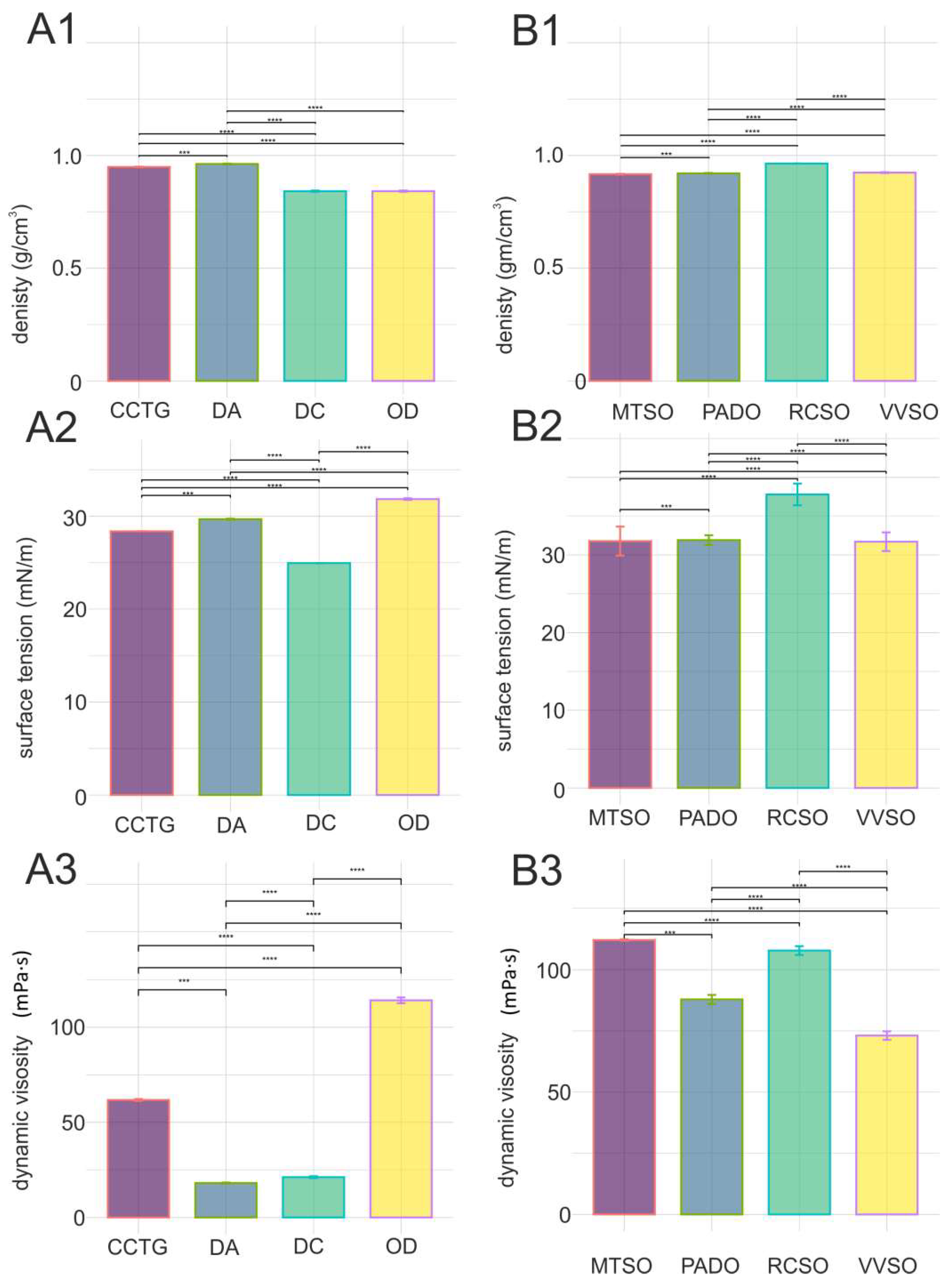
Figure 2.
Results of colorimetric measurements. A - for synthetic/semi-synthetic emollients B - for natural emollients.
Figure 2.
Results of colorimetric measurements. A - for synthetic/semi-synthetic emollients B - for natural emollients.
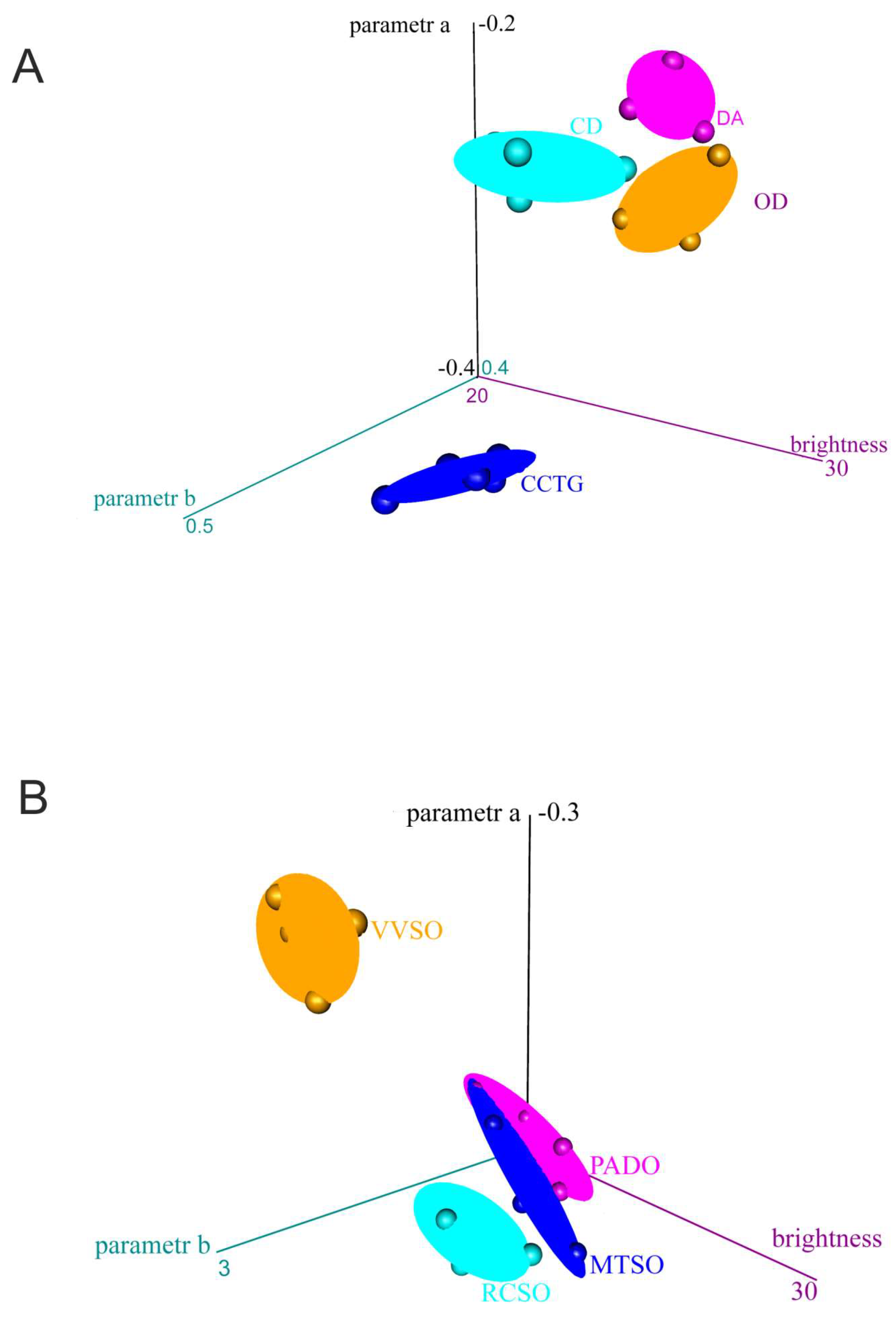
Figure 3.
Spreading properties of body oils. A-dynamic viscosity, B- surface tension, C- contact angle.
Figure 3.
Spreading properties of body oils. A-dynamic viscosity, B- surface tension, C- contact angle.
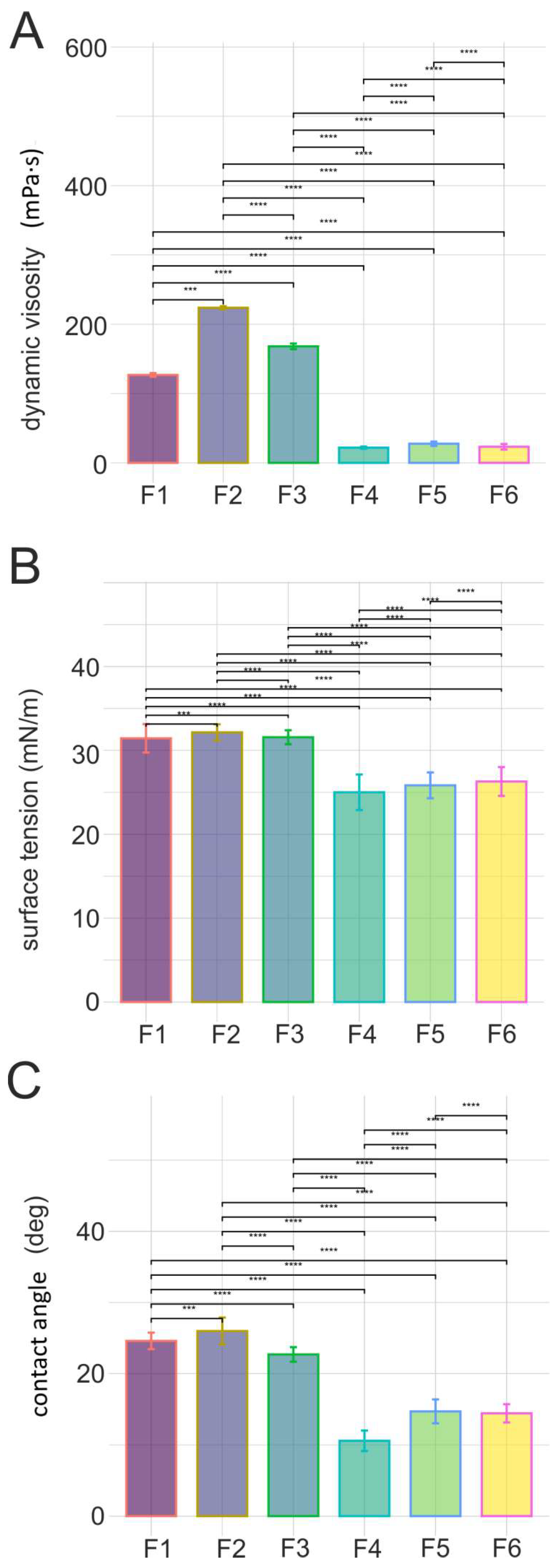
Figure 4.
Results of colorimetric measurements of body oils.
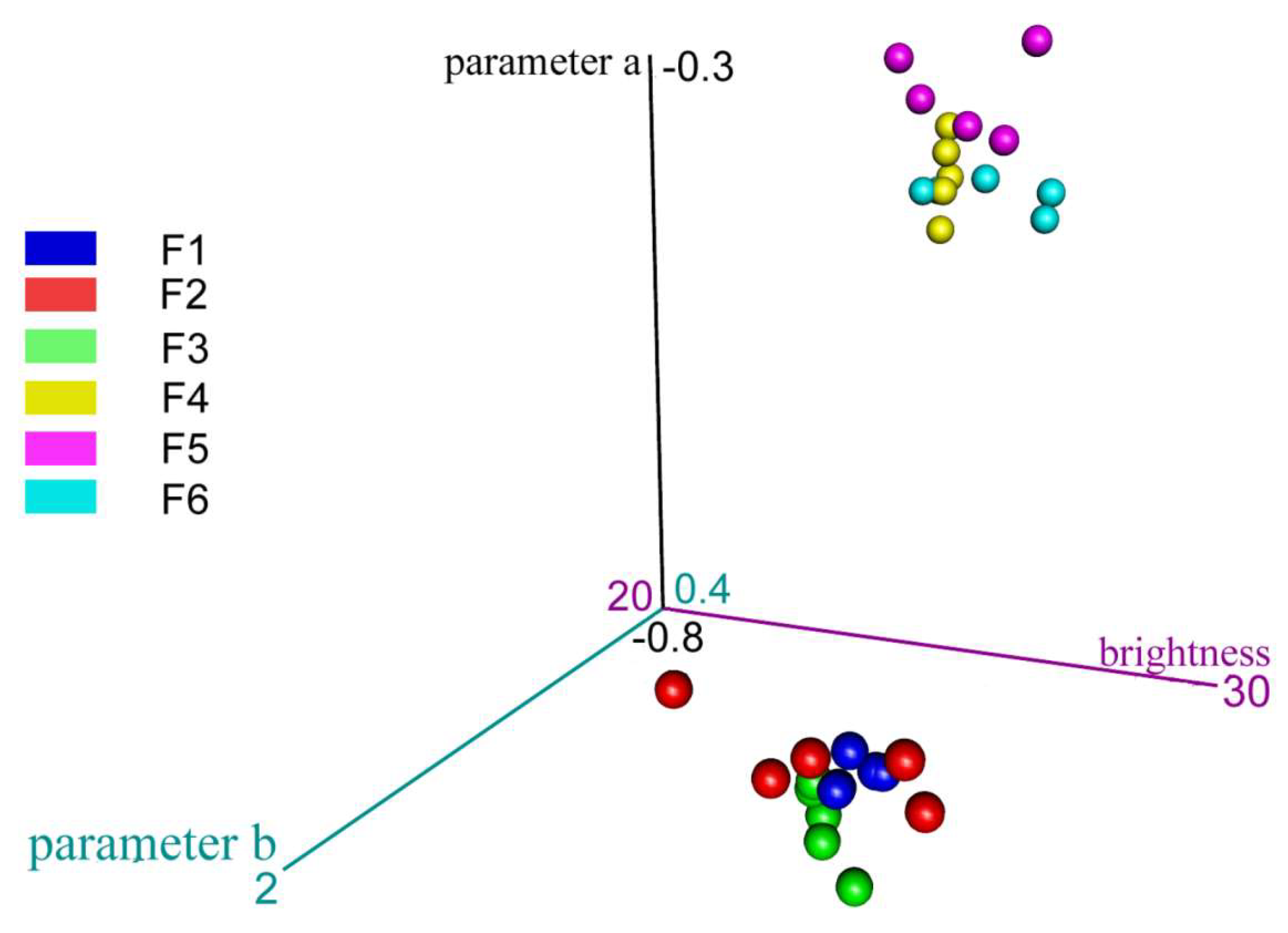
Figure 5.
Diagnosing the condition of the skin before and after the application of body oils. A: Degree of hydratation of the skin; B- Level of skin lubrication.
Figure 5.
Diagnosing the condition of the skin before and after the application of body oils. A: Degree of hydratation of the skin; B- Level of skin lubrication.
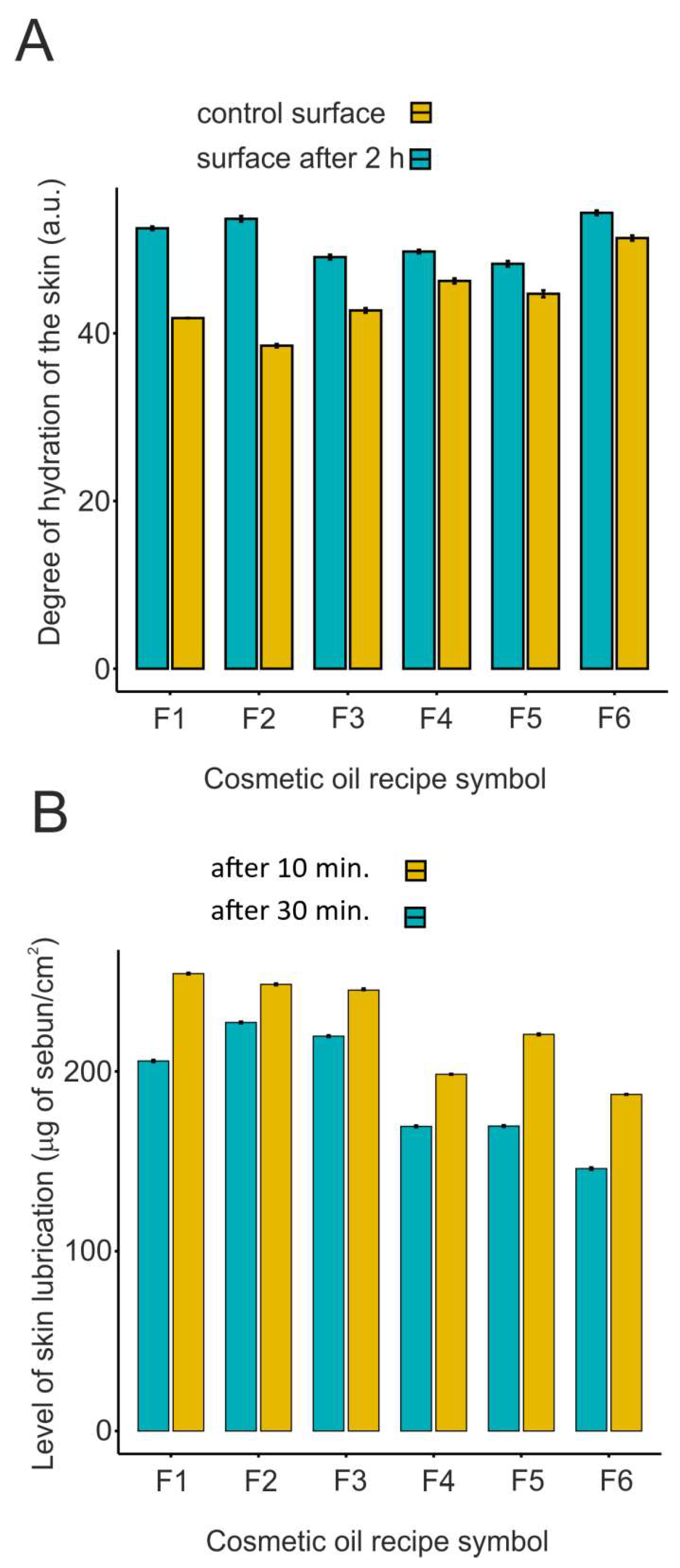

Table 2.
Characteristics of semi-synthetic emollient (Caprylic/Capric Triglyceride) and synthetic emollients (Dibutyl Adipate, Octyldodecanol, Dicaprylyl Carbonate).
Table 2.
Characteristics of semi-synthetic emollient (Caprylic/Capric Triglyceride) and synthetic emollients (Dibutyl Adipate, Octyldodecanol, Dicaprylyl Carbonate).
| Designation | INCI name/ Trade name/ Manufacturer | Chemical Family/Name | Molecular Weight [g/mol] |
Appearance: | Spreading value mm2/10 min |
|---|---|---|---|---|---|
| CCTG | Caprylic/Capric Triglyceride/Crodamol GTCC/Croda Poland | fatty acid esters, esters/ Mix of tri-esters with carbon chains of C8 and C10 derived from coconut oil and glycerin; | 408.58 | Liquid |
550 |
| DA | Dibutyl Adipate/Cetiol B/Basf Poland | esters/adypinian dibutylu; diester of butyl alcohol and adipic acid | 258.35 | Liquid |
1000 |
| OD | Octyldodecanol/ Eutanol G/Basf Poland | primary branched-chain alkohol/ 2-Octyl-1-dodecanol; | 298.50 | Liquid |
600 |
| DC | Dicaprylyl Carbonate/ Cetiol CC/Basf Poland | Esters/dioctyl carbonate; diester of carbonic acid and octanol |
286.50 | Liquid |
1600 |
Table 3.
Body oils recipes.
| Designation | INCI name/ Common name / Manufacturer | Fatty acids composition of vegetable oils [54,55,56,57,58,59,60,61,62] | Appearance: |
|---|---|---|---|
| MTSO | Macadamia Ternifolia Seed Oil/ Macadamia nut oil/Ecospa, Poland | Oleic acid 54-68 % Palmitoleic acid 16-23 % Palmitic acid 7-10 % Stearic acid 2-5.5 % Arachidic acid 1.5-3 % Linoleic acid 1-3 % Eicosenoic acid 1-3 % |
Liquid |
| PADO | Prunus Amygdalus Dulcis (Sweet Almond) Oil/ Sweet almond oil/ Ecospa, Poland | Oleic acid 50-77.63% Linoleic acid 13.38 – 27.69% Palmitic acid 5.59 -8.15% Stearic acid 1.36-3.37 % Palmitoleic acid 0.41-0.76 % |
Liquid |
| RCSO | Ricinus Communis (Castor) Seed Oil/ Castor oil/ Ecospa, Poland | Ricinoleic acid 74 - 84% Linoleic acid 7.3 - 10.32% Oleic acid 5.5 - 7.55% Stearic acid 1.2 - 2.81% Palmitic acid 1.3 -2.59% Erucic acid 1.70% Eicosadienoic acid 0.93% linolenic acid 0.5% |
Liquid |
| VVSO | Vitis Vinifera (Grape) Seed Oil/ Grapeseed oil/ Ecospa, Poland | Stearic acid 3.42–9.93% Palmitic acid 7.81–10.66% Oleic acid 14.29–19.92% Linoleic acid 66.85–72.47% |
Liquid |
Table 1.
Receptury body oils.
| Ingredients [INCI] | Symbol of cosmetic oils | |||||
|---|---|---|---|---|---|---|
| F1 | F2 | F3 | F4 | F5 | F6 | |
| Macadamia Ternifolia Seed Oil | 50 | 30 | 15 | 1.5 | 1.5 | 1.5 |
| Ricinus Communis (Castor) Seed Oil | 15 | 50 | 30 | 1.5 | 1.5 | 1.5 |
| Prunus Amygdalus Dulcis (Sweet Almond) Oil | 30 | 15 | 50 | 1.5 | 1.5 | 1.5 |
| Dicaprylyl Carbonate | 1.5 | 1.5 | 1.5 | 50 | 30 | 15 |
| Caprylic/Capric Triglyceride | 1.5 | 1.5 | 1.5 | 15 | 50 | 30 |
| Diputyl Adipate | 1.5 | 1.5 | 1.5 | 30 | 15 | 50 |
| Tocpheryl Acetate | 0.5 | 0.5 | 0.5 | 0.5 | 0.5 | 0.5 |
Disclaimer/Publisher’s Note: The statements, opinions and data contained in all publications are solely those of the individual author(s) and contributor(s) and not of MDPI and/or the editor(s). MDPI and/or the editor(s) disclaim responsibility for any injury to people or property resulting from any ideas, methods, instructions or products referred to in the content. |
© 2023 by the authors. Licensee MDPI, Basel, Switzerland. This article is an open access article distributed under the terms and conditions of the Creative Commons Attribution (CC BY) license (http://creativecommons.org/licenses/by/4.0/).
Copyright: This open access article is published under a Creative Commons CC BY 4.0 license, which permit the free download, distribution, and reuse, provided that the author and preprint are cited in any reuse.


