
Submitted:
03 December 2024
Posted:
04 December 2024
You are already at the latest version
Abstract
The goal behind designing this multipurpose herbal skincare cream is to prepare an herbal cream which is suitable for various skincare needs. Multipurpose creams are designed to fulfill various purposes, including hydrating, calming, preventing aging, and offering antioxidant advantages. Customers searching for a single product to streamline their skincare routine may find this adaptability appealing. In this multipurpose cream, the blend of essential oils and plant extracts can be used to address particular skin issues such as uneven skin tone, dryness, irritation, or acne. The cream's formulation includes essential oils, natural extracts, and other herbal ingredients that work together to benefit the skin in multiple ways. It contains pineapple extract which has antioxidant property and several other benefits like skin brightening, moisturizer and anti acne benefits. Also Aloe Vera provides the skin and pores with intense moisture, leaving the skin smooth, clear, and nourished. Natural ingredients with antibacterial and anti-inflammatory properties, such as turmeric, neem, and tulsi, help to reduce inflammation and prevent breakouts of pimples. In addition, these antioxidants promote the synthesis of collagen, which improves skin suppleness and delays the appearance of fine lines and wrinkles. It has multiple benefits it helps in various skin disorders and also improves the look and enhances the skin appearance.
Keywords:
1. INTRODUCTION
1.1. Types of Multipurpose Herbal Creams:
- a)
- Oil-in-water (o/w) creams
- b)
- Water-in-oil (w/o) creams
- a)
- Oil-in-water (o/w) creams: Water is the continuous phase in O/W emulsions, which indicates it makes up the majority of the cream. Emulsifiers are used in O/W creams to help in the dispersion of oil droplets inside the water phase. Because of their increased water content, these creams tend to be more moisturizing and have a lighter texture. O/W creams are the best for providing the skin with moisture and hydration. They are appropriate for normal to oily skin types because they are lighter and less greasy than W/Creams. In order to improve skin absorption, herbal oils and extracts are added to the water phase of O/W creams. O/W herbal creams are good for daily moisturizing, particularly for people with oily or combination skin types or in warmer areas. Because of their quicker absorption into the skin and lighter consistency, they are frequently included in skincare products meant for use during the day.
- b)
- Water-in-oil (w/o) creams: W/O creams use emulsifiers that allow water droplets to be dispersed within the oil phase; they also have a richer, more emollient texture and are generally more occlusive, helping to seal in moisture. W/O emulsions have oil as the continuous phase, meaning oil forms the main component of the cream. Herbal extracts and oils are incorporated into the oil phase of W/O creams, giving a more concentrated and nourishing effect. w/o creams are richer, more emollient in texture and are generally more occlusive, helping to seal in moisture. W/O creams provide intense hydration and are suitable for dry or sensitive skin types.
1.2. Advantages of Multipurpose Cream
- ❖
- Natural components: Unlike synthetic components, which are harsh on the skin and more prone to produce irritation or unfavorable reactions, natural ingredients including plant extracts, essential oils, and herbal compounds are used in this formulation.
- ❖
- Simplicity: By combining several advantages into a single product, this cream makes skincare procedures simpler. A multifunctional cream can provide hydration, anti-aging benefits, sun protection, and more in one step, saving your time and effort compared to applying many products (e.g., moisturizer, anti-aging serum, and sunscreen).
- ❖
- Cost-effective: Purchasing a single multipurpose cream instead of several specialty skincare products may save money. It lessens the need to buy numerous products for various skincare requirements.
- ❖
- Time-saving: By simplifying your skincare routine, a multifunctional cream helps you save time. It's convenient for people with busy schedules because you don't have to apply different products one after the other.
- ❖
- Long-Term Benefits: Over time, regular application of this cream can promote healthier skin by encouraging a more vibrant and balanced complexion.
- ❖
- Rich in Nutrients: Minerals, vitamins, and antioxidants found naturally in plant substances are often added to this cream. These nutrients shield the skin from harm from the environment, nourish it, and encourage cell regeneration.
1.3. Disadvantages of Multipurpose Cream
- ❖
- Allergy responses: Although the ingredients in this cream are typically thought to be benign, some people may still be sensitive to certain plant extracts or essential oils, which can cause allergic responses or skin irritation.
- ❖
- Particular Skin Concerns: Although it can heal a variety of skin issues, it might not be appropriate for addressing some dermatological diseases that call for more advanced medical care.
- ❖
- Texture and Consistency: Compared to traditional skincare products, it may have a different texture or consistency. It may be overly heavy, greasy, or difficult for certain people's skin to absorb.
- ❖
- Restricted Shelf Life: Compared to goods with synthetic preservatives, this cream with less preservative may have a shorter shelf life. If not properly stored or not consumed soon after opening, it can go bad more quickly.
- ❖
- Fragrance Sensitivity: Many people find the natural scents that are made from plant extracts to be pleasing. However, these smells could be overbearing or annoying to people who are sensitive to fragrances.
2. Literature Review:
2.1. Imrana Siddiqua (2022) et.al worked on “Preparation and Evaluation of Herbal Cold Cream with Incorporated Curcuma longa”
2.2. X Fatima Grace et.al (2014) Worked on “Formulation and Evaluation of Polyherbal Cosmetic Cream”
3. Objective
4. Material and Methodology
- a)
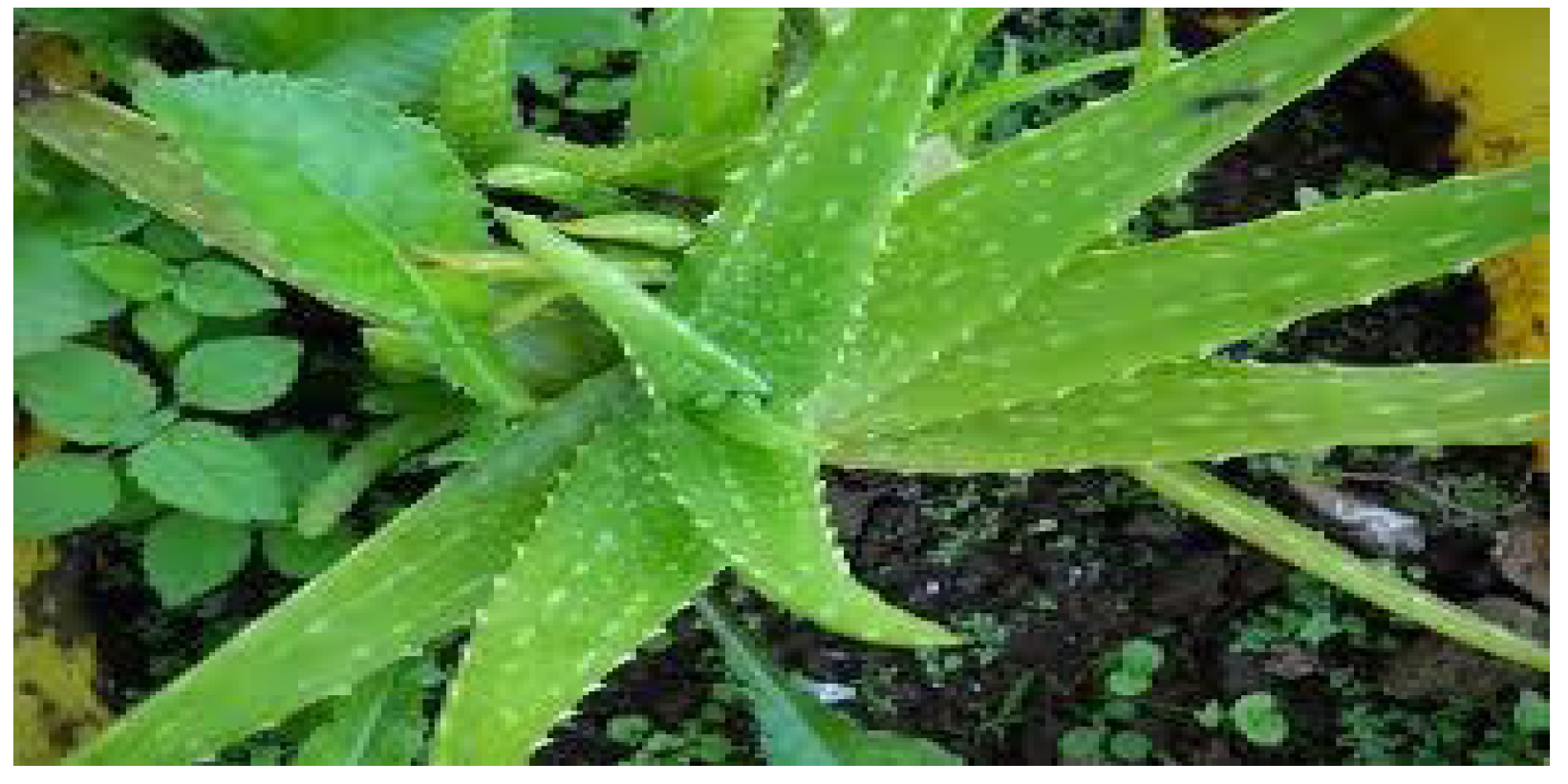
- Aloe vera : - Aloe vera is a succulent plant that has been used for ages for medicinal and cosmetic purposes .Aloe vera, also known as Aloe barbadensis miller, belongs to the genus Aloe, which encompasses approximately 500 species of blooming succulent plants. It is native to the Arabian Peninsula and thrives in hot, dry settings, but it is currently grown all over the world in tropical and subtropical locations. The plant has thick, fleshy green leaves that are serrated around the edges and filled with a transparent gel-like fluid. Aloe vera gel is the plant's most commonly utilized therapeutic component. It has various skin care properties like moisturizer, wound healing, etc.Figure 1. Aloe vera plant.
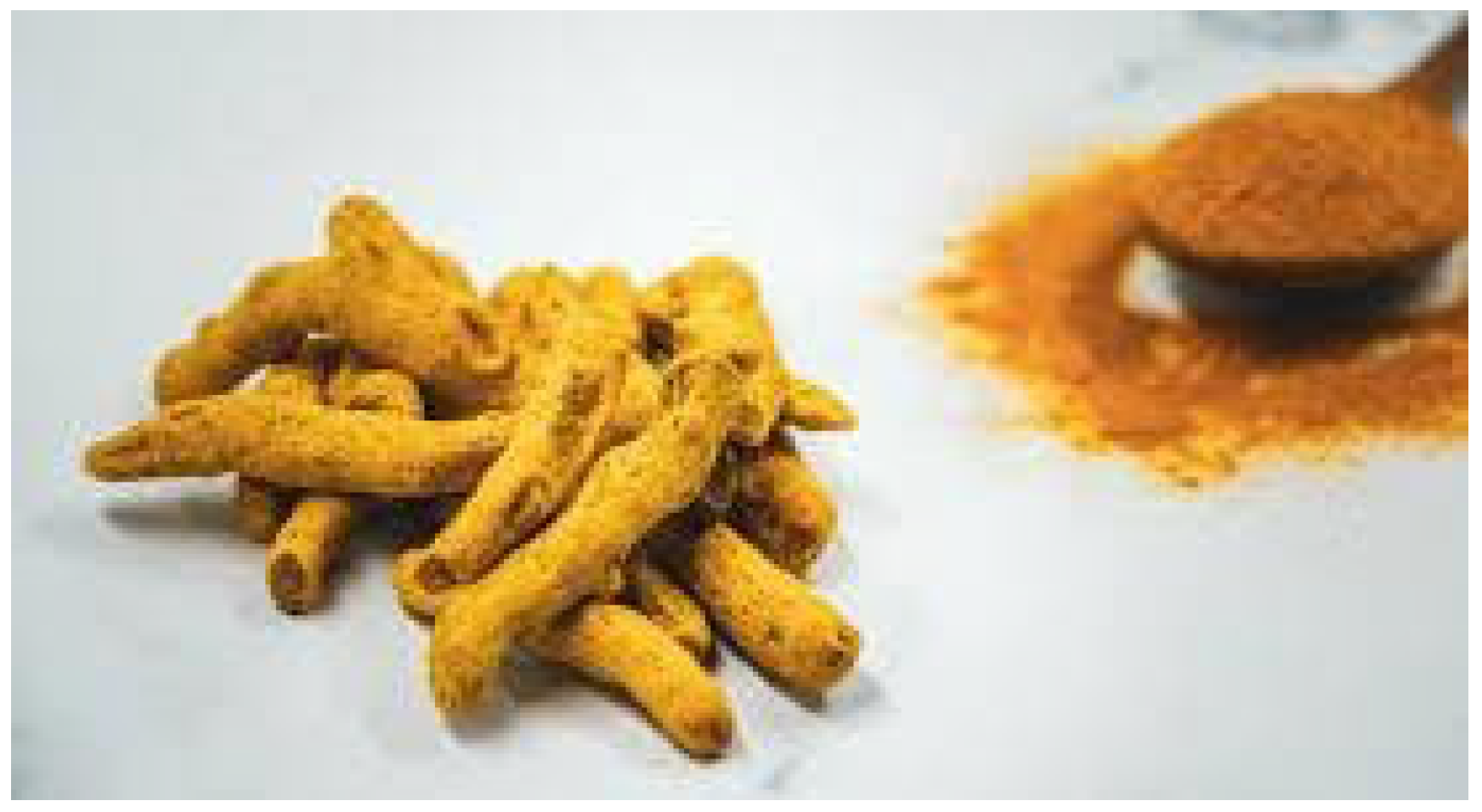
- b) Turmeric: - Turmeric (Curcuma longa) is a perennial herbaceous plant from the ginger family (Zingiberaceae) that is native to South Asia, including India and Southeast Asia. It is known for its culinary use, medicinal benefits, and traditional importance. Turmeric is distinguished by its rhizomatous root structure, which produces oblong, pointed leaves that are brilliant green on top and pale green underneath. Turmeric is used topically for skin care. It is added to face masks, creams, and ointments to improve skin radiance, decrease acne, and soothe skin irritations Turmeric has many medicinal properties such as anti inflammatory, antioxidant, anti microbial etc.Figure 2. Turmeric.
- c) Neem:- Neem (Azadirachta indica) is a multifunctional tree found in the Indian subcontinent, specifically India, Pakistan, Bangladesh, and Sri Lanka. It has a wide range of medical, agricultural, cosmetic, and environmental applications. Neem has long been venerated in Ayurveda, the traditional Indian system of medicine, for its healing powers. Neem is an evergreen tree from the mahogany family (Meliaceae) that can grow to reach 15-20 meters tall. The tree has a dense, spreading canopy with dark green, complex leaves made up of several leaflets. Neem has multiple health benefits as antibacterial, antifungal, anti-inflammatory and various skin disorders.Figure 3. Neem Plant.
- d) Orange peel:-
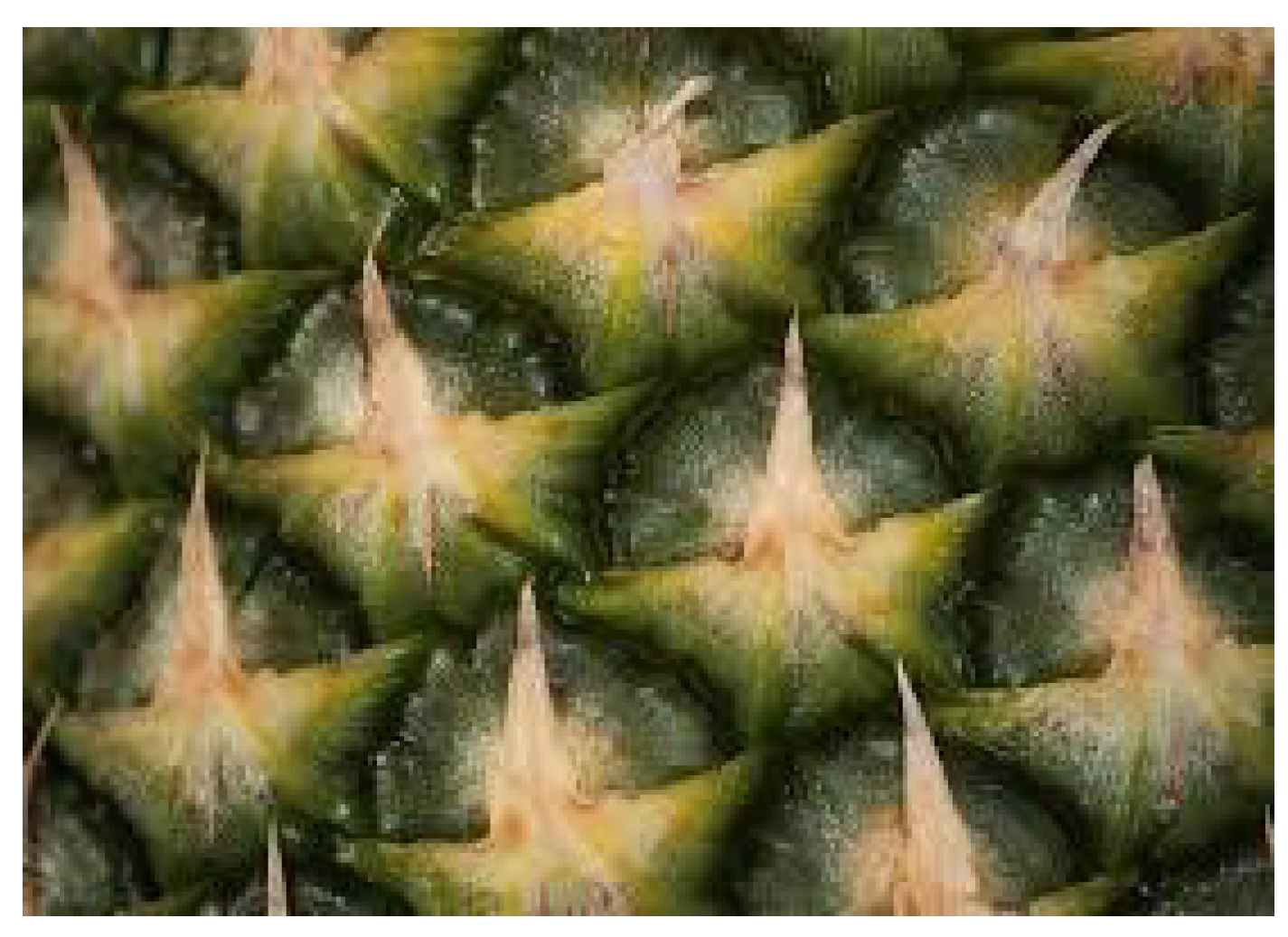
- e) Pineapple extract:-
- a) Preparation of Turmeric extract:-
- b) Preparation of neem extract:-
- c) Preparation of orange peel extract:-
- d) Preparation of pineapple extract:-
| S.No. | Ingredients | (F1) | (F2) | (F3) | (F4) |
| 1. | Aloe vera | 3 ml | 3 ml | 5 ml | 5 ml |
| 2. | Neem | 1.5 ml | 2 ml | 1.5 ml | 2 ml |
| 3. | Orange peel | 3 ml | 4 ml | 5 ml | 5 ml |
| 4. | Pineapple extract | 1.5 ml | 2 ml | 3 ml | 3 ml |
| 5. | Turmeric | 3 gm | 3 gm | 2 gm | 3 gm |
| 6. | Distilled water | q.s. | q.s. | q.s. | q.s. |
| 7. | Total | 10 gm | 12 gm | 15 gm | 18 gm |
- a)
- Weigh all the ingredients correctly using the weighing balance.
- b)
- Transfer the aloe vera gel to beaker and add all the ingredients one by one.
- c)
- Keep stirring the mixture with help of glass rod.
- d)
- Make up the volume using distilled water.
- e)
- To mix all the ingredients properly slowly heat them over water bath
- f)
- After all the ingredients are mixed properly a uniform texture is appeared.
- g)
- Evaluate the cream on various evaluation parameters.
- a)
- Physical parameters
- b)
- Wash ability test
- c)
- Phase separation test
- d)
- Irritancy test
- e)
- pH test
- f)
- Viscosity test
- a) Physical parameters test:-
- b) Wash ability test:-
- c) Phase separation test:-
- d) pH test:-
- e) Viscosity test:-
5. Result
| S.No. | Parameters | Formulation1 | Formulation2 | Formulation3 | Formulation3 |
| 1. | Colour | Yellowish green | Yellowish green | Yellowish green | Yellowish green |
| 2. | Odour | Pleasant | Pleasant | Pleasant | Pleasant |
| 3. | Texture | Coarse | Smooth | Smooth | Very smooth |
| 4. | State | Semisolid | Semisolid | Semisolid | Semisolid |
| S.No. | Formulation | Wash ability |
| 1. | F1 | Easily washable |
| 2. | F2 | Easily washable |
| 3. | F3 | Easily washable |
| 4. | F4 | Easily washable |
| S.No. | Formulation | Phase separation |
| 1. | F1 | No phase separation |
| 2. | F2 | No phase separation |
| 3. | F3 | No phase separation |
| 4. | F4 | No phase separation |
| S.No. | Formulation | Irritancy |
| 1. | F1 | Not shown |
| 2. | F2 | Not shown |
| 3. | F3 | Not shown |
| 4. | F4 | Not shown |
| S.No. | Formulation | pH |
| 1. | F1 | 5-6 |
| 2. | F2 | 6-7 |
| 3. | F3 | 6-7 |
| 4. | F4 | 5-6 |
6. Discussion
7. Conclusions
8. Summary
References
- Shipra Singh, Harshita Jain, Parul Vyas, Nitin Nama, Formulation and Evaluation of Multifunction General Use Cream, 2022.
- Rai R, Roadyl AP, Pharmaceutical creams and their used in wound healing. A Review journal of drug delivery and therapeutic 2019, 8-9.
- Skin care creams formulation and use. American journal of dermatological Research and Reviews 2019, 23-20.
- Rani S. Singh, N Gautam SP, “Formulation evaluation optimization and evaluation of cream for wound activity, world Journal of pharmacy and pharmaceutical sciences, 2016.
- Niranjan, A.; Singh, S.; Dhiman, M.; Tewari, S. K. Biochemical composition of Curcuma longa l. Accessions. Anal. Lett. 2013, 46, 1069−1083. [Google Scholar]
- Mondali, N.K.; Mojumdar, A.; Chatterjee, S.K.; Banerjee, A.; Datfa, J.K.; Gupta, S. Antifungal activities and chemical characterization of neem leaves extracts on the growth of some selected fungal species in vitro culture medium. J Appl Sci Environ Manage 2009, 13, 49–53. [Google Scholar]
- Thakur, B.R, R.K Singh, AK Nanda and MA Rao 1997, 9-10.
- Manish Kumar, Vipin Saini July 2020, Cancer Causes and Treatments, Volume.
- Ashara K, Soniwala MM, Paun J, Chawda J. Importance of trituration technique on preparation and evaluation of cold cream. Inventi Rapid Pharm Tech. 2013: 1-2.
- Nitin Navind gikar, K.A. Kamalapukar, Prashant S. Chavan., Pharm Res, Vol 12, Issue 3, 25- 30 ISSN: 0975-7066.
- Gupta N, Dubey A, Prasad P, Roy A, Formulation and Evaluation of Herbal Fairness Cream Comprising Hydroalcoholic Extracts of Pleurotusostreatus, Glycyrrhiza glabra and Camellia sinensis, UK Journal of Pharmaceutical and Bioscience, 2015;40-45.
- Ashish Aswal, Mohini Kalra and Abhiram Rout: Preparation and Evaluation of Polyherbal Cosmetic Cream, Der Pharmacia Lettre, 2013; 5(1): 83-88.
- MS Ahlawat, Madhuri Bancchor, Shailendra Saraf: Herbal cosmetics trends in skincare formulation 2009.
- Laxmi Banjare, Pranita Kashyap: Formulation and evaluation of herbal multipurpose cream 2014.
- Suhani A Shah: To prepare and evaluate herbal antiseptic cream 2024.
- Imrana Siddiqua, Umaima Khatoon, Dr. Anupam Koneru: Preparation and evaluation of herbal cold cream with incorporated curcuma longa 2022.
- Sakshi Nivrutti Tile, Prof.Manisha: A review on multipurpose herbal cream 2023.
- H.A. Sawarkar, S.S. Khadabadi, D.M. Mankar, I.A. Farooqui, N.S. Jagtap, Govt. College of Pharmacy, Pharmacognosy &Phytochemistry Department, Kathora Naka, Amravati, India, Development and Biological Evaluation of Herbal Anti-Acne Gel, International Journal of Pharm Tech Research Coden (USA): IJPRIF, July-Sept 2010; 2(3): ISSN: 0974-4304, 2028- 2031.
Disclaimer/Publisher’s Note: The statements, opinions and data contained in all publications are solely those of the individual author(s) and contributor(s) and not of MDPI and/or the editor(s). MDPI and/or the editor(s) disclaim responsibility for any injury to people or property resulting from any ideas, methods, instructions or products referred to in the content. |
© 2024 by the authors. Licensee MDPI, Basel, Switzerland. This article is an open access article distributed under the terms and conditions of the Creative Commons Attribution (CC BY) license (http://creativecommons.org/licenses/by/4.0/).


