

Submitted:
13 March 2026
Posted:
17 March 2026
You are already at the latest version
Abstract
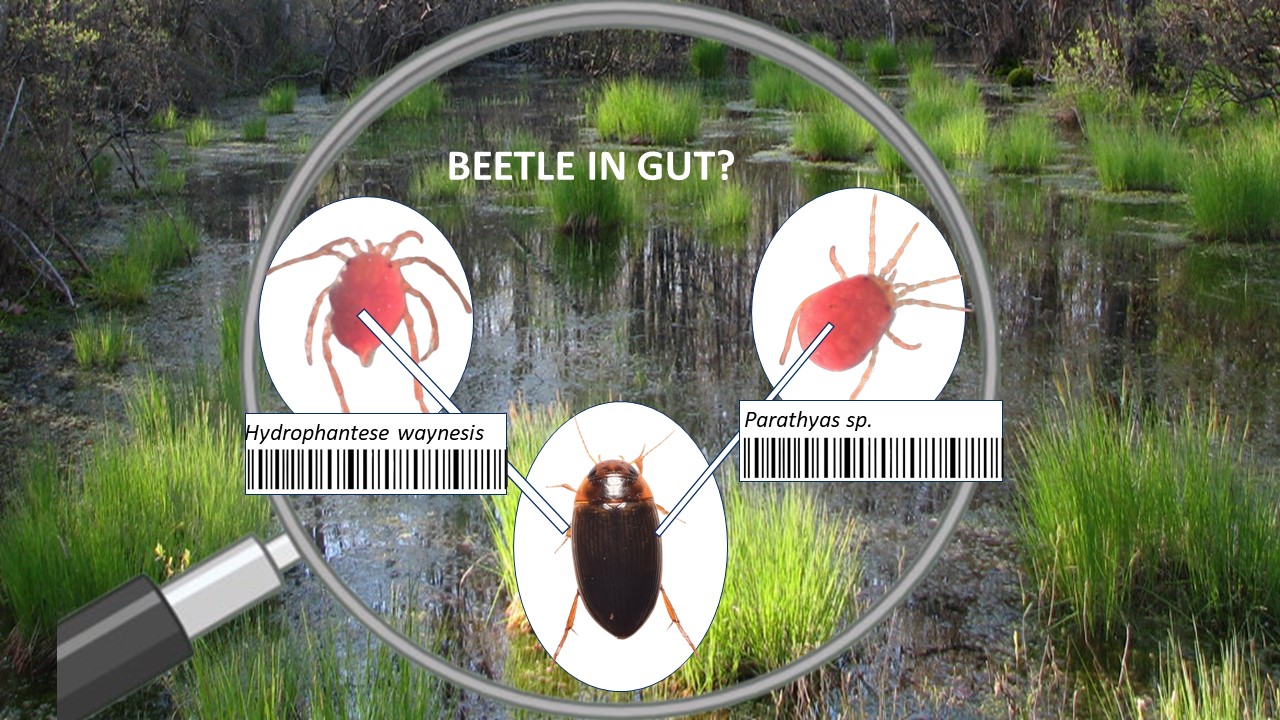
Vernal ponds are temporary, isolated bodies of water that lack vertebrate predators like fish. Palmer Park in Detroit MI USA, contains an old-growth forest with multiple vernal ponds that are home to numerous invertebrates, including water mites, which are the main focus of this study. These vernal ponds are unique since they are geographically isolated in the middle of an urban landscape. Previous research discovered new species of non-biting midges in Palmer Park vernal ponds, suggesting the potential for the discovery of previously undocumented organisms and relationships in this ecosystem. Here we document the invertebrate species found in the vernal ponds of Palmer Park, both to illustrate their diversity and to determine their cytochrome oxidase I barcodes. The barcodes are used in this study to verify identification and to provide reference sequences for comparison to sequences in the diets of water mites also collected from the ponds. Three taxa of water mites found in Palmer Park Pond A are Hydryphantes waynensis, Parathyas sp., and Hydryphantes sp. (distinct from H. waynensis by having a COI barcode 11.6% different from Hydryphantes sp.). This paper also uses Next Generation Sequencing (NGS) to analyze the complex diets of the water mites at Palmer Park. The diets consisted of a diversity of species of worms, mosquitoes, non-biting midges, crustaceans, flies, and beetles. Beetles identified as whole organisms in the ponds or from diet-detected bar codes in vernal pond water mites include Copelatus glyphicus, Acilius sp., and Hygrotus sayi. The diets of water mite in these vernal ponds are compared to previous molecular studies in which water mites in a riverine lagoon were identified as opportunistic predators of a diverse invertebrate diet. Beetles have not previously been reported in water mite diets, so this finding represents a new discovery. Diet analysis revealed taxa and novel barcodes not observed through traditional sampling, highlighting the value of water mites for community characterization. These results support the hypothesis that water mites are opportunistic predators, uniquely reports beetles in their diets, and emphasizes their ecological importance and utility in assessing vernal pond biodiversity.
Keywords:
beetles
; cytochrome oxidase I barcoding
; Hydrachnidia
; Hydryphantes
; Parathyas
; predator
; prey
; vernal pond
Copyright: This open access article is published under a Creative Commons CC BY 4.0 license, which permit the free download, distribution, and reuse, provided that the author and preprint are cited in any reuse.


