Preprint
Article

This version is not peer-reviewed.

Efficacy of Local Food Baits in Fruit Fly Monitoring and Trap Based Estimation of Adults’ Infestation Index in Guavas in Maputo, Mozambique

Submitted:

24 February 2026

Posted:

26 February 2026

You are already at the latest version

Abstract

Fruit flies (Diptera: Tephritidae) are major pests of crops, requiring effective monitoring for management. This study evaluated locally available food baits for monitoring fruit flies in guava orchards in Maputo, Mozambique. It also assessed infestation levels, examined the relationship between trap catches and adult/kg from incubated fruits. A randomized block design with four treatments (palm sap, molasses, torula yeast, and water) and four replications were used. Tephri traps were installed on four trees per block and inspected weekly, while guava fruits from trees and the ground were collected and incubated to estimate infestation indices. Data on flies’ density was subjected to ANOVA for analysis, to compare the treatments. Three genera (Bactrocera, Dacus, and Ceratitis) were recorded, with high relative abundance (90.37%) for Bactrocera dorsalis. Torula and palm sap were the best attractants, with no significant difference between them. Guava fruits showed high infestation (208.46±13.34 adults/kg). Trap catches of B. dorsalis were positively correlated with adults/kg, explaining 42.5% of infestation variation, highlighting the effect of the “outside the orchard” factors in the infestation indices. Results show that palm sap is a promising low-cost alternative bait and highlight the importance of considering area wide management of fruit flies.

Keywords: 
;  ;  ;  

1. Introduction

Global production of fruits reached over 887 million tons during 2020 and included guava (Psidium guajava) (sometimes classified among mangoes and mangosteens) contributing about 59.2 million tons, mostly grown in India (about 44%), followed by Indonesia and China [1]. In Africa, guava is widely cultivated across subsistence and small commercial systems, yet continent-wide production data remains fragmented [2]. In Mozambique, guava production, alongside mango (Mangifera indica L.) and mangosteen (Garcinia mangostana), reached 28.9 thousand metric tonnes in 2022 [3].
The guavas, together with other fruits play an important role in the human diet due to their nutritional value, contributing as an excellent source of vitamins and minerals essential in the regulation of almost all vital functions of the body [4]. Guava is valued not only for fresh consumption but also for making juice, jams, pulps, and for its health benefits because it is rich in vitamins, fiber, and antioxidants [2]. However, production of these fruits is put at a threat by infestation with fruit flies.
Fruit flies (Diptera: Tephritidae) are recognized globally as devastating pests of horticultural crops, particularly in tropical and subtropical regions where they thrive year-round [5]. For example, fruit flies are estimated to cause an economic loss of more than US$2 billion across Africa annually [6]. In Mozambique, the invasive species B. dorsalis has become the most dominant and economically significant, causing infestation levels exceeding 90% in guava fruits [7,8]. This leads to huge direct losses through decreasing the quantity and quality of yields and indirect losses through limitation of export trade [9,10,11].
Even though chemical attractants and protein baits have been developed for monitoring and management of fruit flies, they are not affordable and therefore not within the reach of most small-scale farmers [12]. Prior research has shown the efficacy of protein baits for trapping and controlling fruit flies, but not much has been examined to assess the efficacy of baits that are locally available like palm sap and molasses, especially in Mozambique. In addition, predicting adults’ infestation indices based on trap catches remains a challenge.
Therefore, this research aimed to assess the efficacy of local food baits in attracting fruit flies, to estimate the infestation indices in guavas and the extent to which the number of trapped flies can reliably predict the number of adults/kg of incubated fruits and hence estimate infestation. The outcome will give farmers effective and cheaper means of monitoring than the conventional attractants, which is among the principal pillars of sustainable production of fruits and improvement of lives. Also by estimating the correlation between the trapped flies and the adult flies that emerge from the incubated fruits, more effective management strategies can be recommended since it will provide information on the main source of fruit flies, if from inside or outside the orchard and to potentially estimate the infestation of fruits using data from the trap catches.

2. Materials and Methods

2.1. Description of the Study Area

The study was carried out at guava orchards (Lat. -26.0867, Long. 32.38998) in Umbeluzi Agrarian Station, Boane district, Maputo province, Mozambique, starting from March 2025 up to October 2025. The site was selected based on the dominance of guava trees which are some of the preferred hosts by fruit flies [7] and because they were at the fruiting stage and therefore, were expected to be hosting fruit flies. Other fruits within the vicinity of the orchard included mangoes, tropical almond (Terminalia catappa), oranges (Citrus sinensis) and bananas (Musa spp.) which are also important hosts of fruit flies.

2.2. Sampling Procedures

2.2.1. Description of Treatments

The experiment was conducted in a Randomized Complete Block Design (RCBD) with 4 treatments (baits) and 4 replications (blocks). Within the guava orchards four blocks were selected and identified as block 1, 2, 3, and 4, separated at least about 50 m from each other. At each block, 4 guava trees were selected randomly and marked as tree 1, 2, 3 and 4, at least 20 meters apart from each other for placing the traps containing the treatments [13,14,15].
The four treatments were: molasses, palm sap, torula (positive control) and water (negative control). In the field, each treatment was placed in Tephri traps. Approximately 250 ml of the attractive solution were used per trap/week [16,17,18] as follows:
  • Molasses: a byproduct of sugar refining rich in fermentable sugars, was prepared by diluting 100 ml of molasses with 900 ml of clean water to make a 10% solution of molasses. The same procedure was used by [19]. Molasses were obtained from sugar factory located in Xinavane (Açucareira de Xinavane) (Manhiça district, Maputo province) in bottles of 20 Litres.
  • Palm sap was obtained from the inflorescence of the palm tree (Phoenix reclinata), [20]. Fresh Palm sap was used and it was chosen because it is readily available in Mozambique. It was got from the local vendors (at Incoluane, Gaza province) and was kept fresh by keeping it in a deep freezer.
  • An aqueous solution of torula yeast was prepared by suspending one pellet of torula yeast (5g, Scentry Biologicals Inc., Billings, MT, USA) in 100 ml of clean water [15,21].
  • For water, fresh and clean tap water was put in the tephri traps and used as a negative control.

2.2.2. Trap Placement and Monitoring

A Tephri trap was placed on each of the four selected trees per block with four different treatments. Traps were set up in each selected tree within the tree canopy, approximately 1.5 to 2 m above the ground surface and preferably in shaded locations [13,22]. Trap holes or entrances were left free of leaves and tree branches to allow easy access for fruit flies and prevent entry of ants [14,23]. The trap holding string was impregnated with Vaseline to prevent entry of ants and preying on the attracted fruit flies [24]. All traps were inspected once a week. The captured insects were removed and separated from the liquid attractants using a sieve, where the suspension was poured and the captured insects were rinsed with water and placed in plastic vials containing 70% alcohol [22,25] duly labeled according to the block, attractant, date and week of collection. After collecting the samples, the traps were washed with water, the attractants were replaced with fresh ones and the position of the traps was changed clockwise to avoid the influence of position [10,12]. Used attractants were disposed off by pouring them away at a distant location to prevent re-attracting fruit flies to non-trap areas, which could reduce trap effectiveness and create false monitoring results [26]. Subsequently, all collected insects were taken to the laboratory of Entomology at the Faculty of Agronomy and Forestry Engineering (FAEF), in Maputo. In the laboratory, all fruit flies were separated from other captured individuals based on their general characteristics (wing venations). All fruit fly specimens collected were washed, counted, and recorded.

2.3. Guava Fruits Sampling

Fruits were sampled every week in the four experimental blocks to estimate the infestation indices of fruit flies in the orchard. A total of up to 20 fruits were randomly collected per block every week, which included both the fruits from the ground and those from the tree, depending on availability. Fruits were collected, put into labeled containers, and transported to the FAEF Entomology Laboratory for incubation. Fruits were counted, weighed and then incubated in groups of at least five fruits in mesh-top plastic containers lined with moist sterilized sand under laboratory room conditions of temperature and relative humidity. Fruits collected from the ground were incubated separately from the ones collected from the trees. The containers were inspected twice every week to harvest any pupae [10,27]. The pupae were harvested by use of a sieve to remove the soil and remain with the pupae. They were counted and placed in plastic vials lined with moist paper for humidity. The larvae which had not yet developed into pupae were placed back in the plastic container with soil for pupation. Harvesting of pupae went on until there was no pupae recovered for 2 consecutive times. Then, the fruits were dissected to check for any larvae or pupae for the larvae which might have failed to come out of the fruits [16].The plastic vials containing the pupae were covered with perforated cloth for aeration and kept at laboratory room temperature until the adults emerged or for 2 weeks. Then, the emerged adults were left in the vials until they died for full development of adult characteristics (colour). The adults were counted and separated by genera, sexed basing on the presence of the ovipositor for the females, before they were identified to species levels.

2.4. Identification of the Species of Fruit Flies

In the FAEF Entomology Laboratory, fruit fly specimens were identified to species levels basing on visual observation of morphological characteristics and comparing them with identification keys described by [16,28] with the aid of a magnifying glass and compared with specimens already identified. Also electronic identification keys were used as described by [29]. For more precise identification, the specimens were sent to fruit fly taxonomist specialists’ based at Royal Museum for central Africa, Brussels, Belgium. The fruit flies samples from each species were separated by their sex by observing the ovipositor on the female and counted.

2.5. Determination of Variables

2.5.1. Estimation of the Absolute and Relative Abundance of Fruit Fly Species

The absolute abundance of fruit fly species captured in each treatment was estimated based on the total number of individuals of each species attracted in each treatment. This variable has been used in various studies to understand population size and dynamics of fruit flies in mango orchards [10,12]. Relative abundance was estimated as the percentage ratio between the number of individuals of each species found in each type of treatment, and the total number of individuals of all species found for the same treatment. (Formula 1) This approach has been similarly employed in the evaluation of fruit fly monitoring techniques and the efficacy of different attractants in diverse mango-growing regions [12,30].
Ab = n N * 100
Where: Ab = Relative Abundance; n = Number of fruit fly’s specimens of the reference species attracted in a given treatment; N = Total number of flies captured in the same treatment of the reference species.

2.5.2. Determination of Sex Ratios

In order to determine the sex ratios of fruit flies captured in the different treatments, all adult flies were carefully examined and separated by sex basing on the presence of the ovipositor in females. For each treatment, the total number of males and females of each species was recorded, and the sex ratio was expressed as the percentage proportion of males to females. This procedure was done for each fruit fly species in each treatment independently [31].

2.5.3. Estimation of Population Density of Fruit Fly Species During the Study Period

Species data collected from each treatment was reported using the variable “Fruit Flies per Trap per Day” (FTD) (formula 2) which describes the adult population size of the attracted fruit fly species at the sampling sites as described by [16,26] given by:
FTD   =   F T * D
Where: F = Number of fruit flies captured in the trap that received the treatment Z; T = Number of installed traps that received Z treatment; D = Average number of days of exposure of traps in the field.
Guava fruits development stages were also registered. Other fruits considered host for fruit flies available at the study area were also registered, to assess their relationship with the fruit flies population variations.

2.5.4. Estimation of the Adult Infestation Indices of Guava Fruits from the Orchards

The infestation indices were estimated by calculating the number of pupae per kg of fruits and number of adults per kg of fruits [32,33,34] using the following formulae;
Infestation   index 1   ( pupae / kg ) = t o t a l   n u m b e r   o f   e m e r g e d   a d u l t s t o t a l   n u m b e r   o f   f r u i t s   i n c u b a t e d
Infestation   index 2   ( adults / kg ) = t o t a l   n u m b e r   o f   a d u l t s   e m e r g e d t o t a l   k i l o g r a m s r   o f   f r u i t s   i n c u b a t e d
When calculating the infestation indices, the overall infestation indices of the total of both the fruits collected from the ground and those collected from the trees were calculated. However the different fruit sources were incubated separately.

2.5.5. Correlation Between Trapped Fruit Flies and Adults/kg of Incubated Fruits

FTD data were paired with corresponding data of adults/kg from incubated fruits, and Pearson’s correlation coefficient was calculated to assess the relationship between the two datasets, following a method similar to that described by [24]. The correlation was made between the mean weekly fruit flies per trap (FTD) of the most abundant fruit fly species attracted in torula and the mean weekly fruit fly per kg of the same fruit fly species that emerged from the incubated guava fruits. The correlation analysis helped to evaluate whether trap catches could serve as reliable indicators of fruit infestation levels in the field, taking into consideration that food baits attract fruit flies from short distances. A regression analysis was later conducted to examine the relationship between the mean weekly FTD (independent variable) and the number of flies per kilogram of incubated fruits (dependent variable).

2.6. Data Analysis

All statistical analyses were carried out using R software (R Core Team, 2025). The variable FTD was calculated for the first 12 weeks when the trap catches were high enough to detect a statistical significance, on average 5 flies per treatment (5 flies x4 treatments = 20 flies captured in all the traps per week) [35]. Analysis of variance (ANOVA) was conducted on the data. Since the assumptions of ANOVA were violated, i.e., homogeneity of variances and normality of residuals, a logarithmic transformation [log(x+0.5)] was carried out in order to stabilize variances and render the data standardized [36]. Mean separation was performed using Tukey’s Honest Significant Difference (HSD) test at the 5% level of significance.
In order to estimate the correlation between the FTD from traps and adults/kg from the incubated fruits, a Pearson correlation coefficient was calculated. Correlation was computed by applying the cor() function and statistical significance was tested by applying the cor.test() function that provided a p-value and 95% confidence interval of the correlation estimate; [37]. A regression analysis was performed to examine the relationship between mean weekly fruit flies/ trap/ day (FTD) as the independent variable and the number of emerged flies per kilogram of fruit as the dependent variable. Model assumptions, including normality of residuals and homoscedasticity, were checked prior to interpretation of results.

3. Results

3.1. Absolute and Relative Abundance of the Different Fruit Fly Species and the Sex Ratio

Throughout the study period (25 weeks), a total of 2,844 fruit flies were attracted to the various baits (treatments) of which 1,670 were females and 1,174 were males. Torula attracted the highest number of fruit flies (1563) as the positive control, followed by palm sap (978), molasses was the third in attracting fruit flies (299) while water came last as the negative control (4).There were three genera of fruit flies identified, namely Bactrocera (2,570 flies), Ceratitis (37 flies) and Dacus (237 flies). The genus Bactrocera had Bactrocera dorsalis identified, and it was the most abundant species with a total of 2,570 flies corresponding to a relative abundance of 90.37%. Genus Dacus, had five species identified, namely Dacus bivittatus (136, 4.78%), Dacus frontalis (53, 1.86%), Dacus punctatifrons (18, 0.63%), Dacus vertebratus (28, 0.98%) and Dacus ciliatus (2, 0.70%). For Ceratitis the following species were identified: Ceratitis quilicii (16, 0.56%), Ceratitis rosa (10, 0.35%), Ceratitis capitata (8, 0.28%), Ceratitis punctata (2, 0.07%) and Ceratitis cosyra (1, 0.04%) (Table 1)
In general more females were attracted to the different treatments. In the genus of Bactrocera and Ceratitis more females were attracted in all the treatments apart from water, which captured only male flies. For flies belonging to genus Dacus, generally more males were attracted to the different treatments (Table 2).

3.2. Population Density of Fruit Fly Species in Each Treatment

The population density of the dominant species B. dorsalis, showed highly divergent levels across bait treatments over the entire study period. There was highly significant effect of the treatment on the FTD (F (3, 187) = 53.96, p < 0.001).
The positive control, torula yeast, had the highest FTD (4.15 ± 0.804) of B. dorsalis, confirming its position as a good standard attractant. The second was palm sap as a locally available bait with a mean FTD of 2.610 ± 0.491. Molasses came third, with an FTD of 0.747 ± 0.119. Water, the negative control, captured the least (0.006 ± 0.004 FTD) with very minimal attraction.
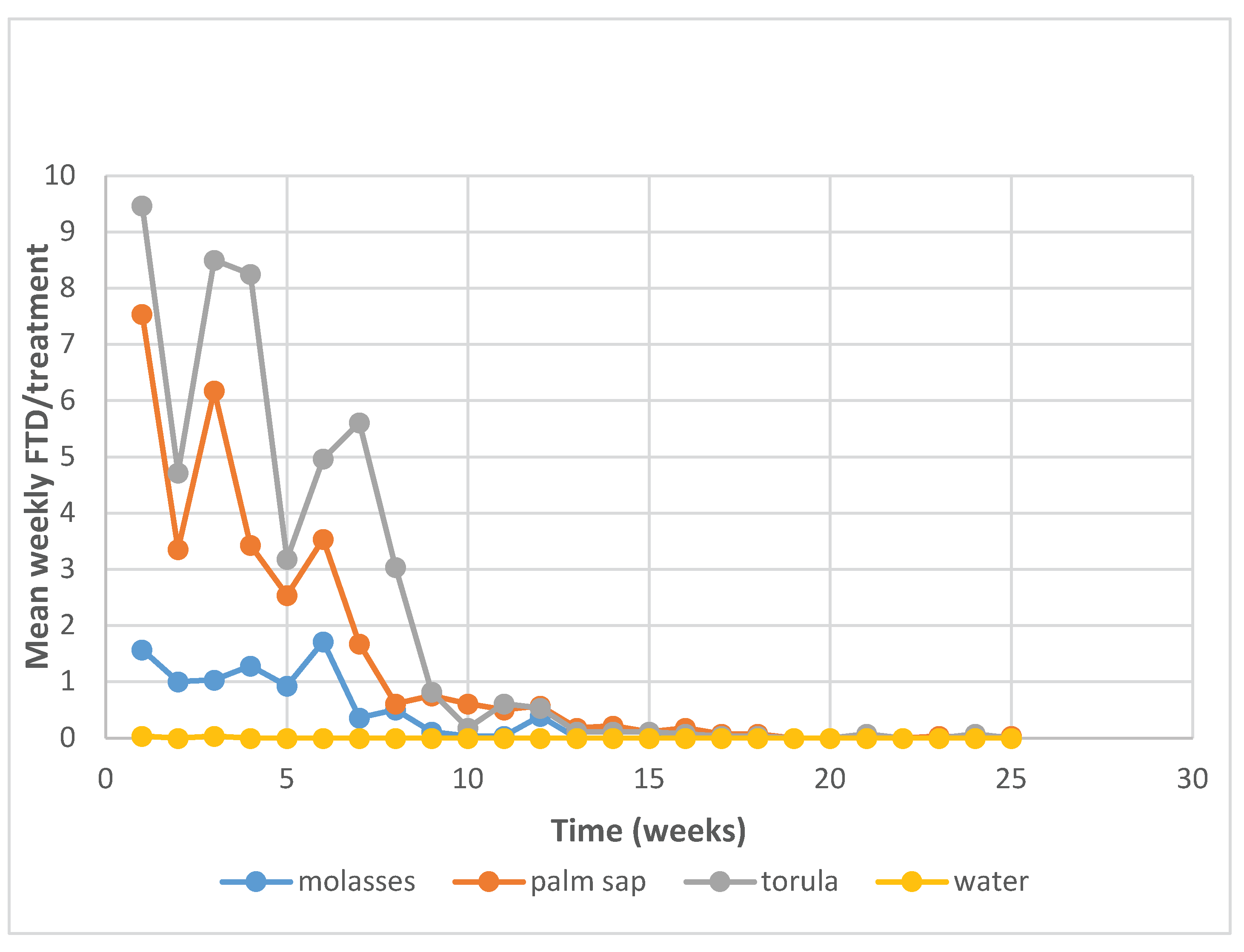
Statistical groupings according to post hoc Tukey’s test for all the treatment (baits) showed that palm sap and Torula did not differ significantly from one another, implying that palm sap was as effective as the commercial bait in attracting B. dorsalis. Molasses was significantly different from palm sap and Torula, being of moderate but lower attractiveness. Water was significantly less attractive as would be expected (Figure 1). The performance of the various attractants was consistent in every week during the study until there was almost zero catches of fruit flies in the traps at about week 15 of the study Figure 2.
It can be seen from the graph that torula was consistently the best attractant followed by palm sap, molasses and lastly water. It was also noted that for each treatment the mean weekly catches were highest in the first week of the study and then kept on decreasing as the study period in weeks increased, apart from water which almost captured zero (0) flies throughout the study period.

4.4. Infestation Indices of the Fruits

A total of 820 guava fruits were collected throughout the study period for incubation. These included 456 fruits weighing 29.568kg from the ground and 364 fruits weighing 22.013kg from the trees. A total of 12,867 pupae emerged from the fruits with 6154 from the fruits collected from the ground and 6713 from the fruits collected from the trees. A total of 10,928 adult fruit flies emerged, with 5,607 females and 5,321 males. The infestation indices were calculated and recorded. (Table 3).
Two genera of fruit flies were recovered from the incubated fruits. These were Bactrocera and Ceratitis, with Bactrocera dorsalis being the only species of genus Bactrocera and the most abundant species of all the emerged flies while Ceratitis had 3 species. Flies of Bactrocera dorsalis were 10,914 flies (99.87%) and the remaining (0.12%) were; Ceratitis capitata (2), Ceratittis quilicii (8) and Ceratittis rosa (4).

4.5. Correlation Between Trapped Flies (B. dorsalis) and B. dorsalis Infestation Index

There was a statistically significant positive correlation between adult flies caught in traps and the adult flies emerged from fruits per kilogram (r = 0.652, t = 2.58, df = 9, p = 0.0297). This correlation coefficient indicates a moderately high correlation and indicates that a rise in the captures of the traps was associated with an increase in B. dorsalis infestation level. The 95% confidence interval for the correlation coefficient (0.0856–0.8999) also confirmed that the relation was consistently positive but with differential strength of association. These findings constitute empirical evidence to support the contention that trap catches can be utilized as a valid proxy for infestation level estimation in the field, justifying their application in monitoring fruit fly population changes in the orchard environment.
The regression model of a simple linear regression analysis was found to be statistically significant (F(1,9) = 6.66, p = 0.0297), which indicates that the population density of fruit flies in the field, as shown by mean weekly FTD significantly predicts the number of emerged flies per kilogram of fruit.
The regression equation derived from the analysis is as follows:
Emerged flies per kg = 110.67 + 20.78 × Mean weekly FTD.
This equation suggests that for every one-unit increase in the mean weekly FTD, the number of emerged flies per kilogram increases by approximately 20.78. The model accounts for 42.5% of the variation in the number of emerged flies per kilogram (R² = 0.425, adjusted R² = 0.361), indicating a moderate positive association between the two variables.

4. Discussion

Bactrocera dorsalis was identified as the most abundant species trapped in all the food baits. This is consistent with many studies which reported dominance of the invasive B. dorsalis over the native fruit fly species in Africa ever since its invasion into Africa [12,38,39]. This is because this species is more aggressive, has a higher reproductive rate and has more hosts than the native species [12,40].
The findings also showed distinctly characterized sex-specific trends of fruit fly catches to the baits. For the Bactrocera and Ceratitis species, higher numbers of female fruit flies were captured than male ones. This is in agreement with earlier research that females of the two genera have greater nutritional requirements, specifically protein and carbohydrate, in support of oogenesis and prolonged flight [41,42,43]. Fermenting food lures like palm sap and torula yeast thus yield energy and microbial metabolites eliciting female feeding reactions leading to trap catches being female-biased. In contrast to this, the reverse was true for the species of Dacus, where more males were caught than females using all the food baits. The pattern is consistent with the results from [44] which showed that food baits including torula, attracted more males of Zeugodacus cucurbitae flies than the females. However the results do not agree with other studies in which more females were attracted than males [45,46]. This could be because there might have been more male flies in the field than females. Also it is known that guavas are not good hosts for fruit flies in genus Dacus and hence fewer females were expected in the field because of less breeding sites [47]. According to the results, palm sap was found out to be as effective as the commercial food bait, torula, and therefore it presents a low-cost and locally available viable alternative overall, and especially in the context of resources being limited. These results align with [48] who found out that palm sap could be used as a cheap alternative in management of fruit flies in Ghana. The high attractiveness by palm sap to fruit flies during this experiment is due to its natural chemical composition and fast fermentation rates. Fresh palm sap, when collected directly from the tree, is rich in soluble sugars mainly sucrose, glucose, and fructose and proteins [49] which provide an immediately available source of energy for tephritid fruit flies. Such sugar-rich substrates play a crucial role in sustaining the flight activity, longevity, and reproductive potential of adult fruit flies [43]. Previous studies have demonstrated that carbohydrate and protein rich food sources significantly enhance mating success, fecundity, and survival in tephritid species, underscoring their importance as potent feeding stimulants [43,46]. Apart from the composition of sugar, palm sap quickly becomes fermented by microorganisms during harvest, which is largely due to naturally occurring yeasts. This results in the release of volatile metabolites like ethanol, acetic acid, and other esters of chemical mimetic signals that mimic ripening or fermenting fruit crucially significant ecological host fruit fly location cues. Furthermore, palm sap includes essential amino acids, vitamins, and minerals that facilitate active microbial growth and continuous volatile development; [50]. Such nutritional adequacy guarantees that fermentation continues, keeping the bait’s appeal during extended trapping intervals hence increasing its effectiveness.
The average number of adults from incubated fruits found in this study (12.91 ± 0.81 adults per fruit; 208.46 ± 13.34 adults per kilogram) suggests significant larval growth within the collected fruits. Surveys based on incubation show varying results depending on the host plant and location. The high adults from the fruits suggest high infestation intensity and confirm that guavas are a preferred host for B. dorsalis [7]. From a management point of view, these findings emphasize the importance of keeping orchards clean. Fallen fruits act as reservoir of the developing stages of fruit flies and act as a source of infestation if left unattended [51,52]. As a result, combining sanitation practices with other strategies like using protein baits and introducing natural predators can lead to a more effective way of controlling fruit fly populations. These recommendations for management are consistent with integrated fruit-fly control strategies used in African agricultural ecosystems, where high infestation levels and high emergence from incubated fruits have been previously documented [16,53].
The moderate but statistically significant positive correlation between the number of fruit flies captured in traps and the number of adult flies emerging per kilogram of fruit, confirms that trap catches can serve as a practical indicator of infestation levels. This finding aligns with previous studies. For example, [54] and [55] observed that higher trap catches of fruit flies corresponded to higher fruit infestation in mango and guava orchards respectively, and they were able to use trap counts to predict infestation risk. In [54] , trap captures were positively associated with fruit infestation levels in mango (r = 0.68), showing that trap density reflected field infestation trends. Similarly, in [55], female trap catches of Bactrocera dorsalis were positively correlated with guava fruit infestation (r = 0.322), and logistic regression indicated that each increase in female density class raised the odds of infestation by 34.5%, supporting the use of trap data as an early warning tool for predicting infestation risk. Also, [56] reported that in citrus orchards, food-based traps captured females and more closely reflected actual fruit infestation, particularly during fruit ripening. The guidelines from [26] also emphasize that trap indices, such as flies per trap per day, are widely used as proxies for population pressure in integrated pest management programs, even though they may not capture every aspect of infestation perfectly, as was also demonstrated by the results of the present study, since the coefficient of determination, indicates that about 42.5% of the variation in the number of emerged flies per kilogram of fruit is explained by the average weekly FTD, implying that the model has moderate predictive ability. The remaining unexplained variation suggests that other factors, such as the maturity of the fruit, differences in crop varieties, environmental conditions and hosts and fruit flies surrounding the orchards could also play a role and were not considered in this model. These results agree with earlier research, such as that by [55] which also found that higher trap catches are linked to more fruit infestation. Overall, the study confirms that mean weekly FTD is a reliable indicator of fruit fly emergence and can be a helpful tool for making decisions about pest management strategies within integrated pest management (IPM) programs. Additionally, it is clear that area wide management programs instead of localized ones, are more likely to provide effective control of fruit flies.

5. Conclusions

This study concluded that Bactrocera dorsalis was the most abundant species, consistent with its status as an invasive species. Generally more females of Bactrocera and Ceratitis were captured by the different treatment while more males of Dacus were captured than females. Palm sap is as effective as torula yeast in attracting fruit flies, confirming its potential as a low-cost alternative for resource-limited farmers. Higher mean weekly FTD corresponds to higher numbers of emerged flies per kilogram of Guavas and this can be successfully predicted by the proposed equation, “Emerged flies per kg = 110.67 + 20.78 × Mean weekly FTD”.

Supplementary Materials

The original contributions presented in this study are included in the article. Further inquiries can be directed to the corresponding authors.

Author Contributions

“Conceptualization, methodology, formal analysis, data curation and writing—original draft preparation, was done by DA under close supervision and guidance by LA and DC. All authors have read and agreed to the published version of the manuscript.

Funding

“This research was funded by CENTRE OF EXCELLENCE IN AGRI-FOOD SYSTEMS AND NUTRITION, EDUARDO MONDLANE UNIVERSITY, MAPUTO, MOZAMBIQUE (CE-AFSN) and WWF’s Russell E. Train Education for Nature Program (EFN)” and “The APC was funded by CE.AFSN”.

Data Availability Statement

The raw data supporting the conclusions of this article will be made available by the authors on request.

Acknowledgments

We would like to thank the owner of the guava orchards at Umbeluzi Agarian institute who allowed us to use his farm for the study. We would also like to thank Mr. Bota Luis from the National Fruit Fly Laboratory, Provincial Directorate of Agriculture and Food Security, Po Box 42, Chimoio, Manica Province, Mozambique, who helped in identification of some fruit fly specimens. We are grateful to the department of plant protection Eduardo Mondlane University for offering the laboratory of Entomology and all the materials and equipment used in this experiment. The authors have reviewed and edited the output and take full responsibility for the content of this publication.”.

Conflicts of Interest

“The authors declare no conflicts of interest.” “The funders had no role in the design of the study; in the collection, analyses, or interpretation of data; in the writing of the manuscript; or in the decision to publish the results”.

Abbreviations

The following abbreviations are used in this manuscript:
CABI Center for Agriculture and Bioscience International
FAEF Faculty of Agronomy and Forestry Engineering
FAO Food and Agriculture Organisation
FTD Fruit fly per trap per day
IAEA International Atomic Energy Agency

References

  1. Food and Agriculture Organization of the United Nations. FAO Agrifood Systems Employment Database. Available online: https://openknowledge.fao.org/items/44a3712c-85c6-4a63-a0e5-edfa8f15b937 (accessed on 14 November 2025).
  2. Angulo-López, J.E.; Flores-Gallegos, A.C.; Torres-León, C.; Ramírez-Guzmán, K.N.; Martínez, G.A.; Aguilar, C.N. Guava (Psidium Guajava L.) Fruit and Valorization of Industrialization By-Products. Processes 2021, 9, 1075. [Google Scholar] [CrossRef]
  3. Food and Agriculture Organization of the United Nations FAOSTAT – Production of Mangoes; Mangosteens and Guavas in Mozambique. Available online: https://www.fao.org/faostat/en/#data/QCL (accessed on 15 November 2025).
  4. Teshome, E.; Teka, T.A.; Nandasiri, R.; Rout, J.R.; Harouna, D.V.; Astatkie, T.; Urugo, M.M. Fruit By-Products and Their Industrial Applications for Nutritional Benefits and Health Promotion: A Comprehensive Review. Sustainability 2023, 15, 7840. [Google Scholar] [CrossRef]
  5. Papadopoulos, N.T.; De Meyer, M.; Terblanche, J.S.; Kriticos, D.J. Fruit Flies: Challenges and Opportunities to Stem the Tide of Global Invasions. Annu. Rev. Entomol. 2024, 69, 355–373. [Google Scholar] [CrossRef] [PubMed]
  6. Niassy, S.; Ekesi, S.; Migiro, L.; Otieno, W. Sustainable Management of Invasive Pests in Africa; 2020; ISBN 978-3-030-41082-7. [Google Scholar]
  7. José, L.; Cugala Domingos; Luisa, Santos. Assessment of Invansive Fruit Fly, Fruit Infestation and Damage in Cabo Delgado. African Crop Science Journal 2013, 21, 21–28. [Google Scholar]
  8. Canhanga, L.; De Meyer, M.; Cugala, D.R.; Virgilio, M; Bota, L.; Mwatawala, M. Perception of Fruit Farmers on the Occurrence of the Oriental Fruit Fly Bactrocera Dorsalis (Diptera: Tephritidae) and Its Associated Economic Impact in Manica Province, Mozambique. Fruits 2021, 76, 295–302. [Google Scholar] [CrossRef]
  9. De Meyer, M.; Mohamed, S.; White, I.M. Invasive Fruit Fly Pests in Africa. Available online: https://www.africamuseum.be/en/research/scientific-collections/zoology/fruit-flies (accessed on 11 January 2025).
  10. Vayssières, J.-F.; De Meyer, M.; Ouagoussounon, I.; Sinzogan, A.; Adandonon, A.; Korie, S.; Wargui, R.; Anato, F.; Houngbo, H.; Didier, C.; et al. Seasonal Abundance of Mango Fruit Flies (Diptera: Tephritidae) and Ecological Implications for Their Management in Mango and Cashew Orchards in Benin (Centre & North). J Econ Entomol 2015, 108, 2213–2230. [Google Scholar] [CrossRef]
  11. Opoku, E.; Haseeb, M.; Rodriguez, E.J.; Steck, G.J.; Cabral, M.J.S. Economically Important Fruit Flies (Diptera: Tephritidae) in Ghana and Their Regulatory Pest Management. Insects 2025, 16, 285. [Google Scholar] [CrossRef]
  12. Ekesi, S.; Billah, M.K.; Nderitu, P.W.; Lux, S.A.; Rwomushana, I. Evidence for Competitive Displacement of Ceratitis Cosyra by the Invasive Fruit Fly Bactrocera Invadens (Diptera: Tephritidae) on Mango and Mechanisms Contributing to the Displacement. ec 2009, 102, 981–991. [Google Scholar] [CrossRef]
  13. Ekesi, S.; Mohamed, S.; Tanga, C.M. Comparison of Food-Based Attractants for Bactrocera Invadens (Diptera: Tephritidae) and Evaluation of Mazoferm-Spinosad Bait Spray for Field Suppression in Mango. jnl. econ. entom. 2014, 107, 299–309. [Google Scholar] [CrossRef]
  14. Nanga Nanga, S.; Hanna, R.; Fotso Kuate, A.; Fiaboe, K.K.M.; Nchoutnji, I.; Ndjab, M.; Gnanvossou, D.; Mohamed, S.A.; Ekesi, S.; Djieto-Lordon, C. Tephritid Fruit Fly Species Composition, Seasonality, and Fruit Infestations in Two Central African Agro-Ecological Zones. Insects 2022, 13, 1045. [Google Scholar] [CrossRef]
  15. Enkerlin, W.; Arevalo, E.; Caballero, J.E.; Fezza, T.; Garavelli, E.; Martinez, D.B.; Rodriguez, P.A.; Shelly, T.; Thomas, M.E.; Villaseñor, A.; et al. Searching for More Effective Food Baits for Tephritid Fruit Flies (Diptera: Tephritidae): Performance of Newly Developed Vial-Lures Relative to Torula Yeast Borax. Insects 2025, 16, 53. [Google Scholar] [CrossRef]
  16. Ekesi, S. Billah A Field Guide to the Management of Economically Important Tephritid Fruit Flies in Africa; International Centre of Insect Physiology and Ecology (ICIPE): Nairobi, Kenya, 2006. [Google Scholar]
  17. Bortoli, L.C.; Machota, R.; Garcia, F.R.M.; Botton, M. Evaluation of Food Lures for Fruit Flies (Diptera: Tephritidae) Captured in a Citrus Orchard of the Serra Gaúcha. Florida Entomologist 2016, 99, 381–384. [Google Scholar] [CrossRef]
  18. Bota, L.; Fabião, B.; De Meyer, M.; Manuel, L.; Mwatawala, M.; Virgilio, M.; Canhanga, L.; Cugala, D. Fine-Scale Infestation Pattern of Bactrocera Dorsalis (Diptera: Tephritidae) in a Mango Orchard in Central Mozambique. Int J Trop Insect Sci 2020, 40, 943–950. [Google Scholar] [CrossRef]
  19. Alves, J.C.G.; De Brito, C.H.; Oliveira, R.D.; Corsato, C.D.A.; Silva, J.F.D.; Barbosa, V.D.O.; Batista, J.D.L. Food Attractants Used in the Fruit Fly Monitoring (Diptera: Tephritidae) in a Commercial Orchard of Psidium Guajava. JEAI 2019, 1–10. [Google Scholar] [CrossRef]
  20. Hai, A.; Rambabu, K.; Al Dhaheri, A.S.; Kurup, S.S.; Banat, F. Tapping into Palm Sap: Insights into Extraction Practices, Quality Profiles, Fermentation Chemistry, and Preservation Techniques. Heliyon 2024, 10, e35611. [Google Scholar] [CrossRef]
  21. Shelly, T.; Fezza, T.; Kurashima, R. Captures of Oriental Fruit Flies and Melon Flies (Diptera: Tephritidae) in Traps Baited With Torula Yeast Borax Solution Or 2- Or 3-Component Synthetic Food Cones in Hawaii. Florida Entomologist 2022, 105. [Google Scholar] [CrossRef]
  22. García-Mendoza, P.J.; Morales Valles, P.A.; Pérez-Almeida, I.; Taramona Ruíz, L.A.; Marín-Rodríguez, C.A. Efficiency of Handmade Attractants in Fruit Fly Control. Bioagro 2024, 36, 335–346. [Google Scholar] [CrossRef]
  23. Cugala, D.R.; Mahumane, W.; Gabriel, A.; Mausse, S. Assessment of the Status of Fruit Flies with Emphasis on the Invasive Exotic Fruit Fly *Bactrocera Invadens* in Mozambique; Faculty of Agronomy and Forest Engineering (FAEF): Mozambique, 2008. [Google Scholar]
  24. Billah, M.K.; Afreh-Nuamah, K. Species Range of Fruit Flies Associated with Mango from Three Agro-Ecological Zones in Ghana. Unpublished manuscript, available on ResearchGate 2012. [Google Scholar]
  25. Santos, J.P.D.; Arioli, C.J.; Rosa, J.M.D.; Menezes-Netto, A.C. EFFICIENCY OF FOOD LURES FOR CAPTURE AND MONITORING OF SOUTH AMERICAN FRUIT FLY IN ASIAN PEAR ORCHARD. Rev. Caatinga 2022, 35, 722–729. [Google Scholar] [CrossRef]
  26. FAO/IAEA Trapping Guidelines for Area-Wide Fruit Fly Programmes, Second Edition; Enkerlin, W.R., Reyes-Flores, J., Eds.; Food and Agriculture Organization of the United Nations / International Atomic Energy Agency: Rome, Italy, 2018. [Google Scholar]
  27. Nankinga, C.M.; Isabirye, B.E.; Muyinza, H.; Rwomushana, I.; Stevenson, P.C.; Mayamba, A.; Aool, W.; Akol, A.M. Fruit Fly Infestation in Mango: A Threat to the Horticultural Sector in Uganda; 2014. [Google Scholar]
  28. De, Meyer; Mohamed, S.; White, I.M. Invasive Fruit Fly Pests in Africa: A Diagnostic Tool and Information Reference for the Four Asian Species of Fruit Flies (Diptera: Tephritidae) That Have Become Accidentally Established as Pests in Africa, Including the Indian Ocean Islands; International Centre of Insect Physiology and Ecology (icipe) and Royal Museum for Central Africa: Nairobi, Kenya and Tervuren, Belgium, 2012. [Google Scholar]
  29. Virgilio, M.; White, I.; De Meyer, M. A Set of Multi-Entry Identification Keys to African Frugivorous Flies (Diptera, Tephritidae). ZK 2014, 428, 97–108. [Google Scholar] [CrossRef]
  30. Hanna, R.; Gnanvossou, D.; Goergen, G.; Bokonon-Ganta, A.H.; Mohamed, S.A.; Ekesi, S. Efficiency of Food-Based Attractants for Monitoring Tephritid Fruit Fly Diversity and Abundance in Mango Systems across Three West African Agro-Ecological Zones. Journal of Economic Entomology 2019, 113, 860–871. [Google Scholar] [CrossRef]
  31. Howse, E.T.; Van Klinken, R.D.; Beeton, N.J.; Spafford, H.; James, K.P.; Hill, M.P. Field Evaluation of Female- and Male-Targeted Traps for Ceratitis Capitata (Diptera: Tephritidae). Journal of Economic Entomology 2024, 117, 1459–1467. [Google Scholar] [CrossRef] [PubMed]
  32. Duyck, P.F.; Sterlin, J.F.; Quilici, S. Survival and Development of Different Life Stages of Bactrocera Zonata (Diptera: Tephritidae) Reared at Five Constant Temperatures Compared to Other Fruit Fly Species. Bull. Entomol. Res. 2004, 94, 89–93. [Google Scholar] [CrossRef] [PubMed]
  33. Duyck, P.F.; Quilici, S.; Peyre, G. Survival and Development of Three Invasive Tephritidae Fruit Fly Species in the Presence of a Natural Enemy. Biocontrol Science and Technology 2011, 21, 429–440. [Google Scholar] [CrossRef]
  34. Raga, A.; Paula, L.; Souza-Filho, M.; Castro, J. Population Dynamics and Infestation Rate of Fruit Flies in Stone Fruits in São Paulo State, Brazil. ARRB 2017, 14, 1–11. [Google Scholar] [CrossRef]
  35. Jenkins, D.A.; Epsky, N.D.; Kendra, P.E.; Heath, R.R.; Goenaga, R. Food-Based Lure Performance in Three Locations in Puerto Rico: Attractiveness to Anastrepha Suspensa and A. Obliqua (Diptera: Tephritidae). Florida Entomologist 2011, 94, 186–194. [Google Scholar] [CrossRef]
  36. Khan, M.H.; Khuhro, N.H.; Awais, M.; Asif, M.U.; Muhammad, R. Seasonal Abundance of Fruit Fly, Bactrocera Species (Diptera: Tephritidae) with Respect to Environmental Factors in Guava and Mango Orchards. PJAR 2021, 34. [Google Scholar] [CrossRef]
  37. Crawley, M.J. The R Book, 2nd ed.; John Wiley & Sons: Chichester, UK, 2012; ISBN 978-0-470-97392-9. [Google Scholar]
  38. Grechi, I.; Preterre, A.-L.; Lardenois, M.; Ratnadass, A. Bactrocera Dorsalis Invasion Increased Fruit Fly Incidence on Mango Production in Reunion Island. Crop Protection 2022, 161, 106056. [Google Scholar] [CrossRef]
  39. Ndayizeye, L.; Odette, M.; Nduwarugira, D.; Sibomana, C.; Dieudonné, N. Dominance of Bactrocera Dorsalis Hendel on Ceratitis Cosyra Walker (Diptera: Tephritidae) in Orchards in Bujumbura, Burundi. Arch. Agric. Environ. Sci. 2024, 9, 345–349. [Google Scholar] [CrossRef]
  40. CABI Bactrocera Dorsalis (Oriental Fruit Fly). Available online: https://www.cabi.org/cpc (accessed on 10 May 2025).
  41. Shelly, T.; Kurashima, R.; Fezza, T. Field Evaluation of Three-Component Solid Food-Based Dispenser versus Torula Yeast for Capturing Mediterranean and Oriental Fruit Flies (Diptera: Tephritidae). Journal of Asia-Pacific Entomology 2020, 23, 825–831. [Google Scholar] [CrossRef]
  42. Shelly, T. Distant-Dependent Capture Probabilities of Mediterranean and Oriental Fruit Flies (Diptera: Tephritidae) in a Food-Based Trap in a Hawaiian Mango Orchard. Florida Entomologist 2021, 104. [Google Scholar] [CrossRef]
  43. Delgado, S.; Calvo, M.V.; Duarte, F.; Borges, A.; Scatoni, I.B. Food Attractants for Mass Trapping of Fruit Flies (Diptera: Tephritidae) and Its Selectivity for Beneficial Arthropods. Florida Entomologist 2022, 105. [Google Scholar] [CrossRef]
  44. Shelly, T.; Kurashima, R.; Nishimoto, J.; Andress, E. Capture of Zeugodacus Cucurbitae (Diptera: Tephritidae) in Traps Baited with Torula Yeast Solution Versus Cucumber Volatile Plugs. Florida Entomologist 2017, 100, 15–20. [Google Scholar] [CrossRef]
  45. Siderhurst, M.S.; Jang, E.B. Cucumber Volatile Blend Attractive to Female Melon Fly, Bactrocera Cucurbitae (Coquillett). J Chem Ecol 2010, 36, 699–708. [Google Scholar] [CrossRef]
  46. Royer, J.E.; De Faveri, S.G.; Lowe, G.E.; Wright, C.L. Cucumber Volatile Blend, a Promising Female-biased Lure for B Actrocera Cucumis ( F Rench 1907) ( D Iptera: T Ephritidae: D Acinae), a Pest Fruit Fly That Does Not Respond to Male Attractants. Austral Entomology 2014, 53, 347–352. [Google Scholar] [CrossRef]
  47. Katiyar, K.P.; Molina, J.C.; Matheus, R. Fruit Flies (Diptera: Tephritidae) Infesting Fruits of the Genus Psidium (Myrtaceae) and Their Altitudinal Distribution in Western Venezuela. The Florida Entomologist 2000, 83, 480. [Google Scholar] [CrossRef]
  48. Abraham, J.; Amissah, C.; Kuffour, F.O.; Abraham, J.D. Palm Wine as a Food-Based Bait for Monitoring Adult Ceratitis Ditissima (Munro) (Diptera: Tephritidae) in Citrus Orchards. African Entomology 2023, 31, e12637. [Google Scholar] [CrossRef]
  49. Salvi, J.; Katewa, S.S. Chemical Composition and Nutritive Value of Sap of Phoenix Sylvestris Roxb. Electronic Journal of Environmental, Agricultural and Food Chemistry 2012, 11, 578–583. [Google Scholar]
  50. Makhlouf-Gafsi, I.; Mokni-Ghribi, A.; Bchir, B.; Attia, H.; Blecker, C.; Besbes, S. Physico-Chemical Properties and Amino Acid Profiles of Sap from Tunisian Date Palm. Sci. agric. (Piracicaba, Braz.) 2016, 73, 85–90. [Google Scholar] [CrossRef]
  51. Vargas, R.; Piñero, J.; Leblanc, L. An Overview of Pest Species of Bactrocera Fruit Flies (Diptera: Tephritidae) and the Integration of Biopesticides with Other Biological Approaches for Their Management with a Focus on the Pacific Region. Insects 2015, 6, 297–318. [Google Scholar] [CrossRef]
  52. Deconninck, G.; Boulembert, M.; Eslin, P.; Couty, A.; Dubois, F.; Gallet-Moron, E.; Pincebourde, S.; Chabrerie, O. Fallen Fruit: A Backup Resource during Winter Shaping Fruit Fly Communities. Agri and Forest Entomology 2024, 26, 232–248. [Google Scholar] [CrossRef]
  53. Vayssieres, J.; Adandonon, A.; Sinzogan, A.; Korie, S. Diversity of Fruit Fly Species (Diptera: Tephritidae) Associated with Citrus Crops (Rutaceae) in Southern Benin in 2008–2009. International Journal of Biological and Chemical Sciences 2011, 4. [Google Scholar] [CrossRef]
  54. Vayssières, J.-F.; Korie, S.; Ayegnon, D. Correlation of Fruit Fly (Diptera Tephritidae) Infestation of Major Mango Cultivars in Borgou (Benin) with Abiotic and Biotic Factors and Assessment of Damage. Crop Protection 2009, 28, 477–488. [Google Scholar] [CrossRef]
  55. Wen-Hua, C.; Tsui-Ying, C.; Rou-Tong, L.; Li-Hsin, H. Correlation between Bactrocera Dorsalis (Hendel) (Diptera: Tephritidae) Trap Catches and Guava Fruit Infestation in Taiwan. Journal of Entomological Research 2023, 47, 28–34. [Google Scholar] [CrossRef]
  56. Manrakhan, A.; Daneel, J. -H.; Beck, R.; Virgilio, M.; Meganck, K.; De Meyer, M. Efficacy of Trapping Systems for Monitoring of Afrotropical Fruit Flies. J Applied Entomology 2017, 141, 825–840. [Google Scholar] [CrossRef]
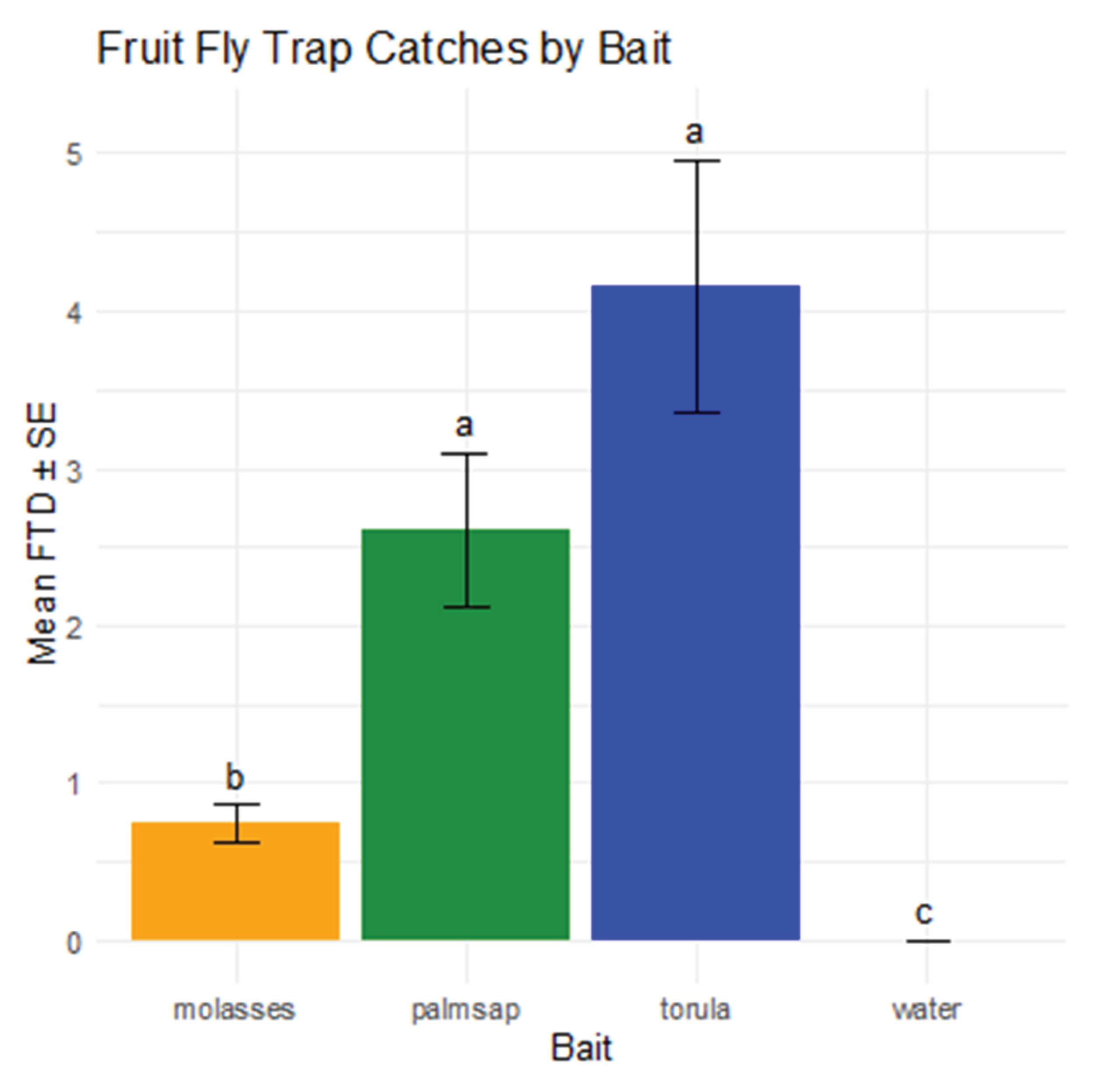
Figure 1. Mean FTD of Bactrocera dorsalis for the sampling period, in each treatment. Treatments with bars with the same letter are not statistically different from each other.
Preprints 200174 g001
Figure 2. Mean weekly FTD/treatment of Bactrocera dorsalis with time (weeks).
Preprints 200174 g002
Table 1. The different species of fruit flies and their abundances in each treatment.

SPECIES
TREATMENT
Molasses Palm sap Torula Water Grand total
Total (A/A) R/A (%) Total (A/A) R/A (%) Total (A/A) R/A (%) Total (A/A) R/A (%)
Bactrocera dorsalis 252 84.28 903 92.33 1,413 90.40 2 50.00 2,570
Dacus bivitatus 27 9.03 11 1.12 98 6.27 0 0.00 136
Dacus punctatifrons 1 0.33 8 0.82 8 0.51 1 25.00 18
Dacus frontalis 17 5.69 26 2.66 9 0.58 1 25.00 53
Dacus vertebratus 2 0.67 24 2.45 2 0.13 0 0.00 28
Dacus ciliatus 0 0.00 1 0.10 1 0.06 0 0.00 2
Ceratitis quilicii 0 0.00 1 0.10 15 0.96 0 0.00 16
Ceratitis rosa 0 0.00 2 0.20 8 0.51 0 0.00 10
Ceratitis capitata 0 0.00 1 0.10 7 0.45 0 0.00 8
Ceratitis punctata 0 0.00 1 0.10 1 0.06 0 0.00 2
Ceratitis cosyra 0 0.00 0 0.00 1 0.06 0 0.00 1
Total 299 100 978 100 1563 100 4 100 2,844
KEY: A/A-Absolute abundance, R/A-Relative abundance.
Table 2. Percentage of female and male fruit flies in each treatment.
SPECIES TREATMENT
Molasses Palm sap torula water
F (%) M (%) F (%) M (%) F (%) M (%) F (%) M (%)
Bactrocera dorsalis 70.63 29.37 56.70 43.30 63.98 36.02 0.00 100
Dacus bivitatus 0.00 100 33.36 63.64 31.63 68.37 0.00 0.00
Dacus punctatifrons 0.00 100 12.50 87.50 25.00 75.00 0.00 100
Dacus frontalis 17.65 82.35 26.92 73.08 44.44 55.56 0.00 100
Dacus vertebratus 0.00 100 20.83 79.17 50.00 50.00 0.00 0.00
Dacus ciliatus 0.00 0.00 100 0.00 100 0.00 0.00 0.00
Ceratitis quilicii 0.00 0.00 100 0.00 93.33 6.67 0.00 0.00
Ceratitis rosa 0.00 0.00 50.00 50.00 100 0.00 0.00 0.00
Ceratitis capitata 0.00 0.00 100 0.00 100 0.00 0.00 0.00
Ceratitis punctata 0.00 0.00 100 0.00 100 0.00 0.00 0.00
Ceratiti cosyra 0.00 0.00 0.00 0.00 0.00 100 0.00 0.00
KEY: F-female, M-male, F- female.
Table 3. Summary of totals of adults, females and males emerged from the fruits and adult infestation indices of fruit flies in guavas.
Fruit source Total number of fruits Total weight (kg) Number of pupae Emerged adults Bactrocera dorsalis Females Males pupae/kg Adult/kg
Guava (ground) 456 29.568 6154 5120 5115 2719 2401 210.00±16.6 175.00 ± 13.7
Guava (from tree) 364 22.013 6713 5808 5799 2888 2920 287.00±28.3 248 ± 23.1
Total (overall) 820 51.581 12,867 10,928 10,914 5,607 5,321 245.06±16.10 208.46 ± 13.34
Disclaimer/Publisher’s Note: The statements, opinions and data contained in all publications are solely those of the individual author(s) and contributor(s) and not of MDPI and/or the editor(s). MDPI and/or the editor(s) disclaim responsibility for any injury to people or property resulting from any ideas, methods, instructions or products referred to in the content.
Copyright: This open access article is published under a Creative Commons CC BY 4.0 license, which permit the free download, distribution, and reuse, provided that the author and preprint are cited in any reuse.
Prerpints.org logo

Preprints.org is a free preprint server supported by MDPI in Basel, Switzerland.

Subscribe

Disclaimer

Terms of Use

Privacy Policy

Privacy Settings

© 2026 MDPI (Basel, Switzerland) unless otherwise stated