

Submitted:
22 February 2026
Posted:
25 February 2026
You are already at the latest version
Abstract
Abstract The rally to mitigate growing carbon emissions and climate change necessitates decarbonization strategies, with hydrogen emerging as a key candidate option across multiple sectors. This literature review examines the current state of the road to the hydrogen economy, including production, implementation, and associated risks. Hydrogen's versatility in industry, transportation, and energy storage is highlighted, alongside the challenges of transitioning from fossil fuel-based production. It explores hydrogen's potential across various sectors, including transportation, industry, and energy storage, while acknowledging the challenges associated with its production, storage, and implementation. The review analyzes the current state of hydrogen technologies, differentiating between green, blue, and grey hydrogen production methods, and highlights advancements in production techniques like thermochemical water splitting. Key findings shows that while green hydrogen offers the cleanest pathway, high production costs and infrastructure limitations remain significant barriers to widespread adoption. The study also addresses safety concerns and public perception, emphasizing the need for robust risk assessment methodologies and management approaches. Furthermore, the review underscores the importance of technological innovations, such as high-temperature electrolysis and synergies with renewable energy sources, to enhance efficiency and sustainability. Policy recommendations include financial incentives, regulatory frameworks, and international cooperation to accelerate hydrogen adoption and balance its development with other low-carbon solutions.
Keywords:
hydrogen economy
; hydrogen production
; green hydrogen
; hydrogen storage
; fuel cells
; hydrogen infrastructure
; energy transition
; decarbonization
; policy recommendations
; sustainable future
; risks
; risk management
; challenges
1. Introduction
There is broad scientific consensus that the proliferation of carbon emissions, global warming, and climate change pose significant risks to ecosystems and human civilization (IPCC, 2021). Rising global temperatures, increased frequency of extreme weather events, and prolonged droughts signal an urgent need for action (NASA Science, 2022). In response, decarbonization has emerged as a fundamental strategy aimed at systematically reducing carbon dioxide (CO₂) emissions across all sectors of society. Hydrogen can serve as an important piece in decarbonizing multiple industries, including transportation, energy storage and delivery, and high-temperature process industries.
The global decarbonization effort is driven by international agreements, such as the Paris Agreement, which seeks to limit global temperature rise to below 2 °C above pre-industrial levels, with an aspirational goal of 1.5 °C (UNFCCC, n.d.). Governments, corporations, and financial institutions are aligning policies and investments toward low-carbon practices, emphasizing structural shifts in energy production, transportation, industry, and agriculture (IEA, n.d.). Key strategies include scaling renewable energy sources, such as wind, solar, and hydroelectric power, enhancing energy efficiency across sectors, and promoting the electrification of industrial processes and transportation (GSR2023, n.d.). These strategies are bolstered with economic instruments like carbon pricing to further incentivize emission reductions (World Bank, 2022).
The adoption of net-zero commitments by major economies and multinational corporations has accelerated investments in green technologies and sustainable infrastructure, including in the hydrogen economy (IEA, n.d.). In 2023, global investment in hydrogen supply projects reached $3.5 billion, with 80% directed toward electrolysis mostly in China and Europe and the rest toward CCUS-equipped production, led by North America; despite market challenges, hydrogen start-ups raised $3.7 billion in equity, and key innovations like AEM electrolysis and methane decomposition advanced to TRL 7, though $50 billion annually is still needed to meet net-zero goals (IEA, 2024). While the transition presents significant challenges, particularly for carbon-intensive industries and fossil-fuel-dependent economies, developing efficient, decarbonized fuels helps balance the competing imperatives for economic growth, energy security, social equity and global environmental stewardship. However, coordinated global action, technological advancements, and robust regulatory frameworks that promote both environmental sustainability and economic resilience are crucial to ensuring the success of this energy transition (Economic Outlook, 2023).
A key challenge in achieving net-zero emissions is identifying viable clean energy alternatives. Among the emerging options, hydrogen has gained attention as a potential transition fuel or even a dominant clean alternative. However, questions remain regarding its feasibility, scalability, and economic viability. This raises a critical question: Is hydrogen the energy source of the future, or just another fleeting trend? Hydrogen has developed into a multi-purpose energy carrier that can greatly reduce greenhouse gas (GHG) emissions in many different sectors. The relevance of hydrogen in the decarbonization effort also differs by sector, for example:
Industry: Hydrogen may be a viable substitute to fossil fuels in the energy-intensive production of, e.g., steel, cement, and chemicals (Akpasi et al., 2025; Cheng et al., 2023).
Transportation: For transportation in general, hydrogen fuel cell vehicles (FCEVs) are gaining grounds in long range applications, particularly with refueling times just below 5 minutes in many cases compared to battery electric vehicle that potentially takes 30 mimutes – 20 hours to fully charge battery electric options (NIST H2 FAQ, n.d.). In contrast to battery powered vehicles, the refueling times for hydrogen vehicles range from 15-30 minutes (Ngo, n.d.), representing a significant adoption consideration. Obviously, these are estimates, and depends on vehicle size and capacity, data puts hydrogen ahead of battery powered vehicles.
Energy Storage: Hydrogen is a major player in energy storage because of its capacity to efficiently store substantial amounts of energy, which can contribute to reducing the challenge of intermittency of renewable energy sources, and supporting energy availability during periods of low production or high demand (Arsad et al., 2022). The integration of hydrogen with renewables can enhance grid stability and enable surplus energy storage, significantly contributing to carbon emission reduction, especially when it is produced by means of electrolysis using renewable energy sources (Yue et al., 2021).
In spite of this promise, there are still challenges in hydrogen storage and deployment, high production costs, infrastructure needs, and safety concerns all can limit widespread adoption (Arsad et al., 2022; Hassan, Algburi, et al., 2023). Continued research into advanced storage materials like hydrides and cryogenic systems aims to overcome these barriers and unlock hydrogen’s full potential as a clean, flexible energy carrier (Bhandari & Adhikari, 2024; Hassan, Sameen, et al., 2023). The use cases identified above collectively form parts of the “hydrogen economy,” a cohesive and interdependent web of hydrogen production and utilization applications that span industries (see Figure 1). Hydrogen’s versatility spans to other applications such transportation where fuel cells already offer zero-emission solutions, also in industry, with particular emphasis to ammonia and steel production, where they support decarbonization efforts (Yue et al., 2021). While it is clear that replacing traditional fossil fuels with hydrogen will greatly impact overall GHG emissions, and produce a significantly lower-emission economy, the production of hydrogen itself is not necessarily clean. Currently, 98% of hydrogen is produced from fossil fuel sources without CO₂ emission controls (i.e., black, brown or grey hydrogen), which results in roughly 830 million tons of CO₂ every year (CGEP, 2021; Staffell et al., 2019). While lower-emission production is possible, the higher costs associated with these pathways has thus far precluded their widespread adoption. For the environment to benefit from hydrogen, it must be a truly clean energy. Competitive clean hydrogen is included in the U.S. Department of Energy’s Earthshots “Ambition” program (Charting the Path, n.d.).
Building an effective hydrogen economy, particularly a green hydrogen economy, is increasingly important as climate change, extraction (of fossil fuels) difficulty, and energy independence questions loom over the future of multiple industries. In this paper, we review the current state of the hydrogen economy, including its production and implementation in various industries. In Section 2, we review the current approaches to production, transportation, and storage of hydrogen for energy purposes. Section 3 reviews the implementation of hydrogen as a fuel in non-energy industries. Section 4 details the economic considerations that drive the current hydrogen economy and how policies may be shaped to more effective support this nascent industry. Section 5 discusses the technological improvements engendered in recent years and the future direction of hydrogen innovation. Section 6 outlines the risks associated with hydrogen infrastructure, and the available risk analysis methodologies used in the industry. We conclude with Section 7 and Section 8, which offer recommendations for policy-makers and researchers, respectively.
2. Current State of Hydrogen for Energy
2.1. Current State of Hydrogen and its Progress in the Hydrogen Economy
As we examine the present-day state of hydrogen technologies and infrastructure, it is clear that substantial progress has been achieved in hydrogen production methods, particularly through electrolysis technologies that facilitate cleaner generation than competing methods, e.g., steam-methane reforming (Guan et al., 2023). Larger electrolysis modules are being deployed as stakeholders aspire for volume to meet demand, particularly in California. Simultaneous advancements in hydrogen utilization and storage infrastructure, e.g., through proliferating hydrogen fueling stations for hydrogen-powered vehicles, evidence the full-scope focus on hydrogen economy improvement (Sadeq et al., 2024). These advances lay the groundwork for a robust hydrogen economy and position hydrogen as a key component of future sustainable energy strategies.
Despite the advancement across multiple sectors of the nascent hydrogen economy, the adoption rates of hydrogen technology exhibit stark variability across different regions, largely influenced by local policies and investment capacities. Europe has emerged as a frontrunner due to its robust policy framework, encouraging substantial infrastructure development and technological implementation (Dou et al., 2023). Conversely, adoption is slower in regions like Africa, where resource constraints and lack of investment hinder the establishment of necessary infrastructure. In the Asia-Pacific region, major economies such as Japan and South Korea are accelerating adoption with supportive government initiatives (Arutyunov, 2022). Hence, adoption rates reflect both economic priorities and policy environments, underscoring the need for tailored approaches to facilitate uniform hydrogen development globally. (EIGA, n.d.)
2.2. Predominant Production Methods (Green, Blue, and Grey Hydrogen)
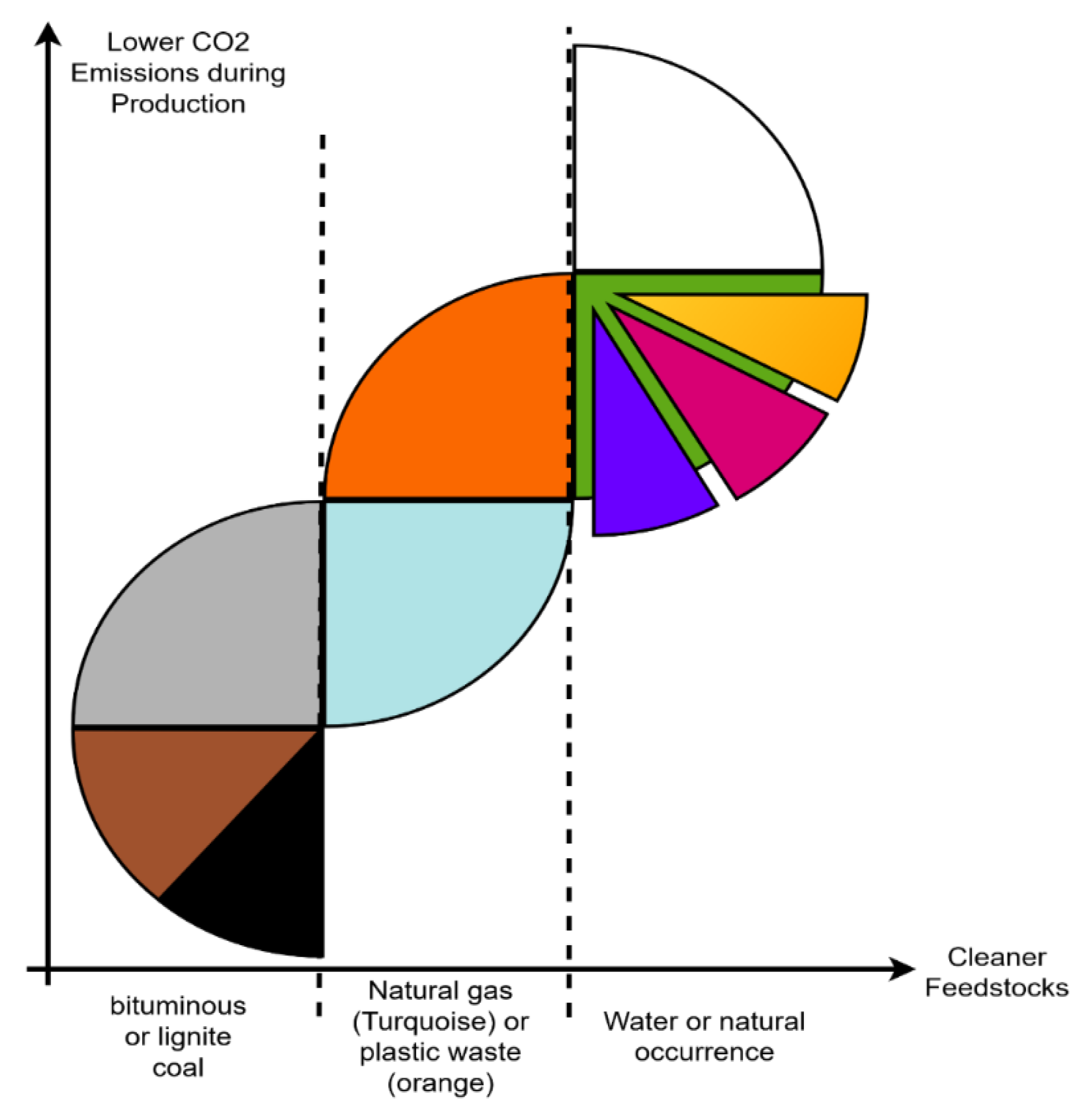
Common hydrogen production methods include coal gasification, steam methane reforming (SMR), water electrolysis, and biomass gasification. At the time of this publication, carbon-intensive SMR is the dominant method (EIA, 2025; EIGA, n.d.; Thunder Said Energy, 2023). SMR reacts methane with high temperature steam to produce hydrogen and carbon monoxide. Thus, both the feedstock and byproduct of SMR hydrogen production contribute to a large carbon footprint. In addition to feedstocks and byproducts, the energy source for hydrogen production must also be considered for its environmental impact. Color codes are used to identify the carbon intensity of the production process for hydrogen based on the energy source (although this is somewhat correlated with process). Table 1 and Figure 2 classify hydrogen production methods based on the cleanliness of their feedstocks and emissions due to production.
Green Hydrogen: Green hydrogen uses renewable energy sources (e.g., solar, wind) to power the production process. Typically, green hydrogen production incorporates Polymer Electrolyte Membrane (PEM) electrolysis to separate hydrogen from water. Compared to traditional methods, renewable solar photovoltaic and wind electrolytic hydrogen production is estimated to emit 50-90% less GHG (Akpasi et al., 2025; Terlouw et al., 2024).
Blue Hydrogen: Blue hydrogen is a lower-carbon alternative being produced through steam methane reforming (SMR) with carbon capture and storage (CCS), although this reduces CO₂ emissions compared to conventional SMR (without CCS); however, its environmental benefit depends on CCS efficiency and the risk of methane leakage from natural gas feedstocks (Howarth & Jacobson, 2021; IEA, 2021). Unlike green hydrogen, blue hydrogen relies on fossil fuels, making its sustainability subject to upstream emissions and capture rates.
Grey hydrogen: Grey hydrogen is produced through fossil fuel-powered SMR or coal gasification without CCS to offset emissions. Currently, over 95% of global hydrogen production comes from grey hydrogen, contributing approximately 830 million tons of CO₂ emissions annually (De Blasio, 2024; Garza, 2021). This is roughly equivalent to 13% of annual U.S. carbon emissions. While this method and associated technology are well-established, it is not sustainable for achieving climate goals.
While Grey, Blue, and Green are the most commonly defined colors of hydrogen, other colors have been developed to further delineate hydrogen production based on energy source, feedstock, and production process. These are shown in Table 1 and Figure 2.
The additional colors proposed by (Incer-Valverde et al., 2023), listed in Table 1, provide further context about the source of energy and hydrogen feedstock, and account for production processes used or proposed other than the most common SMR and electrolysis methods. Figure 1 visualizes the various colors of hydrogen based on feedstock and carbon emissions during production. Regardless of the production method, hydrogen production can require significant amounts of energy. The most common process (Grey) produces significant CO2 emissions, although various decarbonization technologies (e.g., CCS for Blue Hydrogen) and cleaner production processes (Green, Yellow, Pink/Red/Purple) are available to reduce emissions. As technology advances, it may be possible to leverage naturally-occurring hydrogen sources as “white hydrogen” (De Blasio, 2024).

Table 1.
Hydrogen color designations, adapted from (Incer-Valverde et al., 2023).
| Color | Energy Source | Feedstock | Process | CO2 Emissions |
| Green | Renewable | Water | Electrolysis | No Direct |
| Orange | Grid Mix | Water | Electrolysis | Grid-dependent |
| Pink | Nuclear (electric) | Water | Electrolysis | No Direct |
| Purple | Nuclear (electric + heat) | Water | Electrolysis | No Direct |
| Red | Nuclear (heat) | Water | Thermolysis | No Direct |
| Yellow | Solar | Water | Thermolysis | No Direct |
| Turqoise | Fossil Fuel with CCS | Natural gas | Pyrolysis | Low |
| Blue | Fossil Fuel with CCS | Natural gas or Biomass | SMR | Low |
| Grey | Fossil Fuel without CCS | Natural gas | SMR | High |
| Brown | Fossil Fuel without CCS | Lignite or Biomass | Coal gasification | High |
| Black | Fossil Fuel without CCS | Bitumin | Coal gasification | High |
Figure 2.
Colors of hydrogen illustrated with their respective feedstocks and production emissions.
2.3. Advancements in Hydrogen Production Methods
In 2023, the global hydrogen review publicized a new method of hydrogen production that could represent a significant technological breakthrough for the hydrogen economy. Thermochemical water splitting produces water through a series of high-temperature (500 °C or above) chemical reactions via multiple pathways. In general, thermochemical water splitting uses high-temperature heat (e.g., from concentrated solar or nuclear sources) to drive hydrogen-producing chemical reactions involving metal oxides. Two examples of thermochemical splitting include the cerium oxide two-step (reduction-oxidation) cycle and copper chloride hybrid (dissociation-electrolysis-hydrolysis) cycle (Bullock & More, 2021; USHA, 2024).
There is a significant body of research on thermochemical splitting for hydrogen production, including (Clements, 2023), (Yamamoto et al., 2024), (Miyaoka et al., 2021), (Tran et al., 2024), and (Rao & Dey, 2017). Of the over 300 identified thermochemical processes, the U.S. Department of Energy previously identified several as developmental priorities, shown in Table 2 (USDOE Nuclear Hydrogen, 2004).
Thermochemical water splitting methods, as shown in Table 2, offer the potential for higher-efficiency and lower-cost hydrogen production. However, developing these methods for commercial-scale use requires more research and development.
2.4. Storage and Transportation Infrastructure
Hydrogen can be stored using physical methods as well as material-based systems. Chemical carriers like ammonia have become popular as well. Storage and transportation of hydrogen are undisputably major challenges in the realization of a hydrogen- economy. Current technologies for the storage of hydrogen include high pressure compressed gas bottles (cylinders), cryogenic liquid storage tanks, high pressure tube trailers for regional delivery, liquid organic carriers and emerging solid-state materials (Yang et al., 2023). Despite current advancements, issues such as low volumetric energy density, high costs, and infrastructure limitations remain major constraints, while the current transportation methods such as pipelines, road and maritime, each presents trade-offs in terms of efficiency, scalability, and safety, with pipeline transport being most viable for large-scale distribution but requiring substantial upfront investment (Xie et al., 2024). Recent research emphasizes the potential of underground storage facilities such as salt caverns and nanomaterials to enhance capacity and safety, while integration with renewable energy sources could further optimize the hydrogen supply chain. Currently experienced limitations in storage and transportation facets represents a monumental barrier to scalability and economic viability of a global hydrogen economy. Furthermore, a review of 81 papers identified that 25 technical and 9 economic factors that directly influence hydrogen logistics costs, with capital expenditure (CAPEX), transportation distance and as storage capacities as dominating constraints (Lu et al., 2025). These constraints slows the race to decarbonization as far as hydrogen as a candidate option is concerned, and these further delays integration with renewable sources as and undermines they role of hydrogen as the clean energy vector (Xie et al., 2024; Yang et al., 2023).
3. Hydrogen Implementation
3.1. Case Studies of Successful Hydrogen Projects Worldwide
Where advances in the technology for hydrogen production, storage, and transportation infrastructure (Section 2) reveal the state-of-the-art, examining current hydrogen projects provides insight into the state-of-practice and the potential trajectory of the hydrogen economy. Here, we report a spot check on hydrogen implementation to show its trending position as it is today. As mentioned previously, progress around the world is not uniform, and some economies are pursuing hydrogen more aggressively than others.
In the United Arab Emirates, for instance, the country’s commitment to hydrogen as a sustainable energy alternative is exemplified through its integrated adoption model, with local production facilities reducing dependency on conventional fossil fuels (Gandhi et al., 2022). This initiative showcases the strategic importance of developing regional capabilities while addressing both economic and environmental goals. Meanwhile, Japan has demonstrated substantial progress through its advanced hydrogen infrastructure, marked by a network of refueling stations supporting widespread adoption of hydrogen-powered vehicles (Gandhi et al., 2022). Diverse approaches across regions are shaping the global progression of the hydrogen economy, fostering innovation and adaptive strategies tailored to local contexts and infrastructure needs. Obviously, adopters will generally introduce systems that their current infrastructure can handle, as they look into viability of scaling and committing to large scale infrastructure spend. It’s easy to see that policy has a major role to play, as will be discussed in Section 7.
The pipeline for clean hydrogen projects across the world has expanded significantly in recent years. According to the Hydrogen Council’s “Hydrogen Insights 2024” report, the number of clean hydrogen projects across the world rose from 228 in 2020 to 1,572 by May 2024, representing a sevenfold growth. Additionally, the committed investment for projects that have reached final investment decisions (FIDs) grew from approximately USD 10 billion across 102 projects in 2020 to around USD 75 billion across 434 projects in 2024. Furthermore, the report stated that the global project pipeline has also reached maturity focusing on moving projects to execution, data published in the report shows that gross investments that were made public up to 2030 rose by about 20%, going from USD 570 billion to USD 680 billion (Hydrogen Council, 2024).
3.1.1. Hydrogen in Transportation (Fuel Cell Vehicles, Trains, Ships)
Hydrogen is being studied across multiple sectors in transportation particularly commercial, industrial and or heavy duty applications where fuel cell vehicles (FCV) are gaining interest as they tend to offer faster fueling time (less than 4 minutes) compared to battery electric vehicles (BEV) but suffer some set back due to less fueling across the USA (Cuthrell, 2022). Hydrogen fueling stations are mostly concentrated in California (West Coast) with emerging deployments targeted along the Texas corridors to handle the relatively high freight long haul transportation volumes (Sujan et al., 2024). Additionally, in maritime transportation, hydrogen fuel cells are becoming viable alternatives to marine fuels (Sürer & Arat, 2022). The railway sector is also exploring alternatives to reliance on diesel fuel or cumbersome electric lines to lower emissions (Sun et al., 2021). On the other hand, BEVs which are largely lithium-ion powered is popular in light-duty passenger vehicles and have more than 48,000 charging locations in the USA alone.
3.1.2. Industrial Applications (Steel Production, Chemical Manufacturing)
Hydrogen is being explored for diverse industrial applications, particularly within steel production and chemical manufacturing. In the steel industry, hydrogen represents a potential alternative to carbon-based gases which are traditionally used in the direct reduction of iron ore, a critical process for lowering emissions (Liu et al., 2021). This transition is deemed crucial for the industry’s sustainability efforts, as it can decrease the carbon footprint of steel production appreciably. In the same light, hydrogen is gaining grounds in chemical manufacturing, where it is used as a feedstock for the synthesis of ammonia and methanol, and this supports the production of fertilizers and various chemicals (Rasul et al., 2022).
3.1.3. Power Generation and Grid Balancing
In power generation, hydrogen is recognized for enhancing grid reliability and supporting renewable energy integration. With solar and wind being variable, hydrogen is valuable for grid balancing due to its energy storage and quick redeployment capabilities. Leveraging hydrogen can stabilize energy supply by mitigating availability fluctuations (Rasul et al., 2022). In power plants, surplus renewable energy converts into hydrogen via electrolysis for later use, increasing energy system flexibility and reducing carbon emissions, advancing sustainable, decarbonized energy pathways.
3.2. Comparison with Other Low-Carbon Alternative Energy Sources
Comparing hydrogen with other lower carbon alternatives such as biofuels unravels some distinct differences and similarities, particularly in terms of efficiency, cost, and environmental impact. The production of hydrogen through biological processes, such as biohydrogen, demonstrates a sustainable approach but often results in lower energy output compared to traditional fossil fuels (Thirumalaivasan et al., 2024). In contrast, biodiesel and renewable diesel, especially when derived from algae, provide immediate efficiency gains in dual-fuel engines and can capitalize on existing infrastructure (Mohite et al., 2024). Besides these benefits, the lifecycle impact of biofuels often presents challenges, particularly concerning land use and resultant carbon emissions. In economic terms, while hydrogen production costs remain substantial, ongoing advancements aim to enhance its feasibility, whereas biofuels find economic advantages in reduced transitional costs due to the utilization of current distribution and consumption systems.
Moreover, when considering hydrogen in relation to ethanol and natural gas, the scalability and technological maturity of each energy source emerge as crucial factors. Hydrogen, with its potential for significant emission reductions, is currently limited by high production costs and the nascent stage of its technological development, particularly when juxtaposed with ethanol’s widespread integration into existing fuel systems (Parra et al., 2019). Natural gas, while more technologically mature with established and robust infrastructure, still poses significant challenges in the area of carbon emissions unless of course paired with effective carbon capture technologies. Notwithstanding, hydrogen’s unique advantages, such as its ability to store renewable energy and offer grid stability, position it as a key player in future low carbon energy systems. As advancements in hydrogen technology continue, its role in decarbonization efforts becomes increasingly prominent, highlighting its potential to complement the existing capacities of ethanol and natural gas in a sustainable energy framework (Nnabuife et al., 2023).
Extending the comparison of hydrogen with solar, wind, and hydropower, particularly in the area of technological maturity, cost, and environmental benefits, it is evident that hydrogen production through water electrolysis, although still developing, is a viable pathway for zero-carbon energy when powered by renewable sources (Osman et al., 2022). The technological maturity of solar and wind energy is well-established, with declining costs making them exceedingly competitive; however, both face inherent challenges related to energy intermittency and storage capacity. Hydropower, equipped with mature technology, offers consistent energy output but raises concerns related to ecological disruption and geographical dependency. In contrast, hydrogen stands out by serving as an effective storage medium for surplus renewable energy, thereby addressing the intermittency issues of solar and wind (Vartiainen et al., 2019, 2021). Consequently, while the initial capital investments for hydrogen infrastructure can be substantial, its capability to enhance the resilience and sustainability of energy systems indicates a promising future within the low carbon energy landscape.
Hydrogen distinguishes itself from other low carbon alternatives (e.g., biofuels, wind, solar, hydropower) as a potent and multi-use energy carrier with high potential for emission reductions and energy system resilience, particularly as a storage medium for intermittent renewable sources. However, high production costs and technological immaturity currently constrain its widespread adoption. In contrast, biofuels and renewable diesel offer immediate integration into existing infrastructure but grapple with lifecycle emissions and land utilization concerns. Solar and wind may provide renewable energy with declining costs but face challenges of intermittency, which hydrogen could effectively mitigate, highlighting the complementary roles of these technologies in a sustainable future energy landscape. This comparison highlights the multifaceted potential that these energy sources hold in the decarbonization efforts, and it urges continued innovation and sustained policy support to overcome existing barriers and enhance feasibility as sustainable energy solutions.
3.3. Overview of Challenges in Implementing Hydrogen
Despite the promising potential of hydrogen as a sustainable energy source, several barriers hinder its widespread implementation. One of the foremost challenges is the high production cost associated with hydrogen technologies, which can limit their economic feasibility on a large scale. This issue is compounded by the need to integrate carbon capture mechanisms on currently-feasible technologies (e.g., Grey hydrogen) to minimize environmental impact, further increasing costs (Ahad et al., 2023). Additionally, existing infrastructure limitations present obstacles, with insufficient refueling stations and storage capabilities deterring rapid adoption in the transportation sector. Consequently, technological advancements are imperative to address these barriers, aiming to enhance efficiency and affordability while fostering a more robust framework for hydrogen energy systems. Challenges in implementation of hydrogen projects covers a wide array of constraints such as public perception of risk and benefit uncertainty, lack of policy support, infrastructure and funding constraints etc., all of which are discussed in details this paper.
4. Risks and Risk Management
4.1. Safety Concerns and Public Perception
Safety related concerns and public perception surrounding the move to large scale implementation of hydrogen as a clean alternative to fossil fuels in both consumer and industrial applications is one of the undertones behind perceived reluctance in supporting the hydrogen initiative in the public space. Public reluctance to embrace hydrogen as a fuel is influenced by risk perception and safety concerns, which can escalate into opposition if not addressed through transparent risk management and spatial planning. In fact, the study considered the social aspects of hydrogen as an important element of hydrogen sustainability (Sala et al., 2024). According to Norazahar et al., the perceived safety of hydrogen technologies considerably influences public acceptance, particularly in regions emerging as potential adopters (Norazahar et al., 2023). Public perception of any technology often hinges on the understanding of the technology and its safety implications, trust in the “gatekeepers” (i.e., the technology developers), and the transparency of, and perceived agency in, the deployment and adoption process. Social amplification of risk occurs when an adverse event like an accident, disease outbreak, etc. emerges affects many people. This process can magnify the event’s impact far beyond immediate victims, leading to major indirect consequences such as lawsuits, significant drops in sales (Alfasfos et al., 2024). Societal acceptance can be impeded by historical misconceptions and the tangible risks associated with hydrogen storage and use, as well as highly visible incidents, necessitating comprehensive risk communication strategies (Emodi et al., 2021).
Highly publicized incidents can have a profound and lasting impact on public acceptance of emerging technologies, particularly those involving perceived safety risks. In the case of hydrogen, as Alfasfos, Sillman, and Soukka (2024) explain, “Safety and public acceptance are also key aspects to take into consideration when examining the prospects of a hydrogen economy.” Despite hydrogen’s long and relatively safe use in industrial contexts, its broader adoption can be slowed down by visible incidents that trigger enduring safety concerns, with one of the most notably incidents of all times being the Hindenburg disaster of 1937, in which a hydrogen-filled Zeppelin exploded and killed 36 people. This event gave rise to what some authors term the “Hindenburg syndrome,” a reflexive fear rooted in public memory that continues to shape perceptions of hydrogen safety. Alfasfos, Sillman, and Soukka (2024) further noted that transitioning hydrogen from industrial to public-facing applications introduces new challenges, requiring stricter safety criteria, regulatory oversight, and public education to build trust. They also drew parallels to other technologies such as the Concorde supersonic jet, nuclear power post-Fukushima, and wind turbines in Germany that faced public opposition or decline due to safety and sustainability concerns. These examples emphasize how singular, high-profile incidents can potentially crystallize public skepticism and stall technological progress unless proactively addressed through transparent risk management and stakeholder engagement.
In the same light, as Groth and Al-Douri discuss, advancing technologies in hydrogen safety and risk analysis are crucial in enhancing reliability and gaining public trust (Groth & Al-Douri, 2023). These studies underscore the necessity for clear, evidence-based communication to mitigate public concerns and foster a favorable environment for hydrogen adoption. To paint another picture using examples that many people can relate to in the USA, for example, California is an early adopter of clean fuels, clean air, and this is demonstrated through policies and laws, one can readily see that resident of California is more likely to have a slightly different degree of push back or acceptance compared to the rest of the states in the USA. Concerns often range from safety to outright fear of change for a lot of consumers.
4.2. Risk Analysis Methodologies
Many different risk assessment tools and or methodologies already exist for addressing or mitigating flammable and combustible liquid hazards, and these tools have either been adapted or redesigned specifically to address hydrogen hazards. However, for hydrogen, a safer approach would be to address its hazard with a slightly but more conservative approach, there have been in fact risk assessment methodologies that are specially developed from ground up for hydrogen, but each of them has its own strengths and challenges. One prominent approach is Quantitative Risk Assessment (QRA), this is widely utilized due to its structured nature, allowing for a detailed evaluation of potential hazards associated with hydrogen technologies (Feng & Ruiz, 2023). The Hydrogen Risk Assessment Process proposed by Min et al. systematically addresses safety challenges, advocating for empirical data utilization to improve analytical accuracy (Min et al., 2025). Complementing these methods, Computational Fluid Dynamics (CFD)-based assessments offer advanced modeling capabilities to predict hydrogen behavior and improve safety measures (Calabrese et al., 2024). These methodologies, while robust, require continuous refinement and adaptation to ensure they remain relevant amidst evolving technological and environmental contexts.
4.3. Risk Mitigation and Management Approaches
Risk mitigation begins with understanding the hazard, or source of potential loss in the system. As a result, hazard identification and management of risks are critical for the successful advancement of the hydrogen economy. One significant risk associated with hydrogen usage is its inherent flammability, which poses safety concerns during production, storage, and distribution (Ahad et al., 2023). Mitigation strategies include adoption and rigorous compliance with relevant codes and standards such as such as NFPA 2 (Hydrogen Technologies Code), as well as other robust safety standards. The United States Department of Energy references a list of various Codes and Standards that apply to hydrogen in h2tools.org (USDOE, n.d.) and these may vary with geographic jurisdiction. The development of inherently safer containment systems, and regular inspections to ensure compliance with these standards constitute risk mitigation measures. Moreso, hydrogen production often involves high energy consumption, potentially counteracting environmental benefits unless those renewable sources are utilized efficiently (Arutyunov, 2022). Addressing this requires integrating renewable energy effectively and investing in innovative electrolysis and storage technologies to enhance efficiency and safety, thus fostering a safer hydrogen infrastructure (Collana et al., 2025).
Thus, evaluating the depth of the safety concerns associated with the adoption, development and deployment of hydrogen technologies is crucial to ensuring their successful implementation across various energy sectors. A primary hazard is hydrogen’s high flammability, necessitating rigorous safety protocols during its production, storage, and distribution (Ahad et al., 2023). According to Dou et al., the development of robust regulatory frameworks is essential to manage these risks effectively (Dou et al., 2023). Moreover, integrating comprehensive safety measures, such as inherently safer containment systems and regular inspections, helps mitigate potential explosions either caused by leaks or other factors (Arutyunov, 2022). Together, these regulatory measures and technological improvements are instrumental in fostering a secure environment for the broader adoption of hydrogen, aligning with global safety standards and advancing the transition to a sustainable energy economy. Also, since decarbonization is a global initiative, even so, basic safety standards should not be so different from jurisdiction to jurisdiction, obviously, certain authorities having jurisdiction might influence or require stiffer safety standards for their specific location.
4.4. Challenges in Risk Assessment and Management
Challenges in assessing hydrogen risks as well as managing those risks associated with hydrogen implementation are grounded and tied up in part with several technical and procedural factors, and not enough lessons learned information. In fact, one of the primary hurdles is the lack of standardized risk assessments across different hydrogen technologies, and this complicates comprehensive safety evaluations (Patel et al., 2024). Consequently, the diverse nature of hydrogen applications demands adaptable risk management frameworks that can accommodate various operational contexts (Min et al., 2025). Additionally, there remains a significant gap in empirical data necessary for accurate risk modeling, often resulting in uncertainties that can undermine decision-making processes (Calabrese et al., 2024). These challenges highlight the critical need for innovation in risk management approaches, which must integrate continuous monitoring and empirical research to effectively support the expansion of hydrogen as a viable energy solution.
In addition to developing data-informed risk management approaches capable of responding to dynamic scenarios for hydrogen infrastructure, there is a need to harmonize risk management approaches across hydrogen technologies. Hydrogen technologies are emerging with subtle differences in how they work, operating pressures, production and storage capacity, etc. As a result, developers are looking to design for simplicity, reduce complexity and cost, and develop “minimum functional objectives” to guide hazard mitigation efforts. While these efforts are useful, the diversity of hydrogen applications and lack of cohesive standards has resulted in fragmented approaches to risk management. NFPA 2 “Hydrogen Code” houses targeted solutions to mitigating hydrogen risks across many applications, however, there are gaps that exist in just how to properly apply the code to optimize hazard mitigation. However, this does not solve the intertwined challenges of developing a cohesive approach to ensure all hydrogen applications are properly managed. Further, continuing to pursue divergent risk management approaches across hydrogen technologies complicates the efforts to develop risk models and data infrastructure.
Significant data is required to contextualize and quantify hydrogen risks. Despite the relative lack of data on hydrogen safety (compared to other technologies), there have been significant efforts to provide models and data infrastructure for use in quantitative risk assessments. Modeling software like HyRAM+ (Groth & Hecht, 2017) are in development to fuse first-principles approaches with a growing body of empirical data and produce more accurate risk assessments. As data becomes available from varied implementations, it is critical that it be widely usable. HyCReD, the Hydrogen Component Reliability Database (Groth et al., 2024), seeks to standardize the collection and storage of safety-relevant data for hydrogen components. These efforts ensure that data remains useful as the breadth of hydrogen implementation continues to increase.
6. The Future Hydrogen Economy: Technological Innovations and Policy Recommendations
6.1. Technological Innovations
The latest technologies for hydrogen generation and storage are important for achieving energy sustainability and carbon neutrality, as they will increase operational performance and decrease environmental risks and consequences. For example, electrolysis processes for hydrogen generation have seen profound increases in efficiency (Guan et al., 2023). Continued innovation and improvement in production throughput and safety, and the introduction of cleaner power sources such as solar, wind, hydropower will have significant impacts on the sustainable energy transition. Recently, a 5-megawatt Solar to Hydrogen production project was announced for the West Coast area (Chevron New Energies, 2024), and this is potentially a stride in the direction of lower carbon footprint in hydrogen production. Hydrogen storage also demonstrates considerable technological progress (Mekonnin et al., 2025); the nuclear energy agency examined cutting-edge technological solutions to enhance efficiency and economic feasibility of the hydrogen storage systems. Overall, the New Hydrogen Economy and technologies prove the concept of carbon neutrality and energy sustainability in the new models of energy generation and consumption, setting the stage for hydrogen integration into future-generation power systems such as thermonuclear fusion (Gen-4 & NEA, n.d.).
Moreover, nuclear power could be merged with hydrogen generation. This combination of innovative technologies could catalyze the efficient, eco-friendly hydrogen generation that utilizes existing or advanced nuclear reactors. The integration of hydrogen production and nuclear energy could contribute to more carbon-free hydrogen generation, which will facilitate the transition to sustainable and efficient energy use. While existing reactors can supply electricity to power low-temperature electrolysis, the high-temperature heat produced by advanced nuclear reactors could allow one to address some current challenges in affordable production in the hydrogen economy. It highlights the potential of thermonuclear energy to reach the hydrogen economy’s goals and support further innovation in this area (Gen-4 & NEA, n.d.; Mekonnin et al., 2025).
The latest technologies that will change the processes in the hydrogen industry are also observed in the area of hydrogen production. Innovations in electrolysis based on high-temperature steam processes have shown significant opportunities for increasing efficiency hydrogen production (Qureshi et al., 2022). This method promises to eliminate the constant problems of exorbitant hydrogen production costs and efficiency. Currently, there are also areas for biohydrogen production through methods that involve the use of cyanobacteria (Sadeq et al., 2024). This method is promising and ecologically safe. The use of advanced materials and catalysts also shows prospects for increasing reaction rates and system durability.
The prospects of breakthroughs in the fields of electrolysis and fuel cell technology demonstrate that there are opportunities for significant progress in improving the efficiency of both hydrogen generation and its consumption. It is worth noting that high-temperature electrolysis looks particularly promising. This technology uses heat to achieve higher energy efficiency of hydrogen production (Qureshi et al., 2022). Potentially, high-temperature electrolysis could solve one the key problems of traditional electrolysis methods by significantly cutting the energy consumption and increasing hydrogen yields. Besides, it has been proved that the use of new catalysts and material innovations has a positive impact on the efficiency and durability of fuel cells (Arsad et al., 2024). Similar improvements in fuel cell technology not only make them more cost-effective but also contribute to the declining costs of hydrogen production, which in turn will facilitate wider hydrogen implementation in the energy systems of different countries across the globe.
Furthermore, hydrogen technologies’ synergies with renewable energy sources could significantly boost the sustainability and efficiency of energy systems. Combing hydrogen production with renewable energy sources, such as solar and wind, supports uninterrupted energy production and consumption cycle, reducing the unreliability factor inherent for renewables (Wang et al., 2019). Hydrogen could be used to store peak loads and renewable energy surpluses, converting it back to electricity when necessary. At the same time, using biomass together with hydrogen technologies, overall carbon footprint could be reduced, while a plurality of feedstock source would also increase energy systems’ reliability (Emam et al., 2024). Given all above, the synergies between hydrogen technologies and renewable energy sources could pave sustainable and reliable foundation to the global energy system, contributing to energy independence and ecological focus efforts.
6.2. Economic Considerations
6.2.1. Workforce
The growth of the hydrogen economy is dependent on workforce training and education, including workforce retraining (NETL, n.d.). Workforce size will depend on varying production facility types, for example, the workforce required to operate an electrolysis facility will be less significantly compared with the size of workforce required to operate an SMR facility which is often part of a refinery system. Adding hydrogen generation capabilities to existing and advanced nuclear reactors will similarly require additional personnel and/or training to maintain operations and safety. Clearly, the development of hydrogen will bring changes to current employment conditions. Other impacts will be on job creation, workforce development, and skills training.
According to the U.S. Department of Energy’s National Energy Technology Laboratory (NETL, n.d.), employment opportunities span the entire hydrogen value chain from production and storage to transportation and end-use applications requiring both conventional energy skills and specialized training in hydrogen technologies. To meet this demand, regional initiatives are launching workforce programs. The University of Toledo, for instance, is leading a $3 million federally funded initiative to prepare workers for hydrogen-related roles (Gorny, 2025), while the University of Houston is targeting underserved communities in the Gulf Coast with tailored training programs (Khan, n.d.).
Economically, the hydrogen industry is poised to generate substantial growth. In the Gulf Coast alone, it is projected to create up to 180,000 jobs and contribute $100 billion to GDP by 2050 (Perlman, 2025). Across the U.S., the Inflation Reduction Act is expected to spur the creation of approximately 700,000 jobs by 2030 through clean hydrogen investments (AP News, 2023). Globally, countries like Australia are investing in purpose-built training centers—such as a $15 million facility in Townsville—to cultivate a highly skilled hydrogen workforce (Qld.gov, 2024). These initiatives reflect a strategic alignment between economic policy and workforce development, positioning hydrogen as both an energy solution and a job creation engine. In addition to providing direct jobs in the hydrogen economy, the proliferation of hydrogen technology will provide employment opportunities in the manufacturing, transportation, and renewables sectors. Hydrogen plants will create employment opportunities in the construction, engineering, and maintenance of the plant and (Oliveira et al., 2021).
The hydrogen energy sector employment forecasts reflect a promising outlook. The hydrogen economy will deliver job opportunities across multiple sectors as hydrogen demand increases (Reigstad et al., 2022). The growth in hydrogen infrastructure requires trained employees adapting to new technologies. The estimations focus on economic projections, but also on the necessity of workforce planning to cope with traditional energy systems transitions opportunities and challenges, particularly a skills mismatch.
6.2.2. Production Costs
A key driver for the commercialization of clean hydrogen as a high-potential energy carrier is its production costs. Cost of production and cost at the pump for consumers has to be competitive compared to conventional fuels to attract shift towards hydrogen. As published by the Belfer Center, “The challenges of scaling clean hydrogen demand include high costs”. The author further writes that in 2023, green hydrogen production cast was between ($4.50-$12.00/kg), while the cost producing blue hydrogen ranges between ($1.80-$4.70/kg). 1kg of Hydrogen = 1 GGE (Gasoline Galon Equivalent), (Mural et al., 2025). In context, Hydrogen Shot (Energy Earthshots) is a U.S. Department of Energy initiative which aims at reducing the cost of clean hydrogen by 80% to $1 per kilogram in 1 decade (“1 1 1”) (USDOE, 2021).
In the case of green hydrogen, its production relies mainly on renewable energies through water electrolysis, a process that is still costly compared to conventional production methods like SMR. The green hydrogen costs are a major hurdle to scalability and competitiveness. However, as the climate crisis continues to come into sharper relief, the role of hydrogen in meeting climate goals may spur continued technological advancements and catalyze new economic incentives to widespread adoption. Another author writes that “in 2020, the production of hydrogen from renewable energy was within the range of 3.0 to 7.5 USD/kg of the leveled cost of hydrogen” (Diaz et al., 2025). That is, green hydrogen costs are high in large part because the cost of renewable electricity itself is higher than conventional sources (Taibi et al., 2020). Technological improvements to increase the efficiency of electrolyzers and continued proliferation of renewable energy sources will continue to drive down the costs associated with green hydrogen. Many factors such as economy, inflation, demand, cost R&D and production of newer production technologies may all continue to impact costs for hydrogen production, with technological improvement being a critical contributing factor. While these technological improvements can result in cost decreases, a competitive price for green hydrogen to be competitive against other alternatives such as steam methane reforming in current market conditions is difficult (Jovan & Dolanc, 2020).
Technological advancement plays a significant role in cutting the costs of green hydrogen production, particularly in improving the efficiency of electrolysis and renewable energy production. Overall, using more advanced electrolyzers, which require less energy to produce hydrogen, is one of the key focuses for reducing hydrogen production costs (Taibi et al., 2020). Improved materials for electrolyzer cells increase efficiency and reduce production costs, while lowering renewable energy prices aid in reducing the total production costs and boosting hydrogen’s price competitiveness on the market (Ahmed et al., 2022). These technological advancements are important for making green hydrogen a widely adopted resource.
Government incentives and subsidies have a substantial role in increasing the financial viability of hydrogen technology by reducing the barrier to entry, or the investment needed to adopt hydrogen technology. Nyangon and Darekar indicated that subsidies could reduce the levelized cost and allow hydrogen to serve as an economically viable energy alternative (Nyangon & Darekar, 2024). Subsidies therefore help to de-risk hydrogen technologies and allow smaller or less fiscally liquid companies to invest in hydrogen. The Inflation Reduction Act, for example, incentivized clean hydrogen production and resulted in reduced costs and emissions of several hydrogen production technologies (Krupnick & Bergman, 2022).
In addition to incentivizing technology adoption, subsidies also spur research investment to improve hydrogen technology; Such incentives have contributed to improving electrolysis efficiency and lowering the electricity price associated with hydrogen production (Li et al., 2022). In this context, China created targeted subsidy policies that resulted in improved electrolysis efficiency, contributing to decreased electricity prices and, consequently, influenced the technological attractiveness of hydrogen technologies (Li et al., 2022). These financial aspects could increase the viability of hydrogen as a technology and introduce hydrogen into the investment portfolio of stakeholders. As such, the integration of these financial schemes promotes a healthy investment environment for hydrogen technologies as compared to traditional energy sources.
The examples described above serve as evidence of how targeted incentive policies can help the development of the hydrogen market achieve the alignment of the transition to cleaner energy while remaining competitive with the traditional energy market. The policy allocation suggests that funding would allow stakeholders to further pursue the development of hydrogen technologies and reduce emissions.
6.3. Policy Recommendations
Effective policy measures are instrumental in fostering the growth and integration of the hydrogen economy. One primary recommendation is the establishment of subsidies and financial incentives to reduce the economic burden associated with hydrogen production and infrastructure development (Sharma et al., 2023). Additionally, implementing regulatory frameworks that standardize safety and environmental protocols will reassure both investors and the public, promoting broader acceptance and utilization of hydrogen technologies (French, 2020). To enhance technological synergy, governments should facilitate partnerships between research institutions and industry stakeholders, fostering innovation across hydrogen production, storage, and distribution sectors. Lastly, investing in educational campaigns to raise awareness about the environmental and economic benefits of hydrogen can help address public skepticism and stimulate adoption.
Therefore, targeted incentives and robust regulatory frameworks are crucial to facilitating the adoption of hydrogen technologies. Implementing government subsidies and tax credits could alleviate the high costs associated with hydrogen production, making it more economically feasible for companies to invest in this clean energy source (Sharma et al., 2023). Additionally, the development of coherent regulatory frameworks will support safety and efficiency, providing investors and stakeholders with the confidence needed to advance hydrogen infrastructure projects, this means that realization of low-emissions hydrogen has clearly gone from question of technological victories to policy change challenge (IEA, 2025). Encouraging collaboration between private enterprises and research institutions could foster innovation, particularly in the areas of storage and distribution, which are pivotal for the scalability of hydrogen solutions (French, 2020). A concerted effort to integrate educational campaigns will also enhance public understanding and acceptance, address societal reluctance and promote widespread adoption of hydrogen technologies.
According to InsideEV, the adoption or sale of hydrogen powered (i.e., fuel cell, FCV) vehicles in the USA fell by 70% in 1Q2024 compared to the previous year, representing the worst start of the year for hydrogen car sales since 2016 (Inside EVs, n.d.). Currently, California remains the most hydrogen-friendly state in the USA, largely due to policy commitments and public awareness (NREL, n.d.). The state maintains positive shift towards the adoption of hydrogen through strong policies and regulatory support, including for production and use incentives (California, 2024; H2Hubs, n.d.). These policies created a regional ecosystem that enabled hydrogen to thrive in the state; California remains the only state to seriously pursue hydrogen infrastructure (AFDC.Energy.Gov, n.d.). Targeted policy actions with incentives are recommended to reverse the downward trend beginning with the federal government, then state and local governments, modeling after the state of California.
6.3.1. Strategies for Accelerating Hydrogen Adoption
Sizeable adoption of hydrogen as a clean alternative to fossil-based fuels is logically dependent upon various strategic measures, such as infrastructure development, cost reduction, and obviously policy support. According to the U.S. Department of Energy (DOE), the establishment of regional hydrogen hubs and the implementation of the “Hydrogen Shot” initiative aim to reduce the cost of clean hydrogen to $1 per kilogram within a decade, making it competitive with other energy sources (USDOE, 2021). Although this might seem to be attainable by a long shot, nevertheless these kinds of initiatives shine the light on the need for cross-sector collaboration, workforce development, and technological innovation to scale up hydrogen infrastructure and accelerate its adoption across various sectors (USDOE, 2022). Additionally, Oliver Wyman highlights the importance of connecting supply and demand through robust infrastructure and thoughtful commercial strategies to ensure the long-term viability of the hydrogen economy (Smith, n.d.).
6.3.2. International Cooperation and Standardization Efforts
International collaboration is central in advancing hydrogen technologies and establishing a global hydrogen economy, otherwise a significant imbalance of implementation may result with direct impact to decarbonization. Think of this in terms of the scale of justice. Achieve the decarbonization should be a global effort so that there are no culprits that counters or tilts the scale of decarbonization on the one tip of the scale with large carbon emission that neutralizes carbon reduction being achieved by implementing regions. The International Partnership for Hydrogen and Fuel Cells in the Economy (IPHE) serves as a platform for over 26 member countries to share information, align policies, and develop common codes and standards for hydrogen utilization and safety (IPHE, n.d.). This partnership fosters joint research and development efforts, leveraging global expertise to address challenges in hydrogen production, storage, and distribution (IEA, 2023). Furthermore, bilateral and multilateral agreements, such as those coordinated by the International Energy Agency (IEA), play a crucial role in harmonizing regulations and promoting the widespread adoption of hydrogen technologies (IEA, 2023). Global cooperation will also drive standardization, so that hydrogen standard becomes relatively similar across the globe with participating nations. There is need for balance between regulations and support for rise in adoption of low-carbon hydrogen (IEA, 2025).
6.3.3. Balancing Hydrogen Development with Other Low-Carbon Solutions
The development in the hydrogen space must be balanced with other low-carbon solutions to achieve comprehensive decarbonization. A study by the MIT Energy Initiative emphasizes the need for holistic optimization of electric power and hydrogen supply chains to maximize emission reductions and minimize infrastructure costs (Travers, 2021). Hydrogen’s potential to complement variable renewable energy sources, such as wind and solar, makes it a valuable component of a diversified energy portfolio (Travers, 2021), however, challenges as earlier discussed such as high production costs and the need for significant policy support may help address demand uncertainty, and undeniably provide the basis for onset of success in hydrogen space. Integrating hydrogen with other technologies, including battery storage and carbon capture, to create a resilient and sustainable energy system will be a welcome idea, and this is already being required in some parts of the EU by the Renewable Energy Directive (RED) (IEA, 2025).
7. Conclusions
In conclusion, the hydrogen economy presents a promising pathway toward decarbonization, offering versatile applications across various sectors, including industry, transportation, and energy storage. The transition to a hydrogen-based energy system is driven by international agreements and the adoption of net-zero commitments, spurring significant investments in green technologies. While advancements in hydrogen production, storage, and implementation are evident, the journey is not without its hurdles.
The review paper highlighted the current state of hydrogen technologies, emphasizing the need for cleaner production methods, such as green hydrogen, to minimize environmental impact. It has also explored the challenges associated with hydrogen implementation, including high production costs, infrastructure limitations, and safety concerns. The analysis of risks and risk management methodologies points to the importance of addressing public perception, as part contributor to facilitating the safe deployment of hydrogen technologies.
Technological innovations, such as advancements in electrolysis and fuel cell technology, are crucial for enhancing efficiency and reducing costs. Furthermore, policy recommendations, including financial incentives and regulatory frameworks, are essential for accelerating hydrogen adoption. International cooperation and standardization efforts are also vital for establishing a global hydrogen economy.
However, the most significant and lingering challenges remain both the high production cost of clean hydrogen as well as how to deploy safer systems, these serve like headwinds to its widespread adoption. Addressing the barriers through technological advancements, government subsidies, and strategic policy interventions is necessary. In general, overcoming the cost constraint alongside continued efforts to address safety concerns, and improve infrastructure is likely to pave a smoother way for a more rapid and successful transition to a sustainable hydrogen economy.
References
- AFDC.Energy.Gov. (n.d.). Alternative Fuels Data Center: Hydrogen Fueling Station Locations by State. Retrieved September 27, 2025, from https://afdc.energy.gov/data/widgets/10370.
- Ahad, M. T., Bhuiyan, M. M. H., Sakib, A. N., Becerril Corral, A., & Siddique, Z. (2023). An Overview of Challenges for the Future of Hydrogen. Materials, 16(20), 6680. [CrossRef]
- Ahmed, S. F., Mofijur, M., Nuzhat, S., Rafa, N., Musharrat, A., Lam, S. S., & Boretti, A. (2022). Sustainable hydrogen production: Technological advancements and economic analysis. International Journal of Hydrogen Energy, 47(88), 37227–37255. [CrossRef]
- Akpasi, S., Anekwe, I., Tetteh, E., Amune, U., Mustapha, S., & Kiambi, S. (2025). Hydrogen as a Clean Energy Carrier: Advancements, Challenges, and its Role in a Sustainable Energy Future. ResearchGate. [CrossRef]
- Alfasfos, R., Sillman, J., & Soukka, R. (2024). Lessons learned and recommendations from analysis of hydrogen incidents and accidents to support risk assessment for the hydrogen economy. International Journal of Hydrogen Energy, 60, 1203–1214. [CrossRef]
- AP News. (2023). Biden’s hydrogen tax credit unveiled as administration tries to jump start industry AP News. https://apnews.com/article/hydrogen-climate-biden-treasury-07d97c035b497d69f877714140c2493e.
- Arsad, A. Z., Hannan, M. A., & Al-Shetwi, A. Q. (2022). Hydrogen energy storage integrated hybrid renewable energy systems: A review analysis for future research directions. International Journal of Hydrogen Energy, 47(39), 17285–17312. [CrossRef]
- Arsad, Ker, P. J., Hannan, M. A., Tang, S. G. H., R s, N., Chau, C. F., & Mahlia, T. M. I. (2024). Patent landscape review of hydrogen production methods: Assessing technological updates and innovations. International Journal of Hydrogen Energy, 50, 447–472. [CrossRef]
- Arutyunov, V. S. (2022). Hydrogen Energy: Significance, Sources, Problems, and Prospects (A Review). Petroleum Chemistry, 62(6), 583–593. [CrossRef]
- Bhandari, R., & Adhikari, N. (2024). A comprehensive review on the role of hydrogen in renewable energy systems. International Journal of Hydrogen Energy, 82, 923–951. [CrossRef]
- Bullock, M., & More, K. (2021). Basic Energy Sciences Roundtable: Foundational Science for Carbon-Neutral Hydrogen Technologies (No. None, 1834317; p. None, 1834317). [CrossRef]
- Calabrese, M., Portarapillo, M., Di Nardo, A., Venezia, V., Turco, M., Luciani, G., & Di Benedetto, A. (2024). Hydrogen Safety Challenges: A Comprehensive Review on Production, Storage, Transport, Utilization, and CFD-Based Consequence and Risk Assessment. Energies, 17(6), 1350. [CrossRef]
- California, S. of. (2024, July 18). California launches world-leading Hydrogen Hub. California Governor’s Office of Business and Economic Development. https://business.ca.gov/california-launches-world-leading-hydrogen-hub/.
- CGEP, C.. (2021, June 17). Hydrogen Fact Sheet: Production of Low-Carbon Hydrogen. Center on Global Energy Policy at Columbia University SIPA CGEP. https://www.energypolicy.columbia.edu/publications/hydrogen-fact-sheet-production-of-low-carbon-hydrogen/.
- Charting the Path: An Energy Earthshots Initiative Report. (n.d.). Energy.Gov. Retrieved September 18, 2025, from https://www.energy.gov/eere/charting-path-energy-earthshots-initiative-report.
- Cheng, Y., Zheng, R., Liu, Z., & Xie, Z. (2023). Hydrogen-based industry: A prospective transition pathway toward a low-carbon future. [CrossRef]
- Chevron New Energies, C. P., Government and Public. (2024). Chevron announces its first solar-to-hydrogen production project in California’s Central Valley. Chevron.Com. https://www.chevron.com/newsroom/2024/q1/chevron-announces-its-first-solar-to-hydrogen-production-project-in-californias-central-valley.
- Clements, P. (2023, November 8). HGenium unveils new technology for green hydrogen production. Global Hydrogen Review. https://www.globalhydrogenreview.com/hydrogen/08112023/hgenium-unveils-new-technology-for-green-hydrogen-production/.
- Collana, J. T., Carrasco-Venegas, L., Ancieta-Dextre, C., Rodriguez-Taranco, O., Gabriel-Hurtado, D., Montaño-Pisfil, J., Rodriguez-Aburto, C., Chávez-Sánchez, W., Santos-Mejía, C., Morcillo-Valdivia, P., & Herrera-Espinoza, N. (2025). Analysis of the Main Hydrogen Production Technologies. Sustainability, 17(18), 8367. [CrossRef]
- Corgnale, C., Gorensek, M., & Summers, W. (2020). (PDF) Review of Sulfuric Acid Decomposition Processes for Sulfur-Based Thermochemical Hydrogen Production Cycles. ResearchGate. [CrossRef]
- Cuthrell, S. (2022). EV Batteries vs. Hydrogen Fuel Cells: Promising Alternative Fuels for Different Segments - Tech Insights. https://eepower.com/tech-insights/ev-batteries-vs-hydrogen-fuel-cells-promising-alternative-fuels-for-different-segments/.
- De Blasio. (2024, July 8). The Colors of Hydrogen The Belfer Center for Science and International Affairs. https://www.belfercenter.org/research-analysis/colors-hydrogen.
- Diaz, M., Chavez, H., & Guajardo, J. (2025). (PDF) Economic Analysis: Green Hydrogen Production Systems. ResearchGate. [CrossRef]
- Dou, Y., Ren, J., & Dong, L. (2023). Opportunities and future challenges in hydrogen economy for sustainable development. In Hydrogen Economy (pp. 537–569). Academic Press. [CrossRef]
- Economic outlook. (2023). OECD. https://www.oecd.org/en/topics/economic-outlook.html.
- EIA. (2025, August 4). Natural gas remains the largest source of hydrogen in our long-term projections—U.S. Energy Information Administration (EIA). https://www.eia.gov/todayinenergy/detail.php?id=65845.
- EIGA. (n.d.). Overview of Hydrogen Production Methods. EIGA : European Industrial Gases Association. Retrieved September 19, 2025, from https://www.eiga.eu/search/DOC251_24/.
- Emam, A. S., Hamdan, M. O., Abu-Nabah, B. A., & Elnajjar, E. (2024). A review on recent trends, challenges, and innovations in alkaline water electrolysis. International Journal of Hydrogen Energy, 64, 599–625. [CrossRef]
- Emodi, N. V., Lovell, H., Levitt, C., & Franklin, E. (2021). A systematic literature review of societal acceptance and stakeholders’ perception of hydrogen technologies. International Journal of Hydrogen Energy, 46(60), 30669–30697. [CrossRef]
- Feng, W., & Ruiz, C. (2023). Risk management of energy communities with hydrogen production and storage technologies. Applied Energy, 348, 121494. [CrossRef]
- French, S. (2020). The Role of Zero and Low Carbon Hydrogen in Enabling the Energy Transition and the Path to Net Zero Greenhouse Gas Emissions: With global policies and demonstration projects hydrogen can play a role in a net zero future. Johnson Matthey Technology Review, 64(3), 357–370. [CrossRef]
- Gandhi, K., Apostoleris, H., & Sgouridis, S. (2022). Catching the hydrogen train: Economics-driven green hydrogen adoption potential in the United Arab Emirates. International Journal of Hydrogen Energy, 47(53), 22285–22301. [CrossRef]
- Garza, A. de la. (2021, September 22). Fossil Fuel Companies Pitch Hydrogen Made From Natural Gas. TIME. https://time.com/6098910/blue-hydrogen-emissions/.
- Gen-4 & NEA. (n.d.). System Analysis: Hydrogen production from nuclear energy GIF Portal. Retrieved September 30, 2025, from https://www.gen-4.org/resources/reports/system-analysis-hydrogen-production-nuclear-energy.
- Gorny, N. (2025, February 6). UToledo Leads $3M Initiative to Equip Workers for Emerging Hydrogen Economy UToledo News. https://news.utoledo.edu/index.php/02_06_2025/utoledo-leads-3m-initiative-to-equip-workers-for-emerging-hydrogen-economy.
- Groth, K. M., & Al-Douri, A. (2023). Hydrogen safety, risk, and reliability analysis. In Hydrogen Economy (pp. 487–510). Academic Press. [CrossRef]
- Groth, K. M., Al-Douri, A., West, M., Hartmann, K., Saur, G., & Buttner, W. (2024). Design and requirements of a hydrogen component reliability database (HyCReD). International Journal of Hydrogen Energy, 51, 1023–1037. [CrossRef]
- Groth, K. M., & Hecht, E. S. (2017). HyRAM: A methodology and toolkit for quantitative risk assessment of hydrogen systems. International Journal of Hydrogen Energy, 42(11), 7485–7493. [CrossRef]
- GSR2023. (n.d.). Retrieved September 14, 2025, from https://www.ren21.net/wp-content/uploads/2019/05/GSR2023_Demand_Modules.pdf.
- Guan, D., Wang, B., Zhang, J., Shi, R., Jiao, K., Li, L., Wang, Y., Xie, B., Zhang, Q., Yu, J., Zhu, Y., Shao, Z., & Ni, M. (2023). Hydrogen society: From present to future. Energy & Environmental Science, 16(11), 4926–4943. [CrossRef]
- H2Hubs. (n.d.). Retrieved September 27, 2025, from https://www.energy.gov/sites/default/files/2024-07/H2Hubs%20ARCHES_Award%20Fact%20Sheet.pdf.
- H2@Scale. (n.d.). Energy.Gov. Retrieved September 18, 2025, from https://www.energy.gov/eere/fuelcells/h2scale.
- Hassan, Q., Algburi, S., Sameen, A. Z., Jaszczur, M., & Salman, H. M. (2023). Hydrogen as an energy carrier: Properties, storage methods, challenges, and future implications. Environment Systems and Decisions, 44(2), 327–350. [CrossRef]
- Hassan, Q., Sameen, A. Z., & Salman, H. M. (2023). Hydrogen energy horizon: Balancing opportunities and challenges. Energy Harvesting and Systems, 11(1). [CrossRef]
- Howarth, R. W., & Jacobson, M. Z. (2021). How green is blue hydrogen? [CrossRef]
- Hydrogen Council. (2024, September 17). Global hydrogen industry reports $75 billion in committed capital but climate targets at stake due to project delays. Hydrogen Council. https://hydrogencouncil.com/en/global-hydrogen-industry-reports-75-billion-in-committed-capital-but-climate-targets-at-stake-due-to-project-delays/.
- IEA. (n.d.). Net Zero by 2050—A Roadmap for the Global Energy Sector.
- IEA. (2021). Global Hydrogen REVIEW 2021.
- IEA. (2023). Global Hydrogen Review 2023.
- IEA. (2024). Global Hydrogen Review 2024 – Analysis. IEA. https://www.iea.org/reports/global-hydrogen-review-2024/investment-finance-and-innovation.
- IEA. (2025, September 8). From promise to practice: How policy can help anchor demand for hydrogen – Analysis. IEA. https://www.iea.org/commentaries/from-promise-to-practice-how-policy-can-help-anchor-demand-for-hydrogen.
- Incer-Valverde, J., Korayem, A., Tsatsaronis, G., & Morosuk, T. (2023). “Colors” of hydrogen: Definitions and carbon intensity. Energy Conversion and Management, 291, 117294. [CrossRef]
- Inside EVs. (n.d.). U.S. Hydrogen Car Sales Plummet By 70% In Q1 2024. InsideEVs. Retrieved September 27, 2025, from https://insideevs.com/news/716100/us-hydrogen-car-sales-2024q1/.
- IPCC. (2021). Climate Change 2021 – The Physical Science Basis: Working Group I Contribution to the Sixth Assessment Report of the Intergovernmental Panel on Climate Change (1st ed.). Cambridge University Press. [CrossRef]
- IPHE. (n.d.). Government-to-Government Partnership dedicated to hydrogen. Iphe. Retrieved September 28, 2025, from https://www.iphe.net/who-we-are.
- Jovan, D. J., & Dolanc, G. (2020). Can Green Hydrogen Production Be Economically Viable under Current Market Conditions. Energies, 13(24), 6599. [CrossRef]
- Khan, R. (n.d.). University of Houston Leads Collaborative Effort to Improve Gulf Coast Area Workforce Development and Community Benefits in the Unfolding Energy Transition. Retrieved September 26, 2025, from https://www.uh.edu/news-events/stories/2024/october/10032023-gulf--coast-workforce.php.
- Krupnick, A., & Bergman, A. (2022). Incentives for Clean Hydrogen Production in the Inflation Reduction Act.
- Li, C., Zhang, L., Ou, Z., & Ma, J. (2022). Using system dynamics to evaluate the impact of subsidy policies on green hydrogen industry in China. Energy Policy, 165, 112981. [CrossRef]
- Liu, W., Zuo, H., Wang, J., Xue, Q., Ren, B., & Yang, F. (2021). The production and application of hydrogen in steel industry. International Journal of Hydrogen Energy, 46(17), 10548–10569. [CrossRef]
- Lu, X., Krutoff, A.-C., Wappler, M., & Fischer, A. (2025). Key influencing factors on hydrogen storage and transportation costs: A systematic literature review. International Journal of Hydrogen Energy, 105, 308–325. [CrossRef]
- Mekonnin, A. S., Wacławiak, K., Humayun, M., Zhang, S., & Ullah, H. (2025). Hydrogen Storage Technology, and Its Challenges: A Review. Catalysts, 15(3), 260. [CrossRef]
- Min, M., Yoon, C., Yoo, N., Kim, J., Yoon, Y., & Jung, S. (2025). Hydrogen Risk Assessment Studies: A Review Toward Environmental Sustainability. Energies, 18(2), 229. [CrossRef]
- Miyaoka, H., Ichikawa, T., & Kojima, Y. (2021). Hydrogen Production via Thermochemical Water Splitting Process by Alkali Metal Redox Cycle. Journal of the Japan Institute of Energy, 100(5), 29–44. [CrossRef]
- Mohite, A., Bora, B., Sharma, P., & Medhi, B. (2024). Maximizing efficiency and environmental benefits of an algae biodiesel-hydrogen dual fuel engine through operational parameter optimization using response surface methodology. International Journal of Hydrogen Energy, 52, 1395–1407. [CrossRef]
- Mural, R., Floyd, M., Berns, S., & Takahashi, A. (2025, February 26). Stimulating Clean Hydrogen Demand: The Current Landscape The Belfer Center for Science and International Affairs. https://www.belfercenter.org/research-analysis/stimulating-clean-hydrogen-demand-current-landscape.
- NASA Science. (2022, June 15). Evidence—NASA Science. https://science.nasa.gov/climate-change/evidence/.
- NETL. (n.d.). Hydrogen Workforce Page. Netl.Doe.Gov. Retrieved September 26, 2025, from https://netl.doe.gov/business/rwfi/H2workforce.
- Ngo, H. (n.d.). Development and Construction of a Hydrogen Refueli: NEA. Retrieved September 16, 2025, from https://www.neuman-esser.com/en/news-media/magazine/development-and-construction-of-a-hydrogen-refueling-station-infrastructure-for-truck-based-transport-systems/.
- NIST H2 FAQ. (n.d.). Retrieved September 15, 2025, from https://www.nist.gov/system/files/documents/2025/02/11/nist_h2_faqs-11Feb2025_website.pdf.
- Nnabuife, S. G., Darko, C. K., Obiako, P. C., Kuang, B., Sun, X., & Jenkins, K. (2023). A Comparative Analysis of Different Hydrogen Production Methods and Their Environmental Impact. Clean Technologies, 5(4), 1344–1380. [CrossRef]
- Norazahar, N., Ambikabathy, T. M., & Kasmani, R. M. (2023). Hydrogen application and its safety: An overview of public perceptions and acceptance in Malaysia. Process Safety and Environmental Protection, 180, 686–698. [CrossRef]
- NREL. (n.d.). Hydrogen Resource Data, Tools, and Maps Geospatial Data Science NREL. Retrieved September 27, 2025, from https://www.nrel.gov/gis/hydrogen.
- Nyangon, J., & Darekar, A. (2024). Advancements in hydrogen energy systems: A review of levelized costs, financial incentives and technological innovations. Innovation and Green Development, 3(3), 100149. [CrossRef]
- Oliveira, A. M., Beswick, R. R., & Yan, Y. (2021). A green hydrogen economy for a renewable energy society. Current Opinion in Chemical Engineering, 33, 100701. [CrossRef]
- Osman, A. I., Mehta, N., Elgarahy, A. M., Hefny, M., Al-Hinai, A., Al-Muhtaseb, A. H., & Rooney, D. W. (2022). Hydrogen production, storage, utilisation and environmental impacts: A review. Environmental Chemistry Letters, 20(1), 153–188. [CrossRef]
- Parra, D., Valverde, L., Pino, F. J., & Patel, M. (2019). A review on the role, cost and value of hydrogen energy systems for deep decarbonisation. Renewable and Sustainable Energy Reviews, 101, 279–294. [CrossRef]
- Patel, P., Garaniya, V., Baalisampang, T., Arzaghi, E., Abbassi, R., & Salehi, F. (2024). A technical review on quantitative risk analysis for hydrogen infrastructure. Journal of Loss Prevention in the Process Industries, 91, 105403. [CrossRef]
- Perlman, M. H., Brett. (2025, April 28). Killing hydrogen tax credit could end the Gulf Coast’s energy leadership. Houston Chronicle. https://www.houstonchronicle.com/opinion/outlook/article/hydrogen-tax-credit-texas-louisiana-congress-20287598.php.
- Perret, R. (2011). Solar Thermochemical Hydrogen Production Research (STCH): Thermochemical Cycle Selection and Investment Priority (Nos. 5342, SAND--2011–3622, 1219357; pp. 5342, SAND--2011–3622, 1219357). [CrossRef]
- Qld.gov. (2024). Miles Doing What Matters: Fuelling a pipeline of hydrogen workers with new $15 million NQ training centre. Ministerial Media Statements. https://statements.qld.gov.au/statements/101084.
- Qureshi, F., Yusuf, M., Kamyab, H., Vo, D.-V. N., Chelliapan, S., Joo, S.-W., & Vasseghian, Y. (2022). Latest eco-friendly avenues on hydrogen production towards a circular bioeconomy: Currents challenges, innovative insights, and future perspectives. Renewable and Sustainable Energy Reviews, 168, 112916. [CrossRef]
- Rao, C. N. R., & Dey, S. (2017). Solar thermochemical splitting of water to generate hydrogen. Proceedings of the National Academy of Sciences, 114(51), 13385–13393. [CrossRef]
- Rasul, M. G., Hazrat, M. A., Sattar, M. A., Jahirul, M. I., & Shearer, M. J. (2022). The future of hydrogen: Challenges on production, storage and applications. Energy Conversion and Management, 272, 116326. [CrossRef]
- Reigstad, G. A., Roussanaly, S., Straus, J., Anantharaman, R., de Kler, R., Akhurst, M., Sunny, N., Goldthorpe, W., Avignon, L., Pearce, J., Flamme, S., Guidati, G., Panos, E., & Bauer, C. (2022). Moving toward the low-carbon hydrogen economy: Experiences and key learnings from national case studies. Advances in Applied Energy, 8, 100108. [CrossRef]
- Sadeq, A., Homod, R., & Hussein, A. (2024). Hydrogen energy systems: Technologies, trends, and future prospects. Science of The Total Environment, 939, 173622. [CrossRef]
- Sala, R., Yamamoto, T., Sato, H., Huan, N., Yin, H., Tzioutzios, D., & Paltrinieri, N. (2024). Public Risk Perception Of Hydrogen Technologies In Three Countries.
- Sharma, G. D., Verma, M., Taheri, B., Chopra, R., & Parihar, J. S. (2023). Socio-economic aspects of hydrogen energy: An integrative review. Technological Forecasting and Social Change, 192, 122574. [CrossRef]
- Smith. (n.d.). 3 Strategies For Winning In Clean Hydrogen. Retrieved September 27, 2025, from https://www.oliverwyman.com/our-expertise/perspectives/expert-takes-on-energy-natural-resource-topics/3-strategies-for-winning-in-clean-hydrogen.html.
- Staffell, I., Scamman, D., Abad, A. V., Balcombe, P., Dodds, P. E., Ekins, P., Shah, N., & Ward, K. R. (2019). The role of hydrogen and fuel cells in the global energy system. Energy & Environmental Science, 12(2), 463–491. [CrossRef]
- Sujan, V., Fan, J., Jatana, G., & Sun, R. (2024, October 8). Nationally Scalable Hydrogen Fueling Infrastructure Deployment: A Megaregion Analysis and Optimization Approach. arXiv.Org. https://arxiv.org/abs/2410.06033v2.
- Sun, Y., Anwar, M., Hassan, N. M. S., Spiryagin, M., & Cole, C. (2021). A review of hydrogen technologies and engineering solutions for railway vehicle design and operations. Railway Engineering Science, 29(3), 212–232. [CrossRef]
- Sürer, M., & Arat, H. (2022). Advancements and current technologies on hydrogen fuel cell applications for marine vehicles. International Journal of Hydrogen Energy, 47(45), 19865–19875. [CrossRef]
- Taibi, E., Miranda, R., Carmo, M., & Blanco, H. (2020). Green Hydrogen Cost Reduction. https://www.h2knowledgecentre.com/content/researchpaper1613.
- Terlouw, T., Rosa, L., Bauer, C., & McKenna, R. (2024). Future hydrogen economies imply environmental trade-offs and a supply-demand mismatch. Nature Communications, 15(1), 1–14. [CrossRef]
- Thirumalaivasan, N., Nangan, S., Kanagaraj, K., & Rajendran, S. (2024). Assessment of sustainability and environmental impacts of renewable energies: Focusing on biogas and biohydrogen (Biofuels) production. Process Safety and Environmental Protection, 189, 467–485. [CrossRef]
- Thunder Said Energy. (2023, July 6). Hydrogen reformers: SMR versus ATR? Thunder Said Energy. https://thundersaidenergy.com/2023/07/06/hydrogen-reformers-smr-versus-atr/.
- Tran, J. T., Warren, K. J., Wilson, S. A., Muhich, C. L., Musgrave, C. B., & Weimer, A. W. (2024). An updated review and perspective on efficient hydrogen generation via solar thermal water splitting. [CrossRef]
- Travers, K. (2021, October 12). Coupling power and hydrogen sector pathways to benefit decarbonization goals. Main. https://energy.mit.edu/news/coupling-power-and-hydrogen-sector-pathways-to-benefit-decarbonization-goals/.
- UNFCCC. (n.d.). The Paris Agreement UNFCCC. Retrieved September 14, 2025, from https://unfccc.int/process-and-meetings/the-paris-agreement.
- USDOE. (n.d.). Codes and Standards. Energy.Gov. Retrieved September 24, 2025, from https://www.energy.gov/eere/fuelcells/codes-and-standards.
- USDOE. (2021). Hydrogen Shot: An Introduction. https://www.energy.gov/sites/default/files/2021-06/factsheet-hydrogen-shot-introduction.pdf.
- USDOE. (2022). DOE National Clean Hydrogen Strategy and Roadmap.
- USDOE Nuclear Hydrogen. (2004). Nuclear Hydrogen R&D Plan.
- USHA. (2024). Department of Energy Hydrogen Program Plan. US Hydrogen Alliance. https://www.ushydrogenalliance.org/news/department-of-energy-hydrogen-program-plan.
- Vartiainen, E., Breyer, C., Moser, D., Medina, E. R., Busto, C., Masson, G., Bosch, E., & Jäger-Waldau, A. (2021). True Cost of Solar Hydrogen. [CrossRef]
- Vartiainen, E., Masson, G., Breyer, C., Moser, D., & Medina, E. R. (2019). Impact of weighted average cost of capital, capital expenditure, and other parameters on future utility-scale PV levelised cost of electricity. [CrossRef]
- Wang, M., Wang, G., Sun, Z., Zhang, Y., & Xu, D. (2019). Review of renewable energy-based hydrogen production processes for sustainable energy innovation. Global Energy Interconnection, 2(5), 436–443. [CrossRef]
- World Bank. (2022, May 24). World Bank—Open Knowledge Repository. https://openknowledge.worldbank.org/entities/publication/a1abead2-de91-5992-bb7a-73d8aaaf767f.
- Xie, Z., Jin, Q., Su, G., & Lu, W. (2024). A Review of Hydrogen Storage and Transportation: Progresses and Challenges. Energies, 17(16), 4070. [CrossRef]
- Yamamoto, T., Ashida, S., Inubuse, N., Shimizu, S., Miura, Y., Mizutani, T., & Saitow, K. (2024). Room-temperature thermochemical water splitting: Efficient mechanocatalytic hydrogen production. Journal of Materials Chemistry A, 12(44), 30906–30918. [CrossRef]
- Yang, M., Hunger, R., Berrettoni, S., Sprecher, B., & Wang, B. (2023). A review of hydrogen storage and transport technologies. Clean Energy, 7(1), 190–216. [CrossRef]
- Yue, M., Lambert, H., & Pahon, E. (2021). Hydrogen energy systems: A critical review of technologies, applications, trends and challenges. Renewable and Sustainable Energy Reviews, 146, 111180. [CrossRef]
Figure 1.
A conceptual hydrogen economy at scale. (H2@Scale, n.d.).
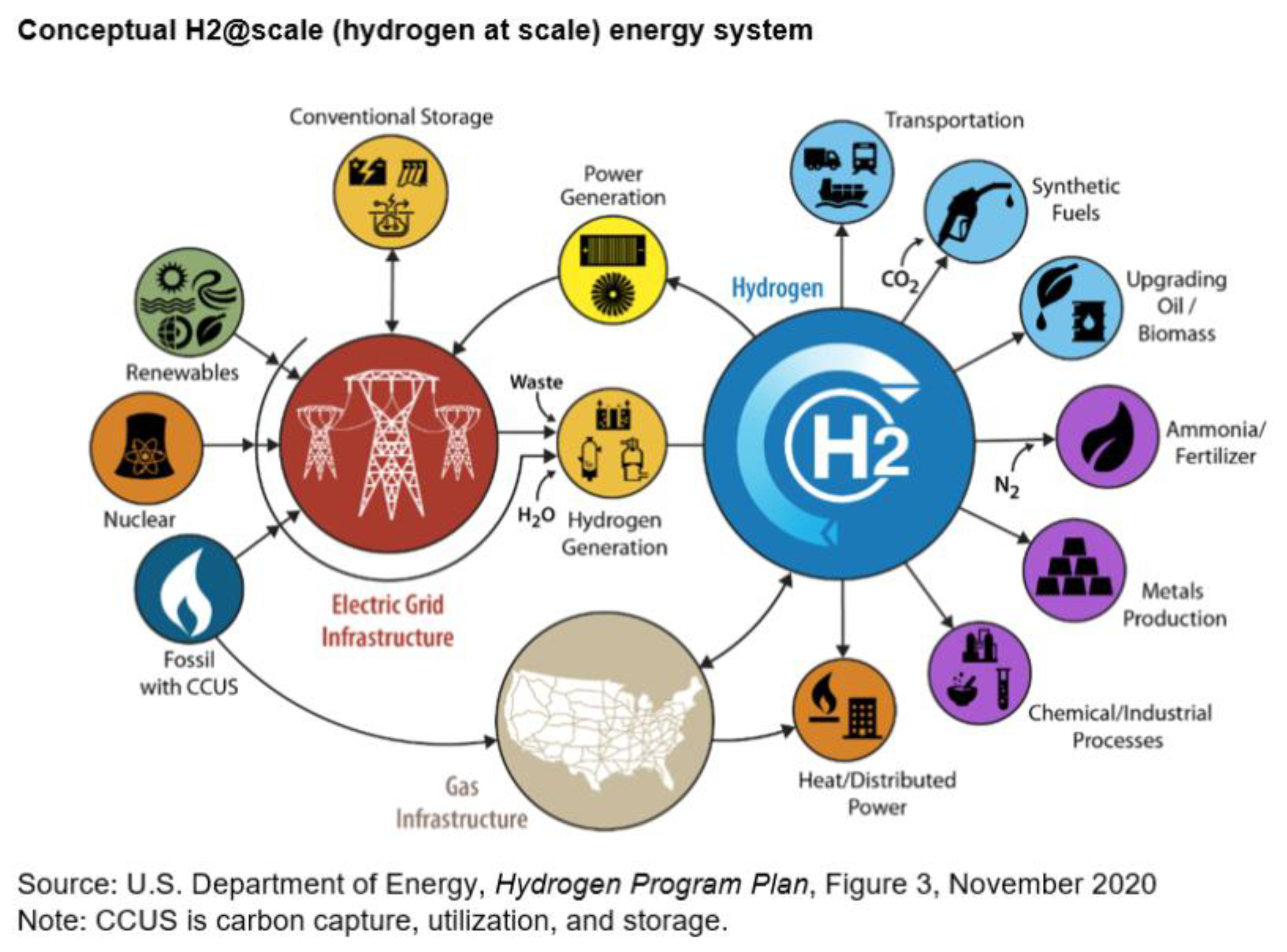
Table 2.
Overview of prioritized thermochemical cycles. Adapted from (USDOE Nuclear Hydrogen, 2004).
Table 2.
Overview of prioritized thermochemical cycles. Adapted from (USDOE Nuclear Hydrogen, 2004).
| Cycle | Peak Temp (°C) | Reported Efficiency (%) | Issues |
| Sulfur Cycles | |||
| S-I | 900 | 51 | High temp materials |
| Hybrid sulfur1 | >800 | 53 | High temp mat’ls; efficiency; scaling |
| S-Br hybrid2 | 900 | 39 | High temp mat’ls; efficiency; bromine |
| Calcium-Bromine Cycles | |||
| UT-3 | 750 | 50 | Solid chemical durability |
| Ca-Br-Star | 750 | 44 | Experimental |
| Alternative Cycles | |||
| Cu-Cl Hybrid | 550 | 46 | Efficiency |
| Fe-Cl | 650 | 49 | Competing reactions |
| Cu-S Hybrid | 827 | 73 | Economic scaling |
| Va-Cl | 925 | 42.5 | High temperature; efficiency |
(Perret, 2011), (Corgnale et al., 2020).
Disclaimer/Publisher’s Note: The statements, opinions and data contained in all publications are solely those of the individual author(s) and contributor(s) and not of MDPI and/or the editor(s). MDPI and/or the editor(s) disclaim responsibility for any injury to people or property resulting from any ideas, methods, instructions or products referred to in the content. |
© 2026 by the authors. Licensee MDPI, Basel, Switzerland. This article is an open access article distributed under the terms and conditions of the Creative Commons Attribution (CC BY) license (http://creativecommons.org/licenses/by/4.0/).
Copyright: This open access article is published under a Creative Commons CC BY 4.0 license, which permit the free download, distribution, and reuse, provided that the author and preprint are cited in any reuse.


