
Submitted:
13 February 2026
Posted:
27 February 2026
You are already at the latest version
Abstract
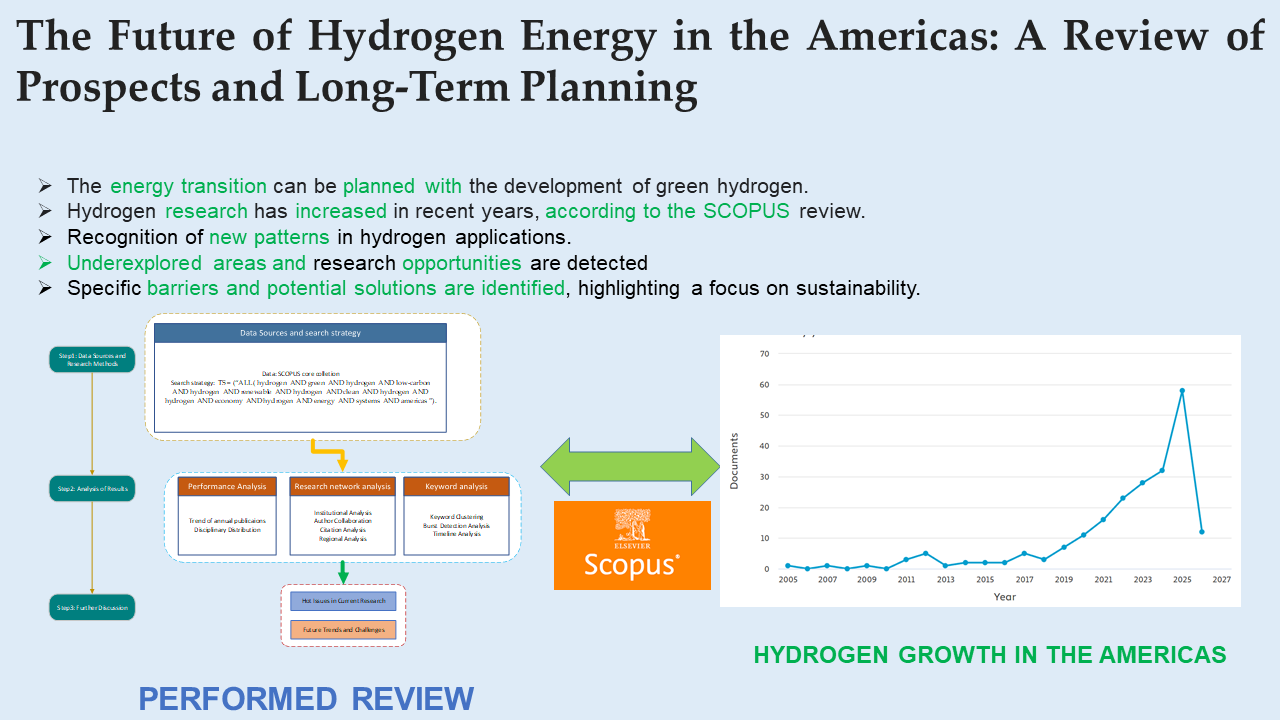
Energy hydrogen is emerging as a key driver for the deep decarbonization of energy systems in the Americas, particularly in sectors that are difficult to electrify, such as heavy industry, long-distance transportation, and seasonal energy storage. This article presents a comprehensive review of current prospects and long-term planning for hydrogen in North America, Central America, and South America, analyzing its role within energy transition strategies to long term. It examines techno-logical advancements in green hydrogen production from renewable energy sources, projected costs, required infrastructure, and potential integration schemes with existing electricity systems. Furthermore, it assesses emerging regulatory frameworks, public policies, and national and regional initiatives that seek to position hydrogen as a pillar of energy security, economic competitiveness, and emissions reduction. The study identifies differentiated opportunities based on the availability of renewable resources, industrial capacities, and socioeconomic contexts, as well as common challenges related to investment, standardization, and social acceptance. Finally, implications for long-term energy planning are discussed, highlighting the potential of hydrogen to strengthen the resilience and sustainability of the energy system in the Americas.
Keywords:
green hydrogen
; energy transition
; long-term planning
; decarbonization
; renewable energy
; Americas
Copyright: This open access article is published under a Creative Commons CC BY 4.0 license, which permit the free download, distribution, and reuse, provided that the author and preprint are cited in any reuse.


