

Submitted:
15 January 2026
Posted:
16 January 2026
You are already at the latest version
Abstract
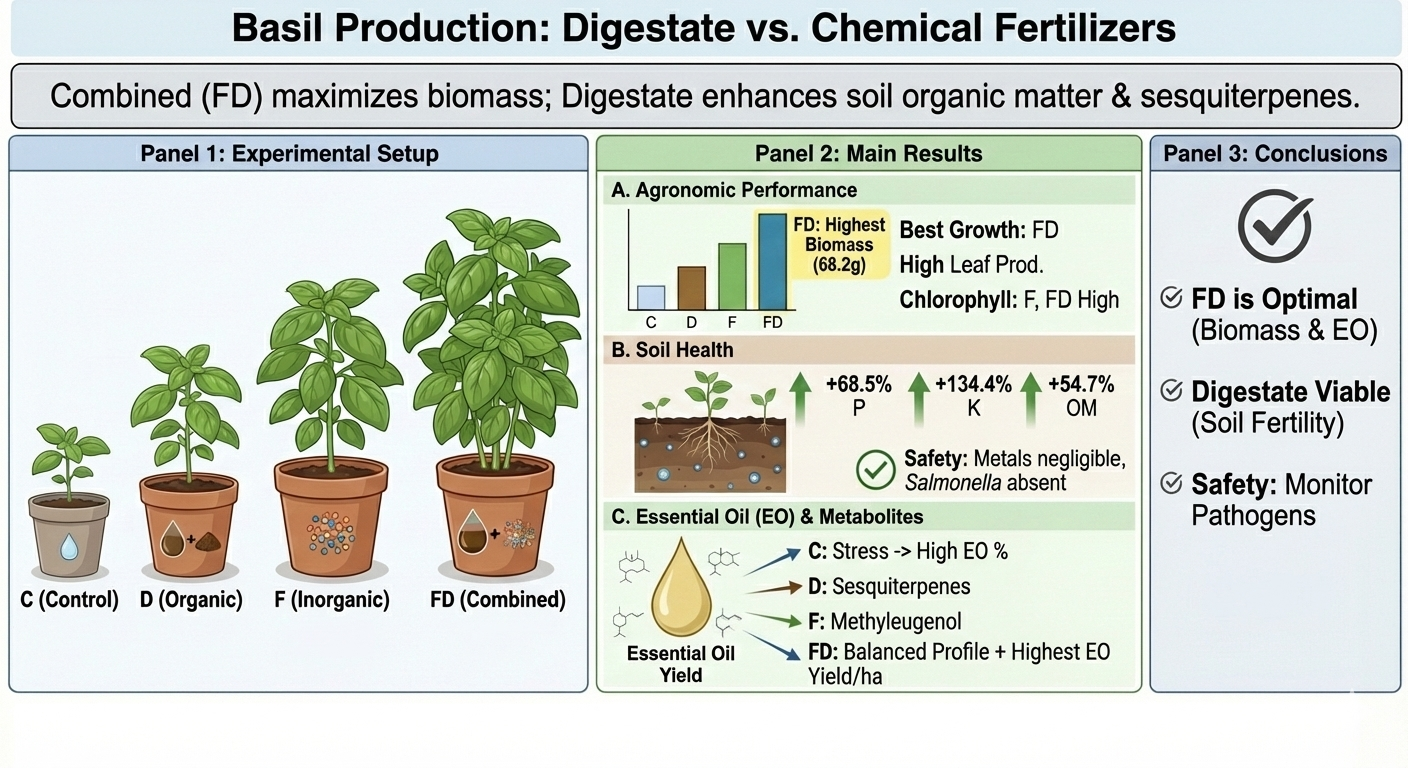
To assess digestate’s efficacy as a fertilizer for basil development, a two-year pot experiment was established, comprising four fertilization treatments: chemical fertilizer (F), digestate (D), combined chemical fertilizer and digestate (1:1, FD), and unfertilized control (C). Key metrics assessed included: plant height, chlorophyll concentration index (CCI), total biomass (TB), leaf production (LP), essential oil yield, and composition. Post-harvest soil analysis evaluated nutrient and heavy metal content and pathogen contamination in soil and leaves. FD treatment produced the highest TB (68.2 g plant⁻¹) and LP (52.7 g plant⁻¹). Digestate application substantially enhanced substrate nutrient availability, increasing extractable phosphorus by 68.5%, potassium by 134.4%, and organic matter by 54.7%. Essential oil yield was significantly higher in the control plants. Notably, different fertilization regimes altered secondary metabolite synthesis. Specifically, fertilization with digestate favored sesquiterpenes synthesis, inorganic fertilization enhanced methyleugenol and β-farnesene synthesis, while the control showed higher limonene, eugenol, and linalool. Heavy metal accumulation in the soil was negligible, remaining well within regulatory limits. Salmonella spp. were not detected. Pathogen concentration in the soil was low, while Enterococcus faecalis were marginally below EU safety limits (100 cfu g⁻1) on the leaves.
Keywords:
essential oil
; Ocimum basilicum L.
; sustainable agriculture
; food safety
; soil health
1. Introduction
Agricultural sustainability in the Mediterranean region is facing significant issues due to soil degradation and desertification, attributed to climate change and land mismanagement [1]. Simultaneously, a considerable reduction in precipitation and an increase in salinization are expected to occur, undermining soil fertility in the Mediterranean region [1,2]. To address these challenges, digestate, the by-product of anaerobic digestion (AD), has emerged as a promising organic fertilizer that can restore and enhance soil quality.
Fertilization with digestate has the potential to increase soil fertility by stimulating the propagation of beneficial microorganisms, promoting microbial community diversification, and enhancing carbon sequestration [3]. Moreover, digestate application improves soil physical structure by increasing the number and mean weight diameter (MWD) of 5–10 mm and 1–5 mm water-stable aggregates, while reducing the smaller ones (<1 mm). These improvements in soil aggregation have been observed to persist for up to four years post-application, demonstrating digestate’s potential as a soil enhancer [4].
Furthermore, long-term digestate application significantly enhances soil health and mechanical properties. Holatko et al. (2023) [5] reported that digestate application increased soil sulfur content, enhanced the activity of key enzymes involved in nutrient cycling (including arylsulfatase, N-acetyl-β-D-glucosaminidase, and phosphatase), and improved nitrogen sequestration over extended periods. Didelot et al. (2023) [6] demonstrated that continuous digestate application resulted in significantly higher dissolved organic carbon (DOC) fluxes than mineral fertilizers or raw pig manure, highlighting the superior soil-enhancing capacity of digestate. Additionally, digestate application positively influences nutrient retention and recycling, making it a more efficient fertilizer option for diverse cropping systems [6].
However, digestate application raises potential safety concerns. Specifically, digestate produced from animal manure can contain pathogens, such as Salmonella spp., E. coli, and Enterococcus faecalis, which are sometimes able to withstand the digestion process [7,8]. Carraturo et al. (2022) reported that thermophilic digestion sanitizes digestate more effectively than mesophilic digestion, due to the elevated temperatures present during the thermophilic AD process [9]. Indicating that digestates, and particularly those from mesophilic conditions, require monitoring to ensure sufficient elimination of pathogenic microbes.
Heavy metal contamination presents another concern, as animal feed can introduce elevated concentrations of metals such as Cd, Cr, Ni, Pb, Zn, and Cu [10]. This risk is further exacerbated by digestate’s relatively low nutrient content, necessitating higher application volumes to achieve nutrient levels comparable to mineral fertilizers [11]. Consequently, repeated or excessive digestate application may lead to heavy metal accumulation in the soil [8]. The introduction of excessive pollutant loads through low-quality waste applications can adversely affect soil fertility, threaten groundwater quality, and contaminate the food chain [12,13].
Consequently, evaluating digestate’s performance on diverse crops is essential to assess both the agronomic benefits and the safety challenges. Digestate has been successfully employed as fertilizer for various medicinal and aromatic plants (MAPs), including rosemary, peppermint, lemongrass, and basil, with positive effects on both biomass production and the synthesis of secondary metabolites [14,15,16]. In particular, Rowe et al. (2023) [16] reported that the fertilization of lemongrass with digestate increased the overall biomass production eightfold, compared to the unfertilized control. Ronga et al. (2018) [15] found that the combined application of solid digestate as a growing medium and liquid digestate as the nutrient solution increased shoot dry weight, total dry weight, and the relative amount of sesquiterpenes in basil and peppermint plants grown hydroponically. Moreover, digestate application led to significant increases in the number of leaves, total number of branches, plant dry weight, and essential oil content in rose-scented geranium plants (Pelargonium graveolens L’Hér.) [17].
Basil (Ocimum basilicum L.) is one of the most economically important MAPs, widely used in Mediterranean cuisine and across the globe [18]. Basil is consumed fresh or dried as a culinary herb, while its essential oil is used in the food, pharmaceutical, and flavoring industries [18]. Essential oil from basil exhibits exceptional medicinal properties, including antiviral, antibacterial, antioxidant, antifungal, and anticancer activities [19], while its main constituents comprise linalool, eucalyptol, estragole, and eugenol [20].
The present study aimed to investigate the effect of digestate on key agronomic characteristics and the growing substrate of basil. Notably, it is the first study to investigate the effect of digestate on the essential oil composition of basil plants cultivated in soil.
2. Materials and Methods
2.1. Plant Material and Experimental Design
The experiments were conducted at the Institute of Plant Breeding and Genetic Resources (IPGRB), in Thessaloniki, Greece (Latitude 40°36′58.75″ N, Longitude 22°49′51.16″ E). The experiments were conducted in a net-house with a transparent polycarbonate roofing (10 mm thickness, 2.10 m × 6.00 m). The roofing was placed to ensure protection from rainfall and controlled irrigation conditions. Notably, plants were grown under natural light throughout the experimental process.
Seeds of a large-leaved sweet basil (Ocimum basilicum L.) germplasm (preserved in IPGRB collection) were sown in 96-cell plastic trays containing peat substrate in mid-March 2023 and 2024. Approximately 30 days after sowing (DAS), seedlings were individually transplanted into 2.5 L polyethylene pots at the four-leaf stage.
The growing substrate comprised soil and perlite at a 2:1 ratio (v:v). Soil was collected from the top 0–30 cm layer of a field near the IPGRB campus, used for MAP cultivation. After collection, the soil was sieved with a 2 mm mesh to remove rocks, large aggregates, and other extraneous materials. The soil was classified as sandy loam (SL) with a pH of 8.5, low in heavy metals, and free of pathogens (Table 1).
To assess the efficacy of digestate as an alternative organic fertilizer for developing basil, a randomized complete block design (RCBD) experiment was conducted with 3 replicates, comprising 6 plants per replication and 4 fertilization regimes, for a total of 72 plants. The fertilization treatments applied were: 1) digestate (D); 2) combined digestate with inorganic fertilizer (FD), where plants received 50% of their nitrogen requirements from digestate and 50% from inorganic fertilizer; 3) liquid fertilizer (F); and 4) unfertilized control (C).
The digestate used in the current study was obtained from an anaerobic digestion batch experiment performed in the Soil and Water Resources Institute (SWRI) in Thessaloniki, Greece [21]. The experiment entailed the use of rice straw and swine slurry at a percentage ratio of 30%:70% (on a volatile solids basis), as feedstock for an anaerobic digester operating under mesophilic conditions (37 ºC). The physicochemical characteristics of the digestate, the heavy metal, and pathogen content are presented in Table 1. Prior to fertilization, the digestate’s pH was adjusted to neutral (7), using 1 M HCl.
The inorganic fertilizer used in the current experiment (7-3-6 NPK) was commercially available and designed for green leafy plants (Compo, Münster, Germany). It contained 7% total Nitrogen, comprising 2.6% N-NO3, 1.5% N-NH4, and 2.9% N-NH2. Moreover, it included 3% P2O5, 6% K2O, and other micronutrients.
During experimentation, all plants were irrigated twice per week using tap water and maintained at 70% Water Holding Capacity (WHC), estimated gravimetrically. All fertilized plants received equal amounts of nitrogen (2.5 g plant⁻1), although the source of nitrogen differed among treatments. Fertilizers were applied with each irrigation event (twice weekly) in equal portions throughout the growing period, beginning one week after transplanting. Nitrogen fertilization was calculated as 250 kg N ha⁻1 [22], with a plant density of 10 plants per square meter.
Although most studies recommend lower rates, we selected the highest recommended fertilization to make the benefits and risks from digestate application more pronounced.
At 60 DAS, plant inflorescences were removed to promote the formation of lateral branches [23]. The plants were harvested at 90 DAS by cutting the stems at the soil surface. The leaves were removed and stored at ˗20 °C for subsequent analyses of essential oil yield, essential oil composition, and concentration of pathogens. Additionally, at the end of experimentation, the growing substrates of all the pots from each treatment were combined and homogenized. Three samples (1 kg each) per replicate were collected and stored at ˗20 °C for nutrient, heavy metal, and contaminant analysis. The experimentation was conducted over two consecutive growing seasons (2023, 2024).
2.2. Environmental Conditions
Temperature and relative humidity were continuously monitored using a HOBO Micro Station (Onset Computer Corporation, Bourne, MA, USA). The climatic conditions for 2023 and 2024 are presented in Figure 1.
2.3. Growth and Physiological Parameters
2.3.1. Growth Parameters
Prior to harvest, plant height was recorded weekly, at 39, 49, 55, 62, 69, and 76 DAS, by measuring the stems from the ground level up to the tip of the plants. At harvest (90 DAS), total fresh aboveground biomass (TB) and leaf production (LP) were determined gravimetrically (g plant⁻1).
2.3.2. Physiological Parameters
Chlorophyll content (CCI) was measured on the two youngest fully developed leaves of all plants using a portable chlorophyll content meter (CCM-200, Opti-Sciences, Tyngsboro, MA, USA) at 39, 49, 55, 62, 69, and 76 DAS.
2.4. Analytical Methods
2.4.1. Analytical Methods for Physicochemical and Microbiological Characteristics
The determination of volatile solids (VS) and total solids (TS) was performed according to standard methods [24]. To determine the heavy metal concentration, the samples were decomposed in acid at a high digestion vessel pressure with the aid of a Milestone Ethos Up microwave oven (Milestone Srl, Sorisole, Italy) and the resulting solution was analyzed, using an Agilent 7850 ICP-MS (Agilent Technologies, Santa Clara, CA, USA) equipped with the ORS4 collision cell [24]. Electrical conductivity was evaluated on approximately 10 g of sample, which was placed into a 250 mL plastic container with 50 mL of deionized water. The sample was stirred for 1 h, followed by filtration. In the filtrate, the electrical conductivity was measured at 25 °C. Total nitrogen was calculated according to the standard Kjeldahl method. Nitric nitrogen (N-NO3) was determined by spectrophotometry (HACH DR 3900, Hach-Lange Ltd, Denmark). Total calcium carbonate was determined by gravimetric analysis. The method was based on the reaction of HCl with calcium carbonate and the gravimetric loss of CO2 from the sample [25].
The detection of Salmonella was conducted according to Midorikawa et al. (2014) [26]. The number of enterococci was determined by plating known amounts of the sample on the surface of a selective medium (Enterococcus agar) prepared according to the method of Slanetz and Bartley (1957) [27]. After 48 hours of incubation at 44 °C, colonies exhibiting typical morphology were enumerated. The method of detection and enumeration of Escherichia coli in the digested material was based on the ISO 16193:2013 standard [28].
2.4.2. GC-MS/FID Analysis
Leaf samples from the aerial parts were collected from all the plants per treatment and combined to constitute three bulk samples (200–300 g each). A Clevenger-type apparatus was used to determine the essential oil (EO) content (mL 100 g⁻1 on a fresh weight basis). The fresh leaves (100 g of pooled sample per treatment) of basil were subjected to hydrodistillation for 3 hours, with a distillation rate of 3–3.5 mL min⁻1. The EO was collected in 4 mL glass vials, dried over anhydrous sodium sulfate, and stored at 4–6 °C until further analysis. The fresh biomass was distilled in triplicate, and the % yield was expressed as the mean of three independent replicates.
Essential oil samples were diluted in pentane before they were injected for analysis. A Shimadzu 17 A Ver. 3 gas chromatograph interfaced with a QP5050A mass spectrometer and holding a capillary Agilent HP-5MS 30 m, 0.25 mm, 0.25 µm column, and supported by the GC/MS Solution ver. 1.21 software was employed for the analysis of the EO. The conditions of analysis followed were previously described by Sarrou et al. (2023) [29]. The abundance of each compound was calculated as the percentage of the total chromatographic area. The identification of the compounds was performed through the comparison of a) their retention indices (RI) with those of n-alkanes (C7–C22) [30], b) with the corresponding literature data, and c) by matching their spectra with those of the MS libraries (NIST 98, Willey). For EO constituents’ quantification, GC/FID analysis was carried out on a Shimadzu Nexis GC-2030 series with flame ionization detector (FID) and a Shimadzu AOC-20i auto injector using a Crossbond MEGA5MS column (30 m Х 0.25 mm, film thickness 0.25 µm) coated with 95% methyl polysiloxane. The oven temperature was as follows: 55 °C (hold time 1 min), 55–110 °C (rate 1.5 °C min˗1), 110–150 °C (3 °C min⁻1), 150–220 °C (8 °C min⁻1), and 220 °C for 10 min. The injector temperature was set at 260 °C and the detector temperature at 280 °C. Injection volume was 1 μL, He was used as the carrier gas (1 mL min⁻1), and the split ratio was 1:30.
2.5. Statistical Analysis
ANOVA was conducted for data analysis using MSTAT-C ver. 1.41 (Michigan State University, East Lansing, MI, USA). Experimentation time (runs) and the interaction between the Time by experimental treatment (T) were not significant, hence data from the two runs were pooled and subjected to combined over-year ANOVA analysis (Supplementary Tables S1–S6). Fisher’s least significant difference (LSD) was used to determine significant differences among the examined treatments, at p < 0.05 (n = 6).
3. Results and Discussion
3.1. Physiological Parameters
During the first week of measurements (39 DAS), all treatments exhibited similar heights (12.5–12.8 cm). In the second week, plants receiving inorganic fertilization, either exclusively or partially (F and FD), were significantly taller than both the D-treated and control plants. However, from the third week onwards, all plants receiving fertilization did not show significant differences among them, while the control consistently presented the shortest plants (Figure 2).
Our results concur with other researchers who have reported that digestate supports plant growth as effectively as conventional inorganic fertilizers. Specifically, Ronga et al. (2018) [15] reported that using liquid digestate as a nutrient solution and solid digestate as a growing medium in hydroponic basil cultivation significantly increased plant height compared to mineral fertilization. Similarly, Asp et al. (2022) [31] reported that 50% substitution of growing media with digestate in basil cultivation performed analogously well to conventional fertilized treatments, consistent with our findings.
At 39 DAS, F-treated plants exhibited the highest CCI values (18), compared to all other treatments (13–14). At 49 and 55 DAS, F-amended plants continued to present the highest CCI values (25), while the FD plants ranked second. D-treated plants exhibited intermediate values, and control plants demonstrated the lowest CCI values (13). From 62 DAS onwards, the F and FD plants did not show significant differences, D-treated plants followed, and control plants consistently presented the lowest CCI values (Figure 3).
The variation in CCI values according to treatment reflects the differences in nutrient availability depending on the fertilization regime. Specifically, the inorganic fertilizers provide readily available nitrogen that plants utilize for rapid chlorophyll production [32], while organic fertilizers release nitrogen slowly as they rely on microbial decomposition [33]. Hence, at the beginning of our experiment, plants receiving solely inorganic fertilizer exhibited higher CCI values, while plants treated exclusively with digestate exhibited lower CCI values.
In contrast, basil plants receiving the inorganic-digestate mixture (FD) performed considerably better than D-treated plants and, from 62 DAS onwards, exhibited values comparable to the F-treated plants. Therefore, inorganic and organic fertilizers appeared to act complementarily. The readily available nitrogen from the inorganic fertilizers facilitated immediate chlorophyll synthesis, while digestate provided a slower but continuous stream of nitrogen.
Similar results were reported by Li et al. (2023) [34], who studied the effect of an inorganic fertilizer, digestate, and their combination on tomato plants. According to their results, digestate addition, whether partial or exclusive, led to significant increases in the leaf chlorophyll content of the tomato plants.
TB production showed significant differences among the four fertilization regimes (Figure 4). Specifically, the FD-treated plants produced the highest TB, equal to 68.2 g plant˗1, while the F-treated plants followed. D-treated basil plants exhibited lower biomass production (59.3 g plant˗1), but significantly higher than the control. Unfertilized plants (C) presented the lowest biomass production (40.1 g plant˗1), approximately 41.2% less than the FD-treated plants and 32.4% less than the D-treated plants (Figure 4).
The FD-amended plants presented the highest total biomass compared to all other treatments, likely owing to the complementary effects of inorganic fertilization and digestate. Analogous results were reported by Adekiya et al. (2024) [35], who observed enhanced maize production through the application of mineral urea combined with digestate. Other researchers have noted that the substitution of mineral nitrogen fertilizers with digestate can increase fruit yield and plant growth considerably. In particular, Li et al. (2023) [34] demonstrated that inorganic fertilization combined with digestate markedly increased tomato yield, compared to chemical fertilization. Jamison et al. (2021) [36] reported enhanced plant growth in kai choy plants with 50% substitution of mineral fertilizers with digestate. Brychkova et al. (2024) [37] found that partial or complete inorganic fertilizer substitution with digestate increased grassland quality and yield by 1.5 to 2-fold.
Plants amended solely with digestate exhibited significantly lower TB than F and FD plants, albeit performed considerably better (approximately 48%) than the control. These observations are in accordance with Ronga et al. (2018) [15], who reported that digestate can serve as an effective alternative fertilizer for basil cultivation, especially in organic cultivation.
Hence, the markedly higher production of digestate-amended plants compared to the control highlights digestate’s strong potential as a nutrient source for organic cultivation systems.
Digestate is an untapped source of revenue for biogas plants [21], as its use as an alternative organic fertilizer would benefit the environment and enhance the biogas power plants’ profitability. According to Jurgutis et al. (2021) [38], the average daily value of digestate produced from a 1 MW power plant can reach up to 1,518 €, providing a considerable source of income for biogas-producing units and a valuable organic fertilizer for agricultural production.
Nevertheless, there are certain constraints linked to its usage, such as low concentration of nutrients, elevated water content, considerable transportation and storage costs, and regulatory limitations [39]. Moreover, increases in pH, salinity, and Electric Conductivity (EC) [40], as well as the risk of pollution from heavy metals and pathogens [11,41], pose a considerable concern.
Concerning the effect of the four fertilization regimes on the LP, our analysis showed that FD-treated plants exhibited significantly higher leaf production compared to all other treatments (Figure 5). Specifically, FD-treated plants produced 52.7 g plant⁻1, while F-treated plants followed. In contrast, plants receiving solely digestate exhibited significantly lower LP, and unfertilized plants presented the lowest LP, equal to 28.9 g plant˗1 (45% less than FD) (Figure 5).
The superior leaf production in FD-treated plants aligns with findings from other researchers who studied different basil species using combined mineral-organic fertilization strategies. Kalita et al. (2018) [42] observed enhanced leaf yield with a combination of vermicompost and chemical fertilization (NPK) compared to the use of solely vermicompost in O. gratissimum. Likewise, Chandel et al. (2024) [43] reported significantly higher numbers of leaves and leaf area in O. gratissimum through a combined inorganic-organic N fertilization. These results support our findings and highlight the synergistic effect of organic and inorganic fertilizers.
3.2. Essential Oil Production and Composition
Essential oil content in basil leaves was significantly affected by the different fertilization regimes. Specifically, all the fertilized samples exhibited lower EO content than the control (Figure 6). These results align with previous studies stating that excessive nitrogen fertilization leads to a reduction in essential oil production. Kordi et al. (2020) [44] noted that the relationship between nitrogen fertilization and EO production is inversely proportional. Alami et al. (2024) [45] reported that unfertilized plants produce more EOs to alleviate environmental and nutritional stresses. Hence, the high fertilization used in the current experiments led to reduced EO production in the leaves of the fertilized plants.
However, the FD-treated plants had the highest LP, while the control plants had the lowest. Therefore, if we estimate the essential oil yield of each treatment per hectare, we observe that the highest production is derived from the FD plants. Specifically, the FD leaves produced 24.77 kg ha⁻1, the F 22.10 kg ha⁻1, the D leaves 21.74 kg ha⁻1, and the control 21.67 kg ha⁻1. Thus, to maximize EO production, a combined fertilization is preferable.
The dominant constituent in the EO of the basil leaves, regardless of treatment, was linalool with concentrations ranging from 45.50 to 49.61%. The control plants demonstrated significantly higher linalool, limonene, and eugenol content, compared to all other treatments (Table 2).
The concentrations of linalool, limonene (monoterpenes), and eugenol (phenylpropanoid) are increased in plants to enhance their stress tolerance. These terpenes improve salt [46], cold and drought tolerance [47], and show excellent antibacterial, antifungal, antioxidant, and antineoplastic activity [48,49,50]. Therefore, the stress induced by the lack of nutrient availability likely facilitated the increase in these stress-alleviating components in the control plants.
Digestate fertilization stimulated sesquiterpene synthesis and led to a statistically significant increase in the concentrations of two specific compounds. Specifically, D-treated plants exhibited the highest concentration in β-elemene and germacrene D (1.64 and 3.21%, respectively) (Table 2). Germacrene D is a volatile hydrocarbon and a key intermediate for the biosynthesis of several sesquiterpenes, including cadinenes [51]. Similar results were reported by Burducea et al. (2018) [52], stating that basil fertilization with biosolids led to significant increases in the concentration of β-elemene and germacrene D. Ronga et al. (2018) [15] reported enhanced sesquiterpene production in basil and peppermint plants grown hydroponically with solid digestate as the growing medium and liquid digestate as the nutrient solution.
There is no clear mechanism linking the synthesis of these sesquiterpenes with organic fertilization. However, the abundance of macro and micro-elements and organic matter in digestate, coupled with the presence of ammonium and nitrate nitrogen, has been known to influence the metabolic pathway of secondary metabolite synthesis [53,54].
In contrast, plants receiving combined fertilization showed balanced results, exhibited higher content in four monoterpenes (eucalyptol, trans-β-Ocimene, bornanone, and terpinen-4-ol) and two sesquiterpenes (α-bergamotene and α-humulene). Nevertheless, in most cases, the differences with the remaining fertilization treatments were not statistically significant.
Plants treated with mineral fertilizer exhibited significantly higher concentrations of methyleugenol and β-farnesene (3.47 and 1.31%). β-Farnesene is an important terpene with considerable and variable agricultural, pharmaceutical, cosmetic, bioenergy, and industrial applications [55]. Methyleugenol is a phenylpropanoid produced by plants as a defense mechanism for herbivores and pathogens and serves as a pollination attractant for certain insects, particularly fruit flies [56]. Hence, the terpene synthesis in F-treated plants showed that basil plants receiving inorganic fertilization focus on the synthesis of terpenes used for protection from biotic stresses and terpenes facilitating reproduction.
Notably, while F-treated plants showed the highest methyleugenol content, the control plants demonstrated the highest eugenol content. This inverse relationship suggests that under stress conditions, plants have limited methylation capacity for eugenol and, as a result, accumulate it. Conversely, under favorable nutritional conditions, plants exhibit enhanced methylation activity, converting eugenol to methyleugenol (Table 2).
Furthermore, germacrene D content was particularly low in F-amended plants and significantly higher in D-treated plants, suggesting that mineral fertilization could have an adverse effect on germacrene D synthesis.
Therefore, different fertilization regimes can stimulate the synthesis of different secondary metabolites. Fertilization with digestate enhances sesquiterpenes production and especially β-elemene and germacrene D, while inorganic fertilization facilitates the production of methyleugenol and β-farnesene. Conversely, unfertilized plants produce leaves with higher linalool, limonene, and eugenol, while FD-treated plants achieve a more balanced profile with higher EO yields.
3.3. Soil Properties
Soil pH in our study was similar in the F, FD, and D-treated plants, ranging from 7.7 to 7.8, representing a substantial reduction from the initial soil pH of 8.5. Conversely, the pH reduction in the control soil was limited and equal to 0.2 (pH = 8.3) (Table 3). These results differ from those typically reported in the literature, where digestate application generally increases soil pH. Specifically, according to García-López et al. (2023) [40], digestate application in the cultivation of lettuce and kale resulted in considerable elevations in soil pH, significantly higher compared to the increases observed from soils fertilized with inorganic fertilizers. However, the usually high pH in digestates is beneficial to soils suffering from high acidity, because it increases their buffer capacity, protecting them from acidification, a major issue emanating from the constant addition of mineral fertilizers [57,58].
In our study, soils amended with digestate showed a significant decrease in pH because the digestate’s pH was adjusted to ~7.0 prior to application. In contrast, the pH in the control exhibited a minor reduction of approximately 0.2 units, likely due to the consistent addition of irrigation water (Table 3).
Salinity (S) and electrical conductivity (EC) in the soils of the D-treated plants were significantly higher compared to all other treatments (1.20 psu and 1.94 mS cm⁻1, respectively). In contrast, soils from the control plants demonstrated the lowest S and EC values (0.16 psu and 0.22 mS cm˗1, respectively) (Table 3). These results align with García-López et al. (2023) [40], who reported that increases in soil salinity were proportional to the addition of digestate. Salt content in digestate primarily derives from the substrates used for its production. The digestate used in the current study mainly comprised swine slurry, which typically has a high salt content [59]. Moreover, rice straw was treated with Na, further increasing the digestate’s sodium content.
Increases in soil EC over the threshold of 2.0 mS cm⁻1 are considered critical, and immediate action is required to avoid unwanted plant toxicity issues [60]. Jamison et al. (2021) [36] reported inhibitions in key growth and yield parameters in Brassica juncea plants when they used exclusively digestate from lignocellulosic biomasses for their fertilization, hypothesizing that the high EC of the media was responsible. However, proper management can alleviate any potential risks from digestate application. Ragályi et al. (2025) [60] reported that adequate irrigation post-digestate application and digestate dilution prior to implementation efficiently mitigates salt accumulation toxicity phenomena and EC increases.
D-treated soils also showed significant concentrations of extractable phosphorus and boron, increasing the soil P and B content by 68.5 and 31.6%, respectively (Table 3). Conversely, samples from the control plants exhibited the lowest concentration, reducing P and B content by 20% and 10.5%, respectively. These increases in P availability with digestate application align with the research performed by Hammerschmiedt et al. (2022) [61]. The researchers reported that digestate application enhances soil P availability, particularly when different feedstocks are combined. García-López et al. (2023) [40] stated that digestate affects nutrient availability and alters the biogeochemistry of phosphorus in soil, potentially increasing both inorganic and organic P fractions.
Calcium concentration in the examined samples showed that digestate application led to considerable elevations in soil Ca. Particularly, Ca levels in soils amended solely with digestate increased by 7.1%, while the FD soils presented the second-highest concentration. In contrast, samples from F and unfertilized plants exhibited the lowest Ca levels and actually removed Ca from the soil (approximately 7 and 8%, respectively) (Table 3). Other researchers have reported similar results. In particular, Silva (2024) [62] noted that digestate contains many essential nutrients, including calcium, which are mineralized and readily available for plant use, potentially increasing Ca availability in the soil.
Digestate application also resulted in significantly higher concentrations of iron, magnesium, manganese, sodium, and zinc. These results are on par with other researchers, stating that digestate is rich in minerals, and soils amended with digestate exhibit elevations in the concentration of nutrients significant for agricultural production. Moreover, according to Hammerschmiedt et al. (2022) [61], digestate enhances the micronutrient content of soil, improves plant growth, and health. Rolka et al. (2024) [63] reported that the addition of liquid digestate leads to considerable increases in K, P, Fe, Mn, Ca, Na, and total nitrogen, while the addition of solid digestate leads to major incremental changes in the concentration of available P, Mg, Mn, and exchangeable cations of Ca and Mg.
In contrast, FD and F samples presented the highest concentration of nitrate nitrogen, enhancing the soil content by 96 and 88.6%, respectively. The increase in N-NO3 from digestate application was significantly lower (69.6%), while the control reduced it by 52.1% (Table 3). According to the study of García-López et al. (2023) [40], nitrogen in digestate is mostly organic, necessitating mineralization in order to become available to the plants. Hence, soils amended with inorganic fertilizers exhibited higher concentrations of N-NO3, due to the immediate nitrogen availability from mineral fertilizers.
Soils amended exclusively with digestate presented a significantly higher concentration of organic matter (O.M.), enhancing it by 54.7%, while FD soils followed. Conversely, soils from the F and control exhibited the lowest O.M., demonstrating limited increases equal to 2.8% and 1.7%, respectively (Table 3). The significant increases in O.M. from the use of digestate were expected, since several studies have supported this notion. In particular, Silva (2024) [62] noted that soil amended with digestate presents considerable increases in organic matter, microbial activity, and nutrients. Villarino et al. (2025) [64] reported that constant digestate application to 14 crop fields over more than five years led to markedly higher increases in soil organic carbon (SOC), particularly in soils with low initial SOC.
Concerning the K concentration, all the fertilized soils exhibited elevated K content, while the control exhibited reductions. Specifically, the highest concentration of K appeared in soils amended with digestate, elevating soil K content by 134.4%, significantly outperforming all other treatments. In contrast, the control soil exhibited the lowest concentration and reduced it by 8.1% (Table 3). Okoli et al. (2023) [65] reported that digestate addition to soil enhances its potassium content. Yuan et al. (2023) [66] stated that the combined application of inorganic and organic fertilizers leads to higher yields of sweet potato and enhanced K uptake, demonstrating digestates’ ability to meaningfully elevate K concentration in soil and availability to plants.
The increases in heavy metal concentration due to digestate addition were limited (Table 4). These findings align with the observations of Derehajło et al. (2023) [11], who reported that digestate can contain variable trace amounts of heavy metals depending on the feedstock composition. Tang et al. (2020) [67] reported that Cd levels in soils amended with digestate remained within safe limits after five years of constant application. In the study of Baldasso et al. (2023) [68], researchers reported that digestate is safe to use for land restoration even if the concentration of heavy metals is high due to the low metal mobility in the soil profile.
Increases in Cu were limited, with the highest increases appearing in D-amended soils (Table 4). These results correspond with the findings of Ferreira et al. (2023) [69], who stated that pig slurry application increases the availability of the exchangeable fraction of copper in the soil without compromising crop productivity.
Derehajło et al. (2023) [11] reported that the digestate used in their experiments exhibited a higher concentration of Hg compared to animal slurry. However, Hg content was within the limits set for organic fertilizers [70] and, therefore, safe for agricultural use. The researchers also stated that continuous monitoring of heavy metals is imperative to ensure their concentration remains within safe limits [11].
The authors of the current study concur that even though heavy metal content in the digestate and its translocation to the soil was limited, continuous monitoring is essential to ensure soil health and agricultural production free of heavy metal contamination.
According to our pathogen contamination analysis, all samples were free of Salmonella spp. (Table 5). Low levels of Enterococcus faecalis and Escherichia coli were detected in the soil samples of the D-treated and FD-treated plants. Nevertheless, their concentrations were very low (< 9.1 cfu g⁻1). Conversely, these indicator organisms were not detected in the samples from the inorganic fertilizer or the control.
Furthermore, Salmonella spp. also remained undetected across all leaf samples. Enterococcus faecalis was found at estimated concentrations of 91 cfu g⁻1 and 73 cfu g⁻1 in the leaves of basil plants amended solely or partially with digestate (D and FD) (Table 5). These results align with findings of Bonetta et al. (2014) [71], who noted that properly processed digestate typically contains undetectable levels of Salmonella spp. Muhondwa (2019) [72] reported a high survival rate of E. coli enteropathogens in mesophilic conditions, while Carraturo et al. (2022) [9] noted that thermophilic anaerobic digestion of sewage sludge leads to complete E. coli pathogen elimination. Hence, anaerobic digestion in thermophilic conditions appears to be more efficient in eliminating indicator organisms, probably owing to elevated temperatures present during the thermophilic process, while mesophilic treatment appears unable to sufficiently sanitize the digestate.
Our results indicate potential transfer of these bacteria either from soil to plant tissue or contamination during the application process. In contrast, E. coli was detected at very low levels (< 9.1 cfu g⁻1) in leaf samples from digestate-amended treatments. Several studies have reported that indicator bacteria are able to survive anaerobic digestion, especially under mesophilic conditions [41], while storage conditions also play a crucial role in mitigating pathogen survival and propagation [73]. Thus, it is safe to assume that improper digestate application and handling can contaminate plant matter and soil with pathogens, posing a risk for environmental and food safety.
The detectable concentrations of Enterococcus faecalis and E. coli on the leaves of the basil plants were below the levels of immediate concern for human consumption, but very close. Specifically, leaves from D and FD-amended plants exhibited 73 est. and 91 est. cfu g⁻1, respectively. According to the EU, the threshold for ready-to-eat precut fruit and vegetables is 100 cfu g⁻1 [74]. These findings highlight the importance of appropriate post-harvest handling when digestate is used for edible crops. Similar conclusions were reached by other researchers, who emphasized the need for good agricultural practices when using organic fertilizers [75].
These results demonstrate that implementing appropriate post-harvest disinfecting protocols is imperative to minimize any potential contamination of plant tissues when digestate is used to fertilize leafy herbs and vegetables. Synchronously, the pasteurization of digestate as dictated by European law [70] can significantly mitigate or even eliminate pathogens within digestate, while proper conditions of storage can further prevent risks of contamination [73].
5. Conclusions
This study demonstrated the efficiency of digestate as a source of nutrients for basil plant development, especially when combined with chemical fertilizers. The FD application was the optimum treatment, yielding significantly higher TB and LP, while sufficiently elevating the concentration of nutrients and organic matter (+54,7%) in the soil.
Furthermore, the use of solely digestate provided markedly higher values in all the metrics compared to the control. Hence, using digestate as fertilizer in organic basil production is worth exploring. Essential oil concentration in the control plants was significantly higher due to stress from limited nutrient availability, while control plants exhibited superior linalool, limonene (monoterpenes), and eugenol (phenylpropanoid) content. This is particularly important because linalool was the main component of the EO, and eugenol content was almost double in the control plants compared to all the other treatments. In contrast, digestate significantly increased the concentration of sesquiterpenes, suggesting that specific fertilization strategies can influence secondary metabolite synthesis.
Additionally, the application of digestate did not significantly increase heavy metal concentration in the soil, showing that the digestate used in our study is safe to use as an organic fertilizer. Nevertheless, continuous monitoring of heavy metals in the digestate and soil is imperative to ensure soil health and food safety.
Finally, the considerable level of indicator organisms (Enterococcus faecalis) on the leaves of basil plants shows that precautionary measures, such as pasteurization and disinfecting protocols, must be implemented to ensure food safety.
Funding
This research was funded under the ‘Innovation Investment Schemes’ in the framework of the Operational Program of Central Macedonia 2014–2020 and cofunded by the European Social Fund through the National Strategic Reference Framework. Project code KMP6-0234326, MIS 5136522, project acronym “RICECUBE”.
Data Availability Statement
The original contributions presented in this study are included in the article. Further inquiries can be directed to the corresponding author.
Acknowledgments
This research would not have been possible without the invaluable contributions of Ioannis Panoras and Nektaria Tsivelika.
Conflicts of Interest
The authors declare no conflicts of interest. The funders had no role in the design of this study; in the collection, analyses, or interpretation of data; in the writing of the manuscript; or in the decision to publish the results.
References
- Ferreira, C.S.S.; Keesstra, S.; Destouni, G.; Solomun, M.K.; Kalantari, Z. Soil Degradation in the Mediterranean Region: Drivers and Future Trends. In Environmental Sustainability in the Mediterranean Region: Challenges and Solutions; Ferreira, C.S.S., Destouni, G., Kalantari, Z., Eds.; Springer International Publishing: Cham, 2024; pp. 81–112. ISBN 978-3-031-64503-7. [Google Scholar]
- Seker, M.; Gumus, V. Projection of Temperature and Precipitation in the Mediterranean Region through Multi-Model Ensemble from CMIP6. Atmos. Res. 2022, 280, 106440. [Google Scholar] [CrossRef]
- Roopnarain, A.; Akindolire, M.A.; Rama, H.; Ndaba, B. Casting Light on the Micro-Organisms in Digestate: Diversity and Untapped Potential. Fermentation 2023, 9, 160. [Google Scholar] [CrossRef]
- Pranagal, J.; Ligęza, S.; Gmitrowicz-Iwan, J. The Impact of Mining Waste and Biogas Digestate Addition on the Durability of Soil Aggregates. Agriculture 2023, 13, 1815. [Google Scholar] [CrossRef]
- Holatko, J.; Brtnicky, M.; Mustafa, A.; Kintl, A.; Skarpa, P.; Ryant, P.; Baltazar, T.; Malicek, O.; Latal, O.; Hammerschmiedt, T. Effect of Digestate Modified with Amendments on Soil Health and Plant Biomass under Varying Experimental Durations. Materials 2023, 16, 1027. [Google Scholar] [CrossRef]
- Didelot, A.-F.; Jardé, E.; Morvan, T.; Gaillard, F.; Liotaud, M.; Jaffrezic, A. Effects of Biogas Digestate and Winter Crops on Dissolved Organic Carbon and Nitrates Fluxes in Soil. Copernicus Meetings: EGU General Assembly 2023, Vienna, Austria, 2023. [Google Scholar]
- Seruga, P.; Krzywonos, M.; Paluszak, Z.; Urbanowska, A.; Pawlak-Kruczek, H.; Niedźwiecki, Ł.; Pińkowska, H. Pathogen Reduction Potential in Anaerobic Digestion of Organic Fraction of Municipal Solid Waste and Food Waste. Molecules 2020, 25, 275. [Google Scholar] [CrossRef] [PubMed]
- Ma, G.; Chen, Y.; Ndegwa, P. Anaerobic Digestion Process Deactivates Major Pathogens in Biowaste: A Meta-Analysis. Renew. Sustain. Energy Rev. 2022, 153, 111752. [Google Scholar] [CrossRef]
- Carraturo, F.; Panico, A.; Giordano, A.; Libralato, G.; Aliberti, F.; Galdiero, E.; Guida, M. Hygienic Assessment of Digestate from a High Solids Anaerobic Co-Digestion of Sewage Sludge with Biowaste by Testing Salmonella Typhimurium, Escherichia Coli and SARS-CoV-2. Environ. Res. 2022, 206, 112585. [Google Scholar] [CrossRef]
- Hejna, M.; Gottardo, D.; Baldi, A.; Dell’Orto, V.; Cheli, F.; Zaninelli, M.; Rossi, L. Review: Nutritional Ecology of Heavy Metals. Animal 2018, 12, 2156–2170. [Google Scholar] [CrossRef]
- Derehajło, S.; Tymińska, M.; Skibko, Z.; Borusiewicz, A.; Romaniuk, W.; Kuboń, M.; Olech, E.; Koszel, M. Heavy Metal Content in Substrates in Agricultural Biogas Plants. Agric. Eng. 2023, 27, 315–329. [Google Scholar] [CrossRef]
- Gao, S.; Dong, Y.; Jia, Q.; Wu, S.; Bai, J.; Cui, C.; Li, Y.; Zou, P.; An, M.; Du, X.; et al. Hazards of Toxic Metal(Loid)s: Exploring the Ecological and Health Risk in Soil–Crops Systems with Long-Term Sewage Sludge Application. Sci. Total Environ. 2024, 948, 174988. [Google Scholar] [CrossRef]
- Yunta, F.; Schillaci, C.; Panagos, P.; Van Eynde, E.; Wojda, P.; Jones, A. Ecological Risk Assessment of Heavy Metals from Application of Sewage Sludge on Agricultural Soils in Europe. Eur. J. of Soil Sci. 2024, 75, e13562. [Google Scholar] [CrossRef]
- Barra Caracciolo, A.; Bustamante, M.A.; Nogues, I.; Di Lenola, M.; Luprano, M.L.; Grenni, P. Changes in Microbial Community Structure and Functioning of a Semiarid Soil Due to the Use of Anaerobic Digestate Derived Composts and Rosemary Plants. Geoderma 2015, 245–246, 89–97. [Google Scholar] [CrossRef]
- Ronga, D.; Pellati, F.; Brighenti, V.; Laudicella, K.; Laviano, L.; Fedailaine, M.; Benvenuti, S.; Pecchioni, N.; Francia, E. Testing the Influence of Digestate from Biogas on Growth and Volatile Compounds of Basil (Ocimum Basilicum L.) and Peppermint (Mentha x Piperita L.) in Hydroponics. J. Appl. Res. Med. Aromat. Plants 2018, 11, 18–26. [Google Scholar] [CrossRef]
- Rowe, T.S.; Weekes, M.-A.; Browne, D.-M.; Holder, N. The Effect of Anaerobic Digestate Tea on the Growth of Lemon Grass. Biofuel. Bioprod. Biorefin. 2023, 17, 582–591. [Google Scholar] [CrossRef]
- Calamai, A.; Palchetti, E.; Masoni, A.; Marini, L.; Chiaramonti, D.; Dibari, C.; Brilli, L. The Influence of Biochar and Solid Digestate on Rose-Scented Geranium (Pelargonium Graveolens L’Hér.) Productivity and Essential Oil Quality. Agronomy 2019, 9, 260. [Google Scholar] [CrossRef]
- Brindisi, L.J.; Simon, J.E. Preharvest and Postharvest Techniques That Optimize the Shelf Life of Fresh Basil (Ocimum Basilicum L.): A Review. Front. Plant Sci. 2023, 14. [Google Scholar] [CrossRef] [PubMed]
- Azizah, N.S.; Irawan, B.; Kusmoro, J.; Safriansyah, W.; Farabi, K.; Oktavia, D.; Doni, F.; Miranti, M. Sweet Basil (Ocimum Basilicum L.)―A Review of Its Botany, Phytochemistry, Pharmacological Activities, and Biotechnological Development. Plants 2023, 12, 4148. [Google Scholar] [CrossRef]
- da Silva, W.M.F.; Kringel, D.H.; de Souza, E.J.D.; da Rosa Zavareze, E.; Dias, A.R.G. Basil Essential Oil: Methods of Extraction, Chemical Composition, Biological Activities, and Food Applications. Food Bioprocess Technol. 2022, 15, 1–27. [Google Scholar] [CrossRef]
- Kalaitzidis, A.; Mitraka, G.-C.; Katsantonis, D.; Singh, A.; Prasad, S.; Koutroubas, S.; Kougias, P.; Korres, N.E. Enhancing Methane Production from Rice Crop Residues via Pretreatment and Co-Digestion with Cattle or Swine Slurry. Front. Energy Res. 2026, 13. [Google Scholar] [CrossRef]
- Bufalo, J.; Cantrell, C.L.; Astatkie, T.; Zheljazkov, V.D.; Gawde, A.; Boaro, C.S.F. Organic versus Conventional Fertilization Effects on Sweet Basil (Ocimum Basilicum L.) Growth in a Greenhouse System. Ind. Crops Prod. 2015, 74, 249–254. [Google Scholar] [CrossRef]
- Dun, E.A.; Ferguson, B.J.; Beveridge, C.A. Apical Dominance and Shoot Branching. Divergent Opinions or Divergent Mechanisms? Plant Physiol. 2006, 142, 812–819. [Google Scholar] [CrossRef]
- APHA Standard Methods for the Examination of Water and Wastewater, 23rd edition; American Public Health Association (APHA): Washington, DC, 2017; ISBN 978-0-87553-287-5.
- McGeorge, W.T. Diagnosis and Improvement of Saline and Alkaline Soils. Soil Sci. Soc. Am. J. 1954, 18, 348–348. [Google Scholar] [CrossRef]
- Midorikawa, Y.; Nakamura, S.; Phetsouvanh, R.; Midorikawa, K. Detection of Non-Typhoidal Salmonella Using a Mechanism for Controlling Hydrogen Sulfide Production. Open J. Med. Microbiol. 2014, 04, 90–95. [Google Scholar] [CrossRef]
- Slanetz, L.W.; Bartley, C.H. Numbers of Enterococci in Water, Sewage, AND Feces Determined by the Membrane Filter Technique with an Improved Medium. J. Bacteriol. 1957, 74, 591–595. [Google Scholar] [CrossRef] [PubMed]
- ISO 16193:2013; Sludge, Treated Biowaste and Soil - Detection and Enumeration of Escherichia Coli. 2013.
- Sarrou, E.; Martinidou, E.; Palmieri, L.; Poulopoulou, I.; Trikka, F.; Masuero, D.; Matthias, G.; Ganopoulos, I.; Chatzopoulou, P.; Martens, S. High Throughput Pre-Breeding Evaluation of Greek Oregano (Origanum Vulgare L. Subsp. Hirtum) Reveals Multi-Purpose Genotypes for Different Industrial Uses. J. Appl. Res. Med. Aromat. Plants 2023, 37, 100516. [Google Scholar] [CrossRef]
- Adams, RP. Identification of Essential Oils by Gas Chromatography/Mass Spectrometry. In Allured Pub., USA; 1995. [Google Scholar]
- Asp, H.; Bergstrand, Karl-Johan; Caspersen, Siri; Hultberg, M. Anaerobic Digestate as Peat Substitute and Fertiliser in Pot Production of Basil. Biol. Agric. Hortic. 2022, 38, 247–257. [Google Scholar] [CrossRef]
- Wu, G.; Yang, S.; Luan, C.; Wu, Q.; Lin, L.; Li, X.; Che, Z.; Zhou, D.; Dong, Z.; Song, H. Partial Organic Substitution for Synthetic Fertilizer Improves Soil Fertility and Crop Yields While Mitigating N2O Emissions in Wheat-Maize Rotation System. Eur. J. Agron. 2024, 154, 127077. [Google Scholar] [CrossRef]
- Phillips, I.; Paungfoo-Lonhienne, C.; Tahmasbian, I.; Hunter, B.; Smith, B.; Mayer, D.; Redding, M. Combination of Inorganic Nitrogen and Organic Soil Amendment Improves Nitrogen Use Efficiency While Reducing Nitrogen Runoff. Nitrogen 2022, 3, 58–73. [Google Scholar] [CrossRef]
- Li, F.; Yuan, Y.; Shimizu, N.; Magaña, J.; Gong, P.; Na, R. Impact of Organic Fertilization by the Digestate from By-Product on Growth, Yield and Fruit Quality of Tomato (Solanum Lycopersicon) and Soil Properties under Greenhouse and Field Conditions. Chem. biol. technol. agric. 2023, 10, 70. [Google Scholar] [CrossRef]
- Adekiya, A.O.; Ande, O.T.; Dahunsi, S.O.; Ogunwole, J. Sole and Combined Application of Biodigestate, N, P, and K Fertilizers: Impacts on Soil Chemical Properties and Maize Performance. Sci. World J. 2024, 2024, 6685906. [Google Scholar] [CrossRef]
- Jamison, J.; Khanal, S.K.; Nguyen, N.H.; Deenik, J.L. Assessing the Effects of Digestates and Combinations of Digestates and Fertilizer on Yield and Nutrient Use of Brassica Juncea (Kai Choy). Agronomy 2021, 11, 509. [Google Scholar] [CrossRef]
- Brychkova, G.; McGrath, A.; Larkin, T.; Goff, J.; McKeown, P.C.; Spillane, C. Use of Anaerobic Digestate to Substitute Inorganic Fertilisers for More Sustainable Nitrogen Cycling. J. Clean. Prod. 2024, 446, 141016. [Google Scholar] [CrossRef]
- Jurgutis, L.; Šlepetienė, A.; Šlepetys, J.; Cesevičienė, J. Towards a Full Circular Economy in Biogas Plants: Sustainable Management of Digestate for Growing Biomass Feedstocks and Use as Biofertilizer. Energies 2021, 14, 4272. [Google Scholar] [CrossRef]
- Martín-Sanz-Garrido, C.; Revuelta-Aramburu, M.; Santos-Montes, A.M.; Morales-Polo, C. A Review on Anaerobic Digestate as a Biofertilizer: Characteristics, Production, and Environmental Impacts from a Life Cycle Assessment Perspective. Appl. Sci. 2025, 15, 8635. [Google Scholar] [CrossRef]
- García-López, A.M.; Delgado, A.; Anjos, O.; Horta, C. Digestate Not Only Affects Nutrient Availability but Also Soil Quality Indicators. Agronomy 2023, 13, 1308. [Google Scholar] [CrossRef]
- Lorine, D.; Céline, D.; Caroline, L.M.; Frédéric, B.; Lorette, H.; Julie, B.; Laure, M.; Christine, Z.; Typhaine, P.; Sandra, R.; et al. Influence of Operating Conditions on the Persistence of E. Coli, Enterococci, Clostridium Perfringens and Clostridioides Difficile in Semi-Continuous Mesophilic Anaerobic Reactors. Waste Manag. 2021, 134, 32–41. [Google Scholar] [CrossRef]
- Kalita, B.P.; Gogoi, P.K.; Sarma, A.; Ch, I.; Barua, R. Effect of Integrated Nutrient Management and Different Plant Spacing on Tulsi. Int.J.Curr.Microbiol.App.Sci. 2018, 7, 1352–1361. [Google Scholar] [CrossRef]
- Chandel, S.; Desai, B.S.; Jha, S.K.; Sinha, S.K.; Patel, D.P.; Kumar, N. Role of Organic and Inorganic Fertilizers in Enhancing Biomass Yield and Eugenol Content of Ornamental Basil (Ocimum Gratissimum L.). Heliyon 2024, 10, e30928. [Google Scholar] [CrossRef]
- Kordi, S.; Salmasi, S.Z.; Kolvanagh, J.S.; Weisany, W.; Shannon, D.A. Intercropping System and N2 Fixing Bacteria Can Increase Land Use Efficiency and Improve the Essential Oil Quantity and Quality of Sweet Basil (Ocimum Basilicum L.). Front. Plant Sci. 2020, 11. [Google Scholar] [CrossRef] [PubMed]
- Alami, M.M.; Guo, S.; Mei, Z.; Yang, G.; Wang, X.; Alami, M.M.; Guo, S.; Mei, Z.; Yang, G.; Wang, X. Environmental Factors on Secondary Metabolism in Medicinal Plants: Exploring Accelerating Factors. Med. Plant Biol. 2024, 3, e016. [Google Scholar] [CrossRef]
- Xu, J.; Wang, T.; Sun, C.; Liu, P.; Chen, J.; Hou, X.; Yu, T.; Gao, Y.; Liu, Z.; Yang, L.; et al. Eugenol Improves Salt Tolerance via Enhancing Antioxidant Capacity and Regulating Ionic Balance in Tobacco Seedlings. Front. Plant Sci. 2024, 14. [Google Scholar] [CrossRef]
- Liu, Z.; Chen, Y.; Murtaza, G.; Qian, F.; Li, J.; Zheng, G.; Chen, J.; Xie, J.; Zaman, Q. uz; Deng, G.; et al. Exogenous Application of Limonene Alleviates Drought-Induced Oxidative Stress in Tobacco Plants. Ind. Crops and Prod. 2025, 234, 121639. [Google Scholar] [CrossRef]
- El-Baky, R.M.A.; Hashem, Z.S. Eugenol and Linalool: Comparison of Their Antibacterial and Antifungal Activities. Afr. J. Microbiol. Res. 2016, 10, 1860–1872. [Google Scholar] [CrossRef]
- Eugenol. LiverTox: Clinical and Research Information on Drug-Induced Liver Injury; National Institute of Diabetes and Digestive and Kidney Diseases: Bethesda (MD), 2012. [Google Scholar]
- Hosseini, R.; Heidari, M. Impact of Drought Stress on Biochemical and Molecular Responses in Lavender (Lavandula Angustifolia Mill.): Effects on Essential Oil Composition and Antibacterial Activity. Front. Plant Sci. 2025, 16. [Google Scholar] [CrossRef] [PubMed]
- Barreto, I.C.; de Almeida, A.S.; Sena Filho, J.G. Taxonomic Insights and Its Type Cyclization Correlation of Volatile Sesquiterpenes in Vitex Species and Potential Source Insecticidal Compounds: A Review. Molecules 2021, 26, 6405. [Google Scholar] [CrossRef]
- Burducea, M.; Zheljazkov, V.D.; Dincheva, I.; Lobiuc, A.; Teliban, G.-C.; Stoleru, V.; Zamfirache, M.-M. Fertilization Modifies the Essential Oil and Physiology of Basil Varieties. Ind. Crops and Prod. 2018, 121, 282–293. [Google Scholar] [CrossRef]
- Ndah, F.; Valolahti, H.; Schollert, M.; Michelsen, A.; Rinnan, R.; Kivimäenpää, M. Influence of Increased Nutrient Availability on Biogenic Volatile Organic Compound (BVOC) Emissions and Leaf Anatomy of Subarctic Dwarf Shrubs under Climate Warming and Increased Cloudiness. Ann. Bot. 2022, 129, 443–455. [Google Scholar] [CrossRef] [PubMed]
- Sile, I.; Krizhanovska, V.; Nakurte, I.; Mezaka, I.; Kalane, L.; Filipovs, J.; Vecvanags, A.; Pugovics, O.; Grinberga, S.; Dambrova, M.; et al. Wild-Grown and Cultivated Glechoma Hederacea L.: Chemical Composition and Potential for Cultivation in Organic Farming Conditions. Plants 2022, 11, 819. [Google Scholar] [CrossRef] [PubMed]
- Rautela, A.; Chatterjee, R.; Yadav, I.; Kumar, S. A Comprehensive Review on Engineered Microbial Production of Farnesene for Versatile Applications. J. Environ. Chem. Eng. 2024, 12, 112398. [Google Scholar] [CrossRef]
- Tan, K.H.; Nishida, R. Methyl Eugenol: Its Occurrence, Distribution, and Role in Nature, Especially in Relation to Insect Behavior and Pollination. J. Insect. Sci. 2012, 12, 56. [Google Scholar] [CrossRef]
- Huang, X.; Yu, C. GDNDC (v2.0): Modelling Long-Term Soil Acidification of Cropland under Different Fertilization Scenarios. Copernicus Meetings, 2022. [Google Scholar]
- Martínez, I.; Di Bene, C.; Sandaña, P. Editorial: Strategies to Reduce Fertilizers: How to Maintain Crop Productivity and Profitability in Agricultural Acidic Soils. Front. Soil Sci. 2025, 4. [Google Scholar] [CrossRef]
- Marszałek, M.; Kowalski, Z.; Makara, A. The Possibility of Contamination of Water-Soil Environment as a Result of the Use of Pig Slurry. Ecol. Chem. Eng. 2019, 26, 313–330. [Google Scholar] [CrossRef]
- Ragályi, P.; Szécsy, O.; Uzinger, N.; Magyar, M.; Szabó, A.; Rékási, M. Factors Influencing the Impact of Anaerobic Digestates on Soil Properties. Soil Syst. 2025, 9, 78. [Google Scholar] [CrossRef]
- Hammerschmiedt, T.; Kintl, A.; Holatko, J.; Mustafa, A.; Vitez, T.; Malicek, O.; Baltazar, T.; Elbl, J.; Brtnicky, M. Assessment of Digestates Prepared from Maize, Legumes, and Their Mixed Culture as Soil Amendments: Effects on Plant Biomass and Soil Properties. Front. Plant Sci. 2022, 13. [Google Scholar] [CrossRef] [PubMed]
- Silva, F. da Application of Effluent from Anaerobic Digestion of Biomass to Condition the Soil: A Review of the Literature. Rev. Gestão Soc. 2024, 18, e04280–e04280. [Google Scholar] [CrossRef]
- Rolka, E.; Wyszkowski, M.; Żołnowski, A.C.; Skorwider-Namiotko, A.; Szostek, R.; Wyżlic, K.; Borowski, M. Digestate from an Agricultural Biogas Plant as a Factor Shaping Soil Properties. Agronomy 2024, 14, 1528. [Google Scholar] [CrossRef]
- Villarino, S.H.; McDaniel, M.D.; Blauwet, M.J.; Sievers, B.; Sievers, L.; Schulte, L.A.; Miguez, F.E. Adding Anaerobic Digestate to Commercial Farm Fields Increases Soil Organic Carbon. J. Agric. Food Res. 2025, 21, 101942. [Google Scholar] [CrossRef]
- Okoli, N.; Echereobia, C.; Ahukaemere, C.; Chris-Emenyonu, C.; Obinna, N.; Osisi, A.; Chukwu, E.; Egboka, N. Chemical Fractionation and Bioavailability of Potassium as Affected by Digestate in a Degraded Ultisol under Maize Cultivation. Arch. Agron. Soil Sci. 2023, 69, 3139–3153. [Google Scholar] [CrossRef]
- Yuan, J.; Wang, J.; Ye, J.; Dai, A.; Zhang, L.; Wang, J.; Li, J.; Zhang, M.; Zhang, H.; Chen, D.; et al. Long-Term Organic Fertilization Enhances Potassium Uptake and Yield of Sweet Potato by Expanding Soil Aggregates-Associated Potassium Stocks. Agric. Ecosyst. Environ. 2023, 358, 108701. [Google Scholar] [CrossRef]
- Tang, Y.; Wang, L.; Carswell, A.; Misselbrook, T.; Shen, J.; Han, J. Fate and Transfer of Heavy Metals Following Repeated Biogas Slurry Application in a Rice-Wheat Crop Rotation. J. Environ. Manage. 2020, 270, 110938. [Google Scholar] [CrossRef]
- Baldasso, V.; Bonet-Garcia, N.; Sayen, S.; Guillon, E.; Frunzo, L.; Gomes, C.A.R.; Alves, M.J.; Castro, R.; Mucha, A.P.; Almeida, C.M.R. Trace Metal Fate in Soil after Application of Digestate Originating from the Anaerobic Digestion of Non-Source-Separated Organic Fraction of Municipal Solid Waste. Front. Environ. Sci. 2023, 10. [Google Scholar] [CrossRef]
- Ferreira, G.W.; Lourenzi, C.R.; Comin, J.J.; Loss, A.; Girotto, E.; Ludwig, M.P.; Freiberg, J.A.; de Oliveira Camera, D.; Marchezan, C.; Palermo, N.M.; et al. Effect of Organic and Mineral Fertilizers Applications in Pasture and No-Tillage System on Crop Yield, Fractions and Contaminant Potential of Cu and Zn. Soil Till. Res. 2023, 225, 105523. [Google Scholar] [CrossRef]
- Regulation (EU) 2019/1009 of the European Parliament and of the Council of 5 June 2019 Laying down Rules on the Making Available on the Market of EU Fertilising Products and Amending Regulations (EC) No 1069/2009 and (EC) No 1107/2009 and Repealing Regulation (EC) No 2003/2003 (Text with EEA Relevance). 2024.
- Bonetta, S.; Bonetta, S.; Ferretti, E.; Fezia, G.; Gilli, G.; Carraro, E. Agricultural Reuse of the Digestate from Anaerobic Co-Digestion of Organic Waste: Microbiological Contamination, Metal Hazards and Fertilizing Performance. Water Air Soil Pollut. 2014, 225, 2046. [Google Scholar] [CrossRef]
- Muhondwa, J.P. Enteropathogens Survivor Load in Digestate from Two-Phase Mesophilic Anaerobic Digestion and Validation of Hygienization Regime. World Sci. News 2019, 125, 94–113. [Google Scholar]
- Schilling, T.; Hoelzle, K.; Philipp, W.; Hoelzle, L.E. Survival of Salmonella Typhimurium, Listeria Monocytogenes, and ESBL Carrying Escherichia Coli in Stored Anaerobic Biogas Digestates in Relation to Different Biogas Input Materials and Storage Temperatures. Agriculture 2022, 12, 67. [Google Scholar] [CrossRef]
- Commission Regulation (EC) No 2073/2005 of 15 November 2005 on Microbiological Criteria for Foodstuffs (Text with EEA Relevance); Text with EEA Relevance. 2020.
- Barra Caracciolo, A.; Visca, A.; Rauseo, J.; Spataro, F.; Garbini, G.L.; Grenni, P.; Mariani, L.; Mazzurco Miritana, V.; Massini, G.; Patrolecco, L. Bioaccumulation of Antibiotics and Resistance Genes in Lettuce Following Cattle Manure and Digestate Fertilization and Their Effects on Soil and Phyllosphere Microbial Communities. Environ. Pollut. 2022, 315, 120413. [Google Scholar] [CrossRef] [PubMed]
Figure 1.
Monthly temperature and relative humidity during the two growing seasons in 2023 and 2024 at the experimental site. Bars represent minimum (light blue), maximum (black), and average (grey) temperature, while lines represent minimum (light blue), maximum (black), and average (grey) relative humidity.
Figure 1.
Monthly temperature and relative humidity during the two growing seasons in 2023 and 2024 at the experimental site. Bars represent minimum (light blue), maximum (black), and average (grey) temperature, while lines represent minimum (light blue), maximum (black), and average (grey) relative humidity.
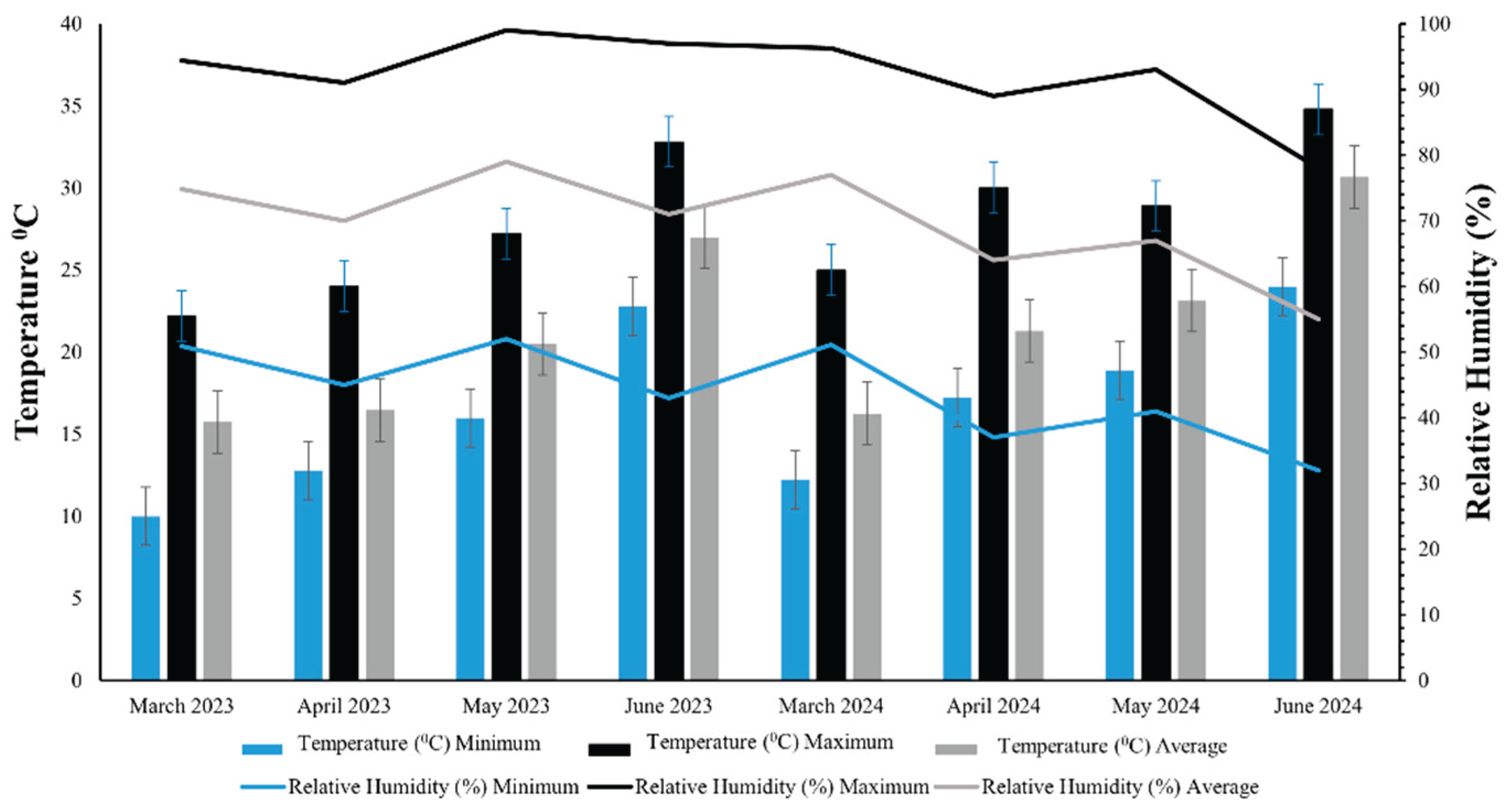
Figure 2.
Plant height (cm) of basil plants measured at 39, 49, 55, 62, 69, and 76 days after sowing (DAS), under different fertilization regimes. Values are means over two years. Error bars represent the standard error of means. Within each sampling occasion, different letters above the bars indicate statistically significant differences between treatments at p < 0.05.
Figure 2.
Plant height (cm) of basil plants measured at 39, 49, 55, 62, 69, and 76 days after sowing (DAS), under different fertilization regimes. Values are means over two years. Error bars represent the standard error of means. Within each sampling occasion, different letters above the bars indicate statistically significant differences between treatments at p < 0.05.
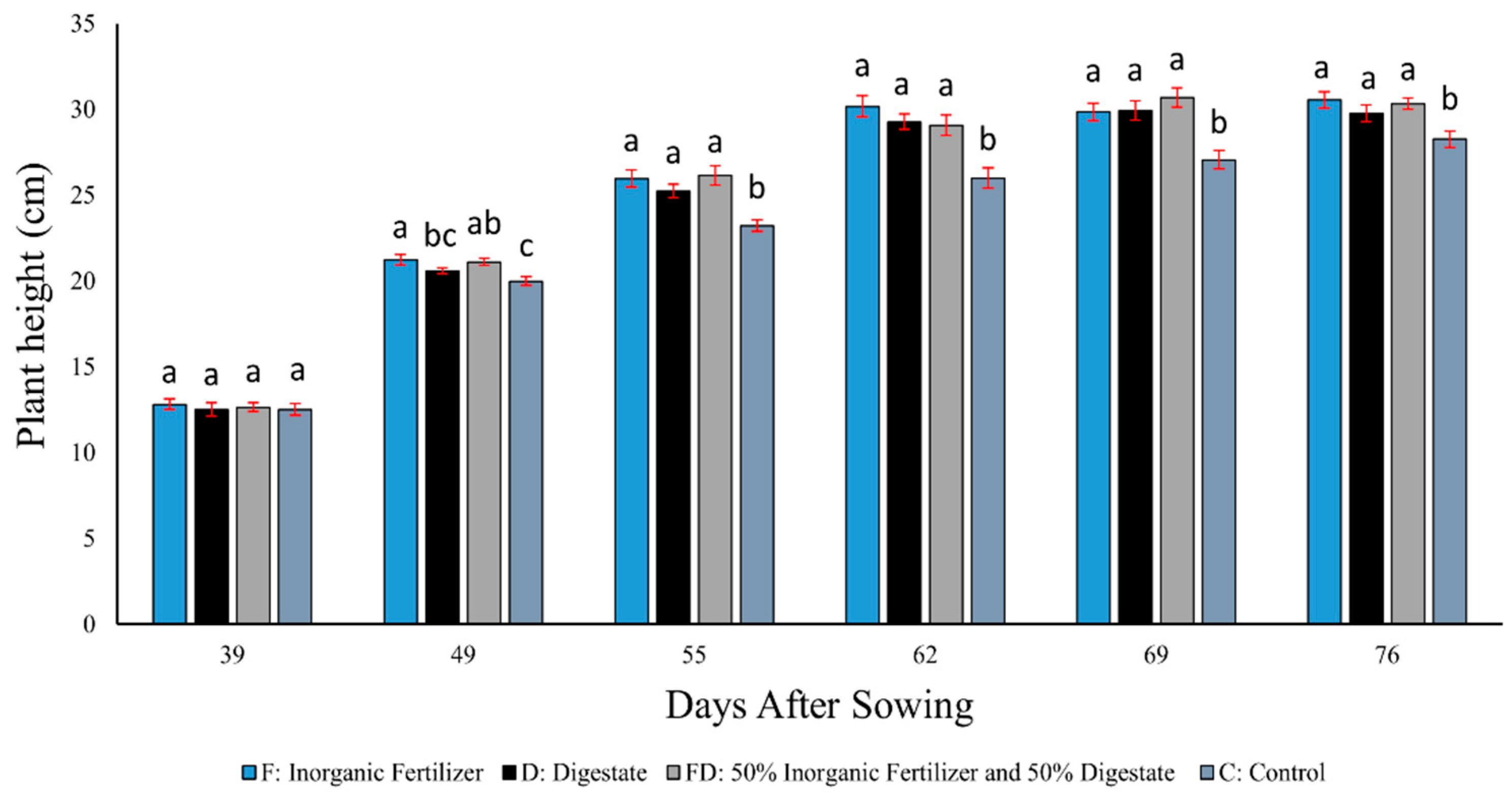
Figure 3.
Chlorophyll Concentration Index (CCI) of basil plants measured at 39, 49, 55, 62, 69, and 76 days after sowing (DAS), under different fertilization regimes. Values are means over two years. Error bars represent the standard error of means. Within each sampling occasion, different letters above the bars indicate statistically significant differences between treatments at p < 0.05.
Figure 3.
Chlorophyll Concentration Index (CCI) of basil plants measured at 39, 49, 55, 62, 69, and 76 days after sowing (DAS), under different fertilization regimes. Values are means over two years. Error bars represent the standard error of means. Within each sampling occasion, different letters above the bars indicate statistically significant differences between treatments at p < 0.05.
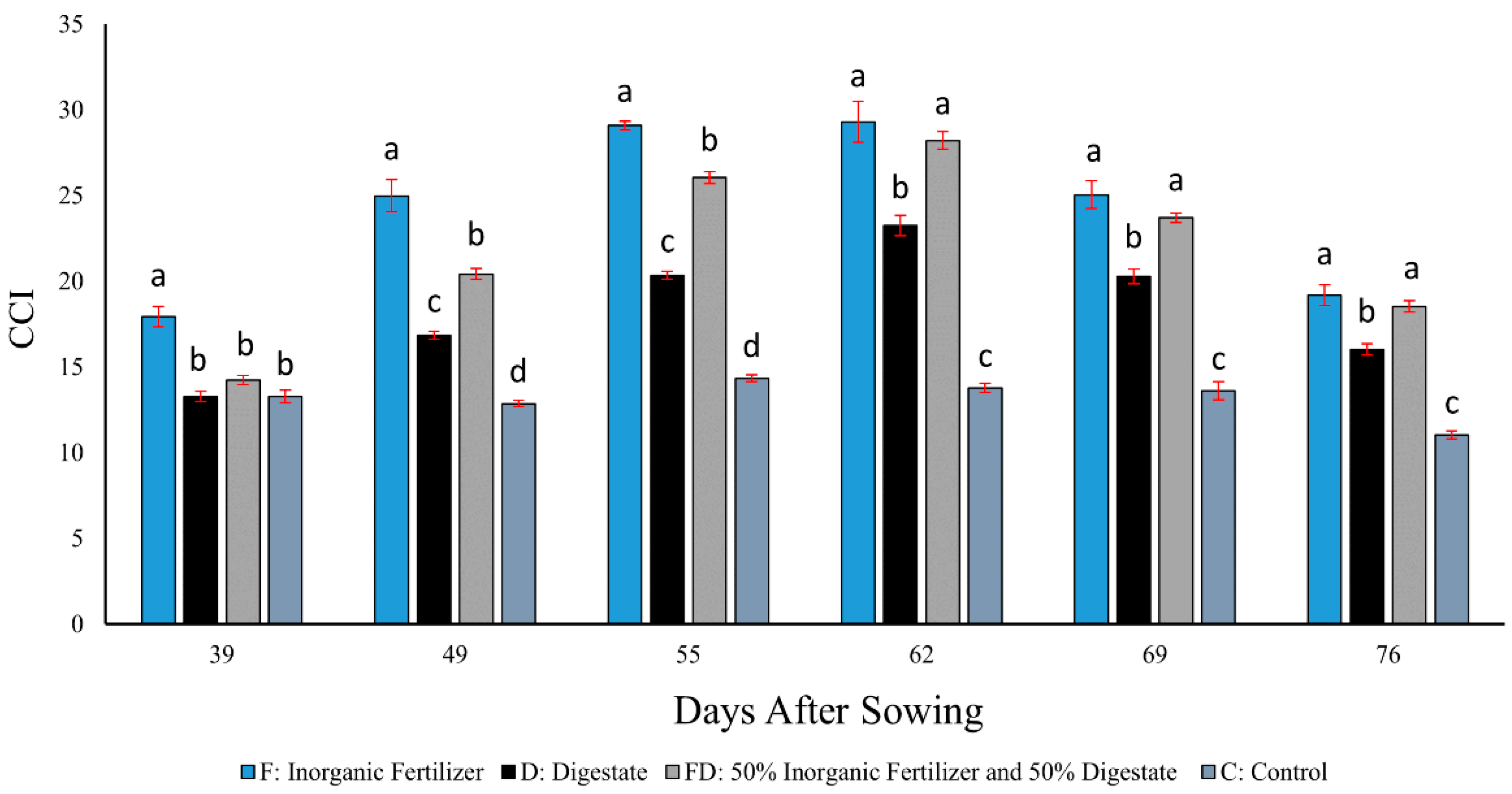
Figure 4.
Total biomass (TB) of basil plants at 90 days after sowing (DAS), under different fertilization regimes. F: Inorganic fertilizer, D: Digestate, FD: Combined 50% inorganic fertilizer and 50% digestate, C: Control (no fertilization). Values are means over two years. Error bars represent the standard error of means. Different letters above the bars indicate statistically significant differences between treatments at p < 0.05.
Figure 4.
Total biomass (TB) of basil plants at 90 days after sowing (DAS), under different fertilization regimes. F: Inorganic fertilizer, D: Digestate, FD: Combined 50% inorganic fertilizer and 50% digestate, C: Control (no fertilization). Values are means over two years. Error bars represent the standard error of means. Different letters above the bars indicate statistically significant differences between treatments at p < 0.05.
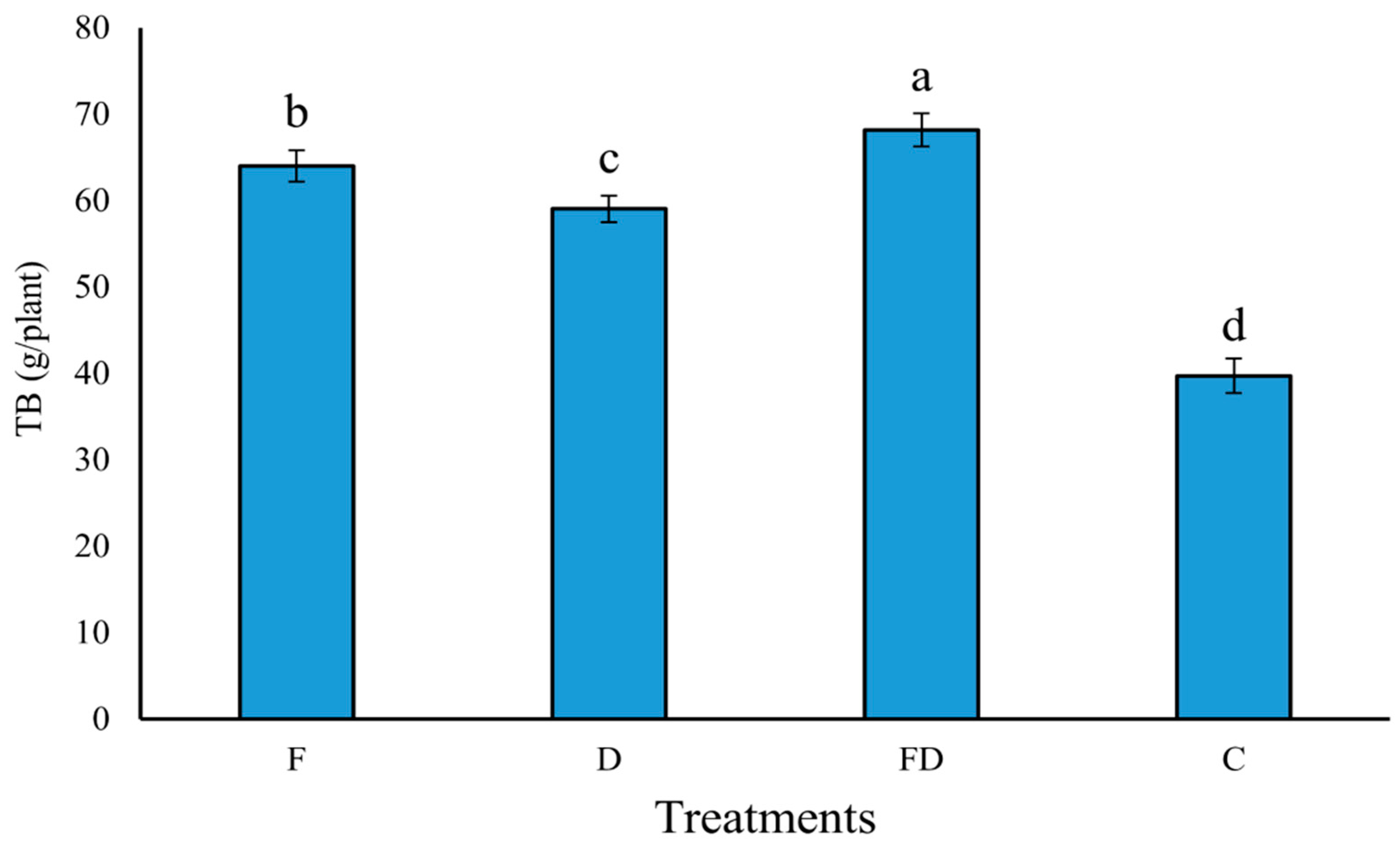
Figure 5.
Leaf production (LP) of basil plants at 90 days after sowing (DAS), under different fertilization regimes. F: Inorganic fertilizer, D: Digestate, FD: Combined 50% inorganic fertilizer and 50% digestate, C: Control (no fertilization). Values are means over two years. Error bars represent the standard error of means. Different letters above the bars indicate statistically significant differences between treatments at p < 0.05.
Figure 5.
Leaf production (LP) of basil plants at 90 days after sowing (DAS), under different fertilization regimes. F: Inorganic fertilizer, D: Digestate, FD: Combined 50% inorganic fertilizer and 50% digestate, C: Control (no fertilization). Values are means over two years. Error bars represent the standard error of means. Different letters above the bars indicate statistically significant differences between treatments at p < 0.05.
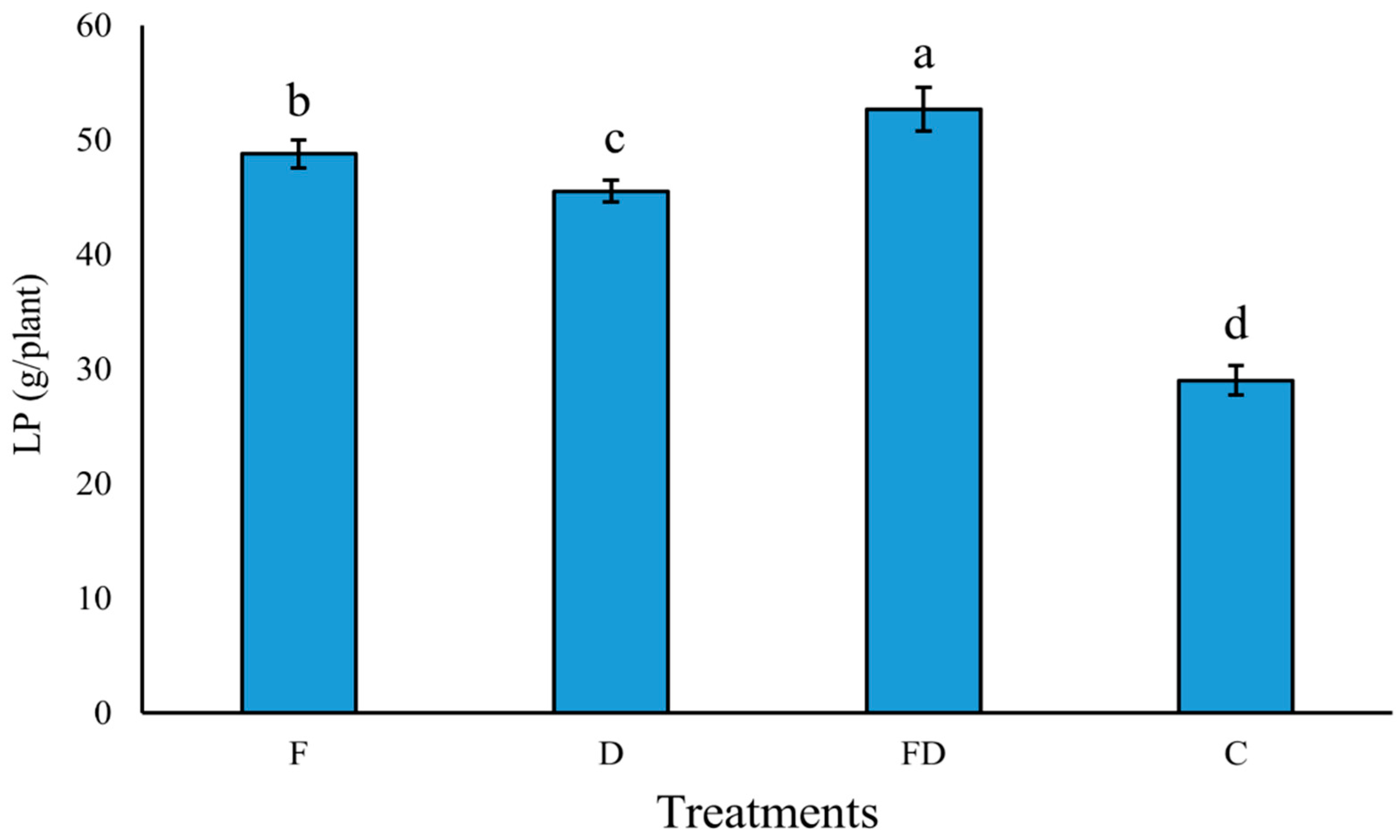
Figure 6.
Essential oil yield (EO) of the basil plant leaves under different fertilization regimes. F: Inorganic fertilizer, D: Digestate, FD: Combined 50% inorganic fertilizer and 50% digestate, C: Control (no fertilization). Values are means over two years. Error bars represent the standard error of means. Different letters above the bars indicate statistically significant differences between treatments at p < 0.05.
Figure 6.
Essential oil yield (EO) of the basil plant leaves under different fertilization regimes. F: Inorganic fertilizer, D: Digestate, FD: Combined 50% inorganic fertilizer and 50% digestate, C: Control (no fertilization). Values are means over two years. Error bars represent the standard error of means. Different letters above the bars indicate statistically significant differences between treatments at p < 0.05.
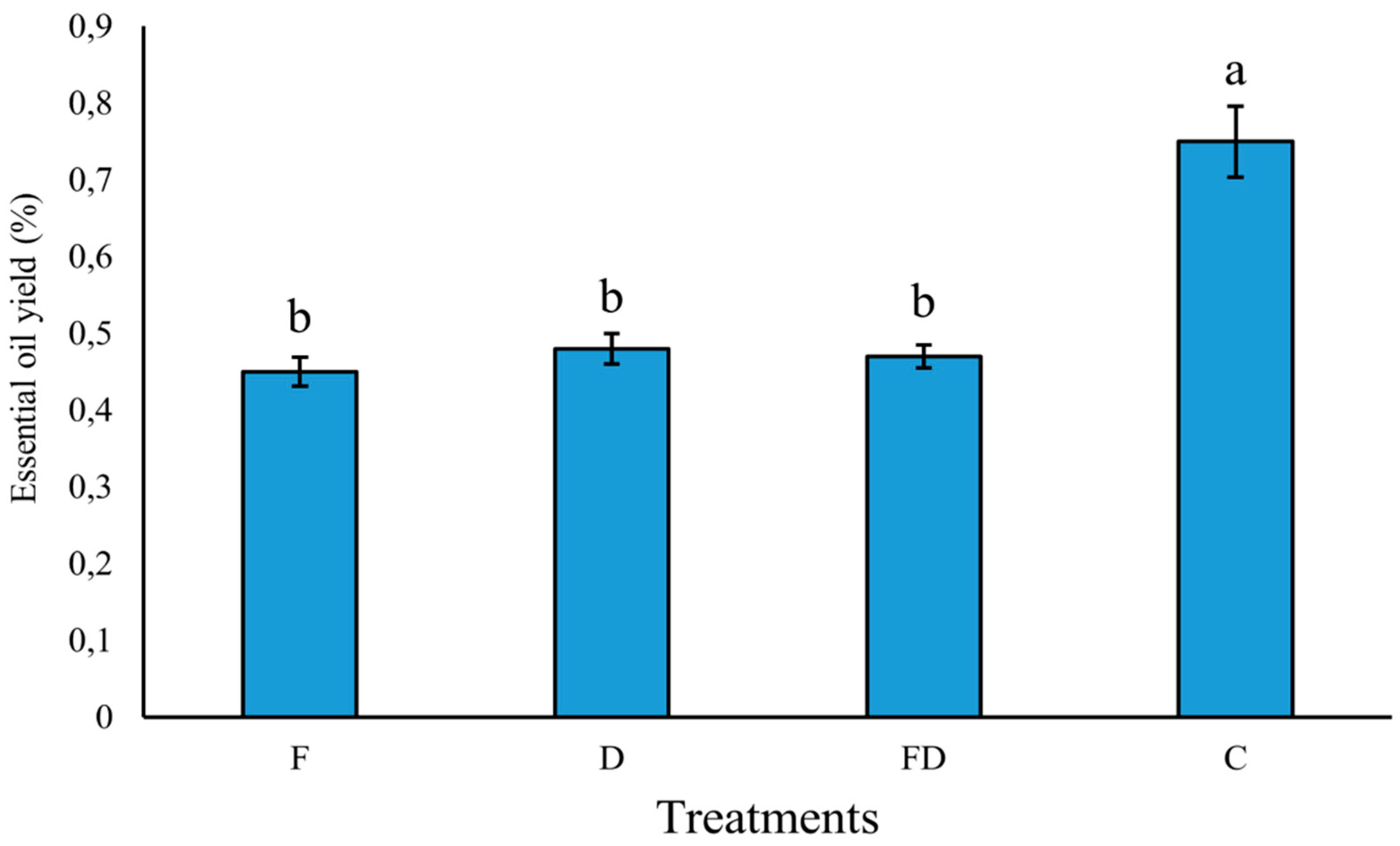

Table 1.
Physicochemical properties, heavy metal, and pathogen content of the soil and digestate used in the current experiment.
Table 1.
Physicochemical properties, heavy metal, and pathogen content of the soil and digestate used in the current experiment.
| Physicochemical Properties | Units | Soil | Digestate |
| pH | - | 8.5 | 7.8 |
| Electric Conductivity (EC) | mS cm ⁻1 | 0.24 | 2.42 |
| Salinity | psu | 0.13 | 1.55 |
| Organic Matter (O.M.) | % | 1.81 | - |
| Soil Texture | - | Sandy Loam (SL) | - |
| Clay | % | 14.1 | - |
| Silt | % | 30.8 | - |
| Sand | % | 55.1 | - |
| Dry Matter (TS) | % | - | 1.81 |
| Volatile Solids (VS) | % | - | 1.08 |
| Total Nitrogen | % | - | 0.2 |
| Phosphorus (P) | mg kg ⁻1 | 11.87E | 310T |
| Nitrate Nitrogen (N-NO3) | mg kg ⁻1 | 25.77E | <500 |
| Calcium (Ca) | mg kg ⁻1 | 3610E | 710T |
| Magnesium (Mg) | mg kg ⁻1 | 290E | 260T |
| Potassium (K) | mg kg ⁻1 | 320E | 1430T |
| Zinc (Zn) | mg kg ⁻1 | 2.70E | 18T |
| Iron (Fe) | mg kg ⁻1 | 5.09E | 73.8T |
| Manganese (Mn) | mg kg ⁻1 | 3.53E | 11.9T |
| Boron (B) | mg kg ⁻1 | 0.19E | 2.31T |
| Sodium (Na) | mg kg ⁻1 | 113E | 560T |
| Heavy Metals | |||
| Cadmium (Cd) | mg kg ⁻1 | 0.18T | 0.007T |
| Chromium (Cr) | mg kg ⁻1 | 75.5T | 0.35T |
| Mercury (Hg) | mg kg ⁻1 | 0.05T | 0.02T |
| Copper (Cu) | mg kg ⁻1 | 23.7T | 0.40T |
| Lead (Pb) | mg kg ⁻1 | 14.0T | 0.09T |
| Arsenic (As) | mg kg ⁻1 | 7.90T | 0.05T |
| Pathogens | |||
| Salmonella spp. | cfu g⁻1 | N.D. | N.D. |
| Enterococcus faecalis | cfu g⁻1 | N.D. | 1,8 x 10² |
| Escherichia coli (E. coli) | cfu g⁻1 | N.D. | 45est |
T = Total, E = Extractable.
Table 2.
Composition of the essential oil in the leaves of basil plants treated with four different fertilization regimes.
Table 2.
Composition of the essential oil in the leaves of basil plants treated with four different fertilization regimes.
| Peak number | Compound | RT | F | D | FD | C |
| 1 | Limonene | 15.91 | 0.80b | 0.80b | 0.78b | 0.86a |
| 2 | Eucalyptol | 16.07 | 9.02a | 7.43a | 8.40a | 7.41a |
| 3 | trans-β-Ocimene | 17.34 | 2.10b | 2.77a | 2.67a | 1.69c |
| 4 | Linalool | 21.41 | 45.50b | 46.86b | 46.48b | 49.61a |
| 5 | Bornanone | 24.58 | 0.81a | 0.74a | 0.80a | 0.64b |
| 6 | Terpinen-4-ol | 27.45 | 3.75a | 3.89a | 3.67a | 3.33b |
| 7 | Eugenol | 42.23 | 6.13b | 8.17b | 7.41b | 10.11a |
| 8 | β-Elemene | 44.47 | 1.46b | 1.64a | 1.48b | 1.49b |
| 9 | Methyleugenol | 45.31 | 3.47a | 2.05b | 2.18b | 1.93b |
| 10 | α-Bergamotene | 47.05 | 6.29a | 5.87a | 5.56a | 4.61a |
| 11 | α-Humulene | 47.93 | 0.83a | 0.80a | 0.78a | 0.61b |
| 12 | β-Farnesene | 48.22 | 1.31a | 1.02b | 0.97b | 0.92b |
| 13 | GermacreneD | 49.40 | 2.31d | 3.21a | 2.59b | 2.48c |
| 14 | τ-Cadinol | 55.36 | 6.29b | 7.57a | 6.36b | 7.18a |
| Total | 90.07 | 92.82 | 90.13 | 92.87 |
RT = Retention time, D: Digestate, F = Inorganic fertilizer, FD: Combined 50% inorganic fertilizer and 50% digestate, C: Control (no fertilization). Values are means over two years. In each line, means with different letters indicate statistically significant differences between treatments at p < 0.05.
Table 3.
Soil chemical properties and nutrient concentrations under different fertilization regimes.
Table 3.
Soil chemical properties and nutrient concentrations under different fertilization regimes.
| Chemical and nutrient properties | Treatments | ||||
| Units | F | D | FD | C | |
| pH | − | 7.7a | 7.8a | 7.8a | 8.3b |
| Salinity | psu | 0.91c | 1.20a | 1.07b | 0.16d |
| Electric Conductivity | mS cm⁻1 | 1.30c | 1.94a | 1.47b | 0.22d |
| EBoron (B) | mg kg⁻1 | 0.21c | 0.25a | 0.23b | 0.17d |
| ECalcium (Ca) | mg kg⁻1 | 3373c | 3868a | 3720b | 3332c |
| EPhosphorus (P) | mg kg⁻1 | 13.5c | 20.0a | 17.5b | 9.5d |
| EIron (Fe) | mg kg⁻1 | 5.25c | 8.51a | 7.04b | 4.22d |
| EPotassium (K) | mg kg⁻1 | 380.0c | 750.0a | 650.0b | 294.0d |
| EMagnesium (Mg) | mg kg⁻1 | 310.4c | 420.6a | 380.0b | 274.3d |
| EManganese (Mn) | mg kg⁻1 | 5.20c | 6.70a | 5.83b | 3.38d |
| ESodium (Na) | mg kg⁻1 | 135.1c | 324.9a | 271.7b | 110.7d |
| EZinc (Zn) | mg kg⁻1 | 2.84c | 6.50a | 4.80b | 2.22d |
| Nitrate Nitrogen (N-NO3) | mg kg⁻1 | 48.60a | 43.70b | 50.50a | 12.35c |
| Organic Matter (O.M.) | % | 1.86c | 2.80a | 2.53b | 1.84c |
E = Extractable, F: Inorganic fertilizer, D: Digestate, FD: Combined 50% inorganic fertilizer and 50% digestate, C: Control (no fertilization). Values are means over two years. In each line, means with different letters indicate statistically significant differences between treatments at p < 0.05.
Table 4.
Soil heavy metal concentrations (mg kg⁻1) under different fertilization regimes.
| Heavy Metals | Treatments | ||||
| Units | F | D | FD | C | |
| TArsenic (As) | mg kg⁻1 | 8.04a | 8.18a | 8.15a | 7.85b |
| TCadmium (Cd) | mg kg⁻1 | 0.19a | 0.20a | 0.19a | 0.19a |
| TChromium (Cr) | mg kg⁻1 | 75.29a | 76.61a | 76.12a | 75.09a |
| TCopper (Cu) | mg kg⁻1 | 23.74a | 24.13a | 24.06a | 23.47a |
| TLead (Pb) | mg kg⁻1 | 15.1a | 15.3a | 15.0a | 14.8a |
| TMercury (Hg) | mg kg⁻1 | 0.05a | 0.05a | 0.04a | 0.04a |
T = Total, F: Inorganic fertilizer, D: Digestate, FD: Combined 50% inorganic fertilizer and 50% digestate, C: Control (no fertilization). Values are means over two years. In each line, means with different letters indicate statistically significant differences between treatments at p < 0.05.
Table 5.
Soil pathogen measurements under different fertilization regimes.
| Pathogens | Treatments | ||||
| Units | F | D | FD | C | |
| Soil | |||||
| Salmonella spp. | cfug˗1 | N.D | N.D | N.D | N.D |
| Enterococcus faecalis | cfu g˗1 | N.D | <9.1 | <9.1 | N.D |
| Escherichia coli (E. coli) | cfu g˗1 | N.D | <9.1 | <9.1 | N.D |
| Basil Leaves | |||||
| Salmonella spp. | cfu g˗1 | N.D | N.D | N.D | N.D |
| Enterococcus faecalis | cfu g˗1 | N.D | 91est | 73est | N.D |
| Escherichia coli (E. coli) | cfu g˗1 | N.D | <9.1 | <9.1 | N.D |
N.D: Not detected, F: Inorganic fertilizer, D: Digestate, FD: Combined 50% inorganic fertilizer and 50% digestate, C: Control (no fertilization).
Disclaimer/Publisher’s Note: The statements, opinions and data contained in all publications are solely those of the individual author(s) and contributor(s) and not of MDPI and/or the editor(s). MDPI and/or the editor(s) disclaim responsibility for any injury to people or property resulting from any ideas, methods, instructions or products referred to in the content. |
© 2026 by the authors. Licensee MDPI, Basel, Switzerland. This article is an open access article distributed under the terms and conditions of the Creative Commons Attribution (CC BY) license (http://creativecommons.org/licenses/by/4.0/).
Copyright: This open access article is published under a Creative Commons CC BY 4.0 license, which permit the free download, distribution, and reuse, provided that the author and preprint are cited in any reuse.


