Preprint
Article

This version is not peer-reviewed.

Lime Sulfur-Boric Acid Synergy in Subtropical Viticulture: Temporal Regulation of Budbreak and Nutrient Remobilization

  † These authors contributed equally to this work.

A peer-reviewed article of this preprint also exists.

Submitted:

07 January 2026

Posted:

09 January 2026

You are already at the latest version

Abstract

The rapid development of viticulture in subtropical regions represents a significant achievement in Chinas table grape industry over the past two decades. However, insufficient winter chilling in these areas often leads to inadequate dormancy, which compromises nutrient translocation and storage in grapevine. Insufficient chilling accumulation results in asynchronous budbreak and reduced cane quality. In this study, Shine Muscatgrapevines were used to systematically evaluate how different defoliant agents affect budbreak characteristics from the perspective of nutrient translocation and storage. The results indicated applications of ethephon or urea alone, as well as their combinations with boric acid, yielded unstable effects, often causing primary bud necrosis, decreased flower formation rates, and phytotoxicity. In contrast, the combination of lime sulfur and boric acid exhibited a remarkable synergistic effect, significantly promoting dry matter and starch accumulation in the canes, while enhancing budbreak speed, uniformity, and flower cluster formation rate. Further experiments with varying concentrations of lime sulfur combined with 0.2% boric acid revealed 2% lime sulfur combined with 0.2% boric acid produced the most pronounced effects. This combination achieved the highest dormancy-breaking efficacy under conventional cultivation conditions and was used for the first time to produce a second crop in off-season cultivation. The dual effects of dormancy release and bud promotion offered by this approach provide a reliable solution for high-quality and efficient grape production in subtropical regions.

Keywords: 
;  ;  ;  

1. Introduction

China is the world's largest contributor to table grape industry [1]. Over the past two decades, with the promotion of rain-shelter cultivation technology, southern China such as Yunnan, Guangxi, Hunan and other provinces have become the main table grape producers in China [2]. Given the warm climate in these subtropical regions, farmers often practice double-cropping system annually or “crop-forcing” cultivation by breaking winter bud endormancy during summer to induce sprouting [3,4]. However, whether crops are harvested once or twice a year, grapevine budbreak quality in these regions is compromised by insufficient accumulation of effective chilling hours [2]. Endodormancy is a complex physiological process essential for the survival, growth, and development of deciduous perennial plants [5]. A certain amount of chilling accumulation is required in perennial species for their buds to break endodormancy. Insufficient cold accumulation in winter generally results in non-uniform flowering and a reduced fruit set [6].
Chemical agents are often used to substitute for low temperatures to fulfill natural dormancy requirements [7]. Hydrogen cyanamide (H₂CN₂, HC) is an effective dormancy-breaking agent [7], which has found success in commercial crops such as grape (Vitis vinifera) [8], apple (Malus domestica) [5], sweet cherry (Prunus avium) [9], and kiwifruit (Actinidia chinensis) [10]. HC achieves grapevine bud dormancy release through transient activation of gene expression and accumulation of reactive oxygen and nitrogen [11]. HC application stimulates the temporary elevation in H2O2 levels [12]. Moreover, studies have indicated HC-induced bud dormancy release was enhanced by regulation through the calcium ion (Ca²⁺) signaling pathway [13]. Both HC and low temperatures help trigger dormancy release through calcium signaling. This process encourages budbreak by activating calcium-dependent protein functions and regulating gene expression. Calcium is vital in various plant parts and is key in releasing grape bud dormancy [13]. HC treatment can shorten grape budbreak cycle [14], promote earlier budbreak, and improve budbreak rate and uniformity [15], thereby enhancing the winter bud growth. However, due to its potential toxicity, HC application has been restricted in some countries [16].
The perennial woody nature of fruit trees, along with their distinct physiological growth stages and root distribution patterns, enables more efficient nutrient use compared to annual crops [17]. Before sprouting, nutrient buildup is crucial for budbreak [18]. During the period from budbreak to inflorescence formation, grapevines are unable to perform photosynthesis. Therefore, from the onset of budbreak until inflorescence development, the process primarily relies on the vine’s own nutrient reserves [26]. Insufficient nutrient reserves may lead to slower budbreak, uneven sprouting, poor inflorescence quality, and increased inflorescence abscission [27,28]. Nutrient accumulation in grapevines prior to budbreak primarily occurs through two distinct phases. First, after fruit harvest, the leaves act as a source organ, producing photoassimilates through photosynthesis and translocating them to the sink tissues (e.g., perennial parts of the vine) for storage primarily as starch [29]. Second, as environmental temperatures decrease, the vine perceives seasonal changes and initiates the senescence program. During this phase, ethylene is synthesized in large quantities as a key phytohormone. Ethylene not only directly induces leaf yellowing and senescence but also accelerates the formation of the abscission zone by disrupting the auxin gradient [30]. However, since ethylene primarily acts at the base of the petiole, it may induce leaf abscission before nutrients are fully translocated back to the perennial storage organs of the vine, resulting in a certain degree of nutrient loss. Recently, using external growth regulators in vineyard has become more common. Ethylene could promote bud break and improve antioxidant system in buds, whereas ethylene increased chlorophyll and carotenoid degradation that led to leaves senescence [19]. Ethylene application can promote nutrient recycling—mainly nitrogen (N)—from the leaf into storage organs [20,21]. Meanwhile, several studies have demonstrated foliar urea spray can promote defoliation and improve budbreak in subtropical and Mediterranean regions [22]. Mechanistically, urea-induced budbreak appears to be driven by a combination of accelerated leaf senescence and enhanced nitrogen uptake. Studies in various fruit crops have shown failure to achieve timely leaf abscission in fall results in irregular or delayed budbreak [23]. However, its effectiveness is affected by environmental factors such as temperature and humidity. If urea is not applied correctly, it can lower yields or even cause crop failure [19] and also has some toxicity [24]. Therefore, this study aims to explore novel chemical agents to address the issues of bud dormancy breaking, budbreak promotion.

2. Materials and Methods

2.1. Location, Description of the Vineyard and Tested Chemicals

The experiment was conducted from November 2023 to July 2025. Eight-year-old 'Shine Muscat' grapevines were used as experimental material, grown at the Sunlight Vineyard of Hunan Agricultural University (Changsha, Hunan Province; 28°13′2″N, 113°19′6″E). The vines were cultivated under rain-shelter conditions using an overhead pergola system. The planting spacing was 2.8 m × 1.8 m (row × vine), with approximately 45 main shoots retained per plant. The chemical reagents used in the study included ethephon, lime sulfur, urea, and boric acid. All reagents were analytical grade and purchased from Sichuan Runer Technology Co., Ltd. (Guoguang brand). Detailed information regarding reagent combinations and application concentrations is provided in Section 2.2.

2.2. Treatments and Experimental Design

Three experiments were implemented in this study. The first experiment was conducted before defoliation on 5 November 2023 to investigate the effects of different treatments on the budbreak of grape winter buds in the following year. Uniformly growing vines were selected at this stage, which occurred approximately 50 days after fruit harvest and 30 days before winter leaf yellowing and abscission, indicating that the plants had essentially entered the dormancy preparation phase. Eight treatment combinations were established: 15-fold diluted 29% lime sulfur (1.93% LS), 600-fold diluted 40% ethephon (0.07% ET), 100 g/L urea (10% UR), 15-fold diluted 29% lime sulfur + 2 g/L boric acid (1.93% LS + 0.2% BA), 600-fold diluted 40% ethephon + 2 g/L boric acid (0.07% ET + 0.2% BA), 100 g/L urea + 2 g/L boric acid (10% UR + 0.2% BA), water control (WC), and manual leaf removal (LR).
The second experiment was conducted to evaluate the effects of different treatments on the yield of the second crop (excluding the first crop) under "crop-forcing" cultivation. The “crop-forcing” cultivation involves the application of a severe pruning when the vegetative period has begun, and the fruit-bearing buds of the following year are already formed (Specific procedures include: removing inflorescences destined to develop into the first crop while retaining eight leaves and excising shoot apices; conducting a pruning 20 days before budbreak, during which four to six buds are retained and all leaves are removed) [25]. By restarting the vine’s growth cycle from budbreak, this method delays fruit ripening and converts the biennial reproductive cycle into an annual one. Uniformly growing grapevines were selected and treated on June 5, 2025, approximately 40 days before budbreak. Based on the results of the first experiment, the treatment combinations were adjusted by excluding the manual leaf removal treatment. This adjustment aligns with the standard operational protocol for "crop-forcing" cultivation, which requires removing all residual leaves and retaining four to six buds during pruning 20 days before budbreak to prevent paradormancy from compromising the sprouting quality of dormant buds. Following pruning, budbreak commenced in the various treatments approximately 20 days later, after which indicators such as budbreak rate began to be monitored. Seven treatment combinations were established: 15-fold diluted 29% lime sulfur (1.93% LS), 600-fold diluted 40% ethephon (0.07% ET), 100 g/L urea (10% UR), 15-fold diluted 29% lime sulfur + 2 g/L boric acid (1.93% LS + 0.2% BA), 600-fold diluted 40% ethephon + 2 g/L boric acid (0.07% ET + 0.2% BA), 100 g/L urea + 2 g/L boric acid (10% UR + 0.2% BA) and water control (WC).
The third experiment, a concentration gradient experiment, was conducted simultaneously with the second experiment. A total of four treatment combinations were established: 10-fold diluted 29% lime sulfur + 2 g/L boric acid (2.9% LS + 0.2% BA), 15-fold diluted 29% lime sulfur + 2 g/L boric acid (1.93% LS + 0.2% BA), 20-fold diluted 29% lime sulfur + 2 g/L boric acid (1.45% LS + 0.2% BA) and water control (WC). Across all experiments, each treatment consisted of five uniformly growing grapevines, with three biological replicates per treatment. For spray application, the entire canopy was uniformly treated until leaf surfaces were fully covered with droplets without runoff.

2.3. Data Collection and Measurement

2.3.1. Dry-Wet Weight Ratio Detection

Fifteen days after spray treatment, shoots with uniform growth were selected from grapevines. Stem segments 0.5 cm in length were excised from the middle portion of 2-3 nodes, labeled, and immediately weighed using an electronic balance to determine fresh weight (FW). The samples were then placed in an oven and heated at 105°C for 30 minutes to deactivate enzymes and remove residual moisture, followed by drying at 80°C until a constant weight was achieved. During the drying process, samples were periodically removed, cooled, and reweighed until the difference between two consecutive measurements was less than 0.01 g. The dry-to-fresh weight ratio of the shoots was calculated using the following formula: Dry Weight Ratio (%) = (DW / FW) × 100% [26].

2.3.2. Starch Content Analysis

Fifteen days after spray treatment, the starch content was determined using a commercial assay kit (Catalog No.: BC0700, Solarbio Co., Ltd., China). Sample Preparation: Approximately 0.03 g of the sample was weighed and ground in a mortar. Then, 0.6 mL Reagent 1 was added, and the mixture was thoroughly homogenized before being transferred to an EP tube. The tube was placed in an 80°C water bath for extraction for 30 min, followed by centrifugation at 3000 g for 5 min at room temperature. The supernatant was discarded, and the precipitate was retained. Subsequently, 0.3 mL distilled water was added to the precipitate, and the mixture was gelatinized in a boiling water bath for 15 min. After cooling, 0.6 mL Reagent 2 was added, and the mixture was incubated in a boiling water bath for 15 min, with vortexing for 3–5 times. After cooling, the mixture was centrifuged at 8000 g for 15 min at room temperature, and the supernatant was collected for subsequent analysis. If the supernatant remained turbid after centrifugation, the centrifugation step was repeated.
Sample Assay: The spectrophotometer was preheated for at least 30 min and set to a wavelength of 620 nm. Distilled water was used as a blank for zero adjustment. A water bath was preheated to 95°C. Standard Preparation: 10 mg/mL glucose standard solution was diluted to prepare standard solutions with concentrations of 0.2, 0.1, 0.05, 0.04, 0.03, 0.02, and 0.01 mg/mL for calibration. Standard Assay: 0.2 mL standard solution (with distilled water as blank) and 1 mL working reagent were added to an EP tube and incubated in a 95°C water bath for 10 min. After cooling to room temperature, the absorbance of mixture was measured at 620 nm to obtain A standard and A blank, respectively. ΔA was calculated as ΔA = A standardA blank. The standard curve was prepared once or twice. Sample Assay: 0.2 mL sample and 1 mL working reagent were added to an EP tube and the mixture was incubated in a 95°C water bath for 10 min. After cooling naturally to room temperature, the absorbance of mixed solution was measured at 620 nm to obtain A sample. ΔA´ was calculated as ΔA´ = A sampleA blank. The blank assay was performed once or twice. Standard Curve Construction: A standard curve was established by plotting the concentration of the standard solutions (x, mg/mL) against the corresponding absorbance difference ΔA (y, ΔA standard). The concentration x (mg/mL) of the sample was determined by substituting ΔA´ into the regression equation derived from the standard curve. Calculation of Starch Content: Starch content (mg/g fresh weight) was calculated using the following formula: Starch content (mg/g) = (0.811 × x) / W × F, within the formula x is the glucose concentration obtained from the standard curve (mg/mL), W is the sample weight (g), and F is the sample dilution factor [27]. Within the equation, the factor 0.811 was used to convert glucose equivalents to starch content based on the molecular weight ratio.

2.3.3. Bud Necrosis Rate Statistics

Observations of bud necrosis (BN) were conducted 15 DAP (days after pruning). At the same time, multiple branches were randomly selected from grapevines. Forceps were used to isolate and examine the status of buds, with browning and desiccation serving as the criterion for necrosis. The number of necrotic buds in each treatment group was recorded. Following data collection, the BN rate was calculated for each treatment group and its biological replicates using the formula: BN Rate (%) = (Number of Necrotic Buds / Total Bud Number) × 100%.

2.3.4. Budbreak Rate and Speed Statistics

Budbreak was determined based on the criteria of green tip and first leaf tissue visible (E-L 4). The number of winter buds burst in each replicate per treatment was recorded. After the budbreak period ended (40 DAP), the budbreak rate was calculated for each treatment and its replicates using the formula: Budbreak Rate (%) = (Number of Burst Buds / Total Number of Buds) × 100%. From the initial sprouting stage until budbreak completion, the number of burst buds per treatment was recorded every 2 or 3 days. The budbreak rate (Bud-break Speed) was then calculated for each observation time point.

2.3.6. Fruiting Shoot Rate Statistics

The rate of fruiting cane in each treatment was observed and statistically analyzed after the onset of flowering. Fruiting shoot rate was regularly monitored. The number of branches forming inflorescences in each replicate was recorded, and the fruiting shoot rate was calculated for each replicate using the formula: Fruiting shoot Rate (%) = (Number of New Shoots with Inflorescences / Number of Sprouted Winter Buds) × 100%.

2.3.7. Statistical Analysis

Data were analyzed using IBM SPSS Statistics 26 software through one-way analysis of variance (ANOVA) to evaluate the significant effects of different treatments on the following parameters: the dry-to-fresh weight ratio of grape canes, starch content, budbreak rate, and fruiting shoot rate. Prior to analysis, the normality and homogeneity of variances were verified for all datasets. The results for the dry-to-fresh weight ratio, starch content, and fruiting shoot rate are presented as column graphs, displaying means ± standard deviation. Significant differences among treatment (p < 0.05) were determined by Duncan's multiple range test and were indicated by different letters above the columns. Additionally, the budbreak rate across treatments was illustrated using a line chart created in Excel, with data points distinguished by different markers and vertical error bars representing ± standard deviation.

3. Results

3.1. The Effects of Different Treatments on the First Crop

Significant differences in budbreak dynamics were observed among treatments based on budbreak rate monitoring. The LS + BA treatment exhibited the most prominent performance, maintaining a consistently high budbreak rate throughout the observation period, which was significantly higher than that of the WC and all other treatments. The WC and UR treatments showed relatively slow budbreak progression, while the LR treatment performed the poorest, with markedly delayed budbreak initiation and slow development, whose budbreak significantly fell behind all other treatments including WC. Among all treatments, the application of LS alone and its combination with BA yielded the best results (Figure 1A and B).
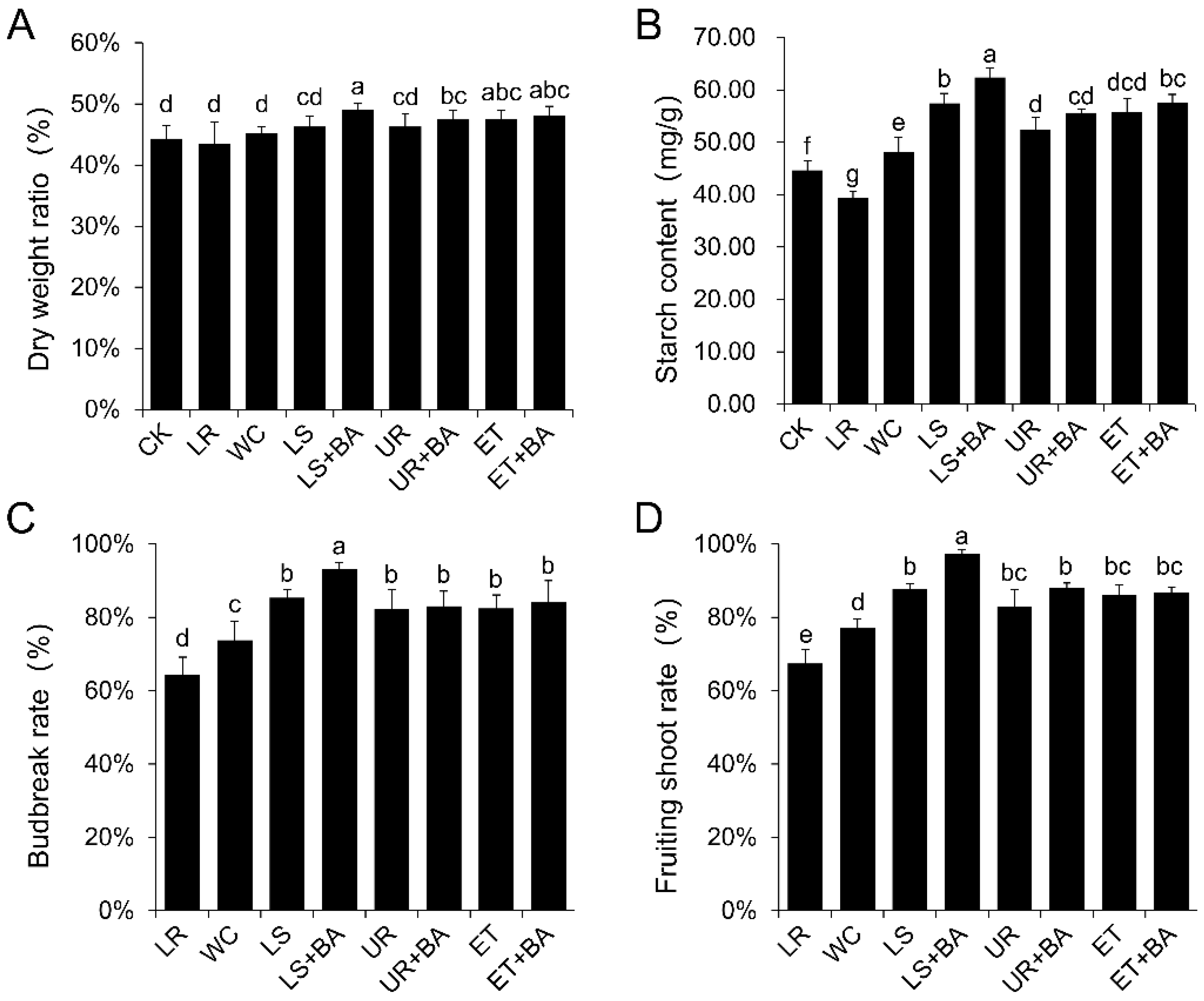
The budbreak rate of winter buds in all treatments exceeded 82%. Specifically, both the LS-alone and LS+BA combined achieved budbreak rates above 90%, demonstrating significant promotive effects. In contrast, the UR treatment showed weaker effects with poor stability, while the WC and LR treatments resulted in the lowest budbreak rates among all groups. Pronounced differences were observed between each treatment and both the WC and LR treatments (Figure 2A).
The fruiting shoot rate of each treatment and the control was evaluated. The results indicated all treatments significantly improved the fruiting shoot rate compared to the LR and WC treatments. Notably, the LR treatment resulted in a significantly lower fruiting shoot rate than the WC. Among the other treatments, UR + BA, ET + BA, ET, and UR exhibited moderate promotive effects on the fruiting shoot rate. Although no significant differences were observed among these treatments, each differed significantly from both the WC and LR groups. However, the UR treatment showed relatively poor stability in its effects. Particularly, both the LS-alone and LS + BA treatments achieved fruiting shoot rate exceeding 94%, which were significantly higher than all other treatments, including the two control groups. The LS + BA combination yielded the most pronounced results. Further analysis suggested the BA addition under the same treatment conditions increased the fruiting shoot rate (Figure 2B).
The dry matter proportion in canes revealed significant differences in dry weight percentage among the treatments. Compared to the pre-treatment level, the LR treatment showed a decrease in dry matter content, indicating premature defoliation not only inhibited further nutrient accumulation but also led to the consumption of pre-existing reserves in the branches. Among all treatments, the LS+BA combination resulted in the highest dry matter proportion (reaching 49.09%), demonstrating its superior efficacy in promoting dry matter accumulation. Overall, treatments containing LS generally exhibited higher dry weight ratios, while the WC group showed relatively weaker effects. The addition of BA positively influenced dry matter content, for instance, supplementing LS with BA further increased the cane dry weight by 1.5% (Figure 2C).
Starch content analysis revealed significant differences among the treatments in grapevine branches. The LS + BA treatment showed the highest starch content with low data variability, significantly outperforming both the WC and LR groups. It also demonstrated a significant increase compared to pre-treatment levels. The LS treatment also exhibited relatively favorable results, ranking second in effectiveness. The ET + BA, ET-alone, and UR + BA treatments resulted in moderate starch content. Among these, the ET treatment displayed considerable data fluctuation. Both the UR and WC treatments produced poor outcomes, with the WC group showing not only low starch content but also high data variability. The LR treatment yielded the lowest starch content, which was even lower than the pre-treatment level, indicating premature leaf removal not only inhibited starch accumulation but also led to the depletion of existing reserves (Figure 2D).

3.2. The Effects of Different Treatments on Grape Secondary Crop

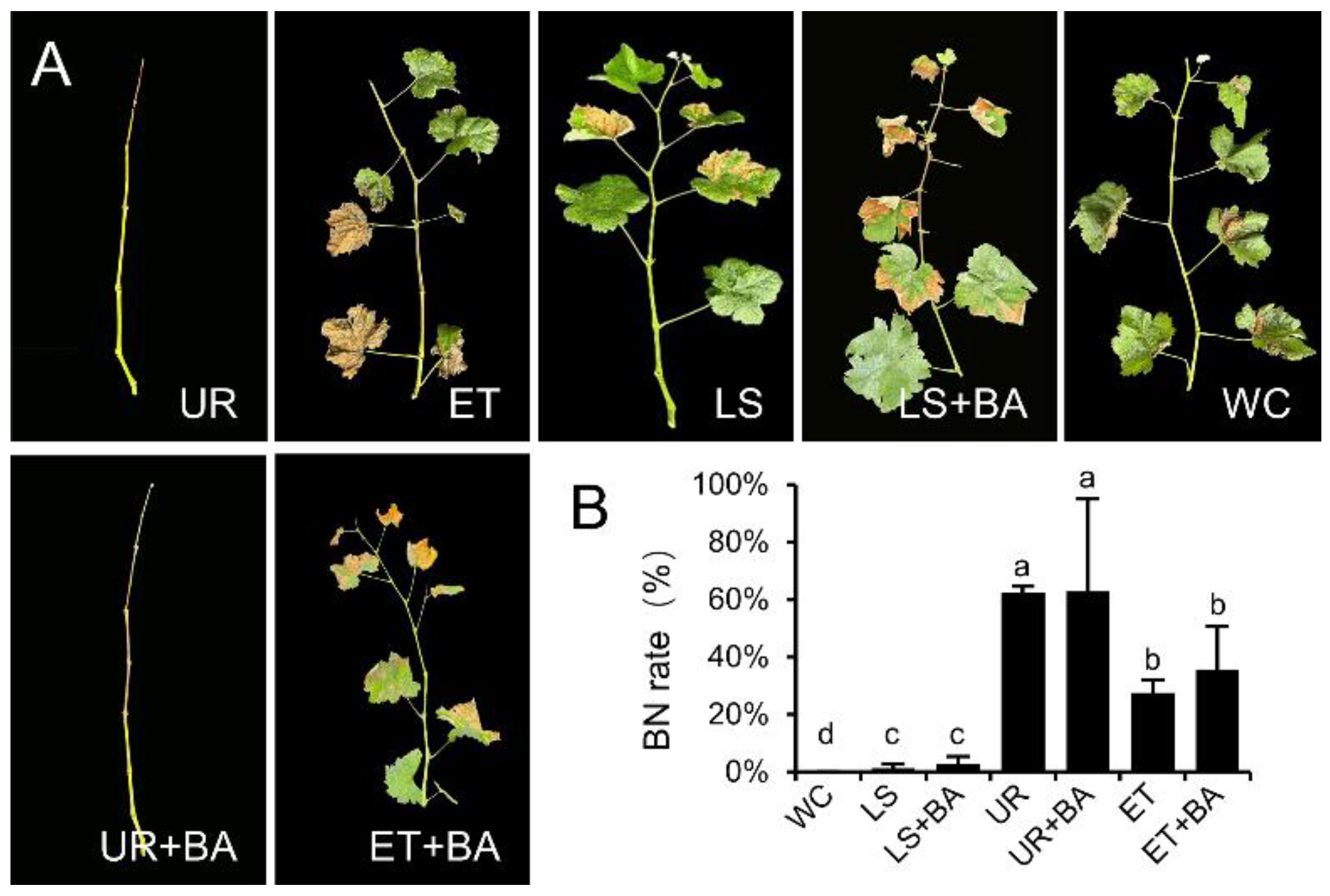
Significant differences in BN rates were observed among the different treatments. The UR and UR+BA treatment groups exhibited a higher degree of necrosis accompanied by complete leaf abscission. In comparison, the ET and ET+BA groups showed reduced necrosis, though moderate damage was still observed. In contrast, the LS and LS+BA groups demonstrated lower necrosis rates and maintained relatively intact tissue integrity (Figure 3A). The LS + BA treatment exhibited a relatively low necrosis rate with a small standard deviation, indicating stable and reproducible effects. In contrast, the UR treatment showed a significantly higher BN rate (mean 62.4%) with a large standard deviation, reflecting not only instability in efficacy but also substantial damage to buds. Although the UR + BA combination reduced the necrosis rate to some extent (mean 48.6%), it remained at an elevated level. The ET treatment also demonstrated a notably high necrosis rate (mean 27.6%), which further increased to 35.7% when combined with BA. The considerable standard deviations across these groups indicate high variability in treatment outcomes (Figure 3B).
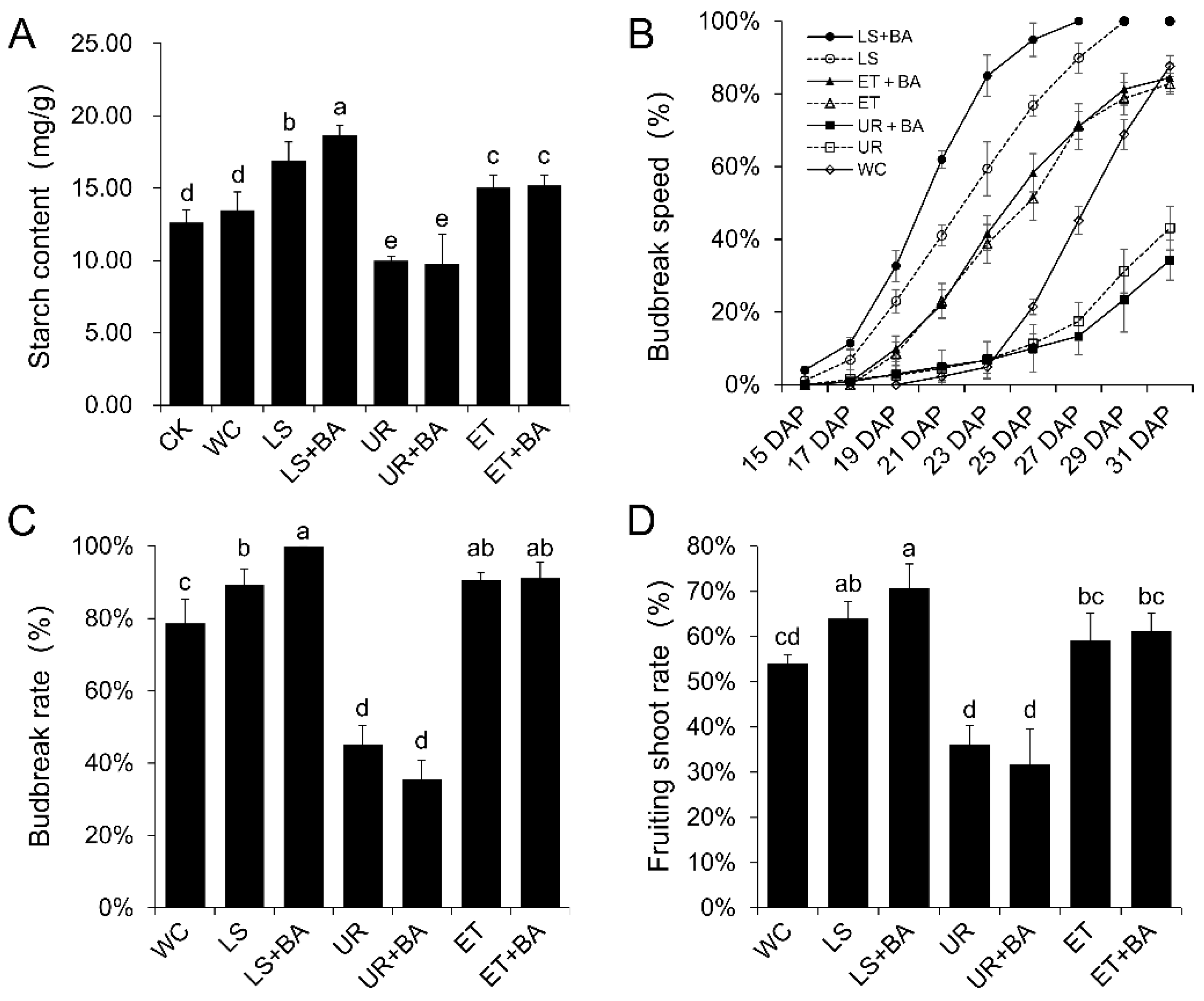
Treatments involving LS alone and its combination with BA yielded the most significant results, achieving a shoot budbreak rate of 100%, which was markedly superior to all other treatment groups. ET-based treatments exhibited intermediate performance. In contrast, UR-based treatments performed the poorest, primarily due to the occurrence of shoot and bud necrosis induced by UR application. Analysis of standard deviations across treatments indicated the LS treatment demonstrated the highest stability and reproducibility, whereas the UR treatment not only produced the least favorable outcomes but also exhibited the lowest data consistency (Figure 4A).
Budbreak dynamics in grape apical buds revealed significant differences in the budbreak process among the treatments. The LS + BA treatment demonstrated the best performance, exhibiting the earliest budbreak initiation and the most rapid budbreak progression. By 12 days after treatment, the shoot budbreak rate in this group had reached 96% and stabilized, which was significantly higher than that of all other treatment groups. In contrast, the WC control showed delayed budbreak initiation and a final budbreak rate of only 88%. Notably, UR-containing treatments performed the poorest, with delayed budbreak initiation, slow progression, and significantly reduced final budbreak rates due to bud necrosis (Figure 4B).
Significant gradient differences were observed in the effects of different treatments on the fruiting shoot rate of grapevines. The combination of lime sulfur and boric acid yielded the most remarkable results, achieving a fruiting shoot rate of 70.65%. Treatments with lime sulfur alone (63.96%) also demonstrated favorable effects, though their efficacy was significantly lower than that of the LS + BA combination. Ethylene-based treatments and the water control (WC; 54.14%) exhibited relatively weak effects; however, the combination of ethephon and boric acid still showed a certain promotive trend. Notably, all urea-based treatments resulted in fruiting shoot rates below 40%, representing the least effective outcomes. Overall, the lime sulfur and boric acid combination proved to be significantly superior to other treatments in enhancing the fruiting shoot rate (Figure 4C).
Starch content analysis revealed significant differences among treatments in starch accumulation in grapevines. The LS + BA treatment exhibited the highest starch content with low data variability, significantly outperforming the water control and showing a marked increase compared to pre-treatment levels, indicating this combination was most effective in promoting starch accumulation. The LS-alone treatment also showed favorable results, ranking second in effectiveness. Moderate starch content levels were observed in the ET + BA and ET-alone treatments. In contrast, the water control and urea treatments yielded relatively poor outcomes. The urea treatment displayed low starch content with high variability, indicating that the application of urea under "crop-forcing" cultivation is not conducive to nutrient reflux from leaves or starch accumulation in shoots. Phenotypic observations further revealed urea caused shoot dehydration, withering, and even mortality. Therefore, the use of urea to promote leaf nutrient reflux and shoot starch accumulation is not recommended in "crop-forcing" cultivation. Overall, the LS + BA treatment demonstrated a significant positive effect on enhancing starch content in the shoots (Figure 4D).

3.3. Effects of Lime Sulfur at Different Concentrations Combined with Boric Acid Treatment

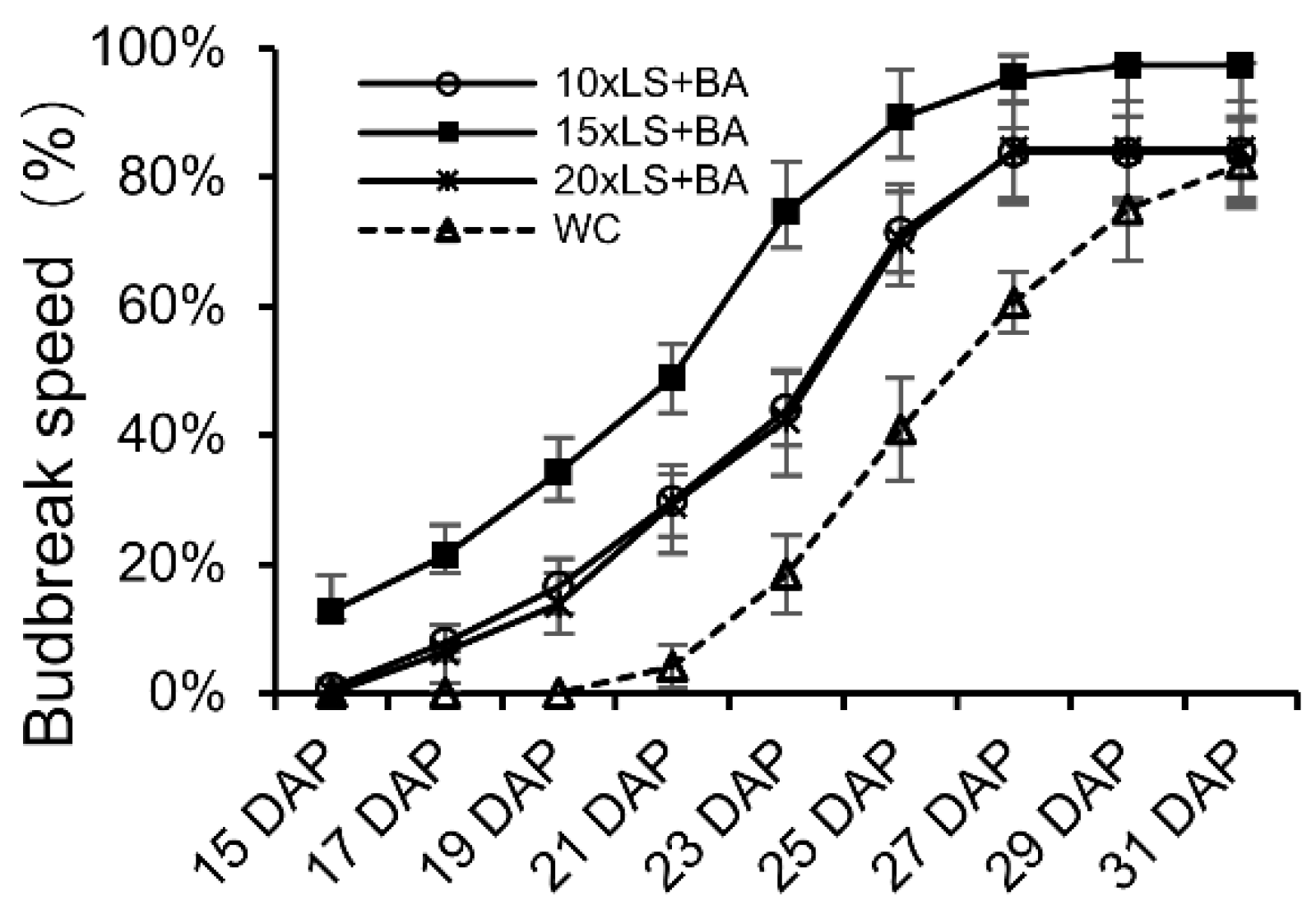
This study investigated the effects of different concentrations of LS combined with BA on grape budbreak, aiming to identify the optimal concentration for promoting budbreak in grapevines. The results demonstrated the combination of 15-fold diluted 29% lime sulfur + 2 g/L boric acid (1.93% LS + 0.2% BA) yielded the most superior performance, characterized by early budbreak initiation, rapid progression, and quickly reached the sprouting peak, showing significant differences compared to the water control (WC) group (Figure 5).

4. Discussion

This study aims to investigate the specific effects of whole-plant spray treatment applied to grapevines before defoliation (to promote leaf yellowing and senescence) on nutrient accumulation in grapevines, budbreak, and inflorescence formation. The results showed compared with the untreated control plants undergoing natural defoliation, the treatments applied to grapevines before defoliation to promote leaf yellowing and senescence significantly increased the dry matter ratio and starch content in the canes. Among all treatments, the combined application of lime sulfur (LS) and boric acid (BA) exhibited the most comprehensive performance, being significantly superior to all other treatments. This combination resulted in the highest starch content in canes, the highest budbreak rate and fruiting shoot rate, the fastest budbreak speed, and the best inflorescence quality. This phenomenon may be attributed to the stress effect induced by lime sulfur (LS) on leaves, which triggers the plant's defense response. Under such stress conditions, the vine accelerates the activation of its senescence program, thereby facilitating the remobilization and translocation of most mobile nutrients from older leaves to the perennial storage organs to support the growth demands of newly developing organs [31,32]. In contrast, ET promoted leaf abscission and nutrient accumulation, but with unstable efficacy, likely due to its complex modulation of the endogenous hormonal network [35].
The mechanism of HC involves the regulation of reactive oxygen species (ROS) metabolism [36]. As crucial signaling molecules, ROS can coordinate with hormonal signals to regulate multiple physiological processes, and their rapid accumulation is essential for dormancy release in grapevines [37]. Calcium signaling interacts with cellular signaling systems, including ROS [36]. LS, a mixture of calcium hydroxide and sulfur, supplies calcium ions that may interact with ROS and other cellular signaling systems via calcium signaling pathways, directly participating in budbreak initiation. Meanwhile, boron improves nutrient translocation, thereby further enhancing budbreak uniformity and nutrient accumulation [37,38]. Furthermore, boron may continue to play a role in subsequent inflorescence development. By stabilizing cell walls and promoting polar auxin transport, boron contributes to improved inflorescence quality in grapes, thereby facilitating flower bud differentiation and preventing floral organ abortion [39]. Based on these mechanisms, we propose that LS + BA likely promotes grape budbreak through a calcium–boron–ROS signaling network. This in-sight provides a new theoretical foundation for developing efficient and safe bud-break regulating techniques.

Author Contributions

Experimental design and manuscript writing, M.B.; investigation and methodology, D.Z., J.L.; provision of experimental materials and resources, F.L.; data curation, S.L.; writing—review and editing, S.L., M.B.; validation, W.C.; project administration and funding acquisition, G.Y.

Funding

This research was funded by Yuelushan Laboratory Breeding Program (Grant No. YLS-2025-ZY02032) and National Technology System for Grape Industry (Grant No. CARS-29-zp-9).

Conflicts of Interest

The authors declare no conflicts of interest.

Abbreviations

The following abbreviations are used in this manuscript:
BA Boric Acid
ET Ethephon
LR Leaf Removal
LS Lime Sulfur
UR Urea
WC Water Control

References

  1. OIV Statistical Report on World Vitiviniculture. Paris: International Organisation of Vine and Wine 2018.
  2. Deng, Q.; Xia, H.; Lin, L.; Wang, J.; Yuan, L.; Li, K.; Zhang, J.; Lv, X.; Liang, D. SUNRED, a Natural Extract-Based Biostimulant, Application Stimulates Anthocyanin Production in the Skins of Grapes. Sci Rep 2019, 9, 2590. [Google Scholar] [CrossRef] [PubMed]
  3. Londo, J.P.; Johnson, L.M. Variation in the Chilling Requirement and Budburst Rate of Wild Vitis Species. Environmental and Experimental Botany 2014, 106, 138–147. [Google Scholar] [CrossRef]
  4. Lu, G.; Zhang, K.; Que, Y.; Li, Y. Grapevine Double Cropping: A Magic Technology. Frontiers in Plant Science 2023, 14. [Google Scholar] [CrossRef]
  5. Júnior, H.F. da R.; Pasa, M. da S.; Malgarim, M.B.; Pasa, E.H.; Paschoal, J.D.F. Bud-Break Promoters for the Improvement of the Budburst of Pecan Cultivars. Pesquisa Agropecuária Brasileira 2022, e02956–e02956. [Google Scholar] [CrossRef]
  6. Anderson, J.V.; Horvath, D.P.; Chao, W.S.; Foley, M.E. Bud Dormancy in Perennial Plants: A Mechanism for Survival. In Dormancy and Resistance in Harsh Environments; Lubzens, E., Cerda, J., Clark, M., Eds.; Springer: Berlin, Heidelberg, 2010; pp. 69–90. ISBN 978-3-642-12422-8. [Google Scholar]
  7. Or, E.; Vilozny, I.; Fennell, A.; Eyal, Y.; Ogrodovitch, A. Dormancy in Grape Buds: Isolation and Characterization of Catalase cDNA and Analysis of Its Expression Following Chemical Induction of Bud Dormancy Release. Plant Science 2002, 162, 121–130. [Google Scholar] [CrossRef]
  8. Sudawan, B.; Chang, C.-S.; Chao, H.; Ku, M.S.B.; Yen, Y. Hydrogen Cyanamide Breaks Grapevine Bud Dormancy in the Summer through Transient Activation of Gene Expression and Accumulation of Reactive Oxygen and Nitrogen Species. BMC Plant Biol 2016, 16, 202. [Google Scholar] [CrossRef]
  9. Ionescu, I.A.; López-Ortega, G.; Burow, M.; Bayo-Canha, A.; Junge, A.; Gericke, O.; Møller, B.L.; Sánchez-Pérez, R. Transcriptome and Metabolite Changes during Hydrogen Cyanamide-Induced Floral Bud Break in Sweet Cherry. Front. Plant Sci. 2017, 8. [Google Scholar] [CrossRef]
  10. Walton, E.F.; Fowke, P.J. Effect of Hydrogen Cyanamide on Kiwifruit Shoot Flower Number and Position. Journal of Horticultural Science 1993, 68, 529–534. [Google Scholar] [CrossRef]
  11. Sudawan, B.; Chang, C.-S.; Chao, H.; Ku, M.S.B.; Yen, Y. Hydrogen Cyanamide Breaks Grapevine Bud Dormancy in the Summer through Transient Activation of Gene Expression and Accumulation of Reactive Oxygen and Nitrogen Species. BMC Plant Biol 2016, 16, 202. [Google Scholar] [CrossRef]
  12. Pérez, F.J.; Vergara, R.; Rubio, S. H2O2 Is Involved in the Dormancy-Breaking Effect of Hydrogen Cyanamide in Grapevine Buds. Plant Growth Regul 2008, 55, 149–155. [Google Scholar] [CrossRef]
  13. Pang, X.; Halaly, T.; Crane, O.; Keilin, T.; Keren-Keiserman, A.; Ogrodovitch, A.; Galbraith, D.; Or, E. Involvement of Calcium Signalling in Dormancy Release of Grape Buds. J Exp Bot 2007, 58, 3249–3262. [Google Scholar] [CrossRef] [PubMed]
  14. Khalil-Ur-Rehman, M.; Wang, W.; Zheng, H.; Faheem, M.; Iqbal, S.; Shen, Z.G.; Tao, J. Role of Hydrogen Cyanamide (HC) in Grape Bud Dormancy Release: Proteomic Approach. 3 Biotech 2020, 10, 229. [Google Scholar] [CrossRef] [PubMed]
  15. Liang, D.; Huang, X.; Shen, Y.; Shen, T.; Zhang, H.; Lin, L.; Wang, J.; Deng, Q.; Lyu, X.; Xia, H. Hydrogen Cyanamide Induces Grape Bud Endodormancy Release through Carbohydrate Metabolism and Plant Hormone Signaling. BMC Genomics 2019, 20, 1034. [Google Scholar] [CrossRef]
  16. Bernasconi, L.; Carnovale, M.; Lonati, D.; Petrolini, V.M.; Schicchi, A.; Brolli, B.; Negrini, V.M.; Grazioli, C.; Maystrova, O.; Buscaglia, E.; et al. Hydrogen Cyanamide Exposure: A Case Series from Pavia Poison Control Centre. Occup Med (Lond) 2023, 73, 500–506. [Google Scholar] [CrossRef]
  17. Carranca, C.; Brunetto, G.; Tagliavini, M. Nitrogen Nutrition of Fruit Trees to Reconcile Productivity and Environmental Concerns. Plants 2018, 7, 4. [Google Scholar] [CrossRef]
  18. Tang, J.; Chen, Y.; Huang, C.; Li, C.; Feng, Y.; Wang, H.; Ding, C.; Li, N.; Wang, L.; Zeng, J.; et al. Uncovering the Complex Regulatory Network of Spring Bud Sprouting in Tea Plants: Insights from Metabolic, Hormonal, and Oxidative Stress Pathways. Front. Plant Sci. 2023, 14. [Google Scholar] [CrossRef]
  19. Hendgen, M.; Günther, S.; Schubert, S.; Löhnertz, O. Ethephon Activates the Transcription of Senescence-Associated Genes and Nitrogen Mobilization in Grapevine Leaves (Vitis Vinifera Cv. Riesling). Plants (Basel) 2021, 10, 333. [Google Scholar] [CrossRef] [PubMed]
  20. Guiboileau, A.; Sormani, R.; Meyer, C.; Masclaux-Daubresse, C. Senescence and death of plant organs: Nutrient recycling and developmental regulation. Comptes Rendus. Biologies 2010, 333, 382–391. [Google Scholar] [CrossRef]
  21. Buchanan-Wollaston, V.; Earl, S.; Harrison, E.; Mathas, E.; Navabpour, S.; Page, T.; Pink, D. The Molecular Analysis of Leaf Senescence – a Genomics Approach. Plant Biotechnology Journal 2003, 1, 3–22. [Google Scholar] [CrossRef]
  22. Lin, S.-Y.; Agehara, S. Foliar Application of Defoliants before Winter Chill Accumulation Advances Budbreak and Improves Fruit Earliness of Blackberry under Subtropical Climatic Conditions. 2021. [Google Scholar] [CrossRef]
  23. Tan, J.C.; Lin, S.-Y. Foliar Urea Sprays Induce Budbreak in Peach via Rapid Non-Structural Carbohydrate Metabolism – A Lower-Toxicity Alternative to Hydrogen Cyanamide. Scientia Horticulturae 2025, 349, 114267. [Google Scholar] [CrossRef]
  24. Bhadoria, P.; Nagar, M.; Bharihoke, V.; Bhadoria, A.S. Ethephon, an Organophosphorous, a Fruit and Vegetable Ripener: Has Potential Hepatotoxic Effects? Journal of Family Medicine and Primary Care 2018, 7, 179. [Google Scholar] [CrossRef]
  25. Gu, S.; Jacobs, S.D.; Mccarthy, B.S.; Gohil, H.L. Forcing Vine Regrowth and Shifting Fruit Ripening in a Warm Region to Enhance Fruit Quality in ‘Cabernet Sauvignon’ Grapevine (Vitis Vinifera L.). The Journal of Horticultural Science and Biotechnology 2012, 87, 287–292. [Google Scholar] [CrossRef]
  26. Xiu, L.I.; Juntuan, Z.; Zhaolong, S.; Yuxia, L.I.; Zhijun, L.I. Sex Differences in Morphological and Stoichiometric Characteristics of Populus Euphratica Oliv. Branches and Leaves. Chinese Journal of Ecology 2023, 42, 1586. [Google Scholar] [CrossRef]
  27. Clegg, K.M.; Clegg, K.M. The Application of the Anthrone Reagent to the Estimation of Starch in Cereals. J. Sci. Food Agric 1956, 7, 40–44. [Google Scholar] [CrossRef]
  28. The Science of Grapevines; 2025; ISBN 978-0-443-33006-3.
  29. Dahal, K.C.; Bhattarai, S.P.; Midmore, D.J.; Oag, D.; Sapkota, R.; Walsh, K.B. In Situ Sucrose Injection for Alteration of Carbohydrate Reserve Dynamics in Grapevine. Agronomy 2024, 14, 425. [Google Scholar] [CrossRef]
  30. Skinkis, P.A. Recognize the Symptoms and Causes of Stunted Growth in Vineyards. Available online: https://extension.oregonstate.edu/catalog/pub/em-8975-recognize-symptoms-causes-stunted-growth-vineyards (accessed on 20 December 2025).
  31. Hale, C.R.; Weaver, R.J. The Effect of Developmental Stage on Direction of Translocation of Photosynthate in Vitis Vinifera. Hilgardia 1962. [Google Scholar] [CrossRef]
  32. Brown, K.M. Ethylene and Abscission. Physiologia Plantarum 1997, 100, 567–576. [Google Scholar] [CrossRef]
  33. Zhang, M.; Luo, Y.; Meng, Q.; Han, W. Correction of Leaf Nutrient Resorption Efficiency on the Mass Basis. J Plant Ecol 2022, 15, 1125–1132. [Google Scholar] [CrossRef]
  34. Wang, W.-Q.; Wang, M.; Lin, P. Seasonal Changes in Element Contents in Mangrove Element Retranslocation during Leaf Senescene. Plant and Soil 2003, 252, 187–193. [Google Scholar] [CrossRef]
  35. Kowsalya, K.; Halka, J.; Anand, M.; Sahayarayan, J.J.; Rajkumar, R.; Arun, M. Unraveling the Multifaceted Role of Ethephon in Plant Physiology: From Seed Germination to Crop Maturation and Harvesting. J. Plant Biochem. Biotechnol. 2025, 34, 639–664. [Google Scholar] [CrossRef]
  36. Piekarniak, M.; Weston, L.A.; Gniazdowska, A.; Krasuska, U. Hydrogen Cyanide Acts as a Regulator of Reactive Oxygen Species Metabolism. Planta 2025, 262, 134. [Google Scholar] [CrossRef]
  37. Sudawan, B.; Chang, C.-S.; Chao, H.; Ku, M.S.B.; Yen, Y. Hydrogen Cyanamide Breaks Grapevine Bud Dormancy in the Summer through Transient Activation of Gene Expression and Accumulation of Reactive Oxygen and Nitrogen Species. BMC Plant Biol 2016, 16, 202. [Google Scholar] [CrossRef]
  38. Görlach, A.; Bertram, K.; Hudecova, S.; Krizanova, O. Calcium and ROS: A Mutual Interplay. Redox Biology 2015, 6, 260–271. [Google Scholar] [CrossRef] [PubMed]
  39. Matoh, T. Boron in Plant Cell Walls. Plant and Soil 193 59–70. [CrossRef]
  40. Kohli, S.K.; Kaur, H.; Khanna, K.; Handa, N.; Bhardwaj, R.; Rinklebe, J.; Ahmad, P. Boron in Plants: Uptake, Deficiency and Biological Potential. Plant Growth Regul 2023, 100, 267–282. [Google Scholar] [CrossRef]
  41. Tadayon, M.S.; Moafpourian, G. Effects of Exogenous Epi-Brassinolid, Zinc and Boron Foliar Nutrition on Fruit Development and Ripening of Grape (Vitis Vinifera L. Clv. ‘Khalili’). Scientia Horticulturae 2019, 244, 94–101. [Google Scholar] [CrossRef]
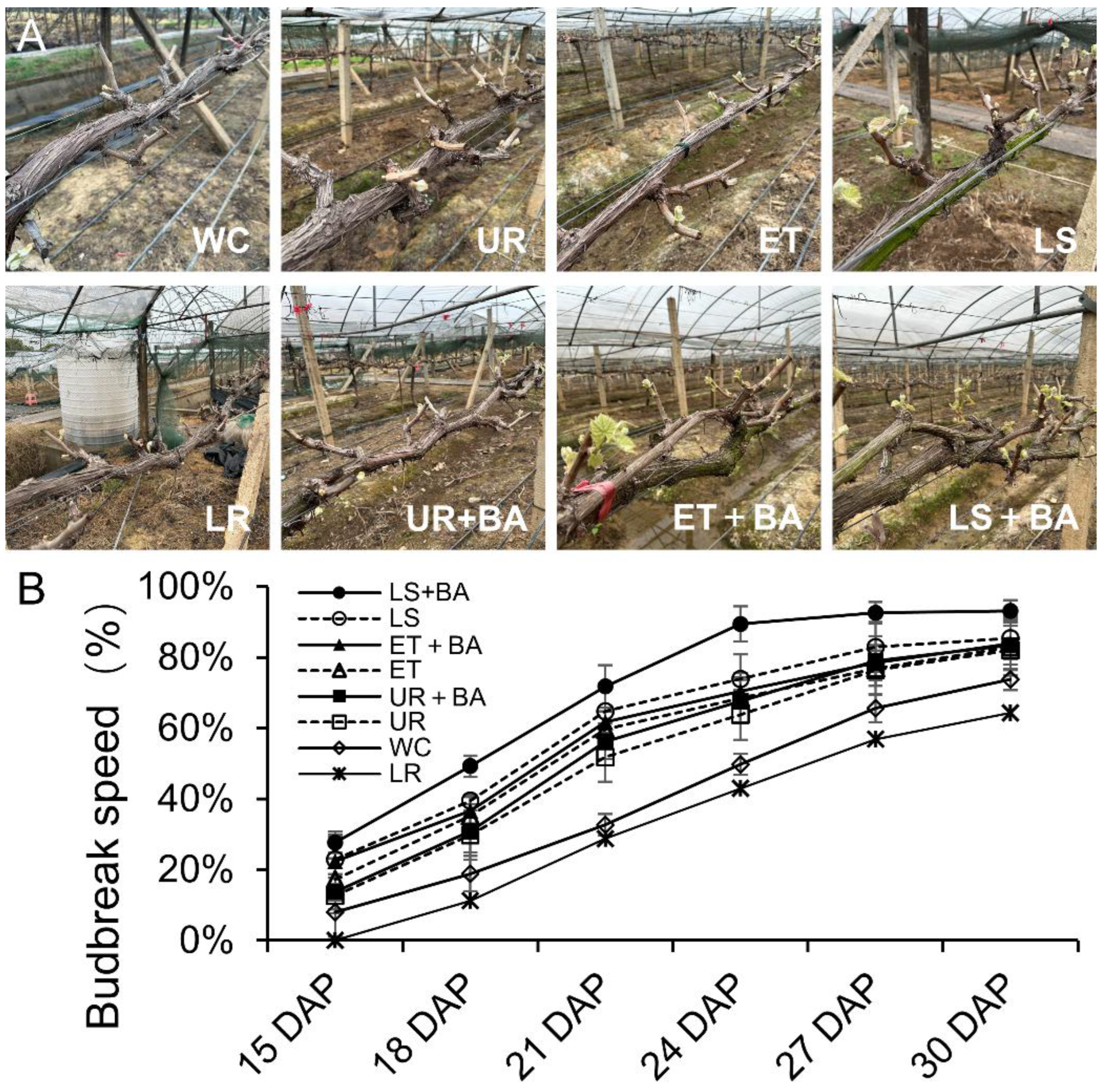
Figure 1. Effect of different treatments on budbreak rate: (A) Phenotypic documentation(B)Budbreak speed. LR: manual leaf removal; WC: water control; LS: 15-fold diluted 29% lime sulfur; BA: 2 g/L boric acid; UR: 100 g/L urea; ET: 600-fold diluted 40% ethephon. .
Preprints 193329 g001
Figure 2. Effect of different treatments on grape first crop: (A) Budbreak rate under different treatments (B) Fruiting shoot rate under different treatments (C) Dry to fresh weight ratio under different treatments (D) Starch content under different treatments. CK: Untreated samples; LR: manual leaf removal; WC: water control; LS: 15-fold diluted 29% lime sulfur; BA: 2 g/L boric acid; UR: 100 g/L urea; ET: 600-fold diluted 40% ethephon.
Preprints 193329 g002
Figure 3. Effect of different treatment combinations on the Bud Necrosis rate: (A) Phenotypic documentation of leaf abscission in all treatments (B) Bud necrosis (BN) rate affected by various treatments. WC: water control; LS: 15-fold diluted 29% lime sulfur; BA: 2 g/L boric acid; UR: 100 g/L urea; ET: 600-fold diluted 40% ethephon.
Preprints 193329 g003
Figure 4. Effect of different treatments on grape secondary crop: (A) Budbreak rate under different treatments (B) Budbreak speed under different treatments (C) Fruiting shoot rate under different treatments (D) Starch content under different treatments. CK: Untreated samples; LR: manual leaf removal; WC: water control; LS: 15-fold diluted 29% lime sulfur; BA: 2 g/L boric acid; UR: 100 g/L urea; ET: 600-fold diluted 40% ethephon.
Preprints 193329 g004
Figure 5. Budbreak rate under different concentrations of LS + BA. WC: water control; LS: 29% lime sulfur; BA: 2 g/L boric acid; 10XLS: 10-fold diluted 29% lime sulfur + 2 g/L boric acid (2.9% LS + 0.2% BA); 15XLS: 15-fold diluted 29% lime sulfur + 2 g/L boric acid (1.93% LS + 0.2% BA); 20XLS: 20-fold diluted 29% lime sulfur + 2 g/L boric acid (1.45% LS + 0.2% BA); DAP: Days After Planting.
Preprints 193329 g005
Disclaimer/Publisher’s Note: The statements, opinions and data contained in all publications are solely those of the individual author(s) and contributor(s) and not of MDPI and/or the editor(s). MDPI and/or the editor(s) disclaim responsibility for any injury to people or property resulting from any ideas, methods, instructions or products referred to in the content.
Copyright: This open access article is published under a Creative Commons CC BY 4.0 license, which permit the free download, distribution, and reuse, provided that the author and preprint are cited in any reuse.
Prerpints.org logo

Preprints.org is a free preprint server supported by MDPI in Basel, Switzerland.

Subscribe

Disclaimer

Terms of Use

Privacy Policy

Privacy Settings

© 2026 MDPI (Basel, Switzerland) unless otherwise stated