

Submitted:
26 July 2023
Posted:
27 July 2023
You are already at the latest version
Abstract
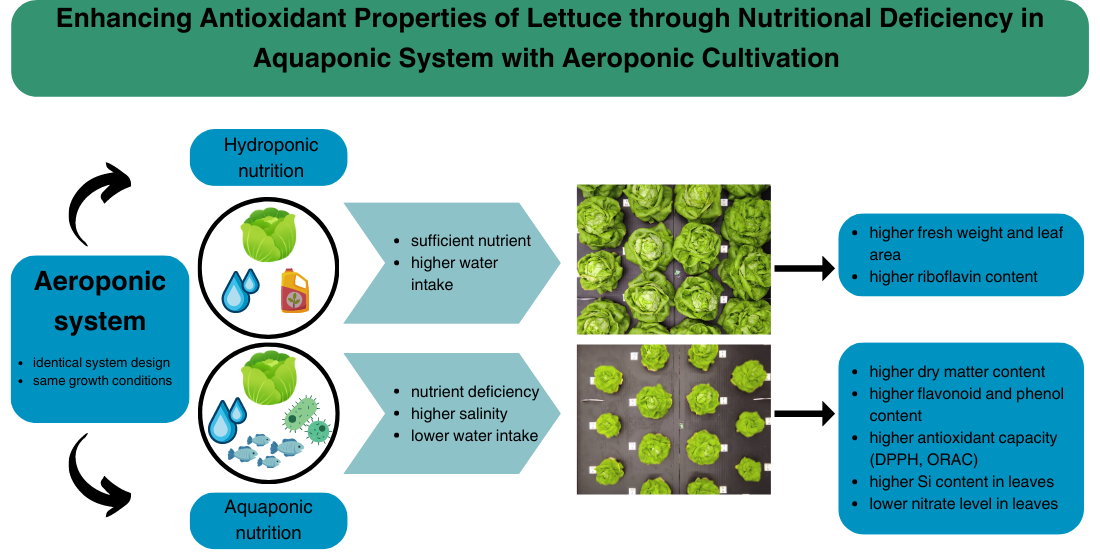
This research presents a comparative analysis of the yield and nutritional quality of lettuce (Lactuca sativa L.) cultivated in an aeroponic system with two distinct nutrient solutions: (i) commercial hydroponic fertilizers and (ii) aquaponic water without added fertilizers. Both systems were maintained under the same controlled conditions, enabling the comparison of growth parameters, leaf area, antioxidant activity, mineral content, and sensory characteristics of the lettuce. The hydroponic system demonstrated superior performance concerning the fresh weight of lettuce head and root, leaf count, and leaf area. In contrast, the aquaponic system produced a higher dry weight of lettuce heads and a more extensive root-to-shoot ratio. Concerning nutrient concentration, the hydroponic nutrient solution composition exhibited elevated levels of NO3–, P, NH4+, and K in contrast to the aquaponic nutrient solution, which had a more significant S, Cl–, Na, and Mg content. Regarding the nutritional value, lettuce from the hydroponic system exhibited significantly higher levels of K, S, P, Zn, Fe, Mn, and vitamin B2. In contrast, lettuce from the aquaponic system exceeded with higher content of Ca, Na, Mg, Al, B, and Si. Remarkably, the lettuce cultivated in the aquaponic system demonstrated significantly enhanced total flavonoid and phenol content, and antioxidant capacity compared to its hydroponically grown counterpart.
Keywords:
nutrient solution
; flavonoids
; phenols
; DPPH
; ORAC
; vitamins
; mineral content
; organic acids
; sensory analysis
1. Introduction
Pursuing sustainable and efficient farming techniques has ushered in an era of soilless plant cultivation systems, among which aeroponics has emerged as a promising solution. This system harnesses the power of technology to grow plants suspended in air; the roots are encased in a light-proof container while the above-ground parts are separated by an artificial structure [1]. Aeroponic plants are exposed to a nutrient-enriched aerosol sprayed by atomization nozzles. This results in a controlled environment that promotes optimal growth conditions: consistent nutrient concentration, pH and electric conductivity (EC) values, regulated temperature, high humidity, and optimum oxygen availability [2].
By creating a sterile growth chamber with abundant oxygen and carbon dioxide, aeroponics promotes faster growth and enhanced nutrient uptake compared to traditional hydroponic systems [3]. It is also worth noting the system's sustainable aspect, significantly reducing water and fertilizer usage, and completely negating the need for pesticides compared to conventional soil-based cultivation [4].
The nutrient composition of the water supply in aeroponics plays a critical role in determining plant growth and quality [5]. Plants utilize nutrients in their ionic form, with NH4+ and NO3- integral nitrogen sources [6,7,8].
It is well-established that nutrient deficiencies can adversely impact plant yield and the content of bioactive compounds. For instance, nitrogen deficiency can inhibit growth, reduce leaf area, and fast-track plant senescence [9,10]. Similarly, shortages in phosphorus and potassium impede photosynthesis and protein synthesis, respectively, while a lack of calcium can lead to several morphological and physiological disorders [11,12,13]. However, while single nutrient deficiencies have been extensively researched, a comprehensive understanding of the effects of the deprivation of all essential ions in soilless systems requires further investigation [14].
Aeroponic cultivation has primarily utilized hydroponic nutrient solutions [15,16,17,18,19], with relatively fewer studies exploring the potential of aquaponic solutions [20]. Aquaponics introduces a symbiotic system where fish, bacteria, and plants interact to recycle and reuse nutrients. Despite this advantage, maintaining balance in a closed-loop aquaponics system can be challenging, often requiring substantial mineral fertilizer inputs, which could disrupt the system's equilibrium [21]. Furthermore, commercial aquaponics often encounter hurdles due to depleted K+, Mg2+, and Ca2+ levels and high salinity, thereby complicating vegetable cultivation. Despite these challenges, aquaponic systems can often achieve yields comparable to hydroponic systems, possibly due to beneficial microbial activities enhancing nutrient uptake and promoting growth [22].
Various studies investigating the efficiency of using unfertilized aquaponic water for vegetable cultivation have shown inconsistent results. While some report superior growth compared to hydroponic systems [23,24], others find the reverse [25]. Suboptimal nutrient levels in the solution can impact not only the growth parameters but also the bioactive content of the produce.
This study aims to elucidate the efficiency of aquaponic solutions compared to hydroponics, focusing on growth parameters and nutritional and bioactive content under controlled conditions within aeroponic cultivation. As such, it seeks to extend the discourse on nutrient management strategies for sustainable and efficient soilless farming.
2. Material and Methods
2.1. Experimental Setup
The experiment was conducted in an experimental laboratory in the Department of Food Science at the Czech University of Life Science, Prague. A total of 108 lettuces (Lactuca sativa L.) were grown in an aeroponic system consisting of two separate constructions, each with three growing boxes. Each box had an area of 1 m2 and contained 18 lettuces.
Aeroponic units had different types of nutrient solutions. The first system used a mixture of reverse osmosis water and TriPart hydroponic fertilizers (Terra Aquatica). In contrast, the second system used aquaculture water from a real aquaponic farm (Aquaponia s.r.o., Lážovice). The nutrient solutions were checked and replenished to the original amount of 15 L daily, and all key parameters (pH, EC, dissolved O2) were measured using MultiLine® IDS (WTW, Germany). The limits for control parameters were set according to Singh & Bruce [26], who recommend pH 5.5–6.8, EC 1.2–1.8 dS ∙ m–1, and temperature 16–21 °C. The pH was adjusted using pH Plus or DOWN (Advanced Hydroponics, Netherlands). The solutions were changed entirely every seven days for both systems to maintain stable nutrient conditions for better reproductivity and comparison among treatments.
Aquaponic water was taken from the polyculture collection tank, which insisted of tilapia, koi carps and baby catfish fed by Skretting Mervall aquaculture feed (Skretting, France). The water was pumped into a 50 L barrel, in which all control parameters (pH, EC, dissolved O2, temperature) were measured immediately after being brought to the place of the experiment. The barrel with aquaponic water was stored in a growing room at a temperature of 19 °C. Control parameters were measured daily, but only the amount of dissolved oxygen was adjusted to 6–7 mg ∙ L–1. Before pouring the nutrient solution into the collection tank of the aeroponic system, the water was filtered by a nylon filter with a filtration fineness of 100 μm to prevent clogging of the nozzles in the aeroponic system.
Parameters such as pH, EC, dissolved O2, and water temperature were also measured daily for the aquaponicsolution storage tank. The EC treatment was dependent on the EC value of the aquaculture water in the barrel. If the EC value was in the range +/– 0,400 dS ∙ m–1 of the original EC, no additional treatment of the nutrient solution was necessary. The EC value was adjusted in the second case using reverse osmosis and aquaponic water.
The plants, as well as the nutrient solutions, were checked daily. The controlled parameters were room temperature and humidity. The room was equipped with air conditioning, and the temperature was maintained at 20 ± 3 °C. Each aeroponic unit was equipped with three fans that ensured air circulation. The OV5200 4in1 humidifier and air cooler (Concept, Czech Republic) were used to maintain the required humidity between 45–60 %. The lights (SPYDR 2X, Fluence Bioengineering, Netherlands) were timer controlled in mode 12 hours on and 12 hours off.
The nutrient solution was distributed by a SHURFLO 8000-543-238 (Pentair, Minnesota) membrane pump through an expansion tank that maintained a pressure of 5.5 bar. The irrigation time was set by a timer to 4 s on and 96 s off.
2.2. Lettuce Growth Parameters
Seeds of Lactuca sativa L. variety Bremex (Semo, Czech Republic) were germinated in seed trays containing perlite. After 20 days the seedlings were at a stage when the root system is sufficiently developed for transfer to an aeroponic system. Before transplanting to the system, roots were precisely washed with water to remove the remains of perlite to prevent clogging of the nozzles in the aeroponic system. A total of 108 plants (54 per one system) with similar weight and equal number of leaves were selected and transplanted into the systems.
After 35 days of cultivation, the number of leaves, fresh weight of lettuce heads, and roots were measured and root to shoot ratio was calculated. The dry mass of leaves was determined after freeze drying at –50 °C for 24 h.
The leaf area (cm2) was also measured. Photos taken every seven days were processed by image analysis with ImageJ (Open-source software, ImageJ.net/ver. ImageJ 1.51j).
Lettuces from the edges of the growing boxes were not included in the statistical evaluations of the experiment due to the corner effect, where the aerosol of nutrients from the nozzles did not fully reach the root system, and the lettuces were not fully developed.
2.3. Analysis of nutrient concentrations in water
The concentrations of B, Ca, Cu, Fe, K, Mg, Mn, Na, P, S, Si and Zn in nutrient solutions were determined by inductively coupled plasma – optical emission spectrometer (ICP-OES; Agilent 720, Agilent Technologies Inc., Santa Clara, USA) after filtration through a syringe filter (0.45 µm pore size, nylon membrane) and acidification using concentrated HNO3.
The concentration of Cl-, Br-, NO2-, NO3-, PO43- and SO42- were determined by means of capillary ion-exchange chromatography with suppressed conductivity (capillary high-pressure ion chromatography - HPIC). Dionex ICS 4000 or ICS 6000 (Thermo Scientific, USA) system equipped with Dionex IonPac AS11-HC 4 µm (Thermo Scientific, USA) guard and analytical columns was used.
The concentration of NH4+ was determined by means of ion-exchange chromatography with suppressed conductivity. The ion chromatograph ICS 90 (Dionex, USA) equipped with IonPac CS16 (Dionex, USA) guard and analytical columns was used.
2.4. Bioactive and nutritionally important compounds in lettuce leaves
2.4.1. Total flavonoid content
The whole lettuce heads were freeze-dried using a FreeZone 2.5 Labconco Freeze-Dryer (Labconco corp., Kansas City, Missouri, U.S.A.) equipped with Vacuum Pump (Vacuubrand GMBH + CO KG, Wertheim, Germany) at –50 °C, 0.370 mBar. Freeze-dried and homogenized (using a mortar and pestle) samples (0.1 g) were extracted in 5 mL of 90% methanol overnight at room temperature (RT) in the dark. Total flavonoid content was determined using the aluminium chloride method in an acetate solution, described by Matic et al. [27], in lettuce extracts (0.1 g/5 mL 90% MeOH). The methanol extracts were diluted with water (1:4 and 1:9 v/v) and incubated in 96-well microplates in a solution with 12.4 mM aluminium trichloride and 20 mM potassium acetate for 10 min while shaking at 200 rpm at room temperature. The absorbance was read at 415 nm, and the total flavonoid content was expressed in milligrams of Rutin equivalent per gram of dry lettuce weight (mg Reqv ∙ g–1 DW) out of two dilutions and two individual measurements. The calibration curve was constructed with rutin concentration range from 0–100 µg ∙ mL-1 (R2 ≥ 0.99).
2.4.2. Evaluation of antioxidant capacity
To evaluate the antioxidant capacity of lettuce grown on different nutritional solutions, several analytical methods were applied. Firstly, the content of antioxidative phenolic compounds in methanolic extracts prepared as described in Chapter 2.4.1. (90% MeOH) was determined using a Folin-Ciocalteu reagent and expressed as gallic acid equivalents [28]. Briefly, 100 µL of methanolic extracts diluted with water (1:19 and 1:39 v/v) were incubated with Folin-Ciocalteru reagent in 96-well microplates for 10 min while shaking (200 rpm) at room temperature. The reaction was terminated using 12% anhydrous sodium carbonate. The absorbance was read at 760 nm after 30 min of incubation in the dark at 37 °C. The total phenol content was expressed in milligrams of gallic acid equivalent per gram of dry lettuce weight (mg GAeqv ∙ g–1 DW) out of two dilutions and two individual measurements. The calibration curve was constructed with gallic acid concentration range from 0–25 µg ∙ mL–1 (R2 ≥ 0.99).
Further, the antioxidant capacity was evaluated by applying the radical-scavenging method using 2,2´-diphenyl-1-picrylhydrazyl (DPPH assay; Brand-Williams et al., 1995 [29]). The assay modification is described by Langhansova et al. [30]. The lettuce samples were extracted in 90% methanol, as described in Chapter 2.4.1. were measured at 7 serial concentrations obtained by 1:1 dilution, with the highest final concentration in well 2 mg ∙ mL–1. The absorbance was read at 517 nm, and IC50 was calculated from linear calibration curve constructed with Trolox concentration range from 0–20 µg ∙ mL–1 (R2 ≥ 0.99) out of three individual measurements.
At last, the antioxidant capacity was evaluated using the oxygen radical absorbance capacity method (ORAC), the method modification described by Langhansova et al. [30]. The lettuce samples were extracted in 90% methanol as described in Chapter 2.4.1. were applied at concentrations 0.01, 0.02, and 0.05 µg ∙ mL–1 and the calibration curve constructed with Trolox concentration range from 0–64 µM (R2 ≥ 0.99). The reaction kinetics were measured at 485 nm excitation and 535 nm emission wavelength for 1 hour at 1 min intervals. The antioxidant capacity was calculated [31] out of three sample concentrations applied in individual measurements and expressed as µM Trolox equivalent per gram of dry lettuce weight (µM Teqv · g–1 DW).
2.4.3. Determination of vitamin content
For extraction of vitamin C, the lettuce leaves were freeze-dried and homogenized (0.2 g) and were extracted in 5 mL solution of 0.3 M metaphosphoric acid in ultra-pure water. The extract was sonicated for 10 min., incubated for 15 min. at 75 °C, and centrifuged for 10 min, 4000 rpm (1.252 × g) at 4 °C. One mL of supernatant was diluted to 1 mL of 0.1 % acetic acid and the mixture was centrifuged for 10 min., 14000 rpm (10.956 × g) at 4 °C (modified according to Rokayya et al. [32]).
For extraction of vitamin B2, the lettuce leaves were freeze-dried and homogenized (0.2 g) were extracted in 2 mL of acetonitrile:acetic acid:water (5:1:94 v/v/v). The extract was sonicated for 15 min., incubated 40 min at 70 °C, again sonicated for 15 min., and centrifuged for 15 min, 4000 rpm at 4 °C. One mL of supernatant was protected from light and stored at 4 °C before HPLC analyses (modified according to Rubel et al.[33]).
HPLC-UV quantification of vitamins was made. Detection was carried out on HPLC system consisting of Waters e2695 Separations Module, 2998 PDA Detector (Waters Alliance), Phenomenex Luna column (C18, 5 µm particle size, 250 × 4.6 mm), and Empower 3 software. Twenty µL of sample was applied to the system (flow 0.6 mL ∙ min-1; 22 °C). The solvent system mixture consists of mobile phase A (0.1 % acetic acid), mobile phase B (acetonitrile) with gradient as follows: 0–5 min. 99 % A; 6–12 min. 75 % A; 13–20 min. 55 % A; 21–30 min. 99 % A (method modified according to Seal et al. [34]). Calibration was done with L-ascorbic acid and riboflavin (analytical standards, Sigma-Aldrich s.r.o., Prague, Czech Republic) and the content was expressed in milligrams per gram of dry leaves (µg · g-1 DW).
2.4.4. Determination of inorganic anions and low molecular mass organic acids
Freeze-dried homogenized lettuce leaves were extracted for 1 min in ultrasonic bath by boiled deionized water (1/100, w/v) according to Vondráčková et al. [35]. After filtration through a 0.45-μm nylon membrane filter and dilution selected inorganic (F–, Cl–, NO3–, PO43–, SO42–) and low molecular mass organic acids (quinate, lactate, acetate, propionate, formate, malate, tartrate, oxalate, and isocitrate) were determined by means of capillary ion-exchange chromatography with suppressed conductivity (capillary high-pressure ion chromatography - HPIC). Dionex ICS 4000 and ICS 6000 (Thermo Scientific, USA) system equipped with Dionex IonPac AS11-HC 4 µm (Thermo Scientific, USA) guard and analytical columns was used.
2.4.5. Mineral content
Freeze-dried homogenized lettuce leaves (0.25 g) were transferred into digestion tubes. The digestion process was conducted in microwave system Multiwave PRO (Anthon Paar GmbH, Austria) with HNO3 and HClO4 mixture 7:1 (v/v). After digestion, macronutrients (Na, K, Ca, Mg, S, and P) and micronutrients (Zn, Fe, Cu, Co, Si, Se, Cr, Mn, Ni, Al, and B) were quantified through ICP-OES (Thermo Fisher Scientific iCAP Plus Series 7000, USA) analysis.
2.5. Sensory analysis
The sensory analysis involved 10 assessors, consisting of 4 women and 6 men aged 25 to 45 years and was performed in the CZU sensory laboratory equipped with individual boxes. Each participant assessed two lettuce heads which were marked with four-digit random codes. One lettuce head came from the hydroponic system and one from aquaponic system.
The sensory panel evaluated the samples using a 100 mm long unstructured scale, which was transformed into a numerical scale (0–100) for statistical analysis. Nine sensory descriptors, definition, and scale is presented in Table 1. Evaluators were pre-trained to evaluate lettuce sensory descriptors.
2.6. Statistical analysis
Statistical analyses were conducted using TIBCO Statistica 14 software (StatSoft, Inc.), which included t-tests and One-way ANOVA. The data obtained in the sensory analysis were analyzed in SAS statistical program using a mixed linear model (MIXED), which uses the REML (Restricted Estimate Maximum Likelihood) method for estimation. The fixed effect of the production system (treatment) and the random effect of the assessor were included in the model equation. Results are reported as Least Squares Mean (LSM) with the Standard Error of Mean (SEM).
3. Results
3.1. Growth parameters of lettuce
Table 2 presents a comparison of several growth parameters for Lactuca sativa L. (lettuce) grown in a hydroponic nutrient solution system (HS) and aquaponic nutrient solution system (AS), with 42 lettuces in each system counted (number without lettuces affected by a corner effect).
HS average lettuce head fresh weight of 207.61 ± 45.19 g was significantly higher than AS with 36.16 ± 16.28 g. Similarly, average root fresh weight and number of leaves with 32.41 ± 9.1 g and 49 pieces in HS were significantly higher than AS with 24.56 ± 10.19 g and 27 pieces respectively. On the other hand, lettuce head dry matter content and root–to–shoot ratio of AS with 8.44 ± 0.77 % and 0.16 ± 0.03 was significantly higher than HS with 5.49 ± 0.46 % and 0.72 ± 0.16, respectively. The amount of dry matter could be influenced by water uptake, with lettuces receiving 51.9 % more nutrient solution in the HS compared to AS. Even though the size of the lettuce heads was 5.7 times larger in the HS, AS boldly competed with the weight of the root system as shown in Figure 1.
3.2. Leaf area
The increase in leaf area between HS and AS was compared and is shown in Table 3. No statistically significant difference was found among the three replications of each system.
A statistically significant difference in leaf area was observed in the third week of cultivation where the average leaf area in HS was already 1.7 times larger than in AS. The more significant increase for the hydroponic system continued in the fourth and fifth weeks where the average leaf area in HS was 2.6 and 2.7 times larger respectively. The progression of leaf area growth from transporting into the systems to harvest is shown in Figure 2.
3.3. Water quality
The results presented in Table 4 and Table 5 provide a detailed comparison of the levels of various elements in both systems.
Table 4 presents the concentrations of anions and cations in HS and AS. HS showed 14.6 times higher concentrations of NO3–, while AS had higher Cl– and NO2- concentrations. Interestingly, the AS had almost no NH4+, while the HS had a relatively high concentration. There was no statistically significant difference in F–.
Table 5 shows the concentrations of various elements in HS and AS. The AS generally shows lower concentrations of most elements compared to HS. Specifically, HS has a significantly higher level of Cu, K, Mn, and P compared to HS. On the other hand, AS has higher levels of Mg, Na, and S than HS. It is appropriate to note that Si was not detected in HS and Fe and Zn were not detected in AS.
3.4. Bioactive and nutritionally important compounds
Flavonoid content, total phenol content, DPPH radical scavenging capacity, and ORAC were measured in lettuce leaves of both cultivation systems.
3.4.1. Total flavonoid content and antioxidant capacity
Table 6 shows that both, total flavonoid, and total phenol content in the AS are significantly higher compared to HS.
The data in Table 7 shows that the HS has statistically higher IC50 DPPH values than the AS, signifying that the AS has a higher antioxidant capacity.
Similarly, the results in Table 8 show that samples from AS have a significantly higher antioxidant capacity than HS samples. Results are expressed as µM Trolox equivalent per gram of dry lettuce weight (µM TE · g–1 DW) and mg Trolox equivalent per 100 grams of fresh weight (µM TE · 100 g–1 FW).
3.4.2. Vitamin content
According to the results in Table 9, HS had similar vitamin C content to AS where the difference is not statistically significant. On the other hand, the HS showed significantly higher vitamin B2 levels compared to the AS.
3.4.3. Mineral content in lettuce biomass
The ICP analysis indicates statistically significant differences between lettuce leaf mineral contents of both systems for most tested minerals. Regarding macroelements, HS lettuce showed significantly higher content of minerals like K, S, and P compared to AS. In contrast, lettuce from the aquaponic system had higher content of Na and Mg. The inequality in Ca content is statistically insignificant. Results are given in Table 10.
The results in Table 11 showed that the content of the following microelements, Zn, Fe, Cu, Mn, and Ni were significantly higher in the HS lettuce leaves compared to AS. Conversely, Si, Al, and B contents were significantly higher in the AS. Co, Se, and Cr concentrations were not significantly different between the two systems.
3.5. Anions and Organic Acids
Table 11 shows the content of anions and organic acids in lettuce leaves. AS had significantly higher levels of Cl–, SO42–, tartrate, and citrate, while the HS had significantly higher levels of NO3– and PO43–. Moreover, propionate and formate were not detected in AS, and isocitrate was not detected in HS.
3.6. Sensory analysis
After evaluating the results of the sensory analysis for lettuce from both aeroponic production systems presented in Table 12, it can be concluded that, except for bitterness and overall sample acceptability, for the remaining descriptors, the production system did not affect the sensory characteristics of the product. The last task of the evaluators was to select the preferred sample. In 8 out of 10 cases, the lettuce from HS was preferred, mainly because of its more acceptable appearance and size. Interestingly, the lettuce from AS was preferred in two cases due to practicality, as the size of the salad was an adequate portion for one person. The mean values for each descriptor are recorded in Table 12.
4. Discussion
One-loop aquaponics systems represent a sustainable approach to plant cultivation, capitalizing on fish-plant-bacteria symbiosis and eliminating additional fertilizers. However, these systems' economic feasibility still needs to be explored, especially for small-scale farmers. Scientific data highlight aquaponics' efficacy in producing high-quality, water-efficient crops, such as lettuce and tomatoes, with enhanced nutritional aspects compared to hydroponics and traditional methods [36,37].
Nevertheless, modifications like two-loop aquaponics may compromise this sustainability, necessitating further investments in fertilizers and water treatments. Despite economic and accessibility challenges, the environmental merits of one-loop aquaponics require further exploration.
Aeroponics, a highly water-efficient hydroponic method, is notable for potential urban and water-scarce agriculture use. Its integration with aquaponics could create a highly sustainable, water-efficient system producing high-quality crops. However, the inherent management challenges of aeroponics, including root dehydration and nutrient deficiencies, must be recognized. Despite these, studies confirm that soilless cultivation, including aeroponics, can reduce production costs and provide higher yields than cultivation in soil [38,39].
The composition of nutrient solutions plays a vital role in plant growth and health. Our data demonstrated that HS was significantly richer in nutrients, exhibiting NO3– concentration approximately 15 times higher than in AS. This substantial nutrient disparity might elucidate the observed enhancements in various growth parameters of the lettuce cultivated in the HS. Notably, the fresh weight of the lettuce was approximately 5.7 times higher, the fresh root weight was about 1.3 times greater, the leaf count increased by a factor of 1.8, and the final leaf area was around 2.7 times larger when compared to lettuces in the AS. Nitrates are a critical nutrient for promoting leaf growth and development [40]; however, excessive nitrate levels can lead to nitrate accumulation in lettuce, reducing its nutritional quality and compromising secondary metabolites, known for their antioxidant properties and health benefits [41]. HS exhibited significantly higher concentrations of several key nutrients compared to AS. Specifically, P and K concentrations were roughly 2.2 and 5 times higher in the HS, respectively. In addition, Fe and Mn were substantially more abundant in the HS, with Mn nearly 68 times higher. Notably, Fe concentrations in the AS were below our detection limit, highlighting a substantial disparity between the two systems. P and K participate in critical processes like energy transfer, photosynthesis, and protein synthesis, directly influencing plant health and yield [42,43]. Fe and Mn, vital for chlorophyll synthesis and enzymatic reactions, respectively, play critical roles in the photosynthetic process, driving efficient energy production and overall plant vitality [44].
Conversely, AS demonstrated notably higher concentrations of several nutrients compared to HS. Specifically, S, Mg, Cl–, and Na+ concentrations in the AS were approximately 1.6, 1.4, 6.5, and 12.3 times higher than in HS, respectively. Additionally, the AS showed detectable levels of Si, absent in the HS, as they fell below the detection limit. Further, the observed high salinity in the AS, marked by increased Na+ and Cl– levels, could impede nitrate uptake, which was already present in deficient amounts. High salinity can cause ion toxicity, and nutrient imbalances, which can induce osmotic stress in plants, hindering their ability to absorb water and, in turn, nutrients like nitrates, leading to stunted growth and reduced crop yield [45,46,47]. This corresponds well to the lower water content in lettuce leaves at the harvest, which resulted in a significantly higher dry matter content in AS lettuce. A minor contribution to the increased dry matter content of AS (8.44 ± 0.77 %) compared to HS (5.49 ± 0.46 %) lettuces could also be due to the higher content of Mg, a key element of chlorophyll necessary for photosynthesis [48]. Similarly, S is an integral component of amino acids and proteins, and higher amounts can also affect the plant's dry matter [49]. However, higher levels of these elements may not compensate for lower levels of other critical nutrients in AS.
The near-zero NH4+ content of AS (3.48 ± 2.29 mg ∙ L–1; 44.78 ± 1.23 mg ∙ L–1), compared to HS, presents an interesting dichotomy of potential advantages and disadvantages. While NH4+ deficiency can help circumvent ammonia toxicity, which can inhibit root growth and damage plant cellular structures, it can also lead to limited nitrogen availability [50,51]. The minimal presence of NH4+, NO2–, and NO3– in the AS suggests an underperforming nitrogen cycle within the aquaponic system, potentially due to low fish stocking density, lack of necessary bacteria, or rapid plant nitrate uptake in the local aquaponic system [52,53]. This highlights the importance of closely managing and balancing the components of an aquaponic system.
Based on the data provided in the study, AS had a markedly greater total flavonoid content than HS, both in dry weight (approximately 1.9 times higher) and fresh weight (nearly 2.9 times higher). A similar trend was observed for the total phenol content, with the AS exhibiting values around 2.3 times higher in dry weight and approximately 3.5 times higher in fresh weight relative to the HS. This difference is probably due to the amount of accessible nitrogen in the nutrient solution, which can significantly affect the production of flavonoids and polyphenols in plants [54]. Flavonoids and phenols are important for their high antioxidant activity and associated health benefits, such as protection against chronic diseases like cardiovascular disease and cancer [55,56].
Furthermore, DPPH assay is widely used to assess the antioxidant capacity of food and natural products, with lower IC50 values reflecting higher antioxidant activity. AS yielded lettuce with higher DPPH radical scavenging activity, approximately 2.4 times higher activity in dry weight, and around 3.5 times higher in fresh weight, indicating superior antioxidant capacity compared to its HS counterpart. ORAC values, another reliable indicator of antioxidant capacity, further supported the observed trends. Higher values of Trolox equivalent, which is the standard antioxidant, indicate more significant antioxidant activity, thus the superior ability to combat oxidative stress [57]. AS demonstrated remarkably higher ORAC values in dry weight (approximately 2.6 times higher) and fresh weight (around 3.9 times higher). According to the USDA database, ORAC values for some common salad greens could range from around 1000 to 2000 μM TE ∙ 100g–1 of fresh weight for leafy vegetables like spinach and romaine lettuce [58]. In other studies, either AS plants with soil cultivation [59] or HS plants with soil cultivation [60] are compared, but further research on the comparison of AS with HS is needed in terms of antioxidant activity.
Some studies suggest that exposure to abiotic stress, such as nutrient deficiency, high salinity, drought, and lack of nitrogen can stimulate plants to produce higher levels of antioxidants as a protective mechanism [61]. The high levels of antioxidants observed could be a response to a seemingly inadequate nutrient supply, mainly due to elevated levels of salinity, S, and Si in AS. Additionally, S and Si are known to improve plant resistance to stress. For instance, S is a component of glutathione, an important antioxidant molecule in plants, and its availability could enhance antioxidant production [62]. Similarly, Si can alleviate salt stress and increase the antioxidant capacity of plants [63]. It is important to mention that in addition to the production of secondary metabolites due to stress, the level of antioxidant activity may be influenced by Mg in the nutrient solution, which was significantly higher in AS than in HS [64].
The data suggests comparable vitamin content in lettuce grown under HS and AS. Regarding dry weight, the vitamin C content was similar in both systems with the difference statistically insignificant. This indicates that both systems can effectively support vitamin C production in lettuce, a nutrient known for its antioxidant properties and vital role in immune functions. This result is consistent with Fanasca et al. [64], as the composition of the nutrient solution had no effect on the vitamin C content. However, in vitamin B2 content, HS showed a significantly higher value in dry weight than AS, approximately 2.5 greater. In our study, the lower vitamin B2 content in lettuce leaves grown in AS seems to be influenced by the lack of critical nutrients, especially nitrogen, and phosphorus, required for its synthesis.
The composition of nutrient solutions has significantly influenced the mineral content of lettuce leaves in both cultivation systems. The higher levels of macronutrients such as K and P in HS reflect the nutrient-optimal composition of its solution. Similarly, the higher Na and Mg content of AS suggests that this nutrient solution contained higher amounts of these elements.
It is intriguing to note that despite the nutrient deficiencies in AS, certain microelements were more concentrated in AS, such as B, Al, and Si. This may suggest that these elements are either more available or better absorbed in the aquaponic environment or that the plants may upregulate the absorption of certain nutrients under specific conditions.
Interesting is the almost triple amount of Si in AS than in HS. However, it is worth noting that Si is not normally present in hydroponic solutions. Si is beneficial to numerous plant species as it bolsters resilience to various biotic and abiotic stresses, including nutrient deficiencies, by strengthening cell walls and enhancing nutrient use efficiency [65,66]. Furthermore, silicon can mitigate the impacts of oxidative stress, commonly related to nutrient deficiency, by amplifying antioxidant enzyme activities in plants and promoting alterations in root characteristics to improve nutrient uptake and translocation [63,67].
The relative equality of Co, Se, and Cr contents in both systems could imply that their uptake is less influenced by the nutrient solution's composition and more dictated by the inherent capability of the plant or the specific needs of the plant under different growing conditions.
The observed differences in organic acid concentrations, including significantly higher levels of tartrate and citrate in lettuce grown in AS, suggest that the cultivation system plays an important role. While biological processes unique to aquaponics, such as nitrification and mineralization by the microbiota, could contribute to these differences . [68], it is essential to consider the lettuce plants' metabolic pathways.
For example, citrate concentration could be directly related to the cellular metabolism of lettuce, particularly the Krebs or citric acid cycles, which are essential for energy production in plant cells. Nutrient solution from AS could stimulate or alter metabolic activity, leading to changes in the production and accumulation of organic acids such as tartrate and citrate. Thus, differences in organic acid concentrations are likely the result of interactions between the nutrient composition of the cultivation system and the internal metabolic processes of the plant. In contrast, the NO3– and PO43– levels were significantly higher in HS lettuce, which is not surprising given the typically higher concentrations of these nutrients in hydroponic nutrient solutions. It is important to mention that in the European Union, the maximum permitted level of nitrates in lettuce leaves is 5000 mg ∙ kg–1 in fresh weight [69]. In the United States, the Food and Drug Administration (FDA) has set a maximum permissible level of 2000 mg ∙ kg–1 of nitrates in lettuce leaves. The HS reported nitrate content in lettuce leaves in dry weight is many times higher than in AS, but when converted to fresh weight, the lettuce is within the maximum nitrate limits. It is important to highlight the extremely low nitrate levels in lettuce leaves in AS, because excessive amounts of nitrate in lettuce may pose a health risk to consumers due to possible nitrate toxicity [70].
Interestingly, propionate and formate were not detected in AS lettuce, and isocitrate was not detected in HS lettuce. This might suggest different metabolic responses of lettuce to the two systems, potentially related to the distinct nutrient compositions and microbial communities [71].
The study also compared the sensory characteristics of lettuce grown in both systems. The results showed that appearance and flavor leaned towards HS lettuce, but this was not statistically significant. However, overall acceptability was significantly higher in HS lettuce, and bitterness was higher in AS lettuce. These findings suggest that plant growth parameters, nutrient composition, sensory characteristics, and consumer preferences should be considered when selecting nutrition for lettuce production. Interestingly, two out of ten consumers preferred aquaponic lettuce as more compact and cited a salad size adequate for a one-person serving as the most significant benefit.
5. Conclusions
This study provides insights into the potential of aquaponic systems in sustainable agriculture. Although the aquaponic nutrient solution system (AS) has a lower nutrient composition than the hydroponic solution system (HS), it has proven resilient and consistently provides sustainable yields. The ability to efficiently convert the nutrient solution's low nitrogen content into a satisfactory lettuce yield confirms the system's ability to use resources efficiently and recycle waste. This efficiency is even more significant when considering that the lettuce was grown without the need for expensive traditional fertilizers.
Interestingly, our research has shown increased flavonoids, phenolic compounds, and antioxidant activity in lettuce grown in AS. These improvements were probably achieved by using a nutrient-poor solution and increased salinity, which increased the plant's production of secondary metabolites. Further research should explore whether manipulating other forms of stressors, such as thermal or light stress, could similarly be employed to augment the nutritional content of crops.
Our findings further highlight the increased silicon content found in AS lettuce. The presence of high levels of silicon is a compelling finding that suggests a potential role in enhancing antioxidant activity, thus opening avenues for further research. Future studies should investigate whether including higher levels of silicon in hydroponic solutions could induce similar increases in stress tolerance and nutritional value of cultivated crops.
Overall, this research highlights the strong potential of aquaponic systems as an innovative and sustainable solution to traditional agriculture. Notwithstanding the limitation of lower yields, AS offers remarkable advantages in efficient resource recycling and potential nutritional improvement. Future work should continue to refine these systems, addressing nutrient balance issues and exploring the promising role of silicon in enhancing plant resilience and nutrient content. The potential of aquaponics for modern sustainable agricultural practices is undeniable, and this study reinforces the critical need for further research in this area.
Supplementary Materials
The following supporting information can be downloaded at: Preprints.org.
Author Contributions
Conceptualization, L.M. and K.P.; methodology, L.M. and T.V.; formal analysis, L.L., M.F., T.V., P.Š., M.K. and B.D.; investigation, L.M.; writing—original draft preparation, L.M.; writing—review and editing, L.L., M.F., T.V., B.D. and P.M.; supervision, K.P. All authors have read and agreed to the published version of the manuscript.
Funding
This research was funded by the Ministry of Agriculture of the Czech Republic (project QK21010207), and METROFOOD-CZ research infrastructure project (MEYS Grant No: LM2023064; LM2018100) including access to its facilities.
Data Availability Statement
Data are contained within the article and Supplementary Material.
Conflicts of Interest
The authors declare no conflict of interest.
References
- Lakhiar, I.A.; Gao, J.; Syed, T.N.; Chandio, F.A.; Buttar, N.A. Modern Plant Cultivation Technologies in Agriculture under Controlled Environment: A Review on Aeroponics. J Plant Interact 2018, 13, 338–352. [Google Scholar] [CrossRef]
- Food and Agriculture Organization of the United Nations. Good Agricultural Practices for Greenhouse Vegetable Crops: Principles for Mediterranean Climate Areas.; Rome, 2013, pp. 303–355. ISBN 9789251076491.
- Gopinath, P.; Vethamoni, P.I.; Gomathi, M. Chemical Science Review and Letters Aeroponics Soilless Cultivation System for Vegetable Crops. Chem Sci Rev Lett 2017, 6. [Google Scholar]
- NASA Environmental and Agricultural Resources, Progressive Plant Growing Has Business Blooming. NASA Spinoff 2006, 64–77.
- Santi, A.A. Controlling Nutrition Level in Aeroponic Supply System Using Proportional-Integral Method. Industrial. Industrial Manufacture 2021.
- Barak, P.; Smith, J.D.; Krueger, A.R.; Peterson, L.A. Measurement of Short-Term Nutrient Uptake Rates in Cranberry by Aeroponics. Plant Cell Environ 1996, 19, 237–242. [Google Scholar] [CrossRef]
- Chang, D.C.; Park, C.S.; Kim, S.Y.; Kim, S.J.; Lee, Y.B. Physiological Growth Responses by Nutrient Interruption in Aeroponically Grown Potatoes. American Journal of Potato Research 2008, 85, 315–323. [Google Scholar] [CrossRef]
- Johnstone, P.R.; Nichols, M.A.; Fisher, K.J.; Reid, J. Nutritional Studies with Processing Tomato Grown in Aeroponics. Acta Hortic 2001, 143–152. [Google Scholar] [CrossRef]
- Broadley, M.R.; Escobar-Gutiérrez, A.J.; Burns, A. Nitrogen-Limited Growth of Lettuce Is Associated with Lower Stomatal Conductance; 2001; Vol. 152, pp. 97–106.
- Mensinga, T.T.; Speijers, G.J.A.; Meulenbelt, J. Health Implications of Exposure to Environmental Nitrogenous Compounds. Toxicol Rev 2003, 22, 41–51. [Google Scholar] [CrossRef]
- Yoneyama, K.; Xie, X.; Kim, H. Il; Kisugi, T.; Nomura, T.; Sekimoto, H.; Yokota, T.; Yoneyama, K. How Do Nitrogen and Phosphorus Deficiencies Affect Strigolactone Production and Exudation? Planta 2012, 235, 1197–1207. [Google Scholar] [CrossRef]
- Roosta, H.R. Effects of Foliar Spray of K on Mint, Radish, Parsley and Coriander Plants in Aquaponic System. J Plant Nutr 2014, 37, 2236–2254. [Google Scholar] [CrossRef]
- Petrazzini, L.L.; Souza, G.A.; Rodas, C.L.; Emrich, E.B.; Carvalho, J.G.; Souza, R.J. Nutritional Deficiency in Crisphead Lettuce Grown in Hydroponics. Hortic Bras 2014, 32, 310–313. [Google Scholar] [CrossRef]
- Sakamoto, M.; Komatsu, Y.; Suzuki, T. Nutrient Deficiency Affects the Growth and Nitrate Concentration of Hydroponic Radish. Horticulturae 2021, 7, 525. [Google Scholar] [CrossRef]
- Jie, H.; Kong, L.S. Growth and Photosynthetic Responses of Three Aeroponically Grown Lettuce Cultivars ( Lactuca Sativa L. ) to Different Rootzone Temperatures and Growth Irradiances under Tropical Aerial Conditions. J Hortic Sci Biotechnol 1998, 73, 173–180. [Google Scholar]
- Chiipanthenga, M. Potential of Aeroponics System in the Production of Quality Potato (Solanum Tuberosum l. ) Seed in Developing Countries. Afr J Biotechnol 2012, 11, 3993–3999. [Google Scholar]
- Osvald, J.; Petrovic, N.; Demsar, J. Sugar and Organic Acid Content of Tomato Fruits (Lycopersicon Lycopersicum Mill. ) Grown on Aeroponics at Different Plant Density. Acta Aliment 2001, 30, 53–61. [Google Scholar]
- Fascella, G.; Zizzo, G.V. Preliminary Results of Aeroponic Cultivation of Anthurium Andreanum for Cut Flower Production. Acta Hortic 2007, 233–240. [Google Scholar] [CrossRef]
- Hayden, A.L.; Brigham, L.A.; Giacomelli, G.A. Aeroponic Cultivation of Ginger (Zingiber Officinale) Rhizomes. Acta Hortic 2004, 397–402. [Google Scholar] [CrossRef]
- Pasch, J.; Appelbaum, S.; Palm, H.W.; Knaus, U. Growth of Basil (Ocimum Basilicum) in Aeroponics, DRF, and Raft Systems with Effluents of African Catfish (Clarias Gariepinus) in Decoupled Aquaponics (s. s.). AgriEngineering 2021, 3, 559–574. [Google Scholar] [CrossRef]
- Tsoumalakou, E.; Mente, E.; Kormas, K.A.; Katsoulas, N.; Vlahos, N.; Kapsis, P.; Levizou, E. Precise Monitoring of Lettuce Functional Responses to Minimal Nutrient Supplementation Identifies Aquaponic System’s Nutrient Limitations and Their Time-Course. Agriculture 2022, 12, 1278. [Google Scholar] [CrossRef]
- Yep, B.; Zheng, Y. Aquaponic Trends and Challenges – A Review. J Clean Prod 2019, 228, 1586–1599. [Google Scholar] [CrossRef]
- Goddek, S.; Vermeulen, T. Comparison of Lactuca Sativa Growth Performance in Conventional and RAS-Based Hydroponic Systems. Aquaculture International 2018, 26, 1377–1386. [Google Scholar] [CrossRef]
- Lennard, W.; Ward, J. A Comparison of Plant Growth Rates between an NFT Hydroponic System and an NFT Aquaponic System. Horticulturae 2019, 5, 27. [Google Scholar] [CrossRef]
- Ayipio, E.; Wells, D.E.; McQuilling, A.; Wilson, A.E. Comparisons between Aquaponic and Conventional Hydroponic Crop Yields: A Meta-Analysis. Sustainability 2019, 11, 6511. [Google Scholar] [CrossRef]
- Singh, H.; Bruce, D. Electrical Conductivity and PH Guide for Hydroponics. Oklahoma Cooperative Extension Service 2016.
- Matić, P.; Sabljić, M.; Jakobek, L. Validation of Spectrophotometric Methods for the Determination of Total Polyphenol and Total Flavonoid Content. J AOAC Int 2017, 100, 1795–1803. [Google Scholar] [CrossRef] [PubMed]
- Singleton, V.L.; Orthofer, R.; Lamuela-Raventós, R.M. [14] Analysis of Total Phenols and Other Oxidation Substrates and Antioxidants by Means of Folin-Ciocalteu Reagent 1999, 299, 152–178.
- Brand-Williams, W.; Cuvelier, M.E.; Berset, C. Use of a Free Radical Method to Evaluate Antioxidant Activity. LWT - Food Science and Technology 1995, 28, 25–30. [Google Scholar] [CrossRef]
- Langhansova, L.; Pumprova, K.; Haisel, D.; Ekrt, L.; Pavicic, A.; Zajíčková, M.; Vanek, T.; Dvorakova, M. European Ferns as Rich Sources of Antioxidants in the Human Diet. Food Chem 2021, 356, 129637. [Google Scholar] [CrossRef]
- Cao, G.; Prior, R.L. [5] Measurement of Oxygen Radical Absorbance Capacity in Biological Samples 1999, 299, 50–62.
- Sami, R.; Li, Y.; Qi, B.; Wang, S.; Zhang, Q.; Han, F.; Ma, Y.; Jing, J.; Jiang, L. HPLC Analysis of Water-Soluble Vitamins (B2, B3, B6, B12, and C) and Fat-Soluble Vitamins (E, K, D, A, and β -Carotene) of Okra (Abelmoschus Esculentus). J Chem 2014, 2014, 1–6. [Google Scholar] [CrossRef]
- Mozumder, N.H.M.R.; Akhter, Most.J.; Khatun, A.A.; Rokibuzzaman, M.; Akhtaruzzaman, M. Estimation of Water-Soluble Vitamin B-Complex in Selected Leafy and Non-Leafy Vegetables by HPLC Method. Oriental Journal Of Chemistry. 2019, 35, 1344–1351.
- Tapan, S.; Kausik, Ch.; Basundhara, P. Simultaneous Estimation of Water Soluble Vitamin by High Performance Liquid Chromatography (HPLC) Method in Five Wild Edible Plants Consumed by the Tribal People of North-Eastern Region in India. J Pharmacogn Phytochem 2019, 8, 2393–2398. [Google Scholar]
- Vondráčková, S.; Száková, J.; Drábek, O.; Tejnecký, V.; Hejcman, M.; Müllerová, V.; Tlustoš, P. Aluminium Uptake and Translocation in Al Hyperaccumulator Rumex Obtusifolius Is Affected by Low-Molecular-Weight Organic Acids Content and Soil PH. PLoS One 2015, 10, e0123351. [Google Scholar] [CrossRef]
- Goddek, S.; Delaide, B.; Mankasingh, U.; Ragnarsdottir, K.; Jijakli, H.; Thorarinsdottir, R. Challenges of Sustainable and Commercial Aquaponics. Sustainability 2015, 7, 4199–4224. [Google Scholar] [CrossRef]
- König, B.; Janker, J.; Reinhardt, T.; Villarroel, M.; Junge, R. Analysis of Aquaponics as an Emerging Technological Innovation System. J Clean Prod 2018, 180, 232–243. [Google Scholar] [CrossRef]
- Lakhiar, I.; Gao, J.; Syed, T.; Chandio, F.A.; Tunio, M.; Ahmad, F.; Solangi, K. Overview of the Aeroponic Agriculture – An Emerging Technology for Global Food Security. International Journal of Agricultural and Biological Engineering 2020, 13, 1–10. [Google Scholar] [CrossRef]
- Gruda, N.S. Gruda, N.S. Does Soilless Culture Have an Influence on Product Quality of Vegetables? Production and Quality of Vegetables View Project Rooftop Urban Agriculture View Project Do Soilless Culture Systems Have an Influence on Product Quality of Vegetables. 2009, 82, 141–147. [Google Scholar]
- Colla, G.; Kim, H.-J.; Kyriacou, M.C.; Rouphael, Y. Nitrate in Fruits and Vegetables. Sci Hortic 2018, 237, 221–238. [Google Scholar] [CrossRef]
- Brkić, D.; Bošnir, J.; Bevardi, M.; Bošković, A.G.; Miloš, S.; Lasić, D.; Krivohlavek, A.; Racz, A.; Mojsović – Ćuić, A.; Trstenjak, N.U. Nitrate in Leafy Green Vegetables and Estimated Intake. African Journal of Traditional, Complementary and Alternative Medicines 2017, 14, 31–41. [Google Scholar] [CrossRef]
- Wang, M.; Zheng, Q.; Shen, Q.; Guo, S. The Critical Role of Potassium in Plant Stress Response. Int J Mol Sci 2013, 14, 7370–7390. [Google Scholar] [CrossRef]
- Malhotra, H.; Vandana; Sharma, S.; Pandey, R. Phosphorus Nutrition: Plant Growth in Response to Deficiency and Excess. In Plant Nutrients and Abiotic Stress Tolerance; Springer Singapore: Singapore, 2018; pp. 171–190.
- Eyal, R. Micro-Elements in Agriculture. Practical Hydroponics and Greenhouses 2016, 35–44. [Google Scholar]
- Tavakkoli, E.; Rengasamy, P.; McDonald, G.K. The Response of Barley to Salinity Stress Differs between Hydroponic and Soil Systems. Functional Plant Biology 2010, 37, 621. [Google Scholar] [CrossRef]
- Negrão, S.; Schmöckel, S.M.; Tester, M. Evaluating Physiological Responses of Plants to Salinity Stress. Ann Bot 2017, 119, 1–11. [Google Scholar] [CrossRef] [PubMed]
- Zhang, P.; Senge, M.; Dai, Y. Effects of Salinity Stress on Growth, Yield, Fruit Quality and Water Use Efficiency of Tomato under Hydroponics System. Reviews in Agricultural Science 2016, 4, 46–55. [Google Scholar] [CrossRef]
- Cakmak, I.; Hengeler, C.; Marschner, H. Partitioning of Shoot and Root Dry Matter and Carbohydrates in Bean Plants Suffering from Phosphorus, Potassium and Magnesium Deficiency. J Exp Bot 1994, 45, 1245–1250. [Google Scholar] [CrossRef]
- Rüdiger, H. Molecular Physiology of Plant Sulfur Metabolism. Planta 1997, 202, 138–148. [Google Scholar]
- Britto, D.T.; Kronzucker, H.J. NH4+ Toxicity in Higher Plants: A Critical Review. J Plant Physiol 2002, 159, 567–584. [Google Scholar] [CrossRef]
- Cruz, C.; Bio, A.F.M.; Domínguez-Valdivia, M.D.; Aparicio-Tejo, P.M.; Lamsfus, C.; Martins-Loução, M.A. How Does Glutamine Synthetase Activity Determine Plant Tolerance to Ammonium? Planta 2006, 223, 1068–1080. [Google Scholar] [CrossRef]
- Monsees, H.; Kloas, W.; Wuertz, S. Decoupled Systems on Trial: Eliminating Bottlenecks to Improve Aquaponic Processes. PLoS One 2017, 12, e0183056. [Google Scholar] [CrossRef]
- Tyson, R. V.; Treadwell, D.D.; Simonne, E.H. Opportunities and Challenges to Sustainability in Aquaponic Systems. Horttechnology 2011, 21, 6–13. [Google Scholar] [CrossRef]
- Ibrahim, M.H.; Jaafar, H.Z.E.; Rahmat, A.; Rahman, Z.A. The Relationship between Phenolics and Flavonoids Production with Total Non-Structural Carbohydrate and Photosynthetic Rate in Labisia Pumila Benth. under High CO2 and Nitrogen Fertilization. Molecules 2010, 16, 162–174. [Google Scholar]
- Panche, A.N.; Diwan, A.D.; Chandra, S.R. Flavonoids: An Overview. J Nutr Sci 2016, 5, e47. [Google Scholar] [CrossRef]
- Williamson, G.; Manach, C. Bioavailability and Bioefficacy of Polyphenols in Humans. II. Review of 93 Intervention Studies. Am J Clin Nutr 2005, 81, 243S–255S. [Google Scholar] [CrossRef]
- Shahidi, F.; Zhong, Y. Measurement of Antioxidant Activity. J Funct Foods 2015, 18, 757–781. [Google Scholar] [CrossRef]
- USDA Database for the Oxygen Radical Absorbance Capacity (ORAC) of Selected Foods. Nutrient Data Laboratory (U.S.) 2010, Release 2.
- Schmautz, Z.; Loeu, F.; Liebisch, F.; Graber, A.; Mathis, A.; Griessler Bulc, T.; Junge, R. Tomato Productivity and Quality in Aquaponics: Comparison of Three Hydroponic Methods. Water (Basel) 2016, 8, 533. [Google Scholar] [CrossRef]
- Lei, C.; Engeseth, N.J. Comparison of Growth Characteristics, Functional Qualities, and Texture of Hydroponically Grown and Soil-Grown Lettuce. LWT 2021, 150, 111931. [Google Scholar] [CrossRef]
- Stefanelli, D.; Winkler, S.; Jones, R. Reduced Nitrogen Availability during Growth Improves Quality in Red Oak Lettuce Leaves by Minimizing Nitrate Content and Increasing Antioxidant Capacity and Leaf Mineral Content. Agricultural Sciences 2011, 02, 477–486. [Google Scholar] [CrossRef]
- Ashraf, M.; Harris, P.J.C. Photosynthesis under Stressful Environments: An Overview. Photosynthetica 2013, 51, 163–190. [Google Scholar] [CrossRef]
- Liang, Y.; Chen, Q. i. n.; Liu, Q.; Zhang, W.; Ding, R. Exogenous Silicon (Si) Increases Antioxidant Enzyme Activity and Reduces Lipid Peroxidation in Roots of Salt-Stressed Barley (Hordeum VulgareL. ). J Plant Physiol 2003, 160, 1157–1164. [Google Scholar] [CrossRef]
- Fanasca, S.; Colla, G.; Maiani, G.; Venneria, E.; Rouphael, Y.; Azzini, E.; Saccardo, F. Changes in Antioxidant Content of Tomato Fruits in Response to Cultivar and Nutrient Solution Composition. J Agric Food Chem 2006, 54, 4319–4325. [Google Scholar] [CrossRef]
- Guntzer, F.; Keller, C.; Meunier, J.-D. Benefits of Plant Silicon for Crops: A Review. Agron Sustain Dev 2012, 32, 201–213. [Google Scholar] [CrossRef]
- Luyckx, M.; Hausman, J.-F.; Lutts, S.; Guerriero, G. Silicon and Plants: Current Knowledge and Technological Perspectives. Front Plant Sci 2017, 8, 411. [Google Scholar] [CrossRef]
- Lee, S.K.; Sohn, E.Y.; Hamayun, M.; Yoon, J.Y.; Lee, I.J. Effect of Silicon on Growth and Salinity Stress of Soybean Plant Grown under Hydroponic System. Agroforestry Systems 2010, 80, 333–340. [Google Scholar] [CrossRef]
- Schmautz, Z.; Graber, A.; Jaenicke, S.; Goesmann, A.; Junge, R.; Smits, T.H.M. Microbial Diversity in Different Compartments of an Aquaponics System. Arch Microbiol 2017, 199, 613–620. [Google Scholar] [CrossRef] [PubMed]
- Statement on Possible Public Health Risks for Infants and Young Children from the Presence of Nitrates in Leafy Vegetables. EFSA Journal 2010, 8.
- Santamaria, P. Nitrate in Vegetables: Toxicity, Content, Intake and EC Regulation. J Sci Food Agric 2006, 86, 10–17. [Google Scholar] [CrossRef]
- Schlaeppi, K.; Bulgarelli, D. The Plant Microbiome at Work. Molecular Plant-Microbe Interactions® 2015, 28, 212–217. [Google Scholar] [CrossRef]
Figure 1.
Root zone of: (a) Hydroponic nutrient solution system and (b) Aquaponic nutrient solution system in pre-harvest condition.
Figure 1.
Root zone of: (a) Hydroponic nutrient solution system and (b) Aquaponic nutrient solution system in pre-harvest condition.
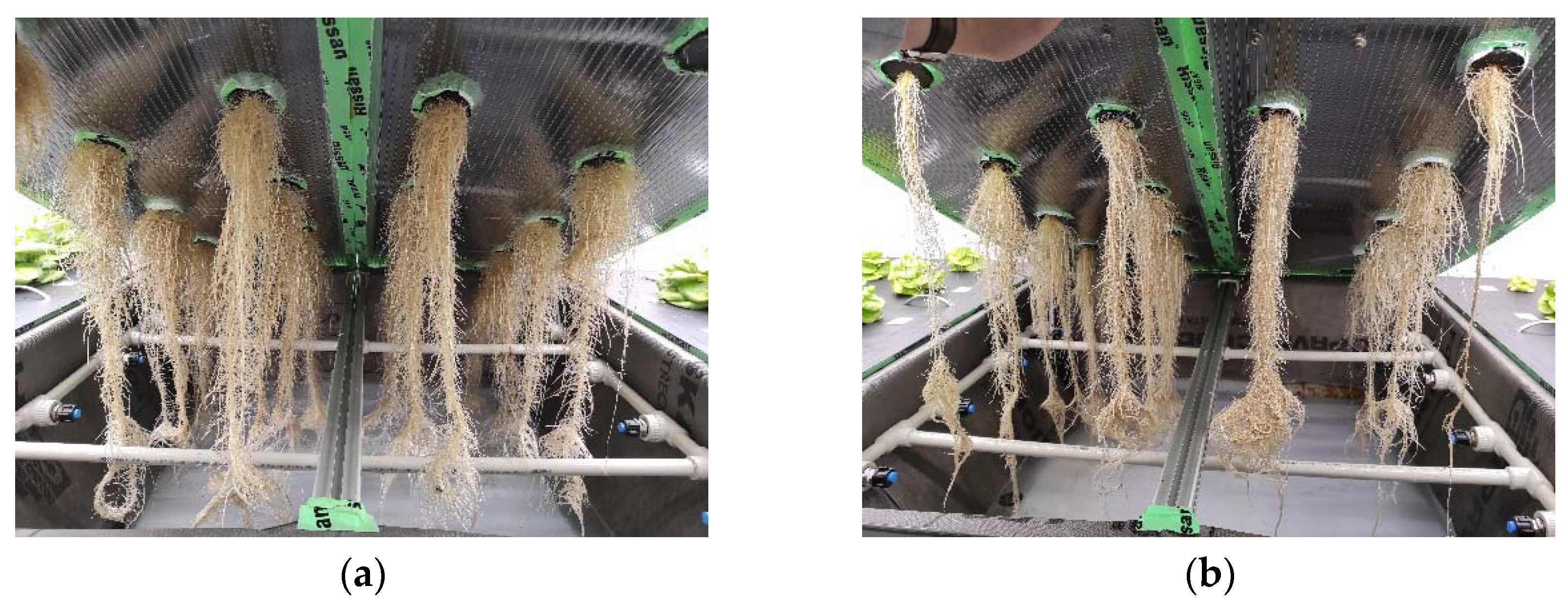
Figure 2.
Increase in leaf area over weeks in the: (a) Hydroponic nutrient solution system and (b) Aquaponic nutrient solution system; 1 = start of the experiment,2 = 1st week, 3 = 2nd week, 4 = 3rd week, 5 = 4th week, 6 = 5th week
Figure 2.
Increase in leaf area over weeks in the: (a) Hydroponic nutrient solution system and (b) Aquaponic nutrient solution system; 1 = start of the experiment,2 = 1st week, 3 = 2nd week, 4 = 3rd week, 5 = 4th week, 6 = 5th week
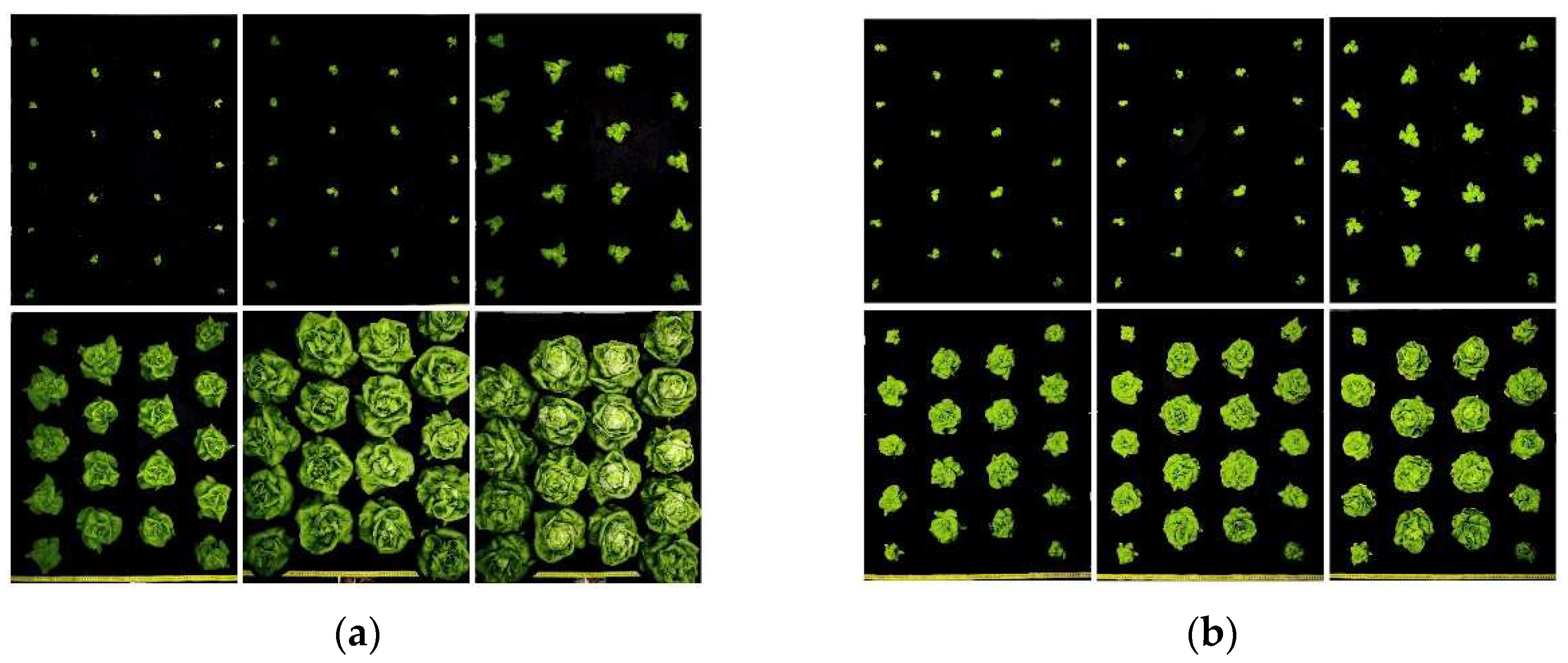

Table 1.
Definition and scale of attributes used in the lettuce sensory analysis
| Attribute | Definition | Scale |
|---|---|---|
| Sample acceptability | An individual's appraisal of the sample's appearance | 0 = unacceptable |
| 100 = fully acceptable | ||
| Edge browning | Extent of browning observed on the leaf edges | 0 = no browning |
| 100 = extensive browning | ||
| Freshness | Perception of vibrancy and brightness, indicative of vitality | 0 = withered |
| 100 = fresh | ||
| Fragrance intensity | Strength of aroma following gentle leaf rubbing and sniffing | 0 = no fragrance |
| 100 = highly franrant | ||
| Crispiness | Degree of crunch experienced during the initial bite | 0 = not crispy |
| 100 = highly crispy | ||
| Taste intensity | Perception of flavor strength after five chewing actions | 0 = tasteless |
| 100 = distinctive taste | ||
| Taste acceptability | Pleasantness of flavor after ten chewing actions | 0 = unpleasant taste |
| 100 = highly pleasant taste | ||
| Bitterness | Detection of bitter, sharp, or pungent taste after ten chews | 0 = no bitterness |
| 100 = highly bitter | ||
| Overall acceptability | Subjective appraisal of the sample's overall acceptability | 0 = unacceptable |
| 100 = fully acceptable |
Table 2.
Growth parameters (mean ± SD) of Lactuca sativa L. in HS and AS; different letters represent significant differences between the groups (p < 0.05, n = 42 for Head fresh weight, Root fresh weight, Root–to–shoot ratio; n = 9 for Head dry matter content and Number of leaves)
Table 2.
Growth parameters (mean ± SD) of Lactuca sativa L. in HS and AS; different letters represent significant differences between the groups (p < 0.05, n = 42 for Head fresh weight, Root fresh weight, Root–to–shoot ratio; n = 9 for Head dry matter content and Number of leaves)
| Lettuce growth parameters | Hydroponic system | Aquaponic system |
|---|---|---|
| Head fresh weight (g) | 215 ± 46.9a,1 | 36.5 ± 16.3b |
| Head dry matter content (%) | 5.49 ± 0.46b | 8.65 ± 0.80a |
| Root fresh weight (g) | 33.2 ± 8.59a | 24.7 ± 10.3b |
| Root–to–shoot ratio | 0.16 ± 0.03b | 0.71 ± 0.16a |
| Number of leaves | 49 ± 5.23a | 27 ± 8.14b |
| Water consumption (L ∙ kg–1) | 28.9 | 15.0 |
1 Means with different letters are statistically different, in that the mean with the lower alphabetical order letter (e.g., a > b) has a mean statistically greater than the mean it is compared to.
Table 3.
Leaf area in cm2 (mean ± SD); different letters represent significant differences between the groups (p < 0.05, n = 42)
Table 3.
Leaf area in cm2 (mean ± SD); different letters represent significant differences between the groups (p < 0.05, n = 42)
| Hydroponic system cm2 |
Aquaponic system cm2 |
|
|---|---|---|
| 1st week | 7.53 ± 1.73a,1 | 6.93 ± 1.76a |
| 2nd week | 30.5 ± 5.77a | 26.5 ± 6.51a |
| 3rd week | 153 ± 27.6a | 91.4 ± 26.9b |
| 4th week | 308 ± 45.8a | 119 ± 35.6b |
| 5th week | 369 ± 55.7a | 137 ± 40.5b |
1 Means with different letters are statistically different, in that the mean with the lower alphabetical order letter (e.g., a > b) has a mean statistically greater than the mean it is compared to.
Table 4.
Anions and cations of hydroponic and aquaponic nutrient solutions (mean ± SD); different letters represent significant differences between the groups (p < 0.05, n = 6)
Table 4.
Anions and cations of hydroponic and aquaponic nutrient solutions (mean ± SD); different letters represent significant differences between the groups (p < 0.05, n = 6)
| Hydroponic system mg ∙ L–1 |
Aquaponic system mg ∙ L–1 |
|
|---|---|---|
| F– | 0.05 ± 0.01a,1 | 0.06 ± 0.12a |
| Cl– | 20.9 ± 0.29b | 136 ± 5.22a |
| NO2– | 0.19 ± 0.21b | 0.34 ± 0.36a |
| NO3– | 541 ± 6.44a | 37.1 ± 34.6b |
| NH4+ | 44.8 ± 1.23a | 3.48 ± 2.29b |
1 Means with different letters are statistically different, in that the mean with the lower alphabetical order letter (e.g., a > b) has a mean statistically greater than the mean it is compared to.
Table 5.
ICP-OES of hydroponic and aquaponic nutrient solutions (mean ± SD); different letters represent significant differences between the groups (p < 0.05, n = 6)
Table 5.
ICP-OES of hydroponic and aquaponic nutrient solutions (mean ± SD); different letters represent significant differences between the groups (p < 0.05, n = 6)
| Hydroponic system mg ∙ L–1 |
Aquaponic system mg ∙ L–1 |
|
|---|---|---|
| B | 0.22 ± 0.01a,1 | 0.17 ± 0.03a |
| Ca | 76.5 ± 1.46a | 69.7 ± 3.24a |
| Cu | 0.23 ± 0.02a | 0.07 ± 0.01b |
| Fe | 1.94 ± 0.09 | – |
| K | 148 ± 3.58a | 29.6 ± 3.58b |
| Mg | 26.7 ± 1.39b | 36.4 ± 1.23a |
| Mn | 1.35 ± 0.01a | 0.02 ± 0.01b |
| Na | 6.69 ± 0.02b | 83.8 ± 3.99a |
| P | 32.2 ± 1.09a | 14.3 ± 1.48b |
| S | 38.8 ± 1.12b | 63.7 ± 3.05a |
| Si | – | 2.36 ± 0.32 |
| Zn | 0.33 ± 0.01 | – |
1 Means with different letters are statistically different, in that the mean with the lower alphabetical order letter (e.g., a > b) has a mean statistically greater than the mean it is compared to.
Table 6.
Total flavonoid and phenol content in dry weight (DW) and fresh weight (FW) in lettuce leaves (mean ± SD); different letters represent significant differences between the groups (p < 0.05, n = 9)
Table 6.
Total flavonoid and phenol content in dry weight (DW) and fresh weight (FW) in lettuce leaves (mean ± SD); different letters represent significant differences between the groups (p < 0.05, n = 9)
| Hydroponic system DW mg ∙ g–1 |
Aquaponic system DW mg ∙ g–1 |
Hydroponic system FW mg ∙ 100g–1 |
Aquaponic system FW mg ∙ 100g–1 |
|
|---|---|---|---|---|
| Flavonoid content1 | 8.84 ± 1.65b,2 | 16.8 ± 2.32a | 48.6 ± 10.5b | 140 ± 30.5a |
| Phenol content | 11.1 ± 2.2b | 24.9 ± 5.07a | 60.6 ± 13.9b | 209 ± 59.9a |
1 Flavonoid content is expressed in mg RE ∙ g–1 DW (milligrams of Rutin equivalent per gram of dry lettuce weight) and mg RE ∙ 100 g–1 FW (milligrams of Rutin equivalent per 100 grams of fresh weight), total phenol content is expressed in mg GA ∙ g–1 DW (milligrams of gallic acid equivalents per gram of dry weight) and mg GA ∙ 100 g–1 FW (milligrams of gallic acid equivalents per 100 grams of fresh weight). 2 Means with different letters are statistically different, in that the mean with the lower alphabetical order letter (e.g., a > b) has a mean statistically greater than the mean it is compared to.
Table 7.
DPPH in dry weight (DW) and fresh weight (FW) in lettuce leaves (mean ± SD); different letters represent significant differences between the groups (p < 0.05, n = 9)
Table 7.
DPPH in dry weight (DW) and fresh weight (FW) in lettuce leaves (mean ± SD); different letters represent significant differences between the groups (p < 0.05, n = 9)
| Hydroponic system DW |
Aquaponic system DW |
Hydroponic system FW |
Aquaponic system FW |
|
|---|---|---|---|---|
| μg ∙ mL–1 | μg ∙ mL–1 | mg ∙ mL–1 | mg ∙ mL–1 | |
| IC50 DPPH | 638 ± 76.36a,1 | 271 ± 58.8b | 11.7 ± 1.6a | 3.3 ± 1.0b |
1 Means with different letters are statistically different, in that the mean with the lower alphabetical order letter (e.g., a > b) has a mean statistically greater than the mean it is compared to.
Table 8.
ORAC in dry weight (DW) and fresh weight (FW) in lettuce leaves (mean ± SD); different letters represent significant differences between the groups (p < 0.05, n = 9)
Table 8.
ORAC in dry weight (DW) and fresh weight (FW) in lettuce leaves (mean ± SD); different letters represent significant differences between the groups (p < 0.05, n = 9)
| Hydroponic system DW μM TE ∙ g–1 |
Aquaponic system DW μM TE ∙ g–1 |
Hydroponic system FW μM TE ∙ 100g–1 |
Aquaponic system FW μM TE ∙ 100g–1 |
|
|---|---|---|---|---|
| ORAC | 221 ± 36.6b,1 | 572 ± 126.96a | 1219 ± 247b | 4793 ± 1382a |
1 Means with different letters are statistically different, in that the mean with the lower alphabetical order letter (e.g., a > b) has a mean statistically greater than the mean it is compared to.
Table 9.
Vitamin C and B2 content in dry weight (DW) and fresh weight (FW) in lettuce leaves (mean ± SD); different letters represent significant differences between the groups (p < 0.05, n = 9)
Table 9.
Vitamin C and B2 content in dry weight (DW) and fresh weight (FW) in lettuce leaves (mean ± SD); different letters represent significant differences between the groups (p < 0.05, n = 9)
| Hydroponic system DW mg ∙ g–1 |
Aquaponic system DW mg ∙ g–1 |
Hydroponic system FW mg ∙ 100g–1 |
Aquaponic system FW mg ∙ 100g–1 |
|
|---|---|---|---|---|
| Vit C | 1.96 ± 0.41a,1 | 1.67 ± 0.49a | 11.1 ± 2.4a | 13.9 ± 4.6a |
| Vit B2 | 15.5 ± 4.92b | 6.33 ± 1.79a | 86.5 ± 30.2b | 51.7 ± 13.7a |
1 Means with different letters are statistically different, in that the mean with the lower alphabetical order letter (e.g., a > b) has a mean statistically greater than the mean it is compared to.
Table 10.
Macroelement concentrations in lettuce leaves (mean ± SD) in dry weight; different letters represent significant differences between the groups (p < 0.05, n = 9)
Table 10.
Macroelement concentrations in lettuce leaves (mean ± SD) in dry weight; different letters represent significant differences between the groups (p < 0.05, n = 9)
| Hydroponic system DW mg ∙ g–1 |
Aquaponic system DW mg ∙ g–1 |
|
|---|---|---|
| Ca | 10.7 ± 1.07a,1 | 12.4 ± 1.47a |
| K | 37.4 ± 7.44a | 20.6 ± 1.27b |
| Mg | 3.78 ± 0.42b | 5.36 ± 0.55a |
| Na | 0.46 ± 0.28b | 6.67 ± 0.7a |
| P | 7.67 ± 0.72a | 4.48 ± 0.64b |
| S | 2.38 ± 0.15a | 1.71 ± 0.24b |
1 Means with different letters are statistically different, in that the mean with the lower alphabetical order letter (e.g., a > b) has a mean statistically greater than the mean it is compared to.
Table 11.
Microelement concentration in lettuce leaves (mean ± SD) in dry weight; different letters represent significant differences between the groups (p < 0.05, n = 9)
Table 11.
Microelement concentration in lettuce leaves (mean ± SD) in dry weight; different letters represent significant differences between the groups (p < 0.05, n = 9)
| Hydroponic system DW μg ∙ g–1 |
Aquaponic system DW μg ∙ g–1 |
|
|---|---|---|
| Al | 6.47 ± 3.75b,1 | 9.79 ± 2.75a |
| B | 24.4 ± 2.35a | 28.4 ± 3.73a |
| Co | 0.19 ± 0.14a | 0.18 ± 0.12a |
| Cr | 6.32 ± 0.52a | 6.7 ± 1.12a |
| Cu | 13.6 ± 1.24a | 4.18 ± 0.68b |
| Fe | 63.7 ± 8.09a | 24.9 ± 4.1b |
| Mn | 232 ± 23.6a | 35.5 ± 4.25b |
| Ni | 7.73 ± 0.39a | 6.24 ± 0.63b |
| Se | 8.49 ± 7.66a | 8.98 ± 6.56a |
| Si | 28.4 ± 9.85b | 89.3 ± 17.9a |
| Zn | 216 ± 49.3a | 13.8 ± 11.1b |
1 Means with different letters are statistically different, in that the mean with the lower alphabetical order letter (e.g., a > b) has a mean statistically greater than the mean it is compared to.
Table 11.
Anions and Organic Acids (mean ± SD) in dry weight; different letters represent significant differences between the groups (p < 0.05, n = 4)
Table 11.
Anions and Organic Acids (mean ± SD) in dry weight; different letters represent significant differences between the groups (p < 0.05, n = 4)
| Hydroponic system DW mg ∙ kg–1 |
Aquaponic system DW mg ∙ kg–1 |
|
|---|---|---|
| F– | 270 ± 128a,1 | 227 ± 52.2a |
| Cl– | 1680 ± 637b | 5978 ± 1129a |
| NO3– | 9569 ± 3055a | 74.5 ± 94.7b |
| SO42– | 815 ± 107b | 1172 ± 150a |
| PO43– | 8203 ± 3368a | 4641 ± 859b |
| Quinate | 198 ± 26.9a | 251 ± 207a |
| Lactate | 356 ± 101a | 259 ± 82.5a |
| Acetate | 311 ± 73.7a | 248 ± 76.9a |
| Propionate | 380 ± 155 | – |
| Formate | 145 ± 50.1 | – |
| Malate | 41376 ± 6052a | 43473 ± 6409a |
| Tartrate | 4278 ± 365b | 5188 ± 660a |
| Oxalate | 154 ± 34.5a | 182 ± 61.9a |
| Citrate | 4575 ± 1448b | 8925 ± 809a |
| Isocitrate | – | 26.4 ± 1.91 |
1 Means with different letters are statistically different, in that the mean with the lower alphabetical order letter (e.g., a > b) has a mean statistically greater than the mean it is compared to.
Table 12.
Sensory evaluation of lettuce
| Descriptor | LSM Hydroponic system |
LSM Aquaponic system |
SEM | P-value |
|---|---|---|---|---|
| Acceptability of appearance | 83.9 | 65.9 | 6.67 | 0.077 |
| Browning of edges | 20.5 | 31.3 | 7.64 | 0.343 |
| Freshness | 88.6 | 88.7 | 4.54 | 0.983 |
| Fragnance intensity | 57.8 | 45.6 | 6.29 | 0.204 |
| Crispiness | 63.2 | 56.8 | 6.22 | 0.485 |
| Intensity of taste | 51.4 | 51.9 | 6.42 | 0.954 |
| Acceptability of taste | 83.9 | 75.4 | 4.22 | 0.053 |
| Bitterness | 20.6 | 32 | 7.49 | 0.029 |
| Overall sample acceptability | 84.4 | 66.3 | 6.05 | 0.041 |
Disclaimer/Publisher’s Note: The statements, opinions and data contained in all publications are solely those of the individual author(s) and contributor(s) and not of MDPI and/or the editor(s). MDPI and/or the editor(s) disclaim responsibility for any injury to people or property resulting from any ideas, methods, instructions or products referred to in the content. |
© 2023 by the authors. Licensee MDPI, Basel, Switzerland. This article is an open access article distributed under the terms and conditions of the Creative Commons Attribution (CC BY) license (http://creativecommons.org/licenses/by/4.0/).
Copyright: This open access article is published under a Creative Commons CC BY 4.0 license, which permit the free download, distribution, and reuse, provided that the author and preprint are cited in any reuse.


