

Submitted:
23 December 2025
Posted:
24 December 2025
You are already at the latest version
Abstract
As a member state of ASEAN and the UN, Cambodia has adopted and implemented both regional and global urban agendas, resulting in various national urban initiatives, such as clean, green, sustainable, and smart cities. These different national initiatives confused urban researchers and stakeholders in Cambodia, including implementing agencies at the provincial and district levels. Hence, this paper explored this issue by addressing the questions: how has Cambodia defined sustainable urban development, and how have regional and global urban agendas influenced local implementations of sustainable urban planning, development, and management? For its analysis, this paper obtained data on clean, green, sustainable, and smart cities from the ministries of tourism, environment, urban planning, and interior, respectively. The findings revealed that Cambodia has defined sustainable urban development differently from time to time, as influenced by regional and global agendas. The following are the influential agendas from time to time: ASEAN ESC resulted in a clean city contest in 2012; GGGI Urban Green Growth resulted in a green city program in 2014; UN SDG11 resulted in a sustainable city framework in 2016; and ASEAN SCN resulted in a smart city network in 2018. Even though these different initiatives provided some benefits and opportunities for different sectors, this paper suggests consolidating them into one framework to reduce confusion at local implementations and linking their similar goals with budget plans or joint funding to improve efficiency and effectiveness.
Keywords:
Cambodia sustainable urban development
; clean city
; green city
; sustainable city
; smart city
; ASEAN
; green economy
; green growth
; sustainable development
; sustainable development goals
1. Introduction
Cambodia has been implementing various urban development initiatives towards sustainability. Those include clean city (CC) contest, green city (GC) program, sustainable city (SC) strategy and plan, and smart city-ASEAN (SCA) plan and roadmap. Firstly, the clean city (CC) contest has been implemented by the Ministry of Tourism and the National Committee for Clean City Assessment (NCCCA) [1]. Secondly, the green city (GC) program has been implemented by the Ministry of Environment and the National Council for Green Growth [2]. Thirdly, the sustainable city (SC) strategy and plans have been implemented by the Ministry of Environment and the National Council for Sustainable Development, former National Council for Green Growth [3]. Last but not least, the smart city-ASEAN (SCA) plan and sub-national roadmap have been implemented by the Ministry of Land Management, Urban Planning, and Construction [4] and the Ministry of Interior [5].
How the country, through its relevant ministries and sub-national administrations, has defined sustainable urban development is in between and through these urban initiatives, clean, green, sustainable, and smart. These initiatives have been influenced or guided by the regional and global urban development agendas as well. This is because Cambodia is a member state of ASEAN (regional) and of the United Nations (global). First of all, the ASEAN Initiative on Environmentally Sustainable Cities (clean air, clean land, and clean water) [6] has influenced/inspired clean city contest and development movements while the ASEAN Smart City Network [7] has influenced/ inspired the smart city development plan and roadmap for sub-national administrations in Cambodia. Furthermore, urban green growth initiatives [8] of the treaty-based international, intergovernmental green growth organization, namely GGGI, has inspired/supported the green city development program in Cambodia while the global sustainable development goals (SDGs), particularly the SDG 11 (sustainable cities) [9] have motivated/influenced Cambodia’s sustainable city plan and strategy development.
This article will present how Cambodia has defined sustainable urban development based on these country-wise clean, green, sustainable, and smart city developments. How the regional and global urban agendas (ASEAN ESC/SCN, Urban Green Growth, and SDG 11) have influenced, motivated, and/or supported local practices will be demonstrated as well. Furthermore, this article will also demonstrate the background of above urban development initiatives and their practices/ implementations in Cambodia to avoid further confusions or misinterpretations of future urban research in Cambodia. This article will use an example of Bertrais and Beckwith (2024) [10] to show how researchers in the fields could get confused about this green and sustainable urban development in Cambodia. This article will also use the author’s case study of interviews with sub-national administration’s city officials and smile village community to provide recommendations to consolidate sustainable urban framework in Cambodia and to address the rapidly growing migrations from the countrysides to the city.
2. ASEAN Environmentally Sustainable Cities and Cambodia Clean City Contest
Cambodia is one of the eleven member states of the Association of South-East Asian Nations, commonly known as ASEAN. In 2005, the ASEAN Environment Ministers, in order to pursue environmental sustainability in their rapidly-growing cities, endorsed the ASEAN Initiative on Environmentally Sustainable Cities [11]. This initiative assists ASEAN cities and supports regional activities based on the Environmentally Sustainable Cities (ESC) Key Indicators for clean air, clean land, and clean water. The ESC Awards and Certificates of Recognition on Clean Air, Clean Water, and Clean Land, were initiated to recognize the efforts and identify best practices in cities towards environmental sustainability [6].
Furthermore, the First High-Level Seminar on Environmentally Sustainable Cities (ESC) was organized in 2010. This meeting has been organized annually from that year to promote information exchange and foster concrete collaborative actions, as well as showcase policies, legal frameworks, and practical projects on ESC for the consideration of Environment Ministers. In order to improve urban environmental sustainability, Cambodia has nationally adapted this initiative. Cambodia established a National Committee for Clean City Assessment in 2011 and the Clean City Standard and Awards in 2012. This standard’s criteria and indicators have been used to assess Cambodian cities through a Clean City Contest every three years.
The purposes of this contest are to (a) improve livelihood and living environments in cities; (b) improve images of all cities in Cambodia; (c) promote green services in cities; (d) protect and promote urban environments; (e) strengthen and develop urban economies; and (f) promote social equity in cities, especially poverty reduction through tourism: expanding the flow of tourists to all regions in Cambodia [12]. The First Clean City Contest was organized in 2015, and 35 cities and capital khans were awarded whereas the Second Clean City Contest was organized in 2018, and 38 cities and capital khans were awarded [13]. Figure 1 shows the ASEAN Environmentally Sustainable Cities (ESC) and Cambodia Clean Cities (CC) Awards and Certificates of two Cambodian cities: Kep (A) and Preah Sihanouk (B).
The city winners under the Cambodia Clean City Contests have been awarded by the Prime Minister of Cambodia in the following three names [14]:
- ‘Clean City Award’ with Three Romduol Flowers for the city obtained the score at least 75% of the total score.
- ‘Clean City Award’ with Two Romduol Flowers for the city obtained the score at least 60% of the total score.
- ‘Clean City Award’ with One Romduol Flower for the city obtained the score at least 40% of the total score.
As shown in Table 1 below, Cambodia developed a Clean City Standard with identified criteria/ indicator assessment framework and classified into eight categories as follows: (1) environmental management, (2) cleanliness, (3) waste management, (4) raising awareness on environmental protection and cleanliness, (5) green public spaces, (6) urban safety and security, and (7) tourism facilities/ infrastructures. The National Committee for Clean City Assessment (NCCCA) through its Secretariat uses this standard’s criteria/indicators to assess Cambodian cities (capital khans/districts and provincial municipalities) through a national clean city contest every three years [15].
Overall, this clean city assessment framework of Cambodia focuses on tourism-related objectives since it is developed by the Ministry of Tourism. In term of green and sustainable definitions, this framework needs to be expanded to include at least the following criteria/ indicators: demographic structure, unemployment rate, affordable housing, public transport, potable water supply, and renewable energy, which are among the important indicators indicated in the Sustainable Development Goal 11 (SDG 11). These indicators were also found to be very important for sustainable urban development and management in Asian countries like South Korea [16] and Cambodia [11]. Thus, using this clean city criteria/indicator assessment framework could not be achieved sustainable urban development. In this regard, Cambodia has further expanded its urban agendas to the so-called green city development program.
3. GGGI Urban Green Growth and Cambodia Green Urban Development Program
Cambodia co-founded the GGGI, a treaty-based international, inter-governmental green growth organization, in June 2012 with representatives from 15 other countries at the Rio+20 Earth Summit in Brazil [17]. Cambodia also established the National Council for Green Growth (NCGG) on 10 October 2012 to improve economic development based on green growth principles, public health, environmental quality, livelihood, and cultural identity preservation based on four key pillars of economy, environment, society, and culture [18]. The NCGG had the Prime Minister as its Honorable Chair and the Minister of Environment as its Chair, with Members from 26 ministries, including 5 relevant inter-ministerial committees. All Governors of the Capital and Provincial Administrations were also the Members of the NCGG. According to the Royal Decree on the organization and functioning of the NCGG, this Council shall have a General Secretariat, known as GSGG, for its daily operation, and this Secretariat shall be housed at the Ministry of Environment. The Secretariat was led by a Secretary-General and assisted by some Deputy Secretary-Generals (at least one) [19].
In 2014, the meeting between GGGI and GSGG had discussed the priority areas for the GGGI Country Framework in Cambodia, and based on GGGI Urban Green Growth priorities, green city development was set to be one of the priorities. Later, the GGGI green urban development program in Cambodia had been discussed and prioritized key sectors through various consultation workshops. The following is one of consultation workshops that was organized from 6th to 7th August 2015 in Kep city (see Figure 2).
Therefore, Cambodia green urban development program (GUDP) had been approved and implemented by the Royal Government of Cambodia (RGC) through the Ministry of Environment and NCGG (currently NCSD) and GGGI. This program aimed to transform Cambodia’s cities into engines of green growth and provide solutions to urban challenges. RGC and GGGI have agreed to develop a pilot green city strategy [8].
As a result, “Green City Strategic Planning Methodology: A Guide to Develop a Green City Strategic Plan” was developed to give a step-by-step guide for Cambodia’s municipalities, district and commune officials, as well as national line ministries, seeking to embark on the process of transforming Cambodia’s cities towards greater sustainability and green growth [21]. Table 2 below is a list of the green growth objectives for key urban sectors to be adapted and better defined by a green city planning based on the specific challenges of each urban location.
Overall, this green city framework of Cambodia focuses on low-carbon development in alignment with the urban green growth principles of the GGGI, inter-governmental green growth organization. Therefore, it has little focused on urban biodiversity, forestry, and gardening as viewed by some other green city researchers. This framework covers low-carbon development agendas, such clean and renewable energy, sustainable (public) transport, built environment (green building design and construction), green and sustainable manufacturing (sustainable consumption and production) and solid waste management based on circularity or 3R principle (reduce, reuse, and recycle). This green city concept of Cambodia has been integrated to Sustainable City Plan for Phnom Penh 2018–2030 [22] and Sustainable City Strategic Plan for Seven Secondary Cities 2020–2030 [23]. Importantly, this concept has been included in the Code on Environment and Natural Resources, especially Article 114 [24] claims that the ministries responsible for urban planning and environment, in collaboration with relevant ministries or institutions and sub-national administrations, shall develop sustainable city mechanisms by (i) defining urban vulnerability and (i) developing:
- -
- Sustainable urban transport plan
- -
- Urban sustainability plan
- -
- Sustainable urban production plan
- -
- Urban solid and liquid waste management plan
- -
- Public green space and cultural heritage plan
- -
- Green building plan
- -
- Urban watershed and ecosystem plan for water sources and urban biodiversity.
In this new code, urban sustainability plan and urban watershed and ecosystem plan for water sources and urban biodiversity were added to further achieve biodiversity and ecosystem services in the city. This will further achieve another dimension of green city development in Cambodia, particularly in Phnom Penh, as also discussed by urban researchers [10]. The code also indicates that the sub-national administrations (capital and provincial city authorities) may modify the sustainable city action plan referring to actual context of their city and urban changes in economic, environmental, demographic, and social development, by getting approval from the ministry responsible for urban planning.
4. UN Sustainable Cities and Communities and Cambodia Sustainable Cities
In 2015, the United Nations launched the 2030 Agenda for Sustainable Development [25] and defined 17 SDGs (Sustainable Development Goals) and 169 Targets, particularly SDG 11 aims to make cities and human settlements inclusive, safe, resilient, and sustainable, known as “sustainable cities and communities” [26]. This SDG 11 (sustainable cities and communities) framework with its identified targets and indicators are shown in Table 3.
As a Member State of the United Nations and the responsibility to contribute to the development and protection of the earth, Cambodia adapted the UN SDGs and localized them into Cambodia SDGs (CSDGs). The Ministry of Planning was delegated by the government to lead and facilitate the SDGs localization into the Cambodian context [27]. In November 2015, this ministry started a meeting to introduce and review the list of global SDGs indicators. From June to October 2016, this ministry conducted interministerial meetings to select indicators and define indicators’ definition, as well as a method to calculate the value of indicators. In May and September 2017, this ministry further conducted interministerial meetings to discuss the draft of the CSDGs framework [28]. As a result, the government approved the CSDGs framework with identified 18 goals, 88 targets, and 148 indicators. The CSDG 11 has been named “Sustainable Cities” while the responsibility to achieve the targets and indicators is under the Ministry of Environment [29].
The most striking difference of CSDGs framework from the global SDGs framework is the adoption of an additional CSDG 18 “demining and explosive remnants of war (ERW)”. There are important changes to the targets and indicators as well. Some 148 indicators are adopted, compared to the 232 specified globally. Figure 3 below summarizes the changes at the aggregate level. While there is a major reduction and there are variations between goals, sufficient indicators have been identified within each CSDG (and within each target). Also, relative to the global goals, a materially greater number of indicators have been adopted within CSDGs 2 (hunger), 3 (health), 4 (education), and 5 (gender).
In alignment with the United Nations 2030 Agenda for Sustainable Development, Cambodia also established a National Council for Sustainable Development (NCSD) in May 2015 by consolidating relevant inter-ministerial bodies, such as the NCGG and its General Secretariat, the Climate Change National Committee and its Secretariat, Biodiversity National Steering Committee and its Secretariat, and Biosafety National Committee and its Secretariat. This council is a policy-making body with a mission to promote sustainable development and ensure the environmental, economic, and sociocultural balance within the country [30]. According to the Royal Decree on the Establishment of NCSD, the Council has Prime Minister as the Honorable Chair and the Minister of Environment as the Chair (see Figure 4).
A total of 29 ministries (all the government’s ministries) are its members, while other members come from relevant inter-ministerial councils and committees and sub-national administrations. All governors of capital and provincial administrations are also the members. The royal decree also indicated that the NCSD should have a General Secretariat for its daily operation. This General Secretariat should be housed at the Ministry of Environment. As determined by the above royal decree, the General Secretariat is led by a Secretary-General. According to the sub-decree on the organization and functioning of the General Secretariat of the NCSD, this Secretariat has five supporting and technical departments as follows [31]:
- -
- Department of Administration, Planning, and Finance;
- -
- Department of Climate Change;
- -
- Department of Green Economy;
- -
- Department of Science and Technology; and
- -
- Department of Biodiversity.
Based on this global sustainable development agenda, not only National Council for Green Growth (NCGG) has advanced to National Council for Sustainable Development (NCSD), but also draft green city strategies and plans [32] for capital and emerging secondary cities have updated to the Sustainable City Plan for Phnom Penh 2018–2030 [22] and Sustainable City Strategic Plan for Seven Secondary Cities 2020–2030 [23] (see Figure 5).
As shown in above figure, the following have been advanced and upgraded:
- -
- The National Council for Green Growth (NCGG) has upgraded to the National Council for Sustainable Development (NCSD) while the NCGG’s Secretariate (GSGG) has also upgraded to the NCSD’s Secretariate (GSSD).
- -
- The Green City Strategic Planning Methodology first developed under the management of GSGG (Figure 5a) to develop a green city strategic plan for the capital has been used to develop a sustainable city strategic plan under the management of GSSD.
- -
- -
- The Green City Strategic Planning Methodology has been used to develop a Sustainable City Strategic Plan 2020–2030 for Seven Secondary Cities (Figure 5d): Coastal Region (Preah Sihanouk and Kep cities), Plain Region (Kampong Cham, Suong, and Bavet cities), and Tonle Sap Lake Region (Siem Reap and Battambang cities). As mentioned in Section 3, this methodology has been included in the Code on Environment and Natural Resources to indicate the development of sustainable city (SC) mechanisms and action plans at the sub-national administrations.
5. ASEAN Smart Cities Network and Cambodia Smart City Plan and Roadmap
The ASEAN Smart Cities Network (ASCN) was established by the ASEAN Leaders at the 32nd ASEAN Summit on 28 April 2018 in Singapore. The ASCN is a collaborative platform where cities from ASEAN countries work towards the common goal of smart and sustainable urban development.
The ASEAN Smart Cities Framework was also adopted by the ASEAN Leaders in 2018 to serve as a guide to facilitate smart city development in each ASCN city and articulates the key features of ASEAN’s smart cities by (i) identifying strategic outcomes and (ii) outlining key urban systems, six focus areas, and enablers as well as seeks to complement existing national development plans or help to build new ones. And in the light of opportunities and challenges posed by rapid urbanization and digitalization, the ASCN’s primary goal is to improve the lives of ASEAN citizens using technology as an enabler [34]. As shown in Figure 6, the ASCN started with 26 pilot cities as follows:
- -
- Brunei Darussalam: Bandar Seri Begawan
- -
- Cambodia: Battambang, Phnom Penh, and Siem Reap
- -
- Indonesia: Makassar, Banyuwangi, and DKI Jakarta
- -
- Lao PDR: Luang Prabang and Vientiane
- -
- Malaysia: Johor Bahru, Kuala Lumpur, Kota Kinabalu, and Kuching
- -
- Myanmar: Nay Pyi Taw, Mandalay, and Yangon
- -
- Philippines: Cebu, Davao, and Manila
- -
- Singapore: Singapore
- -
- Thailand: Bangkok, Chonburi, and Phuket
- -
- Viet Nam: Da Nang, Hanoi, and Ho Chi Minh.
The pilot ASCN cities participated actively in the Smart Cities Governance Workshop, which took place in Singapore from 22 to 25 May 2018. The development of Smart City Action Plans (SCAPs) and priority projects specific to each of the cities were the key outcomes [35]. Each action plan consists of the following four components:
- -
- Vision: The city’s overall vision for smart city development by 2025;
- -
- Focus Areas: The areas the city has chosen, out of six broad categories listed in the ASEAN Smart Cities Framework, to focus on for its smart city development;
- -
- Strategic Targets: The specific, measurable, action-oriented, realistic, and time-bound targets which the city has set for itself within its chosen focus areas; and
- -
- Priority Projects: An overview of the two priority projects identified by the respective city.
The Cambodian Smart City Plan and Activity (national level) are administered by the Ministry of Land Management, Urban Planning, and Construction (MLMUPC) [36]. The following is a list of visions, focus areas, strategic targets, and priority projects of the Cambodian cities, Battambang, Phnom Penh, and Siem Reap (see Table 4).
Under this smart city-ASEAN (SCA) development agenda, Phnom Penh, Siem Reap, and Battambang have prepared their strategic documents as follows:
- -
- Phnom Penh has developed a strategic road map on smart and sustainable cities which focuses on five goals: land use; security and safety; urban mobility; environment; and digital management.
- -
- Siem Reap has developed a smart city road map and prepared a number of projects to implement a smart city strategy in Siem Reap in collaboration with JICA. The Smart pilot project aims to solve urban problems using intelligent systems.
- -
- Battambang has prepared a memorandum of understanding between Battambang and three Japanese consulting firms on the development of smart city in Battambang [37].
The Ministry of Interior through its General Department of Administration (GDA) has also developed a Smart City Development Roadmap for Sub-national Administrations to guide the implementation of the Smart City Initiatives at the sub-national level, based on the Smart City Development Framework that is commonly implemented to develop the vision, concepts, and the framework of smart city development for Cambodia by 2025. The expected results of the implementation of this roadmap include:
- -
- Smart city development policy framework will be developed.
- -
- Institutional capacity building is provided to the General Department of Administration of Ministry of Interior and Capital, Provincial, Municipal and Sangkat Administrations.
- -
- The pilot project of the Smart City Initiatives will be prepared and is being implemented in target sub-national administrations.
- -
- Strategy to mobilize strong financial support to Smart City projects will be developed.
- -
- Best Practices are compiled and disseminated [37].
Furthermore, the Royal Government of Cambodia (RGC) is currently developing the “Cambodia National Smart Cities Roadmap” to set out a new national framework for smart city development in Cambodia between 2024 and 2035. Drawing on national policy settings to shape Cambodia’s economic and social development, the roadmap reflects the principles of the RGC’s decentralization and deconcentration reforms to strengthen the capacity of the sub-national administrations to deliver public services using smart city principles. The roadmap identifies the policy settings and activities required to put in place the enabling framework and capacity to allow smart city development to flourish in Cambodia’s urban areas. It provides direction for future action among Cambodia’s national governmental ministries, development institutions, communities, private sector, academic institutions, and subnational administrators, including Sangkat, district and municipal, and capital and provincial administrations. The roadmap presents the enablers and elements of a consolidated and aligned smart city development framework in Cambodia. This framework provides a basis for engagement and alignment among the government ministries, international institutions and national stakeholders to build consensus and alignment on development principles, priorities, budgets, decision making and alignment in support of national smart city development. This roadmap delivers a consolidated expression of the work required to enable national and subnational administrations to identify and build subnational strategies, initiatives and projects for human centered smart city development in Cambodia’s cities, provinces and municipalities. To ensure successful implementation, the roadmap prioritizes a bottom-up approach that empowers local administrations to identify their specific challenges and opportunities. This approach recognizes that smart city solutions should be tailored to address the most pressing needs of each urban center, fostering citizen engagement and ownership in the development process [38].
6. Discussion and Concluding Remarks
The findings showed that Cambodia has defined sustainable urban development differently from time to time as influenced, inspired, and/or guided by the regional and global urban agendas. The following are the influenced/inspired/guided agendas from time to time: ASEAN ESC resulted in a clean city contest in 2012; GGGI Urban Green Growth Framework resulted in a green city program in 2014; UN SDG11 resulted in a sustainable city strategy framework in 2016; and ASEAN SCN resulted in smart city action plans in 2018 and roadmaps for sub-national administrations in 2023. Further, other urban initiatives were also developed by joint partnerships between the government, development partners, and non-governmental organizations (NGOs). Those include child-friendly cities and communities (UNICEF) which have influenced or inspired the “urban child-friendly communities” initiative in Cambodia [39]. To achieve urban sustainability in practices, Cambodia still faces some challenges, especially in Phnom Penh, due to the rapidly increasing migrations from the countryside to the city. To address these challenges, this paper suggests following the best practice of joint partnerships between relevant government agencies and non-governmental organizations/ development partners. Examples below show child-friendly urban development trend and the initiative to address urban issues resulting from underprivileged families and their migrations from the countryside to the city in Cambodia:
| Smile Village community in Phnom Penh capital, Cambodia |
| Smile Village is a community development initiative started by a three-way partnership of STEP (Solutions To End Poverty), PSE (Pour un Sourire d’Enfant), and HfH (Habitat For Humanity) in 2012 and later included other relevant partners. STEP worked to improve household income, while PSE worked to provide children’s education, including childcare services. These two organizations collaborated with other partners, such as HfH-Cambodia, Grenzone, URBNARC, Billion Bricks, Garden and Landscape Center, and Creative O Preschoolers Bay, as well as volunteers from Singapore (NUS) and Malaysia (MyCorp). This development initiative planned to house 170 families relocated from various provincial slums. With its mission to improve the livelihood of the underprivileged families, this community initiative created three sectoral programs: Environment and Shelter (houses and communal facilities), Livelihood and Enterprise (income and sustainability, including enterprises within Smile Village, facilitating employment, and micro-businesses), and Community and Education (community living and training, including children enrolled in PSE school, childcare, community health, and youth programs). |
Since child population is rapidly growing in cities, UNICEF has developed a “child-friendly cities and communities” framework [40]. Cambodia also developed a “national child-friendly community initiative” with the aim to further improve conducive environments for children where their rights are recognized and supported [41]. Mayor Peñalosa expressed that “children are a kind of indicator species. If we can build a successful city for children, we will have a successful city for all people.” [42] In alignment with these urban child-friendly development trends, many stakeholders in Cambodia have come together to build urban communities focused on children. The Smile Village community in Phnom Penh was one of the initiatives, with a vision is to build a residential community for underprivileged families to achieve social and financial mobility in the Phnom Penh city after moving from various provincial countrysides and slum areas [39].
The collaborative developments by joint roles and responsibilities of two or more NGOs in reducing the slums in the city were found to provide extensive significant results. As shown in the case of Smile Village community, it has provided appropriate resettlement conditions for the slum families, provided them jobs and skills, improved their livelihood/incomes, and living environments. This helped to reduce urban slums and illegal/unplanned settlements, which is the first target of the UN SDG 11: Sustainable Cities and Communities. Currently, there are more than 3000 NGOs in Cambodia [39]. If many more of them could jointly prioritize improving or promoting living conditions of urban slum families like this, it would greatly help to reducing slums and illegal/unplanned settlements in the city and work towards achieving the first target of UN SDG 11. The government should also encourage this kind of collaboration in the development and improvement of urban slum areas.
References
- Ministry of Tourism, Clean City Standard; Ministry of Tourism: Phnom Penh, Cambodia, 2012.
- Ministry of Environment, GGGI Urban Green Growth Framework in Cambodia; Ministry of Environment: Phnom Penh, Cambodia, 2014.
- Ministry of Environment, Sustainable City Strategy and Plan; Ministry of Environment: Phnom Penh, Cambodia, 2016.
- Ministry of Land Management, Urban Planning, and Construction, Smart City Framework 2018 and Action Plans; Ministry of Land Management, Urban Planning, and Construction: Phnom Penh, Cambodia, 2020.
- Ministry of Interior, Smart City Development Roadmap for Sub-national Administrations; Ministry of Interior: Phnom Penh, Cambodia, 2023.
- ASEAN ESC: https://environment.asean.org/environment-sustainable-cities/about (accessed on 28 October 2025).
- ASEAN SCN: https://asean.org/asean-smart-cities-network/ (accessed on 28 October 2025).
- GGGI. Annual Report 2014; GGGI: Seoul, Korea, 2014.
- RGC. UN SDGs Framework in Cambodia 2016-2030; RGC: Phnom Penh, Cambodia, 2016.
- Bertrais, D., & Beckwith, L. (2024). Learning from the Policy and Practice of Green City Development in Phnom Penh, Cambodia. Environment and Urbanization ASIA, 15(1), 10-22. [CrossRef]
- Chan, P.; Lee, M.-H. Developing Sustainable City Indicators for Cambodia through Delphi Processes of Panel Surveys. Sustainability 2019, 11, 3166. [CrossRef]
- Chan, P. Assessing Sustainability of the Capital and Emerging Secondary Cities of Cambodia Based on the 2018 Commune Database. Data 2020, 5, 79. [CrossRef]
- Chan, P. Development and Application of Urban Social Sustainability Index to Assess the Phnom Penh Capital of Cambodia. World 2025, 6, 167. [CrossRef]
- NCCCA. Why Clean City Contest? NCCCA: Phnom Penh, Cambodia, 2012.
- NCCCA. The Action Plan 2011–2014; NCCCA: Phnom Penh, Cambodia, 2011.
- Han, S.M.; Lee, M.H. Indicators for the development and management of sustainable cities: Focusing on UN sustainable development goals. J. Korean R. Dev. Assoc. 2017, 29, 1–24.
- Department of Green Economy: Cambodia Green Economy: Mechanisms and Legal Documents, DGE: Phnom Penh, Cambodia, 2016.
- Ministry of Royal Palace: Royal Decree on the Establishment of the National Council for Green Growth; MRP: Phnom Penh, Cambodia, 2012.
- Chan, P. Cambodian Green Economy Transition: Background, Progress, and SWOT Analysis. World 2024, 5, 413-452. [CrossRef]
- Chan, P. Urban Socioeconomic Changes and Local Industrial Development in Phnom Penh, Cambodia; Hanyang University, Seoul, Korea, 2017.
- NCSD; GGGI. Green City Strategic Planning Methodology: A Guide for the Development of a Green City Strategic Plan; The National Council for Sustainable Development: Phnom Penh, Cambodia, 2016.
- NCSD & GGGI. Phnom Penh Sustainable City Plan 2018–2030; NCSD: Phnom Penh, Cambodia, 2018.
- NCSD & GGGI. Sustainable City Strategic Plan for Seven Secondary Cities 2020-2030; NCSD: Phnom Penh, Cambodia, 2020.
- Ministry of Royal Palace. Code on Environment and Natural Resources; MRP: Phnom Penh, Cambodia, 2023.
- United Nations. Transforming Our World: The 2030 Agenda for Sustainable Development; Resolution adopted by the General Assembly; United Nations: New York, NY, USA, 2015.
- UN-Habitat. SDG Goal 11 Monitoring Framework. A Guide to Assist National and Local Governments to Monitor Report on SDG 11 Indicators. 2016.
- Sovanndy, P. SDG Localization into Cambodian Context: Progress, M&E Framework and Next Step, 2015.
- Ministry of Planning. Progress and Challenges in the Process of Pre-Localization of Global SDG into Cambodian Context; Ministry of Planning―General Directorate of Planning: Phnom Penh, Cambodia, 2017.
- Royal Government of Cambodia. Cambodian Sustainable Development Goals Framework (2016–2030); RGC: Phnom Penh, Cambodia, 2018.
- Ministry of Royal Palace. The Royal Decree on the Establishment of the National Council for Sustainable Development; The Ministry of Royal Palace: Phnom Penh, Cambodia, 2015.
- Royal Government of Cambodia. The Sub-Decree on Organization and Functioning of General Secretariat of the National Council for Sustainable Development; The Office of the Council of Ministers: Phnom Penh, Cambodia, 2015.
- NCSD; GGGI. The Phnom Penh Green City Strategic Plan 2017–2026 and List of Priority Green City Investment Projects for Phnom Penh; The National Council for Sustainable Development: Phnom Penh, Cambodia, 2017.
- Chan, P. Understanding Green Economic Development in Cambodia. Proceedings of the 10th Annual Macroeconomic Conference on “Climate Risks and Green Economy Transition”, Phnom Penh, Cambodia. Vol. 8. 2023.
- ASEAN Smart Cities Network (ASCN): https://asean.org/asean-smart-cities-network/ (accessed on 28 October 2025).
- ASEAN Smart Cities Network (ASCN): Smart City Action Plans (SCAPs); ASEAN: Jakarta, Indonesia, 2018.
- MLIT, ASCN & ASEC. ASEAN Smart City Planning Guidebook; ASEAN: Jakarta, Indonesia, 2022.
- Ministry of Interior, Smart city development roadmap for sub-national administrations; GDA: Phnom Penh, Cambodia, 2023.
- RGC. Draft Cambodian National Smart Cities Roadmap; RGC: Phnom Penh, Cambodia, 2024.
- Chan, P. Child Friendly Cities and Communities: National Policy Framework and Local Practices. Hanyang University, Seoul, Korea, 2018.
- UNICEF. Building Child Friendly Cities: A Framework for Action; UNICEF: NY, USA, 2004.
- CNCC & Plan International. Cambodia Child Friendly Community Initiative; CNCC: Phnom Penh, Cambodia, 2012.
- Freeman, C.; Tranter, P. Children and Their Urban Environment: Changing Worlds; Earthscan LLC: Washington, DC, USA, 2011.
Figure 1.
ASEAN ESC and Cambodia CC Awards for Kep (a) and Preah Sihanouk (b). Source: Photos mixed by authors.
Figure 1.
ASEAN ESC and Cambodia CC Awards for Kep (a) and Preah Sihanouk (b). Source: Photos mixed by authors.
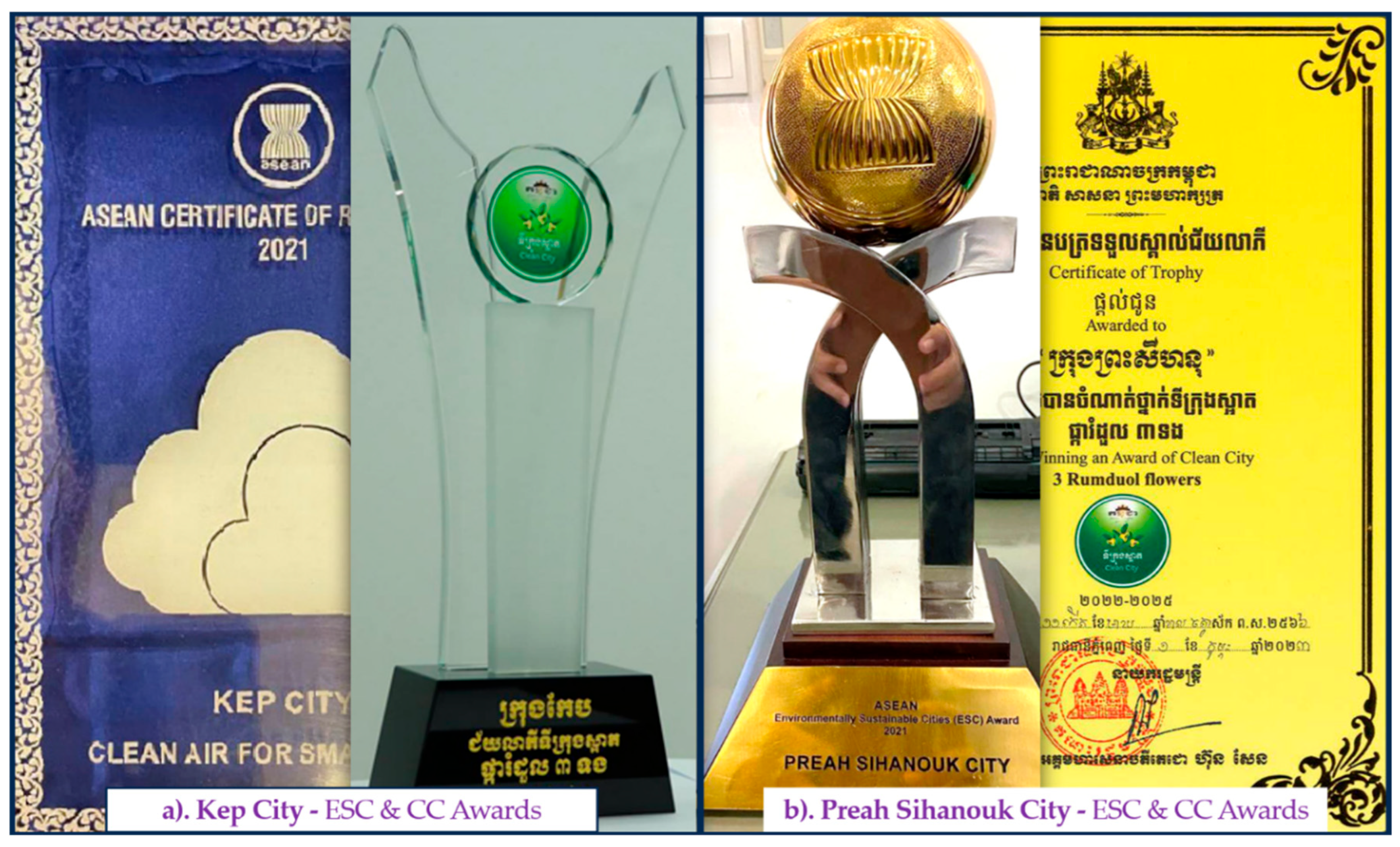
Figure 2.
Consultation workshop on green urban development program in Cambodia. Source: Author [20].
Figure 2.
Consultation workshop on green urban development program in Cambodia. Source: Author [20].
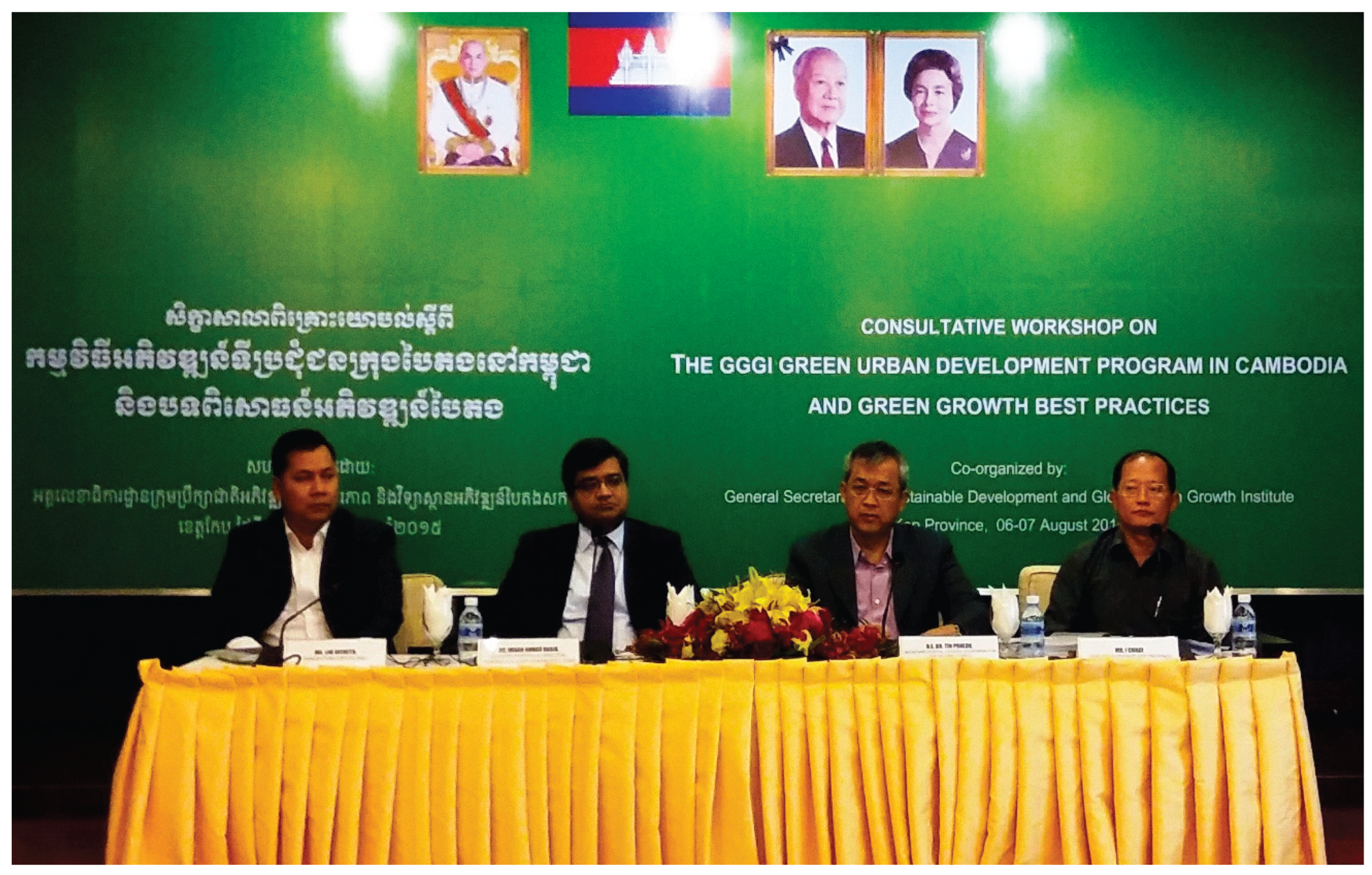
Figure 3.
Number of Global and CSDG Indicators. Source: RGC 2018 [29].
Figure 3.
Number of Global and CSDG Indicators. Source: RGC 2018 [29].
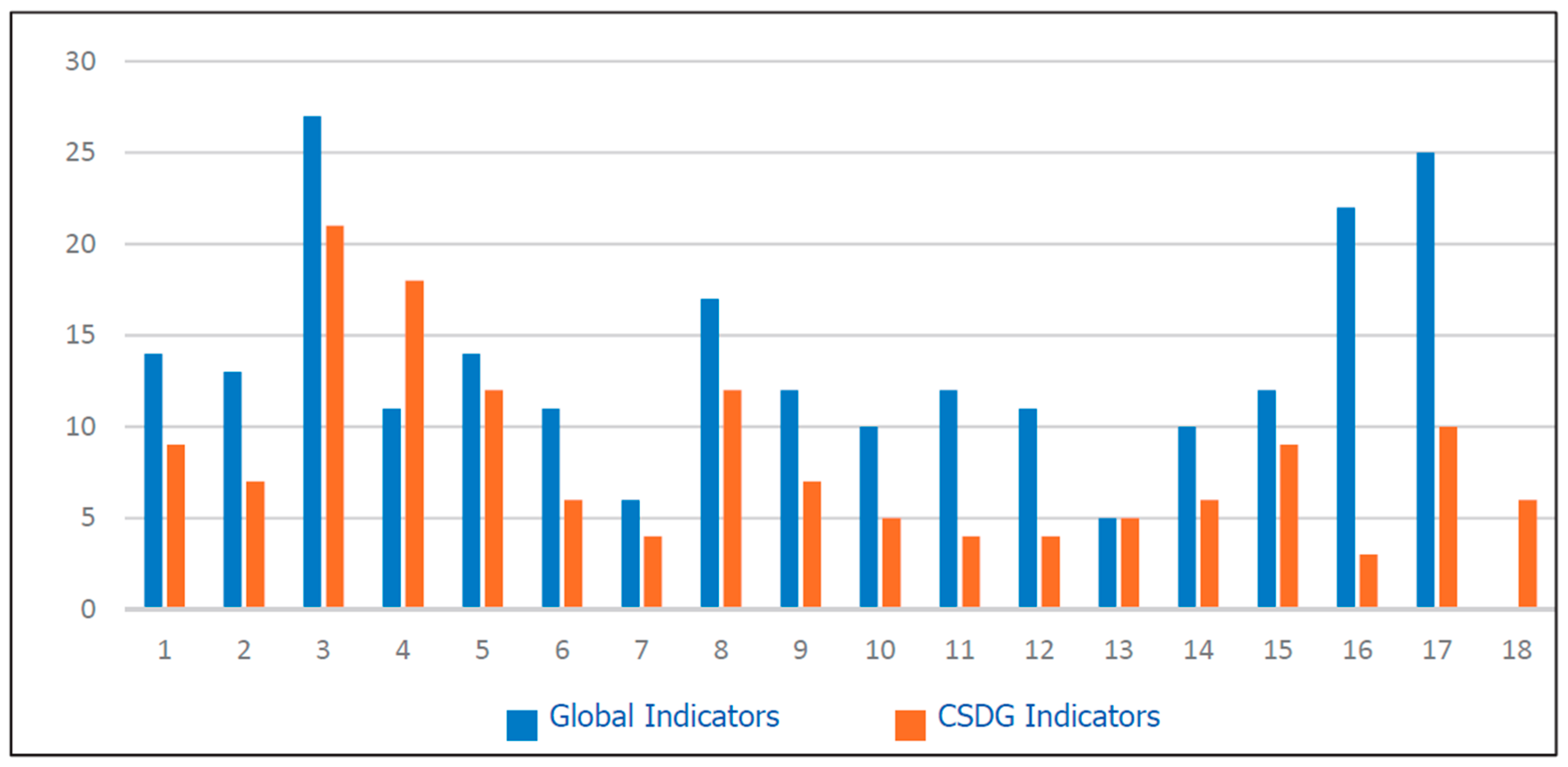
Figure 4.
Organizational structure of NCSD and its Secretariat. Source: Drawn by the author.
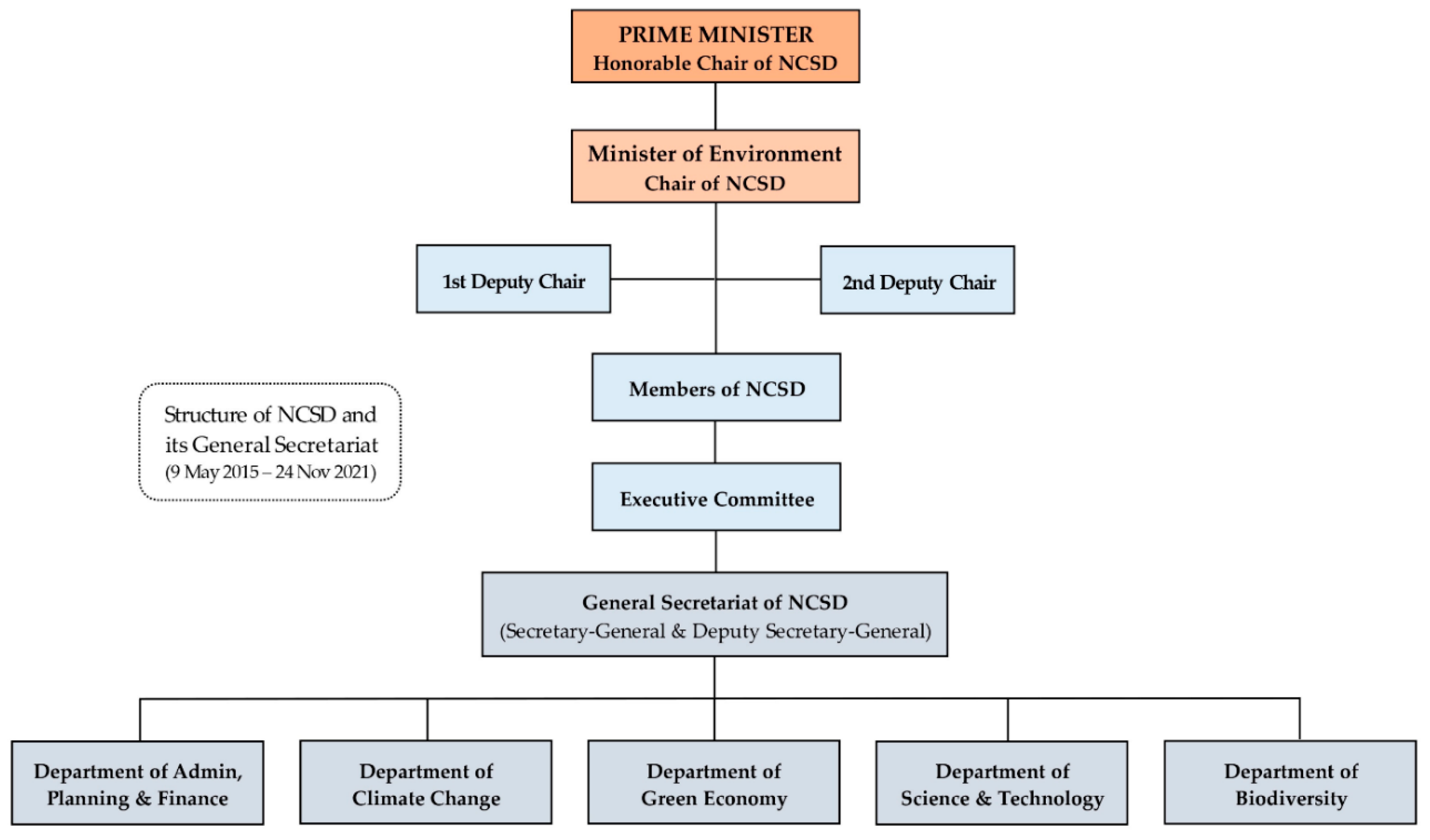
Figure 5.
Institutional and policy changes from green to sustainable in line with UN 2030 Agenda [33]. Source: Pictured mixed by the author.
Figure 5.
Institutional and policy changes from green to sustainable in line with UN 2030 Agenda [33]. Source: Pictured mixed by the author.
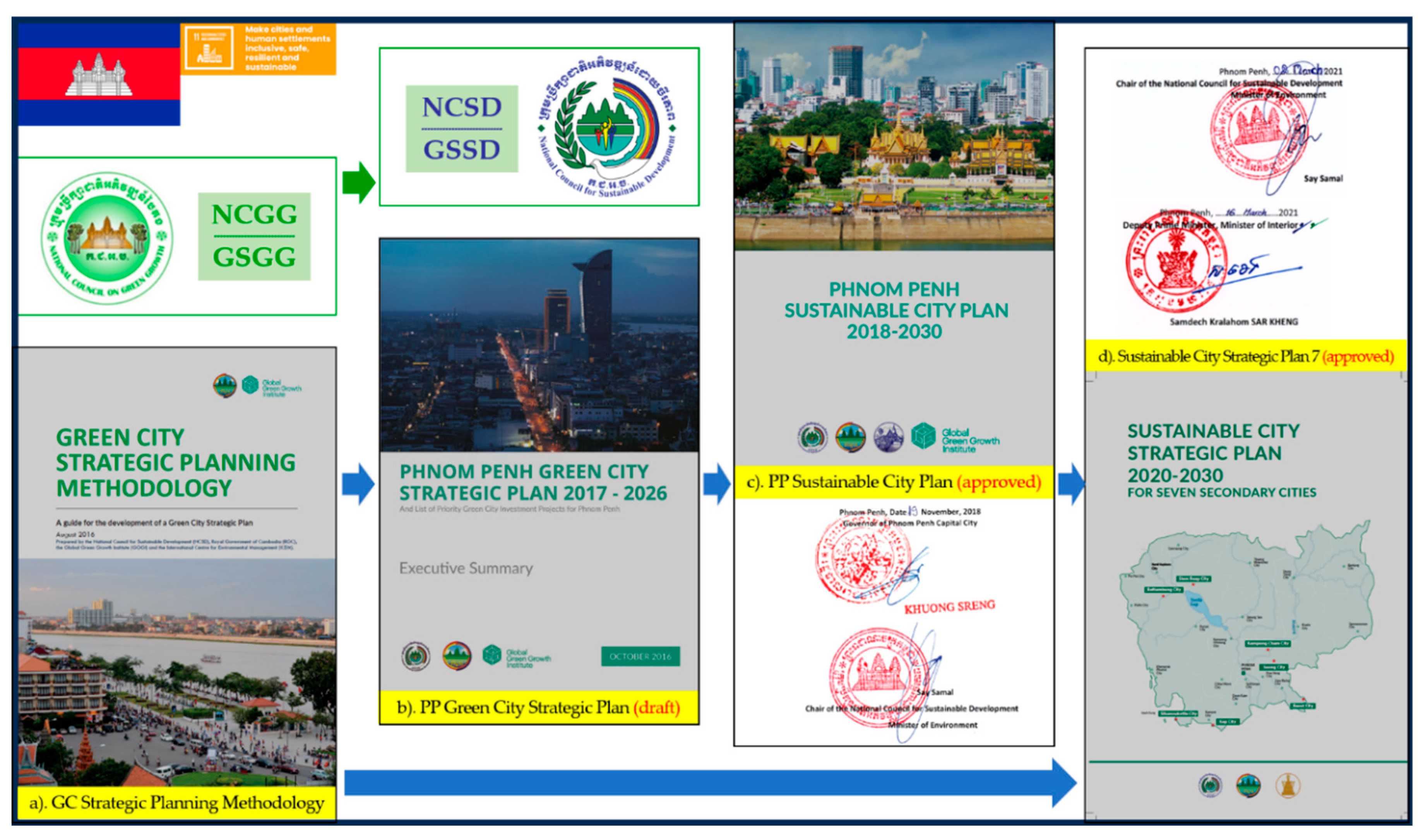
Figure 6.
ASEAN Smart Cities Network (ASCN) started with 26 pilot cities [34].
Figure 6.
ASEAN Smart Cities Network (ASCN) started with 26 pilot cities [34].
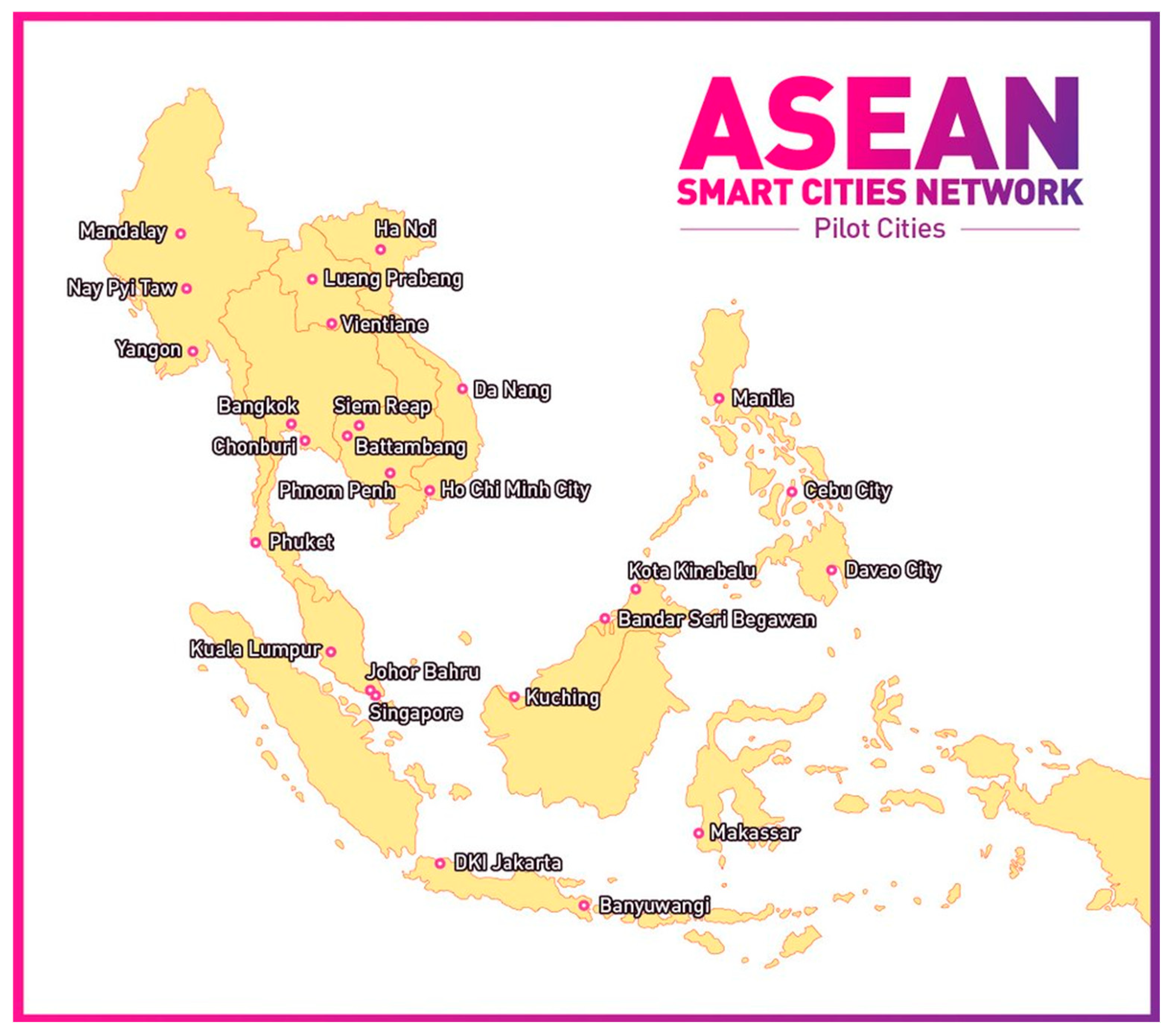

Table 1.
Cambodia clean city contest’s criteria/indicator framework.
| Indicators | Description of Indicators/Criteria |
| Environmental Management | Absence or presence of environmental regulations |
| Proportion of hotels using renewable energy | |
| Air pollution reduction strategies | |
| Noise pollution control | |
| Water quality norms | |
| Public transport system | |
| Eco-friendly transport | |
| Cleanliness | Public areas regularly cleaned |
| Sufficient public dustbins | |
| Public toilets regularly cleaned and maintained | |
| Public toilets properly separated by genders | |
| Public toilets properly signposted | |
| Sufficient dustbins at tourist sites | |
| Sufficient toilets at tourist sites | |
| Waste Management | Percentage of population linked to drainage systems |
| Solid waste collection authority | |
| Solid waste collection method | |
| Solid waste regularly collected | |
| Percentage of population linked to the network | |
| Absence or presence of liquid waste storage | |
| Wastewater treatment plants | |
| Waste recycling encouragement | |
| Toxic waste collection system | |
| Raising Awareness | Absence or presence of public awareness campaigns |
| Frequency of the public awareness | |
| Public awareness materials | |
| Absence or presence of awareness campaign of tourist firms | |
| Frequency of awareness campaign of tourist firms | |
| Awareness campaigns for tourists, visitors, or travelers | |
| Materials and activities for tourist campaign | |
| Materials and activities for tourists’ campaign | |
| Green Public Space | Number of parks in the city |
| Proportion of green spaces | |
| Green space maintenance | |
| Frequency of maintenance and management | |
| Management system in green spaces | |
| Safety and Security | Sufficient health centers in the city |
| Sanitation norms | |
| Sufficient police officers in the city | |
| Proper training for police officers | |
| Protective and preventive measures and activities | |
| Risk management system | |
| Crisis management system | |
| Tourism Infrastructure | Absence or presence of tourism master plan |
| Implementation of tourism master plan | |
| Sufficient tourist information centers | |
| Shopping centers within tourist sites | |
| Handicraft centers near tourist area | |
| Available local products in shopping centers | |
| Proportion of leisure areas | |
| Tourist satisfaction |
Source: NCCCA, 2011. Translated by the author.
Table 2.
List of proposed green growth objectives for key urban sectors.
| Key Sector | Objectives |
| Urban Planning |
|
| Urban Vulnerability |
|
| Energy |
|
| Transport |
|
| Built Environment |
|
| Manufacturing |
|
| Solid Waste |
|
| Open Spaces and Heritage |
|
Source: Authored works with the Ministry of Environment and GGGI 2016 [21].
Table 3.
UN SDG 11 Targets and Indicators.
| SDG 11 Targets | Indicators | ||
| 11.1 | Ensuring adequate and affordable housing for all by 2030 | 1 | Proportion of urban population living in slums and poor/informal settlements |
| 11.2 | Providing safe and affordable transport systems for all by 2030 | 2 | Proportion of population convenient access to public transport for everyone in the city |
| 11.3 | Enhancing inclusive urbanization and participatory human settlement planning by 2030 | 3 | Ratio of land consumption rate to population growth rate |
| 4 | Proportion of cities with participation structure of civil society in urban planning | ||
| 11.4 | Strengthening efforts to protect cultural and natural heritages | 5 | Total expenditure spent on protection and conservation of cultural and natural heritages |
| 11.5 | Reducing the number of people affected by disasters with a focus on protecting the poor by 2030 | 6 | Number of people affected by natural disasters, such as floods, storms, and heatwaves. |
| 7 | Direct economic loss in relation to global GDP, damage to critical infrastructure | ||
| 11.6 | Reducing the environmental impact by paying attention to air quality and waste management by 2030 | 8 | Proportion of solid waste regularly collected and with adequate final discharge. |
| 9 | Annual mean levels of fine particulate matter (e.g., PM2.5 and PM10) in cities | ||
| 11.7 | Providing universal access to urban green and public spaces by 2030 | 10 | Average share of open space for all (groups, gender, and persons with disabilities) |
| 11 | Rate of persons victims of physical harassment by perpetrator and place of occurrence | ||
| 11.a | Supporting positive links between urban, peri-urban, and rural areas | 12 | Proportion of population living in cities that integrate population and resource needs |
| 11.b | Increasing the number of cities adopting integrated policies and plans towards inclusion by 2020 | 13 | Number of countries adopted disaster risk reduction strategy |
| 14 | Proportion of local governments that adopt/ implement local disaster risk reduction strategies | ||
| 11.c | Supporting LDCs in constructing resilient buildings | 15 | Proportion of financial support to LDCs for buildings utilizing local materials |
Table 4.
Smart city action plans and priority projects for Cambodian cities [35].
Table 4.
Smart city action plans and priority projects for Cambodian cities [35].
| Category | Description |
| Battambang city | |
| Vision | Achieving a socially responsible, environmentally friendly, and economically successful city while retaining Battambang’s unique character. |
| Focus areas |
|
| Strategic targets | By 2025:
|
| Priority projects |
|
| Phnom Penh city | |
| Vision | Improved urban environment to enhance citizen’s quality of life. |
| Focus areas |
Built infrastructure:
|
| Strategic targets |
|
| Priority projects |
|
| Siem Reap city | |
| Vision | Siem Reap as a beautiful, unique, and ideal tourist destination, characterized by the harmony of Khmer history, arts, and nature. |
| Focus areas |
|
| Strategic targets |
|
| Priority projects |
|
Disclaimer/Publisher’s Note: The statements, opinions and data contained in all publications are solely those of the individual author(s) and contributor(s) and not of MDPI and/or the editor(s). MDPI and/or the editor(s) disclaim responsibility for any injury to people or property resulting from any ideas, methods, instructions or products referred to in the content. |
© 2025 by the authors. Licensee MDPI, Basel, Switzerland. This article is an open access article distributed under the terms and conditions of the Creative Commons Attribution (CC BY) license (http://creativecommons.org/licenses/by/4.0/).
Copyright: This open access article is published under a Creative Commons CC BY 4.0 license, which permit the free download, distribution, and reuse, provided that the author and preprint are cited in any reuse.


