

Submitted:
13 January 2025
Posted:
14 January 2025
You are already at the latest version
Abstract
Rapid urbanization in Saudi Arabia, driven by economic development and population growth, has posed significant challenges to urban planning, infrastructure, and environmental sustainability. In response, smart cities have emerged as a transformative solution, intertwining technological innovation with sustainable urbanism. This study explores the potential of smart cities to address Saudi Arabia’s urban challenges, aligning with Vision 2030’s goals. The research adopts a mixed-methods approach, combining theoretical analysis of global smart city frameworks with applied research, including field observations and policy analysis of Saudi initiatives. The study examines the interplay between technology, governance, and sustainability, offering a comparative perspective that benchmarks Saudi efforts against international best practices. A key outcome of the research is a proposed multi-dimensional framework for promoting sustainable smart cities in Saudi Arabia. The framework emphasizes data-driven governance, environmental resilience, social inclusivity, and economic innovation. This study contributes to the growing body of knowledge on sustainable urban development, positioning Saudi Arabia as a regional leader in smart city implementation. By addressing global urbanization challenges through innovation and sustainability, the research underscores the transformative potential of smart cities to create resilient and equitable urban environments for future generations.
Keywords:
Smart Cities
; Sustainability
; Urban Development
; Saudi Arabia’s Vision 2030
; Governance
; Technological Innovation
1. Introduction
Over the past five decades, the Arab world has undergone a profound transformation characterized by an extraordinary and rapid increase in urban populations. This shift has not only reshaped the demographic landscape but also introduced a host of new challenges and opportunities for cities across the region. The rise of urbanization in many Arab countries is a reflection of broader global trends, yet its pace and scale in certain nations have been particularly remarkable. The United Nations' 2014 report, World Urbanization Prospects, highlights that some Arab nations, including Saudi Arabia and Qatar, have experienced urbanization rates that outpace those of even larger and more populous countries such as Egypt, Syria, and Iraq. The urbanization trends in these Gulf countries, driven by factors such as economic development, industrialization, and migration patterns, have led to significant shifts in their social and economic structures. As urban populations continue to grow rapidly, the demand for infrastructure, housing, services, and employment has intensified, placing considerable pressure on governments and planners to meet these evolving needs [1,2,3]. The data presented in Figure 1 reveals a striking growth in urban populations in certain Arab countries, showing the dramatic rise in urbanization levels from 1950 to the present.
This trend is not just a product of historical shifts but reflects an ongoing process, with projections indicating that the urban population in many Arab nations will continue to rise at an accelerated pace well into 2050. As urban areas expand, cities face new demands in terms of resource management, environmental sustainability, infrastructure development, and providing services such as healthcare, education, and transportation. The rapid urbanization taking place in the Arab world emphasizes the urgent need for careful, strategic planning to address the complex challenges that accompany such growth. Urban development must be approached with foresight and innovation, considering the long-term impacts on the environment, social structures, and quality of life for residents. This growing urbanization also underscores the importance of adopting new urban planning approaches incorporating modern technologies, sustainability initiatives, and smart infrastructure. Addressing these challenges will be critical to ensuring that cities in the Arab world can sustain their growth while enhancing the well-being of their populations and adapting to future needs.
In recent years, the concept of smart cities has gained significant attention in both academic research and international policy discussions. This growing interest is largely due to the potential role smart cities can play in promoting sustainability, enhancing the quality of life, improving the efficiency of urban services and management, and boosting competitiveness, all while addressing the needs of both present and future generations in environmental, social, and economic terms [4]. For example, Krinichansky [5] suggests that the widespread implementation of smart solutions in urban areas could lead to a 10-30% improvement in certain quality-of-life indicators. Despite the considerable potential and ambition of many Arab nations to adopt the smart city model and integrate it with the goal of urban sustainability, several obstacles and challenges remain. These include significant knowledge gaps related to environmental concerns (such as the risk of environmental damage), social issues (such as the lack of coherent management planning), and economic challenges (including insufficient investment priorities), all of which hinder the effective implementation of smart city concepts in most Arab countries.
2. Global Literature Review
The concept of a smart city lies at the intersection of technological innovation and sustainable urban planning. However, confining the idea of a smart city to just these areas provides a limited perspective and can result in a weak concept. A smart city must encompass more than just technology and urban planning, incorporating factors such as economic, social, and ecological development, as well as political frameworks [6]. A "smart city" goes beyond simply implementing technologies and strategies to meet current needs without compromising the ability of future generations to meet theirs. It involves understanding the city's identity, goals, stakeholders, and priorities. Therefore, its definition is rooted in relevance and distinctiveness, with an emphasis on improving quality of life and fostering sustainability through technology and communication [7]. The overarching aim of smart cities is to enhance sustainability through technological means. As a result, it is recommended to use the term "smart sustainable cities" instead of just "smart cities." However, the existing gap between smart cities and sustainable cities highlights the need to redefine the smart city concept and further refine smart city frameworks [8].
Since the 1990s, when the concept of smart cities emerged [9], numerous researchers have sought to develop a clear and comprehensive definition of smart cities, highlighting the core elements and key aspects of the concept. For example, Hall [10] argues that a city can be considered smart if it improves connectivity and information flow across essential infrastructures, can fully monitor and control the conditions of critical infrastructure (such as water, power, communications, roads, railways, seaports, and airports), and optimizes resources while enhancing services for its citizens. Washburn et al. [11] define a smart city as the application of smart computing technologies to make the key infrastructure components and services of a city—such as administration, education, healthcare, public safety, real estate, transportation, and utilities—more intelligent, interconnected, and efficient. Harrison et al. [12] describe a smart city as one that connects physical infrastructure, IT infrastructure, social infrastructure, and business infrastructure to harness the collective intelligence of the city.
Nam and Pardo [13] highlight that smart cities integrate information into their physical infrastructure to enhance convenience, improve mobility, increase efficiency, conserve energy, improve air and water quality, quickly identify and resolve issues, recover swiftly from disasters, gather data for better decision-making, deploy resources effectively, and facilitate collaboration by sharing data across various entities and sectors. Furthermore, smart city initiatives aim to enhance urban performance by utilizing data, information, and information technologies (IT) to deliver more efficient services to citizens, monitor and optimize existing infrastructure, foster collaboration among different economic actors, and promote innovative business models in both the private and public sectors [14]. However, a universally accepted definition of a smart city remains elusive, and it is challenging to identify common global trends regarding the smart city phenomenon [5].
Albino et al. [15] discussed the concept of smart cities by describing them as "large organic systems," emphasizing that the integrated nature of systems and the interconnections among a city's core components define what makes a city "smart." A smarter city incorporates information into its physical infrastructure to enhance convenience, improve mobility, boost efficiency, conserve energy, improve air and water quality, identify and quickly resolve problems, recover rapidly from disasters, gather data for better decision-making, deploy resources effectively, and share data to foster collaboration across various sectors. These aspects reflect key themes that highlight the link between smart cities and sustainability. Yao et al. [16] evaluated the eco-efficiency of 152 cities at the prefecture level in China between 2003 and 2016 to explore the impact of smart cities on eco-efficiency. They found that smart cities significantly improve eco-efficiency. Additionally, they discovered that the lower a city's level of economic development, the more significant the impact of smart cities on promoting eco-efficiency. This has practical implications for reforming urban governance models and achieving sustainable urban development.
The diverse range of smart city definitions presents challenges in aligning them with the concept of sustainability [8]. However, the key distinction between smart cities and sustainability lies in their focus areas: while smart cities prioritize education, culture, science, innovation, and ICT, urban sustainability emphasizes environmental aspects like the natural and built environment, water management, and more [8]. Smart cities utilize complexity sciences to optimize strategies and simulation models that help design urban structures and systems that enhance sustainability. The analysis of big data across various urban sectors and its integration plays a crucial role in advancing urban development and improving sustainability decision-making. This approach enables the monitoring and collection of data on subsystems, covering operations, functions, strategies, designs, and practices. It also facilitates the creation of innovation hubs where smart functions are developed using data science, computer science, and complexity science, which contribute to creating advanced simulation models, optimization techniques, and various modeling methods to support the planning and management of smart, sustainable cities [17].
Estevez et al., [18] through their examination of 119 smart city initiatives, recommendations from 51 think tanks, and 876 scholarly publications, concluded that smart cities contribute to sustainable development. Similarly, Ahvenniemi et al. [8] analyzed 16 city assessment frameworks (eight for smart cities and eight for urban sustainability), which included 958 indicators categorized into three impact areas and 12 sectors. Their findings revealed a shift in the 21st century from focusing on the criteria for measuring sustainability to emphasizing the goals of smart cities. Ahvenniemi et al. [8] highlighted two key observations from their analysis: 1) smart city frameworks place much greater emphasis on new technologies and "smartness" compared to urban sustainability frameworks, and 2) while urban sustainability frameworks include numerous indicators related to environmental sustainability, smart city frameworks focus more on social and economic aspects and lack environmental indicators. These findings confirm the connection between smart cities as a means to achieve sustainability as a goal.
As previously mentioned, there is no global consensus on a single definition or framework for the concept of a smart city. Smart city frameworks encompass a range of overlapping and non-overlapping themes, highlighting the absence of a universal framework or agreement on the essential dimensions of smart cities [19]. However, several key indicators are commonly found in the proposed frameworks. For example, most smart city models focus on four main attributes: sustainability, quality of life, urbanization, and smartness. Each of these attributes includes several sub-attributes. For instance, sustainability covers areas such as infrastructure and governance, pollution and waste, energy and climate change, social issues, economics, and health. Quality of life is linked to the emotional and financial well-being of urban citizens. Urbanization addresses the technological, economic, infrastructure, and governance aspects involved in the transition from rural to urban environments. Lastly, smartness refers to efforts aimed at improving the social, environmental, and economic conditions of the city and its residents [20].
Based on an extensive review of scientific literature in the field of smart cities, it is widely believed that the concept of a smart city enhances urban planning, development, management, and service delivery. The smart city framework heavily relies on information and communication technologies (ICT), the Internet, cloud computing, big data, spatial geographic information integration, and other emerging technologies. These factors, along with others, are typically grouped into six key dimensions, which have been explored in various studies [21-35]. These six dimensions are: 1) smart environment, 2) smart living, 3) smart mobility, 4) smart people, 5) smart economy, and 6) smart government. The indicators supporting these dimensions are depicted in Figure 2.
In today's world, it is crucial to understand the development of new urbanism in the Arab world and its connection to smart cities and sustainability concepts, as it sheds light on the challenges in managing this new urban model, particularly in key Arab nations. Recently, several Arab governments have aimed to support national economic strategies by promoting smart cities, creating an environment conducive to information and technology, and using these as tools to foster sustainability. There is also a strong belief in the role of smart technologies in boosting economic and administrative efficiency, enhancing social and security standards, and improving the flow of investment funds across borders.
The research gaps in Saudi Arabia's smart city initiatives include the need for localized studies on methodology adoption and integration, especially in diverse urban and rural contexts. There is limited exploration of citizen engagement, social equity, and cultural adaptation of smart technologies. Additionally, studies on the long-term environmental and socioeconomic impacts of large-scale projects like NEOM are scarce, as are frameworks for measuring the success of these initiatives against global benchmarks. This article makes two key contributions to the existing literature. First, it presents a theoretical framework for analyzing the relationship between new urbanism and smart cities within the context of sustainability. Second, it seeks to provide insights for policymakers and stakeholders on the opportunities, challenges, and limitations associated with the sustainable management of smart cities in the Arab world, with a particular focus on Saudi Arabia's local context. The article also aims to propose a future vision for sustainable cities in Saudi Arabia by drawing lessons from the experiences of developed nations. As the largest Arab country, Saudi Arabia is making significant strides toward clean technology and sustainability and is actively pursuing the implementation of smart city technologies to improve urban planning and environmental stability through the effective use of information technology and natural resources.
The study begins with an introduction that explores the context of urbanization in the Arab world, emphasizing Saudi Arabia’s unique challenges and opportunities. It then proceeds with a literature review that delves into the theoretical underpinnings of smart cities, focusing on the relationship between technology, sustainability, and urban planning. Following this, the paper discusses data collection and analysis, explaining the methodologies employed, including theoretical, comparative, and applied approaches to evaluate smart city initiatives in Saudi Arabia. The study transitions to a dedicated section on Saudi Arabia's smart city initiatives, providing an overview of ongoing efforts such as Vision 2030, technological investments, and strategic transformations. Next, it addresses the challenges facing smart city initiatives in Saudi Arabia. The research culminates in a proposed framework for promoting sustainable smart cities in Saudi Arabia, outlining a multi-dimensional strategy that aligns with the nation’s goals. Finally, the paper concludes by summarizing key insights and emphasizing the potential of smart cities as a transformative urban model.
3. Materials and Methods
This study adopts a mixed-methods approach, combining theoretical analysis and applied research to comprehensively investigate the role of smart cities in promoting sustainable urbanism in Saudi Arabia. The theoretical phase involved an in-depth review of literature, policy documents, and global case studies to establish a conceptual foundation. Using an inductive approach, the study analyzed key components of smart city frameworks, their alignment with sustainability objectives, and the challenges specific to urban areas in the Arab world. Comparative analysis was employed to benchmark Saudi Arabia’s initiatives against international best practices, enabling the identification of adaptable strategies and insights. The methodology followed to achieve the objectives is shown in Figure 3 below.
In the applied phase, qualitative and quantitative methods were used to collect diverse data. Field observations in key Saudi cities examined the application of smart technologies and sustainability practices, while document analysis focused on national strategies such as Vision 2030 and the National Transformation Program. The data were analyzed thematically and comparatively to identify patterns, relationships, and actionable recommendations. Based on the findings, a tailored framework for sustainable smart cities in Saudi Arabia was developed, emphasizing governance, technology integration, environmental sustainability, and social inclusion. This methodological approach offers a comprehensive understanding of smart cities’ potential to address urban challenges and provides strategic guidance for policymakers and stakeholders.
4. Smart Cities in Saudi Arabia: Data Assessment
Since its establishment, Saudi Arabia has experienced a remarkable transformation, emerging as a rapidly developing and modern nation [36]. This transformation is largely influenced by the involvement of global technological companies that bring their expertise and cutting-edge innovations to reshape urban environments [37]. The country’s economic history, marked by the oil boom, has played a substantial role in the rapid urbanization of Saudi cities, where the urban population grew from just 10% in 1950 to a striking 82% by 2015 [2,38,39]. This swift urban expansion has brought about numerous challenges, including infrastructure overload, inefficient resource management, and a need for sustainable urban planning [38]. To address these issues, Saudi Arabia has embraced the concept of smart cities, recognizing the importance of technology-driven solutions to improve the quality of life for its citizens. The concept of smart cities has emerged as an innovative solution to the complex urban challenges the country faces, particularly those driven by rapid urbanization and the global advancements in technology.
The Saudi government has committed to supporting the smart city initiative by investing in innovative technologies, fostering public-private partnerships, and creating an environment conducive to technological growth [41,42]. The country’s leadership has recognized the potential of smart cities as a strategic tool to address pressing urban issues while also positioning Saudi Arabia as a global leader in the technology and innovation sector. In line with this vision, the government is working towards transforming the nation from being oil-dependent to adopting smart, sustainable practices across all aspects of development, including energy, transportation, healthcare, and education. By increasing investments in science and technology, Saudi Arabia seeks to position itself as a competitive force in the global market and ensure the sustainable growth of its cities [43].
As part of this ambitious vision, the Ministry of Municipal and Rural Affairs (MOMRA) has outlined plans to develop 10 new smart cities across the country, in addition to establishing new economic cities and special zones. These initiatives are aligned with Saudi Arabia's broader national goals outlined in Vision 2030 and the National Transformation Program of 2020. These plans emphasize the importance of leveraging advanced technologies such as Internet of Things (IoT), Artificial intelligence (AI), and data analytics to create more efficient, sustainable, and livable urban spaces. The development of smart cities is seen as a key step in realizing Saudi Arabia’s long-term aspirations to diversify its economy, reduce its reliance on oil, and improve the overall quality of life for its citizens. As the country progresses in this direction, it is expected to become a model for smart city development in the region, attracting international investment and further advancing its global standing in technology and innovation [37].
MOMRA has launched the "Implementation of Smart Cities Concepts" project, a significant initiative aimed at enhancing the competitiveness of Saudi cities and fostering urban sustainability. This project focuses on improving the efficiency of city management, raising the standard of living for residents, and creating a smarter, more responsive urban environment. It also strives to increase citizen satisfaction, minimize negative environmental impacts, create new job opportunities, and attract both local and foreign investments [44]. This initiative aligns with the broader goals of Vision 2030, which seeks to diversify the economy and shift away from oil dependency by investing in advanced infrastructure, technology, and sustainable urban development.
In 2015, MOMRA conducted an extensive study to evaluate the potential of 17 major cities across Saudi Arabia for transitioning into smart cities, using global best practices as benchmarks. The findings revealed a significant disparity in the readiness of these cities to implement smart city technologies and infrastructure. Some cities were further along in their digital transformation, while others faced challenges in terms of infrastructure, governance, and citizen engagement. Despite these varying levels of readiness, the Saudi government has committed to investing more than $500 billion across 285 municipalities to drive the development of smart cities [45]. This large-scale investment is intended to improve the quality of life for citizens, making cities more livable, efficient, and sustainable by integrating advanced technologies like the IoT), AI, and big data analytics into urban management. These efforts also focus on engaging citizens in the development process, ensuring that the future cities of Saudi Arabia reflect the needs and aspirations of their residents.
As part of this ambitious transformation, Saudi Arabia's smart city initiatives are targeted in phases, with five key cities slated for transformation by 2020. The first two cities, Riyadh and Makkah, were expected to complete their transformation by the end of 2018, followed by Al-Madinah and Jeddah, with Al-Ahsa completing its transformation by the end of 2020 [45]. These phased developments are intended to create model cities that integrate sustainable practices, advanced technologies, and improved infrastructure, which can then be replicated in other parts of the country. Each city was selected based on its strategic importance, urban challenges, and capacity to serve as a blueprint for the broader national vision. The transformations include implementing smart mobility systems, enhancing energy efficiency, and leveraging data analytics to optimize urban services. By focusing on these pioneering cities, Saudi Arabia aims to build a foundation for innovation, economic growth, and sustainability that aligns with the objectives of Vision 2030.
Over the past few years, the concept of smart cities has gained increasing attention in Saudi Arabia, particularly in light of the country’s Vision 2030, which places a strong emphasis on innovation and technology. However, Aina [46] points out that successful implementation of smart cities in Saudi Arabia is not just a matter of deploying technology. The local context including cultural, social, and economic factors plays a critical role in determining the success of these initiatives. While information and communications technology (ICT) infrastructure is necessary to enable smart cities, it is not sufficient on its own. Aina argues that a more holistic approach is needed, one that combines technological advancements with effective governance, community engagement, and inclusive decision-making processes. This approach involves blending top-down strategies, driven by government policy and leadership, with bottom-up engagement, where local communities are actively involved in the planning and implementation of smart city projects. By incorporating both perspectives, Saudi Arabia can create more effective and sustainable urban transformations, ensuring that its cities not only become smarter but also more resilient and adaptable to the changing needs of their populations.
5. Results and Discussions
The concept of the smart city has emerged as a potential solution to address the challenges caused by rapid population growth and urban expansion. However, this concept is still evolving and has not been widely adopted worldwide due to various economic, technological, and governance-related obstacles. The practical implementation of smart cities presents its own set of challenges, whether during the initial stages of planning and design, throughout the implementation process, or in the subsequent phases of operation, monitoring, and maintenance.
5.1. Identification of Challenges Faced by Saudi Arabia
This section highlights the identified challenges associated with the realistic implementation of smart cities in Saudi Arabia. These challenges were shortlisted through an extensive review of the literature and recent studies on smart cities, with a focus on the specific context of Saudi Arabia. They are categorized into seven key areas: 1) economic challenges; 2) social challenges; 3) environmental challenges; 4) urban challenges; 5) technical challenges; 6) legislative challenges; and 7) political challenges.
These challenges, as shown in Figure 4, will be explored in the following sections, with particular attention to their relevance within the local context of Saudi Arabia.
5.1.1. Economic Challenges of Smart Cities
Design and maintenance expenses pose significant obstacles to the practical implementation of smart cities. These costs are divided into design costs and operational costs. Design costs refer to the initial financial investment required to establish a smart city, with lower design costs increasing the likelihood of successful implementation. Operational costs arise from the ongoing operations and maintenance of the city. There is a strong demand for minimizing these operational costs to ensure the sustainability of services without imposing extra financial strain on municipalities. However, optimizing costs over the entire lifespan of a smart city continues to be a challenging endeavor [20].
5.1.2. Social Challenges of Smart Cities
Smart cities generate a vast amount of data, including highly sensitive information about society, which is susceptible to various security risks. As a result, protecting social privacy is a critical aspect of any smart city framework. Citizens interact with essential smart city services using computers, smartphones, and other smart devices [45]. Consequently, addressing privacy concerns and maintaining robust security measures to protect citizen data has become both a crucial and complex task [48,49,50].
5.1.3. Environmental Challenges of Smart Cities
Protecting the city’s environment and resources for future generations by reducing carbon emissions and utilizing resources efficiently is a major priority for contemporary smart cities. As a result, these cities emphasize the use of renewable energy sources to lower their carbon footprint, while also ensuring the sustainability of urban operations and reducing reliance on non-renewable energy sources [20].
5.1.4. Urban Challenges of Smart Cities
The large-scale migration of people from rural to urban areas has become a growing concern for cities worldwide. This trend has led to an increasingly high concentration of populations in urban centers, which is projected to continue rising in the coming years. As a result, both traditional and smart cities face serious challenges related to infrastructure, resource management, and vulnerability to various risks, such as environmental disasters, overcrowding, and economic strain [51]. In the context of smart cities, these challenges become even more pronounced as the need for advanced technologies and innovative solutions to manage these issues intensifies.
5.1.5. Technical Challenges of Smart Cities
Smart cities are made up of various sensors, devices, and appliances from multiple vendors, and their effectiveness depends on the integration of these diverse elements at the application layer. Technological advancements have led to significant transformations in major cities globally, where technology is being used to enhance the quality of life for residents, visitors, and businesses. However, the simultaneous growth of technology and malicious threats has sparked considerable concern over how to protect smart cities and their operations from potential cyberattacks [20].
5.1.6. Legislative Challenges of Smart Cities
Legislation, particularly in areas like waste management, is a crucial issue in modern smart cities due to concerns over environmental pollution and landfills. The objective of smart waste management is to streamline and expedite the collection and separation processes. Additionally, failure management is an important consideration for any smart city development project. Sustainability-focused design incorporates immediate recovery strategies to address failures and restore city operations to normal. However, identifying and implementing effective recovery and fault tolerance measures can increase both design and operational costs. The challenge lies in developing failure recovery systems that are both cost-effective and operationally efficient [20].
5.1.7. Political Challenges of Smart Cities
The shift in public policies towards adopting smart cities as a novel and unconventional approach raises significant concerns, given the potential for both success and failure. This is especially important considering the impact of failures on decision-makers, particularly amid the economic recession affecting many countries. Implementing this new approach requires alignment with the state’s political initiatives. Furthermore, the lack of integration within existing governmental frameworks and strategies hinders the effective execution of smart city initiatives, complicating their adoption and long-term success.
5.2. Framework for Promoting Sustainable Smart Cities Initiative in Saudi Arabia
Saudi Arabia’s ambition to transform its urban areas into sustainable smart cities aligns closely with the national Vision 2030 goals of economic diversification, reduced dependency on oil, and an enhanced quality of life for its citizens. This framework proposes a comprehensive approach to achieving these objectives by addressing key dimensions of smart cities, implementing effective strategies, overcoming challenges, and incorporating robust monitoring mechanisms. The overarching vision of Saudi Arabia’s sustainable smart cities initiative is to harmonize technological innovation with environmental sustainability and social inclusivity. By leveraging advanced technologies, cities aim to reduce their carbon footprints, optimize resource efficiency, and enhance urban resilience. These efforts will contribute to creating urban environments that adapt effectively to economic, environmental, and social challenges while ensuring a high quality of life for present and future generations.
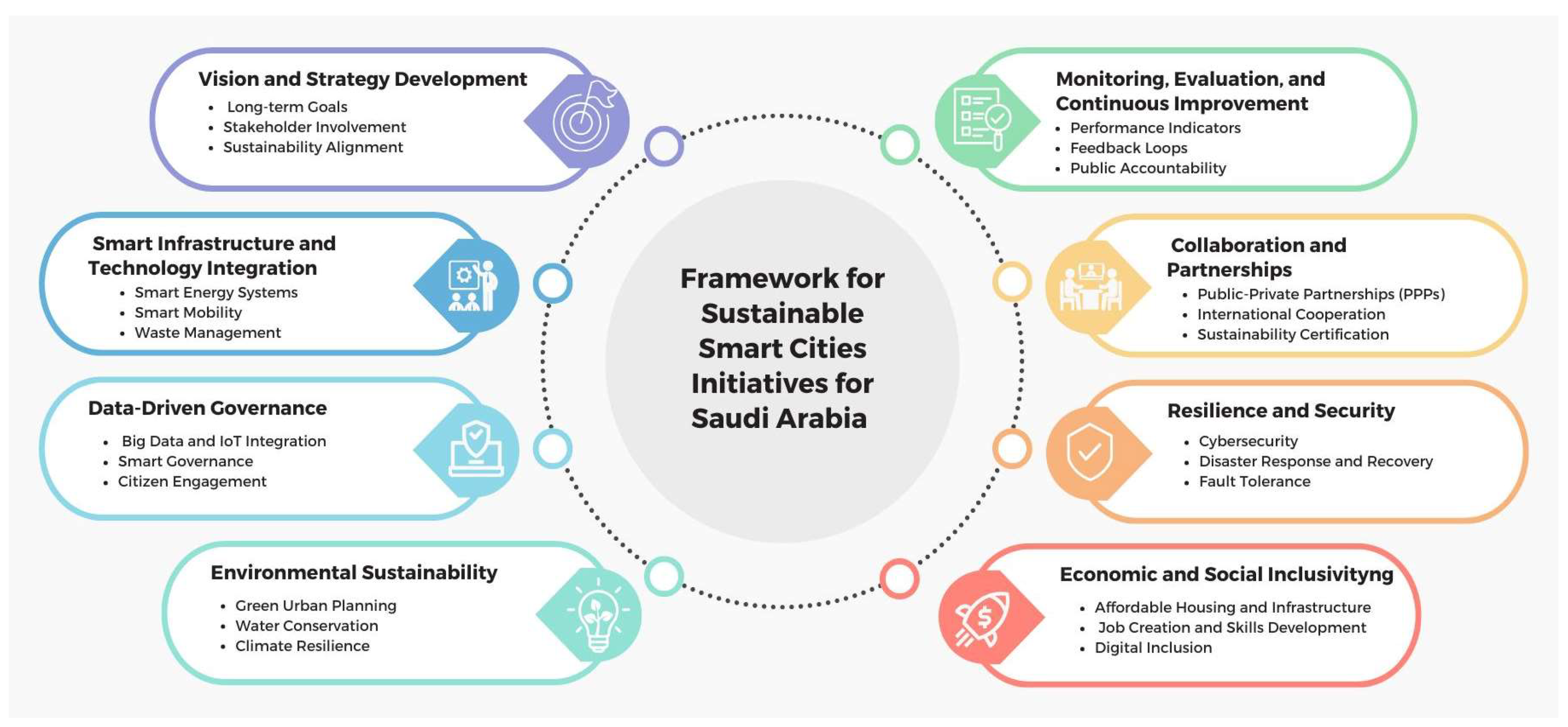
The proposed framework in this study is built on eight essential dimensions: 1) Vision and Strategy Development; 2) Smart Infrastructure and Technology Integration; 3) Data-Driven Governance; 4) Environmental Sustainability; 5) Economic and Social Inclusivity; 6) Resilience and Security; 7) Resilience and Security; and 8) Monitoring, Evaluation, and Continuous Improvement, as it is illustrated in Figure 5.
The first dimension, Vision and Strategy Development, is foundational for Saudi Arabia, aligning with the country’s Vision 2030. This national strategy already emphasizes sustainability, innovation, and economic diversification. Clear, long-term goals tailored to the Kingdom's ambitions can integrate sustainable urbanization with objectives like reducing reliance on fossil fuels. Engaging stakeholders, such as municipal authorities, private sector players, academic institutions, and local communities, ensures inclusivity in planning. Aligning these efforts with global standards like the United Nations Sustainable Development Goals (SDGs) positions Saudi Arabia as a leader in sustainable development.
The second focus, Smart Infrastructure, and Technology Integration, revolves around leveraging advanced technologies to optimize urban systems. This involves developing renewable energy sources like solar and wind power, integrating smart grids to enhance energy efficiency, and deploying sustainable transportation systems such as electric and autonomous vehicles. Smart waste management systems also play a role, enabling efficient recycling and energy recovery from waste. Data-driven governance is another pillar of the framework, highlighting the role of IoT and big data in managing city operations. By collecting real-time data, city administrators can make informed decisions, improve transparency, and engage citizens through participatory platforms. This approach fosters better management of resources, such as traffic, air quality, and energy consumption, while empowering residents to contribute to decision-making processes. Environmental sustainability is a central theme, focusing on green urban planning, energy-efficient buildings, and sustainable land use practices. Water conservation through smart monitoring systems and the promotion of climate resilience, such as flood control and adaptive infrastructure, are integral to this effort. These measures aim to reduce environmental impact and enhance the city’s ability to withstand climate-related challenges.
The framework also prioritizes Economic and Social Inclusivity, advocating for equitable access to essential services and affordable housing. It encourages the creation of jobs in emerging fields like IT and green technologies while promoting digital inclusion to ensure all citizens can participate in the digital transformation. Resilience and Security form another key aspect of the framework. This involves building robust cybersecurity measures to protect critical infrastructure and data, alongside disaster response systems for effective early warning and recovery. Fault-tolerant systems are essential to maintain essential services during disruptions, ensuring the city remains operational in crises. Collaboration and Partnerships are emphasized to foster innovation and resource sharing. Public-private partnerships (PPPs) are vital for funding and implementing smart city projects, while learning from other cities globally helps adapt best practices. Finally, the framework emphasizes continuous improvement through Monitoring, Evaluation, and Continuous Improvement. By establishing key performance indicators (KPIs) and creating feedback loops, cities can refine their strategies and technologies. Transparency is critical, with regular updates and reports ensuring public accountability.
6. Conclusions
This study highlights the transformative potential of smart cities in addressing Saudi Arabia's pressing urban challenges, particularly within the framework of Vision 2030. By integrating advanced technologies, innovative planning, and sustainable practices, smart cities provide a pathway to balance rapid urbanization with long-term resilience and economic growth. Saudi Vision 2030’s emphasis on economic diversification, environmental sustainability, and improved quality of life underscores the central role of smart cities in the nation’s future. These cities aim to optimize resources, reduce environmental impacts, and enhance urban efficiency, creating spaces that cater to present needs while safeguarding future generations. The research highlights how Saudi Arabia’s strategic focus on smart cities aligns with global sustainability goals, enabling the country to lead in adopting cutting-edge urban models tailored to its unique socio-economic context.
Despite their potential, smart city initiatives in Saudi Arabia face significant challenges that require careful strategic planning. Economic hurdles, such as the high costs of design, implementation, and maintenance, pose barriers to wide-scale adoption. Similarly, social and cultural considerations, including the need for inclusive urban spaces and community engagement, complicate implementation. Governance-related obstacles, such as regulatory gaps and fragmented policies, further hinder progress. Overcoming these challenges demands a collaborative approach, uniting government agencies, private enterprises, and local communities. Transparent governance, active citizen participation, and well-coordinated policies are essential for the successful realization of smart cities. By fostering a culture of inclusivity and innovation, Saudi Arabia can transform these challenges into opportunities, creating urban environments that are resilient, equitable, and adaptable to diverse needs.
The proposed framework offers a robust guide for fostering sustainable smart cities in Saudi Arabia, focusing on key dimensions such as technological integration, environmental sustainability, and social inclusivity. By leveraging data-driven governance and fostering public-private partnerships, the framework emphasizes actionable strategies to address urban challenges effectively. It outlines approaches to enhance energy efficiency, promote green urban planning, and develop digital inclusion initiatives that ensure equitable access to technological advancements. Additionally, it encourages economic diversification by creating job opportunities in emerging sectors, such as renewable energy and information technology. These strategies not only enhance urban livability and resilience but also position Saudi Arabia as a leader in the Arab region, showcasing the global applicability of its vision for sustainable and smart urbanism.
The success of smart city initiatives in Saudi Arabia will depend on ongoing evaluation, strategic refinement, and adaptability to evolving challenges. Establishing clear key performance indicators and integrating feedback mechanisms are crucial for maintaining continuous improvement. Resilience will also require robust cybersecurity measures, efficient resource management, and climate adaptation strategies to ensure the long-term viability of urban centers. Engaging diverse stakeholders in decision-making processes will further strengthen the inclusivity and responsiveness of smart cities. By prioritizing innovation, collaboration, and sustainability, Saudi Arabia is poised to set a regional benchmark in sustainable urban development. Its smart cities have the potential to address global urbanization challenges while fostering a high quality of life and economic prosperity for future generations.
Funding
This research received no external funding.
Data Availability Statement
The data presented in this study are available on request from the author.
Conflicts of Interest
The author declares no conflicts of interest.
References
- U. N. Desa, “World urbanization prospects, the 2011 revision,” Population Division, department of economic and social affairs, United Nations Secretariat, 2014.
- A. Aboukorin and F. S. Al-shihri, “Rapid Urbanization and Sustainability in Saudi Arabia: The Case of Dammam Metropolitan Area,” J Sustain Dev, vol. 8, no. 9, p. 52, Oct. 2015. [CrossRef]
- A. M. AlQahtany, “Government regulation and financial support on housing delivery: lessons learned from the Saudi experience,” International Journal of Housing Markets and Analysis, vol. 15, no. 3, pp. 613–631, Apr. 2022. [CrossRef]
- M. Toli and N. Murtagh, “The Concept of Sustainability in Smart City Definitions,” Jun. 02, 2020, Frontiers Media S.A. [CrossRef]
- K. V Krinichansky and B. S. Sergi, “Financial development and economic growth in Russia,” in Modeling Economic Growth in Contemporary Russia, Emerald Publishing Limited, 2019, pp. 1–28.
- K. Hamza, “Smart city implementation framework for developing countries: The case of Egypt,” Smarter as the new urban agenda: A comprehensive view of the 21st century city, pp. 171–187, 2016.
- S. A. Al Nasrawi, C. Adams, and A. El-Zaart, “A Conceptual Multidimensional Model for Assessing Smart Sustainable Cities,” Journal of Information Systems and Technology Management, vol. 12, no. 3, Dec. 2016. [CrossRef]
- H. Ahvenniemi, A. Huovila, I. Pinto-Seppä, and M. Airaksinen, “What are the differences between sustainable and smart cities?,” Cities, vol. 60, pp. 234–245, Feb. 2017. [CrossRef]
- H. Samih, “Smart cities and internet of things,” Journal of Information Technology Case and Application Research, vol. 21, no. 1, pp. 3–12, Jan. 2019. [CrossRef]
- P. Hall, “Creative cities and economic development,” Urban studies, vol. 37, no. 4, pp. 639–649, 2000.
- D. Washburn and U. Sindhu For Cios, “Making Leaders Successful Every Day Helping CIOs Understand ‘Smart City’ Initiatives,” 2010. [Online]. Available: www.forrester.com.
- Harrison et al., “Foundations for Smarter Cities,” IBM J Res Dev, vol. 54, no. 4, Jul. 2010. [CrossRef]
- T. Nam and T. A. Pardo, “Conceptualizing smart city with dimensions of technology, people, and institutions,” in ACM International Conference Proceeding Series, 2011, pp. 282–291. [CrossRef]
- M.-L. Marsal-Llacuna, J. Colomer-Llinàs, and J. Meléndez-Frigola, “Lessons in urban monitoring taken from sustainable and livable cities to better address the Smart Cities initiative,” Technol Forecast Soc Change, vol. 90, pp. 611–622, 2015.
- V. Albino, U. Berardi, and R. M. Dangelico, “Smart cities: Definitions, dimensions, performance, and initiatives,” Journal of Urban Technology, vol. 22, no. 1, pp. 3–21, 2015. [CrossRef]
- T. Yao, Z. Huang, and W. Zhao, “Are smart cities more ecologically efficient? Evidence from China,” Sustain Cities Soc, vol. 60, p. 102008, 2020.
- S. E. Bibri, “A foundational framework for smart sustainable city development: Theoretical, disciplinary, and discursive dimensions and their synergies,” Sustain Cities Soc, vol. 38, pp. 758–794, Apr. 2018. [CrossRef]
- E. Estevez, N. Lopes, and T. Janowski, “Smart sustainable cities: Reconnaissance study,” 2016.
- Z. Allam and P. Newman, “Redefining the smart city: Culture, metabolism and governance,” Smart Cities, vol. 1, no. 1, pp. 4–25, Dec. 2018. [CrossRef]
- N. Silva, M. Khan, and K. Han, “Towards sustainable smart cities: A review of trends, architectures, components, and open challenges in smart cities,” Apr. 01, 2018, Elsevier Ltd. [CrossRef]
- A. Staffans and L. Horelli, “Expanded urban planning as a vehicle for understanding and shaping smart, liveable cities,” The Journal of Community Informatics, vol. 10, no. 3, 2014.
- Klingberg and J. Bell, “Smart cities habitat master planning framework,” Planning News, vol. 41, no. 6, p. 22, 2015.
- Sikora-Fernandez and D. Stawasz, “The concept of smart city in the theory and practice of urban development management,” Romanian Journal of Regional Science, vol. 10, no. 1, pp. 86–99, 2016.
- D. Liu, R. Huang, and M. Wosinski, Smart learning in smart cities. Springer, 2017.
- A. Simonofski, B. Dumas, and A. Clarinval, “Engaging children in the smart city: A participatory design workshop,” in EASEAI 2019 - Proceedings of the 1st ACM SIGSOFT International Workshop on Education through Advanced Software Engineering and Artificial Intelligence, co-located with ESEC/FSE 2019, Association for Computing Machinery, Inc, Aug. 2019, pp. 1–4. [CrossRef]
- X. Morales-Urrutia, D. Morales-Urrutia, L. Simabaña-Taipe, and C. A. B. Ramírez, “Smart tourism and the application of ICT: The contribution of digital tools,” Revista Ibérica de Sistemas e Tecnologias de Informação, no. E32, pp. 64–76, 2020.
- W. Kozłowski and K. Suwar, “Smart city: definitions, dimensions, and initiatives,” 2021.
- K. M. Maniruzzaman, A. Alqahtany, A. Abou-Korin, and F. S. Al-Shihri, “An analysis of residents’ satisfaction with attributes of urban parks in Dammam city, Saudi Arabia,” Ain Shams Engineering Journal, vol. 12, no. 3, pp. 3365–3374, Sep. 2021. [CrossRef]
- S. H. Alyami et al., “Water Resources Depletion and Its Consequences on Agricultural Activities in Najran Valley,” Resources, vol. 11, no. 12, Dec. 2022. [CrossRef]
- R. S. Irungbam, “The model of smart cities in theory and in practice,” Journal for Studies in Management and Planning, vol. 2, no. 4, pp. 156–187, 2016.
- M. E. Shaawat et al., “A Guide to Environmental Building Rating System for Construction of New Buildings in Saudi Arabia,” Emirates Journal for Engineering Research, vol. 19, no. 2, 2014.
- S. H. Alyami et al., “Developing a Holistic Resilience Framework for Critical Infrastructure Networks of Buildings and Communities in Saudi Arabia,” Buildings, vol. 13, no. 1, 2023.
- M. E. Shaawat et al., “Analysis of Challenges in Sustainable Construction Industry by Using Analytic Hierarchy Process: A Case Study of Jubail Industrial City, Saudi Arabia,” International Journal of Sustainable Real Estate and Construction Economics, vol. 1, no. 2, 2018.
- A. Bin Mohanna and A. Alqahtany, “Identifying the preference of buyers of single-family homes in Dammam, Saudi Arabia,” International Journal of Housing Markets and Analysis, vol. 13, no. 2, pp. 165–184, Mar. 2020. [CrossRef]
- S. Gupta, S. Z. Mustafa, and H. Kumar, “Smart people for smart cities: A behavioral framework for personality and roles,” in Advances in smart cities, Chapman and Hall/CRC, 2017, pp. 23–30.
- A. AlQahtany, Y. Rezgui, and H. Li, “A Consensus-Based Framework for the Sustainable Urban Planning Development: ‘As an Approach for Saudi Arabian Cities,’” International Journal of Environmental Science and Development, pp. 124–131, 2014. [CrossRef]
- R. M. Doheim, A. A. Farag, and S. Badawi, “Smart city vision and practices across the kingdom of Saudi Arabia-a review,” in Smart Cities: Issues and Challenges Mapping Political, Social and Economic Risks and Threats, Elsevier, 2019, pp. 309–332. [CrossRef]
- K. M. Al-Ankary and el-S. Bushra, “Urban and rural profiles in Saudi Arabia,” (No Title), 1989.
- A. Alqahtany and S. Aravindakshan, “Urbanization in Saudi Arabia and sustainability challenges of cities and heritage sites: heuristical insights,” Journal of Cultural Heritage Management and Sustainable Development, vol. 12, no. 4, pp. 408–425, Dec. 2022. [CrossRef]
- N. A. Aldossary, A. A. Alzahrani, J. K. Alghamdi, A. Alqahtany, R. Jamil, and S. H. Alyami, “A Procedural Framework to Identify Critical Indicators for the Protection of Environment and Ecosystem during Sustainable Urban Development in South-Western Saudi Arabia,” Sustainability (Switzerland), vol. 15, no. 1, Jan. 2023. [CrossRef]
- M. Aljoufie and A. Tiwari, “People’s Aspirations from Smart City Technologies: What Solutions They Have to Offer for the Crucial Challenges City of Jeddah Is Facing,” Current Urban Studies, vol. 05, no. 04, pp. 466–482, 2017. [CrossRef]
- U. Lawal Dano and A. Muflah Alqahtany, “Issues Undermining Public Transport Utilization In Dammam City, Saudi Arabia: An Expert-Based Analysis,” 2019.
- M. S. Khorsheed, “Saudi Arabia: From Oil Kingdom to Knowledge-Based Economy,” Middle East Policy, vol. 22, no. 3, pp. 147–157, Sep. 2015. [CrossRef]
- A. Visvizi and M. Lytras, “Smart cities: Issues and challenges: Mapping political, social and economic risks and threats,” 2019.
- T. Obaid Alshammari, “Future Vision For Improving Riyadh City To Become A Smart Mobility City,” 2021.
- Y. A. Aina, “Achieving smart sustainable cities with GeoICT support: The Saudi evolving smart cities,” Cities, vol. 71, pp. 49–58, 2017.
- S. H. Alyami, A. A. Almutlaqa, A. M. Alqahtany, and N. Ashraf, “Likelihood of Reaching Zero Energy Building Design in Hot Dry Climate: Saudi Arabia,” IEEE Access, vol. 9, pp. 167054–167066, 2021. [CrossRef]
- Yang, K. Wu, and R. Karri, “Scan Based Side Channel Attack on Dedicated Hardware Implementations of Data Encryption Standard,” 2004.
- P. Vogt, F. Nentwich, N. Jovanovic, E. Kirda, C. Kruegel, and G. Vigna, “Cross site scripting prevention with dynamic data tainting and static analysis.,” in NDSS, 2007, p. 12.
- P. Papadimitriou and H. Garcia-Molina, “Data Leakage Detection,” 2009.
- W. S. de Amorim, A. Borchardt Deggau, G. do Livramento Gonçalves, S. da Silva Neiva, A. R. Prasath, and J. B. Salgueirinho Osório de Andrade Guerra, “Urban challenges and opportunities to promote sustainable food security through smart cities and the 4th industrial revolution,” Land use policy, vol. 87, Sep. 2019. [CrossRef]
Figure 1.
Predicted Urban Population Growth in Arab Countries [2]
Figure 1.
Predicted Urban Population Growth in Arab Countries [2]
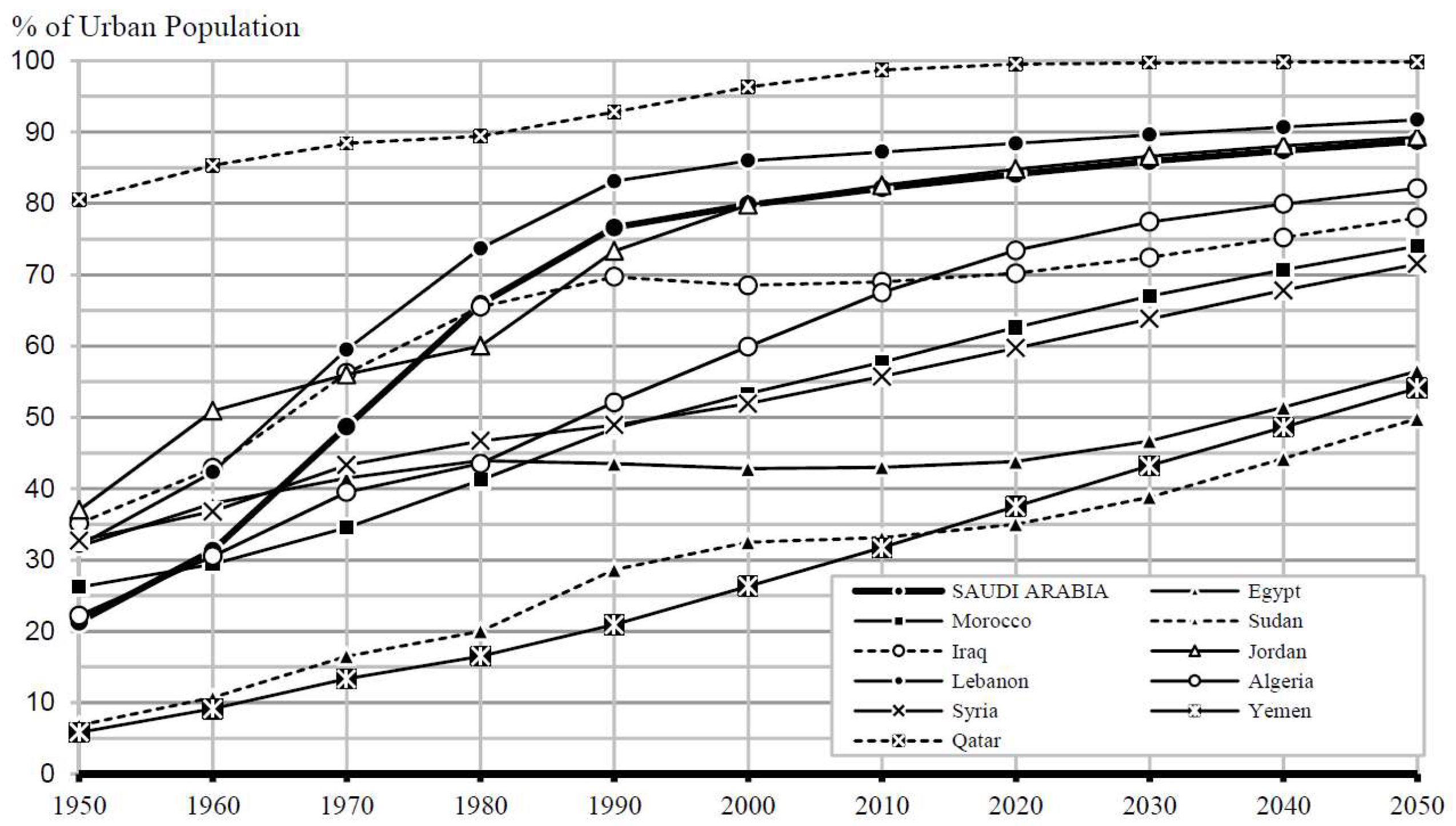
Figure 2.
The Six Core Dimensions of a Smart City Framework
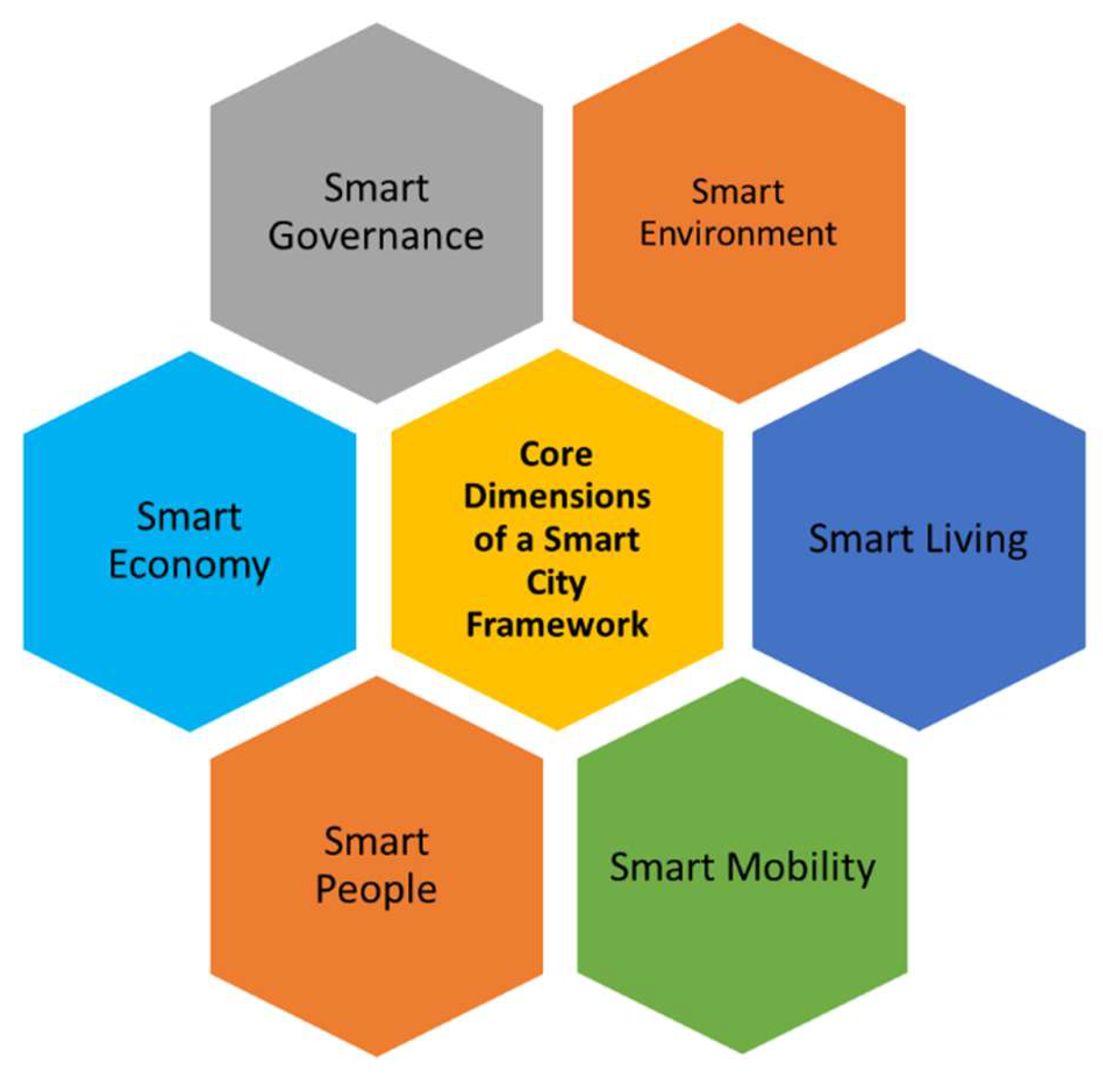
Figure 3.
Research Methodology Followed for the Study.
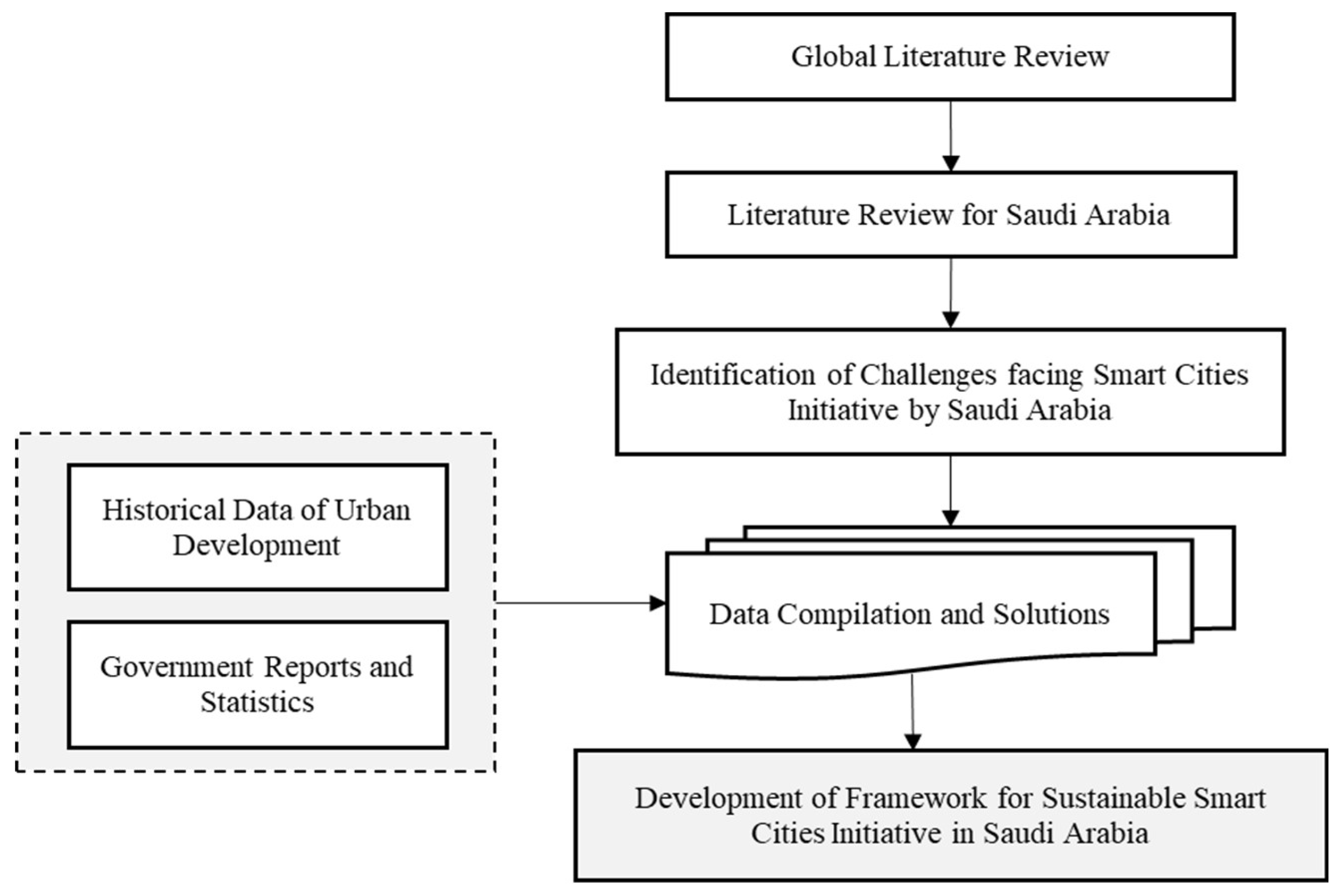
Figure 4.
Identified Challenges in Smart Cities Initiative Being Faced in Saudi Arabia.
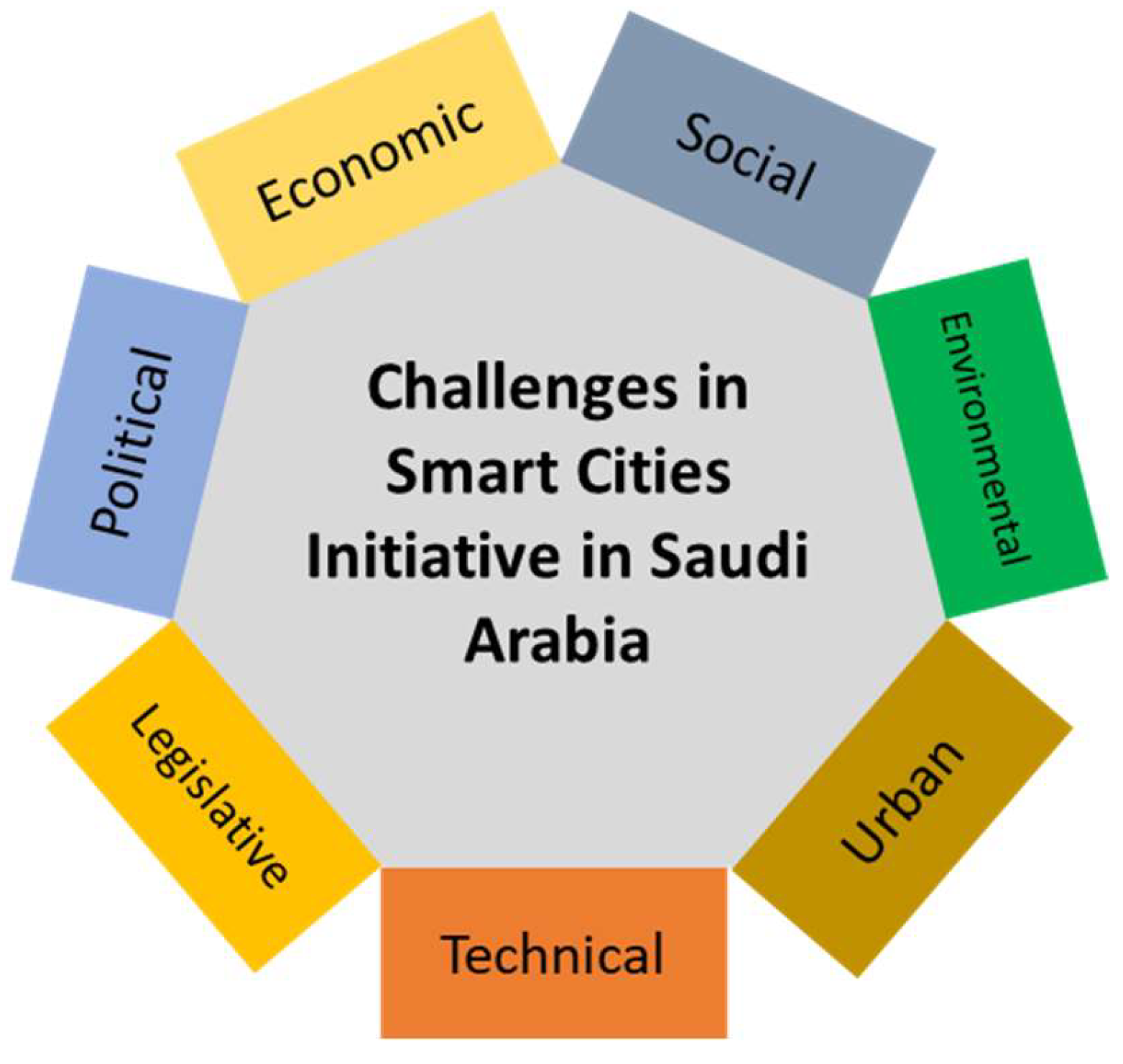
Figure 5.
Proposed Framework for Promoting Sustainable Smart Cities Initiative in Saudi Arabia
Disclaimer/Publisher’s Note: The statements, opinions and data contained in all publications are solely those of the individual author(s) and contributor(s) and not of MDPI and/or the editor(s). MDPI and/or the editor(s) disclaim responsibility for any injury to people or property resulting from any ideas, methods, instructions or products referred to in the content. |
© 2025 by the authors. Licensee MDPI, Basel, Switzerland. This article is an open access article distributed under the terms and conditions of the Creative Commons Attribution (CC BY) license (http://creativecommons.org/licenses/by/4.0/).
Copyright: This open access article is published under a Creative Commons CC BY 4.0 license, which permit the free download, distribution, and reuse, provided that the author and preprint are cited in any reuse.


