Preprint
Article

This version is not peer-reviewed.

Effect of Genotype and Storage Time on the Physical Traits of Eggs Laid by Italian Purebred Chicken Hens

Submitted:

17 December 2025

Posted:

19 December 2025

You are already at the latest version

Abstract

A trial was carried out to profile the quality of stored eggs, at 15 °C and 75% RH until to 21 d, of 10 Italian breeds of the Veneto region with different productive purpose (egg laying purpose: Polverara nera – PO-B, Polverara bianca – PO-W, Padovana camosciata – PA-C, Padovana dorata – PA-G, Padovana argentata – PA-S; dual-purpose: Millefiori di Lonigo – MF, Pepoi – PP, Ermellinata di Rovigo – ER, Robusta Lionata – RL, Robusta Maculata – RM. All the eggs were homogeneous for the hens age and rearing system (58week-old hens, outdoor rearing). The 1-d eggs showed differences (highest vs lowest, p < 0.05) for the egg weight (ER vs PO-B), and yolk to albumen ratio (PO-B vs RL). A factorial model, breed (10 breeds) x storage time (7 d and 21 d), was used for detecting the effect of breed, storage time and interaction on the eggshell traits and internal quality (weight loss rate, albumen and yolk quality). The effect of breed was significant (highest vs lowest, p < 0.05) for shape index (MF vs ER), eggshell lightness (PO-B, PO-W, PA-C, PA-G, PA-S vs RM), and eggshell thickness (PO-W, RM vs ER). The effect of storage was significant (p < 0.05) for all the internal quality traits. According to significant (p < 0.05) effect of breed, the highest weight loss rate was shown by RM and the lowest by PA-G. The highest Haugh units were shown by PP and the lowest by PA-S. The highest yolk index was shown by RL and the lowest by PA-C. From 7 until 21 d of storage, significant (p < 0.05) changes of the egg internal quality occurred according to the breed, as the thick albumen height and the yolk height decreased in all groups, with exception of PA-C and MF, probably for changes earlier than those of the other groups, whereas the yolk diameter did not change, with exception of PP. The results indicate that the natural decline of egg quality throughout storage varies differently between the breeds and more study is needed for understanding the changes of each egg component.

Keywords: 
;  ;  ;  ;  

1. Introduction

Egg quality, valuable through traits of eggshell, albumen and yolk is important both for the breeders and for the consumers. Differences exist between purebred and hybrid eggs involving egg weight, eggshell shape, eggshell ratio and breaking strenght, colour, and the yolk to albumen ratio [1,2,3,4]. Differences in the chemical composition and proportions of the main egg components may affect the egg quality throughout the storage [5,6,7]. Storage time and room conditions, as temperature and relative humidity, affect the chemical traits of egg components and the decline of their quality: the storage environmental conditions are important both for fertile and table eggs, as they may affect the embryonic development capacity [7] as well as the functional properties of their components [8,9]. As far as table eggs are concerned, the consumers may evaluate the quality of a stored egg by the aspect of albumen and the shape of the yolk. This last trait is affected by the vitelline membrane structure that, acting as a diffusion barrier, allows the passage of water and nutrients between the two egg components [10]. In chicken, the vitelline membrane structure and strength may vary, according to the age of the birds [7], to the environmental conditions where the eggs are stored [11,12], whereas no relevant effect of the rearing system was detected [13]. After an egg is laid, the eggshell, with its membrane and mineral layers and cuticle serves as an effective barrier to external microorganisms and pathogens [14,15], to water vapor exchange [6], and to external stress and transportation shock [16]. Therefore, eggshell quality defects may impair internal processes [17]. Data on the stored egg quality exists for the hybrid eggs [18,19], whereas results for the eggs laid by local breeds are scant [20,21]. In the Veneto region, in Northern Italy, many chicken purebreds exist, differing for phenotype, productive purposes and egg quality [22,23]. Polverara and Padovana are classified as egg-type breeds, for their body conformation, adult body weight and laying rate [23]. The presence of Padovana breed on the Veneto region dates from 1400, and Polverara is a more recent breed and derives from Padovana, even if only Padovana is characterised by a cranial hernia. They are also appreciated for their meat quality, which differentiates from the other local breeds for the kind (diameters and colour) of fibres [24]. Furthermore, Padovana is considered as a historic and traditional production of the Veneto region (Paduan chicken, Slow Food Presidia) [25]. Pepoi, Ermellinata di Rovigo, Robusta lionata and Robusta maculata are classified as dual-purpose breeds for meat and egg production, and Millefiori di Lonigo as dual-purpose breed for meat and brooding. PP and MF are two old local breeds; PP origin is dated back to the XIX century, but no precise data on their genetic origin exist; MF origins from the village of Lonigo, near to the city of Vicenza, where was first selected in 1934. The other breeds were created in Veneto during the 1950s: the ER breed originates from Sussex (tinted eggshell breed) and Rhode Island (brown eggshell breed) breeds, whereas for the RM and RL breeds, Brown Orpington and White America, two brown eggshell breeds were used [22,23].
In the light of profiling the chicken biodiversity [22], emphasizing the peculiar aspects and traits of the products, the study on the eggshell, albumen and yolk quality is addressed also on stored eggs, representing a powerful tool for correct and useful management of the breeds, and for prospective novel breeding and crosses schemes, also. The aim of this study was to assess the impact of genotypes on the quality changes in eggs during storage by analyzing eggs from ten local purebreds of the Veneto region.

2. Materials and Methods

2.1. Animals and Rearing Conditions

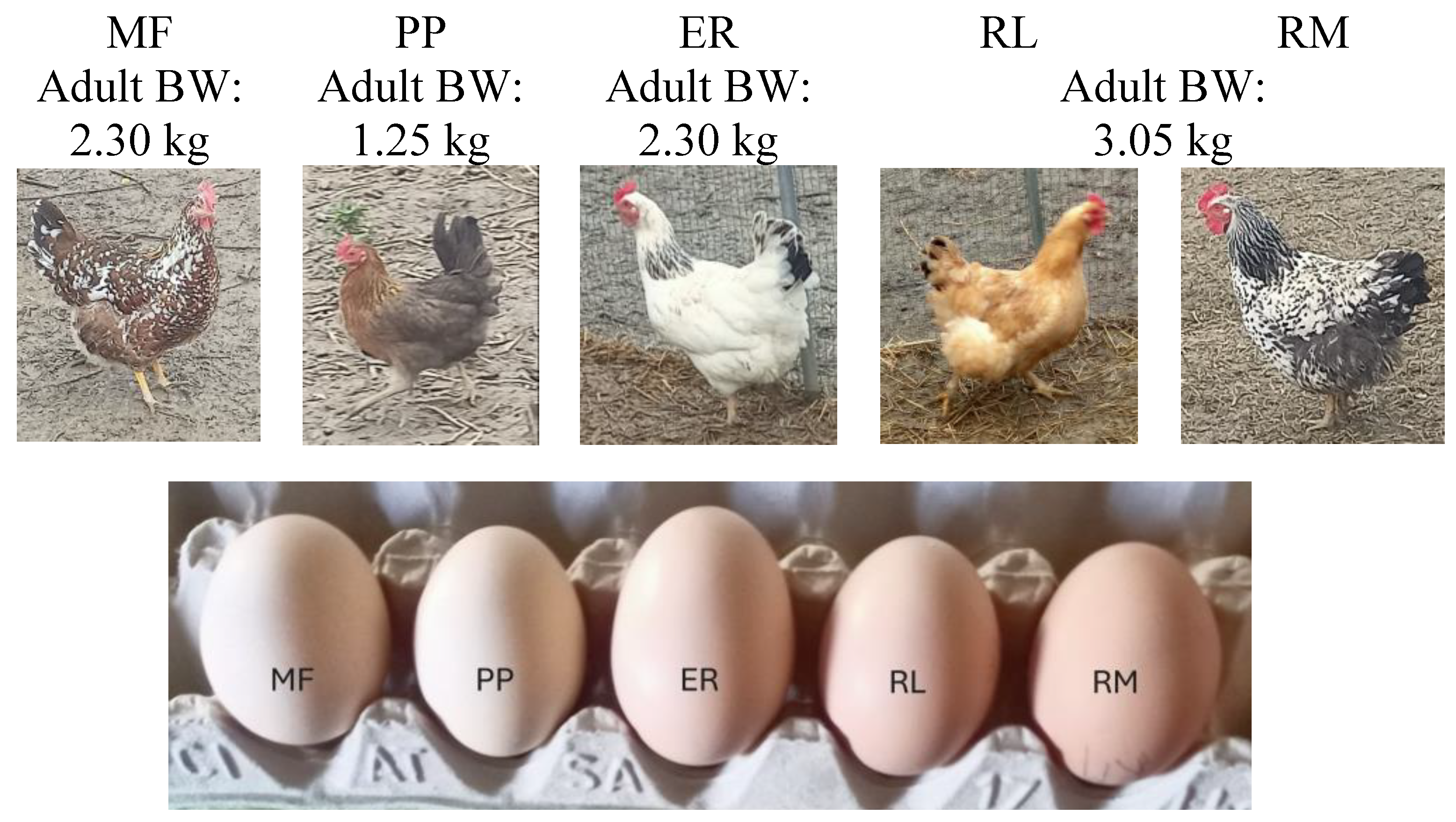
The eggs (800 eggs) laid by ten Italian chicken breeds were considered for the study. White eggshell eggs (Polverara nera – PO-B, Polverara bianca – PO-W, Padovana camosciata – PA-C, Padovana dorata – PA-G and Padovana argentata – PA-S) and tinted eggshell eggs (Millefiori di Lonigo – MF, Pepoi -PP, Ermellinata di Rovigo - ER, Robusta Lionata – RL, Robusta Maculata – RM) were compared. The breeds differ for body weight [23] and plumage colour (Figure 1, Figure 2).
PO-B shows black plumage and PO-W shows white plumage. PA-C has a chamois plumage (light brown feathers with white edge), PA-G has a golden plumage (brown feathers with black edge) and PA-S has a silver plumage (white feathers with black edge). MF shows “multiflower” mosaic plumage, PP has a golden plumage, and ER shows erminate plumage. RM plumage is predominantly white with black extremities in many regions of the body, black feathers of primaries and tail, RL shows a tawny plumage with black feathers of primaries and tail. The white eggshell purebreds are tufted breeds, characterized by the absence of comb, or it is not completely developed, whereas all the tinted eggshell breeds show single comb (Figure 1, Figure 2). All the purebred hens were reared on the same farm and under the same environmental conditions. The hens were reared outdoors, at the Centre for Poultry Biodiversity Conservation in the Veneto region (Ceregnano), in Northern Italy. For the study, the eggs sampled for each breed came from hens of same age (58 weeks). Throughout the last four weeks before the egg collection and sampling, the hen-day egg production ranged from 42 until to 68%, according to the breed. Each breed (50 hens) had free access to outdoor (5 m2/bird) space (equipped with linear drinkers) (average temperature, 19 °C), where the hens stayed throughout the day, and to indoor (4 hens/m2) space (wood shavings and straw litter, with perches and circular feeders; average temperature, 21 °C), mainly used for laying eggs (collective nests) and at night; the area (indoor and outdoor) available to each breed was divided by netting.
The hens were fed a commercial pelleted feed for laying (PG = 16%, ME = 11.5 MJ/kg, Ca = 4.2%, P = 0.6%). The feed consisted mainly of maize and soybean.

2.2. Data Collection on Egg Quality

The eggs were collected according to European Regulations (EC No. 1/2005 and EC No. 1099/2009) on animal care and welfare. The sampling carried out in the Centre for Poultry biodiversity did not affect the welfare of the hens as it occurred when the animals were not in the nests, thus avoiding their handling. All the collected eggs, throughout four consecutive days, were transferred (1-h trip at 18 °C - temperature, and 60% - relative humidity) to the locals where they were stored and analysed. After the arrival to the centre for storage and analyses (according to the date of laying), the eggs of each breed were numbered and weighed. The eggs were divided into three aliquots. The first portion, fresh 1-d eggs, was used for the measurements of egg weight, albumen weight and yolk weight (30 eggs/breed). The remaining eggs were divided into two portions according to the storage time: a first part (25 eggs/breed) was stored until to 7 days (7-d eggs), and the second (25 eggs/breed) until to 21 days (21-d eggs). The choise of checking the egg quality at these two storage times was motivated to the fact that the storage of eggs addressed to incubation is, as a rule, until 7 days after laying [7,26], whereas, according to European Regulation [27], the table eggs are marketable until 28 days from laying, distinguishing the eggs within 9 days after laying, as very fresh eggs. The temperature and the relative humidity of the room where the eggs were stored were 15 °C and 75%, respectively. For the measurements of the weight of the eggs and their components, an electronic balance (0.01 g) was used. The eggshell traits were measured (length, width, colour and thickness). The surface area and the volume were calculated according to the formula [28]:
Surface area = (3.155 -0.0136L+0.0115W) LW,
Volume = (0.6057 – 0.0018W) LW2,
where L = egg length and W = egg maximum width.
The surface area to volume ratio was calculated as surface area/volume x 100.
The eggshell colour was measured using a colorimeter (Chroma meter CR 300, Minolta Co, Ltd., Osaka, Japan), using the CIE scale [29]: the L, a* and b* values reflect lightness (0 = black, 100 = white), redness (−100 = green, 100 = red) and yellowness (−100 = blue, 100 = yellow), respectively. The length (longitudinal axis) and the maximum width (equatorial axis) of each egg were measured with callipers (0.01 mm), and the shape index was calculated as maximum width/ length × 100. The eggshell thickness was measured at equatorial level, using digital callipers (0.001 mm) (Mitutoyo, Japan). For determining the weight of the egg components, the eggshell was broken along the equatorial axis, the yolk was manually separated from the albumen, weighed, and the albumen weight was calculated as the difference between the weight of the egg and the sum of the weight of the yolk and eggshell (after drying at 50 °C per 12 h). The ratio of each egg component (yolk and albumen) was calculated as weight of each component/egg weight × 100.
After 7 and 21 days of storage, the eggs were weighed again and analysed for the eggshell traits and the internal quality (weight loss rate, Haugh Unit - HU, yolk index - YI). The weight loss rate was calculated as (1-d egg weight – stored egg weight)/1-d egg weight x 100. The stored egg weight was checked on 7-d and 21-d eggs. To calculate the HU [30] and the YI, each egg was weighed and broken, and the yolk and albumen were put on a glass plate to measure the thick albumen and the yolk height by means of a micrometre (0.01 mm) (Mitutoyo Co., Kawasaki, Japan). The yolk diameter was measured at two points by means of callipers (0.01 mm). The YI was calculated as the ratio between the yolk height and the average yolk diameter [19].

2.3. Statistical Analyses

The effect of breed on data of 1d-eggs (egg weight, albumen and yolk weight, yolk to albumen ratio) was evaluated through ANOVA following a 1-way model with breed as main effect. The eggshell traits (shape index, surface area to volume ratio, L, a*, b*, and thickness) and the internal egg quality traits (thick albumen height, yolk height, yolk diameter, weight loss rate, HU, YI) were evaluated through two-way ANOVA following a two factorial model (10 × 2), considering breed and storage time as main effects and their interaction. The proc GLM of SAS (SAS, Institute, Cary, NC, USA) was used. Significant differences among least square means were tested using Tukey’s test. Significance was set at p < 0.05.

3. Results

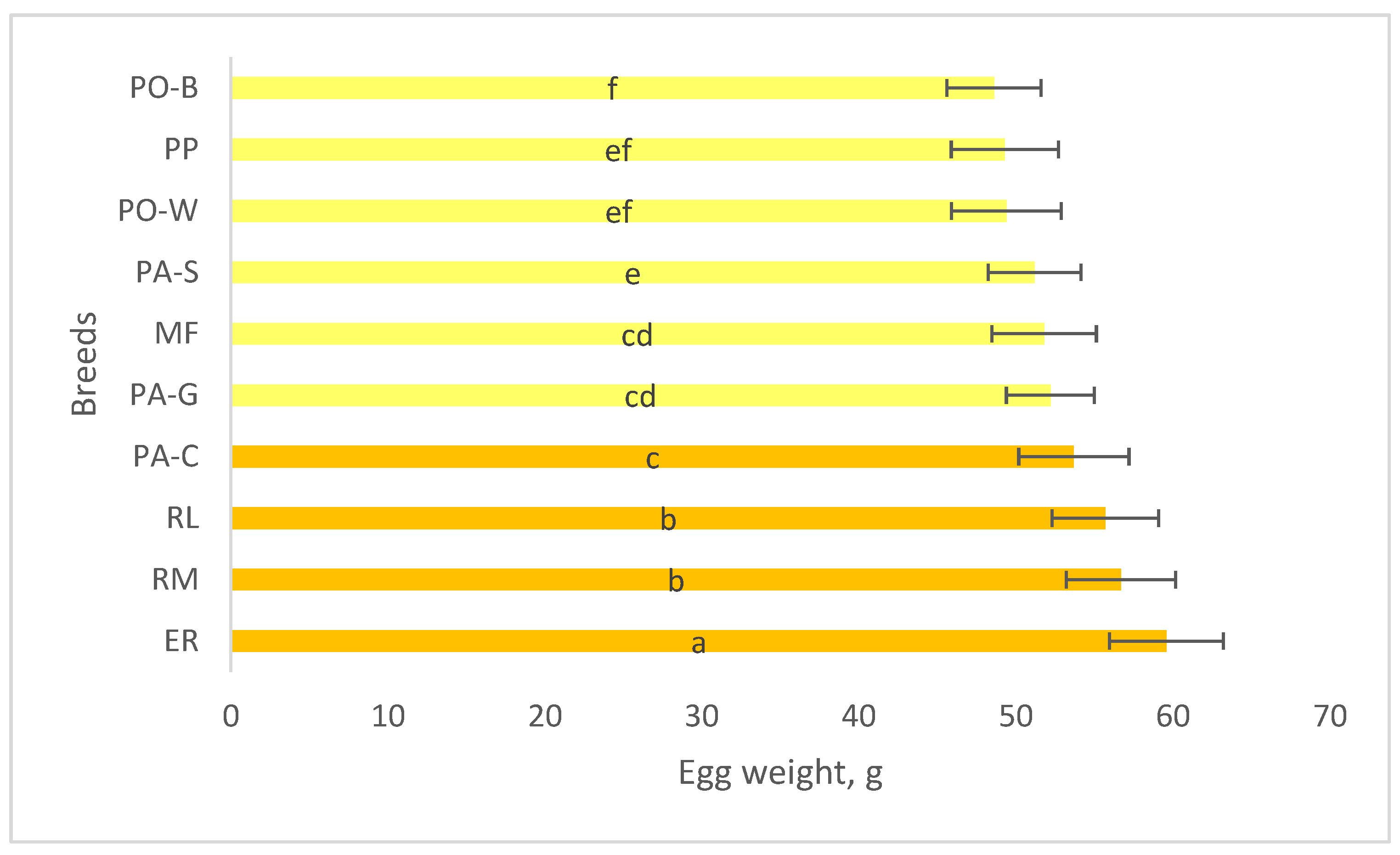
Before considering the effect of breed and storage time on the eggshell and internal traits of the eggs, it is opportune to profile the egg quality of the 1-day eggs, per breed. The egg weight is shown in Figure 3, and the internal egg components and the ratio between them are summarized in Table 1.
As shown in Figure 3, the studied breeds laid eggs with weight included into the first two egg size classes, according to the European Regulation [27]. On average, the PO-B, PP, PO-W, PA-S, MF and PA-G eggs are in small size class, and PA-C, RL, RM and ER eggs are in medium size class. Although the breeds are grouped according to the egg size class, significant differences between genotypes were shown. For the small size class, PO-B was the lowest (p < 0.05) and differed from PA-S, which was lower (p < 0.05) than MF and PA-G. PA-C, although similar to MF and PA-G, was lower (p < 0.05) than RL and RM; ER was the highest (p < 0.05).
In Table 1, the effect of breed on the internal egg components is shown. The yolk weight differed between the groups, being the highest (p < 0.05) in RM and the lowest (p < 0.05) in PP, whereas the other groups were intermediate.
The ER, RL and RM albumen weights were higher than (p < 0.05) that of PA-C, and PO-B was the lowest (p < 0.05); the other groups were intermediate between PA-C and PO-B. The yolk to albumen ratio was higher (p < 0.05) in PO-B eggs than in PP eggs, and PO-W, all Padovana groups, MF and RM were intermediate. The RL eggs were the lowest (p < 0.05); ER eggs were intermediate between PP and RL. All the purebred eggs, with exception of RL, showed a yolk to albumen ratio higher than 0.50, and PO-B and PA-S showed ratios of 0.60.
In Table 2 the effect of breed on the eggshell traits is shown. The MF eggs showed the highest (p < 0.05) shape index, PA-G and RM were lower (p < 0.05) than MF, ER showed the lowest values (p < 0.05), and the other genotypes were intermediate, with PO-B, PA-S and RL similar to ER. Polverara and Padovana group showed significant differences (p < 0.05) between them according to the different plumage colour. The surface area to volume ratio was the highest (p < 0.05) in PO-B, PO-W and PP and the lowest (p < 0.05) in ER; the Padovana groups and MF were quite similar and higher (p < 0.05) than ER, RL and RM.
The highest lightness (p < 0.05) was shown in Polverara and Padovana breeds and the lowest (p < 0.05) in RM. The MF, PP, RL and ER breeds showed different (p < 0.05) lightness between them, with decreasing, respectively, values. The a* index was higher (p < 0.05) in RM than in ER, which was higher (p < 0.05) than RL; RL was higher (p < 0.05) than MF and PP. The lowest (p < 0.05) values were shown by Polverara and Padovana groups. The ER and RM eggshell showed the highest (p < 0.05) b* index and Polverara and Padovana groups showed the lowest (p < 0.05). RL and PP were higher (p < 0.05) than MF. The highest (p < 0.05) eggshell thickness was in RM and PO-W eggs, and the lowest (p < 0.05) in the ER eggs, whereas the other groups were intermediate. No significant effect for storage and interaction was shown (Table 3).
The results of the two-way ANOVA for the albumen and yolk traits of the stored eggs are shown in Table 3. The effect of breed was significant for all the egg internal traits studied, as well as the effect of storage. The interaction effect was significant for the yolk diameter.
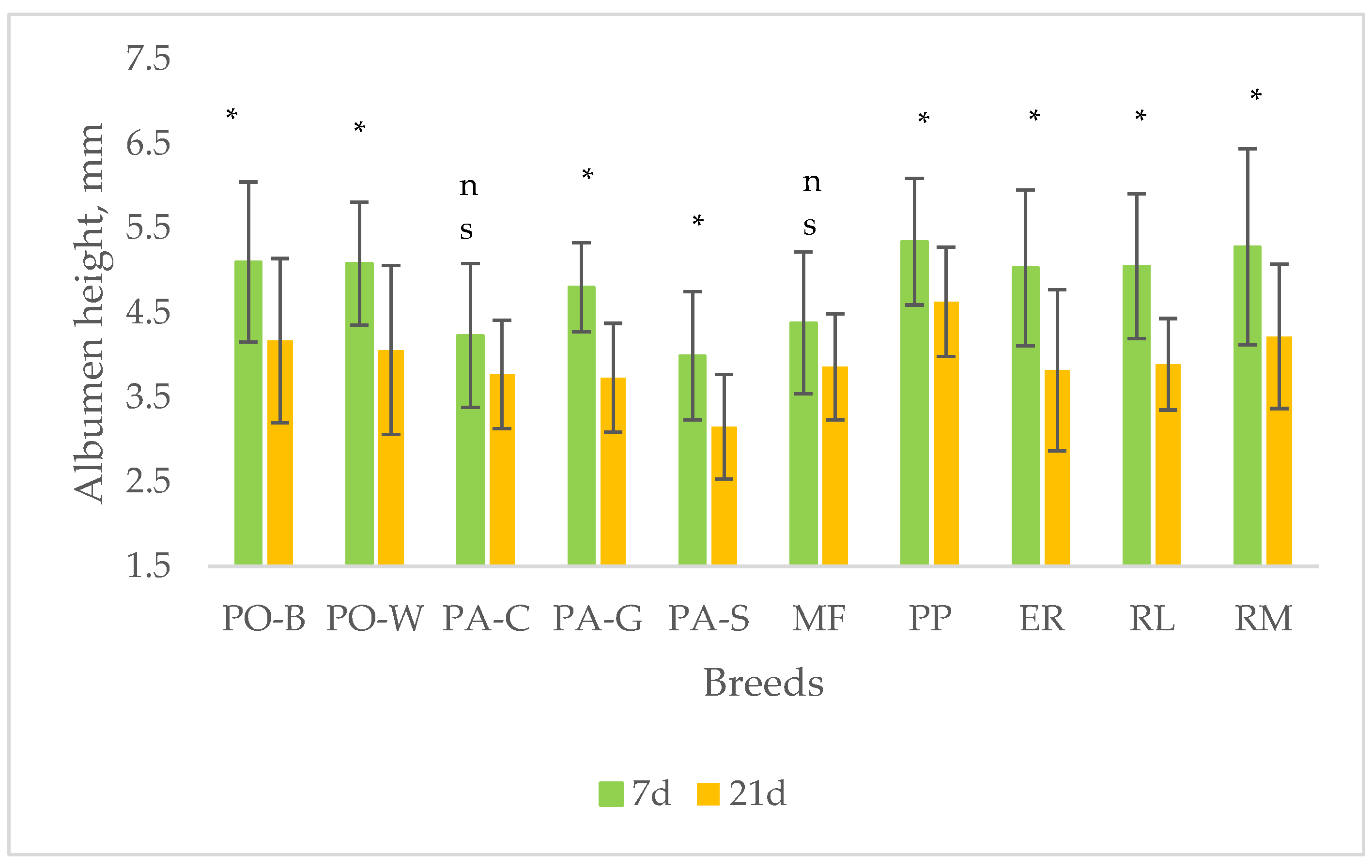
As shown in Figure 3, throughout storage, the thick albumen height decreased for almost all breeds, as the decrease was not statistically significant (p < 0.05) for PA-C and MF.
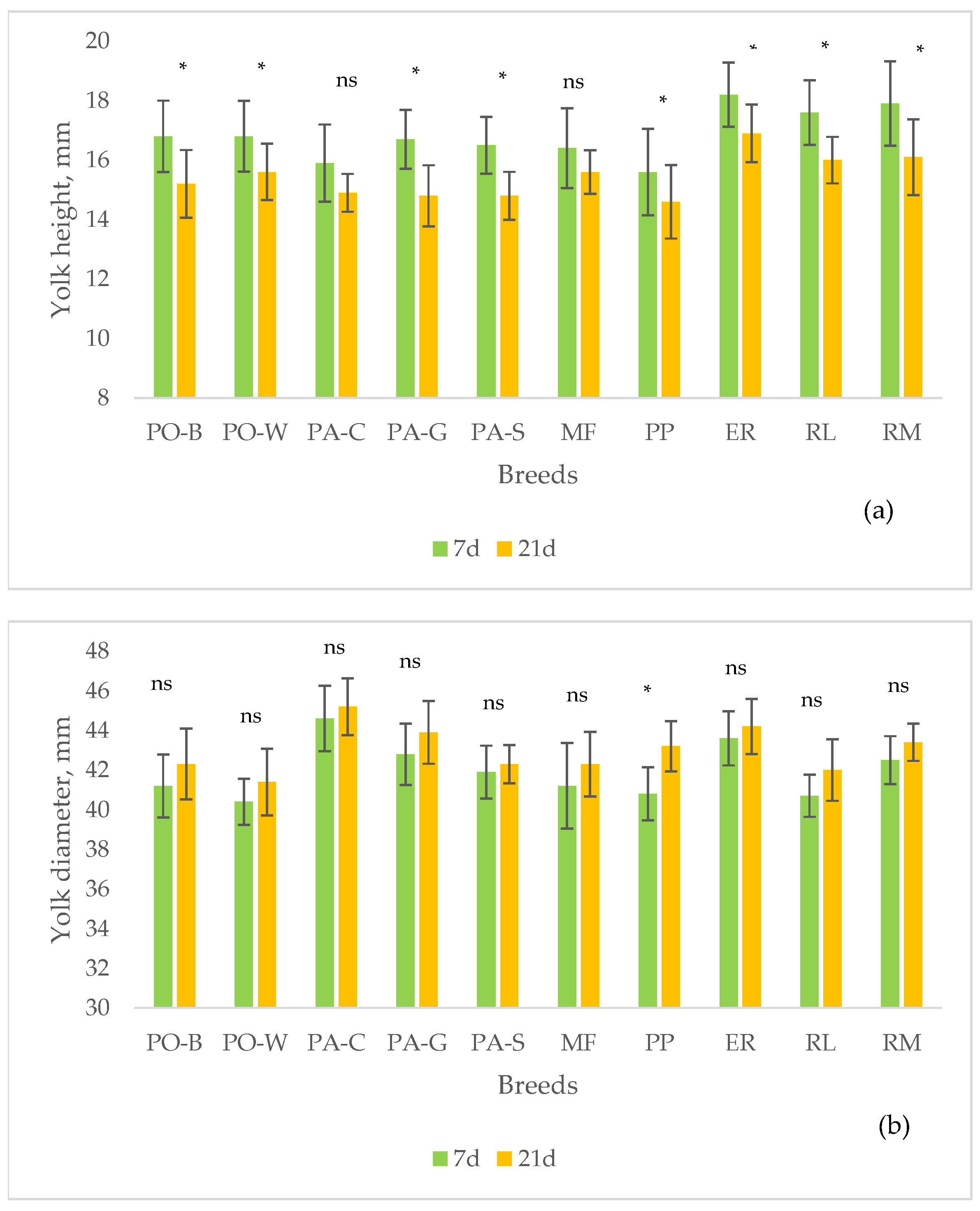
The yolk shape changed throughout storage according to the breed, as shown by Figure 4. From 7 d (green bars) until to 21 d (orange bars) of storage, the yolk height (Figure 4a) significantly (p < 0.05) decreased in all breeds, with exception of PA-C and MF, whereas the yolk diameter (Figure 4b) significantly (p < 0.05) increased only in PP.
The Table 5 shows the effect of the breed on the egg weight loss rate, HU and YI, and the interaction effect at 7 and 21 days of storage. The overall effect of breed on the weight loss rate was higher (p < 0.05) in RM than in MF and RL; the lowest (p < 0.05) was in PA-G, whereas the other groups were intermediate. After 7 days of storage, the weight loss rate was the highest (p < 0.05) in RM and the lowest (p < 0.05) in PA-C and PA-G. After 21 days of storage, the highest (p < 0.05) weight loss rate was in RM and the lowest (p < 0.05) in ER. The HU differed (p < 0.05) between the breeds: the highest (p < 0.05) values were in PP group and the lowest (p < 0.05) in PA-S; the other groups were intermediate, more similar to PP (especially PO-B, PO-W) or to PA-S (especially PA-C, ER). After 7 days of storage, PP showed the highest (p < 0.05) HU, and the PA-C and PA-S showed the lowest (p < 0.05); the other breeds were intermediate. After 21 days of storage, the PP showed the highest (p < 0.05) HU, and the PA-S and ER groups showed the lowest (p < 0.05); the others were intermediate.
Figure 3. Effect of storage on the thick albumen height (means ± SD) of eggs laid by purebred hens. PO-B: Polverara nera; PO-W: Polverara bianca; PA-C: Padovana camosciata; PA-G: Padovana dorata; PA-S: Padovana argentata; MF: Millefiori di Lonigo; PP: Pepoi; ER: Ermellinata di Rovigo; RL: Robusta Lionata; RM: Robusta Maculata. * indicate statistically different means (p < 0.05) between albumen height at 7 d (green bars) and 21 d (orange bars) of storage per each breed. Observations (n): 25/ storage time per breed.
Preprints 190228 g004
Figure 4. Effect of storage on the yolk height (means ± SD) (a) and yolk diameter (means ± SD) (b) of eggs laid by purebred hens. PO-B: Polverara nera; PO-W: Polverara bianca; PA-C: Padovana camosciata; PA-G: Padovana dorata; PA-S: Padovana argentata; MF: Millefiori di Lonigo; PP: Pepoi; ER: Ermellinata di Rovigo; RL: Robusta Lionata; RM: Robusta Maculata. * indicate statistically different means (p < 0.05) between yolk traits at 7 d (green bars) and 21 d (orange bars) of storage per each breed. Observations (n): 25/storage time per breed.
Preprints 190228 g005
The HU decreased from 7 until to 21 days, with significant (p < 0.05) differences in PO-B, PO-W, PA-G, ER and RL. As well as the YI is concerned, RL showed the highest (p < 0.05) values and PA-C showed the lowest (p < 0.05), the other groups were intermediate, being more similar to RL (especially PO-W, ER and RM) and to PA-C (especially PA-G and PP). After 7 days of storage, the RL eggs showed the highest (p < 0.05) yolk index and the PA-C eggs showed the lowest (p < 0.05). After 21 days of storage, ER and RL showed the highest (p < 0.05) values, and PA-C and PA-G the lowest (p < 0.05). The other groups were intermediate. The effect of storage on the yolk index decrease was significant (p < 0.01) in all the breeds, with exception of PA-C and MF.

4. Discussion

The egg size depends on the body dimensions of the bird, that is affected by the genotype, but also by the age and physiological condition of the hen [31,32]. It is worth remembering that all the purebred hens were contemporary, but some of them started lying earlier than others, as previously reported [33]. At the time of the egg collection (April), some of the breeds were laying from 13 weeks (from January), whereas other breeds from about 26 weeks (they started laying from the late summer-beginning of autumn of the previous year, September). This fact is due to the different productive purpose of the breeds, as well as to the presumably interaction between the physiological status and the environmental rearing conditions. In fact, as generally occurs for local breeds, the hens were reared outdoors and exposed to the changes of seasonal environmental conditions. An interaction effect between the breed and the natural photoperiod and environmental temperature may have affected the onset of laying of the hens reared outdoors, and consequently the egg size at the beginning and throughout the production curve [31,34]. The egg weight increase is genetically controlled in hybrid strains for obtaining large and very large size eggs, not only based on the body weight of the hens and yolk [35], but also by means of genetically increase of the weight of the albumen [5]. In the current trial, the breeds laid small and medium size eggs, the yolk to albumen ratio differed between the purebreds, and showed, in most cases, values higher than those of the hybrid eggs of large size [5]. Other authors found similar results for the yolk to albumen ratio, from the comparison between purebred eggs and hybrid eggs [1,2]. For the Padovana breeds, the different plumage colour seems to affect the egg size probably in relation to the body growth rate and body size at start of laying, as at 58 weeks of age the PA-C hens laid larger eggs especially than PA-S. A previous research showed an earlier body development in PA-C than in PA-S females at 28 weeks of age, when the PA-C hens started laying first eggs [36]. Although the eggshell is not an edible egg component for the consumer, an egg may be evaluated for its eggshell colour and shape. In the case of purebred eggs, the eggshell colour may allow consumers to distinguish the genotypes, not only the white-eggshell from the tinted-eggshell genotypes, but also the single genotype within the tinted eggshell groups, especially when it differs for other eggshell traits, such as shape and size. These differences between the breeds studied were detectable also at previous ages [37]. The colour traits measured on the eggshell of MF place this breed between the colour values of the white- and tinted-eggshell breeds and stay before the PP eggshell colour traits. Although the afore mentioned eggshell traits may influence the choise of the consumer according to a subjective criterion of preference, each eggshell trait contributes to maintaining the quality of the internal components. The pigments laid during the eggshell formation are primarly determined by the genotype and age of the hen and aim to preserve the internal quality of the egg [38,39], also for avian embryos [40]. The eggshell shape is established along the oviduct, at the level of magnum, and it depends on endogenous factors of the hen [41]. The eggshell is composed of four layers of different chemical composition, with the mineral layer thickness accounting for more than 70% of the total thickness [42]. Each layer of the eggshell works as a barrier controlling the passage of CO2 and water vapor from the internal egg compartments, thus controlling the egg weight loss [6], and the spoilage of microorganisms towards albumen and yolk [15,43]. The eggshell thickness is affected by many factors, such as genotype, age of the hen, dietary calcium intake, environmental conditions, laying rate [15,16,38]. Many factors affect the weight loss rate of an egg during storage, as they mainly involve the traits of the eggshell [38] and the quality of the albumen [7,15,44], even if the storage temperature is a key factor [8,9]. Eggs lose more of their initial weight due to evaporation of water, and, when they are stored for longer periods of time, also the loss of CO2, ammonia, nitrogen and hydrogen sulfide gas from the albumen occurs [8]. The results of this trial did not clearly indicate which single egg trait is able to affect weight loss, as the lowest were observed in PA-G and the highest in RM, breeds showing non-homogeneous egg traits. After 7 days of storage, the lowest HU was shown by the PA-C and PA-S eggs, and after 21 days of storage, by PA-S and ER eggs. The PP eggs showed the highest HU. The changes of the internal egg components occur after an egg is laid, but the entity of such changes depends on the intrinsic egg quality and on the interaction with the environmental storage condition and duration [9,44]. The eggshell membrane layer, the thin and thick albumen, the vitelline membrane and its yolk content chemically and physically change throughout the storage time [8,19,44,45], even if the rate of such changes differs according to many factors [8,18,44]. After 7 days of storage, the PA-C and PP eggs showed lower YI than Polverara and ER, RL and RM eggs. After three weeks of storage, PA-C and PA-G eggs showed significantly lower YI than PO-W, MF, ER and RL groups. The evaluation of the YI reflects the changes of the yolk during the storage, for the passage of the albumen and yolk molecules through the vitelline membrane and, thus, the change of the yolk shape. YI allows to evaluate the response of the vitelline membrane to the variations of the yolk content and quality without measuring the effective vitelline membrane strength and resistance to fracture, but only its weakening. Even if vitelline membrane strength reduction mechanisms still need to be fully understood due to the limited literature existing [19,44], it has been shown that its weakening may result from quantitative changes in the proteins responsible for its structural and mechanical properties [11], especially during high-temperature storage [12]. The eggs differing for the weight and proportions of their internal components, such as ER and RM, showed similar yolk shape after storage. According to the data of the current trial, the YI differed between the breeds from the first week of storage, with a progressive decrease throughout the weeks. Although the exact mechanisms that induced such changes in albumen and yolk are not completely known, some hypothesis may be made. The PA-C and PA-G eggs showed the lowest weight loss rate, indicating that the main changes of albumen could have interested the yolk, with passage of water between the two components [9]. Other authors stated that the albumen and yolk quality and the structure of the vitelline membrane that is involved in the flow between these two components could be indirectly affected by the overall laying rate of the hens [46]. Until the time of the egg sampling, the Padovana groups showed higher egg production than those of the other purebreds, both for the laying rate and for the total eggs [21,23,37]. Among the purebreds, the Padovana and Polverara groups, as laying-type breeds, are characterized by a higher laying rate and total number of laid eggs than those of dual-purpose breeds [37], especially than RL, but for all these local breeds other factors should be considered in future study. The clutch length is a typical trait characterizing each breed, and it is responsible for the persistence of the laying curve which for the purebreds is lower than those of the hybrid genotypes [4] and may be partially responsible for the internal quality of an egg at laying [47]. As stated by Marzec et al. [46] analyzing the eggs of different poultry species, a strong positive correlation exists between the strength of the vitelline membrane and the YI, and a negative correlation between the YI and viscosity. In a fresh egg, the yolk viscosity depends on the chemical composition of the yolk, that may be affected by the storage environmental conditions and time, pH value, specific weight and water content. The laying rate and the total egg mass production is a decisive factor influencing the viscosity of the egg yolk [46]. The result of this trial seems to confirm, almost partially, the statements of previous research: the eggs showed different YI between the breeds, with the lowest values for the genotypes exhibiting the highest laying rate. However, the authors stated that the susceptibility of yolk viscosity to storage duration is much higher than that referred to the albumen quality such as HU and pH of albumen [46]. The results of the current trial seem to confirm these statements, as the decrease in the YI was more significant than that of the HU. The factors and exact mechanisms affecting the egg traits involved with the egg changes throughout the storage are partially unknown, and the purebreds showed different results. The reasons may be due to different factors, of endogenous and exogenous origin, such as the clutch size and order of the egg laid inside it, age at first egg and weeks of laying, and adequate nutrients intake. This last factor is important both for the yolk and albumen composition and their changes throughout storage [5,35].

5. Conclusions

The quality of albumen and yolk of eggs stored until to 7 and 21 days, measured by means of the egg weight loss rate, HU and YI, shows differences between the local purebreds. The PP and Polverara breeds showed a more favourable HU than PA-C, PA-S and ER. The PO-W, ER, RL and RM showed a more favourable YI than PA-C and PA-G. These are first results on the quality of stored eggs laid by the local purebred hens of the Veneto region. These results contribute to adding knowledge for appropriate management program of these breeds: for an expansion of the marketing of their eggs, although they are part of a niche market, more study is needed to elucidate changes in the egg quality and factors affecting it. Knowledge of the nutrient requirements of each breed along the laying period may be an important step. Profiling the quality of the eggs, fresh and stored, of the local purebreds allows addressing the product of each genotype for an appropriate use in cooking preparations. Knowledge of the changes of the egg characteristics during storage needs more studies both for the eggs addressed to incubation and for the table eggs, and it is meaningful for future novel crossed genotypes.

Funding

This research was supported by DOR Project “Chemical and physical traits of eggs laid by purebred hens from the Veneto region” (University of Padova, grant number 2013990/22).

Institutional Review Board Statement

Yield performance data and eggs for this research were collected in the Conservation Center “Sasse Rami” (Ceregnano, Italy) according to the European Regulations (EC No. 1/2005 and EC No. 1099/2009) on animal care and welfare. The sampling did not affect the welfare of the hens as it was carried out when the animals were not in the nests, thus avoiding their handling.

Data Availability Statement

Not applicable.

Acknowledgments

Author would like to thank the Conservation Center “Sasse Rami” (Ceregnano, Italy) for technical support and photos of PO-B, PA-G and PA-S hens.

Conflicts of Interest

The author declares no conflict of interest.

References

  1. Sirri, F.; Zampiga, M.; Soglia, F.; Meluzzi, A.; Cavani, C.; Petracci, M. Quality characterization of eggs from Romagnola hens, an Italian local breed. Poult. Sci. 2018, 97, 4131–4136. [Google Scholar] [CrossRef]
  2. Lordelo, M.; Cid, J.; Cordovil, C.M.D.S.; Alves, S.P.; Bessa, R.J.B.; Carolino, I. A comparison between the quality of eggs from indigenous chicken breeds and that from commercial layers. Poult. Sci. 2020, 99, 1768–1776. [Google Scholar] [CrossRef]
  3. Ianni, A.; Bartolini, D.; Bennato, F.; Martino, G. Egg quality from Nera Atriana, a local poultry breed of the Abruzzo region (Italy), and Isa Brown hens reared under free range conditions. Animals 2021, 11, 257. [Google Scholar] [CrossRef] [PubMed]
  4. Schreiter, R.; Freick, M. Laying performance characteristics, egg quality, and integument condition of Saxonian chickens and German Langshan bantams in a free-range system. J. Appl. Poult. Res. 2023, 32, 100359. [Google Scholar] [CrossRef]
  5. Zeidler, G.; Bell, d.; Weaver, W.D., Jr. Shell eggs and their nutritional value. In Chicken Meat and Egg Production, 5th ed.; Kluwer Academic Publisher: Norwell, MA, USA, 2002; pp. 1109–1128. [Google Scholar]
  6. Wang, D.; Li, Y.; Liu, L.; Liu, J.; Bao, M.; Yang, N.; Zhuo-Cheng, H.; Ning, Z. Traits of eggshell and shell membranes of translucent eggs. Poult. Sci. 2017, 96, 351–358. [Google Scholar] [CrossRef] [PubMed]
  7. Nasri, H.; Brand van den, H.; Najjar, T.; Bouzouaia, M. Egg storage and breeder age impact on egg quality and embryo development. J. Anim. Physiol. Anim. Nutr. 2020, 104, 257–268. [Google Scholar] [CrossRef] [PubMed]
  8. Yimenu, S.M.; Kim, J.Y.; Koo, J.; Kim, B.S. Predictive modeling for monitoring egg freshness during variable temperature storage conditions. Poult. Sci. 2017, 96, 2811–2819. [Google Scholar] [CrossRef] [PubMed]
  9. Luo, W.; Xue, H.; Xiong, C.; Li, J.; Tu, Y.; Zhao, Y. Effects of temperature on quality of preserved eggs during storage. Poult. Sci. 2020, 99, 3144–3157. [Google Scholar] [CrossRef]
  10. Damaziak, K.; Kieliszek, M.; Buclaw, M. Characterization of structure and protein of vitelline membranes of precocial (ring-necked pheasant, gray partridge) and superaltricial (cockatiel parrot, domestic pigeon) birds. PlosOne 2020, 15(1), e0228310. [Google Scholar] [CrossRef]
  11. Zhou, Y.; Qiu, N.; Mine, Y.; Meng, Y.; Keast, R.; Zhu, Ch. Quantitative comparative proteomic analysis of chicken egg vitelline membrane proteins during high-temperature storage. J. Agric. Food Chem. 2020, 68, 9816–9825. [Google Scholar] [CrossRef]
  12. Zhou, Y.; Qiu, N.; Mine, Y.; Keast, R.; Meng, Y. Comparative N-glycoproteomic analysis provides novel insights into the deterioration mechanisms in chicken egg vitelline membrane during high-temperature storage. J. Agric. Food Chem. 2021, 69, 2354–2363. [Google Scholar] [CrossRef] [PubMed]
  13. Alig, B.N.; Malheiros, R.D.; Anderson, K.E. Evaluation of physical egg quality parameters of commercial brown laying hens housed in five production systems. Animals 2023, 13, 716. [Google Scholar] [CrossRef] [PubMed]
  14. Chen, X.; Li, X.; Guo, Y.; Li, W.; Song, J.; Xu, G.; Yang, N.; Zheng, J. Impact of cuticle quality and eggshell thickness on egg bacterial efficiency. Poult. Sci. 2019, 98, 940–948. [Google Scholar] [CrossRef] [PubMed]
  15. Chousalkar, K.K.; Samiullah, K.; McWhorter, A.R. Microbial quality, safety and storage of eggs. Current Opinion in Food Science 2021, 38, 91–95. [Google Scholar] [CrossRef]
  16. Ketta, M.; Tůmová, E. Eggshell structure, measurements, and quality-affecting factors in laying hens: a review. Czech. J Anim. Sci. 2016, 61, 299–309. [Google Scholar] [CrossRef]
  17. Cheng, X.; Ning, Z. Research progress on bird eggshell quality defects: a review. Poult. Sci. 2023, 102, 102283. [Google Scholar] [CrossRef]
  18. Kirunda, D.F.K.; Mc Kee, S.R. Relating quality characteristic of aged eggs and fresh eggs to vitelline membrane strenght as determined by a texture analyzer. Poult. Sci. 2000, 79, 1189–1193. [Google Scholar] [CrossRef]
  19. Damaziak, K.; Marzec, A.; Riedel, J.; Szeliga, J.; Koczywąs, E.; Cisneros, F.; Michalczuk, M.; Lukasiewicz, M.; Gozdowski, D.; Siennicka, A.; Kowalska, H.; Niemiec, J.; Lenart, A. Effect of dietary canthaxanthin and iodine on the production performance and egg quality of laying hens. Poult. Sci. 2018, 97, 4008–4019. [Google Scholar] [CrossRef]
  20. Ahlborn, G.; Sheldon, B.W. Enzymatic and microbiological inhibitory activity in eggshell membranes as influenced by layer strains and age and storage variables. Poult. Sci. 2005, 84, 1935–1941. [Google Scholar] [CrossRef]
  21. Rizzi, C. Albumen quality of fresh and stored table eggs: hen genotype as a further chance for consumer choise. Animals 2021, 11, 135. [Google Scholar] [CrossRef]
  22. FAO. Food and Agriculture Organization of the United Nations. Available online: https://www.fao.org/dad-is/browse-by-country-and-species/en/ (accessed on 21 January 2025).
  23. Cassandro, M.; Baruchello, M.; Catania, S.; Gobbo, F.; Moronato, M.L.; Baldan, G.; Carnio, D.; Parise, M.; Rizzi, C. Conservazione e Caratterizzazione Delle Razze Avicole Venete–Programma Bionet. Rete Regionale Per la Conservazione e Caratterizzazione Della Biodiversità di Interesse Agrario. In Gruppo di Lavoro Avicoli; Veneto Agricoltura: Legnaro, Italy, 2014. [Google Scholar]
  24. Verdiglione, R.; Cassandro, M. Characterization of muscle fiber type in the pectoralis major muscle of slow-growing local and commercial chicken strains. Poult. Sci. 2013, 92, 2433–2437. [Google Scholar] [CrossRef] [PubMed]
  25. Slow Food Presidia. Available online: https://slowfood.com/biodiversity-programs/presidia/ (accessed on 25 October 2025).
  26. Mauldin, J.M.; Bell, d.; Weaver, W.D., Jr. Operating the hatchery. In Chicken Meat and Egg Production, 5th ed.; Kluwer Academic Publisher: Norwell, MA, USA, 2002; pp. 775–798. [Google Scholar]
  27. Commission Delegated Regulation (EU) No 2023/2465 of 17 August 2023 supplementing Regulation (EU) No 1308/2013 of the European Parliament and of the Council as regards marketing standards for eggs and repealing Commission Regulation (EC) No 589/2008. Official Journal of the European Union of 8.11.2023, L. Available online: https://eur-lex.europa.eu (accessed on 25 October 2025).
  28. Narushin, V.G. Egg geometry calculation using the measurements of lenght and breath. Poult. Sci. 2005, 84, 482–484. [Google Scholar] [CrossRef] [PubMed]
  29. Commission International de l’Eclairage. CIELab Color System; CIE: Paris, France, 1976. [Google Scholar]
  30. Haugh, R.R. The Haugh unit for measuring egg quality. U.S. Egg Poult. Mag. 1937, 43, 552–555, 572–573. [Google Scholar]
  31. Bell, D.D.; Bell, d.; Weaver, W.D., Jr. Cage management for layers. In Chicken Meat and Egg Production, 5th ed.; Kluwer Academic Publisher: Norwell, MA, USA, 2002; pp. 1007–1040. [Google Scholar]
  32. Réhault-Godbert, S.; Guyot, N.; Nys, Y. The golden egg: nutritional value, bioactivities, and emerging benefits for human health. Nutrients 2019, 11, 684. [Google Scholar] [CrossRef]
  33. Rizzi, C. A study on egg production and quality according to the age of four chicken dual-purpose purebred hens reared outdoors. Animals 2023, 13, 3064. [Google Scholar] [CrossRef]
  34. Bell, D.D.; Bell, d.; Weaver, W.D., Jr. Egg production and egg weight standards for table-egg layers. In Chicken Meat and Egg Production, 5th ed.; Kluwer Academic Publisher: Norwell, MA, USA, 2002; pp. 1079–1090. [Google Scholar]
  35. Coon, C.; Bell, d.; Weaver, W.D., Jr. Feeding commercial egg-type layers. In Chicken Meat and Egg Production, 5th ed.; Kluwer Academic Publisher: Norwell, MA, USA, 2002; pp. 287–328. [Google Scholar]
  36. Rizzi, C. Plumage colour in Padovana chicken breed: growth performance and carcass quality. Italian J. Anim. Sci. 2017. [Google Scholar] [CrossRef]
  37. Rizzi, C.; Cendron, F.; Penasa, M.; Cassandro, M. Egg quality of Italian local chicken breeds: I. Yield performance and physical characteristics. Animals 2023, 13, 148. [Google Scholar] [CrossRef]
  38. Samiullah, S.; Omar, A.S.; Roberts, J.; Chousalkar, K. Effect of production system and flock age on eggshell and egg internal quality measurements. Poult. Sci. 2017, 96, 246–258. [Google Scholar] [CrossRef]
  39. Wilson, P. Recent advances in avian egg science: A review. Poult. Sci. 2017, 0, 1–8. [Google Scholar] [CrossRef]
  40. Maurer, G.; Portugal, S.J.; Hauber, M.E.; Mikšík, I.; Russell, D.G.D.; Cassey, P. First light for avian embryos: eggshell thickness and pigmentation mediate variation in development and UV exposure in wild bird eggs. Functional Ecology 2015, 29, 209–218. [Google Scholar] [CrossRef]
  41. Caswell Stoddard, M.; Yong, E.H.; Akkayanak, D.; Sheard, C.; Tobias, J.A.; Mahadevan, L. Avian egg shape: Form, function, and evolution. Science 2017, 356, 1249–1254. [Google Scholar] [CrossRef]
  42. Hincke, M.T. The eggshell: structure, composition and mineralization. J. Front. Biosci. 2012, 17, 1266–1280. [Google Scholar] [CrossRef]
  43. Benavides-Reyes, C.; Folegatti, E.; Domingues-Gasca, N.; Litta, G.; Sanchez-Rodriguez, E.; Rodriguez-Navarro, A.B.; Faruk, M.U. Research note: Changes in eggshell quality and microstructure related to hen age during a productive cycle. Poult. Sci. 2021, 100, 101287. [Google Scholar] [CrossRef]
  44. Marzec, A.; Damaziak, K.; Kowalska, H.; Riedel., J.; Michalczuk, M.; Koczywąs, E.; Cisneros, F.; Lenart, A.; Niemiec, J. Effect of hens age and storage time on functional and physiochemical properties of eggs. J. Appl. Poult. Res. 2019, 28, 290–300. [Google Scholar] [CrossRef]
  45. Kumbar, V.; Nedomova, S.; Trnka, J.; Buchar, J.; Pytel, R. Effect of storage duration on the rheological properties of goose liquid egg products and eggshell membranes. Poult. Sci. 2016, 95, 1693–1701. [Google Scholar] [CrossRef]
  46. Marzec, A.; Michalczuk, M.; Damaziak, K.; Mieszkowska, A.; Lenart, A.; Niemiec, J. Correlations between vitelline membrane strenght and selected physical parameters of poultry eggs. Ann. Anim. Sci. 2016, 3, 897–907. [Google Scholar] [CrossRef]
  47. Fasenko, G.M.; Robinson, F.E.; Hardin, R.T.; Wilson, J.L. Variability in preincubation embryonic development in domestic fowl. 2. Effects of duration of egg storage period. Poult. Sci. 1992, 71, 2129–2132. [Google Scholar] [CrossRef]
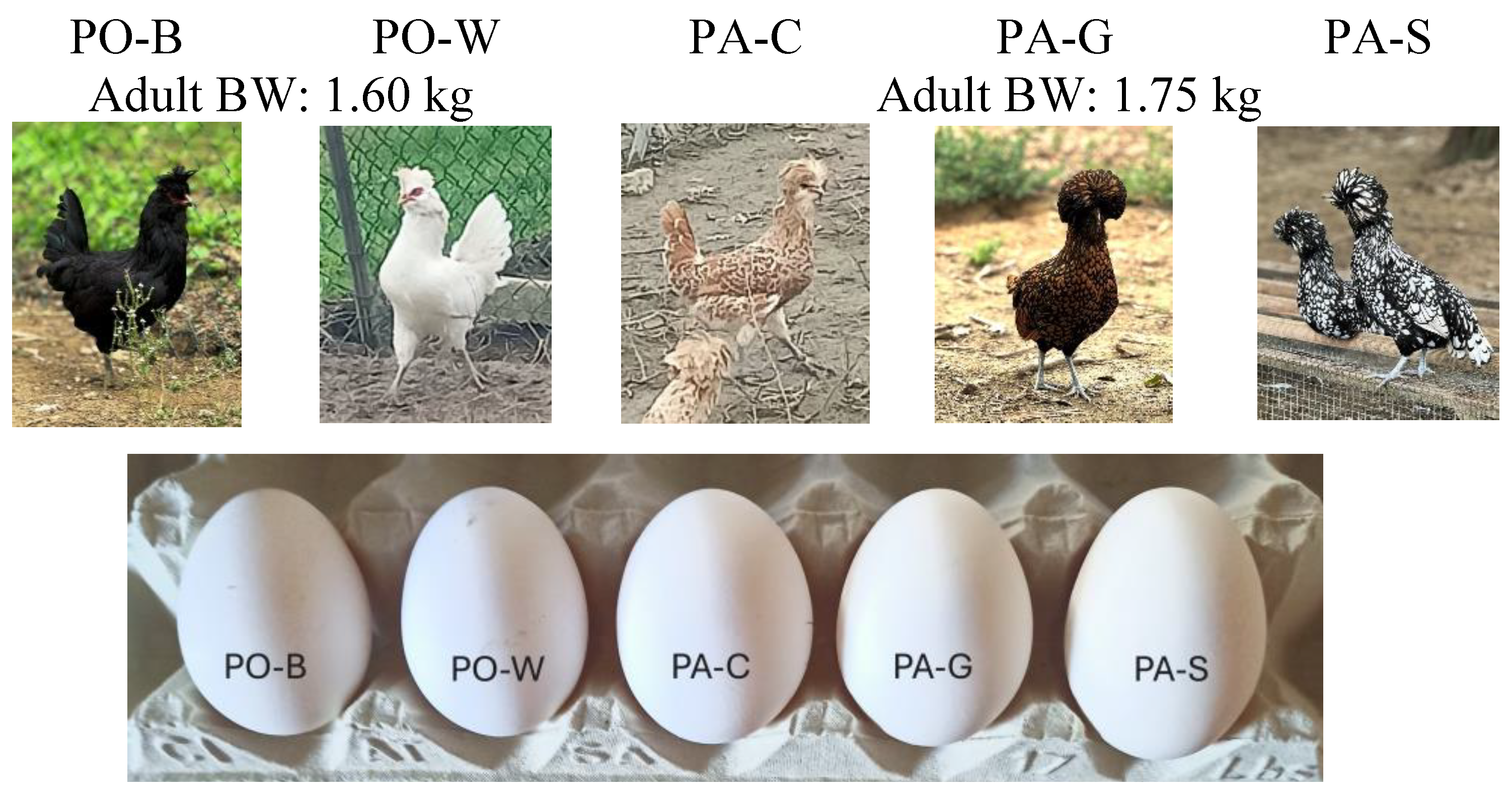
Figure 1. Phenotype and eggs of the white-eggshell purebred hens. PO-B: Polverara nera; PO-W: Polverara bianca; PA-C: Padovana camosciata; PA-G: Padovana dorata; PA-S: Padovana argentata. Adult BW: average adult body weight.
Preprints 190228 g001
Figure 2. Phenotype and eggs of the tinted-eggshell purebred hens. MF: Millefiori di Lonigo; PP: Pepoi; ER: Ermellinata di Rovigo; RL: Robusta Lionata; RM: Robusta Maculata. Adult BW: average adult body weight.
Preprints 190228 g002
Figure 3. Effect of the breed on the egg weight of 1-d eggs (mean ± SD). PO-B: Polverara nera; PO-W: Polverara bianca; PA-C: Padovana camosciata; PA-G: Padovana dorata; PA-S: Padovana argentata; MF: Millefiori di Lonigo; PP: Pepoi; ER: Ermellinata di Rovigo; RL: Robusta Lionata; RM: Robusta Maculata. The coloured columns indicate different egg size class: yellow columns - small size eggs (< 53 g); orange columns - medium size eggs (53-63 g). Different letters between breeds indicate statistically different means (a, b, c, d, e, f: p < 0.05). Observations (n): 80 per breed.
Preprints 190228 g003
Table 1. Effect of breed on the yolk weight, albumen weight and yolk/albumen in 1-d eggs.
PO-B PO-W PA-C PA-G PA-S MF PP ER RL RM p RMSE
Yolk weight, g 16.8 de 16.1 e 18.7 ab 17.3 cd 17.2 cde 16.4 de 14.8 f 17.9 bc 17.3 cd 19.0 a < 0.0001 1.41
Albumen weight, g 27.9 d 28.4 cd 31.3 b 30.1 bc 28.7 bcd 29.4 bcd 28.2 cd 34.9 a 35.2 a 33.6 a < 0.0001 2.72
Yolk/albumen, g/g 0.604 a 0.568 ab 0.596 ab 0.578 ab 0.601 ab 0.565 abc 0.529 bc 0.518 cd 0.493 d 0.572 ab < 0.0001 0.05
PO-B: Polverara nera; PO-W: Polverara bianca; PA-C: Padovana camosciata; PA-G: Padovana dorata; PA-S: Padovana argentata; MF: Millefiori di Lonigo; PP: Pepoi; ER: Ermellinata di Rovigo; RL: Robusta Lionata; RM: Robusta Maculata. Different letters within traits indicate statistically different means (a, b, c, d, e, f: p < 0.05) . Observations (n): 30 per genotype. RMSE: Root Mean Square Error.
Table 2. Effect of breed on the eggshell traits.
PO-B PO-W PA-C PA-G PA-S MF PP ER RL RM
Shape index, % 74.2 de 76.4 bc 75.6 bcd 76.9 b 74.1 de 80.8 a 75.5 bcd 73.5 e 74.8 cde 77.3 b
Surface area/volume, cm2/cm3 1.36 a 1.35 a 1.31 bc 1.32 b 1.33 b 1.32 b 1.35 a 1.27 e 1.29 cd 1.28 de
L 92.1 a 92.5 a 92.8 a 93.2 a 92.1 a 86.8 b 84.5 c 79.7 d 83.0 c 72.3 e
a* -5.30 e -5.09 e -5.13 e -5.25 e -4.77 e -1.86 d -1.78 d 2.29 b 0.22 c 6.86 a
b* 8.15d 7.95 d 7.12 d 7.44 d 9.00 d 14.7 c 19.2 b 22.0 a 18.3 b 23.8 a
Thickness, µm 344 ab 359 a 340 ab 332 bcd 319 cd 336 bc 339 b 315 d 335 bc 359 a
PO-B: Poverara nera; PO-W: Polverara bianca; PA-C: Padovana camosciata; PA-G: Padovana dorata; PA-S: Padovana argentata; MF: Millefiori di Lonigo; PP: Pepoi; ER: Ermellinata di Rovigo; RL: Robusta Lionata; RM: Robusta Maculata. Different letters within traits indicate statistically different means (a, b, c, d, e: p < 0.05). Observations (n): 50 per breed. RMSE: Root Mean Square Error.
Table 3. Results of the ANOVA for eggshell, albumen and yolk traits according to breed and storage time effect and their interactions. .
B S BxS p RMSE B S BxS p RMSE
Shape index < 0.0001 0.09 0.33 < 0.0001 2.75 Albumen height < 0.0001 < 0.0001 0.2187 < 0.0001 0.80
Area/volume < 0.0001 0.07 0.11 < 0.0001 0.03 Yolk height < 0.0001 < 0.0001 0.2307 < 0.0001 1.09
L < 0.0001 0.30 0.44 < 0.0001 3.03 Yolk diameter < 0.0001 < 0.0001 0.0386 < 0.0001 1.47
a* < 0.0001 0.07 0.97 < 0.0001 2.86 Egg weight loss < 0.0001 < 0.0001 0.0550 < 0.0001 0.47
b* < 0.0001 0.25 0.89 < 0.0001 3.62 Haugh units < 0.0001 < 0.0001 0.2486 < 0.0001 7.97
Thickness < 0.0001 0.22 0.31 < 0.0001 27.8 Yolk index < 0.0001 < 0.0001 0.5248 < 0.0001 0.03
B: effect of breed. S: effect of storage. BxS: effect of interaction. Area/volume: Surface area/volume. Albumen height: Thick albumen height. RMSE: Root Mean Square Error.
Table 5. Effect of breed and interaction (after 7 and 21 days of storage) on the egg weight loss rate, HU and yolk index.
PO-B PO-W PA-C PA-G PA-S MF PP ER RL RM
Weight loss rate, % 1.42 bc 1.31 bcd 1.19 dc 1.10 d 1.39 bc 1.52 b 1.32 bcd 1.45 bc 1.55 b 1.96 a
7 d 1.02 ab 0.837 ab 0.604 b 0.656 b 0.816 ab 1.02 ab 0.860 ab 0.986 ab 0.977 ab 1.21 a
21 d 1.83 bc 1.79 bc 1.77 bc 1.55 bc 1.96 bc 2.01 bc 1.78 bc 1.92 c 2.12 bc 2.71 a
Haugh units 69.3 ab 68.2 abc 60.9 de 64.2 cd 57.7 e 63.6 cd 72.8 a 61.4 de 64.2 cd 66.6 bcd
7 d 73.7 ab 73.2 ab 63.6 c 70.0 abc 61.9 c 66.0 bc 75.4 a 67.9 abc 69.7 abc 70.8 abc
21 d 65.4 ab 63.8 ab 58.7 bc 59.5 bc 54.1 c 61.1 bc 70.1 a 55.7 c 59.7 bc 62.9 abc
7 vs 21d * * ns * ns ns ns * * ns
Yolk index 0.383 bc 0.395 ab 0.343 e 0.361 d 0.371 cd 0.384 bc 0.359 de 0.399 ab 0.405 a 0.395 ab
7 d 0.409 ab 0.417 ab 0.359 d 0.390 bc 0.394 bc 0.399 bc 0.380 cd 0.418 ab 0.432 a 0.421 ab
21 d 0.360 abcd 0.376 ab 0.330 e 0.337 de 0.351 bcde 0.369 abc 0.339 cde 0.382 a 0.382 a 0.372 abc
7 vs 21d * * ns * * ns * * * *
PO-B: Polverara nera; PO-W: Polverara bianca; PA-C: Padovana camosciata; PA-D: Padovana dorata; PA-S: Padovana argentata; MF: Millefiori di Lonigo; PP: Pepoi; ER: Ermellinata di Rovigo; RL: Robusta Lionata; RM: Robusta Maculata. Different letters within traits indicate statistically different means (a, b, c, d, e: p < 0.05); * within traits indicates statistically (p < 0.05) different means between 7 and 21 day of storage, per breed. Observations (n): 50 per breed; 25/storage time per breed.
Disclaimer/Publisher’s Note: The statements, opinions and data contained in all publications are solely those of the individual author(s) and contributor(s) and not of MDPI and/or the editor(s). MDPI and/or the editor(s) disclaim responsibility for any injury to people or property resulting from any ideas, methods, instructions or products referred to in the content.
Copyright: This open access article is published under a Creative Commons CC BY 4.0 license, which permit the free download, distribution, and reuse, provided that the author and preprint are cited in any reuse.
Prerpints.org logo

Preprints.org is a free preprint server supported by MDPI in Basel, Switzerland.

Subscribe

Disclaimer

Terms of Use

Privacy Policy

Privacy Settings

© 2025 MDPI (Basel, Switzerland) unless otherwise stated