

Submitted:
16 December 2025
Posted:
17 December 2025
You are already at the latest version
Abstract
Lateral flow immunoassays (LFA) are widely used for decentralized testing, but their application for in-field plant virus diagnostics is often limited by tedious sample preparation. Here, we present a simplified dipstick LFA for the detection and monitoring of cowpea chlorotic mottle virus (CCMV) as a model plant pathogen. The assay employes a monoclonal mouse antibody for capture and a polyclonal rabbit antibody conjugated to 80-nm gold nanoparticles for detection. Conventional sample and conjugate pads are omitted, allowing the test strips to be dipped directly into wells containing plant extract and antibody-gold conjugate. In addition, no plastic casing was necessary, which significantly reduces waste. It was shown that CCMV concentrations as low as 4 µg/L or 400 pg per sample could be reliably detected in 15 minutes. Specificity tests confirmed that other plant viruses, cowpea mosaic virus (CPMV) and tobacco mosaic virus (TMV), did not produce false positive results. Furthermore, we describe a field-compatible sampling procedure using a manual punch and a disposable syringe. This step combines sample grinding, extraction, and conjugate reconstitution within the syringe frit, enabling the analysis of punched leaf discs without laboratory equipment. When applied to CCMV-infected cowpea plants, the assay revealed systemic infection before visual symptoms became apparent. This work demonstrates that simplified LFAs combined with innovative sampling techniques can provide sensitive, specific, and rapid diagnostics for crop monitoring and support early intervention strategies in agriculture.
Keywords:
lateral flow immunoassay
; cowpea chlorotic mottle virus
; plant virus
; Vigna unguiculata
; crop monitoring
; sample preparation
; waste reduction
1. Introduction
Lateral flow assays (LFA) are one of the most popular immunoassay formats and have received enormous attention worldwide during the coronavirus pandemic. LFA and similar technologies have been used and adapted for many areas. Their versatility has enabled applications across numerous fields, as summarized in several recent comprehensive reviews [1,2,3,4,5,6,7,8]. Building on this substantial literature, we focus here on specific technological challenges that still arise in practical LFA use, including workflow limitations and performance constraints [9]. This article contains some suggestions for overcoming these issues. We have focused primarily on three aspects of improvement: We aimed to (1) simplify sample preparation, (2) improve user-friendliness, and (3) reduce manufacturing complexity/costs.
As a representative application, we selected a well-known plant pathogen, the cowpea chlorotic mottle virus (CCMV) [10]. The assay is designed as a field test that does not require laboratory equipment such as homogenizers, centrifuges, pipettes, and readers. It does not even require water or electricity. In addition, the total time to result has been kept as short as possible, in the current version it was less than 20 minutes, including the sampling. Plant pathogens are usually tested directly in the field. There are quite a few lateral flow assays for plant pathogens available [11,12,13]. Indeed, LFAs have been developed for many plant viruses (e.g. TMV, PVY, CMV) [14]. However, the range of assays specifically targeting CCMV appears to be very limited. CCMV infects cowpeas (Vigna unguiculata) and related species, which are predominantly cultivated in African countries such as Nigeria, Niger, Burkina Faso, Kenya, and Senegal. On other continents, some production is reported in Asia, Central America, and South America, particularly in Brazil. Global production amounted to more than 9 million tons annually [15]. Unfortunately, cowpeas are affected by many pests and diseases, including Cowpea Mosaic Virus (CPMV) and CCMV. Since plant viruses cannot be controlled with pesticides, early detection and subsequent removal of infected plants are the most effective countermeasures. In many resource-limited countries, economic constraints make systematic monitoring difficult. Therefore, the cost and user-friendliness of the respective tests are one of the most important aspects. Our work aims to address these constraints by developing a test that is highly accessible and easy to operate, requiring only minimal user guidance to ensure reliable performance.
2. Materials and Methods
2.1. Buffers, Chemicals and Other Reagents
Buffers: running buffer: 1× PBS with 1% (v/v) Tween 20, pH 7.4; carbonate buffer: sodium hydrogen carbonate (46 mM), sodium carbonate (54 mM), pH 10.0; sodium acetate buffer: sodium acetate (30 mM), acetic acid (20 mM), Na2EDTA (1 mM), pH 4.8.
Chemicals and other reagents: PBS (Cat. No. A0965,9010, Applichem, Darmstadt, Germany); Tween 20 (Cat. No. 11Tween201, MP Biomedicals, CA, USA); sodium hydrogen carbonate (Cat. No. 8630, Th. Geyer, Renningen, Germany); sodium carbonate (Cat. No. AP141648.1211, Applichem, Darmstadt, Germany); sodium acetate (Cat. No. 8694, Th. Geyer, Renningen, Germany); acetic acid (Cat. No. 2289, Th. Geyer, Renningen, Germany); EDTA disodium salt di-hydrate (Cat. No. 131669.1209, AppliChem, Darmstadt, Germany); defoamer (Cat. No. 430148, Dr. Weigert GmbH, Hamburg, Germany); sodium azide (Cat. No. 8690, Th. Geyer, Renningen, Germany); skim milk powder (Cat. No. A0830, Applichem, Darmstadt, Germany); liquid fertilizer (Cat. No. 49128, Mairol GmbH, Gerstetten, Germany); ProClin 300 (Cat. No. 48912-U, Sigma Aldrich, St. Louis, MO, USA); silicon carbide powder 600 mesh (Cat. No. A13561, Alfa Aesar, MA, USA); household blender (Cat. No. MMBH6P6BDE, Bosch, Gerlingen, Germany); non-binding 96-well microtiter plate (Cat. No. 655904, Greiner, Kremsmünster, Austria); 2 mL polypropylene syringe vessel (Cat. No. V020PE061; MultiSynTech GmbH, Witten, Germany); handheld 6 mm hole punch (Universal Product Code: 795973640185, QWORK, distributed by Amazon, WA, USA); nitrocellulose membrane (Vivid 90 LFNC, 25 mm × 300 mm; Cat. No. VIV902503R, Cytiva, MA, USA); LFA backing card (Cat. No. 10547158, Cytiva Life Sciences, MA, USA), LFA absorbent pad (Cat. No. 8115-2250, Cytiva Life Sciences, MA, USA), gold nanoparticles for passive adsorption of polyclonal detection antibodies (80 nm BioReady Gold Nanospheres, Cat. No. AUCR80-5M, nanoComposix, CA, USA).
Antibodies and viruses: Anti-CCMV mouse monoclonal antibody (BAM-CCMV-29-81 used for LFA test line) was described previously [16]. Polyclonal rabbit antibodies (passively adsorbed to gold nanoparticles) and CCMV isolates were also published previously, including their production and purification protocols [17]. Polyclonal goat anti-rabbit IgG used for LFA control line (Cat. No. 111-005-008, Jackson ImmunoResearch, Ely, UK); TMV, the lysine mutant was kindly provided by Christina Wege, Institute for Biomaterials and Biomolecular Systems, Stuttgart, Germany [18]; CPMV (virus-like particle, Cat. No. LES-P0001, was purchased from Leaf Expression Systems Ltd, Norwich, UK). Seeds of California Blackeye Number 5 (Vigna unguiculata) was purchased from Deaflora (Cat. No. 97520, Werder, Germany).
2.2. Cultivation of the Host Plant Vigna unguiculata
Seeds of cowpea (Vigna unguiculata cv. “California Blackeye Number 5”) were soaked in tap water for 6 h at room temperature and subsequently wrapped in several layers of moist paper towels to initiate germination. The towels were placed in a petri dish (5 cm rim height), sealed with parafilm to prevent drying, and exposed to continuous illumination for 24 h using the LEDs of a hydroponic growth system (iDOO, model ID-IG301, Eastvale, CA, USA). After this incubation period, germinated seeds were carefully transferred into the pre-wetted foam sponges of the growth system, taking care not to damage the emerging radicle. The reservoir of the hydroponic unit was filled to its maximum volume (5 L) with water consisting of 50% tap water and 50% ultrapure water, supplemented with 0.1% (v/v) liquid fertilizer. Seedlings were covered with a transparent plastic lid for an additional two days to maintain humidity. The water was replenished every two days, and plants were cultivated under 16 h light and 8 h dark photoperiods at room temperature.
2.3. Preparation of Virus-free Plant Extract
Harvested leaves of 3-week-old (counting from the day of germination) virus-free plants were homogenized with running buffer (PBS with 1% Tween 20, pH 7.4) in a high-speed household blender. Approximately 40 g of leaves were homogenized in 250 mL buffer (i.e. 1 g per 6 mL) to yield a plant extract. To prevent excessive foaming, a droplet of defoamer was added during the homogenization step. Afterwards, the crude extract was centrifuged at 15,000× g for 10 minutes and filtered using a 0.2 µm syringe filter. ProClin 300 was added to the plant extract at a final concentration of 0.05% and aliquots were prepared and stored until further use at -20 °C.
2.4. Preparation of AuNP-Antibody Conjugate and Assembly of Lateral Flow Strip
Polyclonal rabbit antiserum against CCMV (BAM-CCMV-rab-pAb01) was purified as described in the previous work to obtain Protein-G-purified polyclonal anti-CCMV antibodies (pAb) [17,19]. In brief, rabbit antiserum was micro-filtered (0.22 µm) and purified by Protein G affinity chromatography using a HiTrap Protein G HP (Cytiva, 29048581). Consequently, binding occurs with antibody binding buffer (8.7 mM Na2HPO4, 3.3 mM NaH2PO4, pH 7.2) and the polyclonal antibodies were eluted with antibody elution buffer (6 mM NaH2PO4, 6 mM H3PO4, pH 2.3) followed by neutralization with 100 mM NaOH to pH 7.4. For the preparation of the gold nanoparticle (AuNP)-antibody conjugate, 50 µL of 100 mM carbonate buffer (pH 10) were mixed with 10.5 µL (corresponds to 89.3 µg) of the polyclonal anti-CCMV antibody solution (8.5 mg/mL in phosphate buffer, pH 7.4, containing 0.1% NaN₃). Subsequently, 1000 µL of citrate-functionalized AuNPs (80 nm diameter, OD₅₂₀ = 20) were added. The mixture was incubated for 3 h at room temperature on an overhead shaker to allow passive adsorption of the antibody onto the nanoparticle surface. For blocking, 105 µL of a 10% (w/v) skim milk solution in 10 mM carbonate buffer (pH 10; sterile filtered) were added, followed by an additional incubation for 45 min under gentle agitation. The conjugate suspension was stored at 4 °C until further use.
For the assembly of the lateral flow test strips, capture and control antibodies were deposited on nitrocellulose membranes using a sciFLEXARRAYER S3 piezoelectric spotter (Scienion AG, Berlin, Germany). The test line consisted of the monoclonal anti-CCMV antibody BAM-CCMV-29-81 (0.36 mg/mL in PBS) that was published previously [17,20], while the control line was spotted using a polyclonal goat anti-rabbit IgG. Spotting was performed with a drop volume of 320 pL and nine drops per spot at a pitch of 100 µm in both x- and y-directions with four parallel lines for each test and control zone. After spotting, membranes were immediately dried for 30 min in a vacuum oven at room temperature at 10 mbar. The membranes were then laminated onto adhesive backing cards without conjugate and sample pad. After application of the absorbent pad at the top, the lower portion of the backing card was trimmed off to complete the dipstick format. The assembled sheets were cut into individual strips of 4 mm width using a manual guillotine cutter and stored in sealed containers with desiccant until use.
2.5. Determination of Assay Sensitivity
Virus-free plant extracts as prepared in section 2.3 were spiked with defined concentrations of CCMV (0, 2, 4, 8, 16, 32, 64, 124, 256, 512, 1024 and 2048 µg/L). Then, 100 µL of each sample was mixed in a non-binding microplate well with 3 µL of the AuNP-antibody conjugate as prepared in section 2.4. Afterwards, test strips were immersed in the sample wells for 15 minutes before imaged with the ChemoStar 2D Advanced Fluorescence and ECL imager (INTAS Science Imaging Instruments GmbH, Göttingen, Germany). Relative intensities of the control and test lines were determined using ImageJ (open-source software available here: https://imagej.net/ij/, Version 1.51 23 April 2018). With this software, the differences of image contrasts in the test line or control line regions to the background in the membrane strip region were calculated. Measurements were carried out in duplicates, the blank in triplicates and the relative standard deviation was determined. Relative intensities were then plotted with the corresponding CCMV concentrations. LOD was determined using a logistic fit, where the average intensity of three blanks was multiplied three times with its standard deviation. LOD intensity values were translated to concentration values using a logistic calibration function.
2.6. Determination of Assay Specificity
Tobacco mosaic virus (TMV), cowpea mosaic virus-like particles (CPMV) and cowpea chlorotic mottle virus (CCMV) were diluted to a final concentration of 2000 µg/L in running buffer (PBS with 1% Tween 20, pH 7.4). Then, 100 µL of each sample as well as 100 µL of running buffer negative control was mixed in a microplate well with 3 µL of the AuNP-antibody conjugate as prepared in section 2.4. Afterwards, test strips were immersed in the sample wells for 15 minutes before imaged with the ChemoStar 2D Advanced Fluorescence and ECL imager (INTAS Science Imaging Instruments GmbH, Goettingen, Germany). Relative intensities of the control and test lines were determined using ImageJ (open-source software available here: https://imagej.net/ij/, last accessed 15-12-2025). With this software, the differences of image contrasts in the test line or control line regions to the background in the membrane strip region was calculated. Measurements were carried out in duplicates and the relative standard deviation was determined.
2.7. Leaf Sampling Protocol for Lateral Flow Analysis
For field application of the simplified LFA presented in this work, the following sampling procedure (used in section 3.4.1.) is recommended:
Prior to sampling, 8 µL of AuNP-pAb conjugate solution (as prepared in section 2.4.) were pipetted onto the bottom side of the frit of a 2 mL polypropylene reactor and allowed to dry for 5 min at room temperature. Leaf discs of approximately 6 mg were excised from leaves using a handheld 6 mm hole punch and immediately transferred into the syringe reactor. Per leaf, one disc was sampled. The disc was thoroughly ground with the plunger of the syringe reactor until the frit changes color from red (coming from the AuNP-pAb conjugate) to green. Subsequently, 500 µL of running buffer (PBS containing 1% Tween 20, pH 7.4) were aspirated through the frit to reconstitute the conjugate and mix it with the crude extract. The extract was gently shaken for 15 s. Subsequently, approximately 100 µL (three droplets) were dispensed into a well of a non-binding 96-well microtiter plate. Finally, the simplified LFA strips without sample and conjugate pads (see section 2.4.) were then immersed into the prepared extracts for 15 min before visual and instrumental readout as described above in Section 2.5 and Section 2.6.).
2.8. Monitoring of Vigna unguiculata after Infection with CCMV (referenced in section 3.4.2.)
Mechanical inoculation of cowpea seedlings was performed 6 days after the start of cultivation as described in section 2.2. First, frozen CCMV-infected cowpea leaves were mechanically crushed with a pestle in a 5 mL reaction vessel containing 3 mL of 50 mM sodium acetate buffer, pH 5.5. To 1 mL of this solution, a small amount of silicon carbide powder (600 mesh) was added. The suspension was vortexed immediately prior to application to ensure homogeneity. Then, the two primary leaves of each seedling (not the cotyledons) were inoculated by gentle but firm rubbing of 50 µL suspension across the entire leaf surface (bottom and top). After 1 minute of incubation time, the leaves were thoroughly rinsed with tap water. Starting on the third day after inoculation of the primary leaves, fresh samples were collected from a secondary leaf of the same plant on every weekday using a hole punch and immediately frozen at -80 °C. Ten days after inoculation, all eight samples per plant were crushed with a pestle in a 1.5 mL reaction vessel containing 500 µL running buffer. 100 µL were transferred to each well of a non-binding microtiter plate and 2.5 µL AuNP-IgG conjugate added. The test strips were imaged after 15 minutes and analyzed with the ChemoStar 2D Advanced Fluorescence and ECL imager (INTAS Science Imaging Instruments GmbH, Göttingen, Germany).
3. Results
3.1. Assay Format
For the development of lateral flow test strips targeting cowpea chlorotic mottle virus (CCMV), a monoclonal mouse antibody (BAM-CCMV-29-81) and a polyclonal rabbit antibody (pAb) were employed. Both antibodies have previously been described for CCMV quantification by ELISA [17]. In analogy to the optimized ELISA format, the lateral flow assay presented here utilizes the monoclonal BAM-CCMV-29-81 as capture antibody at the test line. The pAb serves as detection antibody that is passively adsorbed to gold nanoparticles (AuNPs). Detection of binding events was achieved by accumulation of AuNP-pAb conjugate, resulting in a red color signal at the respective line (see Figure 1).
A particular feature of this assay design is the absence of both sample and conjugate pads. This simplified “dipstick” format allows for rapid assembly of the test strips without the need for labor-intensive impregnation and drying steps of conjugate pads. Instead, the nitrocellulose membrane is directly immersed in a microtiter well or reaction tube containing a defined mixture of sample, running buffer and AuNP-pAb conjugate.
To address a potential weakness of the pad-less “dipstick” design - namely that premixed AuNP–pAb conjugates might remain on the membrane after flow and thereby raise the background and impair visual contrast - we quantified the membrane background in a line-free region (regions of interest, ROI) after developing strips with three solutions: (i) running buffer, (ii) running buffer containing AuNP-pAb conjugate, and (iii) crude plant matrix in running buffer. Background intensities were quantified using a high-sensitivity camera of the ChemoStar Imager.
As shown in Figure 2, the measured background intensities were comparable under all three conditions, with no increase in the presence of conjugate or plant matrix. Thus, remaining unbound nanoparticles do not measurably stain the nitrocellulose membrane, and the simplified format does not compromise either the visual contrast at the test line or the achievable detection limit. Interestingly, all remaining components of the plant matrix appear to be retained at the bottom of the nitrocellulose membrane and thus do not interfere with detection. This underscores the premise that it is possible to dispense with a sample pad even when using complex matrices.
3.2. Determination of Assay Sensitivity
To evaluate the performance of the simplified LFA, crude extracts of virus-free host plants were spiked with defined concentrations of CCMV. The test strips were then applied, and both the test and control lines were examined. First, the visibility of the bands was assessed qualitatively by the naked eye. Subsequently, the signals were quantified using the high-sensitivity camera of the ChemoStar Imager by using standard focus light and one second shutter time. Finally, the resulting relative intensities of the test line regions were plotted against the spiked CCMV concentrations (Figure 3).
To determine the limit of detection (LOD), test strips corresponding to each concentration were imaged (shown in Figure S1) and the relative intensities of the test lines were quantified. A logistic fit was applied to the calibration data in the concentration range of 0–512 µg/L. Based on this analysis, the LOD in the plant matrix was calculated as 3.5 µg/L, which corresponds to approximately 1 pmol/L or 100 attomol CCMV per 100 µL sample. This value is consistent with visual inspection of the test strips, as a concentration of 4 µg/L CCMV (the third test point) is still clearly discernible by the naked eye. The assay exhibited a working range of approximately 10–100 µg/L, as inferred from the values presented in Figure 3. Here, it is also clear to see that the nitrocellulose membrane can replace the sample pad and effectively retains matrix components of the raw plant extract.
3.3. Determination of Assay Specificity
The cross-reactivity of the assay was assessed by spiking crude extracts of the virus-free host plant V. unguiculata with defined concentrations of cowpea mosaic virus-like particles (CPMV) and tobacco mosaic virus (TMV). CPMV was included due to the known susceptibility of V. unguiculata, and its similar geographic distribution compared to CCMV [21], while a mutant of TMV was selected as a model plant virus. Subsequently, the LFA was applied in duplicate measurements and relative intensities were quantified using the ChemoStar Imager. As shown in Figure 4, CPMV and TMV produced signal intensities comparable to the negative control (running buffer).
Thus, no cross-reactivity was observed even at high virus concentrations (2000 µg/L). Both the quantitative data and the visual inspection of the test strips confirm that the assay is highly specific for CCMV, at least for the tested samples.
3.4. LFA-based Monitoring of CCMV Infection in V. unguiculata
3.4.1. Simulated Field Sampling with Endpoint CCMV Detection
A simulated field trial was conducted to distinguish infected from non-infected plants regardless of the occurrence of symptoms. For this purpose, plants at the two-leaf stage were mechanically inoculated with CCMV and tested with the LFA after 25 days according to the different appearances. The sampling strategy for the field test is depicted in Figure 5.
Sample preparation is a critical, often underestimated step in sample analysis. To simplify it and combine it directly with the analysis, we developed a novel strategy for plant testing. The sampling method of monitored leaves is depicted in Figure 6.
Prior to sampling, 8 µL of AuNP-pAb conjugate solution were applied to the bottom side of the in-built filter of a 2 mL polypropylene syringe vessel (A) and allowed to dry (B). Then, leaf discs of approximately 6 mg (see supplement Figure S2) were obtained using a handheld 6 mm hole punch (C) and transferred into the syringe vessel (D). The leaves were thoroughly ground using the syringe plunger (E), before running buffer was aspirated through the preloaded filter (F). The crude extract was mixed by gentle shaking and 3 droplets (corresponding to ~100 µL) were transferred to a well of a microtiter plate (G). Finally, the simplified LFA strip without sample or conjugate pad was immersed into the prepared sample for analysis (H). Not even a plastic cassette as used in nearly all other LFAs [22] is necessary in this format.
Using this novel sampling method, infected and non-infected plants were examined, as shown in Figure 7.
Using the above sampling method, the time to result is 15 minutes when testing plants for systemic CCMV infection. The sensitivity of the assay enables the identification of symptomatic and asymptomatic infection courses. The specificity of the LFA is also shown and can, for example, rule out infection with CCMV in cases of chlorotic leaves or other similar symptoms. To prevent carryover between samples, a cleaning step with ethanol was performed after each use of the punch, followed by several punches through a paper towel, see supplements Figure S3.
3.4.2. Pre-symptomatic detection of systemic CCMV infection
To evaluate whether the LFA detects systemic CCMV infection prior to the appearance of visible symptoms, plants at the two-leaf stage were mechanically inoculated with CCMV and subsequently monitored for ten consecutive days. Each day, one leaf at the three-leaf stage was sampled per plant and tested with the LFA. At the same time, plants were also photographed and monitored for the appearance of visible symptoms. A sample was classified as positive when the test line intensity exceeded the previously established LOD in plant matrix. The plant cultivation and sampling strategy for plant monitoring is depicted in Figure 8.
Sampling secondary leaves after inoculating the primary leaves enables verification of systemic infection. Because secondary leaves develop slowly, sampling began three days post-inoculation, once sufficient leaf material was available.
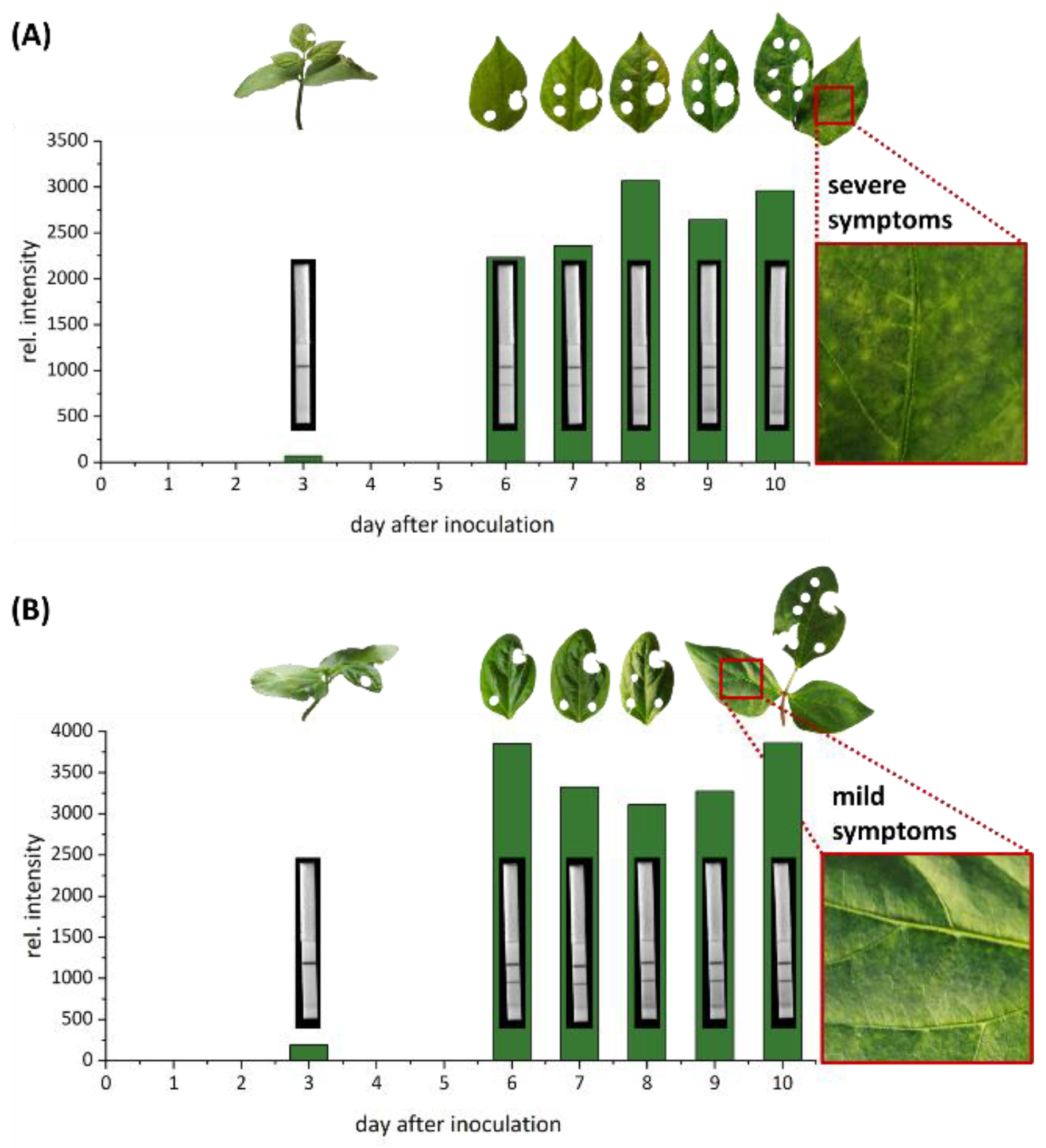
Plant samples were taken daily from the same leaf of each plant and immediately frozen at –80 °C. Ten days after infection, all plant samples were examined in parallel using the LFA, as shown in Figure 9.
As part of the plant monitoring experiment, two plants (A and B; see Figure 9) were sampled and analyzed over a period of ten days following inoculation with CCMV. Plant A tested positive using the LFA on day 6 post-inoculation. On day 7, this plant began to develop visible symptoms, which became pronounced by day 10. In contrast, plant B did not exhibit any clear visual symptoms during the entire observation period, although it also tested positive on day 6 after infection.
A dilution series of samples collected on day 10 from plants A and B indicated some differences in viral load, which may account for the varying symptom severity (see Supplementary Figure S4). LFA detection was possible for plant A and B at least up to a 1:1,000 dilution. These results demonstrate that the LFA is suitable for monitoring systemic CCMV infections in plants and can detect infection prior to the appearance of visible symptoms, depending on the progression of infection and viral load.
4. Discussion
Our results show that a simplified lateral flow immunoassay without sample and conjugate pad can achieve sensitive plant virus detection while facilitating both manufacturing and use. Dipping the strip directly in a premixed well containing sample and AuNP-pAb conjugate reduces variability associated with pad impregnation and drying. Furthermore, the conjugate mixed with the sample enables a relatively long and even incubation of the antibody with the antigen. In the conventional format, only the short flow time from the conjugate pad to the test line is available for antibody-antigen binding [23]. The analytical sensitivity (Figure 3) of our novel LFA for CCMV detection yielded an LOD of 3.5 µg/L, corresponding to 350 pg or 100 attomol (~60 million virions) per 100 µL sample in only 15 minutes. An ELISA previously optimized with the same antibody pair and an assay duration of 5 hours achieved a detection limit of 0.25 µg/L [17].
For field applications and crop infection monitoring, we developed a straightforward method (Figure 6) that unifies sample preparation and test application. In this concept, the polypropylene frit of a syringe vessel serves three functions: conjugate reservoir, grinder, and coarse filter. This conveniently reduces handling steps, enables low-waste workflows, and supports sample-pooling strategies for surveillance, thanks to the small sample amount required (~ 6 mg plant tissue, corresponding to a single punched leaf disc). In our approach, the nitrocellulose membrane also serves several purposes: it replaces the sample pad used in conventional formats, draws the liquid upward through capillary forces, and serves as a surface for the heterogeneous immunoassay. We anticipate that this all-in-one approach will also benefit other dipstick immunoassays requiring on-site homogenization of complex matrices for analyte extraction (e.g., environmental samples).
The new method may have an obvious disadvantage compared to the usual LFA format, which is the lack of rinsing of the test membrane by pure running buffer due to the omission of the conjugate pad. This could lead to a higher background value due to the coloring of the plant matrix and the gold nanoparticle solution. Surprisingly, this effect was so weak that it was barely detectable (Figure 2).
The demonstrated performance and ease of use enabled rapid identification of infected plants in simulated field tests. While visible symptoms appeared about 7-10 days after inoculation, infection could be diagnosed as early as day 6 days after CCMV inoculation using the proposed LFA format (Figure 8). This time advantage may permit management interventions, such as removing infected plants, before vector-mediated transmission of an infectious dose to neighboring plants occurs. Furthermore, LFA-based analysis of plant samples, as shown in Figure 7, enables verification of visually ambiguous leaf tissue and helps to discriminate true CCMV infections from chlorotic symptoms that would otherwise be misclassified as false positives.
In summary, the combination of a syringe-based sample preparation, a sample buffer vial and conjugate delivery with a simplified LFA construction enables a compact, resource-efficient, and field-deployable assay without laboratory equipment such as readers, pipettes, grinders, filters, or centrifuges. The observed sensitivity and selectivity, combined with a practical sampling workflow, offer a viable route to routine on-site monitoring of CCMV and may provide new opportunities for the detection of other plant pathogens and other targets when suitable antibody pairs of high quality are available [24].
Supplementary Materials
The following supporting information can be downloaded at the website of this paper posted on Preprints.org, Figure S1: Lateral flow assay performance for CCMV detection in plant matrix for LoD determination; Figure S2. Determination of the average weight of punched plant discs of secondary leaves at different stages of plant growth; Figure S3. To rule out carryover, an infected leaf with severe visual symptoms was punched and a washing protocol was established as an intermediate step; Figure S4. Dilution series of plant samples which were taken 10 days after inoculation with CCMV.
Author Contributions
Conceptualization, M.G.W., G.T., and R.T.; validation, R.T., G.T., and C.R.; formal analysis, R.T., G.T., M.G.W., and C.R.; investigation, R.T., G.T., S.F., M.P., C.R., and S.D; data curation, R.T., G.T., C.R. and M.P.; writing—original draft preparation, R.T., G.T., and M.G.W.; writing—review and editing, G.T., R.T., M.G.W., S.D., M.T, M.P.; visualization, R.T. and G.T.; supervision, M.G.W.; project administration, M.G.W. All authors have read and agreed to the published version of the manuscript.
Funding
This project was funded by the DATIpilot guideline of the Federal Ministry of Research, Technology and Space (BMFTR), reference: 03DPS1003.
Informed Consent Statement
Not applicable.
Data Availability Statement
Not applicable.
Conflicts of Interest
The authors declare no conflicts of interest.
References
- Koczula, K.M.; Gallotta, A. Lateral flow assays. Essays Biochem 2016, 60, 111–120. [Google Scholar] [CrossRef] [PubMed]
- Patel, R.; Mitra, B.; Vinchurkar, M.; Adami, A.; Patkar, R.; Giacomozzi, F.; Lorenzelli, L.; Baghini, M.S. A review of recent advances in plant-pathogen detection systems. Heliyon 2022, 8, e11855. [Google Scholar] [CrossRef] [PubMed]
- Budd, J.; Miller, B.S.; Weckman, N.E.; Cherkaoui, D.; Huang, D.; Decruz, A.T.; Fongwen, N.; Han, G.R.; Broto, M.; Estcourt, C.S.; et al. Lateral flow test engineering and lessons learned from COVID-19. Nat Rev Bioeng 2023, 1, 13–31. [Google Scholar] [CrossRef]
- Kinyua, D.M.; Memeu, D.M.; Mugo Mwenda, C.N.; Ventura, B.D.; Velotta, R. Advancements and Applications of Lateral Flow Assays (LFAs): A Comprehensive Review. Sensors 2025, 25. [Google Scholar] [CrossRef] [PubMed]
- Pedreira-Rincon, J.; Rivas, L.; Comenge, J.; Skouridou, V.; Camprubi-Ferrer, D.; Munoz, J.; O’Sullivan, C.K.; Chamorro-Garcia, A.; Parolo, C. A comprehensive review of competitive lateral flow assays over the past decade. Lab Chip 2025, 25, 2578–2608. [Google Scholar] [CrossRef]
- Hu, J.; Wang, S.; Wang, L.; Li, F.; Pingguan-Murphy, B.; Lu, T.J.; Xu, F. Advances in paper-based point-of-care diagnostics. Biosens Bioelectron 2014, 54, 585–597. [Google Scholar] [CrossRef]
- Jiang, N.; Ahmed, R.; Damayantharan, M.; Ünal, B.; Butt, H.; Yetisen, A.K. Lateral and Vertical Flow Assays for Point-of-Care Diagnostics. Adv Healthc Mater 2019, 8. [Google Scholar] [CrossRef]
- Liu, Y.; Zhan, L.; Qin, Z.; Sackrison, J.; Bischof, J.C. Ultrasensitive and Highly Specific Lateral Flow Assays for Point-of-Care Diagnosis. ACS Nano 2021, 15, 3593–3611. [Google Scholar] [CrossRef]
- Duong, N.D.; Nguyen-Phuoc, K.H.; Do, K.Y.T.; Mai-Hoang, T.D.; Nguyen, N.T.T.; Tran, T.L.; Tran-Van, H. A Protocol for the Optimization of Lateral Flow Immunoassay Strip Development. Biomed Res Ther 2023, 10, 5500–5508. [Google Scholar] [CrossRef]
- Dawson, W.O.; Kuhn, C.W. Kinetics of Multiplication, Inactivation, and Particle-Breakdown of Cowpea Chlorotic Mottle Virus in Cowpea. Phytopathology 1974, 64, 951–957. [Google Scholar] [CrossRef]
- Danks, C.; Barker, I. On-site detection of plant pathogens using lateral-flow devices. Eppo Bulletin 2000, 30, 421–426. [Google Scholar] [CrossRef]
- Venbrux, M.; Crauwels, S.; Rediers, H. Current and emerging trends in techniques for plant pathogen detection. Front Plant Sci 2023, 14, 1120968. [Google Scholar] [CrossRef] [PubMed]
- Yadav, A.; Yadav, K. Portable solutions for plant pathogen diagnostics: development, usage, and future potential. Front Microbiol 2025, 16. [Google Scholar] [CrossRef]
- Greeshma, M.; Bhat, A.; Jeevalatha, A.; Malavika, P. Development of a lateral flow immunoassay for rapid detection of piper yellow mottle and cucumber mosaic viruses in black pepper. Journal of Virological Methods 2025, 115238. [Google Scholar] [CrossRef]
- Kim, D.K.; Ochar, K.; Iwar, K.; Ha, B.K.; Kim, S.H. Cowpea (Vigna unguiculata L.) production, genetic resources and strategic breeding priorities for sustainable food security: a review. Front Plant Sci 2025, 16, 1562142. [Google Scholar] [CrossRef] [PubMed]
- Tscheuschner, G.; Schwaar, T.; Weller, M.G. Fast Confirmation of Antibody Identity by MALDI-TOF MS Fingerprints. Antibodies 2020, 9. [Google Scholar] [CrossRef]
- Tscheuschner, G.; Ponader, M.; Raab, C.; Weider, P.S.; Hartfiel, R.; Kaufmann, J.O.; Volzke, J.L.; Bosc-Bierne, G.; Prinz, C.; Schwaar, T.; et al. Efficient Purification of Cowpea Chlorotic Mottle Virus by a Novel Peptide Aptamer. Viruses 2023, 15. [Google Scholar] [CrossRef]
- Koch, C.; Wabbel, K.; Eber, F.J.; Krolla-Sidenstein, P.; Azucena, C.; Gliemann, H.; Eiben, S.; Geiger, F.; Wege, C. Modified TMV Particles as Beneficial Scaffolds to Present Sensor Enzymes. Front Plant Sci 2015, 6, 1137. [Google Scholar] [CrossRef]
- Tscheuschner, G. Pflanzenviren als chemische Plattform für die Nanotechnologie. Dissertation, Humboldt-Universität zu Berlin, 2024.
- Döring, S.; Tscheuschner, G.; Flemig, S.; Weller, M.G.; Konthur, Z. Cost-Effective Method for Full-Length Sequencing of Monoclonal Antibodies from Hybridoma Cells. Antibodies 2025, 14. [Google Scholar] [CrossRef]
- Ogunsola, K.E.; Yusuf, A.; Elegbeku, O.A. Updates on cowpea viruses in Southwest Nigeria: distribution, prevalence and coinfection. Indian Phytopathol 2023, 76, 201–213. [Google Scholar] [CrossRef] [PubMed]
- Shapiro, A.; Mtenthaonga, P.; Mjumira, R.; Reuben, M.; Samuel, A.; Bond, M.; Carns, J.; Schwarz, R.; Johnston, R.; Mangwiro, L.; et al. Design and field evaluation of a lateral flow cassette device for point-of-care bilirubin measurement. Plos Glob Publ Hlth 2023, 3. [Google Scholar] [CrossRef] [PubMed]
- Tsai, T.T.; Huang, T.H.; Chen, C.A.; Ho, N.Y.J.; Chou, Y.J.; Chen, C.F. Development a stacking pad design for enhancing the sensitivity of lateral flow immunoassay. Sci Rep-Uk 2018, 8. [Google Scholar] [CrossRef] [PubMed]
- Weller, M.G. Quality Issues of Research Antibodies. Anal Chem Insights 2016, 11, 21–27. [Google Scholar] [CrossRef] [PubMed]
Figure 1.
Schematic representation of the simplified lateral flow assay format used for CCMV detection in plants, omitting sample and conjugate pads. For sample application, test strips are simply immersed in crude extracts of (infected) leaves containing running buffer with a defined amount of AuNP-pAb conjugate. A positive test is detected by the naked eye when the sandwich consisting of monoclonal anti-CCMV and AuNP-pAb conjugate is formed at the test line after 15 min (Created with BioRender.com).
Figure 1.
Schematic representation of the simplified lateral flow assay format used for CCMV detection in plants, omitting sample and conjugate pads. For sample application, test strips are simply immersed in crude extracts of (infected) leaves containing running buffer with a defined amount of AuNP-pAb conjugate. A positive test is detected by the naked eye when the sandwich consisting of monoclonal anti-CCMV and AuNP-pAb conjugate is formed at the test line after 15 min (Created with BioRender.com).
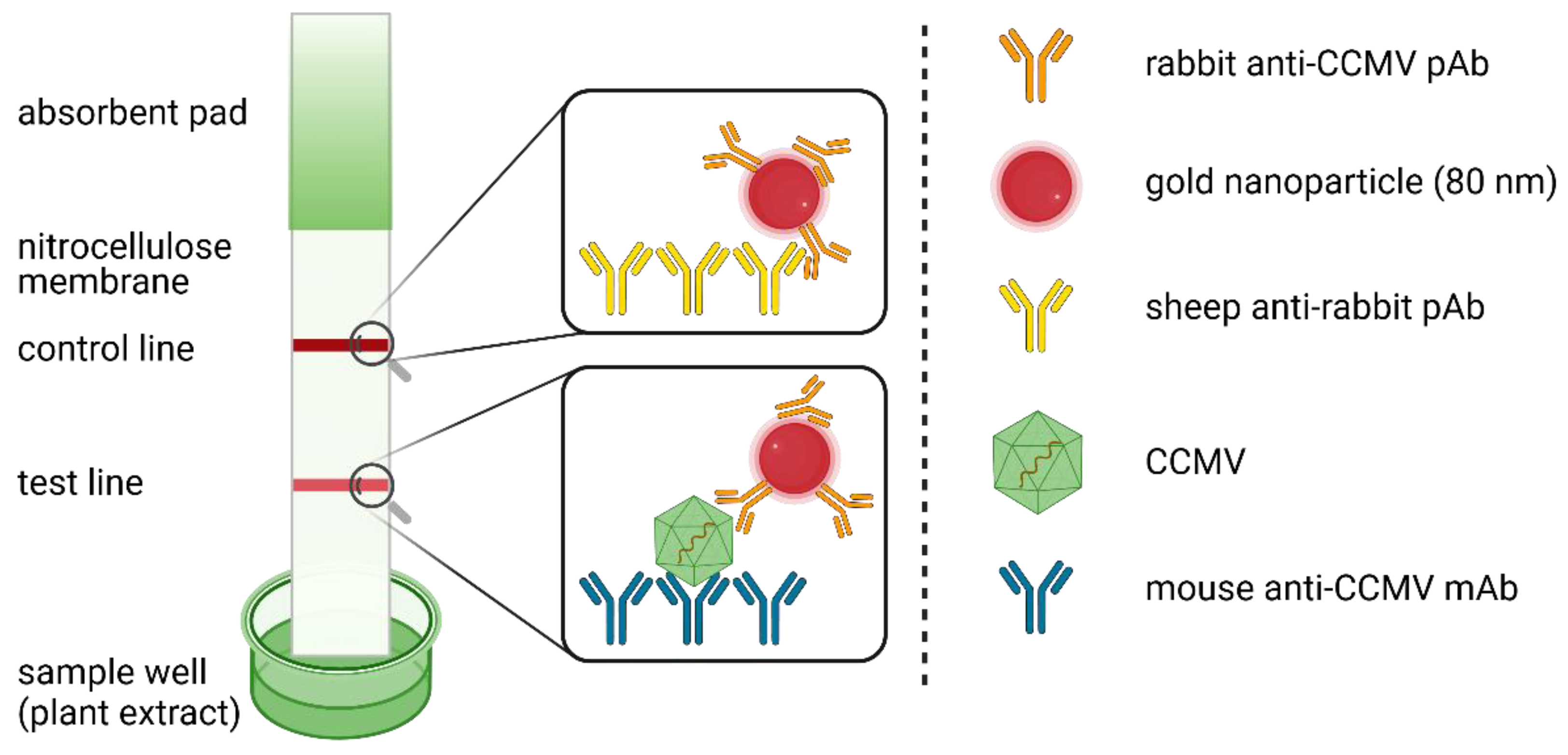
Figure 2.
Left: Relative signal intensities at line-free regions of nitrocellulose membrane after developing strips with running buffer (RB), running buffer mixed with AuNP-pAb conjugate (RB + conjugate), and plant matrix in RB. Background levels were comparable, indicating that membrane background is not increased by premixed conjugate or sample matrix. Error bars were calculated as the relative standard deviation of mean intensities of several line-free regions of interest. Right: ChemoStar tiff-image of corresponding test strips with marked regions of interest (ROI), where mean values of relative intensities were determined.
Figure 2.
Left: Relative signal intensities at line-free regions of nitrocellulose membrane after developing strips with running buffer (RB), running buffer mixed with AuNP-pAb conjugate (RB + conjugate), and plant matrix in RB. Background levels were comparable, indicating that membrane background is not increased by premixed conjugate or sample matrix. Error bars were calculated as the relative standard deviation of mean intensities of several line-free regions of interest. Right: ChemoStar tiff-image of corresponding test strips with marked regions of interest (ROI), where mean values of relative intensities were determined.
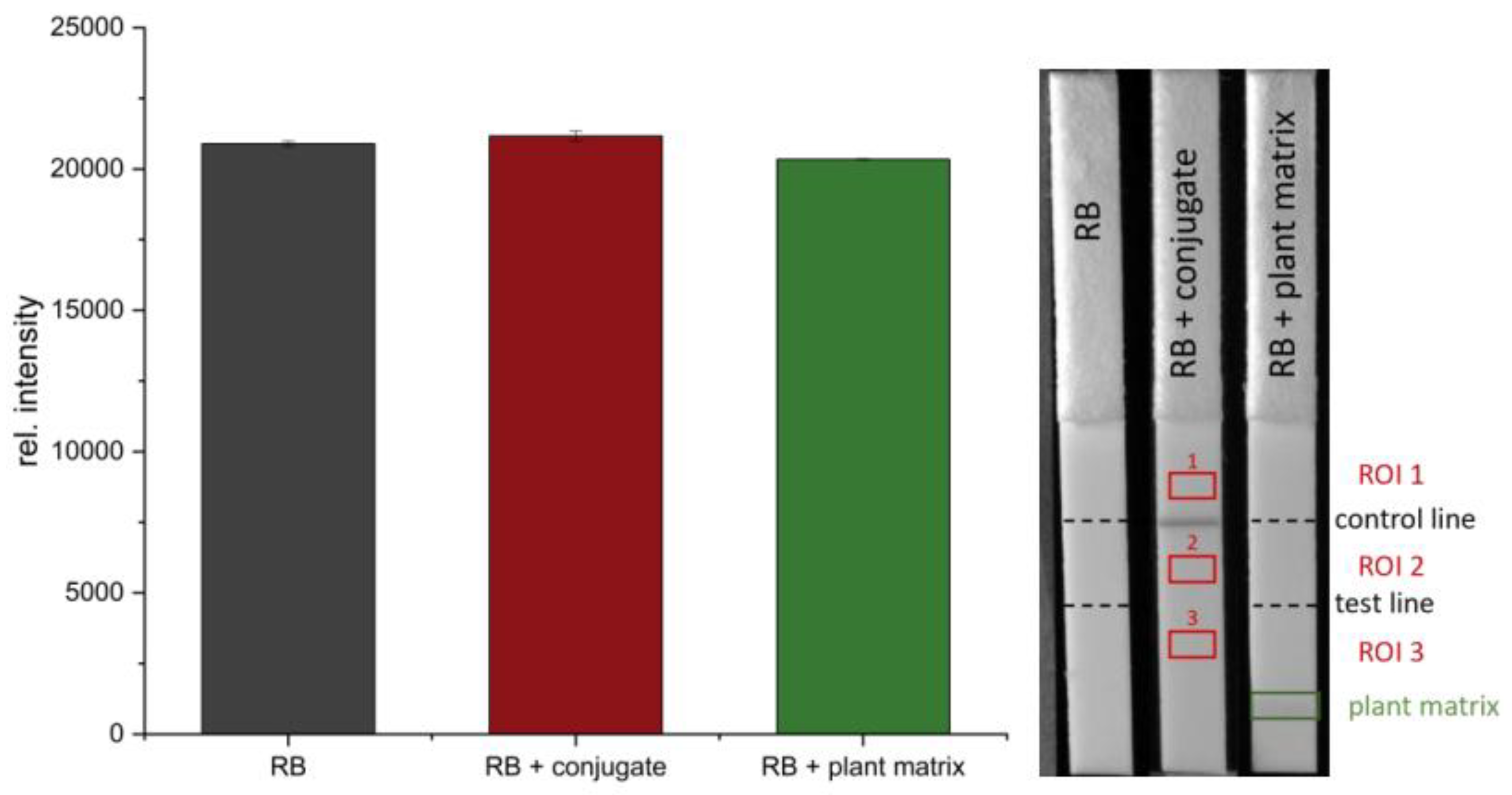
Figure 3.
Top: Lateral flow assay performance for CCMV detection in plant matrix. The limit of detection (LOD) was calculated based on the mean blank signal and three times the corresponding standard deviation, whereby intensity values were translated to concentration values using the calibration function. A logistic fit through data points in the concentration range of 0–512 µg/L was applied. Error bars were calculated as relative standard deviation from duplicate measurements (the blank as a triplicate). Bottom: ChemoStar tiff-image of corresponding test strips for CCMV detection 15 minutes after sample application.
Figure 3.
Top: Lateral flow assay performance for CCMV detection in plant matrix. The limit of detection (LOD) was calculated based on the mean blank signal and three times the corresponding standard deviation, whereby intensity values were translated to concentration values using the calibration function. A logistic fit through data points in the concentration range of 0–512 µg/L was applied. Error bars were calculated as relative standard deviation from duplicate measurements (the blank as a triplicate). Bottom: ChemoStar tiff-image of corresponding test strips for CCMV detection 15 minutes after sample application.
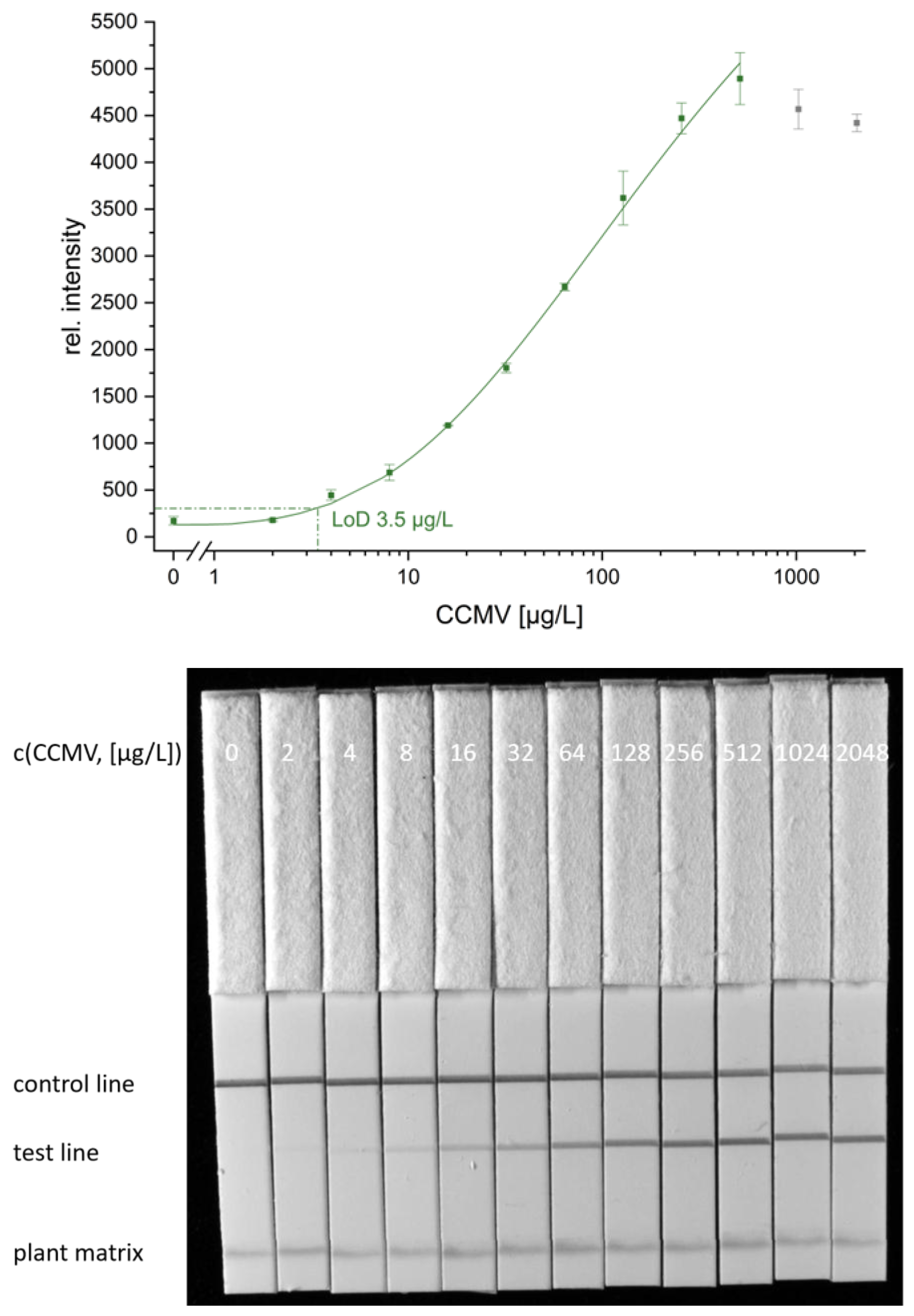
Figure 4.
Determination of assay specificity. Running buffer was spiked with 2000 µg/L of TMV, CPMV and CCMV respectively. Left: Quantitative evaluation of relative line intensities. Error bars were calculated as the relative standard deviation of duplicate measurements. Right: Representative test strips corresponding to the tested samples.
Figure 4.
Determination of assay specificity. Running buffer was spiked with 2000 µg/L of TMV, CPMV and CCMV respectively. Left: Quantitative evaluation of relative line intensities. Error bars were calculated as the relative standard deviation of duplicate measurements. Right: Representative test strips corresponding to the tested samples.
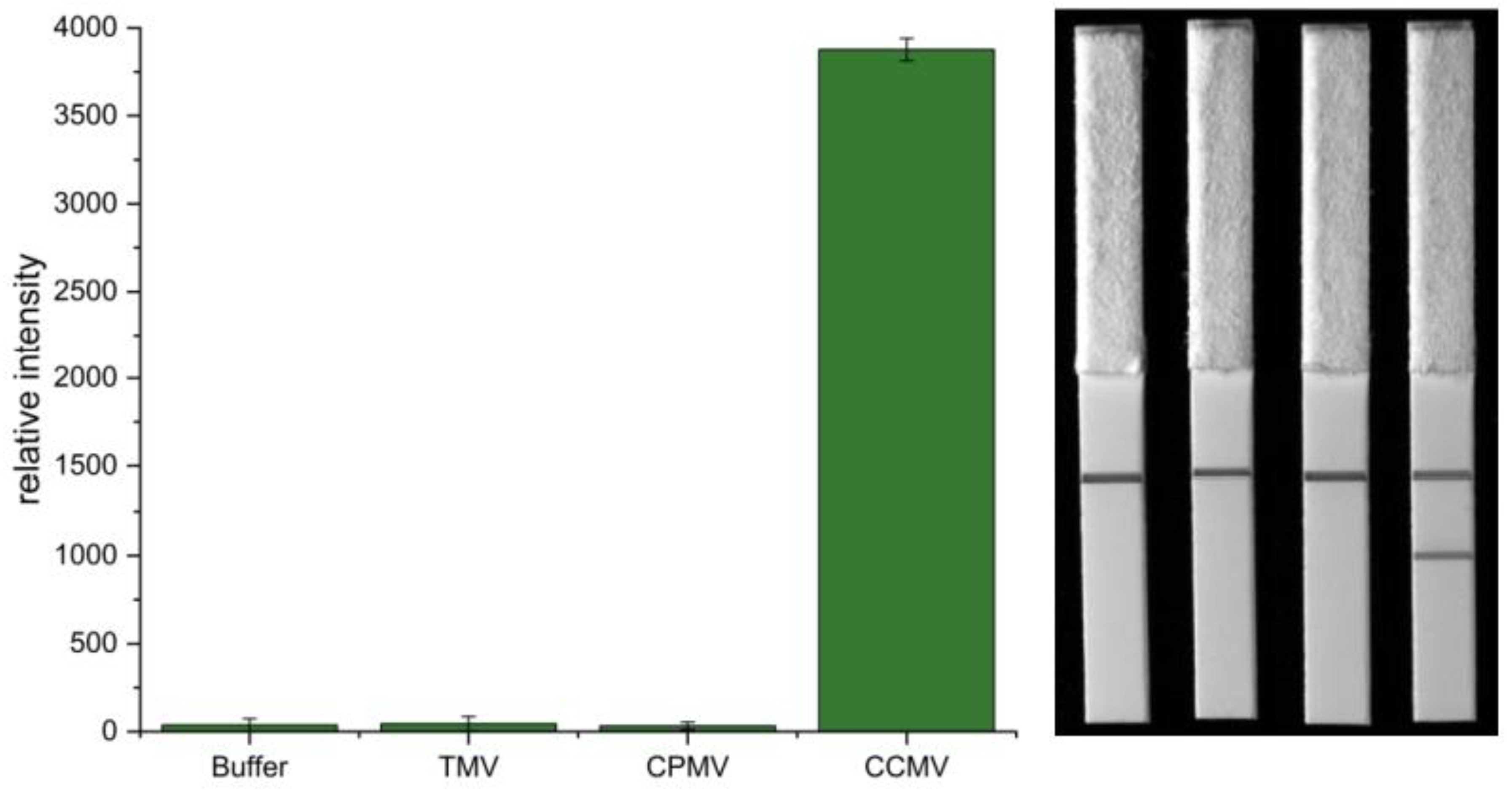
Figure 5.
Schematic workflow for cultivation of Vigna unguiculata and simulated field sampling and detection of CCMV infection. Seeds are germinated transferred to a hydroponic system after one day. Plants grow under controlled light and nutrient supply. After seven days, primary leaves are inoculated with CCMV. 25 days after inoculation, secondary leaves are sampled and analyzed by LFA (Created with BioRender.com).
Figure 5.
Schematic workflow for cultivation of Vigna unguiculata and simulated field sampling and detection of CCMV infection. Seeds are germinated transferred to a hydroponic system after one day. Plants grow under controlled light and nutrient supply. After seven days, primary leaves are inoculated with CCMV. 25 days after inoculation, secondary leaves are sampled and analyzed by LFA (Created with BioRender.com).
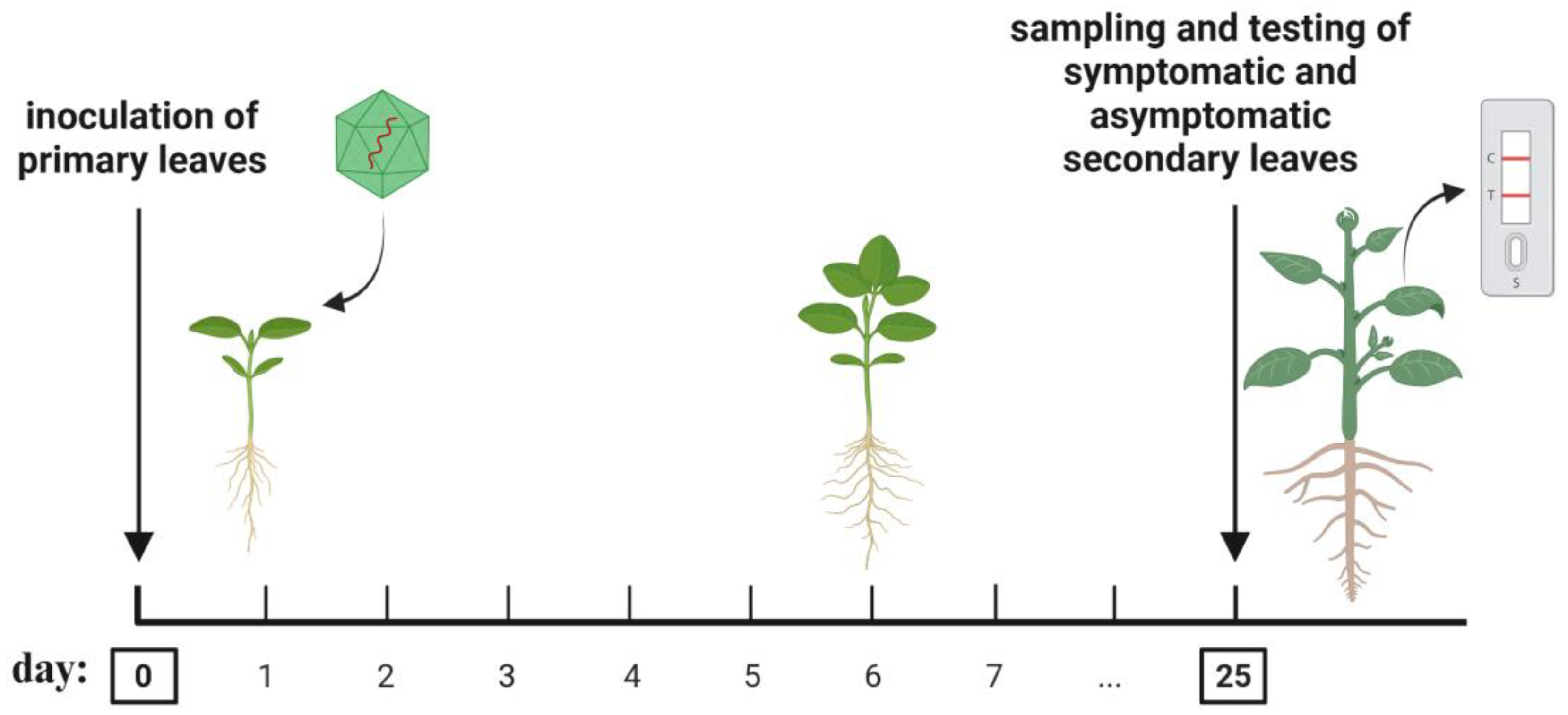
Figure 6.
Workflow of the field sampling procedure for CCMV detection using the simplified lateral flow assay. Prior to sampling, 8 µL of AuNP-pAb conjugate solution were applied to the bottom side of the in-built filter of a 2 mL polypropylene syringe vessel (A) and allowed to dry (B). Then, leaf discs of approximately 6 mg were obtained using a handheld 6 mm hole punch, see supplement Figure S2 (C) and transferred into the syringe vessel (D). The leaves were thoroughly ground using the syringe plunger (E), before running buffer was aspirated through the preloaded filter (F). The crude extract was mixed by gentle shaking and 3 droplets (corresponding to ~100 µL) were transferred in a well of a microtiter plate (G). Finally, the simplified LFA strip without sample or conjugate pad was immersed into the prepared sample for analysis (H). The details of the sampling procedure for LFA analysis can be found in section 2.7.
Figure 6.
Workflow of the field sampling procedure for CCMV detection using the simplified lateral flow assay. Prior to sampling, 8 µL of AuNP-pAb conjugate solution were applied to the bottom side of the in-built filter of a 2 mL polypropylene syringe vessel (A) and allowed to dry (B). Then, leaf discs of approximately 6 mg were obtained using a handheld 6 mm hole punch, see supplement Figure S2 (C) and transferred into the syringe vessel (D). The leaves were thoroughly ground using the syringe plunger (E), before running buffer was aspirated through the preloaded filter (F). The crude extract was mixed by gentle shaking and 3 droplets (corresponding to ~100 µL) were transferred in a well of a microtiter plate (G). Finally, the simplified LFA strip without sample or conjugate pad was immersed into the prepared sample for analysis (H). The details of the sampling procedure for LFA analysis can be found in section 2.7.
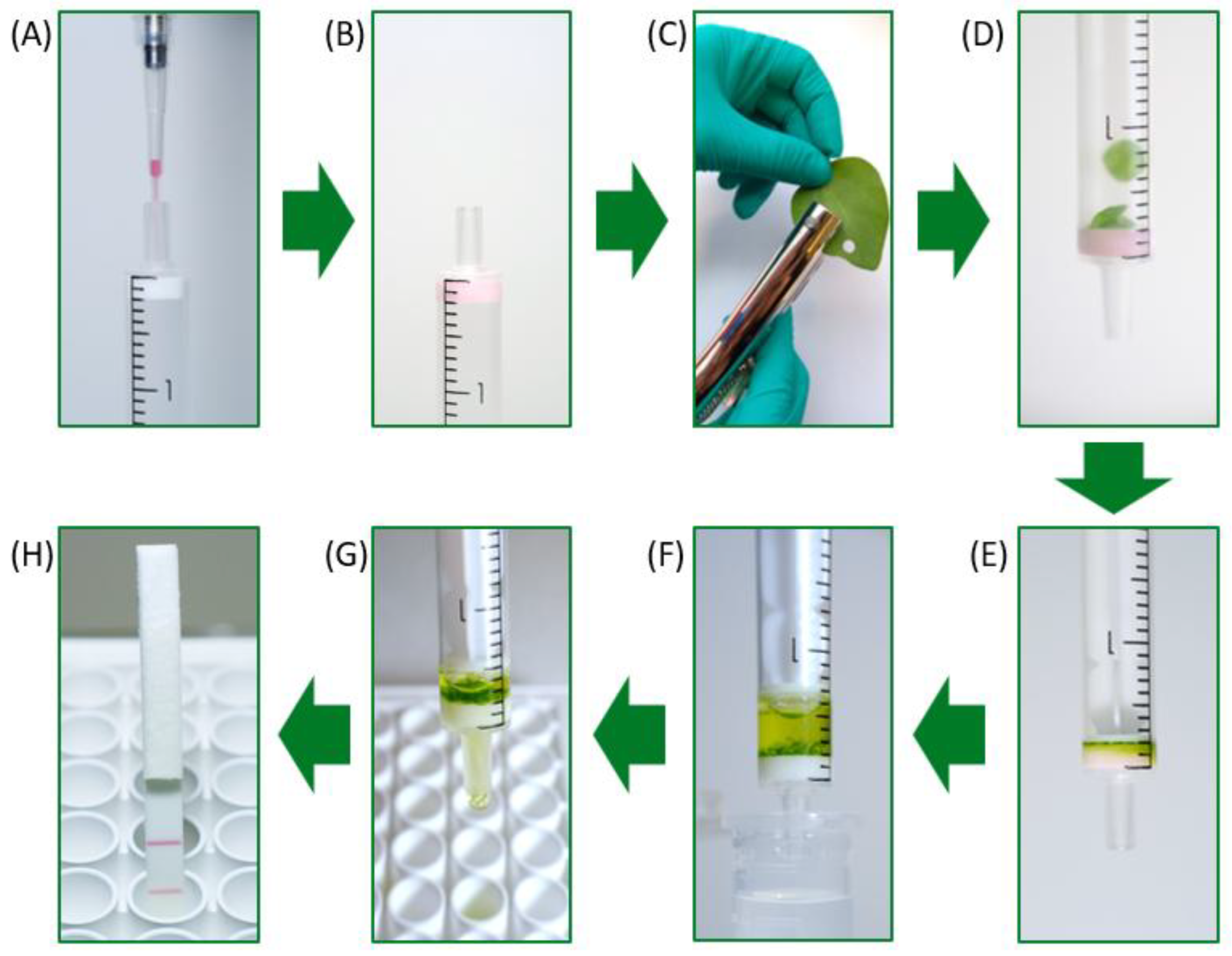
Figure 7.
Simulated field sampling of a non-infected plant and an infected plant 25 days after inoculation with CCMV. Top: Asymptomatic and symptomatic leaves show a clear positive LFA signal for the infected plant. Bottom: LFA analysis of samples taken from an uninfected plant delivers the correct negative results for asymptomatic and supposedly symptomatic leaves. Nutrient deficiency also leads to leaf discoloration, known as chlorosis (affected plant not shown). The correct negative results for chlorotic leaves sampled from uninfected plants grown in quarantine was verified by ELISA (data not shown).
Figure 7.
Simulated field sampling of a non-infected plant and an infected plant 25 days after inoculation with CCMV. Top: Asymptomatic and symptomatic leaves show a clear positive LFA signal for the infected plant. Bottom: LFA analysis of samples taken from an uninfected plant delivers the correct negative results for asymptomatic and supposedly symptomatic leaves. Nutrient deficiency also leads to leaf discoloration, known as chlorosis (affected plant not shown). The correct negative results for chlorotic leaves sampled from uninfected plants grown in quarantine was verified by ELISA (data not shown).
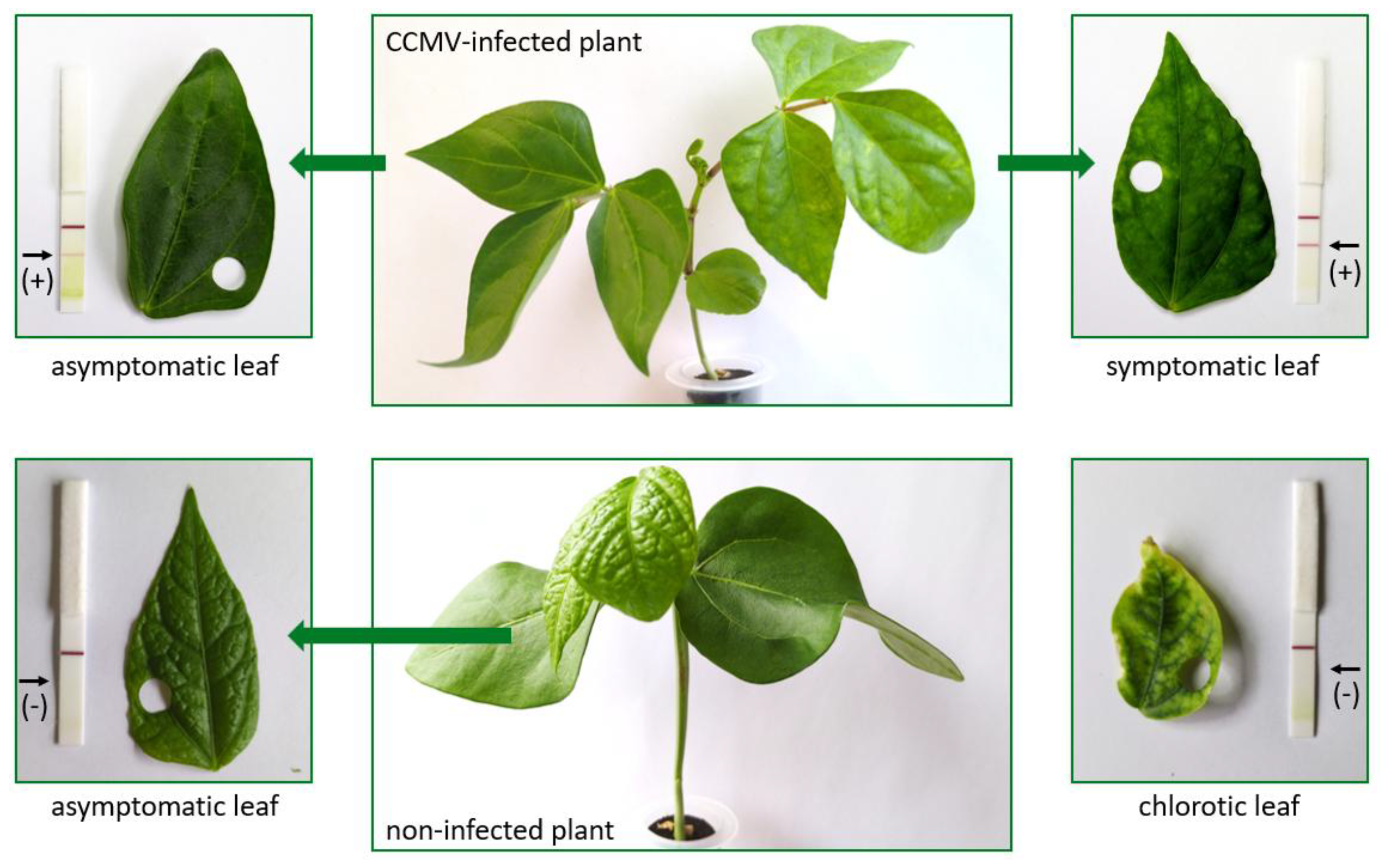
Figure 8.
Schematic workflow for cultivation of Vigna unguiculata and monitoring of systemic CCMV infection. Seeds are germinated and transferred to a hydroponic system. Plants grow under controlled light and nutrient supply. On day 0, primary leaves are inoculated with CCMV. Starting at 3 days post inoculation, secondary leaves were sampled daily and analyzed by LFA, with the first positive tests observed on day 6 (Created with BioRender.com).
Figure 8.
Schematic workflow for cultivation of Vigna unguiculata and monitoring of systemic CCMV infection. Seeds are germinated and transferred to a hydroponic system. Plants grow under controlled light and nutrient supply. On day 0, primary leaves are inoculated with CCMV. Starting at 3 days post inoculation, secondary leaves were sampled daily and analyzed by LFA, with the first positive tests observed on day 6 (Created with BioRender.com).
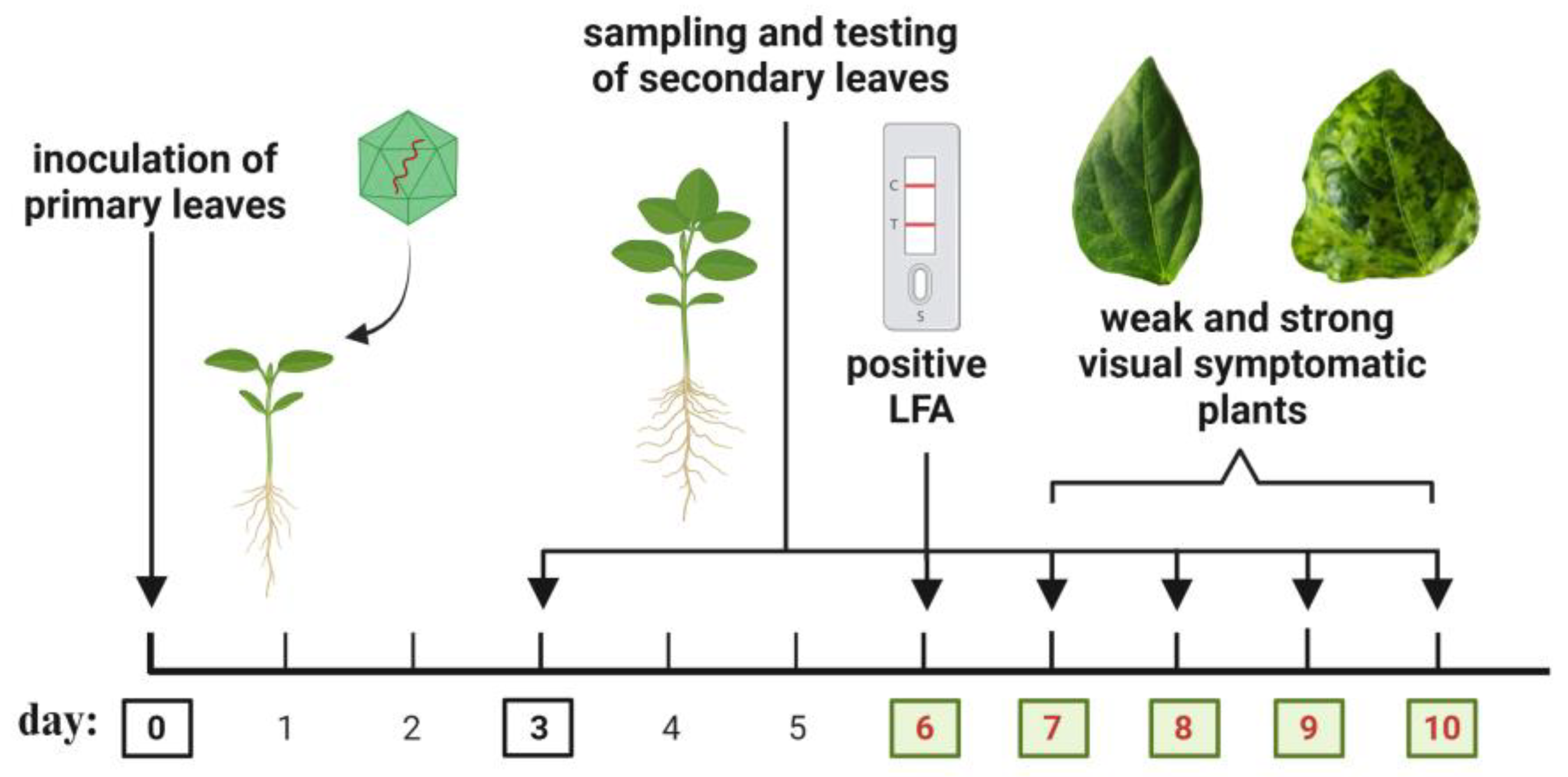
Figure 9.
Monitoring of two individual plants (A) and (B) from three days post inoculation with CCMV. For each plant, daily samples were taken from the same leaf using a punch. After 10 days, pronounced (A) and mild visual symptoms (B) are evident. The assay was positive already after 6 days.
Figure 9.
Monitoring of two individual plants (A) and (B) from three days post inoculation with CCMV. For each plant, daily samples were taken from the same leaf using a punch. After 10 days, pronounced (A) and mild visual symptoms (B) are evident. The assay was positive already after 6 days.
Disclaimer/Publisher’s Note: The statements, opinions and data contained in all publications are solely those of the individual author(s) and contributor(s) and not of MDPI and/or the editor(s). MDPI and/or the editor(s) disclaim responsibility for any injury to people or property resulting from any ideas, methods, instructions or products referred to in the content. |
© 2025 by the authors. Licensee MDPI, Basel, Switzerland. This article is an open access article distributed under the terms and conditions of the Creative Commons Attribution (CC BY) license (http://creativecommons.org/licenses/by/4.0/).
Copyright: This open access article is published under a Creative Commons CC BY 4.0 license, which permit the free download, distribution, and reuse, provided that the author and preprint are cited in any reuse.


