

Submitted:
01 December 2025
Posted:
02 December 2025
You are already at the latest version
Abstract
Glycyrrhizic acid and its derivatives are a crucial class of glycoside terpenoids with significant pharmaceutical and food industry applications. The biotransformation of glycyrrhizin (GL) into glycyrrhetic acid 3-O-mono-β-D-glucuronide (GAMG) and glycyrrhetinic acid (GA) can enhance the production of these valuable compounds. This study aimed to develop strategies to improve the catalytic and operational stability of β-glucuronidase from wild-type Talaromyces pinophilus Li-93 previously known as Penicillium purpurogenum Li-3 (w-PGUS) for efficient GL hydrolysis. Whole cells of T. pinophilus Li-93 expressing w-PGUS were capable of directly converting GL into GAMG. To enhance enzyme stability and reusability, three polymeric supports polyurethane foam (PUF), loofah sponge (LS), and polyvinyl chloride (PVC) were evaluated for immobilization of w-PGUS from the fermentation medium. Among these, PUF was the most effective immobilization support, yielding superior immobilization efficiency, GAMG production, and biomass retention. Under optimized conditions (1% PUF, 1.5 g/L w-PGUS inoculum, pH 5.0, 36 °C, 180 rpm), a 67.10% immobilization efficiency was achieved within 72 h. The PUF-immobilized w-PGUS retained 37.51% of its initial activity after 10 repeated batch reactions, whereas free w-PGUS retained only 6.21%. Additionally, the storage stability of immobilized w-PGUS was significantly higher (40.22%) than that of free w-PGUS (14.74%) after 30 days. The superior durability, cost-effectiveness, and enhanced operational and storage stability of PUF-immobilized w-PGUS highlight its potential for large-scale biosynthesis of GAMG.
Keywords:
Talaromyces pinophilus Li-93
; β-glucuronidase
; polyurethane foam
; immobilization
; operational stability
; storage stability
1. Introduction
Glycyrrhizin (GL), a primary active ingredient of licorice root, consists of a single molecule of glycyrrhetic acid (GA) and two molecules of glucuronic acid linked to C-3 atom of the aglycon moiety [1]. GL can be hydrolyzed into glycyrrhetic acid 3-O-mono-β-D-glucuronide (GAMG) by the cells expressing β-glucuronidase [Figure 1].
The potential applications of GAMG are much more than GL as it proved to be highly safe and effective than its parent compound, hence abundantly used in food industry [2,3]. GAMG has a broad spectrum of activities against infection, inflammation, allergy, and cancer [4]. Due to superior physiological effects and wide range of applications, GAMG is considered as a substitute of GL and has more commercial importance than GL.
Biocatalysis of valuable compounds has many advantages over chemical catalysis in terms of physical parameters, specificity and environmental hazards. The low specificity and yield of GAMG could be improved by biotransformation of GL by β-glucuronidase, (pgus, EC 3.2.1.31). There are many biological sources of β-glucuronidase including prokaryotes and eukaryotes, while its fungal sources are quite limited. Our research group previously screened a wild-type Penicillium purpurogenum Li-3 (w-PGUS) strain which have been reclassified recently as Talaromyces pinophilus Li-93 (w-PGUS) and is involved in the direct conversion of GL into GAMG. The w-TGUS carries a unique β-glucuronidase (PGUS, EC 3.2.1.31), and this fungus only grows in a liquid culture medium containing GL, where GL acts as an inducer and sole carbon source [5]. Although, the fermentation conditions including medium composition and physical parameters were optimized to enhance the productivity of w-PGUS and GAMG yield [6], the low enzyme productivity by this strain and rapid loss of enzymatic activity in vitro were the main limitations for the higher yield of GAMG.
Immobilization strategies are usually designed to enhance the operational and storage stabilities to combat perturbations in physical and chemical environment. Direct immobilization from the fermentation media without affecting the growth rate and product yield is an effective procedural approach to avoid the complex process of separation and purification of enzyme or whole cells [7,8]. Different polymer carriers have been employed to immobilize the cells or enzyme for their stable biotransformation efficiencies. Polyurethane foam (PUF) serves as a matrix to immobilize various microorganisms in fermentation media that enhances the growth rate and operational stability of these organisms [9,10]. PUF has a number of applications in biochemical and biotechnological fields, due to its biocompatibility and stability [11,12]. The physical properties of PUF such as durability, simple handling and economical price make it a remarkable material to immobilize biomolecules or cells [13]. Moreover, it offers steady mass transfer and minor mechanical friction which could be helpful in facilitating the vitality of cells and reactivity of enzymes [14]. There are many researches on the immobilization of whole cells of different strains of microorganisms in PUF [15,16] but no study is available on the immobilization of w-PGUS expressing β-glucuronidase in the fermentation media and its application efficacy in operational and storage stabilities which has a great potential to biotransform GL directly into GAMG due its specific mode of action.
In this research, we report the high immobilization efficiency of w-PGUS in PUF during flask fermentation process by optimizing the fermentation parameters. The effects of immobilization on the fungal growth and GAMG yield were also controlled to enhance the immobilization efficiency of w-PGUS in PUF. In addition, the operational and storage stability of PUF immobilized biocatalyst w-PGUS for the biotransformation of GL into GAMG has also been evaluated and compared with free w-PGUS for its large scale applications.
2. Materials and Methods
2.1. Chemicals and Reagents
The standard sample of Glycyrrhizin (GL) and Glycyrrhetic acid (GA) were purchased from Sigma Chemical Co. (USA). Standard Glycyrrhetic acid monoglucuronide (GAMG) was generously donated by Nanjing University of Technology (Nanjing, China). Polyurethane foam (PUF), loofa sponge (LS) and porous polyvinylchloride (PVC) were purchased from the local market. HPLC-grade methanol was purchased from Sigma-Aldrich (Steinheim, Germany). All other reagents were of analytical grade while deionized water was purified by a Milli-Q water-purification system from Millipore (Bedford, MA, USA). All solutions prepared for HPLC were filtered through 0.45μm nylon membrane filter before use.
2.2. Microbial Strain and Fermentation of Glycyrrhizin (GL)
In this study, the microorganism used, Talaromyces pinophilus Li-93, (W-PGUS) was preserved in our lab of biotransformation and Microecology (Beijing Institute of Technology, China). The seed medium consisted of (g/L) glucose, 5; NH4NO3, 3; KH2PO4, 0.8; KCl, 0.5; and MgSO4, 0.5. The culture medium composition was (g/L): glycyrrhizic acid ammonium salt (GL), 6; NH4NO3, 3; KH2PO4, 0.8; KCl, 0.5; and MgSO4, 0.5 and it was optimized for the maximum growth of w-PGUS [21]. The pH of medium was adjusted to 5.0and then the medium was sterilized in autoclave at 121 °C for 20 min before use.
The pure culture of T. pinophilus Li-93 was taken from −80 °C frozen stock and transferred onto agar medium for pre-culture. The culture (1 mL) was inoculated into 250-mL flask containing 100 mL of seed medium at 30 °C with the agitation at170 rpm for 72 hours. The cells were obtained after centrifugation 10,000×g at 4 °C and then used for inoculation into the fermentation media. Each fermentation media was inoculated with 1 g/l of w-PGUS into the 1L flask containing 300 ml production medium for w-PGUS, in which GL was the sole source of carbon and an inducer as well, and cultured at 32 °C, and 170 rpm for 72 h.
2.3. Selection of Immobilizing Material
All three materials including PUF, loofa sponge (LS) and porous PVC were purchased from the local market of Beijing. PUF and LS were cut into small uniform cubic pieces with each side length of 8 mm and washed with acid and base. All three materials were washed with distilled water and sterilized at 121 °C for 20 min and then dried in oven at low temperature. The 1% dosage of sterilized, dried and weighed polymers were mixed in the flask fermentation media (300 ml in 1L flask) after initial inoculation of w-PGUS at 32 °C, 170 rpm for 72 h. At the end of cultivation, the culture was centrifuged at 8000 rpm for 10 min at 4 °C to remove the suspended cells in the medium. The immobilizing material were filtered and washed from the fermentation media and lyophilized at -52 °C till a constant weight to determine the immobilization efficiency. Aliquots were also taken from fermentation media for GAMG yield by HPLC analysis. Total biomass including free cells after centrifugation and immobilized cells was also determined and compared without polymer culture media.
2.4. Determination of Optimal Parameters for PUF Immobilization in Fermentation
Optimal fermentation parameters for maximum immobilizing efficiency of w-PGUS were determined such as PUF dosage, inoculation concentration of w-PGUS, temperature, initial pH and shaking speed. The GAMG yield, total biomass, and immobilizing efficiency for each parameter were determined. The results obtained were the mean of three independent experiments carried out with two replicates for each condition.
2.5. SEM Analysis
The immobilization and distribution of w-PGUS on PUF carrier was examined by scanning electron microscopy (SEM). The immobilized w-PGUS on PUF carrier were dried in a lyophilizer at low temperature of -52 °C till a constant weight. Then the specimens were treated by gold sputtering before SEM (Philips XL30 ESEM) observations. The density and distribution of w-PGUS mycelia on the surface of PUF was observed using a TriStar 3000 surface area analyzer at an adsorption temperature of 77 K.
2.6. Operational Stability of PUF Immobilized w-PGUS
The PUF immobilized w-PGUS were filtered from fermentation media, washed twice with distilled water to remove unadsorbed cells and then lypholized till a constant weight. The similar concentrations of both immobilized w-PGUS and free w-PGUS (3g) were put into the 4 mM of GL reaction media at 5.6 pH, 40 °C and 150 rpm for 36 h. After each reaction batch, immobilized w-PGUS were obtained by simple filtration and washed with buffer and again introduced into the freshly prepared GL solutions for the next reaction batch, while free w-PGUS were collected by centrifugation at 8000 rpm at 4 °C, washed with buffer and then put into the next reaction media under the same set of conditions. The operational stability of both free and immobilized w-PGUS was determined by investigating their catalytic activities in each successive reaction cycle and represented as follows:
2.7. Storage Stability of PUF Immobilized w-PGUS
Free and PUF immobilized w-PGUS was stored at 4 °C for specific periods of time and then examined for their activity analysis. The storage stability was compared by storage efficiency defined as the ratio of free or immobilized w-PGUS after storage to their initial activity.
2.8. Standard Curves of GL, GAMG and GA
The standard curves of GL, GAMG and GA were drawn after preparing 3.156 gL-1, 0.568 gL-1 and 0.46 gL-1 of GL, GAMG and GA solutions, respectively, and their respective dilutions and analyzed them by using high performance liquid chromatography. The regression analysis was performed to get their respective standard curves as shown in the Figure 2 below.
GL, GAMG and GA regression equation:
GL: y = 8E +06 x + 24635 (R2 = 0.9967)
GAMG: y = 917343x + 3037.4 (R2 = 0.9997)
GA: y = 2.8054E +06 x + 6.7022E +02 (R2 = 0.9961)
2.9. HPLC Analysis
Quantitative analysis of the substrate and products in the reaction systems was performed by HPLC. GL, GAMG and GA were separated on an octadecylsilane(ODS) column (Shim-pack, VP-ODS, 4.6×250 mm, Shimadzu Corporation, Kyoto, Japan) under the following chromatographic conditions: UV detection wavelength 254 nm; flow rate 1.0 mL/min; mobile phase, water (pH 2.85 with 0.6% (v/v) acetic acid) and methanol at 19:81 (v/v); and injection volume 10 µL. The retention times of GL, GAMG and GA were7.5, 13.5 and 22.7 min, respectively
The production rate of GAMG was determined as follows:
where GL0 is the initial concentrations of substrate (GL) at time 0, and PGAMG is the concentration of GAMG at time t.
GAMG production rate (%) = (PGAMG/GL0) ×100
3. Results and Discussions
3.1. Selection of Immobilizing Material
The selection of polymer carrier for w-PGUS immobilization was primarily made on the GAMG yield, total biomass and their immobilization efficiency. The fermentation media without polymer is taken as control. The results revealed that PUF was found to be the best carrier in terms of w-PGUS growth, GAMG yield and immobilization efficiency compared to other carriers [Table 1].
The average total biomass of w-PGUS without polymer was 7.42g/l with an average GAMG yield of 4.12g/l. The immobilization efficiencies of PUF, LS and porous PVC were 62%, 56% and 8.64% respectively. The GAMG yield decreased in PUF, LS and PVC were 14.5%, 17.25% and 21.6% respectively, compared to without polymer medium. The total biomass also decreased in PUF, LS and PVC immobilization media were 4%, 6.73% and 12.66% respectively, compared to without polymer media. This decrease in GAMG yield and biomass could be attributed to the decrease in GL conversion rate as the carriers increase the viscosity of culture media and also reduce the mass transfer rate by inflicting more resistance [17,18]. The increase in internal mass transfer resistance negatively affected the efficiency of w-PGUS which decreased the GAMG yield and total biomass of w-PGUS. On the basis of these results, it was found that PUF carrier least affected the w-PGUS growth rate and the medium produced minimum resistance against it. GAMG yield and immobilization efficiency of PUF was comparatively much better than other two polymer carriers. Therefore, PUF was choiced for further experimentation and trialed for its further efficacy analysis.
3.2. PUF Dosage
The effects of PUF dosage on the immobilization efficiency, GAMG yield and total biomass were examined by inoculating the various concentrations of PUF in the fermentation media. PUF doses including 0.5, 1, 1.5, 2, and 2.5% were added in the fermentation media and it was found that 1% of PUF dosage exhibited optimum GAMG yield, biomass and immobilization efficiency [Table 2].
At 0.5% PUF dosage, the GAMG yield was 3.68 g/l which was 3.66% less than optimal GAMG yield of 3.82 g/l at 1% PUF dosage. At 1.5% dosage of PUF GAMG yield and immobilization efficiency decreased 14.14% and 8.55% respectively, compared to optimal values at 1%. Further increase from 2 to 2.5% PUF dosages decreased significant amount of GAMG yield and immobilization efficiency. High carrier amount was the major rate limiting factor for bioconversion of GL and consequently affected the growth of w-PGUS and it is in accordance with previous reports [19,20]. At optimal dosage of 1% PUF exhibited minimal inhibitory effects on w-PGUS growth and distributed well in the fermentation media and hence produced maximum GAMG yield, biomass and immobilization efficiency.
3.3. w-PGUS Inoculation Concentration
The initial inoculation concentration of w-PGUS for fermentation was determined by inoculating the fermentation media with different concentrations of w-PGUS seed solution. The results showed that 1.5 g/l w-PGUS concentration is the optimal inoculation concentration which produced 3.90 g/l GAMG yield and also total biomass of 7.24 g/l. Moreover, the immobilization efficiency was 63.81% and this optimal efficiency was taken as 100% to determine relative immobilization efficiency (RIE) at other inoculation level [Figure 3].
The GAMG yield gradually increased with the increase in w-PGUS inoculation concentration but after 1.5 g/l w-PGUS initial cell concentration its yield and total biomass decreased as too much inoculation implicated negative impact on the cell growth and also the enzymatic activity. The RIE was reduced to 86.85% at 3 g/l inoculation level. High inoculation inhibited the growth and enzymatic efficiency of fermentation system due to which less biomass of w-PGUS was achieved and many researches revealed this fact [20,21].
3.4. Temperature and pH Effects
Temperature is a key factor in all fermentation media and determines the yield and biomass of cells by lowering the activation energy and accelerating the biotransformation rate. Effect of culture temperature on the immobilization efficiency of w-PGUS was examined at optimally determined PUF dosage and inoculation concentration of w-PGUS at pH 5.0 and shaking speed of 170 rpm [Figure 4].
It could be noticed that increase in temperature up to 36 °C imparted a positive effect on the GAMG yield, total biomass and immobilization efficiency. The increase in biotransformation activity produced maximum yield of GAMG and biomass of w-PGUS. This increase in biomass led to high immobilization efficiency of w-PGUS in PUF. The actual optimal media temperature was 32 °C which changed to 36 °C due to addition of PUF in the culture media. Therefore 36 °C was the optimal temperature for PUF immobilization as it not only increased the GAMG yield (3.90 g/l) but also total biomass of w-PGUS (7.28 g/l). The immobilization efficiency of w-PGUS at 36 °C was 64.70% and considered as 100% RIE. The raise in temperature could be the result of thermostability of w-PGUS immobilized on PUF surface or its pores. Low temperature could be a rate limiting factor due to addition of carrier which are mostly thermostable and provide protection to the cells from perturbation in temperature [22,23]. Further increase in temperature at 40 °C reduced the immobilization efficiency (89.14%) as it produced low yield of GAMG (3.43 g/l) and biomass of w-PGUS (6.90 g/l).
The pH of medium has an effective role in the fermentation process. The influence of medium pH on the immobilization efficiency of w-PGUS in PUF carrier was examined within low acidic profile range (4.4-5.4) at 36 °C and 170rpm for 72 h [Figure 5].
There was no change in pH of medium with or without PUF carrier. The maximum RIE was observed at pH 5.0 with almost similar results determined at 36 °C temperatures, while at high acidic pH of 4.4 RIE reduced to 89.5% due to decrease in biomass of w-PGUS (6.80 g/l) and GAMG yield (3.40 g/l). At low acidic pH value of 5.4, RIE was 78.65% with total biomass of w-PGUS 6.72 g/l and GAMG yield of 3.18 g/l.
The pH of the fermentation media has a significant effect on the yield of biotransformation as pH plays an active role in the ionization of substrate and the binding of substrate at the active sites of enzymes by affecting its polarity [24]. GL is a weak tribasic acid and the change in ionization of carboxyl group under the effect of pH could influence its binding to enzyme molecule and consequently affects the course of biotransformation [25]. PUF is a neutral carrier and its addition to the fermentation medium does not affect its pH and maximum RIE was observed at the same optimal pH.
3.5. Shaking Speed
Effect of shaking speed on the fermentation efficiency of w-PGUS and its immobilization efficiency was determined by keeping the fermentation flasks at different agitation speeds under previously optimized parameters [Figure 6].
The results revealed that 180 rpm was the optimal shaking speed for immobilization efficiency and biomass of w-PGUS. Almost 67.1% of w-PGUS immobilized efficiency was achieved with a maximum biomass of 7.36 g/l and GAMG yield of 4.08 g/l. The optimal shaking speed of medium was 170 rpm which shifted towards 180 rpm due to addition of PUF carrier which manifested that mass transfer was the rate confining factor for the bioconversion of GL into GAMG and growth of w-PGUS. Further increase in shaking speed at 200 rpm caused negative impact on GAMG yield (3.22 g/l), total biomass (6.9 g/l) and RIE (76.50%) of w-PGUS. High shaking speed reduced the immobilization efficiency of w-PGUS by disturbing the adsorption rate of w-PGUS to its surface and it also decreased the mass transfer rate of substrate GL to w-PGUS for its bioconversion into GAMG [26].
3.6. SEM Analysis
The SEM analysis of the immobilized w-PGUS in PUF has been shown in Figure 7.
The w-PGUS adsorbed on PUF surface and then made a network of mycelia. The porosity of PUF provided excellent adsorption where mycelia could settle and grow. The overall surface morphology of PUF showed the stable and gradual growth of w-PGUS and its strong entrapment in the porosity of PUF.
3.7. Operational Stability of PUF Immobilized w-PGUS
The major advantage of immobilization of whole cells is their repeated use for the operational stability. The PUF immobilized w-PGUS could be easily removed from the fermentation media by filtration.The PUF pieces were washed with distilled water and buffer to leech the unadsorbed cells. The PUF immobilized w-PGUS kept in lypholizer for freeze drying at -52 °C until a constant dry weight of w-PGUS achieved. The free w-PGUS and freeze dried PUF immobilized w-PGUS were put into the reaction mixture of GL for the operational stability analysis [Figure 8].
The results revealed that PUF immobilized w-PGUS retained 50.11% of its original activity even after 8 repeated batches compared to 10.17% activity of free w-PGUS. The PUF immobilized w-PGUS maintained 37.51% after 10 repeated cycles, while free w-PGUS exhibited no significant activity (6.21%) which was six times lower than immobilized w-PGUS. The rapid loss of activity was found after 10 batches and lastly immobilized PUF retained only 11% of its original activity after 12 cycles.
PUF immobilized w-PGUS represented a system where the cells adsorbed on polymers surface and suspended in the inner core of pores. The immobilized w-PGUS protected by thermostable, neutral and non-toxic support which make the system quite stable for the efficient biotransformation of GL. The carrier protects the w-PGUS from rapid perturbations of physical parameters particularly from heat inactivation and trauma of cell membranes caused by the external mass stress. The support makes the w-PGUS more efficient than the free cells due to protection, regular mass transfer and uniform environment help to maintain the activity of intracellular β-glucuronidase for repeated batches. The continuous loss or decay in the immobilized w-PGUS activity could be due to the inactivation of intracellular enzyme, or agglomeration of reaction products inside the cells [27,28].
3.8. Storage Stability of PUF Immobilized w-PGUS
The storage efficiency of free and PUF immobilized w-PGUS decreased with the increase of storing time and the loss of activity was more evident for longer duration of time. The free and immobilized w-PGUS lost almost 37.68% and 24.40% of its original activities after 15 days which kept on decreasing up to 85.26% and 59.78% respectively after 30 days of storage at 4 °C. The retained activity of PUF immobilized w-PGUS (40.22%) after 30 days was almost 3 times higher compared to the free w-PGUS (14.74%). The storage stability of free and immobilized w-PGUS has been presented in Figure 9 below.
The storage efficiency of free and PUF immobilized w-PGUS decreased with the increase of storing time and the loss of activity was more evident for longer duration of time. The free and immobilized w-PGUS lost almost 37.68% and 24.40% of its original activities after 15 days which kept on decreasing up to 85.26% and 59.78% respectively after 30 days of storage at 4 °C. The retained activity of PUF immobilized w-PGUS (40.22%) after 30 days was almost 3 times higher compared to the free w-PGUS (14.74%).
The free and immobilized w-PGUS gradually lost its enzymatic activity with the increase in storage duration and loss of activity was found proportional to the time period. The loss of activity of immobilized w-PGUS could be explained due to the conformational changes occurred in the enzyme structure during storage time period. These conformational variations in the intracellular enzyme structure could affect the enzyme efficiency in a negative way by decreasing its activity. The immobilized w-PGUS minimizes these conformational changes due to carrier support which resists the external physical parameters such as temperature and slows down these conformational changes by stabilizing the intracellular environment of cells [29,30].
4. Conclusions
The study describes the direct immobilization efficiency of w-PGUS in PUF during the fermentation process with optimized physical parameters. Maximum immobilization efficiency of w-PGUS (67.1%) was achieved by maintaining the w-PGUS growth and GAMG yield. The PUF immobilized w-PGUS showed 6 times higher operational stability after 10 repeated batches compared to free w-PGUS. The PUF immobilized w-PGUS also displayed almost 3 times higher storage stability compared to free w-PGUS. The immobilization of w-PGUS in PUF proved an easy operational procedure for the preparation of stable and cost effective biocatalyst (w-PGUS) and could be applied for the higher production of GAMG.
References
- Muro T, Kuramoto T, Imoto K, Okada S. Purification and some properties of glycyrrhizinic acid hydrolase from Aspergillus niger GRM3. J Agric Biol Chem. 1986, 50: 687-692. [CrossRef]
- Lu DQ, Zhang S,Wang J, Li H. Dai Y. Adsorption separation of 3 β-D-monoglucurony1-18 b-glycyrrhetinic from directional biotransformation products of glycyrrhizin. Afr J Biotechnol. 2008,7: 3995-4003.
- Fenwick GR, Lutomski J, Nieman C. Liquorice, Glycyrrhiza glabra Linn L.—. Composition, uses and analysis. J Food Chem. 1990, 38: 119–143.
- Park HY, Park SH, Yoon HK, Han MJ, Kim DH. Anti-allergic activity of 18 beta– glycyrrhetinic acid-3-O-D-glucuronide. Arch Pharm Res. 2004, 27: 57-60.
- Jalees ul Hassan, Imdaad Kaleem, Aamir Rasool, Ke Xu, Rana Adnan Tahir, Bo Lv, Chun Li (2020) Engineered Saccharomyces cerevisiae for the de novo synthesis of the aroma compound longifolene, Chemical Engineering Science, Volume 226, 115799, ISSN 0009-2509. [CrossRef]
- Imdad Kaleem, Aamir Rasool, Bo Lv, Naveeda Riaz, Jalees Ul Hassan, Robina Manzoor, Chun Li (2017) Immobilization of purified β-glucuronidase on ZnO nanoparticles for efficient biotransformation of glycyrrhizin in ionic liquid/buffer biphasic system, Chemical Engineering Science, Volume 162, Pages 332-340, ISSN 0009-2509. [CrossRef]
- Imdad Kaleem, Shen Huang, Chun Li. Hydrolytic efficiency of immobilized whole cells of Penicillium purpurogenum in PVA-alginate beads. FE2051. 2013 International Conference on Frontiers of Environment, Energy and Bioscience (ICFEEB 2013) Beijing, China, October 24-25, 2013. icce- conference.org/uploadfile/file/201310. ISBN: 978-1-60595-133-1.pp 598-603.
- Imdad Kaleem, Huang Shen, Bo Lv, Bin Wei, Aamir Rasool, Chun Li (2014) Efficient biosynthesis of glycyrrhetic acid 3-O-mono-β-d-glucuronide (GAMG) in water-miscible ionic liquid by immobilized whole cells of Talaromyces pinophilus Li-93 in alginate gel, Chemical Engineering Science, Volume 106, Pages 136-143, ISSN 0009-2509. [CrossRef]
- Zhou LC, Li YF, Bai X, Zhao GH. Use of microorganisms immobilized on composite polyurethane foam to remove Cu(II) from aqueous solution. J Hazard Mater. 2009, 167: 1106–1113. [CrossRef]
- El-Meligy GM, Mohamed HS, Mahani MR. Study mechanical, swelling and dielectric properties of prehydrolysed banana fiber-waste polyurethane foam composites. Carbohydr Polymers. 2010, 80:366-372.
- Wang L, Wu D, Tang P, Fan X, Yuan Q. Xylitol production from corncob hydrolysate using polyurethane foam with immobilized Candida tropicalis.Carbohydr Polymers.2012,90: 1106-1113. [CrossRef]
- Zheng CL, Zhou JT, Wang J, Qu BC, Lu H, Zhao HX Aerobic degradation of nitrobenzene by immobilization of Rhodotorula mucilaginosa in polyurethane foam. J Hazard Mater. 2009, 168: 298–303.
- Quezada MA, Carballeira JD, Sinisterra JV. Monascus kao-liang CBS 302.78 immobilized in polyurethane foam using iso-propanol as co-substrate: Optimized immobilization conditions of a fungus as biocatalyst for the reduction of ketones. Bioresource Technol. 2009, 100: 2018-2025. [CrossRef]
- Putney J, Berset JD, Hewitt GM, Singh M. Biotransformation of dehydroabietic, abietic, and isopimaric acids by M. isabellina immobilized in polyurethane foam. Appl Environ Microbiol. 1988, 54: 1015–1022. [CrossRef]
- Gervais TR, Carta G, Gainer JL. Asymmetric synthesis with immobilized yeast in organic solvents: equilibrium conversion and effect of reactant partitioning on whole cell. Biocatal Biotechnol Prog. 2003, 19: 389–395. [CrossRef]
- Yamaguchi T, Ishida M, Suzuki T. An immobilized cell system in polyurethane foam for the lipophilic microalga Prototheca zopfii. Process Biochem. 1999, 34: 167–171. [CrossRef]
- Alhakawati MS, Banks CJ. Removal of copper from aqueous solution by A. nodosum immobilised in hydrophilic foam. J Environ Manage. 2004, 72: 195–204.
- Guimaraès C, Porto P, Oliveira R, Mota M. Continuous decolourization of a sugar refinery wastewater in a modified rotating biological contactor with Phanerochaete chrysosporim immobilized on polyurethane foam disks. Process Biochem. 2005, 40: 535–540. [CrossRef]
- Oh YS, Maeng J, Kim SJ. Use of microorganism-immobilized polyurethane foams to absorb and degrade oil on water surface. Appl Microbiol Biotechnol. 2000, 54(3):418-23. [CrossRef]
- Quek E, Ting YP,Tan HM. Rhodococcus sp. F92 immobilized on polyurethane foam shows ability to degrade various petroleum products. Bioresource Technol. 2006, 97(1): 32-8. [CrossRef]
- Ueno R, Wada S,Urano N. Repeated batch cultivation of the hydrocarbon-degrading, micro-algal strain Prototheca zopfii RND16 immobilized in polyurethane foam. Can J Microbiol. 2008, 54(1): 66-70. [CrossRef]
- Neifar M, Jaouani A, Martínez MJ, Penninckx MJ. Comparative study of olive oil mill wastewater treatment using free and immobilized Coriolopsis polyzona and Pycnoporus coccineus. J Microbiol. 2012, 50(5): 746-53. [CrossRef]
- Ignacio DO, Romero LE, Cantero D. Optimization of immobilization conditions for vinegar production. Siran, wood chips and polyurethane foam as carriers for Acetobacter aceti. Process Biochem. 2004, 39: 547–555. [CrossRef]
- Kemka H, Ogbonda RE, Aminigo GA.Influence of temperature and pH on biomass production and protein biosynthesis in a putative Spirulina sp.Bioresource Technol. 2007, 98: 2207–2211.
- Lu D, Li H, Dai Y, Quyang P. Biocatalytic properties of a novel crude glycyrrhizin hydrolase from the liver of the domestic duck.J Mol Catal B: Enzym. 2006, 43: 148-152. [CrossRef]
- Zhang Q, Ming L, Kwang J. Cell immobilization with polyurethane foam for retaining Trichoderma reesei cells during foam fractionation for cellulase collection. Appl Biochem Biotechnol. 2009, 156: 442–453.
- Aleksieva P, Tchorbanov B, Michailova L, Nacheva L. Improvement of acid phosphatase production by immobilization of Humicola lutea mycelium in polyurethane sponge. World J Microb Biot. 2003, 19: 247–253. [CrossRef]
- Bakker M, van De Velde F, van Rantwijk F, Sheldon RA. Highly efficient immobilization of glycosylated enzymes into polyurethane foams. Biotechnol. Bioeng. 2000, 70(3): 342-348.
- Yufei Z, Hong W, Lin L, et al. Enzymatic conversion of Baicalin into Baicalein by β-glucuronidase encapsulated in biomimetic core-shell structured hybrid capsules. J Mol Catal B: Enzym. 2009, 57: 130-135.
- Quezada MA, Carballeira JD, Sinisterra JV. Diplogelasinospora grovesii IMI 171018 immobilized in polyurethane foam. An efficient biocatalyst for stereoselective reduction of ketones. Bioresource Technol. 2012, 112:18-27. [CrossRef]
Figure 1.
Biotransformation of GL into GAMG, GA and Glucocuronide by β-D-glucuronide of whole cells of Talaromyces pinophilus Li-93.
Figure 1.
Biotransformation of GL into GAMG, GA and Glucocuronide by β-D-glucuronide of whole cells of Talaromyces pinophilus Li-93.
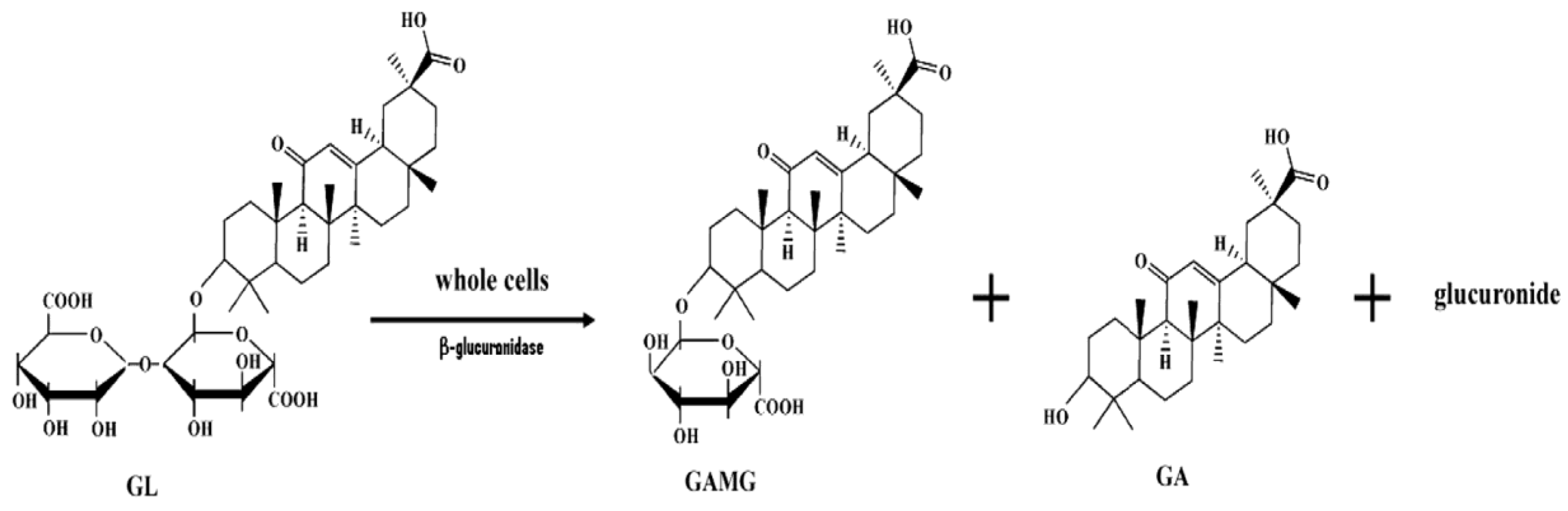
Figure 2.
(1) Standard curve of GL. (2) Standard curve of GAMG. (3) Standard curve of GA.
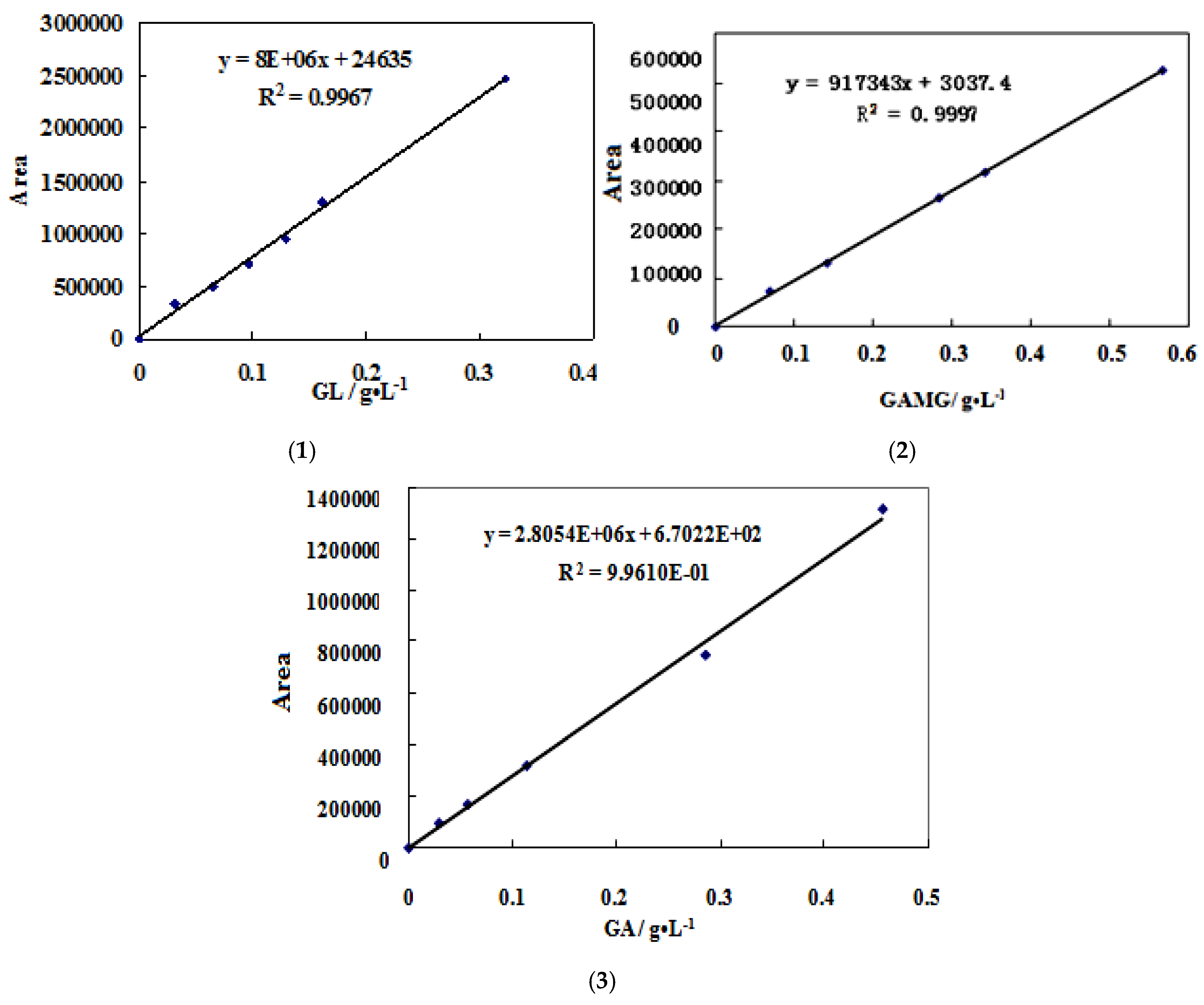
Figure 3.
Effect of inoculation concentration of w-PGUS on the immobilization efficiency, GAMG yield, and total biomass of w-PGUS in fermentation media. The fermentation media containing 1% PUF at pH 5.0 were kept at 32 °C and 170 rpm for 72 h with different inoculation concentrations of w-PGUS.
Figure 3.
Effect of inoculation concentration of w-PGUS on the immobilization efficiency, GAMG yield, and total biomass of w-PGUS in fermentation media. The fermentation media containing 1% PUF at pH 5.0 were kept at 32 °C and 170 rpm for 72 h with different inoculation concentrations of w-PGUS.
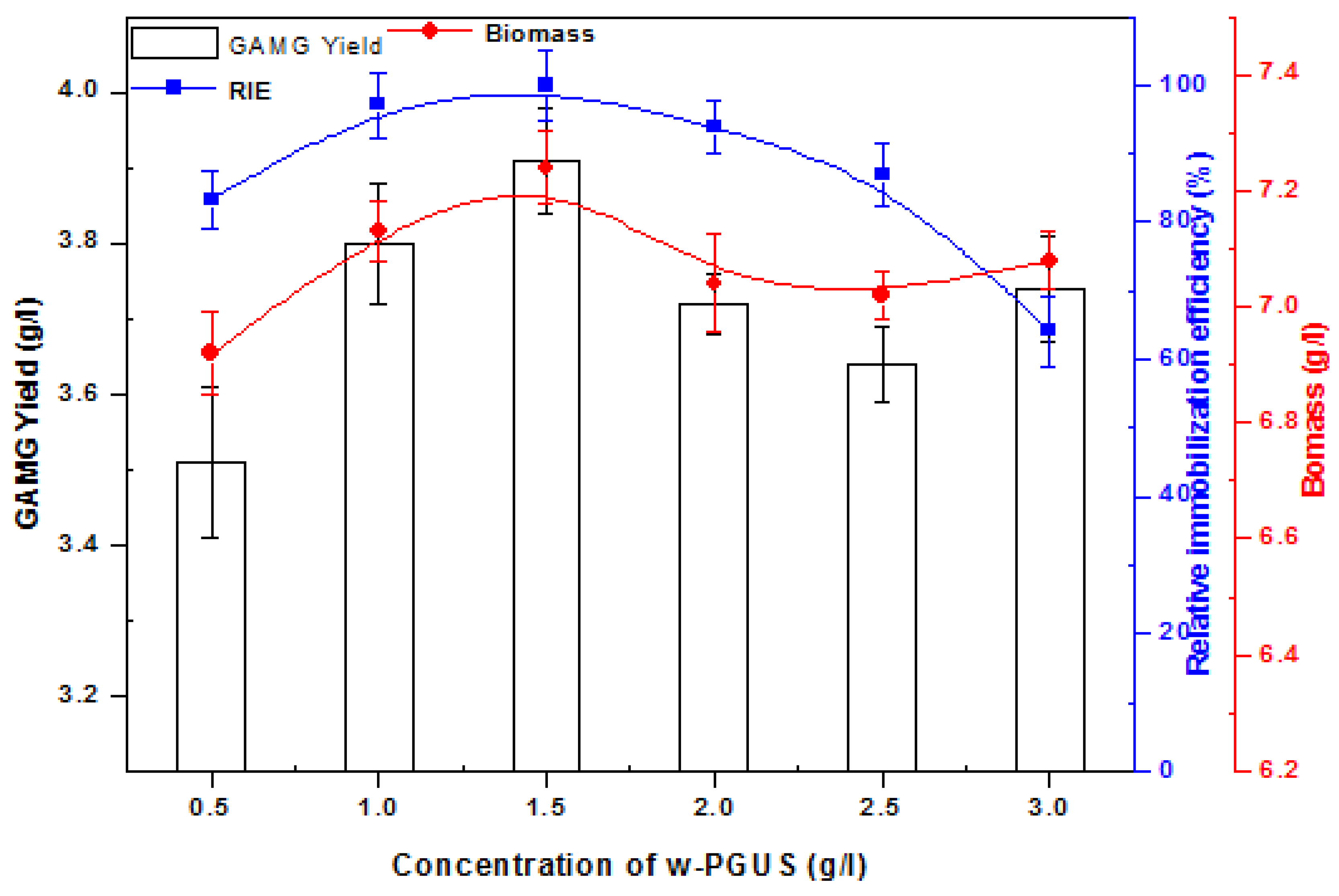
Figure 4.
Effect of temperature on the immobilization efficiency, GAMG yield, and total biomass of w-PGUS in fermentation media. The fermentation media containing 1% PUF, 1.5 g/l inoculation concentration of w-PGUS at pH 5.0 and 170 rpm were kept at different temperatures for 72 h.
Figure 4.
Effect of temperature on the immobilization efficiency, GAMG yield, and total biomass of w-PGUS in fermentation media. The fermentation media containing 1% PUF, 1.5 g/l inoculation concentration of w-PGUS at pH 5.0 and 170 rpm were kept at different temperatures for 72 h.
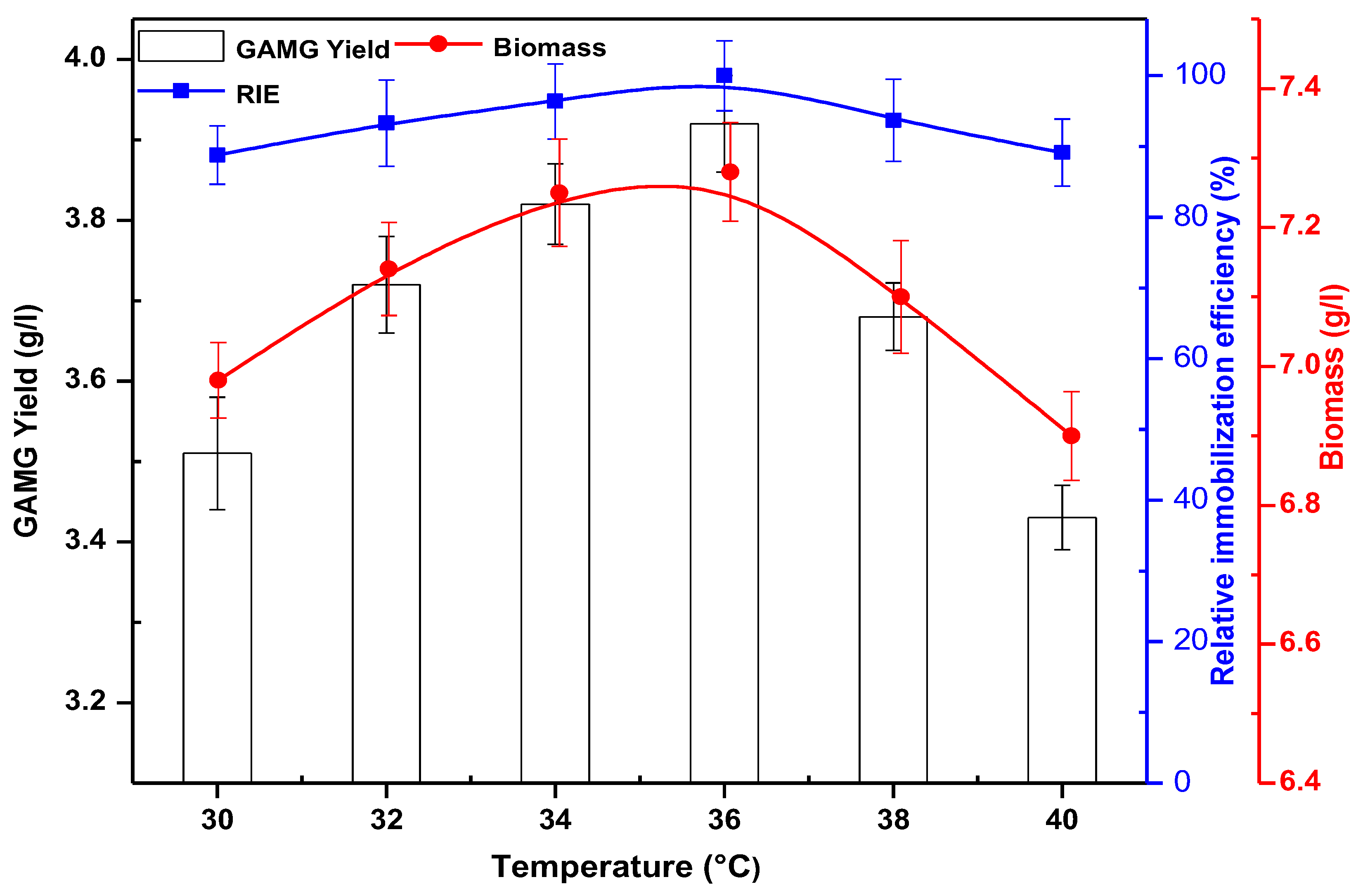
Figure 5.
Effect of culture pH on the immobilization efficiency, GAMG yield, and total biomass of w-PGUS in fermentation media. The fermentation media with different pH levels containing 1% PUF, 1.5 g/l inoculation concentration of w-PGUS were kept at 36 °C and 170 rpm for 72 h.
Figure 5.
Effect of culture pH on the immobilization efficiency, GAMG yield, and total biomass of w-PGUS in fermentation media. The fermentation media with different pH levels containing 1% PUF, 1.5 g/l inoculation concentration of w-PGUS were kept at 36 °C and 170 rpm for 72 h.
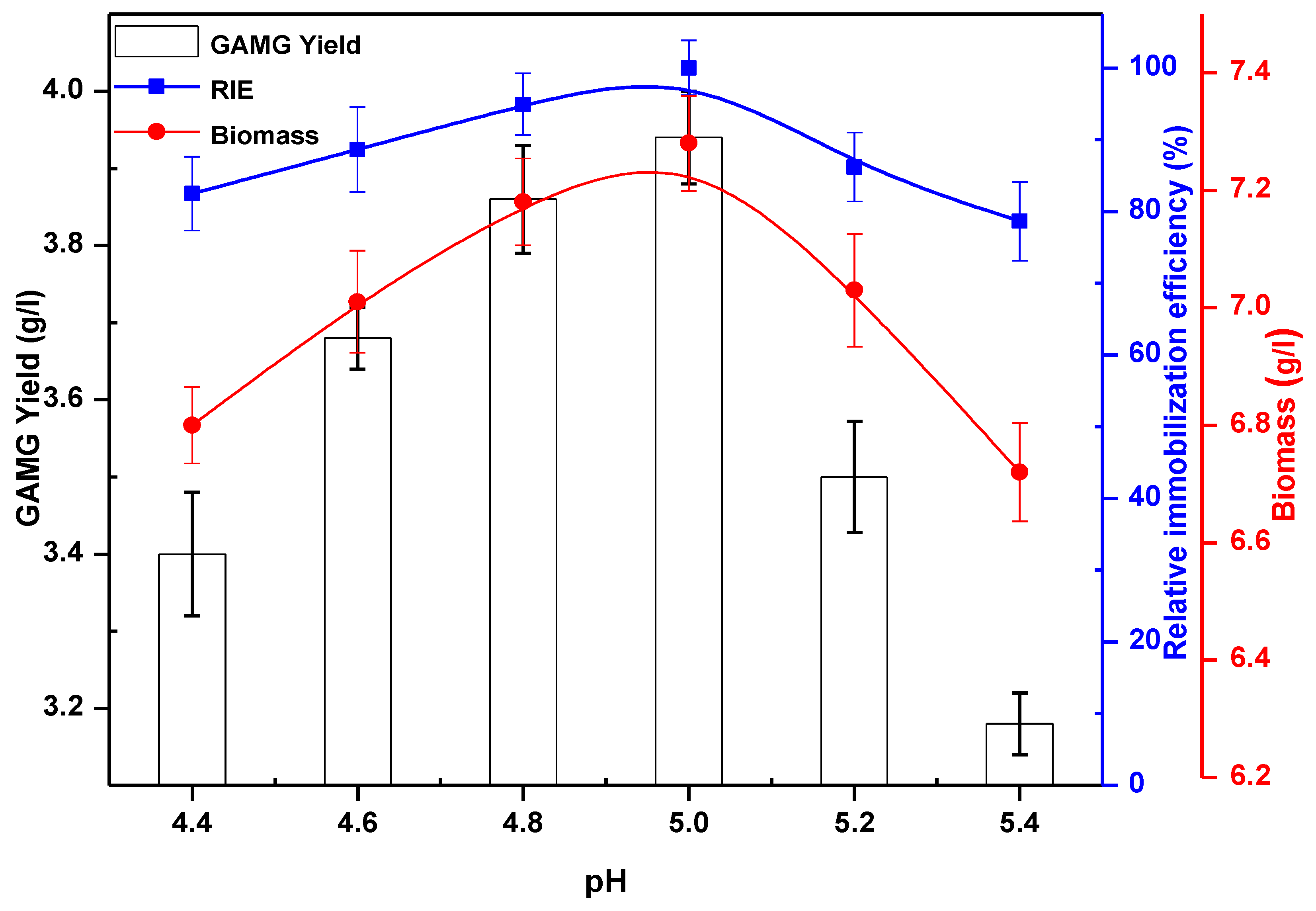
Figure 6.
Effect of shaking speed on the immobilization efficiency, GAMG yield, and total biomass of w-PGUS in fermentation media. The fermentation media containing 1% PUF, 1.5 g/l inoculation concentration of w-PGUS at pH 5 and 36 °C were kept at different shaking speeds for 72h.
Figure 6.
Effect of shaking speed on the immobilization efficiency, GAMG yield, and total biomass of w-PGUS in fermentation media. The fermentation media containing 1% PUF, 1.5 g/l inoculation concentration of w-PGUS at pH 5 and 36 °C were kept at different shaking speeds for 72h.
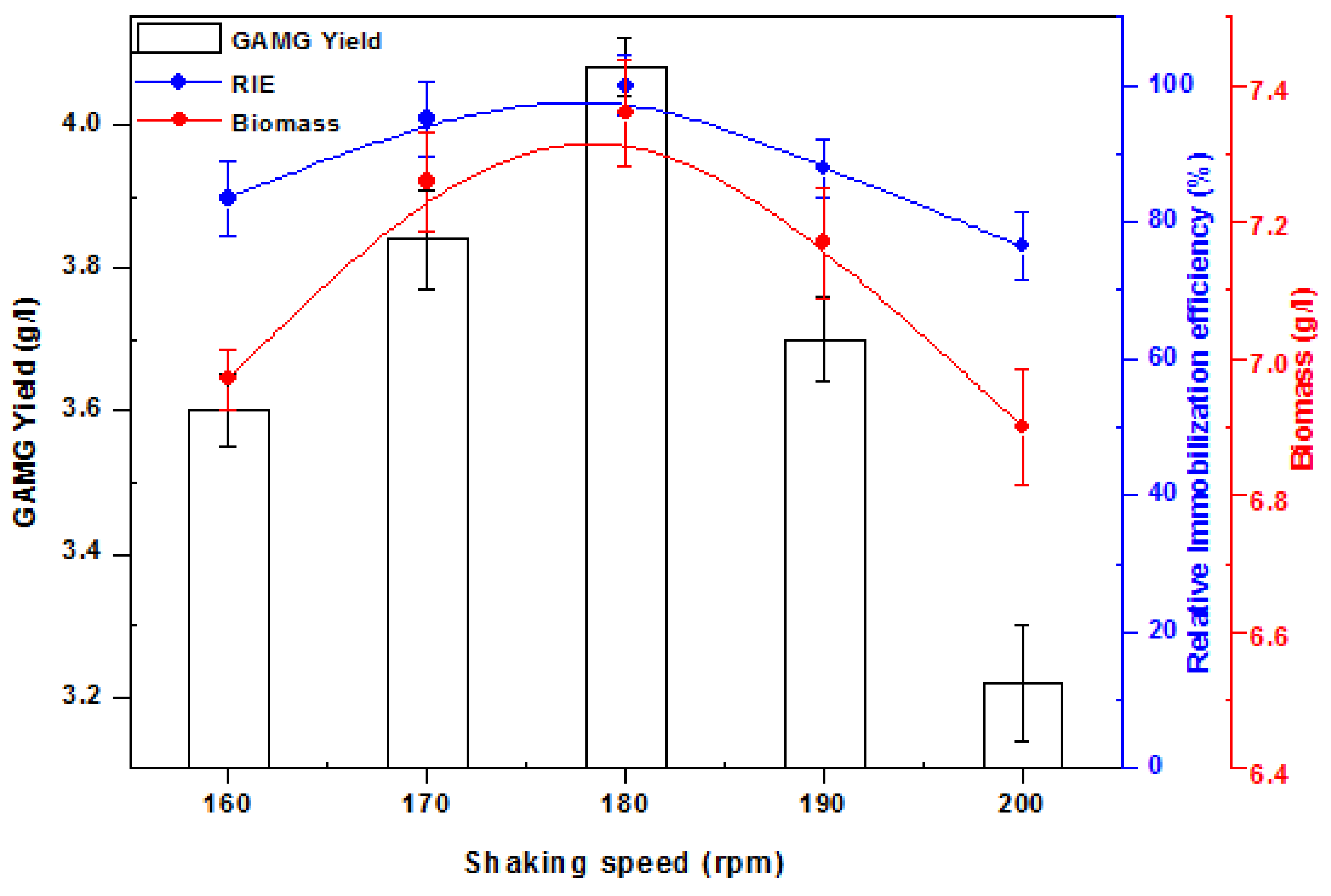
Figure 7.
SEM images of w- PGUS immobilized on PUF carrier. All four images (a, b, c, d) representing the growth and immobilization of w-PGUS mycelia network in PUF carrier in fermentation.
Figure 7.
SEM images of w- PGUS immobilized on PUF carrier. All four images (a, b, c, d) representing the growth and immobilization of w-PGUS mycelia network in PUF carrier in fermentation.
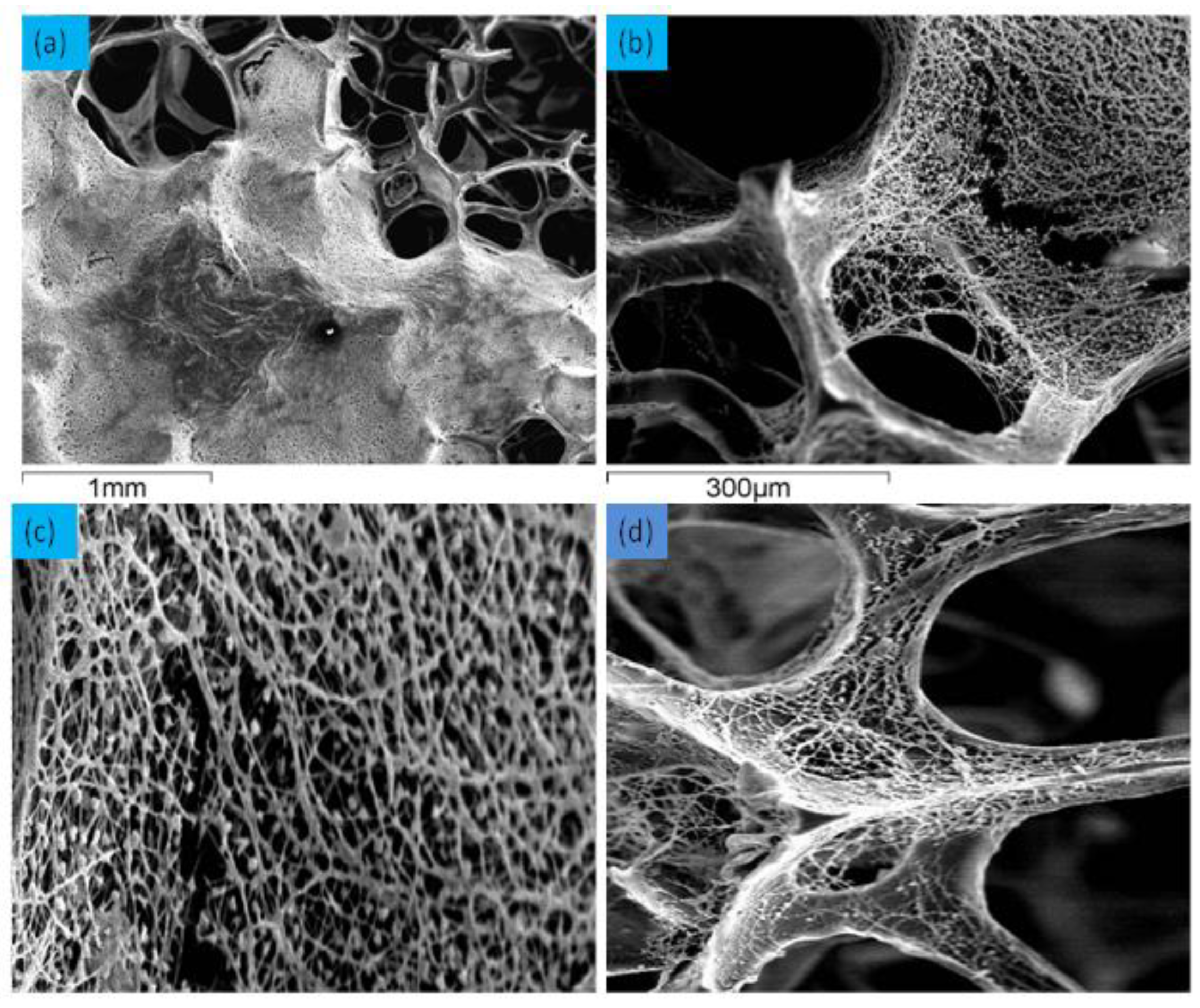
Figure 8.
Comparison of operational stabilities of PUF immobilized w-PGUS and free w-PGUS. All reactions were performed with 3 g of w-PGUS, 4 mM GL concentration at pH 5.5, 40 °C, and 150 rpm for 60 h.
Figure 8.
Comparison of operational stabilities of PUF immobilized w-PGUS and free w-PGUS. All reactions were performed with 3 g of w-PGUS, 4 mM GL concentration at pH 5.5, 40 °C, and 150 rpm for 60 h.
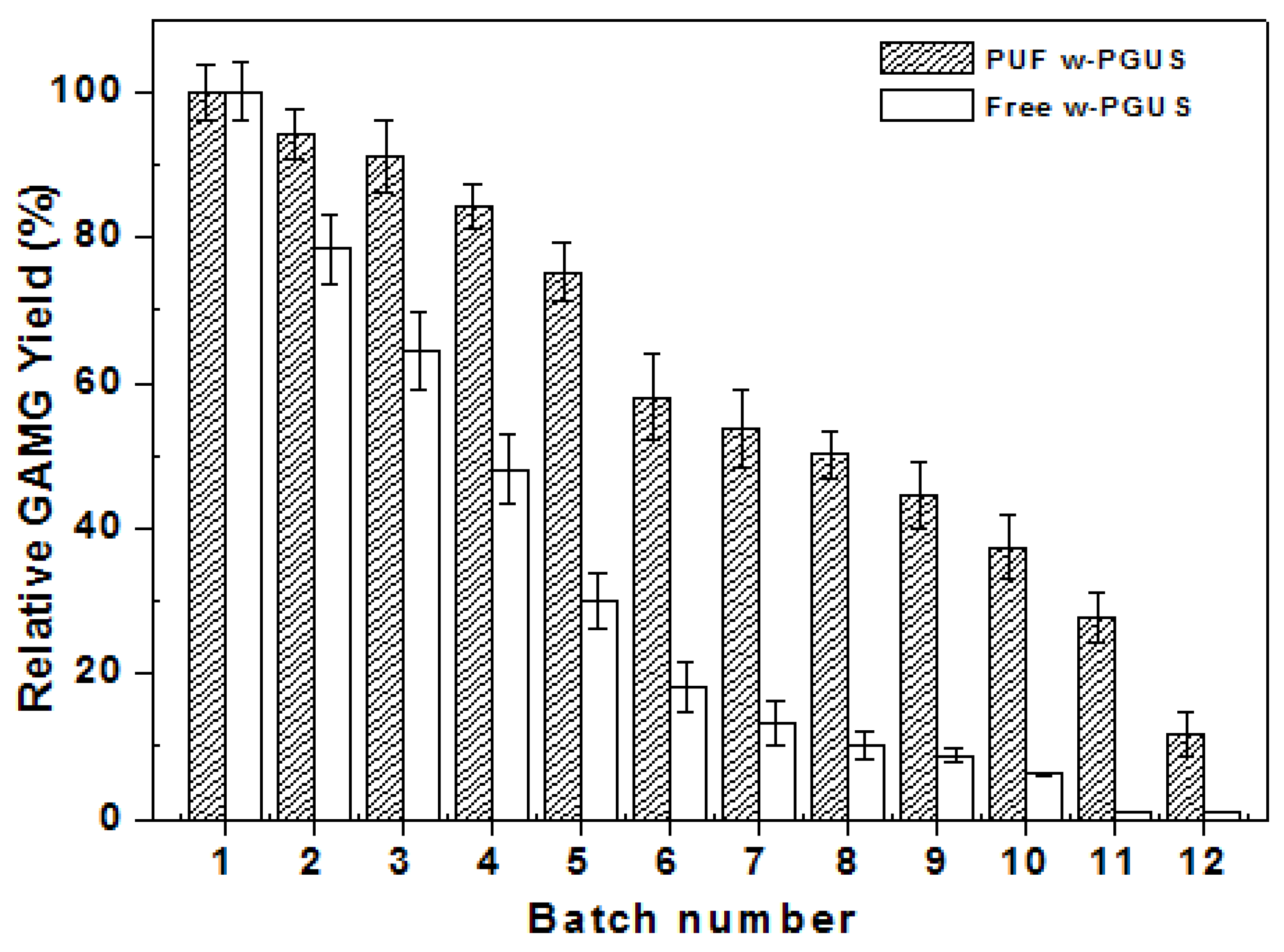
Figure 9.
Storage efficiencies of PUF immobilized w-PGUS and free w-PGUS. All reactions were performed with 3 g of w-PGUS, 4 mM GL concentration at pH 5.5, 40 °C, and 150 rpm for 60 h.
Figure 9.
Storage efficiencies of PUF immobilized w-PGUS and free w-PGUS. All reactions were performed with 3 g of w-PGUS, 4 mM GL concentration at pH 5.5, 40 °C, and 150 rpm for 60 h.
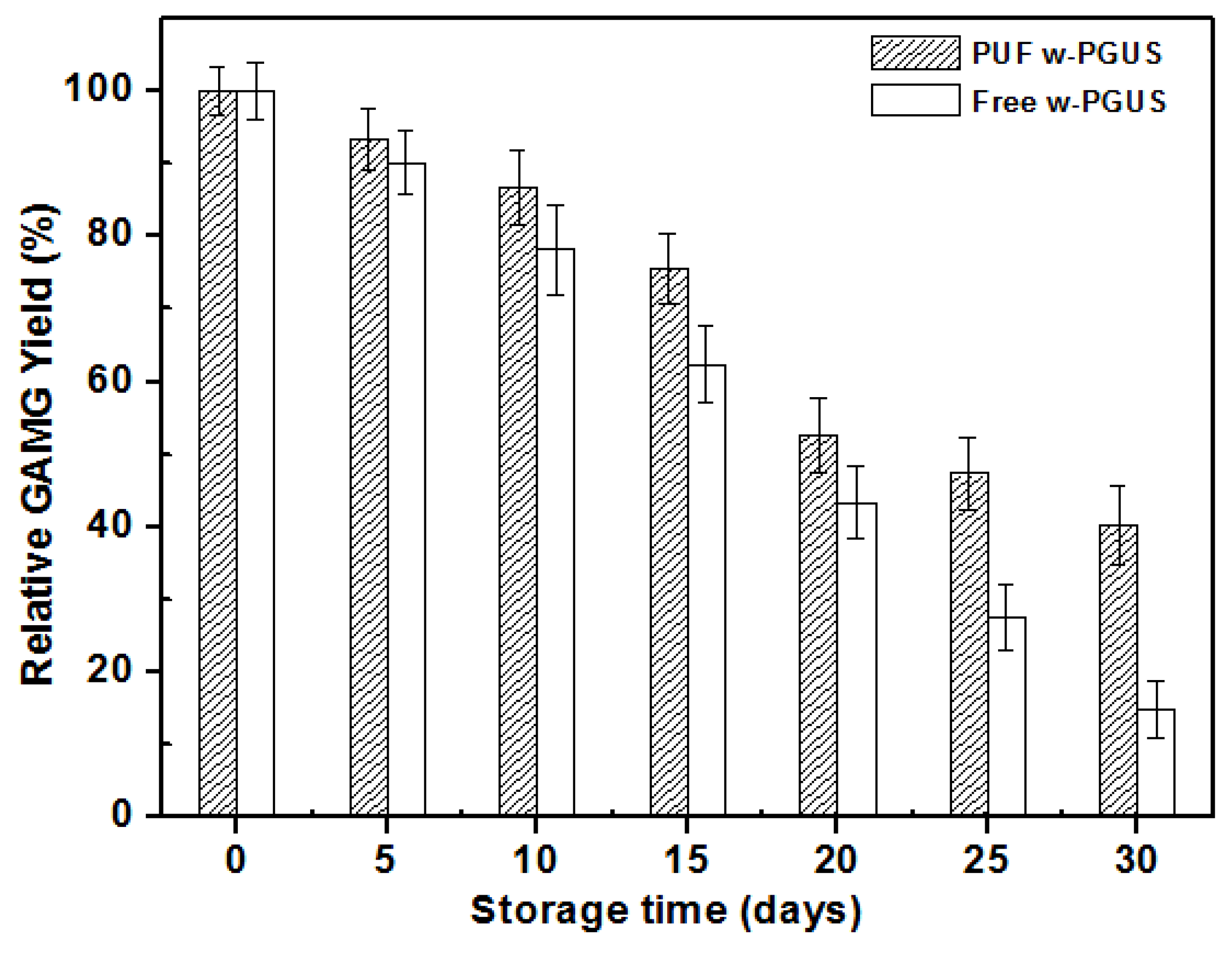

Table 1.
Immobilization efficiency of different polymers in fermentation media of T. pinophilus Li-93 (w-PGUS.
Table 1.
Immobilization efficiency of different polymers in fermentation media of T. pinophilus Li-93 (w-PGUS.
| Material | GAMG yield | Free DCW | Immobilized DCW | Total biomass | Immobilization efficiency |
| (gl-1) | (gl-1) | (gl-1) | (gl-1) | (IE %) | |
| Control | 4.12±0.08 | 7.42±0.13 | ––—— | 7.42±0.13 | ––—— |
| Polyurethane | 3.52±0.07 | 2.72±0.11 | 4.42±0.13 | 7.13±0.12 | 62.00 |
| Loofah sponge | 3.41±0.07 | 3.04±0.13 | 3.88±0.14 | 6.92±0.13 | 56.06 |
| Porous PVC | 3.23±0.08 | 5.92±0.16 | 0.56±0.14 | 6.48±0.15 | 8.64 |
All fermentations were performed with 1% polymer dosage, at pH 5.0, 32 °C and 170 rpm for 72h with constant inoculation concentrations of w-PGUS.
Table 2.
Effect of Polyurethane (PUF) dosage on the immobilization efficiency, GAMG yield and total biomass of T. pinophilus Li-93 (w-PGUS) in fermentation media.
Table 2.
Effect of Polyurethane (PUF) dosage on the immobilization efficiency, GAMG yield and total biomass of T. pinophilus Li-93 (w-PGUS) in fermentation media.
| PUF dosage | GAMG yield | Free DCW | Immobilized DCW | Total biomass | Immobilization efficiency |
| (gl-1) | (gl-1) | (gl-1) | (gl-1) | (gl-1) | (IE%) |
| 0.5 | 3.68±0.06 | 3.52±0.08 | 3.46±0.10 | 6.98±0.09 | 49.50 |
| 1.0 | 3.82±0.08 | 2.72±0.10 | 4.42±0.12 | 7.13±0.11 | 62.00 |
| 1.5 | 3.28±0.10 | 2.64±0.13 | 3.88±0.11 | 6.52±0.12 | 59.50 |
| 2.0 | 2.92±0.09 | 2.63±0.11 | 3.48±0.12 | 6.14±0.12 | 56.66 |
| 2.5 | 2.31±0.12 | 2.55±0.10 | 3.21±0.10 | 5.76±0.10 | 55.72 |
All fermentations were performed with 1 g/l inoculation concentrations of w-PGUS, at pH 5.0, 32 °C and 170 rpm for 72 h with different doses of PUF carrier.
Disclaimer/Publisher’s Note: The statements, opinions and data contained in all publications are solely those of the individual author(s) and contributor(s) and not of MDPI and/or the editor(s). MDPI and/or the editor(s) disclaim responsibility for any injury to people or property resulting from any ideas, methods, instructions or products referred to in the content. |
© 2025 by the authors. Licensee MDPI, Basel, Switzerland. This article is an open access article distributed under the terms and conditions of the Creative Commons Attribution (CC BY) license (http://creativecommons.org/licenses/by/4.0/).
Copyright: This open access article is published under a Creative Commons CC BY 4.0 license, which permit the free download, distribution, and reuse, provided that the author and preprint are cited in any reuse.


