

Submitted:
20 November 2025
Posted:
21 November 2025
You are already at the latest version
Abstract
Basketball is an intermittent sport with high neuromuscular and metabolic demands. To optimize specificity, training tasks should replicate competitive loads, but little is known about how drills compare to official matches. This study compared the physiological and biomechanical load of training tasks with official competition in elite U18 basketball players. Twelve male players (16.9 ± 0.8 years) were monitored across two seasons (179 training sessions, 21 matches). A total of 3,136 individual records were collected using Catapult Vector S7 LPS units. Training drills were classified by specificity (0–5). Physiological (distance and intensity zones) and biomechanical variables (accelerations, decelerations, jumps, explosive efforts, PlayerLoad™) were analyzed using cluster analysis and linear mixed models. Competition imposed the highest physiological and biomechanical loads. Non-opposition drills (1v0–5v0) showed limited transfer, though 1v0–2v0 accumulated higher jump density. Among opposition formats, 3v3 full court best replicated match demands. Continuous opposition tasks (3v3v3, 4v4v4, 5v5v5) elicited lower physiological but comparable biomechanical load. Small-sided formats, particularly 3v3 and 4v4, are the most effective training tools for reproducing competition demands, while non-opposition drills are better suited for technical or rehabilitation purposes.
Keywords:
sports
; ball drills
; small‐sided games
; scrimmage games
; load monitoring
; drilldesign
1. Introduction
Basketball is an open skills sport in which players are required to react and make decisions in an unpredictable and changing external rhythm environment [1,2,3,4]; intermittent between offensive and defensive actions [5,6,7], with frequent changes in movement types and intensity [8,9,10], alternating periods of high intentionality with periods of medium and low intensity [7,11,12]. From a physical-demand standpoint, it could be said that, in competition, there is an alternation of aerobic and anaerobic demands consecutively [13], which implies high neuromuscular and metabolic demands [14].
The principle of training specificity states that the greatest performance gains of training are obtained when the training stimulus is matched to the physiological and motor requirements of the sport during competition [15]. As Dawson et al. [16] state with reference to a well-known aphorism in the training world, ‘you should train as you compete’. For this reason, training strategies that replicate the performance demands of competition should be employed throughout the season [17,18,19]. Attention needs to be paid to task design, as if the training does not match the load endured and does not meet the specific demands of competition, this will result in lower competitive performance [20]. Knowledge and understanding of the movement patterns and activities performed in competitions by players is essential to plan relevant and effective training [16].
The findings from research examining competition demands in basketball are highly variable and inconsistent, as they are influenced by multiple factors that determine both external and internal load. In summary, and in relation to competition and peak demands observed in competition, the following table provides the most relevant data in this regard (Table 1).
In basketball, there are researches that have compared training with official competition [20,21,22], with friendly competition [23,24,25] or with simulated competition contexts [26]. In addition, there are studies that, although they have monitored training and official competition, have not compared the demands, but have quantified the weekly percentage change in external load and related it to internal load [27,28] or have attempted to relate training load to injury risk [29,30,31,32]. Given the time and resources devoted to planning training tasks and programs with the aim of simulating the demands of competition, this information enables the design of training protocols that are appropriately tailored to both individual and team needs related to competition [33]. However, as the same authors point out, most research to date has examined the load experienced by players using the traditional distinction between external and internal load (e.g., [34,35]). However, it is necessary to go beyond this classification, distinguishing more precisely between physiological and biomechanical loading [14,36].
Therefore, the aim of the present study is to compare training drills with competition in elite basketball players from the perspective of physiological and biomechanical load experienced.
2. Materials and Methods
2.1. Sample
Eighteen elite male basketball players [37] from the same team, competing in the highest regional division of the U18 Spanish basketball league, were included in this investigation (n = 18; mean ± SD: age 16.9 ± 0.8 years, height 196.6 ± 9.4 cm, body mass 91.7 ± 8.2 kg). Data collection was conducted across 179 training sessions and 21 official matches, all of which followed standard FIBA regulations. This guaranteed uniformity in match duration, court size, player numbers, and overall game structure throughout the entire sample. Data collection took place at the same training facility over two consecutive seasons (2018–2019 and 2019–2020). To qualify for inclusion, athletes were required to participate in at least 50% of training sessions (≥90 of 179) and a minimum of 35% of official games (≥8 of 21) across both seasons. Players failing to meet these minimum thresholds were not considered in the final analyses.
At the session level, any training entry in which an athlete completed less than 80% of the planned duration was discarded; nonetheless, these players remained part of the study sample provided they satisfied the general inclusion criteria. In competition, game-level data were omitted when players accumulated fewer than 15 minutes of effective playing time, as recorded by the tracking devices. These 15 minutes reflected the actual time spent on the court, including periods of live play and stoppages (e.g., fouls, free throws, out-of-bounds actions), but not time spent on the bench or during official breaks such as timeouts or quarter intervals.
After applying all exclusion criteria, six players who initially met the recruitment criteria were removed from the final dataset. The resulting sample comprised 3,136 valid observations, 141 from official games and 2,995 from training sessions, collected from a total of 12 players. All procedures were carried out following the guidelines of the Declaration of Helsinki [38].
2.2. Procedures
This observational study spanned two complete competitive seasons (2019–2020 and 2020–2021). During every monitored activity, both training sessions and official games, athletes wore Vector S7 devices (Catapult Sports, Melbourne, Australia) placed in a custom-fitted vest featuring a pocket positioned over the upper thoracic region, between the scapulae. Each unit integrated an accelerometer (±16 g, 100 Hz), magnetometer (±4900 μT, 100 Hz), gyroscope (up to 2000 deg/s, 100 Hz), and a local positioning system (LPS). Positional data were collected through the ClearSky system (ClearSky S7, Catapult Sports, Melbourne, Australia; firmware 5.6) operating at 10 Hz and based on ultra-wideband technology (4 GHz). To guarantee optimal signal reception and accurate spatial reconstruction, 24 antennas were strategically installed around the court’s perimeter. Previous research has verified the validity of this technology for accurately quantifying distance-related variables [39,40,41,42] such as, speed, accelerations, decelerations [39,40], and Player LoadTM [43], while similar LPS technology has been shown to be reliable (coefficient of variation (CV) <5%) in measuring distance and speed variables [42]. All athletes were familiar with the monitoring equipment, as the same tracking units had been routinely used during training and competition in the previous season. Before each official match, the devices were powered on approximately 20–40 minutes prior to the start of the warm-up. To reduce potential variability between units in the quantification of external load, each player was assigned a specific device and used the same unit consistently throughout the entire study [44].
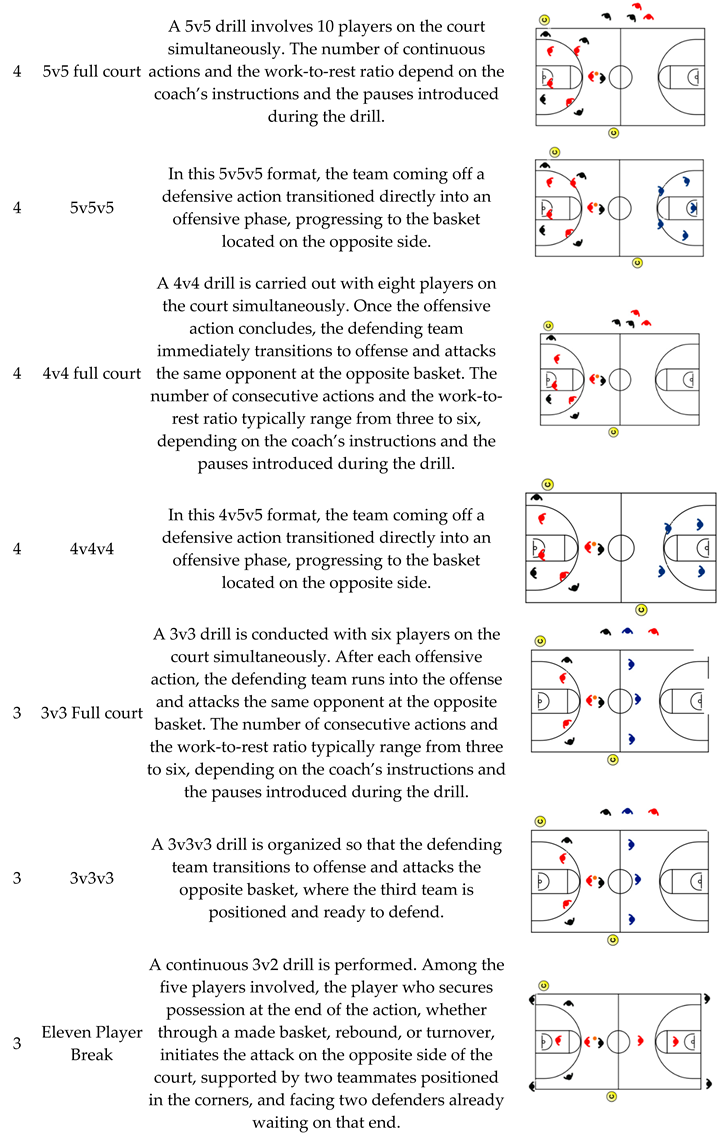
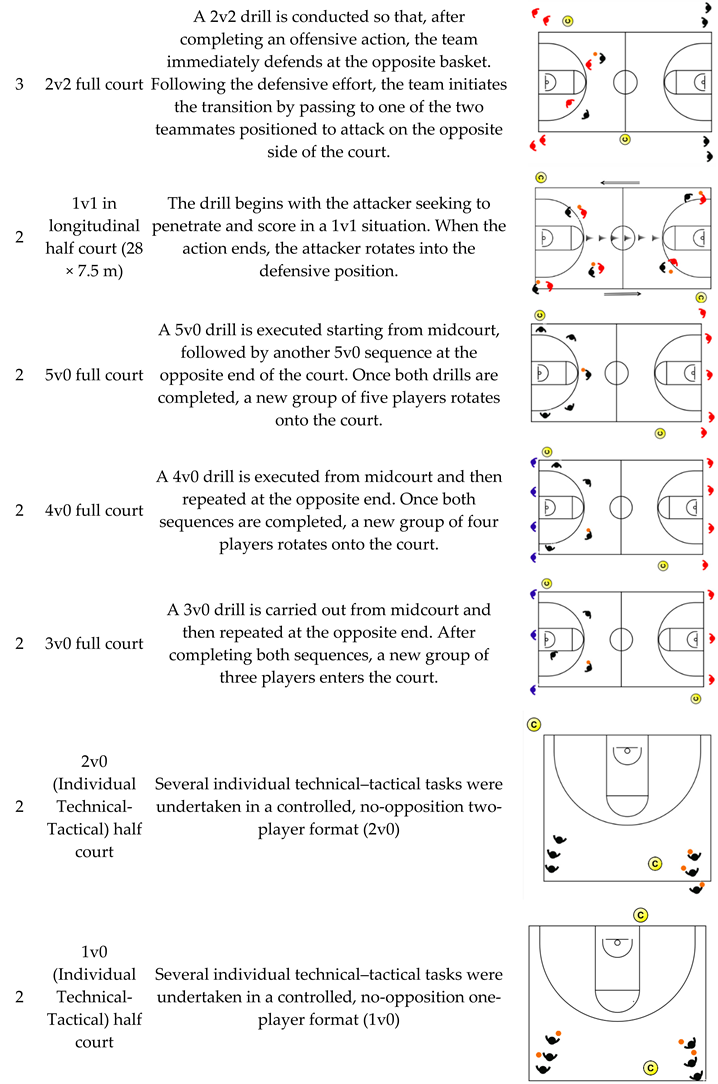
Activity editing was performed both in real time and after each session to maintain consistency in the dataset. To limit inter-observer variation, all editing procedures were conducted by the same researcher. For training sessions, active duration was defined as the time in which a player was directly participating in the task, excluding transitions between drills, hydration breaks, or any period during which the player was present but not actively engaged. A player was considered inactive when positioned off the court without taking part in the exercise (for example, during a 5v5 drill while waiting to substitute a teammate). Once data collection was finalized, player-specific information for each training session, organized by drill type, was exported using Catapult Sports’ OpenField cloud software (version 1.22.0). After applying the predefined exclusion criteria, the processed data were transferred to a Microsoft Excel spreadsheet (version 16.0, Microsoft Corporation, Redmond, WA) for subsequent analysis. Training drills were then categorized according to their level of specificity, using a 0-to-5 classification based on the framework proposed by [45]. Activities classified as levels 0–1 involved non-basketball work performed outside the court (e.g., cycling). In contrast, level 5 represented formal competitive play (Table 1).

Table 2.
Drill classification based on their specificity from 5 to 0 [45].
Table 2.
Drill classification based on their specificity from 5 to 0 [45].
 |
 |
2.3. Physical Variables
The selected physical indicators were divided into physiological and biomechanical categories [46,47]. The variables were processed and reported as normalized per-minute accumulation metrics.
2.3.1. Physiological Variables
The following 5 variables were considered physiological: distance (m) per minute covered (TD) and distance (m) per minute covered in different intensity zones including: standing–walking (S-W) = <7 km·h−1; jogging (JOG) = 7–14 km·h−1; running (RUN) = 14.01–18 km·h−1; and high-speed running (HSR) >18 km·h−1, as previously used in basketball research [48].
To categorize the drills according to the orientation of their physiological load, a two-step cluster analysis was conducted (average silhouette = 0.5) using physiological metrics such as total distance per minute and distance per minute across different speed thresholds (Table 3). The analysis grouped the drills into four categories: low physiological load, medium physiological load, high physiological load, and very high physiological load. Each category was then assigned a numerical label, where 1 corresponded to low load, 2 to medium load, 3 to high load, and 4 to very high physiological load.
To determine the physiological load associated with each drill type, an average load value was calculated based on the assigned cluster scores (1–4). For example, if 100 recordings from official games were classified evenly between cluster 4 and cluster 3 (50 each), the resulting average would be 3.5, indicating a physiological load value of 3.5 for that drill category.
2.3.2. Biomechanical Variables
Five biomechanical metrics were analyzed: jumps per minute (JUMPS) exceeding 20 cm; the number of accelerations per minute (ACC) greater than 2 m·s⁻² (dwell time: 0.3 s); the number of decelerations per minute (DEC) below −2 m·s⁻² (dwell time: 0.3 s); PlayerLoad™ per minute (PL, arbitrary units); and explosive efforts per minute (EE). The selected dwell time was set at 0.3 s, as durations between 0.3 and 0.4 s are commonly applied in basketball monitoring contexts [49,50,51].
PL was calculated as the square root of the sum of the instantaneous rate of change in acceleration in the three movement planes (x-, y-, and z-axes) using the following formula [49,52]:
In this equation, fwd denotes movement along the anterior–posterior axis, side corresponds to medial–lateral displacement, and up reflects vertical motion; t indicates time. EE were quantified as the number of inertial actions performed per minute (n·min⁻¹), based on the detection of medium- and high-intensity inertial events such as accelerations, decelerations, and changes of direction
To group the drills according to their biomechanical load orientation, a two-step cluster analysis was performed (average silhouette = 0.5) using the biomechanical variables JUMPS, ACC, DEC, PL, and EE (Table 4). The analysis identified two categories of drills: those with low biomechanical load and those with high biomechanical load. A numerical value of 1 was assigned to low biomechanical load, while a value of 2 was assigned to high biomechanical load. To determine the biomechanical load associated with each drill type, an average load value was calculated based on these cluster scores (1–2).
2.4. Statistical Analysis
To analyze differences in external load orientation (physiological or biomechanical), a Linear Mixed Model (LMM) was applied. The analysis focused on comparing training tasks with actual competition, rather than comparing the drills among themselves. A total of 14 distinct training situations were considered (1v0-Individual Technical-Tactical-half court, 1v1 in longitudinal half court-28 × 7.5 m-, 2v0-Individual Technical-Tactical-half court, 2v2 full court, 3v0 full court, 3v3 full court, 3v3v3, 4v0 full court, 4v4 full court, 4v4v4, 5v0 full court, 5v5 full court, 5v5v5, and Eleven player break). Each task was treated as a categorical predictor in the model, while “player” was included as a random effect to account for repeated measures across individuals.
Cohen’s effect size (ES) and the mean differences with their corresponding 95% confidence intervals (CI) were calculated for each pairwise comparison. Effect sizes were interpreted according to the following qualitative thresholds: <0.20 trivial; 0.20–0.59 small; 0.60–1.19 moderate; 1.20–1.99 large; and ≥2.00 very large [53]. Statistical analyses were performed using IBM SPSS Statistics for Windows (version 23; IBM Corporation, Armonk, NY, USA), whereas ES values were derived using a customized Microsoft Excel spreadsheet (version 16.0; Microsoft Corporation, Redmond, WA, USA).
3. Results
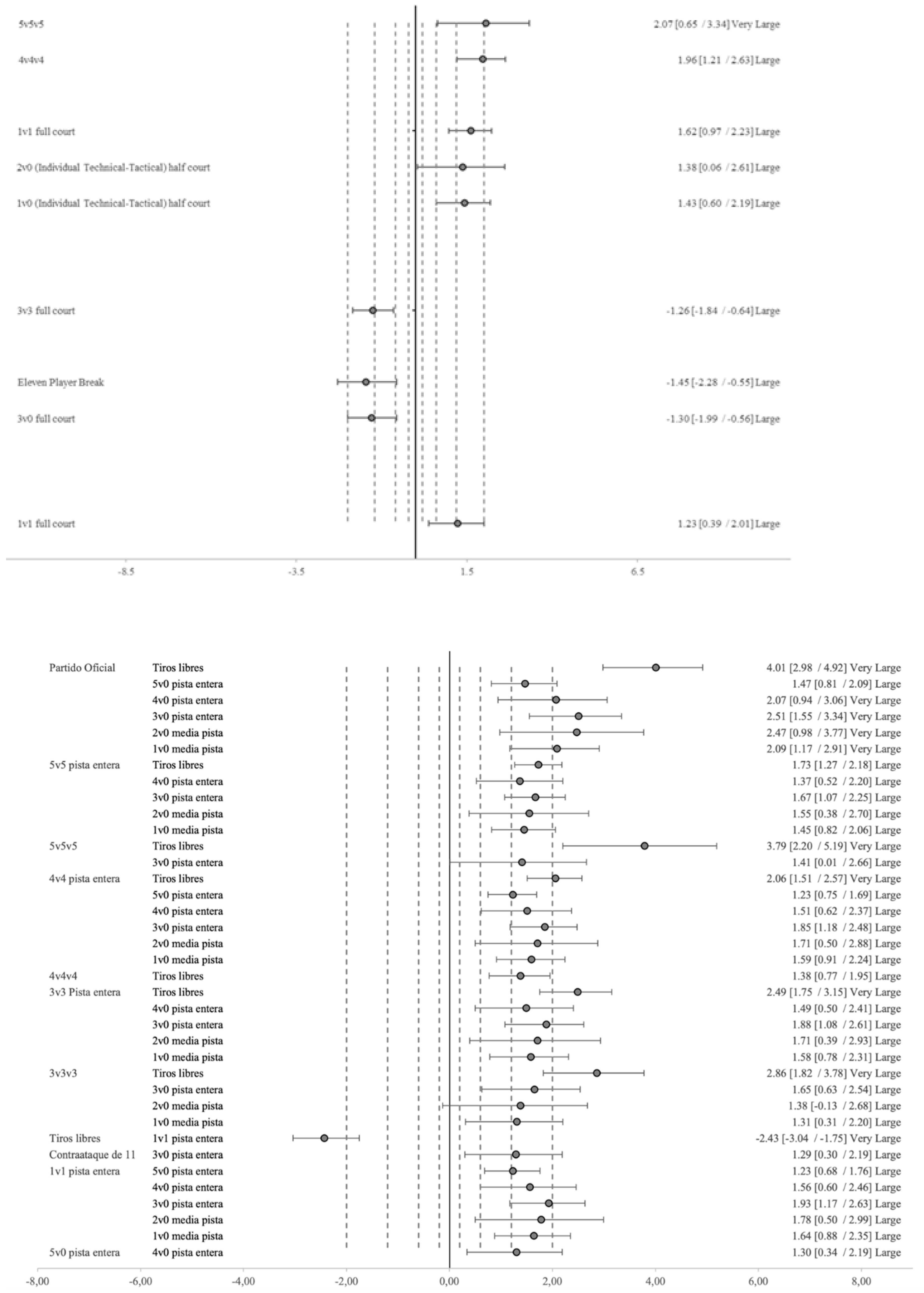
Regarding the comparison between training tasks for physiological load (Figure 2), official games showed significantly higher values than 5v5v5 (ES: 2.07), 4v4v4 (ES: 2.04), 1v1 in longitudinal half court-28 × 7.5 m- (ES: 1.62), 2v0-Individual Technical-Tactical-half court (ES: 1.38), and 1v0-Individual Technical-Tactical-half court (ES: 1.43); all of which represent large effect sizes (Cohen’s d > 0.8). Regarding the comparison between training tasks for biomechanical load (Figure 3), official competition showed significantly higher values (p < 0.05) than 5v0 full court (ES: 1.74), 4v0 full court (ES: 2.07), 3v0 full court (ES: 2.51), 2v0-Individual Technical-Tactical-half court (ES: 2.47), and 1v0-Individual Technical-Tactical-half court (ES: 2.09); all of which represent large effect sizes (Cohen’s d > 0.8).
Figure 1.
Classification of Drills According to Physical Orientation and Specificity. Note: Color scale indicates specificity from low (blue) to high (red).
Figure 1.
Classification of Drills According to Physical Orientation and Specificity. Note: Color scale indicates specificity from low (blue) to high (red).
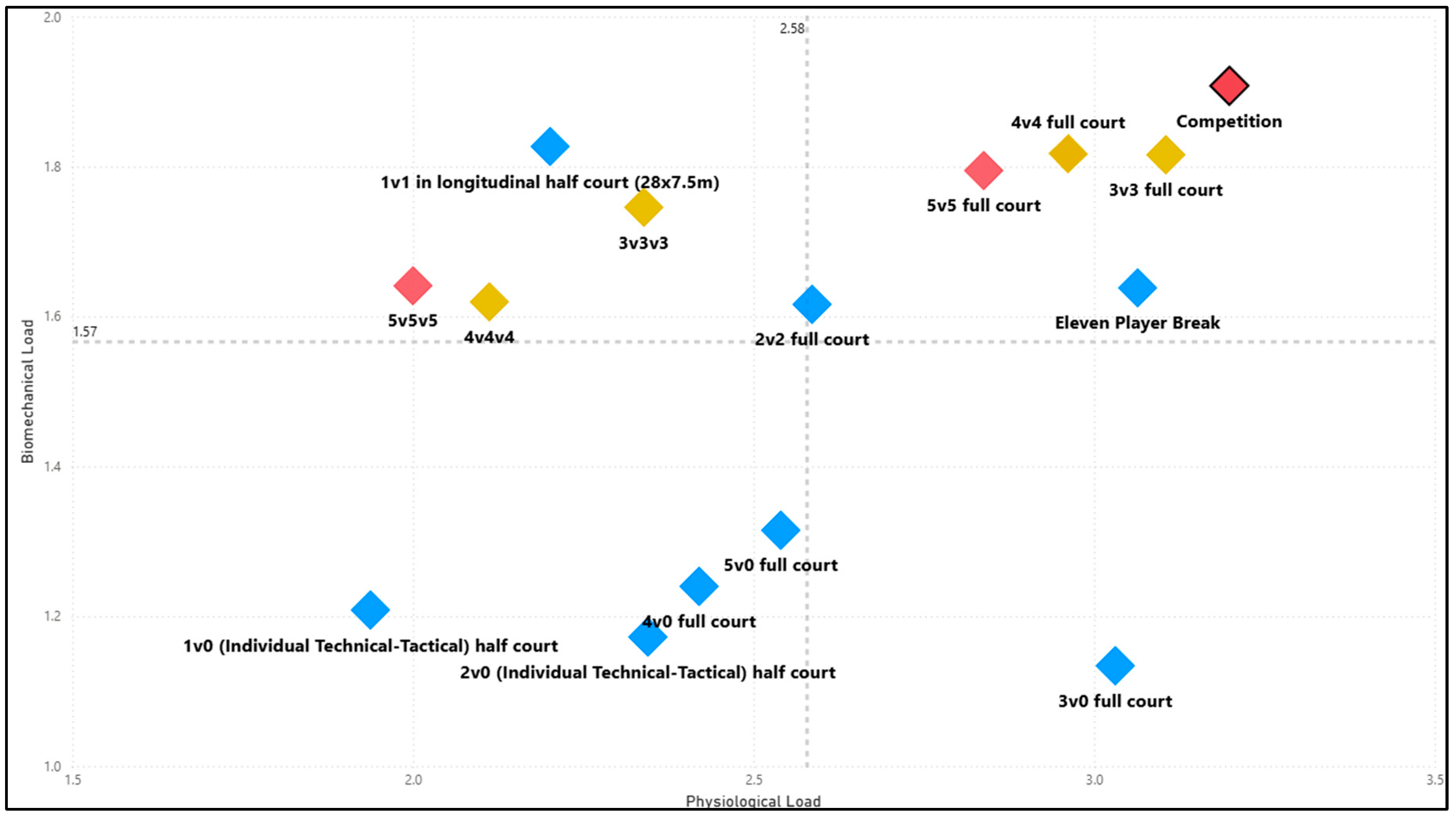
Figure 2.
Physiological load. Effect Size Estimates (Cohen’s d) with 95% CI for Training–Match Differences in Load Orientation. Notes: The dotted line represents the effect size threshold from large to very large.
Figure 2.
Physiological load. Effect Size Estimates (Cohen’s d) with 95% CI for Training–Match Differences in Load Orientation. Notes: The dotted line represents the effect size threshold from large to very large.
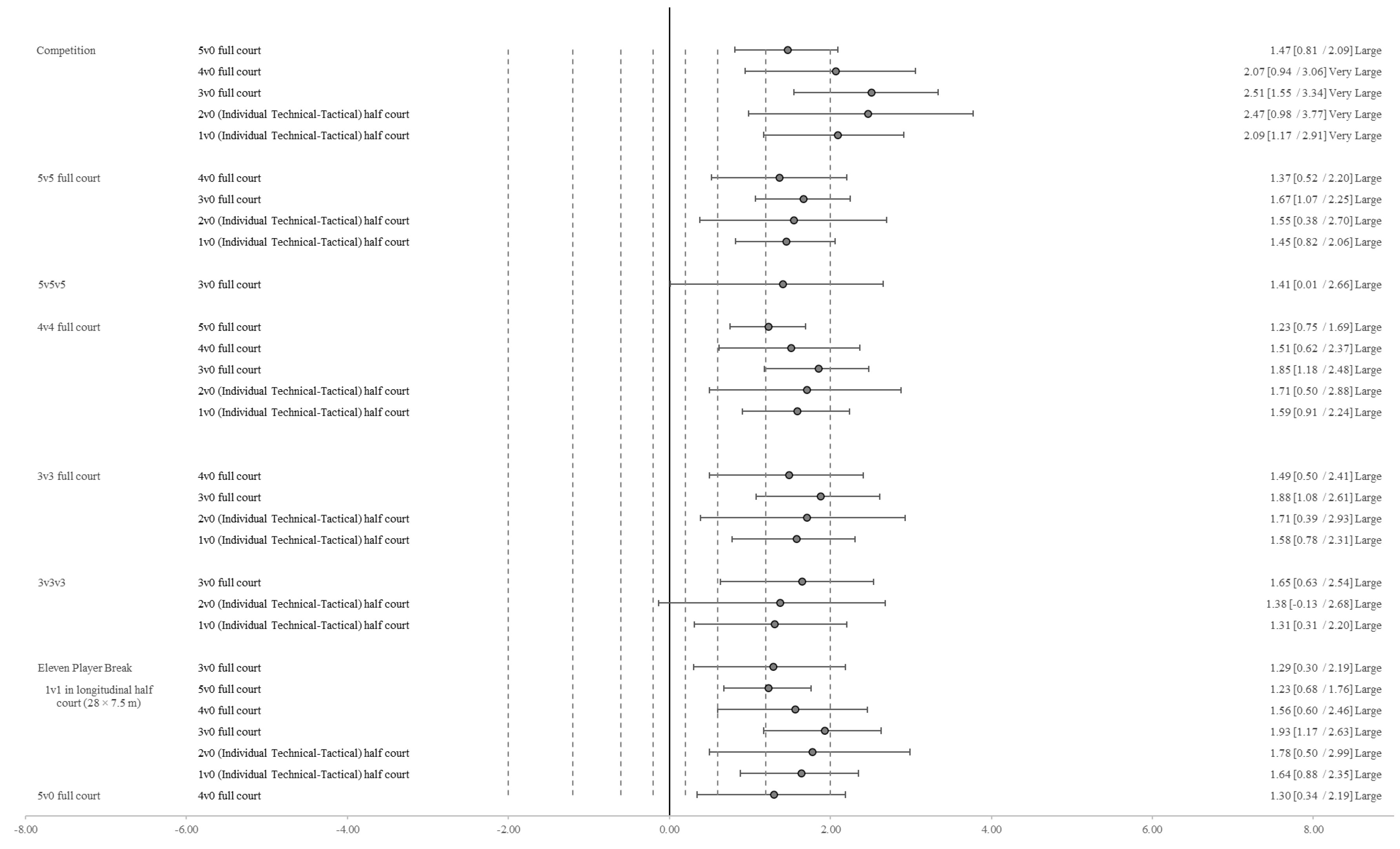
Figure 3.
Biomechanical load. Effect Size Estimates (Cohen’s d) with 95% CI for Training–Match Differences in Load Orientation. Notes: The dotted line represents the effect size threshold from large to very large.
Figure 3.
Biomechanical load. Effect Size Estimates (Cohen’s d) with 95% CI for Training–Match Differences in Load Orientation. Notes: The dotted line represents the effect size threshold from large to very large.
4. Discussion
The aim of the present study has been to compare training tasks with competition in elite basketball players from the perspective of physiological and biomechanical load experienced.
Previously, several studies have compared training, and competition demands in the same group of players. The training analysis has been compared with official competition [21,22,54,55], [56,57,58,59] with friendly competition [23,24,25] or with simulated competition contexts [56]. Moreover, some of the studies that have compared training with competition have not specified the type of tasks used in the practices, just the training load [20,23,26,55,57]. Only in the studies by Svilar et al. [24], in which 5v5 (regular-stops and no-stops) was analyzed, and by Torres-Ronda et al. [25] in which BDs (2v0, 3v0, 4v0 and 5v0), SSGs (1v1, 2v2, 3v3, 4v4) and SGs (5v5) were analyzed, the type of tasks has been specified, although in both studies the tasks were compared with friendly competition. To date, to our knowledge, there are no studies that have compared training tasks with official competition over several seasons in the same group of players.
4.1. Considerably Inferior to Competitive Benchmarks Across Biomechanical and Physiological Dimensions
Regarding non-opposition drills, it has been observed that official competition obtains higher values in biomechanical variables such as PL/min and explosive efforts/min than all non-opposition activities (1v0, 2v0, 3v0, 4v0 and 5v0). However, 1v0 and 2v0 tasks obtain more jumps/min than competition and the rest of tasks, data that coincides with the study of Torres-Ronda et al. [25](Torres-Ronda et al., 2016a), which suggests that when the work:rest ratio is considered, non-opposition tasks have the highest density of actions. The fact that in 1v0 and 2v0 tasks there is a high density of jumps/min and low running values in all zones compared to competition, could be justified on the basis of: (a) in these tasks it is not necessary to perform certain actions such as dribbling or change of direction to progress, which limits the ability to accumulate other explosive actions; (b) these tasks are usually set at half court, so there is no possibility to reach or stay long in high speed bands and accumulate distance and PL given the limited space available; and (c) they are usually tasks with a high technical orientation where a high number of repetitions are performed with little displacement, such as shooting drills.
However, when the competition is compared with BDs with a higher tactical orientation (3v0, 4v0 and 5v0), and that could be organized full court, no differences were observed in terms of total distance/min or in high intensity running zones (Runing zone 3 and 4), only significantly higher values were obtained for competition in zone 1 and 2 compared to 3v0, 4v0 and 5v0. These data are compatible with those obtained by [58] (Sosa et al., 2021) in which it was observed that, during competition, 80.09% of the distance covered and 93.65% of the time is spent in zone 1 and 2. Therefore 3v0, 4v0 and 5v0 accumulate distances in zone 3 and 4 similar to those of competition, but do not accumulate high biomechanical load. These tasks could serve as a valuable tool for improving physiological parameters with reduced risk of joint stress and injury due to the absence of external opposition and lower biomechanical loading requirements. Concurrently, these tasks represent ideal activities for implementation during the initial phase of sports injury rehabilitation, particularly for articular injuries, due to their low biomechanical requirements.
4.2. Progressing Toward Competitive Benchmarks Across Biomechanical and Physiological Dimensions
At specific times during the season, it is desirable that training mimics competition demands in terms of physical demands and technical-tactical specificity to the competition [59]. For this reason, the SSGs and SGs seem to be a tool that prepares players better than the BDs. While non-opposition tasks could generate a high density of actions, tasks with opposition have proven to be the most intense. The 1v1 half-court longitudinal 1v1 has shown a high biomechanical load, being the task that accumulates more explosive efforts/min, accelerations/min and decelerations/min, above any task and official competition. Our data coincide with other study [25] in which it was observed that 1v1 full court represented the highest intensity ball exercise. However, these authors found that the next task in intensity was 2v2 half-court, whereas in the present study, this task is far away from the biomechanical load competition values.
As with the non-opposition tasks, if we compare official competition with the set of SSGs we observe that in total distance/min there are no significant differences with any task, but there are differences in the different zones, especially in zones 1 and 2 which is where more time is spent in competition (Sosa et al., 2021).
To date, there are no studies that have compared SSGs with continuous opposition (3v3v3, 4v4v4 and 5v5v5) or Eleven Player Break with competition, so the data of the present investigation could not be compared with other studies. It can be observed that the tasks 4v4v4 and 5v5v5 accumulate significantly less physiological load than official competition, and 3v3v3 accumulate significantly less distance than competition in zones 1, 2 and 3. In addition there is a higher PL/min in competition compared to 4v4v4 and 5v5v5. These differences are aligned with the idea that with a lower m2/player ratio less physiological load is accumulated [61] and given that PL has a high correlation with distance traveled [62,63] it seems logical to think that in situations with similar opposition but with greater space a greater load will be accumulated. For this reason, continuous opposition tasks could be an interesting tool to work tactical aspects without accumulating a large physiological load. On the other hand, the Eleven Men Break task accumulates less biomechanical load than competition, but accumulates a similar physiological load, so that, it could be used with the objective of improving the athlete's conditioning including opposition and with a lower biomechanical load than competition.
The data obtained in this study are consistent with other studies [20,25,64] in which they reflect that competition is more intense than the rest SSGs and SGs, however, there are differences. Feu et al. [65] found that the external workload variables such as distance covered, high-intensity displacements, accelerations, and decelerations tend to be lower in 5v5 in training sessions compared to competitive matches. Additionally, internal workload measures, such as heart rate, were higher during competition, reflecting greater physiological stress. Torres-Ronda [25] observed that the intensity, measured by mean HR and Peak HR reached, is higher in competition 158 bpm-198ppm, respectively, compared to the rest of SSGs (5v5, 4v4, 3v3 and 2v2). These authors found that 5v5 (152ppm and 182ppm, respectively) was more intense than 3v3 (145ppm and 179ppm, respectively) and 4v4 (143ppm and 174ppm, respectively), what contrasts with the present study, in which has been observed that official competition is the most intense activity, followed by 3v3, 4v4 and 5v5 respectively. As reflected by other authors [66] it has been found that 3v3 and 4v4 tasks do not differ significantly. Although the 3v3, 4v4 and 5v5 tasks have very similar biomechanical load values, the cumulative physiological load is higher in 3v3, resembling that of official competition. The results of Montgomery et al. [64] in which they compared SSGs and SGs with friendly competition (Peak FC reached, % Maximal FC and VO2Max) and in contrast with the present study, although they found that friendly competition was more intense than any drill, the most intense drill was 5v5, being the most resembled in demands to the competition. In fact, in their study they reflected that the peak HR reached were similar between 5v5 tasks and friendly competition, although there was greater time in % HR max in favor of competition. It seems logical to think, that since 5v5 tasks are the most similar to the game, they are the ones that generate load values closer to competition [67,68,69], but observing the results obtained in the present study, it seems that 3v3 and 4v4, when played in full court, are the best option to achieve a high work intensity similar to that of official competition, especially biomechanical load, given the high frequency of movements. In this aspect McCormick et al. [70] observed that the number of high intensity actions in 3v3 is higher than in friendly competition (33 movements per minute), both in half-court (46 movements per minute) and full-court (53 movements per minute) situations. Thus, based on the data obtained in the present study, the 3v3 full-court task seems to be the best solution, both at the biomechanical and physiological. Although no tasks of 3v2, 4v3 or 5v4 have been analyzed in this study, it seems that these tasks may show higher demands and a greater similarity with friendly competition [71].
In contrast to the data obtained in this study, there are authors who have observed that basketball training demands can exceed those of friendly competition. In their study Svilar et al. [24] found that 5v5 no-stops elicited higher values of PL/min, decelerations/min, jumps/min, high intensity jumps/min and COD/min than friendly competition. However, when 5v5 was performed with the regular-stop game, it did not outperform friendly competition in any variable except accelerations/min. These results may be justified by the intentional intensification of the 5v5 when rest time during the task is eliminated. Similarly Fox, Stanton, & Scanlan [23] found that external demands, both absolute and relative, were greater during pre-season training tasks compared to friendly competition. It seems logical that pre-season training load would be more demanding for the purpose of generating physiological adaptations than during the in-season [72,73]. The authors Fox, Stanton, & Scanlan [23] posit that it is possible that in-season training loads may not present higher workloads compared to competition, as the goal of training would reflect fitness maintenance rather than development, which could justify the results of their study that indicated that training was more intense than competition. What contrasts with data from other authors [74] in which friendly matches showed the higher cardiovascular load than training. In the case of the study by Brandao et al. [56] in which no significant differences were observed between training and competition, 4 training sessions were monitored and the competitive reference was a match simulation between components of the same team. These factors could cause the competition to drop some of the intensity compared with official competition. Observing these data, it seems that the moment of the season (pre-season / in-season) and schedule could modulate the training and competition loads [20,23].
In this sense, there are several factors that can influence a match in relation to the increase of maximal HR values, such as duration, physical fitness of the athletes, motivation or the tactical approach of the teams [75]. Some authors [76] have also suggested that the exclusion of rest periods from the analyses may overestimate the external load in competition.
The available literature is unclear as to the variations that may exist during basketball training sessions. The inconsistency in results when comparing training with competition may derive from different factors that have to do with the intentional modulation of training tasks with the aim of increasing intensity and eliciting a greater number of movements, which increases cumulative Training Load [23]. This can be achieved through task design: court size, space restriction, number of participants, coach involvement or duration [33]; or through task orientation: tactically oriented tasks involve more interruptions for coach instructions and require lower intensity periods to learn systems and plays [21,77]. However, if the task objective has a greater physical, rather than tactical, developmental focus, higher relative intensity values appear to be obtained [23]. So, coaches should keep in mind, that the excessive use of tactical tasks during the training session could compromise the physical fitness of the players, unless they are designed with a specific conditioning objective. In addition, it should be assessed that, if this type of exercise is characterized by a high tactical content, it could increase the cognitive load [25,78].
Other factors not depending on the task design but could modify the load are the methodology in monitoring: different methods of filtering and data processing can modify the results [79,80]; or the time of the season: preseason training is typically characterized by higher workloads than those observed during the in-season period, as this phase is designed to elicit substantial physiological adaptations [77], in contrast, in-season training generally does not exceed the demands imposed by competition, given that the primary objective during this period is the maintenance, rather than further development, of physiological capacities [23]. Differences could also be attributed to the fact that in competition there are prolonged and frequent stoppages, and the available playing time is restricted to only five players simultaneously [23].
Undoubtedly, the analysis of training and competition is complex and the values of a chosen variable may be different in one context or another, which could cause the results to vary between studies [55]. Therefore, before analyzing, we should reflect on how no single variable is determinant or capable of describing the complexity or demand of an activity; rather, it is the way in which the different variables interact that determines the nature or orientation of the task. As posited by Weaving et al. [81] one variable cannot show the significant differences shown by a set of variables. For this reason it seems that a data collection adjusted to the needs and capabilities of the team context and sufficiently broad as possible to allow a global view of the load received by the athlete should be performed. Therefore, it seems advisable to assess a set of variables systematically to increase the sensitivity of the changes.
5. Conclusions
The results of this study provide practical insights into how different training tasks replicate the physical demands of competition. These conclusions can help coaches better tailor task selection based on desired intensity and workload:
- Official competition consistently represents the most demanding context in both biomechanical and physiological load, exceeding all training tasks analyzed.
- Non-opposition drills (e.g., 1v0 to 5v0) show limited transferability to the physical demands of competition, suggesting they may be insufficient to replicate match intensity.
- Among the training formats, the 3v3 task most closely mirrors the physiological and biomechanical demands of official competition.
- 3v3 and 4v4 full-court tasks appear to be highly effective for eliciting elevated intensities, particularly in biomechanical load due to the high frequency of movements. These formats may be especially useful during training phases aimed at accumulating high external workload.
- In small-sided games with constrained space and continuous opposition (e.g., 3v3v3, 4v4v4, 5v5v5), physiological load is lower than in official matches, although biomechanical load remains comparable. This suggests these tasks may be well-suited for emphasizing technical-tactical development while minimizing excessive external load.
- Despite the greater overall load values observed in competition, a substantial portion of match time consists of low- or very low-intensity actions. This implies that decisive moments in competition are significantly more intense than what is typically elicited during training.
- The findings highlight the critical importance of players' abilities to accelerate, decelerate, change direction, and jump, as these actions underpin performance in basketball's high-intensity, intermittent context.
Author Contributions
For research articles with several authors, a short paragraph specifying their individual contributions must be provided. The following statements should be used “Conceptualization, C.S. and E.A.; methodology, C.S., E.A. and A.L.; formal analysis, C.S. and E.A..; investigation, C.S. and E.A.; data curation, C.S. and E.A.; writing—original draft preparation, C.S., E.A. and A.L.; writing—review and editing, A.L. and X.S.; supervision, A.L. and X.S. All authors have read and agreed to the published version of the manuscript.”
Funding
This research received no external funding.
Institutional Review Board Statement
Not applicable.
Informed Consent Statement
Not applicable.
Data Availability Statement
Not applicable
Conflicts of Interest
The authors declare no conflicts of interest.
References
- Baker, J.; Côté, J.; Abernethy, B. Learning from the Experts: Practice Activities of Expert Decision Makers in Sport. Res Q Exerc Sport 2003, 74, 342–347. [CrossRef]
- Bishop, D.C.; Wright, C. A Time-Motion Analysis of Professional Basketball to Determine the Relationship between Three Activity Profiles: High, Medium and Low Intensity and the Length of the Time Spent on Court. Int J Perform Anal Sport 2006, 6, 130–139. [CrossRef]
- Coyne, J.O.C.; Gregory Haff, G.; Coutts, A.J.; Newton, R.U.; Nimphius, S. The Current State of Subjective Training Load Monitoring—A Practical Perspective and Call to Action. Sports Med Open 2018, 4. [CrossRef]
- Scanlan, A.T.; Tucker, P.S.; Dascombe, B.J.; Berkelmans, D.M.; Hiskens, M.I.; Dalbo, V.J. Fluctuations in Activity Demands Across Game Quarters in Professional and Semiprofessional Male Basketball. J Strength Cond Res 2015, 29, 3006–3015. [CrossRef]
- Aschendorf, P.F.; Zinner, C.; Delextrat, A.; Engelmeyer, E.; Mester, J. Effects of Basketball-Specific High-Intensity Interval Training on Aerobic Performance and Physical Capacities in Youth Female Basketball Players. Physician and Sportsmedicine 2019, 47, 65–70. [CrossRef]
- Maggioni, M.A.; Bonato, M.; Stahn, A.; Torre, A. La; Agnello, L.; Vernillo, G.; Castagna, C.; Merati, G. Effects of Ball Drills and Repeated-Sprint-Ability Training in Basketball Players. Int J Sports Physiol Perform 2019, 14, 757–764. [CrossRef]
- Stojanović, E.; Stojiljković, N.; Scanlan, A.T.; Dalbo, V.J.; Berkelmans, D.M.; Milanović, Z. The Activity Demands and Physiological Responses Encountered During Basketball Match-Play: A Systematic Review. Sports Medicine 2018, 48, 111–135.
- Matthew, D.; Delextrat, A. Heart Rate, Blood Lactate Concentration, and Time-Motion Analysis of Female Basketball Players during Competition. J Sports Sci 2009, 27, 813–821. [CrossRef]
- McInnes, S.E.; Carlson, J.S.; Jones, C.J.; McKenna, M.J. The Physiological Load Imposed on Basketball Players during Competition. J Sports Sci 1995, 13, 387–397. [CrossRef]
- Taylor, J.B.; Wright, A.A.; Dischiavi, S.L.; Townsend, M.A.; Marmon, A.R. Activity Demands During Multi-Directional Team Sports: A Systematic Review. Sports Medicine 2017, 47, 2533–2551.
- Doma, K.; Leicht, A.; Sinclair, W.; Schumann, M.; Damas, F.; Burt, D.; Woods, C. Impact of Exercise-Induced Muscle Damage on Performance Test Outcomes in Elite Female Basketball Players. J Strength Cond Res 2018, 32, 1731–1738. [CrossRef]
- Edwards, T.; Spiteri, T.; Piggott, B.; Bonhotal, J.; Haff, G.G.; Joyce, C. Monitoring and Managing Fatigue in Basketball. Sports 2018, 6.
- Scanlan, A.; Dascombe, B.; Reaburn, P. A Comparison of the Activity Demands of Elite and Sub-Elite Australian Men’s Basketball Competition. J Sports Sci 2011, 29, 1153–1160. [CrossRef]
- Sosa, C.; Alonso-Pérez-Chao, E.; Ribas, C.; Schelling, X.; Lorenzo, A. Description and Classification of Training Drills, Based on Biomechanical and Physiological Load, in Elite Basketball. Sensors 2025, 25. [CrossRef]
- Robertson, S.; Joyce, D. Evaluating Strategic Periodisation in Team Sport. J Sports Sci 2018, 36, 279–285. [CrossRef]
- Dawson, B.; Hopkinson, R.; Appleby, B.; Stewart, G.; Roberts, C. Comparison of Training Activities and Game Demands in the Australian Football League. J Sci Med Sport 2004, 7, 292–301. [CrossRef]
- Roberts, S.P.; Trewartha, G.; Higgitt, R.J.; El-Abd, J.; Stokes, K.A. The Physical Demands of Elite English Rugby Union. J Sports Sci 2008, 26, 825–833. [CrossRef]
- Smith, D.J. A Framework for Understanding the Training Process Leading to Elite Performance; 2003; Vol. 33;.
- Champion, L.; Middleton, K.; MacMahon, C. Many Pieces to the Puzzle: A New Holistic Workload Approach to Designing Practice in Sports. Sports Med Open 2023, 9, 38. [CrossRef]
- Román, M.R.; García-Rubio, J.; Feu, S.; Ibáñez, S.J. Training and Competition Load Monitoring and Analysis of Women’s Amateur Basketball by Playing Position: Approach Study. Front Psychol 2019, 9. [CrossRef]
- Fox, J.L.; O’Grady, C.J.; Scanlan, A.T. Game Schedule Congestion Affects Weekly Workloads but Not Individual Game Demands in Semi-Professional Basketball. Biol Sport 2020, 37, 59–67. [CrossRef]
- Fox, J.L.; Scanlan, A.T.; Stanton, R.; Sargent, C. The Effect of Game-Related Contextual Factors on Sleep in Basketball Players The Role of Micro-Technologies for Monitoring Players in Basketball View Project A Comparison of Training and Competition Demands in Semi-Professional Male Basketball Players View Project; 2020;
- Fox, J.L.; Stanton, R.; Scanlan, A.T. A Comparison of Training and Competition Demands in Semiprofessional Male Basketball Players. Res Q Exerc Sport 2018, 89, 103–111. [CrossRef]
- Svilar, L.; Castellano, J.; Jukic, I. Comparison of 5vs5 Training Games and Match-Play Using Microsensor Technology in Elite Basketball. J Strength Cond Res 2019, 33, 1897–1903. [CrossRef]
- Torres-Ronda, L.; Ric, A.; Llabres-Torres, I.; de las Heras, B.; Schelling i del Alcazar, X. Position-Dependent Cardiovascular Response and Time-Motion Analysis During Training Drills and Friendly Matches in Elite Male Basketball Players. J Strength Cond Res 2016, 30, 60–70. [CrossRef]
- Brandão, F.M.; Junior, D.B.R.; da Cunha, V.F.; Meireles, G.B.; Filho, M.G.B. Differences between Training and Game Loads in Young Basketball Players. Revista Brasileira de Cineantropometria e Desempenho Humano 2019, 21. [CrossRef]
- Conte, D.; Kolb, N.; Scanlan, A.T.; Santolamazza, F. Monitoring Training Load and Well-Being during the in-Season Phase in National Collegiate Athletic Association Division i Men’s Basketball. Int J Sports Physiol Perform 2018, 13, 1067–1074. [CrossRef]
- Peterson, K.D.; Quiggle, G.T. Tensiomyographical Responses to Accelerometer Loads in Female Collegiate Basketball Players. J Sports Sci 2017, 35, 2334–2341. [CrossRef]
- Weiss, K.J.; Allen, S. V.; McGuigan, M.R.; Whatman, C.S. The Relationship between Training Load and Injury in Men’s Professional Basketball. Int J Sports Physiol Perform 2017, 12, 1238–1242. [CrossRef]
- Piedra, A.; Peña, J.; Ciavattini, V.; Caparrós, T. Relationship between Injury Risk, Workload, and Rate of Perceived Exertion in Professional Women’s Basketball. Apunts Sports Medicine 2020, 55, 71–79. [CrossRef]
- Caparrós, T.; Casals, M.; Solana, Á.; Peña, J. External Workloads Are Related to Higher Injury Risk in Professional Male Basketball Games; 2018; Vol. 17;.
- Ferioli, D.; La Torre, A.; Tibiletti, E.; Dotto, A.; Rampinini, E. Determining the Relationship between Load Markers and Non-Contact Injuries during the Competitive Season among Professional and Semi-Professional Basketball Players. Research in Sports Medicine 2021, 29, 265–276. [CrossRef]
- Sosa Marín, C.; Alonso-Pérez-Chao, E.; Schelling, X.; Lorenzo, A. How to Optimize Training Design? A Narrative Review of Load Modulators in Basketball Drills. Applied Sciences (Switzerland) 2025, 15.
- Sansone, P.; Gasperi, L.; Makivic, B.; Gomez-Ruano, M.; Tessitore, A.; Conte, D. An Ecological Investigation of Average and Peak External Load Intensities of Basketball Skills and Game-Based Training Drills. Biol Sport 2023, 40, 649–656. [CrossRef]
- Russell, J.L.; McLean, B.D.; Impellizzeri, F.M.; Strack, D.S.; Coutts, A.J. Measuring Physical Demands in Basketball: An Explorative Systematic Review of Practices. Sports Medicine 2021, 51, 81–112.
- Vanrenterghem, J.; Nedergaard, N.J.; Robinson, M.A.; Drust, B. Training Load Monitoring in Team Sports: A Novel Framework Separating Physiological and Biomechanical Load-Adaptation Pathways. Sports Medicine 2017, 47, 2135–2142. [CrossRef]
- McKay, A.K.A.; Stellingwerff, T.; Smith, E.S.; Martin, D.T.; Mujika, I.; Goosey-Tolfrey, V.L.; Sheppard, J.; Burke, L.M. Defining Training and Performance Caliber: A Participant Classification Framework. Int J Sports Physiol Perform 2022, 17, 317–331. [CrossRef]
- Harriss, D.J.; Atkinson, G. Ethical Standards in Sport and Exercise Science Research: 2014 Update. International Journal Sports Medicine 2014, 34, 1025–1029.
- Hodder, R.W.; Ball, K.A.; Serpiello, F.R. Criterion Validity of Catapult Clearsky T6 Local Positioning System for Measuring Inter-Unit Distance. Sensors 2020, 20, 3693. [CrossRef]
- Luteberget, L.; Spencer, M.; Gilgien, M. Validity of the Catapult ClearSky T6 Local Positioning System for Team Sports Specific Drills, in Indoor Conditions. Front Physiol 2018, 9, 115. [CrossRef]
- Serpiello, F.R.; Hopkins, W.G.; Barnes, S.; Tavrou, J.; Duthie, G.M.; Aughey, R.J.; Ball, K. Validity of an Ultra-Wideband Local Positioning System to Measure Locomotion in Indoor Sports. J Sports Sci 2018, 36, 1727–1733.
- Hoppe, M.W.; Baumgart, C.; Polglaze, T.; Freiwald, J. Validity and Reliability of GPS and LPS for Measuring Distances Covered and Sprint Mechanical Properties in Team Sports. PLoS One 2018, 13, e0192708.
- Luteberget, L.; Holme, B.; Spencer, M. Reliability of Wearable Inertial Measurement Units to Measure Physical Activity in Team Handball. Int J Sports Physiol Perform 2017, 13, 467–473. [CrossRef]
- Castellano, J.; Casamichana, D.; Calleja-González, J.; Román, J.S.; Ostojic, S. Reliability and Accuracy of 10 Hz GPS Devices for Short-Distance Exercise. J Sports Sci Med 2011, 10, 233–234.
- Schelling, X.; Torres, L. Accelerometer Load Profiles for Basketball-Specific Drills in Elite Players. J Sports Sci Med 2016, 15, 585–591.
- Coyne, J.O.C.; Gregory Haff, G.; Coutts, A.J.; Newton, R.U.; Nimphius, S. The Current State of Subjective Training Load Monitoring—a Practical Perspective and Call to Action. Sports Med Open 2018, 4, 58. [CrossRef]
- Vanrenterghem, J.; Nedergaard, N.J.; Robinson, M.A.; Drust, B. Training Load Monitoring in Team Sports: A Novel Framework Separating Physiological and Biomechanical Load-Adaptation Pathways. Sports Medicine 2017, 47, 2135–2142. [CrossRef]
- Sosa, C.; Lorenzo, A.; Trapero, J.; Ribas, C.; Alonso, E.; Jimenez, S.L. Specific Absolute Velocity Thresholds during Male Basketball Games Using Local Positional System; Differences between Age Categories. Applied Sciences 2021, 11. [CrossRef]
- Alonso Perez-Chao, E.; Lorenzo, A.; Scanlan, A.; Lisboa, P.; Sosa, C.; Gómez, M.A. Higher Playing Times Accumulated Across Entire Games and Prior to Intense Passages Reduce the Peak Demands Reached by Elite, Junior, Male Basketball Players. Am J Mens Health 2021, “in press,”. [CrossRef]
- Svilar, L.; Castellano, J.; Jukic, I. Load Monitoring System in Top-Level Basketball Team: Relationship between External and Internal Training Load. Kinesiology 2018, 50, 25–33. [CrossRef]
- Alonso Pérez-Chao, E.; Gómez, M.Á.; Lisboa, P.; Trapero, J.; Jiménez, S.L.; Lorenzo, A. Fluctuations in External Peak Demands across Quarters during Basketball Games. Front Psychol 2022, “in press,”. [CrossRef]
- Alonso, E.; Miranda, N.; Zhang, S.; Sosa, C.; Trapero, J.; Lorenzo, J.; Lorenzo, A. Peak Match Demands in Young Basketball Players: Approach and Applications. Int J Environ Res Public Health 2020, 17, 2256. [CrossRef]
- Hopkins, William.; Marshall, Stephen.; Batterham, Alan.; Hanin, J. Progressive Statistics for Studies in Sports Medicine and Exercise Science. Med Sci Sports Exerc 2009, 41, 3–12. [CrossRef]
- Reina, M.; García-Rubio, J.; Pino-Ortega, J.; Ibáñez, S.J. The Acceleration and Deceleration Profiles of U-18 Women’s Basketball Players during Competitive Matches. Sports 2019, 7. [CrossRef]
- Williams, M.N.C.; Dalbo, V.J.; Fox, J.L.; O’Grady, C.J.; Scanlan, A.T. Comparing Weekly Training and Game Demands According to Playing Position in a Semiprofessional Basketball Team. Int J Sports Physiol Perform 2021, 16, 772–778. [CrossRef]
- Brandão, F.M.; Ribeiro Junior, D.B.; Cunha, V.F. da; Meireles, G.B.; Bara Filho, M.G. Differences between Training and Game Loads in Young Basketball Players. Revista Brasileira de Cineantropometria & Desempenho Humano 2019, 21. [CrossRef]
- Fox, J.L.; Stanton, R.; O’grady, C.J. Are Acute Player Workloads Associated with In-Game Performance in Basketball?;
- Sosa, C.; Lorenzo, A.; Trapero, J.; Ribas, C.; Alonso, E.; Jimenez, S.L. Specific Absolute Velocity Thresholds during Male Basketball Games Using Local Positional System; Differences between Age Categories. Applied Sciences (Switzerland) 2021, 11. [CrossRef]
- Williams, M.N.C.; Fox, J.L.; O’Grady, C.J.; Gardner, S.; Dalbo, V.J.; Scanlan, A.T. Weekly Training Demands Increase, but Game Demands Remain Consistent Across Early, Middle, and Late Phases of the Regular Season in Semiprofessional Basketball Players. Int J Sports Physiol Perform 2022, 17, 350–357. [CrossRef]
- Sosa, C.; Lorenzo, A.; Trapero, J.; Ribas, C.; Alonso, E.; Jimenez, S.L. Specific Absolute Velocity Thresholds during Male Basketball Games Using Local Positional System; Differences between Age Categories. Applied Sciences 2021, 11, 4390. [CrossRef]
- Sosa, C.; Alonso-Pérez-Chao, E.; Ribas, C.; Schelling, X.; Lorenzo, A. Description and Classification of Training Drills, Based on Biomechanical and Physiological Load, in Elite Basketball. Sensors 2025, 25. [CrossRef]
- Bredt, S.D.G.T.; Chagas, M.H.; Peixoto, G.H.; Menzel, H.J.; Andrade, A.G.P. De Understanding Player Load: Meanings and Limitations. J Hum Kinet 2020, 71, 5–9. [CrossRef]
- Heishman, A.D.; Daub, B.D.; Miller, R.M.; Freitas, E.D.S.; Bemben, M.G. External Training Loads and Neuromuscular Performance for Division I Basketball Players over the Preseason; 2020; Vol. 19;.
- Montgomery, P.G.; Pyne, D.B.; Minahan, C.L. The Physical and Physiological Demands of Basketball Training and Competition; 2010; Vol. 5;.
- Feu, S.; García-Ceberino, J.M.; López-Sierra, P.; Ibáñez, S.J. Training to Compete: Are Basketball Training Loads Similar to Competition Achieved? Applied Sciences 2023, 13, 12512. [CrossRef]
- Sampaio, J.; Abrantes, C.; Leite, N. POWER, HEART RATE AND PERCEIVED EXERTION RESPONSES TO 3X3 AND 4X4 BASKETBALL SMALL-SIDED GAMES. Revista de Psicología del Deporte 2009, 18, 463–467.
- Piedra, A.; Caparrós, T.; Vicens-Bordas, J.; Peña, J. Internal and External Load Control in Team Sports through a Multivariable Model. J Sports Sci Med 2021, 20, 751–758. [CrossRef]
- Vazquez-Guerrero, J.; Reche, X.; Cos, F.; Casamichana, D.; Sampaio, J. Changes in External Load When Modifying Rules of 5-on-5 Scrimmage Situations in Elite Basketball. J Strength Cond Res 2018, 00, 1–8. [CrossRef]
- Svilar, L.; Castellano, J.; Jukic, I. Comparison of 5vs5 Training Games and Match-Play Using Microsensor Technology in Elite Basketball. J Strength Cond Res 2019, 33, 1897–1903. [CrossRef]
- Mccormick, B.T.; Hannon, J.C.; Newton, M.; Shultz, B.; Miller, N.; Young, W.; Arias, J.; Jenkins, D. Comparison of Physical Activity in Small-Sided Basketball Games Versus Full-Sided Games; 2012; Vol. 7;.
- Torres-Ronda, L.; Ric, A.; Llabres-Torres, I.; de Las Heras, B.; Schelling I Del Alcazar, X. Position-Dependent Cardiovascular Response and Time-Motion Analysis During Training Drills and Friendly Matches in Elite Male Basketball Players. J Strength Cond Res 2016, 30, 60–70. [CrossRef]
- Dupont, G.; Akakpo, K.; Berthoin, S. The Effect of In-Season, High-Intensity Interval Training in Soccer Players. J Strength Cond Res 2004, 18, 584–589. [CrossRef]
- Clark, N.A.; Edwards, A.M.; Morton, R.H.; Butterly, R.J. Season-to-Season Variations of Physiological Fitness Within a Squad of Professional Male Soccer Players. J Sports Sci Med 2008, 7, 157–165.
- Torres-Ronda, L.; Ric, A.; Llabres-Torres, I.; de Las Heras, B.; Schelling I Del Alcazar, X. Position-Dependent Cardiovascular Response and Time-Motion Analysis During Training Drills and Friendly Matches in Elite Male Basketball Players. J Strength Cond Res 2016, 30, 60–70. [CrossRef]
- Ben Abdelkrim, N.; Castagna, C.; Jabri, I.; Battikh, T.; El Fazaa, S.; Ati, J. El Activity Profile and Physiological Requirements of Junior Elite Basketball Players in Relation to Aerobic-Anaerobic Fitness. J Strength Cond Res 2010, 24, 2330–2342. [CrossRef]
- Narazaki, K.; Berg, K.; Stergiou, N.; Chen, B. Physiological Demands of Competitive Basketball. Scand J Med Sci Sports 2009, 19, 425–432. [CrossRef]
- O’grady, C.J.; Dalbo, V.J.; Teramoto, M.; Fox, J.L.; Scanlan, A.T. External Workload Can Be Anticipated during 5 vs. 5 Games-Based Drills in Basketball Players: An Exploratory Study. Int J Environ Res Public Health 2020, 17. [CrossRef]
- Schelling, X.; Torres, L. Accelerometer Load Profiles for Basketball-Specific Drills in Elite Players; 2016; Vol. 15;.
- Malone, S.; Owen, A.; Newton, M.; Mendes, B.; Collins, K.D.; Gabbett, T.J. The Acute:Chonic Workload Ratio in Relation to Injury Risk in Professional Soccer. J Sci Med Sport 2017, 20, 561–565. [CrossRef]
- Narazaki, K.; Berg, K.; Stergiou, N.; Chen, B. Physiological Demands of Competitive Basketball. Scand J Med Sci Sports 2009, 19, 425–432. [CrossRef]
- Weaving, D.; Jones, B.; Till, K.; Abt, G.; Beggs, C. The Case for Adopting a Multivariate Approach to Optimize Training Load Quantification in Team Sports. Front Physiol 2017, 8. [CrossRef]
Table 1.
Absolute average values, average values relative to time and values relative to time at peak demands for 1-minute windows.
Table 1.
Absolute average values, average values relative to time and values relative to time at peak demands for 1-minute windows.
| Variable | Absolute Average | Relative Time Average (per Minute) | Peak Demand Relative to Time (per Minute) in a 1-Minute Window |
| PL | 240-423 ua | 6-10 ua/min | 18.45-19.92 ua/min |
| Distance | 3209 m – 3325 m (LPS) 4404 m -7558 m (TMA) |
70-95 m/min 93.1 – 133.1 m/min |
120-144 m/min X |
| Distance <7 Km/h | 1259 m -1455 m (LPS) 404 m – 1838 m (TMA) |
X | X |
| Distance 7-14 Km/h | 1122.72 m – 1199.01 m (LPS) 1424 m - 2208 m (TMA) |
X | X |
| Distance 14-18 Km/h | 483.89 m – 451.78 (LPS) 928 m – 2845 m (TMA) |
X | X |
| Distance >18 Km/h | 139.83 m – 195.29 m (LPS) 70 m – 1096 m (TMA) |
2-4 m/min X |
20-30 m/min X |
| Accelerations | 100-140 | 2.5-4.2 n/min | 6.4-9.2 n/min |
| Decelerations | 84-124 | 2.1-3.1 n/min | 6.3-8.4 n/min |
| Jumps | 32-52 | 1.1-1.6 n/min | X |
| Activity change (frequency) | 1-3 sg | X | X |
| Lactate concentration | 2.7-6.8 mmol/L-1 | X | X |
| HR Max | 170 – 198 lpm | X | X |
| HR Avg | 136-158 lpm | X | X |
| % time <85% HR Max | 19.6 - 35% | X | X |
| % time >85% HR Max | 80.4 – 65 % | X | X |
Notes: PL: Player Load; HR Max: Maximum Heart Rate; HR Avg: Average Heart Rate; LPS: Local Position System; TMA: Time Motion Analysis. Data from Alonso et al. (2020); García, Vázquez-guerrero, et al. (2020); Salazar et al. (2021); A. T. Scanlan et al. (2012); Sosa et al. (2021a); Stojanović et al. (2018a); Torres-Ronda et al. (2016a); Vázquez-Guerrero et al. (2020).
Table 3.
Clusters of Training Drills Based on Physiological Load Profiles.
| Variables | Physiological Load | |||
| Low | Medium | High | Very High | |
| Distance per minute (m) | 18.56 | 62.09 | 75.28 | 80.50 |
| Standing–walking (<7 km·h−1) | 15.53 | 31.75 | 65.40 | 34.35 |
| Jogging (7–14 km·h−1) | 3.13 | 21.36 | 51.81 | 28.05 |
| Running (14.01–18 km·h−1) | 0.85 | 6.37 | 17.32 | 12.29 |
| High-speed running (>18 km·h−1) | 0.22 | 2.42 | 3.77 | 6.02 |
| Sample size (N) | 141 | 1831 | 122 | 1042 |
| Sample proportion (%) | 4.5% | 58.4% | 3.9% | 32.2% |
| Bayesian information criterion (BIC) | 9214.44 | |||
| Average silhouette | 0.5 | |||
Note: The value of each physiological load variable is presented as the mean and standard deviation for each group, and the sample size indicates the number of tasks included in each group.
Table 4.
Clusters of Training Drills Based on Biomechanical Load Profiles.
| Variables | Biomechanical Load | |
| Low | High | |
| Accelerations per minute | 1.35 | 2.71 |
| Decelerations per minute | 1.20 | 3.38 |
| Explosive efforts per minute | 1.56 | 3.26 |
| PlayerLoad per minute | 5.91 | 8.42 |
| Jumps per minute | 0.65 | 0.73 |
| Sample size (N) | 128 | 2124 |
| Sample proportion (%) | 47.4% | 67.7% |
| Bayesian Information Criterion (BIC) | 10,677.49 | |
| Average silhouette | 0.5 | |
Notes: The value of each physiological load variable is presented as the mean and standard deviation of each group, and the sample size indicates the number of tasks included in each group.
Disclaimer/Publisher’s Note: The statements, opinions and data contained in all publications are solely those of the individual author(s) and contributor(s) and not of MDPI and/or the editor(s). MDPI and/or the editor(s) disclaim responsibility for any injury to people or property resulting from any ideas, methods, instructions or products referred to in the content. |
© 2025 by the authors. Licensee MDPI, Basel, Switzerland. This article is an open access article distributed under the terms and conditions of the Creative Commons Attribution (CC BY) license (http://creativecommons.org/licenses/by/4.0/).
Copyright: This open access article is published under a Creative Commons CC BY 4.0 license, which permit the free download, distribution, and reuse, provided that the author and preprint are cited in any reuse.


