

Submitted:
19 November 2025
Posted:
21 November 2025
You are already at the latest version
Abstract
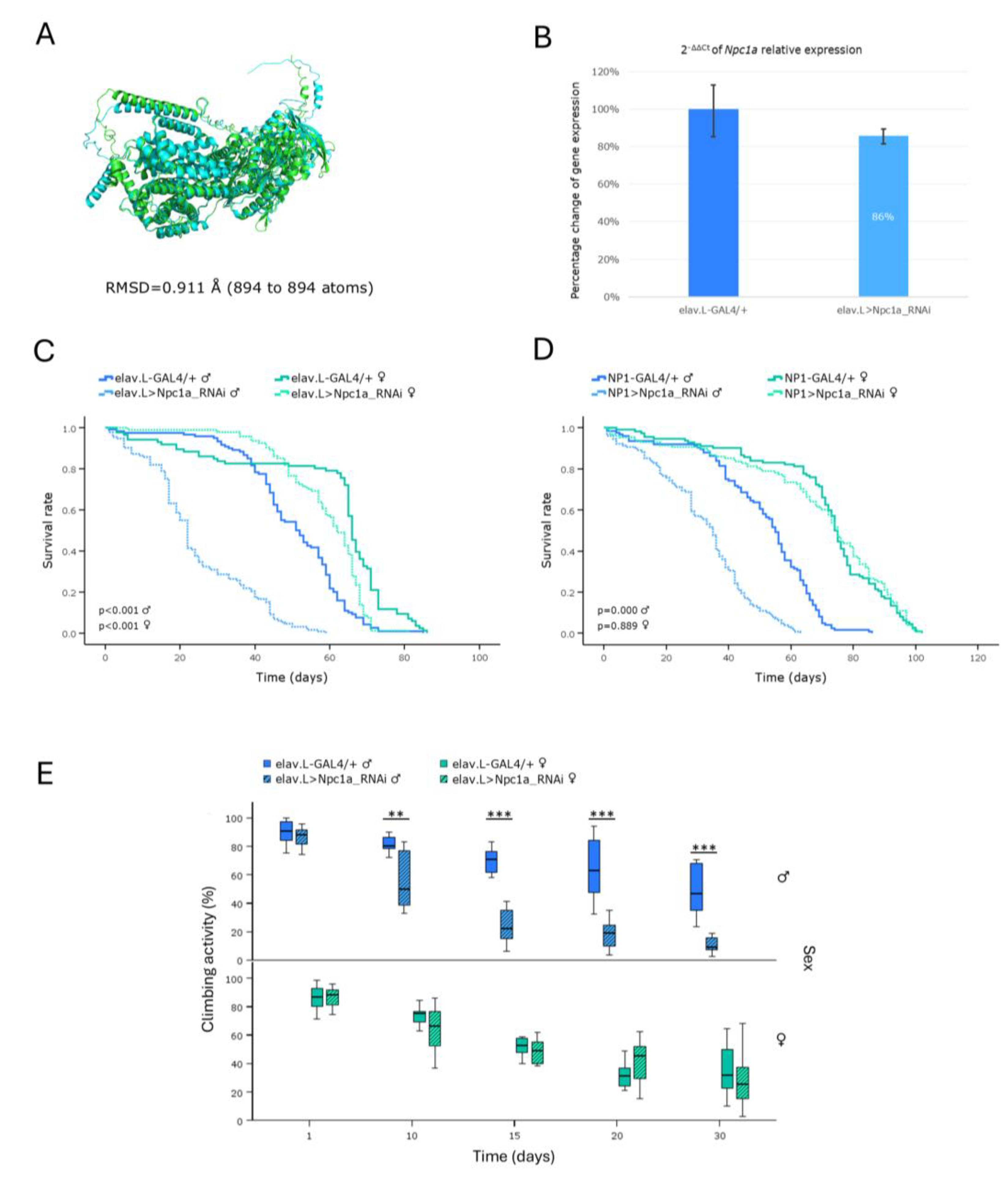
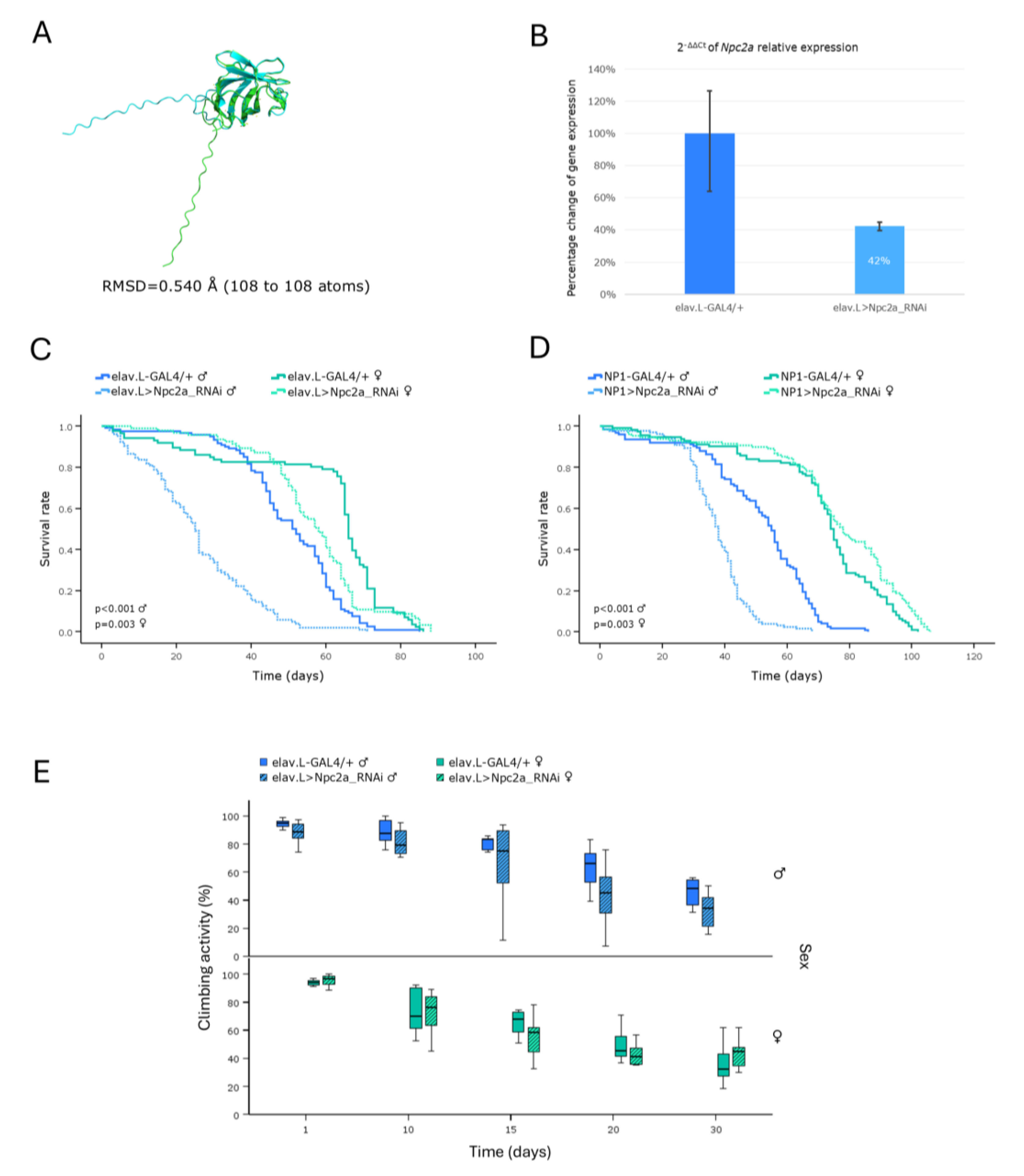
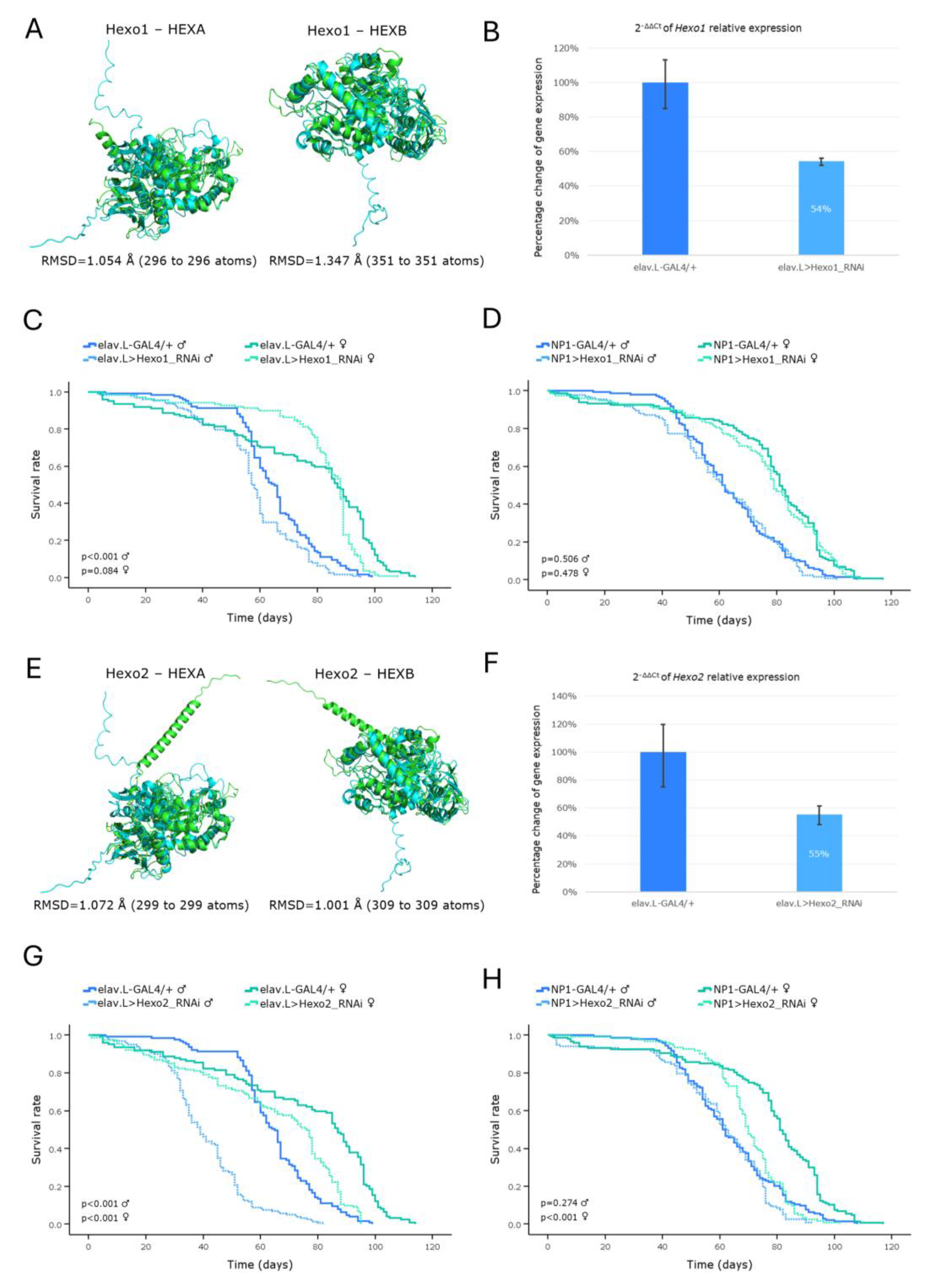
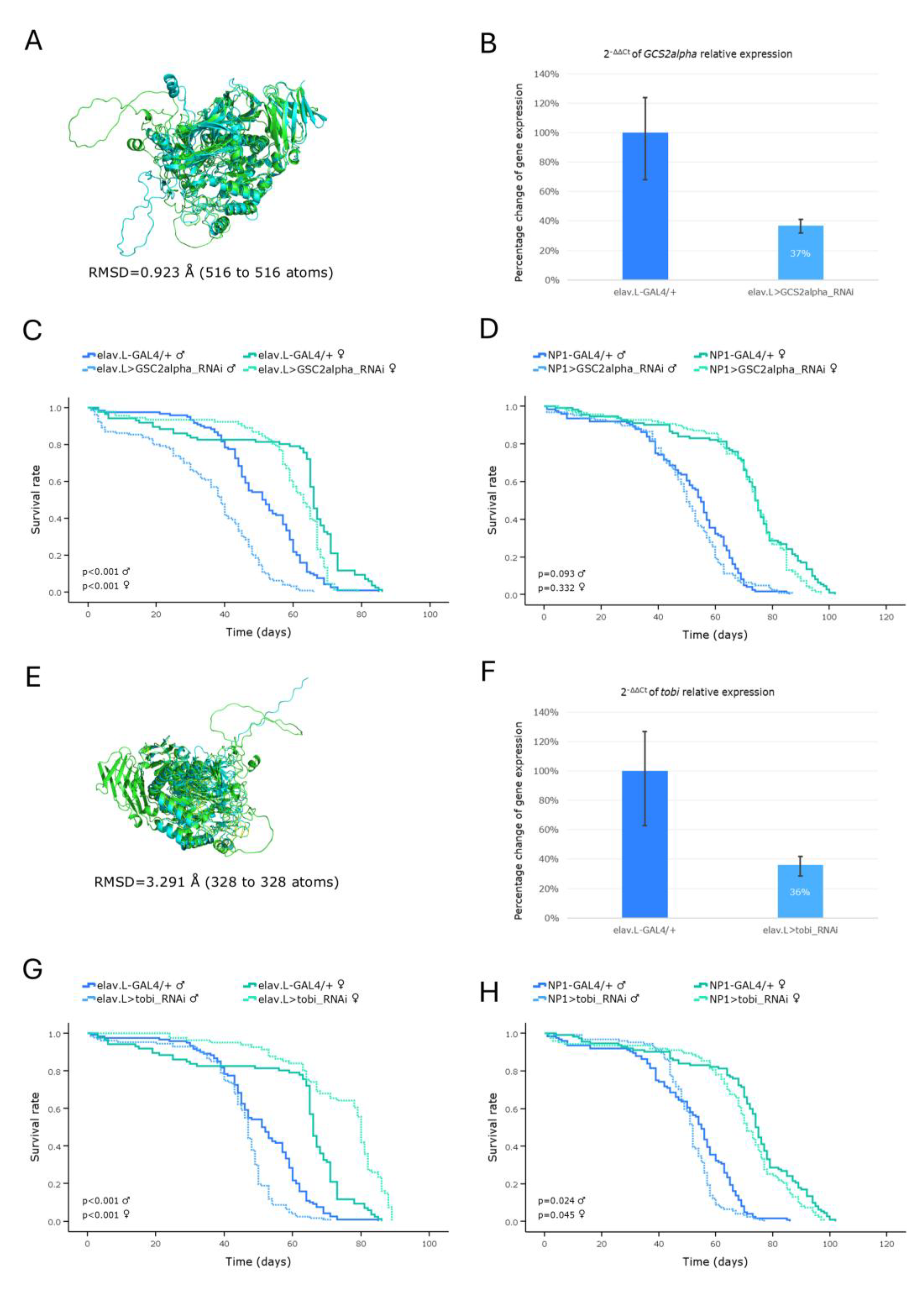
Lysosomal Storage Disorders (LSDs) are a group of rare inherited diseases caused by mutations in genes encoding proteins involved in normal lysosomal functions, leading to accumulation of undegraded substrates within lysosomes. Among the most prominent clinical features are neurological impairment and neurodegeneration, arising from widespread cellular dysfunction. Development of powerful and reliable animal-model systems that can in vivo recapitulate human LSD pathologies is critical for understanding disease mechanisms and advancing therapeutic strategies. In this study, we identified Drosophila melanogaster orthologs of human LSD-related genes using the DIOPT tool and performed tissue-specific gene silencing along the brain-midgut axis via engagement of GAL4/UAS and RNAi combined technologies. Transgenic fly models were presented with key features of human LSD pathologies, including significantly shortened lifespan and progressive locomotor decline that serves as measure for neuromuscular disintegration, following age- and sex-dependent patterns. These phenotypic parallels in pathology strongly support the functional relevance of the selected orthologs and underscore the value of Drosophila as a versatile, in vivo, model system for advanced LSD-pathology research, offering state-of-the-art genetic tools for molecularly dissecting disease mechanisms, and providing cutting-edge novel platforms for high-throughput genetic and/or pharmacological screening, towards development of therapeutically beneficial, new, drug-based regimens and mutant gene-rescue schemes.
Keywords:
1. Introduction
2. Materials and Methods
2.1. Drosophila Melanogaster Strain Stocks and Culturing Conditions
2.2. RNA Extraction and RT-qPCR
2.3. Longevity Measurement
2.4. Negative Geotaxis Assay
2.5. Structural Alignment
2.6. Statistical Analysis
3. Results
3.1. From Humans to Flies: Identification of LSD-Related Gene Orthologs Using DIOPT
3.2. Structural Conservation of LSD-Associated Proteins Between Homo Sapiens and Drosophila Melanogaster
3.3. Modeling of Sphingolipidoses in Drosophila
3.3.1. Gaucher Disease
3.3.2. Fabry Disease
3.3.3. Niemann-Pick Disease
3.3.4. Tay-Sachs/Sandhoff Disease(s)
3.4. Modeling of Pompe Disease in Drosophila
3.4.1. Pompe Disease
3.5. Modeling of Mucopolysaccharidoses in Drosophila
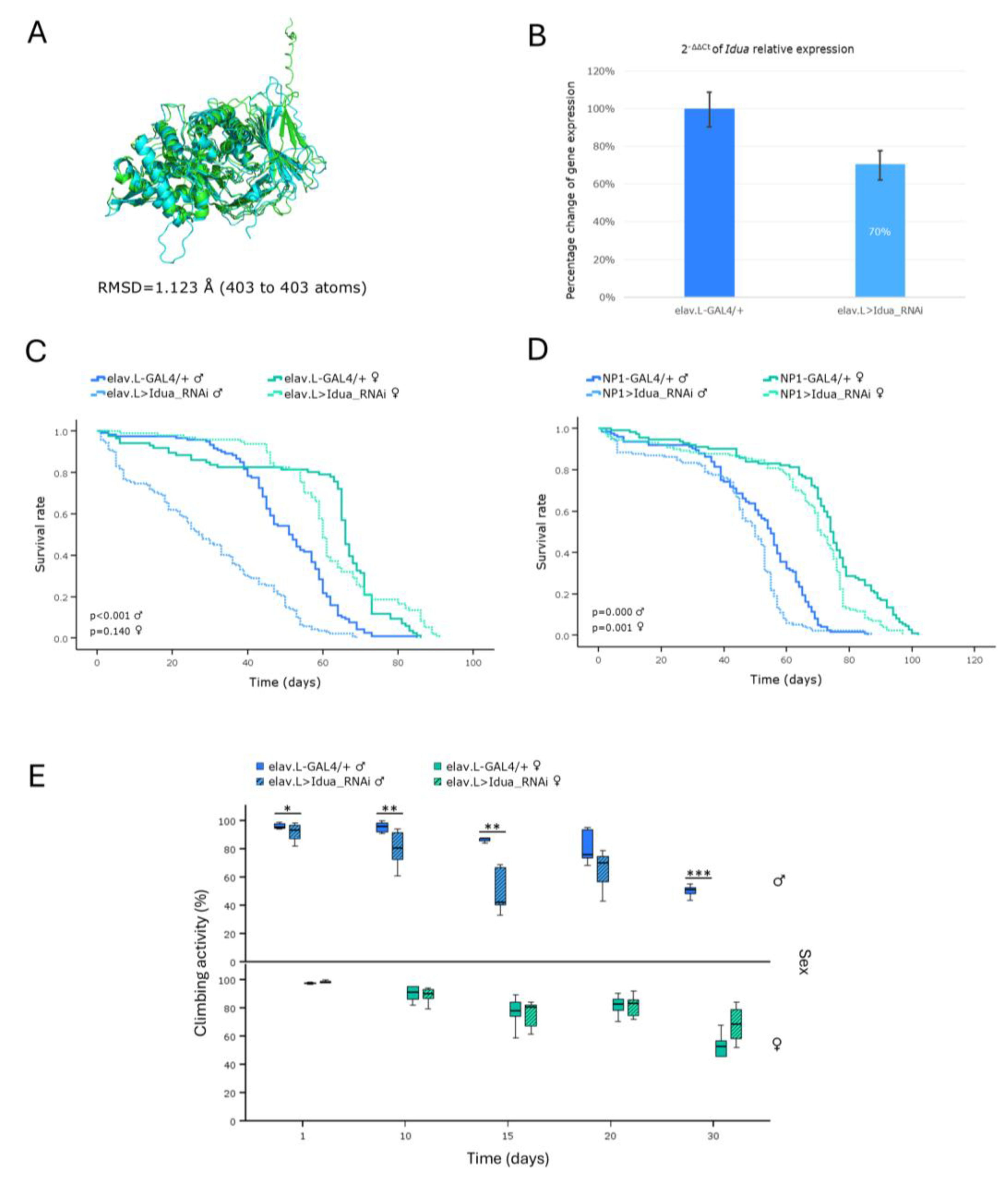
3.5.1. Hurler Syndrome
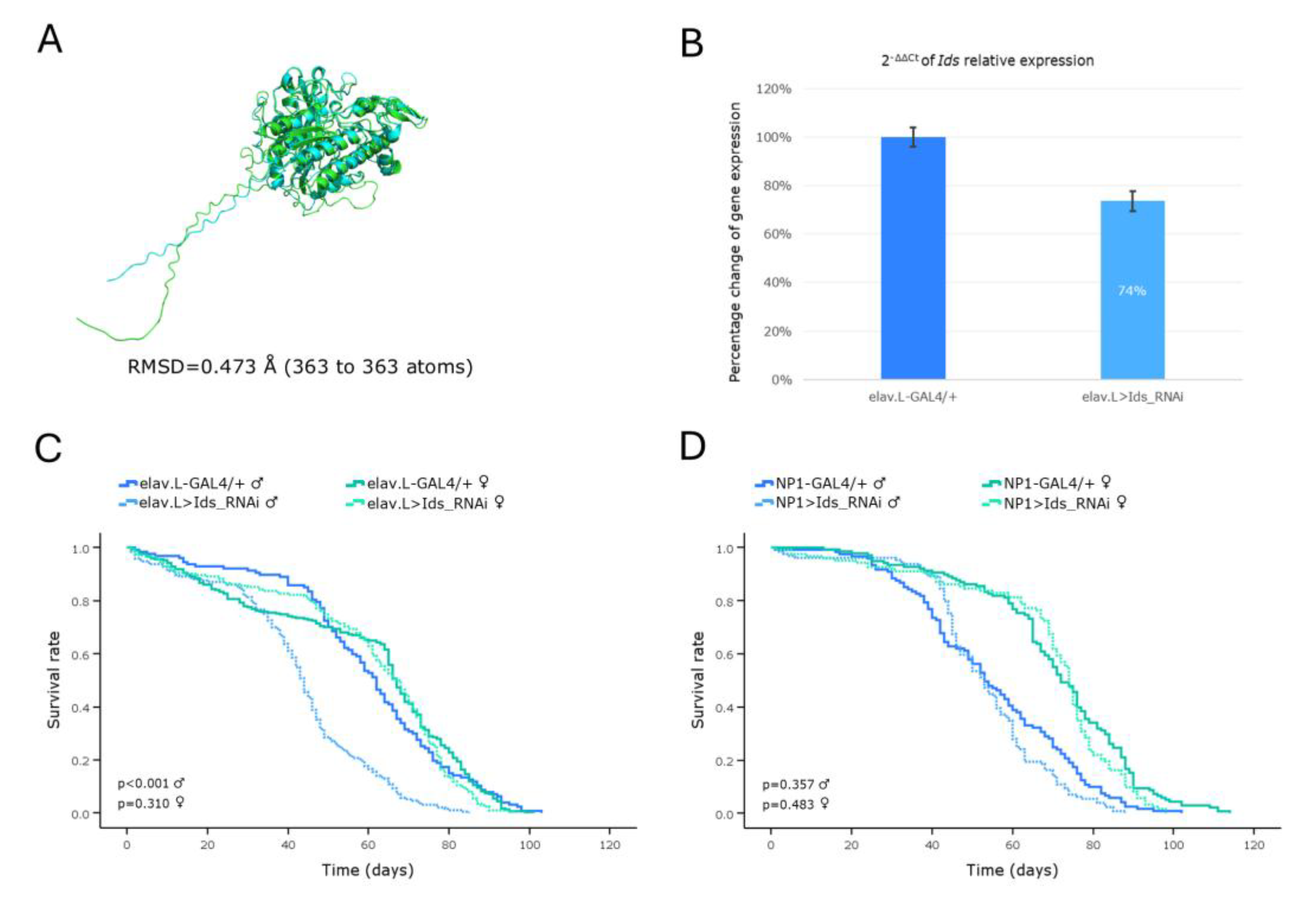
3.5.2. Hunter Syndrome
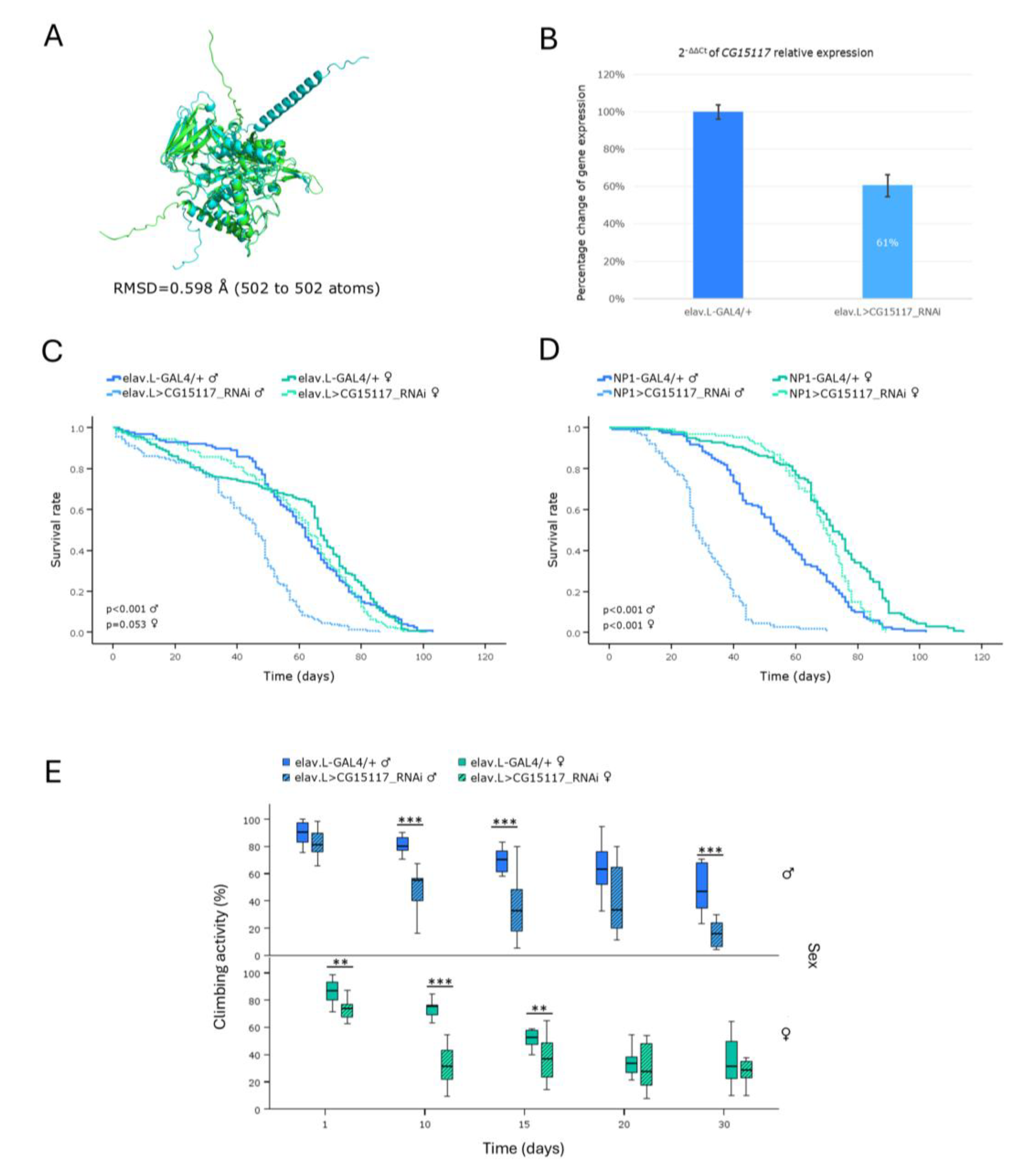
3.5.3. Sly Disease
4. Discussion
Supplementary Material
Author Contributions
Funding
Informed Consent Statement
Data Availability Statement
Acknowledgements
Conflicts of Interest
References
- Parenti, G.; Andria, G.; Ballabio, A. Lysosomal storage diseases: from pathophysiology to therapy. Annu Rev Med 2015, 66, 471–486. [CrossRef]
- Fuller, M.; Meikle, P.J.; Hopwood, J.J. Epidemiology of lysosomal storage diseases: an overview. In Fabry Disease: Perspectives from 5 Years of FOS, Mehta, A., Beck, M., Sunder-Plassmann, G., Eds.; Oxford, 2006.
- Meikle, P.J.; Hopwood, J.J.; Clague, A.E.; Carey, W.F. Prevalence of lysosomal storage disorders. JAMA 1999, 281, 249–254. [CrossRef]
- Platt, F.M.; d’Azzo, A.; Davidson, B.L.; Neufeld, E.F.; Tifft, C.J. Lysosomal storage diseases. Nat Rev Dis Primers 2018, 4, 27. [CrossRef]
- Seranova, E.; Connolly, K.J.; Zatyka, M.; Rosenstock, T.R.; Barrett, T.; Tuxworth, R.I.; Sarkar, S. Dysregulation of autophagy as a common mechanism in lysosomal storage diseases. Essays Biochem. 2017, 61, 733–749. [CrossRef]
- van Gool, R.; Tucker-Bartley, A.; Yang, E.; Todd, N.; Guenther, F.; Goodlett, B.; Al-Hertani, W.; Bodamer, O.A.; Upadhyay, J. Targeting neurological abnormalities in lysosomal storage diseases. Trends Pharmacol Sci 2022, 43, 495–509. [CrossRef]
- Marques, A.R.A.; Saftig, P. Lysosomal storage disorders - challenges, concepts and avenues for therapy: beyond rare diseases. J Cell Sci 2019, 132. [CrossRef]
- Parkinson-Lawrence, E.J.; Shandala, T.; Prodoehl, M.; Plew, R.; Borlace, G.N.; Brooks, D.A. Lysosomal storage disease: revealing lysosomal function and physiology. Physiology (Bethesda) 2010, 25, 102–115. [CrossRef]
- Ozkara, H.A. Recent advances in the biochemistry and genetics of sphingolipidoses. Brain Dev 2004, 26, 497–505. [CrossRef]
- Kolter, T.; Sandhoff, K. Sphingolipid metabolism diseases. Biochim Biophys Acta 2006, 1758, 2057–2079. [CrossRef]
- Myerowitz, R. Tay-Sachs disease-causing mutations and neutral polymorphisms in the Hex A gene. Hum Mutat 1997, 9, 195–208. [CrossRef]
- Pfrieger, F.W. The Niemann-Pick type diseases - A synopsis of inborn errors in sphingolipid and cholesterol metabolism. Prog Lipid Res 2023, 90, 101225. [CrossRef]
- Kubaski, F.; de Oliveira Poswar, F.; Michelin-Tirelli, K.; Matte, U.D.S.; Horovitz, D.D.; Barth, A.L.; Baldo, G.; Vairo, F.; Giugliani, R. Mucopolysaccharidosis Type I. Diagnostics (Basel) 2020, 10. [CrossRef]
- Correa, T.; Feltes, B.C.; Giugliani, R.; Matte, U. Disruption of morphogenic and growth pathways in lysosomal storage diseases. WIREs Mech Dis 2021, 13, e1521. [CrossRef]
- Bellen, H.J.; Wangler, M.F.; Yamamoto, S. The fruit fly at the interface of diagnosis and pathogenic mechanisms of rare and common human diseases. Hum Mol Genet 2019, 28, R207–R214. [CrossRef]
- Rigon, L.; De Filippis, C.; Napoli, B.; Tomanin, R.; Orso, G. Exploiting the Potential of Drosophila Models in Lysosomal Storage Disorders: Pathological Mechanisms and Drug Discovery. Biomedicines 2021, 9. [CrossRef]
- Zhang, T.; Peterson, R.T. Modeling Lysosomal Storage Diseases in the Zebrafish. Front Mol Biosci 2020, 7, 82. [CrossRef]
- Denton, D.; Shravage, B.; Simin, R.; Mills, K.; Berry, D.L.; Baehrecke, E.H.; Kumar, S. Autophagy, not apoptosis, is essential for midgut cell death in Drosophila. Curr Biol 2009, 19, 1741–1746. [CrossRef]
- Livak, K.J.; Schmittgen, T.D. Analysis of relative gene expression data using real-time quantitative PCR and the 2(-Delta Delta C(T)) Method. Methods 2001, 25, 402–408. [CrossRef]
- Jumper, J.; Evans, R.; Pritzel, A.; Green, T.; Figurnov, M.; Ronneberger, O.; Tunyasuvunakool, K.; Bates, R.; Zidek, A.; Potapenko, A.; et al. Highly accurate protein structure prediction with AlphaFold. Nature 2021, 596, 583–589. [CrossRef]
- Varadi, M.; Anyango, S.; Deshpande, M.; Nair, S.; Natassia, C.; Yordanova, G.; Yuan, D.; Stroe, O.; Wood, G.; Laydon, A.; et al. AlphaFold Protein Structure Database: massively expanding the structural coverage of protein-sequence space with high-accuracy models. Nucleic Acids Res 2022, 50, D439–D444. [CrossRef]
- EMBL-EBI. AlphaFold Protein Structure Database. Available online: https://alphafold.ebi.ac.uk (accessed on 21-11-2024).
- Schrodinger, LLC. The PyMOL Molecular Graphics System, Version 2.0. 2015.
- Reva, B.A.; Finkelstein, A.V.; Skolnick, J. What is the probability of a chance prediction of a protein structure with an rmsd of 6 A? Fold. Des. 1998, 3, 141–147. [CrossRef]
- Hu, Y.; Flockhart, I.; Vinayagam, A.; Bergwitz, C.; Berger, B.; Perrimon, N.; Mohr, S.E. An integrative approach to ortholog prediction for disease-focused and other functional studies. BMC Bioinformatics 2011, 12, 357. [CrossRef]
- Hu, Y.; Comjean, A.; Rodiger, J.; Liu, Y.; Gao, Y.; Chung, V.; Zirin, J.; Perrimon, N.; Mohr, S.E. FlyRNAi.org-the database of the Drosophila RNAi screening center and transgenic RNAi project: 2021 update. Nucleic Acids Res 2021, 49, D908–D915. [CrossRef]
- Dietzl, G.; Chen, D.; Schnorrer, F.; Su, K.C.; Barinova, Y.; Fellner, M.; Gasser, B.; Kinsey, K.; Oppel, S.; Scheiblauer, S.; et al. A genome-wide transgenic RNAi library for conditional gene inactivation in Drosophila. Nature 2007, 448, 151–156. [CrossRef]
- Brand, A.H.; Perrimon, N. Targeted gene expression as a means of altering cell fates and generating dominant phenotypes. Development 1993, 118, 401–415.
- Katarachia, S.A.; Markaki, S.P.; Velentzas, A.D.; Stravopodis, D.J. Genetic Targeting of dSAMTOR, A Negative dTORC1 Regulator, during Drosophila Aging: A Tissue-Specific Pathology. Int J Mol Sci 2023, 24. [CrossRef]
- Schrodinger, LLC. The PyMOL Molecular Graphics System, Version 1.8. 2015.
- Bier, E. Drosophila, the golden bug, emerges as a tool for human genetics. Nat Rev Genet 2005, 6, 9–23. [CrossRef]
- McGuire, S.E.; Roman, G.; Davis, R.L. Gene expression systems in Drosophila: a synthesis of time and space. Trends Genet 2004, 20, 384–391. [CrossRef]
- Southall, T.D.; Elliott, D.A.; Brand, A.H. The GAL4 System: A Versatile Toolkit for Gene Expression in Drosophila. CSH Protoc 2008, 2008, pdb top49. [CrossRef]
- Farfel-Becker, T.; Vitner, E.B.; Futerman, A.H. Animal models for Gaucher disease research. Dis. Model. Mech. 2011, 4, 746–752. [CrossRef]
- Kawasaki, H.; Suzuki, T.; Ito, K.; Takahara, T.; Goto-Inoue, N.; Setou, M.; Sakata, K.; Ishida, N. Minos-insertion mutant of the Drosophila GBA gene homologue showed abnormal phenotypes of climbing ability, sleep and life span with accumulation of hydroxy-glucocerebroside. Gene 2017, 614, 49–55. [CrossRef]
- Krause, S.A.; Overend, G.; Dow, J.A.T.; Leader, D.P. FlyAtlas 2 in 2022: enhancements to the Drosophila melanogaster expression atlas. Nucleic Acids Res 2022, 50, D1010–D1015. [CrossRef]
- Lakocevic, M.B.; Platisa, M.M.; Sumarac, Z.R.; Suvajdzic, N.D.; Macukanovic, L.D.; Petakov, M.S. Peripheral neural response and sex hormones in type 1 Gaucher disease. J Med Biochem 2020, 39, 60–65. [CrossRef]
- Vuolo, D.; Do Nascimento, C.C.; D’Almeida, V. Reproduction in Animal Models of Lysosomal Storage Diseases: A Scoping Review. Front Mol Biosci 2021, 8, 773384. [CrossRef]
- Meijon-Ortigueira, M.D.M.; Solares, I.; Munoz-Delgado, C.; Stanescu, S.; Morado, M.; Pascual-Izquierdo, C.; Villalon Blanco, L.; Belanger Quintana, A.; Menendez-Conde, C.P.; Morales-Conejo, M.; et al. Women with Gaucher Disease. Biomedicines 2024, 12. [CrossRef]
- Lucchesi, J.C.; Kuroda, M.I. Dosage compensation in Drosophila. Cold Spring Harbor perspectives in biology 2015, 7. [CrossRef]
- Ohshima, T.; Murray, G.J.; Swaim, W.D.; Longenecker, G.; Quirk, J.M.; Cardarelli, C.O.; Sugimoto, Y.; Pastan, I.; Gottesman, M.M.; Brady, R.O.; et al. alpha-Galactosidase A deficient mice: a model of Fabry disease. Proc Natl Acad Sci U S A 1997, 94, 2540–2544. [CrossRef]
- Braunstein, H.; Papazian, M.; Maor, G.; Lukas, J.; Rolfs, A.; Horowitz, M. Misfolding of Lysosomal alpha-Galactosidase a in a Fly Model and Its Alleviation by the Pharmacological Chaperone Migalastat. Int J Mol Sci 2020, 21. [CrossRef]
- Huang, X.; Suyama, K.; Buchanan, J.; Zhu, A.J.; Scott, M.P. A Drosophila model of the Niemann-Pick type C lysosome storage disease: dnpc1a is required for molting and sterol homeostasis. Development 2005, 132, 5115–5124. [CrossRef]
- Cattaneo, F.; Pasini, M.E.; Intra, J.; Matsumoto, M.; Briani, F.; Hoshi, M.; Perotti, M.E. Identification and expression analysis of Drosophila melanogaster genes encoding beta-hexosaminidases of the sperm plasma membrane. Glycobiology 2006, 16, 786–800. [CrossRef]
- Leonard, R.; Rendic, D.; Rabouille, C.; Wilson, I.B.; Preat, T.; Altmann, F. The Drosophila fused lobes gene encodes an N-acetylglucosaminidase involved in N-glycan processing. J Biol Chem 2006, 281, 4867–4875. [CrossRef]
- De Filippis, C.; Napoli, B.; Rigon, L.; Guarato, G.; Bauer, R.; Tomanin, R.; Orso, G. Drosophila D-idua Reduction Mimics Mucopolysaccharidosis Type I Disease-Related Phenotypes. Cells 2021, 11. [CrossRef]
- Rigon, L.; Kucharowski, N.; Eckardt, F.; Bauer, R. Modeling Mucopolysaccharidosis Type II in the Fruit Fly by Using the RNA Interference Approach. Life (Basel) 2020, 10. [CrossRef]
- Bar, S.; Prasad, M.; Datta, R. Neuromuscular degeneration and locomotor deficit in a Drosophila model of mucopolysaccharidosis VII is attenuated by treatment with resveratrol. Dis. Model. Mech. 2018, 11. [CrossRef]

|
Lysosomal Storage Disorders (LSDs) |
Human Gene | Protein Name | DrosophilaOrtholog |
Homology (Rank) (DIOPTScore) |
RNAi Strain | |
| 1. Autosomal recessive spastic paraplegia type 48 (SPG48) | AP5Z1 | Adaptor-related protein complex 5 subunit zeta 1 | Lpin / CG8709 | Low (1) |
636141 | |
| 771701 | ||||||
| 2. Disorders of lysosomal amino acid transport | ||||||
| A. Cystinosis | CTNS | Cystinosin, Lysosomal Cystine transporter | Ctns / CG17119 | High (16) |
408231 | |
| B. Free sialic acid storage disease (free SASD) | ||||||
| a) Salla disease (SD) | SLC17A5 | Sialin, Solute carrier family 17 member 5 |
VGlut2 / MFS9 / CG4288 | High (10) |
293051 | |
| b) Intermediate severity Salla disease |
v1041452 | |||||
| c) Infatile free sialic acid storage disease (ISSD) |
||||||
| 3. Disorders of sialic acid metabolism | ||||||
| Sialuria | GNE | Glucosamine (UDP-N-acetyl)-2-epimerase / N-Acetyl-mannosamine kinase | - | - | - | |
| 4. Glycoproteinoses | ||||||
| A. Mucolipidoses (ML) | ||||||
| a) ML type II α/β: Inclusion (I)- cell disease |
GNPTAB | N-Acetyl-glucosamine-1-phosphotransferase subunits α/β |
Gnptab / CG8027 | High (15) |
v1094002 | |
| b) ML type III: Pseudo-Hurler polydystrophy: |
||||||
| type III α/β | GNPTG | N-Acetyl-glucosamine-1-phosphotransferase subunit γ |
GCS2beta / CG6453 | Moderate (3) |
350081 | |
| type III γ | CG7685 | Low (2) |
622541 | |||
| c) ML type IV: Sialolipidosis | MCOLN1 | Mucolipin 1, Mucolipin transient receptor potencial (TRP) cation channel 1 | CG42638 | Moderate (14) |
440981 | |
| Trpml / CG8743 | Moderate (14) |
312941 | ||||
| 316731 | ||||||
| v1080882 | ||||||
| v459892 | ||||||
| B. Oligosaccharidoses | ||||||
| a) α-Mannosidosis | MAN2B1 | Lysosomal α-Mannosidase, Mannosidase alpha class 2B member 1 | LManII / CG6206 | High (16) |
532941 | |
| LManI / CG5322 | Moderate (14) |
444731 | ||||
| LManV / CG9466 | Moderate (14) |
v1043002 | ||||
| v130402 | ||||||
| LManIV / CG9465 | Moderate (14) |
669921 | ||||
| LManIII / CG9463 | Moderate (13) |
v155892 | ||||
| v480632 | ||||||
| LManVI / CG9468 | Moderate (12) |
612161 | ||||
| alpha-Man-IIa / CG18802 | Low (3) |
v58382 | ||||
| alpha-Man-IIb / CG4606 | Low (2) |
v1080432 | ||||
| v426522 | ||||||
| b) β-Mannosidosis | MANBA | β-Mannosidase | beta-Man / CG12582 | High (14) |
532721 | |
| c) Fucosidosis | FUCA1 | α-L-Fucosidase 1 | Fuca / CG6128 | High (13) |
- | |
| d) Aspartyglucosaminuria (AGU) |
AGA | Aspartylglucosaminidase | CG1827 | High (14) |
651411 | |
| CG10474 | High (14) |
514441 | ||||
| CG4372 | Moderate (8) |
v364312 | ||||
| CG7860 | Low (2) |
v1082812 | ||||
| v343942 | ||||||
| Tasp1 / CG5241 | Low (2) |
649071 | ||||
| e) α-Ν-Acetyl- galactosaminidase deficiency (NAGA deficiency): Schindler disease: |
||||||
| type I: Infantile onset Neuroaxonal dystrophy |
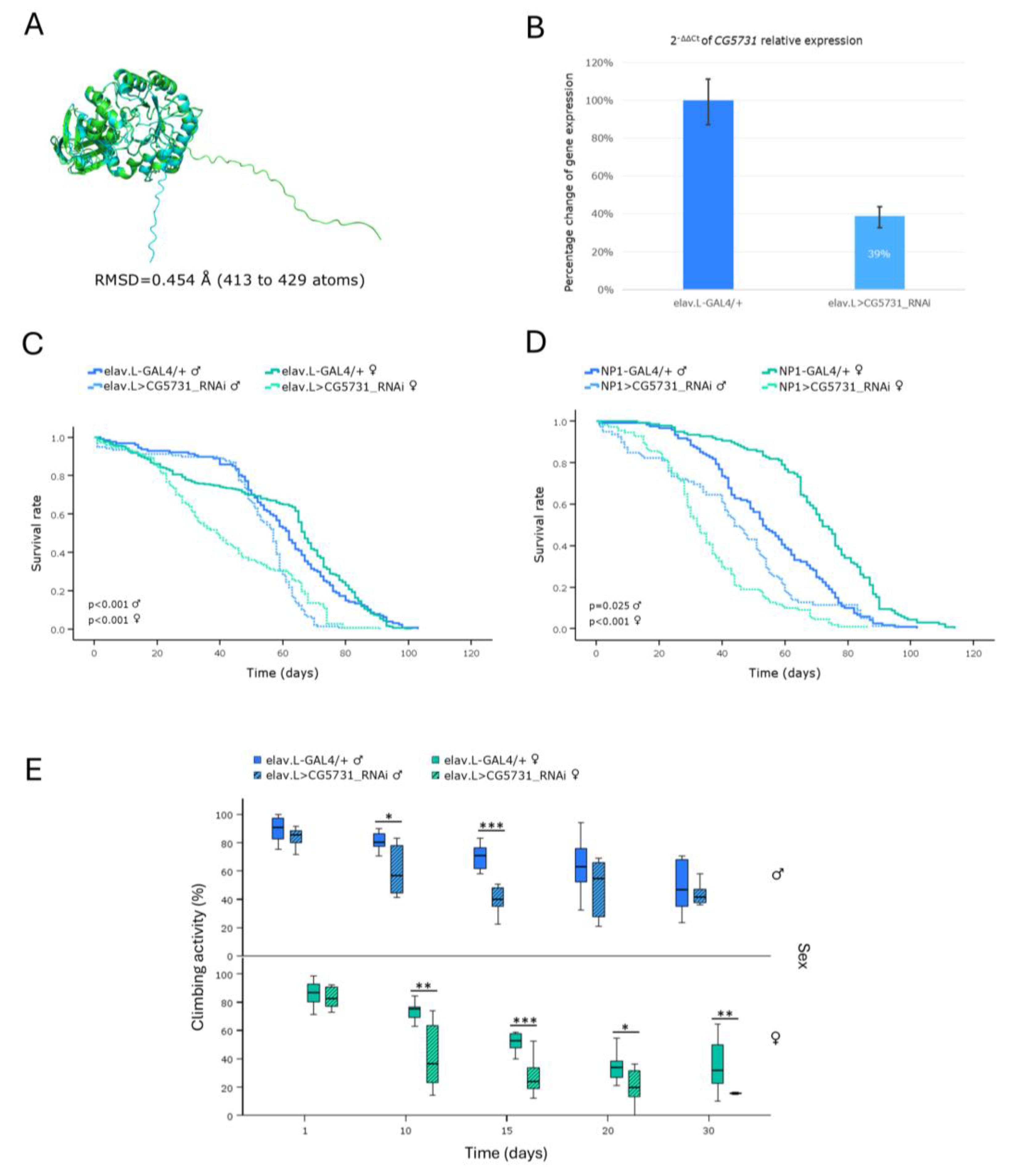
NAGA | α-N-Acetyl-galactosaminidase | CG5731 | High (16) |
670251 | |
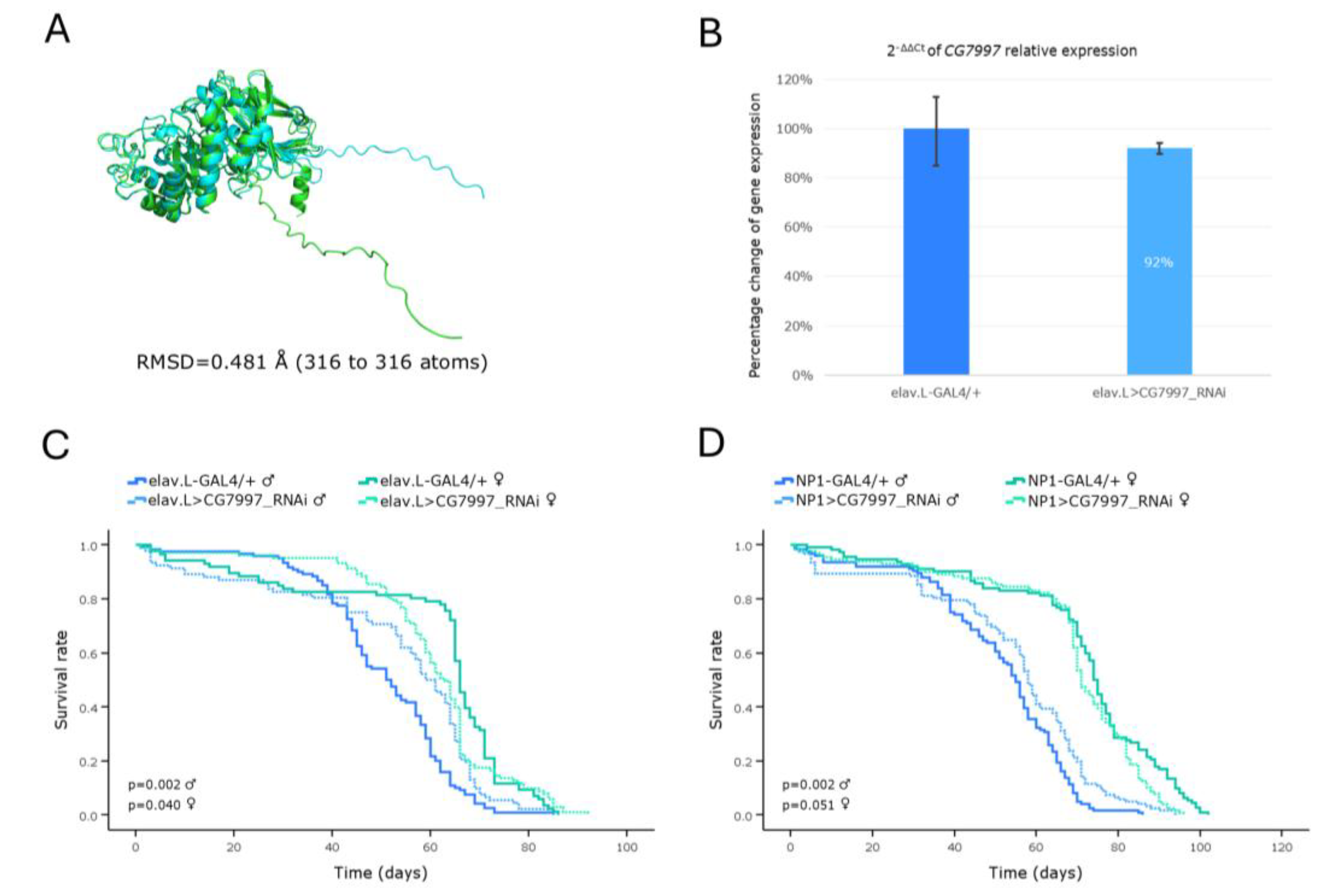
| type II: Kanzaki disease | CG7997 | Moderate (15) |
636551 | |||
| type III: Intermediate severity | 577811 | |||||
| f) Galactosialidosis: Goldberg syndrome |
CTSA | Protective protein Cathepsin A, and a secondary deficiency in β-Galactosidase and Neuraminidase-1 | CG4572 | Moderate (4) |
343371 | |
| CG32483 | Low (2) |
v1062632 | ||||
| v229762 | ||||||
| hiro / CG3344 | Low (2) |
v1104022 | ||||
| v152132 | ||||||
| CG31821 | Low (2) |
v1060592 | ||||
| v154962 | ||||||
| CG31823 | Low (2) |
669411 | ||||
| 670271 | ||||||
| g) Sialidosis: | ||||||
| type I (ST-1): Cherry-red spot- myoclonus syndrome |
NEU1 | Neuraminidase-1, Lysosomal Sialidase | - | - | - | |
| type II (ST-2): Mucolipidosis I | ||||||
| 5. Lysosomal acid phosphatase deficiency |
||||||
| 6. Glycogen storage disease(s) [GSD(s)] |
||||||
| GSD type II (due to acid maltase deficiency): Pompe disease |
GAA | Lysosomal α-Glucosidase, Acid maltase | GCS2alpha / CG14476 | Moderate (5) |
343341 | |
| tobi / CG11909 | Low (3) |
533791 | ||||
| CG33080 | Low (2) |
425541 | ||||
| GSD due to LAMP-2 deficiency: Danon disease |
LAMP2 | Lysosomal-associated membrane protein 2 | Lamp1 / CG3305 | Moderate (8) |
383351 | |
| 382541 | ||||||
| CG32225 | Low (3) |
v1023452 | ||||
| v53832 | ||||||
| 7. Mucopolysaccharidoses (MPSs) | ||||||
| MPS I: | ||||||
| Hurler syndrome (MPSIH) | IDUA | α-L-Iduronidase | Idua / CG6201 | High (14) |
649311 | |
| Hurler-Scheie syndrome (MPSIH/S) |
||||||
| Scheie syndrome (MPSIS) | ||||||
| MPS II: Hunter syndrome | ||||||
| type A (MPSIIA), severe form | IDS | Iduronate 2-sulfatase | Ids / CG12014 | High (18) |
519011 | |
| type B (MPSIIB), attenuated form | 630041 | |||||
| MPS III: Sanfilippo syndrome: | ||||||
| type A (MPSIIIA) | SGSH | N-Sulfoglucosamine sulfohydrolase | Sgsh / CG14291 | High (16) |
v1073842 | |
| v168972 | ||||||
| type B (MPSIIIB) | NAGLU | N-Acetyl-α-glucosaminidase | Naglu / CG13397 | High (17) |
518081 | |
| type C (MPSIIIC) | HGSNAT | Heparan-α-glucosaminide N-acetyltransferase | Hgsnat / CG6903 | High (15) |
334231 | |
| type D (MPSIIID) | GNS | N-Acetylglucosamine-6-sulfatase | Gns / CG18278 | High (15) |
285201 | |
| 518781 | ||||||
| v1099442 | ||||||
| v229362 | ||||||
| MPS IV: Morquio syndrome: | ||||||
| type A (MPSIVA) | GALNS | N-Acetylgalactosamine-6-sulfatase | CG7408 | Moderate (3) |
653591 | |
| Gns / CG18278 | Moderate (3) |
285201 | ||||
| 518781 | ||||||
| CG7402 | Moderate (3) |
v1039472 | ||||
| v373022 | ||||||
| CG32191 | Moderate (3) |
v1015782 | ||||
| v142942 | ||||||
| type B (MPSIVB) | GLB1 | β-Galactosidase 1 | Ect3 / CG3132 | Moderate (15) |
622171 | |
| Gal / CG9092 | Moderate (14) |
429221 | ||||
| 506801 | ||||||
| MPS VI: Maroteaux-Lamy syndrome |
ARSB | Arylsulfatase B | CG7402 | High (13) |
v1039472 | |
| v373022 | ||||||
| MPS VII: Sly disease | GUSB | β-Glucuronidase | CG15117 | High (17) |
336931 | |
| beta-Glu / CG2135 | Moderate (15) |
622361 | ||||
| beta-Man / CG12582 | Low (2) |
532721 | ||||
| MPS IX: Hyaluronidase deficiency |
HYAL1 | Hyaluronidase 1 | - | - | - | |
| 8. Neuronal ceroid lipofuscinoses (NCL): Batten disease | ||||||
| CLN1: Haltia-Santavuori disease / Hagberg-Santavuori disease / Santavuori disease (INCL) |
PPT1 | Palmitoyl-protein thioesterase 1 | Ppt1 / CG12108 | High (14) |
553311 | |
| 622911 | ||||||
| 259521 | ||||||
| Ppt2 / CG4851 | Low (3) |
283621 | ||||
| v1068192 | ||||||
| v14592 | ||||||
| CLN2: Jansky-Bielschowsky disease (LINCL) |
TPP1 | Tripeptidyl peptidase 1 | - | - | - | |
| CLN3: Batten-Spielmeyer- Sjogren disease (JNCL) |
CLN3 | Battenin, Endosomal transmembrane protein | Cln3 / CG5582 | High (14) |
357341 | |
| CLN4: Parry disease / Kufs disease type A and B (ANCL) |
DNAJC5 | Cysteine string protein, DnaJ Heat shock protein family (Hsp40) member C5 | Csp / CG6395 | High (14) |
336451 | |
| 312901 | ||||||
| 316691 | ||||||
| CG7130 | Low (2) |
578541 | ||||
| CG7133 | Low (2) |
604591 | ||||
| 428201 | ||||||
| l(3)80Fg / CG40178 | Low (2) |
445781 | ||||
| CLN5: Finnish variant | CLN5 | Ceroid-lipofuscinosis neuronal protein 5 | - | - | - | |
| CLN6: Lake-Cavanagh or Indian variant |
CLN6 | Transmembrane ER protein | - | - | - | |
| CLN7: Turkish variant | MFSD8 | Major-facilitator superfamily domain containing 8 | Cln7 / CG8596 | High (16) |
619601 | |
| 556641 | ||||||
| rtet / CG5760 | Low (2) |
v1104732 | ||||
| v440022 | ||||||
| CLN8: Northern epilepsy / Epilepsy mental retardation |
CLN8 | Protein CLN8, Transmembrane ER and ERGIC protein | CG17841 | Moderate (3) |
349481 | |
| CLN9 | N/A | N/A | ||||
| CLN10: Congenital NCL | CTSD | Cathepsin D, Lysosomal Aspartyl peptidase / protease | cathD / CG1548 | High (16) |
289781 | |
| 538821 | ||||||
| 551781 | ||||||
| CLN11 | GRN | Granulin (precursor) | CG15011 | Low (1) |
582841 | |
| 315891 | ||||||
| NimC2 / CG18146 | Low (1) |
259601 | ||||
| v31202 | ||||||
| v362612 | ||||||
| CLN12: Kufor-Raked syndrome / PARK9 / Juvenile parkinsonism- NCL |
ATP13A2 | Cation-transporting ATPase 13A2, PARK9 | anne / CG32000 | Moderate (13) |
440051 | |
| 304991 | ||||||
| CG6230 | Low (3) |
773711 | ||||
| SPoCk / CG32451 | Low (2) |
440401 | ||||
| 283521 | ||||||
| CLN13 | CTSF | Cathepsin F | CtsF / CG12163 | High (14) |
339551 | |
| CLN14: Progressive myoclonic epilepsy type 3 |
KCTD7 | Potassium channel tetramerization domain containing 7 |
Ktl / CG10830 | Moderate (2) |
571711 | |
| 258481 | ||||||
| CG14647 | Moderate (2) |
600641 | ||||
| 270321 | ||||||
| twz / CG10440 | Moderate (2) |
573971 | ||||
| 258461 | ||||||
| 9. Pycnodysostosis: Toulouse-Lautrec syndrome – Osteopetrosis acro-osteolytica |
CTSK | Cathepsin K | CtsL1 / CG6692 | Moderate (8) |
419391 | |
| 329321 | ||||||
| 10. Sphingolipidoses | ||||||
| A. Acid sphingomyelinase deficiency (ASMD) |
||||||
| Niemann-Pick disease types A and B |
SMPD1 | Sphingomyelin phosphodiesterase | Asm / CG3376 | High (17) |
367601 | |
| CG15533 | Moderate (8) |
367611 | ||||
| CG15534 | Moderate (8) |
367621 | ||||
| CG32052 | Moderate (6) |
367631 | ||||
| B. Autosomal recessive cerebellar ataxia with late-onset spasticity (due to GBA2 deficiency) |
GBA2 | β-Glucosylceramidase 2 | CG33090 | High (18) |
366881 | |
| C. Encephalopathy due to prosaposin deficiency - Combined PSAP deficiency (PSAPD) |
PSAP | Prosaposin | Sap-r / CG12070 | High (14) |
v511292 | |
| v511302 | ||||||
| D. Fabry disease – Angiokeratoma corporis diffusum | GLA | α-Galactosidase A | CG7997 | Moderate (14) |
636551 | |
| 577811 | ||||||
| CG5731 | Moderate (13) |
670251 | ||||
| E. Farber lipogranulomatosis | ASAH1 | Acid Ceramidase | - | - | - | |
| F. Gangliosidoses | ||||||
| a) GM1 gangliosidosis: Landing disease: |
||||||
| type I (infantile): Norman-Landing disease |
GLB1 | β-Galactosidase | Ect3 / CG3132 | Moderate (15) |
622171 | |
| type II (juvenile - late infantile) | Gal / CG9092 | Moderate (14) |
506801 | |||
| type III (adult) | 429221 | |||||
| b) GM2 gangliosidosis: | ||||||
| Tay-Sachs disease (B variant) | HEXA | β-Hexosaminidase subunit α | Hexo1 / CG1318 | Moderate (13) |
673121 | |
| Hexo2 / CG1787 | Moderate (12) |
571991 | ||||
| fdl / CG8824 | Moderate (11) |
529871 | ||||
| 282981 | ||||||
| Sandhoff disease (0 variant) | HEXB | β-Hexosaminidase subunit β | Hexo1 / CG1318 | High (14) |
673121 | |
| Hexo2 / CG1787 | Moderate (12) |
571991 | ||||
| fdl / CG8824 | Moderate (12) |
529871 | ||||
| 282981 | ||||||
| c) GM2 activator deficiency (AB variant) |
GM2A | GM2 Ganglioside activator | - | - | - | |
| G. Gaucher disease (GD) | ||||||
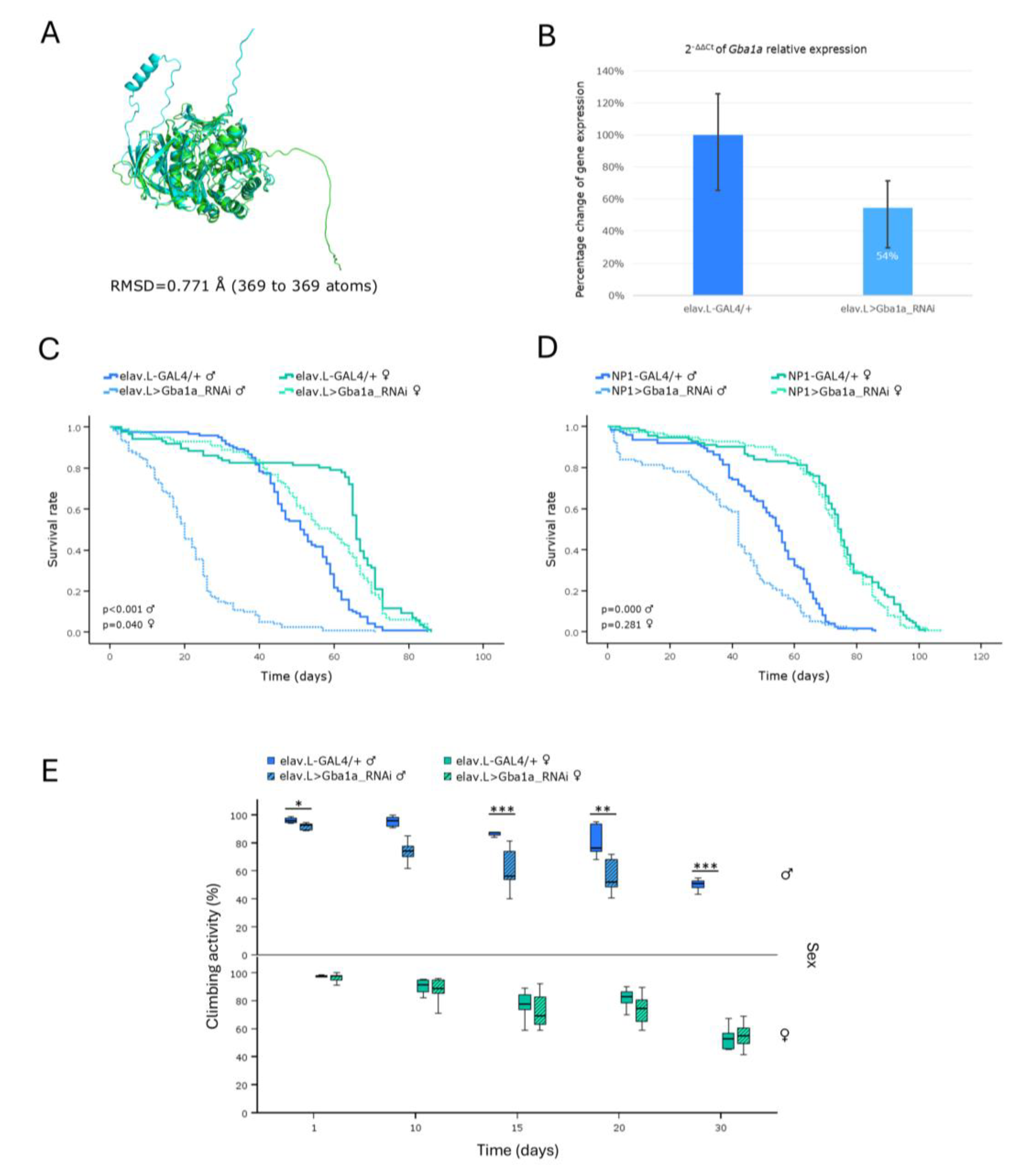
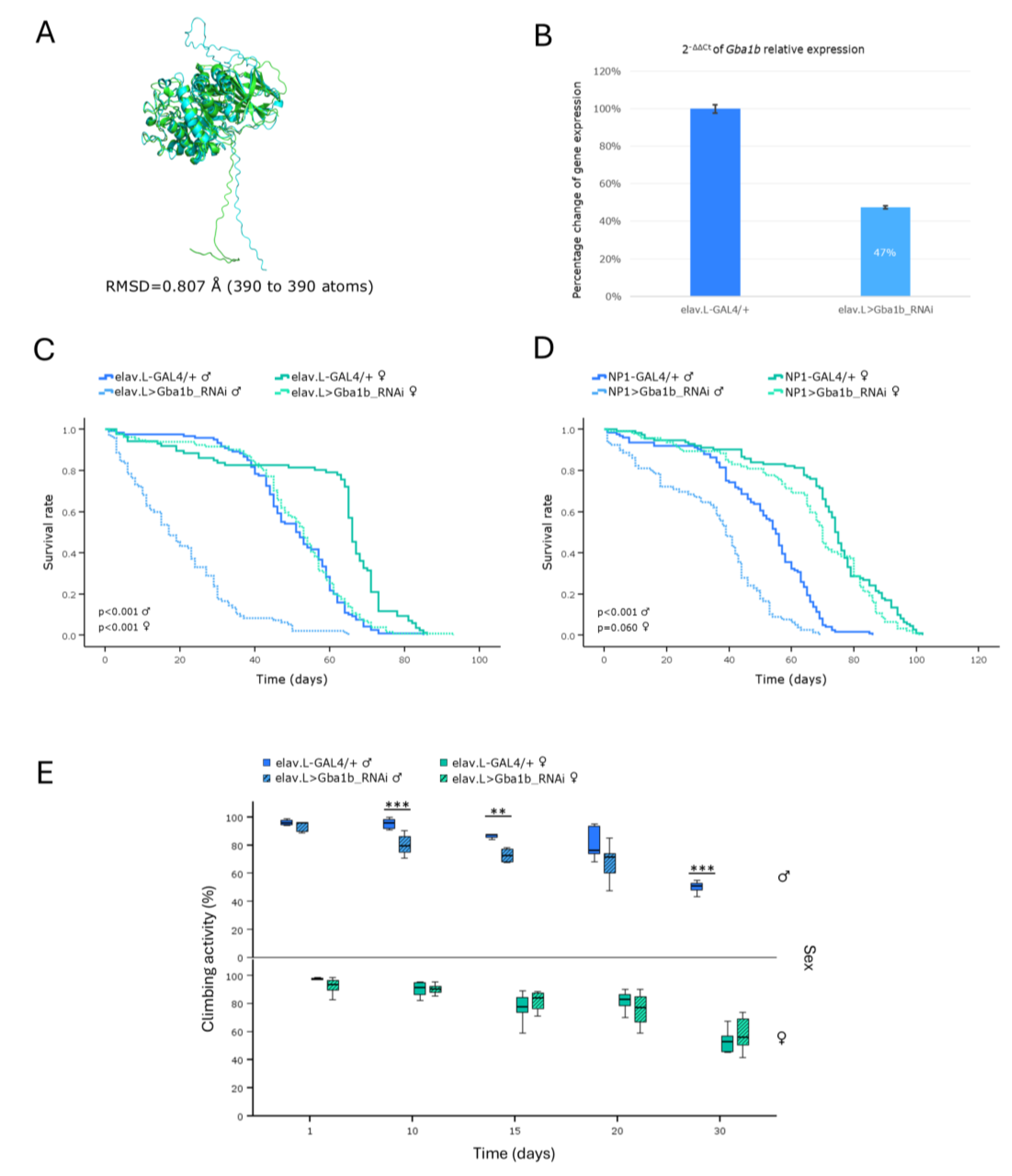
| GD type 1 | GBA1 | β-Glucocerebrosidase 1 / β-Glucosidase 1 | Gba1a / CG31148 | High (15) |
383791 | |
| GD type 2 | 390641 | |||||
| GD type 3 | Gba1b / CG31414 | High (15) |
389701 | |||
| Fetal / Perinatal lethal Gaucher disease |
389771 | |||||
| Atypical Gaucher disease due to Saposin C deficiency |
PSAP | Prosaposin | Sap-r / CG12070 | High (14) |
v511292 | |
| v511302 | ||||||
| Gaucher-like disease / Gaucher disease- ophthalmoplegia-cardiovascular calcification syndrome / Gaucher disease type 3C |
GBA1 | β-Glucosylceramidase 1 | Gba1a / CG31148 | High (15) |
383791 | |
| 390641 | ||||||
| Gba1b / CG31414 | High (15) |
389701 | ||||
| 389771 | ||||||
| H. Globoid cell leukodystrophy – Krabbe disease |
GALC | Galactosylceramidase | - | - | - | |
| I. Lipid storage disease | ||||||
| a) Lysosomal acid lipase deficiency |
||||||
| Cholesterol ester storage disease |
LIPA | Lipase A lysosomal acid type, Cholesterol ester hydrolase | Lip3 / CG8823 | High (15) |
650251 | |
| Wolman disease | ||||||
| b) Niemann-Pick disease type C: | ||||||
| type C1 | NPC1 | NPC Intracellular cholesterol transporter 1 | Npc1a / CG5722 | High (16) |
375041 | |
| Npc1b / CG12092 | Moderate (11) |
382961 | ||||
| SCAP / CG33131 | Low (2) |
315661 | ||||
| type C2 | NPC2 | NPC Intracellular cholesterol transporter 2 | Npc2a / CG7291 | High (16) |
382371 | |
| Npc2b / CG3153 | Moderate (7) |
382381 | ||||
| 429141 | ||||||
| Npc2d / CG12813 | Moderate (6) |
v310952 | ||||
| Npc2c / CG3934 | Moderate (6) |
613151 | ||||
| Npc2e / CG31410 | Moderate (6) |
679561 | ||||
| Npc2f / CG6164 | Moderate (4) |
v1021722 | ||||
| v129152 | ||||||
| Npc2h / CG11315 | Moderate (3) |
678031 | ||||
| Npc2g / CG11314 | Moderate (3) |
630301 | ||||
| J. Metachromatic leukodystrophy (MLD) |
ASRA PSAP | Arylsulfatase A Prosaposin |
||||
| K. Multiple Sulfatase deficiency (MSD) / Mucosulfatidosis |
SUMF1 | Sulfatase modifying factor 1, Formylglycine-generating enzyme | CG7049 | High (14) |
518961 | |
| Action myoclonus-renal failure syndrome / Myoclonus-nephropathy syndrome / Progressive myoclonic epilepsy type 4 |
SCARB2 | Scavenger receptor class B member 2, Lysosomal integral membrane protein II | emp / CG2727 | High (15) |
409471 | |
Disclaimer/Publisher’s Note: The statements, opinions and data contained in all publications are solely those of the individual author(s) and contributor(s) and not of MDPI and/or the editor(s). MDPI and/or the editor(s) disclaim responsibility for any injury to people or property resulting from any ideas, methods, instructions or products referred to in the content. |
© 2025 by the authors. Licensee MDPI, Basel, Switzerland. This article is an open access article distributed under the terms and conditions of the Creative Commons Attribution (CC BY) license (http://creativecommons.org/licenses/by/4.0/).