Preprint
Article

This version is not peer-reviewed.

Enhanced Agrobacterium-Mediated Transformation in Chinese Cabbage via Tenoxicam, Phytohormone Optimization, and Visual Reporters

Submitted:

14 November 2025

Posted:

14 November 2025

You are already at the latest version

Abstract

Chinese cabbage (Brassica rapa ssp. pekinensis) is a globally important leafy vegetable, but its recalcitrance to Agrobacterium-mediated genetic transformation has severely limited functional genomics research. Here we demonstrate that both Agrobacterium infection and antibiotic selection impose significant inhibition on cotyledonary petiole regeneration, representing one principal bottleneck to high-throughput transformation. Infection with different Agrobacterium strains suppressed regenerated shoot per explant by 30.98-69.16%. Supplying the salicylic-acid-signalling inhibitor tenoxicam in the seed-germination medium raised post-infection regeneration by up to 37.90%. Compared with non-infected controls, the optimal NAA concentration for explant regeneration after infection was higher, and 0.5 mg/L increased post-infection regeneration by 27.66 %. Replacing antibiotic selectable markers with the visual reporters eYGFPuv or RUBY eliminated phytotoxicity, reduced false-positive shoots, and further elevated genetic transformation efficiency to 19.33-20.00% (versus 2.67–6.67% under antibiotic selection). The integrated protocol yielded stable RUBY over-expressing lines whose biomass declined with rising transcript levels. Restricting RUBY expression to the inner head leaves generated a novel germplasm with less yield penalty. This work provides a high-efficiency transformation method that will accelerate gene discovery and genome editing in Chinese cabbage.

Keywords: 
;  ;  ;  ;  

1. Introduction

Chinese cabbage (Brassica rapa ssp. pekinensis) is the most consumed leafy vegetable in Asian countries [1]. China has the world's largest cultivation area for Chinese cabbage, with an annual area of 1.73-1.87 million hectares [2]. Since the release of the reference genome [3], the identification and functional characterization of genes underlying key agronomic traits have become the central objective of functional genomics in Chinese cabbage [4,5]. Agrobacterium-mediated transformation is an essential tool for gene function analysis, genome editing, and genetic engineering in plants [6,7,8,9]. In Chinese cabbage, Agrobacterium-mediated transformation and/or genome editing have been used to functionally characterize genes underlying self-incompatibility [10], agronomic traits [11,12,13], biotic [14,15] and abiotic stress [16,17] resistance, and nutrient enhancement [18].
However, Chinese cabbage is considered the most recalcitrant Brassica species for Agrobacterium-mediated transformation [19,20]. Over the past three decades, genotype screening, medium optimization and protocol refinement have incrementally raised, though only modestly, the genetic transformation efficiency in certain Chinese cabbage genotypes [21,22,23,24,25]. Nevertheless, genetic transformation in Chinese cabbage remains far less exploited than in highly transformable Brassica species such as B. napus and B. oleracea. In recent years, co-transformation of target genes together with developmental regulators has dramatically increased the genetic transformation efficiency of maize, wheat, and several other crop species [26,27,28]. More recently, this strategy has been successfully extended to Chinese cabbage [29] and other B. rapa subspecies such as Bok choy and Pai-Tsai [30]. However, most developmental regulators confer pleiotropic effects, such as reduced fertility, curled leaves or other overt phenotypic changes [26,30], which restrict their deployment in specific scenarios. Therefore, achieving a truly efficient genetic transformation protocol for Chinese cabbage remains challenging.
In genetic transformation, Agrobacterium acts as the DNA-delivery vector, but exerts pronounced phytotoxicity that is associated with plant immune signaling and endogenous hormone homeostasis [31]. It is well established that Ethylene (ET)-, salicylic acid (SA)-, and reactive oxygen species (ROS)-mediated immune responses are deployed by plants to restrict Agrobacterium-mediated transformation [32,33,34,35]. Manipulating plant immune responses represents an effective strategy for enhancing Agrobacterium-mediated genetic transformation. Pharmacological inhibitors of plant immune signaling, such as 1-aminocyclopropane-1-carboxylate (ET signaling inhibitor) [36], tenoxicam (JA signaling inhibitor) [37], LaCl3 (lanthanum chloride, a Ca+2 channel blocker) [38], and L-cysteine (a ROS inhibitor) [25], have been shown to elevate genetic transformation efficiency in diverse plant species.
In plant genetic transformation, selectable markers are essential for eliminating non-transformed cells and selectively enriching transformed cells [39]. In Chinese cabbage, kanamycin and hygromycin are the most widely used selection reagents [25]. Howerver, these antibiotic selection systems cannot fully eliminate false positives and, more critically, selection reangents exert a certain inhibitory effect on the growth and differentiation of transformed cells [40,41]. To circumvent these drawbacks, visual reporters such as β-glucuronidase (GUS), fluorescent proteins, and RUBY have been increasingly adopted. The visual reporters enable rapid, accurate, and non-invasive tracking of gene expression and genetic transformation [42,43,44,45], and screening transformants solely by visual reporters without any selectable reagents has been reported to reduce false-positive rates, increase transformation efficiency, and shorten the overall workflow [46,47].
In this study, we demonstrate that both Agrobacterium infection and selectable reagent markedly suppress cotyledonary petiole regeneration in Chinese cabbage, constituting a major bottleneck to transformation efficiency. Supplying tenoxicam during seed germination and elevating 1-naphthaleneacetic acid (NAA) in the shoot induction medium significantly improve the regeneration efficiency of explants after Agrobacterium infection. The visual reporters eYGFPuv [43] and RUBY [44] could fully replace antibiotic selectable markers for positive shoot selection and enhance explant transformation frequency. Integrating these findings, we established a more efficient genetic transformation protocol for Chinese cabbage.

2. Materials and Methods

2.1. Plant Materials

A total of 110 Chinese cabbage accessions were employed as experimental materials, comprising 29 commercial cultivars purchased from the retail market and 71 inbred lines developed by our research group (Supplementary Table S1). All seed lots are maintained in Institute of Vegetables, Shandong Academy of Agricultural Sciences, Jinan, China.

2.2. Vector Construction and Agrobacterium Strain

The UV-excitable green fluorescent protein (GPF) eYGFPuv [43] and naked-eye-visible betalain-producing reporter gene RUBY [44] were exploited to roughly quantify Agrobacterium-mediated transient expression efficiency and to ennable non-destructive in-planta screening of transgenic adventitious shoots. Vectors pCAMBIA2300 and pCAMBIA1300 [48], which confer kanamycin and hygromycin resistance respectively, serve as backbone vectors. The eYGFPuv and RUBY expression cassettes, each composed of the double-enhanced CaMV 35S (2X35S) promoter [49], 5'-UTR from Arabidopsis thaliana gene cold-regulated 47 (COR47) [50], the eYGFPuv [43] or RUBY [44] coding sequence, and the nopaline synthase (NOS) terminator [51], were commercially synthesized as intact fragments by BGI Genomics and subsequently inserted between the EcoRI and PstI sites of the vectors pCAMBIA2300 and pCAMBIA1300. The resulting vectors were introduced into A. tumefaciens strains GV3101 and LBA4404, or A. rhizogenes strain K599 via freeze-thaw transformation.

2.3. Culture Media

Murashige and Skoog (MS) medium [52] containing 30 g/L sucrose and 9 g/L agar (pH 5.8) served as the basal medium. Co-cultivation medium consisted of the basal MS supplemented with 4 mg/L 6-benzylaminopurine (6-BA), 0.2 mg/L NAA, and 200 μM acetosyringone. Shoot induction medium was the basal MS containing 4 mg/L 6-BA, 0.2 mg/L NAA, 6 mg/L AgNO3, and 400 mg/L timentin.

2.4. Cotyledonary Petiole Tissue Culture

Uniform and intact seeds were selected and any seeds with cracked seed coats were discarded. After a brief rinse in sterile water, seeds were surface-sterilized in 75 % ethanol for 1 min followed by 2 % NaClO for 10 min, then washed twice with sterile water and blotted dry. Thirty seeds were evenly sown on seed germination medium (i.e., the basal MS medium) in each Petri dish (90 mm diameter, 30 mm height). Dishes were sealed and incubated at 25 ℃ under a 14 h light/10 h dark photoperiod. After 4-5 d, cotyledons were aseptically excised and inserted vertically (petiole end down) into shoot induction medium. Cultures were returned to the same growth condition as seed germination.

2.5. Genetic Transformation

A glycerol stock of Agrobacterium stored at -80 ℃ was inoculated into LB medium containing 25 mg/L of each antibiotics (rifampicin and kanamycin for GV3101 and LBA4404; streptomycin and kanamycin for K599) and incubated at 28 ℃ with 150 rpm shaking for 24 h. For infection solution preparation, approximately 100 μL of the overnight culture was added to 20 mL LB medium, and the OD600 was then adjusted to 0.2. After excision, cotyledonary petioles were briefly dipped in the infection solution and inserted into co-cultivation medium, with 40-50 explants distributed evenly per plate. Explants were kept in darkness at 23 ℃ for 3 d, then transferred to shoot-induction medium (10 petioles per plate) and cultured at 25 ℃ under a 14 h light/10 h dark . When antibiotic selection was required, explants were first cultured on antibiotic-free shoot induction medium for 5 d, then transferred to the same medium supplemented with the appropriate antibiotic.

2.6. Assessment of Regeneration and Genetic Transformation Efficiency

The visual reporter genes eYGFPuv or RUBY were used to discriminate between transgenic and non-transgenic shoots. eYGFPuv fluorescence was checked using a 365 nm UV flashlight [43]. Agrobacterium infection and/or antibiotic selection delayed shoot regeneration compared with non-infected, non-antibiotic-treated controls. After 25-30 d on shoot induction medium, all explants including non-inoculated, inoculated without selection, or inoculated plus antibiotic selection, had ceased producing new shoots, and total, positive and negative shoot numbers were recorded. For each teatment, three replicates were performed, each comprising 50 explants. Regeneration efficiency was defined as the mean number of regeneted shoots per explants. Transformation efficiency was defined as the number of positive shoots divided by the total number of explants.

2.7. Agronomic Trait Evaluation of Transgenic Lines

Positive T0 plantlets were vernalized at 4 ℃ for 20 d in a growth chamber and transplanted to the greenhouse. T1 and T2 transgenic seeds were germinated in plug trays and 15-day-old seedlings transplanted to the field at 40 cm spacing. For agronomic trait evaluation, a randomized complete block design was adopted with three replications for transgenic lines. Each block contained 20 plants, from which five were randomly selected for phnotypic measurement. Recorded traits included growth period, gross plant weight, net head weight, head height, head width, and total number of head leaves.

2.8. RNA Extraction, RT-PCR, and qRT-PCR Analysis

The total RNA was extracted by ‘FastPure® niversal Plant Total RNA Isolation Kit’ (Vazyme, Code No. RC411, Nanjing, China). The synthesis of cDNA from RNA was performed by using ‘HiScript® III RT SuperMix for qPCR’ (Vazyme, Code No. R323, Nanjing, China). Specific primers CYP76AD1-F (5’-ATGGATCATGCGACCCTC-3’) and CYP76AD1-R (5’-ATGGATCATGCGACCCTC-3’) were designed to detect the expression of RUBY by quantitative real-time PCR (qRT-PCR). Actin homologs in Chinese cabbage were used as reference RNA [18]. For qRT-PCR, three biological replicates were performed for each sample. The relative gene expression was calculated using the 2-∆Ct method.

2.9. Statistical Analysis

The R software was used for statistical analysis [53]. The R function ‘chisq.test’ was used for performing the Chi-square test. The R package ‘agricolae’ was used to perform the Least Significant Difference (LSD) multiple-comparison test. The significance threshold was set at 0.05.

3. Result

3.1. Variation in Regeneration Efficiency of Cotyledonary Petioles among Different Genotypes

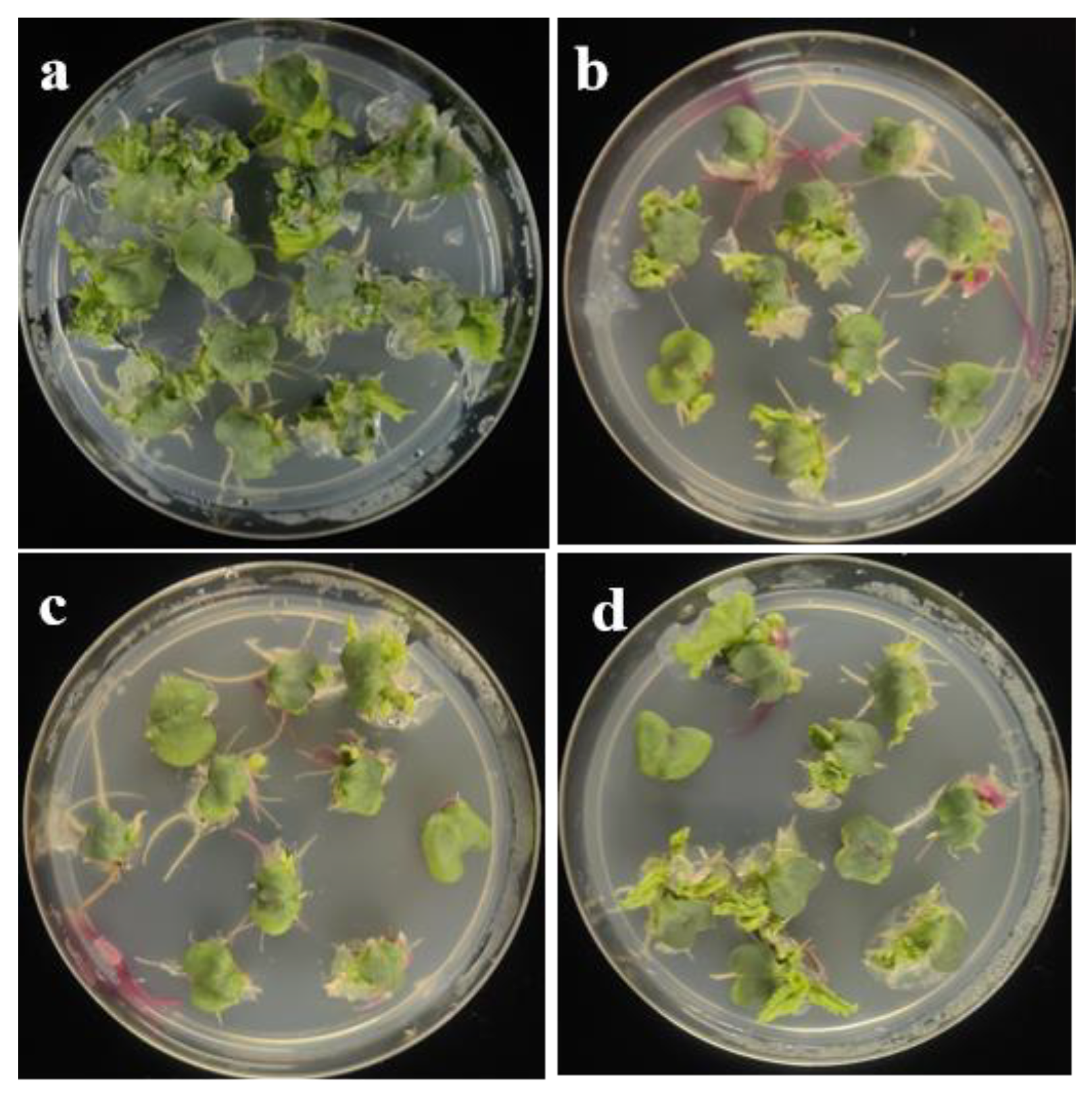
First, cotyledonary petioles of 110 Chinese cabbage accessions were evaluated for in vitro shoot regeneration. After 25-30 days of culture on shoot induction medium, the number of adventitious shoots induced from explants was assessed (Figure 1; supplementary Table S1). The materials were categorized into three distinct types based on the regeneration response: Type I (n = 71, 64.5%) produced compact callus followed by differentiation of both adventitious shoots and roots; Type II (n = 29, 26.4%) formed callus but failed to initiate organogenesis; Type III (n = 10, 9.1%) exhibited rapid browning and necrosis at the cut surface without callus formation. Within the regenerable Type I accessions, regeneration efficiency varied extensively across genotypes (Figure 1d). Accessions with high regeneration efficiency (≥10 shoots per explant) numbered 14, accounting for the smallest proportion (12.7%); accessions with moderate (5-10 shoots per explant) and low (<5 shoots per explant) regeneration efficiency numbered 28 (25.5%) and 68 (61.8%), respectively.

3.2. Impact of Agrobacterium Infection on the Regeneration Capacity of Cotyledonary Petioles

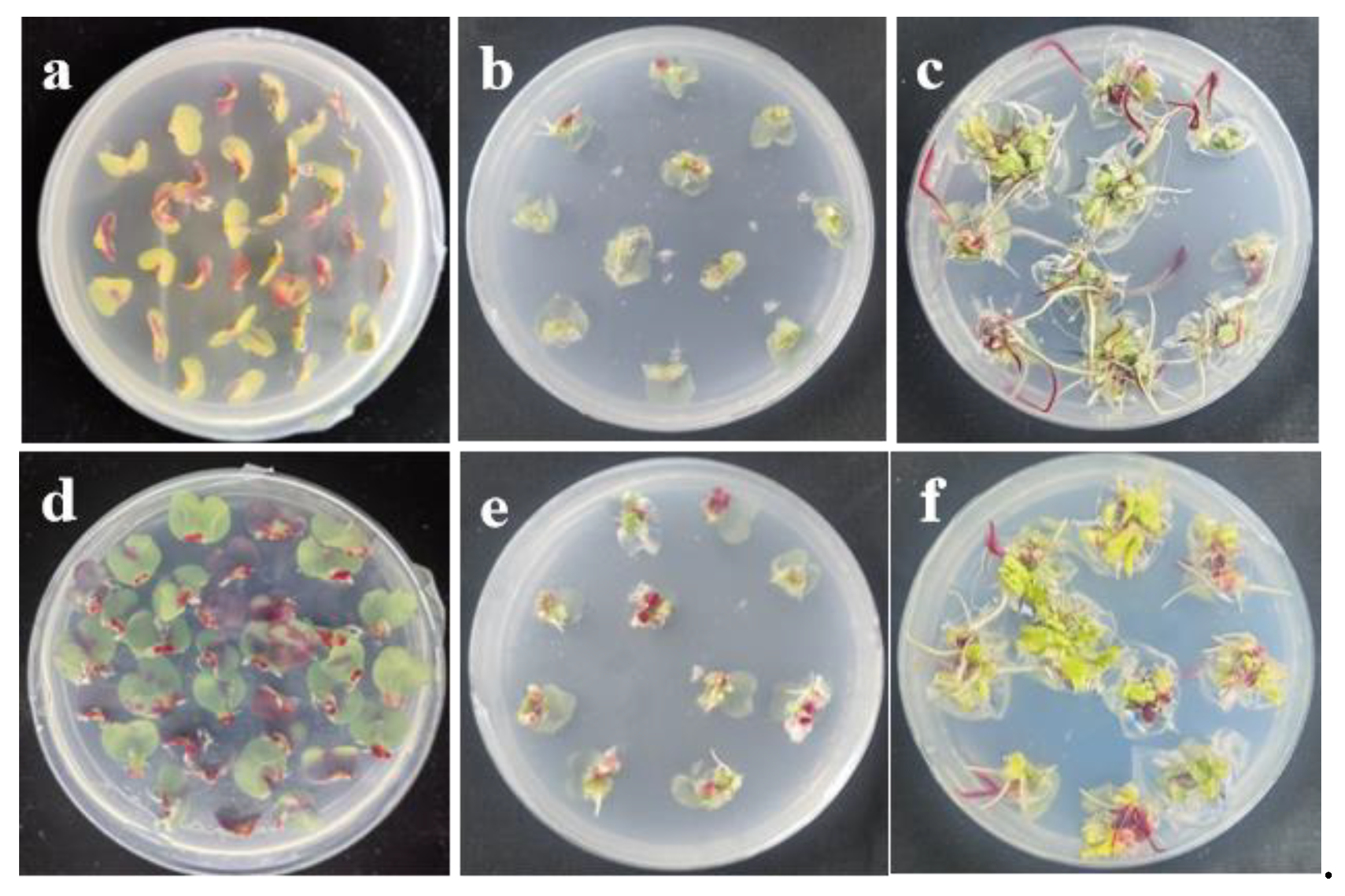
To investigate the impact of Agrobacterium infection on explant regeneration, cotyledonary petioles of the highly regenerable accessions L68, L69 and L131 were separately inoculated with the A. tumefaciens strains GV3101 and LBA4404, and a A. rhizogenes strain K599, each carrying the binary vector pCAMBIA2300-RUBY. No selectable reagent was added to the shoot induction medium. After Agrobacterium infection, the regeneration efficiency of cotyledonary petioles declined markedly in all genotypes, albeit with only minor differences among genotypes (Table 1, Figure 2, Spplementary Table S2). All Agrobacterium strains significantly inhibited explant regeneration. GV3101 and LBA4404 were the most suppressive, reducing regeneration by 54.44-59.85% and 63.69-69.16%, respectively, whereas K599 caused a smaller decrease (30.98-50.17%). Accession L68 and Agrobacterium strain GV3101 were used for subsequent experiments.

3.3. Screening of Chemical Reagents that Promote Cotyledonary Petiole Regeneration After Agrobacterium Infection

The effects of three chemical inhibitors of plant immune signaling on the regeneration efficiency of cotyledonary petioles after Agrobacterium infection were evaluated using accession L68 (Supplementary Table S3). These chemicals include the SA pathway inhibitors tenoxicam [37] and CNTQ [54], and the Ca+2 channel inhibitor LaCl3 (lanthanum chloride) [38], all of which have previously been reported to enhance either genetic transformation efficiency or explant regeneration in plants. We also tested trichostatin A, an epigenetic inhibitor previously shown to increase microspore regeneration in Ornamental Kale [55] and Brassica napus [56]. The reagents were supplied separately in seed germination, co-cultivation, or shoot induction media. Agrobacterium strain GV3101 carrying pCAMBIA2300-RUBY was used for infection.
Across all reagent-stage combinations, only tenoxicam applied during seed germination markedly enhanced post-infection regeneration, increasing shoot number per explant by 37.90% relative to the control (Table 2). Adding tenoxicam during co-culture or shoot induction had no significant effect on explant regeneration. CNQX and trichostatin A had no significant effect on regeneration at any of the tissue culture stages tested. LaCl3 supplementation during germination or co-cultivation had no significant effect, whereas its addition at the differentiation stage markedly inhibited explant regeneration.
In addition, After infection with Agrobacterium strain GV3101 carrying pCAMBIA2300-RUBY, explants from the tenoxicam seed-germination treatment showed markedly stronger RUBY expression (larger red area) at the cut surface after co-culture and subsequent shoot induction stages, indicating that tenoxicam also enhances Agrobacterium infection efficiency (Figure 3).

3.4. Effects of 6-BA and NAA Concentrations on the Regeneration Efficiency of Cotyledonary Petioles after Agrobacterium Infection

In plant regeneration, phytohormones are critical for explant differentiation, and during transformation, Agrobacterium infection and wounding can disrupt their balance [31,54,57]. We compared the regeneration capacity of explants with and without Agrobacterium infection under various concentrations of 6-BA and NAA using accession L68 (Spplementary Table S4). Agrobacterium strain GV3101 carrying pCAMBIA2300 was used for infection.
The combination of 4 mg/L 6-BA and 0.2 mg/L NAA used during high regenerable accession screening was defined as the standard. In the absence of Agrobacterium infection, this hormone ratio proved optimal for adventitious shoot induction (Table 3). After Agrobacterium infection, raising the NAA concentration to 0.5 mg/L maximized adventitious shoot production at 7.43 shoots per explant, a 27.66% increase over the 0.2 mg/L level. After infection, changing the 6-BA concentration produced a similar extent of decline on regeneration efficiency to that seen without infection.

3.5. Comparison of Selectable Markers and Visual Reporters for Genetic Transformation Efficiency

Based on these results, we optimized the medium formula: 50 μM tenoxicam was added to the germination medium, and the NAA concentration in both co-cultivation and shoot-induction medium was raised from 0.2 mg/L to 0.5 mg/L. Using this optimized medium, we compared the performance of the antibiotic selectable markers kanamycin and hygromycin with that of a visible reporter genes eYGFPuv and RUBY in genetic transformation (Table 4, Supplementary Table S5).
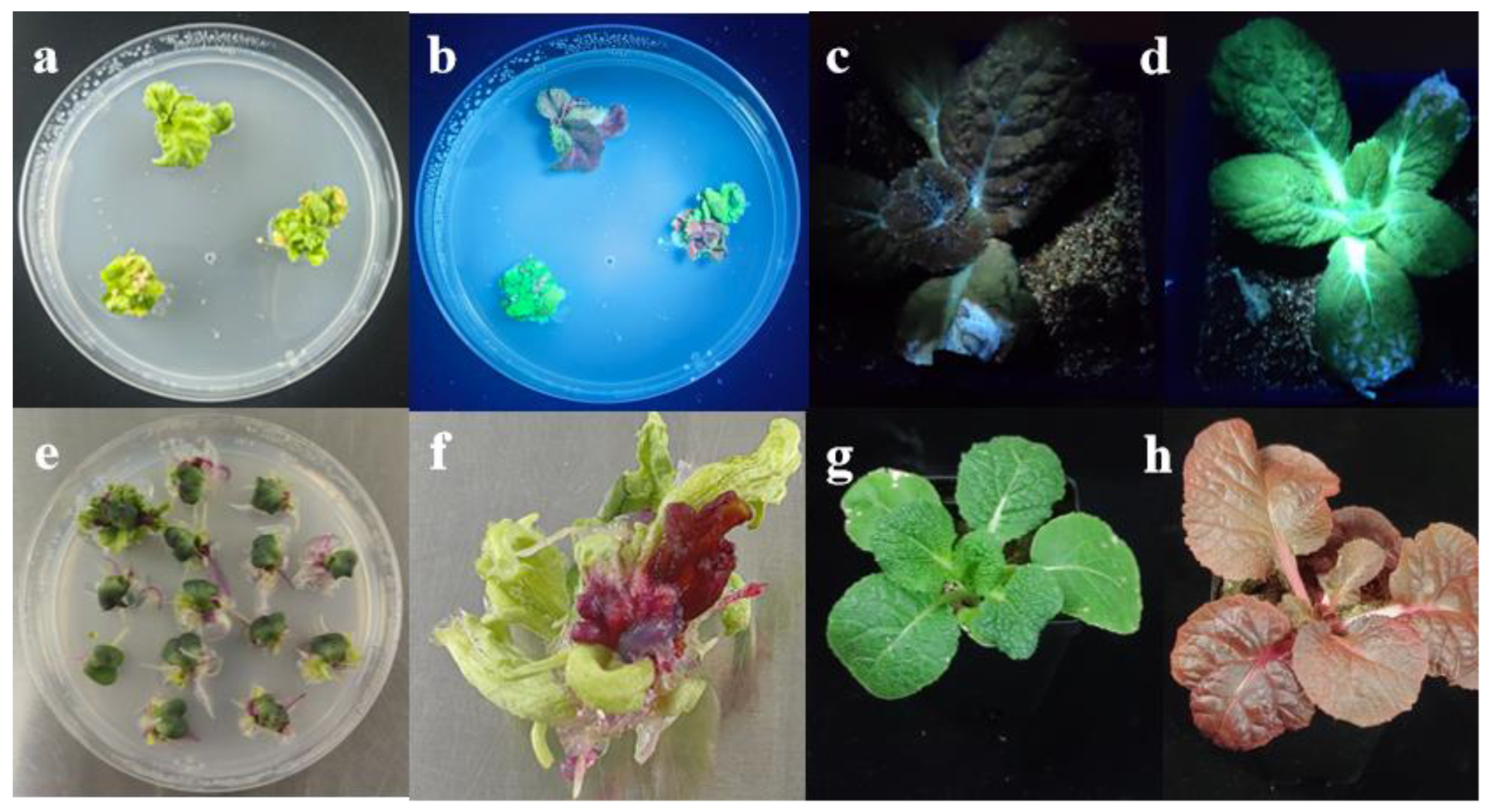
In regenerated shoots, both eYGFPuv and RUBY are highly discernible, allowing unambiguous discrimination between transgenic and non-transgenic shoots and the subsequent production of healthy transgenic seedlings (Figure 4). Kanamycin and hygromycin effectively inhibited the formation of non-transgenic seedlings, but still yielded 82.81 % and 84.72 % false-positive shoots, respectively. Using eYGFPuv and RUBY without selectable reagents allowed numerous non-transgenic shoots to develop, but nevertheless, the number of positive shoots rose markedly compared with kanamycin or hygromycin selection, ultimately yielding a higher overall transformation efficiency (19.33% and 20.00% respectively).

3.6. Genetic Segregation and Phenotypic Characterization of RUBY Overexpression Plants

Currently, RUBY is widely used as an indicator marker for genetic manipulation [29,44,45,58] and germplasm innovation of colored crops [59,60,61]. In this study, three representative T0 plants (RB16, RB25, and RB52) transformed with pCAMBIA2300-RUBY, together with their T1 and T2 progeny, were analyzed to determine the segregation of the transgene, its genetic stability, and the impact of RUBY expression on Chinese cabbage growth (Supplementary Table S6).
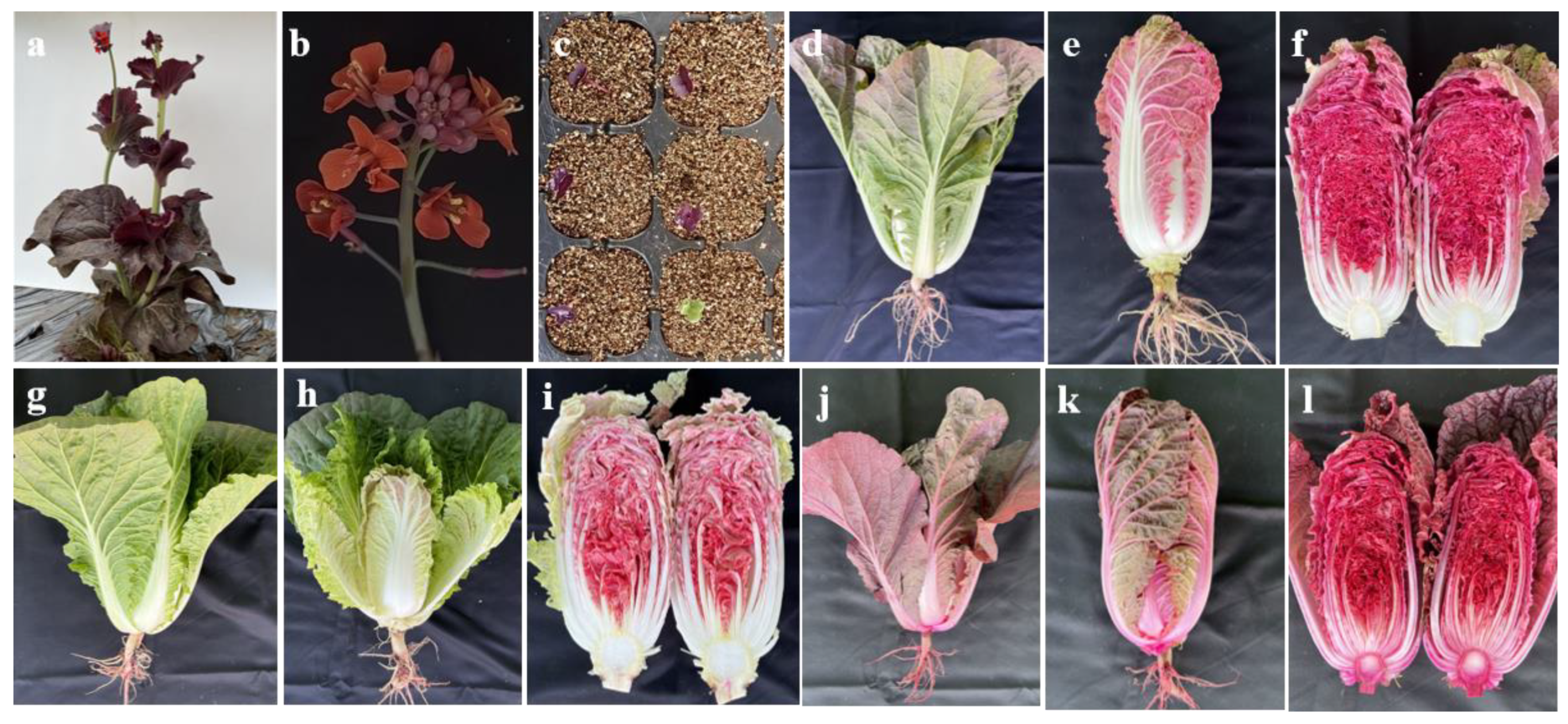
The T0 seedlings derived from tissue culture were vernalized at 4℃ for 30 days and subsequently transplanted to the field, and therefore, they failed to form heads and directly bolting and flowering. All T0 plants exhibiting complete fertility and RUBY was significantly expressed in most tissues, including leaves, floral stalks, petals, and anthers, though with relatively low expression levels in floral stalks (Figure 5a,b). In the T1 generation, RUBY was clearly expressed in the cotyledons (Figure 5c). RB16 and RB25 produced red:green segregation ratios of 101:42 and 110:32 respectively, both fitting a single-locus insertion (3:1; χ2 = 1.45, p = 0.23 and χ2 = 0.46, p = 0.50 respectively), while the segregation ratio of red to green plants in RB52 was 131:13, consistent with the double-copy insertion pattern (15:1; χ2 = 1.90, p = 0.17).
According to the T2 homologous lines, significant differences in RUBY expression patterns were observed among the three representative lines: the double-copy line RB52 showed high RUBY expression in all tissues (Figure 5j–l); the single-copy line RB16 had detectable RUBY expression in all tissues except the leaf midribs (Figure 5d–f); and the single-copy line RB25 exhibited high RUBY expression only in the inner head leaves (Figure 5g–i). We further used qRT-PCR to detect RUBY expression levels in true leaves at the seedling stage, outer leaves, and middle head leaves at the heading stage (Supplementary Table S1). RB52 and RB16 showed similar expression patterns in all tested tissues, but the expression level of RB52 was significantly higher than that of RB16; in RB25, RUBY had relatively high expression in the inner head leaves but low expression in true leaves at the seedling stage and outer leaves at the heading stage and these results were completely consistent with visual observations.
Agronomic traits were measured using the T2 transgenic lines (Table 5, Supplementary Table S6). RUBY expression significantly reduced the net weight. moreover, among RB25, RB16, and RB52, the inhibitory effect was gradually enhanced with the increase in RUBY expression level, and lines with relatively smaller head weight had a shorter growth period, while RUBY expression had no significant effect on the number of outer leaves or head leaves.

4. Discussion

Among Brassica crops, Chinese cabbage is the most recalcitrant to transformation, chiefly because its poor explant embryogenesis efficiency in vitro. A survey of 123 accessions identified only 17 (13.8 %) with >80 % cotyledonary petiole regeneration frequency, and just one of these yielded >10 shoots per explant [62]. In this study, screening of 110 accessions uncovered a broader set of highly regenerable genotypes, with 14 lines (12.73 %) producing >10 adventitious shoots per explant (Figure 1d). These findings indicate that Chinese cabbage cotyledonary petiole regeneration is highly genotype-dependent, and only a small fraction of accessions possess strong regenerative capacity.
Reports indicate that Agrobacterium infection activates immune signaling, triggers ROS bursts, and disrupts hormone balance in plants [31]. Some of these alterations lead plants to resist Agrobacterium, impair callus formation and differentiation, and ultimately reduce transformation efficiency [32,33,34,35]. We found that the regeneration capacity of Chinese cabbage cotyledonary petioles is highly sensitive to Agrobacterium infection. In three highly regenerable genotypes, the number of regenerated shoots per explant declined by 30.98-69.16% after inoculation with different Agrobacterium strains (Table 1), indicating that Agrobactrium suppression of regeneration is a major barrier to efficient transformation of Chinese cabbage.
The discovery of plant immune chemical inhibitors offers a new avenue for enhancing plant genetic transformation efficiency [36,37,38]. For example, AgNO3, an inhibitor of the ET signaling pathway, is routinely included in the majority of Agrobacterium-mediated plant transformation protocols [63]. In this study, we screened several previously reported immune inhibitors and found that tenoxicam significantly enhanced both Agrobactrium infection efficiency and post-infection regeneration (Table 2, Fugure2). Tenoxicam has previously been shown to enhance Agrobacterium-mediated transient transformation of Arabidopsis leaves, genetic transformation of Jatropha curcas cotyledons, and survival of maize immature embryo calli, but it exerts no significant effect on transformation in Brassica rapa, Brassica napus, oilseed rape, rice, or soybean [37]. In this study, the observation that tenoxicam enhances transformation only when applied during seed germination, while having no effect during co-cultivation and differentiation (Table 2), highlights the critical importance of timing in chemical enhancement of genetic transformation efficiency. Among the chemicals we tested, LaCl3 had previously been reported to elevate maize transformation efficiency [38], and trichomycin A to enhance microspore regeneration in Ornamental Kale [55] and Brassica napus [56]. However, neither compound improved Chinese cabbage cotyledonary-petiole regeneration (Table 2). Additionally, we found that the optimal NAA concentration for maximal regeneration differs between non-infected explants and those exposed to Agrobacterium (Table 3). This finding has not been reported previously.
Kanamycin and hygromycin are the selectable markers most commonly employed for Chinese cabbage transformation [25]. Multiple studies have shown that both kanamycin and hygromycin can inhibit the regeneration of transformed cells to some extent in different plant species [40,41]. Visual reporter genes enable accurate identification of transformed plants, but they confer no selective advantage to transformed cells and are therefore routinely used alongside selectable markers. However, several reports have employed visual markers as the sole means of screening and achieved improved transformation efficiency [46,47]. In this study, using eYGFPuv or RUBY in place of antibiotics for screening positive shoots yielded higher transformation efficiency while proving more accuracy and convenient (Table 4).
Owing to the red color and health-promoting properties of betalains, RUBY has attracted commercial interest and has been applied to the creation of novel germplasm in crops such as rice, carrot, and cotton [59,60,61]. In this study, we generated homozygous RUBY overexpressing lines of Chinese cabbage, creating novel red-pigmented germplasm. Since the RUBY’s substrate tyrosine is a core metabolic resource, previous studies have suggested that high-level RUBY expression could sequester tyrosine and thereby compromise plant growth and development [60,61]. We selected three stably expressing lines that differed significantly in transcript level and evaluated their agronomic traits. RUBY expression markedly reduced plant size and biomass without altering external proportions, and the degree of inhibition increased with RUBY transcript abundance (Table 5). Previous report in carrot showed that tailoring the RUBY expression pattern is an effective way to mitigate the pleiotropic effects of RUBY overexpression [62]. Notably, we obtained a stably inherited line that shows high expression in the inner head leaves but low expression in the rosette and outer head leaves, largely preserving yield while introducing a distinctive red-pigmented Chinese cabbage type (Figure 5g–i). This specific expression pattern may be related to positional effects caused by the insertion site of the expression cassette in the genome [64].
The transformation protocol established here relies on genotypes with inherently high regeneration capacity and is therefore unsuitable for materials that cannot regenerate or exhibit very low regeneration rates. Elucidating the genetic and molecular mechanisms underlying regeneration in Chinese cabbage is crucial for overcoming genotype-dependent limitations in genetic transformation. Several studies have reported that A. rhizogenes yields higher genetic transformation efficiency than A. tumefaciens [58,65]. We found A. rhizogenes strains K599 imposes a significantly weaker inhibition on explant regeneration than A. tumefaciens strain GV3101 or LBA4404. However, Agrobacterium rhizogenes delivers not only the target gene but also rol genes on helper T-DNA that can exert pleiotropic effects on plant development [65]. Therefore, we did not use A. rhizogenes as the infection strain.

5. Conclusions

In this study, we show that both Agrobacterium infection and antibiotic selection impose a severe, previously under-appreciated inhibit on cotyledonary petiole regeneration in Chinese cabbage, representing a major bottleneck to high throughput transformation. Application of Pharmacological inhibition tenoxicam during seed germination together with a simple upward adjustment of NAA in the shoot induction medium, largely removes this block and enhenced regeneration capacity. Replacing antibiotics with the visible reporters eYGFPuv or RUBY eliminates phytotoxicity, reduces false positives, and further elevates transformation frequency. Combined, these three refinements yield a high efficient protocol for genetic transfromation in Chinese cabbage.

Supplementary Materials

The following supporting information can be downloaded at the website of this paper posted on Preprints.org.

Author Contributions

Conceptualization, S.W; methodology, S.W. L.S; resources, Z.Z. and S.L.; data curation, S.W., R.W., N.X, ZG.Z.; writing—original draft preparation, S.W.; review and editing, S.W.; supervision, S.W; funding acquisition, S.W, and Z.Z.. All authors have read and agreed to the published version of the manuscript.

Funding

This work was supported by the Shandong Provincial Natural Science Foundation (ZR2021QC228); the Key R&D Program of Shandong Province, China (2022LZGCQY005); and the National Key R&D Program of China (2023YFD1201504)

Conflicts of Interest

The authors declare no conflict of interest.

References

  1. Su, T.; Wang, W.; Li, P.; Zhang, B.; Li, P.; Xin, X.; Sun, H.; Yu, Y.; Zhang, D.; Zhao, X.; et al. A Genomic Variation Map Provides Insights into the Genetic Basis of Spring Chinese Cabbage (Brassica rapa ssp. pekinensis) Selection. Mol. Plant. 2018, 11, 1360–1376. [Google Scholar] [CrossRef] [PubMed]
  2. Zhang, F.; Su, T.; Zhang, B.; Yu, S.; Yu, Y.; Zhang, D.; Zhao, X.; Wang, W.; Li, P.; Xin, X. Review and Prospects of Chinese Cabbage Breeding for the Past 70 Years in China. Acta. Hortic. Sin. 2025, 52, 1111–1135. [Google Scholar] [CrossRef]
  3. Wang, X.; Wang, H.; Wang, J.; Sun, R.; Wu, J.; Liu, S.; Bai, Y.; Mun, J.H.; Bancroft, I.; Cheng, F.; et al. The Genome of the Mesopolyploid Crop Species Brassica rapa. Nat. Genet. 2011, 43, 1035–1039. [Google Scholar] [CrossRef] [PubMed]
  4. Hao, N.; Han, D.; Huang, K.; Du, Y.; Yang, J.; Zhang, J.; Wen, C.; Wu, T. Genome-based Breeding Approaches in Major Vegetable Crops. Theor. Appl. Genet. 2020, 133, 1739–1752. [Google Scholar] [CrossRef]
  5. Ma, W.; Zhang, P.; Zhao, J.; Hong, Y. Chinese Cabbage: An Emerging Model for Functional Genomics in Leafy Vegetable Crops. Trends Plant Sci. 2023, 28, 515–518. [Google Scholar] [CrossRef]
  6. Thomson, G.; Dickinson, L.; Jacob, Y. Genomic Consequences Associated with Agrobacterium-Mediated Transformation of Plants. Plant J. 2024, 117, 342–363. [Google Scholar] [CrossRef]
  7. Cardi, T.; Murovec, J.; Bakhsh, A.; Boniecka, J.; Bruegmann, T.; Bull, S.E.; Eeckhaut, T.; Fladung, M.; Galović, V.; Linkiewicz, A.; et al. CRISPR/Cas-Mediated Plant Genome Editing: Outstanding Challenges a Decade After Implementation. Trends Plant Sci. 2023, 28, 1144–1165. [Google Scholar] [CrossRef]
  8. Chen, Z.; Debernardi, J.M.; Dubcovsky, J.; Gallavotti, A. Recent Advances in Crop Transformation Technologies. Nat. Plants 2022, 8, 1343–1351. [Google Scholar] [CrossRef]
  9. Rahman, S.U.; Khan, M.O.; Ullah, R.; Ahmad, F.; Raza, G. Agrobacterium-Mediated Transformation for the Development of Transgenic Crops; Present and Future Prospects. Mol. Biotechnol. 2024, 66, 1836–1852. [Google Scholar] [CrossRef]
  10. Takasaki, T.; Hatakeyama, K.; Suzuki, G.; Watanabe, M.; Isogai, A.; Hinata, K. The S Receptor Kinase Determines Self-Incompatibility in Brassica Stigma. Nature 2000, 403, 913–916. [Google Scholar] [CrossRef]
  11. Jeong, S.Y.; Ahn, H.; Ryu, J.; Oh, Y.; Sivanandhan, G.; Won, K.H.; Park, Y.D.; Kim, J.S.; Kim, H.; Lim, Y.P.; et al. Generation of Early-Flowering Chinese Cabbage (Brassica rapa spp. pekinensis) through CRISPR/Cas9-Mediated Genome Editing. Plant Biotechnol. Rep. 2019, 13, 491–499. [Google Scholar] [CrossRef]
  12. Ma, X.; Zhang, L.; Pei, Z.; Zhang, L.; Liu, Z.; Liu, D.; Hao, X.; Jin, Z.; Pei, Y. Hydrogen Sulfide Promotes Flowering in Heading Chinese Cabbage by S-Sulfhydration of BraFLCs. Hortic. Res. 2021, 8, 19. [Google Scholar] [CrossRef] [PubMed]
  13. Zhang, X.; Ma, W.; Liu, M.; Li, X.; Li, J.; Lu, Y.; Li, G.; Zhang, S.; Feng, D.; Wang, Y.; et al. OCTOPUS Regulates BIN2 to Control Leaf Curvature in Chinese Cabbage. Proc. Natl. Acad. Sci. USA 2022, 119, e2208978119. [Google Scholar] [CrossRef] [PubMed]
  14. Zhang, B.; Su, T.; Xin, X.; Li, P.; Wang, J.; Wang, W.; Yu, Y.; Zhao, X.; Zhang, D.; Li, D.; et al. Wall-Associated Kinase BrWAK1 Confers Resistance to Downy Mildew in Brassica rapa. Plant Biotechnol. J. 2023, 21, 2125–2139. [Google Scholar] [CrossRef] [PubMed]
  15. Lee, Y.R.; Siddique, M.I.; Kim, D.S.; Lee, E.S.; Han, K.; Kim, S.G.; Lee, H.E. CRISPR/Cas9-Mediated Gene Editing to Confer Turnip Mosaic Virus (TuMV) Resistance in Chinese Cabbage (Brassica rapa). Hortic. Res. 2023, 10, uhad078. [Google Scholar] [CrossRef]
  16. Su, T.; Wang, W.; Li, P.; Xin, X.; Yu, Y.; Zhao, X.; Zhang, D.; Yu, S.; Zhang, F. Natural Variations of BrHISN2 Provide a Genetic Basis for Growth-Flavour Trade-Off in Different Brassica rapa Subspecies. New Phytol. 2021, 231, 2186–2199. [Google Scholar] [CrossRef]
  17. Yuan, J.; Shen, C.; Chen, R.; Qin, Y.; Li, S.; Sun, B.; Feng, C.; Guo, X. BrCNGC12 and BrCNGC16 Mediate Ca2+ Absorption and Transport to Enhance Resistance to Tipburn in Chinese Cabbage. Plant Biotechnol. J. 2025, 23, 2871–2887. [Google Scholar] [CrossRef]
  18. Shen, C.; Qin, Y.; Li, S.; Chen, R.; Zhang, X.; Zhang, Y.; Feng, C.; Xu, Y.; Yuan, R.; Guo, X.; Yuan, J. Molecular Mechanism by Which the BrFIT2-BrbHLH-BrIRT1 Module Synergistically Regulates Iron Absorption in Brassica rapa ssp. Pekinensis. Plant Biotechnol. J. 2025, in press. [Google Scholar] [CrossRef]
  19. Sparrow, P.A.C.; Irwin, J.A.; Goldsack, C.M.; Østergaard, L. Brassica Transformation: Commercial Application and Powerful Research Tool. Transgenic Plant J. 2007, 1, 330–339. [Google Scholar]
  20. Ahmed, N.U.; Park, J.I.; Kim, H.R.; Nou, I.S. Progress in Genetic Manipulation of the Brassicaceae. J. Plant Biotechnol. 2012, 39, 1–12. [Google Scholar] [CrossRef]
  21. Jun, S.; Kwon, S.Y.; Pack, K.Y.; Paek, K.H. Agrobacterium-Mediated Transformation and Regeneration of Fertile Transgenic Plants of Chinese Cabbage (Brassica campestris ssp. pekinensis cv. ‘Spring Flavor’). Plant Cell Rep. 1995, 14, 620–625. [Google Scholar] [CrossRef] [PubMed]
  22. Takasaki, T.; Hatakeyama, K.; Ojima, K.; Watanabe, M.; Toriyama, K.; Hinata, K. Factors Influencing Agrobacterium-Mediated Transformation of Brassica rapa L. Jpn. J. Breed. 1997, 47, 127–134. [Google Scholar] [CrossRef]
  23. Zhang, F.L.; Takahata, Y.; Watanabe, M.; Xu, J.B. Agrobacterium-Mediated Transformation of Cotyledonary Explants of Chinese Cabbage (Brassica campestris L. ssp. pekinensis). Plant Cell Rep. 2000, 19, 569–575. [Google Scholar] [CrossRef] [PubMed]
  24. Li, X.; Li, H.; Zhao, Y.; Zong, P.; Zhan, Z.; Piao, Z. Establishment of a Simple and Efficient Agrobacterium-Mediated Genetic Transformation System to Chinese Cabbage (Brassica rapa L. ssp. pekinensis). Hortic. Plant J. 2021, 7, 117–128. [Google Scholar] [CrossRef]
  25. Sivanandhan, G.; Moon, J.; Sung, C.; Bae, S.; Yang, Z.H.; Jeong, S.Y.; Choi, S.R.; Kim, S.G.; Lim, Y.P. L-Cysteine Increases the Transformation Efficiency of Chinese Cabbage (Brassica rapa ssp. pekinensis). Front. Plant Sci. 2021, 12, 767140. [Google Scholar] [CrossRef]
  26. Maren, N.A.; Duan, H.; Da, K.; Yencho, G.C.; Ranney, T.G.; Liu, W. Genotype-Independent Plant Transformation. Hortic. Res. 2022, 9, uhac047. [Google Scholar] [CrossRef]
  27. Jiang, Y.; Liu, S.; An, X. Functional Mechanisms and the Application of Developmental Regulators for Improving Genetic Transformation in Plants. Plants 2024, 13, 2841. [Google Scholar] [CrossRef]
  28. Xu, P.; Zhong, Y.; Xu, A.; Liu, B.; Zhang, Y.; Zhao, A.; Yang, X.; Ming, M.; Cao, F.; Fu, F. Application of Developmental Regulators for Enhancing Plant Regeneration and Genetic Transformation. Plants 2024, 13, 1272. [Google Scholar] [CrossRef]
  29. Wang, Y.; Yang, X.; Wang, W.; Wang, Y.; Chen, X.; Wu, H.; Gao, Z.; Xu, H.; Liu, T.; Li, Y.; et al. Efficient Genetic Transformation and Gene Editing of Chinese Cabbage Using Agrobacterium rhizogenes. Plant Physiol. 2025, 197, kiae543. [Google Scholar] [CrossRef]
  30. Lian, Z.; Nguyen, C.D.; Ruan, Z.; Liu, L.; Wang, G.; Chen, J.; Wang, S.; Yi, G.; Wilson, S.; Ozias-Akins, P.; Gong, H.; Huo, H. Application of Developmental Regulators to Improve in Planta or in Vitro Transformation in Plants. Plant Biotechnol. J. 2022, 20, 1622–1635. [Google Scholar] [CrossRef]
  31. Pitzschke, A. Agrobacterium Infection and Plant Defense—Transformation Success Hangs by a Thread. Front. Plant Sci. 2013, 4, 519. [Google Scholar] [CrossRef]
  32. Nonaka, S.; Yuhashi, K.I.; Takada, K.; Sugawara, M.; Minamisawa, K.; Ezura, H. Ethylene Production in Plants During Transformation Suppresses vir Gene Expression in Agrobacterium tumefaciens. New Phytol. 2008, 178, 647–656. [Google Scholar] [CrossRef]
  33. Dan, Y.; Zhang, S.; Matherly, A. Regulation of Hydrogen Peroxide Accumulation and Death of Agrobacterium-Transformed Cells in Tomato Transformation. Plant Cell Tissue Organ Cult. 2016, 127, 229–236. [Google Scholar] [CrossRef]
  34. Anand, A.; Uppalapati, S.R.; Ryu, C.M.; Allen, S.N.; Kang, L.; Tang, Y.; Mysore, K.S. Salicylic Acid and Systemic Acquired Resistance Play a Role in Attenuating Crown Gall Disease Caused by Agrobacterium tumefaciens. Plant Physiol. 2008, 146, 703–715. [Google Scholar] [CrossRef]
  35. Rosas-Díaz, T.; Cana-Quijada, P.; Amorim-Silva, V.; Botella, M.A.; Lozano-Durán, R.; Bejarano, E.R. Arabidopsis NahG Plants as a Suitable and Efficient System for Transient Expression Using Agrobacterium tumefaciens. Mol. Plant 2017, 10, 353–356. [Google Scholar] [CrossRef] [PubMed]
  36. Nonaka, S.; Sugawara, M.; Minamisawa, K.; Yuhashi, K.I.; Ezura, H. 1-Aminocyclopropane-1-carboxylate Deaminase Enhances Agrobacterium tumefaciens-Mediated Gene Transfer into Plant Cells. Appl. Environ. Microbiol. 2008, 74, 2526–2528. [Google Scholar] [CrossRef]
  37. Choi, S.W.; Kumaishi, K.; Motohashi, R.; Enoki, H.; Chacuttayapong, W.; Takamizo, T.; Saika, H.; Endo, M.; Yamada, T.; Hirose, A.; et al. Oxicam-Type Nonsteroidal Anti-Inflammatory Drugs Enhance Agrobacterium-Mediated Transient Transformation in Plants. Plant Biotechnol. 2022, 39, 323–327. [Google Scholar] [CrossRef]
  38. Liu, S.; Shi, Y.; Liu, F.; Guo, Y.; Lu, M. LaCl3 Treatment Improves Agrobacterium-Mediated Immature Embryo Genetic Transformation Frequency of Maize. Plant Cell Rep. 2022, 41, 1439–1448. [Google Scholar] [CrossRef]
  39. Sundar, I.K.; Sakthivel, N. Advances in Selectable Marker Genes for Plant Transformation. J. Plant Physiol. 2008, 165, 1698–1716. [Google Scholar] [CrossRef]
  40. Miki, B.; McHugh, S. Selectable Marker Genes in Transgenic Plants: Applications, Alternatives and Biosafety. J. Biotechnol. 2004, 107, 193–232. [Google Scholar] [CrossRef]
  41. Penna, S.; Sági, L.; Swennen, R. Positive Selectable Marker Genes for Routine Plant Transformation. In Vitro Cell. Dev. Biol. Plant 2002, 38, 125–128. [Google Scholar] [CrossRef]
  42. Chiu, W.L.; Niwa, Y.; Zeng, W.; Hirano, T.; Kobayashi, H.; Sheen, J. Engineered GFP as a Vital Reporter in Plants. Curr. Biol. 1996, 6, 325–330. [Google Scholar] [CrossRef]
  43. Yuan, G.; Lu, H.; Tang, D.; Hassan, M.M.; Li, Y.; Chen, J.G.; Tuskan, G.A.; Yang, X. Expanding the Application of a UV-Visible Reporter for Transient Gene Expression and Stable Transformation in Plants. Hortic. Res. 2021, 8, 234. [Google Scholar] [CrossRef]
  44. He, Y.; Zhang, T.; Sun, H.; Zhan, H.; Zhao, Y. A Reporter for Noninvasively Monitoring Gene Expression and Plant Transformation. Hortic. Res. 2020, 7, 152. [Google Scholar] [CrossRef] [PubMed]
  45. Sharifova, S.; Prasad, K.V.; Cheema, A.; Reddy, A.S. Genetically Encoded Betalain-Based RUBY Visual Reporters: Noninvasive Monitoring of Biological Processes. Trends Plant Sci. 2025, in press. [Google Scholar] [CrossRef] [PubMed]
  46. Malabadi, R.B.; Teixeira da Silva, J.A.; Nataraja, K. Green Fluorescent Protein in the Genetic Transformation of Plants. Transgenic Plant J. 2008, 2, 86–109. [Google Scholar]
  47. Saika, H.; Sakamoto, W.; Maekawa, M.; Toki, S. Highly Efficient Visual Selection of Transgenic Rice Plants Using Green Fluorescent Protein or Anthocyanin Synthetic Genes. Plant Biotechnol. 2011, 28, 107–110. [Google Scholar] [CrossRef]
  48. Komori, T.; Imayama, T.; Kato, N.; Ishida, Y.; Ueki, J.; Komari, T. Current Status of Binary Vectors and Superbinary Vectors. Plant Physiol. 2007, 145, 1155–1160. [Google Scholar] [CrossRef]
  49. Kay, R.; Chan, A.M.Y.; Daly, M.; McPherson, J. Duplication of CaMV 35S Promoter Sequences Creates a Strong Enhancer for Plant Genes. Science 1987, 236, 1299–1302. [Google Scholar] [CrossRef]
  50. Yamasaki, S.; Sanada, Y.; Imase, R.; Matsuura, H.; Ueno, D.; Demura, T.; Kato, K. Arabidopsis thaliana Cold-Regulated 47 Gene 5′-Untranslated Region Enables Stable High-Level Expression of Transgenes. J. Biosci. Bioeng. 2018, 125, 124–130. [Google Scholar] [CrossRef]
  51. Bevan, M.; Barnes, W.M.; Chilton, M.D. Structure and Transcription of the Nopaline Synthase Gene Region of T-DNA. Nucleic Acids Res. 1983, 11, 369–385. [Google Scholar] [CrossRef] [PubMed]
  52. Murashige, T.; Skoog, F. A Revised Medium for Rapid Growth and Bio Assays with Tobacco Tissue Cultures. Physiol. Plant. 1962, 15, 473–497. [Google Scholar] [CrossRef]
  53. Ihaka, R.; Gentleman, R. R: A Language for Data Analysis and Graphics. J. Comput. Graph. Stat. 1996, 5, 299–314. [Google Scholar] [CrossRef]
  54. Hernández-Coronado, M.; Dias Araujo, P.C.; Ip, P.L.; Nunes, C.O.; Rahni, R.; Wudick, M.M.; Lizzio, M.A.; Feijó, J.A.; Birnbaum, K.D. Plant Glutamate Receptors Mediate a Bet-Hedging Strategy between Regeneration and Defense. Dev. Cell 2022, 57, 451–465.e6. [Google Scholar] [CrossRef]
  55. Liu, C.; Song, G.; Zhao, Y.; Fang, B.; Liu, Z.; Ren, J.; Feng, H. Trichostatin A Induced Microspore Embryogenesis and Promoted Plantlet Regeneration in Ornamental Kale (Brassica oleracea var. acephala). Horticulturae 2022, 8, 790. [Google Scholar] [CrossRef]
  56. Camacho-Fernández, C.; Corral-Martínez, P.; Calabuig-Serna, A.; Arjona-Mudarra, P.; Sancho-Oviedo, D.; Boutilier, K.; Seguí-Simarro, J.M. The Different Response of Brassica napus Genotypes to Microspore Embryogenesis Induced by Heat Shock and Trichostatin A Is Not Determined by Changes in Cell Wall Structure and Composition but by Different Stress Tolerance. Physiol. Plant. 2024, 176, e14405. [Google Scholar] [CrossRef]
  57. Tran, S.; Ison, M.; Ferreira Dias, N.C.; Ortega, M.A.; Chen, Y.F.S.; Peper, A.; Hu, L.; Xu, D.; Mozaffari, K.; Severns, P.M.; et al. Endogenous Salicylic Acid Suppresses de novo Root Regeneration from Leaf Explants. PLoS Genet. 2023, 19, e1010636. [Google Scholar] [CrossRef]
  58. Yi, X.; Wang, C.; Yuan, X.; Zhang, M.; Zhang, C.; Qin, T.; Wang, H.; Xu, L.; Liu, L.; Wang, Y. Exploring an Economic and Highly Efficient Genetic Transformation and Genome-Editing System for Radish Through Developmental Regulators and Visible Reporter. Plant J. 2024, 120, 1682–1692. [Google Scholar] [CrossRef]
  59. Ge, X.; Wang, P.; Wang, Y.; Wei, X.; Chen, Y.; Li, F. Development of an Eco-Friendly Pink Cotton Germplasm by Engineering Betalain Biosynthesis Pathway. Plant Biotechnol. J. 2022, 21, 674. [Google Scholar] [CrossRef]
  60. Deng YJ, Duan AQ, Liu H, Wang YH, Zhang RR, Xu ZS, Xiong AS. Generating colorful carrot germplasm through metabolic engineering of betalains pigments. Hortic Res. 2023, 10, uhad024. [CrossRef] [PubMed] [PubMed Central]
  61. Tan, J.; Wang, Y.; Lin, Z.; Chai, N.; Xue, Y.; Chen, L.; Liu, Y.G.; Zhu, Q. eRUBY Rice: Co-expression of a Feedback-Insensitive TyrA Arogenate Dehydrogenase with RUBY Enhances Endosperm Betalain Levels. Plant Physiol. 2025, 199, kiaf416. [Google Scholar] [CrossRef]
  62. Zhang, F.L.; Takahata, Y.; Xu, J.B. Medium and Genotype Factors Influencing Shoot Regeneration from Cotyledonary Explants of Chinese Cabbage (Brassica campestris L. ssp. pekinensis). Plant Cell Rep. 1998, 17, 780–786. [Google Scholar] [CrossRef]
  63. Türkoğlu, A.; Haliloğlu, K.; Demirel, F.; Aydin, M.; Çiçek, S.; Yiğider, E.; Demirel, S.; Piekutowska, M.; Szulc, P.; Niedbała, G. Machine Learning Analysis of the Impact of Silver Nitrate and Silver Nanoparticles on Wheat (Triticum aestivum L.): Callus Induction, Plant Regeneration, and DNA Methylation. Plants 2023, 12, 4151. [Google Scholar] [CrossRef] [PubMed]
  64. Yin, Z.; Wang, G.L. Evidence of Multiple Complex Patterns of T-DNA Integration into the Rice Genome. Theor. Appl. Genet. 2000, 100, 461–470. [Google Scholar] [CrossRef]
  65. Veena, V.; Taylor, C.G. Agrobacterium rhizogenes: Recent Developments and Promising Applications. In Vitro Cell. Dev. Biol. Plant 2007, 43, 383–403. [Google Scholar] [CrossRef]
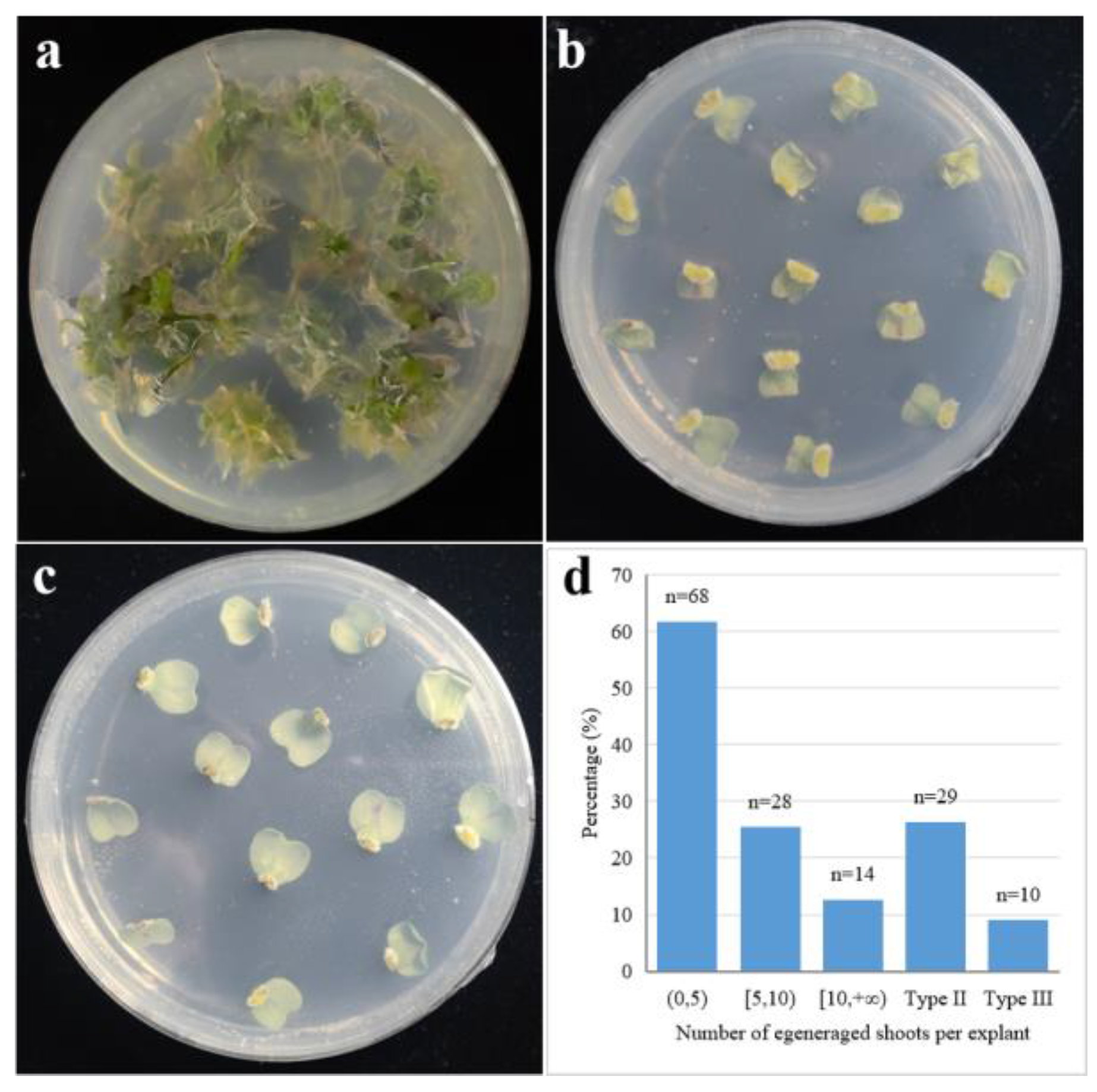
Figure 1. Three distinct regeneration responses of cotyledonary petioles. (a) Type I, normal regeneration (accesion L68); (b) Type II, callus forming but non-regenerating (accession L56); (c) Type III, cut surface browning without callus formation and regeneration (accesion 39); (d) distribution of accessions across different regeneration efficiency.
Preprints 185131 g001
Figure 2. Differences in adventitious shoot regeneration of accession L68 with GV3101, LBA4404, and K599 infection, as compared to non-infected control. (a) non-infected controls; (b-d) infected with GV3101, LBA4404, and K599 respectively. Red tissues indicate RUBY expression.
Preprints 185131 g002
Figure 3. RUBY expression at different stages in explant without tenoxicam treatment (CK; a-c) explants without tenoxicam treatment on day 3 of co-cultivation medium, day 10 of shoot induction medium, and day 30 of shoot induction medium; (d-f) explants treated with tenoxicam on day 3 of co-cultivation medium, day 10 of shoot induction medium, and day 30 of shoot induction medium;.
Preprints 185131 g003
Figure 4. The expression of visual reporters eYGFPuv and RUBY in positive shoots and transgenic seedlings. (a,b) Expression of eYGFPuv in cultured explants under white light and UV illumination, respectively; (c,d) transgenic seedling of eYGFPuv and non-trangenetic control under UV illumination, respectively; (e,f) Expression of RUBY in cultured explants; (g) Non-transgenic control; (h) Transgenic seedlings over-expressing RUBY.
Preprints 185131 g004
Figure 5. Morphological phenotype of RUBY overexpressing lines. (a) Bolting stage of T0 plant; (b) Flowers of T0 plant; (c) Cotyledons of T1 plant; (d-f) Leaf head and cross-section of transgenic line RB16 at T3 generation; (g-i) Leaf head and cross-section of transgenic line RB25 at T3 generation; (j-l) Leaf head and cross-section of transgenic line RB52 at T3 generation.
Preprints 185131 g005
Table 1. Average number of regenerated shoots per explant after non-infection and infection with different Agrobacterium strains.
Accession Non-infection GV3101 LBA4404 K599
L68 12.52 ± 0.39 a 5.70 ± 0.47 c 4.28 ± 0.63 d 6.24 ± 0.68 b
L69 10.46 ± 0.54 a 4.52 ± 0.32 c 5.18 ± 0.58 c 7.22 ± 0.66 b
L131 11.69 ± 0.64 a 4.24 ± 0.64 c 3.68 ± 0.66 c 6.54 ± 0.67 b
Values are presented as mean ± standard deviation (SD; n = 3). For each accession, different letters after SD indicate significant differences among treatments according to LSD test at the 0.05 level.
Table 2. The average number of regenerated shoot per explant after chemical reagents application at different culture stages.
Reagent Concentration Treatment Stage Regenerated Shoots per Explant
CK / / 6.20 ± 0.38
Tenoxicam 50 μM Seed germination 8.55 ± 0.36 *
Tenoxicam 50 μM Co-cultivation 6.15 ± 0.39
Tenoxicam 50 μM Shoot induction 5.27 ± 0.45
CNQX 50 μM Seed germination 6.12 ± 0.38
CNQX 50 μM Co-cultivation 6.08 ± 0.68
CNQX 50 μM Shoot induction 6.05 ± 0.30
LaCl3 10 mM Seed germination 6.14 ± 0.43
LaCl3 10 mM Co-cultivation 6.06 ± 0.33
LaCl3 10 mM Shoot induction 4.77 ± 0.30 *
Trichostatin A 1 μM Seed germination 6.10 ± 0.63
Trichostatin A 1 μM Co-cultivation 5.98 ± 0.33
Trichostatin A 1 μM Shoot induction 5.95 ± 0.45
Values are presented as mean ± SD (n = 3). Asterisk (*) indicates a significant difference compared to the CK according to Student's t-test at p < 0.05.
Table 3. Mean number of regenerated shoots per explant under different 6-BA and NAA concentrations with or without Agrobacterium infection.
6-BA (mg/L) NAA (mg/L) Non-infection Infection
4 0.0 0.22 ± 0.24 f 0.14 ± 0.21 e
4 0.2 12.05 ± 0.73 a 5.82 ± 0.64 c
4 0.4 9.12 ± 0.64 b 6.63 ± 0.55 b
4 0.5 6.45 ± 0.49 c 7.43 ± 0.49 a
4 0.6 3.15 ± 0.41 e 5.88 ± 0.38 c
4 0.2 4.86 ± 0.48 d 4.86 ± 0.48 d
2 0.2 8.76 ± 0.58 b 4.20 ± 0.52 d
6 0.2 9.15 ± 0.57 b 4.55 ± 0.55 d
Values are presented as mean ± SD (n = 3). For each column, different letters after SD indicate significant differences among treatments according to LSD test at the 0.05 level.
Table 4. Genetic Transformation Efficiency using Selectable Markers and Visual Reporters for Genetic Transformation Efficiency.
Selection Method Vector Regenerated Shoots per Explant False Positive Rate
(%)
Genetic Transformation Efficiency (%)
CK (no infection, no selection) NA 12.03 ± 0.62 a NA NA
Kanamycin pCAMBIA2300-eYGFPuv 0.45 ± 0.14 c 82.81 ± 12.31 b 6.67 ± 3.06 b
Hygromycin pCMABIA1300-eYGFPuv 0.19 ± 0.03 c 84.72 ± 16.67 b 2.67 ± 3.06 b
eYGFPuv pCMABIA2300-eYGFPuv 8.55 ± 0.72 b 97.72 ± 0.56 a 19.33 ± 4.16 a
RUBY pCMABIA2300-RUBY 9.77 ± 0.44 b 97.95 ± 0.46 a 20.00 ± 4.62 a
Values are presented as mean ± SD (n = 3). For each column, different letters after SD indicate significant differences among treatments according to LSD test at the 0.05 level.
Table 5. Agronomic traits measurement of transgenic lines.
Line Growth Period
(days)
Gross Weight
(kg)
Net Weight
(kg)
Head Height
(cm)
Head Width
(cm)
Number of Head Leaves
L68 61.40 ± 6.22 a 1.98 ± 0.13 a 1.49 ± 0.08 a 25.51 ± 1.66 a 13.43 ± 0.83 a 27.33 ± 1.08 a
RB16 53.87 ± 3.15 b 1.32 ± 0.11 c 0.92 ± 0.11 c 16.60 ± 0.90 c 8.91 ± 0.39 c 24.73 ± 0.60 a
RB25 54.53 ± 2.01 b 1.72 ± 0.11 b 1.32 ± 0.13 b 22.79 ± 1.04 b 12.45 ± 0.18 b 25.00 ± 0.90 a
RB52 47.93 ± 1.12 c 0.91 ± 0.11 d 0.72 ± 0.12 c 11.87 ± 0.51 d 6.65 ± 0.19 d 26.80 ± 0.69 a
Values are presented as mean ± SD (n = 3). For each column, different letters after SD indicate significant differences among treatments according to LSD test at the 0.05 level.
Disclaimer/Publisher’s Note: The statements, opinions and data contained in all publications are solely those of the individual author(s) and contributor(s) and not of MDPI and/or the editor(s). MDPI and/or the editor(s) disclaim responsibility for any injury to people or property resulting from any ideas, methods, instructions or products referred to in the content.
Copyright: This open access article is published under a Creative Commons CC BY 4.0 license, which permit the free download, distribution, and reuse, provided that the author and preprint are cited in any reuse.
Prerpints.org logo

Preprints.org is a free preprint server supported by MDPI in Basel, Switzerland.

Subscribe

Disclaimer

Terms of Use

Privacy Policy

Privacy Settings

© 2025 MDPI (Basel, Switzerland) unless otherwise stated