

Submitted:
07 November 2025
Posted:
14 November 2025
You are already at the latest version
Abstract
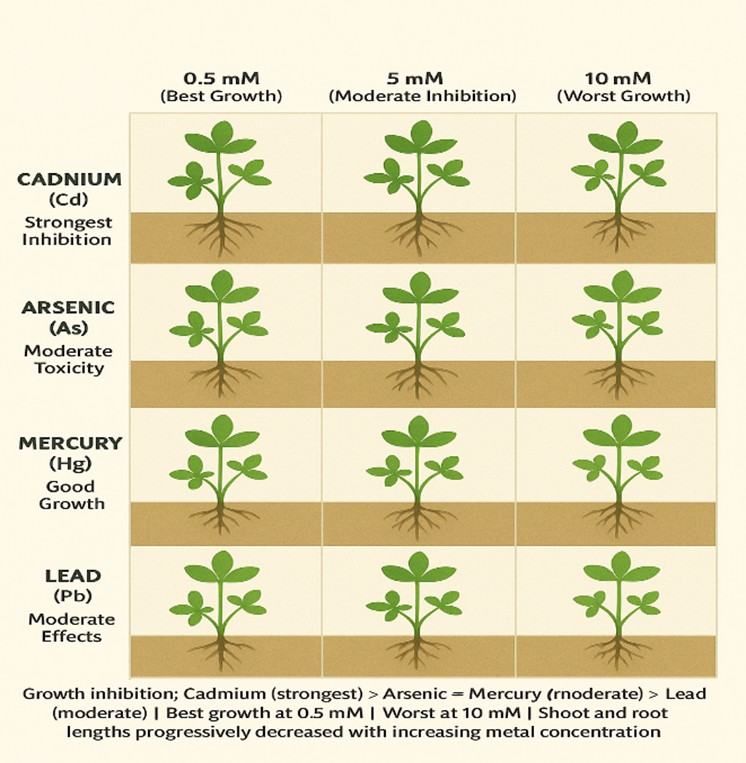
Heavy metals are persistent environmental sources affecting soil quality. Therefore, selecting plant species that can germinate and grow under heavy metal stress is critical for phytoremediation. This study examines the effects of varying concentrations of cadmium (Cd²⁺), lead (Pb²⁺), mercury (Hg²⁺), and arsenic (As³⁺) on germination and growth Trifolium repens, with emphasis on its response to heavy metal stress in South African soils. Seeds with uniform size were sampled and placed in plastic dishes with a layer of towel paper on the bottom and were evenly spaced in each dish on the surface of the towel paper with 5 mL of each metal concentrations. The findings revealed that the metal type and concentration significantly impacted almost all the physiological parameters of Trifolium repens at (P < 0.001). In contrast, there were no significant variations between treatments for the untreated plants at (P > 0.05), indicating that the alterations were primarily related to the experimental setup. There was a consistent inverse relationship between metal concentration and plant performance. The best physiological and germination results were achieved at the lowest treatment level (0.5 mM) whereas plants were extremely affected at 10 mM.
Keywords:
metal stress
; white clover
; seed germination
; phytoremediation
1. Introduction
Heavy metals are persistent environmental contaminants that disrupt soil quality, water resources, and plant health. This has become a major global concern in today’s world. In Durban, South Africa, soils have experienced long-term contamination from sewage discharge, agricultural inputs, and industrial effluents. These include sewage leakage, agricultural fertilizers, pesticides, and emissions from energy plants and chemical effluence from industrial processes. Heavy metals are of concern because they are non-degradable, leading to serious long-term impacts on the ecosystems [1]. For example, agrochemicals such as copper (Cu), arsenic (As), and cadmium (Cd) are the main heavy metals while, mercury (Hg), lead (Pb), and arsenic (As) are prevalent in soils contaminated by industrial activities [2]. Consequently, the increasing accumulation of heavy metals in the environment poses serious threat to all organisms, particularly plants. These heavy metals are major abiotic stressors that can severely impact plant health [2].
Among heavy metals, Cd, Pb, Hg, and As are especially of concerning due to their high toxicity, persistence, and potential for bioaccumulation [3]. Mercury is the most dangerous heavy metal, primarily from mining activities [3], small amounts of this metalloid are also found in agrochemicals [4]. Moreover, mercury is a toxic substance for all living organisms, causing cellular damage and physiological problems, disrupting growth and photosynthesis, and leading to stunted seedlings, reduced biomass, and slower germination. Cadmium, for instance, is non-essential and harmful to plants [5]. The long biological half-life of cadmium results in mutations, cell damage, and cancer [Ertekin et al., 2020]. In addition, elements such lead, for instance, is one of the most prevalent elements found in soil that hindered the germination of certain plants. Smelting, burning coal, industrial waste, herbicides and insecticides contain arsenic [6].
To address this issue, phytoremediation is an approach to cleaning up heavy metals from the environment. This technique relies on the ability of plants and associated microbes to either absorb heavy metals or reduce harmful effects in the soil through degradation, accumulation, and stabilization of pollutants [7]. Therefore, choosing the right plant species is key to making a phytoremediation project successful. The species must be able to withstand heavy metals throughout their life cycle, using various strategies to cope with the stress.
Notably, the early stage of seed germination and seedling growth are particularly vulnerable to heavy metal stress because their defense systems are not fully developed. Several species have been evaluated for their ability to tolerate the toxic effects of heavy metals and have shown promise as metal-tolerant options for phytoremediation [8].
Previous research has reported how various plant species response to heavy metal stress, but most tend to overlook Trifolium repens or focus solely on one type of metal. The impact of Cd, Pb, Hg, and As on germination and early growth has not been well studied. This is crucial as the early growth phase is the most vulnerable, and plant tolerance can determine its success in phytoremediation. In Durban, where soil is contaminated with these metals from industrial, agricultural, and sewage activities, no research has investigated T. repens to germinate and thrive in realistic contamination conditions. For instance, [9] highlighted Bidens pilosa and Heliocarpus americanus as tolerant species that could play a role in cleaning up mercury mining area. These species demonstrated germination rates ranging from 40% - 50% and exhibited healthy growth at mercury concentrations of up to 4 mg/l.
Similarly, another study found that the seeds of Nama aff. stenophylla can germinate (62–79%) despite exposed to high levels of cadmium, arsenic, iron, zinc, and lead (0.44, 1.44, 1.56, 37.25, and 8.09 mg/l, respectively), showcasing their tolerance to these heavy metals [10]. [11] noted that when Peganum harmala was subjected to increasing concentrations of zinc (0, 100, 200, and 300 µM), it showed a slight inhibition (less than 70%) and hypocotyl length [12].
Trifolium repens L. (white clover) is a perennial legume with small seeds, widely cultivated across the world. It reproduces mainly through insect pollination and has an allotetraploid genome with 32 chromosomes [13].
White clover is an important forage crop that improves livestock production because of its high nutritional value and digestibility. It is also well recognized for its ability to fix atmospheric nitrogen, which enriches soil fertility, maintains organic matter, and improves soil structure [1]. Research has shown that these traits make white clover highly valuable not only in agriculture but also in ecological restoration. Its adaptability, resilience, and soil-improving capacity allow it to restore degraded soils and support long-term ecosystem recovery [14].
Existing studies focused on white clover growth in metal-contamination showed oxidative stress due to malondialdehyde levels and superoxide dismutase activities, closely related to metal levels [15]. [16] indicated that Trifolium spp has been identified as a promising bioindicator for monitoring heavy metal contamination in urban areas.
However, little is known about how clover responds to combined Cd, Pb, Hg, and As stress, particularly under conditions relevant to South African soils. This study therefore investigates the germination and growth responses of Trifolium repens L to graded concentrations of these metals.
2. Materials and Methods
2.1. Seed Material and Preparation
Samples were obtained from Living Seeds Heirloom Seeds Ltd Pty (South Africa). Cadmium [Cd(NO₃)₂·4H₂O, MW 308.48 g·mol⁻¹], Lead [C₄H₆Pb·3H₂O, MW 379.33 g·mol⁻¹], Mercury [HgO, MW 216.59 g·mol⁻¹], and Arsenic [As₂O₃, MW 74.92 g·mol⁻¹] were purchased from Ace, Uni-Chemical, and Minema, respectively. A 3% H₂O₂ solution, and distilled water was used throughout the experiment.
2.2. Metal Solution Preparation
Cadmium nitrate [Cd(NO₃)₂·4H₂O], lead acetate [C₄H₆Pb·3H₂O], mercury (II) oxide [HgO], and arsenic trioxide [As₂O₃] were used as sources of Cd²⁺, Pb²⁺, Hg²⁺, and As³⁺, respectively. Each metal was prepared at concentrations of 0 (control), 0.5, 5, and 10 mM in deionized water containing background salts (CaCl₂, MgSO₄, NaHCO₃, KCl). The pH was adjusted to 7.84. The selection of metal concentrations (0.5, 5, and 10 mM) was based on previous studies that reported clear physiological and biochemical responses of leguminous plants within this range. These concentrations represent low, moderate, and high stress levels that are sufficient to induce measurable effects without completely inhibiting germination or growth [17].
2.3. Germination Test
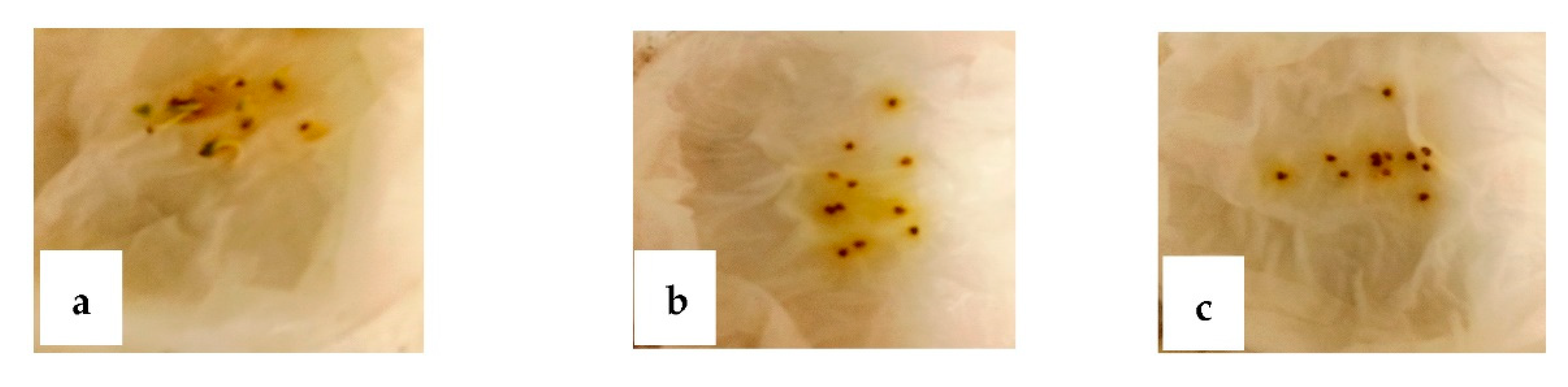
A cultivar of Trifolium repens L was used for the germination tests. Seeds were surface sterilized with 3% H2O2 for 2 min and thoroughly rinsed with sterilized and distilled water. Eight seeds with uniform size were selected and placed in plastic dishes (10-cm diameter) with a layer of towel paper on the bottom. Eight seeds were evenly spaced in each dish on the surface of the towel paper, and 5 mL of heavy metal aqueous solution prepared at different concentrations. Each treatment was replicated thrice in a randomized complete block design. All petri dishes were incubated with a lid in laboratory room of 25±1 °C for 7 days under fluorescent light 12-hour day and 12-hour night with 50–100 lumens per watt. Seedling germination (0.5cm hypocotyl visible) was observed and counted beginning the day after planting and continued daily for approximately 7days. (Figure 8, Figure 9, Figure 10, Figure 11 and Figure 12)
2.4. Measurements and Calculations
The root length (RL) and shoot length (SL) of eight seedlings in each petri dish were measured. The inhibition rate of root or shoot elongation was calculated following the method defined by [17]. The germination rate (GR) was measured based on the method described by [18]. Germination percentages occur when the average daily germination hit its peak, as indicated by 19Hossain et al. (2005). To assess the impact of heavy metal stress, we expressed the Germination Index (GI) and Vigor Index (VI) using relative values to compare the different treatments. The GI and VI were calculated following the methods outlined by [20,21], respectively. The Mean Germination Time (MGT) was calculated using the method described by 21Ellis and Roberts (1981). Root Length (RL) and Shoot Length (SL) were measured with a vernier caliper, and both were expressed as relative values. All these parameters were derived using equations for Germination Rate (GR), Relative Germination Index (RGI), Relative Vigor Index (RVI), Relative Root Length (RRL), and Relative Shoot Length (RSL). The formula used in this study were clearly expressed below:
Germination rate (GR%) refers to the percentage of seeds that sprout successfully from the total number planted in a Petri dish. This rate indicates how viable the seeds are under certain treatment or environmental conditions. It is expressed as
The Mean Germination Time (MGT) refers to the average number of days it takes for seeds to sprout. This measure gives insight into how quickly and consistently the seeds germinate— a lower number indicates a faster germination process. It is expressed as
D = Number of days since the beginning of germination
N = number of seeds that germinated on day D
n = Number of seeds germinated on D Day
Relative germination index ( RGI) measures how well seeds germinate when exposed to heavy metal stress compared to a control group. If the RGI is lower, it means that the contaminants are having a stronger negative effect on the germination process.
where:
Gt = Number of seeds germinated on t day
Gl = day t of germination observed
RVI measures how well seedlings grow under stress compared to the control group, considering the performance of both germination and how their shoots develop. If the RVI is lower, it indicates that there’s more toxicity or a greater impact from stress.
where :
VI
(6)
= GI x S
GI = Germination index
S = Mean shoot length
Relative root length or Relative shoot length (RRL) or (RSL): These indices measure how much root or shoot length changes when exposed to heavy metals compared to control conditions. A smaller percentage suggests that growth inhibition due to toxicity.
2.5. Statistical Analysis
Effects of metal type, concentration, and interaction were analyzed using multivariate analysis of variance (MANOVA). Differences between groups of heavy metals and interactions were determined using Tukey’s HSD test at P < 0.05. Statistical analysis was performed using SPSS v30 and Microsoft Excel.
3. Results and Discussions
Study was conducted to assess the impact of cadmium (Cd²⁺), lead (Pb²⁺), mercury (Hg²⁺), and arsenic (As³⁺) on the germination and early growth of Trifolium repens [white clover] under controlled condition. Various parameters were measured using vernier caliper. The multivariate analysis revealed that the metal type and concentration play a significant role in the general germination and growth of Trifolium repens (Pillai’s Trace, Wilks’ Lambda, Hotelling’s Trace, and Roy’s Largest Root; P < 0.001) (Table 1). A significant difference was observed between the metal type and concentration, which implies that changes in plant performance were a result of concentration of each metal used. These investigations show that metal contamination affects plant physiological behaviour based on the amount and the specific metal, indicating the complex interaction between plant and environmental contamination. Overall growth and germination characteristics were shown to be strongly impacted by both metal type and concentration, according to the multivariate analysis (Pillai's Trace, Wilks' Lambda, Hotelling's Trace, and Roy's Largest Root; P < 0.001) (Table 1). A significant interaction effect between the metal type and concentration was also discovered, indicating that the impact of each metal alteration depended on the concentration used. Plant-contaminant interactions are complex, since these data show that metal toxicity affects plant physiological responses based on dosage and the metal (Table 1).
The analysis between-subject effects revealed that the type of metal, concentration, and their interaction significantly impacted nearly all the physiological parameters of the plants. This included factors like shoot and root length, germination index, vigor index, mean germination time, and various relative indices (P < 0.001). The effects were particularly pronounced for variables such as the germination index (GI), relative germination index (RGI), and relative shoot and root lengths (RSL, RRL), as shown in (Table 1) by high F-values and R² values over 0.95, indicating a great fit for the model. However, there were no significant variations between treatments for the control variables, such as control shoot, control root, and control GI (P > 0.05), indicating that the alterations were primarily related to the experimental setup. Remarkably, for several characteristics, such as shoot length, GI, VI, and RSL, the interaction effects between metal type and concentration were also significant. This implies that the reactions of Trifolium repens to metals were dose-dependent and variable-specific. With a substantial interactive influence on plant development and germination dynamics, our results demonstrate a clear and distinct impact of both metal type and concentration on the parameters we evaluated.

Table 2.
Characteristics of various parameters tested on germination and early growth of Trifolium repens.
Table 2.
Characteristics of various parameters tested on germination and early growth of Trifolium repens.
| Dependent Variable | Type III Sum of Squares | Df | Mean Square | F | R squ | Adj R | Sig. |
|---|---|---|---|---|---|---|---|
| Shoot length | 8.908a | 11 | 0.81 | 42.077 | 0.975 | .952 | <.001 |
| Root length | 2.135b | 11 | 0.194 | 8.774 | 0.889 | .788 | <.001 |
| Control shoot | .020c | 11 | 0.002 | 0.269 | 0.198 | -.537 | 0.981 |
| Control root | .364d | 11 | 0.033 | 3.547 | 0.765 | .549 | 0.02 |
| GR | 43202.855e | 11 | 3927.532 | 15.577 | 0.935 | .875 | <.001 |
| GI | 2745.852f | 11 | 249.623 | 64.544 | 0.983 | .968 | <.001 |
| Control GI | .000g | 11 | 0 | . | . | . | . |
| MGT | 17707.499h | 11 | 1609.773 | 9.341 | 0.895 | .800 | <.001 |
| VI | 53378.983i | 11 | 4852.635 | 19.291 | 0.946 | .897 | <.001 |
| VI control | 8.456j | 11 | 0.769 | 0.269 | 0.198 | -.537 | 0.981 |
| RGI | 63817.521k | 11 | 5801.593 | 64.544 | 0.983 | .968 | <.001 |
| RVI | 168118.702l | 11 | 15283.52 | 20.738 | 0.95 | .904 | <.001 |
| RRL | 19310.838m | 11 | 1755.531 | 7.581 | 0.874 | .759 | <.001 |
| RSL | 12077.614n | 11 | 1097.965 | 47.636 | 0.978 | .957 | <.001 |
Furthermore, germination-related metrics like germination rate (GR), germination index (GI), and vigor index (VI) were significantly higher at 0.5 mM, pointing to better performance at lower metal concentrations (Figure 1a–c). For example, GR had 62.0 under 0.5 mM, compared to 35.6 at 5 mM and 17.6 at 10 mM which is the lowest (Figure 1a). Similar patterns were seen in relative germination index (RGI) (Figure 2b), relative vigor index (RVI) (Figure 2c), relative root length (RRL) (Figure 7a), and relative shoot length (RSL) (Figure 7b), all of which sharply declined as exposure level increased.
The mean germination time (MGT) varied slightly across treatments, with the longest germination period occurring at 0.5 mM (Figure 2a). This suggests that while lower concentrations boost growth indices, they might also slightly delay emergence (Figure 2a). At 0.5 mM, the VI was 0.86%, which rose sharply to 23.78% at 5 mM and further reached 60.16% at 10 mM (Figure 1c). This implies that 0.5 mM strongly impaired seedling vigor despite germination occurring at a normal rate, whereas at higher concentrations fewer seedlings germinated, but those that managed to grow contributed more strongly to VI values (Figure 1c).
Similarly, at 0.5 mM, the RGI was 78%, which increased to 87.56% at 5 mM and further reached 106.33% at 10 mM. (Figure 2c) Overall, germination and vigor indices decreased steadily with increasing metal concentration, with the best performance at 0.5 mM (Figure 2b). Moreover, the data indicated significant phytotoxic effects at 10 mM, highlighting the importance of careful management of metal exposure in plant systems (Figure 2a–c).
Moreover, excel-based mean statistical analysis showed a clear trend where the response varied depending on the concentration across most physiological parameters.
In term of growth, Cadmium caused the strongest inhibition, reducing root length drastically even at 0.5 mM and completely suppressing growth at 5–10 mM and >97% reduction at 5–10 mM; in comparison, lead reduced root growth more moderately by ~8% at 0.5 mM but sharply by ~88% at 5 mM and ~97% at 10 mM, whereas mercury typically causes >70% root inhibition at 0.5 mM (Figure 3 and Figure 4).
A parallel trend was observed in shoots length followed a similar pattern, with cadmium reduced by ~85% at 0.5 mM and completely inhibited at 5–10 mM, arsenic reduced by ~65% at 0.5 mM and >96% at 5–10 mM, and lead showing ~29% reduction at 0.5 mM, ~54% at 5 mM, and ~95% at 10 mM, while mercury generally causes >70% inhibition at 0.5 mM and >95% reduction at higher concentrations (Figure 4 and Figure 5). The observed plant response to mercury may be attributed either to a delayed solubility of mercury salts in the ionic medium or to inherent genetic factors (Figure 4a).
In general, for both shoot and root length, the highest average values were found to be the lowest concentration (0.5 mM), with a noticeable decline at 5 mM and the lowest values at 10 mM except in Figure 3a where 5mM was higher than 0.5mM.
Specifically, shoot length dropped from 1.93 at 0.5 mM to 1.2 at 5 mM, and then further down to 0.1458 at 10 mM (Figure 5b). A similar decline was noted for root length as well (Figure 3b).
In contrast, Control plants maintained stable shoot and root growth, confirming that the observed differences arose solely from metal treatments. This was because the control group were metal free (Figure 3, Figure 4, Figure 5 and Figure 6).
However, when expressed in relative terms, both root and shoot growth showed an opposite trend under increasing metal concentrations. RRL rose from 10.047% at 0.5 mM to 45.073% at 10 mM (Figure 7a), while RSL increased from 6.16% at 0.5 mM to 42.457% at 10 mM (Figure 7b). This pattern indicates that the plants adapted to higher concentrations by promoting root and shoot elongation, enhancing their ability to tolerate stress. The control shoot, control root, and control GI remained statistically unchanged across all treatments, confirming that the differences we observed were due to the metals and their concentrations, not other external factors such as temperature etc.
3.1. Effect of Metal Type on the Germination and Early Growth of Trifolium Repens L
To further compare the effect of metal on the plant after multivariate analysis, Tukey's multiple range test was used to determine the homogeneous behaviour of metals on Trifolium repens. From the results, it was apparent that cadmium (0.13) < arsenic (0.35) < mercury (0.86) < lead (1.10), which indicates that lead (Pb) had the greatest shoot length, while the least was found with cadmium. Similarly, for the root, the result, as shown in Table 3, indicates that mercury produced the longest roots, whereas the shortest was observed with cadmium. Specifically, the effect of metal on roots was noted in the following order: cadmium (0.0) < arsenic (0.10) < lead (0.35) < mercury (0.63). Furthermore, no significant differences were found with control, which implies that the control group was not treated with metals. In addition, further analysis shows that cadmium (18.85), arsenic (26.88), and lead (27.88) had a lower germination rate, but mercury was significantly higher. Interestingly, the highest significant result was found with arsenic (34.92), while the least was found with mercury, and cadmium and lead were intermediate. On average, mean germination time was better with cadmium, but no significant differences were observed with arsenic, mercury, and lead. Regarding the plant vigor index, mercury was significantly higher than arsenic and lead. The lowest value was found with cadmium. This pattern was similarly followed by RGI, RVI, RRL, and RSL. Notably, RGI and RVI variation was large, indicating strong metal-specific effects on relative growth performance (Table 3).
3.2. Effect of Metal Concentrations on the Germination and Early Growth of Trifolium Repens L
Following Tukey's multiple range test Table 4 further breakdown the effect of concentrations with respect to shoot, root, germination rate, germination index meant germination time e.tc. As shown in the data, the shoot increases as the treatment level decreases. Specifically, the highest shoot was observed at 0.5 mM and the least at 10 mM which indicates that higher dose suppress shoot growth. Likewise, a similar trend was observed with root. consistently, there was an increase in growth with a decrease in metal exposure. In contrast, a slight rise in root was noted with the control group but no significant differences were recorded across the concentrations applied which confirms that the control group were unaffected with metal concentrations. Therefore, this provides clear evidence that changes in parameters test were majorly due to the treatment level and the metal types. In terms of germination, higher dosage was obvious with a reduced seed emergence rate, but the highest was identified with 0.5 mM (62.01). In addition, the germination index increases with lower concentration in this progression; 10 mM (16.18) < 5 mM (18.16) < 0.5 mM (22.06). However, there is no significant difference observed with mean germination time. Consistently with the previous trends, the highest plant vigor was obtained at 0.5 mM (60.16). Notably, the trend of vigor index was like the others, but the least growth vigor found with (0.86).Finally, with respect to relative growth indices (RGI, RVI, RRL, RSL), all relative parameters increase significantly as concentration decreases (Table 4).
4. Discussions
Germination tests are a reliable way to study how heavy metals affect plants because seeds are highly sensitive to environmental stress. In this study, Trifolium repens L showed responses that varied with both the type and concentration of metal. This agrees with [22], who emphasized that metal toxicity depends on the specific element, the plant species, growth stage, and experimental conditions.
Overall, heavy metals reduced germination, with cadmium (Cd) exerting the strongest inhibitory effect, particularly on root growth. Previous reports also demonstrated that Cd restricts root development in various plants [2,23], and that higher Cd doses cause severe damage to germination, shoot, and root growth [24]. The strong inhibition by Cd may be linked to ionic toxicity that disrupts embryo viability or an osmotic effect that restricts water uptake during imbibition, thereby limiting water availability for embryo development [25].
Other mechanisms may have contributed to the inhibition. Heavy metals can trigger nutrient depletion and reduced enzyme activity, especially the inhibition of α-amylase, which is essential for starch hydrolysis and sugar supply to the embryo [23,26]. Faster depletion of endosperm reserves and altered membrane permeability under metal stress [27] could also explain the reduced vigor index observed in T. repens L. In addition, metals are known to cause oxidative stress through overproduction of reactive oxygen species (ROS), which destabilize membranes and disrupt cellular homeostasis [28].
Despite these adverse effects, T. repens L appear to employ adaptive strategies at lower and moderate concentrations. The mean germination time (MGT) varied with metal type, suggesting some degree of acclimatization. Improved relative shoot and root growth at low Pb and Hg concentrations may be linked to stress-induced elongation and the activation of defense pathways. Similar stimulatory effects of low heavy metal levels on germination have been reported in M. sativa under Zn [29] and in Ulmus pumila exposed to Cd and Pb [30].
These adaptive responses may be partly explained by adjustments in the antioxidant system. At lower concentrations, T. repens L likely upregulated enzymatic antioxidants such as SOD, CAT, APX, GR, GST, and POD, which detoxify ROS and repair oxidative damage. In parallel, the plant may have accumulated non-enzymatic antioxidants, including ascorbic acid, glutathione, flavonoids, phenolics, and proline, which buffer redox imbalances and chelate toxic metals. Such defense mechanisms are consistent with the relatively better tolerance of T. repens L to Pb and Hg compared to Cd and As, and with the flavonoid-linked resilience observed in stressed tissues.
Taken together, these findings highlight that T. repens L exhibits a dual response to heavy metal exposure: strong inhibition of germination and seedling development at high concentrations, but adaptive tolerance at lower concentrations through water uptake regulation, metabolic adjustments, and antioxidant defense. This combination of sensitivity and plasticity reflects the plant’s ecological potential in contaminated environments.
5. Conclusions
Heavy metal type and concentration affected germination and growth of Trifolium repens. Shoot and root lengths decreased as metal levels increased, with cadmium causing the strongest inhibition. The best growth occurred at the lowest concentration (0.5 mM), while the worst was at 10 mM. Arsenic and mercury showed moderate toxicity, and lead had moderate effects overall.
Germination rate, vigor, and mean germination time were affected by metal exposure. The inhibition may be due to reduced water uptake, nutrient depletion, and lower starch breakdown. Trifolium repens can adjust its antioxidant systems to reduce damage from reactive oxygen species.
Growth at low concentrations of lead and mercury suggests that the plant can adapt to mild stress. These results show that T. repens can be used for phytoremediation under moderate heavy metal contamination and has the ability to tolerate and adjust to metal stress.
Supplementary Materials
The following supporting information can be downloaded at the website of this paper posted on Preprints.org.
Author Contributions
All the authors contributed to the study conception and design. Material preparation, data collection and searches were performed by (Alabi. O.D.). The first draft of the manuscript was checked and written by Gounden, A. Naidoo, K.K. Mellem, J.J. Vimla, P. commented on previous versions of the manuscript . We read and approved the final manuscript.”.
Funding
This work was not supported by any grant. The author did not receive research support from any of the companies. The authors declare that no funds, grants, or other support was received during the preparation of this manuscript
Institutional Review Board Statement
Does not require ethical clearer.
Informed Consent Statement
Informed consent was obtained from all participants involved in this study. Participants were fully informed about the purpose, procedures, potential risks, and benefits of the research before providing their voluntary consent.
Data Availability Statement
The data that support the findings of this study are available from the authors, but restrictions apply to the availability of these data, which were used under license from the various research publications for the current study and are not publicly available.
Conflicts of Interest
Theauthorsdeclare that theyhave no relevant financial ornon-financialinterests to disclose.
AppendixA
Figure 8.
Germination performance of Trifolium repens under the control group with no treatment.
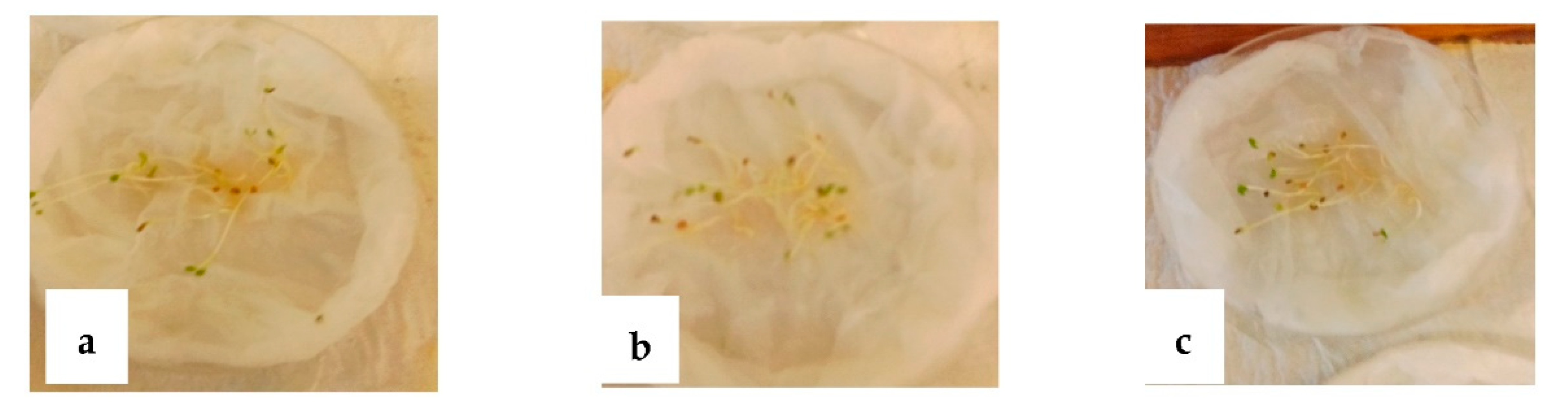
Figure 9.
Germination performance of Trifolium repens under mercury (Hg) treatment.
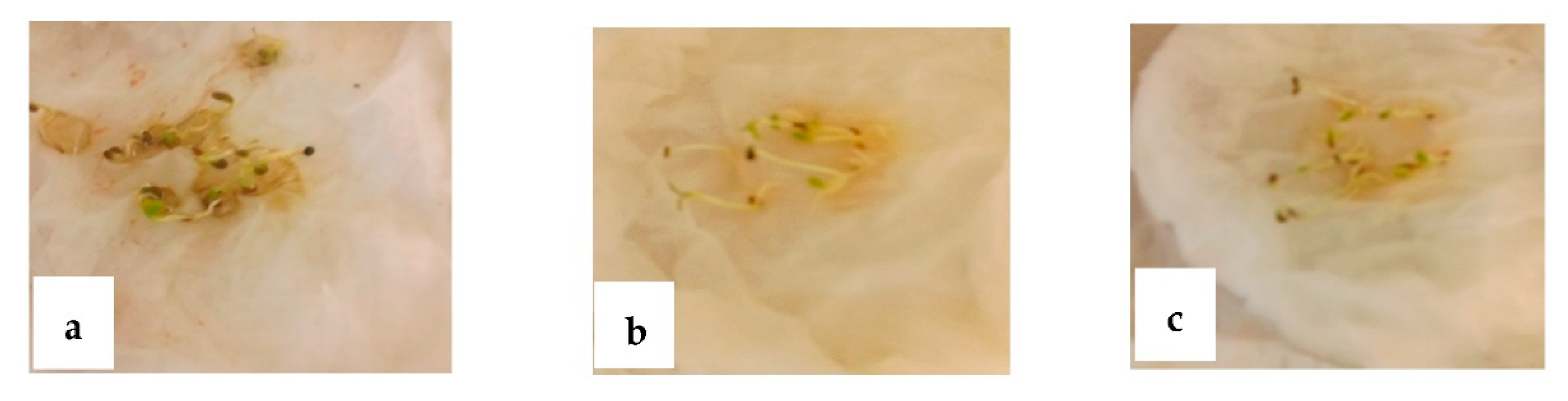
Figure 10.
germination performance of Trifolium repens under arsenic treatment.
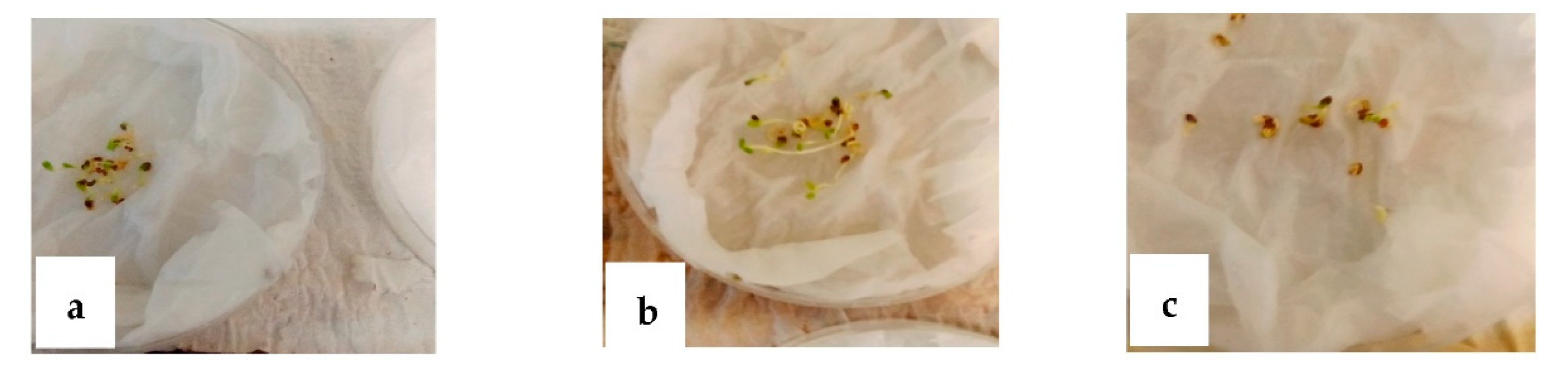
Figure 11.
Germination performance of Trifolium repens under lead (Pb) treatment.
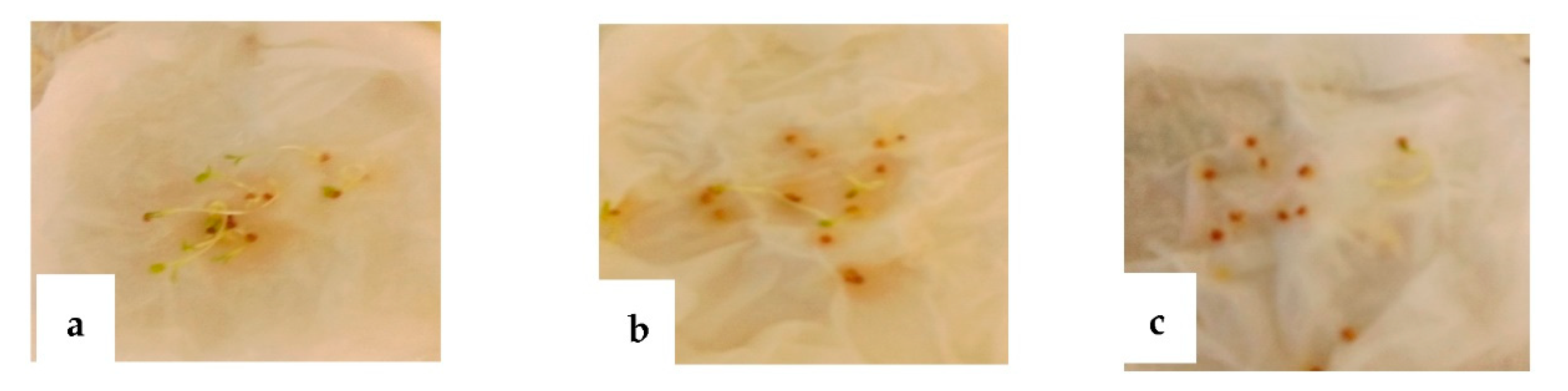
Figure 12.
Germination performance of Trifolium repens under cadmium (Cd) treatment.
References
- Müller, F.; Masemola, L.; Britz, E.; Ngcobo, N.; Modiba, S.; Cyster, L.; Samuels, I.; Cupido, C.; Raitt, L. (2022). Seed germination and early seedling growth responses to drought stress in annual Medicago L. and Trifolium L. forages. Agronomy, 12(12), 2960. https://doi.org/10.3390/agronomy12122960. [CrossRef]
- Ertekin, E.N.; Ertekin, İ.; Bilgen, M. (2020). Effects of some heavy metals on germination and seedling growth of sorghum. KSÜ Tarım ve Doğa Dergisi, 23(3), 1608–1615. [CrossRef]
- Kalinhoff C, Calderón NT (2022. Mercury Phytotoxicity and Tolerance in Three Wild Plants during Germination and Seedling Development. Plants (Basel). 5;11(15):2046. [CrossRef] [PubMed]
- Kalinhoff, C.; Calderón, N.-T. (2022). Mercury Phytotoxicity and Tolerance in Three Wild Plants during Germination and Seedling Development. Plants, 11, 2046.
- Parera, V., Parera, C. A., & Feresin, G. E. (2023). Germination and Early Seedling Growth of High Andean Native Plants under Heavy Metal Stress. Diversity, 15(7), 824. [CrossRef]
- Cakaj, A.; Hanć, A.; Lisiak-Zielińska, M.; Borowiak, K.; Drapikowska, M. (2023). Trifolium pratense and the heavy metal content in various urban areas. Sustainability, 15(9), 7325. [CrossRef]
- Soudek, P. , et al., (2016). Characteristics of different types of biochar and effects on the toxicity of heavy metals to germinating sorghum seeds, Journal of. Geochemistry. Explore. [CrossRef]
- Makarova, A., Nikulina, E., Avdeenkova, T., & Pishaeva, K. (2021). The Improved Phytoextraction of Heavy Metals and the Growth of Trifolium repens L.: The Role of K2HEDP and Plant Growth Regulators Alone and in Combination. Sustainability, 13(5), 2432. [CrossRef]
- Sotiriou V, Michas G, Xiong L, Drosos M, Vlachostergios D, et al. (2023). Effects of heavy metal ions on white clover (Trifolium repens L.) growth in Cd, Pb and Zn contaminated soils using zeolite. Soil Science and Environment 2:4. [CrossRef]
- Kalinhoff C, Calderón NT (2022). Mercury Phytotoxicity and Tolerance in Three Wild Plants during Germination and Seedling Development. Plants (Basel). 5;11(15):2046. [CrossRef] [PubMed]
- Yáñez-Espinosa, L.; Briones-Gallardo, R.; Flores, J.; del Castillo, E. (2020). Effect of heavy metals on seed germination and seedling development of Nama aff. stenophylla collected on the slope of a mine tailing dump. International Journal of Phytoremediation。 22, 1448–1461.
- Nedjimi, B. (2020). Germination characteristics of Peganum harmala L. (Nitrariaceae) subjected to heavy metals: Implications for use in polluted dryland restoration. International Journal of Environmental Science and Technology, 17, 2113–2122. [CrossRef]
- Parera, V., Parera, C. A., & Feresin, G. E. (2023). Germination and Early Seedling Growth of High Andean Native Plants under Heavy Metal Stress. Diversity, 15(7), 824. [CrossRef]
- Sawicka, Barbara, Barbara Krochmal-Marczak, Józef Sawicki, Dominika Skiba, Piotr Pszczółkowski, Piotr Barbaś, Viola Vambol, Mohammed Messaoudi, and Alaa K. Farhan. (2023). "White Clover (Trifolium repens L.) Cultivation as a Means of Soil Regeneration and Pursuit of a Sustainable Food System Model" Land 12, no. 4: 838. [CrossRef]
- Shaiban, H.; Dutoit, T.; Buisson, E.; De Almeida, T.; Khater, C. Trifolium subterraneum as a Potential Nurse Plant for Restoring Soil and Mediterranean Grasslands after Quarry Exploitation in Lebanon. Ecol. Eng. 2025, 216, 107632. [Google Scholar] [CrossRef]
- Hai Lin, Chenjing Liu, Bing Li, Yingbo Dong, Trifolium repens L. regulated phytoremediation of heavy metal contaminated soil by promoting soil enzyme activities and beneficial rhizosphere associated microorganisms, Journal of Hazardous Materials, Volume 402, 2021, 123829, ISSN 0304-3894. [CrossRef]
- Cakaj, A.; Hanć, A.; Lisiak-Zielińska, M.; Borowiak, K.; Drapikowska, M. (2023). Trifolium pratense and the heavy metal content in various urban areas. Sustainability, 15(9), 7325. [CrossRef]
- Wang, Z., Wang, J., Bao, Y. et al. Quantitative trait loci controlling rice seed germination under salt stress. Euphytica 78, 297–307 (2011).
- Hossain, M.A. Enhancing Seed Germination and Seedling Growth Attributes of a Medicinal Tree Species (Terminalia chebula) through Depulping of Fruits and Soaking the Seeds in Water. J. Food Agric. Environ. 2013, 11(3–4), 2573–2578.
- Soudek, Petr, et al. "Effect of heavy metals on inhibition of root elongation in 23 cultivars of flax (Linum usitatissimum L.)." Archives of Environmental Contamination and Toxicology 59.2 (2010): 194-203.
- Amooaghaie R, Nikzad K. The role of nitric oxide in priming-induced low-temperature tolerance in two genotypes of tomato. Seed Science Research. 2013;23(2):123-131. [CrossRef]
- Li, Peng, et al. "Germination and dormancy of seeds in Echinacea purpurea (L.) Moench (Asteraceae)." Seed Science and Technology 35.1 (2007): 9-20.
- Marcin, O.; Bosiacki, M.; Świerczyński, S. (2025). The effect of increasing doses of heavy metals on seed germination of selected ornamental plant species. Agronomy, 15(6), 1262. [CrossRef]
- Shafiq, M.; Zafar, I.M.; Athar, M. (2008). Effect of lead and cadmium on germination and seedling growth of Leucaena leucocephala. Journal of Applied Science and Environmental Management, 12(2), 61–66. [CrossRef]
- Anwar, S.; Shafiq, F.; Nisa, Z.U.; Usman, U.; Ashraf, M.Y.; Ali, N. (2021). Effect of cadmium stress on seed germination, plant growth and hydrolyzing enzyme activities in mungbean seedlings. Journal of Seed Science, 43, e202143042. [CrossRef]
- Marcin et al 2025.
- Mittal, N.; Vaid, P.; Avneet, K. (2015). Effect on amylase activity and growth parameters due to metal toxicity of iron, copper and zinc. Indian Journal of Applied Research, 5(4), 662–664.
- Bezini, E.; Abdelguerfi, A.; Nedjimi, B.; Touati, M.; Adli, B.; Yabrir, B. (2019). Effect of some heavy metals on seed germination of Medicago arborea L. (Fabaceae). Agriculturae Conspectus Scientificus, 84, 29–34.
- Patel et al., 2013.
- Abusriwil, L.M.H.; Hamuda, H.E.A.F.; Elfoughi, A.A. (2011). Seed germination, growth and metal uptake of Medicago sativa L. grown in heavy metal contaminated clay loam brown forest soil. Journal of Landscape Ecology, 9, 111–125.
- Đukić, M.; Đunisijević-Bojović, D.; Samuilov, S. (2014). The influence of cadmium and lead on Ulmus pumila L. seed germination and early seedling growth. Archives of Biological Sciences, 66(1), 253–259. [CrossRef]
Figure 1.
Effect of metal concentration on seedling establishment parameters. Each bar indicates means of 3 replicates ± standard error.
Figure 1.
Effect of metal concentration on seedling establishment parameters. Each bar indicates means of 3 replicates ± standard error.
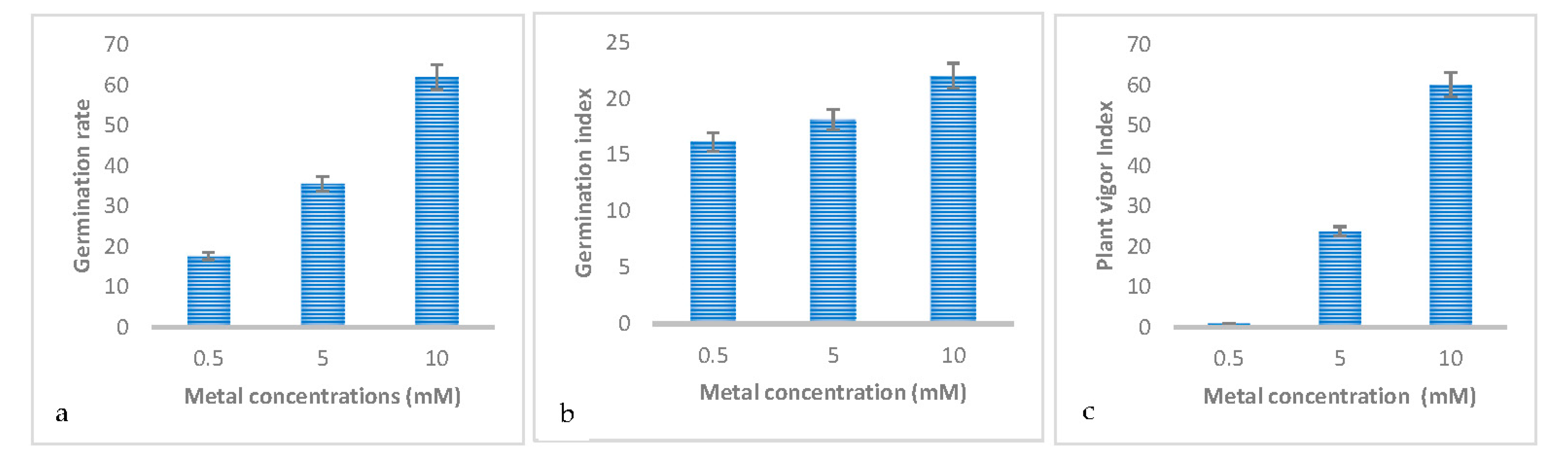
Figure 2.
Effect of metal concentrations on germination metrics. Each bar indicates means of 3 replicates ± standard error.
Figure 2.
Effect of metal concentrations on germination metrics. Each bar indicates means of 3 replicates ± standard error.
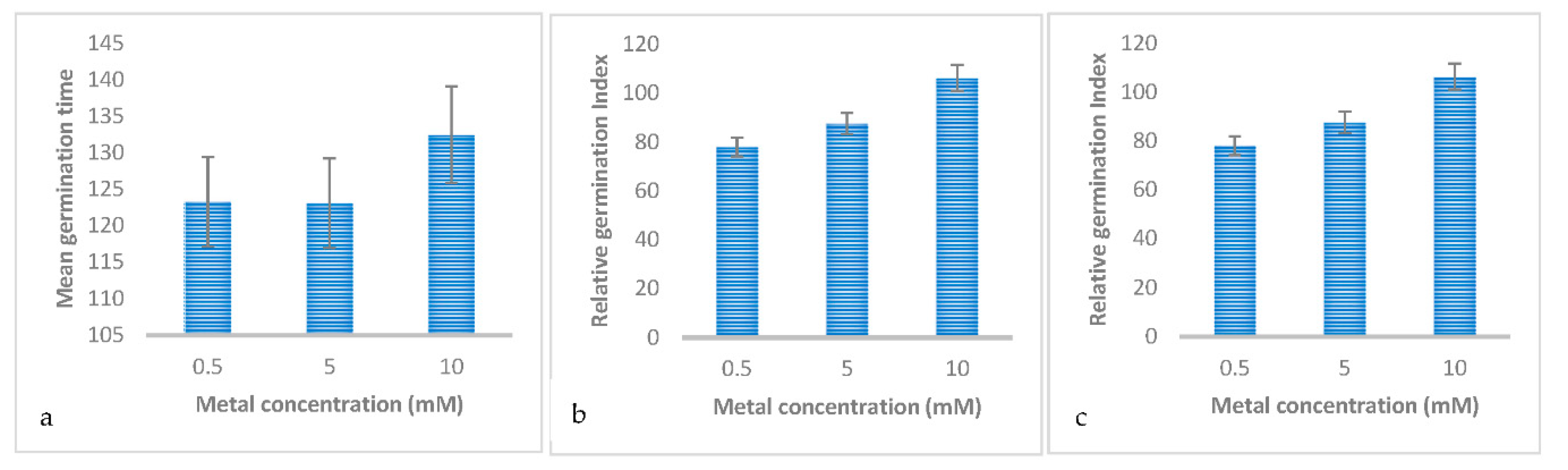
Figure 3.
Effect of metal concentrations on the length of root (white clover). Each bar indicates means of 3 replicates ± standard error.
Figure 3.
Effect of metal concentrations on the length of root (white clover). Each bar indicates means of 3 replicates ± standard error.
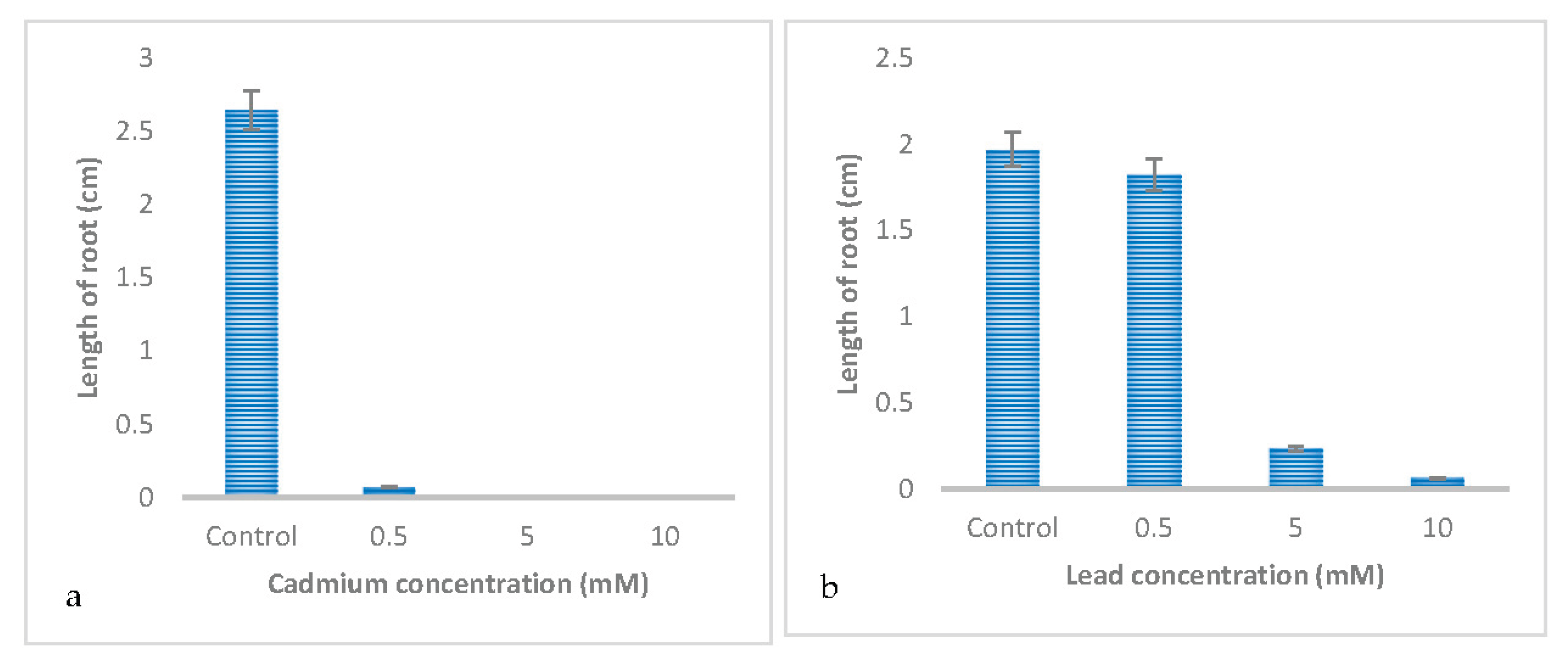
Figure 4.
Effect of metal concentrations on root length (white clover). Each bar indicates means of 3 replicates ± standard error.
Figure 4.
Effect of metal concentrations on root length (white clover). Each bar indicates means of 3 replicates ± standard error.
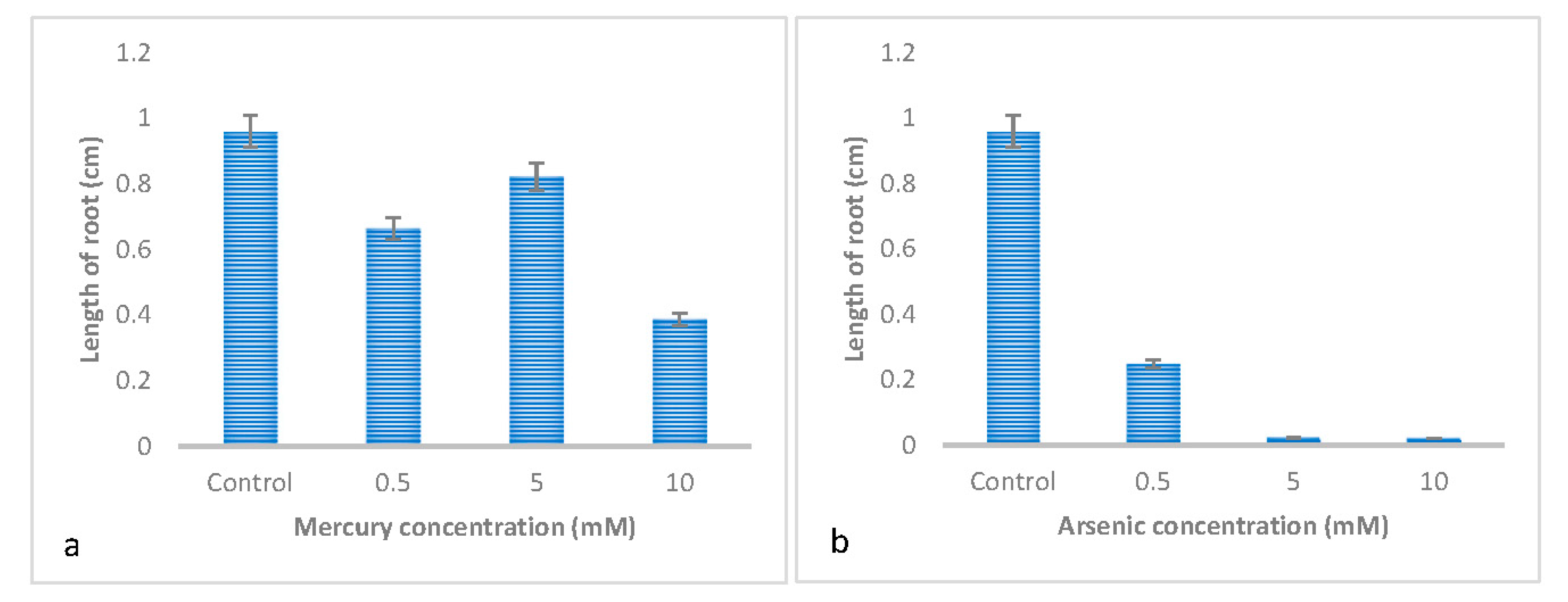
Figure 5.
Effect of metal concentration on length of shoot (white clover). Each bar indicates means of 3 replicates ± standard error.
Figure 5.
Effect of metal concentration on length of shoot (white clover). Each bar indicates means of 3 replicates ± standard error.
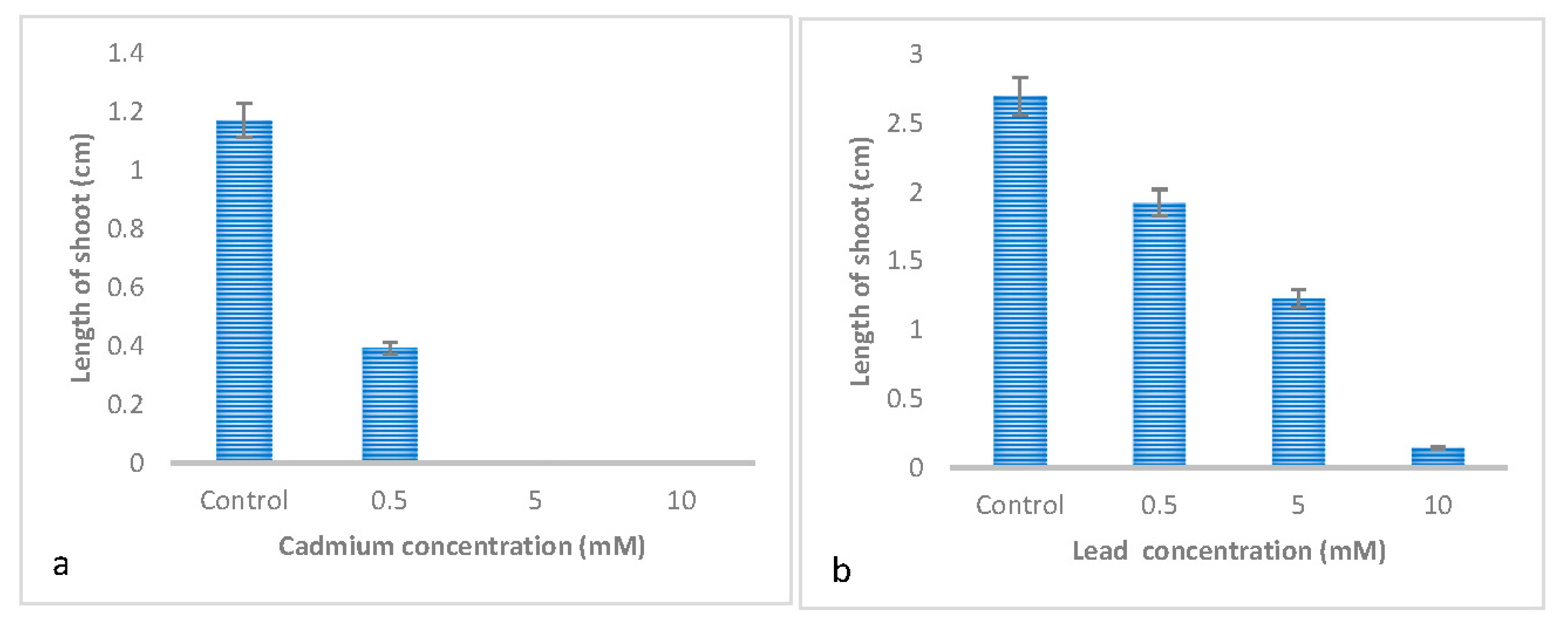
Figure 6.
Effect of metal concentration on early growth metrics (white clover). Each bar indicates means of 3 replicates ± standard error.
Figure 6.
Effect of metal concentration on early growth metrics (white clover). Each bar indicates means of 3 replicates ± standard error.
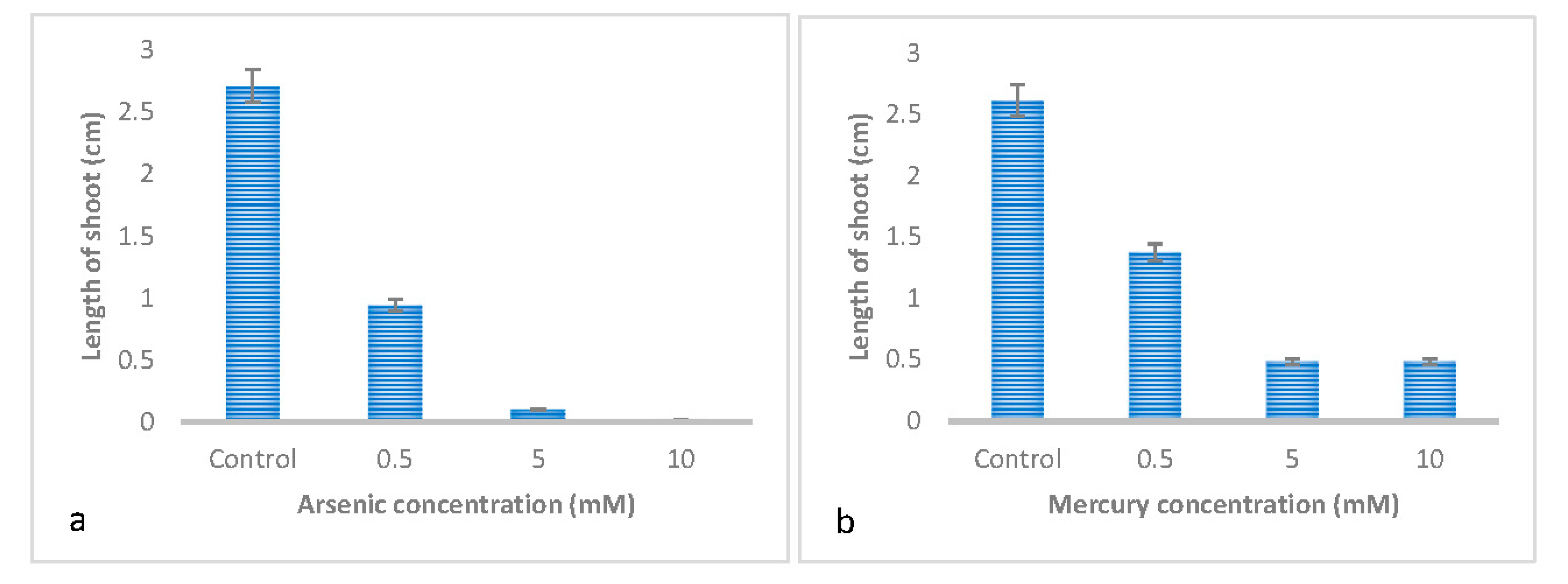
Figure 7.
Effect of metal concentration on early growth metrics (white clover). Each bar indicates means of 3 replicates ± standard error.
Figure 7.
Effect of metal concentration on early growth metrics (white clover). Each bar indicates means of 3 replicates ± standard error.
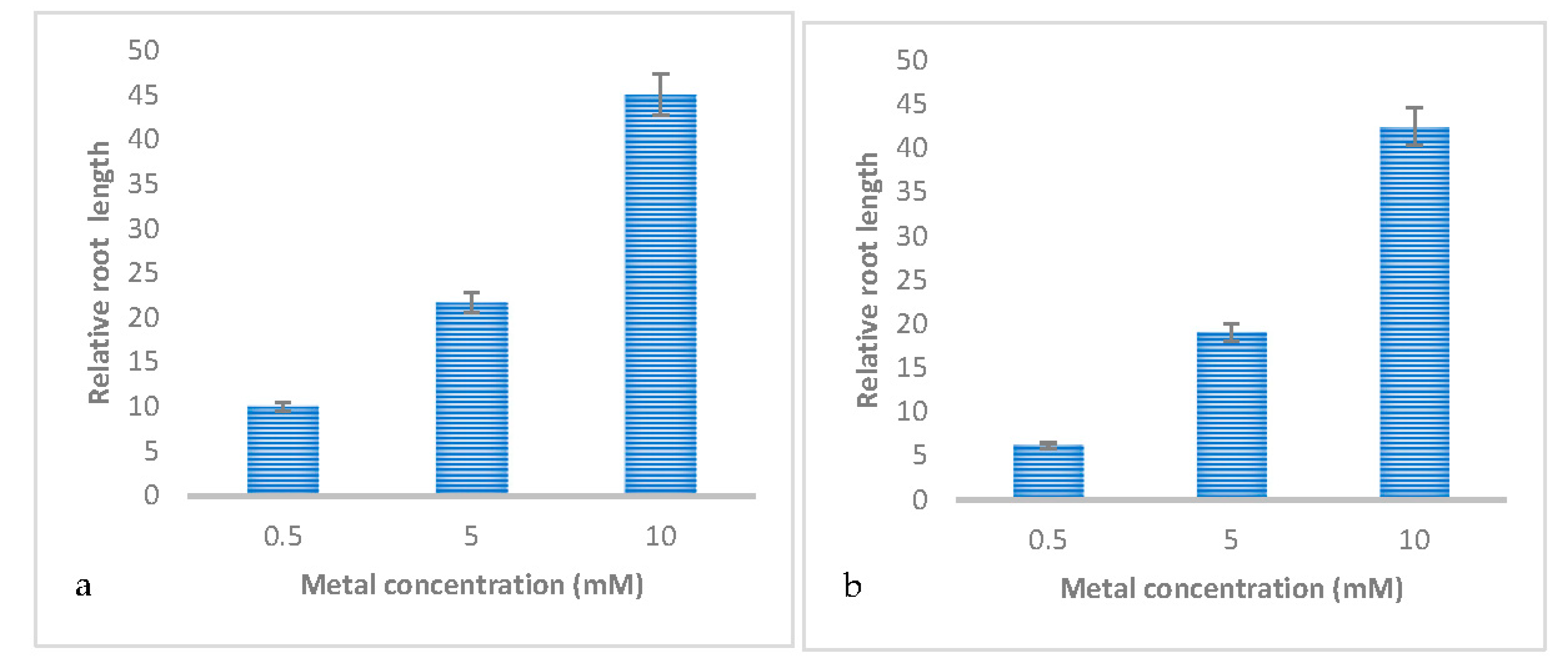
Table 1.
Combine effect of metal type and concentration on parameters tested.
| Effect | Value | F | Hypothesis df | Error df | Sig. | |
|---|---|---|---|---|---|---|
| Intercept | Pillai's Trace | 1 | 24544.908b | 11 | 2 | <.001 |
| Wilks' Lambda | 0 | 24544.908b | 11 | 2 | <.001 | |
| Hotelling's Trace | 134997 | 24544.908b | 11 | 2 | <.001 | |
| Roy's Largest Root | 134997 | 24544.908b | 11 | 2 | <.001 | |
| Metals | Pillai's Trace | 2.993 | 153.676 | 33 | 12 | <.001 |
| Wilks' Lambda | 0 | 545.683 | 33 | 6.596 | <.001 | |
| Hotelling's Trace | 19557.32 | 395.097 | 33 | 2 | 0.003 | |
| Roy's Largest Root | 11390.94 | 4142.159c | 11 | 4 | <.001 | |
| Conc | Pillai's Trace | 1.981 | 27.832 | 22 | 6 | <.001 |
| Wilks' Lambda | 0 | 147.271b | 22 | 4 | <.001 | |
| Hotelling's Trace | 12762.89 | 580.131 | 22 | 2 | 0.002 | |
| Roy's Largest Root | 12712.15 | 3466.951c | 11 | 3 | <.001 | |
| Metals * Conc | Pillai's Trace | 5.215 | 4.226 | 66 | 42 | <.001 |
| Wilks' Lambda | 0 | 21.012 | 66 | 16.158 | <.001 | |
| Hotelling's Trace | 13629.36 | 68.835 | 66 | 2 | 0.014 | |
| Roy's Largest Root | 13320.92 | 8476.947c | 11 | 7 | <.001 |
Table 3.
Effect of metal type on the parameters tested.
| Metals | Cadmium | Lead | Arsenic | Mercury |
|---|---|---|---|---|
| Shoot length | 0.126 ± 0.057 c | 1.101 ± 0.057 a | 0.354 ± 0.057 b | 0.861 ± 0.057 a |
| Root length | 0.022±0.061 c | 0.351±0.061 b | 0.097±0.061 c | 0.625±0.061 a |
| Control shoot | 2.687±0.033a | 2.687±0.033a | 2.687±0.033a | 2.688±0.033a |
| Control root | 1.128±0.039a | 1.128±0.039a | 1.128±0.039a | 1.128±0.039a |
| GR | 18.849±6.483b | 27.877±6.483b | 26.885±6.483b | 79.984±6.483a |
| GI | 12.029±0.803c | 17.517±0.803b | 34.916±0.803a | 10.733±0.803c |
| Control GI | 20.743±0a | 20.743±0a | 20.743±0a | 20.743±0a |
| MGT | 90.539±5.359b | 141.465±5.359a | 136.515±5.359a | 136.515±5.359a |
| VI | 1.962±6.475b | 18.954±6.475b | 12.172±6.475b | 79.984±6.475a |
| VI control | 55.746±0.69a | 55.746±0.69a | 55.746±0.69a | 55.746±0.69a |
| RGI | 57.989±3.871c | 84.451±3.871b | 168.327±3.871a | 51.745±3.871c |
| RVI | 3.486±11.083b | 33.714±11.083b | 21.611±11.083b | 141.775±11.083a |
| RRL | 2.248±6.212b | 34.049±6.212a | 9.847±6.212b | 56.272±6.212a |
| RSL | 4.634±1.96c | 40.603±1.96a | 13.039±1.96b | 31.947±1.96a |
Mutivariate analysis values expressed as mean ± standard error. Different superscript letters within each row indicate significant differences (P < 0.05) at confident intervals 95%.
Table 4.
Effect of metal concentration on parameters tested.
| Conc | 0.5mM | 5mM | 10mM |
|---|---|---|---|
| Shoot length | 0.164±0.049c | 0.515±0.049b | 1.153±0.049a |
| Root length | 0.118±0.053b | 0.27±0.053ab | 0.4330.053a |
| Control shoot | 2.648±0.029a | 2.7±0.029a | 2.715±0.029a |
| Control root | 1.171±0.034a | 1.252±0.034a | 0.96±0.034b |
| Germination rate | 17.634±5.614b | 35.553±5.614b | 62.009±5.614a |
| Germination index | 16.179±0.695b | 18.162±0.695b | 22.055±0.695a |
| Control germination index | 20.743±0a | 20.743±0a | 20.743±0a |
| Mean germination time | 123.258±4.641a | 123.058±4.641a | 132.459±4.641a |
| Relative vigor | 1.544±9.598c | 42.048±9.598b | 106.848±9.598a |
| Relative germination index | 78±3.352b | 87.556±3.352b | 106.327±3.352a |
| Control vigor | 54.925±0.597a | 56.006±0.597a | 56.308±0.597a |
| Vigor | 0.859±5.607c | 23.783±5.607b | 60.162±5.607a |
| Relative shoot length | 6.16±1.697b | 19.05±1.697b | 42.457±1.697a |
| Relative root length | 10.047±5.38b | 21.692±5.38b | 45.073±5.38a |
Multivariate analysis values presented as mean ± standard error. Different superscript letters within each row indicate significant differences (P < 0.05) at confident intervals 95%.
Disclaimer/Publisher’s Note: The statements, opinions and data contained in all publications are solely those of the individual author(s) and contributor(s) and not of MDPI and/or the editor(s). MDPI and/or the editor(s) disclaim responsibility for any injury to people or property resulting from any ideas, methods, instructions or products referred to in the content. |
© 2025 by the authors. Licensee MDPI, Basel, Switzerland. This article is an open access article distributed under the terms and conditions of the Creative Commons Attribution (CC BY) license (http://creativecommons.org/licenses/by/4.0/).
Copyright: This open access article is published under a Creative Commons CC BY 4.0 license, which permit the free download, distribution, and reuse, provided that the author and preprint are cited in any reuse.


