

Submitted:
11 November 2025
Posted:
12 November 2025
Read the latest preprint version here
Abstract
The sound absorption efficiency of the wood based sandwich panels with reinforced bas-alt fiber reinforced (BFRP), glass fiber reinforced (GFRP), and jute fabric composite materi-als and evaluate their potential as acoustic panels were investigated. Four experimental groups were created. Wood based sandwich panels were reinforced with BFRP (Group A), jute fabric (Group B), GFRP (Group C), and unreinforced (Group D). The sound absorption coefficients of the unreinforced and experimental groups were tested via the impedance tube method, according to ASTM standard E1050 (2006). Attention was paid to the acoustic behavior at low frequencies (200 Hz to 800 Hz), mid frequencies (1000 Hz to 1600 Hz), and high frequencies (1800 Hz to 2400 Hz). The sound absorption coefficient was highest in sapwood at 200 Hz frequency level with 0.67, while the highest in heartwood was 0.05 at 2400 Hz frequency level. It can be suggested that the experimental groups be used as sound absorbing acoustic panels.
Keywords:
sound absorption coefficient
; acoustic properties
; industrial design
1. Introduction
Wood-based sandwich panels (WBSPs) have experienced significant technological and scientific advancements over the past several decades. Initially developed in the mid-20th century as lightweight and thermally efficient structural materials, WBSPs were designed to provide sustainable alternatives to traditional construction components. Early investigations primarily focused on understanding their basic mechanical performance and potential as energy-efficient building elements. Fundamental studies in the late 20th century [1] clarified the structural behavior of sandwich panels under different stress states, including bending, compression, and shear, thereby establishing the theoretical foundation for modern applications. With the progress of material science, polymer chemistry, and adhesive technologies, the functionality of these composites has been remarkably enhanced. More recently, sustainability-driven innovations have introduced new adhesives and core materials derived from recycled or renewable resources, aligning WBSP development with circular economy principles.
The layered structure of WBSPs provides distinct mechanical and thermal advantages. Typically consisting of two stiff outer face sheets bonded to a lightweight core via an adhesive, the design enables the efficient transfer of loads while maintaining low mass. The outer faces primarily bear bending and tensile stresses and protect the core from external damage, while the core acts as a shear-resistant element that distributes stresses between the facings [2]. As a result, WBSPs demonstrate a unique combination of high mechanical strength, good thermal insulation, and low density, offering significant benefits such as reduced transportation costs and simplified installation. Moreover, the use of wood — a renewable and carbon-sequestering resource — directly supports global sustainability targets, contributing to reduced greenhouse gas emissions and resource-efficient construction [3,4].
One of the key performance parameters for WBSPs is the strength-to-density ratio, which reflects the structural efficiency of the panel by integrating its mechanical properties and mass. Studies have shown that in plywood-based sandwich panels, variations in veneer thickness or orientation ratios significantly influence stress distribution, stiffness, and flexural behavior. Increasing the proportion of parallel-oriented veneer sheets typically enhances panel rigidity and overall bending resistance [7]. Compared with conventional materials such as solid wood, concrete, and steel, WBSPs exhibit considerably higher specific strength values [5]. This feature makes them ideal for modern lightweight construction, prefabricated housing, and furniture applications where both strength and portability are essential [6].
From a manufacturing standpoint, WBSPs can be fabricated using either discontinuous or continuous processes. Discontinuous production methods generally involve the lamination of pre-expanded foam cores onto prefabricated facings such as thin veneers, particleboard, MDF, or plywood. Although this multi-stage process is relatively slow, it enables the use of wood fiber-based facings that cannot be processed continuously due to dimensional constraints [10]. Continuous production techniques, on the other hand, are more suitable for foam-core or thin-layer composites, facilitating uniform quality and scalability. Based on their core design, WBSPs are generally categorized as hollow-core or solid-core structures. Hollow-core configurations, often incorporating geometric cavities or lattice reinforcements, enable significant weight reduction and increased specific stiffness. In contrast, solid-core structures utilize homogeneous or particulate lightweight materials—such as cork, low-density wood, or polymer foams—offering simpler fabrication routes [6].
Recent research has expanded the range of core materials used in WBSPs, including low-density wood fiber [11,12], plywood [13,14,15,16], wood strips [17], cork [6], wooden dowel lattices [18], corrugated cardboard [19,20], and 3D-shaped wood strands [21]. Other works have incorporated polymeric or hybrid cores such as balsa wood, polypropylene honeycomb, and polystyrene foam [22], as well as advanced combinations like balsa/glass-epoxy [23], jute/epoxy–cork [24], aluminum honeycomb–balsa hybrids [25], paulownia or southern pine wood cores with glass fiber-reinforced polymer (GFRP) skins [26,27,28], and thermoplastic GF/PP composite layers bonded to plywood [27]. Such diversification reflects the increasing effort to tailor mechanical, thermal, and acoustic performance by optimizing the interface between organic (wood-based) and polymeric (synthetic or natural fiber) components.
Among the various reinforcing strategies, fiber-reinforced polymers (FRPs) have gained significant attention due to their high strength-to-weight ratio, corrosion resistance, and versatile bonding compatibility with wood substrates. FRPs are composite materials consisting of high-strength fibers embedded in a polymer matrix. Common fibers include glass (GFRP), basalt (BFRP), carbon (CFRP), and aramid (AFRP) [32]. The reinforcement of WBSPs with FRPs effectively enhances stiffness, load-bearing capacity, and flexural strength while maintaining lightweight characteristics. For instance, Keller et al. [33] successfully developed and validated a GFRP–balsa sandwich bridge deck that met serviceability criteria for load-bearing applications. Shi et al. [34] reported pseudo-ductile flexural behavior in wood-core sandwich beams reinforced with GFRP skins and lattice webs, while Nadir et al. [35] demonstrated that FRP sheets significantly improve the mechanical performance of laminated wood beams. Likewise, studies by Qi et al. [28], Almutairi et al. [36], and Szwajka et al. [37] confirmed that GFRP and CFRP reinforcements can substantially enhance flexural rigidity, bending strength, and energy absorption. Li et al. [38] also examined fiberglass-faced foam-core panels, highlighting the mechanical failure mechanisms and the role of polymer–wood interfacial bonding.
While most studies have focused on the mechanical and structural performance of FRP-reinforced WBSPs, there is growing recognition that the acoustic properties of such composites are equally important, particularly in modern architectural applications. Increasing urbanization has intensified the demand for sound-absorbing, noise-reducing, and vibration-damping materials [39]. Owing to its natural porosity and anisotropic structure, wood inherently exhibits favorable acoustic properties, including the ability to absorb and diffuse sound waves [40,41]. The directionality of fibers plays a crucial role in sound conductivity—longitudinally oriented fibers transmit sound more effectively, whereas transverse orientations enhance absorption [42]. Acoustic parameters such as sound absorption, sound insulation, and noise reduction coefficients are therefore critical for evaluating the suitability of wood composites in interior environments [43].
Studies have shown that porous and fibrous materials can improve sound clarity, reduce reverberation time, and increase speech intelligibility in enclosed spaces such as theatres, concert halls, and conference rooms [44,45,46]. The sound absorption coefficient of wood-based materials generally increases with higher internal porosity, rougher surface texture, and lower density [47,48]. Research on related composites has revealed that carbon fiber materials tend to reflect or transmit low-frequency (bass) sound waves rather than absorb them [49]. Conversely, bark-based insulation panels [50], plywood–carbon fiber composites [51], and rice stick–wood splinter boards [52] demonstrated enhanced sound absorption across mid and high frequencies. The acoustic efficiency of wooden materials also depends on species type, fiber structure, and surface geometry; for instance, perforated panels of Scots pine have shown superior absorption between 400 and 1000 Hz compared to flat panels or denser hardwood species [53,54].
The aim of this study is to investigate the sound absorption performance of wood-based sandwich panels with reinforced BFRP, GFRP, and jute fabric at low (bass), medium, and high (treble) frequencies (Hz). There is no comprehensive research in the literature on the acoustic properties of wood-based sandwich panels produced using BFRP, GFRP, and jute fabric. Consequently, this study makes a significant original scientific contribution to the field.
2. Materials and Methods
2.1. Materials
The materials used for face layer and bottom layer was 4 mm thickness poplar plywood (PPWD) produced from three types of veneer that is widely used in the furniture industry (Figure 1a). As the core layer materials, 9 mm thickness oriented strand borads (OSB-2 class) were used (Figure 1a). These materials were obtained by random selection from Usak 1 September industrial site market.
The adhesive used was one component polyurethane adhesive (Apel Kimya Industrial Industry and Trade Company, Istanbul, Turkey) (Figure 1b). As the fiber reinforced polymers (FRP) materials, the BFRP, and GFRP for 200 gr/m2 (Dost Kimya Industrial Raw Materials Industry and Trading Company, Istanbul, Turkey). and and jute fabric for for 265 gr/m2 (Polatoglu Garden-Agriculture-Hardware Company in Turkey) used in the study (Figure 1c). Density of the materials used in the production of wood-based sandwich panels are presented in Table 1.
The BFRP values of young’s modulus, tensile strength, and elongation to fracture were 89 GPa, 2800 MPa, 3.15 % respectively [55]. The GFRP and Jute Fabric values of young’s modulus, tensile strength, and elongation to fracture were 70 GPa, and 26.5 GPa, 2000-3500 MPa and 393-773 MPa, 0.9% and 1.8%, respectively [56].
At a temperature of 20°C, the density of the material is measured to be 1.11 ± 0.02 g/cm3, while at 25°C, the viscosity is determined to be 14.000 ± 3.000 mPas, When exposed to an environment with a temperature of 20°C ± 2 and a relative humidity of 65 ± 3, the material undergoes hardening within a time frame of 30 minutes.
2.2. Preparation of Test Samples
The OSB-2 panels and 4 mm thickness PPWD were precisely cut into 31 pieces per panel, each measuring 162 × 1700 ± 1 mm using a CNC machine (Figure 2a). For interlayer samples, two layer of reinforced materials (BFRP, GFRP, and Jute Fabric) were used for intermediate support between OSB and plywood layers. Approximately 200 g/m2 of adhesives were used for surface (Figure 2b). The samples, which consisted of three layers, were placed into a hydraulic press (Hydraulic Veneer SSP-80; ASMETAL Wood Working Machinery Industry Inc., Ikitelli, Istanbul, Turkey) at room temperature (Figure 2c). The press exerted a pressure of approximately 1.5 N/mm2 at 25 °C for 3 h. As a result, the test samples were produced in cold pressure at 20 ± 2 °C and 65 ± 5% relative humidity. The pressing of samples in the are shown in Figure 2d. Test specimens were named according to the species as the face, PPWD abbreviated as BP, and PP, respectively. For the cork board, OSB-2 class, abbreviated as O. For the FRP materials, BFRP, GFRP, and fabric jute were abbreviated as B, G, and J, respectively. The layers are arranged as shown Figure 3. Based on these combinations, a total of 12 types wood-based sandwich panels were manufactured in Table 2.
After the test samples (A, B, C, D groups) were conditioned at a temperature of 20 °C ± 3 °C and a relative humidity of 65%.
2.3. Test Method
The air-dried density test samples were prepared according to TS EN 323/1 [57], standards. All specimens (10 replications for each sample group) were prepared for each property. The air-dry densities (δ12) of these specimens were calculated using the following Eq. 1,
where δ₁₂ denotes the air-dry density in grams per cubic centimeter (g/cm³), M₁₂ is the air-dry mass in grams (g), and V₁₂ is the air-dry volume in cubic centimeters (cm³).
Determinations of sound absorption coefficients of (SAC) of the wood based sandwich panels produced in this study were performed based on the ASTM E 1050 - 19 [58] standard. The wood composite panels were precisely cut into the required dimensions for testing using a Computer Numerical Control (CNC) machine to ensure accurate and consistent sample preparation (Figure 4a). The impedance tube (BSWA TECH SW422) method was used. According to this standard, the sound absorption coefficients of the test specimens prepared with a diameter of 30 mm in the frequency bands from 0 Hz to 2400 Hz were determined. The test specimens and impedance tube that were used to determine the sound absorption coefficient are shown in Figure 4b,c.
The impedance tube can measure low frequencies (0 to 2400 Hz) with high frequencies with a small diameter tube (29.95 mm). The acoustic performance of the wood based sandwich composites across different frequency ranges low (bass), mid, and high (treble) frequencies were evaluated by measuring the SAC over a frequency range of 0 Hz to 2000Hz. The measurements were carried out using an impedance tube setup, where the samples were exposed to incident sound waves, and the absorbed, transmitted, and reflected sound pressures were recorded to calculate the SAC values. Each composite sample was tested at least three times. This refers to the testing of ten different samples of the same formula, with the objective of ensuring reproducibility. By repeating the tests on distinct samples, the aim was to verify that the results were consistent across different specimens, thus ensuring the robustness and repeatability of the findings. The obtained SAC values were analyzed to assess the acoustic performance of the materials across the specified frequency range.
2.4. Data Analyses
The multiple variance analysis was performed to determine the differences among the factors (wood-based panel types, fiber reinforced polymers types) by using the SPSS program (Statistical Software, a computer-based statistical package) program, version 22. It was determined with the Tukey test if there is a meaningful difference among the groups.
3. Results and Discussion
When Table 3, Table 4 and Table 5 were examined in detail, the results of the ANOVA in the tables showed that the differences reinforcement designs had significant (a p-value less than 0.05) effects on the sound absorption coefficient values. The sound absorption coefficient (SAC) values of the experimental groups were higher than the SAC values of the B group. It was determined that the acoustic performances of the reinforced wood based sandwich panels had improved. In general, it was determined that the sound absorption coefficient values of the composite materials increased as the frequency increased. While the highest sound absorption performance was measured in the A group, the lowest sound absorption performance was measured in the B group.
The values of the wood based sandwich panels reinforced FRP’s were higher than the SAC values of the B group. A direct relationship was observed between the increase in frequency and the enhancement in sound absorption coefficient. It was determined that the acoustic performances of the FRP’s had improved. The acoustic performance of the produced composite materials at low (bass), medium, and high (treble) frequencies is presented in Figure 5, Figure 6, and Figure 4, respectively.
Table 3 and Figure 5 indicates that the SAC values (the highest) for the A, B, C, and D groups within the 200 Hz to 800 Hz frequency range were measured as 0.67, 0.48, 0.53, and 0.55, respectively. These results indicate that the highest sound absorption performance was achieved by Group A. It is understood that the sound absorption performance of wood based sandwich panels with FRP’s composite materials low (bass) frequencies is sufficient. It was determined that the composite materials absorbtion a significant portion of sound waves at low (bass) frequencies.
Low (bass) frequency sound waves have longer wavelengths and generally require thicker, more porous, or flexible materials to be effectively absorbed. Plywood, OSB, and FRP’s, while providing strength and rigidity to the composite, are likely to exhibit relatively high stiffness and low porosity. These characteristics limit their ability to dissipate the energy of lower frequency sound waves through friction or internal damping. Additionally, the laminated structure may lack the necessary thickness or compliance to induce sufficient air movement or create resonant cavities that enhance low-frequency absorption. To enhance the low (bass) frequency absorption characteristics, several strategies could be considered in future work. For instance, increasing the composite thickness could create a deeper structure that absorbs more sound in the bass range. Additionally, integrating perforated or porous designs, or combining the composite with other damping materials such as rubber or polyurethane foam, could significantly improve low-frequency sound absorption.
Figure 5.
Middle frequency SAC values of the A, B, C and D groups.
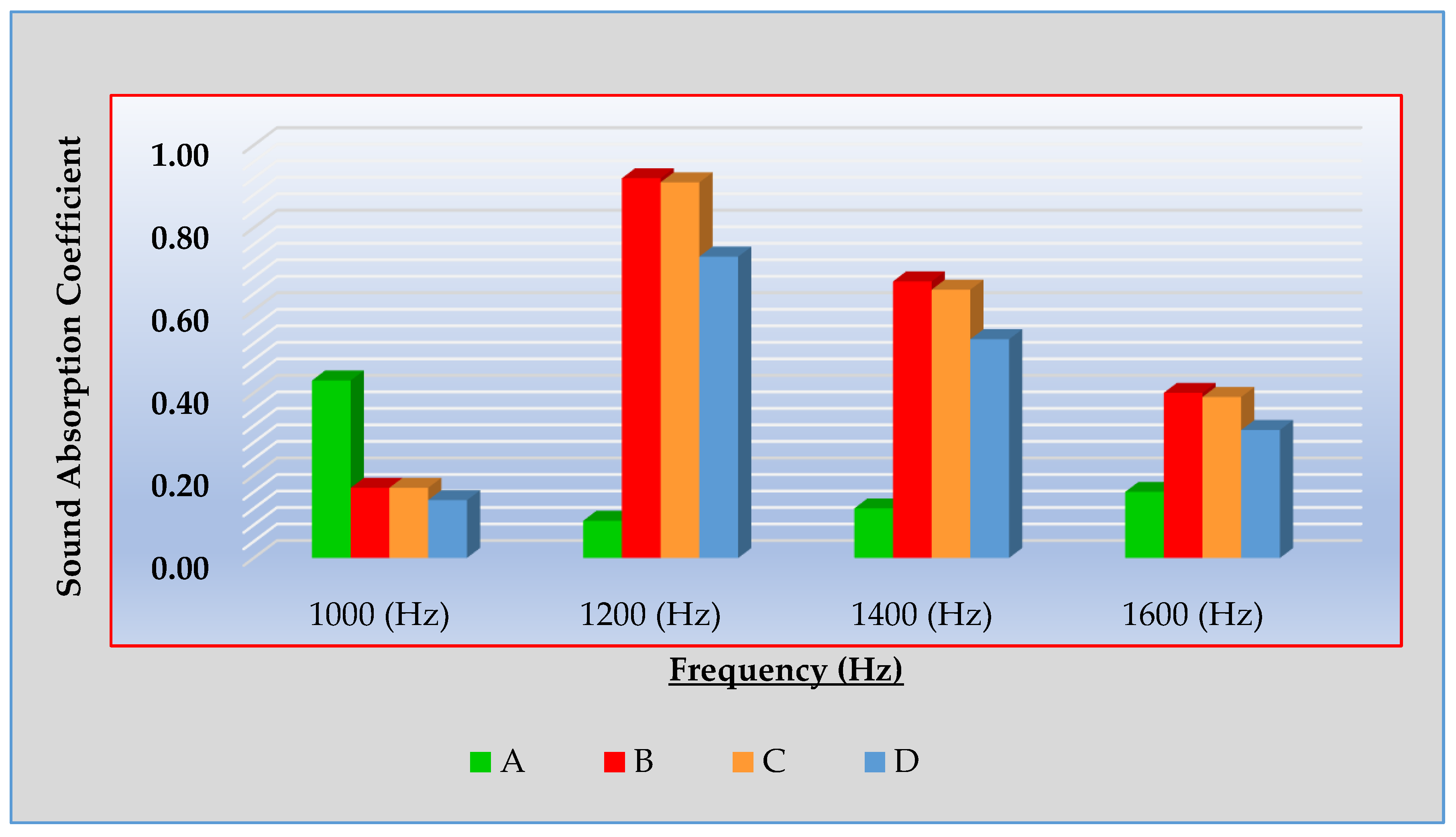
A close examination of Figure 6 revealed that the maximum sound absorption coefficient (SAC) values in the mid-frequency range (1000–1600 Hz) for groups A, B, C, and D were 0.44, 0.85, 0.51, and 0.37 at 1000 Hz, 1200 Hz, 1400 Hz, and 1600 Hz, respectively. The composite materials in the B group primarily reflected or transmitted sound waves within this frequency range, indicating limited absorption capability. In contrast, the incorporation of fiber-reinforced polymers (FRPs) significantly enhanced the acoustic performance of the composites.
The hybrid structure of the plywood–FRP–OSB composite improves its ability to dissipate acoustic energy through increased internal friction. Both plywood and OSB, as natural wood-based materials, possess inherently porous microstructures that facilitate sound absorption, particularly in the mid-frequency range where sound waves interact with internal voids, fibers, and particles. This interaction leads to the conversion of acoustic energy into heat through frictional losses. Moreover, the acoustic impedance mismatch between the plywood, OSB, and FRP layers induces multiple internal reflections and scattering of sound waves, thereby promoting additional energy dissipation. The FRP reinforcement also introduces further internal interfaces that disrupt sound propagation, collectively contributing to an improved sound absorption capacity of the composite system.
A detailed analysis of Figure 7 indicates that groups A, B, C, and D exhibited relatively low sound absorption efficiency in the high-frequency (treble) range. The wood-based sandwich panels reinforced with FRP composites showed the lowest sound absorption performance at 2400 Hz within the 1800–2400 Hz frequency band. The measured sound absorption coefficients (SAC) for groups A, B, C, and D were 0.14, 0.15, 0.21, and 0.06, respectively.
Recent studies in the literature have investigated the sound absorption performance of carbon fiber–based materials, particularly at low (bass) frequencies, and have shown that these materials predominantly transmit or reflect incident sound waves [49,51,59] 2025). The results indicated that the sound absorption performance of carbon fiber composites is generally inadequate in the low-frequency range [51]. In contrast, a study examining the acoustic performance of carbon fiber materials in the mid-frequency range (315–1600 Hz) reported that approximately 40% of the sound waves were absorbed within this frequency band [49].In another investigation, laminated wood composite panels were fabricated using poplar veneer, PVAc adhesive, natural rubber, elastomeric sponge, felt, and linoleum, and their sound absorption behavior was evaluated. The reinforced laminated wood composites exhibited significantly higher sound absorption performance compared to the control samples [59]. Multiple studies have similarly demonstrated that reinforced laminated wood (RLW) composite materials possess markedly improved acoustic properties. These findings suggest that incorporating advanced materials and innovative lamination designs can effectively enhance the sound absorption capabilities of RLW composites [59-60].
The findings of the present research contribute to the existing body of knowledge in wood material science and acoustics by introducing a novel hybrid composite that integrates plywood with carbon fiber. This hybrid configuration demonstrates enhanced acoustic performance relative to traditional plywood, thereby representing a new direction in the development of sound-absorbing structural materials that bridge the gap between conventional wood-based systems and modern composite technologies.
4. Conclusions
In this study, the sound absorption performance of wood-based sandwich panels reinforced with basalt fiber-reinforced polymer (BFRP), glass fiber-reinforced polymer (GFRP), and jute fabric was investigated across low (bass), medium, and high (treble) frequency ranges. The results demonstrated that the jute-fabric-reinforced panels exhibited the highest overall sound absorption coefficients among the tested composites. Significant differences were observed between the sound absorption coefficients of the FRP-based panels, depending on the frequency level. Specifically, the maximum sound absorption of the B group occurred at 1200 Hz, whereas the lowest absorption coefficients for the A and D groups were recorded at 2400 Hz.
Furthermore, the plywood–carbon fiber composites showed a tendency to reflect or transmit sound waves predominantly at low frequencies, while exhibiting enhanced sound absorption capacity at higher frequencies. The highest sound absorption performance of the FRP-reinforced panels was observed at 200 Hz. Overall, the acoustic properties of the experimental composites improved considerably, confirming that BFRP, GFRP, and jute fabric are effective reinforcements for the development of sound-insulating materials.
These findings indicate that wood-based sandwich panels reinforced with FRP composites possess promising potential for applications in furniture manufacturing and wood-based structural systems due to their superior acoustic insulation performance. The present study provides a foundation for future research on the design and optimization of advanced wood-based composites with tailored acoustic characteristics for engineering and architectural applications.
Author Contributions
Conceptualization: K.A.; Data curation: K.A.; Formal analysis: K.A.; Funding acquisition: Y.H.; Investigation: Y.H; Methodology: K.A.; Writing—original draft: K.A.; Writing—review &editing: Y.H. All authors have read and agreed to the published version of the manuscript.
Data Availability Statement
Original contributions to this study are included in the article. For further inquiries, please contact the corresponding author directly.
Conflicts of Interest
The authors declare no conflict of interest.
References
- Zenkert, D. An Introduction to Sandwich Structures, 2nd ed.; Dan Zenkert: Stockholm, Sweden, 1995. [Google Scholar]
- Wei, P.; Chen, J.; Zhang, Y.; Pu, L. Wood-based sandwich panels: A review. Wood Res. 2021, 66, 875–890. [Google Scholar] [CrossRef]
- Bais-Moleman, A.L.; Sikkema, R.; Vis, M.; Reumerman, P.; Theurl, M.C.; Erb, K.-H. Assessing wood use efficiency and greenhouse gas emissions of wood product cascading in the European Union. J. Clean. Prod. 2018, 172, 3942–3954. [Google Scholar] [CrossRef]
- Myllyviita, T.; Soimakallio, S.; Judl, J.; Seppälä, J. Wood substitution potential in greenhouse gas emission reduction Review on current state and application of displacement factors. For. Ecosyst. 2021, 8, 42. [Google Scholar] [CrossRef]
- Smardzewski, J. Experimental and numerical analysis of wooden sandwich panels with an auxetic core and oval cells. Mater. Des. 2019, 183, 108159. [Google Scholar] [CrossRef]
- Lakreb, N.; Bezzazi, B.; Pereira, H. Mechanical behavior of multilayered sandwich panels of wood veneer and a core of cork agglomerates. Mater. Des. (1980–2015) 2015, 65, 627–636. [Google Scholar] [CrossRef]
- Smardzewski, J.; Krzyz˙aniak, Ł.; Wojciechowski, K.W.; Pelin´ski, K.; Tretiakov, K.V.; Narojczyk, J.W. Bending performance and failure behavior of wooden sandwich panels with corrugated cores. Phys. Status Solidi B 2022, 259, 2200423. [Google Scholar] [CrossRef]
- Labans, E.; Kalnins, K. Experimental validation of the stiffness optimisation for plywood sandwich panels with rib-stiffened core. Wood Res. 2014, 59, 793–802. [Google Scholar]
- Monteiro, S.; Martins, J.; Magalhães, F.D.; Carvalho, L. Lightweight wood composites: Challenges, production and performance. In Lignocellulosic Composite Materials; Kalia, S., Ed.; Springer International Publishing: Cham, Switzerland, 2018; pp. 293–322. ISBN 978-3-319-68696-7. [Google Scholar]
- Barbu, M.C.; Lüdtke, J.; Thömen, H.; Welling, J. Innovative production of wood-based lightweight panels. In Processing Technologies for the Forest and Biobased Products Industries; Barbu, M.C., Ed.; Salzburg University of Applied Sciences: Kuchl, Australia, 2010; pp. 115–122. [Google Scholar]
- Fernandez-Cabo, J.L.; Majano-Majano, A.; San-Salvador Ageo, L.; Ávila-Nieto, M. Development of a novel façade sandwich panel with low-density wood fibres core and wood-based panels as faces. Eur. J. Wood Wood Prod. 2011, 69, 459–470. [Google Scholar] [CrossRef]
- Zhang, Y.; Yu, Z.M.; Shan, F.R.; Shang, J.B. Characteristic and prediction model of vertical density profile of fiberboard with fiberboard with “pretreatment-hot pressing” united technology. Wood Res. 2012, 57, 613–630. [Google Scholar]
- Chen, Z.; Yan, N.; Deng, J.; Smith, G. Flexural creep behavior of sandwich panels containing kraft paper honeycomb core and wood composite skins. Mater. Sci. Eng., A 2011, 528, 5621–5626. [Google Scholar] [CrossRef]
- Chen, Z.; Yan, N. Investigation of elastic moduli of kraft paper honeycomb core sandwich panels. Composites Part B 2012, 43, 2107–2114. [Google Scholar] [CrossRef]
- Labans, E.; Kalniņs, K. Experimental validation of the stiffness optimization for plywood sandwich panels with rib-stiffened core. Wood Res. 2014, 59, 793–802. [Google Scholar]
- Susainathan J, Eyma F, De Luycker E, Cantarel A, Castanié, B. Manufacturing and quasi-static bending behavior of wood-based sandwich structures. Compos. Struct. 2017, 182, 487–504. [Google Scholar] [CrossRef]
- Li, J.H.; Hunt, J.F.; Gong, S.Q.; Cai, Z.Y. Simplified analytical model and balanced design approach for light-weight wood-based structural panel in bending. Compos. Struct. 2016, 136, 16–24. [Google Scholar] [CrossRef]
- Jin, M.; Hu, Y.; Wang, B. Compressive and bending behaviours of wood-based two-dimensional lattice truss core sandwich structures. Compos. Struct. 2015, 124, 337–344. [Google Scholar] [CrossRef]
- Russ, A.; Schwartz, J.; Boháček, Š.; Lübke, H.; Ihnát, V.; Pažitný, A. Reuse of old corrugated cardboard in constructional and thermal insulating boards. Wood Res. 2013, 58, 505–510. [Google Scholar]
- McCracken, A.; Sadeghian, P. Corrugated cardboard core sandwich beams with bio-based flax fiber composite skins. J. Build. Eng. 2018, 20, 114–122. [Google Scholar] [CrossRef]
- Mohammadabadi, M. , Yadama, V. , Yao, L., Bhattacharyya, D., 2018: Low-velocity impact response of wood-strand sandwich panels and their components. Holzforschung 2018, 72, 681–689. [Google Scholar]
- Wang, H.; Ramakrishnan, K.R.; Shankar, K. Experimental study of the medium velocity impact response of sandwich panels with different cores. Mater. Des. 2016, 99, 68–82. [Google Scholar] [CrossRef]
- Abdalsalm, S.O. Impact damage analysis of balsa wood sandwich composites Thesis USA: Wayne state university; 2013.
- Petit, S.; Bouvet, C.; Bergerot, A.; Barrau, J.J. Impact and compression after impact ex perimental study of a composite laminate with a cork thermal shield. Compos. Sci. Technol. 2007, 67, 3286–3299. [Google Scholar] [CrossRef]
- Shin, K.B.; Lee, J.Y.; Cho, S.H. An experimental study of low-velocity impact responses of sandwich panels for Korean low floor bus. Compos. Struct. 2008, 84, 228–40. [Google Scholar] [CrossRef]
- Zhu, D.; Shi, H.; Fang, H.; Liu, W.; Qi, Y.; Bai, Y. Fiber reinforced composites sandwich panels with web reinforced wood core for building floor applications. Composites, Part B 2018, 150, 196–211. [Google Scholar] [CrossRef]
- Edgars, L.; Kaspars, Z.; Kaspars, K. Structural performance of wood based sandwich panels in four point bending. Procedia Engineering 2017, 172, 628–633. [Google Scholar] [CrossRef]
- Qi, Y.; Fang, H.; Shi, H.; Liu, W.; Qi, Y.; Bai, Y. Bending performance of GFRP-wood sandwich beams with lattice-web reinforcement in flatwise and sidewise directions. Construct. Build. Mater. 2017, 156, 532–45. [Google Scholar] [CrossRef]
- Hiziroglu, S. Some properties of sandwich type composite panels manufactured from eastern redcedar. Composites Part B 2012, 43, 3288–3292. [Google Scholar] [CrossRef]
- Russo, A. ; Zuccarello. B. Experimental and numerical evaluation of the mechanical behaviour of GFRP sandwich panels, Compos. Struct. 2007, 81, 575–586. [Google Scholar]
- Osei-Antwi, M.; de Castro, J.; Vassilopoulos, A.P.; Keller, T. Modeling of axial and shear stresses in multilayer sandwich beams with stiff core layers, Compos. Struct. 2014, 116, 453–460. [Google Scholar]
- Wang, Z.Q.; Lu, X.; N. ; Huang, X.J. Reinforcement of laminated veneer lumber with ramie fibre. Adv. Mater. Res. 2011, 332, 41–44. [Google Scholar]
- Keller, T.; Rothe, J.; Castro, J.D.; Osei-Antwi, M. GFRP-balsa sandwich bridge deck concept, design and experimental validation. J. Compo.s Construct. 2014, 18, 301–310. [Google Scholar] [CrossRef]
- Shi, H.; Liu, W.; Fang, H.; Bai, Y.; Hui, D. Flexural responses and pseudo-ductile perfor mance of lattice-web reinforced GFRP-wood sandwich beams. Compos. B Eng. 2017, 108, 364–376. [Google Scholar] [CrossRef]
- Nadir Y, Nagarajan P, Ameen, M. , et al. Flexural stiffness and strength enhancement of horizontally glued laminated wood beams with GFRP and CFRP composite sheets. Construct. Build. Mater. 2016, 112, 547–555. [Google Scholar] [CrossRef]
- Almutairi, A. D.; Bai, Y.; Ferdous, W. Flexural behaviour of GFRP-softwood sandwich panels for prefabricated building construction. 2023; 15. [Google Scholar]
- Szwajka, K.; Zielińska-Szwajka, J.; Trzepieciński, T.; Szewczyk, M. Experimental Study on Mechanical Performance of Single-Side Bonded Carbon Fibre-Reinforced Plywood for Wood-Based Structures. Mater. 2025, 18, 207. [Google Scholar] [CrossRef] [PubMed]
- Li, J.; Hunt, J.F.; Gong, S.; Cai, Z. High strength wood-based sandwich panels reinforced with fiberglass and foam. BioResources 2014, 9, 1898–1913. [Google Scholar] [CrossRef]
- Smardzewski, J.; Kamisiński, T.; Dziurka, D. , Mirski, R.; Majewski, A.; Flach, A.; Pilch, A. Sound absorption of wood-based materials. Holzforschung, 2015, 69, 431–439. [Google Scholar] [CrossRef]
- Arzola-Villegas, X. , Báez, C., Lakes, R., Stone, D.S., O’Dell, J., Shevchenko, P., Xiao, X.; De Carlo, F.; Jakes, J.E. Convolutional neural network for segmenting micro-x-ray computed tomography images of wood cellular structures. Appl. Sci.-Basel, 2023, 13, 8146. [Google Scholar] [CrossRef]
- Guiman, M.V.; Stanciu, M.D.; Roșca, I.C.; Georgescu, S.V.; Năstac, S.M.; Câmpean, M. Influence of the grain orientation of wood upon its sound absorption properties. Mater. 2023, 16, 5998. [Google Scholar] [CrossRef]
- Thomas, D. (2014). Handbook of Acoustics. 2nd edition. Springer-Verlag Berlin Heidelberg: Berlin.
- Cao, L.; Fu, Q.; Si, Y.; Ding, B.; Yu, J. Porous materials for sound absorption. Compos. Commun. 2018, 10, 25–35. [Google Scholar] [CrossRef]
- Na, Y.; Jeff, L.; Johni, C.; Gilsoo, C. Sound Absorption Coefficients of Micro-Fiber Fabrics by Reverberation Room Method. Textile Research Journal, 2007, 77, 330–335. [Google Scholar] [CrossRef]
- Berkel, A. (1970). Wood Material Technology, Faculty of Forestry Publications. Publication No. 147, Istanbul University, Istanbul, Turkey.
- Roziņš, R.; Brencis, R.; Spulle, U.; Spulle-Meiere, I. Sound Absorption Properties of the Patented Wood, Lightweight Stabilised Blockboard. Rural Sustainability Res. 2023, 50, 59–66. [Google Scholar] [CrossRef]
- Altunok, M.; Ayan, S. . Determination of Sound Absorption Coefficient Values on The Laminated Panels. J. Polytec. 2012, 15, 117–125. [Google Scholar]
- da Silva Bertolini, M.; de Morais, C.A.G.; Christoforo, A.L.; Bertoli, S.R.; dos Santos, W.N.; Lahr, F.A.R. Acoustic absorption and thermal insulation of wood panels: Influence of porosity. BioResources, 2019, 14, 3746–3757. [Google Scholar] [CrossRef]
- Yan, Z.; Pu, Z.; Haijun, F.; Yi, Z. Experiment study on sound properties of carbon fiber composite material. In IOP Conference Series: Materials Science and Engineering 2019, 542, 012001. [Google Scholar] [CrossRef]
- Tudor, E.M.; Dettendorfer, A.; Kain, G.; Barbu, M.C.; Réh, R.; Krišťák, Ľ. Sound-absorption coefficient of bark-based insulation panels. Polym. 2020, 12, 1012. [Google Scholar] [CrossRef] [PubMed]
- Özyurt, H. Sound Absorption Efficiency of Plywood-Carbon Fiber Composites: A New Frontier in Wood Material Science. BioResources, 2025, 20, 934–943. [Google Scholar] [CrossRef]
- Yang, H.S.; Kim, D.J.; Kim, H.J. Rice straw-wood particle composite for sound absorbing wooden construction materials. Bioresource Technology 2003, 86, 117–121. [Google Scholar] [CrossRef] [PubMed]
- Ayan, S. 2012. Determination of acoustical properties of heat treated laminated wooden panels. PhD The sis. Gazi University. 179p.
- Kaya, A.İ.; Dalgar, T. Acoustic Properties of Natural Fibers in Terms of Sound Insulation. Journal of Mehmet Akif Ersoy University Institute of Science and Technology 2017, 8, 25–37. [Google Scholar]
- Fiore, V.; Di Bella, G.; Valenza, A. Glass–basalt/epoxy hybrid composites for marine applications. Mater. Des. 2011, 32, 2091–2099. [Google Scholar] [CrossRef]
- Pai, A.R.; Jagtap, R.N. Surface morphology and mechanical properties of some unique natural fiber reinforced polymer composites-a review. J. Mater. Environ. Sci, 2015, 6, 902–917. [Google Scholar]
- TS EN 323/1: 1999; Wood based panels - determination of unit volume weight, TSE Standard, Ankara Türkiye, 1999.
- ASTM E1050-19 :2019; Standard Test Method for Impedance and Absorption of Acoustical Materials Using a Tube, Two Microphones and a Digital Frequency Analysis System, Ed.; American Society for Testing and Materials: West Conshohocken, PA, USA, 2019. [Google Scholar]
- Özyurt, H.; Özdemir, F. Laminated wood composite design with improved acoustic properties. BioResources 2022, 17, 460–468. [Google Scholar] [CrossRef]
- Ghofrani, M.; Ashori, A.; Rezvani, M.H.; Ghamsari, F.A. Acoustical properties of plywood/waste tire rubber composite panels. Measurement 2016, 94, 382–387. [Google Scholar] [CrossRef]
- Kaya, M.; Bülbül, R.; Türk, M. Investigation of thermal and sound ınsulation properties of sapwood and heartwood of willow Tree. BioResources 2025, 20, 3224–3233. [Google Scholar] [CrossRef]
Figure 1.
Materials used in experiments.
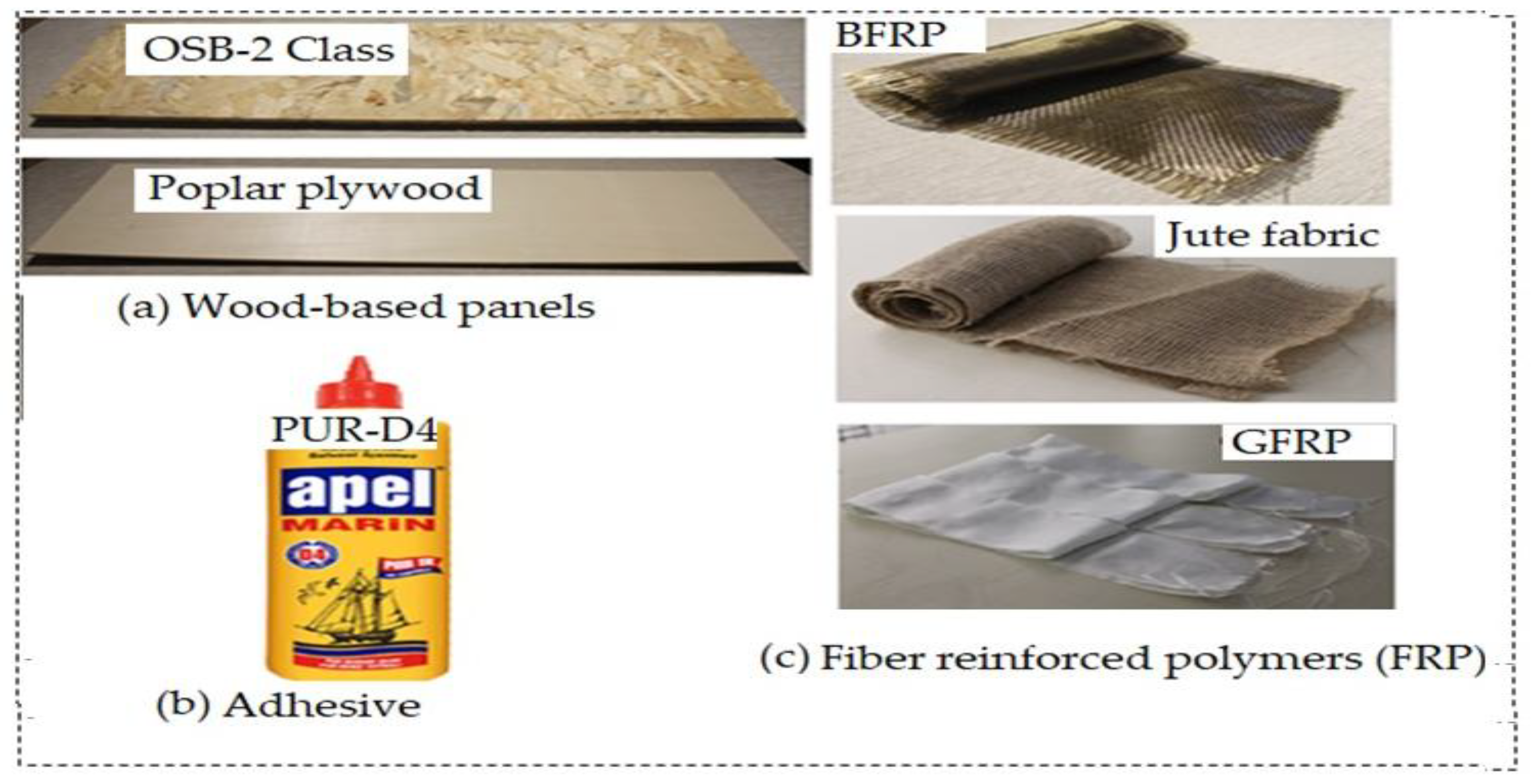
Figure 2.
The production process of test samples: (a) using a CNC machine; (b) polyurethane adhesive was used for surface; (c) Hydraulic Veneer SSP-80; ASMETAL; (d) the pressing of samples.
Figure 2.
The production process of test samples: (a) using a CNC machine; (b) polyurethane adhesive was used for surface; (c) Hydraulic Veneer SSP-80; ASMETAL; (d) the pressing of samples.
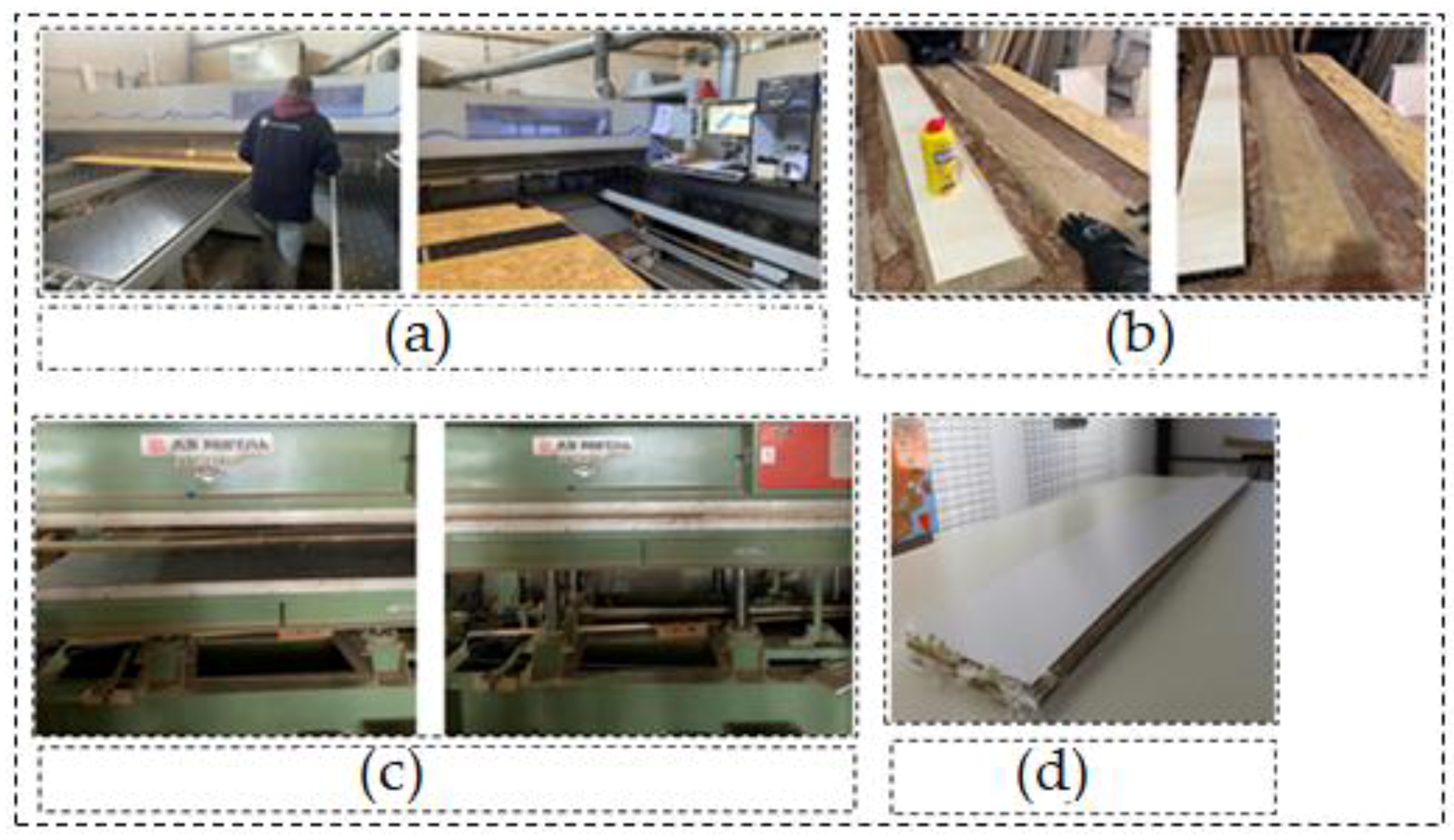
Figure 3.
Exploded view of a multi-layered wood-based sandwich panels structure.
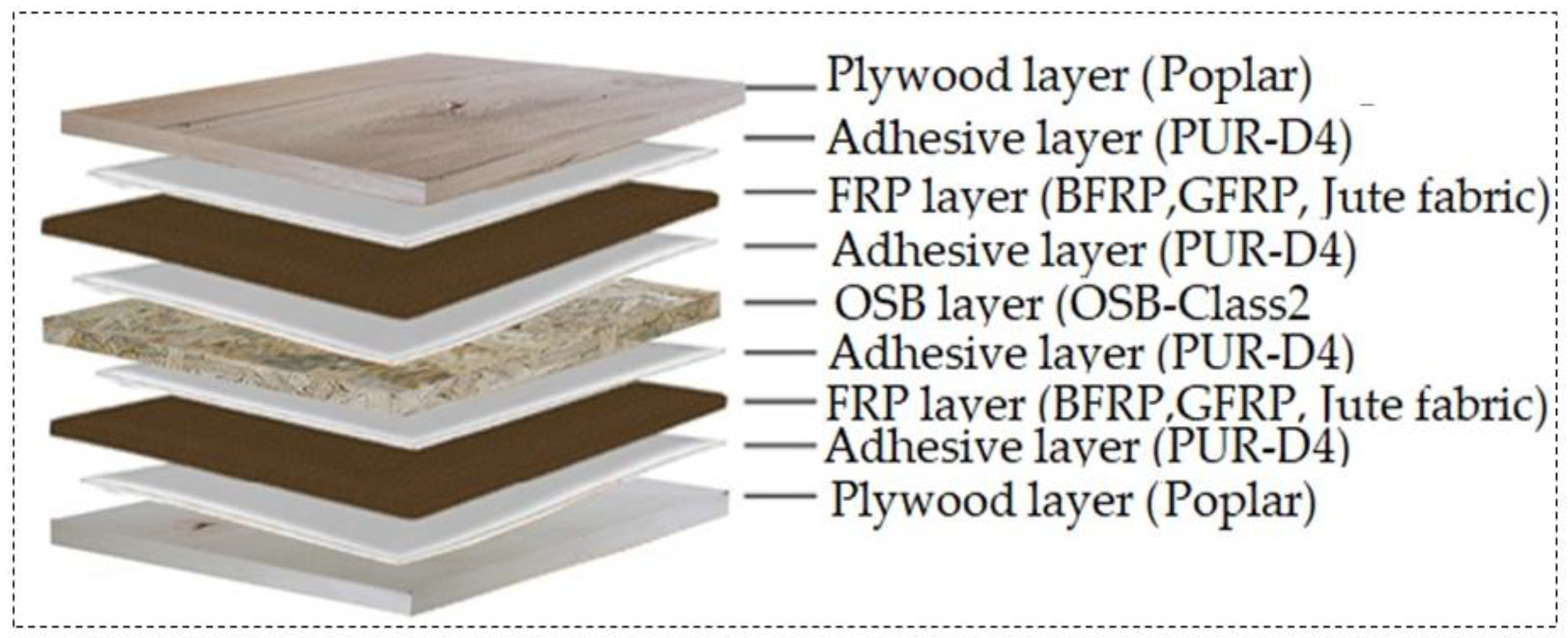
Figure 4.
The sound absorptions process of test samples: (a) Test samples; (b) Impedance tube equipment; (c) Impedance tube equipment with test samples attached.
Figure 4.
The sound absorptions process of test samples: (a) Test samples; (b) Impedance tube equipment; (c) Impedance tube equipment with test samples attached.
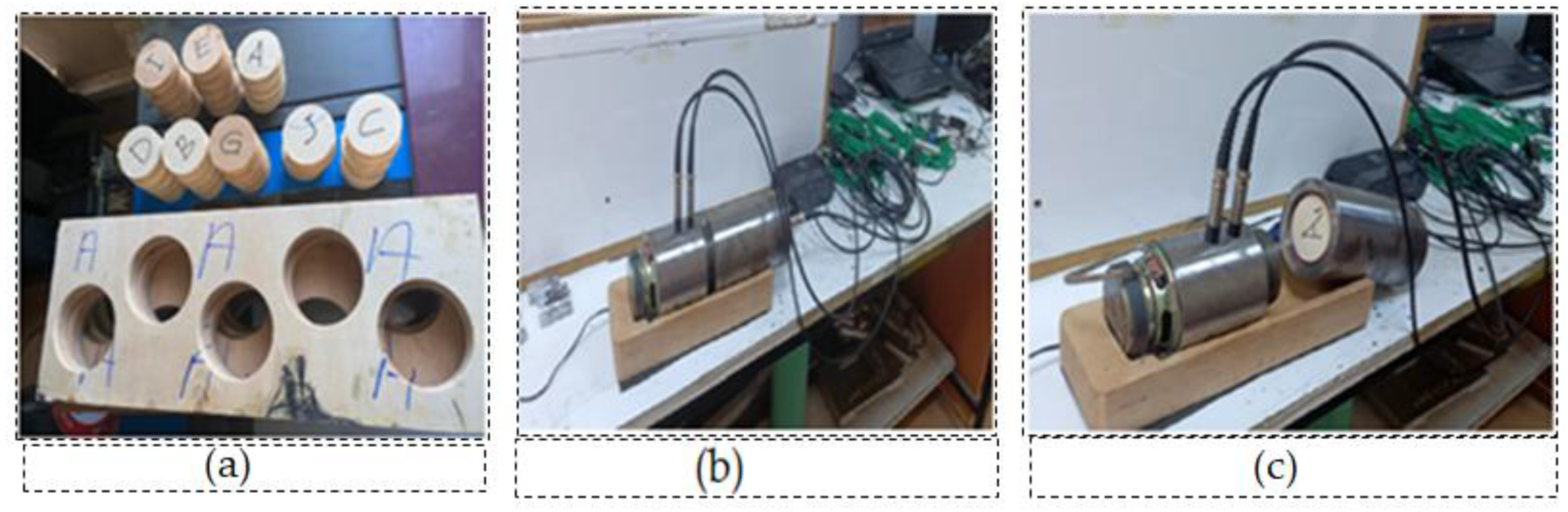
Figure 5.
Low (bass) frequency SAC values of the A, B, C and D groups.
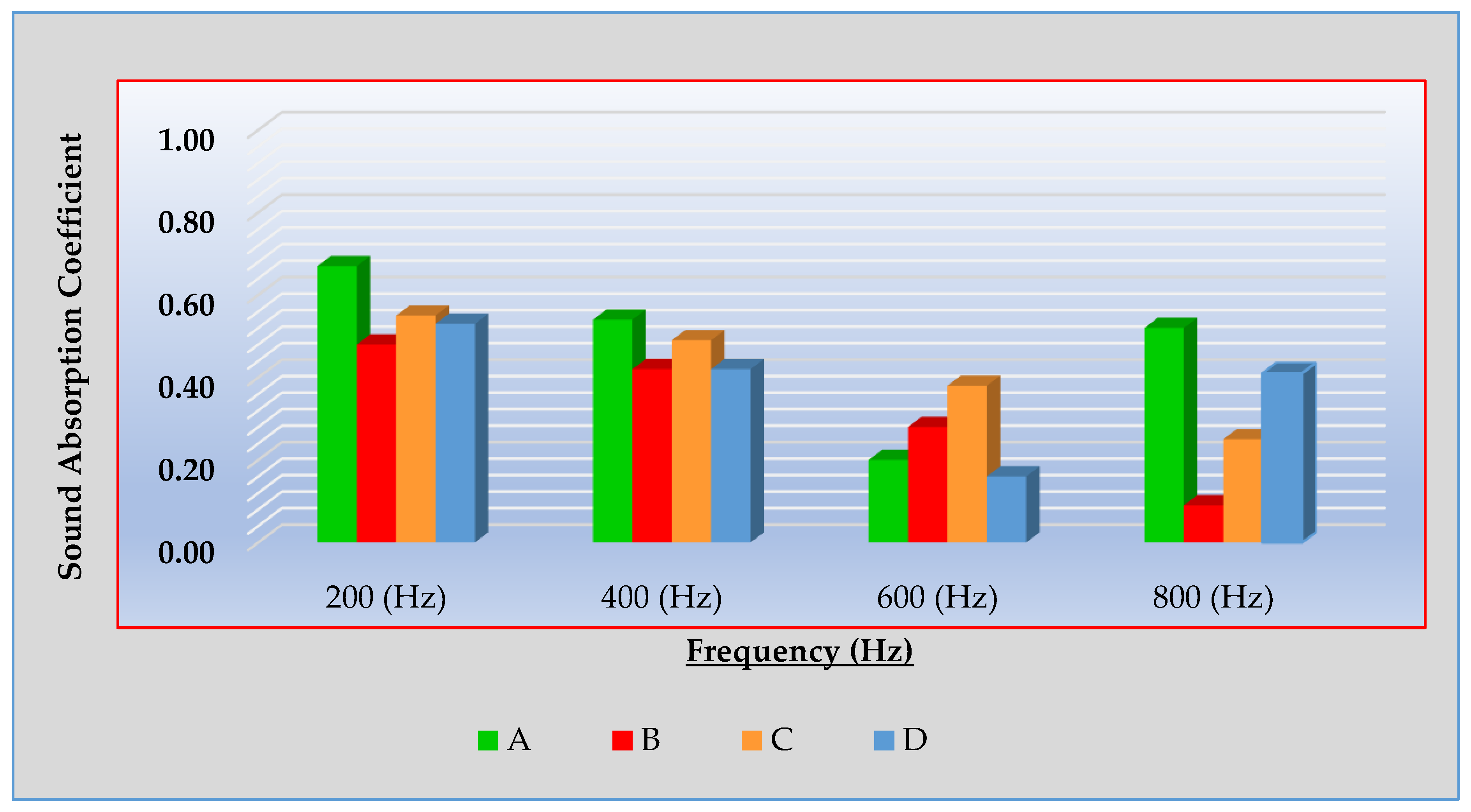
Figure 7.
High (treble) frequency SAC values of the A, B, C and D groups.
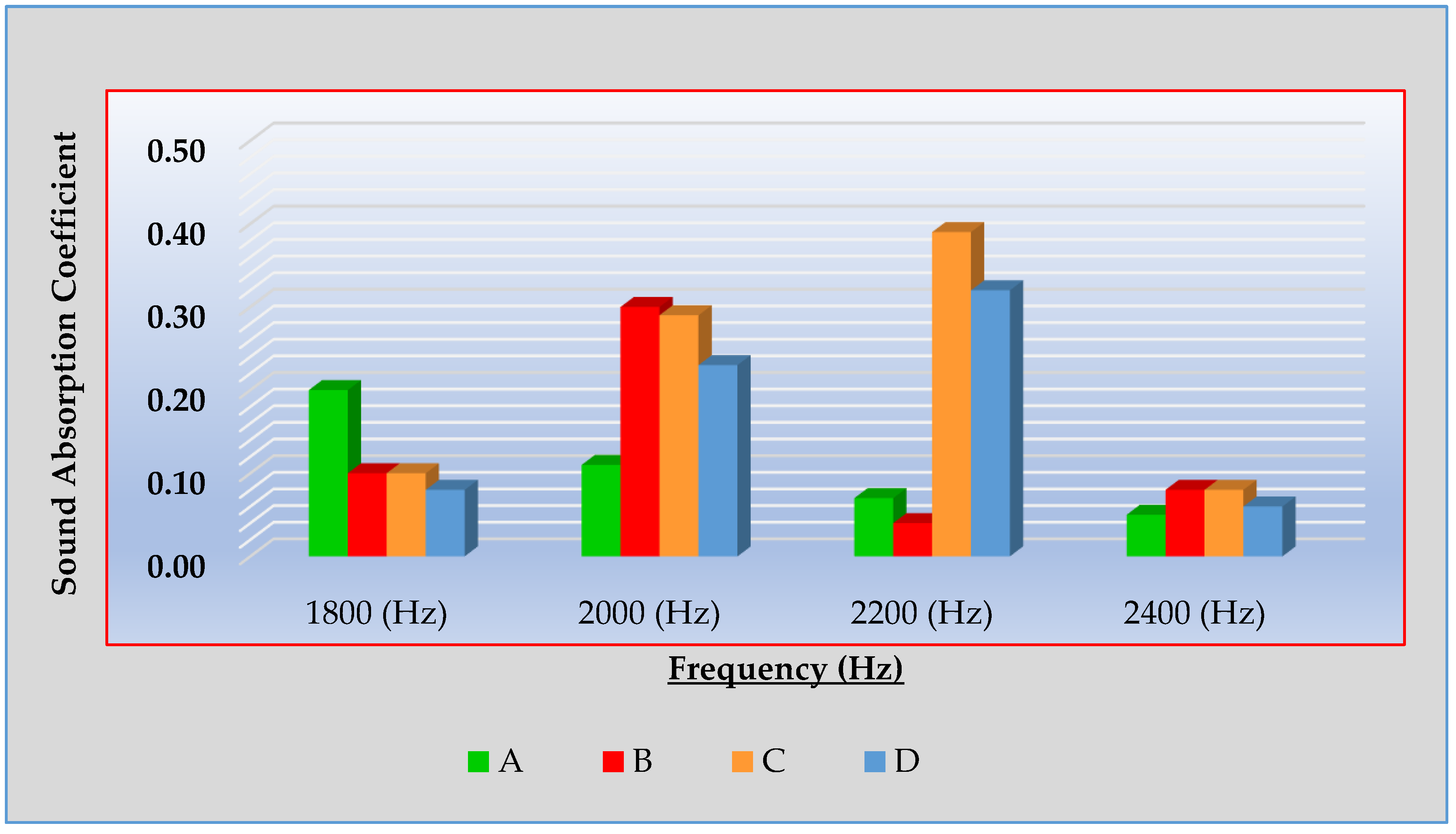

Table 1.
Density of wood-based sandwich panels and FRP materials used in the study.
| No | Material Name | Density (gr/cm3) |
Where used in the panel |
|---|---|---|---|
| 1 | OSB-2 Class | 0.630 | core layer |
| 2 | PPWD | 0.500 | face layer and bottom layer |
| 3 | BFRP | 2.800 | face layer betwen core layer, and bottom layer between layer |
| 4 | GFRP | 2.500 | face layer betwen core layer, and bottom layer between layer |
| 5 | Jute Fabric | 1.300 | face layer betwen core layer, and bottom layer between layer |
Table 2.
Combinations of wood-based sandwich panels were manufactured.
| Group | Code | Face Layer | FRP Types | Core Layer | Bottom Layer |
|---|---|---|---|---|---|
| A | PP-B-O-B-PP | PP (PPWD) | B (BFRP) | O (OSB-2 class) | PP (PPWD) |
| B | PP-J-O-J-PP | PP (PPWD) | J (Jute Fabric) | O (OSB-2 class) | PP (PPWD) |
| C | PP-G-O-G-PP | PP (PPWD) | G (GFRP) | O (OSB-2 class) | PP (PPWD) |
| D | PP-O-PP | PP (PPWD) | - | O (OSB-2 class) | PP (PPWD) |
Table 3.
Sound Absorption Coefficient (SAC) Values (0 Hz to 800 Hz) and ANOVA Results (p-value equals 0.05).
Table 3.
Sound Absorption Coefficient (SAC) Values (0 Hz to 800 Hz) and ANOVA Results (p-value equals 0.05).
| Group | Frequency (Hz) | |||
|---|---|---|---|---|
| 200 (Hz) | 400 (Hz) | 600 (Hz) | 800 (Hz) | |
| A | 0.67 | 0.54 | 0.20 | 0.52 |
| B | 0.48 | 0.42 | 0.28 | 0.13 |
| C | 0.55 | 0.44 | 0.38 | 0.33 |
| D | 0.53 | 0.42 | 0.16 | 0.41 |
| X | 0.56 | 0.46 | 0.26 | 0.35 |
| S | 0.09 | 0.06 | 0.10 | 0.15 |
| X min | 0.48 | 0.42 | 0.16 | 0.13 |
| X max | 0.67 | 0.56 | 0.38 | 0.52 |
| (P ≤ 0.05) | 0.000* | 0.000* | 0.0000* | 0.000* |
| Note: X: average value; S: the standard deviation; X min: minimum value; and X max: maximum value. | ||||
Table 4.
Sound Absorption Coefficient (SAC) Values (1000 Hz to 1600 Hz) and ANOVA Results (p-value equals 0.05).
Table 4.
Sound Absorption Coefficient (SAC) Values (1000 Hz to 1600 Hz) and ANOVA Results (p-value equals 0.05).
| Group | Frequency (Hz) | |||
|---|---|---|---|---|
| 1000 | 1200 | 1400 | 1600 | |
| A | 0.44 | 0.09 | 0.12 | 0.16 |
| B | 0.16 | 0.85 | 0.62 | 0.37 |
| C | 0.16 | 0.18 | 0.51 | 0.07 |
| D | 0.34 | 0.07 | 0.10 | 0.13 |
| X | 0.26 | 0.30 | 0.34 | 0.18 |
| S | 0.01 | 0.34 | 0.24 | 0.12 |
| X min | 0.16 | 0.07 | 0.10 | 0.07 |
| X max | 0.44 | 0.85 | 0.62 | 0.37 |
| (P ≤ 0.05) | 0.000* | 0.000* | 0.000* | 0.000* |
| Note: X: average value; S: the standard deviation; X min: minimum value; and X max: maximum value | ||||
Table 5.
Sound Absorption Coefficient (SAC) Values (1800 Hz to 2400 Hz) and ANOVA Results (p-value equals 0.05).
Table 5.
Sound Absorption Coefficient (SAC) Values (1800 Hz to 2400 Hz) and ANOVA Results (p-value equals 0.05).
| Group | Frequency (Hz) | |||
|---|---|---|---|---|
| 1800 | 2000 | 2200 | 2400 | |
| A | 0.20 | 0.11 | 0.07 | 0.05 |
| B | 0.10 | 0.27 | 0.37 | 0.07 |
| C | 0.12 | 0.14 | 0.32 | 0.08 |
| D | 0.16 | 0.09 | 0.06 | 0.05 |
| X | 0.14 | 0.15 | 0.21 | 0.06 |
| S | 0.04 | 0.09 | 0.14 | 0.18 |
| X min | 0.10 | 0.09 | 0.06 | 0.05 |
| X max | 0.20 | 0.27 | 0.37 | 0.08 |
| (P ≤ 0.05) | 0.000* | 0.000* | 0.000* | 0.000* |
| Note: X: average value; S: the standard deviation; X min: minimum value; and X max: maximum value | ||||
Disclaimer/Publisher’s Note: The statements, opinions and data contained in all publications are solely those of the individual author(s) and contributor(s) and not of MDPI and/or the editor(s). MDPI and/or the editor(s) disclaim responsibility for any injury to people or property resulting from any ideas, methods, instructions or products referred to in the content. |
© 2025 by the authors. Licensee MDPI, Basel, Switzerland. This article is an open access article distributed under the terms and conditions of the Creative Commons Attribution (CC BY) license (http://creativecommons.org/licenses/by/4.0/).
Copyright: This open access article is published under a Creative Commons CC BY 4.0 license, which permit the free download, distribution, and reuse, provided that the author and preprint are cited in any reuse.


