

Submitted:
20 October 2025
Posted:
27 October 2025
You are already at the latest version
Abstract
The growing demand for sustainable protein has driven interest in Arthrospira platensis (Spirulina) due to its high protein content. However, the presence of the cell wall limits the availability and recovery of proteins within it. Conventional alkaline extraction is widely applied but often results in low yields and excessive solvent consumption. This study compares the efficiency and functional properties of Spirulina proteins extracted using a chemical method and high-pressure homogenisation (HPH) at 20, 50, 80 and 100 MPa. Following isoelectric precipitation, proteins were collected in precipitate and supernatant fractions and characterized for yield, solubility, phycobiliprotein content, emulsifying and foaming properties, water- and oil-holding capacity, thermal stability, and rheo-logical behaviour. Microscopy confirmed progressive cell disruption with increasing homogenization pressures. HPH at 50 MPa increased protein extraction by 28% compared to chemical extraction and significantly (p< 0.05) improved solubility, oil-holding capacity, foaming and emulsion properties. Phycobiliproteins, particularly C-phycocyanin, were more efficiently recovered in HPH supernatants, achieving a higher purity index than the chemical method. Rheological analysis showed weak gel-like network formation, whereas excessive mechanical stress reduced functionality. Overall, HPH emerges as an interesting method to obtain Spirulina protein with enhanced technological properties; however, pressure optimisation is required to avoid denaturation and functionality loss.
Keywords:
spirulina
; protein extraction
; protein-based gel
; high-pressure homogenisation (HPH)
1. Introduction
In response to global population growth, estimated to reach nearly 10 billion by 2050, global protein demand is expected to increase significantly from 202 to up to 360-1250 million tons. Moreover, the global protein market is evolving as consumers’ demand for plant-based protein grows [1,2]. Conventional protein production systems, based primary on animal and plant sources, are unlikely to meet this demand due to the competition for arable land, intensive feed crop requirements and high environmental impacts such as greenhouse gas (GHG) emissions and biodiversity loss [3,4]. Notably, the agri-food sector accounts for approximately 26% of global GHG emissions, highlighting the urgent need for sustainable dietary transitions and the development of alternative protein sources with lower ecological footprints [5]. European policies such as the Green Deal and the Farm to Fork Strategy aims to promote healthy and environmentally sustainable food systems, ensuring adequate nutrition while minimizing environmental impact [6]. In this context, plant-based proteins—especially those derived from legumes—have gained attention for their nitrogen-fixing capacity, low fertiliser requirements, and promising contribution to GHG reduction targets [7]. However, to meet the future demand for protein, crop production should increase by requiring more arable land, increased water use and consequently higher environmental impacts [8]. This complex scenario highlights the need to identify and develop sustainable protein alternatives. In particular, the blue – green spiral shaped Arthrospira platensis (commonly known as Spirulina), have emerged as a promising source of sustainable proteins for the development of innovative food products due to their non – competitive use of arable land, their capacity to grow in non-potable water and their adaptability to both open and closed cultivation systems [9]. The high protein content of Spirulina, which ranges from 50% to 70% on a dry matter basis (DB) [10,11], exceeds that of animal-based proteins such as chicken, pork and beef (approximately 20-24% DB) [12,13] and also significantly higher of most conventional plant-based sources, such as whole soybeans (about 40% DB) and peas (20-25% DB) [12,14,15]. Moreover, it’s rich in polyunsaturated fatty acids (Omega-3 fatty acids), vitamins (particularly B12 and A), minerals (iron, magnesium), chlorophyll [16,17]. In addition, Spirulina is an excellent source of phycobiliproteins, which are classified into three main types: C-phycocyanin (C-PC), allophycocyanin (APC), and phycoerythrin (PE) [18]. Among these, the blue water-soluble C-PC, accounts for the highest fraction, ranging from 10 - 20% DB. The increasing attention toward C-PC is mainly due to its well-characterized antioxidant, anti – inflammatory, and anticancer properties [18,19]. However, the presence of the Spirulina cell wall limits the bioavailability of the protein fraction, since it constitutes a physical barrier to the valuable intracellular components. Conventional methods such as alkaline, salt and solvent - based extraction exhibits low extraction efficiency, long processing time and excessive solvent usage, primarily due to the cell wall permeability [20]. The use of non-conventional techniques as ultrasounds [21], pulsed electric field [10] and microwaves [11] have been studied for protein extraction from the biomass of different Arthrospira species. Recently, the emerging non thermal mechanical technology high pressure homogenization (HPH) demonstrated its potential to disrupt algal cell wall effectively. During the process, the application of high-pressure forces the fluid to pass through a narrow valve gap, where the resulting cavitation, shear forces, and turbulence lead to a progressive loss of microbial cell wall integrity [22]. HPH has been widely investigated as a disruptive technology for enhancing the extraction and functionality of proteins from Arthrospira platensis (Spirulina) and other microalgae species. Magpusao et al. [23] highlighted that HPH treatments (300–900 bar) effectively disintegrated Spirulina cells, leading to significant modifications in particle size and viscoelastic properties of the whole homogenized biomass. Moreover, Giannoglou et al. [20] studied the combined effect of pressure (100–600 MPa) and pH on protein extraction kinetics from Spirulina biomass, showing that moderate pressures at near-neutral pH maximized C-phycocyanin purity while minimizing protein denaturation. Shkolnikov Lozober et al. [24] applied HPH at 50MPa as a pretreatment to improve the gelation and solubility properties of Spirulina protein concentrate (SPC). These findings support the relevance of high-pressure homogenization as suitable method for the extractability and techno-functional improvement of Arthrospira platensis protein. However, to the best of authors knowledge, no study has compared the functional properties of protein extract from Spirulina obtained by conventional alkaline method and HPH at different pressures (20, 50, 80 and 100 MPa). This work aims to evaluate and compare the impact of two different protein extraction methods, the chemical and high-pressure homogenization (HPH) at 20, 50, 80, and 100 MPa, on the techno-functional properties of Spirulina proteins. Specific focus is given to protein yields, solubility, water and oil capacity, foaming and emulsifying properties as well as rheological and thermal behaviour. The obtained results could be used to identify the most suitable extraction conditions for obtaining Spirulina protein ingredients with enhanced techno functional properties, suitable for the formulation of Spirulina-based food products.
2. Materials and Methods
2.1. Materials
The Arthrospira platensis (Spirulina) was purchased from Sevenhills Wholefoods (Sheffield, UK) in dried powder. As stated by the producer, it is mainly composed by proteins, carbohydrate and fats of 65.3, 12.8 and 0.8 g/100 g dry matter, respectively. The PierceTM Bradford Protein Assay Kit was purchased from Thermo Fisher Scientific Inc. (Waltham, Massachusetts, USA) and was used to determine the soluble protein content. The Slide – A – Lyzer dyalisis flasks was purchased from Thermo Fisher Scientific Inc. (Waltham, Massachusetts, USA). All other chemicals were of analytical grade and purchased from Merck (Darmstadt, Germania).
2.2. Protein Extraction from Arthrospira platensis (Spirulina)
2.2.1. Conventional Chemical Extraction Method
The chemical extraction of the Spirulina protein from the Arthrospira platensis (Spirulina) biomass (SB) was performed according to Shkolnikov Lozober et al. [24] with minor modifications. SB powder was suspended in an alkaline solution at pH 10 with 0.5M NaOH and stirred for 2 hours at room temperature. The suspension was then centrifuged (SL 8 Small Benchtop, Thermo Fisher Scientific, Waltham, MA, USA) at 10,000 ×g for 30 minutes at 20 °C. The resulting precipitate was subjected to a second alkaline extraction under the same previous conditions. The collected supernatants were combined and acidified to pH 3, corresponding to the isoelectric point of Spirulina proteins [25], by adding 0.5M HCl under gentle stirring. The mixture was stored at 4 °C overnight to allow protein precipitation. The precipitated proteins were recovered by centrifugation at 10,000 ×g for 30 minutes at 20 °C. The resulting precipitate was resuspended, and the pH was adjusted to 7 using 0.5M NaOH. Prior to freeze-drying, the suspension was dialyzed against deionized water for 24 hours using dialysis flasks (cut off: 3.5 kDa) (Slide – A – Lyzer dyalisis, Thermofisher, USA) to remove residual salts and enhance protein purity. The soluble fraction (supernatant) remaining after isoelectric precipitation was also freeze dried (Home Pro Freeze dryer, Harvest Right, Utah) for subsequent analysis.
2.2.2. High Pressure Homogenization (HPH) Extraction
Protein extraction via HPH was carried out following the procedure described by Magpusao et al. [23] with slight modifications. SB was suspended in distilled water at concentration of and subjected to a two-pass homogenization using PANDA Plus 2000 homogenizer (GEA Niro Soavi, Parma, Italy). Samples were processed at four different pressures: 20, 50, 80 and 100 MPa. The inlet temperature of SB suspension was kept below 10 °C, and the outlet temperature did not exceed 30 °C to prevent thermal degradation of proteins. After homogenization, the SB suspension was centrifuged at 4,000 ×g for 10 minutes at 20 °C to separate the cell debris to the aqueous soluble fractions. The resulting supernatant was collected and adjusted to pH 3 by dropwise addition of 0.5M HCl under gentle stirring. The suspensions were stored overnight at 4 °C to guarantee the full protein precipitation and then centrifuged at 10,000 ×g for 30 minutes. The precipitates and supernatants were neutralized with 0.5 M NaOH and dialyzed against deionized water for 24 hours using a 3.5kDa molecular weight cut-off (MWCO) dialysis flask. Finally, both dialyzed precipitate and supernatants were freeze-dried (Home Pro Freeze dryer, Harvest Right, Utah) until further use.
2.3. Optical Microscopy
Morphological evaluation of Spirulina cells was investigated by optical microscopy before and after CH and HPH treatments, following Magpusao et al. [23], with minor modifications. Aliquots of 100 μL for each suspension were placed on glass slides and covered with coverslips to avoid air bubble formation. Observations were performed using an optical microscope (Eclipse Ci-S microscope, Nikon Instruments Inc, Tokyo, JPN) coupled with a 5.0 MP camera (Moticam 580, Motic, Barcelona, ESP) and Motic Images Plus 2.0 software (Motic, Barcelona, ESP). Micrographs of all samples were acquired at 100X magnification.
2.4. Protein Content and Extraction Efficiency
Protein content and yield calculations were performed according to the method proposed by Purdi et al. [21], with minor modifications. Protein content was determined by the Kjeldahl method [26] by using a nitrogen-to-protein (NTP) conversion factor of 6.25 and values were expressed as grams of protein per 100 grams of freeze-dried extract, according to the following Equation (1):
where is the mass of nitrogen in (-P) or (-S) and is the mass of the freeze-dried extract used for the analysis.
Protein yield was calculated as the mass of protein () in the precipitate and supernatant fractions against the initial protein in Spirulina biomass (), using the Equation (2):
Total protein extraction yield was calculated as the sum of the mass of protein in the precipitates ) and supernatant () for each extraction relative to the total protein content in Spirulina biomass (PSB), according to the Equation (3):
2.5. Determination of Protein Solubility
Protein solubility was determined for the freeze-dried samples (CH-P; CH-S, HPH 20-S, HPH 50-S, HPH 80-S and HPH 100-S) according to Zhang et al. [27] with slight modifications. CH-P sample was suspended to 0.1% w/v in PBS 0.1M and the solubility was evaluated at different pH ranging from 1 to 11 while the supernatant fractions (CH-S, HPH 20-S, HPH 50-S, HPH 80-S, HPH 100-S) were suspended to 0.5% w/v and their solubility was evaluated at pH 7. Each suspension was magnetically stirred for 60 minutes at 20 °C and then centrifuged at 2,000 ×g for 15 min at 20 °C. The resulting supernatants were collected for soluble protein analysis. Soluble protein concentration was determined using the Bradford’s assay. Absorbance was measured at 595 nm using a VWR V-3000PC spectrophotometer (VWR International, Milano, Italy) and values were interpolated from a standard curve prepared with bovine serum albumin (BSA). Solubility was expressed according to the following Equation (4):
where corresponds to the mass of soluble protein in the (-P) or (-S) fractions while represents the protein mass present in the respective fractions.
2.6. Phycobiliprotein Determination in the Soluble Fraction
Phycobiliprotein determination in the freeze-dried supernatants obtained after isoelectric precipitation was carried out following the method described by Wang et al. [19], with minor modifications. Each supernatant fraction sample was solubilized at in PBS (0.1M, pH 7) and stirred at room temperature for 1 hour at 20 °C. The absorbance of the resulting solution was measured using a UV–Vis spectrophotometer (VWR V-3000PC, VWR International, Milano, Italy) at 280, 562, 620, and 652 nm. The concentration of C-phycocyanin , allophycocyanin , and phycoerythrin were calculated using the Equations (5)–(7) [28]:
The total phycobiliprotein content expressed as per of freeze-dried supernatant, was calculated following the Equation (8):
where is the volume of supernatant used , and and is the mass of supernatant .
The extract purity index which provides an indication of protein purity, was calculated according to Wang et al. [19], using Equation (9):
where, refers to the absorbance value recorded at 620 nm and 280 nm, respectively.
2.7. Emulsifying Properties
Emulsifying activity (EAI) and stability (ESI) of the CH-P and HPH-P was determined according to Purdi et al. [21] with slight modifications. A precipitate solution was prepared in PBS (0.1M) and pH equal to 3, 5, 7, 9 and 11. The solutions were mixed with palm oil at a 1:4 ratio. Emulsions where homogenized (10,000 rpm, 1 min) using a T25 Ultra-Turrax (IKA, Staufen Im Breisgau, DE). Then, of the homogenised solution was diluted in of a solution of SDS. The absorbance () of the emulsions was determined at 500 nm using a UV/Vis spectrophotometer (UV-6300PC, VWR, USA) with 0.1% SDS solution as blank control. After 10 min, the absorbance () was measured again. EAI and ESI were calculated as follows by Equations (10) and (11):
where DF is the dilution factor (101); and are the absorbances of the diluted emulsified solutions at 0 and 10 min, respectively; is the optical path (1 cm); is the volume fraction of the oil phase (0.25); is the concentration of the protein in precipitate solution before emulsification and
2.8. Differential Scanning Calorimetry for Thermal Analysis of Spirulina Protein Extracts
The thermal properties of the Spirulina protein extracts were analysed using a Differential Scanning Calorimeter (DSC Q2000, TA Instruments, New Castle, USA) according to Faieta et al. [29] with slight modifications. Approximately, 10-15 mg of each dried samples were accurately weighted into standard aluminium pans with were then hermetically sealed. A sealed empty pan was used as the reference. The analysis was performed under an inert nitrogen atmosphere at a flow rate of . The instrument was calibrated for both temperature and enthalpy using pure indium. Samples were heated from 20 to 110 °C at a constant rate of 5 °C/min. Thermographs were analysed using the Universal Analysis software (TA Instruments). The onset temperature (To), peak denaturation temperature (Tp) and enthalpy of denaturation (ΔH) were determined. Enthalpy values were calculated based on the total protein content of the sample.
2.9. Rheological Measurements
Rheological behaviour of precipitates was evaluated following the procedure described by Shkolnikov Lozober et al. [24], with minor modifications. Suspensions of CH-P and HPH-P ( were prepared using PBS (0.1M, pH 7) and gently stirred until complete dispersion. These concentrations were chosen based on the least gelation concentration (LGC), determined in our previous work [30]. All measurements were performed using rheometer (MCR 102e, Anton Paar GmbH, Rivoli, Italy) equipped with a parallel plate geometry (PP25, diameter 25 mm) and a Peltier heating and cooling system. To minimize water evaporation during heating, silicone oil was applied around the sample. The linear viscoelastic region (LVR) was identified by amplitude sweep tests performed at 1 Hz over a strain range of 0.001–100%. A constant strain of 0.01%, within the LVR, was selected for all subsequent tests. After gel formation on the rheometer, the LVR was reassessed and yielded at the same limit; therefore, a strain of 0.01% was used for all gel measurements. Temperature sweep was undertaken by heating protein dispersion from 20 °C to 90 °C at a rate of 3 °C/min, followed by an isothermal hold at 90 °C for 20 minutes and subsequent cooling to 20 °C at 5 °C/min. After cooling, samples were equilibrated for 5 minutes at 20 °C. Throughout the entire heating–cooling cycle, storage modulus (G′) and loss modulus (G″) were continuously recorded using RheoCompass™ software (Anton Paar GmbH). Finally, frequency sweep tests were performed within the angular frequency of 0.1–100 rad/s at 20 °C maintaining the strain within the LVR.
2.10. Statistical Analysis
All the experiments were carried out in triplicate and the data were reported as mean values ± standard deviation. One-way analysis of variance (ANOVA), and pairwise comparisons among samples were conducted using Tukey’s test to determine statistically significant differences at a significance level of p < 0.05. The data were analysed using JMP statistical software (SAS Institute Inc., Cary, NC, USA).
3. Results
3.1. Impact of Chemical and HPH on the Cellular Microstructure of Spirulina Suspensions
Optical microscopy images of Arthrospira platensis (Spirulina) suspensions, before and after chemical and HPH extraction are shown in Figure 2. In the untreated biomass (Figure 2a) the native helical, filamentous trichomes morphology of A. platensis are not readily visible probably due to the drying process used to produce A. platentis in powder [23]. Following chemical extraction (Figure 2b), partial degradation of the trichomes was observed in the Spirulina suspension, due to alkaline pH-induced weakening of the peptidoglycan layer [20]. The alkaline pH employed during chemical extraction (typically >10) promotes partial degradation of the peptidoglycan layer, facilitating trichome disaggregation. This effect is attributed to the hydrolysis of peptide cross-links and increased membrane permeability, ultimately weakening the filamentous structure of A. platensis [31,32,33]. Application of HPH () induced progressive trichomes disruption in a pressure-dependent manner. At 20 MPa, the spiral filaments were shortened and fragmented into smaller segments. At 50 MPa, morphological degradation becomes more pronounced, leading to the complete loss of filamentous structures and the appearance of several submicron debris at 80 MPa. At 100 MPa, extensive destruction was observed. These results are consistent with previous studies reporting the mechanical fragility of A. platensis attributed to its low ability to resist shear stresses generated already at moderate pressures [23,34].
3.2. Protein Extraction Efficiency
Total protein extraction yield, defined as the sum of proteins recovered in the pellet and in the supernatant, reflects the overall recovery of proteins initially present in the Spirulina biomass. For the HPH-treated samples, the total protein extraction yield increased up to 50 MPa and then reached a plateau. The chemical method and HPH at 20 MPa exhibited statistically comparable values, as shown in Table 2. However, the protein content of the two fractions reveals a clear pressure-dependent redistribution; as pressure increases, the pellet shows a progressive decrease in protein content, whereas the supernatant exhibits an increase. The observed pressure-dependent redistribution indicates enhanced cell disruption and protein solubilization driven by shear and partial unfolding at higher mechanical stresses [22]. This behaviour is further supported by our previous study [30], where the protein yield of the pellet obtained by chemical extraction was the lowest compared to all HPH-treated samples. Moreover, at moderate pressures (20 and 50 MPa) an increase in protein yield was observed, followed by a decrease at higher pressures. Furthermore, the evaluation of the supernatant protein yield in the present study provides additional insights. The supernatant protein yield shows an opposite behaviour at the same pressures, confirming that homogenization enhances protein recovery in the soluble fraction. This indicates that HPH improved protein recovery relative to chemical extraction and drives a pressure – dependent redistribution from the insoluble to the soluble fraction. For the HPH extraction, our total protein extraction yield was lower than the 96% reported by Elain et al. [35] at 50 and 100 MPa. However, their extraction method involved seven homogenization cycles, which could enhance the cell disruption and may explain their higher recovery. In contrast, under chemical extraction at pH 10, our results were higher than those of Purdi et al. [21] who reported a 12.5% protein yield and 63% protein content. Similarly, the protein content of our precipitated fraction reached 77%, higher than the 73% reported by by Shkolnikov Lozober et al. [24], under similar extraction conditions. For the supernatant fraction, to the best of our knowledge no studies report protein recovery suitable for a direct comparison. Therefore, the present study provides a significant contribution by directly evaluating both fractions, offering a more comprehensive understanding of the extraction process and the pressure-dependent redistribution of proteins.
Moreover, protein solubility was further evaluated to determine whether the pressure-dependent redistribution between pellet and supernatant affected their functional behaviour. Protein solubility is one of the most important functional properties of proteins as it influences several other functional properties such as emulsifying, foaming, and gelling properties [25]. It is influenced by the amino acid composition and surface charge of the protein, as well as by processing conditions such as pH and extraction methods [36]. The solubility of the CH-P exhibited a typical U-shaped profile as a function of pH, with a minimum at pH 3 and a significant increase (p < 0.05) under alkaline conditions (Figure 3), consistent with previous studies [36,37]. This profile is in line with Benelhadj et al. [38], who reported a minimum of 6.2% at pH 3 followed by a gradual increase at higher pH values. This behaviour reflects the reduction in net charge near the isoelectric point, which promotes aggregations, and the enhanced protein-water interactions at alkaline pH due to deprotonation of acidic residues (Glu, Asp) [11,39]. The present HPH 80-P value (47.73±0.60%) is consistent with the pressure-dependent trend observed in our previous work [30], where solubility increases at moderate pressures before decreasing at higher intensity. This pattern indicates that pressures in the range of 20–50 MPa promote partial unfolding and strengthen protein–solvent interactions, whereas higher pressures expose hydrophobic regions, leading to aggregation and a consequent decrease in solubility [40]. Similar pressure-dependent effects have been reported for plant proteins, with chickpea isolates showing maximum solubility close to 90 MPa, followed by a subsequent reduction at higher pressures [41].
The solubility of the supernatant fractions was strongly influenced by the extraction method and applied pressure. While chemical extraction produced the lowest solubility, HPH improved protein solubilization, with the highest levels observed at 80 MPa (Figure 4). The pressure-dependent trend observed is consistent with our previous findings on the pellets [30], where solubility increased from 39.05% at 20 MPa to a maximum of 50.74% at 50 MPa, before declining to 31.60% at 100 MPa. The present value at 80 MPa (47.73%) confirms this trend, being lower than the maximum at 50 MPa and followed by a further decrease at 100 MPa. However, supernatant solubility reached the highest value equal to 17.3% at 80 MPa and then decreased to 12% at 100 MPa. These results are in contrast with expectations, as the protein function present in the aqueous phase, mainly phycocyanin’s, as discussed in the next paragraph, should exhibit high solubility [42]. A possible explanation for this result could be due by the analytical method employed. Protein solubility was quantified using the Bradford assay, which relies primarily on Coomassie Brilliant Blue G-250 dye binding to basic and aromatic amino acid residues, especially arginine [43,44]. In contrast, phycobiliprotein-rich supernatants are characterized by a higher content of acidic residues (Asp, Glu) and lower amount of basic residues (Arg, Lys, His), leading to underestimation [45,46].
3.3. Protein Characterization of Fractions Obtained by HPH and CH Methods
The analysis of the supernatant fractions revealed a clear effect of the extraction method and applied pressure on the distribution of phycobiliproteins (PBPs), as shown in Table 3. C-phycocyanin (C-PC) was the predominant component, followed by phycoerythrin (PE), whereas allophycocyanin (APC) was only detected in trace amounts under CH and 80 MPa. PBPs were higher in HPH-treated samples compared to the chemical extraction, suggesting that mechanical disruption promotes the release of pigmented proteins into the soluble fraction. The maximum recovery was observed at intermediate pressures (50 and 80 MPa), followed by a partial decrease at the highest level, which is consistent with the structural sensitivity of PBPs to intense mechanical stress [20]. When compared to literature values, the percentage of C-PC obtained in this study falls within the typical range reported for Spirulina biomass, where C-PC usually accounts for 10–20% of total proteins [20,28,47]. It should be noted, however, that the present results refer exclusively to the supernatant fractions. Since PBPs in the insoluble pellets were not quantified, the actual PBP content could be underestimated. C-PC not only provides the characteristic blue colour of increasing interest in clean-label food formulations, but also exhibits antioxidant, anti-inflammatory, and immunomodulatory activities, supporting its inclusion in functional foods and nutraceuticals [42]. In this regard, HPH emerges not only as an effective method for PBP recovery but also a method to modulate their distribution as a function of pressure, with direct implications for both yield and techno-functional quality. To the best of authors knowledge, no previous study employed HPH for the extraction of PBP from Spirulina and investigate the effect of pressure on the recovery and portioning of PBPs and C-phycocyanin. Published articles on Spirulina used aqueous or buffered extraction, coupled with sonication or enzymatic lysis [18,48]. In terms of purity index (EP) above 0.7 is generally associated with food-grade purity, whereas values greater than 1.0–1.5 are suitable for analytical or reagent-grade applications [49]. The EP values of the extracts obtained at the highest pressures were statistically higher (p < 0.05) than the chemical extraction, reaching its maximum at 100 MPa. HPH showed to be an effective for the extraction of phycobiliproteins and particularly C-phycocyanin with high purity.
3.4. Water Holding Capacity, Emulsifying and Foaming Properties
The Emulsify Activity Index (EAI) provides an estimate of how effectively proteins can adsorb onto the oil–water interface during emulsion formation, while the Emulsify Solubility Index (ESI) reflects their ability to preserve the structural integrity of the emulsion over time [41,50]. The EAI of the CH-P extract (Figure 5a) showed a strong dependence on pH, with values increasing progressively from acidic to alkaline conditions. The lowest EAI was observed at pH 3, while the highest at pH 11. These results suggest that alkaline conditions promote protein solubilization, unfolding, and exposure of hydrophobic and charged groups, improving their ability to adsorb and stabilize oil–water interfaces [51]. Interestingly, the ESI exhibited an opposite trend, being highest at pH 3, where the EAI was the lowest. Since the minimum protein solubility at acidic pH may hinder the initial emulsification process [51]. The EAI obtained via HPH was significantly higher (p<0.05) than CH-P, showing a clear pressure-dependent trend, as showed in Figure 5b. EAI increased progressively up to 50 MPa, where it reached the maximum, before declining at higher pressures (80 and 100 MPa). This behaviour is consistent with findings on legume and microalgal proteins [41] where moderate homogenization pressures promoted enhanced emulsifying capacity, whereas excessive mechanical stress led to a loss of interfacial functionality. The improvement observed at intermediate pressures can be attributed to partial unfolding and dissociation of protein structures, which increase conformational flexibility and expose hydrophobic residues otherwise buried in the protein matrix [52]. These residues facilitate rapid adsorption at the oil–water interface and reduce interfacial tension, improving droplet dispersion [53]. However, above 50 MPa, the reduction in EAI and particularly in emulsion stability index (ESI) indicates that excessive structural disruption inhibits the formation of a cohesive interfacial film, despite the higher solubility of proteins treated at 100 MPa. This pressure-driven shift in the hydrophilic/hydrophobic balance is also evident in the changes in techno-functional properties observed in our previous study [30]. In fact, the progressive exposure of hydrophobic groups following HPH explains the increase in oil-holding capacity (OHC) and foaming capacity (FC) at moderate pressures, whereas the concomitant decrease in water-holding capacity (WHC) reflects the reduced hydration ability of proteins once hydrophobic interactions prevail. Such changes confirm that the unfolding and rearrangement of protein structures improve their interfacial reactivity with oil solvents and air–water interfaces. At high pressures (e.g., 100 MPa), the loss of OHC and the decline in foaming stability (FS), in parallel with the drop in ESI, suggest that the disruption of protein tertiary and quaternary structure exceeds the threshold of functional benefit, leading to aggregation and reduced interfacial film integrity [40,50]. Overall, the combined interpretation of emulsifying, foaming, and water/oil-holding properties indicates that HPH induces a balance between beneficial structural flexibility and detrimental over-denaturation, with optimal functionality achieved at moderate pressures of 50 MPa.
3.5. Thermal Stability and Denaturation Behaviour of Spirulina Extracts
The thermal properties of proteins indicate their stability during heating treatment and the structural changes occurring during the transition from native to denatured state [54]. Among the pellet fractions, HPH 50-P exhibited the highest onset (To) and peak (Tp) denaturation temperatures and the maximum enthalpy change (ΔH), as reported in Table 4. These results indicate a more ordered and thermally stable protein structure promoted by moderate pressure, which facilitates controlled molecular rearrangements [22].
In contrast, higher pressures (80–100 MPa) caused a marked reduction in the thermal parameters, particularly in HPH 80-P, which displayed the lowest To and Tp values. This suggests partial denaturation and aggregation arising from the exposure of hydrophobic regions, leading to reduced structural order and less energetic thermal transitions. Similar trends were reported by Kelany and Yemiş [55], who demonstrated that excessive pressure disrupts protein conformation.
Compared with HPH-treated samples, CH-P showed lower To and Tp than HPH 50-P but higher than those of HPH 80-P. Moreover, the significantly lower ΔH of CH-P compared with HPH 50-P indicates a less ordered and more easily unfolded protein network, thereby confirming the more structured nature of the 50 MPa sample.
For the supernatants, CH-S exhibited the highest ΔH, suggesting the preservation of native protein structures in the aqueous phase due to the absence of mechanical disruption [37]. Interestingly, all HPH-S samples displayed an endothermic peak near 49 °C, consistent with the thermal behavior of phycoerythrin and C-phycocyanin, which undergo structural unfolding and chromophore destabilization between 45 and 50 °C [24,56,57]. HPH-treated supernatants showed lower ΔH values, indicating that high mechanical stress partially disrupted protein conformations, thereby reducing the energy required for denaturation [58].
Similar findings were reported by Liang et al. [58], who investigated the effects of high-pressure homogenization on soybean protein concentrates. They observed that, although HPH enhanced protein solubility, it simultaneously reduced denaturation enthalpy (ΔH) due to partial unfolding and aggregation induced by mechanical forces. Likewise, Ricci et al. [59] highlighted that ΔH is more closely associated with the proportion of structurally native proteins than with total protein content. These findings support the interpretation that the high ΔH observed for CH-S reflects a greater degree of conformational integrity, despite its lower overall protein concentration.
3.6. Rheological Properties of Spirulina Protein Extracts: Flow and Viscoelastic Properties
The temperature sweep profiles in Figure 6 describe the temperature-dependent viscoelastic behaviour of the pellet obtained by CH and HPH methods. All samples showed G′ values slightly higher than G″ throughout both heating and cooling, with no crossover observed within the investigated temperature range. This elastic-dominant profile suggests the formation of weakly structured protein networks that do not undergo a typical sol–gel transition over the investigated temperature range, in line with previous findings on pulse and microalgal proteins [60,61,62]. CH-P sample (Figure 6a) exhibited during heating a progressive increase in G’ —particularly between 30 and 60 °C—suggesting partial denaturation and disruption of protein-protein interactions [61]. During cooling, G′ reached higher values than the initial ones, probably due to the formation of a new reorganised network. This trend can be attributed to hydrophobic interaction and the entanglement of partially unfolded chains [54]. Similar profiles have been described for pea proteins, where heat treatment led to the exposure of hydrophobic regions and subsequent reaggregation during cooling [60]. The 50 MPa treatment showed the highest viscoelastic moduli among all pellet fractions, while HPH 100-P showed the lowest G′. This trend is consistent with the observations of Shkolnikov Lozober et al. [24], who reported that HPH at 50 MPa improves protein solubility and surface hydrophobicity, and thus promotes intermolecular interactions. These results highlight that moderate homogenisation pressure improves the unfolding and exposure of hydrophobic residues, promoting protein-protein interactions and the formation of a more elastic network without causing extensive structural breakage. At higher pressures, however, excessive shear forces and cavitation could disrupt protein structure weaken the network as intense mechanical stresses during HPH.
The frequency sweep analysis (Figure 7) confirmed the elastic behaviour in all samples, as G′ over G″ across the entire angular frequency range investigated. This indicates that all systems behaved as viscoelastic solids as previously reported for Spirulina and other microalgae or pulse protein systems [62,63] and showed a frequency dependence, which is characteristic of protein gel systems exhibiting weak-gel behaviour [61]. Compared to CH-P, HPH treatments at moderate pressures (20 and 50 MPa) resulted in a more pronounced difference between G′ and G″ than at 80 and 100 MPa. This trend suggests that intermediate pressure promotes partial protein unfolding, leading to the exposure of hydrophobic regions and reactive groups that enhance intermolecular interactions (hydrophobic, electrostatic, and hydrogen bonding), thereby supporting the formation of a more cohesive three-dimensional network [22,24].
The loss factor (tan δ), ranging between 0.33 and 0.45 across all samples, confirms a weak-gel structure (tan δ > 0.1) [61,64]. The highest value was observed at 20 MPa, suggesting a more dissipative network with increased viscous contribution. At 50 MPa, tan δ was comparable to the chemical extract, whereas as the pressure increased to 80 and 100 MPa, tan δ progressively decreased, reaching the minimum at 100MPa. This could suggest that the system became more elastic. Although lower values suggest a more elastic response, this trend is probably a result of the formation of compact protein aggregates, which increase the rigidity of the network but may reduce its ability to reorganise structurally under deformation. Similar results have been reported in other protein systems exposed to high mechanical stress or pressure where aggregation phenomena led to the formation of networks that appeared more elastic but exhibited a limited functionality [16,61,62].

Table 5.
Loss factor (tan δ) values of Spirulina protein precipitate obtained through chemical (CH) and high-pressure homogenization (HPH) extraction conditions.
Table 5.
Loss factor (tan δ) values of Spirulina protein precipitate obtained through chemical (CH) and high-pressure homogenization (HPH) extraction conditions.
| Sample | Loss Factor - |
|---|---|
| CH-P | 0.40±0.01AB |
| HPH 20-P | 0.45±0.03A |
| HPH 50-P | 0.38±0.02AB |
| HPH 80-P | 0.38±0.05BC |
| HPH 100-P | 0.33±0.04C |
Different letters within each column indicate statistically significant differences among samples (p < 0.05).
4. Conclusions
This study compared alkaline extraction and high-pressure homogenization (HPH) at 20, 50, 80, and 100 MPa to assess their effects on the functional properties of Spirulina proteins. HPH induces a clear pressure-dependent redistribution of proteins between pellets and supernatant fractions. At 50 MPa, the pellet fraction exhibited the highest protein yield and content, together with improved emulsifying and foaming capacities and enhanced oil-holding ability compared with the alkaline extract. Rheological analysis confirmed a weak gel-like behavior for all samples, with the lowest viscoelastic moduli recorded at 80 and 100 MPa, indicating that excessive mechanical stress disrupts the protein network. Consistently, thermal analysis showed a maximum at 50 MPa, with higher denaturation temperature and enthalpy, in line with a more ordered and thermally stable structure. The supernatant fractions were enriched in phycobiliproteins—particularly C-phycocyanin—with higher purity than those obtained by chemical extraction. Maximum recovery of phycobiliproteins was achieved at intermediate pressures (50–80 MPa), whereas treatment at 100 MPa led to partial structural degradation and lower extraction efficiency. Overall, HPH proved to be an effective and sustainable alternative to conventional extraction for Spirulina proteins, allowing modulation of protein structure and functionality through controlled pressure. These findings highlight HPH as a promising technology for producing high-quality functional proteins and natural pigments suitable for use in next-generation sustainable food formulations.
Author Contributions
Conceptualization, D.A. and E.M.; methodology, E.M. and D.A.; validation, E.M., and F.Mal.; formal analysis, E.M.; investigation, E.M., D.A. and F.Mal; data curation, E.M. and F. Mal. writing—original draft preparation, E.M.; writing—review and editing, E.M., D.A.; R.F.L. and F.Mal.; visualization, F.M.; supervision, D.A.; F. Mal. All authors have read and agreed to the published version of the manuscript.
Funding
This research received no external funding.
Institutional Review Board Statement
Not applicable.
Informed Consent Statement
Informed consent was obtained from all subjects involved in the study. Not applicable.
Data Availability Statement
The original contributions presented in this study are included in the article/supplementary material. Further inquiries can be directed to the corresponding author(s).
Conflicts of Interest
The authors declare no conflicts of interest.
References
- Henchion, M.; Hayes, M.; Mullen, A.; Fenelon, M.; Tiwari, B. Future Protein Supply and Demand: Strategies and Factors Influencing a Sustainable Equilibrium. Foods 2017, 6, 53. [Google Scholar] [CrossRef]
- Ritala, A.; Häkkinen, S. T.; Toivari, M.; Wiebe, M. G. Single Cell Protein—State-of-the-Art, Industrial Landscape and Patents 2001–2016. Front. Microbiol. 2017, 8, 2009. [Google Scholar] [CrossRef]
- Ahmad, A.; Ashraf, S. S. Sustainable Food and Feed Sources from Microalgae: Food Security and the Circular Bioeconomy. Algal Research 2023, 74, 103185. [Google Scholar] [CrossRef]
- Godfray, H. C. J.; Aveyard, P.; Garnett, T.; Hall, J. W.; Key, T. J.; Lorimer, J.; Pierrehumbert, R. T.; Scarborough, P.; Springmann, M.; Jebb, S. A. Meat Consumption, Health, and the Environment. Science 2018, 361, eaam5324. [Google Scholar] [CrossRef] [PubMed]
- Crippa, M.; Solazzo, E.; Guizzardi, D.; Monforti-Ferrario, F.; Tubiello, F. N.; Leip, A. Food Systems Are Responsible for a Third of Global Anthropogenic GHG Emissions. Nat Food 2021, 2, 198–209. [Google Scholar] [CrossRef]
- European Commission. (2020). A Farm to Fork Strategy for a fair, healthy and environmentally-friendly food system. COM(2020) 381 final. Bruxelles, 20 maggio 2020.
- Stagnari, F.; Maggio, A.; Galieni, A.; Pisante, M. Multiple Benefits of Legumes for Agriculture Sustainability: An Overview. Chem. Biol. Technol. Agric. 2017, 4, 2. [Google Scholar] [CrossRef]
- Bhatnagar, P.; Gururani, P.; Singh, N.; Gautam, P.; Vlaskin, M. S.; Kumar, V. Review on Microalgae Protein and Its Current and Future Utilisation in the Food Industry. Int J of Food Sci Tech 2024, 59, 473–480. [Google Scholar] [CrossRef]
- Ramírez-Rodrigues, M. M.; Estrada-Beristain, C.; Metri-Ojeda, J.; Pérez-Alva, A.; Baigts-Allende, D. K. Spirulina Platensis Protein as Sustainable Ingredient for Nutritional Food Products Development. Sustainability 2021, 13, 6849. [Google Scholar] [CrossRef]
- Käferböck, A.; Smetana, S.; De Vos, R.; Schwarz, C.; Toepfl, S.; Parniakov, O. Sustainable Extraction of Valuable Components from Spirulina Assisted by Pulsed Electric Fields Technology. Algal Research 2020, 48, 101914. [Google Scholar] [CrossRef]
- İlter, I.; Akyıl, S.; Demirel, Z.; Koç, M.; Conk-Dalay, M.; Kaymak-Ertekin, F. Optimization of Phycocyanin Extraction from Spirulina Platensis Using Different Techniques. Journal of Food Composition and Analysis 2018, 70, 78–88. [Google Scholar] [CrossRef]
- Vicente, F.; Pereira, P. C. Pork Meat Composition and Health: A Review of the Evidence. Foods 2024, 13, 1905. [Google Scholar] [CrossRef]
- Marangoni, F.; Corsello, G.; Cricelli, C.; Ferrara, N.; Ghiselli, A.; Lucchin, L.; Poli, A. Role of Poultry Meat in a Balanced Diet Aimed at Maintaining Health and Wellbeing: An Italian Consensus Document. Food & Nutrition Research 2015, 59, 27606. [Google Scholar] [CrossRef]
- Moroșan, E.; Lupu, C.; Mititelu, M.; Musuc, A.; Rusu, A.; Răducan, I.; Karampelas, O.; Voinicu, I.; Neacșu, S.; Licu, M.; Pogan, A.; Cîrnațu, D.; Ilie, E.; Dărăban, A. Evaluation of the Nutritional Quality of Different Soybean and Pea Varieties: Their Use in Balanced Diets for Different Pathologies. Applied Sciences 2023, 13, 8724. [Google Scholar] [CrossRef]
- Hailemariam, A.; Esatu, W.; Abegaz, S.; Urge, M.; Assefa, G.; Dessie, T. Nutritional Composition and Sensory Characteristics of Breast Meat from Different Chickens. Applied Food Research 2022, 2, 100233. [Google Scholar] [CrossRef]
- Ahmed, J.; Kumar, V. Effect of High-Pressure Treatment on Oscillatory Rheology, Particle Size Distribution and Microstructure of Microalgae Chlorella Vulgaris and Arthrospira Platensis. Algal Research 2022, 62, 102617. [Google Scholar] [CrossRef]
- Mohammadi, M.; Soltanzadeh, M.; Ebrahimi, A. R.; Hamishehkar, H. Spirulina Platensis Protein Hydrolysates: Techno-Functional, Nutritional and Antioxidant Properties. Algal Research 2022, 65, 102739. [Google Scholar] [CrossRef]
- Pan-utai, W.; Iamtham, S. Extraction, Purification and Antioxidant Activity of Phycobiliprotein from Arthrospira Platensis. Process Biochemistry 2019, 82, 189–198. [Google Scholar] [CrossRef]
- Wang, F.; Yu, X.; Cui, Y.; Xu, L.; Huo, S.; Ding, Z.; Hu, Q.; Xie, W.; Xiao, H.; Zhang, D. Efficient Extraction of Phycobiliproteins from Dry Biomass of Spirulina Platensis Using Sodium Chloride as Extraction Enhancer. Food Chemistry 2023, 406, 135005. [Google Scholar] [CrossRef] [PubMed]
- Giannoglou, M.; Andreou, V.; Thanou, I.; Markou, G.; Katsaros, G. Kinetic Study of the Combined Effect of High Pressure and pH-Value on Arthrospira Platensis (Spirulina) Proteins Extraction. Innovative Food Science & Emerging Technologies 2023, 85, 103331. [Google Scholar] [CrossRef]
- Purdi, T. S.; Setiowati, A. D.; Ningrum, A. Ultrasound-Assisted Extraction of Spirulina Platensis Protein: Physicochemical Characteristic and Techno-Functional Properties. Food Measure 2023, 17, 5474–5486. [Google Scholar] [CrossRef]
- D’Alessio, G.; Flamminii, F.; Faieta, M.; Prete, R.; Di Michele, A.; Pittia, P.; Di Mattia, C. D. High Pressure Homogenization to Boost the Technological Functionality of Native Pea Proteins. Current Research in Food Science 2023, 6, 100499. [Google Scholar] [CrossRef]
- Magpusao, J.; Giteru, S.; Oey, I.; Kebede, B. Effect of High Pressure Homogenization on Microstructural and Rheological Properties of A. Platensis, Isochrysis, Nannochloropsis and Tetraselmis Species. Algal Research 2021, 56, 102327. [Google Scholar] [CrossRef]
- Shkolnikov Lozober, H.; Okun, Z.; Shpigelman, A. The Impact of High-Pressure Homogenization on Thermal Gelation of Arthrospira Platensis (Spirulina) Protein Concentrate. Innovative Food Science & Emerging Technologies 2021, 74, 102857. [Google Scholar] [CrossRef]
- Silva, S. C.; Almeida, T.; Colucci, G.; Santamaria-Echart, A.; Manrique, Y. A.; Dias, M. M.; Barros, L.; Fernandes, Â.; Colla, E.; Barreiro, M. F. Spirulina (Arthrospira Platensis) Protein-Rich Extract as a Natural Emulsifier for Oil-in-Water Emulsions: Optimization through a Sequential Experimental Design Strategy. Colloids and Surfaces A: Physicochemical and Engineering Aspects 2022, 648, 129264. [Google Scholar] [CrossRef]
- AOAC International 2019. Official Methods of Analysis of AOAC International (21st ed.). AOAC International, Rockville, MD, Method 981.10.
- Zhang, Z.; Holden, G.; Wang, B.; Adhikari, B. Maillard Reaction-Based Conjugation of Spirulina Protein with Maltodextrin Using Wet-Heating Route and Characterisation of Conjugates. Food Chem. 2023, 406, 134931. [Google Scholar] [CrossRef] [PubMed]
- Ferreira-Santos, P.; Nunes, R.; De Biasio, F.; Spigno, G.; Gorgoglione, D.; Teixeira, J. A.; Rocha, C. M. R. Influence of Thermal and Electrical Effects of Ohmic Heating on C-Phycocyanin Properties and Biocompounds Recovery from Spirulina Platensis. Lebenson. Wiss. Technol. 2020, 128(109491), 109491. [Google Scholar] [CrossRef]
- Faieta, M.; Corradini, M. G.; Di Michele, A.; Ludescher, R. D.; Pittia, P. Effect of Encapsulation Process on Technological Functionality and Stability of Spirulina Platensis Extract. Food Biophysics 2020, 15, 50–63. [Google Scholar] [CrossRef]
- Muccio, E.; Lanza, R. F.; Malvano, F.; Marra, F.; Albanese, D. Impact of High-Pressure Homogenization on the Technological Properties of A. Platensis (Spirulina) Proteins for Food Applications. Chem. Eng. Trans, 2025. [Google Scholar] [CrossRef]
- Chen, Y.; Chen, J.; Chang, C.; Chen, J.; Cao, F.; Zhao, J.; Zheng, Y.; Zhu, J. Physicochemical and Functional Properties of Proteins Extracted from Three Microalgal Species. Food Hydrocolloids 2019, 96, 510–517. [Google Scholar] [CrossRef]
- Bleakley, S.; Hayes, M. Functional and Bioactive Properties of Protein Extracts Generated from Spirulina Platensis and Isochrysis Galbana T-Iso. Applied Sciences 2021, 11, 3964. [Google Scholar] [CrossRef]
- Safi, C.; Ursu, A. V.; Laroche, C.; Zebib, B.; Merah, O.; Pontalier, P.-Y.; Vaca-Garcia, C. Aqueous Extraction of Proteins from Microalgae: Effect of Different Cell Disruption Methods. Algal Research 2014, 3, 61–65. [Google Scholar] [CrossRef]
- Bernaerts, T. M. M.; Panozzo, A.; Doumen, V.; Foubert, I.; Gheysen, L.; Goiris, K.; Moldenaers, P.; Hendrickx, M. E.; Van Loey, A. M. Microalgal Biomass as a (Multi)Functional Ingredient in Food Products: Rheological Properties of Microalgal Suspensions as Affected by Mechanical and Thermal Processing. Algal Research 2017, 25, 452–463. [Google Scholar] [CrossRef]
- Elain, A.; Nkounkou, C.; Le Fellic, M.; Donnart, K. Green Extraction of Polysaccharides from Arthrospira Platensis Using High Pressure Homogenization. J Appl Phycol 2020, 32, 1719–1727. [Google Scholar] [CrossRef]
- Benelhadj, S.; Douiri, S.; Ghouilli, A.; Hassen, R. B.; Keshk, S. M. A. S.; El-kott, A.; Attia, H.; Ghorbel, D. Extraction of Arthrospira Platensis (Spirulina) Proteins via Osborne Sequential Procedure: Structural and Functional Characterizations. Journal of Food Composition and Analysis 2023, 115, 104984. [Google Scholar] [CrossRef]
- Böcker, L.; Bertsch, P.; Wenner, D.; Teixeira, S.; Bergfreund, J.; Eder, S.; Fischer, P.; Mathys, A. Effect of Arthrospira Platensis Microalgae Protein Purification on Emulsification Mechanism and Efficiency. Journal of Colloid and Interface Science 2021, 584, 344–353. [Google Scholar] [CrossRef] [PubMed]
- Benelhadj, S.; Gharsallaoui, A.; Degraeve, P.; Attia, H.; Ghorbel, D. Effect of pH on the Functional Properties of Arthrospira (Spirulina) Platensis Protein Isolate. Food Chemistry 2016, 194, 1056–1063. [Google Scholar] [CrossRef] [PubMed]
- Lupatini Menegotto, A. L.; Souza, L. E. S. D.; Colla, L. M.; Costa, J. A. V.; Sehn, E.; Bittencourt, P. R. S.; Moraes Flores, É. L. D.; Canan, C.; Colla, E. Investigation of Techno-Functional and Physicochemical Properties of Spirulina Platensis Protein Concentrate for Food Enrichment. LWT 2019, 114, 108267. [Google Scholar] [CrossRef]
- Wang, C.; Wang, J.; Zhu, D.; Hu, S.; Kang, Z.; Ma, H. Effect of Dynamic Ultra-High Pressure Homogenization on the Structure and Functional Properties of Whey Protein. J. Food Sci. Technol. 2020, 57, 1301–1309. [Google Scholar] [CrossRef]
- Ma, Y.; Zhang, J.; He, J.; Xu, Y.; Guo, X. Effects of High-Pressure Homogenization on the Physicochemical, Foaming, and Emulsifying Properties of Chickpea Protein. Food Research International 2023, 170, 112986. [Google Scholar] [CrossRef]
- Pez Jaeschke, D.; Rocha Teixeira, I.; Damasceno Ferreira Marczak, L.; Domeneghini Mercali, G. Phycocyanin from Spirulina: A Review of Extraction Methods and Stability. Food Res. Int. 2021, 143, 110314. [Google Scholar] [CrossRef]
- Song, J. G.; Baral, K. C.; Kim, G.-L.; Park, J.-W.; Seo, S.-H.; Kim, D.-H.; Jung, D. H.; Ifekpolugo, N. L.; Han, H.-K. Quantitative Analysis of Therapeutic Proteins in Biological Fluids: Recent Advancement in Analytical Techniques. Drug Delivery 2023, 30, 2183816. [Google Scholar] [CrossRef]
- Rekowski, A.; Langenkämper, G.; Dier, M.; Wimmer, M. A.; Scherf, K. A.; Zörb, C. Determination of Soluble Wheat Protein Fractions Using the Bradford Assay. Cereal Chem 2021, 98, 1059–1065. [Google Scholar] [CrossRef]
- El-Baky, N. A.; Rezk, N. M. F.; Amara, A. A. Arthrospira Platensis Variants: A Comparative Study Based on C-Phycocyanin Gene and Protein, Habitat, and Growth Conditions. J. Mar. Sci. Eng. 2023, 11, 663. [Google Scholar] [CrossRef]
- Fernandes, R.; Campos, J.; Serra, M.; Fidalgo, J.; Almeida, H.; Casas, A.; Toubarro, D.; Barros, A. I. R. N. A. Exploring the Benefits of Phycocyanin: From Spirulina Cultivation to Its Widespread Applications. Pharmaceuticals (Basel) 2023, 16, 592. [Google Scholar] [CrossRef] [PubMed]
- Katsimichas, A.; Limnaios, A.; Dimitrakopoulos, K.; Dimopoulos, G.; Taoukis, P. Pulsed Electric Fields Assisted Extraction of Proteins and Phycocyanin from Arthrospira Platensis Biomass: A Kinetic Study. Food Bioprod. Process. 2024, 147, 304–314. [Google Scholar] [CrossRef]
- Kovaleski, G.; Kholany, M.; Dias, L. M. S.; Correia, S. F. H.; Ferreira, R. A. S.; Coutinho, J. A. P.; Ventura, S. P. M. Extraction and Purification of Phycobiliproteins from Algae and Their Applications. Front. Chem. 2022, 10, 1065355. [Google Scholar] [CrossRef]
- Fratelli, C.; Bürck, M.; Silva-Neto, A. F.; Oyama, L. M.; De Rosso, V. V.; Braga, A. R. C. Green Extraction Process of Food Grade C-Phycocyanin: Biological Effects and Metabolic Study in Mice. Processes (Basel) 2022, 10, 1793. [Google Scholar] [CrossRef]
- Wang, Z.; Xu, X.; Liu, Z.; Xu, T.; Ma, L.; Song, F. High-Pressure Homogenization Treatment on Yeast Protein: Effect on Structure and Emulsifying Properties. Food Research International 2025, 213, 116550. [Google Scholar] [CrossRef]
- Guo, X.; Wang, Q.; Yang, Q.; Gong, Z.; Wu, Y.; Liu, X. Effects of Molecular Structure and Charge State on the Foaming and Emulsifying Properties of Spirulina Protein Isolates. Food Research International 2024, 187, 114407. [Google Scholar] [CrossRef]
- Liu, Y.; Wang, D.; Wang, J.; Yang, Y.; Zhang, L.; Li, J.; Wang, S. Functional Properties and Structural Characteristics of Phosphorylated Pea Protein Isolate. Int J of Food Sci Tech 2020, 55, 2002–2010. [Google Scholar] [CrossRef]
- Cha, Y.; Shi, X.; Wu, F.; Zou, H.; Chang, C.; Guo, Y.; Yuan, M.; Yu, C. Improving the Stability of Oil-in-Water Emulsions by Using Mussel Myofibrillar Proteins and Lecithin as Emulsifiers and High-Pressure Homogenization. J. Food Eng. 2019, 258, 1–8. [Google Scholar] [CrossRef]
- Shrestha, S.; Hag, L. V. ’T; Haritos, V.; Dhital, S. Rheological and Textural Properties of Heat-Induced Gels from Pulse Protein Isolates: Lentil, Mungbean and Yellow Pea. Food Hydrocolloids 2023, 143, 108904. [Google Scholar] [CrossRef]
- Kelany, M.; Yemiş, O. Improving the Functional Performance of Date Seed Protein Concentrate by High-Intensity Ultrasonic Treatment. Molecules 2022, 28, 209. [Google Scholar] [CrossRef]
- Antecka, A.; Szeląg, R.; Ledakowicz, S. A Novel Two-Step Purification Process for Highly Stable C-Phycocyanin of Analytical Grade Purity and Its Properties. Appl Microbiol Biotechnol 2025, 109, 72. [Google Scholar] [CrossRef]
- Patel, A.; Pawar, R.; Mishra, S.; Sonawane, S.; Ghosh, P.K. Kinetic studies on thermal denaturation of C-phycocyanin. Indian J Biochem Biophys. 2004, 41(5):254-7.
- Liang, Y.; Guo, Y.; Zheng, Y.; Liu, S.; Cheng, T.; Zhou, L.; Guo, Z. Effects of High-Pressure Homogenization on Physicochemical and Functional Properties of Enzymatic Hydrolyzed Soybean Protein Concentrate. Front. Nutr. 2022, 9, 1054326. [Google Scholar] [CrossRef]
- Ricci, L.; Umiltà, E.; Righetti, M. C.; Messina, T.; Zurlini, C.; Montanari, A.; Bronco, S.; Bertoldo, M. On the Thermal Behavior of Protein Isolated from Different Legumes Investigated by DSC and TGA. J Sci Food Agric 2018, 98, 5368–5377. [Google Scholar] [CrossRef] [PubMed]
- Tanger, C.; Müller, M.; Andlinger, D.; Kulozik, U. Influence of pH and Ionic Strength on the Thermal Gelation Behaviour of Pea Protein. Food Hydrocolloids 2022, 123, 106903. [Google Scholar] [CrossRef]
- Grossmann, L.; Hinrichs, J.; Goff, H. D.; Weiss, J. Heat-Induced Gel Formation of a Protein-Rich Extract from the Microalga Chlorella Sorokiniana. Innovative Food Science & Emerging Technologies 2019, 56, 102176. [Google Scholar] [CrossRef]
- Munialo, C. D.; Euston, S. R.; De Jongh, H. H. J. Protein Gels. Proteins in Food Processing; Elsevier, 2018; pp 501–521. [CrossRef]
- Martínez-Sanz, M.; Garrido-Fernández, A.; Mijlkovic, A.; Krona, A.; Martínez-Abad, A.; Coll-Marqués, J. M.; López-Rubio, A.; Lopez-Sanchez, P. Composition and Rheological Properties of Microalgae Suspensions: Impact of Ultrasound Processing. Algal Research 2020, 49, 101960. [Google Scholar] [CrossRef]
- Sun, X. D.; Arntfield, S. D. Gelation Properties of Salt-Extracted Pea Protein Induced by Heat Treatment. Food Research International 2010, 43, 509–515. [Google Scholar] [CrossRef]
Figure 1.
Visual comparison of pellet and supernatant fractions obtained from Spirulina protein extraction using chemical (CH) and high-pressure homogenization (HPH, 20–100 MPa) methods, before and after freeze-drying.
Figure 1.
Visual comparison of pellet and supernatant fractions obtained from Spirulina protein extraction using chemical (CH) and high-pressure homogenization (HPH, 20–100 MPa) methods, before and after freeze-drying.
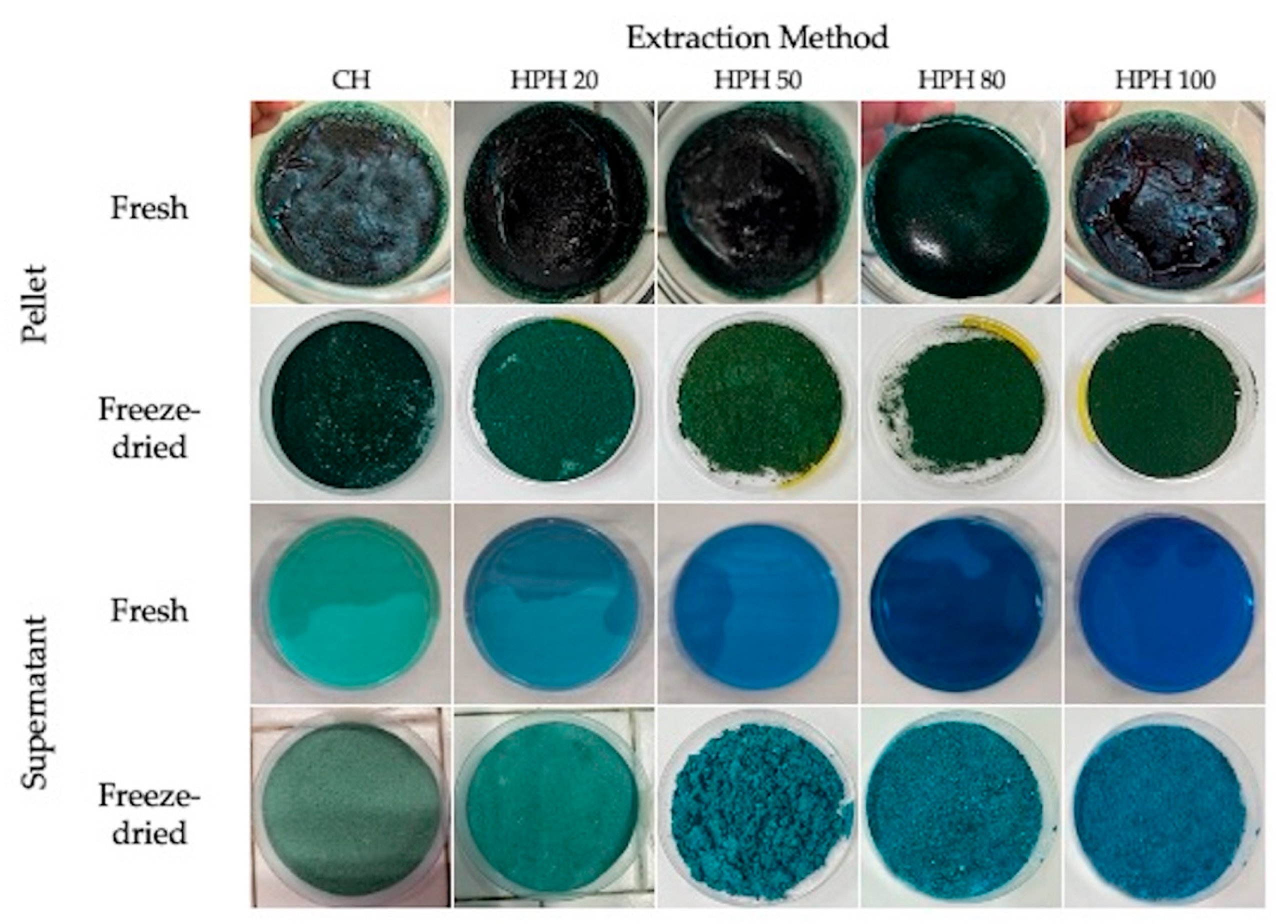
Figure 2.
Figure 2. Optical microscopy images (100X magnification) of Spirulina (Arthrospira platensis) suspensions after different extraction treatments. (a) Untreated SB control; (b) chemical extraction (CH); (c-f) high-pressure homogenization (HPH) at 20, 50, 80, and 100 MPa, respectively.
Figure 2.
Figure 2. Optical microscopy images (100X magnification) of Spirulina (Arthrospira platensis) suspensions after different extraction treatments. (a) Untreated SB control; (b) chemical extraction (CH); (c-f) high-pressure homogenization (HPH) at 20, 50, 80, and 100 MPa, respectively.
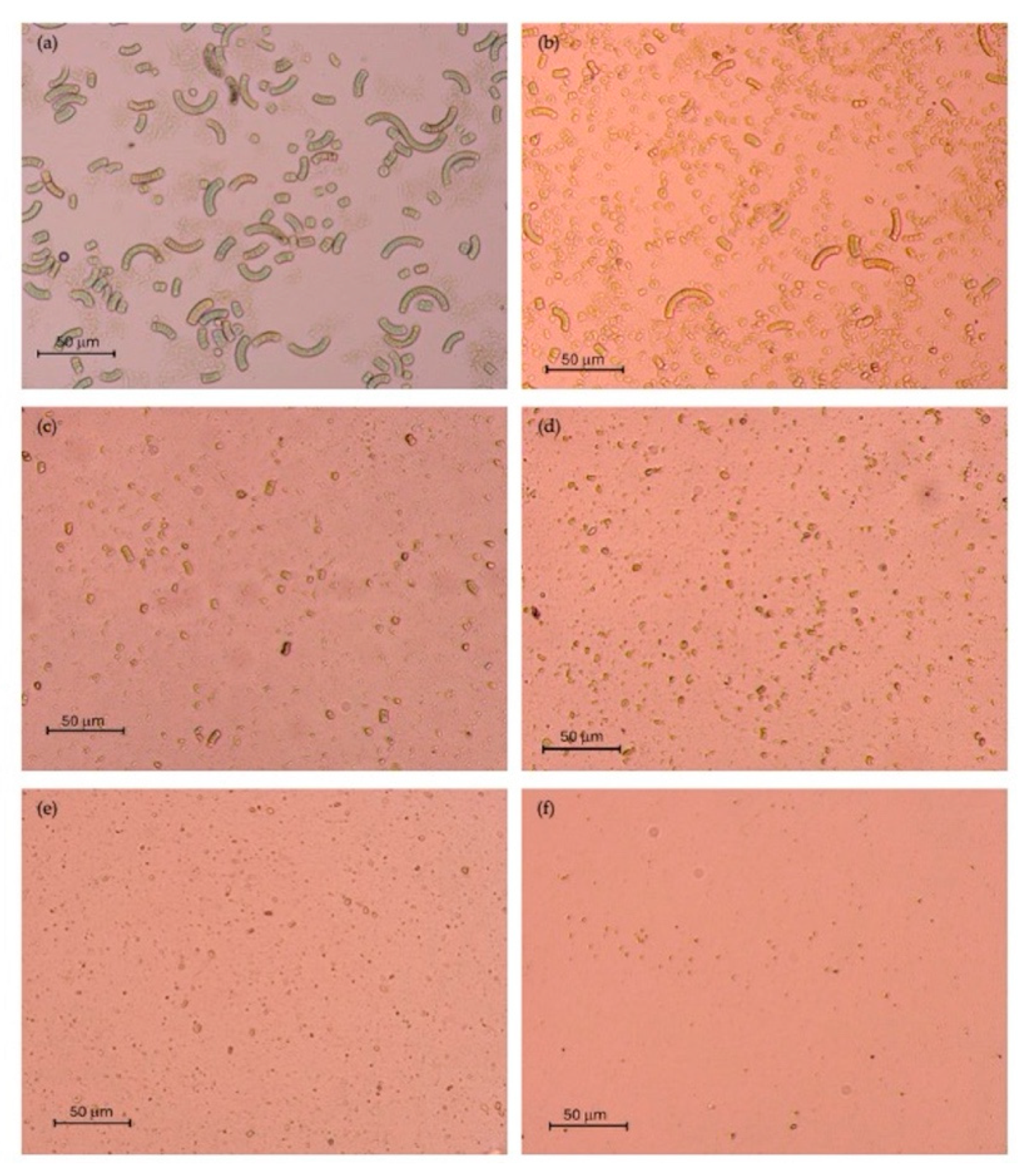
Figure 3.
Protein solubility (%) of CH-P at different pH. Different letters (A–F) indicate statistically significant differences between means (p < 0.05).
Figure 3.
Protein solubility (%) of CH-P at different pH. Different letters (A–F) indicate statistically significant differences between means (p < 0.05).
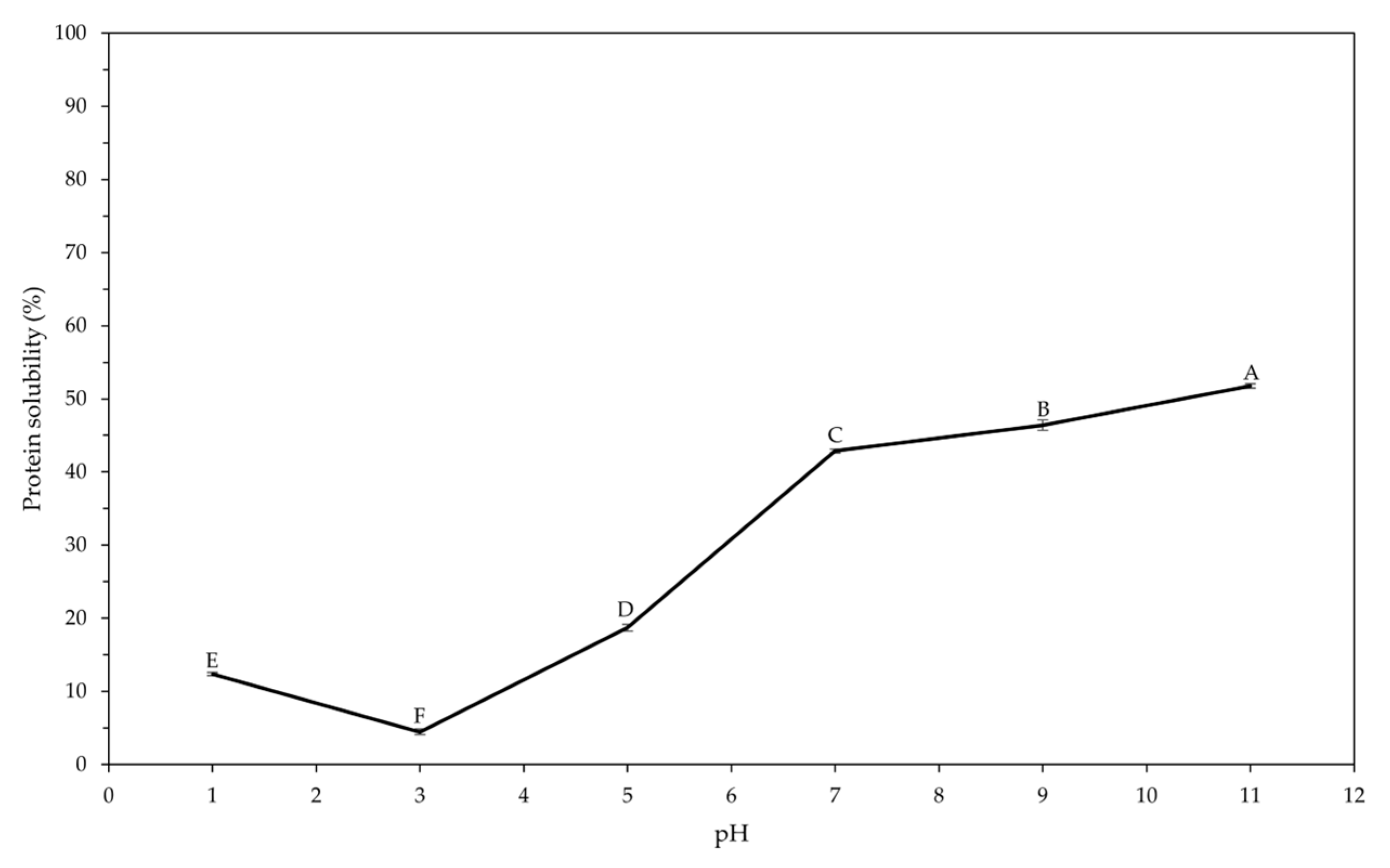
Figure 4.
Protein solubility (%) of Spirulina supernatant fractions obtained by chemical treatment (CH-S) and High-Pressure Homogenization (HPH) at different pressures (20, 50, 80, and 100 MPa). Different letters indicate statistically significant differences among samples (p < 0.05).
Figure 4.
Protein solubility (%) of Spirulina supernatant fractions obtained by chemical treatment (CH-S) and High-Pressure Homogenization (HPH) at different pressures (20, 50, 80, and 100 MPa). Different letters indicate statistically significant differences among samples (p < 0.05).
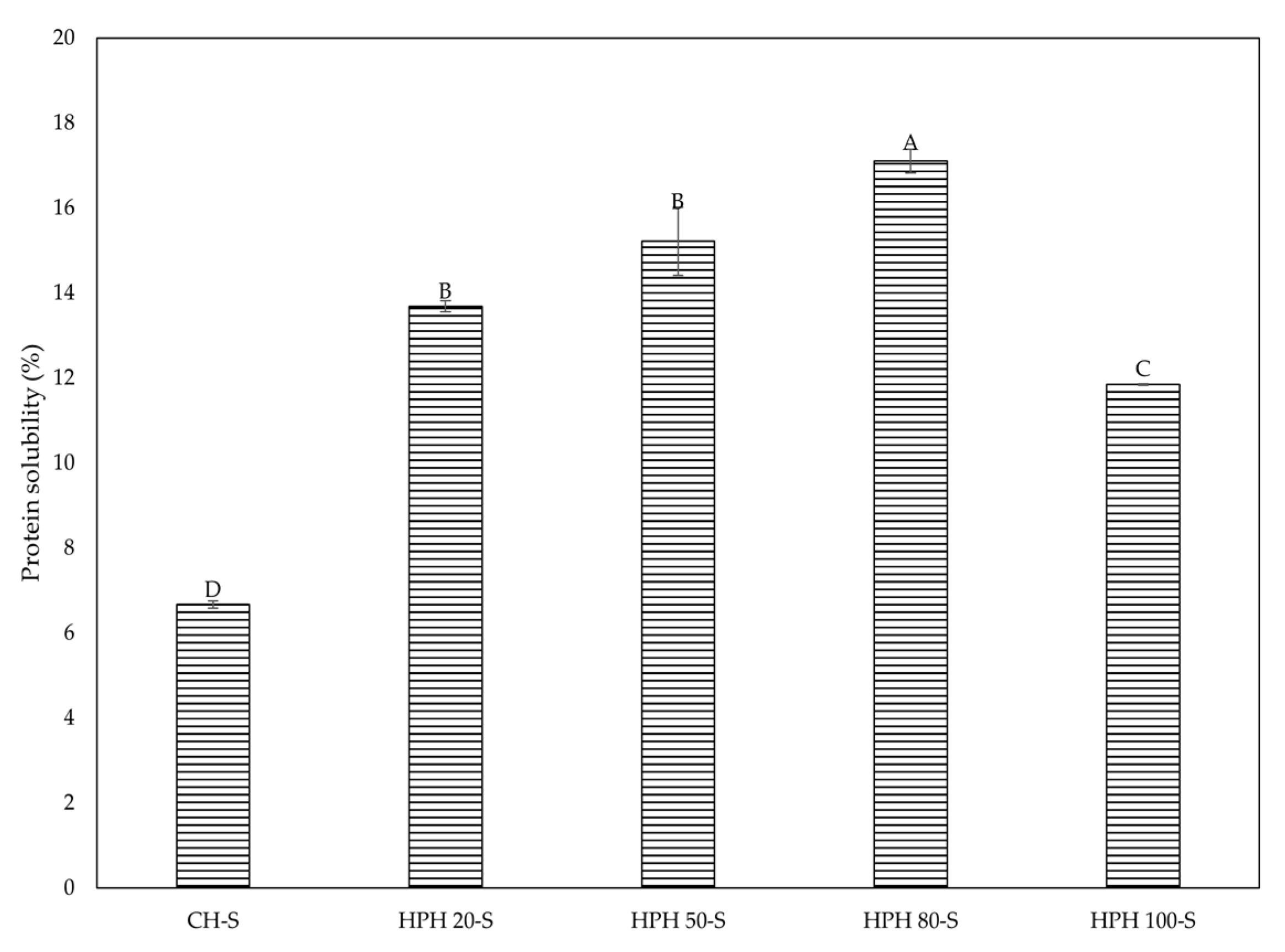
Figure 5.
Emulsifying Activity Index (EAI, m²/gPtot) and Emulsion Stability Index (ESI, min) of protein extracts from Arthrospira platensis. (a) Effect of pH (3, 5, 7, 9, and 11) on the emulsifying properties of the chemically extracted sample (CH-P); (b) Comparison between CH-P at pH 7 and samples extracted by high-pressure homogenization (HPH) at 20, 50, 80, and 100 MPa. Different letters indicate statistically significant differences among samples (p < 0.05) for each parameter (EAI: uppercase letters A–E; ESI: lowercase letters a–e).
Figure 5.
Emulsifying Activity Index (EAI, m²/gPtot) and Emulsion Stability Index (ESI, min) of protein extracts from Arthrospira platensis. (a) Effect of pH (3, 5, 7, 9, and 11) on the emulsifying properties of the chemically extracted sample (CH-P); (b) Comparison between CH-P at pH 7 and samples extracted by high-pressure homogenization (HPH) at 20, 50, 80, and 100 MPa. Different letters indicate statistically significant differences among samples (p < 0.05) for each parameter (EAI: uppercase letters A–E; ESI: lowercase letters a–e).
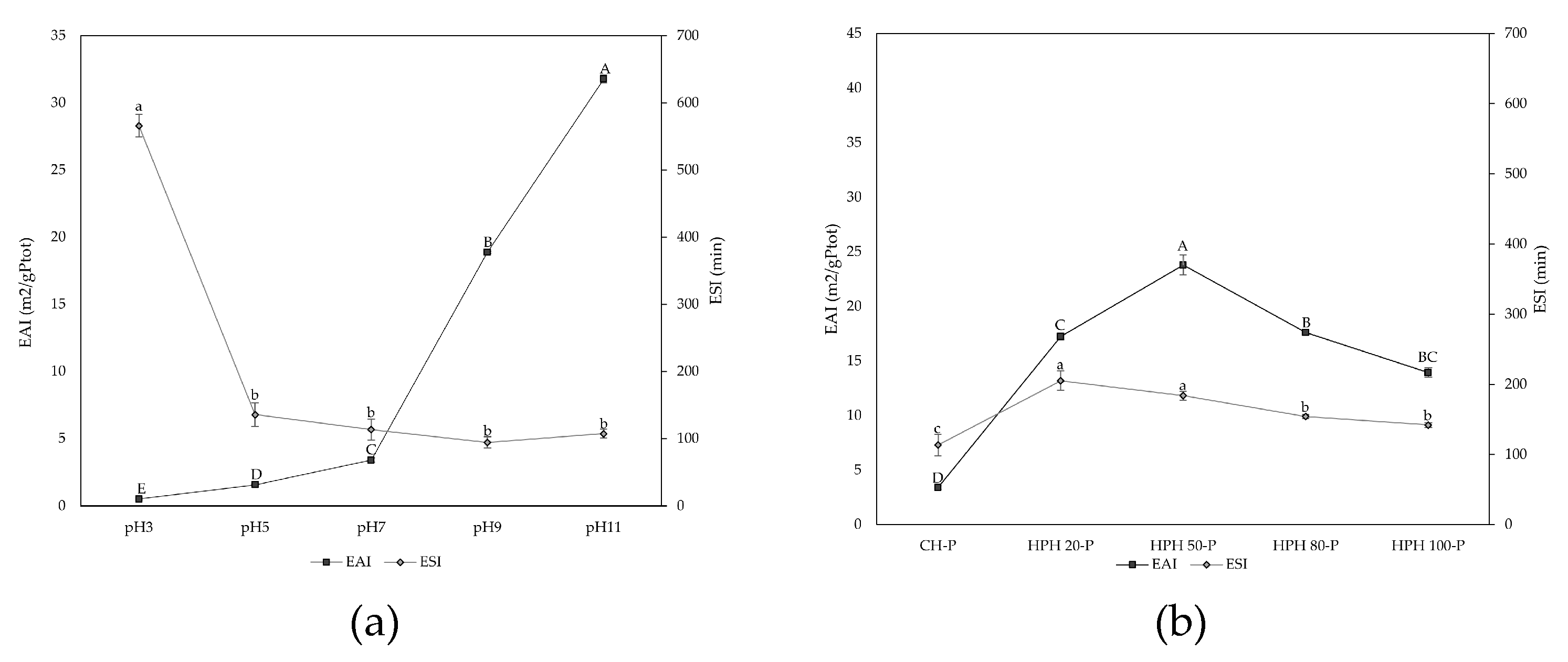
Figure 6.
Temperature-dependent viscoelastic moduli G′ (storage modulus) and G″ (loss modulus) of Arthrospira platensis protein extracts during heating (solid lines) and cooling (dashed lines) cycles. The samples include (a) alkaline-extracted protein (CH-P) and those obtained by high-pressure homogenization at (b) 20 MPa, (c) 50 MPa, (d) 80 MPa, and (e) 100 MPa.
Figure 6.
Temperature-dependent viscoelastic moduli G′ (storage modulus) and G″ (loss modulus) of Arthrospira platensis protein extracts during heating (solid lines) and cooling (dashed lines) cycles. The samples include (a) alkaline-extracted protein (CH-P) and those obtained by high-pressure homogenization at (b) 20 MPa, (c) 50 MPa, (d) 80 MPa, and (e) 100 MPa.
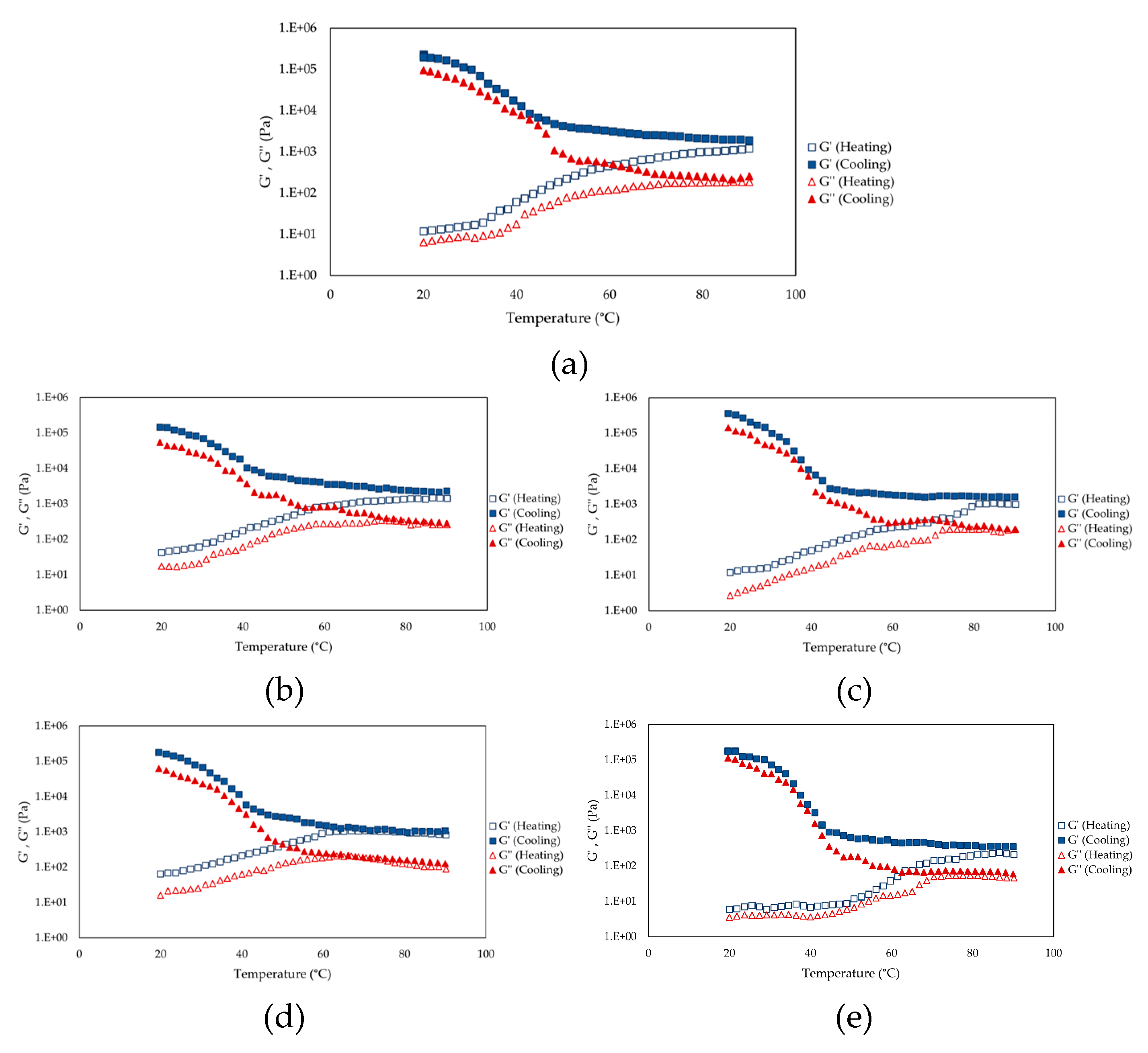
Figure 7.
Frequency sweep profiles of Arthrospira platensis protein extracts showing the storage modulus (G′, squares) and loss modulus (G″, triangles) as a function of angular frequency (0.1–100 rad/s). Samples were obtained by (a) alkaline extraction (CH) and by high-pressure homogenization at (b) 20 MPa, (c) 50 MPa, (d) 80MPa, and (e) 100 MPa.
Figure 7.
Frequency sweep profiles of Arthrospira platensis protein extracts showing the storage modulus (G′, squares) and loss modulus (G″, triangles) as a function of angular frequency (0.1–100 rad/s). Samples were obtained by (a) alkaline extraction (CH) and by high-pressure homogenization at (b) 20 MPa, (c) 50 MPa, (d) 80MPa, and (e) 100 MPa.
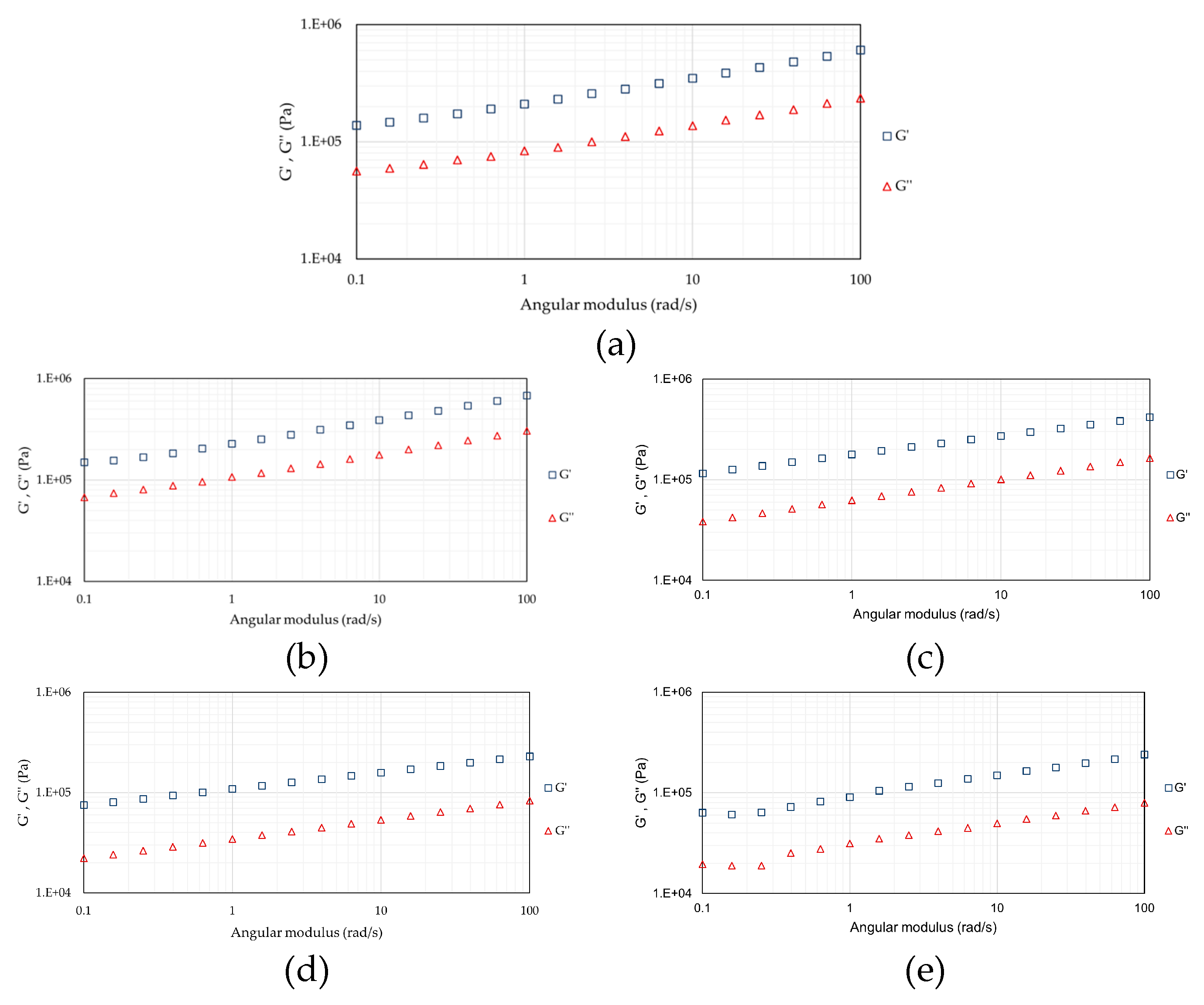
Table 1.
Sample codes obtained by chemical (CH) and high-pressure homogenization (HPH) extraction.
| Extraction method | Pressure (MPa) | Precipitate fraction (-P) | Supernatant fraction (-S) |
|---|---|---|---|
| Chemical (CH) | CH-P | CH-S | |
| - | |||
| High-Pressure Homogenization (HPH) | 20 | HPH 20-P | HPH 20-S |
| 50 | HPH 50-P | HPH 50-S | |
| 80 | HPH 80-P | HPH 80-S | |
| 100 | HPH 100-P | HPH 100-S |
Table 2.
Total protein extraction yield and protein content in pellet and supernatant for extract obtained by chemical extraction (CH) and high-pressure homogenization (HPH) at 20-100 MPa.
Table 2.
Total protein extraction yield and protein content in pellet and supernatant for extract obtained by chemical extraction (CH) and high-pressure homogenization (HPH) at 20-100 MPa.
| Method |
Total protein extraction yield gPtot/100gPSB |
Pellet | Supernatant | ||
|
Protein content gPtot/100g-P |
Protein yield* gPtot/100gPSB |
Protein content gPtot/100g-P |
Protein yield* gPtot/100gPSB |
||
| CH | 56.58±0.40C | 77.32±0.43A | 31.21±0.83D | 21.14±1.32D | 8.03±0.16C |
| HPH 20 | 60.53±1.43C | 67.87±0.40B | 55.82±1.24C | 30.03±0.28C | 4.71±0.19D |
| HPH 50 | 72.35±1.15B | 69.00±0.18B | 68.02±0.92A | 30.54±0.46C | 4.34±0.24D |
| HPH 80 | 73.62±1.51AB | 58.96±0.11C | 63.32±1.20B | 38.07±0.94B | 10.30±0.31B |
| HPH 100 | 77.79±0.74A | 49.06±0.13D | 58.42±0.30C | 50.06±0.84A | 19.49±0.73A |
Data are mean ± SD; different letters within column indicate significant difference (p<0.05) among samples. *Pellet protein yield values adapted from Muccio et al. [30].
Table 3.
Total phycobiliproteins (PBPs), C-phycocyanin (C-PC) content, and purity index (EP) of the freeze-dried supernatants obtained from chemical and HPH extraction methods.
Table 3.
Total phycobiliproteins (PBPs), C-phycocyanin (C-PC) content, and purity index (EP) of the freeze-dried supernatants obtained from chemical and HPH extraction methods.
| Sample | PBPs gPBP/100gPtot-S |
C-PC gC-PC/100gPtot-S |
A-PC gAPC/100gPtot-S |
PE gPE/100gPtot-S |
EP - |
|---|---|---|---|---|---|
| CH | 3.45±0.09E | 2.40±0.03E | 0.36±0.04A | 0.69±0.02A | 0.27±0.10B |
| HPH 20 | 7.07±0.00D | 6.65±0.00D | 0.00±0.00B | 0.04±0.00C | 0.53±0.00B |
| HPH 50 | 10.42±0.00B | 9.61±0.00A | 0.00±0.00B | 0.08±0.00B | 0.91±0.14A |
| HPH 80 | 10.62±0.00A | 9.23±0.00B | 0.07±0.00B | 0.07±0.00BC | 0.96±0.02A |
| HPH 100 | 8.12±0.02C | 7.62±0.02C | 0.00±0.00B | 0.05±0.00BC | 1.04±0.00A |
Data are presented as mean ± standard deviation (n = 3). Different letters (A-E) in the same column indicate significant (p < 0.05) differences between treatments.
Table 4.
Thermal parameters (To, Tp, ΔH) of protein fractions from precipitate (–P) and supernatant (–S) after chemical and HPH extraction (20–100 MPa).
Table 4.
Thermal parameters (To, Tp, ΔH) of protein fractions from precipitate (–P) and supernatant (–S) after chemical and HPH extraction (20–100 MPa).
| Sample | TO °C |
TP °C |
ΔH J/gPtot |
|---|---|---|---|
| CH-P | 48.56 ±0.86B | 51.57 ±0.52B | 2.75 ±0.11B |
| HPH 20-P | 44.49 ±0.71C | 49.37 ±0.00B | 1.17 ±0.30B |
| HPH 50-P | 53.53 ±0.86A | 58.70± 0.56A | 11.96± 0.20A |
| HPH 80-P | 38.54 ±0.40D | 45.50 ±0.42C | 2.61 ±0.70B |
| HPH 100-P | 47.22 ±0.85BC | 50.42 ±1.24B | 8.79 ±1.61A |
| CH-S | 41.80 ±0.59C | 41.19 ±0.02B | 19.27 ±0.10A |
| HPH 20-S | 47.81 ±0.97AB | 50.18±1.56A | 4.22 ±1.31B |
| HPH 50-S | 46.10 ±0.28B | 47.63 ±0.05A | 5.36 ±1.16B |
| HPH 80-S | 48.64 ±0.54A | 50.14 ±0.48A | 5.11 ±0.46B |
| HPH 100-S | 39.85 ±0.21C | 47.72 ±0.11A | 8.53 ±1.89B |
Different letters within each column indicate statistically significant differences among samples (p < 0.05).
Disclaimer/Publisher’s Note: The statements, opinions and data contained in all publications are solely those of the individual author(s) and contributor(s) and not of MDPI and/or the editor(s). MDPI and/or the editor(s) disclaim responsibility for any injury to people or property resulting from any ideas, methods, instructions or products referred to in the content. |
© 2025 by the authors. Licensee MDPI, Basel, Switzerland. This article is an open access article distributed under the terms and conditions of the Creative Commons Attribution (CC BY) license (http://creativecommons.org/licenses/by/4.0/).
Copyright: This open access article is published under a Creative Commons CC BY 4.0 license, which permit the free download, distribution, and reuse, provided that the author and preprint are cited in any reuse.


