

Submitted:
16 October 2025
Posted:
20 October 2025
You are already at the latest version
Abstract
This study examined the acute effects of a multi-ingredient preworkout supplement (MIPS) on peak torque of the leg extensors during a fatiguing isokinetic protocol in-volving isometric, concentric, and eccentric muscle actions. Thirteen recreational-ly-trained male subjects (mean age ± SD = 22.9 ± 2.2 years) were randomly assigned in crossover fashion to ingest a MIPS or placebo before an isokinetic protocol that con-sisted of 60 maximal, concentric and eccentric muscle actions with electromyographic signals recorded from the quadriceps. Immediately before (PRE) and after (POST) the protocol, subjects were assessed for isometric peak torque. The MIPS condition resulted in greater isometric (205 ± 48 vs. 185 ± 44 N·m, p = 0.04) and concentric (121 ± 34 vs. 103 ± 27 N·m, p = 0.015) torque values versus placebo (collapsed across time). For ec-centric peak torque, there was no significant (p > 0.05) interaction or main effect for condition. In addition, there were significant main effects for time (PRE vs. POST) for all muscle actions (p < 0.001). These findings indicated ingestion of the MIPS signifi-cantly attenuated the decline in both isometric and concentric, but not eccentric, peak torque during an isokinetic fatigue protocol of the leg extensors.
Keywords:
isometric
; concentric
; eccentric
; leg extensors
; quadriceps
; electromyography
1. Introduction
In the past several years, the use of multi-ingredient pre-workout supplements (MIPS) has become extremely popularized, and their ergogenic potential has become well-established for various sports and within the general population by both competitive and recreational athletes [1,2,3,4,5,6]. Some of the more prevalent ingredients in MIPS include caffeine, β-alanine, L-citrulline, L-arginine, and creatine, with many of these ingredients and others often combined into proprietary blends [7]. Although recent findings indicate synergistic effects among these ingredients may be present [8], it has been suggested that caffeine is the predominant factor responsible for the acute ergogenic effects associated with MIPS [2,9]. In fact, the recommended timing for ingestion of most MIPS is likely based on the stimulating effects of caffeine which typically peaks in the bloodstream 30-60 minutes post-ingestion [10,11]. As a nutritional supplement, caffeine has been shown to be beneficial for maintaining maximal strength and endurance as well as delaying the onset of fatigue and improving time-trial performance along with other forms of high-intensity exercise [10,11]. These effects have been attributed to improved motor unit firing rates and calcium release from the sarcoplasmic reticulum, subsequently enhancing muscle contraction force [4,12]. β-alanine is another ingredient included in most MIPS [7] and has been identified as the rate-limiting precursor to carnosine, an intracellular muscle buffer [13]. Supplementation with β-alanine has been shown to increase intramuscular levels of carnosine, thereby attenuating metabolic acidosis and contributing to improvements in exercise capacity during high-intensity effort [13]. As precursors to the potent vasodilator, nitric oxide, both L-citrulline and L-arginine supplements have been demonstrated to enhance blood flow to active muscles, subsequently delaying the onset of muscular fatigue [14,15,16]. Based on these collective physiological mechanisms, a MIPS containing these notable ergogenic ingredients (caffeine, β-alanine, L-citrulline, L-arginine) may provide neuromuscular benefits for sustaining force or power output during various forms of vigorous activity.
The majority of previous investigations examining the acute effects of MIPS on performance have focused on isotonic variables of upper and lower body muscular strength [i.e., bench press, leg press, and squat one-repetition maximum (1-RM), maximum voluntary contractions (MVC)], endurance (i.e., repetitions to failure at %1-RM), and power (vertical jump, Wingate Anaerobic testing, and critical power) [1,2,3,4,5,6,9,12,18,19]. Despite conflicting evidence for maximal force and power production [4,6,20,21], the findings of several studies [1,3,4,12,17,18,19,22,23] have largely indicated acute MIPS supplementation can enhance overall force retention and muscular endurance during prolonged or intermittent bouts of high intensity activity. Currently, however, the exact underlying mechanisms responsible for these benefits on neuromuscular function are poorly understood.
Although isotonic resistance training offers ecological validity and practical applicability, its outcomes can be substantially influenced by skill level and movement technique. Isokinetic dynamometers coupled with surface electromyography (EMG) recordings are two frequently utilized instruments for the non-invasive assessment of neuromuscular function and fatigue during static and dynamic muscle actions [24,25,26,27]. The utility of isokinetic testing involves the ability to measure isometric, concentric, and eccentric torque levels across an entire range of motion at controlled velocities with minimal skill involvement required. Results from isokinetic testing can provide torque production at different joint angles, while identifying muscle imbalances, tracking the recovery process from injury or surgery, and measuring the rate of force development [28,29]. Thus, as both a training and assessment tool, isokinetic testing is common in clinical and performance settings.
Surface electromyography (EMG) is a technique that involves recording and quantifying the action potentials associated with contracting skeletal muscle fibers [30]. The amplitude contents of the EMG signal reflect the level of muscle activation (i.e., motor unit recruitment and firing rates) [31], whereas the frequency contents provide information related to the muscle fiber conduction velocity [32]. To our knowledge, only one study [5] has directly examined EMG responses associated with acute MIPS administration. Specifically, Negro et al. [5] reported acute MIPS (creatine, arginine, β-alanine, glutamine, taurine) ingestion improved EMG-based indicators of fatigue (i.e., conduction velocity, fractal dimension) during sustained isometric contractions following a resistance exercise protocol designed to elicit fatigue. The authors [5] proposed these acute benefits of their MIPS product may be attributable to improved: 1) peripheral components of performance fatiguability, 2) buffering capacity of the muscle from β-alanine, and 3) regulation of mechanisms associated with exercise-induced fatigue from arginine, glutamine, and taurine. Based on these findings [5], valuable insight can be gained into the underlying neuromuscular factors associated with acute MIPS ingestion by examining muscle function and fatigue through isokinetic and EMG assessments. Thus, the primary purpose of the present study was to examine the acute effects of a MIPS product on peak torque production of the leg extensors during a fatiguing isokinetic protocol involving isometric, concentric, and eccentric muscle actions. In addition, we investigated the effects of the MIPS supplement on EMG amplitude and median power frequency (MDF) responses from the vastus lateralis, rectus femoris, and vastus medialis muscles.
2. Materials and Methods
2.1. Study Design
This study utilized a randomized, double-blind, placebo-controlled, within-subjects crossover design. Subjects were required to visit the laboratory on three occasions separated by 7 days. During the first laboratory visit, each subject performed a series of submaximal and maximal isometric, concentric, and eccentric muscle actions of the leg extensors on a calibrated isokinetic dynamometer to familiarize the subjects with the testing procedures. For the second visit, each subject was randomly assigned to ingest one serving of the MIPS or one serving of the placebo 30 minutes before completing an isokinetic fatigue protocol with EMG signals recorded from superficial muscles of the quadriceps. The third visit involved the subjects returning to the laboratory to ingest the remaining substance (MIPS or placebo) and complete identical testing procedures as the second visit. All subjects were required to complete two-day dietary history logs before each laboratory visit using MyFitnessPal (Baltimore, MD, USA).
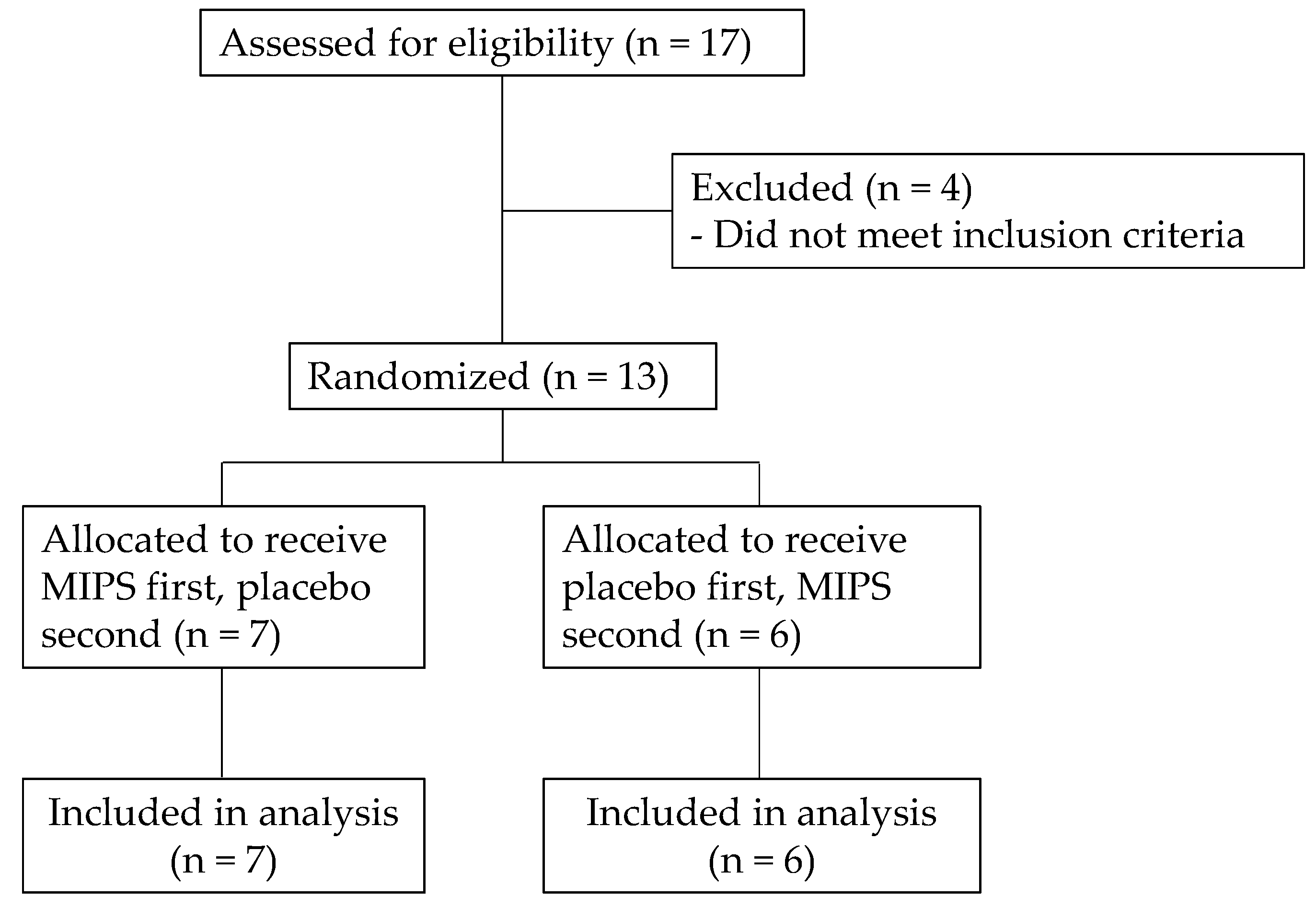
Figure 1.
Consolidated Standards of Reporting Trials (CONSORT) flow diagram.
2.2. Subjects
Thirteen male subjects (mean age ± SD = 22.9 ± 2.2 years; body mass = 84.6 ± 8.6 kg; resistance training = 5.0 ± 3.4 hr·wk-1) defined as recreationally-trained (resistance training: 5.0 ± 3.4 hours per week; aerobic training: 1.7 ± 1.1 hours per week) were recruited to participate in this investigation. An a priori power analysis using G*Power 3.1 (Universität Düsseldorf, Germany) indicated a sample size of at least 12 was required to achieve power (1-β) of 0.80 with an effect size of 0.3 and alpha of 0.05 for a within-subjects, crossover design. The subjects were eligible to participate if they did not report: 1) cardiovascular disease, metabolic, renal, hepatic, or musculoskeletal disorders; 2) use of any medications; 3) use of nutritional supplements; 4) habitual use of caffeine (≥ 1 caffeinated beverage per day); or 5) participation in another clinical trial or investigation of another nutritional product within 30 days of screening/enrollment. The subjects were instructed to refrain from exercise for 48 hours as well as eating or drinking anything other than water for three hours before laboratory visits 2 and 3. In addition, the subjects were asked to completely abstain from caffeine use for at least two weeks before starting the investigation. The study was conducted according to the guidelines of the Declaration of Helsinki, approved by the Institutional Review Board of Northern Illinois University (#HS22-0139, November 15, 2021), and registered on clinicaltrials.gov (currently under PRS review). All participants were required to complete a health history questionnaire and sign an informed consent document before all testing.
2.3. Procedures
2.3.1. Visit 1: Familiarization
The initial visit to the laboratory was used as an orientation session to familiarize the subjects with the study guidelines and testing procedures. This visit included an explanation of the isokinetic testing, EMG measurements, and instructions for using MyFitnessPal for the recording of energy and macronutrient intake. Each subject was also fitted on a calibrated isokinetic dynamometer (Humac Norm, Computer Sports Medicine, Inc., Stoughton, MA, USA) to practice performing submaximal and maximal isometric, concentric, and eccentric muscle actions of the leg extensors. The isometric muscle actions were completed using a 120° angle between the thigh and leg, whereas the concentric and eccentric muscle actions were performed at 60°·s-1.
2.3.2. Visits 2 and 3: Fatigue Protocol Tests with Supplementation
Supplementation Protocol. Subjects were assigned to ingest (in a randomized and double-blind manner): (1) one serving of the MIPS (Beyond Raw Lit, General Nutrition Company, Pittsburgh, PA, USA), or (2) one serving of the placebo (noncaloric powdered drink mix matched with the MIPS for flavor and consistency) (Walmart Stores, Inc., Bentonville, AR, USA) with 8 ounces of water 30 minutes prior to the exercise protocol. Ingredients of the MIPS included: (1) CarnoSyn Beta-Alanine (3.2 g), (2) Caffeine Anhydrous (250 mg), 3) L-citrulline (3.0 g), (4) L-arginine (1.5 g), (5) elevATP (Ancient Pear and Apple Extract) (150 mg), and (6) Neurofactor (Coffea arabica) (fruit extract) (100 mg).
Fatigue Protocol. All subjects completed a warm-up of 10, 3-s isometric muscle actions as well as 10 concentric and 10 eccentric muscle actions at 60°·s-1 corresponding to approximately 50-75% of their subjective maximum effort. Following the warm-up and two minutes of rest, the subjects performed two 3-s isometric MVCs at a joint angle of 120° between the thigh and leg. Each isometric MVC was separated by 5 seconds of rest. The average of these first two MVC values was used as the representative baseline (PRE) MVC score. After another two minutes of rest, the subjects completed a total of 60 consecutive, maximal concentric and eccentric muscle actions at 60°·s-1. Specifically, the subject started with their leg at 90° flexion and performed a maximal concentric muscle action to full extension (180°). Once full extension was attained, a maximal eccentric muscle action was performed from full extension (180°) back to 90° flexion. Immediately following the maximal eccentric muscle action, this process of repeating maximal concentric, followed by maximal eccentric muscle actions continued until 30 concentric and 30 eccentric repetitions had been completed. The representative PRE and POST peak torque values for the concentric and eccentric muscles actions were calculated as an average of first three muscle actions and an average of the last three muscle actions, respectively. Immediately after the fatigue protocol, two additional 3-s isometric MVCs were completed with 5 seconds rest between each MVC. The average of these last two MVC values was used as the representative POST MVC score. The range of motion was standardized to 90° to 180° at the knee for all subjects. During each maximal muscle action, the subjects were provided with verbal encouragement to produce as much torque as possible.
EMG Electrode Placement and Signal Processing. During visits 2 and 3, bipolar (10 mm center-to-center) wireless surface electrode sensors (Tringo Wireless EMG, Delsys Inc. Natick, MA) were placed on the right thigh over the vastus lateralis, rectus femoris, and vastus medialis muscles based on SENIAM recommendations [33] with double-sided adhesive stickers. Prior to electrode placement, the skin at the electrode sites were shaved, carefully abraded with gauze, and cleaned with alcohol. The EMG signals were amplified (gain: x1000) (Tringo Wireless EMG, Delsys Inc., Natick, MA, bandwidth = 20-450 Hz), sampled at 2000 Hz, recorded continuously throughout each protocol, and stored in a personal computer (Dell Latitude 5480, Round Rock, TX) for subsequent analyses. All signal processing was performed using custom programs written with MATLAB programming software [version 9.10 (2021A), Mathworks, Natick, MA]. For each of the isometric, concentric, and eccentric muscle actions, the EMG amplitude (μVrms) and median power frequency (MDF, Hz) values were calculated for a 1-s epoch. For the MDF analyses, each data segment was processed with a Hamming window and the discrete Fourier transform algorithm. The EMG amplitude and MDF values associated with each isometric, concentric, and eccentric muscle action for each subject were normalized to their representative PRE isometric MVC value.
2.4. Statistical Analyses
All statistical analyses were completed using SPSS software program (version 29, IBM Corp., Armonk, New York, USA). All data are presented as mean ± SD. Two-way repeated-measures analyses of variance (ANOVAs) were used to determine significant mean differences in peak torque, normalized EMG amplitude, and normalized EMG MDF among conditions (MIPS, placebo) and time (PRE, POST). When appropriate, follow-ups included paired samples t-tests. All daily energy intake (kcals) and macronutrient data (grams of carbohydrate, fat, and protein) were analyzed with paired-samples t-tests between conditions (MIPS vs. placebo). An alpha of < 0.05 was considered statistically significant for all analyses.
3. Results
3.1. Peak Torque Production
3.1.1. Isometric Peak Torque
For isometric MVCs, there was no significant interaction (F(1,12) = 1.095; p = 0.316; partial ɳ2 = 0.084) for condition (MIPS, placebo) across time (PRE, POST), but there were main effects for condition (F(1,12) = 5.066; p = 0.044; partial ɳ2 = 0.297) and time (F(1,12) = 26.477; p < 0.001; partial ɳ2 = 0.688) (Figure 2). Follow-up paired-samples t-tests indicated the MIPS condition (205 ± 48 N·m) resulted in significantly greater torque compared to the placebo (185 ± 44 N·m) collapsed across time, whereas the PRE torque values (225 ± 53 N·m) were significantly greater than POST torque values (165 ± 42 N·m) collapsed across condition.
3.1.2. Concentric Peak Torque
For concentric peak torque production, there was no significant interaction (F(1,12) = 0.099; p = 0.759; partial ɳ2 = 0.008) for condition (MIPS, placebo) across time (first 3, last 3), but there were main effects for condition (F(1,12) = 8.040; p = 0.015; partial ɳ2 = 0.401) and time (F(1,12) = 95.157; p < 0.001; partial ɳ2 = 0.888) (Figure 3). Follow-up paired-samples t-tests indicated the MIPS condition (121 ± 34 N·m) resulted in significantly greater torque compared to the placebo (103 ± 27 N·m) collapsed across time, whereas the PRE torque values (154 ± 40 N·m) were significantly greater than POST torque values (69 ± 21 N·m) collapsed across condition.
3.1.3. Eccentric Peak Torque
For eccentric peak torque production, there was no significant interaction (F(1,12) = 0.110; p = 0.746; partial ɳ2 = 0.009) or main effect for condition (F(1,12) = 1.198; p = 0.295; partial ɳ2 = 0.091), but there was a main effect for time (F(1,12) = 40.160; p < 0.001; partial ɳ2 = 0.770) (Figure 4). The follow-up paired-samples t-test indicated the PRE torque values (159 ± 49 N·m) were significantly greater than the POST torque values (88 ± 54 N·m) collapsed across condition.
3.2. EMG Amplitude
3.2.1. Isometric Muscle Actions
For the vastus medialis during the isometric MVCs, there was no significant interaction (F(1,11) = 0.019; p = 0.894; partial ɳ2 = 0.002) or main effect for condition (F(1,11) = 0.019; p = 0.894; partial ɳ2 = 0.002), but there was a main effect for time (F(1,11) = 5.719; p = 0.036; partial ɳ2 = 0.342) (Table 1). The follow-up paired-samples t-test indicated that the mean POST EMG amplitude value (145 ± 65%) was significantly greater than the PRE (100 ± 0%) (collapsed across conditions). For the rectus femoris, there was no significant interaction (F(1,11) = 1.901; p = 0.195; partial ɳ2 = 0.147) or main effect for condition (F(1,11) = 1.901; p = 0.195; partial ɳ2 = 0.147), but there was a main effect for time (F(1,11) = 7.579; p = 0.019; partial ɳ2 = 0.408). The follow-up paired-samples t-test indicated that the mean POST EMG amplitude value (149 ± 62%) was significantly greater than the PRE (100 ± 0%). For the vastus lateralis, there was no significant interaction (F(1,11) = 0.241; p = 0.633; partial ɳ2 = 0.021) or main effect for condition (F(1,11) = 0.241; p = 0.633; partial ɳ2 = 0.021), but there was a main effect for time (F(1,11) = 8.414; p = 0.014; partial ɳ2 = 0.433). The follow-up paired-samples t-test indicated that the mean POST EMG amplitude value (143 ± 52%) was significantly greater than the PRE (100 ± 0%).
3.2.2. Concentric Muscle Actions
For the vastus medialis, there was no significant interaction (F(1,11) = 2.335; p = 0.115; partial ɳ2 = 0.175) or main effect for condition (F(1,11) = 0.164; p = 0.693; partial ɳ2 = 0.015) or time (F(1,11) = 0.991; p = 0.341; partial ɳ2 = 0.083) (Table 1). For the rectus femoris, there was no significant interaction (F(1,11) = 0.147; p = 0.709; partial ɳ2 = 0.013) or main effect for condition (F(1,11) = 0.242; p = 0.632; partial ɳ2 = 0.022) or time (F(1,11) = 3.263; p = 0.098; partial ɳ2 = 0.229). For the vastus lateralis, there was no significant interaction (F(1,11) = 0.932; p = 0.335; partial ɳ2 = 0.078) or main effect for condition (F(1,11) = 0.030; p = 0.866; partial ɳ2 = 0.003) or time (F(1,11) = 4.138; p = 0.067; partial ɳ2 = 0.273).
3.2.3. Eccentric Muscle Actions
For the vastus medialis, there was a significant interaction (F(1,11) = 6.429; p = 0.028; partial ɳ2 = 0.369) (Table 1). Follow-up paired-samples t-tests indicated no significant mean differences in PRE EMG amplitude values (MIPS: 148 ± 112% vs. placebo: 104 ± 32%, p 0.052) or POST EMG amplitude values (MIPS: 156 ± 134% vs. placebo: 145 ± 83%, p = 0.673) between conditions. For the rectus femoris, there was no significant interaction (F(1,11) = 0.060; p = 0.810; partial ɳ2 = 0.005) or main effect for condition (F(1,11) = 0.033; p = 0.859; partial ɳ2 = 0.003) or time (F(1,11) = 3.203; p = 0.101; partial ɳ2 = 0.226). For the vastus lateralis, there was no significant interaction (F(1,11) = 0.615; p = 0.449; partial ɳ2 = 0.053) or main effect for condition (F(1,11) = 0.153; p = 0.703; partial ɳ2 = 0.014) or time (F(1,11) = 2.941; p = 0.114; partial ɳ2 = 0.211).
3.3. Median Power Frequency
3.3.1. Isometric Muscle Actions
For the vastus medialis, there was no significant interaction (F(1,11) = 2.652; p = 0.132; partial ɳ2 = 0.194) or main effect for condition (F(1,11) = 2.652; p = 0.132; partial ɳ2 = 0.194) or time (F(1,11) = 1.342; p = 0.271; partial ɳ2 = 0.109) (Table 2). For the rectus femoris, there was no significant interaction (F(1,11) = 1.880; p = 0.198; partial ɳ2 = 0.146) or main effect for condition (F(1,11) = 1.880; p = 0.198; partial ɳ2 = 0.146) or time (F(1,11) = 0.199; p = 0.665; partial ɳ2 = 0.018). For the vastus lateralis, there was no significant interaction (F(1,11) = 3.449; p = 0.090; partial ɳ2 = 0.239) or main effect for condition (F(1,11) = 3.449; p = 0.090; partial ɳ2 = 0.239) or time (F(1,11) = 0.178; p = 0.681; partial ɳ2 = 0.016).
3.3.2. Concentric Muscle Actions
For the vastus medialis, there was no significant interaction (F(1,11) = 0.034; p = 0.857; partial ɳ2 = 0.003) or main effect for condition (F(1,11) = 0.625; p = 0.446; partial ɳ2 = 0.054), but there was a main effect for time (F(1,11) = 5.967; p = 0.033; partial ɳ2 = 0.352) (Table 2). The follow-up paired-samples t-test indicated that the mean PRE EMG MDF value (105 ± 13%) was significantly greater than the POST (98 ± 15%) (collapsed across conditions). For the rectus femoris, there was no significant interaction (F(1,11) = 0.687; p = 0.425; partial ɳ2 = 0.059) or main effect for condition (F(1,11) = 3.787; p = 0.078; partial ɳ2 = 0.256), but there was a main effect for time (F(1,11) = 11.608; p = 0.006; partial ɳ2 = 0.513). The follow-up paired-samples t-test indicated that the mean PRE EMG MDF value (105 ± 21%) was significantly greater than the POST (89 ± 24%) (collapsed across conditions). For the vastus lateralis, there was no significant interaction (F(1,11) = 0.224; p = 0.646; partial ɳ2 = 0.020) or main effect for condition (F(1,11) = 4.517; p = 0.057; partial ɳ2 = 0.291) or time (F(1,11) = 2.241; p = 0.163; partial ɳ2 = 0.169).
3.3.3. Eccentric Muscle Actions
For the vastus medialis, there was no significant interaction (F(1,11) = 0.044; p = 0.837; partial ɳ2 = 0.004) or main effect for condition (F(1,11) = 1.070; p = 0.323; partial ɳ2 = 0.089) or time (F(1,11) = 2.663; p = 0.131; partial ɳ2 = 0.195) (Table 2). For the rectus femoris, there was no significant interaction (F(1,11) = 0.119; p = 0.737; partial ɳ2 = 0.011) or main effect for condition (F(1,11) = 1.541; p = 0.240; partial ɳ2 = 0.123) or time (F(1,11) = 2.270; p = 0.160; partial ɳ2 = 0.171). For the vastus lateralis, there was no significant interaction (F(1,11) = 0.217; p = 0.650; partial ɳ2 = 0.019) or main effect for condition (F(1,11) = 2.672; p = 0.130; partial ɳ2 = 0.195) or time (F(1,11) = 0.645; p = 0.439; partial ɳ2 = 0.055).
3.4. Food Log Data
There were no significant differences between conditions for daily energy intake (MIPS: 2123 ± 476 vs. placebo: 1996 ± 330 kcals, p = 0.083), carbohydrate (MIPS: 193 ± 54 vs. placebo: 179 ± 55 grams, p = 0.113), fat (MIPS: 91 ± 30 vs. placebo: 84 ± 21 grams, p = 0.202), or protein (MIPS: 150 ± 51 vs. placebo: 148 ± 37 grams, p = 0.860) ingestion.
4. Discussion
This study examined the acute effects of MIPS ingestion on muscle action specific peak torque and EMG responses of the leg extensors during a fatiguing isokinetic protocol. As demonstrated by the main effects for time, the isokinetic protocol resulted in fatigue-induced decreases in peak torque from PRE to POST for isometric (-27%), concentric (-55%), and eccentric (-45%) muscle actions. The main findings of the present study indicated that an acute dose of the MIPS significantly improved isometric (+11%) and concentric (+17%) peak torque production of the leg extensors before (PRE) and after (POST) the fatigue protocol compared to placebo, but not eccentric peak torque. In addition, these beneficial effects on isometric and concentric peak torque were not explained by EMG amplitude or MDF responses of the vastus lateralis, rectus femoris, or vastus medialis which demonstrated no significant differences between the MIPS and placebo conditions.
To our knowledge, this is the first study to examine the acute effects of a MIPS product on isokinetic fatigue-induced changes in isometric peak torque. Specifically, the MIPS condition (205 ± 48 N·m) resulted in greater isometric torque compared to the placebo (185 ± 44 N·m) (collapsed across time). Bioactive compounds in the current MIPS product included caffeine (250 mg or 3 mg·kg-1), β-alanine (3.2 g), citrulline (3.0 g), and arginine (1.5 g). As a mild central nervous system stimulant and primary active ingredient in most MIPS products [4,7], caffeine provides potential ergogenic effects during exercise including: 1) enhanced endurance performance by blocking adenosine receptors resulting in reduced perception of effort and pain [11,34,35], and 2) greater muscular strength and power by increasing motor unit activation through firing rates and promoting greater release of calcium from the sarcoplasmic reticulum leading to more crossbridge formation [4,11,36]. Although provided at approximately half the recommended ergogenic dose when administered in isolation [7], the inclusion of both citrulline (3.0 g) and arginine (1.5 g) in the present MIPS may have improved blood flow [37,38], thereby attenuating fatigue-induced decreases in peak torque. As previously suggested [5,39], it is also possible that β-alanine can function on an acute basis by increasing cytosolic calcium levels and serving as an intracellular buffer during high intensity exercise. Collectively, the primary ingredients (caffeine, β-alanine, citrulline, and arginine) in the current MIPS provide numerous physiological mechanisms that potentially contributed to the improved isometric peak torque values.
Stratton et al. [19] reported that both a caffeinated MIPS (caffeine, 350 mg; L-citrulline DL-malate 2:1, 8 g; β-alanine 3.6 g; betaine anhydrous, 2.5 g; L-theanine, 350 mg; alpha-glyceryl phosphorylcholine, 300 mg) and identical noncaffeinated product resulted in greater squat isometric peak force values following acute ingestion compared to placebo. These findings [19] strongly suggested caffeine may not be solely responsible for the ergogenic effect on isometric force. In contrast, Beyer et al. [1] demonstrated acute MIPS supplementation (L-citrulline, 8 g; creatine monohydrate, 5 g; taurine, 3 g; β-alanine 2.5 g; betaine anhydrous 2.5 g; L-tyrosine, 2g; alpha-glyceryl phosphorylcholine, 300 mg; caffeine, 300 mg; L-theanine, 150 mg) had no effect on isometric mid-thigh pull in a placebo-controlled, crossover study. Negro et al. [5] examined the acute effects of a MIPS product containing creatine (3 g), arginine (2 g), β-alanine (0.8 g), glutamine (1 g), taurine (1 g) on isometric MVCs and 60% MVC until exhaustion in the biceps brachii with EMG measurements before and after completing a resistance exercise protocol designed to induce fatigue. The authors [5] demonstrated no significant PRE to POST changes in MVC or motor unit synchronization, but improved time to exhaustion at 60% MVC and enhanced fiber conduction velocity of the motor unit action potentials for the MIPS condition compared to placebo. Thus, the beneficial effects of MIPS on a sustained isometric contraction in the study of Negro et al. [5] was partially explained by neuromuscular factors of the EMG signal. In the present investigation, however, the greater isometric strength in the MIPS condition could not be attributed to changes in EMG amplitude or MDF which reflect levels of muscle activation (motor unit recruitment, firing rates, synchronization) and motor unit conduction velocity, respectively [31,32]. Due to diverse MIPS ingredient formulations (specific ingredients, dosages, proprietary blends) utilized among different studies, making direct comparisons of results remains challenging and is commonly addressed in the literature [1,2,3,5,6,9,19]. Recently, however, Montalvo-Alonso et al. [40] demonstrated acute caffeine intake (3 mg·kg-1) enhanced muscular strength and power at 75-90%1-RM during the back squat with no subsequent changes in EMG activity in the vastus lateralis and rectus femoris muscles. Kalmar and Cafarelli [41] also reported caffeine (6 mg·kg-1) increased isometric MVC of the knee extensors despite no improvement in H-reflex amplitude, EMG amplitude, or motor unit firing rates. In contrast, Behrens et al. [42] found acute caffeine supplementation at 8 mg·kg-1 increased isometric MVC of the leg extensors in combination with enhanced voluntary activation and normalized muscle activity. The authors [42] proposed caffeine ingestion leads to an augmented neural drive at the supraspinal level, thereby improving isometric MVC strength. Thus, the findings of the present study and those of others [40,41,42] suggested that small to large doses of caffeine (3-8 mg·kg-1) increase isometric peak torque production of the leg extensors, but these ergogenic effects may not be reflected in EMG responses below 8 mg·kg-1.
In theory, the physiological mechanisms associated with arginine, citrulline, and β-alanine could enhance force retention during intense exercise, but these effects are likely contingent upon sufficient dosing or chronic administration. Both arginine and citrulline are known to enhance nitric oxide synthesis, thereby promoting blood flow and delaying the onset of neuromuscular fatigue [14,15,16]. However, the amount of arginine (1.5 g) and citrulline (3.0 g) in the current MIPS are half of the recommended ergogenic acute doses of ≥ 3-6 g and ≥ 6 g, respectively [7]. Furthermore, Alvares et al. [43] found no benefit on muscular performance during resistance training following administration of 6 g of arginine. Aguiar et al. [44] also demonstrated no effect of acute arginine supplementation (8 g) on isometric peak torque production of the leg extensors. Acute citrulline supplementation at the recommended ergogenic level of 6-8 g has been shown to improve resistance training performance [45], but the data on isometric strength are limited. One study [46], however, demonstrated 8 g of citrulline had no effect on isometric force for mid-thigh pull in resistance-trained subjects. Therefore, it is unlikely that the arginine or citrulline, at levels below the ergogenic threshold, contributed to the greater isometric strength demonstrated by the MIPS condition. Moreover, it is not uncommon for commercial MIPS products to contain insufficient amounts of key active ingredients [7]. The β-alanine content of 3.2 g in the MIPS in the current study was also provided at a dose below the suggested ergogenic level of 4-6 g [7]. In addition, β-alanine is recommended at these dosages for at least 2-4 weeks to improve exercise performance [13]. For example, chronic supplementation of β-alanine at ergogenic doses 6.4 g·d-1 for four weeks have been shown to improve isometric endurance of the leg extensors [47]. To our knowledge, however, no studies have examined acute β-alanine supplementation on muscular performance due to these well-established chronic loading requirements [13].
The current MIPS product (121 ± 34 N·m) resulted in improved concentric peak torque production compared to the placebo (103 ± 27 N·m) during the PRE and POST fatigue isokinetic muscle actions at 60°·s-1, but no change for eccentric peak torque (124 ± 49 N·m vs. 120 ± 42 N·m, respectively). Thus, the ergogenic effects of the current MIPS during shortening muscle actions of the quadriceps were independent of the fatigue state, whereas no benefit was observed with muscle lengthening contractions. There are limited data on the effectiveness of acute MIPS supplementation on isokinetic muscle actions. Kaczka et al. [48], however, reported significantly greater concentric, isokinetic peak torque values and total work completed (across five repetitions) for both leg extension and flexion at 60°·s-1 following MIPS ingestion (L-citrulline, 3 g; β-alanine, 2 g; taurine, 750 mg; L-arginine, 500 mg; L-tyrosine, 500 mg; caffeine, 300 mg; guarana extract, 200 mg; barley-derived hordenine extract, 150 mg; capsaicin extract, 25 mg; black pepper extract, 7.5 mg; Huperzia serrata extract, 3 mg) compared to placebo. In contrast, Bergstrom et al. [20] found no improvement in concentric, isokinetic peak torque for leg extension and flexion at 30°·s-1 following a fatigue protocol (two, 3-minute all-out critical power cycle ergometer tests and four supersets of lower body resistance training) during the MIPS condition (L-citrulline DL-malate, 6 g; L-leucine, 4 g; D-aspartic acid, 3 g; creatine hydrochloride, 2 g; β-alanine, 1.6 g; L-tyrosine, 1.2 g; agmatine sulfate, 500 mg; caffeine, 350 mg; phosphatidylserine, 125 mg; bioperine black pepper extract, 5 mg; huperzine serrata extract, 100 mcg; other vitamins and minerals) versus the placebo condition. Furthermore, no acute effects of MIPS supplementation were reported [19] during the concentric and eccentric phases of a maximal isokinetic squat with caffeinated and identical non-caffeinated products. Tinsley et al. [21] also found no differences in maximal concentric or eccentric torque production during slow (4-sec concentric, 4-sec eccentric phases), isokinetic squats following the acute administration of caffeinated (citrulline malate, 6g; creatine, 3 g; betaine, 2.5 g; alpha-glyceryl phosphoryl choline, 300 mg; huperzine A, 200 mcg; caffeine, 300 mg; β-alanine, 2 g; taurine, 1 g; N-acetyl L-cystine, 600 mg; Beta vulgaris, 500 mg; BCAAs, 4.5 g; bioperine, 5 mg) and non-caffeinated MIPS conditions. Collectively, the present findings and others [19,20,21,48] suggested that caffeinated-based MIPS may enhance concentric, isokinetic peak torque of the lower body at 60°·s-1, but not at 30°·s-1 or slower. Future studies should examine the influence of acute MIPS supplementation on concentric force across a wide range of isokinetic velocities, including those more closely associated with sports performance.
It is possible that preferential improvement in concentric, but not eccentric, isokinetic peak torque relates to the distinct metabolic and neural demands of these different contraction types. For example, concentric muscle actions rely more heavily on ATP turnover and central motor drive, both of which may be enhanced by caffeine (as well as citrulline, arginine, and β-alanine with proper dosing) through increased excitability, energy availability, and buffering capacity [11,13,40,49,50]. In contrast, eccentric muscle actions are more mechanically efficient, requiring less metabolic support and greater reliance on passive elasticity [51]. Moreover, neural inhibitory mechanisms that limit maximal activation during eccentric muscle actions [51] may not be overcome by acute supplementation.
Our findings should be interpreted with caution due to some limitations. First, the MIPS was administered 30 minutes prior to exercise in accordance with the manufacturer recommendations. However, caffeine - the primary active ingredient - typically reaches peak plasma concentrations approximately 60 minutes post-ingestion [11], which likely occurred after the peak torque assessments. Second, the findings may not be generalizable to females, as only male participants were included. Finally, the isokinetic velocity (60°·s-1) utilized in the fatigue protocol may not accurately represent the movement speeds commonly observed in athletic settings.
In conclusion, the present findings demonstrated an acute dose of the MIPS enhanced isometric and concentric but not eccentric peak torque of the leg extensors before and after the isokinetic fatigue protocol. Furthermore, these ergogenic effects on peak torque were not reflected by changes in the amplitude or frequency contents of the EMG signal from the vastus lateralis, rectus femoris, or vastus medialis between the MIPS and placebo conditions.
Author Contributions
Conceptualization, B.R.C., C.L.C. and A.R.J.; methodology, B.R.C., C.L.C., A.R.J., C.M.H., E.S., P.J.C. and R.A.K.; software, B.R.C. and C.L.C.; formal analysis, B.R.C. and C.L.C.; data curation, B.R.C. and R.A.K.; writing—original draft preparation, B.R.C., C.L.C. and M.F.D.; writing—review and editing, A.R.J., C.M.H., E.S., P.J.C. and R.A.K.; supervision, C.L.C.; project administration, R.A.K.; All authors have read and agreed to the published version of the manuscript.
Funding
This research received no external funding.
Institutional Review Board Statement
The study was conducted in accordance with the Declaration of Helsinki, and approved by the Institutional Review Board of the Northern Illinois University (#HS22-0139, November 15, 2021).
Informed Consent Statement
Informed consent was obtained from all subjects involved in the study.
Data Availability Statement
The raw data supporting the conclusions of this article will be made available by the authors on request.
Conflicts of Interest
The authors declare no conflicts of interest.
Abbreviations
The following abbreviations are used in this manuscript:
| MIPS | Multi-ingredient preworkout supplement |
| MVC | Maximum voluntary contraction |
| 1-RM | One repetition maximum |
| EMG | Electromyography |
| MDF | Median power frequency |
| ANOVA | Analysis of variance |
| SD | Standard deviation |
References
- Beyer, K.S.; Gadsen, M.; Patterson-Zuber, P.; Gonzalez, A.M. A single dose multi-ingredient pre-workout supplement enhances upper body resistance exercise performance. Front Nutr 2024, 11, 1323408. [CrossRef]
- Curtis, J.; Evans, C.; Mekhail, V.; Czartoryski, P.; Santana, J.C.; Antonio, J. Correction: The Effects of a Pre-workout Supplement on Measures of Alertness, Mood, and Lower-Extremity Power. Cureus 2023, 15(7), c128.
- Drwal, A.; Palka, T.; Tota, L.; Wiecha, S.; Čech, P.; Strzala, M.; Maciejczyk, M. Acute effects of multi-ingredient pre-workout dietary supplement on anaerobic performance in untrained men: a randomized, crossover, single blind study. BMC Sports Sci Med Rehabil 2024, 16(1), 128. [CrossRef]
- Martinez, N.; Campbell, B.; Franek, M.; Buchanan, L.; Colquhoun, R. The effect of acute pre-workout supplementation on power and strength performance. J Int Soc Sports Nutr 2016, 13, 29. [CrossRef]
- Negro, M.; Cerullo, G.; Perna, S.; Beretta-Piccoli, M.; Rondanelli, M.; Liguori, G.; Cena, H.; Phillips, S.M.; Cescon, C.; D’Antona, G. Effects of a Single Dose of a Creatine-Based Multi-Ingredient Pre-workout Supplement Compared to Creatine Alone on Performance Fatigability After Resistance Exercise: A Double-Blind Crossover Design Study. Front Nutr 2022, 9, 887523.
- Snyder, M.; Brewer, C.; Taylor, K. Multi-Ingredient Preworkout Supplementation Compared With Caffeine and a Placebo Does Not Improve Repetitions to Failure in Resistance-Trained Women. Int J Sports Physiol Perform 2024, 19(6), 593-599. [CrossRef]
- Jagim, A.R.; Harty, P.S.; Camic, C.L. Common Ingredient Profiles of Multi-Ingredient Pre-Workout Supplements. Nutrients 2019, 11(2), 254.
- Lutsch, D.J.; Camic, C.L.; Jagim, A.R.; Stefan, R.R.; Cox, B.J.; Tauber, R.N.; Henert, S.E. Effects of a Multi-Ingredient Preworkout Supplement Versus Caffeine on Energy Expenditure and Feelings of Fatigue during Low-Intensity Treadmill Exercise in College-Aged Males. Sports (Basel) 2020, 8(10), 132. [CrossRef]
- Harty, P.S.; Zabriskie, H.A.; Erickson, J.L.; Molling, P.E.; Kerksick, C.M.; Jagim, A.R. Multi-ingredient pre-workout supplements, safety implications, and performance outcomes: a brief review. J Int Soc Sports Nutr 2018, 15(1), 41.
- Goldstein, E.R.; Ziegenfuss, T.; Kalman, D.; Kreider, R.; Campbell, B.; Wilborn, C.; Taylor, L.; Willoughby, D.; Stout, J.; Graves, B.S.; Wildman, R.; Ivy, J.L.; Spano, M.; Smith, A.E.; Antonio, J. International society of sports nutrition position stand: caffeine and performance. J Int Soc Sports Nutr 2010, 7(1), 5.
- Guest, N.S.; VanDusseldorp, T.A.; Nelson, M.T.; Grgic, J.; Schoenfeld, B.J.; Jenkins, N. D.M.; Arent, S.M.; Antonio, J.; Stout, J.R.; Trexler, E.T.; Smith-Ryan, A.E.; Goldstein, E.R.; Kalman, D.S.; Campbell, B.I. International society of sports nutrition position stand: caffeine and exercise performance. J Int Soc Sports Nutr 2021, 18(1), 1.
- Spradley, B.D.; Crowley, K.R.; Tai, C.Y.; Kendall, K.L.; Fukuda, D.H.; Esposito, E.N.; Moon, S.E.; Moon, J.R. Ingesting a pre-workout supplement containing caffeine, B-vitamins, amino acids, creatine, and beta-alanine before exercise delays fatigue while improving reaction time and muscular endurance. Nutr Metab (Lond) 2012, 9, 28. [CrossRef]
- Trexler, E.T.; Smith-Ryan, A.E.; Stout, J.R.; Hoffman, J.R.; Wilborn, C.D.; Sale, C.; Kreider, R.B.; Jäger, R.; Earnest, C.P.; Bannock, L.; Campbell, B.; Kalman, D.; Ziegenfuss, T.N.; Antonio, J. International society of sports nutrition position stand: Beta-Alanine. J Int Soc Sports Nutr 2015, 12, 30. [CrossRef]
- Bailey, S.J.; Blackwell, J.R.; Lord, T.; Vanhatalo, A.; Winyard, P.G.; Jones, A.M. l-Citrulline supplementation improves O2 uptake kinetics and high-intensity exercise performance in humans. J Appl Physiol (1985) 2015, 119(4), 385-395.
- Bendahan, D.; Mattei, J.P.; Ghattas, B.; Confort-Gouny, S.; Le Guern, M.E.; Cozzone, P.J. Citrulline/malate promotes aerobic energy production in human exercising muscle. Br J Sports Med 2002, 36(4), 282-289. [CrossRef]
- Zak, R.B.; Camic, C.L.; Hill, E.C.; Monaghan, M.M.; Kovacs, A.J.; Wright, G.A. Acute effects of an arginine-based supplement on neuromuscular, ventilatory, and metabolic fatigue thresholds during cycle ergometry. Appl Physiol Nutr Metab 2015, 40(4), 379-385.
- Collins, P.B.; Earnest, C.P.; Dalton, R.L.; Sowinski, R.J.; Grubic, T.J.; Favot, C.J.; Coletta, A.M.; Rasmussen, C.; Greenwood, M.; Kreider, R.B. Short-Term Effects of a Ready-to-Drink Pre-Workout Beverage on Exercise Performance and Recovery. Nutrients 2017, 9(8), 823.
- Jagim, A.R.; Jones, M.T.; Wright, G.A.; St Antoine, C.; Kovacs, A.; Oliver, J.M. The acute effects of multi-ingredient pre-workout ingestion on strength performance, lower body power, and anaerobic capacity. J Int Soc Sports Nutr 2016, 13, 11.
- Stratton, M.T.; Siedler, M.R.; Harty, P.S.; Rodriguez, C.; Boykin, J.R.; Green, J.J.; Keith, D.S.; White, S.J.; DeHaven, B.; Williams, A.D.; Tinsley, G.M. The influence of caffeinated and non-caffeinated multi-ingredient pre-workout supplements on resistance exercise performance and subjective outcomes. J Int Soc Sports Nutr 2022, 19(1), 126-149. [CrossRef]
- Bergstrom, H.C.; Byrd, M.T.; Wallace, B.J.; Clasey, J.L. Examination of a Multi-ingredient Preworkout Supplement on Total Volume of Resistance Exercise and Subsequent Strength and Power Performance. J Strength Cond Res 2018, 32(6), 1479-1490. [CrossRef]
- Tinsley, G.M.; Hamm, M.A.; Hurtado, A.K.; Cross, A.G.; Pineda, J.G.; Martin, A.Y.; Uribe, V.A.; Palmer, T.B. Effects of two pre-workout supplements on concentric and eccentric force production during lower body resistance exercise in males and females: a counterbalanced, double-blind, placebo-controlled trial. J Int Soc Sports Nutr 2017, 14, 46.
- Cameron, M.; Camic, C.L.; Doberstein, S.; Erickson, J.L.; Jagim, A.R. The acute effects of a multi-ingredient pre-workout supplement on resting energy expenditure and exercise performance in recreationally active females. J Int Soc Sports Nutr 2018, 15, 1.
- Gonzalez, A.M.; Walsh, A.L.; Ratamess, N.A.; Kang, J.; Hoffman, J.R. Effect of a pre-workout energy supplement on acute multi-joint resistance exercise. J Sports Sci Med 2011, 10(2), 261-266.
- Anders, J.P.V.; Smith, C.M.; Keller, J.L.; Hill, E.C.; Housh, T.J.; Schmidt, R.J.; Johnson, G.O. Inter- and Intra-Individual Differences in EMG and MMG during Maximal, Bilateral, Dynamic Leg Extensions. Sports (Basel) 2019, 7(7), 175. [CrossRef]
- Camic, C.L.; Housh, T.J.; Zuniga, J.M.; Russell Hendrix, C.; Bergstrom, H.C.; Traylor, D.A.; Schmidt, R.J.; Johnson, G.O. Electromyographic and mechanomyographic responses across repeated maximal isometric and concentric muscle actions of the leg extensors. J Electromyogr Kinesiol 2013, 23(2), 342-348.
- Camic, C.L.; Housh, T.J.; Zuniga, J.M.; Bergstrom, H.C.; Schmidt, R.J.; Johnson, G.O. Mechanomyographic and electromyographic responses during fatiguing eccentric muscle actions of the leg extensors. J Appl Biomech 2014, 30(2), 255-261. [CrossRef]
- Perry-Rana, S.R.; Housh, T.J.; Johnson, G.O.; Bull, A.J.; Cramer, J.T. MMG and EMG responses during 25 maximal, eccentric, isokinetic muscle actions. Med Sci Sports Exerc 2003, 35(12), 2048-2054. [CrossRef]
- Guo, W.; Gao, J.; Dawazhuoma; Mi, X.; Ciwang; Bianba. A meta-analysis of randomized controlled trials: evaluating the efficacy of isokinetic muscle strengthening training in improving knee osteoarthritis outcomes. J Orthop Surg Res 2025, 20(1), 95.
- Reyes-Ferrada,W.; Chirosa-Rios, L.; Martinez-Garcia, D.; Rodríguez-Perea, Á.; Jerez-Mayorga, D. Reliability of trunk strength measurements with an isokinetic dynamometer in non-specific low back pain patients: A systematic review. J Back Musculoskelet Rehabil 2022, 35(5), 937-948. [CrossRef]
- Lynn, P.A. Direct on-line estimation of muscle fiber conduction velocity by surface electromyography. IEEE Trans Biomed Eng 1979, 26(10), 564-571.
- Basmajian, J. V.; De Luca, C. J. Muscles Alive: Their functions revealed by electromyography, 5th ed. Williams & Wilkins; United States of America, 1985; pp. 67-71.
- Broman, H.; Bilotto, G.; De Luca, C.J. Myoelectric signal conduction velocity and spectral parameters: influence of force and time. J Appl Physiol 1985, 58(5), 1428-1437. [CrossRef]
- Hermens, H.J.; Freriks, B.; Disselhorst-Klug, C.; Rau, G. Development of recommendations for SEMG sensors and sensor placement procedures. J Electromyogr Kinesiol 2000, 10(5), 361-374.
- Astorino, T.A.; Roberson, D.W. Efficacy of acute caffeine ingestion for short-term high-intensity exercise performance: a systematic review. J Strength Cond Res 2010, 24(1), 257-265. [CrossRef]
- Astorino, T.A.; Terzi, M.N.; Roberson, D.W.; Burnett, T.R. Effect of caffeine intake on pain perception during high-intensity exercise. Int J Sport Nutr Exerc Metab 2011, 21(1), 27-32. [CrossRef]
- Kalmar, J.M.; Cafarelli, E. Caffeine: a valuable tool to study central fatigue in humans? Exerc Sport Sci Rev 2004, 32(4), 143-147.
- Bode-Böger, S.M.; Böger, R.H.; Creutzig, A.; Tsikas, D.; Gutzki, F.M.; Alexander, K.; Frölich, J.C. L-arginine infusion decreases peripheral arterial resistance and inhibits platelet aggregation in healthy subjects. Clin Sci (Lond) 1994, 87(3), 303-310.
- Gonzalez, A.M.; Townsend, J.R.; Pinzone, A.G.; Hoffman, J.R. Supplementation with Nitric Oxide Precursors for Strength Performance: A Review of the Current Literature. Nutrients 2023, 15(3), 660. [CrossRef]
- Invernizzi, P.L.; Limonta, E.; Riboli, A.; Bosio, A.; Scurati, R.; Esposito, F. Effects of Acute Carnosine and β-Alanine on Isometric Force and Jumping Performance. Int J Sports Physiol Perform 2016, 11(3), 344-349. [CrossRef]
- Montalvo-Alonso, J.J.; Del Val-Manzano, M.; Cerezo-Telléz, E.; Ferragut, C.; Valadés, D.; Rodríguez-Falces, J.; Pérez-López, A. Acute caffeine intake improves muscular strength, power, and endurance performance, reversing the time-of-day effect regardless of muscle activation level in resistance-trained males: a randomized controlled trial. Eur J Appl Physiol 2025, 10.1007/s00421-025-05820-3, Advance online publication.
- Kalmar, J.M.; Cafarelli, E. Effects of caffeine on neuromuscular function. J Appl Physiol (1985) 1999, 87(2), 801-808. [CrossRef]
- Behrens, M.; Mau-Moeller, A.; Weippert, M.; Fuhrmann, J.; Wegner, K.; Skripitz, R.; Bader, R.; Bruhn, S. Caffeine-induced increase in voluntary activation and strength of the quadriceps muscle during isometric, concentric and eccentric contractions. Sci Rep 2015, 5, 10209. [CrossRef]
- Alvares, T.S.; Conte-Junior, C.A.; Silva, J.T.; Paschoalin, V.M. Acute L-Arginine supplementation does not increase nitric oxide production in healthy subjects. Nutr Metab (Lond) 2012, 9(1), 54.
- Aguiar, A.F.; Balvedi, M.C.; Buzzachera, C.F.; Altimari, L.R.; Lozovoy, M.A.; Bigliassi, M.; Januário, R.S.; Pereira, R.M.; Sanches, V.C.; da Silva, D.K.; Muraoka, G.A. L-Arginine supplementation does not enhance blood flow and muscle performance in healthy and physically active older women. Eur J Nutr 2016, 55(6), 2053-2062. [CrossRef]
- Glenn, J.M.; Gray, M.; Wethington, L.N.; Stone, M.S.; Stewart, R.W Jr.; Moyen, N.E. Acute citrulline malate supplementation improves upper- and lower-body submaximal weightlifting exercise performance in resistance-trained females. Eur J Nutr 2017, 56(2), 775-784.
- Gonzalez, A.M.; Yang, Y.; Mangine, G.T.; Pinzone, A.G.; Ghigiarelli, J.J.; Sell, K.M. Acute Effect of L-Citrulline Supplementation on Resistance Exercise Performance and Muscle Oxygenation in Recreationally Resistance Trained Men and Women. J Funct Morphol Kinesiol 2023, 8(3), 88. [CrossRef]
- Sale, C.; Hill, C.A.; Ponte, J.; Harris, R.C. β-alanine supplementation improves isometric endurance of the knee extensor muscles. J Int Soc Sports Nutr 2012, 9(1), 26.
- Kaczka, P.; Batra, A.; Kubicka, K.; Maciejczyk, M.; Rzeszutko-Bełzowska, A.; Pezdan-Śliż, I.; Michałowska-Sawczyn, M.; Przydział, M.; Płonka, A.; Cięszczyk, P.; Humińska-Lisowska, K.; Zając, T. Effects of Pre-Workout Multi-Ingredient Supplement on Anaerobic Performance: Randomized Double-Blind Crossover Study. Int J Environ Res Public Health 2020, 17(21), 8262. [CrossRef]
- Grgic, J.; Mikulic, P.; Schoenfeld, B.J.; Bishop, D.J.; Pedisic, Z. The Influence of Caffeine Supplementation on Resistance Exercise: A Review. Sports Med 2019, 49(1), 17-30.
- Kang, Y.; Dillon, K.N.; Martinez, M.A.; Maharaj, A.; Fischer, S.M.; Figueroa, A. L-Citrulline Supplementation Improves Arterial Blood Flow and Muscle Oxygenation during Handgrip Exercise in Hypertensive Postmenopausal Women. Nutrients 2024, 16(12), 1935. [CrossRef]
- Duchateau, J.; Enoka, R.M. Neural control of lengthening contractions. J Exp Biol 2016, 219(Pt 2), 197-204. [CrossRef]
Figure 2.
Peak torque values (mean ± SD) for maximal isometric muscle actions of the leg extensors performed before (PRE) and after (POST) the isokinetic fatigue protocol. *Main effect for condition (MIPS > Placebo). †Main effect for time (PRE > POST).
Figure 2.
Peak torque values (mean ± SD) for maximal isometric muscle actions of the leg extensors performed before (PRE) and after (POST) the isokinetic fatigue protocol. *Main effect for condition (MIPS > Placebo). †Main effect for time (PRE > POST).
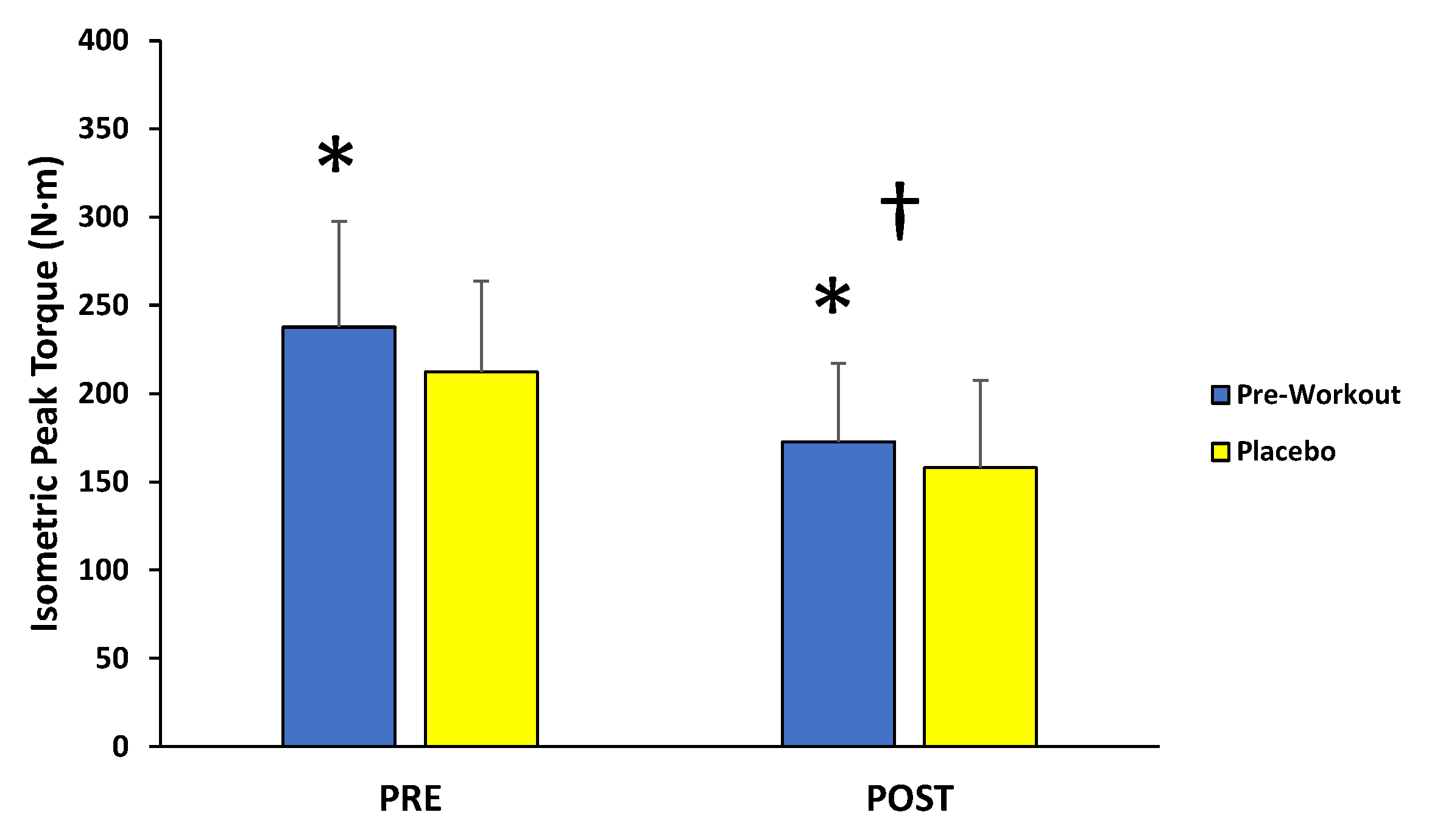
Figure 3.
Peak torque values (mean ± SD) for maximal concentric muscle actions of the leg extensors performed before (PRE) and after (POST) the isokinetic fatigue protocol. *Main effect for condition (MIPS > Placebo). †Main effect for time (PRE > POST).
Figure 3.
Peak torque values (mean ± SD) for maximal concentric muscle actions of the leg extensors performed before (PRE) and after (POST) the isokinetic fatigue protocol. *Main effect for condition (MIPS > Placebo). †Main effect for time (PRE > POST).
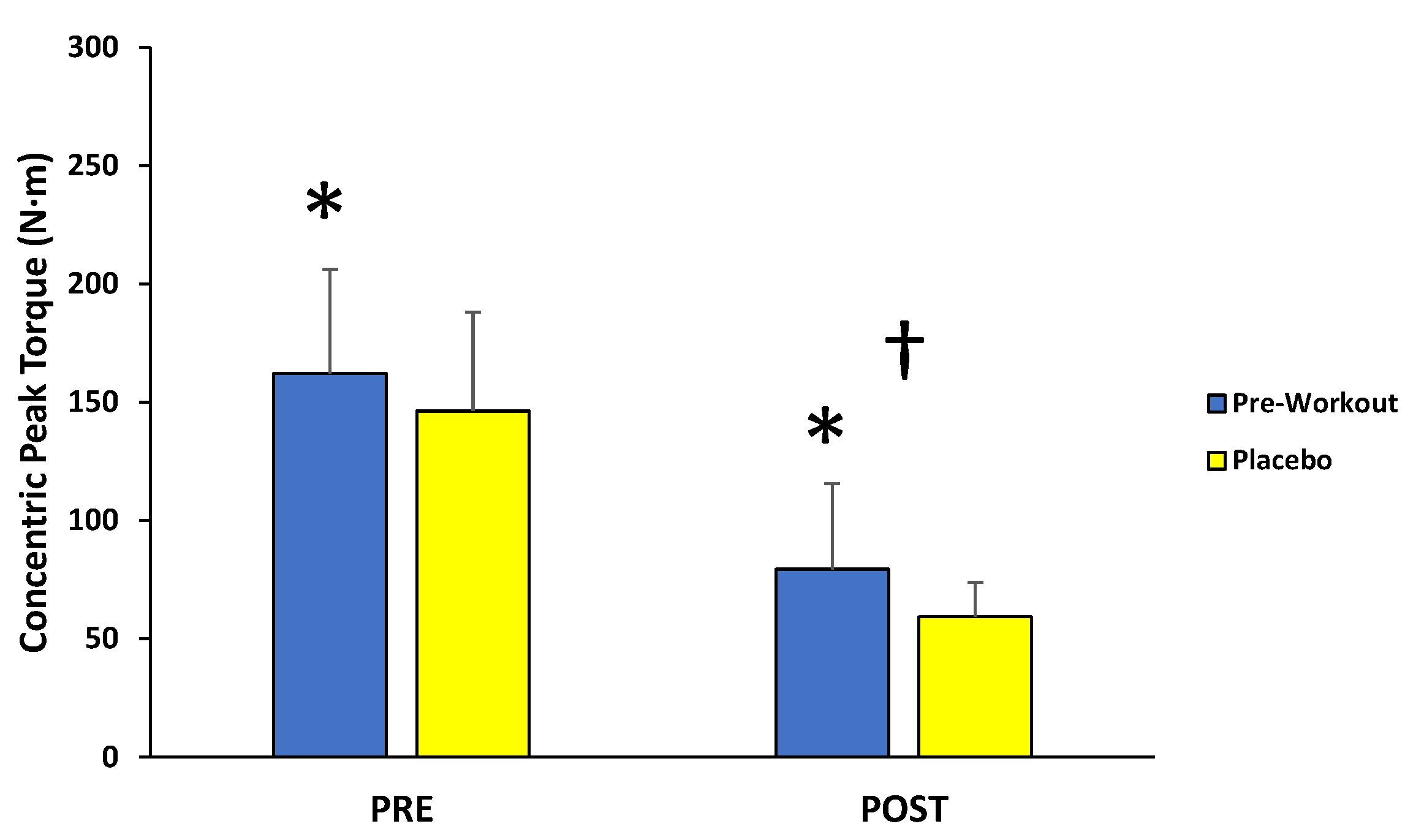
Figure 4.
Peak torque values (mean ± SD) for maximal eccentric muscle actions of the leg extensors performed before (PRE) and after (POST) the isokinetic fatigue protocol. †Main effect for time (PRE > POST).
Figure 4.
Peak torque values (mean ± SD) for maximal eccentric muscle actions of the leg extensors performed before (PRE) and after (POST) the isokinetic fatigue protocol. †Main effect for time (PRE > POST).
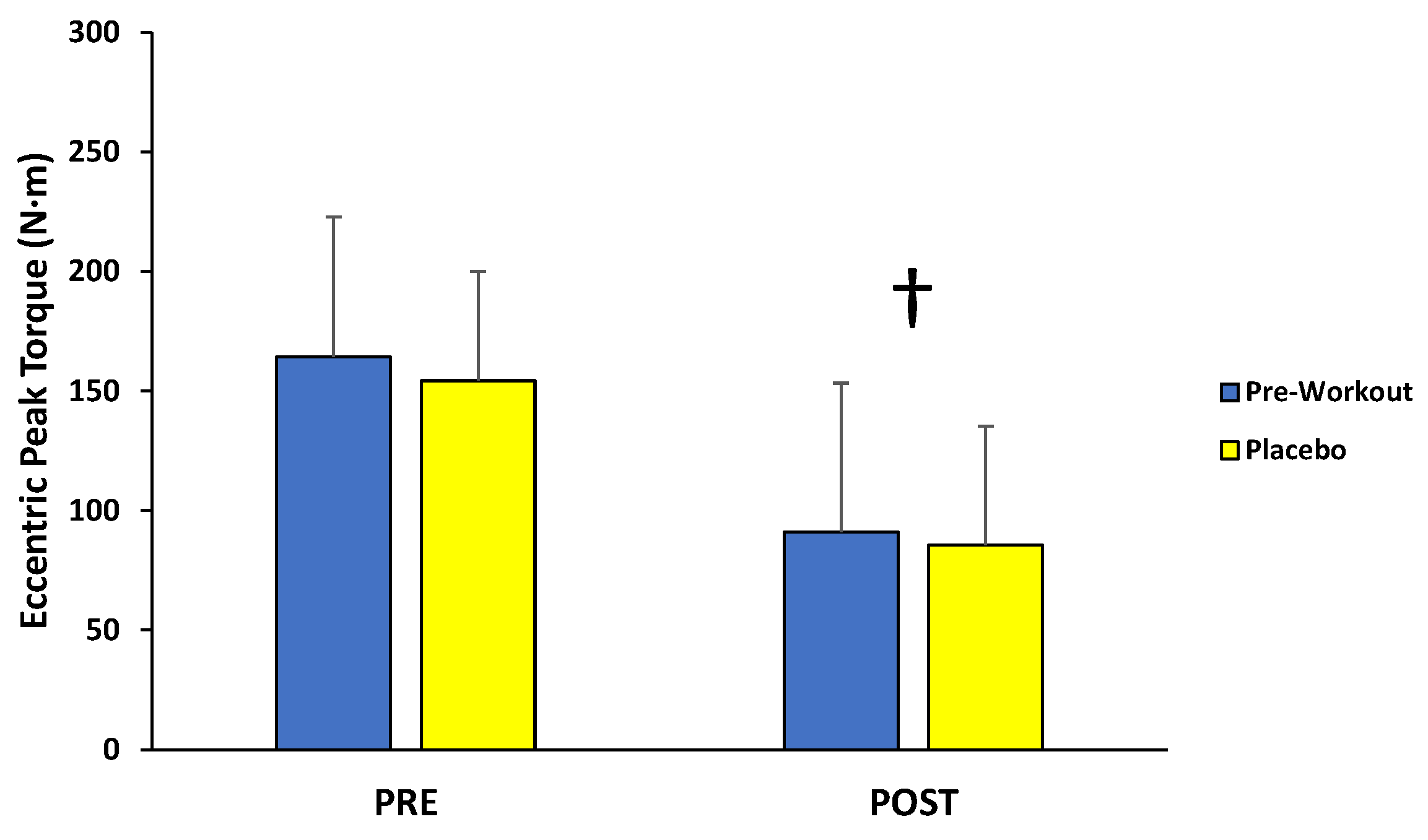

Table 1.
Normalized electromyographic amplitude values (mean ± SD) for the multi-ingredient preworkout supplement (MIPS) and placebo conditions.
Table 1.
Normalized electromyographic amplitude values (mean ± SD) for the multi-ingredient preworkout supplement (MIPS) and placebo conditions.
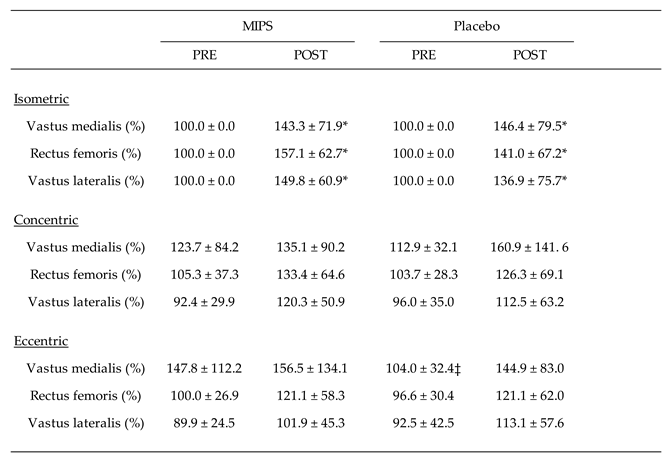 |
All values expressed as relative to 100% of PRE value of isometric maximum voluntary contraction. *Significant (p < 0.05) main effect for time (PRE < POST).
Table 2.
Normalized electromyographic median power frequency values (mean ± SD) for the multi-ingredient preworkout supplement (MIPS) and placebo conditions.
Table 2.
Normalized electromyographic median power frequency values (mean ± SD) for the multi-ingredient preworkout supplement (MIPS) and placebo conditions.
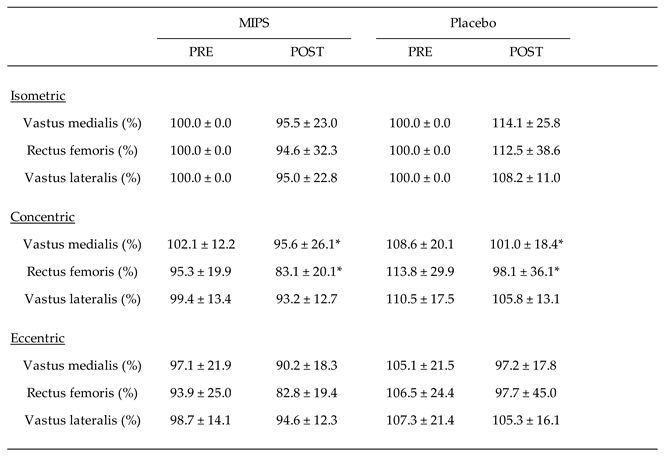 |
All values expressed as relative to 100% of PRE value of isometric maximum voluntary contraction. *Significant (p < 0.05) main effect for time (PRE > POST).
Disclaimer/Publisher’s Note: The statements, opinions and data contained in all publications are solely those of the individual author(s) and contributor(s) and not of MDPI and/or the editor(s). MDPI and/or the editor(s) disclaim responsibility for any injury to people or property resulting from any ideas, methods, instructions or products referred to in the content. |
© 2025 by the authors. Licensee MDPI, Basel, Switzerland. This article is an open access article distributed under the terms and conditions of the Creative Commons Attribution (CC BY) license (http://creativecommons.org/licenses/by/4.0/).
Copyright: This open access article is published under a Creative Commons CC BY 4.0 license, which permit the free download, distribution, and reuse, provided that the author and preprint are cited in any reuse.


