

Submitted:
06 March 2025
Posted:
06 March 2025
You are already at the latest version
Abstract
This study examines the effects of nutritional supplementation (NS) and resistance training on strength performance across different gender and age groups over 8 weeks. A total of 218 participants were categorized based on NS intake: L-carnitine (LcS), creatine (CS), proteins (PS), a combination of protein, creatine, and L-carnitine (PCLcS), and a non-supplemented control group (NNS). Strength performance was assessed through 1RM (one repetition maximum) tests in back squats, bench presses, deadlifts, biceps curls, triceps extensions, and pull-ups. All participants exhibited pro-gressive strength improvements, with PCLcS consumers achieving the most significant gains across all exercises (e.g., a 15.8% increase in 1RM back squat), followed by LcS (11.3%). CS and PS user (U) groups showed moderate improvements, while NNSUs recorded the lowest performance increases (5.7%). Despite these differences, statistical significance was not reached (p >0.05), suggesting that factors such as training history, genetic predisposition, and recovery strategies may influence strength adaptations. Gender-related differences were evident, with men consistently outperforming women across all exercises (20–35% higher 1RM values), likely due to physiological factors such as greater muscle mass and testosterone levels. However, both genders showed comparable relative improvements over time (men: +13.4%, women: +12.6%). Age-related trends revealed a gradual decline in performance, with the 40-49 age group displaying the lowest strength levels, particularly in the 1RM back squat (9.2% lower than the 20-29 group). However, older participants still exhibited meaningful strength gains (+9.1% over 8 weeks), reinforcing the importance of resistance training in mitigating age-related muscle decline. These findings suggest that NSs, particularly PCLcS, may enhance strength performance when combined with structured resistance training.
Keywords:
nutritional supplementation
; L-carnitine
; creatine
; protein intake
; strength perfor-mance
; gender-related performance
; age-related performance
; weight-type related performance
1. Introduction
In contemporary society, quality of life and well-being are increasingly at the forefront of global discussions, emphasizing promoting physical activity, balanced nutrition, and mental health. These pillars are fundamental to maintaining a healthy lifestyle, as neglecting any one of them can disrupt the intricate balance required for overall well-being [1].
Physical activity plays a pivotal role in achieving and sustaining this well-being. Beyond its aesthetic benefits, exercise is a powerful preventive measure against numerous chronic conditions [2].
Despite increased public awareness about the importance of physical activity, the WHO reports that physical inactivity remains alarmingly prevalent, contributing to 6–10% of the global burden of chronic diseases and premature mortality. Fitness, characterized by the ability to perform daily tasks with optimal strength, endurance, and performance while minimizing fatigue and disease risk, is undermined by sedentary lifestyles, which are closely associated with an increased incidence of chronic illnesses [3].
The health advantages of regular physical activity extend beyond physical improvements, such as enhanced bone density, cardiometabolic health, and muscular and cardiorespiratory fitness. They also include mental and social benefits, such as reduced anxiety, improved cognitive functions, and strengthened social connections [4].
To maximize these benefits, the WHO recommends engaging in at least 150–300 minutes of moderate-intensity physical activity weekly [5]. This equates to 30–60 minutes per day, five days a week, and emphasizes the importance of maintaining consistent movement throughout the day to support vascular flexibility and soft tissue health [6,7].
Different forms of exercise, including strength training, flexibility exercises, endurance activities, and balance workouts, have been shown to promote and maintain physical fitness across the lifespan. A combination of aerobic exercises (e.g., running, swimming) and resistance training (e.g., weightlifting, push-ups) is recommended for optimal results. Adapting exercise routines to individual preferences and gradually increasing intensity can sustain motivation and foster lifelong physical activity[8].
Nutrition is equally important to physical activity, which is the cornerstone of athletic performance and recovery. Proper dietary choices supply the nutrients needed to enhance physical capabilities, delay fatigue, and facilitate recovery. However, increased physical activity elevates metabolic rates, necessitating dietary adjustments to prevent deficiencies. Key nutrients, such as proteins, carbohydrates, and electrolytes, are essential for muscle repair, glycogen restoration, and optimal performance [9,10,11].
Nutritional supplements (NSs), including protein powders, creatine, and multivitamins, are commonly used by professional athletes and recreational gym-goers to meet nutritional demands and enhance performance. The prevalence of NS use among gym-goers varies widely, with studies reporting rates between 40% and 100%, depending on factors such as sport type, competition level, and personal goals. Gym-goers often seek NSs to improve muscle mass, reduce recovery times, and enhance overall fitness and health [12].
Protein supplements, particularly whey protein, are among the most popular due to their role in muscle synthesis and recovery. Research suggests that daily protein intakes ranging from 1.4–2.0 g/kg of body weight are adequate for most individuals. At the same time, resistance-trained athletes may require higher amounts to optimize muscle retention and promote fat loss during caloric deficits [13].
Similarly, creatine is a well-documented ergogenic aid that enhances muscle strength, lean body mass, and recovery through its role in ATP production. Recommended dosages include an initial loading phase (0.3 g/kg/day) followed by a maintenance dose (0.03 g/kg/day) [14].
L-carnitine, another widely used supplement, is valued for its role in fatty acid metabolism and mitochondrial energy production. It has been shown to improve exercise performance, enhance recovery, and reduce oxidative stress. Despite its natural occurrence in animal-based foods, supplementation is often necessary for individuals with higher metabolic demands or dietary restrictions [13,15].
The global NS market has expanded significantly, growing from USD 152 billion in 2021 to a projected USD 300 billion by 2028. This growth underscores the increasing popularity of NS among gym enthusiasts and highlights the need for research to evaluate their impact on fitness outcomes [16].
It is essential to understand the patterns of supplement use, their direct impact on exercise performance, and potential side effects in recreational gym-goers. The study aims to empower individuals with reliable, evidence-based recommendations for safe and effective supplementation, promoting optimal health outcomes and reducing the risk of adverse effects. It evaluates the impact of nutritional supplementation on gym-goers' athletic performance. Specifically, the present research seeks to identify which supplements most effectively enhance skeletal muscle strength, improve endurance, accelerate recovery, and facilitate weight management. Our work evaluates participants' performance across six commonly practiced gym exercises: back squat, bench press, deadlift, biceps curl, triceps extension, and pull-ups, providing evidence-based recommendations for safe and effective supplementation practices. The data obtained provides critical insights into the influence of NSs on resistance training performance across different exercises, genders, and age groups. This research highlights their role in enhancing strength outcomes over time by analyzing the impact of various NSs, including L-carnitine, creatine, protein, and combined supplementation. The findings contribute to the growing body of evidence on personalized nutrition and exercise adaptation, offering practical implications for athletes, fitness enthusiasts, and healthcare professionals aiming to optimize training efficiency.
Previous studies often focused on isolated supplements or single exercises, lacking a comprehensive approach considering their combined effects on various resistance exercises. A significant gap addressed in the present study is the limited research on how different NS types influence strength performance across multiple exercises over an extended training period. Additionally, this study fills the gap related to gender- and age-specific responses to NSs, which are often overlooked in sports nutrition research. By evaluating performance variations among men and women and across different age groups, this study provides valuable data for tailoring supplementation and training programs to individual needs. Furthermore, our findings underscore the importance of long-term tracking of NSs' effectiveness, as most prior research primarily examined short-term effects.
2. Materials and Methods
2.1. Study Design
This observational prospective controlled study enrolled 218 gym-goers who regularly exercise in two popular gymnasiums in Oradea, Romania. The research was started after the approval of the Ethical Committee of the Faculty of Medicine and Pharmacy, University of Oradea, Romania, No. 21/25.02.2021, and the approval of the gymnasium's management. All the participants had signed an informed consent (Supplementary material).
Males and females between 18 and 60 years old who followed an exercise regimen and worked out at a gym at least twice a week, not taking or taking one or all three food supplements intake (protein, creatine, L-carnitine), without any medical condition which could have prevented the correct performance of the exercise or which could have harmed the participant met the inclusion requirements. All participants should have been strength-specific and have had a one-repetition maximum (1RM) load program for each exercise. They should have had a training frequency of three times a week, with a daily training duration of 60 minutes. Participants taking supplements recommended by their coaches were required to have taken them for at least 4 weeks before enrollment in the study. The exclusion criteria included people who were between the ages of 18 and 60 but had been previously diagnosed with chronic severe illnesses, including cancer, liver failure, or renal failure, who had used or still use steroids, other prohibited substances, or corticoids. The study also carefully excluded teenagers under the age of 18, pregnant women, and those who were nurses.
Participants were divided into five groups: non-nutritional supplement users (NNSUs, n=53), protein, creatine, and L-carnitine supplement users (PCLcSUs, n=48), protein supplement users (PSUs, n=42), creatine supplement users (CSUs, n=38), L-carnitine supplement users (LcSUs, n=37).
2.2. Method
Before training sessions, the participants were given questionnaires for a face-to-face interview in the gyms. Participants were first given brief instructions about the purpose and nature of the study and how to fill out the questionnaire. To ensure that participation in the survey is voluntary, written informed consent was obtained from each participant. Participants completed a structured questionnaire form intended for data gathering after signing a consent form (Supplementary material). They received guarantees that the researchers would maintain their privacy and keep the information they submitted private.
The questionnaire's first section focused on demographic and socioeconomic information. Inquiries on age, gender, education level, place of birth, and occupation were all included in the sociodemographic data-related inquiries. Additionally, the questionnaire included questions about gym workout routines.
The data also contained the individuals' physical measurements, including height in centimeters and weight in kilograms. Before the participants' weight and height were measured for this experiment, they were asked about their most recent known body mass index.
2.3. Performance Outcomes and Exercise Protocol
For 8 weeks, participants were engaged in a training regimen that included the same types of exercises. At baseline – week 0 (W0), as well as at weeks 4 (W4) and 8 (W8), primary outcome measurements were examined for the six types of exercises. Measurements of the body weight for all the subjects were taken at baseline, weeks 2, 4, and 8. Taking into account the weight and the height, we calculated the body mass index (BMI) at baseline, under WHO guidelines, using the Quetelet equation [body mass (kg)/height (m2)] [17].
The interviewers and each participant choose a date, considered baseline (W0), during which the interviewer was present in person when the participants performed individual 1RM. This 1RM was performed for each exercise considered to be most frequently used to increase muscle strength for the main muscle group and which was safe and effective: 1RM back squat, 1RM bench press, 1RM deadlift, and number of pull-ups during W0. e 1 shows the pictograms for each measured exercise. The informed consent of the sportive was obtained to publish these pictures.
The measurements were repeated under the supervision of the same interviewers after four (W4) and eight (W8) weeks following baseline measurements (W0). Regardless of whether they took food supplements or not, all of the participants' regimens followed the same practical routine, were strength-specific, and were trained at a particular repetition maximum load.
Figure 1.
Pictograms of the exercises: A - deadlift, B - back squat, C - biceps, D - triceps, E - pull-ups, E - bench press.
Figure 1.
Pictograms of the exercises: A - deadlift, B - back squat, C - biceps, D - triceps, E - pull-ups, E - bench press.
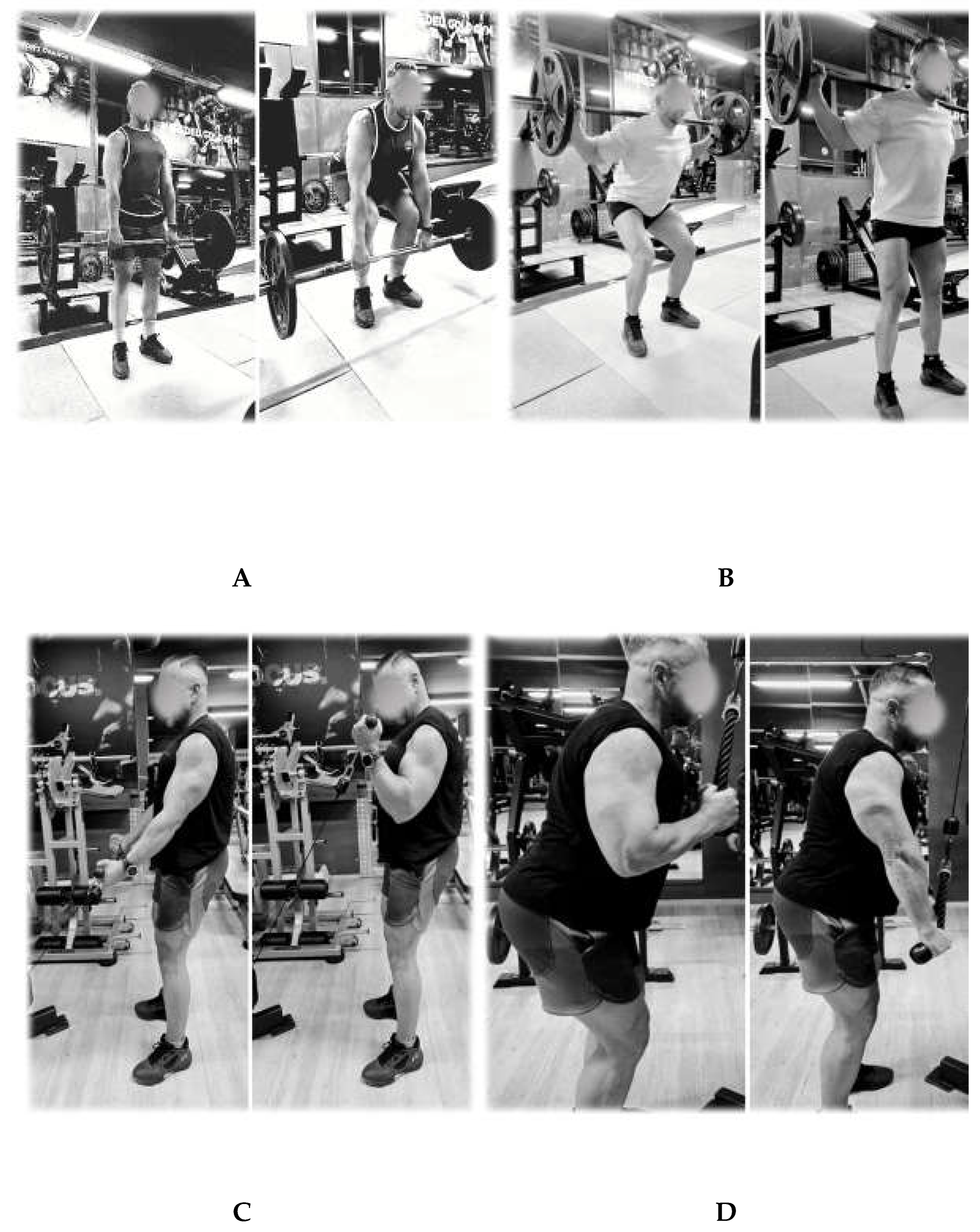
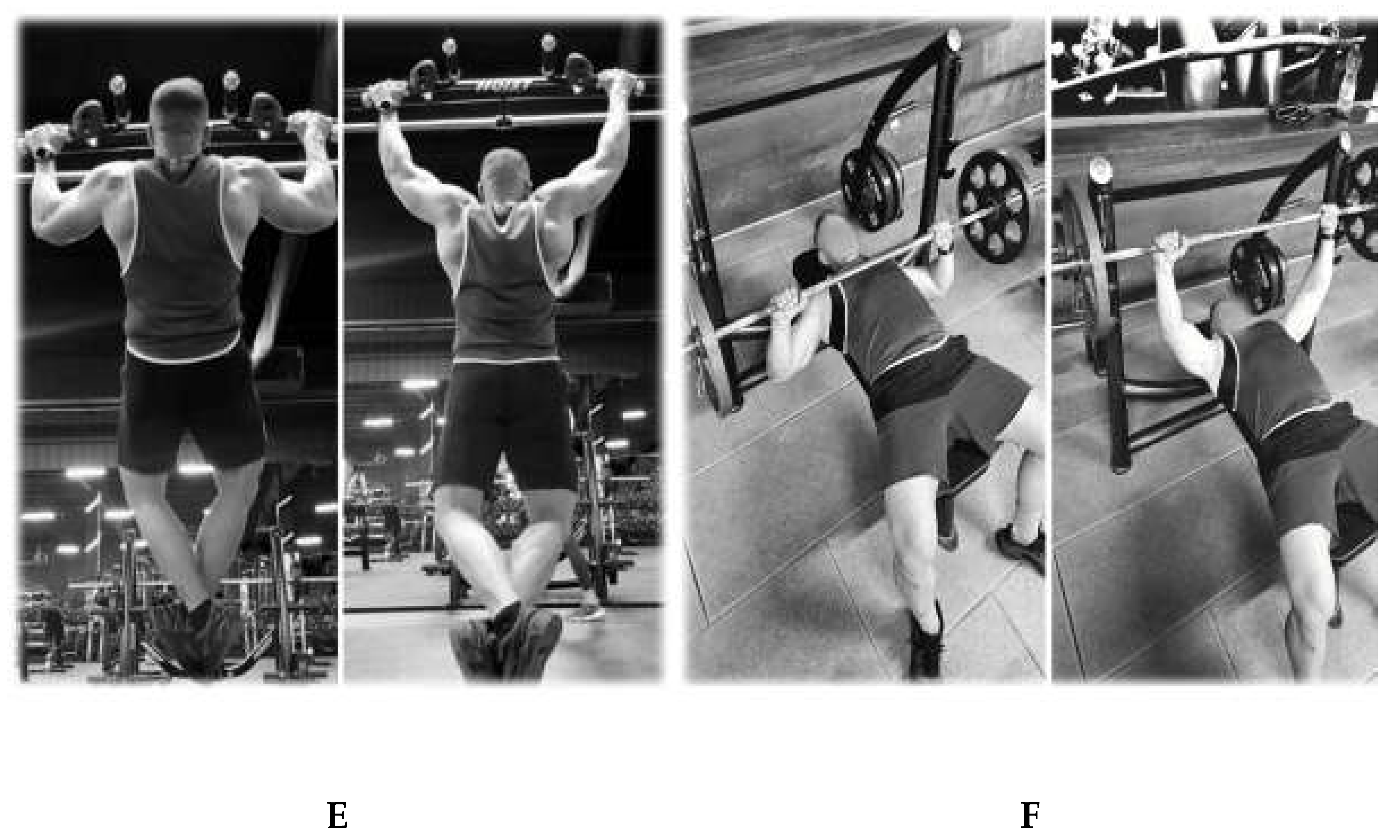
Before starting the exercise sessions, which included the biceps, triceps, pull-ups, and bench press, participants had a 10-minute warmed-up walk on the "flat" treadmill (0 incline) at a 4 km/hour speed. Before starting the leg and back muscle group exercise sessions (deadlift, back squat), participants had a 10-minute cycling warm at an intensity of 8-10, with 60 resolution/one minute. This was followed by a progressive loading with weights tailored to each type of exercise, which included 12–15 repetitions at 40% of the perceived 1RM. After completing that, three to four sets of two to three repetitions at 60–80% of 1RM were done. These constituted warm-up/preparation sets during which movement was practiced with less weight than the maximum potential. Ultimately, individuals did sets of one repetition until their 1RM was established. Between sets, there was a 3- to 5-minute rest period. For pull-ups, as a warm-up, the participants tried to do one up to two to three repetitions, according to each person's strength. Some of the subjects were not able to complete this exercise.
After establishing the 1RM for each exercise, as long as the appropriate technique was maintained, participants completed three working sets of twelve repetitions at each weekly session, with a 3-minute rest period between sets. The 1RM was increased every four weeks according to the muscle strength gained by each participant.
Participants who could have done them correctly performed four sets of the maximum pull-up repetitions, with a one-minute break between sets. A certain number was added every four weeks.
Two qualified and experienced sports coaches, one in each gymnasium, monitored and evaluated the training sessions. Following the laboratory techniques outlined by Vargas et al., the researchers checked the participants' performance to ensure they were performing the movements correctly [18]
2.4. Supplementation Intake
The NSs (PCLcS, PS, CS, and LcS) were orally administered the same food supplement. Table 1 describes the main characteristics of the three products used.
2.5. Statistical Analysis
Descriptive statistics were computed to summarize and analyze the dataset’s central tendency, dispersion, and distribution, providing essential insights into the study variables. This analysis was conducted using XLSTAT Life Sciences 2024 (v. 2024.3.0.1243, Lumivero, Denver, CO, USA) and followed methodologies outlined in previous research studies [22]. The statistical significance threshold was set at p-value =0.05, indicating that results below this threshold were considered statistically significant, aligning with standard practices in health and nutrition research [23]. All statistical tools ensured robust and reliable data analysis, facilitating accurate interpretation of the relationship between variables [24].
3. Results
3.1. Sociodemographic and Baseline Characteristics of Participants
The study enrolled 218 participants: 90 (41.28%) women and 128 (58.72%) men (Table 2). Regarding age groups, 115/218 (52.75%) participants are from the 18-29 age group, 50/218 (22.94%) are between 30 and 39, 47/218 (21.54%) are from the 40-49 age group, and 6/218 (2.75%) are over 50.
Of the total participants, 51.38% (112/218) have a normal weight (75.58% of women, 35.61% of men), 0.92% (2/218) are obese, 44.95% (98/218) are overweight (18.60% of women, 62.12% of men), and 2.75% (6/218) are underweight.
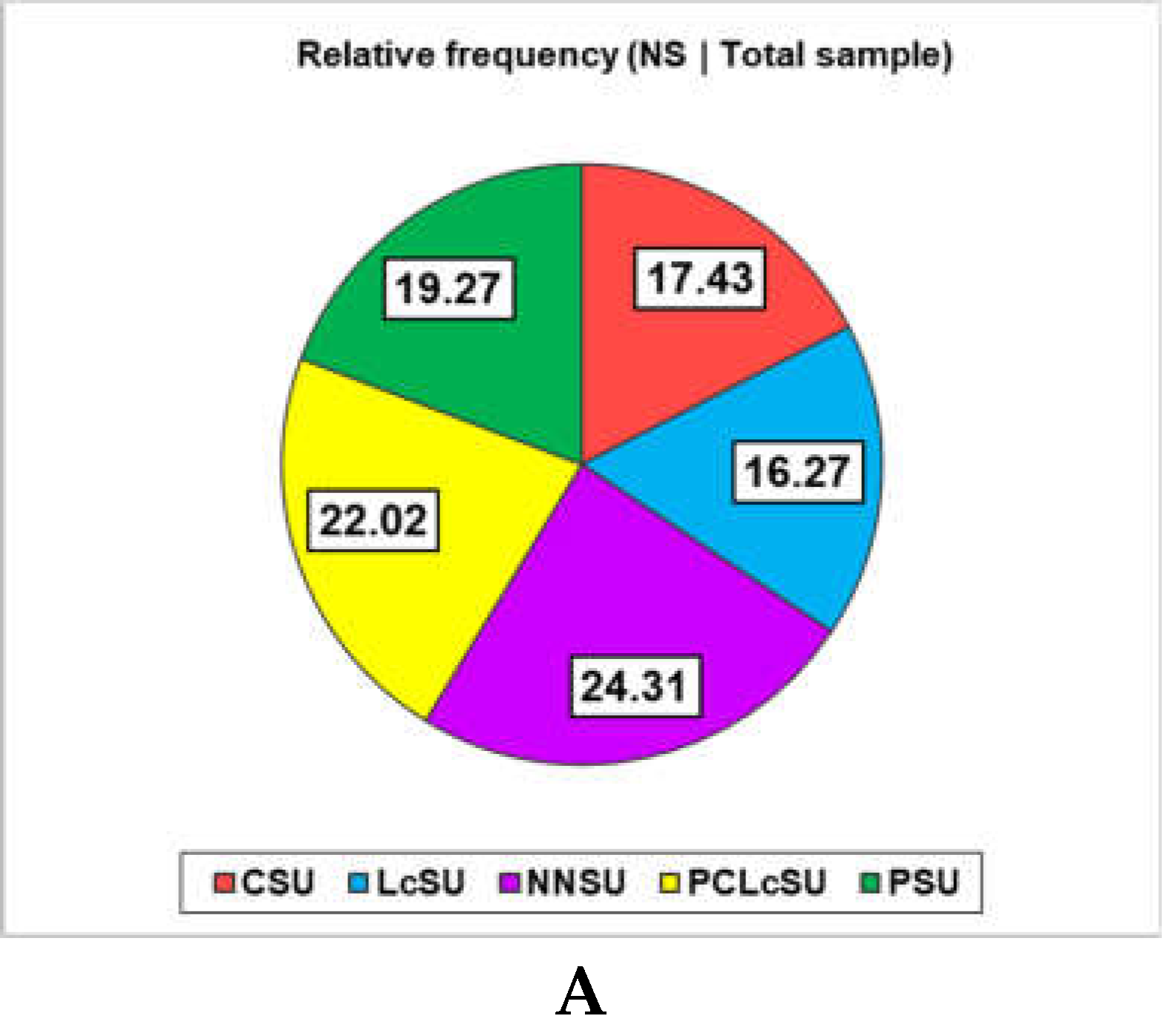
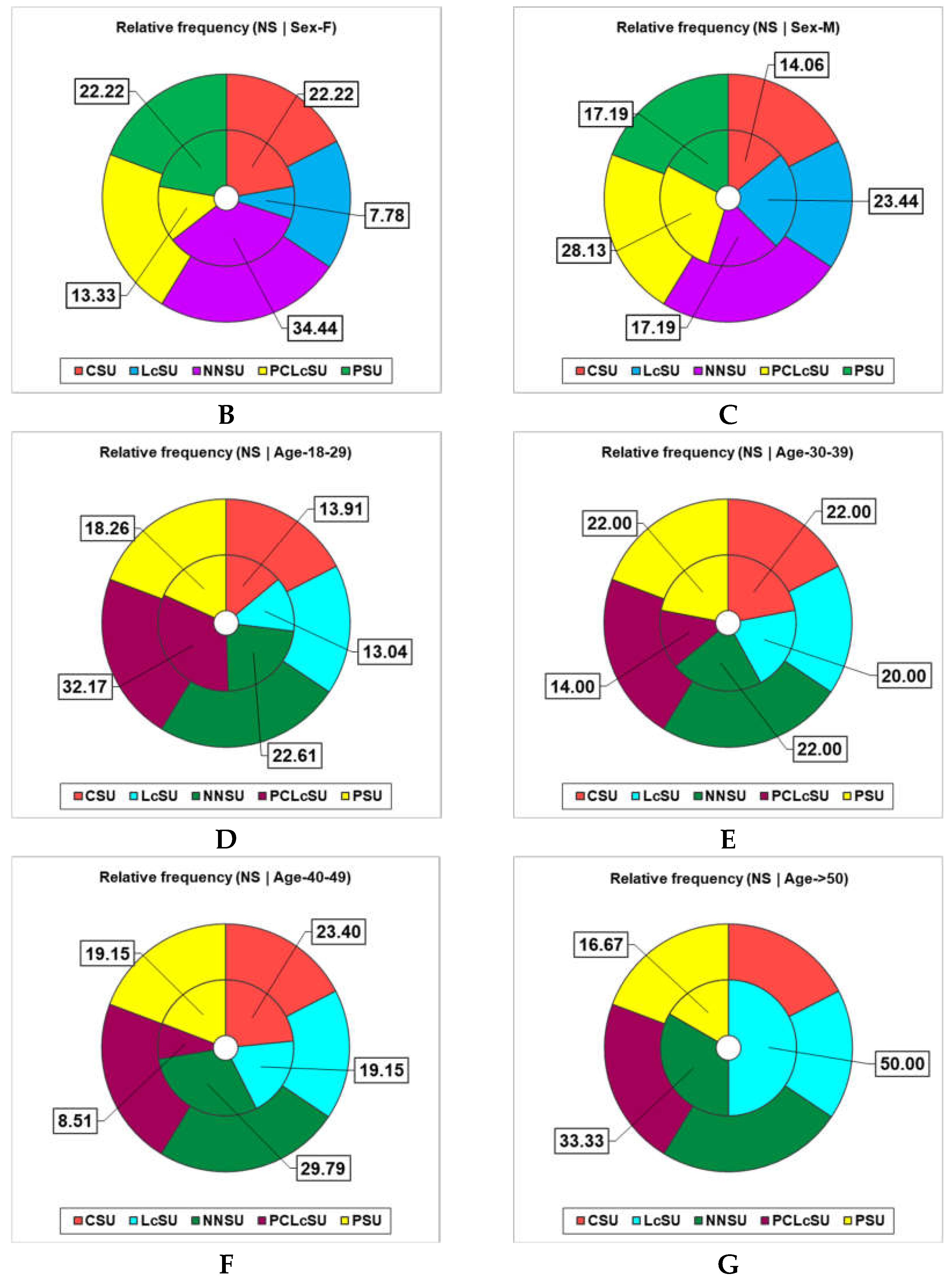
Our study reveals that 24.31% of participants do not consume NS, while the majority (75.69%) use them to enhance their physical condition (Table 2). Men are more likely to consume NSs than women (83.33% vs. 63.95%). Among NS users (Figure 1A-C), the most popular choices include PCLcS (22.02%), proteins (19.27%), creatine (17.43%), and L-carnitine (16.97%). Women show a higher tendency to avoid NSs (34.44%), with 22.22% consuming creatine or protein. In men, 17.19% do not use NSs, while a significant proportion take PS (22.19%) or creatine (14.06%).
Age-wise, younger participants (18-29) have the highest NS intake (32.17% are PCLcSU), while NSs’ consumption declines with age, with those over 50 showing the lowest intake (Figure 1D-G).
Figure 1.
NS consumption A. Total participants; B. Female; C. Male; D. 18-29 age group; E. 30-39 age group; F. 40-49 age group; G. >50 age group. NS – nutritional supplement, NNSU – non-nutritional supplements user, LcSU – L-carnitine supplement user, CSU – creatine supplement user, PSU – protein supplement user, PCLcSU – protein, creatine, L-carnitine supplement user.
Figure 1.
NS consumption A. Total participants; B. Female; C. Male; D. 18-29 age group; E. 30-39 age group; F. 40-49 age group; G. >50 age group. NS – nutritional supplement, NNSU – non-nutritional supplements user, LcSU – L-carnitine supplement user, CSU – creatine supplement user, PSU – protein supplement user, PCLcSU – protein, creatine, L-carnitine supplement user.
3.2. Nutritional Supplements Consumption and Gym Performances
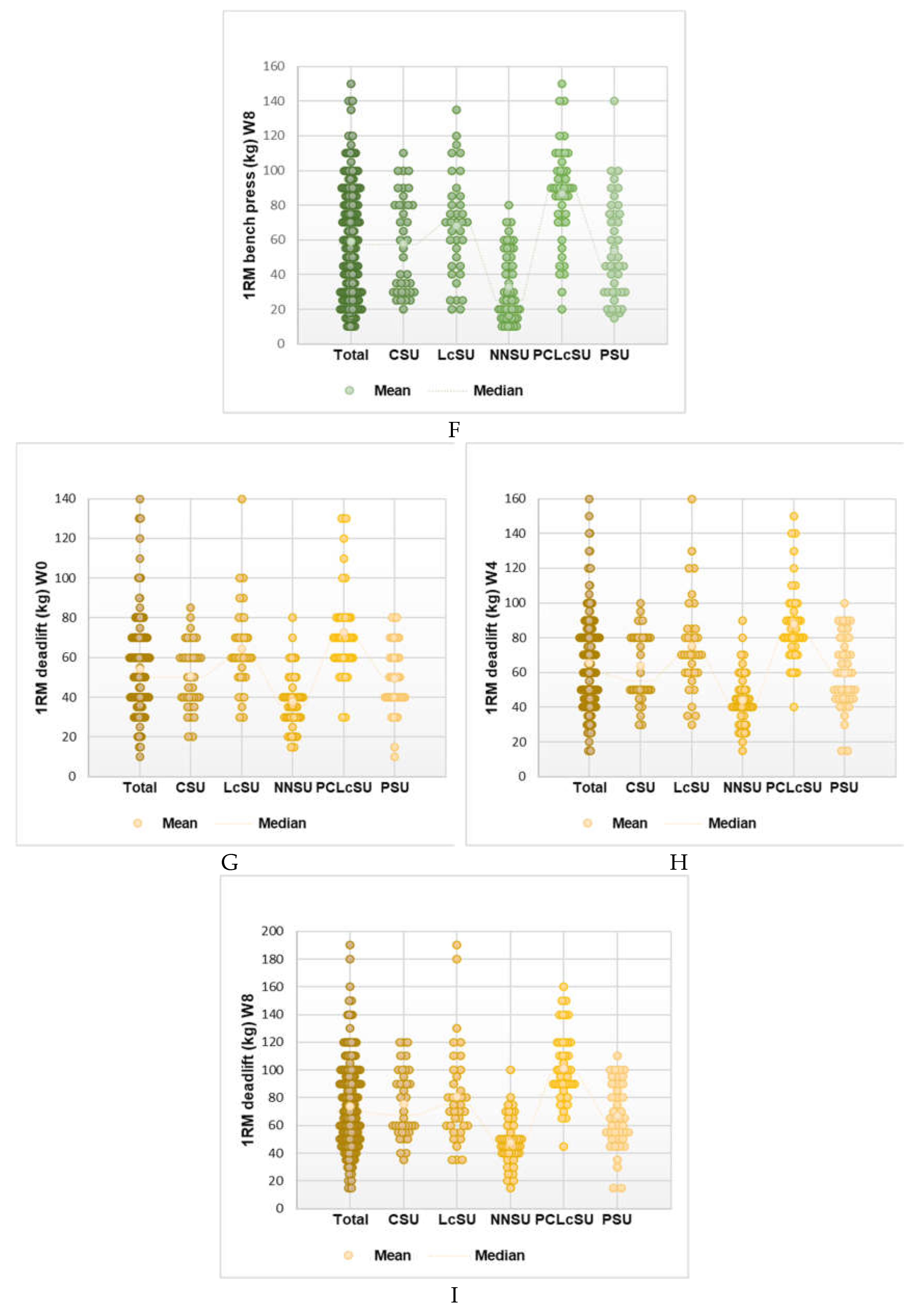
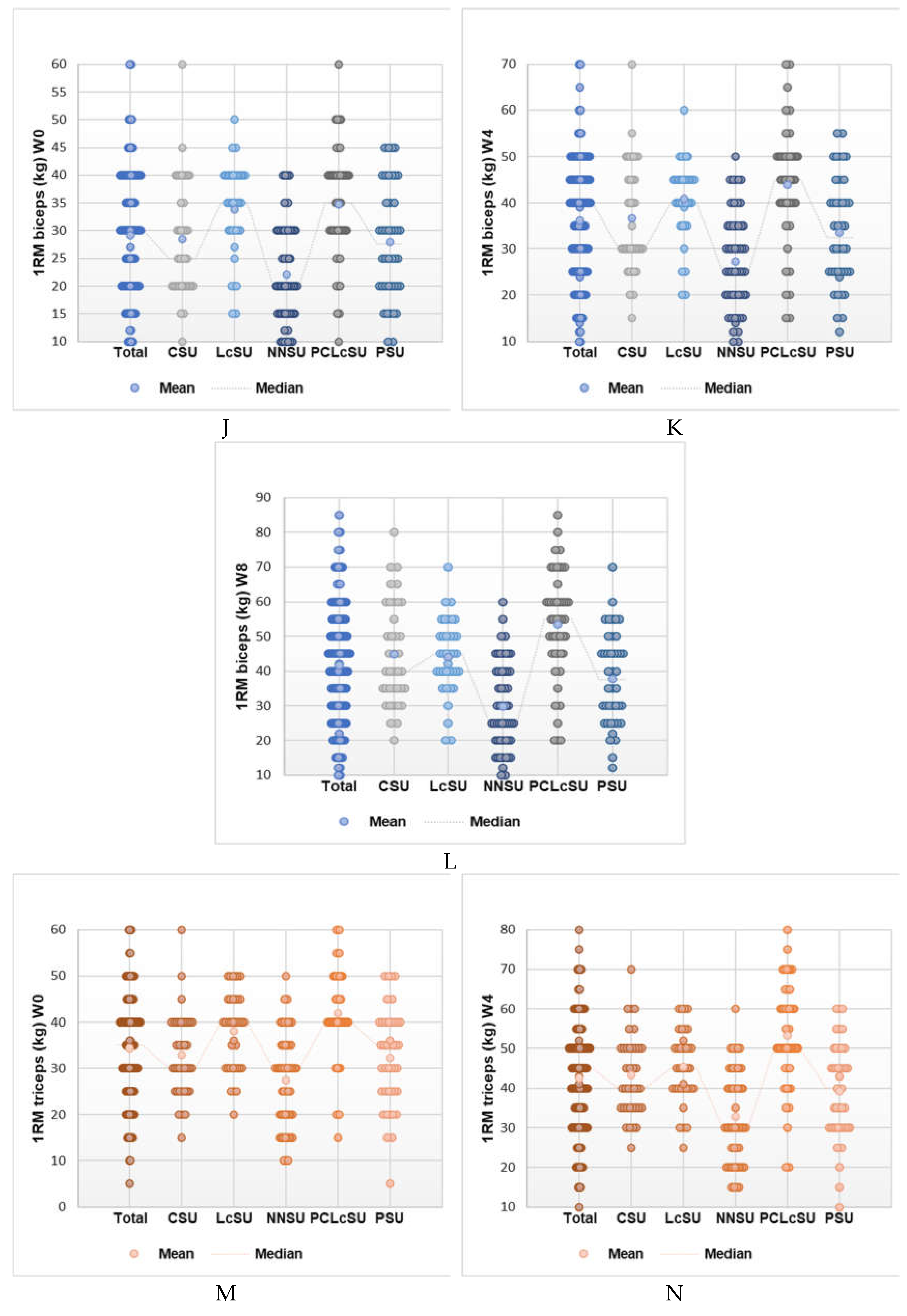
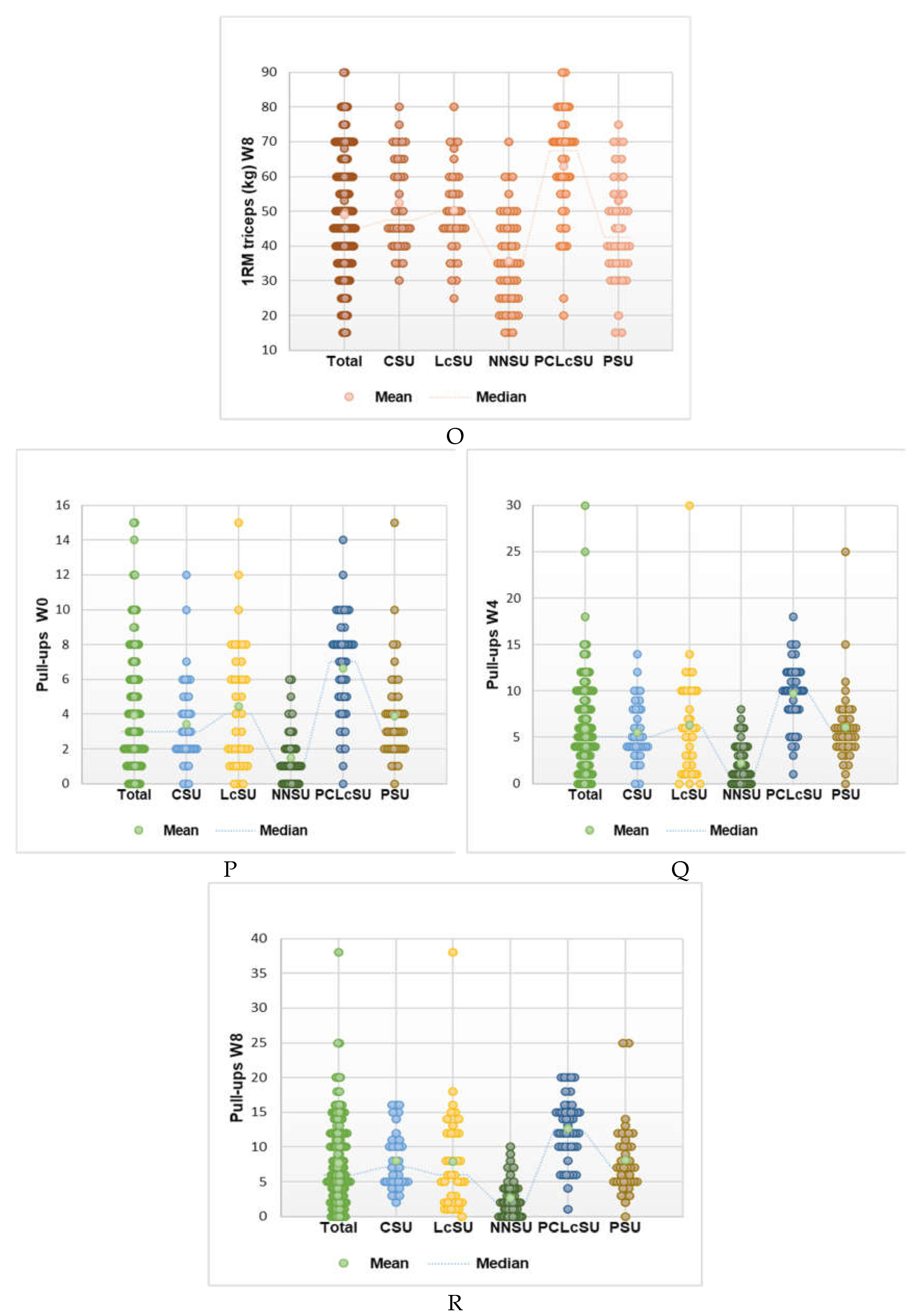
Figure 2 displays the results for all exercise types and NNSU vs. various NS groups. All individual groups were compared to the total sample (218 participants).
For 1RM back squat, the minimum weight for W0 is 10 kg (for NNSU), 15 kg for PSUs, 20 for PCLcSUs and CSUs, and 30 for LcSUs (Figure 2A). The maximal weight varies between 80 kg for NNSUs and 140 kg for PCLcSUs. CSUs and PSUs have 100 kg, while LcSU has 120 kg. Overall, the total group performances are 55.90±24.60 kg, from 36.40±16.51 kg (NNSUs) to 75.37±23.27 (PCLcSUs), p >0.05 (Figure 2A). In W4, the total group performances are higher (65.98±27.83, p >0.05). NNSUs have the lowest (42.55±19.32) ones, while PCLcSUs have the highest (75.01±31.85, p >0.05). Similar performances were recorded at CSUs and PSUs (61.58±20.94 and 61.19±21.43). LcSUs is the second after PCLcSUs (77.16±21.33), p >0.05 (Figure 2B). The final performances (W8) were the most significant (75.01±31.85, Figure 2C). The first are PCLcSUs (105.52±27.62) followed by LcSUs (84.32±26.97) and CSUs and PSUs (72.37±22.62 vs. 70.48±23.29), p >0.05ș NNSUs had the lowest performance (46.38±20.82), p >0.05 (Figure 2C).
Figure 2.
Nutritional Supplements Consumption and Training Performances at the beginning (W0), after 4 weeks (W4), and after 8 weeks (W8). A-C – back squat, D-F – bench press, G-I – deadlift, J-L – biceps, M-O – triceps, P-R – pull-ups. Kg – kilograms, 1RM – one repetition maximum, NNSU – non-nutritional supplements users, CSU – creatine supplement user, LcSU – L-carnitine supplements user, PSU – protein supplements user, PCLcSU – protein, creatine, L-carnitine supplements user.
Figure 2.
Nutritional Supplements Consumption and Training Performances at the beginning (W0), after 4 weeks (W4), and after 8 weeks (W8). A-C – back squat, D-F – bench press, G-I – deadlift, J-L – biceps, M-O – triceps, P-R – pull-ups. Kg – kilograms, 1RM – one repetition maximum, NNSU – non-nutritional supplements users, CSU – creatine supplement user, LcSU – L-carnitine supplements user, PSU – protein supplements user, PCLcSU – protein, creatine, L-carnitine supplements user.
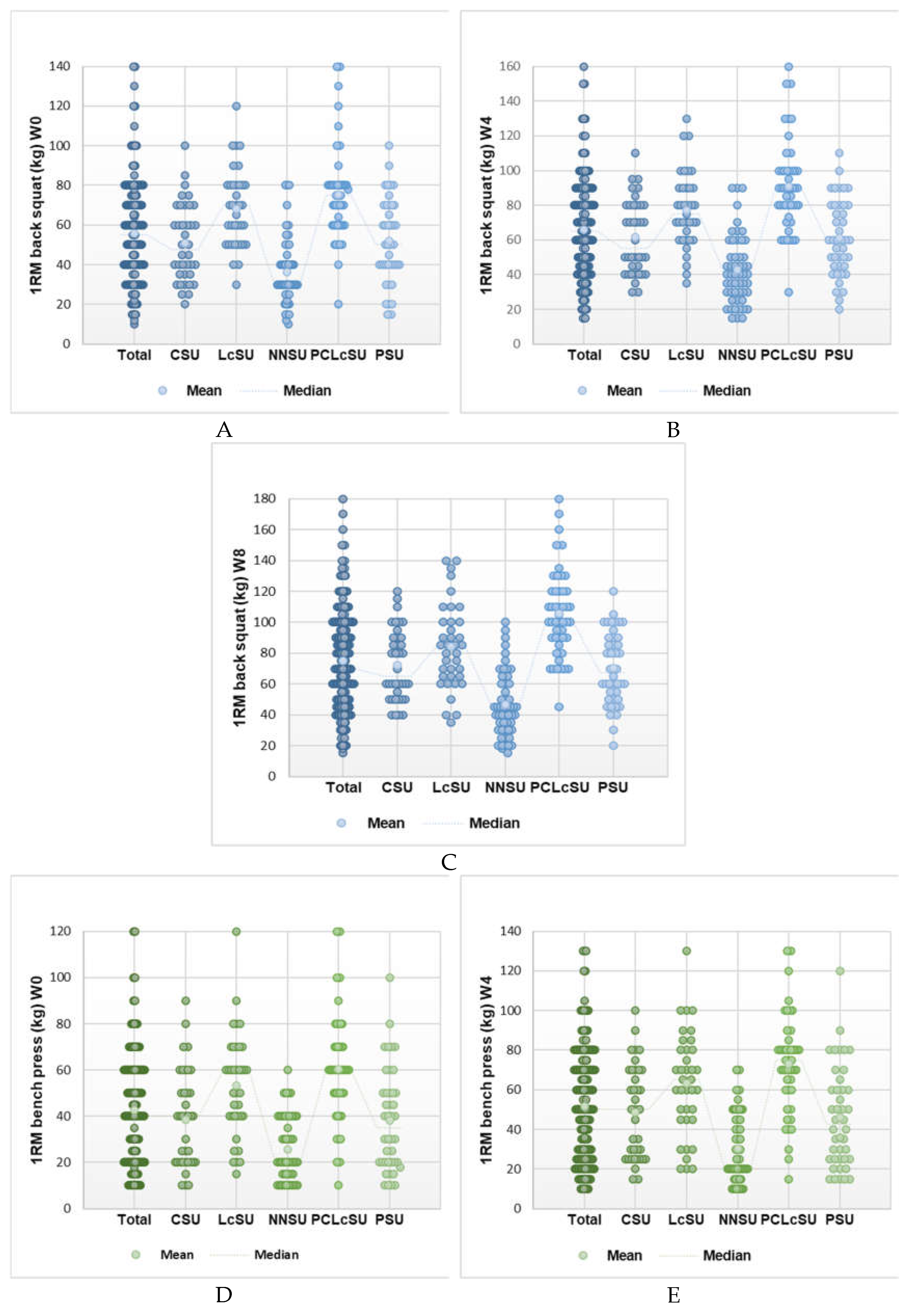
1RM bench press begins (W0) with 10 kg for all NNSUs and NSUs, except L-carnitine consumers (15 kg, Figure 2D). Maximal values in W0 vary from 60 kg (NNSUs) and 90 kg (CSUs) to 100 kg (PSUs) and 120 kg (LcSUs and PCLcSUs, Figure 2D). The participants' performances with creatine and protein consumption were similar (38.55±20.48 vs. 38.95±21.83), while the highest were recorded on PCLcSUs (60.42±22.63), p >0.05; the performances linked with L-carnitine consumption have the second place (53.38±22.00), while NNS consumption is related with the lowest performances (25.75±13.75), p >0.05 (Figure 2D).
All performances increased after 4 weeks (W4, Figure 2E) and 8 weeks (W8, Figure 5F), with the same NS consumption influence. The highest performances were correlated to PCLcS consumption (130 kg in W4 and 150 kg in W8). The last evaluation highlighted the most significant performance of PCLcSUs (86.35±27.32), followed by LcSUs (68.11±28.98), p >0.05 (Figure 4F). CSUs and PSUs have similar effects (57.63±27.24 vs. 53.36±28.64), while NNSUs recorded the lowest ones (32.85±19.23), p >0.05 (Figure 2F).
The following exercises revealed that PCLcSUs and LcSUs are linked with the most significant performances (Figure 2G-S).
Thus, in 1RM deadlift, the most substantial performances were recorded on LcS consumers: 140 kg (W0), 160 kg (W4), and 190 kg (W8), higher than on PCLcSUs – 130 kg (W0), 150 kg (W4) and 160 (W8) (Figure 2G-I). Despite this, the mean ±SD values show that, globally, the most notable performances are linked to PCLcS consumers vs. LcS ones: 72.50±22.22 vs. 64.32±21.22 (W0), 87.71±21.41 vs. 75.27±27.61 (W4) and 101.35±24.36 vs. 80.81±34.32 (W8), p >0.05 (Figure 5G-I). From W0 to W8, the distance between CSUs and PSUs increased: 50.66±16.35 vs. 49.40±16.55 (W0), 63.55±19.63 vs. 59.29±20.19 (W4) and 75.53±24.14 vs. 66.67±23.24 (W8), p >0.05. The performances related to NNS consumption (NNSUs) are the lowest: 37.66±13.37 (W0), 43.87±14.65 (W4), and 47.55±16.70 (W8), p >0.05 (Figure 2G-I).
The performances of 1RM biceps and 1RM triceps exercises are generally similar but slowly higher in 1RM triceps (Figure 2J-O). The maximal performances vary from 40-85 kg - biceps, NNSUs (W0) vs. PCLcSUs (W8) to 50-95 (triceps, NNSUs (W0) and PCLcSUs (W8).
An exception occurs in LcS consumers' performance in pull-up exercises vs. CSUs and PSUs during W0-W4-W8 (Figure 5P-R). It is higher in W0 (4.46±3.55 vs. 3.42±2.53 vs. 3.90±2.69) and W4 (6.32±5.66 vs. 5.55±3.11 vs. 6.10±3.99) and lower in W8 (7.92±7.13 vs. 8.00±4.10 vs. 8.10±4.98), p >0.05 (Figure 5P-R). PCLcS consumers maintained the highest performances during the entire period: 6.65±2.95 (W0) vs. 9.67±3.42 (W4) vs. 12.56±4.49 (W8), p >0.05 (Figure 5P-R). NNSUs recorded the lowest performances: 1.49±1.51 (W0) vs. 2.21±2.13 (W4) vs. 2.68±2.52 (W8), p >0.05 (Figure 2P-R).
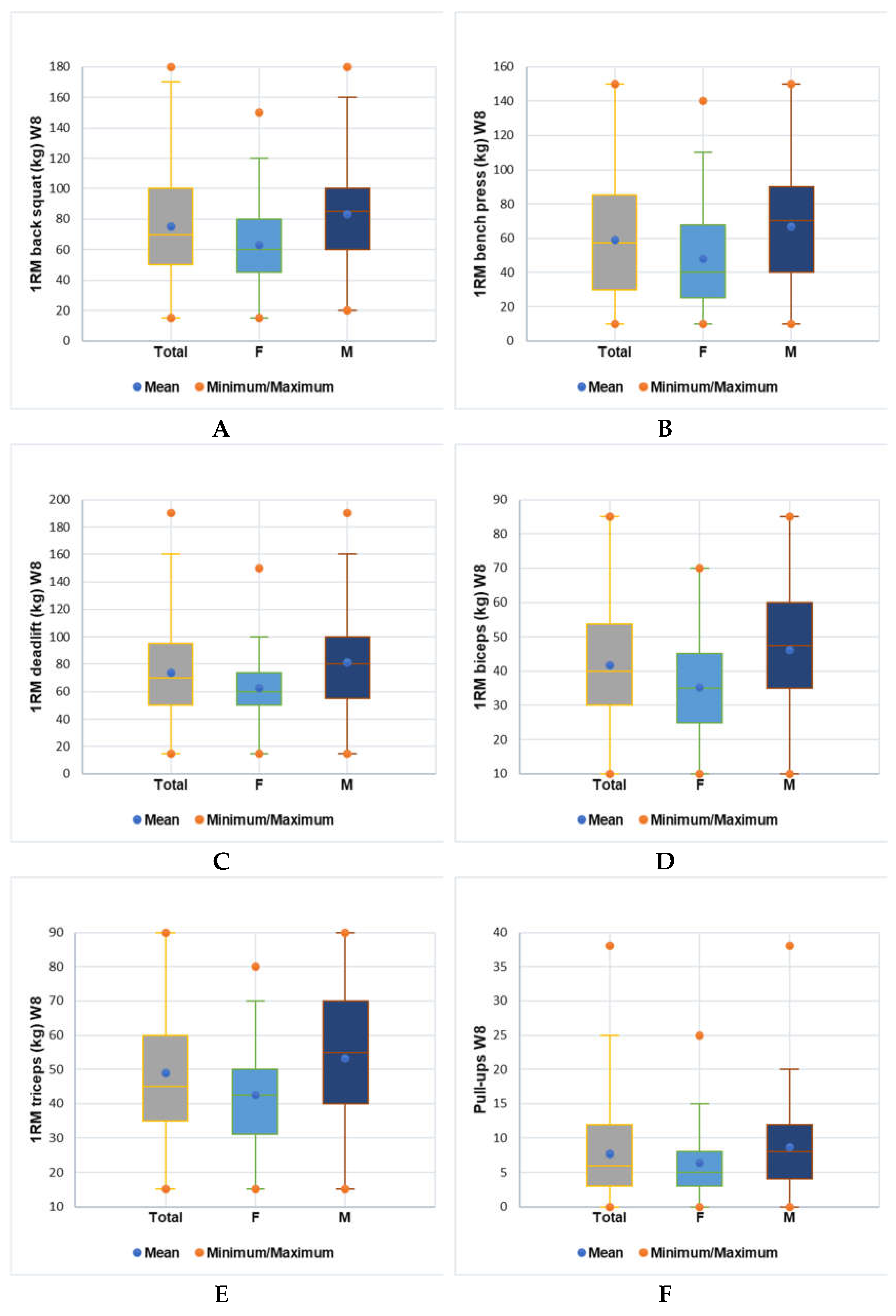
In all types of exercises, the men's performance is higher than women's (Figure 3A-F). The final evaluation (W8) shows a mean of 63.14±26.86 kg for women < 83.36±32.43 kilograms on men (p >0.05) in 1RM back squat (Figure 3A), 47.71±29.62 < 66.74±31.57 in 1RM bench press (p >0.05, Figure 3B), 62.38±25.27 < 81.48±32.10 in 1RM deadlift (p >0.05, Figure 3C), 35.21±12.43 < 46.16±16.28 in 1RM biceps (p >0.05, Figure 3D), 42.58±15.11 < 53.26±16.28 for 1RM triceps (p >0.05, Figure 3E) and 6.34±5.09 < 8.68±6.08 for pull-ups
(p >0.05, Figure 3F).
Figure 3.
The final evaluation of training performance (W8) of men and women (A-F) and different age groups (G-L). 1RM – one repetition maximum, kg – kilograms.
Figure 3.
The final evaluation of training performance (W8) of men and women (A-F) and different age groups (G-L). 1RM – one repetition maximum, kg – kilograms.
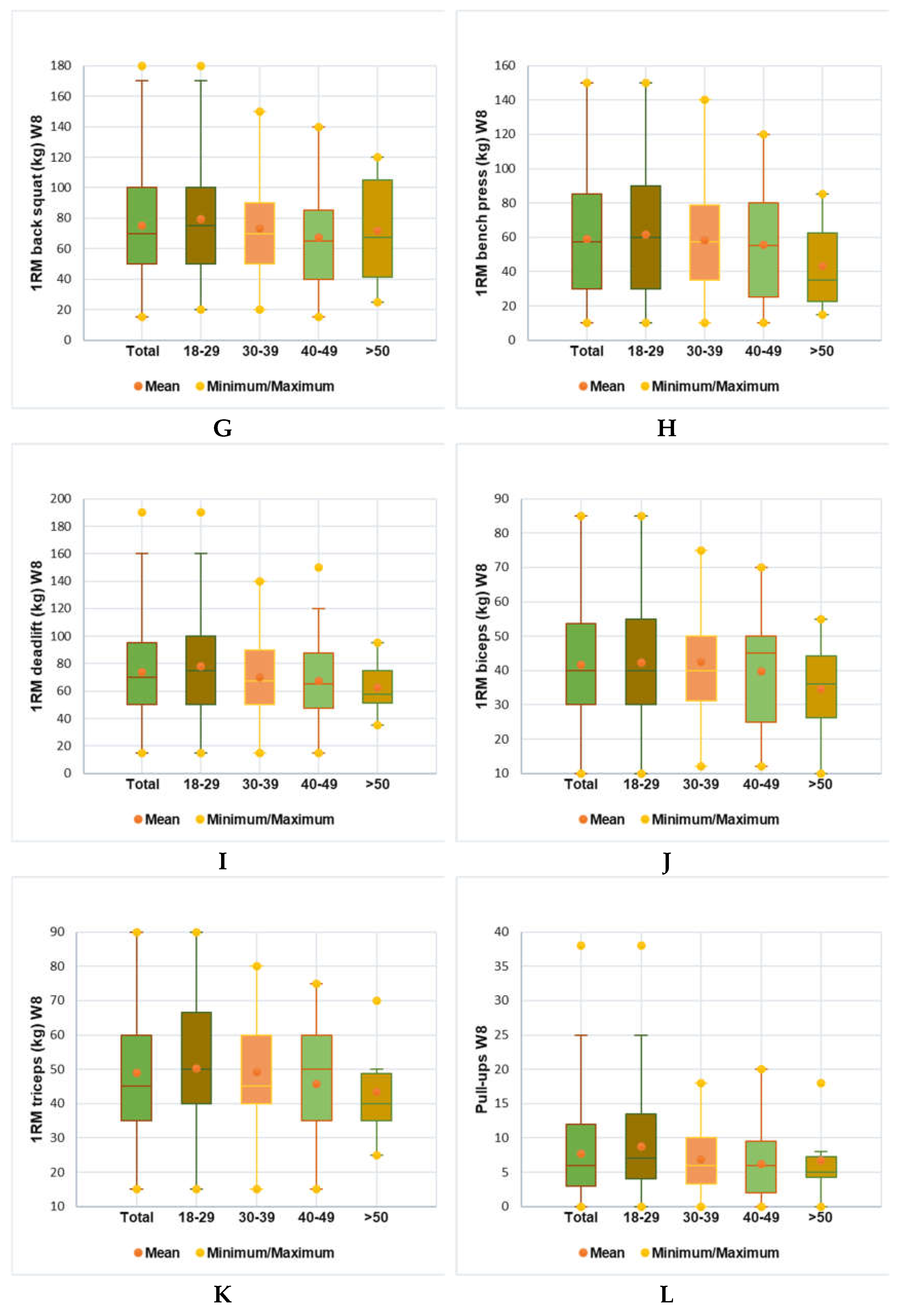
In 1RM back squat, the 40-49 age group revealed the lowest performance (67,19±29.98 than all age groups (all the other values recorded are >70), p >0.05 (Figure 3G). Generally, in all exercises, the performance (expressed as a mean ±SD) decreases directly proportional to the participant's age, p >0.05 (Figure 3H-L).
Body weight is another factor that substantially influences gym performance. Data from Table 3 show that 53.04% of 18-29-year-old participants have normal weight, 41.74% are overweight, 3.48% are underweight, and 1.74% are obese. In the 30-39 age group, gym-goers have normal weight and are overweight in equal proportions (48%), while 4% are underweight (Table 3). In the 40-49 age group, 53.19% have normal weight, and 46.81% are overweight, while in the >50 age group, the percentage of overweight participants is 2 times higher than those with normal weight (66.67% vs. 33.33%, Table 3).
All NS were consumed by normal-weight, underweight, and overweight participants (Table 3). Half of the obese gym-goers were NNSUs, and the other half were exclusively LcSUs. Most normal-weight participants are PCLcSUs (22.32%) and PSUs (20.54%), while 30.36% are CSUs and LcSUs in equal measure (15.18%). Supplement combination (PCLcS) and Creatine (CS) were similarly preferred by overweight gym-goers (22.45% and 21.43%), while LcS and PS were less consumed (18.37% and 17.35%). The underweight participants consumed each NS equally (16.67%), while 33.33% were NNSUs (p <0.05, Table 3).
Figure 4 illustrates the correlation between body weight type and gym performances—initial (W0) and final (W8). Data from Figure 4A-J show that all participants recorded increasing performances from W0 to W8 (Figure 4A-J).
Figure 4.
Initial (W0) and final evaluation (W8) of training performance of participants with different body weight types: A-B – back squat, C-D – bench press, E-F– deadlift, G-H– biceps, -I-J – triceps, K-L – pull-ups. 1RM – one repetition maximum, kg – kilograms.
Figure 4.
Initial (W0) and final evaluation (W8) of training performance of participants with different body weight types: A-B – back squat, C-D – bench press, E-F– deadlift, G-H– biceps, -I-J – triceps, K-L – pull-ups. 1RM – one repetition maximum, kg – kilograms.
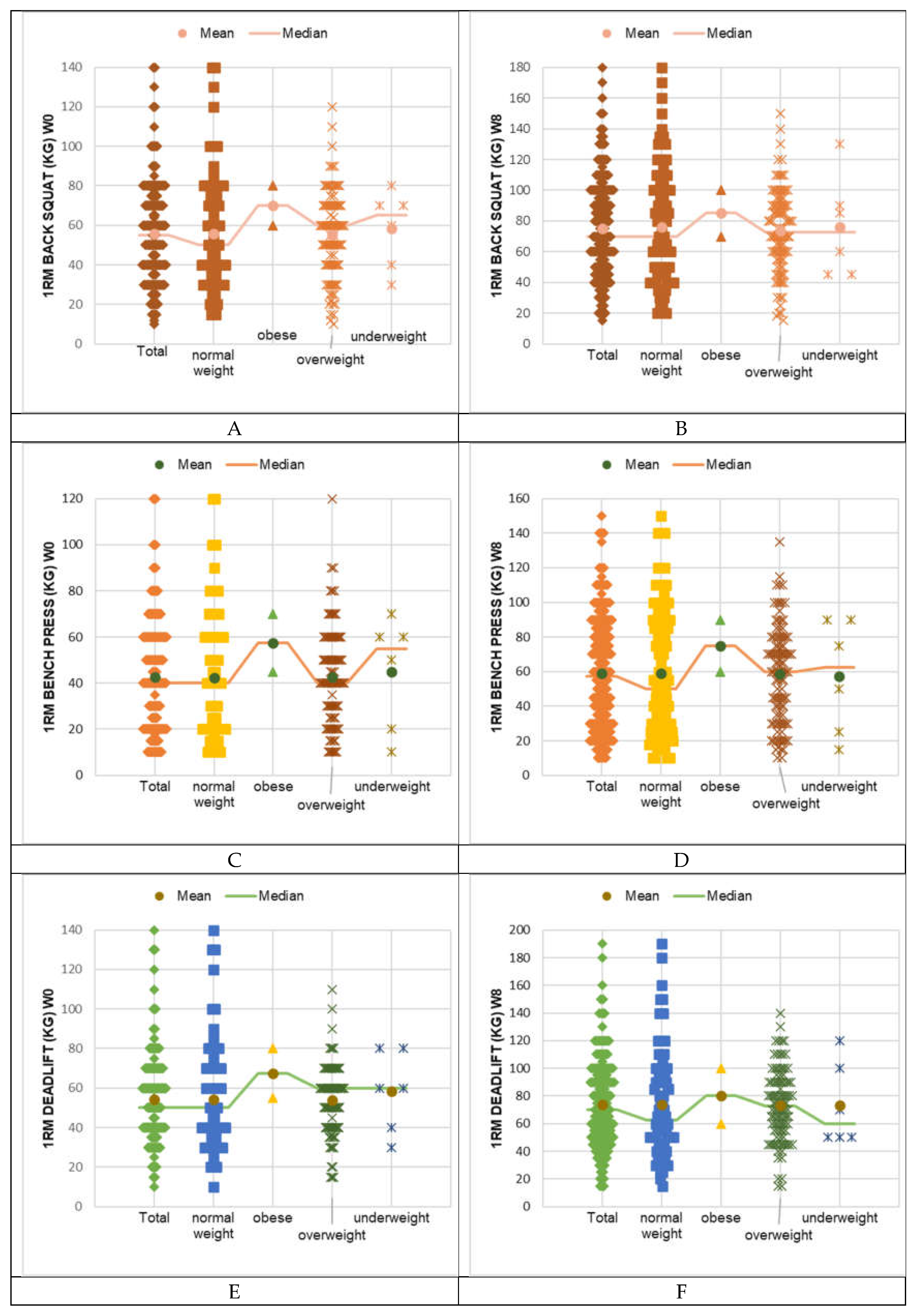
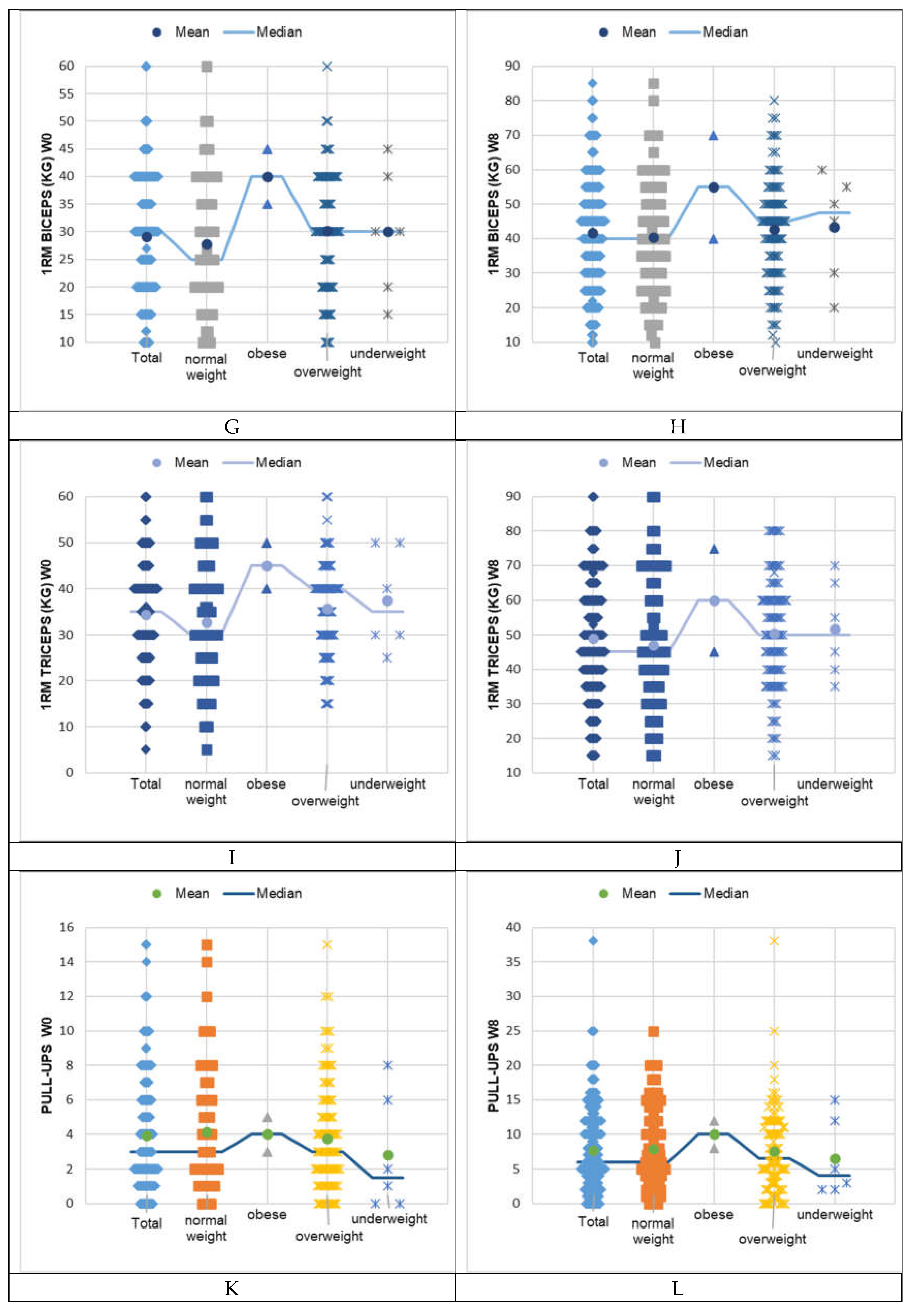
Obese participants recorded in all 1RM exercises (W0) a minimal performance (kg) of considerably higher than underweight, normal-weight, and overweight ones (47±10.36 vs. 22±9.08, 10±0.00, 11±2.23, p <0.05); in pull-off (W0), the same 3 kg vs 0 kg (p <0.05). After 8 weeks, their minimal performance in 1RM exercises increased (55±12.24 vs. 33±15.24, 14±4.18, 13±2.73, p <0.05); the same for pull-off (kg) (8, vs. 2 and 0).
However, the obese gym-goers revealed maximal performances significantly lower than other participants in W0 and W8. Thus, the maximal performances (kg) for 1RM (W0) for normal weight and overweight are appreciably higher than underweight and obese: 104±40.98 and 94±31.30 vs. 65±16.58 (Figure 4 A,G,E,G,I,K). After 8 weeks, the differences consistently increased: 139±49.29 and 117±34.20 vs. 94±30.49 and 87±13.96 (Figure 4 B,D,F,H,J,L). The same observation is available for pull-off maximal performances (kg) in W0 (15 vs. 8 and 5) and W8 (38 and 25 vs. 15 and 12).
Therefore, it can be noted that normal-weight participants obtained the most significant maximal performances in W0 and W8, followed by overweight gym-goers; after them, at a considerable distance, are placed underweight and obese participants (Figure 4A-J).
4. Discussion
Our study enrolled 218 participants of both sexes who are gym practitioners. They included or not an NS (protein, creatine, L-carnitine, or combination) in their daily diet as a routine lifestyle. The cohort was analyzed according to the type of NS intake. The NNSU group represented a quarter of the cohort, the PSU group almost 20%, the CSU and LcSU groups approximately 17% each, and the PCLcSU group 22%.
In a study of 1120 gym-goers from Brazil, 36.8% reported regularly taking supplements like protein and creatine to build muscle and strength. Products high in proteins and amino acids were consumed nearly every day by almost 60% of the participants, followed by isotonic beverages and carbs with percentages of 32% and 23%. Supplements high in proteins were taken by those under 30 years old, mostly men [25].
A recent study including 300 subjects from Portugal evidenced that protein powders (almost 60%), creatine (41%), multivitamins and/or minerals (nearly 28%), sport bars (a bit ever 15%), n-3 fatty acids (10%), protein yogurts (almost 10%), vitamin D (9%), magnesium (7%), and L-carnitine (5%) were the NSs that gym-goers consumed the most [26].
International Society of Sport Nutrition published in 2017 a study which showed that for the majority of people who exercise, an overall daily protein intake in the range of 1.4-2.0 g protein/kg body weight/day (g/kg/d) is adequate for both gaining and maintaining muscle mass through a positive muscle protein balance. More protein (2.3–3.1 g/kg/d) could be required for resistance-trained subjects to optimize lean body mass retention during hypocaloric periods. Higher protein intakes (>3.0 g/kg/d) may improve body composition in resistance-trained individuals (encourage loss of fat mass) [27].
In our study, a higher proportion of women (34.44%) reported non-consumption of NSs compared to men (17.19%), suggesting a lower reliance on supplementation among female participants. Among women who consumed NSs, protein and creatine intake were equally preferred (22.22%), while L-carnitine was less frequent (7.78%), and combined supplementation (PCLcS) was the least common (13.33%). In contrast, men exhibited a higher overall supplementation rate, with protein (17.19%) and creatine (14.06%) being the most consumed. These findings align with prior research on fitness center users, where men used protein and creatine supplements more frequently, particularly in younger age groups [28].
L-carnitine consumption was higher among men (23.44%) than women, indicating potential gender-based preferences. The highest percentage of male participants (28.13%) opted for combination (PCLcS), reinforcing the trend of multi-component supplementation. While these differences suggest potential correlations with training goals and physiological factors, the absence of statistically significant differences (p >0.05) underscores the need for further research.
Age-related trends in NSs' consumption were evident. Younger participants (18-29 years) reported the highest NSs use, with only 22.61% abstaining. This group favored multi-component supplementation (32.17%) over single-supplement use. In contrast, participants aged 30-39 exhibited a more balanced distribution, with 22.22% consuming either creatine or protein and 14% opting for combined supplementation. A decline in NS use was observed in the 40-49 age group, where 30% reported no intake, and PCLcS consumption was the lowest (8.51%). The over-50 group showed the highest non-consumption rate (33.33%), with L-carnitine (50%) being the most preferred, likely due to its role in energy metabolism and muscle preservation. These trends align with previous findings that younger individuals prioritize strength and muscle gains, while older populations focus on overall health [29].
Despite the observed patterns, the lack of statistical significance (p > 0.05) highlights the need for more extensive cohort studies to validate these findings and explore the underlying determinants of NSs' consumption across different demographic groups.
When considering the training performance for each type of exercise and NS consumption, the progression of 1RM back squat performance across the eight-week study highlighted notable differences among groups, with significant improvements observed over time. The progression of 1RM bench press, deadlift, biceps, triceps, and pull-up performances highlights the impact of different NS strategies on strength development. At baseline (W0), 1RM bench press performance varies significantly among groups, with NNSUs and NSUs starting at 10 kg, except for L-carnitine consumers (15 kg). Strength improvements are evident after four weeks (W4) and continue through eight weeks (W8), maintaining a similar trend across supplementation groups.
The present study indicates that strength performance tends to decline with increasing age across all evaluated resistance exercises, consistent with previous research on age-related muscular changes. While the differences did not reach statistical significance (p >0.05), the observed patterns align with the natural physiological decline in muscle mass, neuromuscular efficiency, and recovery capacity associated with aging.
In concordance with other research, our study's findings suggest that while all groups benefited from progressive resistance training, supplementation may have played a key role in enhancing strength adaptations. The superior performance of PCLcSUs throughout the study period indicates a possible synergistic effect of protein, creatine, and L-carnitine in optimizing muscle function. The relatively strong performance of LcSU also suggests that L-carnitine supplementation alone may offer ergogenic benefits [30].
Although CSUs and PSUs show comparable results, their steady improvements suggest that carbohydrate and protein intake may still support muscle performance, albeit to a lesser extent than multi-ingredient supplementation. The lower gains observed in NNSUs indicate that resistance training alone may not be sufficient to maximize strength development within this timeframe. However, as in other studies, the lack of statistical significance across groups suggests that interindividual variability, dietary habits, and baseline training status may influence performance outcomes. Future research with controlled dietary intake and larger sample sizes must further elucidate each supplement's specific contributions to muscle strength and resistance training adaptations [31].
Gender-related differences were evident in all exercises, with men consistently outperforming women. This disparity is likely attributed to physiological factors such as higher muscle mass, greater testosterone levels, and differences in neuromuscular efficiency. However, both genders showed progressive improvements in strength over the training period, emphasizing the effectiveness of resistance training regardless of baseline differences [32].
In the 1RM back squat, the 40-49 age group demonstrated the lowest performance, while all other age groups recorded values above 70 kg. This suggests that individuals in their 40s may experience a more pronounced decline in lower-body strength than their younger counterparts. A possible explanation is the progressive reduction in muscle fiber size, particularly in type II (fast-twitch) fibers, which are crucial for explosive movements like squats. Additionally, age-related decreases in anabolic hormone levels, such as testosterone and growth hormone, may contribute to reduced muscle strength and recovery efficiency.
It is well documented that many biological changes that come with aging, such as modifications to the structure and function of most organs, such as the heart, skeletal muscles, arteries, and brain, can account for this [33].
More broadly, performance across all exercises decreased as age increased. This trend was particularly noticeable in multi-joint compound exercises, such as the 1RM bench press and 1RM deadlift, where maximal force production and coordination play a significant role.
These findings support the well-documented concept of sarcopenia, which describes the progressive loss of skeletal muscle mass and function with aging. Although strength training can mitigate these effects, the results suggest that younger individuals retain a distinct advantage in absolute strength levels [34].
Despite declining performance with age, resistance training remains a crucial intervention for maintaining muscle function and overall physical health. Future research should explore the impact of training history, supplementation, and recovery strategies on mitigating age-related strength losses. Additionally, longitudinal studies examining individual strength progression over time may provide deeper insights into optimizing resistance training programs for older populations.
Our findings indicate that NSs are consumed across all body weight categories, including normal weight, underweight, overweight, and obese individuals. However, obese participants predominantly opted for L-carnitine (50%), suggesting a preference for supplements linked to fat metabolism and endurance rather than muscle growth. This trend may emphasize weight management and metabolic benefits among obese individuals [35].
Performance assessments from the initial (W0) and final (W8) evaluations reveal progressive strength improvements across all body weight groups. However, both obese and underweight participants exhibited the lowest maximal performance values across all exercises despite having relatively higher minimal performance levels. More than that, if comparing the two categories, the obese and the underweight participants, the outcomes showed that even for younger gym goers (18-29 years old), the maximum exercise performance of the obese is way smaller than that of the underweight subjects (p <0.05). This could indicate a limited capacity to develop peak strength due to physiological constraints, such as lower muscle mass in underweight individuals and potential biomechanical limitations in obese individuals.
In contrast, normal-weight participants demonstrated the highest maximal strength improvements, followed by overweight individuals. This suggests that having a balanced body composition may be advantageous for achieving peak resistance training performance. While not reaching the same peak as normal-weight, overweight individuals still showed notable strength gains, possibly due to greater absolute muscle mass contributing to force generation [36].
Overall, these findings reinforce that resistance training benefits individuals across all body weight categories, though body composition may influence the extent of maximal strength development. Future research should explore the interaction between body weight, supplementation strategies, and personalized training adaptations to optimize strength performance across different populations.
Limitations:
The study presents valuable insights, but several limitations should be acknowledged, as follows:
- Individual factors: the study mentions several factors that may influence strength performance, such as training history, genetic predisposition, and recovery strategies, but these individual differences were not fully controlled.
- Training protocol consistency: while resistance training was implemented over 8 weeks, the consistency of the training protocol (e.g., intensity, frequency, volume, and recovery) may have varied between participants. Variability in adherence to the training regimen could have affected the outcomes.
- Long-term effects: the study only investigated short-term (8-week) effects. A more extended intervention period would be necessary to evaluate the persistence of strength gains.
- Dietary control: participants' dietary patterns were not strictly controlled or monitored.
5. Conclusions
The consumption of NSs is widely spread among gym-goers in Romania. One choice is dictated by anthropomorphic variables (age, gender, body weight) and sports goals or physical objectives. The present study highlights significant variations in strength performance across different supplementation strategies, providing valuable insights into the effects of NSs on resistance training. Our findings suggest that NSs, particularly the combination of protein, creatine, and L-carnitine, may enhance strength performance when combined with structured resistance training. Gender and age significantly influence strength outcomes, yet all groups benefit from progressive resistance training. Weight status considerably influences maximal performance, with normal-weight participants achieving the highest results, followed by overweight individuals. Underweight and obese participants exhibited appreciably lower performances, highlighting the potential impact of both excess and insufficient body weight on physical capabilities. Future research should focus on long-term interventions, personalized supplementation strategies, and the role of dietary patterns in optimizing strength performance. Also, there is an increased need for well-documented information about the benefits and the risks of NS consumption without health professional guidance.
Supplementary Materials
The following supporting information can be downloaded at: www.mdpi.com/xxx/s1, Questionnaire: The Impact of Nutritional Supplementation on Recreational Gym-Goers' Performances; Informed consent.
Author Contributions
Conceptualization, S.-R.N., R.-C.M., V.P., M.M., A.P., T.J.; methodology, S.-R.N.., R.-C.M., V.P., M.M.; software, V.P.; validation, R.-C.M., A.P., T,J., and M.M.; formal analysis, V.P., M.M..; investigation, S.-R.N., R.-C.M., T.J.; writing–original draft preparation, S.-R.N., M.M., R.-C.M. and V.P.; writing–review and editing, A.P., T.J. and M.M; visualization, R.-C.M., A.P., and M.M.; supervision, T.J. All authors have read and agreed to the published version of the manuscript.
Funding
The APC was founded by the University of Oradea, Oradea, Romania.
Institutional Review Board Statement
The study was conducted in accordance with the Declaration of Helsinki, and approved by the Ethical Committee of the Faculty of Medicine and Pharmacy, University of Oradea, Romania, No. 21/25 February 2021.
Informed Consent Statement
Informed consent was obtained from all subjects involved in the study. Written informed consent has been obtained from the patient(s) to publish this paper.
Data Availability Statement
The original contributions presented in the study are included in the article, further inquiries can be directed to the corresponding author.
Acknowledgments
The authors wish to thank the University of Oradea for supporting the payment of the invoice through an internal project.
Conflicts of Interest
The authors declare no conflicts of interest.
Abbreviations
The following abbreviations are used in this manuscript:
| NS | Nutritional supplement |
| NSU | Nutritional supplement user |
| NNSU | Non-nutritional supplements user |
| LcS | L-carnitine supplement |
| LcSU | L-carnitine supplement user |
| PS | Protein supplement |
| PSU | Protein supplement user |
| CS | Carnitine supplement |
| CSU | Creatine supplement user |
| PCLcS | Combination of protein, creatine, and L-carnitine supplement |
| PCLcSU | Combination of protein, creatine, and L-carnitine supplement user. |
References
- Yadav, M. Diet, Sleep and Exercise: The Keystones of Healthy Lifestyle for Medical Students. JNMA J Nepal Med Assoc 2022, 60, 841–843. [Google Scholar] [CrossRef] [PubMed]
- Lopes, S.; Cunha, M.; Costa, J.G.; Ferreira-Pêgo, C. Analysis of Food Supplements and Sports Foods Consumption Patterns among a Sample of Gym-Goers in Portugal. J Int Soc Sports Nutr 2024, 21, 2388077. [Google Scholar] [CrossRef]
- Booth, F.W.; Roberts, C.K.; Laye, M.J. Lack of Exercise Is a Major Cause of Chronic Diseases. Compr Physiol 2012, 2, 1143–1211. [Google Scholar] [CrossRef] [PubMed]
- Tcymbal, A.; Gelius, P.; Abu-Omar, K.; Foster, C.; Whiting, S.; Mendes, R.; Titze, S.; Dorner, T.E.; Halbwachs, C.; Duclos, M.; et al. Development of National Physical Activity Recommendations in 18 EU Member States: A Comparison of Methodologies and the Use of Evidence. BMJ Open 2021, 11, e041710. [Google Scholar] [CrossRef]
- Yang, Y.J. An Overview of Current Physical Activity Recommendations in Primary Care. Korean J Fam Med 2019, 40, 135–142. [Google Scholar] [CrossRef]
- Tanaka, H. Antiaging Effects of Aerobic Exercise on Systemic Arteries. Hypertension 2019, 74, 237–243. [Google Scholar] [CrossRef] [PubMed]
- Korthuis, R.J. Skeletal Muscle Circulation; Integrated Systems Physiology: from Molecule to Function to Disease; Morgan & Claypool Life Sciences: San Rafael (CA), 2011. [Google Scholar]
- Kapoor, G.; Chauhan, P.; Singh, G.; Malhotra, N.; Chahal, A. Physical Activity for Health and Fitness: Past, Present and Future. J Lifestyle Med 2022, 12, 9–14. [Google Scholar] [CrossRef]
- Role of Nutrition in Performance Enhancement and Postexercise Recovery - PubMed Available online:. Available online: https://pubmed.ncbi.nlm.nih.gov/26316828/ (accessed on 28 December 2024).
- Davies, R.W.; Carson, B.P.; Jakeman, P.M. The Effect of Whey Protein Supplementation on the Temporal Recovery of Muscle Function Following Resistance Training: A Systematic Review and Meta-Analysis. Nutrients 2018, 10, 221. [Google Scholar] [CrossRef]
- Millard-Stafford, M.; Snow, T.K.; Jones, M.L.; Suh, H. The Beverage Hydration Index: Influence of Electrolytes, Carbohydrate and Protein. Nutrients 2021, 13, 2933. [Google Scholar] [CrossRef]
- Garthe, I.; Maughan, R.J. Athletes and Supplements: Prevalence and Perspectives. Int J Sport Nutr Exerc Metab 2018, 28, 126–138. [Google Scholar] [CrossRef]
- Cruz-Jentoft, A.J.; Dawson Hughes, B.; Scott, D.; Sanders, K.M.; Rizzoli, R. Nutritional Strategies for Maintaining Muscle Mass and Strength from Middle Age to Later Life: A Narrative Review. Maturitas 2020, 132, 57–64. [Google Scholar] [CrossRef] [PubMed]
- Wax, B.; Kerksick, C.M.; Jagim, A.R.; Mayo, J.J.; Lyons, B.C.; Kreider, R.B. Creatine for Exercise and Sports Performance, with Recovery Considerations for Healthy Populations. Nutrients 2021, 13, 1915. [Google Scholar] [CrossRef] [PubMed]
- Durazzo, A.; Lucarini, M.; Nazhand, A.; Souto, S.B.; Silva, A.M.; Severino, P.; Souto, E.B.; Santini, A. The Nutraceutical Value of Carnitine and Its Use in Dietary Supplements. Molecules 2020, 25, 2127. [Google Scholar] [CrossRef] [PubMed]
- Djaoudene, O.; Romano, A.; Bradai, Y.D.; Zebiri, F.; Ouchene, A.; Yousfi, Y.; Amrane-Abider, M.; Sahraoui-Remini, Y.; Madani, K. A Global Overview of Dietary Supplements: Regulation, Market Trends, Usage during the COVID-19 Pandemic, and Health Effects. Nutrients 2023, 15, 3320. [Google Scholar] [CrossRef]
- Branca, F.; Nikogosian, H.; Lobstein, T. The Challenge of Obesity in the WHO European Region and the Strategies for Response; World Health Organization. Regional Office for Europe, 2007; ISBN 978-92-890-1408-3.
- Vargas-Molina, S.; Petro, J.L.; Romance, R.; Kreider, R.B.; Schoenfeld, B.J.; Bonilla, D.A.; Benítez-Porres, J. Effects of a Ketogenic Diet on Body Composition and Strength in Trained Women. J Int Soc Sports Nutr 2020, 17, 19. [Google Scholar] [CrossRef]
- Proteina Din Zer Izolat, Weider, Isolate Whey 100 CFM, 908g – Gym-Stack. Available online: https://gym-stack.ro/products/proteina-din-zer-izolat-weider-isolate-whey-100-cfm-908g?variant=47238628311363&country=RO¤cy=RON&utm_medium=product_sync&utm_source=google&utm_content=sag_organic&utm_campaign=sag_organic&gad_source=1&gclid=CjwKCAiAg8S7BhATEiwAO2-R6tpHnvHQbp15CKcyDRtmG5Y3B-U_fWB4RbDAOTJj8-z5VHzzPikwTBoCjxQQAvD_BwE# (accessed on 16 February 2025).
- 100% Creatine Monohydrate (300 gr.) - Scitec Nutrition. Available online: https://scitec.ro/100-creatine-monohidrate/scitec-nutrition-100-creatine-monohydrate-300-gr-q2164 (accessed on 16 February 2025).
- Cutie 20 Shoturi Nutrend L-Carnitină 3000mg 60ml. Available online: https://highenergy.ro/carnitina/cutie-20-shoturi-nutrend-l-carnitina-3000mg-60ml.html?gad_source=1&gclid=CjwKCAiAg8S7BhATEiwAO2-R6iF24Sg40F0GDTsu8tulyKjwDksGtOKfqQSUFkQY1ZXWcya1KCQGMxoCdsEQAvD_BwE (accessed on 16 February 2025).
- Moroșan, E.; Popovici, V.; Popescu, I.A.; Daraban, A.; Karampelas, O.; Matac, L.M.; Licu, M.; Rusu, A.; Chirigiu, L.-M.-E.; Opriţescu, S.; et al. Perception, Trust, and Motivation in Consumer Behavior for Organic Food Acquisition: An Exploratory Study. Foods 2025, 14, 293. [Google Scholar] [CrossRef]
- Streba, L.; Popovici, V.; Mihai, A.; Mititelu, M.; Lupu, C.E.; Matei, M.; Vladu, I.M.; Iovănescu, M.L.; Cioboată, R.; Călărașu, C.; et al. Integrative Approach to Risk Factors in Simple Chronic Obstructive Airway Diseases of the Lung or Associated with Metabolic Syndrome—Analysis and Prediction. Nutrients 2024, 16, 1851. [Google Scholar] [CrossRef]
- Mititelu, M.; Popovici, V.; Neacșu, S.M.; Musuc, A.M.; Busnatu, Ștefan S. ; Oprea, E.; Boroghină, S.C.; Mihai, A.; Streba, C.T.; Lupuliasa, D.; et al. Assessment of Dietary and Lifestyle Quality among the Romanian Population in the Post-Pandemic Period. Healthcare (Basel) 2024, 12, 1006. [Google Scholar] [CrossRef]
- Goston, J.L.; Correia, M.I.T.D. Intake of Nutritional Supplements among People Exercising in Gyms and Influencing Factors. Nutrition 2010, 26, 604–611. [Google Scholar] [CrossRef]
- Lopes, S.; Cunha, M.; Costa, J.G.; Ferreira-Pêgo, C. Analysis of Food Supplements and Sports Foods Consumption Patterns among a Sample of Gym-Goers in Portugal. J Int Soc Sports Nutr 21. [CrossRef]
- Jäger, R.; Kerksick, C.M.; Campbell, B.I.; Cribb, P.J.; Wells, S.D.; Skwiat, T.M.; Purpura, M.; Ziegenfuss, T.N.; Ferrando, A.A.; Arent, S.M.; et al. International Society of Sports Nutrition Position Stand: Protein and Exercise. J Int Soc Sports Nutr 2017, 14, 20. [Google Scholar] [CrossRef]
- Mettler, S.; Bosshard, J.V.; Häring, D.; Morgan, G. High Prevalence of Supplement Intake with a Concomitant Low Information Quality among Swiss Fitness Center Users. Nutrients 2020, 12, 2595. [Google Scholar] [CrossRef]
- Morrison, L.J.; Gizis, F.; Shorter, B. Prevalent Use of Dietary Supplements among People Who Exercise at a Commercial Gym. Int J Sport Nutr Exerc Metab 2004, 14, 481–492. [Google Scholar] [CrossRef] [PubMed]
- Karlic, H.; Lohninger, A. Supplementation of L-Carnitine in Athletes: Does It Make Sense? Nutrition 2004, 20, 709–715. [Google Scholar] [CrossRef] [PubMed]
- Mazzilli, M.; Macaluso, F.; Zambelli, S.; Picerno, P.; Iuliano, E. The Use of Dietary Supplements in Fitness Practitioners: A Cross-Sectional Observation Study. Int J Environ Res Public Health 2021, 18, 5005. [Google Scholar] [CrossRef]
- Vitale, K.; Getzin, A. Nutrition and Supplement Update for the Endurance Athlete: Review and Recommendations. Nutrients 2019, 11, 1289. [Google Scholar] [CrossRef]
- The Age-Performance Relationship in the General Population and Strategies to Delay Age Related Decline in Performance - PubMed. Available online: https://pubmed.ncbi.nlm.nih.gov/31827790/ (accessed on 19 February 2025).
- Mitchell, W.K.; Williams, J.; Atherton, P.; Larvin, M.; Lund, J.; Narici, M. Sarcopenia, Dynapenia, and the Impact of Advancing Age on Human Skeletal Muscle Size and Strength; a Quantitative Review. Front Physiol 2012, 3, 260. [Google Scholar] [CrossRef]
- Talenezhad, N.; Mohammadi, M.; Ramezani-Jolfaie, N.; Mozaffari-Khosravi, H.; Salehi-Abargouei, A. Effects of L-Carnitine Supplementation on Weight Loss and Body Composition: A Systematic Review and Meta-Analysis of 37 Randomized Controlled Clinical Trials with Dose-Response Analysis. Clin Nutr ESPEN 2020, 37, 9–23. [Google Scholar] [CrossRef]
- Slimi, O.; Muscella, A.; Marsigliante, S.; Bahloul, M.; Badicu, G.; Alghannam, A.F.; Yagin, F.H. Optimizing Athletic Engagement and Performance of Obese Students: An Adaptive Approach through Basketball in Physical Education. Front Sports Act Living 2025, 6, 1448784. [Google Scholar] [CrossRef]

Table 1.
Types and specific details about the NS used by the participants.
| Nutritional supplements type |
Trade name |
Pharmaceutical form and mode of administration |
Product details per one dose |
Amount administrated once | Number of daily administrations |
Time of administration |
| Whey Protein [19] |
Isolate Whey 100 CFM (Weider) |
Powder 1 cup dissolved in 200 milliliters of water or milk |
- 100% CFM whey protein isolate - Rich in BCAA (brain-chain-amino-acids) content - Low fat |
30 grams powder (1 cup)/25 grams protein |
2 doses (2 cups) | For men:1 cup in the morning and 1 cup after trainingFor women: Only 1 cup after training |
| Creatine Monohydrate [20] |
100% creatine monohydrate (SCITEC NUTRITION) |
Powder ½ cup dissolved in 300 milliliters of water | - 3,4 g of creatine per serving (1/2 cup) - vegan |
6.8 grams (1 cup) |
1 dose (1 cup) | 30 minutes before training |
| L-Carnitine [21] |
Carnitine 3000 shot (NUTREND) |
Liquid, a shot of 60 milliliters | - 3000 mg L-carnitine (CARNIPURE®) - Green tea extract (50% polyphenols) - Chromium - Does not contain sugar |
3000 milligrams (1 shot) |
1 dose (1 shot) | 30 minutes before training |
Table 2.
Sociodemographic and baseline characteristics of the study participants.
| Parameter | Total | F | M | p-value | |||
| n | % | n | % | n | % | ||
| total | 218.00 | 100.00 | 90.00 | 41.28 | 128.00 | 58.72 | <0.05 |
| Age (years) | |||||||
| 18-29 | 115.00 | 52.75 | 41.00 | 46.51 | 74.00 | 57.81 | <0.05 |
| 30-39 | 50.00 | 22.94 | 23.00 | 25.56 | 27.00 | 21.09 | >0.05 |
| 40-49 | 47.00 | 21.54 | 23.00 | 25.56 | 24.00 | 18.75 | <0.05 |
| >50 | 6.00 | 2.75 | 3.00 | 3.33 | 3.00 | 2.34 | >0.05 |
| Weight type | |||||||
| Normal-weight | 112.00 | 51.38 | 65.00 | 75.58 | 47.00 | 35.61 | <0.05 |
| Obese | 2.00 | 0.92 | 0.00 | 0.00 | 2.00 | 1.52 | |
| Overweight | 98.00 | 44.95 | 16.00 | 18.60 | 82.00 | 62.12 | |
| Underweight | 6.00 | 2.75 | 5.00 | 5.81 | 1.00 | 0.76 | |
| NS consumption | |||||||
| No | 53.00 | 24.31 | 31.00 | 36.05 | 22.00 | 16.67 | <0.05 |
| Yes | 165.00 | 75.69 | 55.00 | 63.95 | 110.00 | 83.33 | |
n – participants’ number (frequency), % - percentage (relative frequency), F – female, M – male, NS – nutritional supplements, Statistical significance: p <0.05.
Table 3.
Baseline data regarding body weight associated with participants' age and nutritional supplement consumption.
Table 3.
Baseline data regarding body weight associated with participants' age and nutritional supplement consumption.
| Parameter | n | % | n | % | n | % | n | % |
| 18-29 years | 30-39 years | 40-49 years | >50 years | |||||
| Normal weight | 61.00 | 53.04 | 24.00 | 48.00 | 25.00 | 53.19 | 2.00 | 33.33 |
| Obese | 2.00 | 1.74 | 0.00 | 0.00 | 0.00 | 0.00 | 0.00 | 0.00 |
| Overweight | 48.00 | 41.74 | 24.00 | 48.00 | 22.00 | 46.81 | 4.00 | 66.67 |
| Underweight | 4.00 | 3.48 | 2.00 | 4.00 | 0.00 | 0.00 | 0.00 | 0.00 |
| Normal weight | Obese | Overweight | Underweight | |||||
| CSU | 17.00 | 15.18 | 0.00 | 0.00 | 21.00 | 21.43 | 1.00 | 16.67 |
| LcSU | 17.00 | 15.18 | 1.00 | 50.00 | 18.00 | 18.37 | 1.00 | 16.67 |
| NNSU | 30.00 | 26.79 | 1.00 | 50.00 | 20.00 | 20.41 | 2.00 | 33.33 |
| PCLcSU | 25.00 | 22.32 | 0.00 | 0.00 | 22.00 | 22.45 | 1.00 | 16.67 |
| PSU | 23.00 | 20.54 | 0.00 | 0.00 | 17.00 | 17.35 | 1.00 | 16.67 |
NS – nutritional supplement, NNSU – non-nutritional supplements user, LcSU – L-carnitine supplement user, CSU – creatine supplement user, PSU – protein supplement user, PCLcSU – protein, creatine, L-carnitine supplement user.
Disclaimer/Publisher’s Note: The statements, opinions and data contained in all publications are solely those of the individual author(s) and contributor(s) and not of MDPI and/or the editor(s). MDPI and/or the editor(s) disclaim responsibility for any injury to people or property resulting from any ideas, methods, instructions or products referred to in the content. |
© 2025 by the authors. Licensee MDPI, Basel, Switzerland. This article is an open access article distributed under the terms and conditions of the Creative Commons Attribution (CC BY) license (http://creativecommons.org/licenses/by/4.0/).
Copyright: This open access article is published under a Creative Commons CC BY 4.0 license, which permit the free download, distribution, and reuse, provided that the author and preprint are cited in any reuse.


