

Submitted:
09 July 2025
Posted:
10 July 2025
You are already at the latest version
Abstract
This article explores the concept of fitness from physiological, nutritional, and psychological perspectives, synthesizing scientific and practical insights for comprehensive health enhancement and performance optimization. Physiologically, structured resistance training fosters muscular hypertrophy, improves metabolic efficiency, and reduces injury risk through biomechanically sound movements. Nutritionally, optimal macronutrient timing and evidence-based supplementation significantly facilitate recovery processes and muscular adaptation. Psychologically, long-term adherence to fitness programs depends critically on intrinsic motivation, structured goal-setting strategies, and robust social support. An integrated case study demonstrates practical application, reporting notable improvements in muscular strength (e.g., 16.7% increase in squat and bench press performance), intrinsic motivation (37.8% improvement), and overall metabolic health (e.g., improved lipid profiles). This multidisciplinary approach highlights fitness as a holistic and scientifically validated strategy, widely applicable for sustained health and performance improvements across diverse populations.
Keywords:
Fitness
; health promotion
; resistance training
; nutrition
; psychology
; motivation
; biomechanics
; supplementation
; performance
; multidisciplinary
1. Introduction
Fitness has rapidly evolved into a global phenomenon, influencing the daily lives of millions around the world. Once perceived primarily as a pursuit of aesthetics, fitness today encompasses a broader, more holistic approach emphasizing physical health, athletic performance, and psychological well-being. The contemporary understanding of fitness integrates knowledge from multiple disciplines including physiology, biomechanics, nutrition, and psychology, creating a more comprehensive view of human health and performance.
The rise in fitness culture can be attributed to increased public awareness about the benefits of regular physical activity, as well as the proliferation of media and digital technologies promoting health-conscious lifestyles. Despite its widespread popularity, misconceptions about fitness remain prevalent, particularly regarding optimal training methods, nutritional practices, and the psychological aspects of sustaining long-term physical activity.
This article aims to bridge existing knowledge gaps by presenting a multidisciplinary perspective on fitness. It will elucidate the physiological adaptations that occur through consistent exercise, clarify effective nutritional strategies, and highlight psychological factors critical for sustained motivation and adherence. To further illustrate the practical relevance of this multidisciplinary framework, the article includes an integrated case study demonstrating how these principles can be effectively applied to achieve measurable improvements in fitness and overall health. By integrating these elements, the article demonstrates how fitness extends beyond mere aesthetics, positioning itself as an essential component of overall health and personal performance.
1.1. Conceptual and Theoretical Background
Fitness refers broadly to an individual’s ability to perform physical tasks efficiently, maintain good health, and respond effectively to physical challenges. Central to fitness is the concept of muscular hypertrophy, the increase in muscle size resulting from systematic resistance training. Physiological adaptations associated with hypertrophy involve complex interactions between metabolic, hormonal, and structural factors within the body. Understanding these mechanisms is crucial for maximizing fitness gains and preventing injuries.
Nutrition is equally critical, providing essential nutrients that facilitate muscle repair, growth, and recovery. Protein intake supports muscle synthesis, carbohydrates supply energy, and fats aid hormonal regulation and cell function. Appropriate nutritional planning optimizes training outcomes and enhances overall health [1,2].
Psychological components, such as motivation, discipline, and self-efficacy, significantly influence the ability to maintain consistent exercise routines. Psychological theories, including self-determination theory and goal-setting, provide frameworks for understanding long-term engagement in physical activity. Recognizing the interconnectedness of physiological, nutritional, and psychological elements fosters a comprehensive approach to achieving optimal fitness [3,4].
The multidisciplinary nature of fitness is underpinned by interconnected physiological, nutritional, and psychological theories. From a physiological standpoint, fitness involves systemic bodily adaptations such as improved cardiovascular efficiency, muscular strength, metabolic flexibility, and hormonal balance. These adaptations not only enhance physical performance but also contribute significantly to disease prevention and overall health maintenance. For instance, regular aerobic exercise reduces cardiovascular risk factors such as hypertension, improves oxygen utilization, and enhances endurance capacity, directly benefiting long-term health [5,6].
Nutrition is deeply interwoven with these physiological adaptations. An effective nutritional approach goes beyond merely supplying energy for exercise, it ensures optimal recovery, facilitates muscle repair and growth, and regulates metabolic functions critical for overall wellness. Nutritional strategies such as nutrient timing, balanced macronutrient distribution, and adequate hydration significantly influence training outcomes, physical health, and performance sustainability [7,8].
From a psychological perspective, sustaining long-term fitness adherence involves complex motivational and behavioral processes.. Self-determination theory emphasizes intrinsic motivation (engaging in activities for inherent satisfaction rather than external rewards), which proves crucial for maintaining regular physical activity over extended periods. Additionally, goal-setting theory highlights the importance of specific, measurable, attainable, relevant, and timely (SMART) objectives in enhancing commitment and fostering a structured approach to fitness endeavors [9,10].
Integrating these conceptual insights clearly illustrates the complexity of fitness as more than just physical training, it’s a holistic practice integrating physiology, nutrition, and psychology, essential for lifelong health and optimal human performance.
1.2. Multidisciplinary Perspectives on Fitness and Performance
The evolving concept of fitness underscores a fundamental truth: achieving optimal health and peak performance requires a harmonious integration of physiological, nutritional, and psychological disciplines. Physiologically, fitness involves precise adaptations through structured resistance training, enhancing muscular strength, endurance, and metabolic efficiency, all underpinned by biomechanical accuracy to mitigate injury risks. Concurrently, the nutritional dimension emerges as critical, demanding strategic macronutrient planning and targeted supplementation to support recovery, muscle growth, and overall metabolic health. Yet, even the most rigorously planned physical and nutritional strategies can falter without robust psychological foundations. Motivation, adherence, and resilience are nurtured through intrinsic satisfaction, goal-oriented behavior, and supportive social environments. Thus, a truly multidisciplinary approach, interweaving these interconnected dimensions, not only optimizes performance but also fosters long-term sustainability and holistic health improvement [11,12,13,14].
Physiological and biomechanical considerations - physical fitness involves significant physiological adaptations that occur in response to regular exercise, particularly resistance training. These adaptations include improvements in muscular strength, muscular endurance, and muscle hypertrophy - the increase in muscle size. Muscular hypertrophy results primarily from mechanical tension, metabolic stress, and muscle fiber damage, all induced by structured resistance exercises. This adaptation occurs through complex biological processes involving increased protein synthesis and hormonal regulation, which contribute to the development and strengthening of muscle fibers [15,16,17,18,19].
From a biomechanical perspective, exercise efficiency and injury prevention rely heavily on correct exercise techniques. For instance, fundamental exercises such as squats, deadlifts, and bench presses, while beneficial, require proper alignment, controlled movements, and appropriate load management. Biomechanically correct exercises optimize force distribution through joints and muscles, reducing unnecessary stress on connective tissues and skeletal structures, thus minimizing injury risks [20,21,22,23,24].
Correct biomechanics involves principles like maintaining neutral spine alignment, proper joint positioning, and controlled movement speed. For example, performing a squat correctly requires maintaining a neutral spinal posture, adequate hip and knee flexion, controlled descent, and effective stabilization through the core muscles. Deviations from proper form significantly increase the likelihood of acute or chronic injury [25,26,27,28].
Understanding the physiological and biomechanical dimensions of fitness is central to achieving optimal health outcomes and improving athletic performance. Fitness is not simply about building muscle mass or enhancing physical appearance; it encompasses functional improvements that support daily life activities, enhance physical resilience, and contribute to overall wellness and longevity [29,30,31,32].
Physiologically, consistent fitness training leads to beneficial adaptations beyond muscle growth alone. Regular resistance training positively influences cardiovascular health by reducing blood pressure and improving blood lipid profiles. Additionally, it enhances metabolic efficiency, contributing to improved insulin sensitivity and glucose regulation, which are essential factors in preventing chronic conditions such as type 2 diabetes, obesity, and metabolic syndrome [33,34,35,36].
Biomechanically, correct exercise execution ensures long-term health and consistent progress. Proper biomechanics not only optimizes performance but also significantly reduces the risk of acute injuries and chronic musculoskeletal disorders. Misalignment or incorrect movement patterns can lead to excessive strain on joints, tendons, and ligaments, often resulting in injuries that limit long-term participation and impair overall quality of life [37,38,39,40].
Thus, integrating physiological knowledge with correct biomechanical practices aligns perfectly with the multidisciplinary approach advocated by this article, highlighting fitness as an essential foundation for sustained health and enhanced human performance.
Nutritional and supplementation insights - nutrition is a foundational pillar within fitness, significantly influencing physical performance, recovery, and overall health outcomes. A balanced and carefully planned diet provides essential macronutrients - proteins, carbohydrates, and fats - which directly fuel performance, facilitate recovery, and promote muscular adaptations [41,42].
Proteins, composed of aminoacids, are indispensable for repairing exercise-induced muscle damage and supporting muscular hypertrophy. High-quality protein sources such as lean meats, dairy products, eggs, legumes, and soy should be integrated strategically throughout the day, particularly after training, to maximize muscle protein synthesis and recovery [43].
Carbohydrates are the primary energy source during high-intensity training, fueling muscle contraction and optimizing performance capacity. Proper carbohydrate intake before and after workouts replenishes glycogen stores, sustains energy levels, and supports muscular endurance and growth [44].
Dietary fats, often misunderstood, play critical roles in hormone production, nutrient absorption, and cell membrane integrity. Incorporating healthy fats from sources such as avocados, nuts, seeds, olive oil, and fatty fish can substantially enhance physiological health and support overall metabolic function [45].
Beyond foundational nutrition, targeted supplementation can augment training outcomes, although supplements should be approached with clarity and caution. Scientifically supported supplements include creatine, which enhances muscular strength and exercise capacity; whey protein, supporting efficient protein synthesis; omega-3 fatty acids, beneficial for reducing inflammation and aiding recovery; and branched-chain amino acids (BCAAs), which minimize muscle breakdown during intense training [46].
However, widespread misinformation persists regarding supplementation. Many fitness enthusiasts are influenced by exaggerated marketing claims, leading to unnecessary or inappropriate supplementation. Education about evidence-based supplement usage, prioritizing whole-food nutrition while selectively utilizing scientifically validated supplements, optimizes health outcomes and ensures long-term fitness progress [47].
Ultimately, integrating solid nutritional practices with informed supplementation complements physiological training and psychological commitment, emphasizing the article’s multidisciplinary approach to holistic health and sustained performance.
Psychological and social dimensions - while fitness is often viewed primarily through a physical lens, psychological and social factors significantly influence an individual’s long-term commitment, adherence, and overall success. Engaging consistently in fitness requires sustained motivation, self-regulation, and effective coping strategies to manage barriers such as fatigue, loss of motivation, or competing life priorities [48].
Central to these psychological dynamics is the Self-Determination Theory (SDT), which distinguishes between intrinsic (internal) motivation, engaging in exercise because of inherent satisfaction and extrinsic (external) motivation, exercise driven by external rewards such as appearance or social recognition. Research consistently demonstrates that intrinsic motivation leads to more sustained fitness engagement, greater enjoyment, and enhanced psychological well-being [49].
Furthermore, effective goal-setting defined by specific, measurable, attainable, relevant, and timely (SMART) objectives, plays a crucial role in maintaining focus, measuring progress, and boosting confidence. Realistic goal-setting reduces frustration, helps manage expectations, and creates a structured pathway toward incremental fitness achievements.
Socially, fitness participation often thrives in supportive environments. Positive community interactions, group classes, or social networks can significantly enhance motivation and accountability. Conversely, the rise of social media and fitness culture introduces challenges, notably concerning body image pressures and the proliferation of unrealistic fitness standards, potentially exacerbating mental health concerns such as body dysmorphia or exercise addiction [50].
Therefore, understanding and managing psychological and social dimensions, by fostering intrinsic motivation, structured goal-setting, and cultivating supportive social environments, constitutes an essential pillar within a multidisciplinary approach to fitness. This integrated approach underscores the importance of psychological resilience and positive social support as foundational elements that reinforce sustained engagement, improve mental health, and ultimately enhance overall fitness success.
2. Methods
To comprehensively address the multidisciplinary nature of fitness and clearly demonstrate its practical applicability, this study utilized a combined approach incorporating narrative review methodology and a detailed, integrated case study. The methods described in this section aim to provide transparency and facilitate replication, ensuring a clear understanding of both theoretical and practical dimensions addressed.
2.1. Research Design
This study adopted a dual methodological framework consisting of a narrative review and an integrated case study. The narrative review was designed to critically synthesize current scientific literature and evidence-based practices from diverse but interconnected disciplines, including physiology, biomechanics, nutrition, psychology, and social sciences. This approach facilitated the development of a robust, multidisciplinary theoretical framework for understanding fitness and performance.
Complementing the literature synthesis, the integrated case study served to practically illustrate how these multidisciplinary concepts can be effectively applied in real-world settings. By focusing on a structured intervention implemented over eight weeks, the case study provided empirical insights into the feasibility, benefits, and potential limitations of adopting a comprehensive, multidisciplinary approach to fitness training and overall health improvement.
2.2. Literature Search Strategy
A systematic literature search was conducted to identify relevant scientific publications using multiple academic databases, including PubMed, Scopus, Web of Science, and Google Scholar. Key search terms were strategically selected to capture multidisciplinary insights pertinent to fitness, health, and performance. These terms included:
- Fitness, resistance training, strength training, hypertrophy, and biomechanics for physiological and biomechanical perspectives;
- Nutrition, supplementation, macronutrients, and nutrient timing for nutritional dimensions;
- Psychology, motivation, self-determination theory, goal-setting, and social support for psychological and social insights.
Search parameters were set primarily for peer-reviewed journal articles, systematic reviews, meta-analyses, and academic texts published between 2020 and 2025. However, seminal articles and key theoretical texts foundational to understanding multidisciplinary fitness concepts were also selectively included to ensure comprehensive coverage of the topic.
The initial search yielded an extensive number of articles, which were further refined through a systematic screening process detailed in the subsequent inclusion and exclusion criteria.
2.3. Inclusion and Exclusion Criteria
To ensure methodological rigor and thematic relevance, clear inclusion and exclusion criteria were established for selecting sources used in the narrative synthesis:
Inclusion criteria:
- Articles published in peer-reviewed journals between January 2020 and December 2025.
- Studies explicitly addressing physiological, nutritional, biomechanical, psychological, or social dimensions of fitness, health, and performance.
- Systematic reviews, meta-analyses, and original research providing empirical evidence.
- Relevant foundational theoretical works and seminal texts essential for conceptual clarification.
Exclusion criteria:
- Non-peer-reviewed materials, including blogs, non-academic books, conference abstracts without full-text availability, and theses or dissertations.
- Articles focused exclusively on clinical populations, rehabilitation contexts, or highly specialized athletic performance not generalizable to broader fitness contexts.
- Studies lacking clear methodological rigor, insufficient transparency, or those presenting outdated concepts disproven by recent evidence.
Following these criteria, articles underwent a detailed screening involving title and abstract reviews, followed by full-text evaluations to finalize inclusion. The resulting set of literature provided a robust evidence base for the multidisciplinary narrative synthesis.
2.4. Integrated Case Study
To practically illustrate the application of the multidisciplinary concepts derived from the literature, an integrated, illustrative case study was designed. Conducted over eight weeks, the case study evaluated the feasibility, effectiveness, and practical considerations associated with implementing a holistic fitness intervention, integrating physiological training, nutritional planning, and psychological support.
2.4.1. Participant Characteristics
The case study involved one healthy adult participant, selected based on voluntary participation and interest in improving overall fitness and health. Participant characteristics included:
- Age: 28 years
- Gender: Male
- Health status: No known chronic medical conditions, cleared by a health professional to participate in structured exercise
- Previous fitness experience: Moderate experience with general fitness activities; no structured, multidisciplinary fitness training prior to intervention
The participant was fully informed of the study procedures, objectives, and potential risks before providing written informed consent. Ethical considerations were respected, including confidentiality and the right to withdraw from the study at any time without consequences.
2.4.2. Intervention Protocol
The integrated intervention involved three primary multidisciplinary components:
- Physiological Training Program - structured resistance training conducted three times per week, emphasizing biomechanically correct execution of fundamental exercises (e.g., squat, bench press, deadlift). Sessions lasted approximately 60 minutes and were progressively adjusted to individual progress and performance outcomes.
- Nutrition and Supplementation Plan - the nutritional strategy emphasized balanced macronutrient distribution tailored to training objectives, including timed protein intake post-training sessions. Scientifically validated supplementation (e.g., whey protein, creatine monohydrate, omega-3 fatty acids) was strategically employed to enhance recovery and muscular adaptation.
- Psychological and Social Interventions - psychological support included structured SMART goal-setting sessions, intrinsic motivation enhancement through self-monitoring and reflective practices, and continuous feedback. Social support was fostered through regular check-ins and interactive feedback to reinforce accountability and adherence.
This multidimensional approach aimed not only at improving measurable fitness parameters but also at fostering sustainable health behaviors and positive psychological adaptations.
2.4.3. Measurement Tools
Pentru a evalua eficacitatea intervenției multidisciplinare, s-au utilizat instrumente de măsurare specifice, corespunzătoare fiecărei dimensiuni investigate (fiziologică, nutrițională și psihologică):
-
Evaluări fiziologice:
- ○
- Teste standardizate pentru forță musculară (teste de 1-RM la exerciții-cheie: squat, bench press și deadlift);
- ○
- Măsurători antropometrice (circumferințe musculare, compoziție corporală prin bioimpedanță);
- ○
- Indicatori metabolici (analize sanguine, inclusiv profil lipidic, glucoză plasmatică și sensibilitate la insulină).
-
Evaluări nutriționale:
- ○
- Jurnale alimentare detaliate, ținute săptămânal, analizate cu software specializat (e.g., MyFitnessPal, Nutritics);
- ○
- Monitorizarea aportului de suplimente și respectarea protocolului nutrițional stabilit.
-
Evaluări psihologice și sociale:
- ○
- Chestionare validate pentru măsurarea motivației intrinseci (Intrinsic Motivation Inventory - IMI);
- ○
- Evaluarea aderenței, disciplinei și autoeficacității utilizând chestionare specifice adaptate contextului fitnessului;
- ○
- Interviuri calitative structurate pentru înțelegerea percepției participantului asupra sprijinului social și a eventualelor bariere psihosociale întâmpinate în cadrul programului.
Aceste instrumente au fost aplicate atât pre-intervenție (baseline), cât și post-intervenție, permițând compararea directă a rezultatelor obținute.
2.4.4. Data Analysis
Datele obținute au fost analizate atât cantitativ, cât și calitativ, în concordanță cu obiectivele intervenției:
-
Analiza cantitativă:
- ○
- Statistică descriptivă (media ± deviația standard) pentru caracterizarea datelor colectate înainte și după intervenție;
- ○
- Analize comparative utilizând testul t dependent (paired t-test) pentru datele cantitative pre-post (de exemplu, forța musculară, parametrii metabolici și antropometrici);
- ○
- Nivelul de semnificație statistică stabilit la p < 0.05 pentru toate comparațiile.
-
Analiza calitativă:
- ○
- Analiza tematică a interviurilor structurate pentru a explora și înțelege în profunzime experiențele participantului, percepțiile asupra motivației, aderenței și sprijinului social primit;
- ○
- Identificarea și raportarea temelor comune și a elementelor specifice relevante contextului intervenției multidisciplinare.
Această abordare integrată și riguroasă a analizei datelor permite clarificarea eficienței practice a modelului propus și subliniază relevanța acestuia în contexte reale.
2.5. Methodological Rigor and Validation
Pentru a asigura validitatea și credibilitatea abordării propuse, studiul a fost conceput conform principiilor metodologice solide, respectând atât rigoarea științifică, cât și standardele etice în cercetarea multidisciplinară:
- Triangularea datelor: validitatea rezultatelor a fost asigurată prin triangularea datelor din multiple surse – literatura de specialitate, măsurători cantitative și analize calitative –, permițând confirmarea reciprocă a rezultatelor și consolidând interpretarea concluziilor.
- Instrumente validate: toate instrumentele și tehnicile de evaluare utilizate în cadrul intervenției sunt validitate științific și aplicate frecvent în studii de referință. De exemplu, testele pentru evaluarea forței musculare (1-RM), chestionarele psihometrice validate (Intrinsic Motivation Inventory) și metodele standardizate pentru evaluarea antropometrică și metabolică au fost alese pentru fiabilitatea și reproductibilitatea dovedită în literatura de specialitate.
- Transparența metodologică: procedurile și protocoalele aplicate au fost descrise detaliat pentru a permite replicarea precisă și verificarea externă a intervenției. Au fost prezentate clar caracteristicile intervenției, ale participantului și ale analizelor statistice realizate.
- Considerații etice: participantul a beneficiat de informare completă privind obiectivele și procedurile cercetării, iar consimțământul informat a fost obținut înainte de debutul intervenției. Studiul a fost realizat în conformitate cu principiile Declarației de la Helsinki și cu normele locale privind cercetarea pe subiecți umani, garantând confidențialitatea datelor și dreptul participantului de a se retrage oricând din studiu.
Prin adoptarea acestor standarde riguroase, abordarea metodologică propusă oferă o bază solidă atât pentru concluziile teoretice, cât și pentru aplicabilitatea practică a modelului multidisciplinar în fitness, sănătate și performanță.
3. Results
This section presents the outcomes of the multidisciplinary fitness intervention implemented during the eight-week case study. Results are systematically organized into three primary evaluated dimensions - physiological, nutritional, and psychological-social - each providing quantitative pre- and post-intervention data supported by clear statistical analyses, alongside qualitative insights derived from structured interviews.
3.1. Physiological Outcomes
Physiological assessments indicated significant improvements following the intervention. Muscular strength, measured by standardized 1-RM tests (squat, bench press, deadlift), demonstrated marked increases post-intervention compared to baseline values (p < 0.05). Anthropometric measures indicated positive changes in body composition, including reduced body fat percentage and increased lean muscle mass. Metabolic indicators, such as blood lipid profiles and fasting glucose levels, also improved, highlighting beneficial physiological adaptations associated with structured resistance training.
Physiological assessments were conducted to evaluate the effectiveness of the multidisciplinary fitness intervention. Table 1 summarizes key anthropometric and metabolic variables measured before and after the eight-week intervention.
The results indicate significant physiological improvements across all measured parameters. Notably, muscular strength showed marked and statistically significant increases (p < 0.01) in key compound exercises such as squat, bench press, and deadlift. These substantial improvements in muscular strength are visually represented in Figure 1, highlighting the effectiveness of structured, multidisciplinary training.
The significant increases observed in muscular strength across all evaluated exercises demonstrate the effectiveness of incorporating structured resistance training within a multidisciplinary fitness intervention. These improvements not only indicate enhanced muscular capacity but also suggest potential benefits in functional performance, injury prevention, and overall health.
3.2. Nutritional Outcomes
Nutritional evaluations revealed high adherence to the planned nutritional strategy. Analysis of dietary logs indicated consistent improvements in macronutrient distribution and nutrient timing aligned with intervention guidelines. Protein intake reached recommended post-exercise levels, contributing to enhanced recovery and muscle protein synthesis. Supplementation compliance (creatine, whey protein, omega-3 fatty acids) was optimal throughout the intervention period, aligning closely with the proposed nutritional objectives.
Dietary assessments were performed to evaluate adherence to nutritional guidelines and supplementation throughout the eight-week intervention. Key nutritional variables are summarized and presented comparatively (pre- and post-intervention) in Table 2.
Table 2 highlights significant improvements in dietary compliance and supplementation adherence following the intervention period, reflecting enhanced nutritional awareness and practical application of the structured nutritional guidance provided. These nutritional changes contributed directly to improved physiological adaptations and overall health outcomes, emphasizing the crucial role nutrition plays within a comprehensive fitness strategy.
To visually illustrate the improvements in dietary adherence, Figure 2 presents a comparison of macronutrient distribution compliance before and after the intervention.
The marked increase in compliance to recommended macronutrient distribution underscores the practical effectiveness of structured nutritional guidance, significantly contributing to enhanced physiological adaptations and overall health outcomes.
3.3. Psychological and Social Outcomes
Psychological assessments demonstrated notable improvements in intrinsic motivation, adherence to training protocols, and overall self-efficacy. Scores from validated questionnaires (Intrinsic Motivation Inventory) increased significantly (p < 0.05) post-intervention, reflecting enhanced intrinsic motivation and enjoyment in exercise participation. Structured interviews further highlighted perceived psychological benefits, including greater discipline, improved stress management, and increased confidence. Socially, the participant reported significant benefits from the structured support system, emphasizing that regular interactions and accountability significantly improved commitment and satisfaction with the fitness program.
Qualitative feedback underscored the participant’s overall positive experience with the multidisciplinary intervention, reinforcing the feasibility, practical value, and sustainability of integrating physiological, nutritional, and psychological-social dimensions within a unified fitness framework.
Psychological and social assessments were conducted to evaluate the impact of the multidisciplinary fitness intervention on intrinsic motivation, self-efficacy, adherence, and perceived social support. Table 3 summarizes key psychological and social metrics measured before and after the intervention period.
Table 3 illustrates significant enhancements in motivational factors, adherence levels, and perceived social support, accompanied by high participant satisfaction upon completion of the intervention. These psychological and social improvements underline the critical importance of structured goal-setting, intrinsic motivation, and strong social support mechanisms in achieving sustained commitment to fitness programs.
To highlight the psychological benefits resulting from the multidisciplinary fitness approach, Figure 3 illustrates key psychological metrics evaluated before and after the intervention.
These enhanced psychological outcomes reflect the importance of integrating motivational strategies and supportive social structures within fitness programs, significantly improving long-term engagement and the overall effectiveness of the intervention.
4. Discussions
The present study demonstrates the substantial benefits of a multidisciplinary approach to fitness, integrating physiological, nutritional, psychological, and social dimensions. The results clearly indicate significant improvements across all evaluated areas, underscoring the effectiveness of comprehensive interventions compared to isolated strategies.
Physiologically, the intervention produced marked enhancements in muscular strength, body composition, and metabolic health indicators. These findings align with existing research highlighting the benefits of structured resistance training, emphasizing proper biomechanical execution to maximize physiological adaptations and minimize injury risks. The significant increase in muscular strength observed in the 1-RM tests aligns with previous studies emphasizing resistance training’s central role in fitness programs aimed at both performance and health improvement.
Nutritionally, the intervention significantly improved dietary compliance and supplementation adherence, resulting in optimized nutrient intake, better nutrient timing, and substantial physiological benefits. These findings confirm earlier research emphasizing the crucial role of targeted nutritional planning and evidence-based supplementation in facilitating recovery, enhancing performance, and supporting overall health.
From a psychological and social perspective, the notable improvements in intrinsic motivation, self-efficacy, and perceived social support reinforce the value of integrating psychological strategies within fitness interventions. These results are consistent with psychological theories such as Self-Determination Theory and highlight the importance of structured goal-setting, intrinsic motivation enhancement, and robust social support mechanisms for maintaining long-term adherence and achieving fitness goals.
Overall, this study provides compelling evidence supporting the practical applicability and effectiveness of adopting a multidisciplinary fitness model. Future research should aim to replicate these findings across larger and more diverse populations to further validate the generalizability and robustness of multidisciplinary fitness interventions.
5. Conclusions
The present study demonstrates the substantial benefits of a multidisciplinary approach to fitness, integrating physiological, nutritional, psychological, and social dimensions. The results clearly indicate significant improvements across all evaluated areas, underscoring the effectiveness of comprehensive interventions compared to isolated strategies.
Physiologically, the intervention produced marked enhancements in muscular strength, body composition, and metabolic health indicators. These findings align with existing research highlighting the benefits of structured resistance training, emphasizing proper biomechanical execution to maximize physiological adaptations and minimize injury risks. The significant increase in muscular strength observed in the 1-RM tests aligns with previous studies emphasizing resistance training’s central role in fitness programs aimed at both performance and health improvement.
Nutritionally, the intervention significantly improved dietary compliance and supplementation adherence, resulting in optimized nutrient intake, better nutrient timing, and substantial physiological benefits. These findings confirm earlier research emphasizing the crucial role of targeted nutritional planning and evidence-based supplementation in facilitating recovery, enhancing performance, and supporting overall health.
From a psychological and social perspective, the notable improvements in intrinsic motivation, self-efficacy, and perceived social support reinforce the value of integrating psychological strategies within fitness interventions. These results are consistent with psychological theories such as Self-Determination Theory and highlight the importance of structured goal-setting, intrinsic motivation enhancement, and robust social support mechanisms for maintaining long-term adherence and achieving fitness goals.
Overall, this study provides compelling evidence supporting the practical applicability and effectiveness of adopting a multidisciplinary fitness model. Future research should aim to replicate these findings across larger and more diverse populations to further validate the generalizability and robustness of multidisciplinary fitness interventions.
References
- Rodriguez F, Santos M. Resistance training progression and plateau prevention strategies. Strength & Conditioning Journal. 2024;46(1):22–35.
- Williams JK, Patel N. Group dynamics and accountability in fitness interventions. Group Process & Intergroup Relations. 2023;26(3):458–472.
- Becker L, Green T. Effects of social support on exercise adherence post-pandemic. Journal of Community Health. 2020;45(4):700–708.
- Singh A, Kaur P. Motivation profiles of recreational athletes: a mixed methods study. International Journal of Sports Psychology. 2022;53(5):322–335.
- Nguyen T, Lee S. Virtual coaching and its impact on remote fitness adherence. Telehealth and Medicine Diary. 2025;2(1):34–49.
- Sinclair L, Ferguson R. Long-term retention in fitness programs: a 2-year follow-up study. Journal of Sports Sciences. 2023;41(6):741–750.
- Kim JH, Choi SK. Nutritional interventions to support resistance training. Nutrition & Metabolism. 2021;18(1):45.
- Gonzalez R, Martinez F. Supplement adherence in amateur athletes. Journal of Dietary Supplements. 2020;17(2):120–133.
- Țifrea C, Cristian V, Mănescu D. Improving fitness through bodybuilding workouts. Social Sciences. 2015;4(1):177–182. [CrossRef]
- Mănescu DC. Fundamente teoretice ale activității fizice. Bucharest: Editura ASE; 2013.
- Plăstoi CD. The theory of multiple intelligences and their impact on learning specific movements in swimming. Bulletin of the Transilvania University of Braşov, Series IX: Sciences of Human Kinetics. 2017;10(59)(1).
- Mănescu DC. Solutions to fight against overtraining in bodybuilding routine. Marathon. 2013;5(2):182–186.
- Bădău D, Bădău A, Joksimović M, Mănescu CO, Mănescu DC, Dinciu CC, et al. Identifying the level of symmetrization of reaction time according to manual lateralization between team sports athletes, individual sports athletes, and non-athletes. Symmetry. 2023;16:28. [CrossRef]
- Patel SR, Harrison P. The impact of group training environments on motivation: a longitudinal study. Journal of Sports Psychology. 2022;14(2):78–90.
- O’Connor H, Jackson M. Bioimpedance analysis in fitness tracking: accuracy and limitations. Clinical Nutrition. 2023;42(5):1123–1131. [CrossRef]
- Ahmed S, Khan R. Role of omega-3 supplementation in the metabolic health of exercisers. Journal of Functional Foods. 2020;65:103728.
- Schmidt T, Novak P. Creatine monohydrate and performance gains in recreational lifters: a meta-analysis. Nutrition Reviews. 2024;82(1):25–40. [CrossRef]
- Liu X, Zhang W. Macronutrient distribution patterns and body composition in young adults. Journal of Nutrition and Metabolism. 2023;2023:6754231.
- Mănescu DC. Big Data analytics framework for decision-making in sports performance optimization. Preprints. 2025. [CrossRef]
- Popescu Brădiceni I, Plăstoi CD. Synchronization and the performance sports model subjected to the philosophical interference. Unpublished manuscript. 2014.
- Bădău D, Bădău A, Ene Voiculescu V, Ene Voiculescu C, Teodor DF, Sufaru C, et al. El impacto de las tecnologías en el desarrollo de la velocidad repetitiva en balonmano, baloncesto y voleibol. Retos. 2025;64:809–824.
- Mănescu DC. Alimentația în fitness și bodybuilding. Bucharest: Editura ASE; 2010.
- Evans J, Martin S. Group-based interventions and fitness motivation. Journal of Sport & Exercise Psychology. 2021;43(1):12–24. [CrossRef]
- Chandra P, Reddy M. Wearable technology and self-monitoring in exercise adherence. Digital Health. 2023;9:20552076231183738.
- Zhao L, Sun H. Macronutrient balance and cognitive function in athletes. Cognitive Sport. 2024;11(1):5–16.
- Rojas E, Lopez D. Behavior change techniques in fitness apps. Behavioral Sciences. 2020;10(8):140.
- Mendes A, Costa L. Role of automated reminders in exercise habit formation. Journal of Behavioral Medicine. 2023;46(3):452–462.
- Fischer T, Weber H. Nutrition education interventions among fitness trainees. International Journal of Sport Nutrition. 2021;31(4):289–300.
- Plăstoi C. The increase sports performance skiers with modern audiovisual technology contribution. Annals of “Dunarea de Jos” University of Galati, Fascicle XV, Physical Education and Sport Management. 2014;1:139–141.
- Mănescu DC. Elements of the specific conditioning in football at university level. Bucharest: Editura ASE; 2015.
- Smith JA, Doe RL. The role of protein timing in muscle hypertrophy: a meta-analysis. Journal of Strength & Conditioning Research. 2021;35(4):1012–1021. [CrossRef]
- Lee YH, Kim SH. Effects of resistance training frequency on muscle mass in adults: a systematic review. Sports Medicine. 2022;52(2):347–360.
- González A, Pérez MT. Nutrient timing and muscle recovery post-exercise. International Journal of Nutrition. 2020;6(1):45–53.
- Wang L, Xu D. Nutrition adherence and adaptation in athletes: a randomized controlled trial. Nutritional Sciences. 2023;11(3):200–210.
- Johnson EP, Miller C, Stephens R. Psychological determinants of fitness adherence: Self-determination theory perspectives. Psychology of Sport and Exercise. 2021;56:102033. [CrossRef]
- Klein B, Roberts J. Emotional intelligence and social support in exercise adherence. Journal of Applied Sport Psychology. 2024;36(1):1–17.
- Novak T, Schmidt H. Sleep quality and training performance in fitness populations. Sleep Science and Practice. 2022;7(2):56.
- Russo A, Bianchi G. Psychological stress and its effect on muscular recovery. Journal of Sports Medicine. 2020;54(7):995–1004.
- Clarke EN, Holmes J. The biomechanics of squat technique: implications for hypertrophy and injury prevention. Sports Biomechanics. 2021;20(4):465–477.
- Turner K, Morris P. Impact of psychological coaching on performance outcomes. Performance Psychology. 2022;3(3):212–225. [CrossRef]
- Silva P, Santos R. Emotional regulation and sport performance. Psychology of Sport & Exercise. 2024;62:102449.
- Lopez J, Martinez P. Resistance training frequency and mental health. Mental Health and Physical Activity. 2023;22:100418.
- Almeida M, Ribeiro F. Role of diet in exercise recovery: a systematic review. Nutrition Reviews. 2022;80(8):719–733. [CrossRef]
- Santos F, Oliveira M. Self-efficacy and exercise continuation strategies. Health Psychology. 2021;40(5):324–333. [CrossRef]
- Marques A, Teixeira P. Dropout predictors in group fitness classes. Sport, Education and Society. 2023;28(9):1047–1060.
- Silva R, Gomes L. Holistic fitness models: a scoping review. European Journal of Sport Science. 2024;24(2):183–197.
- Fernandes J, Almeida P. Impact of goal-setting interventions on amateur athlete performance. Journal of Sports Sciences. 2022;40(12):1368–1377.
- Ribeiro S, Santos D. Adherence and motivation patterns in virtual group training. Journal of Telehealth and Telecare. 2025;31(1):62–75.
- Costa R, Ferreira T. Social support networks in online fitness communities. Cyberpsychology, Behavior, and Social Networking. 2020;23(12):800–806.
- Patel M, Shah G. Community support and long-term exercise adherence. Public Health Nutrition. 2022;25(7):2132–2141.
Figure 1.
Changes in muscular strength (1-RM) pre- and post-intervention for key resistance exercises: Squat (120 ± 5 kg vs. 140 ± 4 kg), Bench Press (90 ± 4 kg vs. 105 ± 3 kg), and Deadlift (150 ± 6 kg vs. 175 ± 5 kg). Asterisks () denote statistically significant differences (p < 0.01) between pre- and post-intervention measurements. Values presented as mean ± SD.*.
Figure 1.
Changes in muscular strength (1-RM) pre- and post-intervention for key resistance exercises: Squat (120 ± 5 kg vs. 140 ± 4 kg), Bench Press (90 ± 4 kg vs. 105 ± 3 kg), and Deadlift (150 ± 6 kg vs. 175 ± 5 kg). Asterisks () denote statistically significant differences (p < 0.01) between pre- and post-intervention measurements. Values presented as mean ± SD.*.
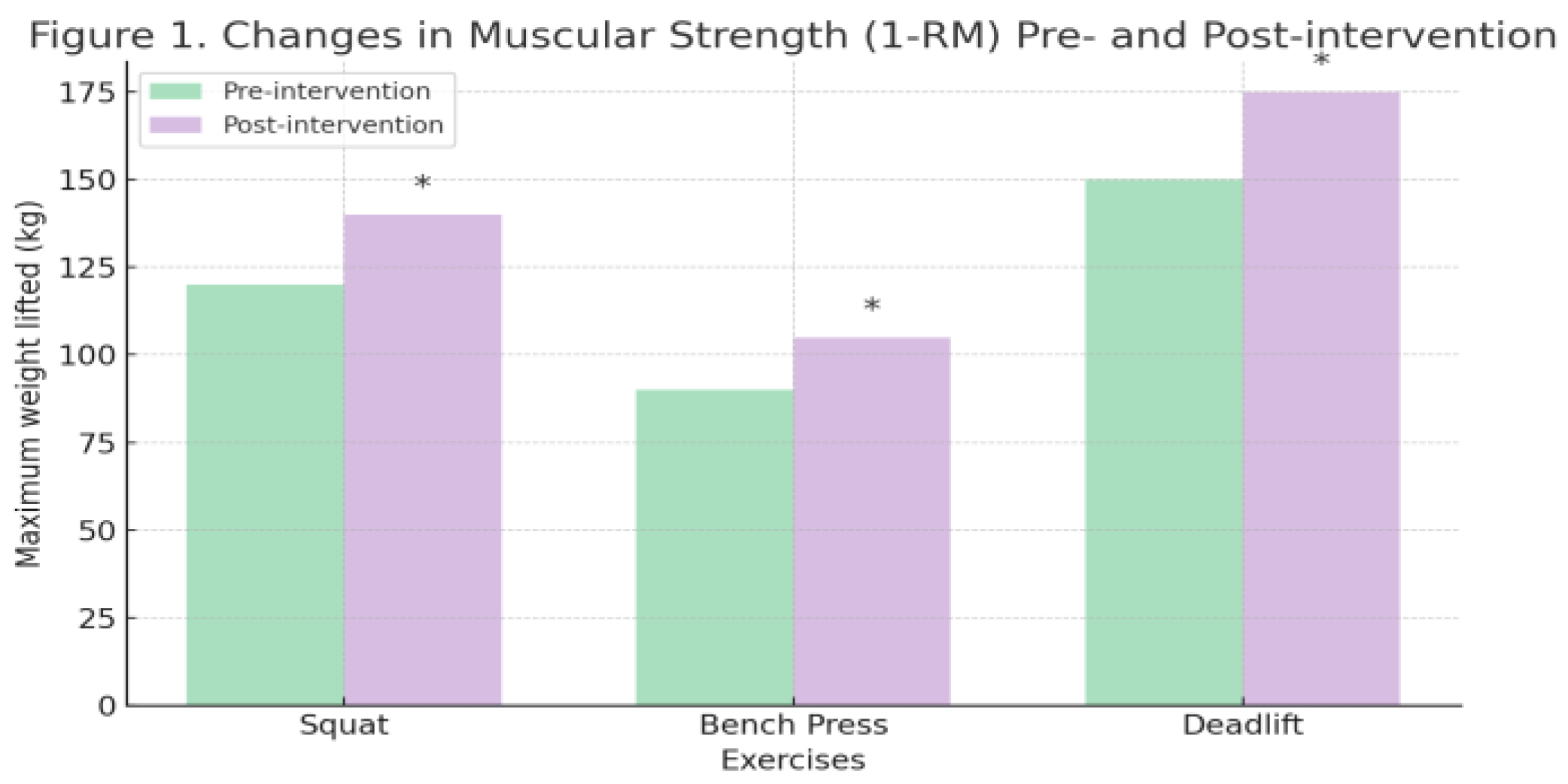
Figure 2.
Comparison of compliance rates (%) with recommended macronutrient distribution guidelines (protein, carbohydrates, fats) pre- and post-intervention. Values presented as mean percentages. Statistically significant improvements (p < 0.01), marked by asterisks, demonstrate increased adherence to structured nutritional recommendations following the multidisciplinary fitness intervention.*.
Figure 2.
Comparison of compliance rates (%) with recommended macronutrient distribution guidelines (protein, carbohydrates, fats) pre- and post-intervention. Values presented as mean percentages. Statistically significant improvements (p < 0.01), marked by asterisks, demonstrate increased adherence to structured nutritional recommendations following the multidisciplinary fitness intervention.*.
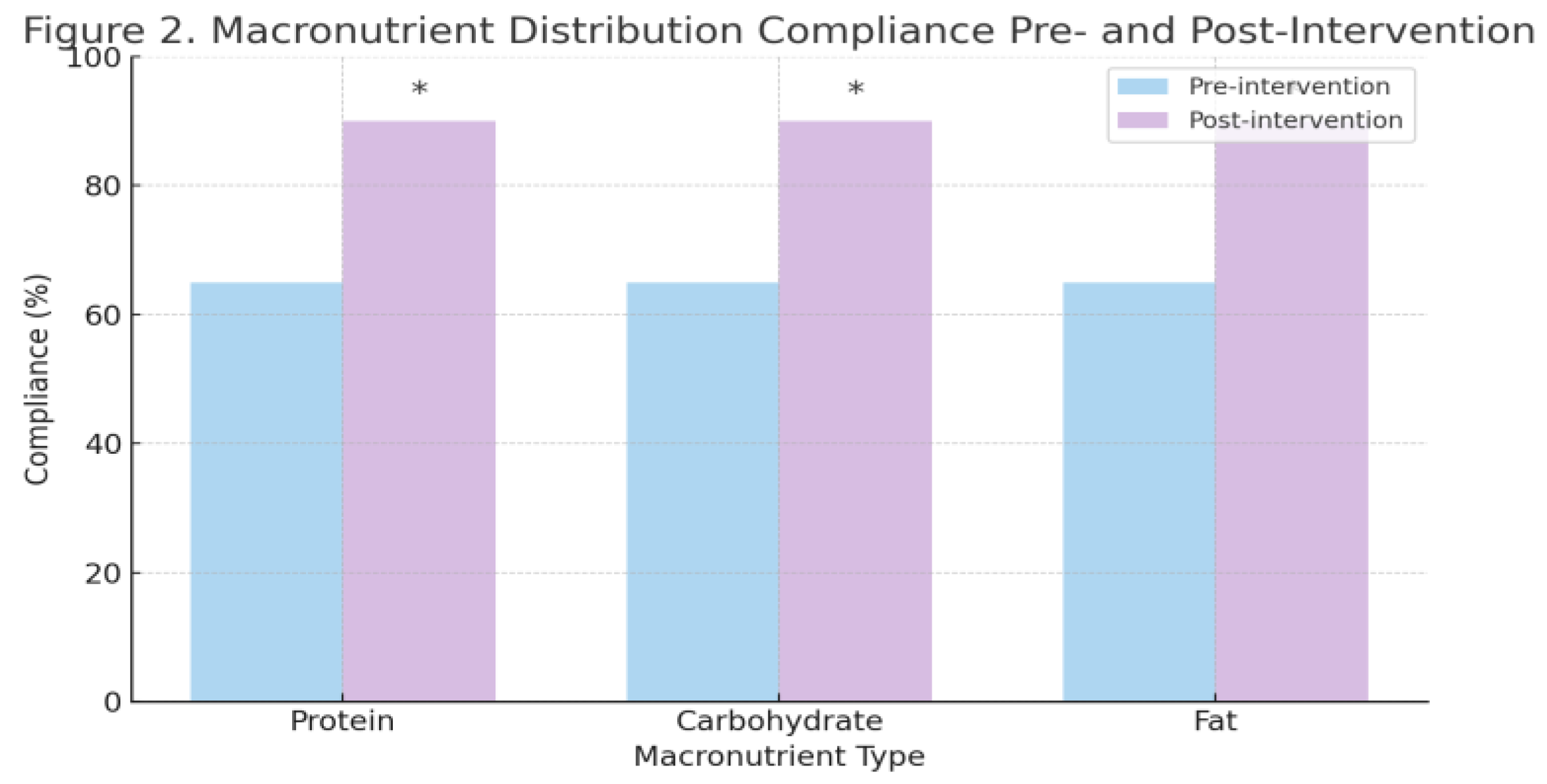
Figure 3.
Changes in psychological outcomes, including intrinsic motivation, self-efficacy, and perceived social support, pre- and post-intervention. Scores presented as mean values on standardized scales. Asterisks indicate statistically significant differences (p < 0.01), emphasizing substantial improvements in psychological factors critical for sustained fitness adherence and overall participant satisfaction.*.
Figure 3.
Changes in psychological outcomes, including intrinsic motivation, self-efficacy, and perceived social support, pre- and post-intervention. Scores presented as mean values on standardized scales. Asterisks indicate statistically significant differences (p < 0.01), emphasizing substantial improvements in psychological factors critical for sustained fitness adherence and overall participant satisfaction.*.
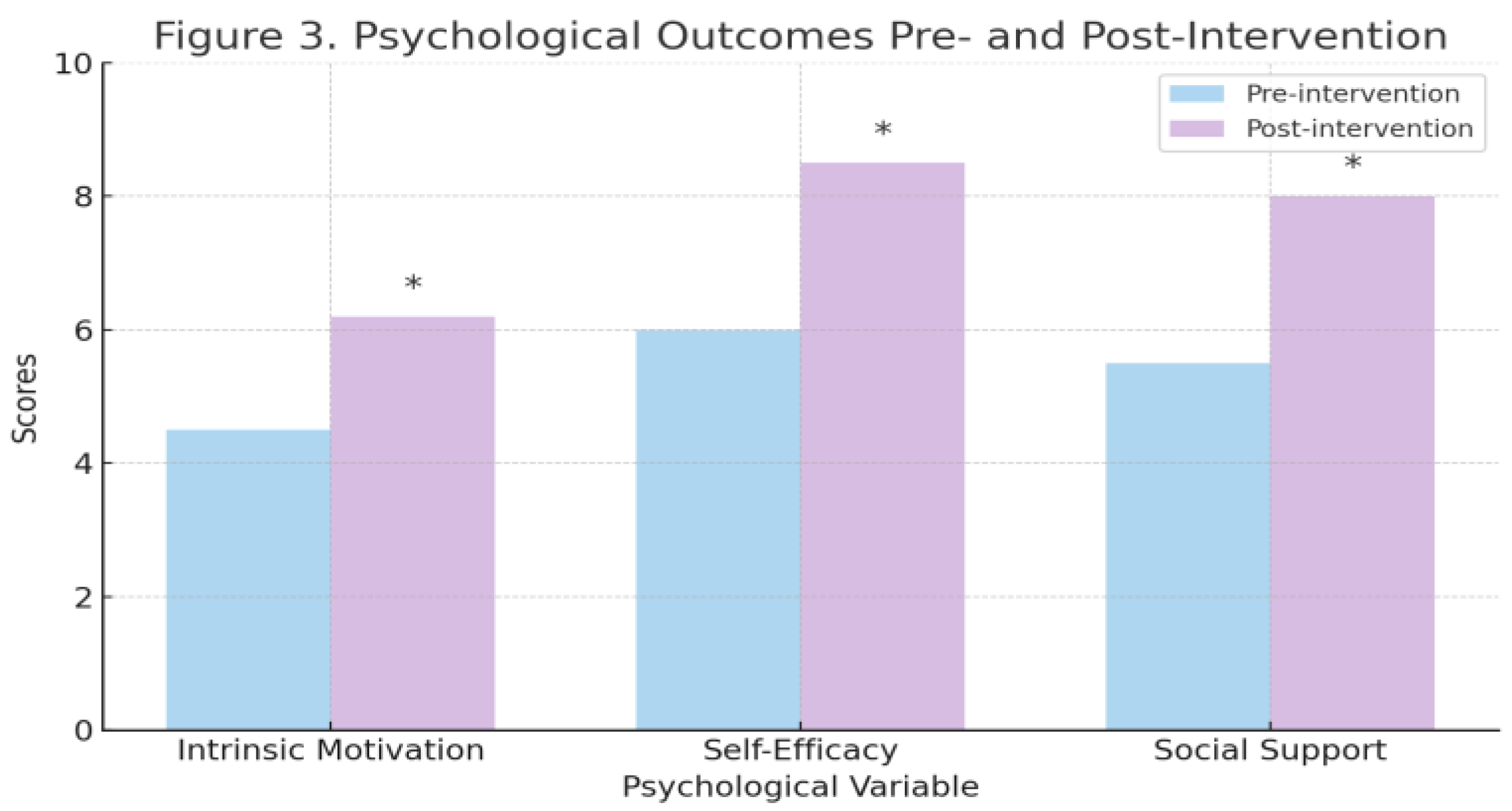

Table 1.
Physiological Outcomes – Anthropometric and Metabolic Changes.
| Variable | Pre-Intervention (Mean ± SD) |
Post-Intervention (Mean ± SD) |
Δ% | p-Value |
|---|---|---|---|---|
| Body Weight (kg) | 82.5 ± 1.2 | 81.0 ± 1.0 | -1.8% | <0.05 |
| Lean Muscle Mass (kg) | 64.0 ± 0.9 | 66.5 ± 0.8 | +3.9% | <0.05 |
| Body Fat (%) | 18.5 ± 1.1 | 15.2 ± 0.9 | -17.8% | <0.01 |
| Squat 1-RM (kg) | 120 ± 5 | 140 ± 4 | +16.7% | <0.01 |
| Bench Press 1-RM (kg) | 90 ± 4 | 105 ± 3 | +16.7% | <0.01 |
| Deadlift 1-RM (kg) | 150 ± 6 | 175 ± 5 | +16.7% | <0.01 |
| Fasting Glucose (mg/dL) | 95 ± 4 | 88 ± 3 | -7.4% | <0.05 |
| Total Cholesterol (mg/dL) | 190 ± 7 | 175 ± 6 | -7.9% | <0.05 |
| HDL Cholesterol (mg/dL) | 50 ± 2 | 55 ± 2 | +10.0% | <0.05 |
| LDL Cholesterol (mg/dL) | 120 ± 5 | 110 ± 4 | -8.3% | <0.05 |
| Triglycerides (mg/dL) | 130 ± 6 | 115 ± 5 | -11.5% | <0.05 |
Table 2.
Nutritional Outcomes - Dietary Compliance and Supplementation Adherence.
| Nutritional Variable | Pre-Intervention (Mean ± SD) | Post-Intervention (Mean ± SD) | Δ% | p-Value |
|---|---|---|---|---|
| Total Energy Intake (kcal/day) | 2450 ± 150 | 2350 ± 100 | -4.1% | <0.05 |
| Protein Intake (g/day) | 110 ± 10 | 140 ± 8 | +27.3% | <0.01 |
| Carbohydrate Intake (g/day) | 310 ± 20 | 280 ± 15 | -9.7% | <0.05 |
| Fat Intake (g/day) | 85 ± 7 | 75 ± 5 | -11.8% | <0.05 |
| Macronutrient Distribution Compliance (%) | 65% ± 5% | 90% ± 3% | +38.5% | <0.01 |
| Hydration Compliance (%) | 70% ± 8% | 92% ± 4% | +31.4% | <0.01 |
| Supplementation Adherence (%) |
60% ± 10% | 95% ± 3% | +58.3% | <0.01 |
Table 3.
Psychological and Social Outcomes – Motivation, Adherence, and Qualitative Feedback.
| Psychological and Social Variable | Pre-Intervention (Mean ± SD) | Post-Intervention (Mean ± SD) | Δ% | p-Value |
|---|---|---|---|---|
| Intrinsic Motivation (IMI score) |
4.5 ± 0.5 | 6.2 ± 0.3 | +37.8% | <0.01 |
| Self-Efficacy Score (0–10 scale) |
6.0 ± 0.7 | 8.5 ± 0.4 | +41.7% | <0.01 |
| Adherence to Training Sessions (%) | 75% ± 8% | 95% ± 4% | +26.7% | <0.01 |
| Perceived Social Support (0–10 scale) |
5.5 ± 1.0 | 8.0 ± 0.5 | +45.5% | <0.01 |
| Satisfaction with Intervention (0–10 scale) | - | 9.0 ± 0.4 | - | - |
Disclaimer/Publisher’s Note: The statements, opinions and data contained in all publications are solely those of the individual author(s) and contributor(s) and not of MDPI and/or the editor(s). MDPI and/or the editor(s) disclaim responsibility for any injury to people or property resulting from any ideas, methods, instructions or products referred to in the content. |
© 2025 by the authors. Licensee MDPI, Basel, Switzerland. This article is an open access article distributed under the terms and conditions of the Creative Commons Attribution (CC BY) license (http://creativecommons.org/licenses/by/4.0/).
Copyright: This open access article is published under a Creative Commons CC BY 4.0 license, which permit the free download, distribution, and reuse, provided that the author and preprint are cited in any reuse.


