Preprint
Article

This version is not peer-reviewed.

Urban Foraging and Toxicity of Rose-Ringed Parakeets (Psittacula krameri) in Athens

A peer-reviewed article of this preprint also exists.

Submitted:

02 October 2025

Posted:

04 October 2025

You are already at the latest version

Abstract

The Rose-ringed Parakeet (Psittacula krameri) is an invasive parrot increasingly established in European cities, including Athens, Greece, yet its diet and exposure to plant toxins in Mediterranean ecosystems remain poorly documented. We examined seasonal foraging patterns in Athens and assessed the toxicity of key food items using a brine shrimp lethality assay. Field observations recorded 601 feeding events across 10 plant species, and eight commonly consumed foods were tested with Artemia franciscana nauplii exposed to aqueous extracts for 48 hours to determine LC50 values and toxicity classes. Four foods—cypress seeds (Cupressus sempervirens), chinaberries (Melia azedarach), Canary Island dates (Phoenix canariensis), and olives (Olea europaea)—accounted for 82.9% of feeding events. Dietary diversity was highest in winter and summer, while foraging presence remained relatively stable, peaking in autumn. Toxicity assays identified chinaberries as most toxic and cypress seeds as least, indicating potential dietary risks. These findings show that P. krameri exhibits flexible, opportunistic foraging and tolerates plant compounds harmful to other vertebrates. Seasonal dietary shifts and ecological plasticity likely support its urban invasion success, highlighting the importance of understanding diet composition and potential exposure to plant toxins in urban parakeet populations.

Keywords: 
;  ;  ;  ;  ;  ;  ;  ;  ;  

1. Introduction

Wild parakeets were first observed in Athens in the late 1980s, and by the early 1990s the first free-living colonies and nests were recorded [1]. This development followed a broader pattern seen in several European cities, where parakeets have successfully established free-ranging populations [2,3,4].
Parakeets are native to South America, South Asia, and sub-Saharan Africa. They are non-migratory and did not arrive in Europe naturally. Instead, they became established through escapes or releases from captivity and are therefore considered feral species [2,5]. When feral populations reproduce and persist without human assistance, they are regarded as naturalized. If they expand into new areas and cause ecological or economic impacts, they are classified as invasive and may be considered pests [3,6].
Although distribution patterns in Europe are negatively correlated with the number of frost days [3], low temperatures are not a strict barrier. Populations continue to grow in cities with harsh winters; in Chicago, Illinois, feral parakeets have been reported to survive temperatures down to –33 °C [7].
In Athens, two parakeet species are now well established: the Rose-ringed Parakeet (Psittacula krameri) and the Monk Parakeet (Myiopsitta monachus). Both have persisted for more than three decades, forming large colonies in parks, wooded areas, and other green spaces [1,8].
The Monk Parakeet shows high dietary flexibility, foraging on the ground and in trees. Its diet includes grasses, cultivated and wild seeds, fruits, leaf buds, cotyledons of emerging plants, and pollen, and in urban settings it may also consume human food waste such as bread or rice [1,9,10,11,12,13].
The Rose-ringed Parakeet primarily feeds in trees and consumes mainly plant material, with seeds making up about 80% of its diet [14,15,16,17]. Small amounts of insects, such as carpenter ants (Camponotus cinctellus), have also been recorded, contributing approximately 3% of the diet [18].
Although the Rose-ringed Parakeet is among the most widespread invasive bird species worldwide, studies on its biology in naturalized populations remain limited [2,16,18,19,20,21,22]. In Athens, no scientific studies have yet examined its feeding ecology, despite growing interest from researchers, conservationists, and the public [1].
The aim of this study is to investigate the diet composition of Rose-ringed Parakeets in Athens and assess potential toxicological risks associated with their foraging. The results are expected to improve understanding of how this species adapts to urban Mediterranean environments and to provide information relevant to urban ecology, biodiversity management, and public awareness.

2. Materials and Methods

Study Site

We observed the foraging behavior of Ring-necked Parakeets at two neighboring field sites: Platonos Academia Park (Kolonos, Athens) and the campus of the Agricultural University of Athens (AUA) (Botanicos, Athens) (Figure 1). The combined study area is located between 37°58′ and 37°59′ N latitude and approximately 23°42′ E longitude.
Platonos Academia Park covers approximately 100 hectares and, in addition to its archaeological monuments, hosts a variety of ornamental and fruit trees. Olive trees (Olea europaea) and carob trees (Ceratonia siliqua) are the most abundant species.
The AUA campus lies about 1.4 km south-southwest of Platonos Academia Park, covering roughly 250 hectares on both sides of the historic “Iera Odos” (Sacred Way). The vegetation is similarly diverse, dominated by olive trees (Olea europaea) and Canary Island date palms (Phoenix canariensis). Historically, the Agricultural University campus occupies part of the land where Theophrastus (371 – 287 BC), Aristotle’s student and successor at the Lyceum, established the earliest known botanical garden in Europe. This legacy is reflected in the name “Botanicos,” which the area still carries today. Theophrastus is widely regarded as the founder of botanical science.

Foraging Observations

Parakeet foraging was monitored by weekly census walks along predefined routes at both sites from September 2022 to August 2025. Walks were conducted once per week, starting at sunrise, and lasted about one hour. To avoid double counting, the observer (M.A.B.C.) followed a one-way route, beginning at Platonos Academia Park and continuing to the AUA campus (Figure 1). Observations were grouped by season: autumn (Sep–Nov), winter (Dec–Feb), spring (Mar–May), and summer (Jun–Aug).
Feeding events were recorded only when birds were actively consuming plant material. For each event, the plant species, plant part (e.g., pulp, seed), and fruit maturity (ripe/unripe) were noted, with binoculars used when needed. Plant identification was verified by AUA botanists using field samples or photographs. Fruits or seeds of the same species and maturity stage as those consumed were collected on the same day for further analysis.
As a supplementary measure, ‘foraging presence’ was defined as the number of birds observed on food plants per census walk of approximately one hour.

Toxicity Analysis

Sample Collection and Processing

During fieldwork, we collected fruits and seeds consumed by parakeets but not typically eaten by humans. Six samples per species were dried at <40 °C to constant weight at the Laboratory of Nutritional Physiology and Feeding (AUA), ground through a 1 mm sieve, pooled into composite samples, and coded before submission to the Laboratory of Toxicology & Biomarkers (IMBBC-HCMR) for blinded analysis.

Preparation of Aqueous Extracts

Three grams of each composite sample were mixed with 15 mL artificial seawater (salinity 35 g/L; Tropic Marin, Germany) in 50 mL Falcon tubes, homogenized for 10 min, and centrifuged at 3,000 rpm for 20 min at 25 °C. Supernatants were filtered (Whatman No. 1) and stored at 4 °C as stock solutions.

Brine Shrimp Hatching

Artemia franciscana cysts were incubated in artificial seawater at 25 °C with constant light and aeration following Vanhaecke et al. [23]. Instar II–III nauplii were used in 48-h acute toxicity assays.

Brine Shrimp Lethality Test (BSLT)

Assays were carried out in 24-well plates. Serial dilutions of extracts (100% to 0.01%) were prepared, with final tests including up to 12 concentrations. Ten nauplii were placed in each well. Preliminary assays used one well per concentration; definitive assays were done in triplicate. Artificial seawater served as a negative control. Plates were incubated at 25 °C in darkness, and mortality was recorded at 24 and 48 h.

Statistical Analyses

A chi-square test of independence was used to examine the association between food item consumption and season. Shannon’s diversity index (H′) was calculated to quantify within-season dietary diversity (alpha-diversity), while Bray–Curtis dissimilarity assessed compositional differences among seasons (beta-diversity).
To evaluate seasonal differences in foraging presence of Rose-ringed Parakeets in Athens, data normality was tested with the Shapiro–Wilk test. Depending on the outcome, comparisons were conducted using either one-way ANOVA (normal distribution) or the Kruskal–Wallis test (non-normal distribution). All statistical analyses were performed using R (version 4.4.1; R Core Team, 2024). Diversity indices, including Shannon’s index (H’) and Bray-Curtis dissimilarity, were calculated using the vegan package (version 2.6-4). All tests were evaluated at a significance level of α = 0.05.
In the toxicological analysis, Mortality (%) was calculated as: Mortality=100X/Y, where X = number of larvae in control, Y = number of dead larvae in treatment. Median lethal concentration (LC50) and 95% confidence intervals were estimated using the Trimmed Spearman-Karber method [24]. LC50 values are expressed as mean ± standard deviation (SD; n = 3). Differences between LC50 values were tested with one-way ANOVA followed by Tukey’s multiple comparison test (p < 0.05), using SPSS v26 (IBM® Corp., NY, USA).

3. Results

A total of 601 foraging events were recorded, involving 10 plant species (Table 1 and Table 2). Four items accounted for the majority of feeding activity, representing 82.9% of all observations (498/601):
  • Cypress seeds (Cupressus sempervirens) – Seeds were taken from green cones throughout the year. Birds broke unripe, non-woody cones with their beaks to access the seeds.
  • Chinaberries (Melia azedarach) – Ripe fruits were consumed year-round. Birds held the fruit in their beaks and removed the peel with chewing movements before ingestion.
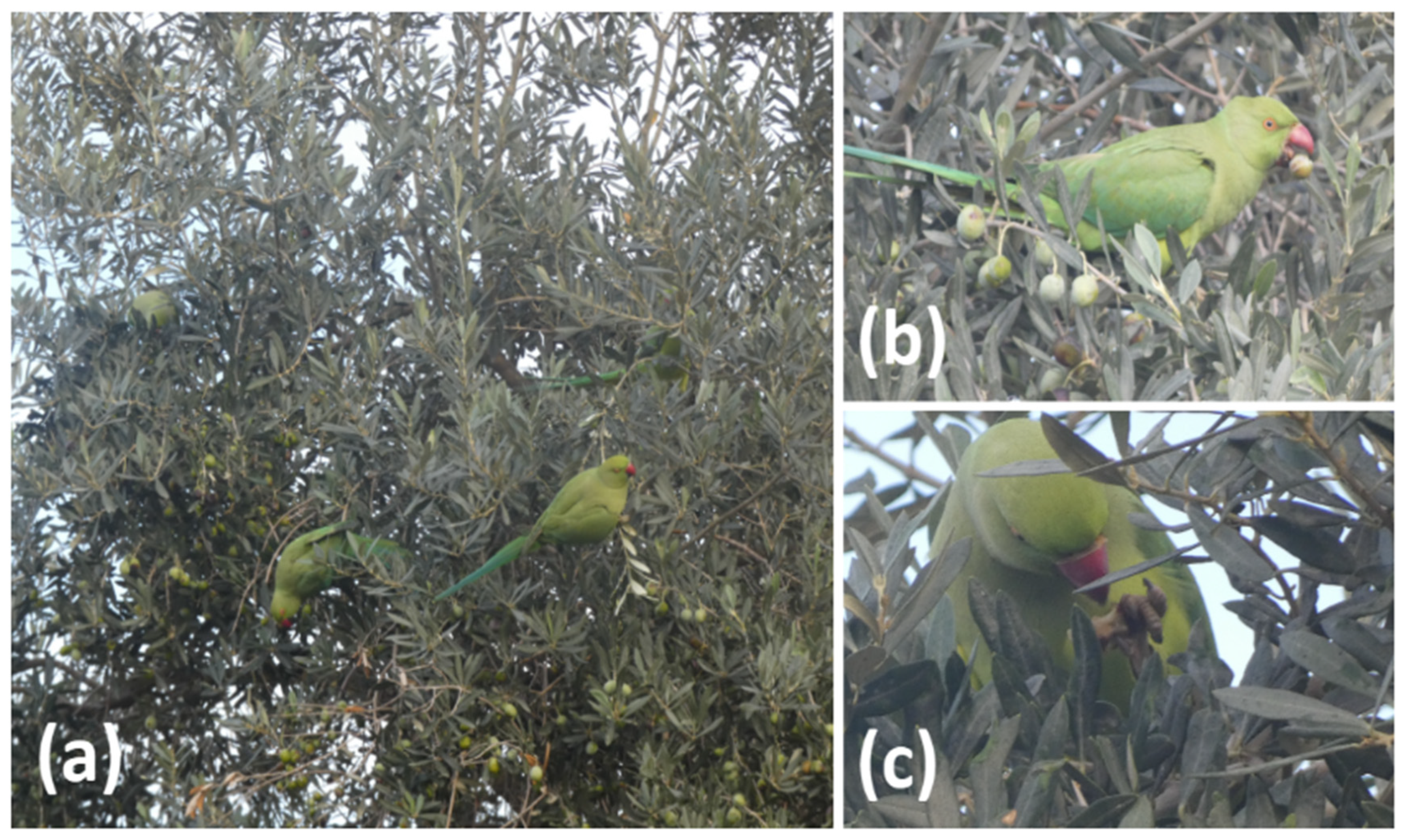
  • Olives (Olea europaea) – Consumed mainly from October to February. Parakeets preferred mature olives, both green and dark-colored. Once an olive was grasped with the beak, they manipulated it with their feet before consuming parts of the flesh and eventually ingesting the pit (endocarp) (Figure 2).
  • Canary Island dates (Phoenix canariensis) – Consumed from August to January at the mature stage, either eaten whole or partially, the latter in a manner similar to olives.
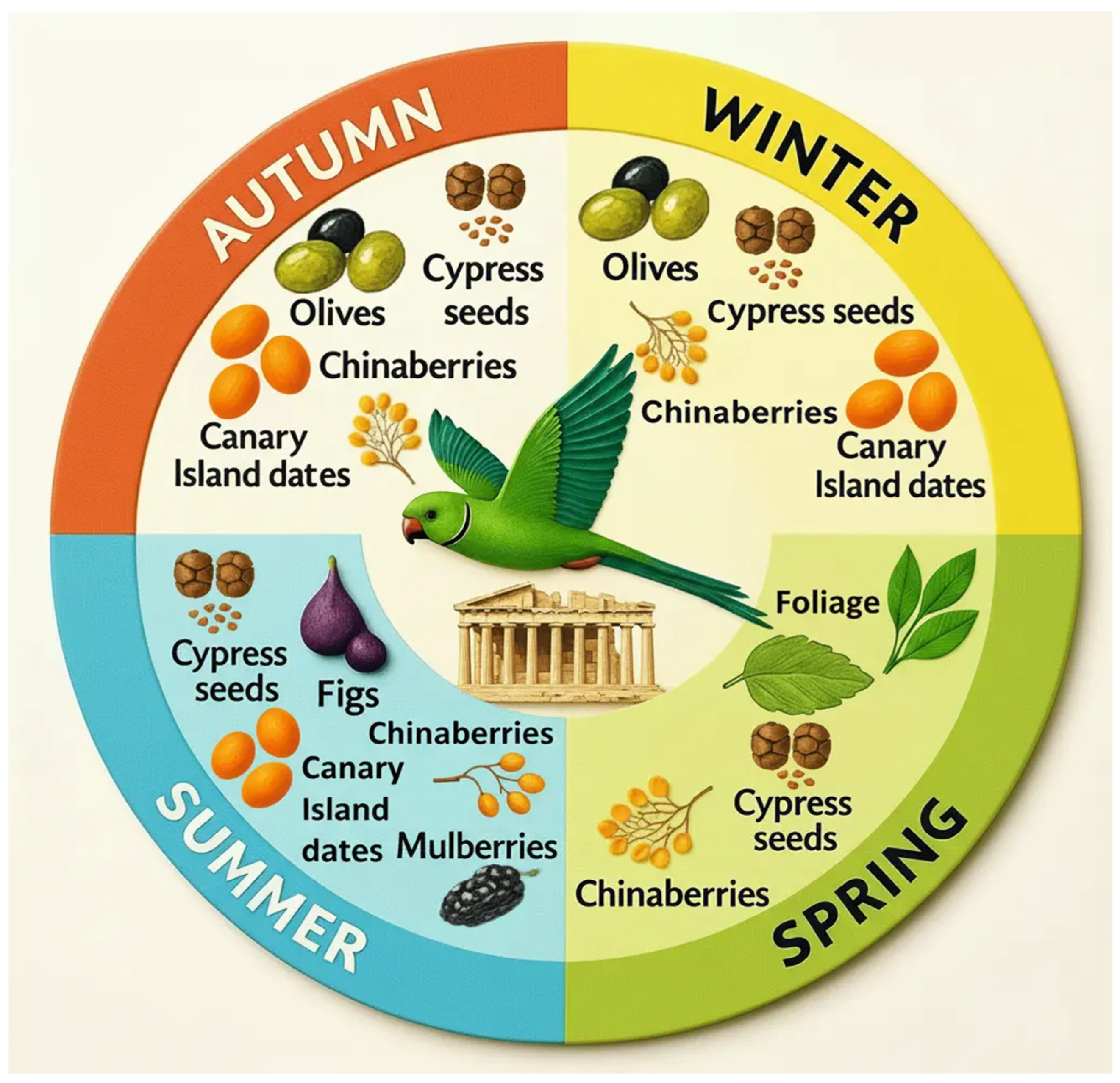
Additional seasonal feeding was observed. In spring, parakeets consumed foliage (fronds, leaves, young stems) from Melia azedarach, Morus spp., and Ligustrum japonicum. In summer, they fed on figs (Ficus carica) and mulberries (Morus spp.) (Figure 3). Occasional foraging was also recorded on bay laurel berries (Laurus nobilis), mastic berries (Pistacia lentiscus), privet berries (Ligustrum japonicum), and kurrajong seeds (Brachychiton populneus), though these were rare (Table 2).
The chi-square test confirmed a significant association between food item consumption and season (χ2 = 323.45, df = 21, p < 0.0001). Distinct seasonal patterns were evident: olives dominated in autumn and winter, chinaberries in spring, and multiple fleshy fruits in summer.
Dietary composition varied seasonally, influenced by both food availability and preference. The broadest range of food items (7 items in each season) was recorded in winter and summer (Table 2). However, Shannon’s diversity index, which accounts for both richness and evenness, revealed more nuanced patterns: the lowest value occurred in spring (H′ = 1.399), due to dominance of M. azedarach fruits (40.5%) and foliage use, while the highest was in summer (H′ = 1.720), when feeding was more evenly distributed among several fruits such as figs and mulberries. Autumn and winter showed intermediate values (H′ = 1.480 and 1.603, respectively). Thus, although winter and summer featured the broadest range of food items, true dietary diversity peaked only in summer owing to a more balanced contribution of different foods.
Bray–Curtis dissimilarities demonstrated compositional turnover across seasons. The lowest dissimilarity (0.228) was between autumn and winter, reflecting shared reliance on olives, while the highest (0.679) was between spring and summer, indicating a shift from foliage-based feeding to diverse fruit assemblages.
In the analysis of foraging presence, the Shapiro–Wilk test indicated non-normal data for autumn (p = 0.0067). Consequently, seasonal differences were evaluated using the Kruskal–Wallis test, which showed no significant variation among seasons (p = 0.4592). Nonetheless, numerical values indicated that foraging presence was higher in autumn (Table 3).
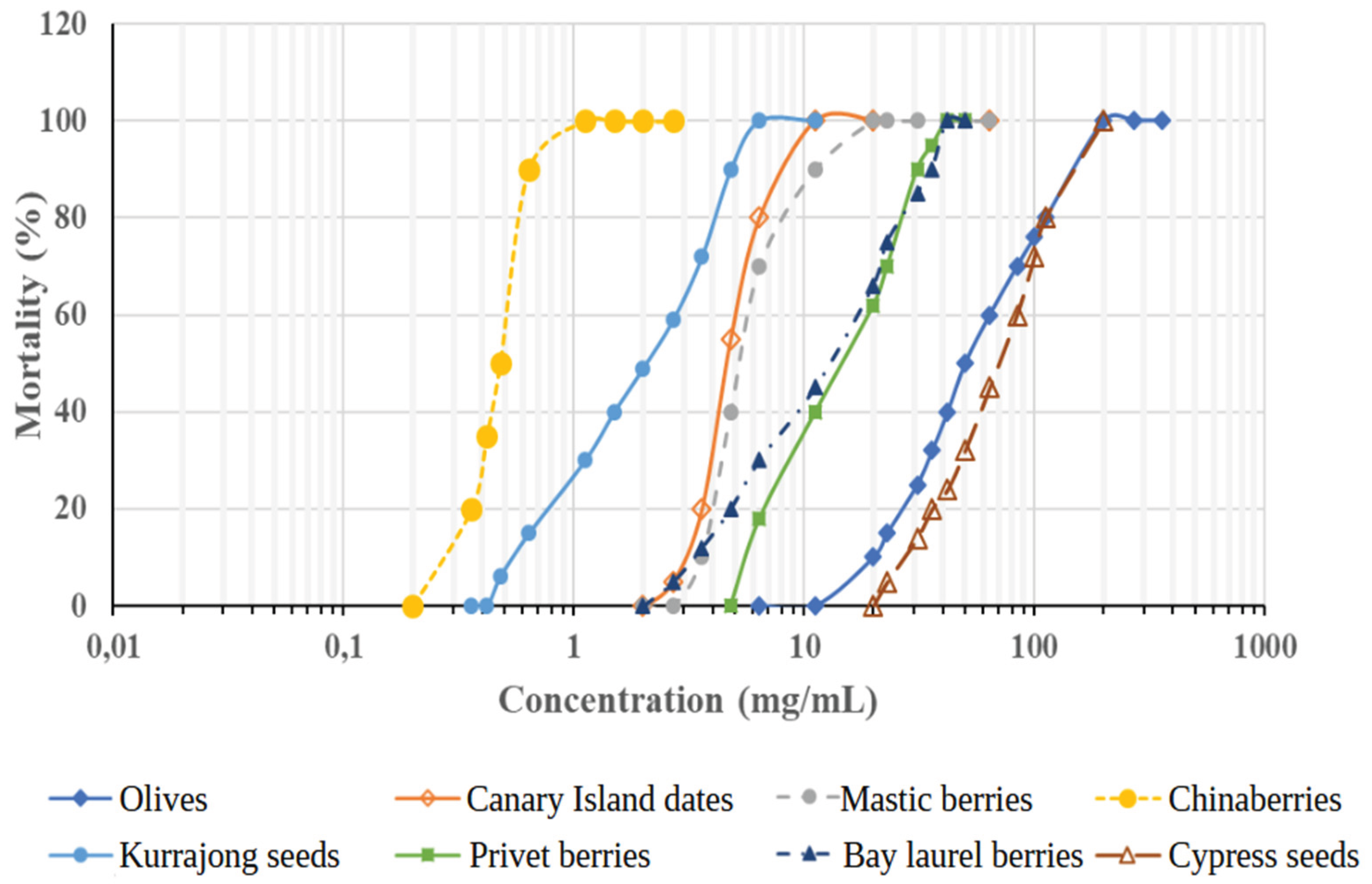
For toxicity testing, eight dietary items were analyzed: olives (Olea europaea), cypress seeds (Cupressus sempervirens), chinaberries (Melia azedarach), Canary Island dates (Phoenix canariensis), bay laurel berries (Laurus nobilis), mastic berries (Pistacia lentiscus), privet berries (Ligustrum japonicum), and kurrajong seeds (Brachychiton populneus). Responses of Artemia franciscana nauplii (Instar II–III) to aqueous extracts varied among plant species, indicating distinct toxicity profiles (Figure 4). M. azedarach fruits exhibited the highest toxicity, with the lowest LC50, while C. sempervirens seeds were least toxic, with the highest LC50. According to Meyer et al. [25], extracts with LC50 < 1 mg/mL in the brine shrimp lethality assay (BSLA) are classified as bioactive. This suggests potential toxicological relevance for several items in the parakeets’ diet. The classification of toxicity followed Meyer et al. [25] and Gosselin et al. [26], as adapted by Hamidi et al. [27] (Table 4).

4. Discussion

The Rose-ringed Parakeet is a medium-sized parrot (38–42 cm, 110–182 g) with a long tail often exceeding half its body length (up to 25 cm) [2,5]. Native to sub-Saharan Africa and the Indian subcontinent, males develop a dark or reddish neck ring at around three years of age [5,28]. The species nests in tree cavities, often enlarging them and sometimes displacing other cavity-nesting birds [29]. It is highly social, typically foraging, roosting, and breeding in groups [5]. Its diet is mainly plant-based—fruits, seeds, and grains—with occasional nectar, buds, bark, and insects [15,16,18,20,30,31,32,33,34,35,36].
Feral populations have spread worldwide through the pet trade, now reported in at least 92 countries across six continents, making the species the most widely introduced parrot and an established invasive alien species [3,5,29,37]. Invasive species threaten biodiversity and ecosystem functioning globally [29,38]. They affect native species via competition, predation, herbivory, habitat alteration, pathogen transmission, and hybridization [39,40]. These processes disrupt community structure and ecosystem services [6,41]. Non-native species are implicated in about 40% of historical extinctions [42], and up to 80% of threatened taxa are affected in some regions [43]. In Belgium, for example, parakeet abundance has been linked to nuthatch declines due to competition for cavities [29].
Rose-ringed Parakeets are also agricultural pests in both native and introduced ranges [16,30,44,45]. In India and Hawaii they damage citrus, guava, mango, sorghum, and maize [16,19,46]. They can destroy seeds of native trees and strip bark, sometimes causing tree mortality [21,35,47]. Large flocks may reduce tree reproductive output [48]. They also disperse alien plants [16,21,47] and compete with native birds for food, even in gardens [49].
Despite such effects elsewhere, ecological impacts in Athens remain unstudied. Most green areas are artificial parks rather than natural ecosystems, complicating assessments. There are no orchards or crop fields within city limits, and parakeets appear restricted to urban areas with no evidence of spread into farmland. Interactions with urban wildlife remain undocumented, leaving impacts on native species unknown.
Feral parakeets nonetheless represent a conspicuous part of Athens’ avifauna. Newspaper accounts attribute their origin to escapes or releases near the former Hellenikon Airport [1], consistent with other introductions via the pet trade [50]. Additional releases may have contributed. In 2021, the Rose-ringed Parakeet population in Athens was estimated to comprise approximately 1,000 individuals [1], though it has likely increased since then. Exact numbers remain unverified, but our study sites—Platonos Academia Park and the Agricultural University of Athens campus—are not considered major concentration areas. They were chosen for proximity to the observer and because sites with lower densities reduce the risk of recording errors.
Our study highlights the dietary flexibility of rose-ringed parakeets. In Athens, the principal food resources are cypress seeds and chinaberries, which are available throughout the year. First-year cypress cones persist on trees year-round, while ripe chinaberries remain until late September, overlapping with the new crop. Seasonal fruits, such as olives (autumn–winter) and dates (late summer–winter), strongly influence foraging patterns. Once these resources are depleted in spring, parakeets seldom visit olive or palm trees, resuming their use in autumn with the maturation of new crops. Overall, the diet in Athens relies primarily on cypress seeds, chinaberries, Canary Island dates, and olives (Table 2), a pattern consistent with reports in the popular press [1]. This convergence supports the view that our observations from the two study sites are representative of feeding activity across the city.
We recorded 13 consumed food items (Table 2), far fewer than in other studies—for example, Shivambu et al. [18] documented 31 fruiting/flowering species in Durban, South Africa. This difference reflects both the smaller study area and the limited plant diversity of Athens’ artificial parks compared with natural ecosystems. Interestingly, despite the availability of other potential foods, such as carob pods (Ceratonia siliqua)—a recognized resource for various animals [51]—parakeets did not consume them, indicating selective foraging even within a relatively narrow dietary niche.
Within this limited spectrum, seasonal shifts were marked. Olives (Olea europaea) and chinaberries (Melia azedarach) dominated winter diets, while summer feeding was more diverse, reflecting opportunistic use of ephemeral Mediterranean fruits. High Shannon diversity indices and strong seasonal turnover (Bray-Curtis dissimilarities) emphasize a flexible foraging strategy that enables persistence year-round and may confer competitive advantages over native frugivores during resource bottlenecks. Similar plasticity has been reported elsewhere [18,20,33,52].
Feeding was recorded only when birds were directly observed eating, excluding instances of perching on fruiting trees. To complement these records, we applied the metric “foraging presence,” defined as the number of birds observed on trees per observation hour, providing a relative estimate of feeding activity across seasons. No significant seasonal differences in foraging presence were detected (p = 0.4592), suggesting relatively stable foraging activity throughout the year (Table 3).
This foraging presence’ stability is likely supported by the continuous availability of urban food resources and may also reflect the fact that seasonal temperature extremes in Athens—typically mild winters and hot but tolerable summers—fall within the physiological tolerance of P. krameri, which is known to persist in both colder and hotter regions [3,53]. Numerically, foraging presence peaked in autumn (Sept–Nov) (Table 3), although it remains unclear whether this represents a consistent pattern, given the birds’ ongoing adaptation to the urban environment and broader climatic changes in the Mediterranean [54].
Unlike in South Africa, where dietary diversity peaked in spring (Sep–Nov) [18], in Athens the greatest variety was recorded in winter (Dec–Jan) and summer (Jun–Aug). This pattern likely reflects the reduced availability of core foods—cypress seeds, chinaberries, olives, and dates—during winter, which compels parakeets to broaden their diet, whereas the seasonal abundance of figs and mulberries increases the range of food items consumed in summer.
Parakeets in our study were frequently observed chewing bark and pecking at tree trunks, suggesting possible insect consumption, although this could not be directly confirmed. In Durban, South Africa, carpenter ants (Camponotus cinctellus) made up about 3% of the diet [18]. Several Camponotus species are present in Athens and commonly occur on trees, making them plausible prey. However, because observations were made from a distance, we could only infer, rather than verify, insect feeding.
In our toxicity study, the observed differences suggest the presence of diverse bioactive compounds in different food items, varying in chemical structure, potency, and mode of action. Chinaberries exhibited the highest toxicity, followed by kurrajong seeds, whereas olives and cypress seeds were clearly non-toxic (Table 4; Figure 4). The toxicity of ripe chinaberries is well documented [55], with reports of muscle tremors, kicking movements, and respiratory distress in ostriches [56]. Green berries are even more toxic [57], though our samples consisted of ripe fruits.
Kurrajong seeds are generally considered non-toxic, with irritation caused only by seed hairs, which Aboriginal Australians traditionally removed before consuming the seeds raw, roasted, or as flour [58]. This assumption is largely based on traditional use rather than formal toxicological studies. In our analysis, the seeds showed moderate toxicity (Table 4). Cyclopropene fatty acids, particularly sterculic acid, previously identified in kurrajong seed oil, are known to have toxic and co-carcinogenic effects in animals [59,60,61,62], consistent with the responses observed in our analysis.
Our results support previous work indicating that parrot diets often include foods containing measurable toxins [63]. Rose-ringed parakeets, like many parrots, are generalist herbivores capable of tolerating seeds and fruits defended by compounds highly toxic to humans and other vertebrates [63,64,65,66]. Unlike most avian frugivores, they appear able to process or tolerate these compounds [67]. Mechanisms remain poorly understood, though experimental studies show that clay ingestion can reduce toxicity in vivo [68].
This ability to exploit chemically defended foods highlights a key ecological advantage: tolerance to plant toxins broadens resource availability, reduces competition with other species, and may facilitate invasion success. Our study demonstrates measurable toxicity in common dietary items, emphasizing the need to investigate detoxification mechanisms, behavioral strategies, and energetic costs. Linking diet composition with physiological adaptations could shed light on the evolution of dietary generalism and niche expansion in parrots, advancing our understanding of plant–herbivore interactions in complex ecosystems.

5. Conclusions

The rose-ringed parakeet has established a self-sustaining urban population in Athens, demonstrating remarkable dietary flexibility that allows year-round exploitation of both native and non-native plants. Seasonal shifts in food preferences, selective consumption of particular items, and tolerance of chemically defended foods reflect adaptation to the urban environment and resilience to fluctuating resource availability. Although the population currently appears confined to the city and does not yet threaten surrounding agricultural areas, potential ecological impacts—such as competition for nesting sites, disruption of native bird communities, and facilitation of alien plant dispersal—remain largely unquantified.
Seasonal peaks in feeding activity and the presence of toxic compounds in key food items indicate that both resource availability and food quality strongly influence parakeet ecology. Continued monitoring is crucial to assess long-term ecological consequences, anticipate potential conflicts with native urban biodiversity, and guide management strategies in cities increasingly affected by invasive species.

Author Contributions

Conceptualization, M.A.B.C. and G.C.; methodology, M.A.B.C., E.C. and A.C.P.; software, M.A.B.C., N.P. and N.T.; validation, E.C., A.C.P., and V.V.P.; formal analysis, M.A.B.C., E.C., N.P., N.T. and V.V.P.; investigation, M.A.B.C., E.C. and N.P.; resources, A.C.P., E.C. and Y.K.; data curation, M.A.B.C., E.C., N.P., V.V.P. and N.T.; writing—original draft preparation, M.A.B.C. and E.C.; writing—review and editing, G.C., E.C. and A.C.P.; visualization, M.A.B.C.; supervision, G.C., A.C.P., E.C. and Y.K.; project administration, A.C.P.; funding acquisition, A.C.P., E.C. and Y.K. All authors have read and agreed to the published version of the manuscript.

Funding

This research received no external funding

Data Availability Statement

Data is contained within the article.

Conflicts of Interest

The authors declare no conflicts of interest.

Abbreviations

The following abbreviations are used in this manuscript:
AUA Agricultural University of Athens
IMBBC-HCMR Institute of Marine Biology, Biotechnology and Aquaculture, Hellenic Centre for Marine Research

References

  1. Hulot, M. Papagalos o Athinaios [The Athenian Parrot]. LiFO, 2021. Available online: https://www.lifo.gr/tropos-zois/urban/papagalos-o-athinaios (accessed on 28 September 2024).
  2. Butler, C.J. Population Biology of the Introduced Rose-ringed Parakeet Psittacula krameri in the UK. Ph.D. Thesis, University of Oxford, Oxford, UK, 2003. [Google Scholar]
  3. Strubbe, D.; Matthysen, E. Establishment success of invasive ring-necked and monk parakeets in Europe. J. Biogeogr. 2009, 36, 2264–2278. [Google Scholar] [CrossRef]
  4. Ważna, A.; Ciepliński, M.; Ratajczak, W.; Bojarski, J.; Cichocki, J. Parrots in the wild in Polish cities. PLoS ONE 2024, 19, e0304484. [Google Scholar] [CrossRef]
  5. Avery, M.L.; Shiels, A.B. Monk and rose-ringed parakeets. In Ecology and Management of Terrestrial Vertebrate Invasive Species in the United States; Pitt, W.C., Beasley, J.C., Witmer, G.W., Eds.; CRC Press: Boca Raton, FL, USA, 2018; pp. 333–357. [Google Scholar]
  6. Manchester, S.J.; Bullock, J.M. The impacts of non-native species on UK biodiversity and the effectiveness of control. J. Appl. Ecol. 2000, 37, 845–864. [Google Scholar] [CrossRef]
  7. Spreyer, M.R.; Bucher, E.H. Monk Parakeet (Myiopsitta monachus). In The Birds of North America, No. 322; Poole, A., Gill, F., Eds.; Birds of North America, Inc.: Philadelphia, PA, USA, 1998; pp. 1–24. [Google Scholar] [CrossRef]
  8. Nikolov, B.; Kralj, J.; Legakis, A.; Saveljic, D.; Velevski, M. Review of the alien bird species recorded on the Balkan Peninsula. In First ESENIAS Report: State of the Art of Invasive Alien Species in South-Eastern Europe; Rat, M., Trichkova, T., Scalera, R., Tomov, R., Uludag, A., Eds.; ESENIAS: Novi Sad, Serbia, 2016; pp. 189–201. Available online: https://www.esenias.org/files/13_Esenias_report_2016_193-205_bird.pdf (accessed on 28 September 2024).
  9. Wetmore, A. Observations on the Birds of Argentina, Paraguay, Uruguay, and Chile, No. 133; Smithsonian Institution: Washington, DC, USA, 1926; pp. i–iv, 1–448. Available online: http://hdl.handle.net/10088/10240 (accessed on 28 September 2024). [CrossRef]
  10. Aramburú, R.M. Ecología alimentaria de la cotorra (Myiopsitta monachus monachus) en la provincia de Buenos Aires, Argentina (Aves: Psittacidae) [Feeding ecology of the Monk Parakeet (Myiopsitta monachus monachus) in Buenos Aires Province, Argentina (Aves: Psittacidae)]. Physis (B. Aires) Secc. C 1997, 53, 29–32. [Google Scholar]
  11. Aramburú, R.; Corbalán, V. Dieta de pichones de cotorra Myiopsitta monachus (Aves, Psittacidae) en una población silvestre [Diet of nestlings of the Monk Parakeet (Myiopsitta monachus) (Aves: Psittacidae) in a wild population]. Ornitol. Neotrop. 2000, 11, 241–245. [Google Scholar]
  12. Bucher, E.H.; Aramburú, R.M. Land-use changes and monk parakeet expansion in the Pampas grasslands of Argentina. J. Biogeogr. 2014, 41, 1160–1170. [Google Scholar] [CrossRef]
  13. Petzinger, C.; Larner, C.; Heatley, J.J.; Bailey, C.A.; MacFarlane, R.D.; Bauer, J.E. Conversion of α-linolenic acid to long-chain omega-3 fatty acid derivatives and alterations of HDL density subfractions and plasma lipids with dietary polyunsaturated fatty acids in Monk parrots (Myiopsitta monachus). J. Anim. Physiol. Anim. Nutr. 2014, 98, 262–270. [Google Scholar] [CrossRef] [PubMed]
  14. Soni, A.C. Food habit and morphometrics of the roseringed parakeet Psittacula krameri Scopoli. M.Sc. Thesis, Gujarat Agricultural University, Anand, India, 1991. Available online: http://krishikosh.egranth.ac.in/handle/1/5810049006 (accessed on 28 September 2024).
  15. Koutsos, E.A.; Matson, K.D.; Klasing, K.C. Nutrition of Birds in the Order Psittaciformes: A Review. J. Avian Med. Surg. 2001, 15, 257–275. [Google Scholar] [CrossRef]
  16. Shiels, A.B.; Bukoski, W.P.; Siers, S.R. Diets of Kauai’s invasive rose-ringed parakeet (Psittacula krameri): evidence of seed predation and dispersal in a human-altered landscape. Biol. Invasions 2018, 20, 1449–1457. [Google Scholar] [CrossRef]
  17. Flory, A. Psittacula krameri (rose-ringed parakeet). Animal Diversity Web, University of Michigan Museum of Zoology. 2019. Available online: https://animaldiversity.org/accounts/Psittacula_krameri/ (accessed on 29 September 2024).
  18. Shivambu, T.C.; Shivambu, N.; Downs, C.T. Aspects of the feeding ecology of introduced Rose-ringed Parakeets Psittacula krameri in the urban landscape mosaic of Durban, KwaZulu-Natal Province, South Africa. J. Ornithol. 2021, 162, 397–407. [Google Scholar] [CrossRef]
  19. Ahmad, S.; Khan, H.A.; Javed, M. An estimation of Rose-ringed Parakeet (Psittacula krameri) depredations on citrus, guava and mango in orchard fruit farm. Int. J. Agric. Biol. 2012, 14, 149–152. [Google Scholar]
  20. Fraticelli, F. The Rose-ringed Parakeet Psittacula krameri in an urban park: Demographic trend, interspecific relationships and feeding preferences (Rome, central Italy). Avocetta 2014, 38, 23–28. [Google Scholar]
  21. Thabethe, V.; Wilson, A.L.; Hart, L.A.; Downs, C.T. Ingestion by an invasive parakeet species reduces germination success of invasive alien plants relative to ingestion by indigenous turaco species in South Africa. Biol. Invasions 2015, 17, 3029–3039. [Google Scholar] [CrossRef]
  22. Ivanova, I.M.; Symes, C.T. Invasion of Psittacula krameri in Gauteng, South Africa: are other birds impacted? Biodivers. Conserv. 2019, 28, 3633–3646. [Google Scholar] [CrossRef]
  23. Vanhaecke, P.; Persoone, G.; Claus, C.; Sorgeloos, P. Proposal for a short-term toxicity test with Artemia nauplii. Ecotoxicol. Environ. Saf. 1981, 5, 382–387. [Google Scholar] [CrossRef] [PubMed]
  24. Hamilton, M.; Russo, R.; Thurston, R. Trimmed Spearman-Karber method for estimating median lethal concentrations in toxicity bioassays; U.S. Environmental Protection Agency: Washington, DC, 1977; Available online: http://cfpub.epa.gov/si/si_public_comments.cfm?dirEntryId=43308 (accessed on 29 September 2024).
  25. Meyer, B.N.; Ferrigni, N.R.; Putnam, J.E.; Jacobsen, L.B.; Nichols, D.E.; McLaughlin, J.L. Brine shrimp: A convenient general bioassay for active plant constituents. Planta Med. 1982, 45, 31–34. [Google Scholar] [CrossRef] [PubMed]
  26. Gosselin, R.E.; Smith, R.P.; Hodge, H.C.; Braddock, J. Clinical toxicology of commercial products, 5th ed.; Williams & Wilkins: Baltimore, MD, USA, 1984. [Google Scholar]
  27. Hamidi, M.; Jovanova, B.; Kadifkova Panovska, T. Toxicological evaluation of the plant products using Brine Shrimp (Artemia salina L.) model. Maced. Pharm. Bull. 2014, 60, 9–18. [Google Scholar] [CrossRef]
  28. Juniper, T.; Parr, M. Parrots: A Guide to the Parrots of the World; Pica Press: Robertsbridge, UK, 1998; pp. 1–584. [Google Scholar]
  29. Strubbe, D.; Matthysen, E. Invasive ring-necked parakeets Psittacula krameri in Belgium: Habitat selection and impact on native birds. Ecography 2007, 30, 578–588. [Google Scholar] [CrossRef]
  30. Ali, S.; Ripley, S.D. Handbook of the Birds of India and Pakistan: Together with Those of Bangladesh, Nepal, Sikkim, Bhutan and Sri Lanka, Vol. 7, 2nd ed.; Oxford University Press: Oxford, UK, 1996; pp. 1–236. [Google Scholar]
  31. Eason, P.; Victor, R.; Eriksen, J.; Kwarteng, A. Status of the exotic ring-necked parakeet, Psittacula krameri, in Oman (Aves: Psittacidae). Zool. Middle East 2009, 47, 29–38. [Google Scholar] [CrossRef]
  32. Ahmad, S.; Khan, H.A.; Javed, M.; Ur-Rehman, K. Roost composition and damage assessment of rose-ringed parakeet (Psittacula krameri) on maize and sunflower in agro-ecosystem of Central Punjab, Pakistan. Int. J. Agric. Biol. 2011, 13, 731–736. [Google Scholar]
  33. Clergeau, P.; Vergnes, A. Bird feeders may sustain feral rose-ringed parakeets Psittacula krameri in temperate Europe. Wildl. Biol. 2011, 17, 248–252. [Google Scholar] [CrossRef] [PubMed]
  34. Symes, C.T. Founder populations and the current status of exotic parrots in South Africa. Ostrich 2014, 85, 235–244. [Google Scholar] [CrossRef]
  35. Tella, J.L.; Baños-Villalba, A.; Hernández-Brito, D.; Rojas, A.; Pacífico, E.; Díaz-Luque, J.A.; Carrete, M.; Blanco, G.; Hiraldo, F. Parrots as overlooked seed dispersers. Front. Ecol. Environ. 2015, 13, 338–339. [Google Scholar] [CrossRef]
  36. Borray-Escalante, N.A.; Mazzoni, D.; Ortega-Segalerva, A.; Arroyo, L.; Morera-Pujol, V.; González-Solís, J.; Senar, J.C. Diet assessments as a tool to control invasive species: Comparison between Monk and Rose-ringed parakeets with stable isotopes. J. Urban Ecol. 2020, 6, juaa005. [Google Scholar] [CrossRef]
  37. Strubbe, D. Psittacula krameri (rose-ringed parakeet). CABI Compendium. 2022. [CrossRef]
  38. McNeely, J.A.; Mooney, H.A.; Neville, L.E.; Schei, P.; Waage, J.K. (Eds.) A global strategy on invasive alien species; IUCN: Gland, Switzerland and Cambridge, UK, 2001; 50 pp., ISBN 2-8317-0609-2. [Google Scholar]
  39. Davis, M.A. Biotic globalization: Does competition from introduced species threaten biodiversity? BioScience 2003, 53, 481–489. [Google Scholar] [CrossRef]
  40. Gurevitch, J.; Padilla, D.K. Are invasions a major cause of extinctions? Trends Ecol. Evol. 2004, 19, 470–474. [Google Scholar] [CrossRef]
  41. Pimentel, D.; Zuniga, R.; Morrison, D. Update on the environmental and economic costs associated with alien-invasive species in the United States. Ecol. Econ. 2005, 52, 273–288. [Google Scholar] [CrossRef]
  42. Caughley, G.H.; Gunn, A. Conservation biology in theory and practice; Blackwell Science: Cambridge, MA, USA, 1996; 459 pp., ISBN 0865424314. [Google Scholar]
  43. Armstrong, S. Rare plants protect Cape’s water supplies. New Sci. 1995, 145, 8. Available online: https://www.newscientist.com/article/mg14519633-200-rare-plants-protect-capes-water-supplies/ (accessed on 29 September 2024).
  44. Mukherjee, A.; Borad, C.K.; Parasharya, B.M. Damage of rose-ringed parakeet, Psittacula krameri borealis, to safflower, Carthamus tinctorius L. Pavo 2000, 38, 15–18. Pavo 2000, 38, 15–18. [Google Scholar]
  45. Kale, M.A.; Dudhe, N.; Kasambe, R.; Bhattacharya, P. Crop depredation by birds in Deccan Plateau, India. Int. J. Biodivers. 2014, 947683, 1–8. [Google Scholar] [CrossRef]
  46. Reddy, V.R. Studies on damage to sorghum by the rose-ringed parakeet, Psittacula krameri (Scopoli), at Rajendranagar, Hyderabad, Andhra Pradesh. Pavo 1998, 36, 79–80. [Google Scholar]
  47. Klug, P.E.; Bukoski, W.P.; Shiels, A.B.; Kluever, B.M.; Siers, S.R. Rose-ringed parakeets. Wildl. Damage Manage. Tech. Ser. 2019, 23, 1–17. [Google Scholar]
  48. Shiels, A.; Kalodimos, N. Biology and impacts of Pacific island invasive species. 15. Psittacula krameri, the rose-ringed parakeet (Psittaciformes: Psittacidae). Pac. Sci. 2019, 73, 421–449. [Google Scholar] [CrossRef]
  49. Peck, H.L.; Pringle, H.E.; Marshall, H.H.; Owens, I.P.; Lord, A.M. Experimental evidence of impacts of an invasive parakeet on foraging behavior of native birds. Behav. Ecol. 2014, 25, 582–590. [Google Scholar] [CrossRef]
  50. Menchetti, M.; Mori, E. Worldwide impact of alien parrots (Aves: Psittaciformes) on native biodiversity and environment: A review. Ethol. Ecol. Evol. 2014, 26, 172–194. [Google Scholar] [CrossRef]
  51. Papaefstathiou, E.; Agapiou, A.; Giannopoulos, S.; Kokkinofta, R. Nutritional characterization of carobs and traditional carob products. Food Sci. Nutr. 2018, 6, 2151–2161. [Google Scholar] [CrossRef]
  52. Sailaja, R.; Kotak, V.C.; Sharp, P.J.; Schmedemann, R.; Haase, E. Environmental, dietary, and hormonal factors in the regulation of seasonal breeding in free-living female Indian rose-ringed parakeets (Psittacula krameri). Horm. Behav. 1988, 22, 518–527. [Google Scholar] [CrossRef]
  53. Thabethe, V.; Thompson, L.J.; Hart, L.A.; Brown, M.; Downs, C.T. Seasonal effects on the thermoregulation of invasive rose-ringed parakeets (Psittacula krameri). J. Therm. Biol. 2013, 38, 553–559. [Google Scholar] [CrossRef]
  54. Sánchez-Salguero, R.; Camarero, J.J.; Carrer, M.; Gutiérrez, E.; Alla, A.Q.; Andreu-Hayles, L.; Hevia, A.; Koutavas, A.; Martínez-Sancho, E.; Nola, P.; Papadopoulos, A.; Pasho, E.; Toromani, E.; Carreira, J.A.; Linares, J.C. Climate extremes and predicted warming threaten Mediterranean Holocene fir forests refugia. Proc. Natl. Acad. Sci. USA 2017, 114, E10142–E10150. [Google Scholar] [CrossRef]
  55. Hare, W.R.; Schutzman, H.; Lee, B.R.; Knight, M.W. Chinaberry poisoning in two dogs. J. Am. Vet. Med. Assoc. 1997, 210, 1638–1640. [Google Scholar] [CrossRef]
  56. Cooper, R.G. Poisoning in ostriches following ingestion of toxic plants—field observations. Trop. Anim. Health Prod. 2007, 39, 439–442. [Google Scholar] [CrossRef]
  57. Khan, I.; Yasinzai, M.; Mehmood, Z.; Khan, J.; Khalil, A.; Saqib, S.; Rahman, W. Comparative study of green fruit extract of Melia azedarach Linn. with its ripe fruit extract for antileishmanial, larvicidal, antioxidant and cytotoxic activity. Am. J. Phytomed. Clin. Ther. 2014, 2, 442–454. [Google Scholar]
  58. Rjeibi, I.; Ben Saad, A.; Ncib, S.; Souid, S.; Allagui, M.S.; Hfaiedh, N. Brachychiton populneus as a novel source of bioactive ingredients with therapeutic effects: antioxidant, enzyme inhibitory, anti-inflammatory properties and LC-ESI-MS profile. Inflammopharmacology 2020, 28, 563–574. [Google Scholar] [CrossRef] [PubMed]
  59. Eisele, T.A.; Loveland, P.M.; Kruk, D.L.; Meyers, T.R.; Sinnhuber, R.O.; Nixon, J.E. Effect of cyclopropenoid fatty acids on the hepatic microsomal mixed-function-oxidase system and aflatoxin metabolism in rabbits. Food Chem. Toxicol. 1982, 20, 407–412. [Google Scholar] [CrossRef]
  60. Andrianaivo-Rafehivola, A.A.; Gaydou, E.M.; Rakotovao, L.H. Revue sur les effets biologiques des acides gras cyclopropéniques. Oléagineux Corps Gras Lipides 1994, 1, 177–188. [Google Scholar] [CrossRef]
  61. Farag, M.A.; Abou Zeid, A.H.; Hamed, M.A.; Kandeel, Z.; El-Rafie, H.M.; El-Akad, R.H. Metabolomic fingerprint classification of Brachychiton acerifolius organs via UPLC-qTOF-PDA-MS analysis and chemometrics. Nat. Prod. Res. 2015, 29, 116–124. [Google Scholar] [CrossRef] [PubMed]
  62. Mokbli, S.; Sbihi, H.; Nehdi, I.; Romdhani-Younes, M.; Tan, C.; Al-Resayes, S. A comparative study of Brachychiton populneus seed and seed-fiber oils in Tunisia. Waste Biomass Valor. 2018, 9, 635–643. [Google Scholar] [CrossRef]
  63. Gilardi, J.D.; Toft, C.A. Parrots eat nutritious foods despite toxins. PLoS ONE 2012, 7, e38293. [Google Scholar] [CrossRef] [PubMed]
  64. Janzen, D.H.; Fellows, L.E.; Waterman, P.G. What Protects Lonchocarpus (Leguminosae) Seeds in a Costa Rican Dry Forest? Biotropica 1990, 22, 272–285. [Google Scholar] [CrossRef]
  65. Acedo, V. Ecology of the Yellow-Naped Amazon in Guatemala. AFA Watchbird 1992, 18, 31–34. [Google Scholar]
  66. Norconk, M.A.; Grafton, B.W.; Conklin-Brittain, N.L. Seed Dispersal by Neotropical Seed Predators. Am. J. Primatol. 1998, 45, 103–126. [Google Scholar] [CrossRef]
  67. Terborgh, J. Maintenance of Diversity in Tropical Forests. Biotropica 1992, 24, 283–292. [Google Scholar] [CrossRef]
  68. Gilardi, J.D.; Duffey, S.S.; Munn, C.A.; et al. Biochemical Functions of Geophagy in Parrots: Detoxification of Dietary Toxins and Cytoprotective Effects. J. Chem. Ecol. 1999, 25, 897–922. [Google Scholar] [CrossRef]
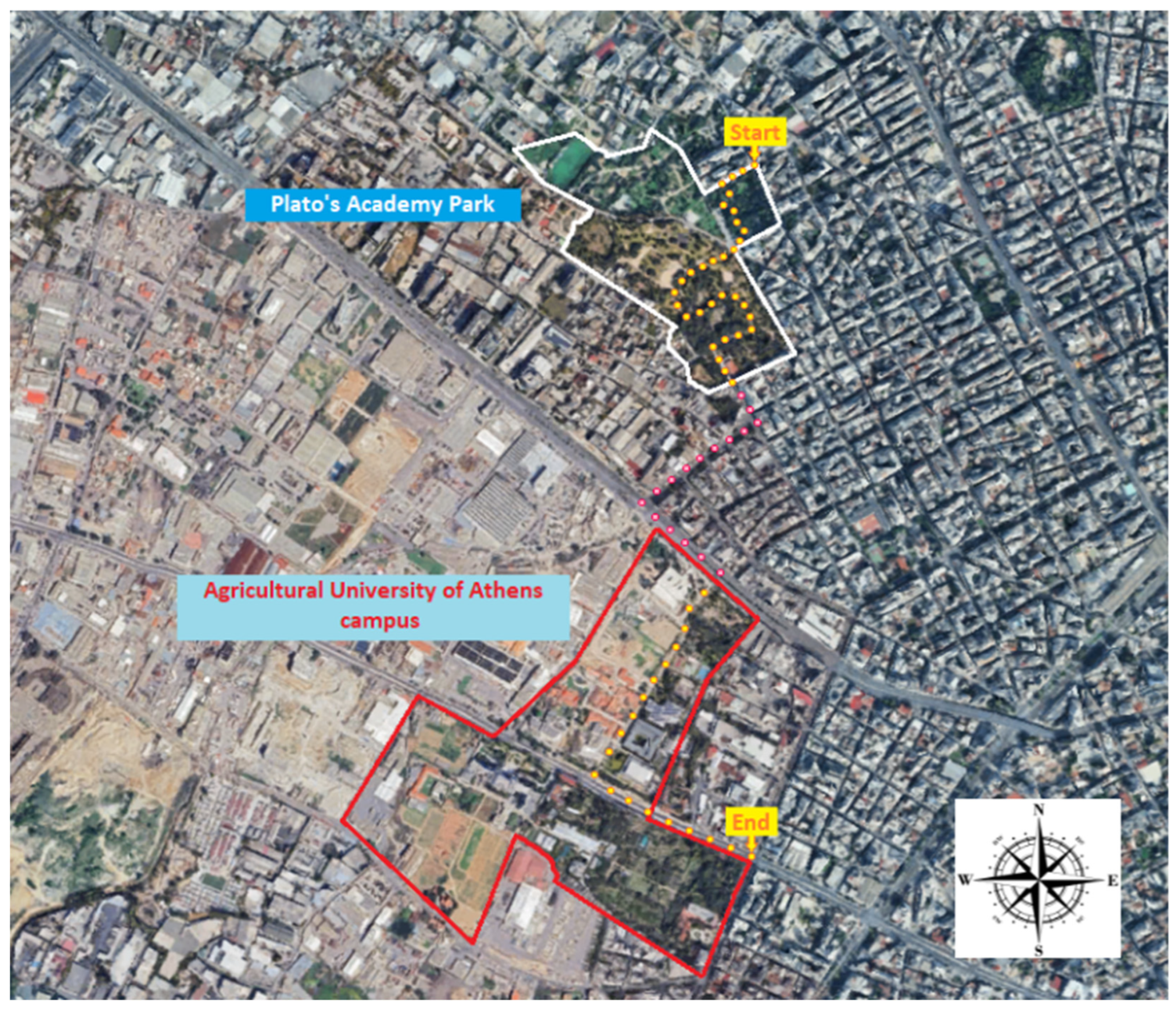
Figure 1. Census path marked with yellow spots, designed to pass through trees frequented by foraging parakeets and along roads regularly used by people, minimizing disturbance from the observer.
Preprints 179359 g001
Figure 2. Rose-ringed Parakeets foraging on an olive tree (a), grasping an olive with the beak (b), and consuming the fruit while manipulating it with the feet (c).
Preprints 179359 g002
Figure 3. Seasonal feeding patterns of Rose-ringed Parakeets in Athens.
Preprints 179359 g003
Figure 4. Dose-response curves illustrating the toxic effects of eight aqueous extracts on brine shrimp (Artemia franciscana) nauplii (Instar II–III) following 48-hour exposure.
Preprints 179359 g004
Table 1. Fruits and Seeds of Tree Species Consumed by Rose-ringed Parakeets in Athens and Their Native Status in Greece.
Species Name Common Name
of the Tree
Item Common Name
of the Item
Native Status
in Greece
Brachychiton populneus Kurrajong Tree Pod seeds Kurrajong seeds Non native –
locally naturalized (rare)
Cupressus sempervirens Mediterranean Cypress Cone seeds Cypress seeds Native
Ficus carica Fig Tree Fleshy fruits Figs Native
Ligustrum japonicum Japanese Privet Fleshy fruits Privet berries Non native –
locally naturalized
Laurus nobilis Bay Laurel Fleshy fruits Bay laurel berries Native
Melia azedarach Chinaberry tree Fleshy fruits Chinaberries Non native –
occasional naturalization
(uncertain extent)
Morus spp. Mulberry Tree Fleshy fruits Mulberries Long naturalized
(non native)
Olea europaea Olive Tree Fleshy fruits Olives Native
Phoenix canariensis Canary Island Date Palm Fleshy fruits Canary Island dates Non native –
not naturalized*
Pistacia lentiscus Mastic Tree Fleshy fruits Mastic berries Native
*Very limited naturalization, recorded in the Kalamiaris palm forest on Lesbos Island.
Table 2. Seasonal feeding records of Rose-ringed Parakeets on different food items in Athens. Numbers represent the total feeding observations per season, with percentages (%) indicating the proportion of each food item within the respective season.
Species Name Item Feeding Observations (%)
Autumn
n=185 (100%)
Winter
n=139 (100%)
Spring
n=158 (100%)
Summer
n=119 (100%)
Brachychiton populneus Pod seeds 0 (0%) 0 (0%) 0 (0%) 8 (6.7%)
Cupressus sempervirens Cone seeds 31 (16.8%) 27 (19.4%) 55 (34.8 %) 35 (29.4%)
Ficus carica Fleshy fruits 0 (0%) 0 (0%) 0 (0%) 18 (15.1%)
Ligustrum japonicum Fleshy fruits 0 (0%) 4 (2.9%) 0 (0%) 0 (0%)
Foliage 0 (0%) 0 (0%) 15 (9.5%) 0 (0%)
Laurus nobilis Fleshy fruits 0 (0%) 10 (7.2%) 0 (0%) 0 (0%)
Melia azedarach Fleshy fruits 48 (25.9%) 33 (23.7%) 64 (40.5%) 9 (7.6%)
Foliage 0 (0%) 0 (0%) 10 (6.3%) 0 (0%)
Morus spp. Fleshy fruits 0 (0%) 0 (0%) 0 (0%) 16 (13.4%)
Foliage 0 (0%) 0 (0%) 10 (6.3%) 0 (0%)
Olea europaea Fleshy fruits 55 (29.7%) 48 (34.5 %) 4 (2.5%) 0 (0%)
Phoenix canariensis Fleshy fruits 45 (24.3%) 16 (11.5 %) 0 (0%) 28 (23.5%)
Pistacia lentiscus Fleshy fruits 1 (0.5%) 1 (0.7%) 0 (0%) 2 (1.7%)
Shannon Index (H’) 1.480 1.603 1.399 1.720
Table 3. Seasonal “Foraging Presence” of Rose-ringed Parakeets in Athens. “Foraging Presence” represents the number of birds observed on trees per hourly census walk.
Season Birds observed on trees Census walks Foraging Presence$
Autumn 230 33 6.97
Winter 179 30 5.97
Spring 188 29 6.48
Summer 141 21 6.71
$No significant seasonal differences (Kruskal-Wallis, p = 0.4592).
Table 4. Toxicity results of brine shrimp (Artemia franciscana) nauplii (Instar II–III) after 48-hour exposure to eight aqueous extracts. Toxicity classes are based on Meyer et al. (1982) and Gosselin et al. (1984).
Species Name Extract Sample 48h-LC50 (mg/mL) ± SD Range
(98% Conf. Int.)
Toxicity Class
Brachychiton populneus Kurrajong seeds 2.14 ± 0.01 1.36 – 3.34 Moderately toxic
Cupressus sempervirens Cypress seeds 84.58 ± 3.80 66.48 – 104.46 Non-toxic
Laurus nobilis Bay laurel berries 11.64 ± 0.11 7.92 – 17.14 Slightly toxic
Ligustrum japonicum Privet berries 14.44 ± 0.10 10.96 – 19.04 Slightly toxic
Melia azedarach Chinaberries 0.46 ± 0.01 0.38 – 0.56 Moderately to Very toxic
Olea europaea Olives 51.70 ± 2.24 38.46 – 69.50 Non-toxic
Phoenix canariensis Canary Island dates 4.84 ± 0.22 3.98 – 5.90 Moderately toxic
Pistacia lentiscus Mastic berries 5.68 ± 0.02 4.54 – 7.12 Slightly to Moderately toxic
Toxicity Class Definitions: Non-toxic: LC50 > 1 mg/mL. • Slightly toxic: LC50 = 0.5–1 mg/mL. • Moderately toxic: LC50 = 0.1–0.5 mg/mL. • Highly toxic: LC50 < 0.1 mg/mL. • Very toxic: LC50 < 0.01 mg/mL.
Disclaimer/Publisher’s Note: The statements, opinions and data contained in all publications are solely those of the individual author(s) and contributor(s) and not of MDPI and/or the editor(s). MDPI and/or the editor(s) disclaim responsibility for any injury to people or property resulting from any ideas, methods, instructions or products referred to in the content.
Copyright: This open access article is published under a Creative Commons CC BY 4.0 license, which permit the free download, distribution, and reuse, provided that the author and preprint are cited in any reuse.
Prerpints.org logo

Preprints.org is a free preprint server supported by MDPI in Basel, Switzerland.

Subscribe

Disclaimer

Terms of Use

Privacy Policy

Privacy Settings

© 2025 MDPI (Basel, Switzerland) unless otherwise stated