Preprint
Article

This version is not peer-reviewed.

Exploring Knockdown Resistance (kdr) Mutation in Anopheles gambiae and Anopheles coluzzii Malaria Vectors in the Mountainous Plains Across the Cameroonian Great-West Domain

Submitted:

01 October 2025

Posted:

06 October 2025

You are already at the latest version

Abstract

Malaria control programmes across Africa and beyond are threatened by increasing insecticide resistance in the major anopheline vectors. In the malaria vectors Anopheles gambiae sensu lato, two point-mutations (L1014F and L1014S) in the voltage-dependent sodium channel gene that confer target-site knockdown resistance (kdr) to DDT and pyrethroid insecticides, have been described in several studies across the northern sudano-sahelian and the southern forested ecological zones of Cameroon. Contrarily, there is an unclear kdr status in anophelines of mountainous agro-ecosystems across the Cameroon Great-west domain. In order to determine the evolutionary profile of kdr alleles in An. gambiae and An. coluzzii sibling species both found in the Cameroon Great West domain, genotyping of the kdr locus on a total of 1172 individual specimen across five mountainous massifs, and sequencing on a minimum-size of 10 individuals per localities of a 510 base pairs fragment of the downstream exon-20, were performed. Knockdown resistance 1014F allele was found to be widespread with An. gambiae having high frequencies compared to An. coluzzii. Meanwhile 1014S-kdr allele was confined in An. gambiae populations. The results suggest that kdr alleles may have arisen through introgression. Estimates of genetic variability provided evidence of selection acting on these alleles, particularly the 1014F which was driven to fixation. Spatial occurrence of 1014F was heterogenous, being seemingly influenced by land elevation and gene flow. This study delineates the comprehensive distribution of kdr mutations in An. gambiae and An. coluzzii across Cameroonian mountainous ecosystems. Taking action to limit the spread of kdr alleles into mountainous landscapes would be helpful for the management and sustainability of malaria vector control.

Keywords: 
;  ;  ;  ;  ;  

1. Introduction

Vector control is a key preventive strategy for malaria [1]. Effective malaria vector control relies heavily on two core insecticidal interventions: deployment of insecticide-treated nets (ITNs) – mainly long-lasting insecticidal nets (LLINs) treated with synthetic pyrethroids – and indoor residual spraying (IRS) of insecticides [2]. Significant reductions in malaria morbidity and mortality since 2000 have mainly been due to the widespread implementation of these two insecticidal interventions [3]. However, insecticide resistance is an increasing problem faced by those who need insecticides to efficiently control medical, veterinary and agricultural pests [4,5,6]. In African Anopheles malaria vectors, the problem extends to all major group of insecticides used in public health, including: pyrethroids, organochlorines, organophosphates and carbamates [7]. Since the first case of dichloro diphenyl trichloroethane (DDT) resistance in 1947, the incidence of insecticide resistance has increased annually at an alarming rate with at least 1000 pesticide resistant arthropod species reported in the recent years [8,9,10]. Moreover, resistance mechanisms have also been developed by many insects to novel insecticides with different mode of action [11,12].
In recent years, many insecticide resistance mechanisms have been detected, and resistance detection methods have been developed [13,14,15,16]. These mechanisms are broadly divided into four categories including: a) increased metabolic detoxification of insecticides, b) decreased sensitivity target-site proteins, c) decreased rates of insecticide penetration, and d) behavioural modification [17,18]. Target-site resistance is designated by the modification of the insect molecule where the insecticide binds, decreasing its effects [19]. Neurotoxic insecticides have as their ultimate target different molecules from the insect nervous system: the enzyme acetylcholinesterase (for organophosphates and carbamates), the GABA-aminobutiric acid receptor (for cyclodienes), the nicotinic acetylcholine receptors (for spinosyns and neonicotinoids) and the voltage-gated sodium channel (for DDT and pyrethroids) [20]. Just like DDT, pyrethroids act very fast in the central nervous system of the insects, leading to convulsions, paralysis and eventually death, an effect known as knockdown [21]. However, unlike DDT, pyrethroids are not claimed to cause severe risks to the environment or to animal or human health, hence its widespread use [22,23,24].
The main pyrethroid resistance mechanism (the knockdown resistance phenotype, kdr) occurs due to point mutations in the voltage-gated sodium channel (VGSC) in the central nervous system, the target of pyrethroids and DDT [25,26]. Knockdown resistance mutations of the VGSC gene, both leucine to phenylalanine substitution (L1014F _ kdr-West) and leucine to serine substitution (L1014S _ kdr-East) are the two mutations inducing target-site resistance in insects [13,27].
In Anopheles gambiae and An. coluzzii, two major Afrotropical malaria vectors, these two mutations were identified across the African continent [28,29,30,31,32,33,34]. Field surveys revealed a widespread distribution of the 1014F-resistant allele in West Africa [35,36], although significant differences were found in the frequency of this allele between the two species that are considered units of incipient speciation within A. gambiae complex [37,38].
In Cameroon, the genotyping of the kdr locus showed that both the L1014F and L1014S alleles occurred in Anopheles gambiae sensu lato (s.l.) populations of the forested and sudano-sahelian bio-ecological zones [32,39,40,41,42,43,44,45], in urban [46,47,48] as well as rural settings [49]. Although the L1014F allele is the most common, studies are increasingly revealing the presence of the L1014S allele in An. gambiae sensu stricto (s.s.) populations across the country [39,45,46]. The increased use of agro-pesticides, the expansion of agriculture and pollution of urban settings as well as the expansion of pyrethroids used as the only insecticides recommended by the World Health Organization for insecticide-treated materials, have been accompanied with a rapid selection by pyrethroids of kdr alleles in An. gambiae s.l. and other insect pest across the country in few years [50,51,52].
The distribution and frequency of these mutations raise serious concerns about the sustainability of insecticide-based vector control strategies. This is particular evident when one considers that previous studies revealed a potential impact of landscape especially mountainous features on malaria vectors bionomics [53] and the spread of resistance makers in An. funestus s.s. [54], another major malaria vector in the country and even in similar environment in the African continent [55,56,57].
In comparison to the rest of the country, less information is available on the distribution of the kdr mutations in An. gambiae s.l. populations across the Great West hilly domain of Cameroon. This area holds intensive agricultural practices with a massive usage of agro-pesticides likely to enhance resistant phenotype and genotype in local vector populations. Here, the most commonly used pesticides are: (i) paraquat and glyphosate to control weeds, (ii) alpha-cypermethrin and chlorpyrifos against insects, and (iii) metalaxyl and maneb applied to control fungal diseases [58]. It could therefore be important to investigated how landscape features coupled to human practices either in agriculture or through the use of LLINs have contributed to shape the distribution of knockdown resistance profile in An. gambiae s.l. populations in agro-ecosystems of the mountainous plains across the Cameroonian Great West.
To support the implementation of control strategies against malaria-transmitting vectors across mountainous landscapes, we investigated the level of pyrethroid-based kdr resistance in An. gambiae and An. coluzzii populations of mountainous plains across the Cameroonian Great-west domain by genotyping the kdr locus and sequencing the downstream exon-20 region of the VGSC gene. This study ultimately aimed to characterize the genetic variability in the distribution of kdr alleles and relate this to signature of selection and patterns of genetic structure in ten An. gambiae s.l. populations.

2. Materials and Methods

2.1. Study Sites and Sampling

DNA samples from individual field collected (from the year 2010 to 2015) adult female mosquitoes morphologically identified as An. gambiae s.l. were obtained from thirty collections sites in ten localities across five mountainous massifs of the Cameroon Great West domain [53,54] which comprises three regions including: the South-West, the West and the North-West regions of Cameroon (
Figure 1, Error! Reference source not found. and Error! Reference source not found.). The surveyed area spans 56,602 square kilometres from 4°3’ latitude north and 9°22’ longitude east at 9 meters above the sea level (m a.s.l.) in the Tiko Atlantic coast to 6°17’ latitude north and 11°08’ longitude east ranging from 700 m a.s.l on the Mbaw plain to grassy highlands in Ndop at 1285 m a.s.l.
DNA extraction protocol and molecular identification by PCR of cryptic female mosquitoes within the An. gambiae complex were performed as previously described [53].

2.2. Genotyping of the kdr Gene Mutation

Real-time PCR (TaqMan assay) was used to quantify the kdr genotype at amino acid position 1014 of the VGSC gene following the protocols of Bass, Nikou [59]. kdr_Foward (5'-CATTTTTCTTGGCCACTGTAGTGAT-3') and kdr_Reverse (5'-CGATCTTGGTCCATGTTAATTTGCA-3') were standard oligonucleotide’s primers. Samples were genotyped for the wild-type (WT_susceptible) allele using probe 5’-CTTACGACTAAATTTC-3’ labelled with HEX fluorescent quencher at the 5’ end, for the 1014F and 1014S kdr alleles using respectively kdr-W (5'-ACGACAAAATTTC-3') and kdr-E (5'-ACGACTGAATTTC-3') probes labelled with 6-FAM fluorescence. The primers kdr-Forward, kdr-Reverse and the WT-probe were used in separated assay with either kdr-W probe for 1014F detection or kdr-E probe for 1014S detection. Real-time PCR reactions were done Agilent MX3005 machine using a 96-well format. Frequency distribution of kdr genotypes and alleles were compared using the Chi-square (χ2) test, with statistical significance set at p < 0.05.

2.3. Amplification and Sequencing of the Downstream Exon-20 Region of the VGSC Gene

The kdr genotypes were confirmed in a subset of ten samples in nine (out of 10) surveyed localities (Tiko, Bolifamba, Likoko, Meanja, Kumba, Mamfe, Santchou, Ndop and Mbaw plain) by amplifying a 510 base pairs (bp) fragment spanning the downstream exon-20 region of the VGSC gene. Estimations on sample size were based on previous assumption showing that for single nucleotide polymorphism makers, the most complete and unbiased representation of genetic diversity present in an individual can be obtained by incorporating a minimum of 10 individuals into the discovery data set, thus ensuring the discovery of both common and rare polymorphisms [60]. Amplifications (by classical PCR) were performed using primers Exo20-Gamb_F (5′-AAATGTCTCGCCCAAATCAG-3′) and Exo20-Gamb_R (5′-GCACCTGCAAAACAATGTCA-3′) as previously described [43,61,62]. Direct sequencing (using the reverse primer Exo20-Gamb_R) was applied on successful amplicons after a purification step using the Exo-SAP (Exonuclease I Shrimp Alkaline Phosphate) clean up protocol (ThermoFisher Scientific, Santa Clara, CA, USA). The sequences of the 500bp reverse fragment of the VGSC exon-20 region were aligned using the ClustalW tool [63], and a manually edited in BioEdit version 7.2.5 [64] in order to confirm polymorphic positions and sequence chromatograms.

2.4. Phylogenetic Structure Analysis of the Studied Species

Estimates of DNA polymorphism at the exon-20 including polymorphic sites S, number of haplotypes h, Haplotype diversity Hd, Synonymous mutations Syn, Non-synonymous mutations Nsyn, nucleotide diversity π, mean number of nucleotide differences k, Tajima D and Fu and Li F* neutrality statistics were computed using DnaSP version 6.12.03 [65]. In addition, the level of pairwise genetic differentiation was estimated using the KST statistics which significance was assessed by permutation of subpopulation identities and re-calculating KST 10,000 times as implemented in DnaSP 6.12.03.
Genealogical relationship among haplotypes were estimated by constructing an haplotype network with a controlled level of reticulations using the integer neighbour-joining (IntNJ) technique in PopART software [66]. The IntNJ method begins by computing a matrix of Hamming distances between unique haplotype sequences which are further used to infer a tree using the neighbour-joining method [67]. The integer restriction is particularly important for low-divergence data sets which are often analysed using haplotype networks.
A maximum-likelihood (ML) phylogenetic tree of haplotypes was constructed based on the Tamura 3-parameter best-fit model with 500 bootstrap replications for the robustness of the tree, as computed using the Bayesian Information Criterion (BIC) in MEGA version X [68]. A neighbour-joining (NJ) tree was also constructed using pairwise GammaST genetic distances [69,70] between subpopulations in MEGA X.

3. Results

Throughout the surveyed area, the majority of field-caught An. gambiae s.l. molecularly identified were An. gambiae (1627/2627 _ 61.9%) and An. coluzzii (801/2627 _ 30.5%) (Error! Reference source not found.). Genotyping of the kdr mutations was performed in 622 An. coluzzii (447 from Tiko and 175 from Meanja) and 413 An. gambiae (46 from Mutengene, 46 from Bolifamba, 46 from Likoko, 46 from Kumba, 44 from Mamfe, 97 from Santchou, 38 from Ndop and 43 from Mbaw plain). In addition, 116 An. melas (from Tiko) and 19 An. coluzzii × An. gambiae hybrids (from Ndop) were genotyped for kdr.

3.1. Frequency and Distribution of kdr Mutations
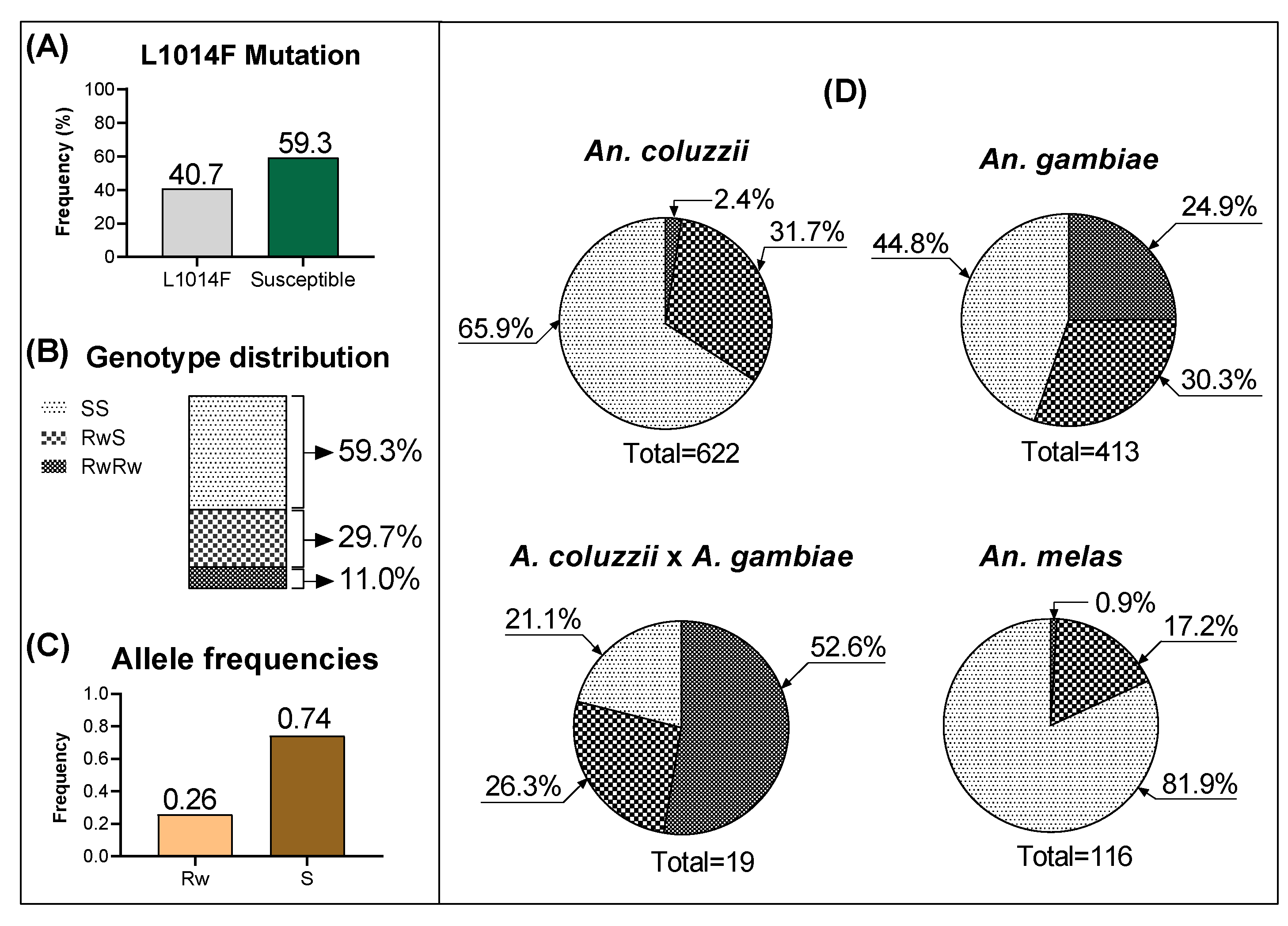
The 1014F mutation of the kdr locus was successfully identified from a total of 1172 An. gambiae s.l. individuals (including An. coluzzii, An. gambiae, An. coluzzii × An. gambiae hybrids and An. melas), whereas no L1014S mutation was detected using TaqMan assay. An overall frequency of 40.7% of the L1014F mutation was recorded, with 11.0% being resistant homozygous individuals (RwRw: 1014F/1014F) while 29.7% were heterozygous specimens of the genotype L1014/1014F (RwS). The susceptible homozygous (SS: L1014/L1014) were the mostly represented of the specimen analysed (Figure 2A,Figure 2B). Thus, the frequency of L1014 susceptible allele (0.74) was significantly (p value < 0.0001) more represented than that of the 1014F resistant allele (0.26) (Figure 2C).
Careful analysis considering the species within the An. gambiae complex revealed that the L1014F mutation was mostly carried by An. gambiae and An. coluzzii × An. gambiae hybrids specimen with the latter having the highest proportion of 1014F/1014F double resistant individuals (52.6%). Anopheles coluzzii and An. melas were predominantly harbouring the L1014/L1014 susceptible genotype, with a frequency ranging from 65.9 to 81.9% (Figure 2D).
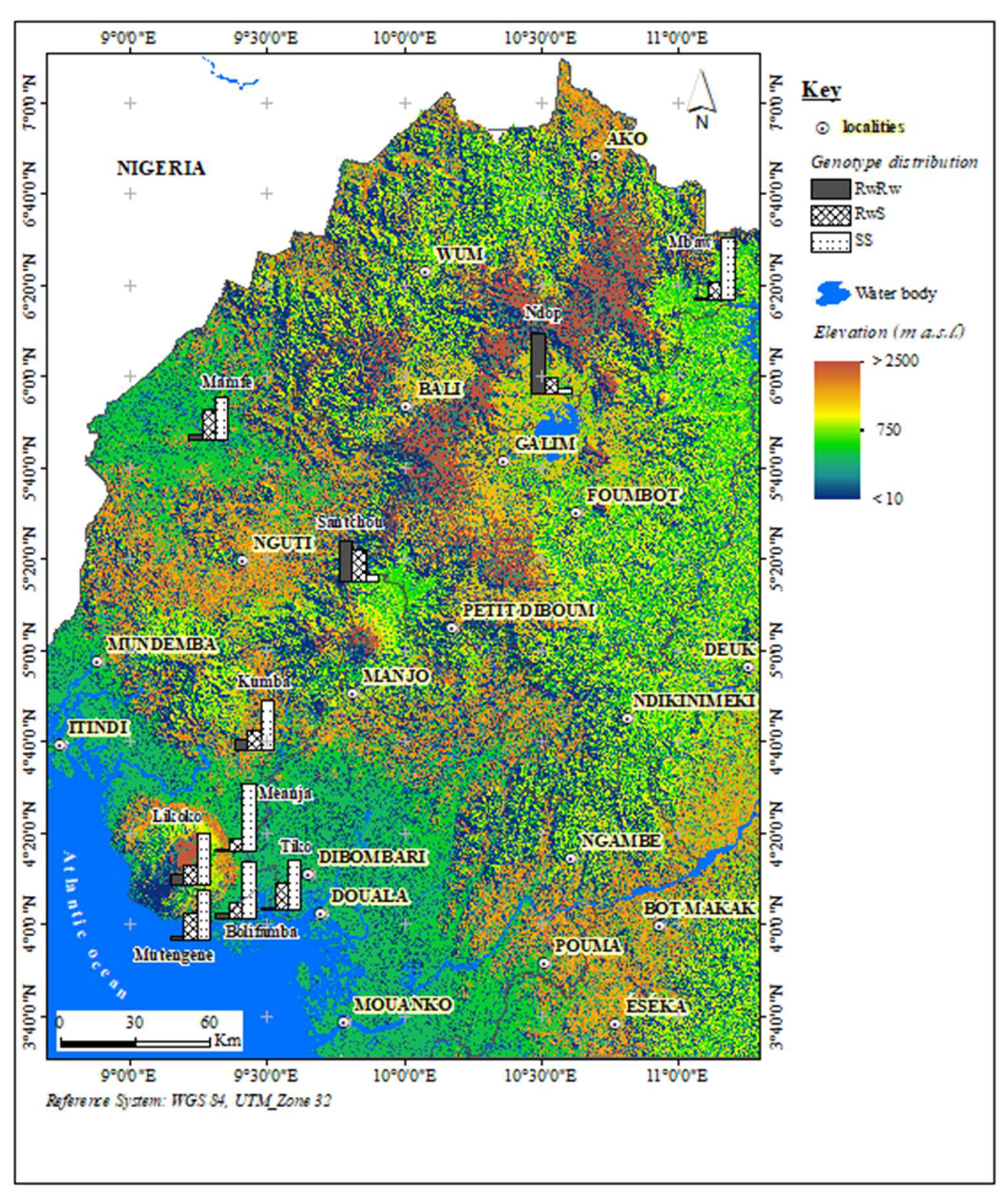
The spatial trends of the L1014F mutation in the VGSC gene showed a widespread distribution of this mutation across the surveyed area, although kdr associated genotypes were not homogeneously present in the samples analysed (and Error! Reference source not found.). It was noted an apparent specialization of 1014F/1014F homozygous resistant genotype carriers to higher altitude ranges, from 750 m a.s.l. in Santchou (relative abundance: 51.0%) to 1295 m a.s.l. in the Ndop plain (relative abundance: 75.0%) although these were lowly represented in Likoko (relative abundance: 13.0%) situated at 800 m a.s.l. in the Mount Cameroon massif. Rather, L1014/L1014 susceptible specimen significantly abundant (p value < 0.001, relative abundance ranging from 54.5% to 84.3%) from low to mild altitude landscapes (9 – 600 m a.s.l.).
Figure 3. Sampling distribution of the L1014F_kdr genotypes for An. gambiae s.l. mosquitoes tested across space.
Preprints 179112 g003

3.2. Nucleotide Polymorphisms in An. gambiae and An. coluzzii Exon-20 Region of the VGSC Gene
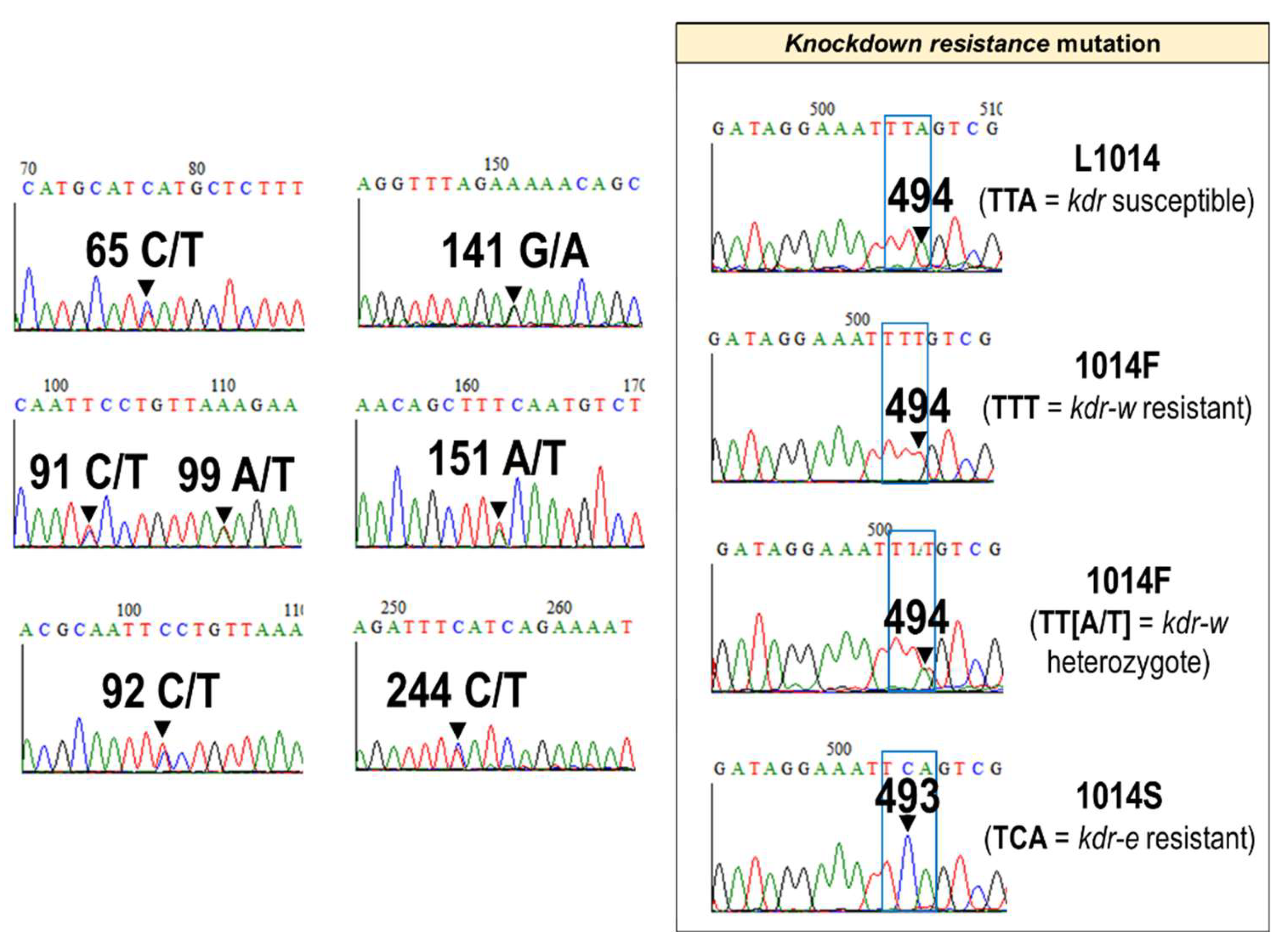
A 510 bp fragment in the exon-20 region of the VGSC gene was successfully investigated in 87 (2N = 174 sequences) out 90 randomly selected An. gambiae and An. coluzzii specimen [specifically 2N = 134 sequences of An. gambiae (20 in Bolifamba, 20 in Likoko, 20 in Kumba, 20 in Mamfe, 20 in Santchou, 16 in Ndop and 18 in Mbaw plain) and 2N = 40 An. coluzzii sequences (20 in Tiko and 20 in Meanja)]. The alignment and comparison of the sequences obtained with that referenced in Genbank (NCBI, Bethesda, USA) showed 98% identities with S6 transmembrane segment of domain II in An. gambiae voltage-gated sodium channel (accession number: CAA739201).
Sequence analysis showed the presence of 9 polymorphic sites (Error! Reference source not found.), of which 7 nucleotide variations occurred within the intron spanning the exon-20 region. The remaining two nucleotide polymorphisms corresponded to point mutations TTA to TTT and TTA to TCA at position codon 1014 (with the coding region) respectively inducing functional amino-acid substitutions of leucine to phenylalanine (L1014F) and leucine to serine (L1014S) both involved in kdr phenotypes.
Figure 4. Sequencing traces showing nucleotide polymorphisms detected across the 510bp fragment spanning the exon-20 region of the kdr locus.
Preprints 179112 g004
Interestingly, the L1014S mutation (kdr-East) was detected in An. gambiae specimen in six localities situated at most 800 m a.s.l. (from the least to high elevated localities: Mamfe, Kumba, Bolifamba, Mbaw, Santchou and Likoko), whereas absent at highest altitudes precisely in Ndop situated between 1168 and 1285 m a.s.l. (Error! Reference source not found.). No An. coluzzii sequence analysed was found carrying the L1014S mutation.
Table 1. Genetic variability parameters for exon-20 region of kdr locus in An. gambiae s.l. populations throughout the study area.
Samples N S h (Hd) Syn NSyn π (k) D F*
Anopheles species ID
An. Coluzzii 40 6 9 (0.61) 0 1 (kdr-W) 0.002 (0.85) - 1.07ns - 0.58ns
An. Gambiae 134 5 6 (0.53) 0 2 (kdr-W, kdr-E) 0.002 (1.09) 0.41ns - 0.78ns
kdr Allelic profile
L1014 44 5 6 (0.61) 0 0 0.001(0.73) - 0.91ns 0.57ns
1014F 94 2 3 (0.06) 0 0 0.0002 (0.08) - 1.22ns - 1.29ns
1014S 36 2 3 (0.54) 0 0 0.001 (0.57) 0.35ns - 0.54ns
Mountain massif localities
Mount Cameroon Tiko 20 5 7 (0.64) 0 1 (kdr-W) 0.002 (0.93) - 1.05ns - 0.68ns
Kumba 20 3 3 (0.64) 1 1 (kdr-E) 0.003 (1.53) 2.17* 1.52ns
Meanja 20 4 6 (0.58) 0 1 (kdr-W) 0.001 (0.75) - 0.97ns - 0.17ns
Bolifamba 20 3 4 (0.60) 0 2 (kdr-W, kdr-E) 0.002 (1.05) 0.63ns 0.09ns
Likoko 20 3 3 (0.49) 1 1 (kdr-E) 0.002 (1.15) 0.97ns 1.15ns
ALL 100 8 11 (0.77) 0 2 0.003 (1.70) 0.24ns 1.08ns
Western Highlands Mamfe 20 4 5 (0.73) 0 2 (kdr-W, kdr-E) 0.003 (1.48) 0.92ns 0.44ns
Mount Oku Mbaw plain 18 4 4 (0.31) 0 2 (kdr-W, kdr-E) 0.001 (0.73) - 1.13ns - 0.94ns
Kupe Manengoumba Santchou 20 3 4 (0.43) 0 2 (kdr-W, kdr-E) 0.001 (0.68) - 0.51ns - 0.26ns
Mount Bamboutos Ndop 16 1 2 (0.23) 0 1 (kdr-W) 0.0005 (0.23) - 0.45ns 0.45ns
ALL 174 9 12 (0.68) 0 2 0.003 (1.48) - 0.14ns 0.30ns
N = number of sequences (2n); S, number of polymorphic sites; h, number of haplotypes (Hd = Haplotype diversity); Syn, Synonymous mutations; Nsyn, Non-synonymous mutations; π, nucleotide diversity (k = mean number of nucleotide differences); D and F* Tajima’s and Fu and Li’s statistics; L1014 = susceptible allele; 1014F = kdr West-type resistant allele; 1014S = kdr East-type resistant allele; ns. Not significant; *, p < 0.05.
Overall, the number of nucleotide polymorphisms detected was broadly similar in An. coluzzii (6 polymorphic sites out of 9) and An. gambiae (5/9). Moreover, mutational steps seemed to significantly occur more in L1014 susceptible individuals (5/9) as compared to 1014F and 1014S carriers (2 polymorphic sites each) (Error! Reference source not found.).

3.3. Genetic Variability and Haplotype Network of An. gambiae and An. coluzzii VGSC Gene

A total of twelve exon-20 haplotypes originated from the identified nucleotide polymorphisms (Genbank accession IDs: MW375948-MW375958, MW375960 and MW375962) (Error! Reference source not found. and Appendix A.1). Nine haplotypes out of twelve were detected in An. coluzzii populations while An. gambiae populations presented six haplotypes. The L1014 susceptible allele carriers were found more genetically diverse based on their number of haplotypes detected and its associated diversity (h = 6, Hd = 0.61). Meanwhile 1014F and 1014S resistant allele carriers recorded a reduced number of haplotypes (h = 3 haplotypes per allele), with 1014F individuals having a very low haplotype diversity (Hd = 0.06).
Spatial differences were also evident in the number of haplotypes detected per mountainous massif, with the Mount Cameroon harbouring 91.6% (11/12) of the total number of haplotypes detected; whereas the number of haplotypes progressively decreased with climb in altitude in the remaining mountain massifs from five haplotypes in Mamfe_Western Highlands (90 – 300 m a.s.l.) to two haplotypes in the Ndop area situated between 1168 and 1285 m a.s.l. within the Mount Bamboutos domain.
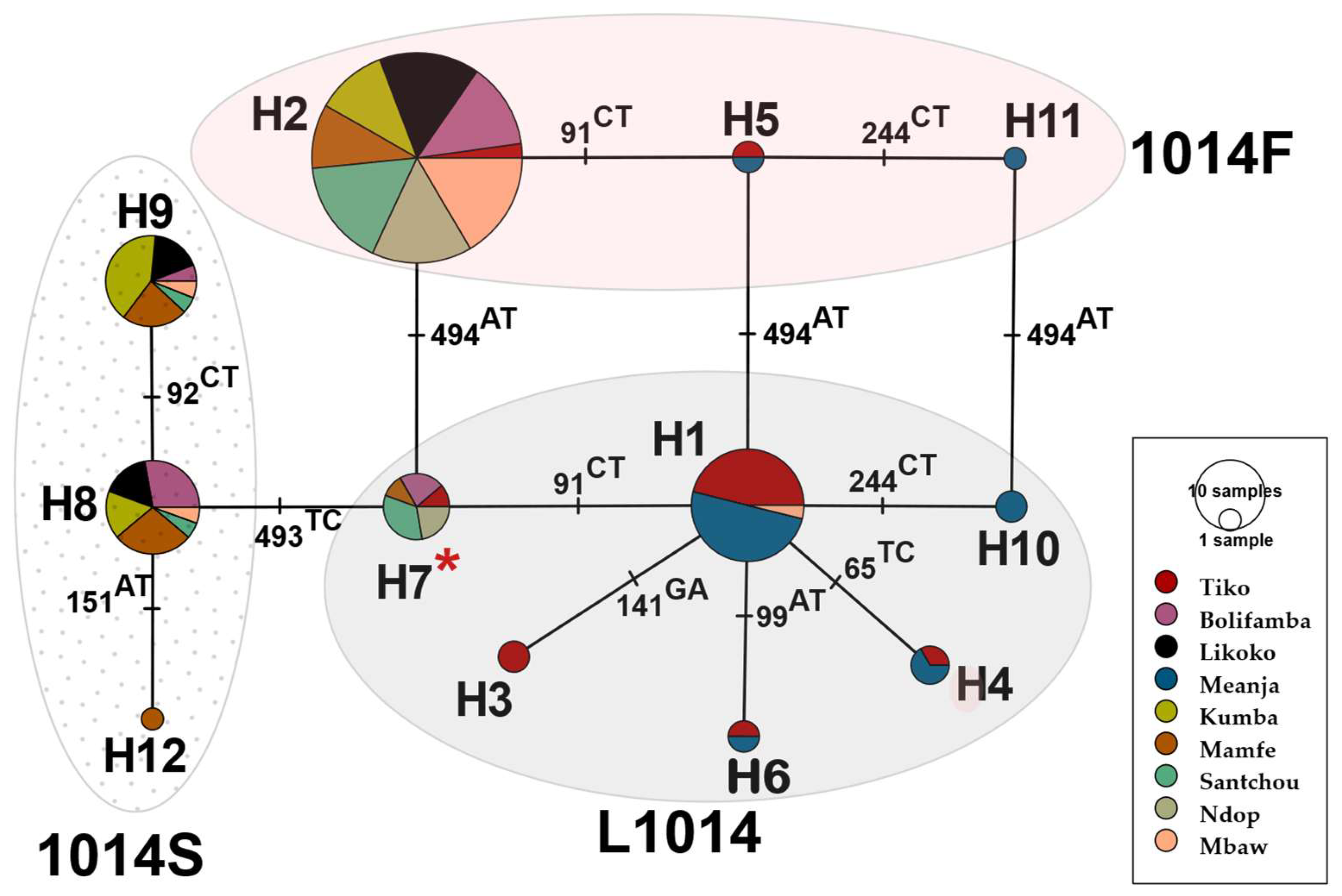
Constructing a Leigh-Bryant integer neighbour-joining (IntNJ) network tree (Figure 5), it was found four major haplotypes deriving in one hand from single mutational step (specifically C/T haplotype H1 contained within the L1014 susceptible cluster, A/T haplotype H2 in the 1014F resistant cluster and T/C haplotype H8 within the 1014S resistant cluster), and from a double T/C amino-acid substitution in the other hand (haplotype H9 still within the 1014S resistant cluster). The ancestral haplotype H7 (within the L1014 susceptible cluster) was detected in four mountainous massifs out the five investigated, including Mount Cameroon, Western Highlands, Kupe Manengoumba and Mount Bamboutos. Two haplotypes appeared as singletons including haplotype H11 and H12 which were respectively associated to the 1014F and 1014S clusters. It was important to note that the IntNJ haplotype network highlighted six haplotypes (H3 – H6, H10 and H11) specific to An. coluzzii populations, three specific haplotypes for An. gambiae populations (H8, H9 and H12 belonging to the 1014S resistant cluster) and another three haplotypes common to the two vector species (H7 ancestral haplotype, H1 susceptible haplotype and H2 1014F- resistant haplotype).
Reduced values of genetic variability estimates of the 1014F allele (h = 3, Hd = 0.06, π = 0.0002 and k = 0.08) are evidence of a strong selection driving to fixation of the kdr_West type mutation, although non-significant and negative values of neutrality estimates (Tajima D and Fu and Li F*). Likewise, the 1014S allele seemed to be under selection as well (h = 3, Hd = 0.54, π = 0.001, k = 0.57 and positive but not significant neutrality estimates Tajima D = 0.35) but no right to a genetic fixation. Deep observations genetic diversity parameters showed that selection processes of kdr mutations are increasingly occurring from mid-altitude areas in Bolifamba (~ 500 m a.s.l. in the Mount Cameroon massif) to highland in Ndop (more than 1000 m a.s.l., Mount Bamboutos massif) where the greatest loss of diversity is more evident (h = 2, Hd = 0.23, π = 0.0005, k = 0.23).

3.4. Phylogenetic Relationship Between Exon-20 kdr Haplotypes
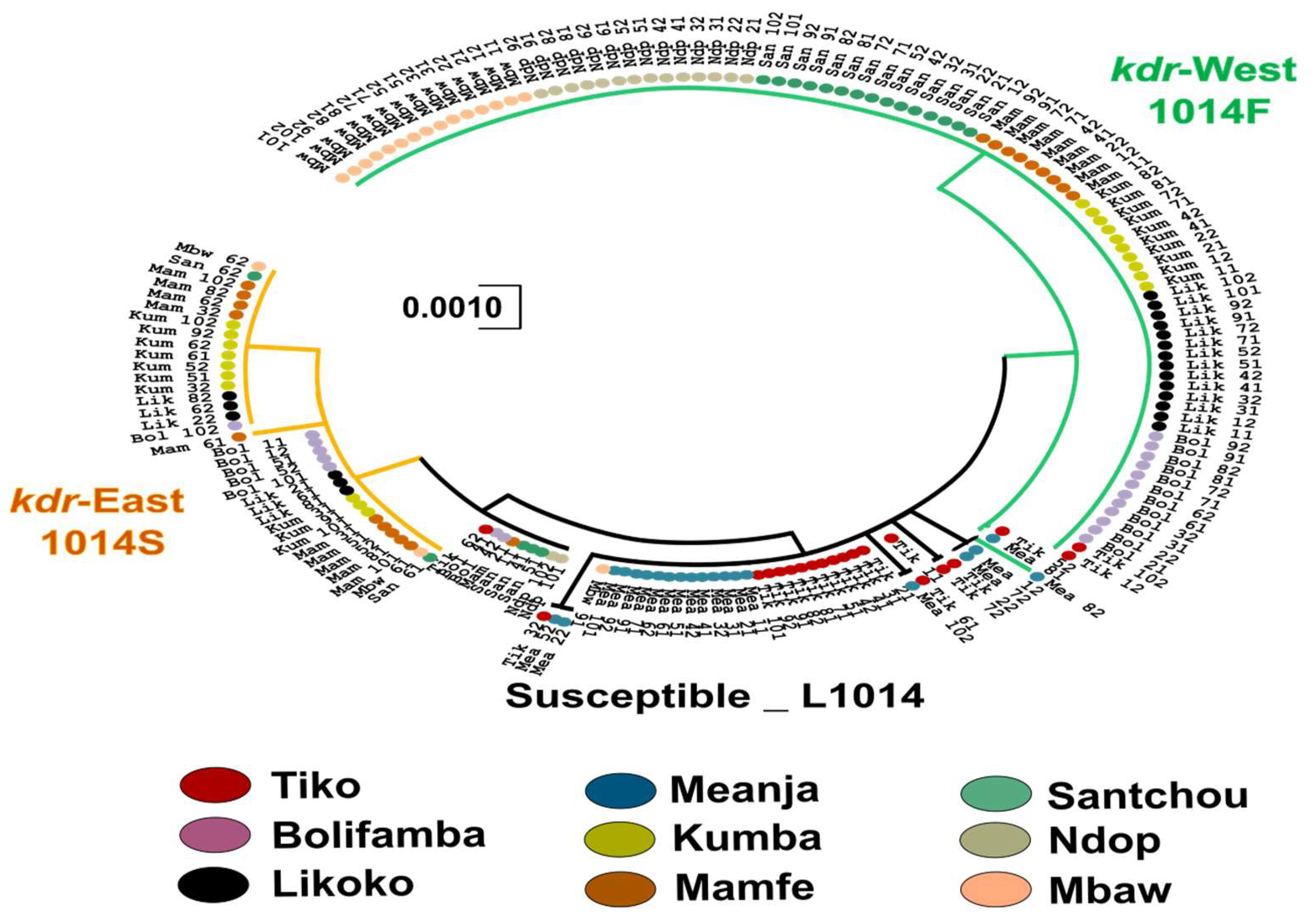
Haplotype clustering based on a maximum-likelihood (ML) phylogenetic tree (Error! Reference source not found.) further confirmed profiles obtained with the IntNJ haplotype network. The marked low diversity of kdr mutations was illustrated, specifically for the 1014F west-type kdr which is potentially driving near genetic fixation. The ML tree of the 510bp exon-20 illustrates a high diversity of haplotypes in L1014 susceptible allele carriers. Overall, L1014 susceptible samples formed their own cluster (with high mutational steps) situated in between separated resistant population’s clusters which contained reduced genetic diversities.
Figure 6. Maximum-likelihood phylogenetic tree of kdr haplotypes based on exon-20 sequences among analysed samples.
Preprints 179112 g006
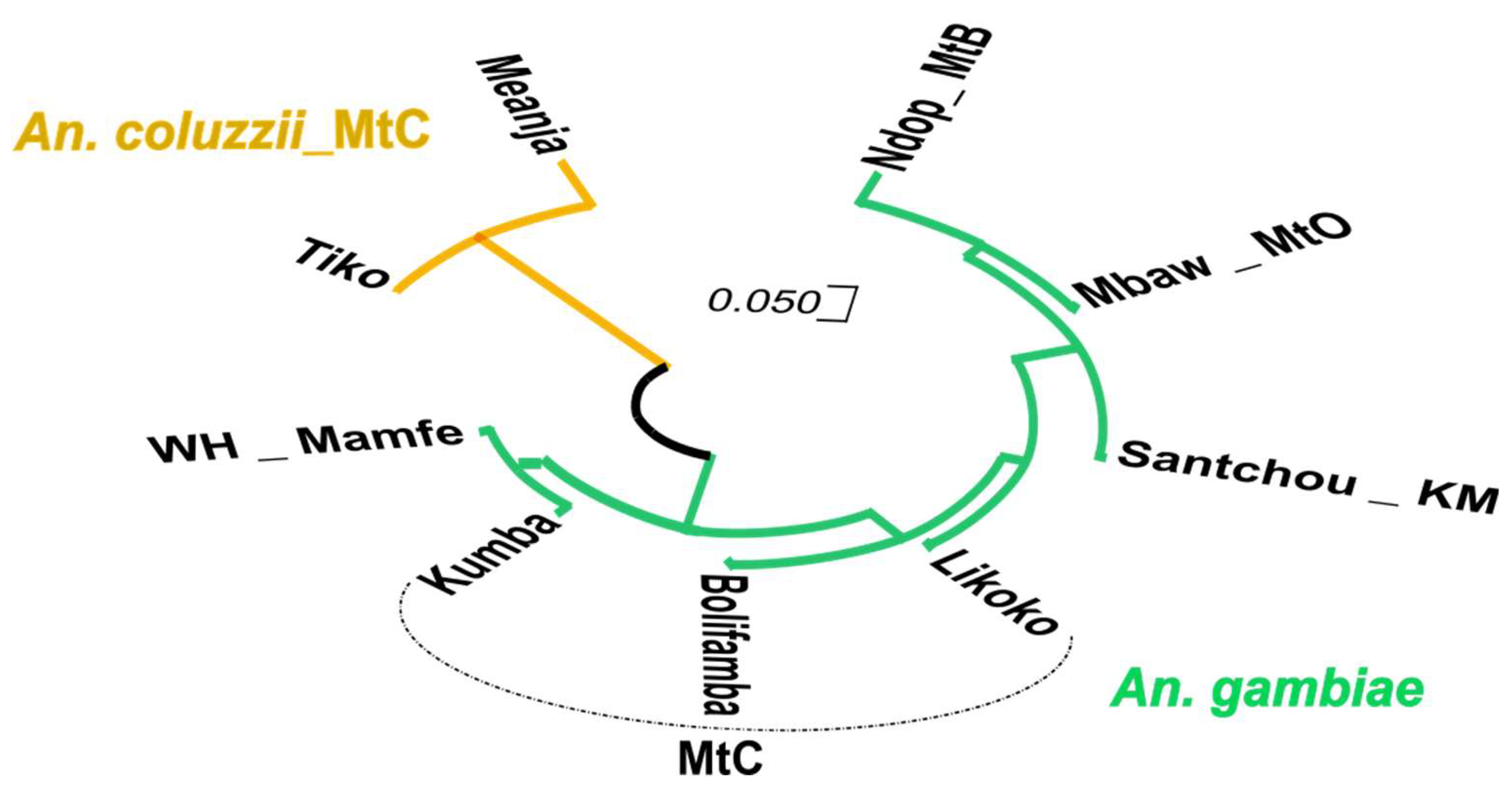
Likewise, the patterns of clustering according to the neighbour-joining (NJ) genetic distances between surveyed localities illustrated an overall segregation between the An. coluzzi block and the An. gambiae block (Figure 7). Observation that was further supported by values of KST genetic differentiation estimates and index of gene flow Nm (Error! Reference source not found.) showing a marked closeness between Tiko/Meanja An. coluzzii populations (reduced KST = 0.011, p value > 0.05 and moderately high Nm = 6.63). These later were significantly isolated (p value < 0.0001) from all remaining An. gambiae populations (0.31 ≤ KST ≤ 0.61 and 0.15 ≤ Nm ≤ 0.51).
Moreover, although an overall relatedness of An. gambiae populations was highlighted, deep observations of KST estimates and Nm index (Error! Reference source not found.) led to the identification of three sub-blocks represented by Bolifamba/Likoko_MtC sub-block (KST = – 0.02, p value > 0.05 and Nm = 26.13), Kumba_MtC/Mamfe_WH sub-block (KST = – 0.02, p value > 0.05 and Nm = 26.05) and finally Santchou_KM/Mbaw_MtO/Ndop-MtB sub-block (– 0.008 ≤ KST ≤ 0.004, p value > 0.05 and Nm ranging from 8.25 to 32.82). Interestingly, genetic similarities and moderate gene flow were also identified between Bolifamba/Likoko_MtC sub-block and Santchou in the Kupe Manengoumba mountainous massif (0.004 ≤ KST ≤ 0.01, p value > 0.05, Nm ranging from 6.58 to 8.31).

4. Discussion

The Cameroon Great West area characterised with a moderate to high malaria endemicity level [71,72,73,74,75,76], in addition to a widespread distribution of major Afrotropical malaria vectors (An. gambiae, An. coluzzii and An. funestus) [53,77,78,79,80] offers an exceptional opportunity for implementing control strategies (such as insecticide-based control interventions) across mountainous agroecological landscapes [81]. This study represents a comprehensive investigation of the kdr-related mutations in An. gambiae s.l. mosquitoes across mountainous plains of the Cameroon Great West domain.
  • Distribution of target-site insensitivity mutations
This study shows that L1014F target-site mutation is widespread in An. gambiae s.l. across the Cameroon Great West domain. The 1014F allele was constantly present from the Mount Cameroon south-western limits to grassy highlands in the North-west region of Cameroon, in agreement with previous reports which stated L1014F target-site resistance as a major mechanism driving An. gambiae s.l. insecticide resistance across the country [32,39,40,41,42,43,44,45]. The L1014S kdr-type mutation was not detected by TaqMan high-throughput approach in analysed samples. Bass, Nikou [59] have identified the method to deliver the greatest specificity and sensitivity in kdr genotyping, although increase in failed reactions could occurred. The 1014S allele had previously been detected throughout all ecological zones of Cameroon, from the forest to highlands similar to those explored in this study [39,41,44,45]. Therefore, further survey will be required to ascertain the contribution of 1014S allele in target-site mechanism of insecticide resistance in An. gambaie s.l. populations across mountainous plains of the Cameroon Great West domain.
The L1014F mutation was evidenced in all four sub-species analysed within the An. gambiae s.l. complex, with much higher frequencies obtained in An. gambiae and An. coluzzii × An. gambiae hybrid populations than in An. coluzzii and An. melas. Previous studies have shown that frequencies of L1014F mutation are higher in An. gambiae compared to An. coluzzii in Cameroon [32], Benin [31], Democratic Republic of Congo [28] and Senegal [30] among others; except for some urban peri-urban settings [45]. Furthermore, the high abundance of L1014F mutation in An. coluzzii × An. gambiae hybrid populations (15/19: 78.9%, especially from the Ndop _ Mount Bamboutos area) than in other subspecies of the Gambiae complex may result from an apparent replacement of An. coluzzii [80] by introgressed An. gambiae [53] carrying the L1014F kdr mutation. Similar scenarios were mentioned in Burkina-Faso [82] and Mali [83]. However, additional investigations are needed to further confirm whether this pattern of resistance in hybrid populations is consistent with a collapse of local An. coluzzii populations by 1014F resistant An. gambiae carriers.
Although the L1014F mutation had a moderate occurrence in An. coluzzii (34.1%), comparison with results from surveys conducted in 2005 [41] showed 6 times increment of L1014F frequency in An. coluzzii populations in the study area (precisely in the locality of Tiko). Moreover, prior to this study no kdr alleles have been reported in An. melas from Cameroon, whereas both alleles had previously been identified in Senegal [84] though at low frequencies (ranging from 0.40 to 1.12%). Yet, there is still no record on An. melas implication in malaria parasite transmission in Cameroon [32,85]. However, with an overall relative occurrence of L1014F mutation estimated at 18.1%, insecticide resistance monitoring activities need to be applied as well for this species which is considered as a good vector in the neighbouring Equatorial Guinea [86].
This study reveals also spatial heterogeneity of L1014F-kdr mutation across the Cameroon Great West domain. The marked abundance of the L1014F-kdr mutation with a dominance of 1014F/1014F resistant genotypes in highlands such as Santchou (750 – 800 m a.s.l., relative frequency of kdr-L1014F: 91.8%) and Ndop (1168 – 1285 m a.s.l., relative frequency of kdr-L1014F: 94.6%) compared to low-mild elevated areas (9 – 600 m a.s.l., relative frequencies ranged from 23.2 to 45.4%), could suggest fitness processes conferring 1014F resistant allele carriers greater adaptability to low temperatures compared to susceptible populations. Similar observations were made in Kenya [87,88] where less than 30% mortality rates of kdr-L1014S homozygous resistant An. gambiae sensu stricto (ss) mosquitoes against deltamethrin treated nets (2.5 – 16.7 mg/m2) were found under low temperature conditions (< 25.3°C).
Nonetheless, with the rise in use of LLINs or IRS in Cameroon since 2011 [32,89] added to a history of rice agriculture (in both areas in contrast to Likoko also situated at 800 m a.s.l.) where agro-pesticides use is often intense, strong selection of insecticide resistance in insect pests might had occurred if larvae breeding sites located in cultivated fields were exposed to insecticides applied to control agricultural pests. In cotton-growing regions of the northern Cameroon [90] or the "cotton-belt" of Burkina-Faso [91], investigators observed loss of susceptibility to dichlorodiphenyltrichloroethane (DDT) and permethrin confirmed by a rise in frequencies (up to 97%) of kdr-L1014F associated resistance.
Even though the overall frequency of the L1014F-kdr was estimated at 40.7%, the increasingly widespread distribution of this mutation in vector populations could significantly hamper the effectiveness of vector control tools such as LLNIs and IRS across mountainous landscapes [74,81]. Unfortunately, since no parallel susceptibility bioassays were performed on the samples used for genotyping, we could not establish a precise association of current vector control interventions with specific kdr allele. Moreover, since observations made in this study are based on entomological surveys conducted from 2010 to 2015, more recent investigations should be performed to assess the current kdr trends across the region.
  • Sequence analysis and Genetic variability patterns of the 510bp fragment in exon-20 region of kdr locus
Sequence analysis of the downstream exon-20 VGSC locus suggests four possible origins of the kdr alleles in An. coluzzii and An. gambiae populations across the Cameroon Great West domain as represented in the IntNJ haplotype network. Three of these events originate from the common amino acid change TTA to TTT at kdr locus from three different L1014 susceptible progenitor haplotypes, H7 (the ancestral haplotype), H1 and H10 all resulting in 1014F west-type kdr allele. Whereas the fourth event originates from an independent single-step polymorphism resulting in the TTA to TCA amino acid substitution associated to the L1014S kdr-East mutation. This was strictly found in subsets of An. gambiae analysed samples (six populations out of nine), although L1014S kdr-East mutation remains undetectable in An. gambiae and An. coluzzii populations using Bass, Nikou [59] TaqMan kdr assay in contrast to Ibrahim, Mukhtar [92] who with sequencing confirmed the absence of L1014S kdr mutation in An. coluzzii Nigerian populations as genotyped using the same protocol. Whether the presence of L1014S kdr-East mutation in six An. gambiae populations out of seven analysed in this study (1014F was the only kdr allele found in Ndop highland) resulted from a de novo mutation or if it is identical by introgressed descent to that found in the rest of the country [46,93] and neighbouring countries [61,94] remains to be clearly understood.
In the 510bp fragment spanning exon-20 region of kdr locus in An. gambiae s.l. populations (including here An. coluzzii and An. gambiae) of the Cameroon Great West domain, 9 sites in total were found polymorphic (all constituted by nucleotide substitutions) of which 7 occurred within the intronic region spanning exon-20. Similar type and number of mutational events were previously detected by Etang, Vicente [93] in Cameroon and Pinto, Lynd [61], Africa-wide when assessing the origin of kdr phenotype in An. gambiae s.l populations based on analysis of the upstream intron-1 of the VGSC gene, hence confirming that nucleotide variations occurred more frequently within intronic than exonic regions [95,96,97]. It could be interesting to establish the association between the number and frequencies of detected intronic polymorphisms and the occurrence of L1014F/S kdr mutations in An. gambiae s.l. populations similarly to that performed with field populations of Aedes albopictus by Zhou, Yang [98].
Within the coding exon-20, apart from kdr mutations no other polymorphisms (being synonymous or non-synonymous) were found. This is not surprising as no genetic variation has previously been found in An. gambiae and An. coluzzii kdr exon-20 [36,94,99] in contrast to An. funestus where various non-kdr amino acid changes were detected in the VGSC gene exon-20 [62]. Being that conserve, exon-20 of the VGSC gene therefore represents a candidate genomic region to assess whether in situ additional nucleotide polymorphisms could result in an exacerbation of target-site based kdr response in An. gambiae s.l. vector populations [92,100,101,102].
Analysis of genetic variability of the downstream exon-20 region of kdr locus indicated moderate to low variability patterns (h, Hd, π and k) of the analysed sequence in An. gambiae populations with respect to land elevation. These showed that kdr alleles (especially 1014F allele) are driven towards fixation in areas located from 700 m a.s.l. and more (Mbaw plain, Likoko, Santchou and Ndop). It was even more appreciable regarding at the single consensus and most dominant (91/174 sequences) 1014F resistant haplotype (H2) detected in all An. gambiae populations analysed across the Cameroon Great Western domain. Such observations were previously made in other Cameroonian grass-highlands [93] and in western Kenyan highlands [103] with respectively 1014F and 1014S kdr alleles being highly frequent that values of genetic variability were found reduced. Landscape barriers such as highlands had been suggested to act as genetic bottleneck in addition of contributing to the fitness decline of susceptible specimen with either kdr-based mutations in An. gambiae [87], glutathione S-transferase epsilon 2 metabolic-based resistance in An. funestus [54], or even other animal populations [104,105]. Nevertheless, more investigations are needed in other to complement the genetic barriers effect of land elevation environmental components on the spread of resistance phenotypes.
On another note, moderate to high genetic variability patterns were perceived in An. coluzzii populations with majority of the haplotypes detected (6/9 haplotypes) found within the L1014 susceptible cluster while remainders were associated to 1014F resistant cluster (one shared with An. gambiae populations and the two others specific to An. coluzzii). Therefore, between 2012 and 2014 progressive selection of 1014F-kdr allele occurred in An. coluzzii populations across the study area. Observations which need to be updated as recent findings had shown fixation of 1014F resistant kdr allele in An. coluzzii populations from Gounougou in the Northern Cameroon [43].
  • Genetic differentiation based on exon-20 region of the VGSC gene in An. coluzzii and An. gambiae populations
Evolutionary analysis of exon-20 DNA sequences helped further trace the origin of kdr mutations in An. coluzzii and An. gambiae populations across the Cameroon Great West domain. Considering the ML phylogenetic tree 1014F and 1014S kdr alleles evolved from mutations affecting separated L1014 susceptible haplotypes which were predominantly found in An. coluzzii and An. gambiae for respective mutant allele. This observation could indicate a type-sensitivity to mutation of codon 1014 with respect to speciation within the Gambiae complex, further illustrated with an NJ tree of genetic distance which revealed a marked separation between An. coluzzii and An. gambiae populations. The large difference in genomic sequence between An. coluzzii and An. gambiae sibling species is approved [106]. Similarly, examination of an increased number of samples from a broad geographical range is required to fully uncover the origins of L1014F/S mutations in Gambiae populations.
Regarding population structure patterns of exon-20 in An. gambiae populations, an obvious kdr spatial differentiation was revealed. Either localities situated within the same mountainous massifs or localities situated in neighbouring massifs showed a significant genetic relatedness with occurrence of gene flow between analysed An. gambiae populations. This suggest that genetic flow between vector populations is not completely restricted by factors such as the mountainous massifs and land elevation which are being known to act as genetic barriers in various settings [55].

5. Conclusions

This work focused on the status of target-site based kdr mutations in An. coluzzii and An. gambiae populations across the Cameroon Great West domain between 2010 and 2015. A cross-distribution of L1014F kdr-West mutation was observed in all genotyped Gambiae specimen, meanwhile the L1014S kdr-East mutation was revealed after DNA sequence analysis of a 510bp fragment in exon-20 of the VGSC gene. Estimates of genetic variability showed signs of fixation for 1014F-kdr allele, whereas progressive selection of 1014S-kdr allele was ongoing selection and could have probably driven to fixation in recent years. Such evidences are to be prioritized giving the current trend of reduced susceptibility to insecticide-based control tools in Anopheles vectors. Outputs can be used to optimize malaria vector control and design appropriate insecticide resistance management throughout mountainous landscapes.

Supplementary Materials

The following supporting information can be downloaded at the website of this paper posted on Preprints.org, Table S1: Details on the mosquito sampling; Table S2: Overall mosquito surveys; Table S3: Frequency distribution of L1014F-kdr mutation across the study area; Table S4: Population structure patterns on KST estimates from kdr mutations with (Nm).

Author Contributions

Conceptualization, S.W. and F.N.; methodology, S.W., F.N. and C.S.W.; formal analysis, N.A.A. and C.S.W.; investigation, N.A.A., E.L.W. and P.W.C.N.; data curation, N.A.A.; writing—original draft preparation, N.A.A.; writing—review and editing, J.M.R. and C.S.W.; visualization, N.A.A.; supervision, S.W. and F.N.; funding acquisition, S.W. and C.S.W. All authors have read and agreed to the published version of the manuscript.

Funding

This research was supported by a Wellcome Trust Research Career Development Fellowship (083515/Z/07/Z) and a Wellcome Trust Senior Research Fellowship in Biomedical Sciences (101893/Z/13/Z) to C.S.W.

Data Availability Statement

Haplotype DNA sequences were deposited in the Genbank repository under accession numbers: MW375948-MW375958, MW375960 and MW375962.

Acknowledgments

The authors thank the Centre for Neglected Tropical Diseases (CNTD), Liverpool – United Kingdom, for its support through the acquisition of consumables and reagents; the populations of Tiko, Bolifamba, Mutengene, Meanja, Likoko, Kumba, Mamfe, Santchou, Ndop and Mbaw plain, and all the mosquito collectors who willingly participated in this study; and the entire Research Foundation for Tropical Research and Environment (REFOTDE), especially the following persons: Mrs Ndamukong Judith, Mrs Mafo F. Flora, Sali Saïdou, Nkemkang Napoleon, and Mr Bonekeh J., for excellent and dedicated collaboration during the field surveys.

Conflicts of Interest

The authors declare no conflicts of interest.

Abbreviations

The following abbreviations are used in this manuscript:
DDT Dichloro Diphenyl Trichloroethane
DNA Deoxyribonucleic Acid
IRS Indoor Residual Spraying
ITNs Insecticide Treated Nets
kdr Knockdown resistance
LLINs Long Lasting Insecticidal Nets
PCR Polymerase Chain Reaction
VGSC Voltage Gated Sodium Channel

Appendix A

Appendix A.1. Haplotype Diversity Patterns of the 510bp Fragment in Exon-20 Region of the VGSC Gene
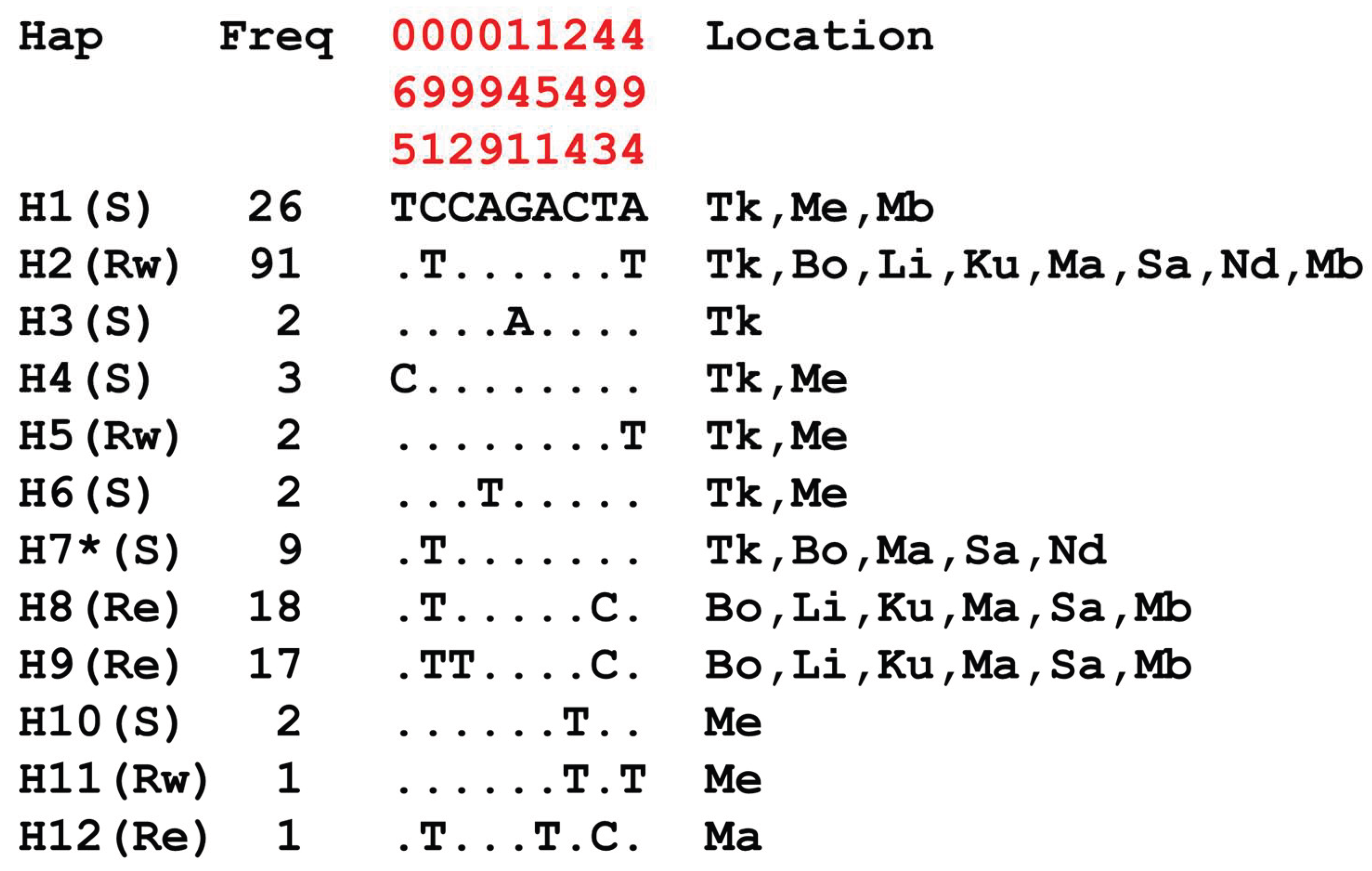
Figure A1. H1 – H12 are haplotypes; Freq = frequency as number of individuals carrying an haplotype; Tiko (Tik), Meanja (Mea), Mbaw plain (Mb), Bolifamba (Bo), Likoko (Li), Kumba (Ku), Mamfe (Ma), Santchou (Sa) and Ndop (Nd); S = susceptible allele carriers; Rw = kdr West-type resistant allele carriers; Re = kdr East-type resistant allele carriers; (*) = ancestral haplotype; polymorphic sites are in red.
Preprints 179112 g0a1

References

  1. Tizifa, T.A.; Kabaghe, A.N.; McCann, R.S.; Van den Berg, H.; Van Vugt, M.;Phiri, K.S. Prevention Efforts for Malaria. Curr Trop Med Rep, 2018. 5(1): p. 41-50. [CrossRef]
  2. Lobo, N.F.; Achee, N.L.; Greico, J.;Collins, F.H. Modern Vector Control. Cold Spring Harb Perspect Med, 2018. 8(1): p. a025643. [CrossRef]
  3. WHO, World Malaria Report. 2021, Switzerland: World Health Organization. 322.
  4. Brogdon, W.G.;McAllister, J.C. Insecticide resistance and vector control. Emerg Infect Dis, 1998. 4(4): p. 605-613. [CrossRef]
  5. Cook, J.; Tomlinson, S.; Kleinschmidt, I.; Donnelly, M.J.; Akogbeto, M.; Adechoubou, A.; Massougbodji, A.; Okê-Sopoh, M.; Corbel, V.; Cornelie, S.; Hounto, A.; Etang, J.; Awono-Ambene, H.P.; Bigoga, J.; Mandeng, S.E.; Njeambosay, B.; Tabue, R.; Kouambeng, C.; Fondjo, E.; Raghavendra, K.; Bhatt, R.M.; Chourasia, M.K.; Swain, D.K.; Uragayala, S.; Valecha, N.; Mbogo, C.; Bayoh, N.; Kinyari, T.; Njagi, K.; Muthami, L.; Kamau, L.; Mathenge, E.; Ochomo, E.; Kafy, H.T.; Bashir, A.I.; Malik, E.M.; Elmardi, K.; Sulieman, J.E.; Abdin, M.; Subramaniam, K.; Thomas, B.; West, P.; Bradley, J.; Knox, T.B.; Mnzava, A.P.; Lines, J.; Macdonald, M.; Nkuni, Z.J.;Implications of Insecticide Resistance, C. Implications of insecticide resistance for malaria vector control with long-lasting insecticidal nets: trends in pyrethroid resistance during a WHO-coordinated multi-country prospective study. Parasit Vectors, 2018. 11(1): p. 550. [CrossRef]
  6. Van den Berg, H.; da Silva Bezerra, H.S.; Al-Eryani, S.; Chanda, E.; Nagpal, B.N.; Knox, T.B.; Velayudhan, R.;Yadav, R.S. Recent trends in global insecticide use for disease vector control and potential implications for resistance management. Sci Rep, 2021. 11(1): p. 23867. [CrossRef]
  7. Knox, T.B.; Juma, E.O.; Ochomo, E.O.; Pates Jamet, H.; Ndungo, L.; Chege, P.; Bayoh, N.M.; N’Guessan, R.; Christian, R.N.; Hunt, R.H.;Coetzee, M. An online tool for mapping insecticide resistance in major Anopheles vectors of human malaria parasites and review of resistance status for the Afrotropical region. Parasit Vectors, 2014. 7(1): p. 76. [CrossRef]
  8. Karaağaç, S., Insecticide Resistance, in Insecticides - Advances in Integrated Pest Management, F. Perveen, Editor. 2012, In Tech. p. 469-478.
  9. Clark, J.;Yamaguchi, I., Scope and status of pesticide resistance, in Agrochemical resistance. 2002, American Chemical Society: Washington DC. p. 1-22.
  10. Whalon, M.; Mota-Sanchez, D.;Hollingworth, R., Analysis of global pesticide resistance in arthropods, in Global pesticide resistance in arthropods, M. Whalon, D. Mota-Sanchez, and R. Hollingworth, Editors. 2008, CABI. p. 5-31.
  11. Ishaaya, I. Novel insecticides: Modes of action and resistance mechanism. Arch Insect Biochem Physiol, 2005. 58(4): p. 191-191. [CrossRef]
  12. Siviter, H.;Muth, F. Do novel insecticides pose a threat to beneficial insects? Proc R Soc B-Biol Sci, 2020. 287(1935): p. 20201265. [CrossRef]
  13. Martinez-Torres, D.; Chandre, F.; Williamson, M.S.; Darriet, F.; Bergé, J.B.; Devonshire, A.L.; Guillet, P.; Pasteur, N.;Pauron, D. Molecular characterization of pyrethroid knockdown resistance (kdr) in the major malaria vector Anopheles gambiae s.s. Insect Mol Biol, 1998. 7(2): p. 179-84. [CrossRef]
  14. Weedall, G.; Mugenzi, L.; Menze, B.; Tchouakui, M.; Ibrahim, S.; Amvongo-Adjia, N.; Irving, H.; Wondji, M.; Tchoupo, M.; Djouaka, R.; Riveron, J.;Wondji, C. A cytochrome P450 allele confers pyrethroid resistance on a major African malaria vector, reducing insecticide-treated bednet efficacy. Sci Transl Med, 2019. 11: p. eaat7386. [CrossRef]
  15. Tchouakui, M.; Chiang, M.-C.; Ndo, C.; Kuicheu, C.; Amvongo-Adjia, N.; Wondji, M.; Tchoupo, M.; Kusimo, M.; Riveron, J.;Wondji, C. A marker of glutathione S-transferase-mediated resistance to insecticides is associated with higher Plasmodium infection in the African malaria vector Anopheles funestus. Sci Rep, 2019. 9: p. 5772. [CrossRef]
  16. Bass, C.; Nikou, D.; Vontas, J.; Donnelly, M.J.; Williamson, M.S.;Field, L.M. The Vector Population Monitoring Tool (VPMT): High-Throughput DNA-Based Diagnostics for the Monitoring of Mosquito Vector Populations. Malaria Research and Treatment, 2010. 2010: p. 190434-190434. [CrossRef]
  17. Lui, N. Insecticides resistance in mosquitoes: impact, mechanisms, and research directions. Annu Rev Entomol, 2015. 60: p. 537-59. [CrossRef]
  18. Riveron, J.; Tchouakui, M.; Mugenzi, L.; Menze, B.; Chiang, M.-C.;Wondji, C., Insecticide Resistance in Malaria Vectors: An Update at a Global Scale, in Towards Malaria Elimination - A Leap Forward, S. Manguin and V. Dev, Editors. 2018, IntechOpen.
  19. Khan, S.; Uddin, M.N.; Rizwan, M.; Khan, W.; Farooq, M.; Sattar Shah, A.; Subhan, F.; Aziz, F.; Rahman, K.U.; Khan, A.; Ali, S.;Muhammad, M. Mechanism of Insecticide Resistance in Insects/Pests. Pol J Environ Stud, 2020. 29(3): p. 2023-2030. [CrossRef]
  20. Ffrench-Constant, R.; Pittendrigh, B.; Vaughan, A.;Anthony, N. Why are there so few resistance-associated mutations in insecticide target genes? Phil Trans R Soc B, Biol Sci, 1998. 353(1376): p. 1685-1693. [CrossRef]
  21. Martins, A.;Valle, D., The Pyrethroid Knockdown Resistance, in Insecticides - Basic and Other Applications, S. Soloneski, Editor. 2012, InTech. p. 17-38.
  22. WHO, Safety of pyrethroids for public health use. 2005, Switzerland: World Health Organization. 1-69.
  23. Saillenfait, A.M.; Ndiaye, D.;Sabaté, J.P. Pyrethroids: exposure and health effects _ an update. Int J Hyg Environ Health, 2015. 218(3): p. 281-292. [CrossRef]
  24. Ujihara, K. The history of extensive structural modifications of pyrethroids. J Pestic Sci, 2019. 44(4): p. 215-224. [CrossRef]
  25. Goldin, A.L.; Barchi, R.L.; Caldwell, J.H.; Hofmann, F.; Howe, J.R.; Hunter, J.C.; Kallen, R.G.; Mandel, G.; Meisler, M.H.; Netter, Y.B.; Noda, M.; Tamkun, M.M.; Waxman, S.G.; Wood, J.N.;Catterall, W.A. Nomenclature of voltage-gated sodium channels. Neuron, 2000. 28(2): p. 365-8. [CrossRef]
  26. Ffrench-Constant, R.H.; Daborn, P.J.;Le Goff, G. The genetics and genomics of insecticide resistance. Trends Genet, 2004. 20(3): p. 163-70. [CrossRef]
  27. Ranson, H.; Jensen, B.; Vulule, J.M.; Wang, X.; Hemingway, J.;Collins, F.H. Identification of a point mutation in the voltage-gated sodium channel gene of Kenyan Anopheles gambiae associated with resistance to DDT and pyrethroids. Insect Mol Biol, 2000. 9(5): p. 491-7. [CrossRef]
  28. Lynd, A.; Oruni, A.; van’t Hof, A.E.; Morgan, J.C.; Naego, L.B.; Pipini, D.; O’Kines, K.A.; Bobanga, T.L.; Donnelly, M.J.;Weetman, D. Insecticide resistance in Anopheles gambiae from the northern Democratic Republic of Congo, with extreme knockdown resistance (kdr) mutation frequencies revealed by a new diagnostic assay. Malar J, 2018. 17(1): p. 412. [CrossRef]
  29. Dabiré, R.K.; Namountougou, M.; Diabaté, A.; Soma, D.D.; Bado, J.; Toé, H.K.; Bass, C.;Combary, P. Distribution and Frequency of kdr Mutations within Anopheles gambiae s.l. Populations and First Report of the Ace.1G119S Mutation in Anopheles arabiensis from Burkina Faso (West Africa). PLoS ONE, 2014. 9(7): p. e101484. [CrossRef]
  30. Gueye, O.K.; Tchouakui, M.; Dia, A.K.; Faye, M.B.; Ahmed, A.A.; Wondji, M.J.; Nguiffo, D.N.; Mugenzi, L.M.J.; Tripet, F.; Konaté, L.; Diabate, A.; Dia, I.; Gaye, O.; Faye, O.; Niang, E.H.A.;Wondji, C.S. Insecticide Resistance Profiling of Anopheles coluzzii and Anopheles gambiae Populations in the Southern Senegal: Role of Target Sites and Metabolic Resistance Mechanisms. Genes, 2020. 11(12): p. 1403. [CrossRef]
  31. Koukpo, C.Z.; Fassinou, A.J.Y.H.; Ossè, R.A.; Agossa, F.R.; Sovi, A.; Sewadé, W.T.; Aboubakar, S.; Assogba, B.S.; Akogbeto, M.C.;Sezonlin, M. The current distribution and characterization of the L1014F resistance allele of the kdr gene in three malaria vectors (Anopheles gambiae, Anopheles coluzzii, Anopheles arabiensis) in Benin (West Africa). Malar J, 2019. 18(1): p. 175. [CrossRef]
  32. Antonio-Nkondjio, C.; Ndo, C.; Njiokou, F.; Bigoga, J.; Awono-Ambene, H.; Etang, J.; Ekobo, A.S.;Wondji, C. Review of malaria situation in Cameroon: technical viewpoint on challenges and prospects for disease elimination. Parasit Vectors, 2019. 12(1): p. 501. [CrossRef]
  33. Verhaeghen, K.; Van Bortel, W.; Roelants, P.; Backeljau, T.;Coosemans, M. Detection of the East and West African kdr mutation in Anopheles gambiae and Anopheles arabiensis from Uganda using a new assay based on FRET/Melt Curve analysis. Malar J, 2006. 5(1): p. 16. [CrossRef]
  34. Hemming-Schroeder, E.; Strahl, S.; Yang, E.; Nguyen, A.; Lo, E.; Zhong, D.; Atieli, H.; Githeko, A.;Yan, G. Emerging Pyrethroid Resistance among Anopheles arabiensis in Kenya. Am J Trop Med Hyg, 2018. 98(3): p. 704-709. [CrossRef]
  35. Chandre, F.; Manguin, S.; Brengues, C.; Dossou Yovo, J.; Darriet, F.; Diabate, A.; Carnevale, P.;Guillet, P. Current distribution of a pyrethroid resistance gene (kdr) in Anopheles gambiae complex from west Africa and further evidence for reproductive isolation of the Mopti form. Parassitologia, 1999. 41(1-3): p. 319-22.
  36. Gentile, G.; Santolamazza, F.; Fanello, C.; Petrarca, V.; Caccone, A.;della Torre, A. Variation in an intron sequence of the voltage-gated sodium channel gene correlates with genetic differentiation between Anopheles gambiae s.s. molecular forms. Insect Mol Biol, 2004. 13(4): p. 371-7. [CrossRef]
  37. della Torre, A.; Tu, Z.;Petrarca, V. On the distribution and genetic differentiation of Anopheles gambiae s.s. molecular forms. Insect Biochem Mol Biol, 2005. 35(7): p. 755-69. [CrossRef]
  38. Santolamazza, F.; Caputo, B.; Nwakanma, D.C.; Fanello, C.; Petrarca, V.; Conway, D.J.; Weetman, D.; Pinto, J.; Mancini, E.;della Torre, A. Remarkable diversity of intron-1 of the para voltage-gated sodium channel gene in an Anopheles gambiae/Anopheles coluzzii hybrid zone. Malar J, 2015. 14(1): p. 9. [CrossRef]
  39. Etang, J.; Fondjo, E.; Chandre, F.; Morlais, I.; Brengues, C.; Nwane, P.; Chouaibou, M.; Ndjemai, H.;Simard, F. First report of knockdown mutations in the malaria vector Anopheles gambiae from Cameroon. Am J Trop Med Hyg, 2006. 74(5): p. 795-7.
  40. Ndjemaï, H.N.M.; Patchoké, S.; Atangana, J.; Etang, J.; Simard, F.; Bilong Bilong, C.F.; Reimer, L.; Cornel, A.; Lanzaro, G.C.;Fondjo, E. The distribution of insecticide resistance in Anopheles gambiae s.l. populations from Cameroon: an update. Trans R Soc Trop Med Hyg, 2009. 103(11): p. 1127-1138. [CrossRef]
  41. Nwane, P.; Etang, J.; Chouaїbou, M.; Toto, J.C.; Mimpfoundi, R.;Simard, F. Kdr-based insecticide resistance in Anopheles gambiae s.s populations in Cameroon: spread of the L1014F and L1014S mutations. BMC Res Notes, 2011. 4(1): p. 463. [CrossRef]
  42. Nwane, P.; Etang, J.; Chouaibou, M.; Toto, J.C.; Koffi, A.; Mimpfoundi, R.;Simard, F. Multiple insecticide resistance mechanisms in Anopheles gambiae s.l. populations from Cameroon, Central Africa. Parasit Vectors, 2013. 6: p. 41. [CrossRef]
  43. Fadel, A.N.; Ibrahim, S.S.; Tchouakui, M.; Terence, E.; Wondji, M.J.; Tchoupo, M.; Wanji, S.;Wondji, C.S. A combination of metabolic resistance and high frequency of the 1014F kdr mutation is driving pyrethroid resistance in Anopheles coluzzii population from Guinea savanna of Cameroon. Parasit Vectors, 2019. 12(1): p. 263. [CrossRef]
  44. Mandeng, S.E.; Awono-Ambene, H.P.; Bigoga, J.D.; Ekoko, W.E.; Binyang, J.; Piameu, M.; Mbakop, L.R.; Fesuh, B.N.; Mvondo, N.; Tabue, R.; Nwane, P.; Mimpfoundi, R.; Toto, J.C.; Kleinschmidt, I.; Knox, T.B.; Mnzava, A.P.; Donnelly, M.J.; Fondjo, E.;Etang, J. Spatial and temporal development of deltamethrin resistance in malaria vectors of the Anopheles gambiae complex from North Cameroon. PLoS ONE, 2019. 14(2): p. e0212024. [CrossRef]
  45. Bamou, R.; Sonhafouo-Chiana, N.; Mavridis, K.; Tchuinkam, T.; Wondji, C.S.; Vontas, J.;Antonio-Nkondjio, C. Status of Insecticide Resistance and Its Mechanisms in Anopheles gambiae and Anopheles coluzzii Populations from Forest Settings in South Cameroon. Genes, 2019. 10(10): p. 741. [CrossRef]
  46. Antonio-Nkondjio, C.; Tene Fossog, B.; Kopya, E.; Poumachu, Y.; Menze Djantio, B.; Ndo, C.; Tchuinkam, T.; Awono-Ambene, P.;Wondji, C.S. Rapid evolution of pyrethroid resistance prevalence in Anopheles gambiae populations from the cities of Douala and Yaoundé (Cameroon). Malar J, 2015. 14(1): p. 155. [CrossRef]
  47. Piameu, M.; Nwane, P.; Toussile, W.; Mavridis, K.; Wipf, N.C.; Kouadio, P.F.; Mbakop, L.R.; Mandeng, S.; Ekoko, W.E.; Toto, J.C.; Ngaffo, K.L.; Ngo Etounde, P.K.; Ngantchou, A.T.; Chouaibou, M.; Müller, P.; Awono-Ambene, P.; Vontas, J.;Etang, J. Pyrethroid and Etofenprox Resistance in Anopheles gambiae and Anopheles coluzzii from Vegetable Farms in Yaoundé, Cameroon: Dynamics, Intensity and Molecular Basis. Molecules, 2021. 26(18). [CrossRef]
  48. Bamou, R.; Kopya, E.; Nkahe, L.D.; Menze, B.D.; Awono-Ambene, P.; Tchuinkam, T.; Njiokou, F.; Wondji, C.S.;Antonio-Nkondjio, C. Increased prevalence of insecticide resistance in Anopheles coluzzii populations in the city of Yaoundé, Cameroon and influence on pyrethroid-only treated bed net efficacy. Parasite, 2021. 28: p. 1-10. [CrossRef]
  49. Santolamazza, F.; Calzetta, M.; Etang, J.; Barrese, E.; Dia, I.; Caccone, A.; Donnelly, M.J.; Petrarca, V.; Simard, F.; Pinto, J.;della Torre, A. Distribution of knock-down resistance mutations in Anopheles gambiae molecular forms in west and west-central Africa. Malar J, 2008. 7: p. 74-74. [CrossRef]
  50. Yougang, A.P.; Kamgang, B.; Bahun, T.A.W.; Tedjou, A.N.; Nguiffo-Nguete, D.; Njiokou, F.;Wondji, C.S. First detection of F1534C knockdown resistance mutation in Aedes aegypti (Diptera: Culicidae) from Cameroon. Infect Dis Poverty, 2020. 9(1): p. 152. [CrossRef]
  51. Talipouo, A.; Mavridis, K.; Nchoutpouen, E.; Djiappi-Tchamen, B.; Fotakis, E.A.; Kopya, E.; Bamou, R.; Kekeunou, S.; Awono-Ambene, P.; Balabanidou, V.; Balaska, S.; Wondji, C.S.; Vontas, J.;Antonio-Nkondjio, C. High insecticide resistance mediated by different mechanisms in Culex quinquefasciatus populations from the city of Yaoundé, Cameroon. Sci Rep, 2021. 11(1): p. 7322-7322. [CrossRef]
  52. Djiappi-Tchamen, B.; Nana-Ndjangwo, M.S.; Mavridis, K.; Talipouo, A.; Nchoutpouen, E.; Makoudjou, I.; Bamou, R.; Mayi, A.M.; Awono-Ambene, P.; Tchuinkam, T.; Vontas, J.;Antonio-Nkondjio, C. Analyses of Insecticide Resistance Genes in Aedes aegypti and Aedes albopictus Mosquito Populations from Cameroon. Genes, 2021. 12(6). [CrossRef]
  53. Amvongo-Adjia, N.; Wirsiy, E.; Riveron, J.; Ndongmo, W.; Enyong, P.; Njiokou, F.; Wondji, C.;Wanji, S. Bionomics and vectorial role of anophelines in wetlands along the volcanic chain of Cameroon. Parasit Vectors, 2018. 11(1): p. 471-471. [CrossRef]
  54. Amvongo-Adjia, N.; Riveron, J.M.; Njiokou, F.; Wanji, S.;Wondji, C.S. Influence of a Major Mountainous Landscape Barrier (Mount Cameroon) on the Spread of Metabolic (GSTe2) and Target-Site (Rdl) Resistance Alleles in the African Malaria Vector Anopheles funestus. Genes, 2020. 11(12). [CrossRef]
  55. Barnes, K.G.; Irving, H.; Chiumia, M.; Mzilahowa, T.; Coleman, M.; Hemingway, J.;Wondji, C.S. Restriction to gene flow is associated with changes in the molecular basis of pyrethroid resistance in the malaria vector Anopheles funestus. Proc Natl Acad Sci U S A, 2017. 114(2): p. 286-291. [CrossRef]
  56. Barnes, K.; Weedall, G.; Ndula, M.; Irving, H.; Mzihalowa, T.; Hemingway, J.;Wondji, C. Genomic footprints of selective sweeps from metabolic mesistance to pyrethroids in African malaria vectors are driven by scale up of insecticide-based vector control. PLoS Genet, 2017. 13(2): p. e1006539. [CrossRef]
  57. Weedall, G.D.; Riveron, J.M.; Hearn, J.; Irving, H.; Kamdem, C.; Fouet, C.; White, B.J.;Wondji, C.S. An Africa-wide genomic evolution of insecticide resistance in the malaria vector Anopheles funestus involves selective sweeps, copy number variations, gene conversion and transposons. PLoS Genet, 2020. 16(6): p. e1008822-e1008822. [CrossRef]
  58. Galani, J.H.Y.; Houbraken, M.; Wumbei, A.; Djeugap, J.F.; Fotio, D.;Spanoghe, P. Evaluation of 99 Pesticide Residues in Major Agricultural Products from the Western Highlands Zone of Cameroon Using QuEChERS Method Extraction and LC-MS/MS and GC-ECD Analyses. Foods, 2018. 7(11): p. 184. [CrossRef]
  59. Bass, C.; Nikou, D.; Donnelly, M.J.; Williamson, M.S.; Ranson, H.; Ball, A.; Vontas, J.;Field, L.M. Detection of knockdown resistance (kdr) mutations in Anopheles gambiae: a comparison of two new high-throughput assays with existing methods. Malar J, 2007. 6(1): p. 111. [CrossRef]
  60. Trask, J.; Malhi, R.; Kanthaswamy, S.; Johnson, J.; Garnica, W.; Malladi, V.;Smith, D. The effect of SNP discovery method and sample size on estimation of population genetic data for Chinese and Indian rhesus macaques (Macaca mulatta). Primates, 2011. 52(2): p. 129-138. [CrossRef]
  61. Pinto, J.; Lynd, A.; Vicente, J.L.; Santolamazza, F.; Randle, N.P.; Gentile, G.; Moreno, M.; Simard, F.; Charlwood, J.D.; do Rosário, V.E.; Caccone, A.; della Torre, A.;Donnelly, M.J. Multiple Origins of Knockdown Resistance Mutations in the Afrotropical Mosquito Vector Anopheles gambiae. PLoS ONE, 2007. 2(11): p. e1243. [CrossRef]
  62. Irving, H.;Wondji, C. Investigating knockdown resistance (kdr) mechanism against pyrethroids/DDT in the malaria vector Anopheles funestus across Africa. BMC Genet, 2017. 18: p. 76. [CrossRef]
  63. Thompson, J.; Higgins, D.;Gibson, T. CLUSTALW: improving the sensitivity of progressive miltiple sequence alignment through sequence weighting, position specific gap penalties and weight matrix choice. Nucleic Acids Res, 1994. 22(22): p. 4673-80. [CrossRef]
  64. Hall, T. BioEdit: a user-friendly biological sequence alignment editor and analysis program for Windows 95/98/NT. Nucleic Acids Symp Ser, 1999. 41: p. 95-98. [CrossRef]
  65. Rozas, J.; Ferrer-Mata, A.; Sánchez-DelBarrio, J.C.; Guirao-Rico, S.; Librado, P.; Ramos-Onsins, S.E.;Sánchez-Gracia, A. DnaSP 6: DNA Sequence Polymorphism Analysis of Large Data Sets. Mol Biol Evol, 2017. 34(12): p. 3299-3302. [CrossRef]
  66. Leigh, J.W.;Bryant, D. POPART: full-feature software for haplotype network construction. Methods Ecol Evol, 2015. 6(9): p. 1110-1116. [CrossRef]
  67. Saitou, N.;Nei, M. The neighbor-joining method: a new method for reconstructing phylogenetic trees. Mol Biol Evol, 1987. 4(4): p. 406-425. [CrossRef]
  68. Kumar, S.; Stecher, G.; Li, M.; Knyaz, C.;Tamura, K. MEGA X: Molecular Evolutionary Genetics Analysis across Computing Platforms. Mol Biol Evol, 2018. 35(6): p. 1547-1549. [CrossRef]
  69. Hudson, R.R.; Slatkin, M.;Maddison, W.P. Estimation of levels of gene flow from DNA sequence data. Genetics, 1992. 132(2): p. 583-589. [CrossRef]
  70. Hudson, R.R.; Boos, D.D.;Kaplan, N.L. A statistical test for detecting geographic subdivision. Mol Biol Evol, 1992. 9(1): p. 138-51. [CrossRef]
  71. Sumo, L.; Mbah, E.N.;Nana-Djeunga, H.C. Malaria in pregnancy in the Ndop health district (North West Region, Cameroon): results from retrospective and prospective surveys. J Parasitol Vector Biol, 2015. 7(9): p. 177-181. [CrossRef]
  72. Elime, F.; Nkenyi, N.; Ako-Egbe, L.; Njunda, A.;Nsagha, D. Malaria in Pregnancy: Prevalence and Risk Factors in the Mamfe Health District, Cameroon. J Adv Med Med Res, 2019. 30(1): p. 1-11. [CrossRef]
  73. Fonyuy, B.; Sirri, M.; Mercy, M.;Ndifor, D. Effectiveness of Community-Directed Intervention in the Roll-Back Malaria among the Under-Five Population of the Ndop Health District in North West Cameroon. ACLR, 2019. 7(1): p. 277. [CrossRef]
  74. Nyasa, R.B.; Zofou, D.; Kimbi, H.K.; Kum, K.M.; Ngu, R.C.;Titanji, V.P.K. The current status of malaria epidemiology in Bolifamba, atypical Cameroonian rainforest zone: an assessment of intervention strategies and seasonal variations. BMC Public Health, 2015. 15: p. 1105-1105. [CrossRef]
  75. Sumbele, I.U.N.; Teh, R.N.; Nkeudem, G.A.; Sandie, S.M.; Moyeh, M.N.; Shey, R.A.; Shintouo, C.M.; Ghogomu, S.M.; Batiha, G.E.-S.; Alkazmi, L.;Kimbi, H.K. Asymptomatic and sub-microscopic Plasmodium falciparum infection in children in the Mount Cameroon area: a cross-sectional study on altitudinal influence, haematological parameters and risk factors. Malar J, 2021. 20(1): p. 382. [CrossRef]
  76. Tchuinkam, T.; Nyih-Kong, B.; Fopa, F.; Simard, F.; Antonio-Nkondjio, C.; Awono-Ambene, H.-P.; Guidone, L.;Mpoame, M. Distribution of Plasmodium falciparum gametocytes and malaria-attributable fraction of fever episodes along an altitudinal transect in Western Cameroon. Malar J, 2015. 14: p. 96-96. [CrossRef]
  77. Wanji, S.; Tanke, T.; Atanga, S.N.; Ajonina, C.; Tendongfor, N.;Fontenille, D. Anopheles species of the mount Cameroon region: biting habits, feeding behaviour and entomological inoculation rates. Trop Med Int Health, 2003. 8(7): p. 643-649. [CrossRef]
  78. Wanji, S.; Mafo, F.; Tendongfor, N.; Tanga, M.; Tchuente, F.; Bilong Bilong, C.;Njiné, T. Spatial distribution, environmental and physicochemical characterization of Anopheles breeding sites in the Mount Cameroon region. J Vector Borne Dis, 2009. 46: p. 75-80.
  79. Tchuinkam, T.; Simard, F.; Lélé-Defo, E.; Téné-Fossog, B.; Tateng-Ngouateu, A.; Antonio-Nkondjio, C.; Mpoame, M.; Toto, J.; Njiné, T.; Fontenille, D.;Awono-Ambéné, P. Bionomics of Anopheline species and malaria transmission dynamics along an altitudinal transect in Western Cameroon. BMC Infect Dis, 2010. 10: p. 119. [CrossRef]
  80. Tabue, R.; Nem, T.; Atangana, J.; Bigoga, J.; Patchoké, S.; Tchouine, F.; Fodjo, B.; Leke, R.;Fondjo, E. Anopheles ziemanni a locally important malaria vector in Ndop health district, north west region of Cameroon. Parasit Vectors, 2014. 7: p. 262. [CrossRef]
  81. Nyasa, R.B.; Fotabe, E.L.;Ndip, R.N. Trends in malaria prevalence and risk factors associated with the disease in Nkongho-mbeng; a typical rural setting in the equatorial rainforest of the South West Region of Cameroon. PLoS ONE, 2021. 16(5): p. e0251380. [CrossRef]
  82. Hanemaaijer, M.J.; Higgins, H.; Eralp, I.; Yamasaki, Y.; Becker, N.; Kirstein, O.D.; Lanzaro, G.C.;Lee, Y. Introgression between Anopheles gambiae and Anopheles coluzzii in Burkina Faso and its associations with kdr resistance and Plasmodium infection. Malar J, 2019. 18(1): p. 127. [CrossRef]
  83. Main, B.J.; Lee, Y.; Collier, T.C.; Norris, L.C.; Brisco, K.; Fofana, A.; Cornel, A.J.;Lanzaro, G.C. Complex genome evolution in Anopheles coluzzii associated with increased insecticide usage in Mali. Mol Ecol, 2015. 24(20): p. 5145-5157. [CrossRef]
  84. Sy, O.; Sarr, P.C.; Assogba, B.S.; Ndiaye, M.; Dia, A.K.; Ndiaye, A.; Nourdine, M.A.; Guèye, O.K.; Konaté, L.; Gaye, O.; Faye, O.;Niang, E.A. Detection of kdr and ace-1 mutations in wild populations of Anopheles arabiensis and An. melas in a residual malaria transmission area of Senegal. Pestic Biochem Physiol, 2021. 173: p. 104783. [CrossRef]
  85. Bigoga, J.; Manga, L.; Titanji, V.; Coetzee, M.;Leke, R. Malaria vectors and transmission dynamics in coastal south-western Cameroon. Malar J, 2007. 6(5). [CrossRef]
  86. Overgaard, H.J.; Sæbø, S.; Reddy, M.R.; Reddy, V.P.; Abaga, S.; Matias, A.;Slotman, M.A.J.M.J. Light traps fail to estimate reliable malaria mosquito biting rates on Bioko Island, Equatorial Guinea. Malar J, 2012. 11(1): p. 1-14. [CrossRef]
  87. Kristan, M.; Abeku, T.A.;Lines, J. Effect of environmental variables and kdr resistance genotype on survival probability and infection rates in Anopheles gambiae (s.s.). Parasit Vectors, 2018. 11(1): p. 560. [CrossRef]
  88. Mathias, D.K.; Ochomo, E.; Atieli, F.; Ombok, M.; Nabie Bayoh, M.; Olang, G.; Muhia, D.; Kamau, L.; Vulule, J.M.; Hamel, M.J.; Hawley, W.A.; Walker, E.D.;Gimnig, J.E. Spatial and temporal variation in the kdr allele L1014S in Anopheles gambiae s.s. and phenotypic variability in susceptibility to insecticides in Western Kenya. Malar J, 2011. 10(1): p. 10. [CrossRef]
  89. Bowen, H.L. Impact of a mass media campaign on bed net use in Cameroon. Malar J, 2013. 12: p. 36. [CrossRef]
  90. Chouaïbou, M.; Etang, J.; Brévault, T.; Nwane, P.; Hinzoumbé, C.K.; Mimpfoundi, R.;Simard, F. Dynamics of insecticide resistance in the malaria vector Anopheles gambiae s.l. from an area of extensive cotton cultivation in Northern Cameroon. Trop Med Int Health, 2008. 13(4): p. 476-86. [CrossRef]
  91. Dabiré, K.R.; Diabaté, A.; Namountougou, M.; Toé, K.H.; Ouari, A.; Kengne, P.; Bass, C.;Baldet, T. Distribution of pyrethroid and DDT resistance and the L1014F kdr mutation in Anopheles gambiae s.l. from Burkina Faso (West Africa). Trans R Soc Trop Med Hyg, 2009. 103(11): p. 1113-20. [CrossRef]
  92. Ibrahim, S.S.; Mukhtar, M.M.; Datti, J.A.; Irving, H.; Kusimo, M.O.; Tchapga, W.; Lawal, N.; Sambo, F.I.;Wondji, C.S. Temporal escalation of Pyrethroid Resistance in the major malaria vector Anopheles coluzzii from Sahelo-Sudanian Region of northern Nigeria. Sci R, 2019. 9(1): p. 7395. [CrossRef]
  93. Etang, J.; Vicente, J.L.; Nwane, P.; Chouaibou, M.; Morlais, I.; Do Rosario, V.E.; Simard, F.; Awono-Ambene, P.; Toto, J.C.;Pinto, J. Polymorphism of intron-1 in the voltage-gated sodium channel gene of Anopheles gambiae s.s. populations from Cameroon with emphasis on insecticide knockdown resistance mutations. Mol Ecol, 2009. 18(14): p. 3076-3086. [CrossRef]
  94. Pinto, J.; Lynd, A.; Elissa, N.; Donnelly, M.J.; Costa, C.; Gentile, G.; Caccone, A.;Rosário, V.E.D. Co-occurrence of East and West African kdr mutations suggests high levels of resistance to pyrethroid insecticides in Anopheles gambiae from Libreville, Gabon. Med Vet Entomol, 2006. 20(1): p. 27-32. [CrossRef]
  95. Zhan, X.; Dixon, A.; Batbayar, N.; Bragin, E.; Ayas, Z.; Deutschova, L.; Chavko, J.; Domashevsky, S.; Dorosencu, A.; Bagyura, J.; Gombobaatar, S.; Grlica, I.D.; Levin, A.; Milobog, Y.; Ming, M.; Prommer, M.; Purev-Ochir, G.; Ragyov, D.; Tsurkanu, V.; Vetrov, V.; Zubkov, N.;Bruford, M.W. Exonic versus intronic SNPs: contrasting roles in revealing the population genetic differentiation of a widespread bird species. Heredity, 2015. 114(1): p. 1-9. [CrossRef]
  96. Ammer, H.; Schwaiger, F.W.; Kammerbauer, C.; Gomolka, M.; Arriens, A.; Lazary, S.;Epplen, J.T. Exonic polymorphism vs intronic simple repeat hypervariability in MHC-DRB genes. Immunogenetics, 1992. 35(5): p. 332-40. [CrossRef]
  97. Riveron, J.; Yunta, C.; Ibrahim, S.; Djouaka, R.; Irving, H.; Menze, B.; Ismail, H.; Hemingway, J.; Ranson, H.; Albert, A.;Wondji, C. A single mutation in the GSTe2 gene allows tracking of metabolically based insecticide resistance in a major malaria vector. Genome Biol, 2014. 12: p. R27. [CrossRef]
  98. Zhou, X.; Yang, C.; Liu, N.; Li, M.; Tong, Y.; Zeng, X.;Qiu, X. Knockdown resistance (kdr) mutations within seventeen field populations of Aedes albopictus from Beijing China: first report of a novel V1016G mutation and evolutionary origins of kdr haplotypes. Parasit Vectors, 2019. 12(1): p. 180. [CrossRef]
  99. Weill, M.; Chandre, F.; Brengues, C.; Manguin, S.; Akogbeto, M.; Pasteur, N.; Guillet, P.;Raymond, M. The kdr mutation occurs in the Mopti form of Anopheles gambiae s.s. through introgression. Insect Mol Biol, 2000. 9(5): p. 451-5. [CrossRef]
  100. Davies, T.E.; O'Reilly, A.O.; Field, L.M.; Wallace, B.;Williamson, M.S. Knockdown resistance to DDT and pyrethroids: from target-site mutations to molecular modelling. Pest Manag Sci, 2008. 64(11): p. 1126-30. [CrossRef]
  101. Jones, C.M.; Liyanapathirana, M.; Agossa, F.R.; Weetman, D.; Ranson, H.; Donnelly, M.J.;Wilding, C.S. Footprints of positive selection associated with a mutation (N1575Y) in the voltage-gated sodium channel of Anopheles gambiae. Proc Natl Acad Sci U S A, 2012. 109(17): p. 6614-9. [CrossRef]
  102. Riveron, J.M.; Watsenga, F.; Irving, H.; Irish, S.R.;Wondji, C.S. High Plasmodium Infection Rate and Reduced Bed Net Efficacy in Multiple Insecticide-Resistant Malaria Vectors in Kinshasa, Democratic Republic of Congo. J Infect Dis, 2018. 217(2): p. 320-328. [CrossRef]
  103. Kawada, H.; Futami, K.; Komagata, O.; Kasai, S.; Tomita, T.; Sonye, G.; Mwatele, C.; Njenga, S.M.; Mwandawiro, C.; Minakawa, N.;Takagi, M. Distribution of a Knockdown Resistance Mutation (L1014S) in Anopheles gambiae s.s. and Anopheles arabiensis in Western and Southern Kenya. PLoS ONE, 2011. 6(9): p. e24323. [CrossRef]
  104. Faries, K.M.; Kristensen, T.V.; Beringer, J.; Clark, J.D.; White, D., Jr.;Eggert, L.S. Origins and genetic structure of black bears in the Interior Highlands of North America. J Mammal, 2013. 94(2): p. 369-377. [CrossRef]
  105. Packer, C.; Pusey, A.E.; Rowley, H.; Gilbert, D.A.; Martenson, J.;O'Brien, S.J. Case Study of a Population Bottleneck: Lions of the Ngorongoro Crater. Conserv Biol, 1991. 5(2): p. 219-230.
  106. Coetzee, M.; Hunt, R.; Wilkerson, R.; Della Torre, A.; Coulibaly, M.;Besansky, N. Anopheles coluzzii and Anopheles amharicus, new members of the Anopheles gambiae complex. Zootaxa, 2013. 3619: p. 246-274.
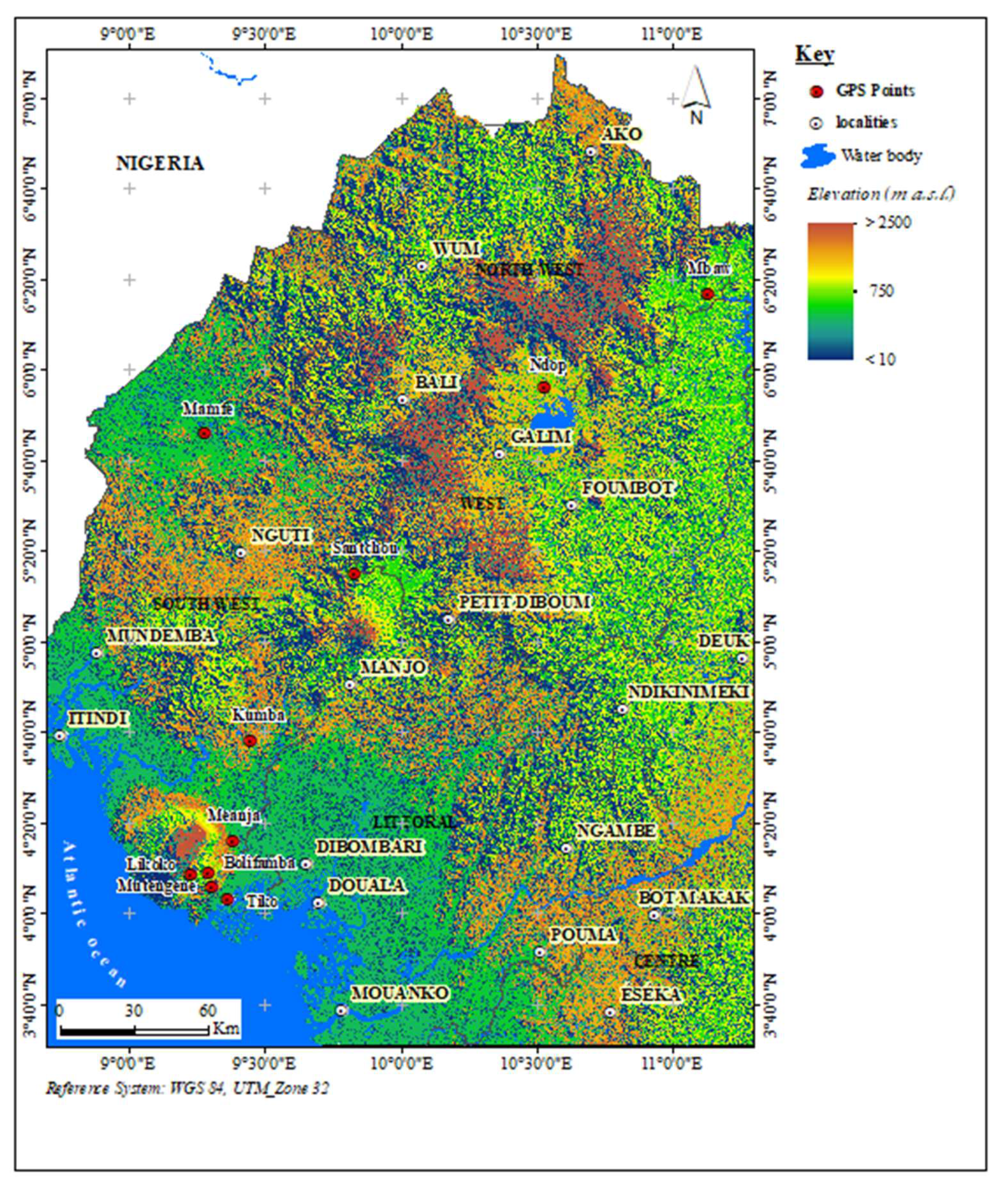
Figure 1. Map of the study area.
Preprints 179112 g001
Figure 2. L1014F mutation (A), genotypic (B) and allelic (C) frequencies in An. gambiae s.l. subspecies analysed (D). Legend: S = susceptible allele (L1014); Rw = kdr-West resistant allele (1014F); SS = Susceptible (L1014/L1014); RwS = Heterozygous kdr-West (L1014/1014F); RwRw = Homozygous kdr-West (1014F/1014F).
Preprints 179112 g002
Figure 5. IntNJ network tree showing genealogical relationship among kdr haplotypes in An. gambiae and An. coluzzii. Haplotypes are presented in circular shape scaled to reflect their respective frequencies; (*) ancestral haplotype.
Preprints 179112 g005
Figure 7. Neighbour-joining tree of exon-20 region of the VGSC gene between localities investigated. Mount Cameroon (MtC), Western Highlands (WH), Kupe Manengoumba (KM), Mount Oku (MtO), Mount Bamboutos (MtB).
Preprints 179112 g007
Disclaimer/Publisher’s Note: The statements, opinions and data contained in all publications are solely those of the individual author(s) and contributor(s) and not of MDPI and/or the editor(s). MDPI and/or the editor(s) disclaim responsibility for any injury to people or property resulting from any ideas, methods, instructions or products referred to in the content.
Copyright: This open access article is published under a Creative Commons CC BY 4.0 license, which permit the free download, distribution, and reuse, provided that the author and preprint are cited in any reuse.
Prerpints.org logo

Preprints.org is a free preprint server supported by MDPI in Basel, Switzerland.

Subscribe

Disclaimer

Terms of Use

Privacy Policy

Privacy Settings

© 2025 MDPI (Basel, Switzerland) unless otherwise stated