

Submitted:
02 October 2025
Posted:
02 October 2025
You are already at the latest version
Abstract
Functional foods are gaining global importance as consumer demand for products de-livering health benefits beyond basic nutrition increases. Black chokeberry (Aronia melanocarpa) is a promising candidate in this field, due to its exceptionally high content of bioactive compounds, particularly polyphenols with well-documented health-promoting properties. This article reviews the current state of knowledge on the definition of functional foods and the health benefits of chokeberries, with special em-phasis given to their extracts as promising ingredients for novel product development. Efficient recovery methods for bioactive compounds from fruits, pomace, and leaves are discussed, including advances in green extraction technologies such as ultrasound- and microwave-assisted extraction, supercritical fluids, and enzyme-assisted methods. Stabilization approaches, including microencapsulation and freeze-drying, which en-hance the stability and bioavailability of phenolics, are also highlighted. The impact of aronia extracts on technological and sensory parameters of food is analyzed. Applica-tions in beverages, baked goods, dairy, and meat products demonstrate improved an-tioxidant capacity and storability; however, astringency remains a major sensory chal-lenge. Future perspectives include optimizing processing strategies and developing synergistic formulations to maximize health benefits while ensuring consumer ac-ceptance.
Keywords:
extracts
; chokeberry
; functional food
; polyphenols
; anthocyanins
1. Introduction
From the consumer’s perspective, functional foods are products that, in addition to their basic nutritional value, can provide an additional, beneficial effect on the human body – supporting its functioning or reducing the risk of developing non-communicable diseases. Growing consumer nutritional awareness, as well as technological advances in the food industry, are contributing to the dynamic development of this product segment. One way to obtain products with exceptional health-promoting properties is to enrich traditional raw materials with bioactive phytochemical compounds, e.g. by adding plant extracts [1,2,3,4]. In this context, black chokeberry (Aronia melanocarpa) deserves special attention, as its exceptionally high content of polyphenols, including anthocyanins, flavonoids and phenolic acids, gives it strong antioxidant and anti-inflammatory properties and has a beneficial effect on the health of the cardiovascular system [5,6,7]. Aronia extracts are available in the form of juice concentrates, powders, water-alcoholic extracts, pomace and others, constituting a valuable functional ingredient that can be used in a wide range of food products. However, introducing products significantly enriched with aronia extracts into to the consumer market is associated with technological, sensory and regulatory challenges that must be considered in the process of designing functional foods [8,9,10,11].
The aim of this article is to discuss the potential of black chokeberry extracts as a component of functional food, to point out key barriers to their implementation, as well as to identify possible directions for further development in this area.
2. Functional Food – Definitions and Market Significance
The first definition of functional food comes from Japan. Research on this group of products began in 1984. In 1991 the Minister of Health of in Japan approved a new food category called FOSHU (Food for Specified Health Use). As a result of the Japanese government designating this kind product as a separate assortment, legislative work on the legal definition of functional food has begun both in Europe and in the USA. Despite more than three decades of discussion, no agreement has been reached on how to define and regulate the term. Different scientific and governmental institutions use different definitions of functional foods, which differ from each other in terms of the adopted criteria and are not mutually identical. The most frequently quoted definition of functional food in Europe is the one developed under the Functional Food Science in Europe (FUFOSE) program, coordinated by the International Life Sciences Institute (ILSI): “A product can be considered functional only if, at the same time as the basic nutritional value, it exerts an additional effect on one or more functions of the human body, both by improving general and physical conditions and/or reducing the risk of disease development. The amount of intake and form of functional food should be what is normally expected for nutritional purposes. Therefore, it cannot be in the form of pills or capsules, but in the form of normal food” [12,13,14,15]. In the United States, a new concept of defining the concept of “functional food” emerged in 1999. Researchers from the Functional Food Center and representatives of the Food and Drug Administration (FDA) and the Academic Society of Functional Foods and Bioactive Compounds (ASFFBC), in cooperation with the United States government, defined “functional food” as: “natural or processed foods that contain biologically active compounds that, in specific, effective, non-toxic amounts, provide clinically proven and documented health benefits using specific biomarkers, to promote optimal health and reduce the risk of chronic/viral diseases and manage their symptoms’’ [16,17].
According to the latest Global Market Insights report [18], the functional foods segment will experience exceptionally dynamic growth. The compound annual growth rate (CAGR) for 2025–2034 is projected at 8–12%.This trend is driven by the growing interest in healthy lifestyles by consumers, who are increasingly making food and purchasing choices based on information about product composition and their impact on health [19,20,21,22]. The fact that the population is aging and the related problem of escalating chronic diseases, generating huge costs of medical care, are also important. This prompts both governments and international organizations to support all activities and regulations that may have a real impact on extending healthy life expectancy [23]. This creates great development opportunities for the food sector, and in particular for the functional food market.
3. Black Chokeberry – Health-Promoting Properties and Bioactive Composition
In the process of designing new food products from the functional food category, it is important to select raw materials with documented health-promoting properties, going beyond the standard nutritional value typical for raw materials of a given category. An example of such a fruit is the black chokeberry (Aronia melanocarpa), belonging to the Rosaceae family. Aronia is a fruit with a high content of bioactive compounds, primarily polyphenols, anthocyanins, flavonoids and phenolic acids [24,25,26], which are responsible for its broad spectrum of health-promoting properties. The scientific literature in this field is very rich [27,28,29,30].
Systematic reviews of the literature indicate, among other things, the beneficial effect of aronia supplementation on the reduction of inflammation and oxidative stress in humans and animals. In clinical trials, a decrease in the levels of pro-inflammatory cytokines such as IL-6, TNF-α and CRP was observed, as well as an increase in the anti-inflammatory interleukin IL-10. In addition, aronia supplementation improved the activity of antioxidant enzymes, among other superoxide dismutase (SOD), catalase (CAT) and glutathione peroxidase (GSH-Px), which confirms its role in the modulation of the immune system and antioxidant protection of the body [31,32,33,34].
In studies on animal models, aronia extracts have shown encouraging results in lowering uric acid levels, inhibiting xanthine oxidase activity, and reducing oxidative stress markers such as malondialdehyde, while increasing glutathione levels – indicating strong antioxidant activity and kidney protection in mice with hyperuricemia. These effects were comparable to those of the drug allopurinol, highlighting the potential of aronia as a natural functional agent in the treatment of hyperuricemia and related metabolic disorders [35,36,37,38].
Research also indicates the neuroprotective properties of aronia. Aronia extracts have demonstrated an ability to inhibit inflammatory processes in microglial cells and protect neurons against amyloid beta-induced apoptosis, which suggests potential in the prevention and treatment of neurodegenerative diseases such as Alzheimer’s disease [39]. These mechanisms include modulation of the expression of genes associated with apoptosis, reduction of oxidative stress, and improvement of mitochondrial function [40,41,42,43].
With a high content of anthocyanins and polyphenols, the cardioprotective effects of aronia should be obvious [44,45,46]. Surprisingly, however the results of clinical trials in this regard are ambiguous. Meta-analysis of randomized controlled trials showed that aronia supplementation does not provide significant benefits in terms of cardiometabolic parameters in the general population. However, in selected subgroups, such as those with lower total cholesterol levels or at doses of anthocyanins above 50 mg/day, a beneficial effect was found to lower LDL cholesterol and systolic blood pressure [47]. However, further well-designed studies are needed to confirm these observations [48].
As the latest clinical research results cited above indicate, black chokeberry is a promising ingredient in functional foods. Nevertheless, a product formulated with it or its extracts to truly demonstrate health-promoting effects, the processing methods used, including methods for extracting, concentrating, and stabilizing bioactive ingredients, require extensive optimization, facilitated by technological advancements.
4. Modern Techniques for Obtaining Plant Extracts and Their Formulation
Modern techniques for extracting bioactive substances from plant tissue focus on maximising process efficiency while maintaining the chemical integrity of the extracted compounds, reducing energy consumption, reducing the use of synthetic solvents and being sustainable. This chapter discusses the most important innovative methods of obtaining plant extracts useful or prospective for berry fruits, with particular emphasis on their application in the design of functional foods.
4.1. Ultrasonically-Assisted Extraction (UAE)
Ultrasound-Assisted Extraction (UAE) is a method that uses ultrasonic waves at 20-100 kHz to induce the phenomenon of cavitation in an extraction liquid. Cavitation leads to the formation of gas bubbles, which, when imploding in the vicinity of plant particles, causes mechanical damage to cell walls and thus facilitates the diffusion of bioactive compounds into the solvent. This technology is characterized by high efficiency, low solvent consumption and short process time. UAE is particularly useful for the extraction of phenolic compounds, flavonoids and anthocyanins from fragile raw materials such as fruits, leaves or flowers [49,50,51].
4.2. Microwave-Assisted Extraction (MAE)
Microwave-Assisted Extraction (MAE) involves dielectric heating of the plant raw material using microwave radiation. Microwave energy causes a rapid increase in temperature and pressure inside plant cells, which leads to their disruption and release of active ingredients into the liquid phase. MAE enables fast and efficient extraction using environmentally friendly solvents such as water or ethanol and is beneficial for the isolation of thermolabile compounds [52].
4.3. Supercritical Fluid Extraction (SFE)
Supercritical Fluid Extraction (SFE) is based on the use of supercritical carbon dioxide (CO2) (above 31°C and 73 atm) as a solvent. In this state, CO2 exhibits both liquid and gas properties, which enables the effective dissolution of non-polar components. Due to the low process temperature and the absence of residual solvents, this method is ideal for the production of high-quality food extracts [53].
4.4. Accelerated Solvent Extraction (PLE/ASE)
Pressurized Liquid Extraction (or Accelerated Solvent Extraction) is a technology that involves the use of an extraction liquid at elevated temperatures and pressures. Such conditions improve the solubility and diffusion rate of bioactive compounds. Thanks to its closed system, this technology allows for the quick and efficient extraction of polar compounds, such as phenols or glycosides, from a wide range of plant raw materials. The advantage of this method is the possibility of using friendly solvents (e.g. ethanol, water) and the reduction of process time compared to classic techniques [54].
4.5. Extraction with Natural Eutectic Liquids (NADES)
Natural Deep Eutectic Solvents (NADES) are biodegradable mixtures of natural organic compounds, such as amino acids, sugars or organic acids, which in the right proportions can form liquid systems with good solvent properties. NADES are non-toxic and clean label. They are increasingly used to extract herbs, fruits, and flowers in the production of dietary supplements and functional foods [53].
4.6. Enzyme-Assisted Extraction (EAE)
Enzyme-Assisted Extraction (EAE) uses hydrolytic enzymes such as pectinase, cellulase and hemicellulase to degrade the cellular structure of plant material. These enzymes facilitate the release of active ingredients, especially from fiber-rich tissues or cell walls that are difficult to break mechanically, such as leaves or seed husks. EAE is a benign method, carried out at low temperatures, which reduces the degradation of thermolabile compounds [55].
4.7. Pulsed Electric Field (PEF)
Pulsed Electric Field (PEF) is a non-thermal technology that uses short-term high-voltage pulses to induce electroporation of cell membranes. PEF allows cell permeability to be increased and thus facilitates the release of secondary metabolites into the solvent. This technique is increasingly used as a pre-step before actual extraction (e.g., UAE, IAE, SFE) [52].
4.8. Hybrid Extractions and an Integrated Approach
A new trend in the field of plant extract extraction is the use of integrated techniques, combining the advantages of several methods to optimize the process. Examples include combining UAE with NADES, MAE with enzymes, or PEF with supercritical extraction. A hybrid approach not only improves efficiency, but also makes better use of secondary raw materials and post-industrial waste [56,57].
4.9. Stabilization of Extracts Using Microencapsulation
Microencapsulation plays a key role in protecting and stabilizing the extracted plant extracts, allowing the concentration of the bioactive substance to be increased, also changing the extract form from liquid to powder. This process involves encapsulating bioactive compounds in a casing or protective matrix that protects them from environmental factors such as oxygen, light, high temperature or changes in the pH of the environment. Microencapsulation also enables a controlled release of ingredients and an improvement in their bioavailability and sensory characteristics [58].
The most commonly used microencapsulation methods include:
Spray drying – a technique in which a suspension of an extract is sprayed with a carrier (e.g. maltodextrin) in a drying chamber where hot air evaporates water. The resulting powder contains microcapsules with good solubility and stability. It is a fast, cost-effective and easy method to scale up industrially [59,60].
Co-crystallization – a technique in which a bioactive ingredient is deposited together with an excipient (e.g. sugar, polyols) during crystallization. Molecular structures are formed that stabilize active compounds, protecting them from oxidation and increasing their shelf life under storage conditions [61].
Ion gelation – a method that uses a reaction between a polymer (e.g. sodium alginate) and divalent ions (usually calcium). After mixing the extract with the polymer solution, an ion solution is added to the mixture, which leads to the formation of gel microspheres. This technique is particularly useful for encapsulation of aqueous extracts and ensures their high chemical stability [62,63].
Microencapsulation not only increases the shelf life of active ingredients, but also allows for their better incorporation into various food matrices, such as beverages, yoghurts, snacks or dietary supplements [64,65].
The modern extraction techniques discussed above make it possible to extract bioactive components from diverse tissues, naturally rich in these compounds, which is the basis for the development of functional food. Their use allows for the effective and sustainable extraction of valuable biologically active ingredients from plant raw materials, including processing by-products [66,67,68]. The choice of the optimal technology should depend on the type of raw material, the chemical properties of the compounds obtained and the target application of the extract. The future of this field lies in the integration of technology, green chemistry and the personalization of functional ingredients according to consumer needs [69,70,71,72,73].
5. Aronia Extracts – Methods of Obtaining
Black chokeberry fruits, which are a rich source of biologically active compounds, including polyphenolic compounds, are an excellent raw material for the production of extracts with high bioactivity. As indicated by the literature data, the leaves of aronia bushes are also considered valuable source of polyphenolic components [74,75,76,77]. Depending on the method of preparation of the plant material, the aronia extracts can have different forms and chemical profiles. Figure 1 illustrates most of the possible technological diagrams for the production of aronia-based extracts (fruits, pomace and leaves) used as components of functional foods.
It is worth noting that aronia extracts are used not only in the food industry, but also in cosmetics and dietary supplements. By reviewing the literature on the subject, the articles were selected in which the topic of the use of black chokeberry fruit extracts (Aronia melanocarpa) in food products appears. Table 1 presents data for the groups of extracts described in the literature, their production techniques as well as the described effects of applications in the case studies.
6. Application Possibilities and Stability of Extracts in Technological Processes
The addition of black chokeberry extracts, whether in the form of juice, powder, phenolic extract or microcapsules, increases the content of phenolic compounds and the antioxidant potential of food products. The effectiveness of the enrichment operation depends on the type of matrix, the processing technique and the presence of stability aids (e.g. maltodextrin, vegetable proteins, osmotic carriers). Obtaining a product rich in polyphenol compounds, especially anthocyanins, does not guarantee that their stability will be maintained during storage or trade.
The research by Zlabur et al. [56], investigated the effect of the addition of chokeberry pomace powder on the chemical properties and antioxidant capacity of apple juice, which was subsequently treated with conventional ultrasound and high-intensity ultrasound, in order to extract the components from the juice carrier matrix. Powdered chokeberry pomace increased DPPH activity by more than 45% and the total polyphenol content to 950 mg GAE/100ml, regardless of the applied ultrasound power.
Babaoglu et al. [87], on the other hand, conducted trials to use the antioxidant activity of extract from pomace aronia to improve beef oxidative stability, while testing its antimicrobial activity. These studies showed that the presence of aronia extract in beef reduced the level of substances reacting with thiobarbituric acid (TBARS) by 50-60% during cold storage, which proves the strong antioxidant effect of the extract. In addition, these studies demonstrated the effect of aronia pomace extract on the inhibition of the growth of mesophilic aerobic bacteria, the total number of psychotrophic aerobic bacteria and E. coli bacteria. A positive effect on inhibiting the growth of E. coli and S. aureus bacteria was observed in studies by Li et al. [92]. It was demonstrated that black chokeberry extract has a bacteriostatic effect and extends the shelf life of fresh apples. Kowalczyk et al. [93] also found a beneficial effect of aronia leaf extract on the reduction of lipid oxidation, showing an increase in α-tocopherol retention in beef under refrigerated storage conditions.
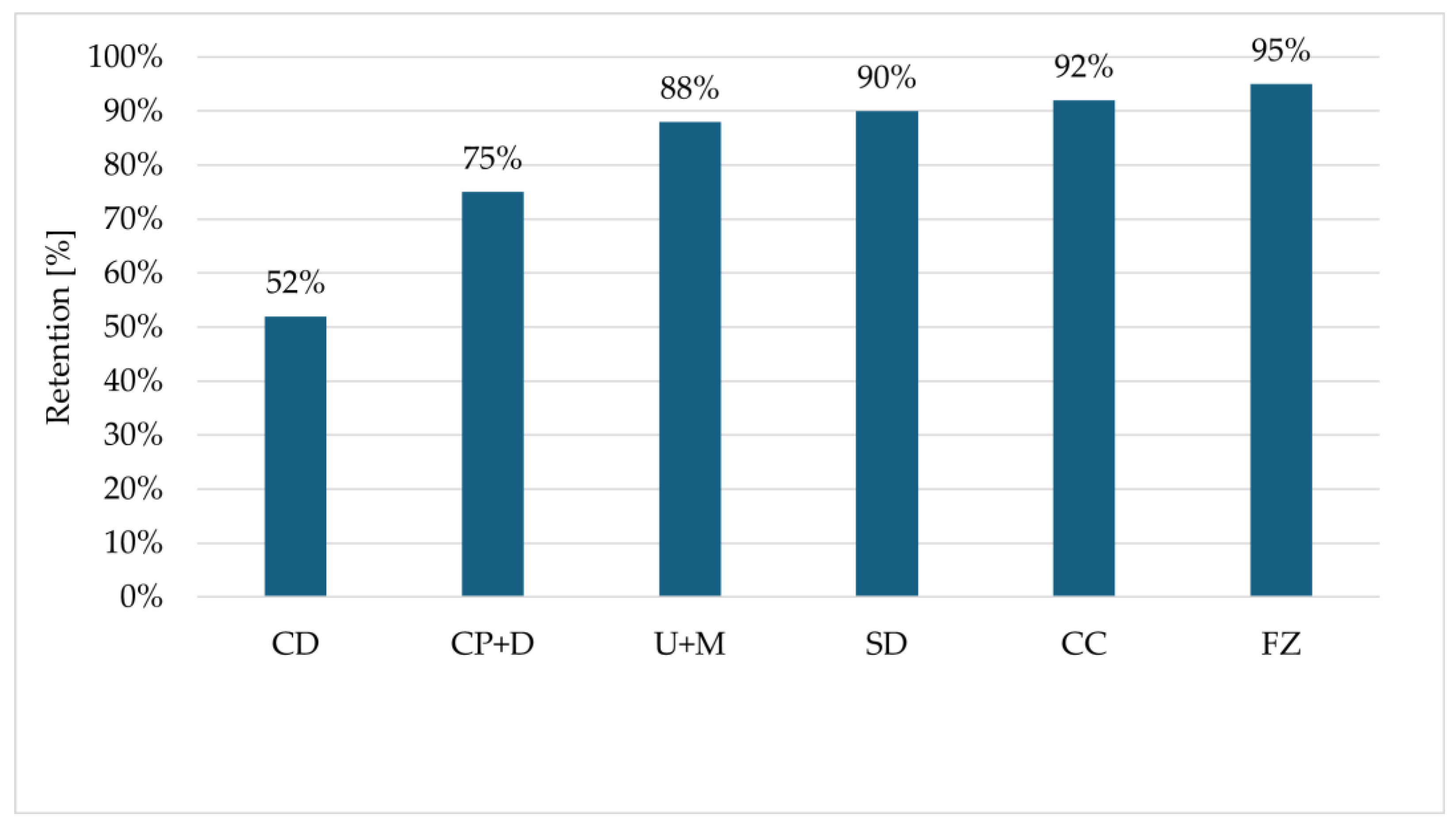
The stability of phenolic compounds is highly dependent on both the extraction technology used and the method of their preservation. In the study by Do Thi and Hwang [25], it was found that freeze-drying of extracts allowed the retention of 90-95% of the original content of polyphenols, while convection drying led to a reduction in the content of these compounds to a level of up to 48%. In studies by Cichowska et al. [94], it was observed that during 12 months of storage of dried apples previously dehydrated in a chokeberry concentrate solution, the level of polyphenol degradation ranged from 40% to 75% compared to the level before storage. The apples were stored at three different temperatures. The best results were observed for the sample subjected to osmotic dehydration and freeze-dried, which was stored at a temperature of 25 °C [64,95,96].
Black chokeberry extracts are an exceptionally rich source of anthocyanins, procyanidins and other polyphenolic compounds, thus they have strong antioxidant properties, which makes them effective fixing ingredients. The addition of aronia extract, in addition to increasing the functional value of the product, also affects the protection of the matrix against oxidative degradation, which is very important in long-term storage.
Interesting and really promising results were obtained in the study by Gheorghita et al. [57], where the use of macrogels with aronia juice led to the maintenance of intense color and high antioxidant activity, ORAC (>5000 μmol TE/100g) for 30 days. In this case, aronia extract played a double role – as a natural dye and a strong antioxidant. The phenolic compounds contained in it effectively neutralized free radicals, limiting the oxidation and degradation processes of bioactive food ingredients.
Microencapsulation (e.g. by spray drying or ion gelation) allows phenolic compounds to be protected against environmental factors such as oxygen, light, temperature, which significantly affect the degree of preservation of these compounds. In the study by Tzatsi and Goula [64], a 90% retention of antioxidant activity was observed after six weeks of storage in powders obtained by co-crystallation and ion gelation [97].
Research by Ben-Othman et al. [65] confirmed, that spray drying with oilseed proteins as a carrier protected the bioactive components of aronia in plant powders, which were characterized by a high FRAP content (>2.5 mmol Fe²⁺/g) and very good storage stability. The effect of the drying method on the content of bioactive compounds in aronia has been confirmed by Zhang et al. [52]. These studies showed that the optimization of the drying process using ultrasound and microwaves in the presence of calcium ions increases the final polyphenol content by 38% compared to traditional convection drying
Proper selection of technology (e.g. freeze-drying, microencapsulation, co-crystallining) allows for the preservation of bioactive ingredients even above 90%, which makes aronia extracts a promising functional ingredient with high antioxidant efficiency.
Figure 2.
Retention of phenolic compounds (%) in aronia extracts depending on the processing technique used. In-house data based on a literature review [25,52,64]. CD – Convection drying; CP+D – Cold Plasma pre-treatment + Drying; U+M – Ultrasound + microwaves; SD – Spray Drying (Microencapsulation); CC – Co-Crystallization; FZ – Freeze Drying.
Figure 2.
Retention of phenolic compounds (%) in aronia extracts depending on the processing technique used. In-house data based on a literature review [25,52,64]. CD – Convection drying; CP+D – Cold Plasma pre-treatment + Drying; U+M – Ultrasound + microwaves; SD – Spray Drying (Microencapsulation); CC – Co-Crystallization; FZ – Freeze Drying.
Black chokeberry extracts added to functional foods, in addition to health-promoting benefits and improving technological properties, can affect the sensory properties of the product – both positively and negatively. Features such as color, taste, aroma, texture and general acceptability are extremely important for the consumer, which translates into the market success of a given product. Therefore, sensory analysis is an important part of the evaluation of innovative products with aronia extracts [87].
A visually attractive and vivid colour is the key elements determining the acceptance of a product by consumers. The high content of anthocyanins in black chokeberry fruits (mainly cyanidin-3-galactoside) means that products with the addition of these fruits are characterized by an intense purple-violet color, which is usually positively received and evaluated by consumers. In the study of Samborska et al. [100], apple slices were subjected to the process of osmotic dehydration using a solution consisting of 65°Brix of sucrose and 15% aronia juice concentrate (S65-Ch15 determination). Apples dehydrated with aronia concentrate scored the highest sensory scores in all aspects assessed – color, taste, aroma and overall product quality – compared to the control group treated with only a 65°Brix solution of sucrose without the addition of fruit concentrate.
The usefulness of aronia extracts as food colorants was studied also by Ghendov-Mosan et al. [89], where aronia extract concentrate was used as a natural dye in the production of gummies. Its colouring efficiency was analysed in comparison with synthetic dyes (E131, E162). It was assessed that its coloring efficiency is similar to that of control dyes, with a higher assessment of color attractiveness (average 8.2 out of 9 points). In addition, the use of aronia extract made it possible to increase the antioxidant activity of the gummies (ORAC + 65%).
The introduction of chokeberry extract into the matrix of improved food products results in an astringency increase in the final product, which is due to the characteristics of the fruit of this species. It is mainly due to the presence of procyanidins and tannins, and the presence of these compounds is less accepted in products of liquid and semi-liquid consistency, e.g. in beverages. This is a huge technological challenge in the sensory context. In the study by Petković et al. [98], it was found that beverages that contain more than 15% by volume of aronia juice are too tart and bitter, which resulted in a reduced overall taste experience by more than 25% compared to samples with lower concentrations. For comparison, in the study by Habschied et al. [99], a drink based on barley wort with the addition of aronia juice was produced. Beverages were produced that contained 10%, 20% and 30% chokeberry juice. The best sensory results were obtained for the juice with the highest juice content, i.e. 30%. In order to improve the recipe, it was decided to add peppermint oil and saturate CO2. Such a drink received a high score of 8.4 on a 10-point hedonic scale. This study proves that the use of synergistic ingredients (e.g. mint) effectively alleviates the negative sensory aspects of aronia.
In the case of aronia extracts dosed into supplemented products in solid form, it significantly affects the texture of the product. Aronia powders, microcapsules and pomace typically increase the density, viscosity and structure of the matrix. The study by Żbikowska et al. [84] showed that muffins in which wheat flour was replaced with chokeberry pomace flour in an amount not exceeding 10% were characterized by an increase in hardness by 12%, but despite this, the overall acceptability of the texture remained at a high level (average 7.3/9 points). Much better results were obtained for gluten-free baking, which suggests the possibility of using powdered chokeberry pomace in the production of gluten-free baked goods. Gluten-free baked goods with the addition of 10% aronia pomace were characterized by more favorable texture properties (m.in. lower hardness and better moisture), larger baking volume and higher sensory ratings compared to their gluten counterparts with 10% addition of aronia pomace. Also Szajnar et al. [91] indicated the positive effect of dry aronia extract usage as food component. It was proved that in fermented dairy products (based on sheep’s milk), the addition of aronia fiber increased the density and viscosity of the product, which was positively assessed – the average sensory acceptance was 8.1 on a 9-point scale.
The addition of black chokeberry in the form of juices or extracts also enriches the aroma profile of food products. Masztalerz et al. [80] conducted an analysis of the profile of volatile aromatic compounds in dried apples subjected to the process of osmotic dehydration in chokeberry-mint solution. An increase in the content of aldehydes and esters responsible for fruity and fresh notes was demonstrated, which correlated with a higher aroma rating in the expert panel’s assessment.
7. Conclusions
Black chokeberry extracts are a promising ingredient of functional food, exhibiting a wide spectrum of health-promoting and technological properties. Research conducted in the last decade has shown that their use in food products allows to increase antioxidant activity, extend shelf life and improve the visual attractiveness of fortified products. Despite the health benefits of this species, the specific, tart taste of the fruit remains a challenge, limiting its acceptance. Therefore, the key challenge remains to optimize the processing technology in terms of sensory composition.
Since products offered to the market in the functional food category must have above-average characteristics with documented health benefits, parallel research is focused on the development of extraction methods that will minimize the degradation of health-promoting compounds, while ensuring high process efficiency and quality of the final product.
The available literature indicates that the development of aronia berry extract stabilization techniques (e.g. microencapsulation, co-crystallining, osmotic techniques) and synergistic combinations with other plant components can increase the bioavailability and stability of bioactive compounds, while minimizing unfavorable taste characteristics. Black chokeberry is therefore a promising ingredient in the design of functional foods, but its successful implementation requires further technological, clinical and sensory research. In order to make the potential of aronia species utilized, extremely important seem to identify individual application, where groups of phytocomponent could be bioactive without adverse quality sensation.
Author Contributions
Conceptualization, D.W. and D.K.; methodology, D.K.; software, D.W.; validation, D.K.; formal analysis, D.K.; investigation, D.W. and D.K.; resources, D.W. and D.K.; data curation, D.K.; writing—original draft preparation, D.W.; writing—review and editing, D.K.; visualization, D.W. and D.K.; supervision, D.K.; project administration, D.W.; funding acquisition, D.W. and D.K. All authors have read and agreed to the published version of the manuscript.
Funding
Financed by the National Institute of Horticultural Research within the framework of the implementation of the project „Networking for excellence in the development of innovative, consumer-oriented horticultural food products using the Living Lab approach” (HortiFoodTrends).
Institutional Review Board Statement
Not applicable.
Informed Consent Statement
Not applicable.
Data Availability Statement
Not applicable.
Conflicts of Interest
The authors declare no conflicts of interest.
References
- Topolska, K.; Florkiewicz, A.; Filipiak-Florkiewicz, A. Functional Food—Consumer Motivations and Expectations. Int. J. Environ. Res. Public Health 2021, 18, 5327. [CrossRef]
- Rutkowska, J.; Pasqualone, A. Plant Extracts as Functional Food Ingredients. Foods 2025, 14, 374. [CrossRef]
- Essa, M.M; Bishir, M.; Bhat, A; Chidambaram, S.B.; Al-Balushi, B.; Hamdan, H.; Govindarajan, N.; Freidland, R.P.; Qoronfleh, M.W. Functional foods and their impact on health. Journal of Food Science and Technology 2023, 60(3):820-834. [CrossRef]
- Bigliardi, B.; Galati, F. Innovation trends in the food industry: The case of functional foods. Trends in Food Science & Technology 2013, 31 118-129. [CrossRef]
- Sreedharan, S.; Nair, V.; Bhargava, P.; Cisneros-Zevallos, L. Protective Role of Polyphenols from Aronia Berry (Aronia melanocarpa) Against LPS-Induced Inflammation in Colon Cells and Macrophages. Nutrients 2025, 17, 1652. [CrossRef]
- Chamberlin, M.L.; Peach, J.T.; Wilson, S.M.G.; Miller, Z.T.; Bothner, B.; Walk, S.T.; Yeoman, C.J.; Miles, M.P. Polyphenol-Rich Aronia melanocarpa Fruit Beneficially Impact Cholesterol, Glucose, and Serum and Gut Metabolites: A Randomized Clinical Trial. Foods 2024, 13, 2768. [CrossRef]
- Zapolska-Downar, D.; Bryk, D.; Małecki, M.; Hajdukiewicz, K.; Sitkiewicz, D. Aronia melanocarpa fruit extract exhibits anti-inflammatory activity in human aortic endothelial cells. European Journal of Nutrition 2011, 51, 563-572. [CrossRef]
- Xu, J.; Li, F.; Zheng, M.; Sheng, L.; Shi, D.; Song, K. A Comprehensive Review of the Functional Potential and Sustainable Applications of Aronia melanocarpa in the Food Industry. Plants 2024, 13, 3557. [CrossRef]
- Raczkowska, E.; Nowicka, P.; Wojdyło, A.; Styczyńska, M.; Lazar, Z. Chokeberry Pomace as a Component Shaping the Content of Bioactive Compounds and Nutritional, Health-Promoting (Anti-Diabetic and Antioxidant) and Sensory Properties of Shortcrust Pastries Sweetened with Sucrose and Erythritol. Antioxidants 2022, 11, 190. [CrossRef]
- Sridhar, A.; Ponnuchamy, M.; Kumar, P.; Kapoor, A.; Vo, D.-N.; Prabhakar, S. Techniques and Modeling of Polyphenol Extraction from Food: A Review. Environ. Chem. Lett. 2021, 19 (4), 3409–3443. [CrossRef]
- Intrasook, J.; Tsusaka, T.W.; Anal A.K. Trends and current food safety regulations and policies for functional foods and beverages containing botanicals. Journal of Food and Drug Analysis 2024; 32, 112-139. [CrossRef]
- Diplock, A.T.; Aggett, P.J.; Ashwell, M.; Bornet, F.; Fern, E.B.; Roberfroid, M.B.; et al. Scientific Concepts of Functional Foods in Europe—Consensus Document. Br. J. Nutr. 1999, 81 (Suppl. 1), S1–S27. [CrossRef]
- Iwatani, S., & Yamamoto, N. Functional food products in Japan: A review. Food Science and Human Wellness, 2019 8(2), 96–101. [CrossRef]
- Sadohara, R.; Martirosyan, D. Functional Food Centers’ Vision on Functional Food Definition and Science in Comparison to FDA’s Health Claim Authorization and Japan’s Foods for Specified Health Uses. Funct. Foods Health Dis. 2020, 10, 753. [CrossRef]
- Obayomi OV, Olaniran AF, Owa SO. Unveiling the Role of Functional Foods with Emphasis on Prebiotics and Probiotics in Human Health: A Review. J. Funct. Foods 2024, 119, 106337. [CrossRef]
- Martirosyan, D.; Kanya, H.; Nadalet, C. Can Functional Food Reduce the Risk of Disease? Advancement of Functional Food Definition and Steps to Create Functional Food Products. Funct. Foods Health Dis. 2021, 11, 213–221. [CrossRef]
- Egbuna, C., & Tupas, G. D. (Eds.). (2020). Functional foods and nutraceuticals: Bioactive components, formulations and innovations. Springer. [CrossRef]
- Global Market Insights. Functional Foods Market Size, Share & Growth Trend 2025-2034, 2025. (Online resource; accessed 7 July 2025).
- Baker, M.T.; Lu, P.; Parrella, J.A.; Leggette, H.R. Consumer Acceptance toward Functional Foods: A Scoping Review. Int. J. Environ. Res. Public Health 2022, 19, 1217. [CrossRef]
- Shuval, K.; Leonard, T.; Drope, J.; Galárraga, O.; Melaku, Y. A.; Knai, C.; Moodie, R.; Rutter, H.; Stuckler, D.; Chaloupka, F. J. The Impact of Health and Nutrition Claims on Consumer Perceptions and Consumption: A Systematic Review. Int. J. Behav. Nutr. Phys. Act. 2017, 14 (1), 35. [CrossRef]
- Fernqvist, F.; Spendrup, S.; Tellström, R. Understanding food choice: A systematic review of reviews. Heliyon 2024, 10 (12), e32492. [CrossRef]
- Hajzer ZE, Alibrahem W, Kharrat Helu N, Oláh C, Prokisch J. Functional Foods in Clinical Trials and Future Research Directions. Foods 2025; 14(15):2675. [CrossRef]
- World Health Organization. World Report on Ageing and Health 2020. WHO Press, 2020.
- Piasecka, I.; Wiktor, A.; Górska, A. Alternative Methods of Bioactive Compounds and Oils Extraction from Berry Fruit By-Products—A Review. Appl. Sci. 2022, 12, 1734. [CrossRef]
- Do Thi, N.; Hwang, E. Effects of Drying Methods on Contents of Bioactive Compounds and Antioxidant Activities of Black Chokeberries (Aronia melanocarpa). Food Sci. Biotechnol. 2016, 29; 25 (1) 55–61. [CrossRef]
- Wu, X.; Beecher, G.R.; Holden, J.M.; Haytowitz, D.B.; Gebhardt, S.E.; Prior, R.L. Concentrations of Anthocyanins in Common Foods in the United States and Estimation of Normal Consumption. J. Agric. Food Chem. 2021, 69, 1773–1784. [CrossRef]
- Chrubasik, C.; Li, G.; Chrubasik, S. The Clinical Effectiveness of Chokeberry: A Systematic Review. Phytother. Res. 2010, 24, 1107–1114. [CrossRef]
- Bräunlich, M.; Slimestad, R.; Wangensteen, H.; Brede, C.; Malterud, K.E.; Barsett, H. Extracts, Anthocyanins and Procyanidins from Aronia melanocarpa as Radical Scavengers and Enzyme Inhibitors. Nutrients 2013, 5, 663–678. [CrossRef]
- Francik, R., Krośniak, M., Sanocka, I., Bartoń, H., Hebda, T., Francik, S. Aronia melanocarpa Treatment and Antioxidant Status in Selected Tissues in Wistar Rats. BioMed Res Int. 2014; 2014:457085. [CrossRef]
- Dufour C, Villa-Rodriguez JA, Furger C, Lessard-Lord J, Gironde C, Rigal M, Badr A, Desjardins Y, Guyonnet D. Cellular Antioxidant Effect of an Aronia Extract and Its Polyphenolic Fractions Enriched in Proanthocyanidins, Phenolic Acids, and Anthocyanins. Antioxidants 2022;11(8):1561. [CrossRef]
- Kaczmarczyk, S.; Dziewiecka, H.; Pasek, M.; et al. Effects of Black Chokeberry (Aronia melanocarpa) Supplementation on Oxidative Stress, Inflammation and Gut Microbiota: A Systematic Review of Human and Animal Studies. Br. J. Nutr. 2025, 133, 58–81. [CrossRef]
- Sarıkaya, B.; Kolay, E.; Guney-Coskun, M.; et al. The Effect of Black Chokeberry (Aronia melanocarpa) on Human Inflammation Biomarkers and Antioxidant Enzymes: A Systematic Review of Randomized Controlled Trials. Nutr. Rev. 2025, 83, 1083–1098. [CrossRef]
- Mesárošová, A.; Bobko, M.; Jurčaga, L.; Bobková, A.; Poláková, K.; Demianová, A.; Lidiková, J.; Bučko, O.; Tóth, T. Chokeberry (Aronia melanocarpa) as a Natural Antioxidant for the Meat Industry. Czech J. Food Sci. 2024, 42, 69–76. [CrossRef]
- Skąpska, S.; Marszałek, K.; Woźniak, Ł.; Zawada, K.; Wawer, I. Aronia Dietary Drinks Fortified with Selected Herbal Extracts Preserved by Thermal Pasteurization and High Pressure Carbon Dioxide. LWT–Food Science and Technology 2017, 85, 423–426. [CrossRef]
- Liu, C.-Y.; Liu, W.-Y.; Shi, Y.-C.; Wu, S.-C. Unveiling the Therapeutic Benefits of Black Chokeberry (Aronia melanocarpa) in Alleviating Hyperuricemia in Mice. Front. Nutr. 2025, 12, Article 1556527. [CrossRef]
- Li, L., Li, J., Xu, H., Zhu, F., Li, Z., Lu, H., Zhang, J., Yang, Z., & Liu, Y. The protective effect of anthocyanins extracted from Aronia melanocarpa berry in renal ischemia-reperfusion injury in mice. Mediators of Inflammation, 2021, 7372893. [CrossRef]
- Lupu, M. I.; Canja, C. M.; Maier, A.; Padureanu, V.; Branescu, G. R.; Manolica, A.-M. The Impact of the Infusion Method of Chokeberry Powder in White Tea. Carpathian J. Food Sci. Technol. 2024, 16 (4), 28. [CrossRef]
- Broncel, M.; Koziróg-Kołacińska, M.; Andryskowski, G.; Duchnowicz, P.; Koter-Michalak, M.; Owczarczyk, A.; Chojnowska-Jezierska, J. Effect of anthocyanins from Aronia melanocarpa on blood pressure, concentration of endothelin-1 and lipids in patients with metabolic syndrome. Polski Merkuriusz Lekarski 2007, 23 (134), 116-119.
- Wen, H.; Cui, H.; Tian, H.; Zhang, X.; Ma, L.; Ramassamy, C.; Li, J. Isolation of Neuroprotective Anthocyanins from Black Chokeberry (Aronia melanocarpa) against Amyloid-β-Induced Cognitive Impairment. Foods 2020, 10, 63. [CrossRef]
- Young Go, M.; Kim, J.; Young Jeon, C.; Wook Shin, D. Functional Activities and Mechanisms of Aronia melanocarpa in Our Health. Curr. Issues Mol. Biol. 2024, 46, 8071–8087. [CrossRef]
- Oszmiański, J.; Lachowicz, S. Effect of the Production of Dried Fruits and Juice from Chokeberry (Aronia melanocarpa L.) on the Content and Antioxidative Activity of Bioactive Compounds. Molecules 2016, 21, 1098. [CrossRef]
- Doma AO, Cristina RT, Dumitrescu E, Degi D, Moruzi RF, Brezovan D, Petroman I, Muselin F. The antioxidant effect of Aronia melanocarpa extract in rats oxidative stress induced by cisplatin administration. J Trace Elem Med Biol. 2023, 79:127205. [CrossRef]
- Trusov NV, Shipelin VA, Mzhelskaya KV, Shumakova AA, Timonin AN, Riger NA, Apryatin SA, Gmoshinski IV. Effect of resveratrol on behavioral, biochemical, and immunological parameters of DBA/2J and tetrahybrid DBCB mice receiving diet with excess fat and fructose. J. Nutr. Biochem. 2021, 88, 108527. [CrossRef]
- Kulling, S.E.; Rawel, H.M. Chokeberry (Aronia melanocarpa)—A Review on the Characteristic Components and Potential Health Effects. Planta Hum. 2008, 74(13), 1625-1634. [CrossRef]
- Kasprzak-Drozd, K.; Oniszczuk, T.; Soja, J.; Gancarz, M.; Wojtunik-Kulesza, K.; Markut-Miotła, E.; Oniszczuk, A. The Efficacy of Black Chokeberry Fruits against Cardiovascular Diseases. Int. J. Mol. Sci. 2021, 22 (12), 6541. [CrossRef]
- Frumuzachi, O.; Mocan, A.; Rohn, S.; Gavrilaș, L. Daily Supplementation with Aronia melanocarpa (Chokeberry) Reduces Blood Pressure and Cholesterol: A Meta-Analysis of Controlled Clinical Trials. Nutrients 2025, 17 (9), 1488. [CrossRef]
- Shah, K.; Shah, P. Effect of Anthocyanin Supplementations on Lipid Profile and Inflammatory Markers: A Systematic Review and Meta-Analysis of Randomized Controlled Trials. Cholesterol 2018, Article 8450793. [CrossRef]
- Zhang J., Zhang Y., Wang J., Jin H., Qian S., Chen P., Wang M., Chen N., Ding L. Comparison of Antioxidant Capacity and Muscle Amino Acid and Fatty Acid Composition of Nervous and Calm Hu Sheep. Antioxidants. 2023;12(2):459. [CrossRef]
- Strugała, P.; Wójciak, K.M.; Kawecki, D.; Wójtowicz, A. Antioxidant Activity and Anti-Inflammatory Effect of Fruit Extracts from Blackcurrant, Chokeberry, Hawthorn, and Rosehip, and Their Mixture with Linseed Oil on a Model Lipid Membrane. Eur. J. Lipid Sci. Technol. 2016, 118, 1047–1057. [CrossRef]
- Palai, S.; Shekhawat, N. Novel Extraction Techniques for Phytochemicals: A Comprehensive Review. Int. J. Pharm. Res. 2022, 14 (3), 21-30. [CrossRef]
- Wang L, Weller CL. Recent advances in extraction of nutraceuticals from plants. Analytical and Bioanalytical Chemistry 2017;409(22):5513–5525. [CrossRef]
- Zhang, Y., Zhang, M., & Wang, L. Combined calcium pretreatment and ultrasonic/microwave drying to dehydrate black chokeberry: Novel mass transfer modeling and metabolic pathways of polyphenols. Innovative Food Science & Emerging Technologies, 2022, 80, 103215. [CrossRef]
- Lazović, M. Č.; Jović, M. D.; Petrović, M.; Dimkić, I. Z.; Gašić, U. M.; Milojković Opsenica, D. M.; Ristivojević, P. M.; Trifković, J. Đ. Potential Application of Green Extracts Rich in Phenolics for Innovative Functional Foods: Natural Deep Eutectic Solvents as Media for Isolation of Biocompounds from Berries. Food Funct. 2024, 15, 4122–4139. [CrossRef]
- Krzepiłko, A.; Kordowska-Wiater, M.; Sosnowska, B.; Pytka, M. Effects of Plant Extracts on Microorganisms; Lublin University of Life Sciences Press: Lublin, Poland, 2020; p. 27.
- Kuzmanović Nedelijković, S.; Radan, M.; Ćujić Nikolić, N.; Mutavski, Z.; Krgović, N.; Marković, S.; Stević, T.; Živković, J.; Šavkin, K. Microencapsulated Bilberry and Chokeberry Leaf Extracts with Potential Health Benefits. Plants, 2023, 12, 3979. [CrossRef]
- Zlabur, J.; Dobricevic, N.; Pliestić, S.; Galić, A.; Bilić, D.; Voca, S. Antioxidant Potential of Fruit Juice with Added Chokeberry Powder (Aronia melanocarpa). Molecules 2017, 22, 2158. [CrossRef]
- Gheorghita, R.E.; Lupaescu, A.V.; Gâtlan, A.M.; Dabija, D.; Lobiuc, A.; Iatcu, O.C.; Buculei, A.; Andriesi, A.; Dabija, A. Biopolymers-Based Macrogels with Applications in the Food Industry: Capsules with Berry Juice for Functional Food Products. Gels 2024, 10, 71. [CrossRef]
- Bitwell C, Sen IS, Luke C, Kakoma MK. A review of modern and conventional extraction techniques and their applications for extracting phytochemicals from plants. Scientific African 2023; e01585. [CrossRef]
- Gharsallaoui, A.; Roudaut, G.; Chambin, O.; Voilley, A.; Saurel, R. Applications of Spray-Drying in Microencapsulation of Food Ingredients: An Overview. Food Res. Int. 2007, 40, 1107–1121. [CrossRef]
- Kudra, T., Mujumdar A.S. Advanced Drying Technologies, 2009. [CrossRef]
- Chezanoglou, E.; Goula, C.M. Co-crystallization in sucrose: A promising method for encapsulation of food bioactive components. Trends in Food Science & Technology 2021, 114 262-274. [CrossRef]
- George, M.; Abraham, T.E. Polyionic Hydrocolloids for the Intestinal Delivery of Protein Drugs: Alginate and Chitosan—A Review. J. Control. Release 2006, 114, 1–14. [CrossRef]
- Lee, K.Y.; Mooney, D.J. Alginate: Properties and Biomedical Applications. Prog. Polym. Sci. 2020, 37, 106–126. [CrossRef]
- Tzatsi, P.; Goula, A. Encapsulation of Extract from Unused Chokeberries by Spray Drying, Co-Crystallization, and Ionic Gelation. Waste Biomass Valorization 2021, 12, 4567-4585. [CrossRef]
- Ben-Othman, S.; Bleive, U.; Kaldmäe, H.; Aluvee, A.; Ratsep, R.; Sats, A.; Pap, N.; Jarvenpaa, E.; Rinken, T. Characterization of Plant-Based Spray-Dried Powders Using Oilseed Proteins and Chokeberry Extract from Wine By-Product. Sci. Rep. 2024, 14, 6233.
- Peron, G.; Ferrarese, I.; Carmo Dos Santos, N.; Rizzo, F.; Gargari, G.; Bertoli, N.; Gobbi, E.; Perosa, A.; Selva, M.; Dall’Acqua, S. Sustainable Extraction of Bioactive Compounds and Nutrients from Agri-Food Wastes: Potential Reutilization of Berry, Honey, and Chicory Byproducts. Appl. Sci. 2024, 14, 10785. [CrossRef]
- Shi, L.; Zhao, W.; Yang, Z.; Subbiah, V.; Suleria, H. A. R. Extraction and Characterization of Phenolic Compounds and Their Potential Antioxidant Activities. Environ. Sci. Pollut. Res. Int. 2022, 29 (54), 81112–81129. [CrossRef]
- Ivanova, M.; Petkova, N.; Balabanova, T.; Ognyanov, M.; Vlaseva, R. Food Design of Dairy Desserts with Encapsulated Cornelian Cherry, Chokeberry and Blackberry Juices. Ann. Univ. Dunarea de Jos Galati Fasc. VI – Food Technology 2018, 42, 137-146.
- Usman M, Nakagawa M, Cheng S. Emerging Trends in Green Extraction Techniques for Bioactive Natural Products. Processes 2023;11(12):3444. [CrossRef]
- Krakowska-Sieprawska A, Kiełbasa A, Rafińska K, Ligor M, Buszewski B. Modern methods of pre-treatment of plant material for the extraction of bioactive compounds. Molecules 2022;27(3):730. [CrossRef]
- Martins RF, Advinha B, Barbosa A, Sales HJ, Pontes R, Nunes J. Green Extraction Techniques of Bioactive Compounds: A State-of-the-Art Review. Processes 2023, 11(8):2255. [CrossRef]
- Azmir J, Zaidul ISM, Rahman MM, Sharif KM, Mohamed A, Sahena F, Jahurul MHA, Ghafoor K, Norulaini NAN, Omar AKM. Techniques for extraction of bioactive compounds from plant materials: A review. Journal of Food Engineering 2013;117(4):426–436. [CrossRef]
- Sowbhagya HB, Chitra VN. Enzyme-assisted extraction of flavorings and colorants from plant materials. Critical Reviews in Food Science and Nutrition 2010;50(2):146–161. [CrossRef]
- Wang, J.; Wang, J.; Hao, J.; Jiang, M.; Zhao, C.; Fan, Z. Antioxidant Activity and Structural Characterization of Anthocyanin–Polysaccharide Complexes from Aronia melanocarpa. Int. J. Mol. Sci. 2024, 25 (24), 13347. [CrossRef]
- Piras, A.; Porcedda, S.; Smeriglio, A.; Trombetta, D.; Nieddu, M.; Piras, F.; Sogos, V.; Rosa, A. Chemical Composition, Nutritional, and Biological Properties of Extracts Obtained with Different Techniques from Aronia melanocarpa Berries. Molecules 2024, 29 (11), 2577. [CrossRef]
- Sönmez Gürer, E.; Karadağ, A. E.; Altıntaş, A. Comparison of Chemical Profiles of Aronia melanocarpa Fruit Extracts. Turkish J. Agric. Food Sci. Technol. 2023, 11 (2), 323–328. [CrossRef]
- Park, Y.; Puligundla, P.; Mok, C. Decontamination of Chokeberries (Aronia melanocarpa L.) by Cold Plasma Treatment and Its Effects on Biochemical Composition and Storage Quality of Their Corresponding Juices. Food Sci. Biotechnol. 2021, 30, 703–710. [CrossRef]
- Kowalska, J.; Marzec, A.; Domian, E.; Galus, S.; Ciurzyńska, A.; Lenart, A.; Kowalska, H. The Use of Antioxidant Potential of Chokeberry Juice in Creating Pro-Healthy Dried Apples by Hybrid (Convection-Microwave-Vacuum) Method. Molecules 2020, 25 (23) 5680. [CrossRef]
- Ciurzyńska, A.; Popkowicz, P.; Galus, S.; Janowicz, M. Innovative Freeze-Dried Snacks with Sodium Alginate and Fruit Pomace (Only Apple or Only Chokeberry) Obtained within the Framework of Sustainable Production. Molecules 2022, 27, 3095. [CrossRef]
- Masztalerz, K.; Łyczko, J.; Lech, K.; Szumny, A.; Figiel, A. The Effect of Filtrated Osmotic Solutions Based on Chokeberry Juice Enriched with Mint Extract on Volatile Compounds in Dried Apples. J. Food Process Eng. 2021, 44, e13803. [CrossRef]
- Sadowska, A.; Świderski, F.; Hallmann, E.; Świąder, K. Assessment of Chokeberry Powders Quality Obtained Using an Innovative Fluidized-Bed Jet Milling and Drying Method with Pre-Drying Compared with Convection Drying. Foods 2021, 10, 292. [CrossRef]
- Sidor, A.; Ziemlewska, A.; Dobrzyńska-Inger, A.; Gramza-Michałowska, A. The Effect of Plant Additives on the Stability of Polyphenols in Dried Black Chokeberry. Foods 2021, 10, 2766. [CrossRef]
- Nemetz, N.; Schieber, A.; Weber, F. Application of Crude Pomace Powder of Chokeberry, Bilberry, and Elderberry as a Coloring Foodstuff. Molecules 2021, 26, 2689. [CrossRef]
- Żbikowska, A.; Łukasiak, P.; Kowalska, M.; Łukasiak, A.; Kozłowska, M.; Marciniak-Łukasiak, K. Incorporation of Chokeberry Pomace into Baked Products: Influence on the Quality of the Dough and the Muffins. Appl. Sci. 2024, 14, 9675. [CrossRef]
- Karwacka, M., A. Ciurzyńska, S. Galus, and M. Janowicz. 2024. The Effect of Storage Time and Temperature on Quality Changes in Freeze-Dried Snacks Obtained With Fruit Pomace and Pectin Powders as a Sustainable Approach for New Product Development. Sustainability 2024, 16 (11) 4736. [CrossRef]
- Drożdż, W.; Boruczkowska, H.; Boruczkowski, T.; Tomaszewska-Ciosk, E.; Zdybel, E. Use of Blackcurrant and Chokeberry Press Residue in Snack Products. Pol. J. Chem. Technol. 2019, 21, 1, 13-19.
- Babaoglu, A.; Unal, K.; Dilek, N.; Pocan, H.; Karakaya, M. Antioxidant and Antimicrobial Effects of Blackberry, Black Chokeberry, Blueberry, and Red Currant Pomace Extracts on Beef Patties Subject to Refrigerated Storage. Meat Sci. 2022, 188, 108794. [CrossRef]
- Eisinaitė, V.; Kazernavičiūtė, R.; Kaniauskienė, I.; Venskutonis, P.; Leskauskaitė, D. Effect of Black Chokeberry Pomace Extract Incorporation on Physical and Oxidative Stability of Water-inioil-in-water emulsion. J. Sci. Food Agric. 2021, 101, 4570-4577. [CrossRef]
- Ghendov-Mosanu, A.; Cristea, E.; Sturza, R.; Niculaua, M.; Patras, A.; Synthetic Dye Substitution with Chokeberry Extract in Jelly Candies. J. Food Sci. Technol. 2020, 57, 4383-4394. [CrossRef]
- Wathon, M.H.; Beaumont, N.; Benohoud, M.; Blackburn, R.S.; Rayner, C. Extraction of anthocyanins from Aronia melanocarpa skin waste as a sustainable source of natural colorants. Coloration Technology 2019, 135(1), 5-16. [CrossRef]
- Szajnar, K.; Pawlos, M.; Znamirowska, A. The Effect of the Addition of Chokeberry Fiber on the Quality of Sheep’s Milk Fermented by Lactobacillus. Int. J. Food Sci. 2021, 7928745. [CrossRef]
- Li, S.; Chen, J.; Sarengaowa; Chen, C.; Hu, W. Application of Procyanidins from Aronia melanocarpa (Michx.) Elliott in Fresh-Cut Apple Preservation. Horticulturae 2024, 10, 556. [CrossRef]
- Kowalczyk, M.; Domaradzki, P.; Materska, M.; Florek, M.; Kaliniak-Dziura, A.; Skałecki, P.; Żółkiewski, P.; Grenda, T.; Pabich, M. Effect of the Addition of Chokeberry Leaf Extract on the Physicochemical and Sensory Properties of Burgers from Dark Cutting Veal. Food Chem. 2023, 399, 133937. [CrossRef]
- Cichowska, J.; Samborska, K.; Kowalska, H. Influence of Chokeberry Juice Concentrate Used as Osmotic Solution on the Quality of Differently Dried Apples During Storage. Eur. Food Res. Technol. 2018, 244, 1773–1782. [CrossRef]
- Sady, S.; Sielicka-Różyńska, M. Quality Assessment of Experimental Cookies Enriched with Freeze-Dried Black Chokeberry. Acta Sci. Pol. Technol. Alimony. 2019, 18, 67–75. [CrossRef]
- Taskin, O. Evaluation of Freeze Drying for Whole, Half Cut and Puree Black Chokeberry (Aronia melanocarpa L.). Heat Mass Transf. 2020, 56, 2503-2513. [CrossRef]
- Güneş, R. Quality Assessment of Chokeberry Fruit Powders Obtained by Convective Hot Air and Freeze Drying Methods. GIDA 2023, 48 (5) 1109-1122. [CrossRef]
- Petković, M.; Filipović, V.; Lončar, B.; Filipović, J.; Miletić, N.; Malasević, Z.; Jevremović, D. A Comparative Analysis of Thin-Layer Microwave and Microwave/Convective Dehydration of Chokeberry. Foods 2023, 12, 1651. [CrossRef]
- Habschied, K.; Nisević, J.; Krstanović, V.; Lončarić, A.; Lendić, K.; Mastanjević, K. Formulation of a Wort-Based Beverage with the Addition of Chokeberry (Aronia melanocarpa) Juice and Mint Essential Oil. Appl. Sci. 2023, 13(4), 2334. [CrossRef]
- Samborska, K.; Eliasson, L.; Marzec, A.; Kowalska, J.; Piotrowski, D.; Lenart, A.; Kowalska, H. The Effect of Adding Berry Fruit Juice Concentrates and By-Product Extract to Sugar Solution on Osmotic Dehydration and Sensory Properties of Apples. J. Food Sci. Technol. 2019, 56, 1927–1938. [CrossRef]
Figure 1.
Methods of obtaining black chokeberry extract.
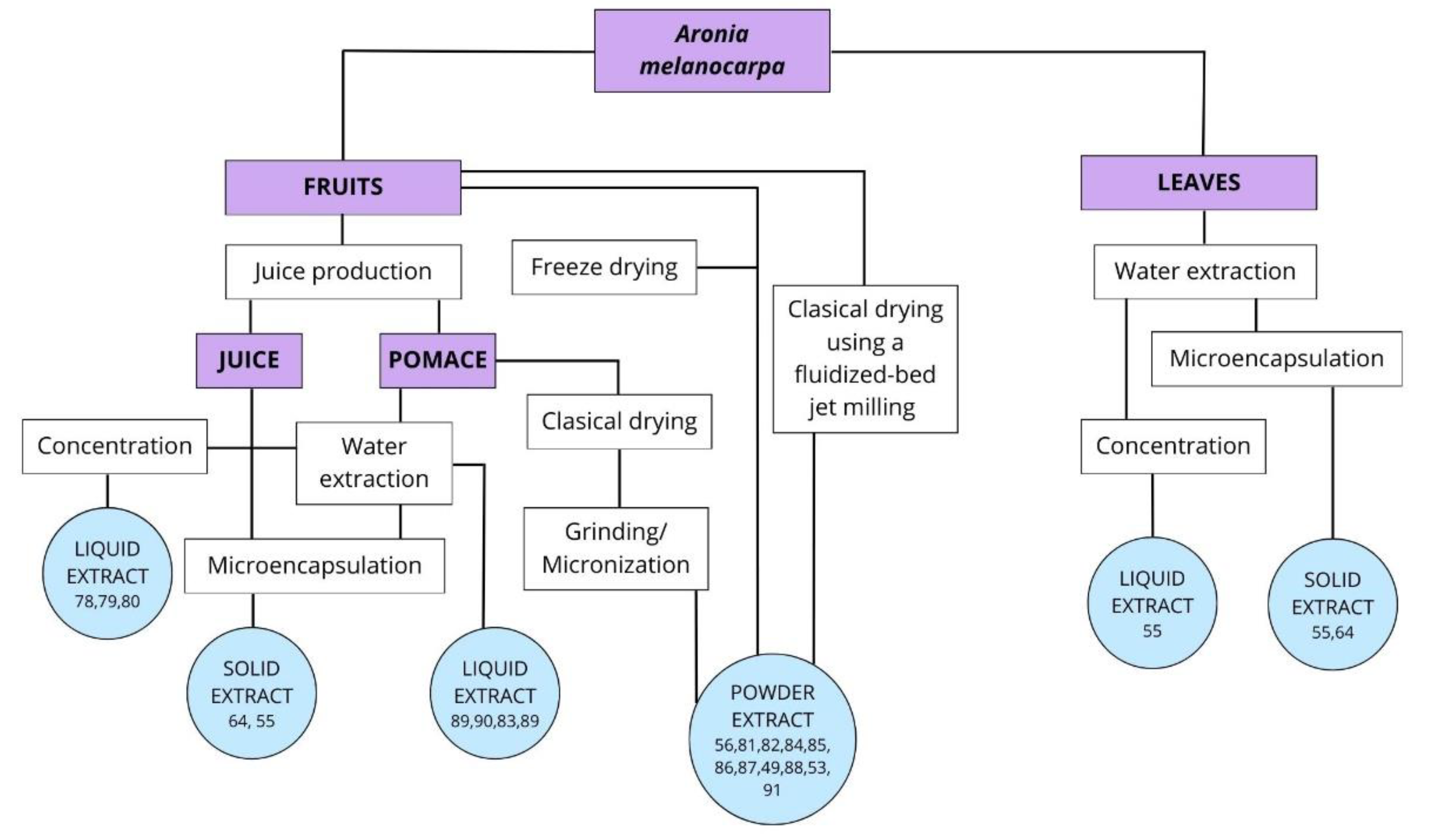

Table 1.
Characteristics of aronia (Aronia melanocarpa L.) extracts used for functional food enhancement: extract type, techniques used, application and technological effects. The data were compiled on the basis of an analysis of scientific publications from 2016–2024.
Table 1.
Characteristics of aronia (Aronia melanocarpa L.) extracts used for functional food enhancement: extract type, techniques used, application and technological effects. The data were compiled on the basis of an analysis of scientific publications from 2016–2024.
| Extract Type | Technique | Application | The added value of the enriched product | References |
|---|---|---|---|---|
| Aronia juice concentrate/juice | Cold pressing, filtration, pasteurization, concentration (up to 65 Brix) | Osmotic impregnation before drying fruits, | Improved colour (ΔE > 6.0), increased antioxidant capacity (DPPH +45%); inhibition of anthocyanin degradation by 30% during storage | [78,79,80] |
| Aronia powder (freeze-dried) | Freeze-drying (-40 °C, 0.1 mbar for 48h); convection drying (60 °C for 24h) | Sweet confectionery, drinks, dairy desserts | Higher polyphenol content (820-900 mg GAE/100g for freeze-dried vs. 470 mg GAE/100g for hot air drying); Anthocyanin behavior above 85% | [56,81,82] |
| Aronia pomace | Drying with hot air (50-60 °C); grinding | Bread, snacks, pectin substitutes dairy products | Improvement of fiber content (up to 22% d.m.), reduction of polyphenol losses by up to 10% during baking, increase in moisture retention in baked goods by 15-18% | [83,84,85,86] |
| Phenolic/polyphenolic extracts | Extraction with 50% ethanol (1:10 m/v, 60 °C, 30 min.); ultrasound-assisted (20kHz, 30 min.) | Oil emulsions, meat, supplements | Total polyphenols (TPC) up to 2400 mg GAE/100g; reduction of TBARS in meat by 40-60% during storage (14 days, 4 °C) | [49,53,87,88] |
| Anthocyanin/procyanide extracts | SPE (Solid Phase Extraction) from ethanol and water (50:50), purification on C18 columns. Extraction-adsorption method. | Jelly beans, natural colourants. | Maintaining color stability (up to 85%) at pH 3-4; inhibition of ascorbic acid oxidation by 52%; colour fastness 28 days at 4 °C. Increased yield and purity of anthocyanin extract produced from chokeberry pomace using a new method compared to the traditional SPE method. | [89,90] |
| Aronia leaf extract | Hydroalcoholic extraction (60% ethanol, 1:15 m/v, 40 °C, 2h), microencapsulation | Meat products | Reduction of lipid oxidation (TBARS) by 42% in beef burgers, increase in sensory acceptability (panel 8/9 pts.) | [55] |
| Microencapsulated extracts | Spray drying (inlet temperature 170 °C, output temperature 80 °C); co-crystallation with maltodextrin or alginate gelation | Yoghurts, dairy desserts, dietary supplements | Retention of 90-95% of polyphenols after 6 weeks of storage, reduction of Maillard reaction, greater stability at pH 4-5. | [64] |
| Dietary fiber (powder) | Pomace drying (55 °C, 24h), mechanical separation | Fermented products (e.g. sheep’s milk) | Increase in the number of LAB bacteria by 1.5 log CFU/mL; improved texture, increase in overall sensory acceptance | [91] |
| Macrogels with aronia juice | Gelation of biopolymers (e.g. carboxymethylcellulose, pea protein) | Functional gummies, gelled products | Anthocyanin retention at 80%, improving antioxidant stability, masking astringent taste | [57] |
| Natural aronia dye replacing E-131, E-162 | Water-ethanol extraction, filtration | Jelly beans, pastries, drinks | Colour fastness for 4 weeks (4 °C, pH 3.0); 65% increase in ORAC of gummies, compliance with “clean label” standards | [83,89] |
Disclaimer/Publisher’s Note: The statements, opinions and data contained in all publications are solely those of the individual author(s) and contributor(s) and not of MDPI and/or the editor(s). MDPI and/or the editor(s) disclaim responsibility for any injury to people or property resulting from any ideas, methods, instructions or products referred to in the content. |
© 2025 by the authors. Licensee MDPI, Basel, Switzerland. This article is an open access article distributed under the terms and conditions of the Creative Commons Attribution (CC BY) license (http://creativecommons.org/licenses/by/4.0/).
Copyright: This open access article is published under a Creative Commons CC BY 4.0 license, which permit the free download, distribution, and reuse, provided that the author and preprint are cited in any reuse.


