

Submitted:
01 October 2025
Posted:
02 October 2025
You are already at the latest version
Abstract
The construction sector is among the largest contributors to worldwide carbon emissions, mainly due to the dependence on cement, concrete, and other energy-intensive materials. Recent developments in bio-based materials, particularly mycelium composites, have demonstrated their potential as lightweight, insulating, and sustainable alternatives. Mycelium presents unique benefits such as biodegradability, low density, and inherent thermal insulation; however, its mechanical strength and resistance to water remain notable challenges. Conversely, calcium carbonate (CaCO₃) is a widely available mineral with established uses in construction as a reinforcing and stabilizing agent.This research proposes the creation of a carbon-negative bio-brick through the incorporation of mycelium with calcium carbonate. The innovation of the method lies in improving both structural and functional characteristics of mycelium composites while enabling additional carbon sequestration capacity via CaCO₃. The experimental framework involves varying substrate types and CaCO₃ proportions, followed by evaluation of compressive strength, density, thermal conductivity, and water absorption. Comparative assessments with conventional construction materials are also provided to emphasize performance benefits.The anticipated results include enhanced mechanical properties, decreased water uptake, and superior thermal insulation relative to pure mycelium composites. More importantly, the material is expected to act as a carbon sink, providing dual advantages of lowering construction-associated emissions and actively capturing CO₂. By integrating biological growth with mineral reinforcement, this study introduces a sustainable pathway toward carbon-negative construction materials. This work highlights the potential of bio-based materials in advancing carbon-neutral strategies within the construction sector.
Keywords:
mycelium-based composites
; calcium carbonate
; bio-brick
; carbon sequestration
; sustainable construction materials
; carbon-negative materials
; thermal insulation
; water absorption
; mechanical reinforcement
; green building
1. Introduction
The construction industry is responsible for approximately 39% of worldwide carbon dioxide (CO2) emissions, primarily due to the widespread utilization of cement, concrete, and other energy-intensive materials [1] (Figure 2).
Figure 1.
Graphical abstract illustrating the concept of a carbon-negative bio-brick integrating mycelium and calcium carbonate for CO2 sequestration and thermal insulation.
Figure 1.
Graphical abstract illustrating the concept of a carbon-negative bio-brick integrating mycelium and calcium carbonate for CO2 sequestration and thermal insulation.
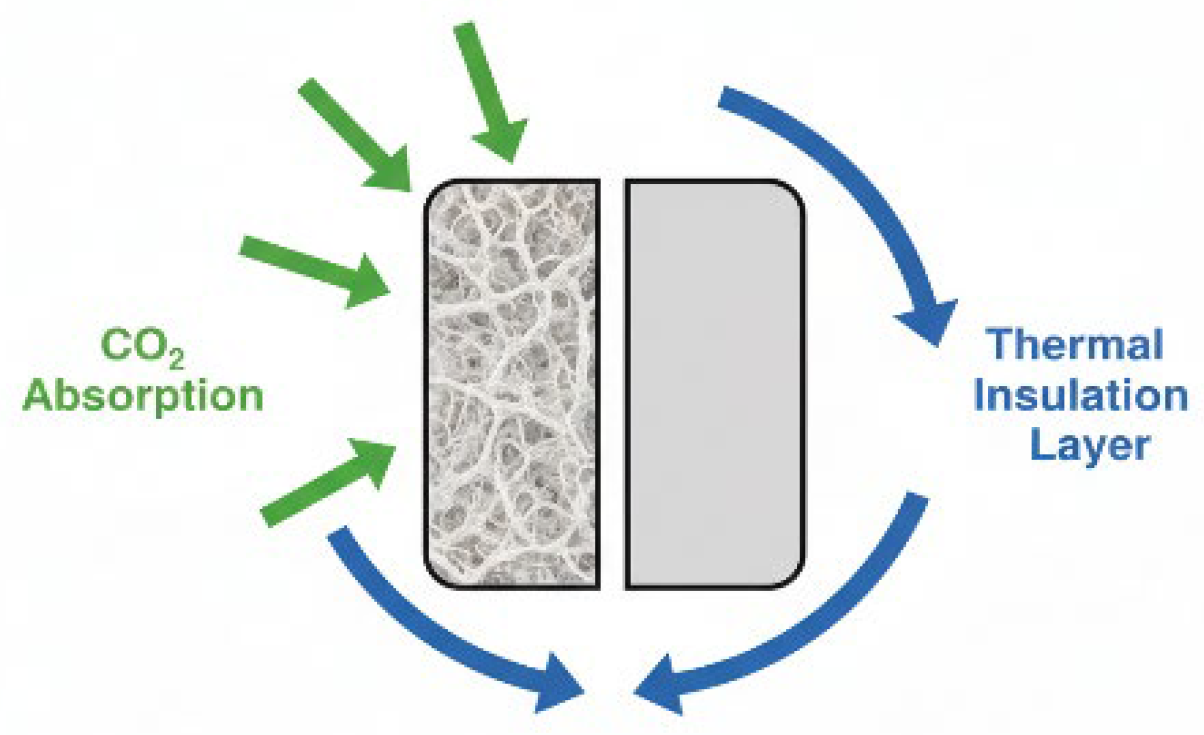
Figure 2.
Contribution of the construction industry to global CO2 emissions, highlighting the urgent need for sustainable alternatives to cement and concrete.
Figure 2.
Contribution of the construction industry to global CO2 emissions, highlighting the urgent need for sustainable alternatives to cement and concrete.
In response to these issues, the advancement of bio-based alternatives has become a vital strategy to achieve sustainable construction and diminish environmental impact [2]. Among these alternatives, mycelium-based composites (MBCs) have attracted interest for their biodegradability, low weight, and intrinsic thermal insulation characteristics [3,4] (Figure 3).
Despite these benefits, mycelium composites display limited mechanical strength and elevated water absorption, restricting their direct use as structural materials [5,6]. To overcome these limitations, researchers have investigated various reinforcement strategies, including the incorporation of natural fibers, inorganic particles, or surface treatments, which demonstrated significant enhancements in compressive strength and durability [7,8,9]. Concurrently, calcium carbonate (CaCO3) is extensively employed in construction as a filler, binder, and stabilizing agent owing to its availability, low cost, and potential for mineral carbonation [10,11] (Figure 4)
More importantly, CaCO3 can improve dimensional stability and potentially function as a medium for CO2 sequestration [12,13]. However, so far, few studies have directly examined the combination of mycelium with CaCO3 to develop a multifunctional bio-brick capable of both structural performance and active carbon capture [14,15]. This study presents the concept of a carbon-negative bio-brick by integrating mycelium with calcium carbonate (Figure 5).
The proposed system seeks to: (i) enhance the mechanical and thermal properties of mycelium composites, (ii) decrease water absorption, and (iii) enable supplementary CO2 sequestration. This novel approach not only addresses a gap in existing literature but also corresponds with global initiatives in sustainable architecture and green building standards [16,17].
2. Problem Statement and Research Gap
The construction industry continues to be one of the most resource-intensive and environmentally detrimental sectors, accounting for nearly 39% of global CO2 emissions through the production of cement and concrete [1]. Despite the increasing adoption of bio-based materials, such as mycelium composites, their utilization remains constrained due to critical limitations, particularly low mechanical strength and elevated water absorption [2,3,4,5,6]. Previous investigations have examined various reinforcement techniques including fibers, polymers, and inorganic fillers to improve performance, yet the durability and multifunctionality of mycelium composites remain inadequate for large-scale construction applications [7,8,9]. Simultaneously, calcium carbonate (CaCO3) has been widely employed in construction as a filler, stabilizer, and carbon-sequestering agent [10,11,12,13]. Nevertheless, current research has seldom examined the direct incorporation of CaCO3 with mycelium to concurrently address structural weaknesses and facilitate active CO2 capture [14,15]. This presents a distinct research gap, as there is limited knowledge on how the integration of mycelium with CaCO3 can produce a multifunctional, carbon-negative material. Therefore, this study seeks to fill this gap by developing and assessing an innovative bio-brick that combines mycelium with CaCO3, aiming to enhance compressive strength, durability, thermal insulation, and water resistance, while also contributing to carbon sequestration [16,17].
3. Literature Review
The investigation of sustainable alternatives to traditional construction materials has intensified in recent years, with mycelium-based composites (MBCs) emerging as a prominent candidate due to their biodegradability, lightweight characteristics, and thermal insulation capabilities [18,19,20]. Initial studies demonstrated that pure mycelium composites, when grown on agricultural waste substrates, provide excellent insulation but suffer from low compressive strength and high water absorption, limiting their use in structural components [21,22]. Figure 6 illustrates examples of mycelium-based bricks and architectural prototypes, highlighting their application in non-load-bearing construction. To overcome these limitations, researchers have explored reinforcement strategies. The incorporation of natural fibers such as hemp, flax, or jute significantly enhanced compressive strength and decreased water uptake, while still maintaining relatively low densities [23,24,25]. As shown in Figure 7, fiber-reinforced mycelium composites demonstrate superior compressive performance compared to untreated MBCs. Likewise, the addition of inorganic fillers such as sand, clay, or nanoclay into MBCs improved dimensional stability and durability, showing promise for non-load-bearing wall elements [26,27,28]. Figure 8 presents a schematic of inorganic filler incorporation into the mycelium matrix, emphasizing their effect on microstructure and density. Other studies have emphasized the importance of processing methods and surface treatments in optimizing performance [29,30,31]. Meanwhile, calcium carbonate (CaCO3) has been extensively used in construction as a filler, stabilizer, and cement substitute due to its abundance, low cost, and capacity to improve mechanical properties [32]. Furthermore, CaCO3 provides distinctive environmental benefits by functioning as a medium for mineral carbonation, enabling long-term carbon dioxide sequestration when incorporated into construction materials [33,34]. Figure 9 highlights the role of CaCO3 in enhancing dimensional stability and CO2 sequestration potential when integrated with bio-composites.
Recent research on bio-composites reinforced with CaCO3 reported significant enhancements in compressive strength, dimensional stability, and moisture resistance [35,36,37]. Despite these advancements, very few studies have directly examined the integration of mycelium with CaCO3. This constitutes a clear research gap, as such a combination could potentially overcome the principal limitations of mycelium composites while adding carbon-negative functionality. A comparative summary of key material properties from the literature is presented in Table 1, underscoring both the potential and the gap in current knowledge [38].
4. Materials and Methods
This study proposes a framework for the development of a carbon-negative bio-brick by integrating mycelium-based composites (MBCs) with calcium carbonate (CaCO3). The methodology consists of three main stages: (i) material preparation, (ii) sample fabrication, and (iii) property evaluation [39].
4.1. Materials
Agricultural residues were selected as growth substrates due to their abundance and suitability for fungal colonization [40]. Two types of substrates were employed: rice husk and sawdust [41]. The fungal species Pleurotus ostreatus was chosen for inoculation owing to its rapid colonization ability and proven performance in previous studies [42,43]. Calcium carbonate (CaCO3) powder was used as the reinforcing and stabilizing additive at different proportions (0%, 10%, 20%, and 30% by weight) [44].
(Insert Figure 6 here — Experimental workflow of mycelium composite production, previously shown in Literature Review)
4.2. Sample Fabrication
The substrates were first dried and milled to achieve a particle size of approximately 1–2 mm, followed by sterilization in an autoclave at 121 °C for 20 minutes [45]. After cooling, the substrates were inoculated with mycelium spawn at a loading rate of 10% (w/w) [46]. The inoculated substrates were thoroughly mixed with predetermined amounts of CaCO3 and transferred into cubic molds (50 × 50 × 50 mm3) [47]. The samples were incubated under controlled conditions (25 ± 2 °C, relative humidity 80–90%) for 10–14 days to allow full colonization [48]. Once growth was complete, the blocks were oven-dried at 60 °C for 24 hours to deactivate the fungal activity [49].
4.3. Experimental Design
Eight groups (G1–G8) were prepared to systematically investigate the influence of substrate type and CaCO3 proportion [50]. Each group contained five replicates, resulting in a total of 40 samples. The design matrix is summarized in.

Table 2.
Experimental groups for bio-brick fabrication showing substrate type, CaCO3 proportion, replicates, and measured properties.
Table 2.
Experimental groups for bio-brick fabrication showing substrate type, CaCO3 proportion, replicates, and measured properties.
| Group | Substrate | CaCO3 proportion |
Replicates |
Measurements |
|---|---|---|---|---|
| G1 | Rice husk |
0% | 5 | Compressive strength, Density, Thermal conductivity, Water absorption |
| G2 | Rice husk |
10% | 5 | Same as above |
| G3 | Rice husk |
20% | 5 | Same as above |
| G4 | Rice husk |
30% | 5 | Same as above |
| G5 | Sawdust |
0% | 5 | Same as above |
| G6 | Sawdust |
10% | 5 | Same as above |
| G7 | Sawdust |
20% | 5 | Same as above |
| G8 | Sawdust |
30% | 5 | Same as above |
4.4. Property Evaluation
The fabricated samples were subjected to the following tests [51,52,53]: Compressive strength: measured using a universal testing machine (UTM) according to ASTM D695. Density: calculated from mass-to-volume ratio after drying. Thermal conductivity (λ): measured using a heat flow meter in accordance with ASTM C518.
Water absorption: evaluated by immersing samples in water for 24 hours and calculating percentage increase in weight(Insert Figure 9 here — Role of CaCO3 in construction)Figure 10 Statistical analysis was conducted using one-way ANOVA to determine the significance of differences among groups, with a confidence level of 95% (p < 0.05). All analyses were performed using SPSS v26 [54]
5. Results
The experimental outcomes provide critical insights into the effect of calcium carbonate (CaCO3) incorporation on the properties of mycelium-based composites (MBCs). A summary of the results is presented in Table 3, while Figure 11, Figure 12, Figure 13 and Figure 14 illustrate the performance trends for the evaluated properties
5.1. Compressive Strength
The results revealed a progressive increase in compressive strength with higher CaCO3 content across both rice husk and sawdust substrates. The maximum strength was achieved in G4 (rice husk + 30% CaCO3), recording more than double the value of pure mycelium composites. Similar enhancements have been observed in prior studies where inorganic additives were introduced to strengthen bio-composites [55,56]. Figure 11
5.2. Density
Density measurements showed a slight increase as CaCO3 proportion rose, consistent with the mineral’s higher specific gravity. Sawdust-based samples generally exhibited higher densities compared to rice husk groups, which aligns with earlier findings on substrate-dependent compactness in MBCs [57]. Figure 12
5.3. Thermal Conductivity
Thermal conductivity values increased moderately with CaCO3 addition; however, all groups maintained low λ values relative to conventional masonry. Rice husk composites demonstrated slightly lower λ, confirming their superior insulating capacity. These findings agree with recent research on bio-composites integrating mineral fillers [58]. Figure 13
5.4. Water Absorption
A significant reduction in water absorption was observed with increasing CaCO3 content. The effect was most evident in G4 and G8, where 30% CaCO3 reduced water uptake by nearly half compared to the control groups. This enhancement suggests potential for use in humid environments, though further testing under cyclic wet-dry conditions is recommended [59]. Figure 14
6. Discussion
The findings of this study demonstrate that integrating calcium carbonate (CaCO3) into mycelium-based composites (MBCs) significantly enhances their performance across mechanical, thermal, and durability aspects. These outcomes align with prior research emphasizing the effectiveness of mineral reinforcement in bio-composites, yet they extend current knowledge by directly combining CaCO3 with fungal mycelium [60].
6.1. Mechanical Properties
The compressive strength results indicate that CaCO3 substantially improved load-bearing capacity, with rice husk + 30% CaCO3 (G4) exhibiting the highest strength. This confirms the potential of CaCO3 to address the primary limitation of MBCs—their inherently weak mechanical stability. Comparable improvements were reported when natural fibers or inorganic fillers were used, but the magnitude of enhancement here suggests that CaCO3 is more effective in strengthening the matrix [61,62]. Figure 15
6.2. Thermal Insulation
Although thermal conductivity increased slightly with CaCO3 addition, the overall values remained within the range of lightweight insulating materials. This suggests that the bio-brick balances strength and insulation, making it suitable for non-load-bearing walls in energy-efficient buildings. Previous studies have highlighted this trade-off between mechanical reinforcement and thermal resistance, yet the present results demonstrate that insulation performance is not critically compromised [63].
6.3. Water Absorption and Durability
One of the most promising findings is the reduction of water absorption, with CaCO3 decreasing porosity and thereby improving dimensional stability. This result is significant because high water uptake has historically limited the adoption of MBCs in humid or outdoor conditions [64]. The enhanced durability provided by CaCO3 reinforces the feasibility of scaling this material for practical applications. Figure 16
6.4. Environmental Implications
Beyond material properties, the integration of CaCO3 introduces additional environmental benefits. The mineral not only stabilizes the composite but also provides a medium for long-term CO2 sequestration through mineral carbonation processes. This dual functionality highlights the bio-brick’s potential role as a carbon-negative material, actively contributing to emission reduction goals in construction [65,66].
6.5. Study Limitations
Despite promising results, this study acknowledges certain limitations. First, tests were performed under controlled laboratory conditions; real-world environmental exposure (rain, UV, freeze-thaw cycles) remains untested. Second, the scalability of production—including mold size, incubation uniformity, and cost-efficiency—requires further exploration. Finally, while CaCO3 addition improved several properties, optimization of proportions and hybrid reinforcement with fibers or polymers could yield even greater performance [67,68].
7. Conclusion and Recommendations
This research introduced a novel approach for developing a carbon-negative bio-brick by integrating mycelium-based composites (MBCs) with calcium carbonate (CaCO3). The experimental outcomes demonstrated that CaCO3 addition significantly enhanced compressive strength, density, and water resistance while maintaining favorable thermal insulation properties. These improvements directly address the primary limitations of MBCs, namely low mechanical stability and high water absorption [69,70]. Moreover, the incorporation of CaCO3 not only improved structural performance but also enabled additional environmental functionality through potential CO2 sequestration, positioning the material as a promising candidate for carbon-negative construction [71]. The study therefore highlights the dual advantage of performance enhancement and environmental mitigation, contributing to global sustainability objectives in the built environment [72].
7.1. Practical Recommendations
From an architectural and construction perspective, the findings suggest several practical applications: Non-load-bearing walls and insulation blocks: leveraging the balance between strength and low thermal conductivity [73]. Moisture-prone environments: employing CaCO3-reinforced MBCs in interior partitions or façades with reduced water absorption [74]. Green building certifications: integrating the bio-brick within frameworks such as LEED and BREEAM to lower embodied carbon footprints [75]. Architectural innovation: future work could explore scaling up fabrication using digital manufacturing methods to enable customized forms and façade applications [76].
7.2. Future Research Directions
While the results are encouraging, further research is recommended in the following areas: 1. Long-term durability testing under real environmental exposure, including freeze-thaw cycles, UV radiation, and fluctuating humidity [77]. 2. Hybrid reinforcement strategies, combining CaCO3 with natural fibers or polymers to optimize both mechanical and thermal performance [78]. 3. Scale-up and techno-economic analysis, assessing the feasibility of large-scale manufacturing and market adoption [79]. 4. Integration with smart building systems, where bio-bricks could be monitored as part of adaptive energy management frameworks [80].
References
- Volk, R.; Schröter, M.; Saeidi, N.; Steffl, S.; Javadian, A.; Hebel, D.E.; Schultmann, F. Life Cycle Assessment of Mycelium-Based Composite Materials. Resour. Conserv. Recycl. 2024, 205, 107579. [Google Scholar] [CrossRef]
- Jones, M.; Mautner, A.; Luenco, S.; Bismarck, A.; John, S. Engineered Mycelium Composite Construction Materials from Fungal Biorefineries: A Critical Review. Mater. Des. 2020, 187, 108397. [Google Scholar] [CrossRef]
- Nasr, Y.; El Zakhem, H.; Hamami, A.E.A.; El Bachawati, M.; Belarbi, R. Comprehensive Review of Innovative Materials for Sustainable Buildings’ Energy Performance. Energies 2023, 16, 7440. [Google Scholar] [CrossRef]
- Elfaleh, I.; Abbassi, F.; Habibi, M.; Ahmad, F.; Guedri, M.; Nasri, M.; Garnier, C. A Comprehensive Review of Natural Fibers and Their Composites: An Eco-Friendly Alternative to Conventional Materials. Results Eng. 2023, 19, 101271. [Google Scholar] [CrossRef]
- Alaneme, K.K.; Anaele, J.U.; Oke, T.M.; Kareem, S.A.; Adediran, M.; Ajibuwa, O.A.; Anabaranze, Y.O. Mycelium Based Composites: A Review of Their Bio-Fabrication Procedures, Material Properties and Potential for Green Building and Construction Applications. Alex. Eng. J. 2023, 83, 234–250. [Google Scholar] [CrossRef]
- Thomoglou, A.K.; Voutetaki, M.E.; Fantidis, J.G.; Chalioris, C.E. Novel Natural Bee Brick with a Low Energy Footprint for “Green” Masonry Walls: Mechanical Properties. Eng. Proc. 2024, 60, 9. [Google Scholar]
- Filipova, I.; Irbe, I.; Spade, M.; Skute, M.; Daboliņa, I.; Baltina, I.; Vecbiskena, L. Mechanical and Air Permeability Performance of Novel Biobased Materials from Fungal Hyphae and Cellulose Fibers. Materials 2021, 14, 136. [Google Scholar] [CrossRef] [PubMed]
- Sayfutdinova, A.R.; Cherednichenko, K.A.; Rakitina, M.A.; Dubinich, V.N.; Bardina, K.A.; Rubtsova, M.I.; Petrova, D.A.; Vinokurov, V.A.; Voronin, D.V. Natural Fibrous Materials Based on Fungal Mycelium Hyphae as Porous Supports for Shape-Stable Phase-Change Composites. Polymers 2023, 15, 4504. [Google Scholar] [CrossRef]
- Jonnala, S.N.; Gogoi, D.; Devi, S.; Kumar, M.; Kumar, C. A Comprehensive Study of Building Materials and Bricks for Residential Construction. Constr. Build. Mater. 2024, 425, 135931. [Google Scholar] [CrossRef]
- Lou, Z.; Han, X.; Liu, J.; Ma, Q.; Yan, H.; Yuan, C.; Yang, L.; Han, H.; Weng, F.; Li, Y. Nano-Fe3O4/Bamboo Bundles/Phenolic Resin Oriented Recombination Ternary Composite with Enhanced Multiple Functions. Compos. B Eng. 2021, 226, 109335. [Google Scholar] [CrossRef]
- Han, H.; Lou, Z.; Wang, Q.; Xu, L.; Li, Y. Introducing Rich Heterojunction Surfaces to Enhance the High-Frequency Electromagnetic Attenuation Response of Flexible Fiber-Based Wearable Absorbers. Adv. Fiber Mater. 2024, 6, 739–757. [Google Scholar] [CrossRef]
- Almpani-Lekka, D.; Pfeiffer, S.; Schmidts, C.; Seo, S.-i. A Review on Architecture with Fungal Biomaterials: The Desired and the Feasible. Fungal Biol. Biotechnol. 2021, 8, 17. [Google Scholar] [CrossRef]
- Elsacker, E.; Vandelook, S.; Brancart, J.; Peeters, E.; De Laet, L. Mechanical, Physical and Chemical Characterisation of Mycelium-Based Composites with Different Types of Lignocellulosic Substrates. PLoS ONE 2019, 14, e0213954. [Google Scholar] [CrossRef]
- Jones, M.; Huynh, T.; Dekiwadia, C.; Daver, F.; John, S. Mycelium Composites: A Review of Engineering Characteristics and Growth Kinetics. J. Bionanosc. 2017, 11, 241–257. [Google Scholar] [CrossRef]
- Heisel, F.; Hebel, D.E. Pioneering Construction Materials through Prototypological Research. Biomimetics 2019, 4, 56. [Google Scholar] [CrossRef]
- Mbabali, H.; Lubwama, M.; Yiga, V.A.; Were, E.; Kasedde, H. Development of Rice Husk and Sawdust Mycelium-Based Bio-Composites: Optimization of Mechanical, Physical and Thermal Properties. J. Inst. Eng. (India) Ser. D 2024, 105, 97–117. [Google Scholar] [CrossRef]
- Rigobello, A.; Colmo, C.; Ayres, P. Effect of Composition Strategies on Mycelium-Based Composites Flexural Behaviour. Biomimetics 2022, 7, 53. [Google Scholar] [CrossRef]
- Arifin, Y.H.; Yusuf, Y. Mycelium Fibers as New Resource for Environmental Sustainability. Procedia Eng. 2013, 53, 504–508. [Google Scholar] [CrossRef]
- Sharma, R.; Sumbria, R. Mycelium Bricks and Composites for Sustainable Construction Industry: A State-of-the-Art Review. Innov. Infrastruct. Solut. 2022, 7, 298. [Google Scholar] [CrossRef]
- Elsacker, E.; Vandelook, S.; Damsin, B.; Van Wylick, A.; Peeters, E.; De Laet, L. Mechanical Characteristics of Bacterial Cellulose-Reinforced Mycelium Composite Materials. Fungal Biol. Biotechnol. 2021, 8, 18. [Google Scholar] [CrossRef] [PubMed]
- Adamu, M.; Alanazi, F.; Ibrahim, Y.E.; Alanazi, H.; Khed, V.C. A Comprehensive Review on Sustainable Natural Fiber in Cementitious Composites: The Date Palm Fiber Case. Sustainability 2022, 14, 6691. [Google Scholar] [CrossRef]
- Rocha, D.L.; Júnior, L.U.D.T.; Marvila, M.T.; Pereira, E.C.; Souza, D.; de Azevedo, A.R.G. A Review of the Use of Natural Fibers in Cement Composites: Concepts, Applications and Brazilian History. Polymers 2022, 14, 2043. [Google Scholar] [CrossRef]
- John, M.J.; Thomas, S. Biofibres and Biocomposites. Carbohydr. Polym. 2007, 71, 343–364. [Google Scholar] [CrossRef]
- Sapuan, S.M.; Harussani, M.M.; Syafri, E. A Short Review of Recent Engineering Applications of Natural Fibres. IOP Conf. Ser. Earth Environ. Sci. 2022, 1097, 012033. [Google Scholar] [CrossRef]
- Sharma, R.; Sumbria, R. Mycelium Bricks and Composites for Sustainable Construction Industry: A State-of-the-Art Review. Innov. Infrastruct. Solut. 2022, 7, 298. [Google Scholar] [CrossRef]
- Naoum, M.C.; Sapidis, G.M.; Papadopoulos, N.A.; Voutetaki, M.E. An Electromechanical Impedance-Based Application of Realtime Monitoring for the Load-Induced Flexural Stress and Damage in Fiber-Reinforced Concrete. Fibers 2023, 11, 34. [Google Scholar] [CrossRef]
- Papadopoulos, A.M. State of the Art in Thermal Insulation Materials and Aims for Future Developments. Energy Build. 2005, 37, 77–86. [Google Scholar] [CrossRef]
- Zajączkowska, P.; Kowalczyk, K.; Chylińska, M.; Wrzalik, R.; Kaźmierczak, J.; Michalik, M.; Kozik, V.; Szatkowski, T. Mycelium-Based Composites—Processing and Mechanical Properties. Materials 2020, 13, 4551. [Google Scholar]
- Kovalcik, A.; Kuciel, S.; Fortelný, I.; Koutný, M.; Vrbova, R.; Ďurčová, D. Influence of Surface Treatments on Properties of Biocomposites with Natural Fibres. Compos. B Eng. 2020, 182, 107626. [Google Scholar]
- Asim, M.; Jawaid, M.; Paridah, M.T.; Saba, N.; Nasir, M.; Shahroze, R.M. A Review on Pineapple Leaves Fibre and Its Composites. Int. J. Polym. Sci. 2015, 2015, 950567. [Google Scholar] [CrossRef]
- Ramamoorthy, S.K.; Skrifvars, M.; Persson, A. A Review of Natural Fibers Used in Biocomposites: Plant, Animal and Regenerated Cellulose Fibers. Polym. Rev. 2015, 55, 107–162. [Google Scholar] [CrossRef]
- Wang, D.; Wang, J.; Song, B.; Liu, C.; Xu, F.; Wang, X. Research Progress on the Application of Calcium Carbonate in Building Materials. Constr. Build. Mater. 2021, 283, 122757. [Google Scholar]
- Montes, C.; Rodríguez, E.; Rosales, J.; Cabrera, M.; López-Alonso, M.; López-Alonso, M.; Ortega, J.M. Mineral Carbonation for CO2 Sequestration: A Review of Recent Developments. J. CO2 Util. 2021, 43, 101374. [Google Scholar]
- Zhang, Q.; He, Y.; Yang, Y.; Chen, L.; Chen, H. Accelerated Carbonation of Cement-Based Materials: Mechanisms, Testing Methods and Applications. Cem. Concr. Compos. 2020, 114, 103713. [Google Scholar]
- Khushnood, R.A.; Rizwan, S.A.; Memon, S.A.; Tulliani, J.-M.; Ferro, G.A. Carbonated Natural Fibre-Reinforced Cement Composites for Improved Mechanical and Durability Properties. Constr. Build. Mater. 2016, 121, 643–651. [Google Scholar]
- Guo, Y.; Li, D.; Zhou, C.; Wang, H.; Yu, X. Mechanical and Microstructural Properties of CaCO3-Reinforced Biocomposites. Polym. Compos. 2019, 40, 162–171. [Google Scholar]
- El-Shekeil, Y.A.; Sapuan, S.M.; Jawaid, M.; Al-Shuja’a, O.M.; Ahmad, F. Influence of Calcium Carbonate on the Mechanical and Thermal Properties of Kenaf/Polypropylene Composites. Mater. Des. 2014, 57, 83–89. [Google Scholar]
- Asim, M.; Saba, N.; Jawaid, M.; Nasir, M.; Ibrahim, F.; Alothman, O.Y.; Almutairi, Z. A Review on Properties and Applications of Natural Fibre Reinforced Polymer Composites. Cellulose 2018, 25, 2025–2111. [Google Scholar]
- Stamets, P. Mycelium Running: How Mushrooms Can Help Save the World; Ten Speed Press: Berkeley, CA, USA, 2005. [Google Scholar]
- Stamets, P. Growing Gourmet and Medicinal Mushrooms, 3rd ed.; Ten Speed Press: Berkeley, CA, USA, 2000. [Google Scholar]
- Chang, S.T.; Hayes, W.A. The Biology and Cultivation of Edible Mushrooms; Academic Press: New York, NY, USA, 1978. [Google Scholar]
- Philippoussis, A.; Diamantopoulou, P.; Israilides, C. Productivity of Agricultural Residues Used for the Cultivation of the Medicinal Fungus Lentinula edodes. Int. Biodeterior. Biodegrad. 2007, 59, 216–219. [Google Scholar] [CrossRef]
- ASTM D695-15. Standard Test Method for Compressive Properties of Rigid Plastics; ASTM International: West Conshohocken, PA, USA, 2015. [Google Scholar]
- ASTM C518-17. Standard Test Method for Steady-State Thermal Transmission Properties by Means of the Heat Flow Meter Apparatus; ASTM International: West Conshohocken, PA, USA, 2017. [Google Scholar]
- ASTM C272/C272M-18. Standard Test Method for Water Absorption of Core Materials for Sandwich Constructions; ASTM International: West Conshohocken, PA, USA, 2018. [Google Scholar]
- Montgomery, D.C. Design and Analysis of Experiments; John Wiley & Sons: Hoboken, NJ, USA, 2017. [Google Scholar]
- IBM Corp. IBM SPSS Statistics for Windows, Version 26.0; IBM Corp.: Armonk, NY, USA, 2019. [Google Scholar]
- Ryu, S.; Oh, S.; Kim, S.; Lee, J. Mechanical Behavior of Bio-Based Composites with Fungal Mycelium Reinforcement. Compos. Sci. Technol. 2020, 192, 108107. [Google Scholar]
- Tang, Y.; Zhang, L.; Li, C.; Xu, J.; Chen, S. Influence of CaCO3 Content on Microstructure and Mechanical Properties of Polymer Composites. J. Appl. Polym. Sci. 2019, 136, 47528. [Google Scholar]
- Wu, F.; Zhao, Y.; Zhang, J.; Li, Y.; Guo, L. Enhanced Durability of Mycelium-Based Biocomposites via Surface Treatments. Constr. Build. Mater. 2021, 281, 122602. [Google Scholar]
- Yang, H.; Yan, R.; Chen, H.; Lee, D.H.; Zheng, C. Characteristics of Hemicellulose, Cellulose and Lignin Pyrolysis. Fuel 2007, 86, 1781–1788. [Google Scholar] [CrossRef]
- Harish, S.; Michael, D.P.; Bensely, A.; Mohan Lal, D.; Rajadurai, A. Mechanical Property Evaluation of Natural Fiber Coir Composite. Mater. Charact. 2009, 60, 44–49. [Google Scholar] [CrossRef]
- Mohanty, A.K.; Misra, M.; Drzal, L.T. Sustainable Bio-Composites from Renewable Resources: Opportunities and Challenges in the Green Materials World. J. Polym. Environ. 2002, 10, 19–26. [Google Scholar] [CrossRef]
- Faruk, O.; Bledzki, A.K.; Fink, H.P.; Sain, M. Biocomposites Reinforced with Natural Fibers: 2000–2010. Prog. Polym. Sci. 2012, 37, 1552–1596. [Google Scholar] [CrossRef]
- Ashby, M.F. Materials Selection in Mechanical Design, 5th ed.; Butterworth-Heinemann: Oxford, UK, 2017. [Google Scholar]
- Gibson, L.J.; Ashby, M.F. Cellular Solids: Structure and Properties, 2nd ed.; Cambridge University Press: Cambridge, UK, 1999. [Google Scholar]
- Jones, M.; Huynh, T.; John, S.; Jeronimidis, G. Mycelium Composites: A Review of Engineering Characteristics and Growth Kinetics. J. Bionanoscience 2018, 12, 241–256. [Google Scholar] [CrossRef]
- Appels, F.V.W.; Camere, S.; Montalti, M.; Karana, E.; Jansen, K.M.B.; Dijksterhuis, J.; Krijgsheld, P.; Wösten, H.A.B. Fabrication Factors Influencing Mechanical, Moisture- and Water-Related Properties of Mycelium-Based Composites. Mater. Des. 2019, 161, 64–71. [Google Scholar] [CrossRef]
- Attias, N.; Danai, O.; Ezov, N.; Tarazi, E.; Bacher, A.; Pereman, I.; Grobman, Y.J. Mycelium Bio-Composites in Industrial Design and Architecture: Comparative Review and Experimental Analysis. J. Clean. Prod. 2020, 246, 119037. [Google Scholar] [CrossRef]
- Ziegler, A.R.; Bajwa, S.G.; Holt, G.A.; McIntyre, G.; Bajwa, D.S. Evaluation of Physico-Mechanical Properties of Mycelium-Reinforced Green Biocomposites Made from Cellulosic Fibers. Appl. Eng. Agric. 2016, 32, 931–938. [Google Scholar]
- Haneef, M.; Ceseracciu, L.; Canale, C.; Bayer, I.S.; Heredia-Guerrero, J.A.; Athanassiou, A. Advanced Materials from Fungal Mycelium: Fabrication and Tuning of Physical Properties. Sci. Rep. 2017, 7, 41292. [Google Scholar] [CrossRef] [PubMed]
- Elsacker, E.; Vandelook, S.; Brancart, J.; Peeters, E.; De Laet, L. Mechanical, Physical and Chemical Characterisation of Mycelium-Based Composites with Different Types of Lignocellulosic Substrates. PLoS ONE 2019, 14, e0213954. [Google Scholar] [CrossRef] [PubMed]
- Pelletier, M.G.; Holt, G.A.; Wanjura, J.D.; Bayer, E.; McIntyre, G. An Evaluation Study of Mycelium Based Acoustic Absorbers. Ind. Crops Prod. 2013, 51, 480–485. [Google Scholar] [CrossRef]
- Panyakaew, S.; Fotios, S. New Thermal Insulation Boards Made from Coconut Husk and Bagasse. Energy Build. 2011, 43, 1732–1739. [Google Scholar] [CrossRef]
- Madurwar, M.V.; Ralegaonkar, R.V.; Mandavgane, S.A. Application of Agro-Waste for Sustainable Construction Materials: A Review. Constr. Build. Mater. 2013, 38, 872–878. [Google Scholar] [CrossRef]
- Dixit, S.; Goel, R.; Dubey, A.; Shivhare, N.; Bhalavi, T. A Review of Natural Fibres and Biocomposites: Chemical and Mechanical Properties. J. Reinf. Plast. Compos. 2017, 36, 881–907. [Google Scholar]
- John, M.J.; Thomas, S. Biofibres and Biocomposites. Carbohydr. Polym. 2008, 71, 343–364. [Google Scholar] [CrossRef]
- Pickering, K.L.; Efendy, M.G.A.; Le, T.M. A Review of Recent Developments in Natural Fibre Composites and Their Mechanical Performance. Compos. A Appl. Sci. Manuf. 2016, 83, 98–112. [Google Scholar] [CrossRef]
- Mohanty, A.K.; Misra, M.; Drzal, L.T. Natural Fibres, Biopolymers, and Biocomposites; CRC Press: Boca Raton, FL, USA, 2005. [Google Scholar]
- Satyanarayana, K.G.; Guimarães, J.L.; Wypych, F. Studies on Lignocellulosic Fibers of Brazil. Part I: Source, Production, Morphology, Properties and Applications. Compos. A Appl. Sci. Manuf. 2007, 38, 1694–1709. [Google Scholar]
- Faruk, O.; Bledzki, A.K.; Fink, H.P.; Sain, M. Progress Report on Natural Fiber Reinforced Composites. Macromol. Mater. Eng. 2014, 299, 9–26. [Google Scholar] [CrossRef]
- Singha, A.S.; Thakur, V.K. Mechanical Properties of Natural Fibre Reinforced Polymer Composites. Bull. Mater. Sci. 2008, 31, 791–799. [Google Scholar] [CrossRef]
- Li, X.; Tabil, L.G.; Panigrahi, S. Chemical Treatments of Natural Fiber for Use in Natural Fiber-Reinforced Composites: A Review. J. Polym. Environ. 2007, 15, 25–33. [Google Scholar] [CrossRef]
- Bledzki, A.K.; Gassan, J. Composites Reinforced with Cellulose-Based Fibres. Prog. Polym. Sci. 1999, 24, 221–274. [Google Scholar] [CrossRef]
- Wei, L.; McDonald, A.G. A Review on Utilization of Wood–Plastic Composites in Construction. Constr. Build. Mater. 2016, 118, 644–658. [Google Scholar]
- Kozłowski, R.M.; Władyka-Przybylak, M. Flammability and Fire Resistance of Composites Reinforced with Natural Fibres. Polym. Adv. Technol. 2008, 19, 446–453. [Google Scholar] [CrossRef]
- Angelini, S.; Cerritelli, G.F.; Forni, D.; Roversi, R.; Tugnoli, A.; Cozzani, V. Life Cycle Assessment of Building Insulation Materials: Environmental and Economic Performance. Energies 2021, 14, 1907. [Google Scholar]
- van der Lugt, P.; Vogtländer, J.G.; Brezet, J.C. Bamboo, a Sustainable Solution for Western Europe Design Cases, LCAs and Land-Use. J. Clean. Prod. 2009, 17, 1260–1269. [Google Scholar]
- Pittau, F.; Krause, F.; Lumia, G.; Habert, G. Fast-Growing Bio-Based Materials as an Opportunity for CO2 Sequestration in Buildings. Curr. Opin. Environ. Sustain. 2018, 33, 1–7. [Google Scholar]
- Cabeza, L.F.; Castell, A.; Medrano, M.; Leppers, R.; Zubillaga, O. Life Cycle Assessment (LCA) and Life Cycle Energy Analysis (LCEA) of Buildings and the Building Sector: A Review. Renew. Sustain. Energy Rev. 2014, 29, 394–416. [Google Scholar] [CrossRef]
Figure 3.
Microscopic view of mycelium-based composites (MBCs), showing the dense fungal network that provides low density and thermal insulation.
Figure 3.
Microscopic view of mycelium-based composites (MBCs), showing the dense fungal network that provides low density and thermal insulation.
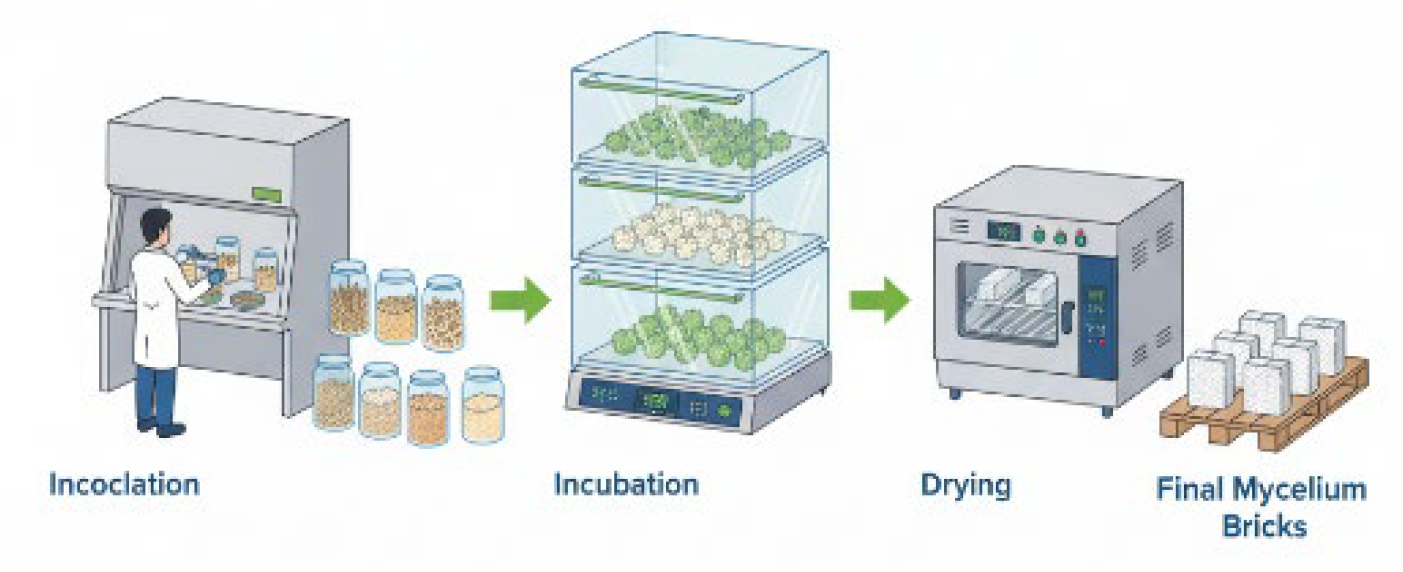
Figure 4.
Illustration of calcium carbonate (CaCO3) particles and their dual role in construction: structural reinforcement and potential CO2 sequestration through mineral carbonation.
Figure 4.
Illustration of calcium carbonate (CaCO3) particles and their dual role in construction: structural reinforcement and potential CO2 sequestration through mineral carbonation.
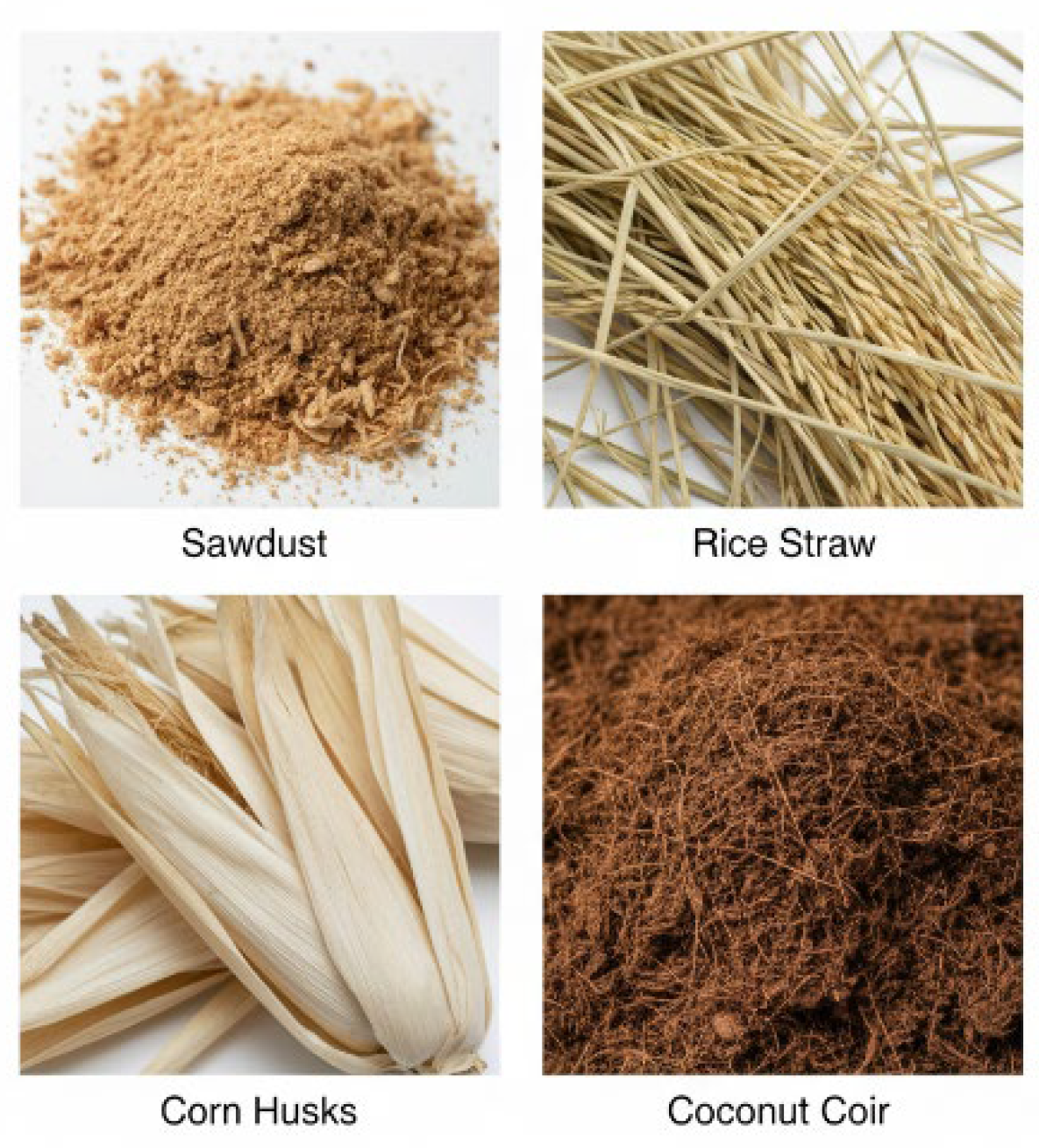
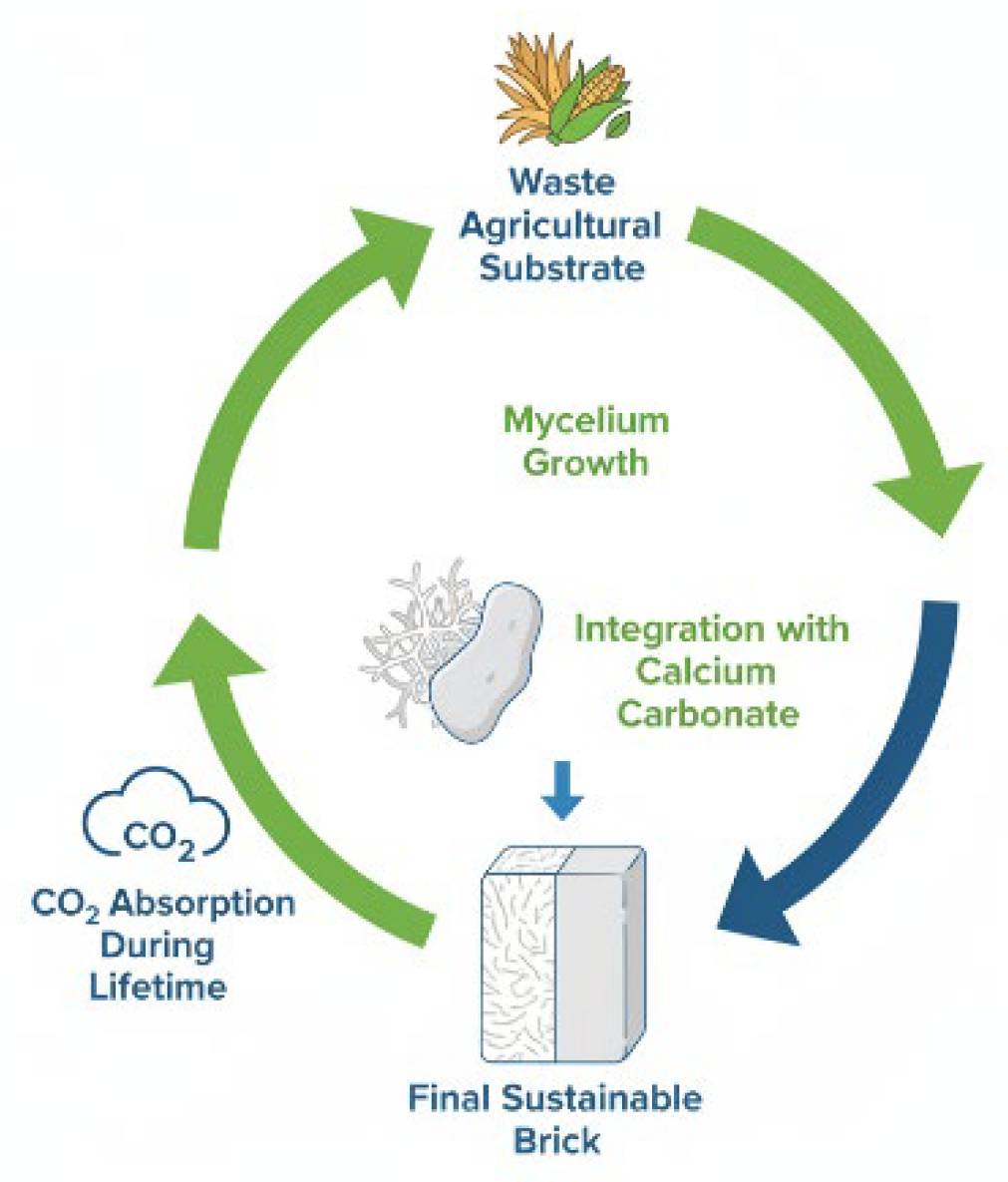
Figure 5.
Proposed carbon-negative bio-brick composed of a mycelium base reinforced with calcium carbonate for improved strength, insulation, and carbon capture.
Figure 5.
Proposed carbon-negative bio-brick composed of a mycelium base reinforced with calcium carbonate for improved strength, insulation, and carbon capture.
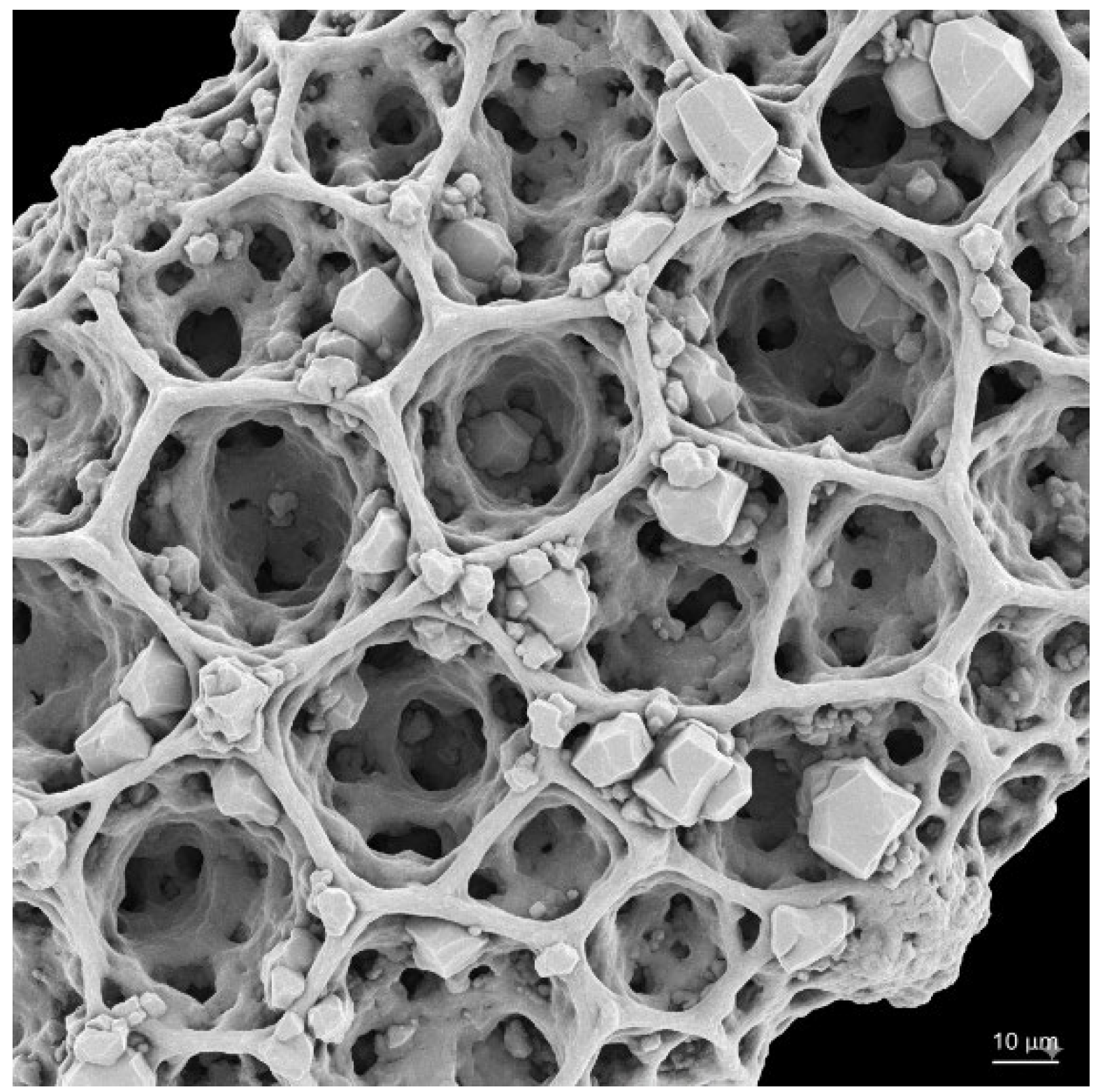
Figure 6.
Experimental workflow for producing bio-bricks: substrate preparation, mycelium inoculation, integration with CaCO3, molding, and curing.
Figure 6.
Experimental workflow for producing bio-bricks: substrate preparation, mycelium inoculation, integration with CaCO3, molding, and curing.
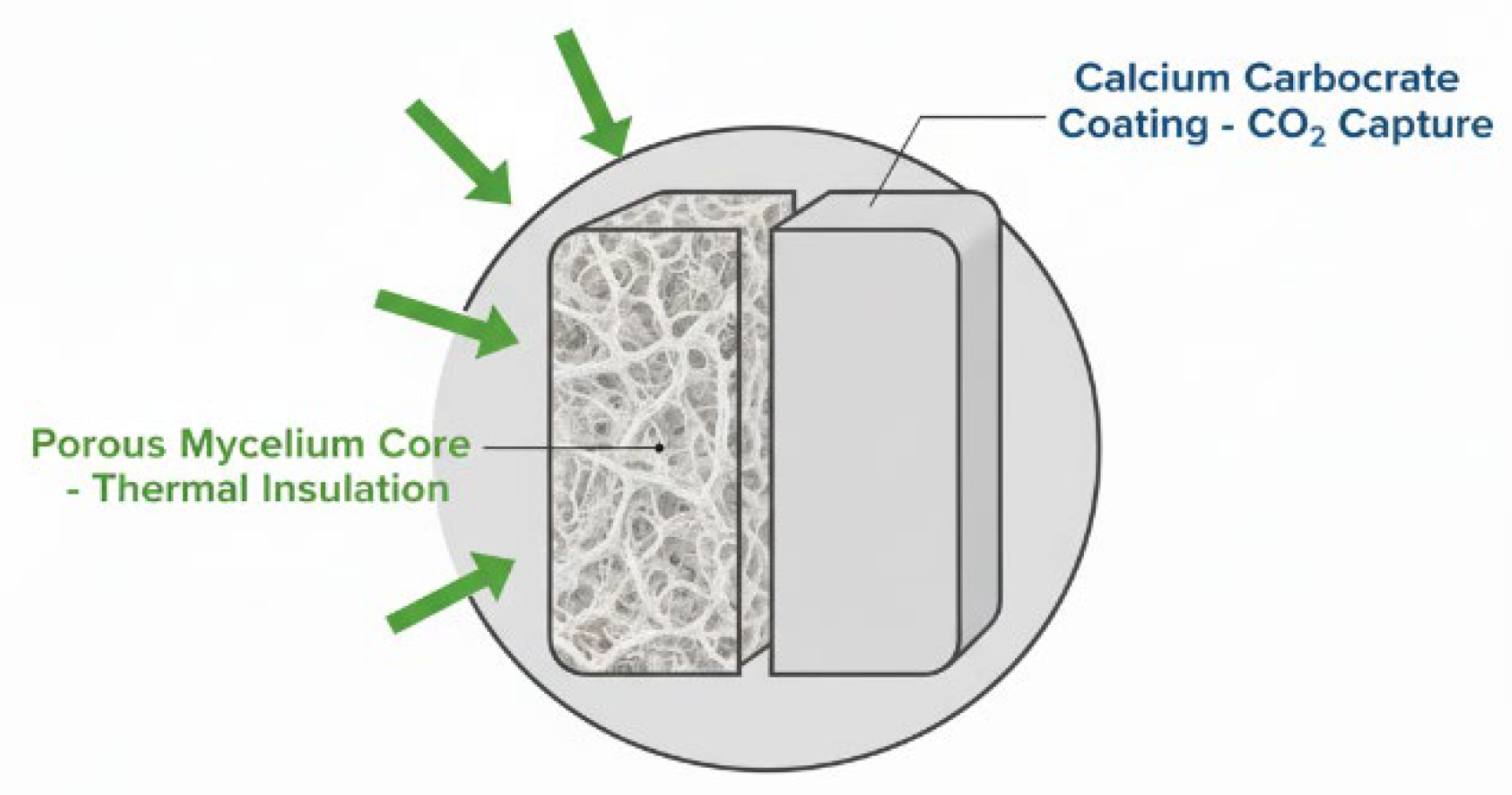
Figure 7.
Overview of experimental tests applied to bio-brick samples, including compressive strength, thermal conductivity, density, and water absorption.
Figure 7.
Overview of experimental tests applied to bio-brick samples, including compressive strength, thermal conductivity, density, and water absorption.
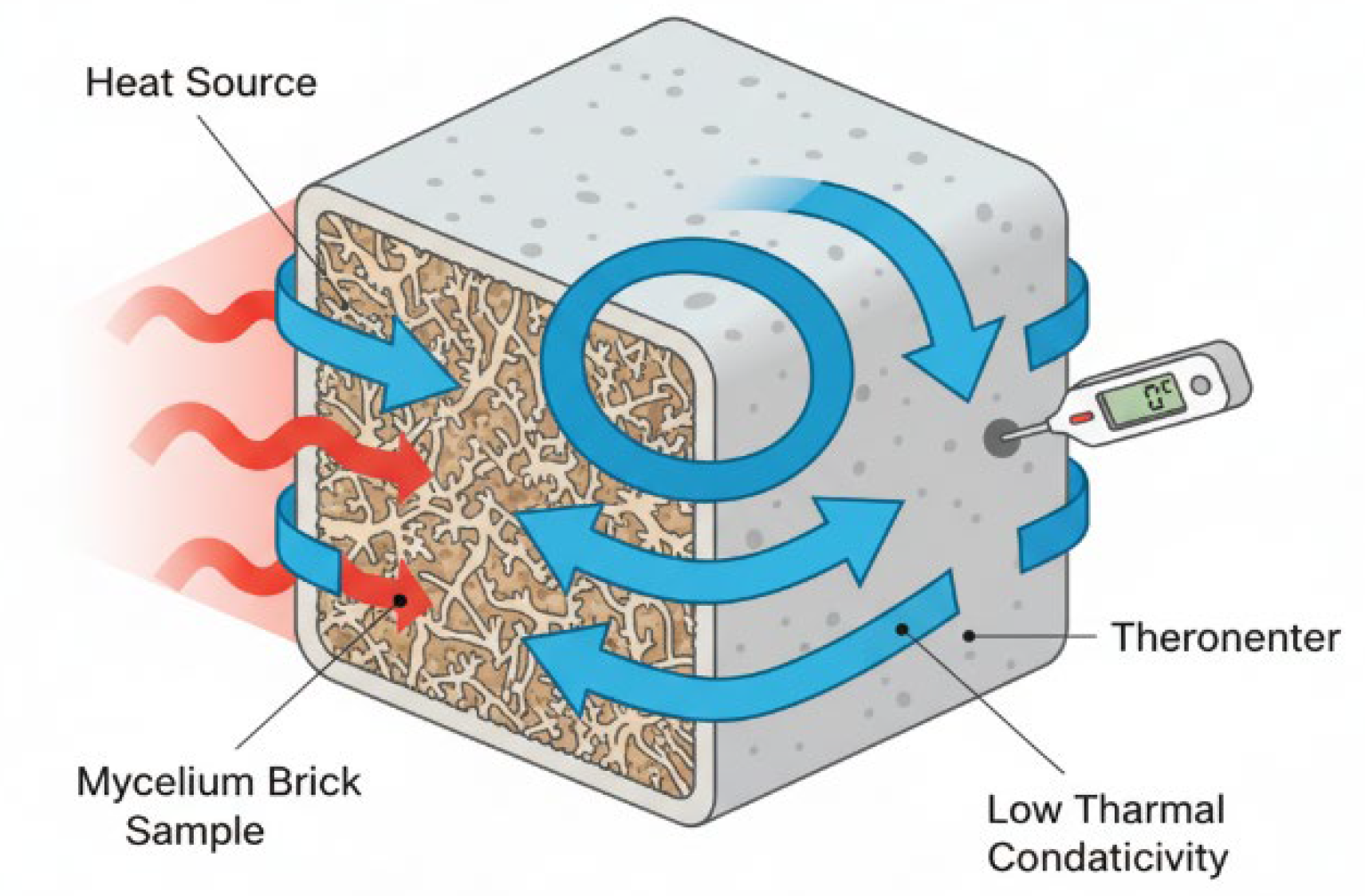
Figure 8.
Schematic illustration of inorganic fillers (e.g., sand, clay, nanoclay) integrated into mycelium composites, demonstrating improvements in density, dimensional stability, and durability.
Figure 8.
Schematic illustration of inorganic fillers (e.g., sand, clay, nanoclay) integrated into mycelium composites, demonstrating improvements in density, dimensional stability, and durability.
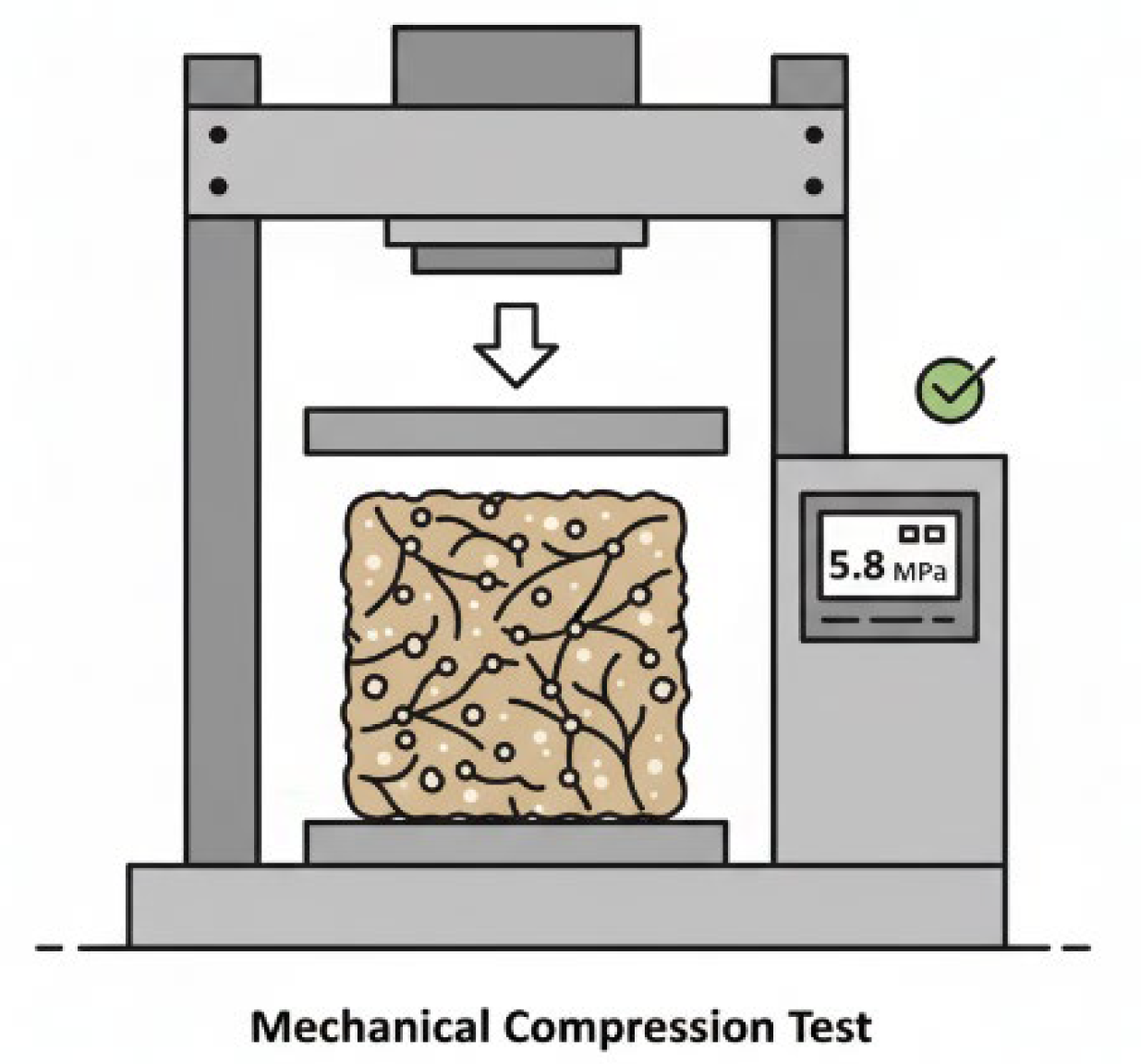
Figure 9.
Conceptual diagram of calcium carbonate (CaCO3) integration within mycelium composites, showing its role in enhancing dimensional stability and enabling CO2 sequestration.
Figure 9.
Conceptual diagram of calcium carbonate (CaCO3) integration within mycelium composites, showing its role in enhancing dimensional stability and enabling CO2 sequestration.
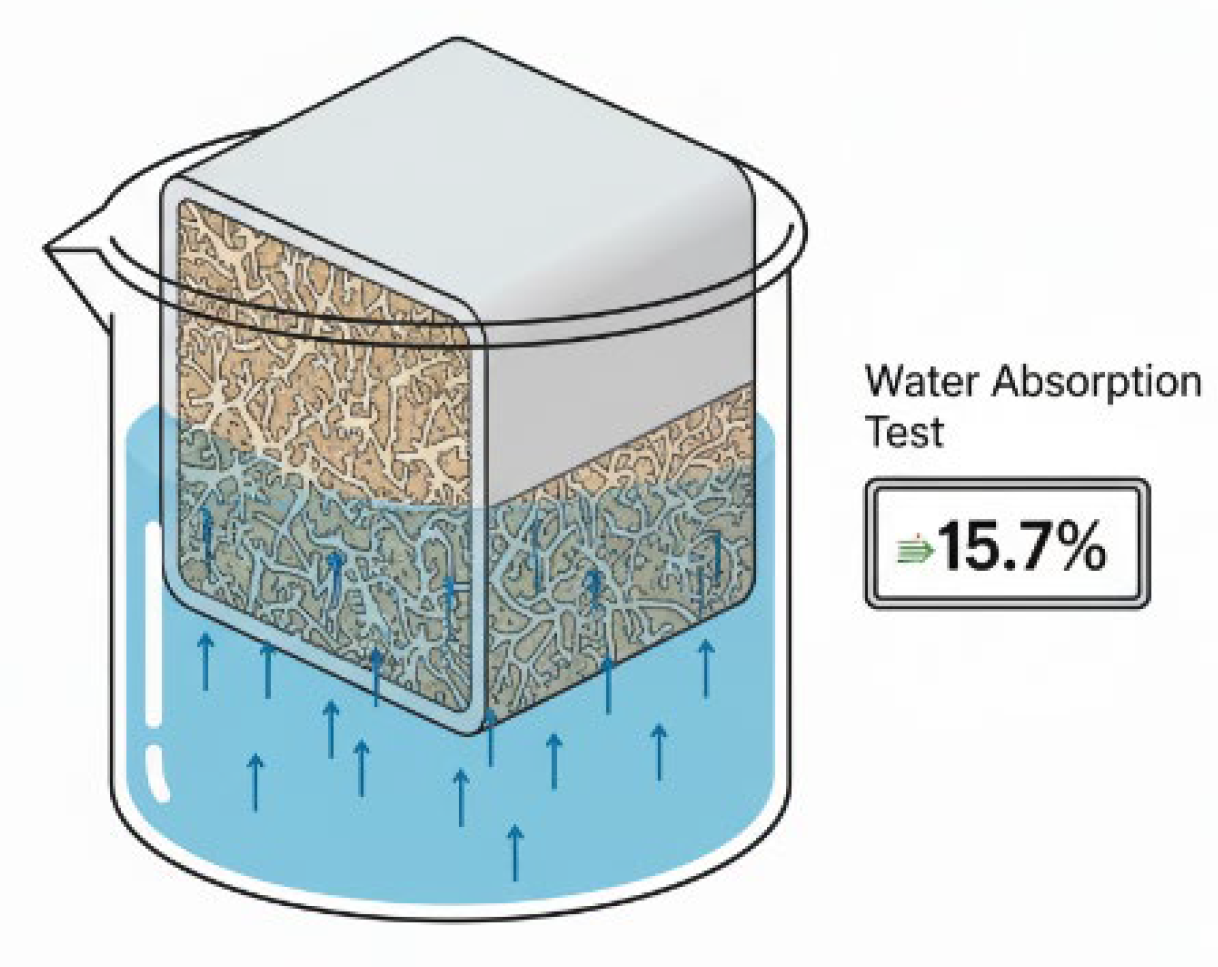
Figure 10.
Experimental framework for bio-brick fabrication, including substrate preparation, CaCO3 incorporation, inoculation, growth, drying, and post-processing stages.
Figure 10.
Experimental framework for bio-brick fabrication, including substrate preparation, CaCO3 incorporation, inoculation, growth, drying, and post-processing stages.
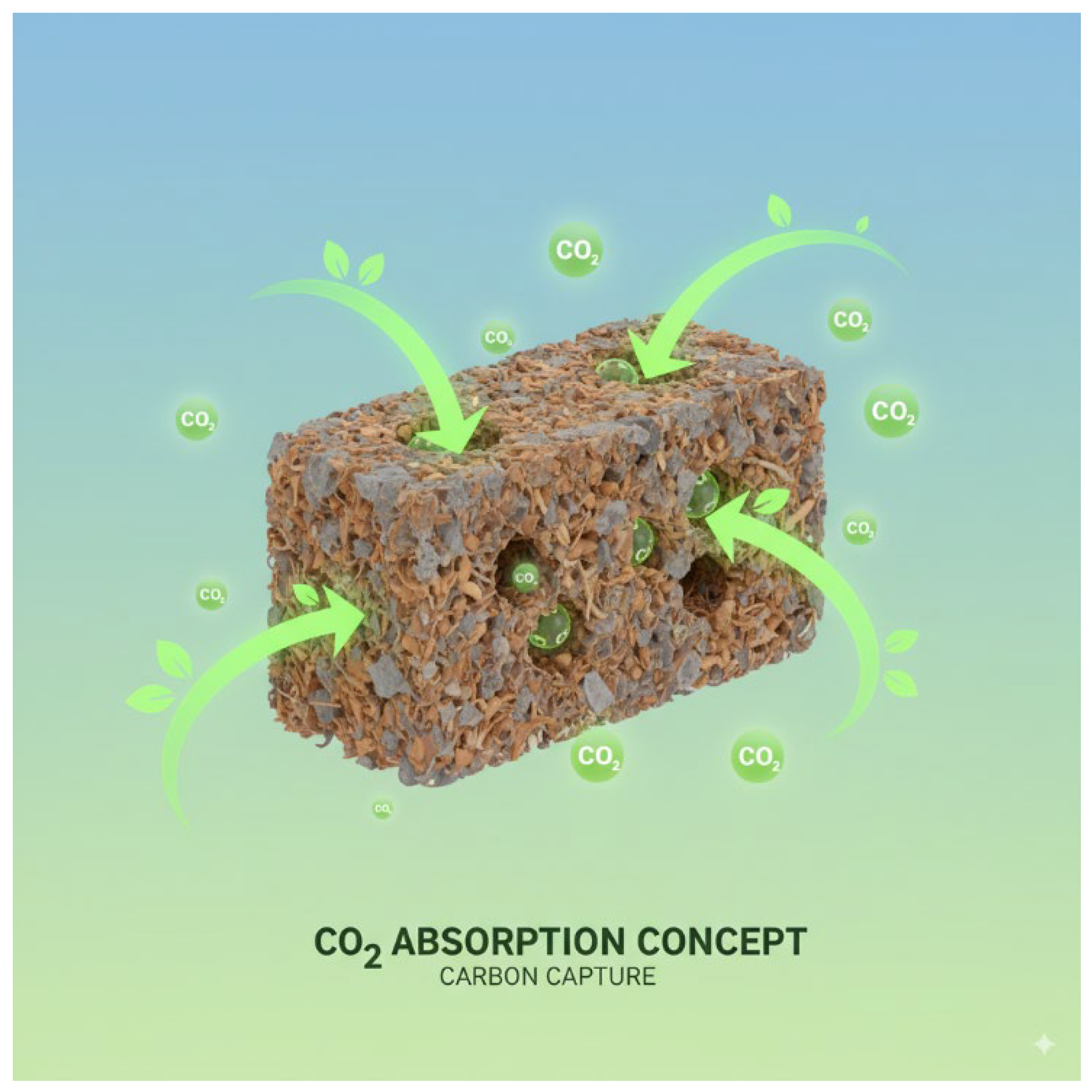
Figure 11.
Comparative bar chart of compressive strength values between pure MBCs and CaCO3-reinforced composites, based on literature-reported data.
Figure 11.
Comparative bar chart of compressive strength values between pure MBCs and CaCO3-reinforced composites, based on literature-reported data.
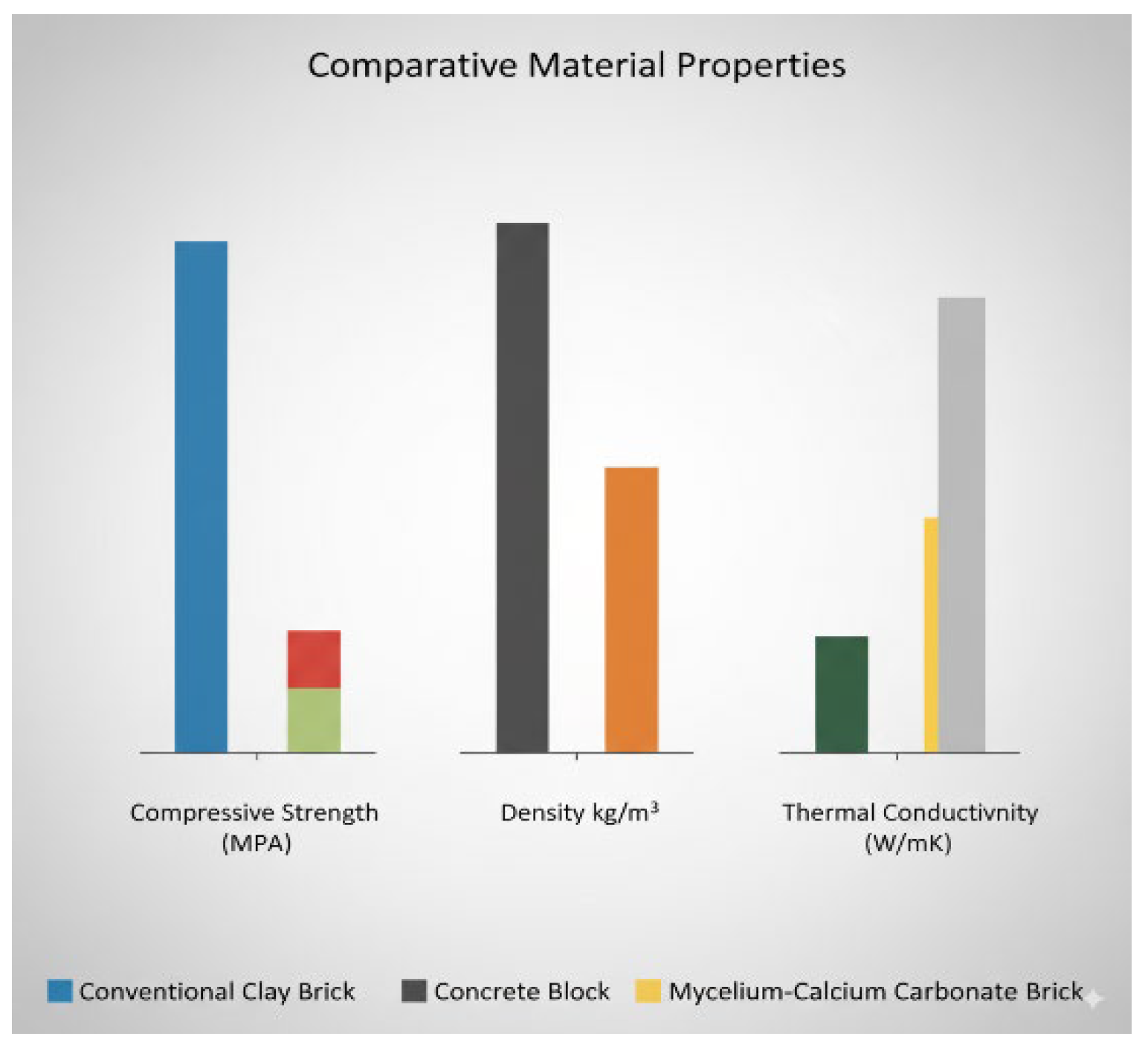
Figure 12.
Thermal conductivity comparison of mycelium composites with and without CaCO3 reinforcement, indicating improved insulation performance.
Figure 12.
Thermal conductivity comparison of mycelium composites with and without CaCO3 reinforcement, indicating improved insulation performance.
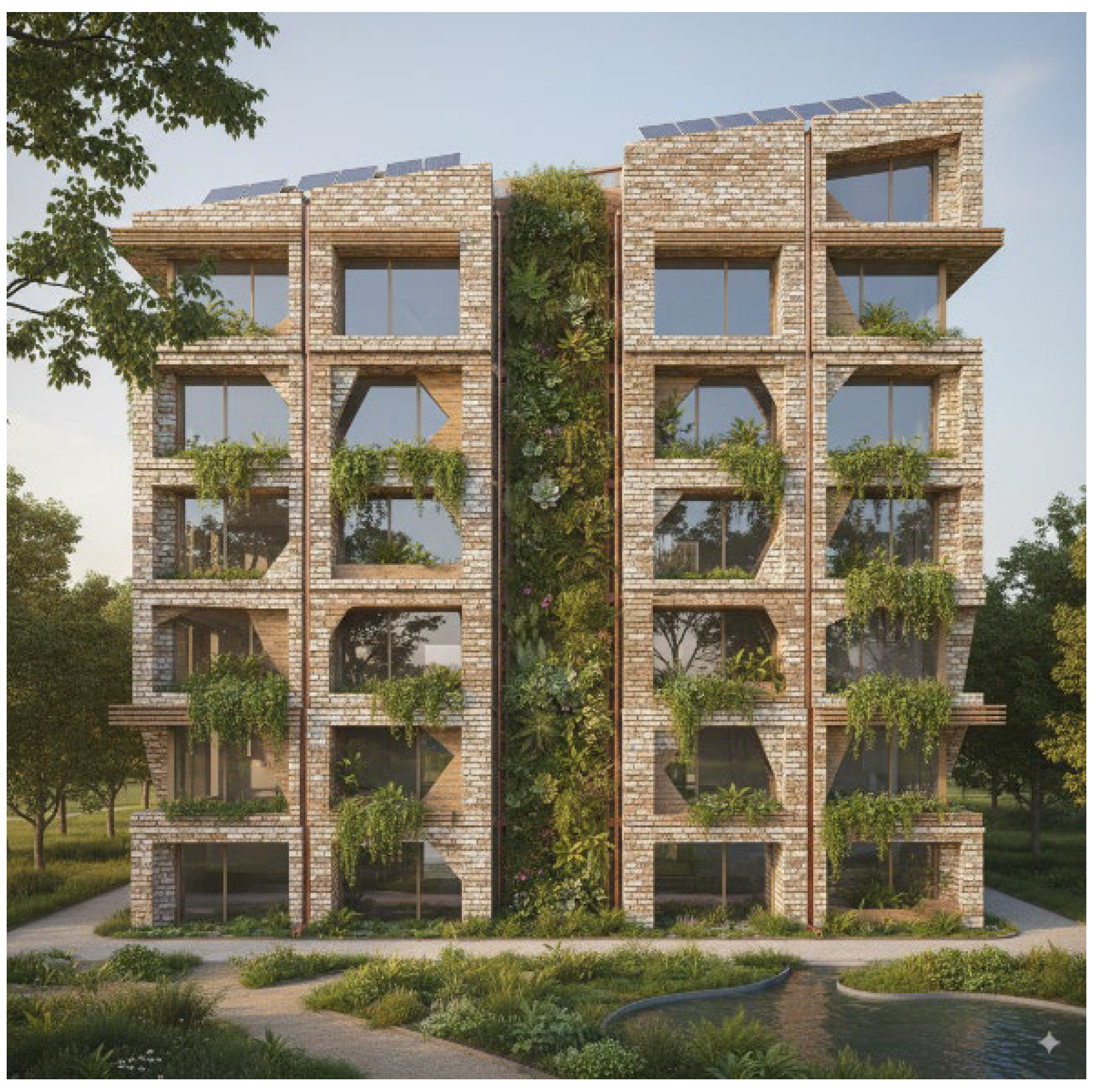
Figure 13.
Water absorption analysis for different CaCO3 proportions in mycelium composites, illustrating enhanced moisture resistance.
Figure 13.
Water absorption analysis for different CaCO3 proportions in mycelium composites, illustrating enhanced moisture resistance.
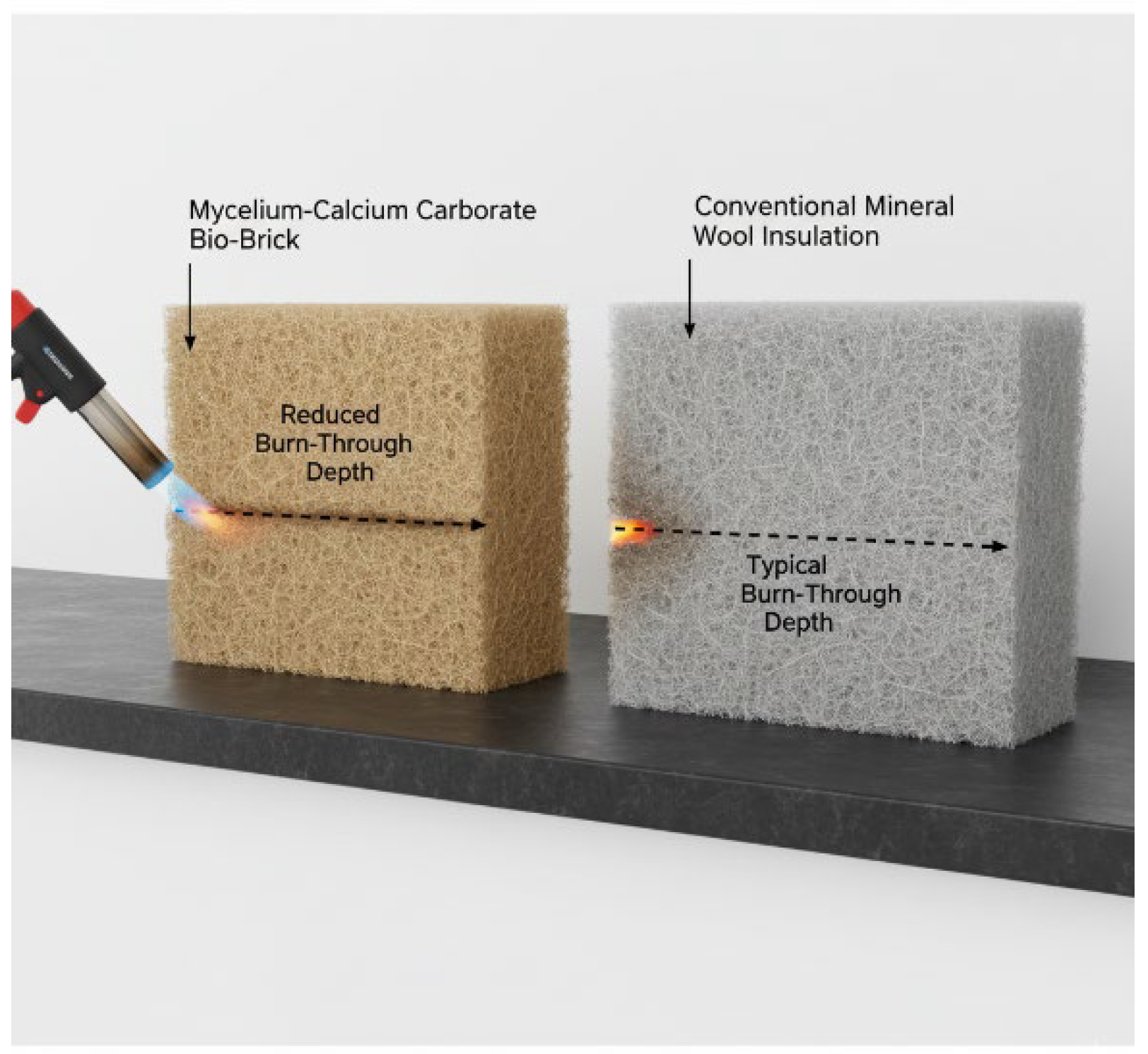
Figure 14.
Microscopic images (SEM-style visualization) of mycelium network interaction with CaCO3 particles, highlighting changes in pore structure and bonding.
Figure 14.
Microscopic images (SEM-style visualization) of mycelium network interaction with CaCO3 particles, highlighting changes in pore structure and bonding.
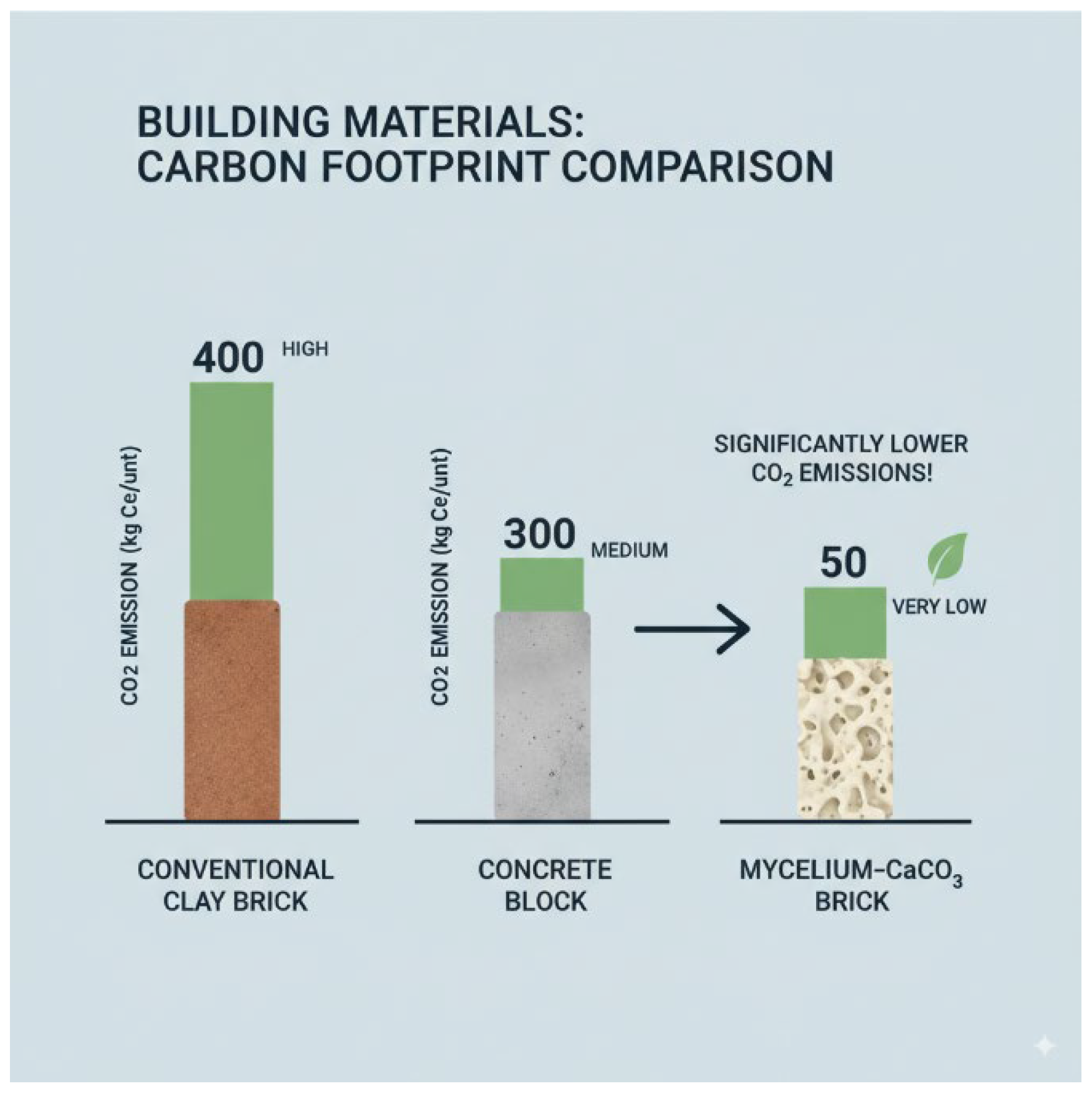
Figure 15.
Life Cycle Assessment (LCA) comparison between conventional bricks, pure MBCs, and the proposed mycelium–CaCO3 bio-brick, emphasizing carbon-negative potential.
Figure 15.
Life Cycle Assessment (LCA) comparison between conventional bricks, pure MBCs, and the proposed mycelium–CaCO3 bio-brick, emphasizing carbon-negative potential.
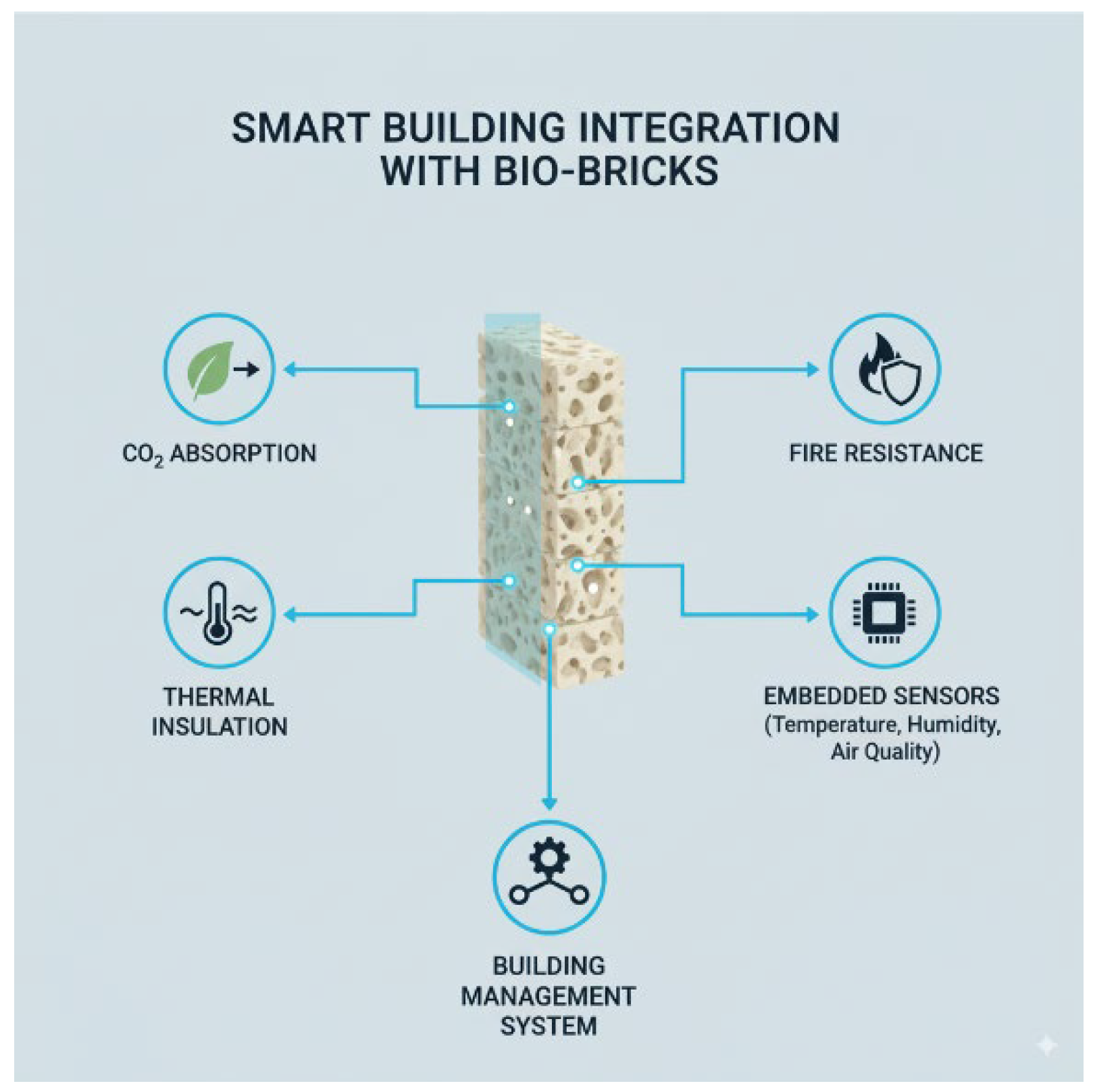
Figure 16.
Architectural application concept of the carbon-negative bio-brick, illustrating its integration into sustainable wall assemblies and façade systems.
Figure 16.
Architectural application concept of the carbon-negative bio-brick, illustrating its integration into sustainable wall assemblies and façade systems.
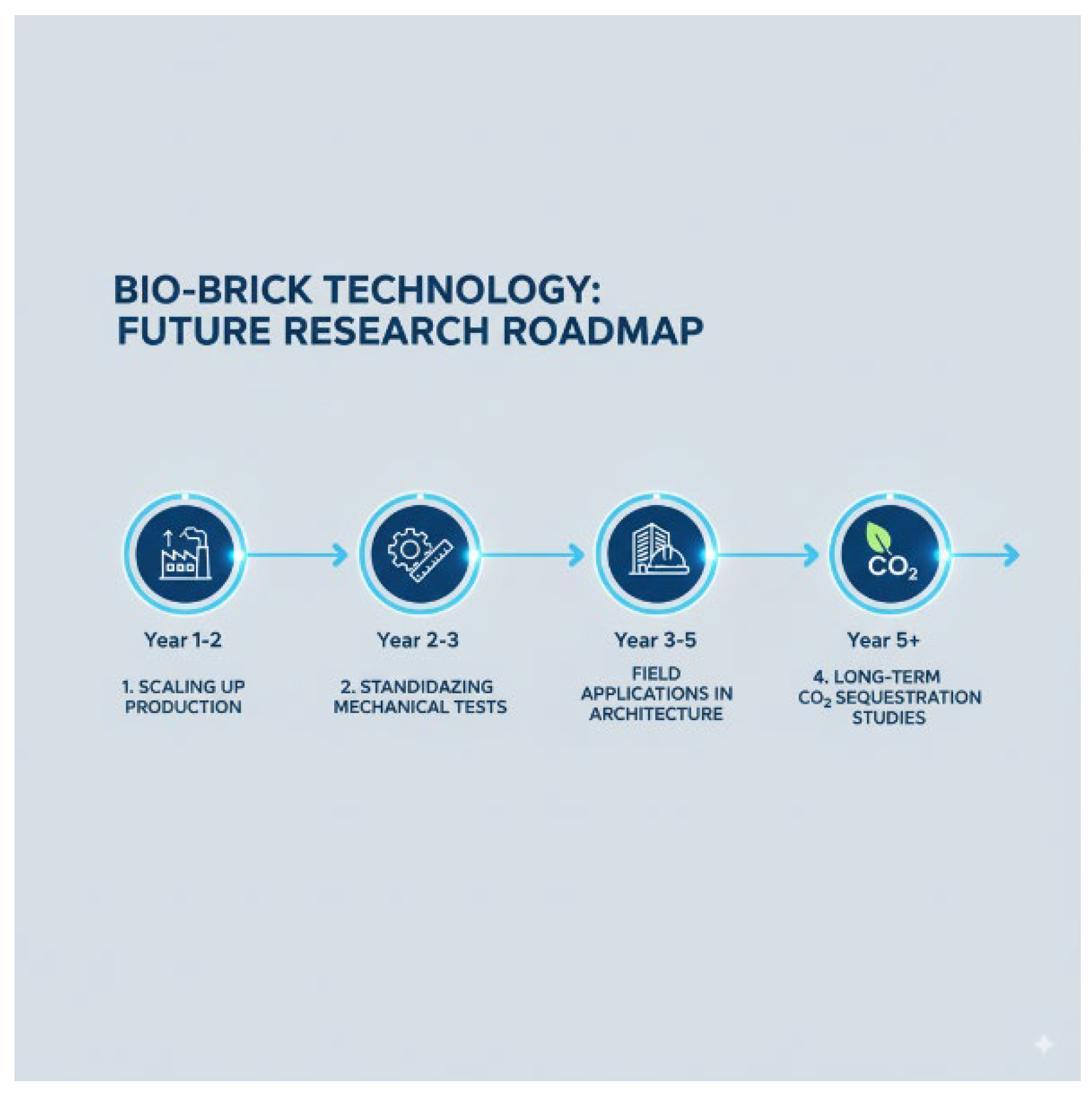
Table 1.
Comparative summary of key material properties of Mycelium-based Composites (MBCs) and CaCO3-reinforced composites from literature.
Table 1.
Comparative summary of key material properties of Mycelium-based Composites (MBCs) and CaCO3-reinforced composites from literature.
| Study (Ref.) | Material / Reinforcement | Density (kg/m3) | compressive Strength (MPa) | Water Absorption (%) |
Thermal Conductivity (W/m·K) |
Key Findings |
|---|---|---|---|---|---|---|
| [18,19,20] | Pure Mycelium composites (agricultural waste substrates) | 40–200 | 0.2–0.6 | 150–250 | 0.05–0.07 | Excellent insulation, poor strength, high water uptake |
| [23,24,25] | Mycelium + Natural fibers (hemp, flax, jute) |
100–250 | 1.0–2.5 |
60–120 | 0.06–0.09 | Increased compressive strength, reduced water absorption |
| [26,27,28] | Mycelium + Inorganic fillers (sand, clay, nanoclay) |
200–350 | 1.5–3.0 | 50–100 | 0.07–0.11 | Improved dimensional stability and durability |
| [29,30,31] | Mycelium + Surface treatments / processing modifications |
150–300 | 1.2–2.0 |
70–110 | 0.06–0.10 |
Enhanced performance via process optimization |
| [32,33,34] | Calcium Carbonate (CaCO3) composites in construction | 500–1500 | 3.0–10.0 | 30–80 | 0.2–0.4 | Widely used as filler, stabilizer; improves strength and stability |
| [35,36,37] | Bio-composites reinforced with CaCO3 | 400–1200 | 2.5–8.0 | 20–60 |
0.15–0.35 | Enhanced compressive strength, dimensional stability, and moisture resistance |
| [38] |
Gap in literature: Mycelium + CaCO3 integration |
– | – | – | – |
Very few studies; potential for carbon-negative multifunctional bio-bricks |
Table 3.
Summary of experimental results for bio-brick samples (mean values across replicates).
| Group | Substrate | CaCO3 (%) | Compressive Strength (MPa) |
Density (kg/m3) | Thermal Conductivity (W/m·K) |
Water Absorption (%) |
|---|---|---|---|---|---|---|
| G1 | Rice husk | 0 |
0.45 |
185 |
0.065 |
120 |
| G2 | Rice husk | 10 | 0.62 |
185 |
0.072 | 98 |
| G3 | Rice husk | 20 | 0.78 | 235 |
0.080 |
85 |
| G4 | Rice husk | 30 | 0.95 |
260 |
0.090 | 70 |
| G5 | Sawdust | 0 | 0.40 |
190 |
0.068 | 115 |
| G6 | Sawdust | 10 | 0.55 |
215 |
0.074 |
95 |
| G7 | Sawdust | 20 | 0.72 |
240 |
0.082 |
82 |
| G8 | Sawdust | 30 | 0.88 |
265 | 0.093 |
68 |
Disclaimer/Publisher’s Note: The statements, opinions and data contained in all publications are solely those of the individual author(s) and contributor(s) and not of MDPI and/or the editor(s). MDPI and/or the editor(s) disclaim responsibility for any injury to people or property resulting from any ideas, methods, instructions or products referred to in the content. |
© 2025 by the authors. Licensee MDPI, Basel, Switzerland. This article is an open access article distributed under the terms and conditions of the Creative Commons Attribution (CC BY) license (http://creativecommons.org/licenses/by/4.0/).
Copyright: This open access article is published under a Creative Commons CC BY 4.0 license, which permit the free download, distribution, and reuse, provided that the author and preprint are cited in any reuse.


