

Submitted:
19 September 2025
Posted:
22 September 2025
You are already at the latest version
Abstract
This study consisted of a "Strategic Plan for Phytosanitary Risk Management (Moniliophthora roreri) to prevent and reduce the disease in the northeast region of the Dominican Republic." It was suggested to describe the social and economic characteristics of cocoa ducks, which is the dominant risk of Moniliophthora roreri. It involved the participation of the public and private sectors and the initiation of viable recommendations related to all members of the production chain. The study uses a mixed approach with a non-experimental and cross-sectional design that utilized studies of accidentally selected cocoa producers in the northeast region. Quantitative and qualitative data were analyzed along with documentary studies to diagnose the phytosanitary situation and based on the strategic phytosanitary risk management plan. The diagnosis revealed a serious knowledge deficit regarding Moniliophthora roreri, high dependence on traditional practices, limited access to technical assistance and financing, and barely any agronomic diversification. However, the strong producer organization provided a significant opportunity to implement collective activities, intensive training, and effective biosafety protocols. Finally, the plan includes eight lines of work: strengthening knowledge and physical activity, integrated pest and disease management (IPM), access to technical assistance and exacerbation and coordination of manufacturers, resource management and financing, sustainable agronomic practices, health management, and biosecurity.
Keywords:
Moniliasis
; Cacao
; Risk
; Prevention
; Management
1. Introduction
Moniliasis, caused by the fungus Moniliophthora roreri, is a devastating disease threatening cocoa production (Theobroma cacao L.) throughout Latin America. The pathogen mainly infects cocoa pods, causing rot that can lead to yield reductions exceeding 80%, severely impacting production quantity and quality (Bailey et al., 2018; Pérez & Martínez, 2020). This disease thrives under the high humidity and temperature conditions typical of tropical cocoa-growing regions, facilitating rapid dissemination and significant economic consequences (Rodríguez & Sánchez, 2019; Krauss, 2010). Originally misclassified as part of the Monilia genus, molecular studies led to its reclassification under the genus Moniliophthora (Evans et al., 2012).
Context and Justification
Since its description in Ecuador in 1911, Moniliophthora roreri has spread extensively across Latin America and the Caribbean, largely due to environmental factors like wind and rain as well as unregulated movement of infected plant materials (Ramírez et al., 2020; Evans et al., 1981; Villamil et al., 2015). This disease presents a major phytosanitary threat to cocoa farmers, causing substantial economic losses and jeopardizing livelihoods in cocoa-dependent regions (Ramírez Gil, 2016). A comprehensive strategic plan is necessary, combining integrated pest and disease management, sustainable agricultural practices, biological control, and targeted fungicide application. Such a plan aims to prevent further dissemination, improve producer well-being, and strengthen the local economies relying on cocoa cultivation (Dominican Institute of Agricultural and Forestry Research [IDIA], 2022; Fernández & Cruz, 2021).
2. Methodology
This research employed a mixed methods approach, integrating quantitative and qualitative methodologies to comprehensively explore and describe the phenomena related to cocoa production and moniliasis management in the Nordeste region of the Dominican Republic. According to Sampieri et al. (2014), mixed methods research allows the exploration of phenomena and description of their characteristics without necessarily starting from hypotheses, making it suitable for studies that require both numerical data analysis and in-depth contextual understanding. This approach enabled the collection and analysis of numerical data from a representative sample, alongside qualitative insights to guide solution-oriented outcomes.
The study utilized a non-experimental, cross-sectional design, in which variables were not manipulated but observed in situ to diagnose the current situation and predict potential socioeconomic impacts linked to moniliasis introduction in Duarte province (Hernández, 2014). The design’s transversal horizon focused on a single point in time to capture the status quo and inform strategic planning. The research was applied in nature, grounded on a diagnostic of cacao plantations and management practices in the Dominican Republic’s Nordeste region, including case studies and policy reviews from other affected countries such as Colombia, Ecuador, Mexico, Central America, and Jamaica. This prospective element facilitated data collection and informed the formulation of a strategic plan (Creswell & Plano Clark, 2017).
The population universe comprised approximately 22,000 cacao producers nationally, with 61% (about 13,420 producers) concentrated in the Nordeste region (Luna, 2023). Assuming one farm per producer, a probabilistic simple random sampling method was employed to select a sample size of 73 producers, calculated via Gandia Barbwin software with a 95% confidence level and 5% margin of error. Data collection was conducted through a structured questionnaire with 46 items segmented into socio-economic characteristics, current plantation diagnosis, crop management practices, resource needs, and open comments, complemented by document analysis of pertinent scientific articles and institutional policies.
Instrument validation was performed via construct validation aligning with theoretical constructs, and expert judge reviews achieved a 91% approval rating, ensuring reliability and validity of measurements (Sampieri et al., 2014). Data analysis involved cleaning and coding qualitative and quantitative responses, followed by statistical analysis using SPSS v26 to generate descriptive statistics and frequency distributions. Qualitative responses were categorized and numerically coded for integration with quantitative results, enabling a precise phytosanitary diagnosis of cacao production in the Nordeste region. The findings were interpreted against technical literature to provide contextually relevant recommendations for the strategic plan.
3. Results
3.1. Diagnosis and Strategic Plan for Prevention, Mitigation, and Control of Moniliasis in Cacao
This chapter presents a comprehensive Strategic Plan for phytosanitary risk management aimed at preventing and mitigating moniliasis (Moniliophthora roreri) in the cacao-producing Nordeste region of the Dominican Republic. The plan builds on an integrated diagnosis derived from two main sources: a field survey applied to local producers and an extensive review of scientific and technical literature on the epidemiology and management of moniliasis in other affected regions. This integration underpin rigorous analysis serving as a foundation for the strategic plan formulation.
Phase I. Integral Diagnosis Based on Producer Survey Variables
3.2. Socioeconomic Characteristics
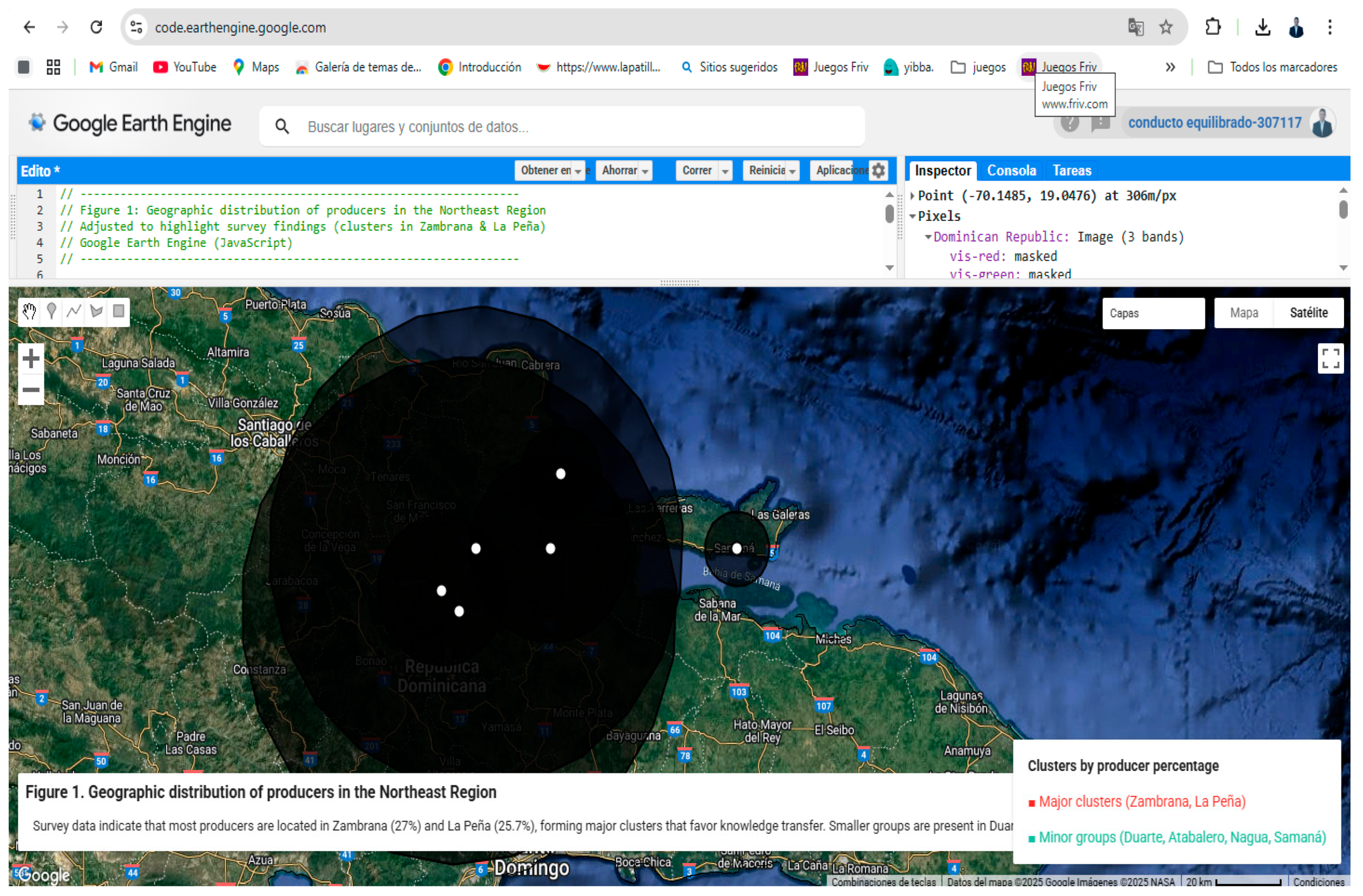
Survey data indicate a majority of producers are located in Zambrana, Cotuí (27%), and La Peña (25.7%), with smaller populations in Duarte, Atabalero, Nagua, and Samaná, revealing productive clusters favoring knowledge transfer.
Figure 1.
Geographic Distribution of Producers in the Nordeste Region.
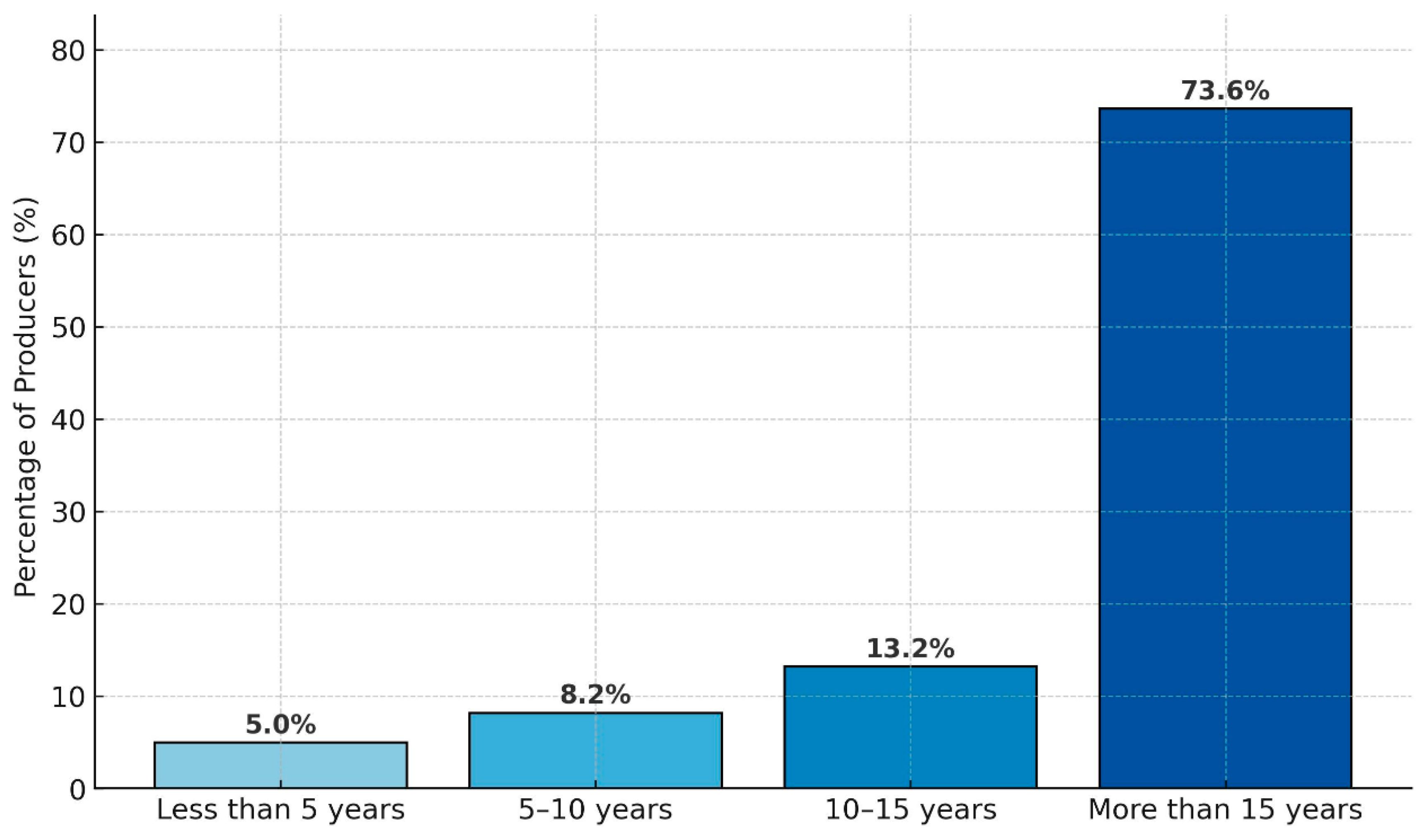
Most producers have long-term experience, with 73.6% exceeding 15 years of cocoa cultivation, which may foster better practice adoption and market resilience.
Figure 2.
Producer Experience in Cocoa Cultivation (Years).
Economically, producers mainly invest less than RD$100,000 annually in phytosanitary control; however, 78% report difficulty accessing financing, limiting disease control capacity.
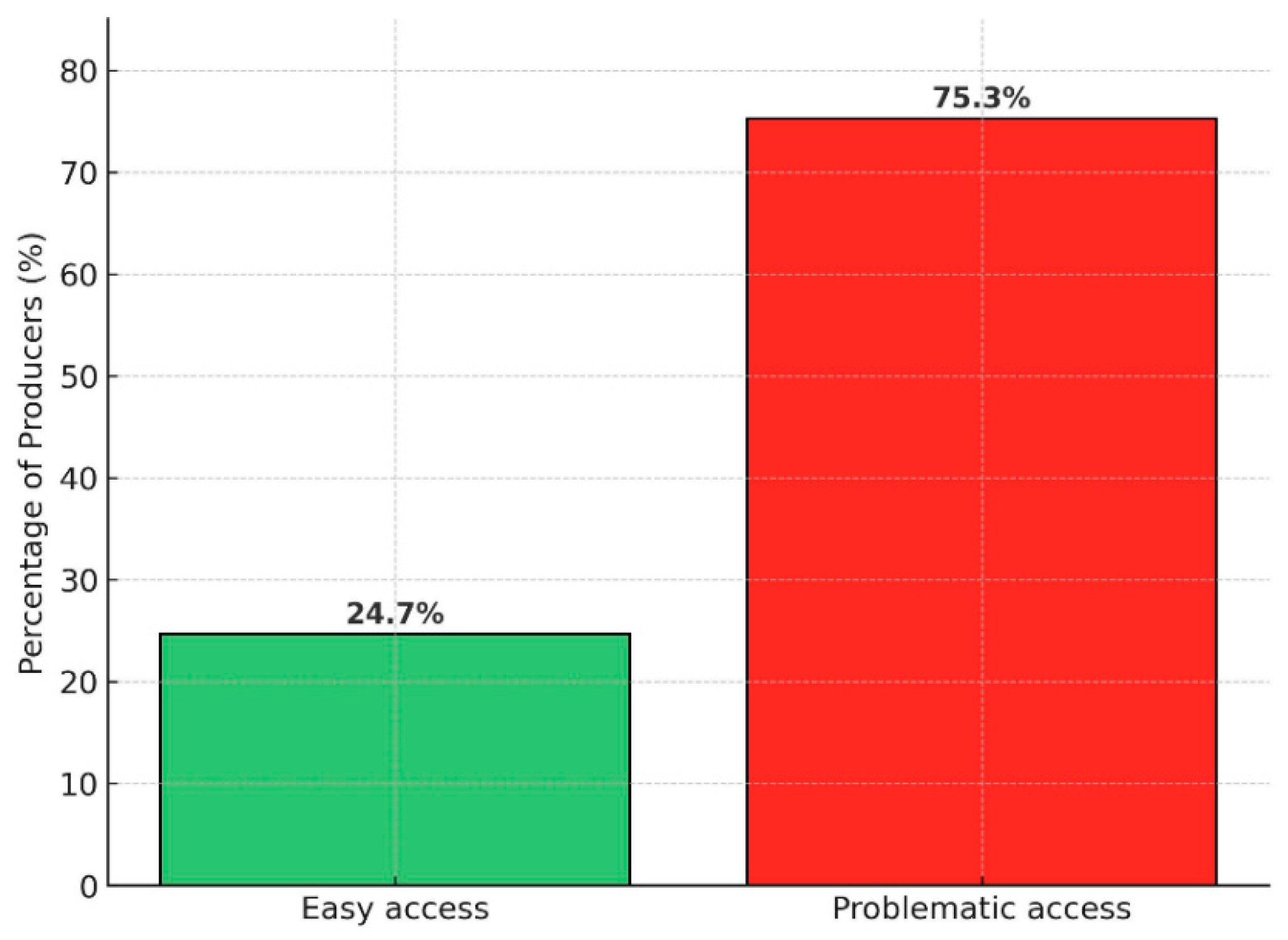
Access to modern pest management technologies is problematic for 75.3% of producers, with preference for cultural and biological controls over chemical fungicides.
Figure 3.
Access to Pest Management Technologies.
Only 42.5% recall receiving state assistance, mostly technical support and training, indicating gaps in institutional outreach.
3.3. Productive Structure and Yield
Farms average 36 hectares but median only 12.5 hectares, confirming an unequal land distribution with both small and large producers. Average yields are approximately 49 kg per tarea, considerably below global leaders.
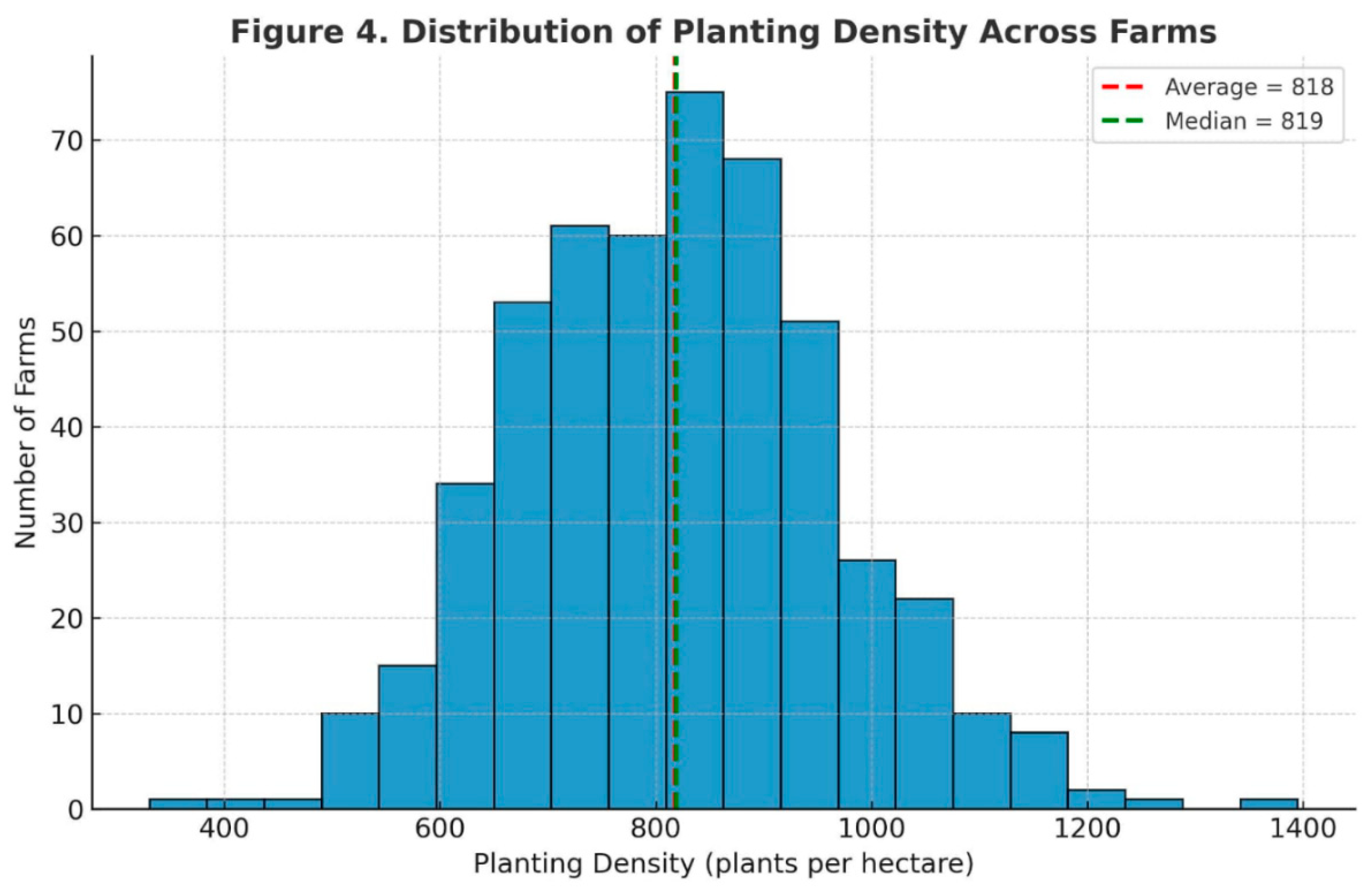
Planting density averages 817 plants per hectare, trending towards medium-low density systems impacting productivity and phytosanitary pressure.
Figure 4.
Distribution of Planting Density Across Farms.
Agronomic practices focus on pruning (88.9%) and weed control (52.8%), whereas fertilization is less common (13.9%), pointing to basic cultivation maintenance.
3.4. Phytosanitary Situation and Risk Factors
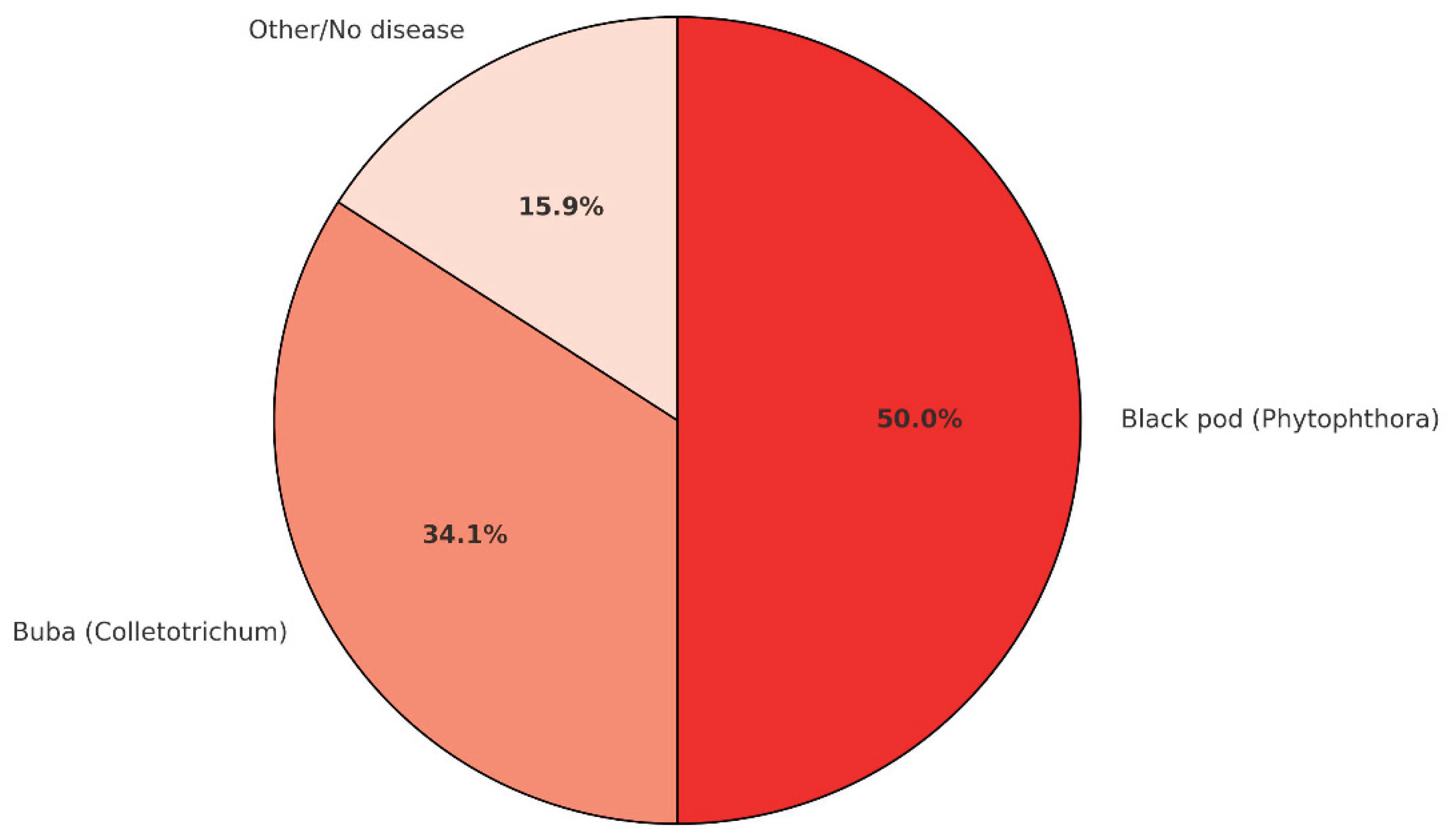
Most producers (84.1%) report diseases in plantations, primarily black pod (Phytophthora palmivora) and buba (Colletotrichum gloeosporioides). Fungicide use is minimal, with reliance on cultural and mechanical controls, limiting disease management effectiveness.
Figure 5.
Prevalence of Major Cocoa Diseases.
Knowledge of moniliasis is alarmingly low, with 93.1% unaware of the disease or unable to identify symptoms, increasing vulnerability to outbreaks.
Biosecurity measures, including movement controls of people, animals, and equipment, are largely absent (87.7%), greatly enhancing the risk of pathogen spread.
3.5. Current Management Practices
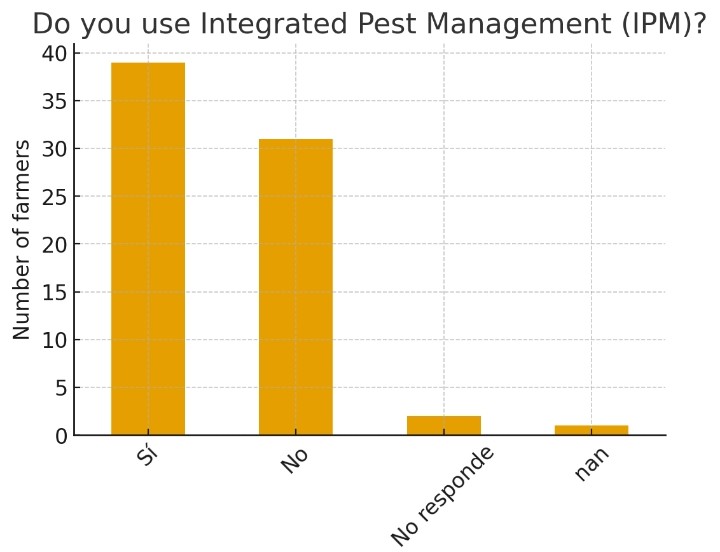
Traditional methods dominate, with widespread pruning and shade management but limited fungicide use, crop rotation, or integrated pest management adoption. Pesticide non-use reflects economic constraints and preference for sustainable practices but also points to gaps in effective disease control.
Results show a majority do not implement systematic sanitation of diseased pods and residues, increasing inoculum sources and economic losses.
3.6. Strategic Needs and Recommendations
Producers identify priorities such as strengthening integrated pest management (50.7%), improving pest and disease control (39.4%), and access to resources including financing and technology (7%). These align with international best practices recommending combined cultural, biological, and chemical controls (FAO, 2022; AGROSAVIA, 2025).
4. Discussion
The diagnosis of cacao plantations in the Nordeste region underscores critical vulnerabilities with major implications for phytosanitary risk management. The survey results revealed a producer landscape characterized by experienced farmers concentrated in key geographic clusters, favorable for knowledge dissemination, yet hampered by economic constraints such as limited access to credit and modern pest management technologies. This combination of strengths and weaknesses aligns with national evaluations reported by the Dominican Ministry of Agriculture’s ongoing phytosanitary efforts to enhance surveillance and preparedness against moniliasis (Ministerio de Agricultura, 2018).
International studies similarly highlight the challenge of maintaining sustainable cacao production in the face of emerging fungal diseases. The near absence of fungicide use and reliance on traditional cultural control methods observed in the Nordeste reflect trends documented throughout Latin America and the Caribbean (CATIE, 2024; AGROSAVIA, 2025). This underscores the global imperative to promote integrated pest management (IPM) strategies that combine cultural, biological, and chemical tools tailored to local conditions. The Nordeste region’s high participation in producer organizations presents a valuable opportunity to accelerate adoption of such strategies through coordinated extension and capacity building, as demonstrated in successful Caribbean regional projects (IICA, 2018; Orozco, 2024).
The prevalence of diseases such as black pod and buba reported by over 80% of producers illustrates the constant phytosanitary pressure threatening yield stability. Alarmingly, the very limited knowledge of moniliasis—unrecognized by over 90% of farmers—suggests that the disease’s potential introduction could be devastating. This parallels experiences from other cocoa-producing countries such as Ecuador and Colombia, where early detection and rapid response capacity gaps led to severe outbreaks with socioeconomic repercussions (Brito, 2021; Corporación Colombiana de Investigación Agropecuaria, 2025).
Notably, the diagnosis revealed critical deficiencies in biosecurity and surveillance infrastructure. Internationally, robust biosecurity measures and community-led monitoring have proven essential for containing moniliasis outbreaks (ICA, 2012; CATIE, 2024). The Nordeste region’s limited implementation of movement controls for people and equipment increases the threat of pathogen dispersal, necessitating urgent investment in biosecurity protocols and community engagement.
The producers’ identified priorities—to strengthen IPM, improve disease control, and enhance access to finance and technology—resonate with the FAO and AGROSAVIA recommendations emphasizing an integrated, multi-sectoral approach to disease management that incorporates social, economic, and technical dimensions (FAO, 2022; AGROSAVIA, 2025). The strategic plan developed through this diagnosis embodies these principles, focusing on capacity building, technology access, collective organization, financing, and innovation.
In conclusion, this diagnosis and strategic planning effort places the Nordeste region on a path consistent with both national policy goals and international best practices. Its success will depend on the effective coordination of institutional support, producer engagement, and continuous adaptive management, aligned with efforts underway across Latin America to build resilient and sustainable cacao production systems in the face of mounting phytosanitary threats.
5. Conclusions
The primary conclusion is that the local cocoa sector is highly vulnerable to the introduction and spread of Moniliasis (Moniliophthora roreri). This risk is driven by an alarming lack of knowledge about the disease among producers, a widespread absence of effective biosecurity protocols, and limited adoption of Integrated Pest Management (IPM).
Despite the extensive agricultural experience of producers, significant barriers hinder effective phytosanitary management. Restricted access to financing and technology (78% and 75%, respectively) and low coverage of technical assistance and state support (74%) are critical limitations to their capacity to respond to threats like Moniliasis.
The study confirms a preference for sustainable practices, such as shade management and pruning, which represents a strength for environmental sustainability. However, low average productivity and high yield variability highlight the need for improved technical management and the adoption of new technologies to increase efficiency and profitability.
To mitigate these risks, an integrated strategic plan is imperative. This plan must combine producer training and awareness, the promotion of an Integrated Pest and Disease Management (IPDM) framework, the strengthening of producer associations, and the reinforcement of public policies regarding phytosanitary surveillance, financing, and technical assistance.
Supplementary Materials
The following supporting information can be downloaded at the website of this paper posted on Preprints.org.
References
- Bailey, B. A.; Evans, H. C.; Krauss, U. Moniliophthora roreri, causal agent of cacao frosty pod rot. Phytopathology 2018, 108(5), 563–574. [Google Scholar] [CrossRef] [PubMed]
- Brito Sosa, E. Impacto socioeconómico de una entrada potencial de la moniliasis del cacao (Moniliophthora roreri) a República Dominicana. Master’s thesis, CATIE, 2021. Available online: https://repositorio.catie.ac.cr/handle/11554/11541.
- Corporación Colombiana de Investigación Agropecuaria. Manejo integrado de la moniliasis del cacao en Colombia. 2025. Available online: https://www.agrosavia.co.
- Dominican Institute of Agricultural and Forestry Research (IDIA). Estrategias para la prevención y control de moniliasis en República Dominicana. 2022. Available online: https://idiaf.gob.do/publicaciones/pdf/Cacao_Enfermedades_Prevencion_Idiaf.pdf.
- Evans, H. C.; et al. Taxonomy and biology of Moniliophthora roreri: The frosty pod rot pathogen. CABI Compendium. 2012. [Google Scholar] [CrossRef]
- FAO. Integrated pest and disease management for cocoa production. Food and Agriculture Organization of the United Nations. 2022. Available online: http://www.fao.org/3/cc0278en/cc0278en.pdf.
- Fernández, L.; Cruz, M. Biological control of phytopathogenic fungi in cacao plantations. Revista de Protección Vegetal 2021, 36(3), 123–135. [Google Scholar]
- González-García, H. Agricultural alternatives for agroecological management of moniliasis in cacao. Bioagro 2025, 37(6). [Google Scholar] [CrossRef]
- Hernández, R. Metodología de la investigación, 6th ed.; McGraw Hill, 2014. [Google Scholar]
- IICA. Strengthening surveillance systems for moniliasis control in the Caribbean. Inter-American Institute for Cooperation on Agriculture. 2018. Available online: https://iica.int/es.
- Luna, P. Cacao production statistics in the Dominican Republic. In Ministry of Agriculture; 2023. [Google Scholar]
- Ministerio de Agricultura. Estrategia Nacional para la vigilancia fitosanitaria en cacao; Gobierno de República Dominicana, 2018. [Google Scholar]
- Orozco, L. Regional strategies for preventing moniliasis in Latin America. In Proceedings of the Regional Symposium on Cocoa, Puerto Rico; 2024. [Google Scholar]
- Pérez, R.; Martínez, F. Impact of moniliasis on Latin American cocoa production. Journal of Plant Pathology 2020, 102(4), 567–578. [Google Scholar]
- Ramírez, J.; Villamil, J.; Torres, M. Epidemiology of Moniliophthora roreri in the Dominican Republic. Agricultural Science 2020, 12(2), 123–132. [Google Scholar] [CrossRef]
- Ramírez Gil, J. G. Economic impact of phytosanitary threats in cacao-producing regions of Latin America. Revista Protección Vegetal 2016, 31(1), 20–30. [Google Scholar]
- Rodríguez, J.; Sánchez, M. Climatic factors influencing cacao diseases in tropical America. Agroforestry Systems 2019, 93(4), 1411–1425. [Google Scholar]
- Sampieri, R.; Collado, C. F.; Lucio, P. B. Metodología de la investigación; McGraw Hill, 2014. [Google Scholar]
- Villamil, J. E.; et al. Integrated approaches to Moniliophthora roreri management in Latin America. Crop Protection 2015, 70, 56–64. [Google Scholar] [CrossRef]
Disclaimer/Publisher’s Note: The statements, opinions and data contained in all publications are solely those of the individual author(s) and contributor(s) and not of MDPI and/or the editor(s). MDPI and/or the editor(s) disclaim responsibility for any injury to people or property resulting from any ideas, methods, instructions or products referred to in the content. |
© 2025 by the authors. Licensee MDPI, Basel, Switzerland. This article is an open access article distributed under the terms and conditions of the Creative Commons Attribution (CC BY) license (https://creativecommons.org/licenses/by/4.0/).
Copyright: This open access article is published under a Creative Commons CC BY 4.0 license, which permit the free download, distribution, and reuse, provided that the author and preprint are cited in any reuse.


