Preprint
Article

This version is not peer-reviewed.

Phytopathological Challenges of Corm Rot in Papa China in the Colombian Pacific

Submitted:

13 March 2025

Posted:

14 March 2025

You are already at the latest version

Abstract

Colocasia esculenta, also known as Chinese taro or taro, is a crop of great importance for the Colombian Pacific region. However, it is threatened by corm rot, which affects the food security of Afro-descendant and indigenous communities in the area. This study aimed to identify some of the phytopathogenic agents responsible for this disease and explore their control using an aqueous extract of Dysphania ambrosioides (paico). Through morphological analyses and ITS gene sequencing, two fungi responsible for the rot were identified: Fusarium solani and Mycoleptodiscus suttonii, and their roles as causal agents of the rot were confirmed in greenhouse experiments. Paico proved effective in controlling the growth of these fungi, with concentrations of 12.5% and 17.5% for M. suttonii, and 17.5% for F. solani. These findings highlight the importance of organic control to ensure food security and sustainable production in vulnerable areas of Colombia, emphasizing the relevance of this study for local communities.
Keywords: 
;  ;  ;  ;  ;  ;  

1. Introduction

In the context of the Colombian Pacific, where excess moisture and clay content in the soil cause the rotting of crops such as cassava and potatoes, and low banana yields, the region's carbohydrate supply depends on Chinese yam, making this product crucial for food security and the local economy [1,2,3,4,5]. Among the main reported diseases are Mosaic Virus [6] and dry rot syndrome, caused by fungi and/or bacteria [7], which affect fundamental processes such as photosynthesis and carbon assimilation, leading to a reduction in corm production and postharvest losses [8]. The observed increase in the incidence of phytopathological diseases, some of which are emerging and previously undocumented, emphasizes the need to identify pathogens and formulate organic control strategies using aqueous [9] or ethanol [10] plant extracts. This research explores Dysphania ambrosioides (paico), which has demonstrated notable antifungal activity [7,11]. The main objective of this study was to address the problem of corm rot in Colocasia esculenta, mainly cultivated in the Colombian Pacific, by identifying the fungal phytopathogenic agents responsible for crop deterioration and their potential control with an aqueous extract prepared from paico.

2. Materials and Methods

Collection of Chinese Yam Samples with Corm rot and Phytopathogenic Agents Identification

Samples were collected in Buenaventura (3.81N, -77.03W, 13 meters above sea level, 91% relative humidity, 65% average annual precipitation, and 27°C average annual temperature) and Guapi (2.57N, -77.89W, 4 meters above sea level, 87.5% relative humidity, 69% average annual precipitation, and 27°C average annual temperature) (Figure 1).
The material was disinfected with potable water and cut into 5x5mm pieces. The samples were then washed in 96% ethanol for 3 seconds, 0.5% sodium hypochlorite for 2 minutes, and twice with sterile distilled water. Each sample was triplicated in Petri dishes containing Potato Dextrose Agar (PDA) culture medium. They were incubated at 28°C ±1 for 6 to 8 days. Growth was checked every 24 hours, and isolations were performed in PDA acidified with tartaric acid at 10% (approximately 14 ml/L) to inhibit bacterial growth. For the observation of reproductive structures, Water Agar at 0.015%, Potato Carrot Agar, and V8 Agar were used [12].
Morphological characteristics were obtained by microscopy (40x and 100x), and DNA extraction from pure mycelium was carried out using the NORGEN kit. The ITS1 and ITS4 regions were amplified, products were purified by ethanol precipitation, and quantified using NanoPhotometer™ A260. To determine DNA quality, A260/280 and A260/230 ratios were measured. Amplicons were sequenced at MACROGEN.
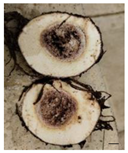
To verify corm rot caused by the isolated phytopathogenic agents, six 4-month-old plants were inoculated with each fungus. A blade cut was made and a 5mm inoculum disc was placed under greenhouse conditions. They were evaluated for 2 months until corm thickening. The negative control consisted of plants inoculated with PDA. To confirm the presence of the pathogen, a sample of the obtained rotted corm was cultured on PDA.

Preparation of the Aqueous Extract from Dysphania ambrosioides (Paico)

Dysphania ambrosioides (paico) was obtained from an organic cultivation, washed, and air-dried. 100 g of the plant were blended in 400 mL of water (w/v) and filtered through a sieve. The obtained standard concentration was 25%, from which 17.5%, 12.5%, and 7.5% concentrations were prepared. These were used to poison the solidified SABOURAUD agar medium when it was below 50°C [11]. Six replicates were inoculated with 5 mm discs of mycelial culture of each fungus and incubated at 28°C ±1. Mycelial growth was recorded at 0, 48, 96, and 144 hours using a digital caliper (± 0.2mm), and the growth percentage was calculated as the radial growth percentage. Control plates with SAB medium without plant extract were inoculated separately with each isolated fungus. The percentage of mycelial growth inhibition was determined by comparing the growth diameter of the control with the different treatments using the formula proposed by Vincent 1947 [13].
% I C M = D c D t D c *   100
where: %ICM is the percentage of mycelial growth, Dc is the diameter of the mycelium on the control Petri dish, and Dt is the mycelial growth on the Petri dish with the treatment to be evaluated.
The inhibition behavior of the two fungi isolated against the aqueous extract of paico was grouped into the following categories: Negative: Absence or percentage less than 10% in the normal colony growth, similar to the control. Low: 10-39% reduction in fungal colony growth. Medium: 40-69% reduction. High: More than 70% reduction.
To evaluate whether the extract's effect is fungicidal, discs from each fungus were taken from plates where there was no mycelial growth and transferred to Petri dishes with PDA medium without plant extract. As a control, a disc of mycelium obtained from a pure culture was inoculated on PDA. They were incubated under the same experimental conditions as the previous assay, with colony growth readings taken every 24 hours until the control presented total growth in the dish, according to NTC 6414:2020 [14].

Experimental Design

A linear mixed-effects model with repeated measures over time and 6 repetitions per treatment was employed. Assumptions of normality and homoscedasticity were evaluated. A 95% confidence level was used for all analyses, and for variance homogeneity, a residuals vs. fitted values plot was used. A model was proposed for each experimental factor (fungal growth, time, and plant extract concentrations), attributing variance heterogeneity to each of these factors. Based on this information, a factorial ANOVA was conducted. The null hypothesis (H0) posited that the control with paico extract is not effective for managing phytopathogenic fungi, regardless of the type or concentration of the extract. Quantitative data derived from the inhibition percentage estimates were used to perform descriptive statistics, homoscedasticity, and normality tests for subsequent analysis of variance and TUKEY multiple comparison test to observe how the interactions of fungi with the concentrations of paico extract vary over time. Analyses were conducted in Rstudio.

3. Results

Sample Collection During Harvest Season and Isolation of Fungal Pathogens

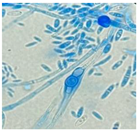
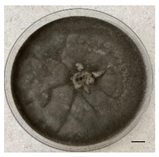
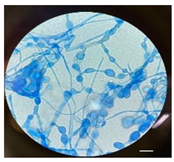
Samples were collected during the harvest season from corm rot-affected specimens. Two fungi were isolated: Fusarium solani, which showed micro and macroconidia [15] in all culture media at 5 days, and Mycoleptodiscus suttonii, which required constant subculturing and lost viability after 30 days, as reported in the literature [16]. The identity was verified through ITS region sequencing. The F. solani amplicon presented a 627 bp band, and the sequence matched 100% with NCBI, while M. suttonii amplified a 742 bp band with 97.5% identity. Each isolated fungus was corroborated by reinoculation, observing rot symptoms (Table 1).
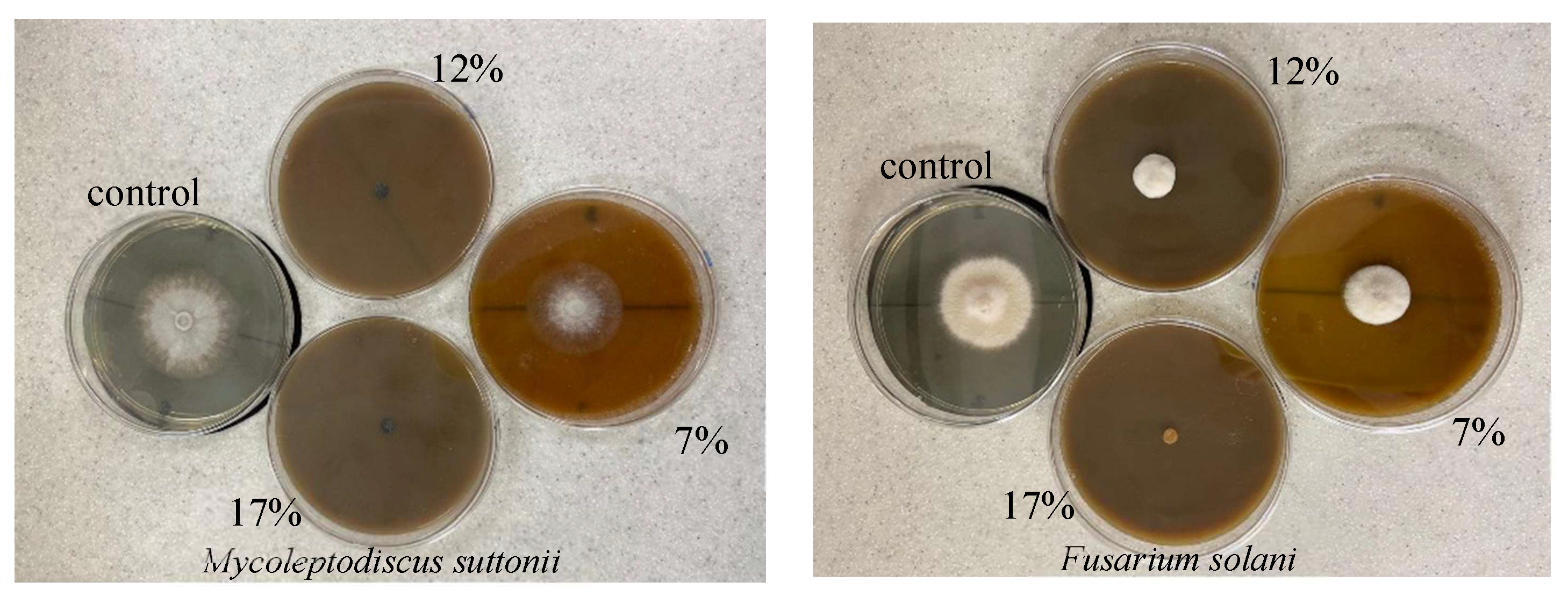
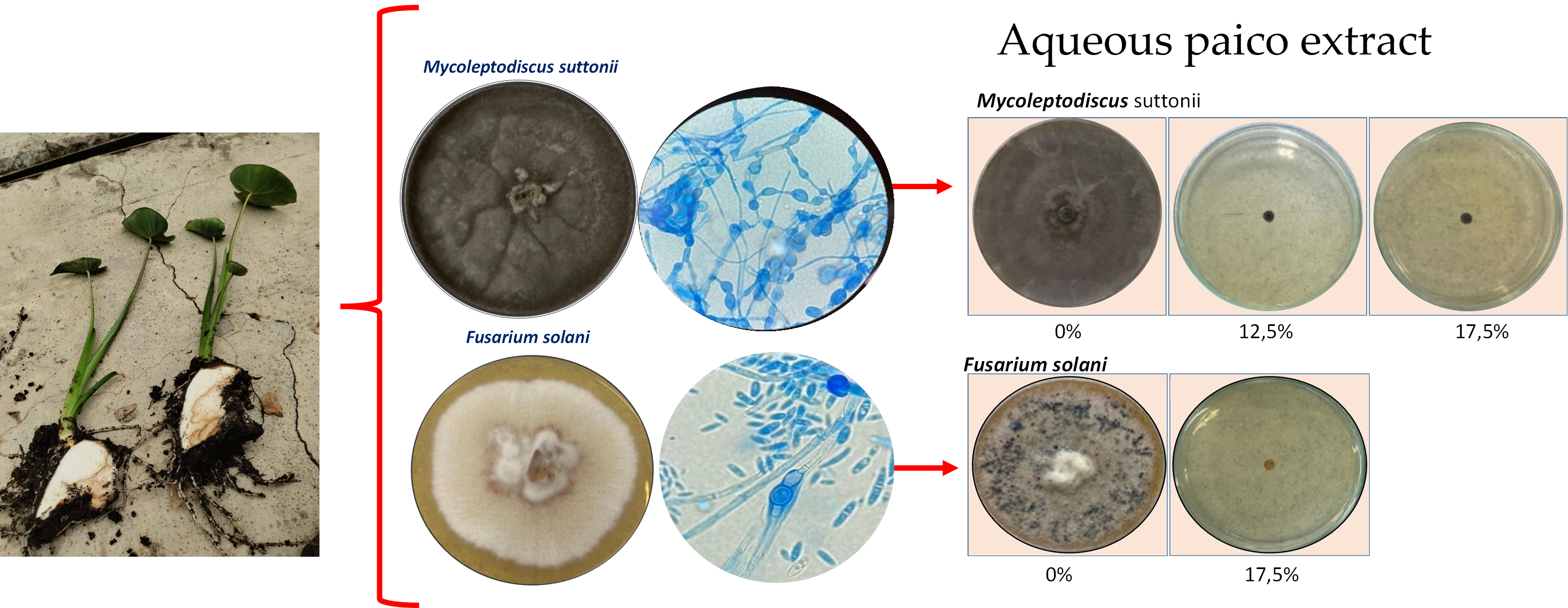
When evaluating the average mycelial growth, it was observed that inhibition increased with concentrations equal to or greater than 12.5% for M. suttonii and 17.5% for F. solani (Figure 2), confirming the fungistatic activity of the extract (inhibits growth upon contact with the extract) (Table 2). Additionally, the fungicidal effect of the paico extract was confirmed, considering the percentage of inhibition, and it was found that there was no growth of any of the causal agents at those concentrations of paico.
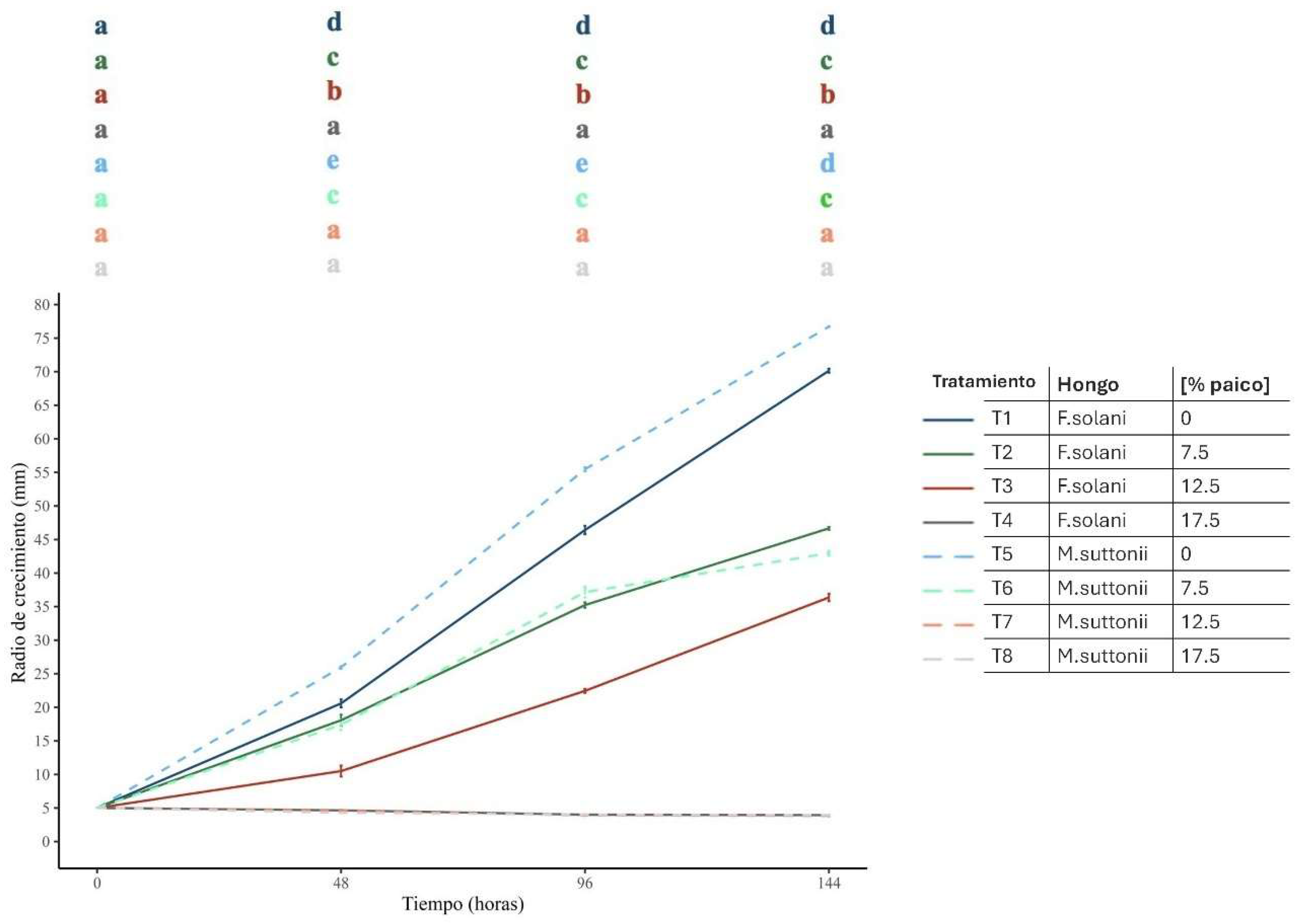
The ANOVA results showed that all sources of variation (fungus, paico, time) and their interactions were significant (P value < 0.0001). The Tukey test results confirm the treatment groupings, showing differential responses starting at 48 hours, with an increase in growth except for M. suttonii at 12.5% and 17.5% (treatments 7 and 8) and for F. solani at 17.5% (treatment 4) (Figure 3).

4. Discussion

This study reports, for the first time in the Colombian Pacific, the identification of M. suttonii and F. solani as causal agents of corm rot in Chinese yam. F. solani had previously been reported as causing post-harvest damage in Chinese yam [10], [17], whereas M. suttonii had not been reported in yam but had been found in other crops [16].
Various studies suggest that this effect is due to secondary metabolites such as alkaloids, steroids, flavonoids, terpenoids, and quinones, among others [18,19]. Specifically, in paico, a component called ascaridol (1,4-peroxide of p-menth-2-ene), the main antifungal agent [20,21,22], acts by inhibiting fungal growth by interfering with the integrity of the fungal cell membrane, producing variable responses depending on the species, race, and pathogenicity of the fungus [21]. This compound affects the synthesis of essential fatty acids in the membrane, resulting in the loss of viability and fungal growth [21]. Additionally, ascaridol and other secondary metabolites of paico work synergistically to enhance its fungitoxic effect [10].
Although the plant extract in alcohol is reported to be more effective than the aqueous extract [23,10], because alcohol could more easily solubilize phytocompounds, the aqueous extract of paico showed an evident toxic effect at low concentrations. However, it is not as fast-acting as chemicals, but this solution is less polluting to the ecosystems of the Colombian Pacific, easy to produce, low-cost, and also resolves the difficulties of transportation and procurement of inputs by using paico that grows in the region.
When evaluating the effect of paico, it was observed that only at 17.5% did F. solani show an effect, possibly due to having a thicker cell wall [24], or because it is a chemotroph and secretes enzymes that help it degrade organic compounds, a characteristic that confers resistance to phytotoxins. However, it ends up being vulnerable to several of them, such as Azadirachta indica, Carica papaya, Allium sativum bulbs, and Garcinia kola seeds [10,25]. Is necessary identify the minimum effective concentration (MEC) of the paico extract that achieves a significant inhibition of the mycelial growth of Fusarium solani and Mycoleptodiscus suttonii.

5. Conclusions

The Pacific region, with its vast geographical and cultural diversity, presents unique challenges in terms of food security. Pathogens can affect crops both pre-harvest and post-harvest, putting the sustainability and economy of the region at risk.
The combination of morphological and molecular methods is essential for the precise identification of fungi, especially in complex cases such as Mycoleptodiscus suttonii, where sequencing of other genes (LSU, TEF, RPB2) is necessary to obtain a more accurate and reliable taxonomic resolution.
It can be concluded that the aqueous extract of paico possesses fungicidal and fungistatic properties, making it an alternative to conventional agrochemicals and promoting ecological agriculture for the production of organic food at a low cost.
New bioassays on the composition of paico are proposed, complemented with gas chromatography analysis for the separation, identification, and quantification of secondary metabolites. This will further elucidate organic control methods.

Author Contributions

YVP; LDC; NRC.; writing—review and editing, conceptualization, methodology, formal analysis. YVP; LDC; NRC; validation. All authors have read and agreed to the published version of the manuscript.

Funding

This research was funded by Internal Project Universidad del Valle: "Colocasia esculenta 'Chinese Yam', the livelihood of families in the Colombian Pacific: A genetic, morphological, and bromatological analysis" identified with the code CI 71347.

Data Availability Statement

Data will be made available on request.

Conflicts of Interest

The authors declare that they have no known competing financial interests or personal relationships that could have appeared to influence the work reported in this paper.

References

  1. Abu-Elteen, K. H.; Hamad, M. Fungi. Biology and applications. Fungi. Wiley. 2017. 299–332. [CrossRef]
  2. Asprilla-Perea, J.; Diaz-Puente, J. M. Traditional use of wild edible food in rural territories within tropical forest zones: A case study from the northwestern Colombia. New Trends and Issues Proceedings on Humanities and Social Sciences 2018, 5, 162–18. [Google Scholar] [CrossRef]
  3. Ashkezari, J.S.; Namiranian, N.; Gholami, S.; Elahi, M.; Rahmanian, M. Proximal, Microbiological and Nutritional Characterization in Chinese Potato Flour of the White Variety Colocasia esculenta for Application in Functional Foods. Int J Reprod Biomed 2019, 17, 143–144. [Google Scholar] [CrossRef]
  4. Bora, P.; Saikia, K.; Ahmed, S. S. Pathogenic fungi associated with storage rot of Colocasia esculenta and evaluation of bioformulations against the pathogen. Pest Management in Horticultural Ecosystems 2020, 26, 134. [Google Scholar] [CrossRef]
  5. Aditika, B.; Kapoor, S.; Singh, S.; Kumar, P. Taro (Colocasia esculenta): Zero wastage orphan food crop for food and nutritional security. South African Journal of Botany 2022, 145, 157–169. [Google Scholar] [CrossRef]
  6. Colariccio, A.; De Fátima-Ramos, A.; Rodrigues, A.L.; Lembo, L.M. First occurrence of Dasheen mosaic virus (DsMV) in Xanthosoma riedelianum (Mangarito) in Brazil. Mexican Journal of Phytopathology url={https://api.semanticscholar.org/CorpusID:258434686}. 2023. [Google Scholar] [CrossRef]
  7. Dávila, L.; Herrera, L.; Folgueras, M.; Espinosa, M. Patogenicidad de especies fúngicas presentes en los rizomas de malanga (Xanthosoma y Colocasia). Centro agrícola 2016, 43, 49–58. [Google Scholar]
  8. Ugwuanyi, J.O.; Obeta, J.A. Fungi associated with storage rots of cocoyam (Colocasia spp) in Nsukka, Nig. Mycopathol 1996, 134, 21–25. [Google Scholar] [CrossRef] [PubMed]
  9. Abdulai, M.; Norshie, P. M.; Santo, K. G. Incidence and severity of taro (Colocasia esculenta L.) blight disease caused by Phytophthora colocasiae in the Bono Region of Ghana. International Journal of Agriculture & Environmental Science 2020, 7, 52–63. [Google Scholar] [CrossRef]
  10. Anukworji, C.A.; Ramesh, R. P.; Okigbo, R.N. Isolation of fungi causing rot of cocoyam (Colocasia esculenta (L.) Schott) and control with plant extracts: (Allium sativum, Garcinia kola, Azadirachta indica, and Carica papaya). Global Advanced Research Journal of Agricultural Science 2012, 1. [Google Scholar]
  11. Gutierrez-Foronda, C.C.; Salcedo, L.; Barrera, C.C.G. Evaluación de la actividad antifúngica de extractos etanólicos de paico (Chenopodium ambrosioides), khoa (Clinopodium bolivianum) y ruda (Ruta graveolens) frente a Moniliophthora spp aislada a partir de muestras de cacao con moniliasis. Universidad Mayor de San Andrés http://repositorio.umsa.bo/xmlui/handle/123456789/18259. 2017. [Google Scholar]
  12. Hartz, S.; Linares, C.E.; Silva de Loreto, E.; Rodrigues, M.; Thomazi, D.I.; Souza, F.; Santurio, J.M. Utilização do ágar suco de tomate (ágar V8) na identificação presuntiva de Candida dubliniensis. Revista da Sociedad Brasileira de Medicina Tropical 2006, 39, 92–93. [Google Scholar]
  13. Ramos-Sandoval, R.U. , Gutiérrez-Soto, J.G., Rodríguez Guerra, R., Salcedo-Martínez, S.M., Hernández-Luna, C.E., Luna-Olvera, H.A., Jiménez-Bremont, J.F., Fraire Velázquez, S., & Almeyda-León, I.H. Antagonismo de dos Ascomicetos Contra Phytophthora capsici Leonian, Causante de la Marchitez del Chile (Capsicum annuum L.). Revista Mexicana de Fitopatología. 2010, 28, 75–86. [Google Scholar]
  14. ICONTEC. Bioinsumos para uso agrícola. Extractos vegetales empleados para el control de plagas y enfermedades. Requisitos. 2020.
  15. Leslie, J. F.; Summerell, B.A. The Fusarium Laboratory Manual. The Fusarium Laboratory Manual. Wiley. 2006. [Google Scholar] [CrossRef]
  16. Hernández-Restrepo, M.; Bezerra, J.D.P.; Tan, Y.P.; Wiederhold, N.; Crous, P.W.; Guarro, J.; Gené, J. Re-evaluation of Mycoleptodiscus species and morphologically similar fungi. Persoonia: Molecular Phylogeny and Evolution of Fungi. 2019, 42, 205–227. [Google Scholar] [CrossRef]
  17. Eze, C.C.; Maduewesi, J.N.C. Relation of traditional Methods to the magnitude of storage losses of cocoyam (Colocasia esculenta (L.) Schott). Nig. J. Plant Protection. 1990, 13, 26–34. [Google Scholar]
  18. Crous, L. , Lombard, F., Sandoval-Denis, M.; Seifert, K.A.; Schroers, H.-J.; Chaverri, P.; Gené, J.; Guarro, J.; Hirooka, Y.; et al. Fusarium: more than a node or a foot-shaped basal cell. Studies in Mycology. 2021, 98, 41. [Google Scholar] [CrossRef]
  19. Kasali, F. M.; Tusiimire, J.; Kadima, J. N.; Agaba, A. G. Ethnomedical uses, chemical constituents, and evidence-based pharmacological properties of Chenopodium ambrosioides L.: extensive overview. Futur J Pharm Sci. 2021, 7. [Google Scholar] [CrossRef]
  20. Degenhardt, R.T.; Farias, I.; Grassia, L.; Franchi, G.; Nowill, A.E.; Bittencourt, C.M.; Wagner, T.M.; de Souza, M.M.; Cruz, A.B.; Malheiros, A. Characterization and evaluation of the cytotoxic potential of the essential oil of Chenopodium ambrosioides. Rev Bras Farmacogn. 2015, 26. [Google Scholar] [CrossRef]
  21. Gómez-Castellanos, J.R. Epazote (Chenopodium ambrosioides). Revisión a sus características morfológicas, actividad farmacológica, y biogénesis de su principal principio activo, ascaridol. Boletín Latinoamericano y del Caribe de Plantas Medicinales y Aromáticas 2008, 7, 3. [Google Scholar]
  22. Pérez-Delgado, O.; Alvarado-Pineda, R.L.; Yacarini-Martínez, A.E. Actividad antibacteriana in vitro de extracto etanólico crudo de las hojas de Origanum vulgare, frente Staphylococcus aureus ATCC 29213, Pseudomonas aeruginosa ATCC 27853 y Escherichia coli ATCC 25922. J. Selva Andina Res. Soc. 2021, 12. [Google Scholar] [CrossRef]
  23. Ekwenye, U. N.; Elegalam, N.N. Antibacterial activity of Ginger (Zingiber officinale Rosecoe) and garlic (Allium sativum L.) extracts on Escherichia coli and Salmonella typhi. J. Molecular Med. and Adv. Sci 2005, 1, 411–416. [Google Scholar]
  24. Kumar, R.; Mishra, A.K.; Dubey, N.K.; Tripathi, Y.B. Evaluation of Chenopodium ambrosioides oil as a potential source of antifungal, antiaflatoxigenic and antioxidant activity. Int J Food Microbiol 2007, 115, 159–164. [Google Scholar] [CrossRef]
  25. Jardim, C. M.; Jham, G. N.; Dhingra, O. D.; Freire, M. M. Composition and antifungal activity of the essential oil of the Brazilian Chenopodium ambrosioides L. J Chem Ecol 2008, 34, 1213–1218. [Google Scholar] [CrossRef]
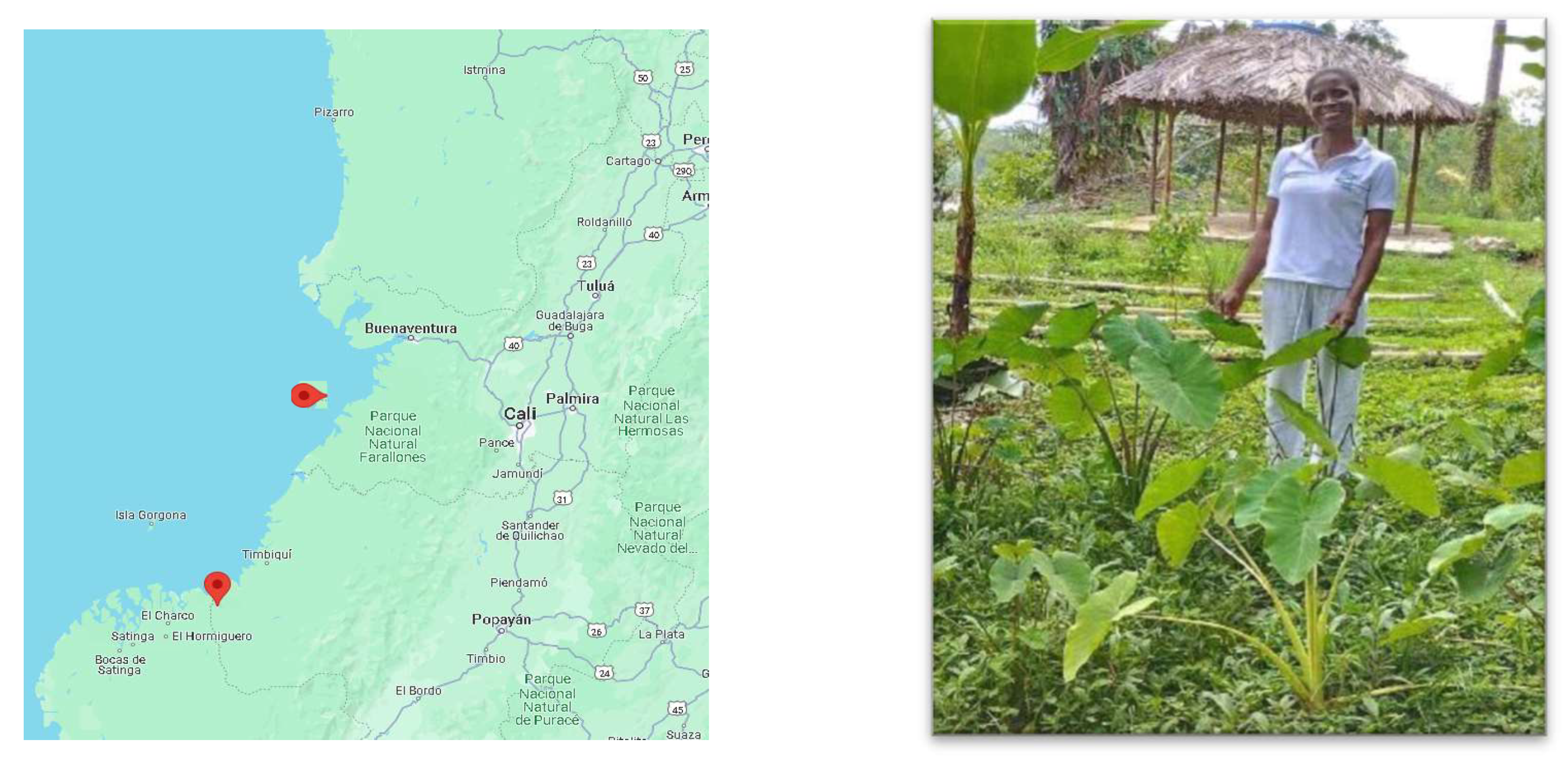
Figure 1. Location of the Chinese potato samples collected with corm rot. On the right, an Afro-descendant woman from Buenaventura harvests the Chinese potato for her daily sustenance.
Preprints 152246 g001
Figure 2. Mycelial growth of M. suttonii and F. solani in sabouraud medium with aqueous paico plant extract at different concentrations.
Preprints 152246 g002
Figure 3. Growth rate (mm) of the phytopathogenic fungi F. solani (Treatments 1 to 4) and M. suttonii (Treatments 5 to 8) under three concentrations of aqueous paico extract (7.5, 12.5, and 17.5%) using PDA medium without paico extract (0%) as a control, evaluated over 144 hours with growth assessments every 48 hours. At the top, the letters represent treatment groupings based on the Tukey test, with the color of the letters corresponding to the color that identifies each treatment in the graph. An average of 6 repetitions is presented.
Preprints 152246 g003
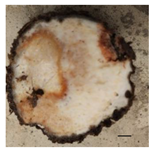
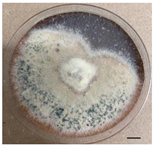
Table 1. Macroscopic and Microscopic Characteristics of the Causal Agents of Rot in Chinese Yam. The symptoms were recorded in the corms 2 months after inoculation with the causal agents. Macroscopic characteristics were obtained on PDA medium, and for microscopic characterization, macro and microconidia of F. solani and aggregates of sporodochial cells in M. suttonii were observed. Photographic records of microscopy were achieved under a 100X magnification objective.
Causative agent Symptoms Macroscopic identification Microscopic identification. 100X
Fusarium solani Preprints 152246 i001 Preprints 152246 i002 Preprints 152246 i003
Mycoleptodiscus suttonii Preprints 152246 i004 Preprints 152246 i005 Preprints 152246 i006
Table 2. Inhibition of growth of Fusarium solani and Mycoleptodiscus suttonii isolated from Chinese yam against aqueous plant extract of paico, evaluating the growth ranges concerning a positive control. Light green indicates a low percentage, darker green a medium percentage, and red a high percentage, as previously described.
[%Paico] % inhibition Fusarium solani % inhibition Mycoleptodiscus suttonii
48 h 96 h 144 h 48 h 96 h 144 h
7,5 12 24 33 33 33 44
12,5 49 52 48 82 93 95
17,5 78 91 94 83 93 95
Disclaimer/Publisher’s Note: The statements, opinions and data contained in all publications are solely those of the individual author(s) and contributor(s) and not of MDPI and/or the editor(s). MDPI and/or the editor(s) disclaim responsibility for any injury to people or property resulting from any ideas, methods, instructions or products referred to in the content.
Copyright: This open access article is published under a Creative Commons CC BY 4.0 license, which permit the free download, distribution, and reuse, provided that the author and preprint are cited in any reuse.
Prerpints.org logo

Preprints.org is a free preprint server supported by MDPI in Basel, Switzerland.

Subscribe

Disclaimer

Terms of Use

Privacy Policy

Privacy Settings

© 2025 MDPI (Basel, Switzerland) unless otherwise stated