

Submitted:
23 August 2024
Posted:
23 August 2024
You are already at the latest version
Abstract
Field surveys were conducted in October 2022 and March 2023 (60 fields each year) to determine the prevalence, incidence and severity of cassava mosaic disease (CMD) and cassava brown streak disease (CBSD), whitefly numbers and incidence of cassava green mite (CGM) in six counties of western Kenya. A total of 29 varieties were recorded out of which 13 (45%) were improved. The improved varieties were present in 62% of the 120 fields sampled with the most predominant MM96/4271 found in 36% of the fields. There was more CMD infection in 2022 with a prevalence of 68%, incidence of 26.4% and severity score of 2.7, while in 2023 these parameters were 60%, 10.1% and 3.0 respectively. CMD incidence attributed to planting infected cuttings was 20.1% in 2022 but dropped to 4.3% in 2023 while for whitefly-borne infection incidence remained 4.4% for both years. CMD incidence was significantly lower (5.9%) for improved varieties than it was for local varieties (35.9%) in contrast to CBSD incidence which did not differ significantly between improved (2.3%) and local varieties (9.7%). However, the improved variety MM96/4271 was among the varieties most affected by CBSD, with an incidence of 6.3%. Overall, CBSD in 2022 had a prevalence of 20%, incidence of 6.4% and severity of 2.7, while in 2023 these parameters were 12%, 4.1% and 2.7 re-spectively. Cassava brown streak virus (CBSV) and Ugandan cassava brown streak virus (UCBSV) were both detected. Most infections were single CBSV infections (82.9%), followed by single UCBSV (34.3%) and coinfection with both viruses (16.7%). Whiteflies were more abundant in 2023, in which 28% of the fields had super-abundant populations of >100/plant, compared to 5% in 2022. Molecular characterization based on mtCOI sequencing identified the whiteflies as Bemisia tabaci. KASP SNP genotyping designated 92.8% of the specimens as SSA-ECA for 2022 while it was 94.4% for 2023, compared to 72% for an earlier sample collection in western Kenya in 2017. CGM prev-alence was 95% with a severity of 2.7 in both years, but incidence was lower in 2022 (65.4%) compared to 2023 (79.9%). This study demonstrates that the majority of farmers are cultivating improved varieties, although cassava viruses, whiteflies and cassava green mites are still a threat. There is a need to develop and deploy integrated management strategies against these pests which will include components of resistant varieties, clean seed and control of whiteflies and CGM.
Keywords:
Bemisia tabaci
; whitefly
; cassava green mite
; cassava mosaic disease
; cassava brown streak disease
1. Introduction
Cassava (Manihot esculenta Crantz) is one of the most important staple food crops in the world, supporting over 500 million people in sub-Saharan Africa (SSA) as a source of food and income [1,2]. The world production trend of this crop has been on the rise with the current estimated production of 330 million tonnes in 2022 which represents an 80% increase in two decades compared to 182 million tonnes in 2002. In Africa the production has doubled in two decades from 98 million in 2002 to 208 million tonnes in 2022 representing about 63% of the world production [1]. In Kenya (western and coastal regions), cassava is the second most important crop after maize [3,4,5]. Erratic weather patterns with reduced rainfall and increased dry spells due to climate change are a threat to food security especially in sub-Saharan Africa where the majority of people rely on rainfed agriculture. Cassava has emerged as a promising food security crop under the prevailing climate change threats due to its resilience and robustness allowing it to produce acceptable yields under marginal conditions associated with low soil fertility and low rainfall, and with minimal agronomic management practices compared to other crops [6]. Its ability to adapt and survive in different environments combined with tolerance to prolonged dry spells makes it one of the most important staple and food security crops in areas where production is constrained by soil stresses and civil strife [1,6,7] farming with the aim to provide raw materials for diverse products that include biofuel, starch, biopolymers, flour, and animal feed [8,9].
Despite Africa being the leading continent in the production of cassava, average yields are about 8 t/ha which is extremely low compared to South America 14 t/ha and Asia 22 t/ha [1]. The low yield is attributed to poor agronomic practices, abiotic and biotic stresses. The most constraining factors to cassava production in sub-Saharan Africa are two devasting viral diseases, cassava mosaic disease (CMD) and cassava brown streak disease (CBSD) [10,11,12]. CMD is caused by 11 species of cassava mosaic begomoviruses (CMBs) [12,13,14], while CBSD is caused by two species of cassava brown streak ipomoviruses (CBSIs) which are Cassava brown streak virus (CBSV) and Ugandan cassava brown streak virus (UCBSV) [15,16,17]. The viruses that cause CMD and CBSD are spread through propagation of infected planting material and transmission by cassava whiteflies – Bemisia tabaci (Genn.) (Aleyrodidae) [18,19]. CMD is prevalent in all cassava growing regions in SSA, while CBSD has been so far reported from East, Central and Southern Africa with recent studies indicating the widespread occurrence of the disease in Uganda, Kenya, Malawi, Burundi, Rwanda, Zambia, Tanzania, Comoros Islands and some parts of Democratic Republic of Congo [5,11,14,20,21,22,23,24,25,26]. Yield losses attributed to CBSD in SSA range between 30–40% for CBSD and, up to 70% for CMD [14]. In susceptible cassava varieties CBSD is reported to cause up to 100% yield loss [27]. The most damaging effect of CBSD is root necrosis, causing root yield losses of up to 75% as the root is unmarketable or inedible in the most susceptible varieties [28]. The cause of severe and rapidly expanding CBSD epidemics is yet to be identified, however, the introduction of the virus to mid-altitude areas and the presence of high whitefly populations are probable drivers of new CBSD outbreaks [11,29]. In a more recent report in Kenya, CBSD foliar incidence ranged from 52.1 to 77.5% and root necrosis incidence from 36.7 to 40% [30]. In a study conducted in 2013 in Kenya, CBSD resulted in root yield loss of 24.7% translating to US$1259.50 per hectare [30]. High CMD (71.4 to 100%) and CSBD (20 to 100%) incidences have been observed in western Kenya [31]. Combined losses from CMD and CBSD have been estimated to a value of USD one billion per year threatening the livelihoods of smallholder households that depend on cassava as a staple food crop in sub-Saharan Africa [10,14].
Bemisia tabaci whitefly feeding on cassava can also damage plants causing chlorotic mottling, twisting or curling, particularly on upper leaves [32]. Large populations that develop early in the crop's life reduce plant vigour and tuberous root sizes and cause stunted growth leading to more than 50% loss in yield [33]. A large whitefly population can also produce honeydew, which leads to the production of black sooty mould on lower leaves, reducing the photosynthetic ability of the plant, further contributing to yield losses [33,34]. However, the most significant economic threat is spread of CMD and CBSD [29].
Bemisia tabaci comprises numerous mitotypes that have been identified based on sequences of the mitochondrial cytochrome oxidase I (mtCOI) gene [35,36]). The mitotypes found on cassava in Africa have been categorised into five major groups designated sub-Saharan Africa (SSA1, SSA2, SSA3, SSA4, SSA5). SSA1 has five sub-groups SSA1-SG1, SSA1-SG2, SSA1-SG3, SSA1-SG4 SSA1-SG5 [29,37]). SSA1-SG1 is the most predominant mitotype in most cassava-growing regions in East and Central Africa, including Kenya and its neighbouring countries Tanzania and Uganda (29,38]. Studies using SNP-genotyping through NextRAD sequencing identified six major genetic haplogroups (phylogenetic classification based on SNP-genotyping) and showed that COI is not effective at distinguishing the major genetic groupings of cassava B. tabaci in Africa [38,39]. All the known mitotypes occurring on cassava were reassigned into the six SNP-based haplogroups: sub-Saharan Africa East and Central Africa (SSA-ECA), sub-Saharan Africa East and Southern Africa (SSA-ESA), sub-Saharan Africa Central Africa (SSA-CA), sub-Saharan Africa West Africa (SSA-WA), sub-Saharan Africa 2 (SSA2), and sub-Saharan Africa 4 (SSA4). A Kompetitive allele specific PCR assay (KASP) has been developed to distinguish the six major SNP-based haplogroups [40].
The cassava green mite (CGM) Mononychellus tanajoa Bondar (syn = M. progressivus) (Acari: Tetranychidae) is a serious pest of cassava in sub-Saharan Africa that was accidentally introduced in the 1970s [41,42]. CGM causes damage through feeding on the undersides of young, emerging leaves causing white to yellowish speckling, leaf and shoot deformation, and reduced size. Heavy infestations cause defoliation, beginning at the top of the plant, and often kill apical and lateral buds and shoots [42,43]. CGM damage is usually severe under dry conditions and high temperatures that favour rapid population build up. However, under wet conditions and low temperature the mite populations decrease, and plants tend to recover by producing new foliage [42]. Cassava yield loss due to CGM damage in Africa is 13 – 80% depending on cassava variety and prevailing climatic conditions [41,42,44]. Control of CGM relies on plant host resistance and biological control by various species of phytoseiid mites [42]. The successful introduction of Typhlodromalus aripo De Leon (Acari: Phytoseiidae) in cassava growing regions in Africa has contributed to significant control of CGM with reductions of up to 45% [45,46,47]. Recent observations indicate that CGM could be re-emerging as a serious pest of cassava due to erratic weather patterns accompanied with prolonged dry periods or low rainfall intensity. These conditions could not only be favouring rapid population build-up of CGM but also hampering the survival and efficacy of phytoseiid predatory mites that are the main biological control measure [47]. The general objective of this study was to determine the status of major pests and diseases in cassava in six counties located in western Kenya a leading region in cassava production in the country and based on that to propose management recommendations.
2. Materials and Methods
2.1. Survey Sites
Field surveys were conducted in six major cassava producing counties in western Kenya (Bungoma, Busia, Kakamega, Siaya, Homa Bay and Migori) during the short rainy season in October 2022 and repeated at the start of the long rainy season in March 2023. Ten fields with cassava plants three to six months old were sampled per county in each sampling season giving a total of 120 fields sampled. The fields were selected along motorable roads with a minimum inter-field separation distance of 5 km.
2.2. Whiteflies, Cassava Mosaic Disease and Cassava Brown Streak Disease Assessment
For each visited field the cassava varieties, location information (county, district, location, village) and GPS coordinates were recorded. The assessment protocol was a slightly modified version of Sseruwagi et al [48]. The predominant cassava variety was selected for assessments. Thirty plants were assessed per field by selecting plants at regular intervals along two diagonal axes, 15 plants per axis. Adult whiteflies were counted from the top five leaves of the tallest shoot and the nymphs were counted from the 14th leaf of the 6th, 12th, 18th, 24th and 30th plants. Whiteflies were aspirated from randomly selected plants in each field, immobilized in 95% ethanol and preserved in 2 mL vials for molecular characterization. The number of whiteflies collected per field was dependent on abundance ranging from 10 to 50 whiteflies per vial.
CMD was assessed using the 1–5 scoring scale, where 1 = cassava plant showing no leaf symptoms; 2 = mild distortion and mild chlorosis on the leaves; 3 = significant distortion and chlorosis on most leaves; 4 = extreme distortion and mosaic patterns on most leaves and general reduction of leaf size; and 5 = very severe mosaic symptoms on all leaves, accompanied by distortion and twisting, and severe leaf reduction of most leaves accompanied by severe stunting of plants [48,49]. CBSD foliar symptoms were scored using a scale of 1-5 where 1 = asymptomatic; 2 = mild vein yellowing with no streaks on stems; 3 = mild vein yellowing with mild streaks on stems; 4 = severe vein yellowing with severe streaks on stems; 5 = severe and extensive vein yellowing, severe streaks, die-back and defoliation [50,51]. The leaves for virus testing were sampled from 10 plants out of the 30 per field selected at regular intervals irrespective of whether the plants were symptomatic or asymptomatic. For plants that were symptomatic, leaves with virus symptoms were selected to increase the chances of molecular detection of the virus. Samples were preserved by pressing between two to three layers of blank newsprint sheets. The leaves were then left to dry and maintained at ambient temperature and moisture-free until required for further processing.
2.3. Cassava Brown Streak Ipomoviruses Detection by (RT) PCR Testing
Total nucleic acid (DNA and RNA) was extracted using a standard cetyltrimethyl ammonium bromide (CTAB) method (Maruthi et al 2002) and nucleic acids were re-suspended in nuclease-free PCR-grade water. CBSIs were detected using CBSV- or UCBSV-specific TaqMan assays [53,54] using an AriaMx Real-Time PCR System (Agilent technologies, Santa Clara, CA 95051 United States).
2.4. Genetic Identification of Bemisia tabaci
The whiteflies collected in this study were identified through COI sequencing, while those identified as cassava B. tabaci were further designated using KASP genotyping. Whitefly samples collected in a previous survey in 2017 from 8 counties (Busia, Bungoma, Homa Bay, Kakamega, Kisumu, Migori, Siaya, Vihiga) were included for comparison purposes to determine if there are any shifts in mitotype distribution and proportion. DNA was extracted from 92, 102 and 120 single adult whiteflies for the years 2017, 2022 and 2023 respectively. A partial fragment of mitochondrial DNA cytochrome oxidase I (mtCOI) was amplified using one set of primers, 2195-Bt-F (5’-TGRTTTTTTGGTCATCCRGAAGT-3’) and C012-Bt-sh2-R (5’-TTTACTGCACTTTCTGCC-3’) [55]. The PCR reaction contained 1× QuickLoad Master Mix (New England Biolabs, UK), 1 mM MgCl2, 0.24 µM of each primer, 2 µL DNA, and sterile distilled water to achieve the desired reaction volume of 25 µL. PCR was carried out under the following conditions: 95 °C for 5 min for initial denaturation of template DNA, followed by 35 cycles of (94 °C for 40 seconds, 56 °C for 30 seconds for annealing, and 72 °C for 90 seconds for extension), with a final extension at 72 °C for 10 minutes. The PCR products were run on a 1% (w/v) agarose gel in 1× TAE buffer stained with GelRed. DNA bands were visualized while using a Gel Doc XR+ Gel Documentation System and only samples with intact bands of the expected size (867 bp) were selected for sequencing. PCR products were sent to Psomagen Inc. (Rockville, Maryland, United States) for purification and direct PCR sequencing. DNA sequences were manually edited using Ridom Trace Edit v1.1.0 (Ridom GmbH., Würzburg, Germany). The sequences were assembled into contigs using CLC Main Workbench 7.0.2 (QIAGEN, Aarhus, Denmark). Multiple alignment of edited sequences was performed using ClustalW in Molecular Evolutionary Genetics Analysis software (MEGA version 7.0.26) [56]. Construction of a maximum likelihood phylogenetic tree was performed using MEGA with 1000 bootstrap replicates. Sequences were blasted using GenBank’s (NCBI) Blastn and selected reference sequences with 99% to 100% identity to our COI sequences were included in the phylogenetic tree for comparison with previously published mitotypes.
The cassava B. tabaci samples used to generate the COI phylogenetic tree for 2017 and 2023, and additional new samples (not diagnosed with COI for 2022 and 2023) were tested using the KASP diagnostic with a set of six primers (BTS99-319, BTS22-762, BTS141, BTS55-473, BTS613, and BTS46203) [40]. The total number of samples tested was 82 (2017), 111 (2022) and 232 (2023). Conventional primers were used to generate PCR products of genome portions containing target SNPs and the PCR products were then used as DNA template in KASP genotyping (Wosula et al. 2020). The KASP reaction mixture (10 µL) contained 5 µL 2× KASP master mix, 0.14 µL KASP primer assay mix and 5 µL DNA template (1 µL of PCR product/DNA extract + 4 µL of sterile water). KASP genotyping was performed in a Stratagene MX 3000P qPCR system (Agilent Technologies, Santa Clara, California, United States). The following cycling conditions were used: Stage1: 30 °C 60 seconds (pre-read); Stage 2: 94 °C for 15 minutes hot-start Taq activation (1 cycle); Stage3: 94 °C for 20 seconds, 61 °C (61 °C decreasing 0.6 °C per cycle to achieve a final annealing/extension temperature of 55 °C) for 60 seconds (10 cycles); Stage 4: 94 °C for 20 seconds, 55 °C for 60 seconds (29 cycles); Stage 5: 94 °C for 20 seconds, 57 °C for 60 seconds (3 cycles); Stage 6: 37 °C for 60 seconds (1 cycle, cooling) followed by an end-point fluorescent read. These conditions were used for four primers (BTS99-319, BTS22-762, BTS55-473, and BTS141), while Stage 3: 94 °C for 20 seconds, 68 °C (68 °C decreasing 0.6 °C per cycle to achieve a final annealing/extension temperature of 62 °C) was used for two primers, BTS613 and BTS46-203. The quality of genotyping cluster plots was visually assessed and only samples in distinct clusters with respective positive controls were considered for manual SNP calling using the MxPro software incorporated into the Stratagene MX 3000P unit.
2.5. Cassava Green Mite Incidence
CGM damage was scored based on a scale of 1–5, where: 1 = no obvious symptoms; 2 = moderate damage, no reduction in leaf size, scattered chlorotic spots on young leaves, 1–2 spots/cm; 3 = severe chlorotic symptoms, light reduction in leaf size, stunted shoot, 5–10 spots/cm; 4 = severe chlorotic symptoms and leaf size of young leaves severely reduced; and 5 = tips of affected plants defoliated, resulting in a candle stick appearance of shoot tips [57].
3. Results
3.1. Cassava Variety Distribution
The farmer fields sampled during the 2022 season had cassava fields ranging between 60 to 3,000 m2 with an average size of 664 m2, while those for the 2023 season cassava fields ranged between 75 to 15,000 m2 with an average size of 979 m2. The altitude range of sampled farms was 1,138 to 1,629 m a.s.l. for both seasons. In the 60 fields that were sampled in 2022, there were 21 different varieties that were listed as variety 1 (predominant and selected for data collection). Thirty-three fields (55%) had a second variety, 11 (18%) had a third variety and four (7%) had a fourth variety. Improved variety MM96/4271 (released in Uganda as NASE14) was the most frequent, being recorded in all the six counties in a total of 20 out of the 60 fields sampled. The second most frequent variety was Bumba – a local landrace – which was present in six fields (10%) in two counties. Of the remaining 19 varieties, four were present in two counties, while the remaining 15 were present in a single county (Table 1). In the 60 fields that were sampled during the 2023 season, there were 18 varieties that were listed as variety 1 (predominant). Thirty-six fields (60%) had a second variety, nine (15%) had a third variety and four (7%) had a fourth variety. Variety MM96/4271 was the most predominant, being recorded in all six counties in a total of 24 out of the 60 fields sampled. The second most common variety was MM95/0183 which was present in five fields in two counties. Of the remaining 16 varieties, one was present in two counties, while the remaining 15 were present in a single county (Table 2). Combined variety/landrace data for 2022 and 2023 show top five varieties/landraces as Bumba, Kamisi, MM95/0183, MM96/4271 and Migyera (TMS 30572/NASE3). MM96/4271 was the most predominant variety found in all the six counties especially in Busia and Bungoma (Figure 1). Combined data for 2022 and 2023 showed there were a total of 29 varieties recorded from 117 fields while three fields had unknown varieties. Out of the 29 varieties, 13 were improved accounting for 45%, and these were found in 72 fields comprising 60% of the fields. The improved variety MM96/4271 was found in 43 fields accounting for 36% of all fields. Local landraces were found in 45 fields – equivalent to 37.5% of the total, while unknown varieties in three fields accounted for 2.5%.
3.2. Cassava Mosaic Disease
The incidence of CMD in 2022 was 26.4%, while average severity was 2.7 and prevalence was 68%. In fields where CMD infection types were scored, the incidence of whitefly infection was 4.4%, compared with an average cutting infection incidence of 20.1%. The most affected varieties with incidences >50% were mostly local landraces (Magana, Nyakatanegi, Nyanjaga, Serere, Bumba, Fumba Chai, Yellow, Adhiambo Lera, Sudhe). The least affected varieties with < 10% incidence were mostly improved (MM96/4271, MM96/5280, MM96/7151, MM95/0183, Migyera) (Table 1). Bungoma with four varieties that were all improved had a CMD incidence of 4 – 30% with an average of 7.6%, severity 2.5 – 3.5 with an average of 2.7 and a prevalence of 70%. Busia with five varieties had CMD incidence of 0– 80% with an average of 23.7%, severity 3.3 – 3.7 with an average of 3.4, and a prevalence of 60%. For the four varieties encountered in Homa Bay, CMD incidence ranged from 0 to 62% with an average of 24.6%, severity 2.9 – 3.9 with an average of 3.2 and a prevalence of 70%. CMD incidence ranged from 0 to 93% in Kakamega where six varieties were recorded having an overall average of 42.6%, severity scores 2.8 – 3.1 with an average of 3.0 and a prevalence of 70%. Migori with 5 varieties had CMD incidence of 0 – 100% with an average of 24.0%, severity 3.8 – 4.0 with an average of 3.9 and a prevalence of 60%. Siaya with 7 varieties had CMD incidence of 0 – 60% with an average of 35.7%, severity 3.1 – 4.0 with an average of 3.6 and a prevalence of 80% (Table 1). County average CMD incidence was moderate to high in Busia, Homa Bay, Migori Kakamega and Siaya in the range of 20 – 50%, while Bungoma had low incidence 0 – 10% (Figure 2A).
Surveys during the long rain season in March 2023 showed the average CMD incidence of 10.1%, average severity score was 3.0 and average prevalence of 60%. Out of the 10.1%, 4.4% was whitefly infection and 4.3% was cutting infection (not all fields were scored as whitefly or cutting infection due to missing lower leaves). Incidence of CMD >50% was recorded only in two varieties Adhiambo Lera and “unknown”. The least affected varieties with < 10% incidence were mostly improved (MM96/4271, MM96/0686, MM98/3567, MM95/0183, Migyera) and four local landraces (Nylon, Nyanchagi, Kamisi and Sudhe (Table 2). CMD incidence was moderate in Homa Bay and Siaya (10 – 20%), but low in Bungoma, Kakamega, Migori and Siaya (0 – 10%) (Figure 2C).
Combining CMD incidence for 2022 and 2023 across counties, Siaya recorded the highest incidence of 26.5% followed by Kakamega 25%, Homa Bay 22.2%, Busia 15.8%, Migori 15.7% and Bungoma 5.4%. CMD incidence in improved varieties was 5.9% with the most predominant MM96/4271 having an average of 3.5%, which was significantly lower (P < 0.0001) compared to the local landraces that had an average of 35.9.0%. The combined severity score in local landraces was 3.2, while for improved varieties it was 3.1 with the most predominant MM96/4271 having a severity score of 2.8.
3.3. Cassava Brown Streak Disease Incidence
In the 2022 survey, average CBSD leaf incidence was 6.4%, while average severity was 2.6 and average prevalence was 20%. The most affected varieties with an incidence of >30% were Red local, Magana, Nyakatanegi and MM96/4271. The remaining 17 varieties/landraces had an incidence of < 5% with the majority showing no CBSD symptoms. In Bungoma, out of the 4 varieties that were present only MM96/4271 showed CBSD symptoms. CBSD incidence was moderate in Busia and Homa Bay (10 – 20%), but low in Bungoma, Migori and Siaya (0 -10%) (Table 1). No symptoms were observed in Kakamega (Figure 2B).
In the 2023 survey, CBSD incidence was 4.1%, while severity averaged 2.7 and there was a CBSD prevalence of 12%. The most affected varieties were Nyakatanegi (83%), MM96/4271 (6 – 25%) and an unknown variety (13%) (Table 2). Homa Bay was the most affected, with CBSD recorded in 3 out of the 4 varieties. CBSD symptoms were not recorded in Kakamega, Migori or Siaya counties (Table 2). CBSD incidence was moderate in Homa Bay (10 – 20%), but low in Bungoma and Busia (0 -10%), and no symptoms were observed in Kakamega, Migori and Siaya (Figure 2D).
When combining CBSD incidence for 2022 and 2023 for each of the counties, Homa Bay had the highest incidence of 15.0% followed by Busia (7.7%), Siaya (6.0%), Bungoma (2.7%), and Migori (0.2%). CBSD incidence in improved varieties was 2.3% with the most predominant MM96/4271 having an average of 6.3%, while the local landraces had an average of 9.7%. Statistically there were no significant differences in CBSD incidence between improved varieties and local landraces (P > 0.05).
3.4. Bemisia tabaci Adult Whiteflies and Nymphs
In 2022, average adult whitefly abundance was 97, while that for nymphs was 78, however excluding four fields with variety MM96/2480 which had extremely high numbers reduced the average to 9 adults and 31 nymphs (Table 1). The average adult whitefly numbers for counties ranged from 2 – 352 : abundance was greatest in Homa Bay and least in Bungoma. Varieties that had an average of <2 adult whiteflies and nymphs were MM96/5280, MH95/0183, Magana, Merry-go-round, Sudhe and Serere, whilst varieties with the greatest abundance of adults were MM96/2480 (1335), MM96/4271 (24) and Kamisi (34.6) (Table 1).
In 2023, the average number of whiteflies across counties was 85 while for nymphs it was 93 (Table 2). Adult whitefly number was greatest in Bungoma and least in Homa Bay. Whitefly adult abundance was greatest for varieties MM98/3567 (282.1) and TMS I92/0067 (123.3) but averaged less than 5 and 2 for MM96/0686 and Sudhe (Table 2).
The combined 2022 and 2023 whitefly numbers on improved varieties had an average of 63 adults and 66 nymphs (excluding four fields record on MM96/2480 which had an extreme high average number of adult whiteflies that were ~23 times the average in improved varieties). The most predominant variety MM96/4271 recorded an average of 74 adult whiteflies and 77 nymphs. The local landraces had an average of 26 adults and 58 nymphs, which was 58% and 12% fewer respectively compared to improved varieties.
3.5. Real-Time RT-qPCR and PCR Testing Results for Cassava Brown Streak Ipomoviruses in Cassava Leaves – October 2022
The leaf samples that were collected in 2022 were tested for the presence of CBSV and UCBSV. CBSIs were detected in 86.5% of the samples that were scored as having CBSD with the remaining 13.5% testing negative. CBSV was detected in 29 out of 35 samples that tested positive for CBSIs (82.9%) from 5 counties, while UCBSV was detected in 12 out of 35 samples (34.3%) in two counties (Homa Bay and Siaya) (Table 3). Asymptomatic plants collected across the six counties were tested for CBSIs, 16 % (86 out 556) were positive, ranging from 1% (Kakamega) to 34.5% (Bungoma). CBSV was detected in 88.4% of these cases (76 out of 86), while UCBSV was detected in 14% (12 out of 86) (Table 3). Considering symptomatic plants tested from Homa Bay and Siaya, 25% were coinfected with CBSV and UCBSV, while for the asymptomatic plants 9.2% were infected with both viruses.
3.6. Genetic Identification of Bemisia tabaci
Of the 92, (2017), 102 (2022) and 120 (2023) whitefly samples mtCOI sequenced, 73 (2017), 73 (2022) and 112 (2023) produced quality sequences. The sequences were combined with B. tabaci reference sequences from the GenBank to generate a Maximum Likelihood phylogenetic tree. The B. tabaci whitefly mitotypes for 2017 comprised SSA1-SG1 (64.4%), SSA1-SG2 (5.5%), SSA1-SG1/SG2 (1.4%) and SSA2 (28.8%); 2022 comprised SSA1-SG1 (71.2%), SSA1-SG2 (27.4%), SSA1-SG1/SG2 and SSA2 (1.4%); 2023 comprised SSA1-SG1 (69.6%), SSA1-SG2 (24.1%) and SSA2 (4.5%). B. afer was detected only in 2023 accounting for 1.8% of the whiteflies sequenced (Table 4). In 2017 SSA1-SG1 was the predominant mitotype and present in all the eight counties that were sampled. SSA2 was found in six counties (Bungoma, Homa Bay, Kakamega, Kisumu, Siaya, Vihiga), SSA1-SG2 in two counties (Busia, Siaya) and a single specimen of SSA1-SG1/SG2 was found in Vihiga (Figure 3A). In 2022 SSA1-SG1 was again the most abundant mitotype followed by SSA1-SG2, and these were present in all the six counties. SSA2 had only a single whitefly that was found in Siaya (Figure 3B). In 2023 SSA1-SG1 was still the most abundant mitotype followed by SSA1-SG2, these were found in counties. SSA2 was detected in three counties of Homa Bay, Kakamega and Migori (Figure 1C). SSA2 was the second most widespread mitotype after SSA1-SG1 in 2017, but in 2022 and 2023 the frequency in occurrence of SSA2 was very low (Figure 3A, 3B, 3C).
KASP SNP genotyping showed that two haplogroups (SSA-ECA and SSA2) were present, although some samples were not precisely designated into the six known SNP haplogroups (SSA-ECA, SS-WA, SSA-ESA, SSA-CA, SSA2, SSA4). SSA-ECA was the most widely distributed, accounting for 72.0% (2017), 92.8% (2022) and 94.4% (2023) of samples for which sequences were obtained, while SSA2 accounted for 15.8%, 1.8% and 4.7% for the three years respectively. A few samples were designated as others12.2%, 5.4% and 0.9% for 2017, 2022 and 2023 respectively (Table 5). The distribution for 2017 which had both SSA-ECA and 15.8% SSA2 shows that SSA-ECA is widespread across all six counties, while the SSA2 samples that were successfully genotyped were collected from Kisumu and Siaya counties (Figure 3D). SNP haplogroups maps for 2022 and 2023 are not presented because they are over 92% SSA-ECA.
3.7. Cassava Green Mite Incidence
The average cassava green mite (CGM) incidence across the six counties in 2022 was 65.4% with a severity score of 2.7. The most affected county was Migori with 82.7% and the least affected was Siaya with 49.6%. CGM incidence in 2023 was 79.9% with a severity score of 2.7. The most affected counties were Busia and Kakamega with 91.3% and the least affected was Migori with 64.0% incidence (Table 6). CGM prevalence was 100% with exception in 2022 of Kakamega (90%) and Siaya (80%) and in 2023 Homa Bay (80%) and Siaya (90%). The average prevalence for both years was 95% (Table 6). In 2022 only three counties; Homa Bay, Kakamega and Siaya had incidence in the range of 30 – 60%, while Busia Bungoma and Migori had >60% (Figure 4A). In 2023 all the counties had incidence >60% (Figure 4B). Variety MH95/0183 was the most affected with a mean severity score of 3.3 and incidence of 83.3%, the least affected was Bumba with a severity score of 2.3 and incidence of 53.3%. In 2023 the reverse occurred with Bumba as the most affected variety with a severity score of 3.2 and incidence of 98.3% while MH95/0183 had a lower severity score of 2.7 and incidence of 49.3%. MM96/4271, which was the predominant variety, had a severity score of 2.4, and incidences from 83.3 – 77.9% in 2022 and 2023 (Table 7).
4. Discussion
Field surveys in cassava production regions are critical to establish the occurrence of pests and diseases, and to determine the extent of adoption of new improved cassava varieties with resistance or tolerance to these biotic stressors. This study presents findings on cassava varieties, whitefly B. tabaci, cassava virus diseases and cassava green mite occurrence in six cassava growing counties in western Kenya. Cassava in western Kenya is mostly cultivated on small scale with average field area of ~0.08 hectares for a single predominant variety in surveyed fields. The region has diverse cassava varieties, and most farmers (58%) had two varieties while another 17% had three varieties. This indicates that the 29 varieties encountered in this study could just be a portion of what exists in farmer fields. Other studies have reported varieties that were not recorded in this study. For example, of the 18 varieties that were recorded in Migori [30], only three (MH95/0183, Migyera, Sudhe) were encountered in the current study. A high proportion (60%) of fields surveyed in the two years of the current study had improved varieties, and MM96/4271 was recorded across all six counties and in 36% of fields surveyed. MM96/4271 (NASE 14) is resistant to CMD, and tolerant to CBSD (Masinde et al. 2018, Ogwok et al 2015). It also has high dry matter content, low cyanide content and good culinary qualities factors that could have favoured its widespread adoption in western Kenya [58]. Another commonly cultivated variety in the surveyed area was Migyera (=TMS30572 = NASE3), which is also considered tolerant to CMD and CBSD [58,59,60]. Migyera was found to have only CBSV infection while susceptible varieties had a mixture of both CBSV and UCBSV (Ogwok et al. 2015). Both MM96/4271 and Migyera were recommended to farmers in Uganda as CBSD tolerant because of low virus incidence [59,61]. In addition, MM96/4271 was selected as the most preferred variety in a farmer participatory trial in West Nile, Uganda where no CMD and CBSD incidence was recorded compared to 82% and 22.5% respectively in local landraces. It was also reported to have moderate CGM damage compared to local landraces [62]. The high proportion of farmer fields with improved varieties in western Kenya indicates farmers’ willingness to adopt these varieties with time as long they have preferred attributes for example for the period of 1998 – 2001 the proportion of farmer fields with CMD resistance varieties increased from 17 to 35% in Uganda [10]. Improved CMD-resistant varieties were introduced into Kenya in the 1990s as part of a region-wide programme to tackle the spreading pandemic of severe CMD [10,63,64]. Previous studies reported high preference for local landraces by farmers in Migori in Kenya, and improved varieties were only being cultivated on 17.9% of the surveyed fields [30]. In Rwanda a survey carried out in 2007 reported local landraces accounted for 83% of the varieties in farmer fields [65]. Generally local landraces are susceptible to CMD, CBSD and CGM compared to improved varieties [10,65,66], although they often have specific quality traits which are preferred by farmers. In most cases, as observed in this study, farmers grow more than one variety, and in many cases, these are mixtures of both improved and local and at different growth stages. These adjacent fields are usually the source of virus inoculum for infection where clean cassava cuttings are planted [65,67]
The high prevalence of CMD (64%) is an indication that the disease continues to be widespread in western Kenya, albeit at lower levels than in recent history. The average incidence was variable depending on season of survey, county, and cassava variety. The average incidence across counties and varieties was higher in 2022 (26.4%) compared 2023 (10.1%). In 2022 all counties had incidences above 10% except Bungoma which had 8%. However, in 2023, four counties had incidence of below 10%, with only Homa Bay and Siaya having higher incidences of 20% and 17% respectively. Combined data for both years showed that Bungoma had the lowest CMD incidence of 5% followed by Migori at 15% while the other four counties recorded 16 – 27%. The CMD incidence differences were not statistically significant between counties (P > 0.05). The mean CMD incidence of 26.4% in 2022 is comparable to 33% previously reported in Migori [30], 32% in the Comoros Islands [26], 33% in Rwanda [65], and 27% in Tanzania [68]. However, this was lower than the 52% reported in Zambia [69] and 84% reported in Benin [70]. More significantly, however, the current levels of CMD incidence in western Kenya are much lower than they were at the time of the severe CMD pandemic spread in the late 1990s, where CMD incidence was 63% [10,63]. This appears to indicate a long-term impact of the introduction of CMD-resistant varieties. This observation is supported by the current study, as CMD incidence was lower in improved (5.9%) compared to local (35.9%). Furthermore, the most widely grown variety at the present time in western Kenya is MM96/4271, which had one of the lowest incidences of all (3.5%). The low incidence of CMD in improved compared to local landraces has been reported in several studies, for example in Migori incidence in improved was 18% compared to 47% in local varieties [30], whilst in Uganda there are reports of the complete absence of CMD in improved compared with 82% incidence in local varieties [62].
CBSD, by contrast, had a low prevalence (16%) in western Kenya. Incidences of 6.4% in 2022 and 4.1% in 2023 were similarly low. The combined average incidence of 5.3% is very low compared to previous studies for example: 42% in Migori [30], 23% in Uganda [62], 42% in the Comoros Islands [26], 21% in coastal Kenya [5], 32% and 35% in Tanzania [71,72], and 12% in the Democratic Republic of Congo [25]. The combined year incidence of CBSD was variable across counties 0 – 23% which could be attributed to factors such as cassava variety, prevailing climatic conditions, health status of planting material, infection status of cassava plants in neighbouring farms, or age of the crop. This variability is reported in other studies, for example in the coast region of Kenya the incidence was 11 – 28% across three counties [5], Tanzania 0 – 98% [71,72], and Comoros Islands 30 – 49% [26]. Incidence in local landraces was higher (9.7%) than for improved varieties (2.3%) though the predominant variety MM96/4271 had an average CBSD foliar incidence of 6.3% which was higher than other improved varieties. Lower incidence of CBSD in improved compared to local varieties has been reported elsewhere, for example in Migori 27% (improved) versus 57% (local) [30], and in Uganda 23% verses 82% [62].
Real time quantitative RT-PCR for CBSIs detected both CBSV and UCBV in samples collected in 2022. CBSV was the most commonly detected CBSI (82.9%) compared to 34.3% for UCBSV. These findings are comparable to previous studies that have reported a higher incidence of CBSV compared to UCBSV, for example 74% versus 34% in DRC [25], 59% versus 54% in Kenya [5]. However, this contrasts with a study in Tanzania where UCBSV (81%) was more frequent than CBSV (15%) for recycled planting material and 14% versus 2.6% for initially virus-free planting material [73]. The CBSV and UCBSV coinfection rate of 16.7% in this study is slightly higher than in previous studies that recorded 5% (Shirima et al. 2019) and 8.4% [5]. The occurrence in this study of some plants with CBSD symptoms testing negative, and asymptomatic plants testing positive to CBSIs has been reported in other studies and could be attributed to the cryptic nature of CBSIs or primer mismatches [5,26,53]. Detection of CBSIs in asymptomatic plants is a common feature of the CBSD disease phenomenon, as symptoms are often cryptic and sensitive to seasonal variation [74]. The detection rate for CBSIs in asymptomatic plants of 16% demonstrates that true levels of infection are significantly greater than those measured by using visual assessment, although this would not represent a large increase in the incidence level determined from symptoms as it would still result in an overall true incidence of less than 20%. These results suggest that although CBSD continues to be an important cassava production constraint in western Kenya, its status is moderate and relatively stable.
The number of adult whiteflies in 2023 was nine times higher compared to those in 2022 when four outlier fields with variety MM96/2480 were excluded from the averages, while nymphs were three times higher suggesting that conditions prevailing during the 2023 season were favourable for whitefly population build up. This was anticipated, as weather conditions are known to be more favourable for B. tabaci whiteflies on cassava during the hottest time of the year in February and March. Bungoma, which had the fewest adult whiteflies in 2022 had the highest number in 2023 suggesting high variability of whitefly numbers depending on prevailing season which in turn could influence CMD and CBSD epidemics. The association between whitefly abundance and cassava virus spread is well documented [75,76], and the importance of seasonal effects on whitefly abundance and CBSD spread has been clearly documented for coastal Tanzania, where high whitefly abundance and rapid CBSD spread were associated with planting in the short rainy season, in contrast to much lower whitefly abundances and less CBSD spread for plantings made during the long rainy season [73]. The average number of adult whiteflies (47) and nymphs (62) reported in this study excluding the four outlier fields in Homa Bay is very high compared to reports from other recent regional surveys, for example 0.9 adults and 5.2 nymphs in Rwanda (Night et al. 2011), 4.7 (2018) and 1.8 (2016) adult whiteflies in eastern DRC [25], 0.1 to 15.9 adults in Benin [70], 1.8 adults in Comoros Islands [26], and 0.6 adults in Zambia [69]. Abundances of whitefly adults on improved varieties were approximately double those of local varieties. Abundances of B. tabaci on MM96/4271 were typical of this pattern. In addition, however, two fields in Homa Bay with the improved variety MM96/2480 had an unusually high number of whiteflies. Whitefly abundances were some of the highest recorded on cassava for two of the four fields where the variety was recorded (3,280 and 1,961), with a highest single plant count of 7,000, although the two other fields had much lower abundances of 89 and 10. Further research will be required to determine whether these extreme abundances are the result of ultra-suitability of the variety for cassava B. tabaci, or the consequence of specific and unusual micro-environmental conditions.
Several other studies have reported higher number of whiteflies on improved compared to local landraces for example three times higher for both whiteflies and nymphs in Rwanda [65], two times higher nymph means in Uganda [66], and high numbers on improved varieties compared to local landraces [77]. MM96/4271 was among varieties hosting higher mean numbers of whiteflies in a study that evaluated resistance among 23 varieties selected from East and Southern Africa [78]. It was notable, however, that these differences in abundance did not translate into differences in incidence of virus disease, suggesting that improved varieties must have generally higher levels of virus resistance than their local equivalents.
The cassava B. tabaci mitotypes that were detected included SSA1-SG1, SSA1-SG2, SSA1-SG1/SG2 and SSA2. These findings are consistent with previous studies for samples from western Kenya [29,38,39]. The predominant mitotype was SSA1-SG1 with 64.4% in 2017 and 70% in 2022/2023 which is consistent with most previous studies in Eastern Africa [29,38,39,79,80] except for South Sudan where SSA2 was the most frequently encountered cassava B. tabaci mitotype [81]. The occurrence of SSA2 and SSA1-SG2 appear to reciprocally reduce or increase depending on the time of sampling, in 2017 SSA2 accounted for 28.8% and SSA1-SG2 5.5% while in 2022/2023 their proportions reversed to 3% and 26.5% respectively. The fluctuating occurrence and even absence of SSA2 in samples collected from regions in Uganda and Kenya has been reported in previous studies (29,39,55,82,83]. A fourteen-year trend of SSA2 (1997 – 2010) reported high frequency during the period of 1997 – 1999, moderate occurrence 2000 – 2001 and very low frequency 2004 – 2010 [29]. So far, no explanation has been suggested for this SSA2 trend. KASP SNP genotyping revealed SSA-ECA to be the most frequently occurring haplogroup accounting for 72% in 2017 and 93.6% in 2022/2023. This is reported to be the most widespread haplogroup across large parts of East and Central Africa [38,39,40,84]. SSA-ECA is dominant in areas severely affected by CMD and CBSD epidemics, and its persistent presence in high numbers in western Kenya is an indication that the region remains under continual threat of virus epidemics. KASP failed to clearly designate 6% of the samples in either of the known six haplogroups. This diagnostic tool was developed on a limited number of samples and this failure could be attributed to primer mismatches and provides an indication that there is a need for continuous optimization using diverse samples.
No obvious relationship was apparent between whitefly numbers and incidence of CMD and CBSD. In 2023 the whitefly numbers were nine times higher yet the incidence of CMD was 10.1% and CBSD 4.1% compared to 26.4% and 6.4% in 2022. Furthermore, the proportion of plants that were scored as whitefly infected was unchanged between the years (4.4%). The lack of relationship between high whitefly numbers and virus incidence could be attributed several factors. Firstly, there is a lag between adult whitefly population abundances and the expression of symptoms resulting from the virus transmission that they cause, since there is a latent period for symptom expression of approximately one month for both CMD and CBSD [85,86], and secondly, the improved varieties where whiteflies were particularly abundant are also resistant or tolerant to CMD and CBSD [10]. The high incidence of CMD in 2022 compared to 2023 is attributed to a higher incidence of infected cuttings in 2022, which is an indication of a lack of clean planting material. In a survey carried out in coastal Kenya, it was found that 82.5% of the farmers recycled planting material from the previous crop, 67.5% got material from neighbours or sourced from other regions, 11% obtained planting material from research organisations, 5.3% bought from a market and only 2.5% sourced clean material every season [5]. Even though virus incidence levels were not very high, the large number of fields with super-abundant whitefly populations (>100 adults/five top leaves) in 2023 (28%) compared to 2022 (5%) indicates that whiteflies pose a threat as a physical pest in seasons in which they occur in large numbers. Whitefly damage alone can cause up to 50% yield loss under severe infestation [33]. In a study evaluating efficacy of cutting dipping in insecticides against whiteflies in cassava under high whitefly population and virus inoculum pressure, Flupyradifurone (Sivanto SL 200) reduced whitefly numbers by 41% for adults and 65% of nymphs, and CMD incidence was 34% lower than in the untreated control [87]. Control of whiteflies using cutting dipping in insecticides contributed to a 49% root yield increase which demonstrated clearly the potential benefit of whitefly control [87].
Cassava green mite was widespread across all counties with a prevalence of 95% and incidence in the range of 49.6 to 91.3%. These findings indicate that CGM which was previously under control, probably due to the combined action of predatory mites and rainfall, could be reemerging as a serious pest due to erratic rainfall patterns that have led to prolonged drought conditions in many cassava growing regions [47]. Drought favours rapid establishment of CGM and could also reduce the efficiency of predatory mites in managing this pest [42,47]. Farmers in Rwanda ranked poor quality planting material and unpredictable rains/drought as the major challenges affecting cassava production [88]. The response of varieties in the current study shows that all varieties are prone to CGM infestation as some that were found to have low incidence and severity in 2022 were found to have high incidence and severity in 2023 and vice versa. However, the most predominant variety MM96/4271 had a lower severity of 2.4 compared to the overall average of 2.7. Considering that fields sampled in this study were 3 to 6 months old, the severity of CGM damage is likely to have increased as plants matured further. An increased frequency of unpredictable weather conditions is expected to be a consequence of anthropogenic climate change. Although cassava has been shown to be the most adaptable of the major staple crops to the anticipated effects of climate change [6], there will be changes in interactions with the major pests and diseases, and research will be required to determine the most appropriate and effective ways in which to respond to these changes. This will be particularly important for CGM, where control has depended on a delicate tri-trophic balance between the pest, exotic and indigenous natural enemies, as well as the cassava host plant.
5. Conclusions
CMD, CBSD, Bemisia whiteflies, and cassava green mite continue to pose a significant threat to cassava production in western Kenya. Surveys conducted in the two main cassava-growing seasons of western Kenya revealed some of the highest cassava whitefly abundances ever reported, with average counts of > 3,000 adult whiteflies per plant recorded from one location. In spite of these extraordinarily high vector populations, incidences of CMD and CBSD were moderate to low in both seasons. This seems to be in large part due to the high level of adoption of improved virus-resistant varieties (62%). Although this represents an important achievement which is likely delivering significant benefits to the region’s farmers through increased yields, the sustained abundance of whitefly vectors does represent an on-going threat, both since new virus strains may emerge to which the current varieties lack resistance and also since super-abundant whitefly populations can themselves cause physical damage to cassava crops. Furthermore, CGM damage is widespread, moderate to severe, and may be exacerbated by the effects of climate change. These points highlight the need for on-going efforts to enhance cassava pest and disease control, which should include the sustained management of cassava viruses through breeding for resistance and clean seed delivery, the deployment of whitefly control strategies, and a re-assessment of biological control tactics for CGM control with a view to assuring their robustness to the effects of climate change.
Author Contributions
“Conceptualization, E.N.W. and J.P.L.; investigation/laboratory analysis/field data collection, E.N.W., R.R.S., M.A., B.M.O., V.N.W.; resources, J.P.L.; data analysis, E.N.W. and R.R.S; writing—original draft preparation, E.N.W.; writing—review and editing, E.N.W., R.R.S., M.A., B.M.O., V.N.W., J.P.L.; supervision, J.P.L.; project administration, J.P.L.; funding acquisition, E.N.W and J.P.L. All authors have read and agreed to the published version of the manuscript.”
Funding
This work was funded by The CGIAR Trust Fund: https://www.cgiar.org/funders through the CGIAR Initiative on Plant Health and Rapid Response to Protect Food Security and Livelihoods (Plant Health Initiative).
Data Availability Statement
Data available upon request.
Acknowledgments
Our sincere thanks to Gilvins Mokaya who assisted with collection of whitefly samples, and the farmers who allowed us to survey their fields.
Conflicts of Interest
“The authors declare no conflicts of interest.”
References
- The Food and Agriculture Organization Statistics, FAOSTAT, 2022. Available online: https://www.fao.org/faostat/en/#data/QCL (Accessed on 20 June 2024).
- El-Sharkawy, M.A. Cassava biology and physiology. Plant Mol. Biol. 2004, 53, 621–641. [Google Scholar] [CrossRef]
- Mwango’mbe, A.W.; Mbugua, S.K.; Olubayo, F.O.; Ngugi, E.K.; Mwinga, R.; Munga, T.; Muiru, W.M. Challenges and opportunities in cassava production among the rural households in Kilifi County in the Coastal region of Kenya. J. Biol. Agric. Healthcare 2013, 10, 2224–3208. [Google Scholar]
- Were, M.N.; Mukoye, B.; Osogo, A.K.; Mangeni, B.C.; Nyamwamu, P.A.A.; Ogemah, V.K.; Muoma, J.V.; Winter, S.; Were, H.K. Occurrence and distribution of begomoviruses infecting cassava in Western Kenya. Plant 2016, 4, 108–113. [Google Scholar] [CrossRef]
- Munguti, F.M.; Nyaboga, E.N.; Kilalo, D.C.; Yegon, H.K.; Macharia, I.; Mwango'mbe, A.W. Survey of cassava brown streak disease and association of factors influencing its epidemics in smallholder cassava cropping systems of coastal Kenya. Front. Sustain. Food Syst. 2023, 6, 1015315. [Google Scholar] [CrossRef]
- Jarvis, A.; Ramirez-Villegas, J.; Herrera Campo, B.V.; Navarro-Racines, C. Is Cassava the Answer to African Climate Change Adaptation? Trop. Plant Biol. 2012, 5, 9–29. [Google Scholar] [CrossRef]
- Vurro, M.; Bonciani, B.; Vannacci, G. Emerging infectious diseases of crop plants in developing countries: impact on agriculture and socio-economic consequences. Food Sec. 2010, 2, 113–132. [Google Scholar] [CrossRef]
- Thresh, J.M. Control of tropical plant virus diseases. Adv. Virus Res. 2006, 67, 245–295. [Google Scholar]
- Legg, J.P.; Diebiru-Ojo, E.; Eagle, D.; Friedmann, M.; Kanju, E.; Kapinga, R.; Kumar, P.L.; Lateef, S.; Magige, S.; Thiele, G.; Yabeja, J.; Nitturkar, H. (2022). Commercially sustainable cassava seed systems in Africa. In Root, Tuber and Banana Food System Innovations: Value Creation for Inclusive Outcomes; Thiele, G., Friedmann, M., Campos, H., Polar, V., Bentley, J.W.; Eds., Cham: Springer International Publishing: 2022; pp. 453-482.
- Legg, J.P.; Owor, B.; Sseruwagi, P.; Ndunguru, J. Cassava mosaic virus disease in East and Central Africa: epidemiology and management of a regional pandemic. Adv. Virus Res. 2006, 67, 355–418. [Google Scholar]
- Legg, J.P.; Jeremiah, S.C.; Obiero, H.M.; Maruthi, M.N.; Ndyetabula, I.; Okao-Okuja, G.; Bouwmeester, H.; Bigirimana, S.; Tata-Hangy, W.; Gashaka, G.; Mkamilo, G.; Alicai, T.; Kumar, P.L. Comparing the regional epidemiology of the cassava mosaic and cassava brown streak virus pandemics in Africa. Virus Res. 2011, 159, 161–170. [Google Scholar] [CrossRef]
- Legg, J.P.; Kumar, P.L.; Makeshkumar, T.; Tripathi, L.; Ferguson, M.; Kanju, E.; Ntawuruhunga, P.; Cuellar, W. Cassava virus diseases: biology, epidemiology, and management. Adv. Virus Res. 2015, 91, 85–142. [Google Scholar]
- Bock, K.; Woods, R. The etiology of African cassava mosaic disease. Plant Dis. 1983, 67, 994–996. [Google Scholar] [CrossRef]
- Chikoti, P.C.; Tembo, M. Expansion and impact of cassava brown streak and cassava mosaic diseases in Africa: A review. Front. Sustain. Food Syst. 2022, 6, 1076364. [Google Scholar] [CrossRef]
- Mbanzibwa, D.R.; Tian, Y.; Mukasa, S.B.; Valkonen, J.P. Cassava brown streak virus (Potyviridae) encodes a putative Maf/HAM1 pyrophosphatase implicated in reduction of mutations and a P1 proteinase that suppresses RNA silencing but contains no HC-Pro. J. Virol. 2009, 83, 6934–6940. [Google Scholar] [CrossRef] [PubMed]
- Winter, S.; Koebler, M.; Stein, B.; Pietruszka, A.; Paape, M.; Butgereitt, A. The analysis of cassava brown streak viruses reveals the presence of a distinct virus species causing cassava brown streak disease in East Africa. J. Gen. Virol. 2010, 91, 365–376. [Google Scholar] [CrossRef] [PubMed]
- Patil, L.B.; Legg, J.P.; Kanju, E.; Fauquet, C.M. Cassava brown streak disease: a threat to food security in Africa. J Gen Virol. 2015, 96, 956–968. [Google Scholar] [CrossRef] [PubMed]
- Storey, H.H.; Nichols, R.F.W. Studies on the mosaic of cassava. Ann. Appl. Biol. 1938, 25, 790–806. [Google Scholar] [CrossRef]
- Maruthi, M.N.; Hillocks, R.J.; Mtunda, K.; Raya, M.D.; Muhanna, M.; Kiozia, H.; Rekha, A.R.; Colvin, J.; Thresh, J.M. Transmission of Cassava brown streak virus by Bemisia tabaci (Gennadius). J. Phytopathol. 2005, 15, 307–312. [Google Scholar] [CrossRef]
- Hillocks, R.J.; Maruthi, M.N. Post-harvest impact of cassava brown streak disease in four countries in eastern Africa. Food Chain. 2015, 5, 116–122. [Google Scholar] [CrossRef]
- Chipeta, M.M.; Shanahan, P.; Melis, R.; Sibiya, J.; Benesi, I.R. Farmers’ knowledge of cassava brown streak disease and its management in Malawi. Int. J. Pest Manag. 2016, 62, 175–184. [Google Scholar] [CrossRef]
- Koima, I.N.; Orek, C.O. Distribution of cassava mosaic and cassava brown streak diseases in agro-ecological zones of lower eastern Kenya. Int. J. Innovative Sci. Res. Technol. 2018, 3, 391–399. [Google Scholar]
- Munganyinka, E.; Ateka, E.M.; Kihurani, A.W.; Kanyange, M.C.; Tairo, F.; Sseruwagi, P.; Ndunguru, J. Cassava brown streak disease in Rwanda, the associated viruses and disease phenotypes. Plant Pathol. 2018, 67, 377–387. [Google Scholar] [CrossRef]
- Mulenga, R.M.; Boykin, L.M.; Chikoti, P.C.; Sichilima, S.; Ng’uni, D.; Alabi, O.J. Cassava brown streak disease and Ugandan cassava brown streak virus reported for the first time in Zambia. Plant Dis. 2018, 102, 1410–1418. [Google Scholar] [CrossRef]
- Casinga, C.M.; Shirima, R.R.; Mahungu, N.M.; Tata-Hangy, W.; Bashizi, K.B.; Munyerenkana, C.M.; Ughento, H.; Enene, J.; Sikirou, M.; Dhed'a, B.; Monde, G.; Kumar, P.L.; Legg, J.P. Expansion of the cassava brown streak disease epidemic in eastern Democratic Republic of Congo. Plant Dis. 2021, 105, 2177–2188. [Google Scholar] [CrossRef]
- Shirima, R.R.; Wosula, E.N.; Hamza, A.A.; Mohammed, N.A.; Mouigni, H. , Nouhou, S.; Mchinda, M.N.; Ceasar, G.; Amour, M.; Njukwe, E.; Legg, J.P. Epidemiological analysis of cassava mosaic and brown streak diseases, and Bemisia tabaci in the Comoros islands. Viruses 2022, 14, 2165. [Google Scholar] [CrossRef]
- Hillocks, R.J.; Raya, M.D.; Mtunda, K.; Kiozia, H. Effects of brown streak virus disease on yield and quality of cassava in Tanzania. J. Phytopathol. 2008, 149, 389–394. [Google Scholar] [CrossRef]
- Maruthi, M.N.; Kimata, B.; Masinde, E.A.; Mkamilo, G. Effect of time of harvesting and disease resistance in reducing Cassava (Manihot esculenta Crantz) yield losses by two viral diseases. Mod. Concep. Dev. Agrono. 2020, 6, 606–616. [Google Scholar] [CrossRef]
- Legg, J.P.; Sseruwagi, P.; Boniface, S.; Okao-Okuja, G.; Shirima, R.; Bigirimana, S.; Gashaka, G.; Herrmann, H.-W.; Jeremiah, S.; Obiero, H.; Ndyetabula, I.; Tata-Hangy, W.; Masembe, C.; Brown, J.K. Spatio-temporal patterns of genetic change amongst populations of cassava Bemisia tabaci whiteflies driving virus pandemics in East and Central Africa. Virus Res. 2014, 186, 61–75. [Google Scholar] [CrossRef]
- Masinde, E.A.; Ogendo, J.O.; Maruthi, M.N.; Hillocks, R.; Mulwa, R.M.S.; Arama, P.F. Occurrence and estimated losses caused by cassava viruses in Migori County, Kenya. Afric. J. Agric. Res. 2016, 11, 2064–2074. [Google Scholar]
- Irungu, J. Prevalence and co-infection of cassava with cassava mosaic geminiviruses and cassava brown streak virus in popular cultivars in Western Kenya. MSc Thesis, Kenyatta University, Kenya, 2011. [Google Scholar]
- Bellotti, A.C.; Arias, B. Host plant resistance to whiteflies with emphasis on cassava as a case study. Crop Prot. 2001, 20, 813–823. [Google Scholar] [CrossRef]
- Legg, J.P.; Mallowa, S.; Sseruwagi, P. First report of physical damage to cassava caused by the whitefly, Bemisia tabaci (Gennadius) (Hemiptera: sternorrhyncha: Aleyrodidae). In Book of Abstracts, 3rd International Bemisia Workshop, Barcelona 17–20 March, 2003. Institut de Recerca i Tecnologia Agroaliment`aries, Barcelona, 2003; pp. 41.
- Colvin, J.; Omongo, C.A.; Maruthi, M.N.; Otim-Nape, G.W.; Thresh, J.M. Dual begomovirus infections and high Bemisia tabaci populations: two factors driving the spread of a cassava mosaic disease pandemic. Plant Pathol. 2004, 53, 577–584. [Google Scholar] [CrossRef]
- Dinsdale, A.; Cook, L.; Riginos, C.; Buckley, Y.M.; De Barro, P. Refined global analysis of Bemisia tabaci (Hemiptera: Sternorrhyncha: Aleyrodoidea: Aleyrodidae) mitochondrial cytochrome oxidase 1 to identify species level genetic boundaries. Ann. Entomol. Soc. Am. 2010, 103, 196–208. [Google Scholar] [CrossRef]
- De Barro, P.J. The Bemisia species complex: questions to guide future research. J. Integr. Agric. 2012, 11, 187–196. [Google Scholar] [CrossRef]
- Ghosh, S.; Bouvaine, S.; Maruthi, M. Prevalence and genetic diversity of endosymbiotic bacteria infecting cassava whiteflies in Africa. BMC Microbiol. 2015, 15, 93. [Google Scholar] [CrossRef] [PubMed]
- Wosula, E.N.; Chen, W.; Fei, Z.; Legg, J.P. Unravelling the genetic diversity among cassava Bemisia tabaci whiteflies using NextRAD sequencing. Genome Biol. Evol. 2017, 9, 2958–2973. [Google Scholar] [CrossRef] [PubMed]
- Chen, W.; Wosula, E.N.; Hasegawa, D.K.; Casinga, C.; Shirima, R.R.; Fiaboe, K.K.M.; Hanna, R.; Fosto, A.; Goergen, G.; Tamò, M.; Mahuku, G.; Murithi, H.M.; Tripathi, L.; Mware, B.; Kumar, L.P.; Ntawuruhunga, P.; Moyo, C.; Yomeni, M.; Boahen, S.; Edet, M.; Awoyale, W.; Wintermantel, W.M.; Ling, K.; Legg, J.P.; Fei, Z. Genome of the African cassava whitefly Bemisia tabaci and distribution and genetic diversity of cassava-colonizing whiteflies in Africa. Insect Biochem. Mol. Biol. 2019, 110, 112–120. [Google Scholar] [CrossRef]
- Wosula, E.N.; Chen, W.; Amour, M.; Fei, Z.; Legg, J.P. KASP Genotyping as a molecular tool for diagnosis of cassava-colonizing Bemisia tabaci. Insects 2020, 11, 305. [Google Scholar] [CrossRef]
- Yaninek, J.S.; Herren, H.R. Introduction and spread of the cassava green mite, Mononychellus tanajoa Bondar (Acari: Tetranychidae). An exotic pest in Africa and search for appropriate control methods. A review. Bull. Entomol. Res 1988, 79, 1–13. [Google Scholar] [CrossRef]
- Bellotti, A.; Herrera Campo, B.V.; Hyman, G. Cassava production and pest management: present and potential threats in a changing environment. Trop. Plant Biol. 2012, 5, 39–72. [Google Scholar] [CrossRef]
- Bellotti, A.C. Arthropod pests. In Cassava: Biology, production and utilization; Hillocks, R.J., Thresh, J.M., Bellotti, A.C. Eds.; CABI Publishing, Wallingford: 2002; pp. 209–235.
- Skovgård, H.; Tomkiewicz, J.; Nachman, G.; Münster-Swendsen, M. The effect of the cassava green mite Mononychellus tanajoa on the growth and yield of cassava Manihot esculenta in a seasonally dry area in Kenya. Exp. Appl. Acarol. 1993, 17, 41–58. [Google Scholar] [CrossRef]
- Yaninek, J.S.; Herren, H.R.; Gutierrez, H.P. The biological basis for the seasonal out breaks of cassava green mites in Africa. Insect Sci Appl. 1987, 8, 861–865. [Google Scholar]
- Yaninek, J.S.; Hanna, R. Cassava green mite in Africa: a unique example of successful classical biological control of a mite pest on a continental scale. In Biological control in IPM systems in Africa; Neuenschwander, P., Borgemeister, C., Langewald, J. Eds.; CABI: 2003; pp. 61-75.
- Mutisya, D.L.; El-Banhawy, E.M.; Khamala, C.P.M.; Kariuki, C.W. Management of cassava green mite Mononychellus progresivus (Acari: Tetranychidae) in different agro-ecological zones of Kenya. Syst. Appl. Acarol., 2015, 20, 39–50. [Google Scholar]
- Sseruwagi, P.; Sserubombwe, W.S.; Legg, J.P.; Ndunguru, J.; Thresh, J.M. Methods of surveying the incidence and severity of cassava mosaic disease and whitefly vector populations on cassava in Africa: a review. Virus Res. 2004, 100, 129–142. [Google Scholar] [CrossRef] [PubMed]
- Cours, G. Manioc in Madagascar. Mém. Inst. Sci. Madagascar, Sér. B, Biol. 1951, 3, 203–400. [Google Scholar]
- Hillocks, R.J.; Raya, M.; Thresh, J.M. The association between root necrosis and above-ground symptoms of brown streak virus infection of cassava in southern Tanzania. Int. J. Pest Manag., 1996, 42, 285–289. [Google Scholar] [CrossRef]
- Gondwe, F.M.T.; Mahungu, N.M.; Hillocks, R.J.; Raya, M.D.; Moyo, C.C.; Soko, M.M.; Chipungu, F.B.; Benesi, I.R.M. Economic losses experienced by small-scale farmers in Malawi due to cassava brown streak virus disease. In Cassava brown streak virus disease: Past, present and future; Legg, J.P., Hillocks, R.J., Eds.; UK, Aylesford: 2003; pp. 28–35.
- Maruthi, M.N.; Colvin, J.; Seal, S.; Gibson, G.; Cooper, J. Co-adaptation between cassava mosaic geminiviruses and their local vector populations. Virus Res. 2002, 86, 71–85. [Google Scholar] [CrossRef]
- Adams, I.P.; Abidrabo, P.; Miano, D.W.; Alicai, T.; Kinyua, Z.M.; Clarke, J.; Macarthur, R.; Weekes, R.; Laurenson, L.; Hany, U.; Peters, D.; Potts, M.; Glover, R.; Boonham, N.; Smith, J. ; High throughput real-time RT-PCR assays for specific detection of cassava brown streak disease causal viruses and their application to testing planting material. Plant Pathol. 2012, 62, 233–242. [Google Scholar] [CrossRef]
- Shirima, R.R.; Maeda, D.G.; Kanju, E.; Ceasar, G.; Tibazarwa, F.I.; Legg, J.P. Absolute quantification of cassava brown streak virus mRNA by real-time qPCR. J. Virol. Methods 2017, 245, 5–13. [Google Scholar] [CrossRef]
- Mugerwa, H.; Seal, S.; Wang, H.-L.; Patel, M.V.; Kabaalu, R.; Omongo, C.A.; Alicai, T.; Tairo, F.; Ndunguru, J.; Sseruwagi, P. African ancestry of New World, Bemisia tabaci whitefly species. Sci. Rep. 2018, 8, 2734. [Google Scholar] [CrossRef]
- Kumar, S.; Stecher, G.; Tamura, K. MEGA7: Molecular Evolutionary Genetics Analysis Version 7.0 for Bigger Datasets. Mol. Biol. Evol. 2016, 33, 1870–1874. [Google Scholar] [CrossRef]
- Chalwe, A.; Melis, R.; Shanahan, P.; Chiona, M. Inheritance of resistance to cassava green mite and other useful agronomic traits in cassava grown in Zambia. Euphytica 2015, 205, 103–119. [Google Scholar] [CrossRef]
- Masinde, E.A.; Mkamillo, G.; Ogendo, J.O.; Hillocks, R.; Mulwa, R.M.; Kimata, B.; Maruthi, M.N. Genotype by environment interactions in identifying cassava (Manihot esculenta Crantz) resistant to cassava brown streak disease. Field Crops Res. 2018, 215, 39–48. [Google Scholar] [CrossRef]
- Ogwok, E.; Alicai, T.; Rey, M.E.C.; Beyene, G.; Taylor, N.J. Distribution and accumulation of cassava brown streak viruses within infected cassava (Manihot esculenta) plants. Plant Pathol. 2015, 64, 1235–1246. [Google Scholar] [CrossRef]
- Shirima, R.R.; Legg, J.P.; Maeda, D.G.; Tumwegamire, S.; Mkamilo, G.; Mtunda, K.; Kulembeka, H.; Ndyetabula, I.; Kimata, B.P.; Matondo, D.G.; Ceasar, G.; Mushi, E.; Sichalwe, K.; Kanju, E. Genotype by environment cultivar evaluation for cassava brown streak disease resistance in Tanzania. Viruses 2020, 286, 198017. [Google Scholar] [CrossRef]
- Abaca, A.; Kawuki, R.; Tukamuhabwa, P.; Baguma, Y.; Pariyo, A.; Alicai, T.; Omongo, C.C.; Abidrabo, P.; Katono, K.; Bua, A. Genetic relationships of cassava genotypes that are susceptible or tolerant to cassava brown streak disease in Uganda. J. Agric. Sci. 2013, 5, 107. [Google Scholar] [CrossRef]
- Abaca, A.; Kiryowa, M.; Awori, E.; Andema, A.; Dradiku, F.; Moja, A.S.; Mukalazi, J. Cassava pests and diseases' prevalence and performance as revealed by adaptive trial sites in North Western Agro-ecological zone of Uganda. J. Agric. Sci. 2014, 6, 116. [Google Scholar] [CrossRef]
- Legg, J.P.; Kapinga, R.; Teri, J.; Whyte, J.B.A. The pandemic of cassava mosaic virus disease in East Africa: control strategies and regional partnerships. Roots 1999, 6, 10–19. [Google Scholar]
- Ntawuruhunga, P.; Kanju, E.; Ssemakula, G.; Okechukwu, R.; Whyte, J.; Schofield, J. Successful innovations and lessons learnt in cassava improvement and deployment by IITA in Eastern African Region. African Journal of Root and Tuber Crops 2013, 10, 41–51. [Google Scholar]
- Night, G.; Asiimwe, P.; Gashaka, G.; Nkezabahizi, D.; Legg, J.P.; Okao-Okuja, G.; Obonyo, R.; Nyirahorana, C.; Mukakanyana, C.; Mikase, F.; Munyabarenzi, I.; Mutumwinka, M. Occurrence and distribution of cassava pests and diseases in Rwanda. Agric. Ecosyst. Environ. 2011, 140, 492–497. [Google Scholar] [CrossRef]
- Otim, M.; Legg, D.J.; Kyamanywa, S.; Polaszek, A.; Gerling, D. Population dynamics of Bemisia tabaci (Homoptera: Aleyrodidae) parasitoids on cassava mosaic disease–resistant and susceptible varieties. Biocontrol Sci. Technol. 2006, 16, 205–214. [Google Scholar] [CrossRef]
- Legg, J.P.; Fauquet, C.M. Cassava mosaic geminiviruses in Africa. Plant Mol. Biol. 2004, 56, 585–599. [Google Scholar] [CrossRef]
- Legg, J.P.; Raya, M.D. Survey of cassava virus diseases in Tanzania. Int. J. Pest Manag. 1998, 44, 17–23. [Google Scholar] [CrossRef]
- Chikoti, P.C.; Ndunguru, J.; Melis, R.; Tairo, F.; Shanahan, P.; Sseruwagi, P. Cassava mosaic disease and associated viruses in Zambia: occurrence and distribution. Int. J. Pest Manag. 2013, 59, 63–72. [Google Scholar] [CrossRef]
- Houngue, J.A.; Houédjissin, S.S.; Ahanhanzo, C.; Pita, J.S.; Houndénoukon, M.S.E.; Zandjanakou-Tachin, M. Cassava mosaic disease (CMD) in Benin: Incidence, severity and its whitefly abundance from field surveys in 2020. Crop Prot. 2022, 158, 106007. [Google Scholar] [CrossRef]
- Jeremiah, S.C.; Ndyetabula, I.L.; Mkamilo, G.S.; Haji, S.; Muhanna, M.M.; Chuwa, C.; Kasele, S.; Bouwmeester, H.; Ijumba, J.N.; Legg, J.P. The dynamics and environmental influence on interactions between cassava brown streak disease and the whitefly, Bemisia tabaci. Phytopathology 2015, 105, 646–655. [Google Scholar] [CrossRef] [PubMed]
- Ndyetabula, I.L.; Merumba, S.M.; Jeremiah, S.C.; Kasele, S.; Mkamilo, G.S.; Kagimbo, F.M.; Legg, J.P. Analysis of interactions between cassava brown streak disease symptom types facilitates the determination of varietal responses and yield losses. Plant Dis. 2016, 100, 1388–1396. [Google Scholar] [CrossRef] [PubMed]
- Shirima, R.R.; Maeda, D.G.; Kanju, E.E.; Tumwegamire, S.; Ceasar, G.; Mushi, E.; Sichalwe, C.; Mtunda, K.; Mkamilo, G.; Legg, J.P. Assessing the degeneration of cassava under high-virus inoculum conditions in coastal Tanzania. Plant Dis. 2019, 103, 2652–2664. [Google Scholar] [PubMed]
- Nichols, R.F.J. The brown streak disease of cassava: Distribution, climatic effects and diagnostic symptoms. East African Agricultural Journal 1950, 15, 154–160. [Google Scholar] [CrossRef]
- Fargette, D.; Fauquet, C.; Thouvenel, J.-C. Field studies on the spread of African cassava mosaic. Ann. Appl. Biol. 1985, 106, 285–294. [Google Scholar] [CrossRef]
- Hillocks, R.J.; Raya, M.D.; Thresh, J.M. Factors affecting the distribution, spread and symptom expression of cassava brown streak disease in Tanzania. African Journal of Root and Tuber Crops 1999, 3, 57–61. [Google Scholar]
- Omongo, C.A.; Kawuki, R.; Bellotti, A.C.; Alicai, T.; Baguma, Y.; Maruthi, M.N.; Bua, A.; Colvin, J. African cassava whitefly, Bemisia tabaci, resistance in African and South American cassava genotypes. J. Integr. Agric. 2012, 11, 327–336. [Google Scholar] [CrossRef]
- Wamani, S.; Opio, S.M.; Omara, T.; Ocitti, P.; Colvin, J.; Omongo, C.A. Resistance to cassava whitefly (Bemisia tabaci) among Eastern and Southern African elite cassava genotypes. Insects 2024, 15, 258. [Google Scholar] [CrossRef] [PubMed]
- Ally, H.M.; Hamss, H.E.; Simiand, C.; Maruthi, M.N.; Colvin, J.; Omongo, C.A.; Delatte, H. What has changed in the outbreaking populations of the severe crop pest whitefly species in cassava in two decades? Sci. Rep. 2019, 9, 14796. [Google Scholar] [CrossRef] [PubMed]
- Munguti, F.M.; Kilalo, D.C.; Nyaboga, E.N.; Wosula, E.N.; Macharia, I.; Mwango’mbe, A.W. distribution and molecular diversity of whitefly species colonizing cassava in Kenya. Insects 2021, 12, 875. [Google Scholar] [CrossRef]
- Misaka, B.C.; Wosula, E.N.; Marchelo-d’Ragga, P.W.; Hvoslef-Eide, T.; Legg, J.P. Genetic diversity of Bemisia tabaci (Gennadius) (Hemiptera: Aleyrodidae) colonizing sweet potato and cassava in South Sudan. Insects 2020, 11, 58. [Google Scholar] [CrossRef]
- Sseruwagi, P.; Maruthi, M.N.; Colvin, J.; Rey, M.E.C.; Brown, J.K.; Legg, J.P. Colonization of non-cassava plant species by cassava whiteflies (Bemisia tabaci) in Uganda. Entomol. Exp. Appl. 2006, 119, 145–153. [Google Scholar] [CrossRef]
- Mugerwa, H.; Rey, M.E.; Alicai, T.; Ateka, E.; Atuncha, H.; Ndunguru, J.; Sseruwagi, P. Genetic diversity and geographic distribution of Bemisia tabaci (Gennadius) (Hemiptera: Aleyrodidae) genotypes associated with cassava in East Africa. Ecol. Evol. 2012, 2, 2749–2762. [Google Scholar] [CrossRef]
- Casinga, C.M.; Wosula, E.N.; Sikirou, M.; Shirima, R.R.; Munyerenkana, C.M.; Nabahungu, L.N.; Bashizi, B.K.; Ugentho, H.; Monde, G.; Legg, J.P. Diversity and distribution of whiteflies colonizing cassava in eastern Democratic Republic of Congo. Insects, 2022, 13, 849. [Google Scholar] [CrossRef]
- Dubern, J. Transmission of African cassava mosaic geminivirus by the whitefly (Bemisia tabaci). Trop. Sci. 1994, 34, 82–91. [Google Scholar]
- Maruthi, M.N.; Jeremiah, S.C.; Mohammed, I.U.; Legg, J.P. The role of the whitefly, Bemisia tabaci (Gennadius), and farmer practices in the spread of cassava brown streak ipomoviruses. J. Phytopathol. 2017, 165, 707–717. [Google Scholar] [CrossRef]
- Caspary, R.; Wosula, E.N.; Issa, K.A.; Amour, M.; Legg, J.P. Cutting dipping application of Flupyradifurone against cassava whiteflies Bemisia tabaci and impact on its parasitism in cassava. Insects, 2023, 14, 796. [Google Scholar] [CrossRef]
- Okonya, J.S.; Ocimati, W.; Nduwayezu, A.; Kantungeko, D.; Niko, N.; Blomme, G.; Legg, J.P.; Kroschel, J. Farmer reported pest and disease impacts on root, tuber, and banana crops and livelihoods in Rwanda and Burundi. Sustainability 2019, 11, 1592. [Google Scholar] [CrossRef]
Figure 1.
Geographic distribution of top five cassava varieties cultivated in 2022 and 2023 in six counties of western Kenya.
Figure 1.
Geographic distribution of top five cassava varieties cultivated in 2022 and 2023 in six counties of western Kenya.
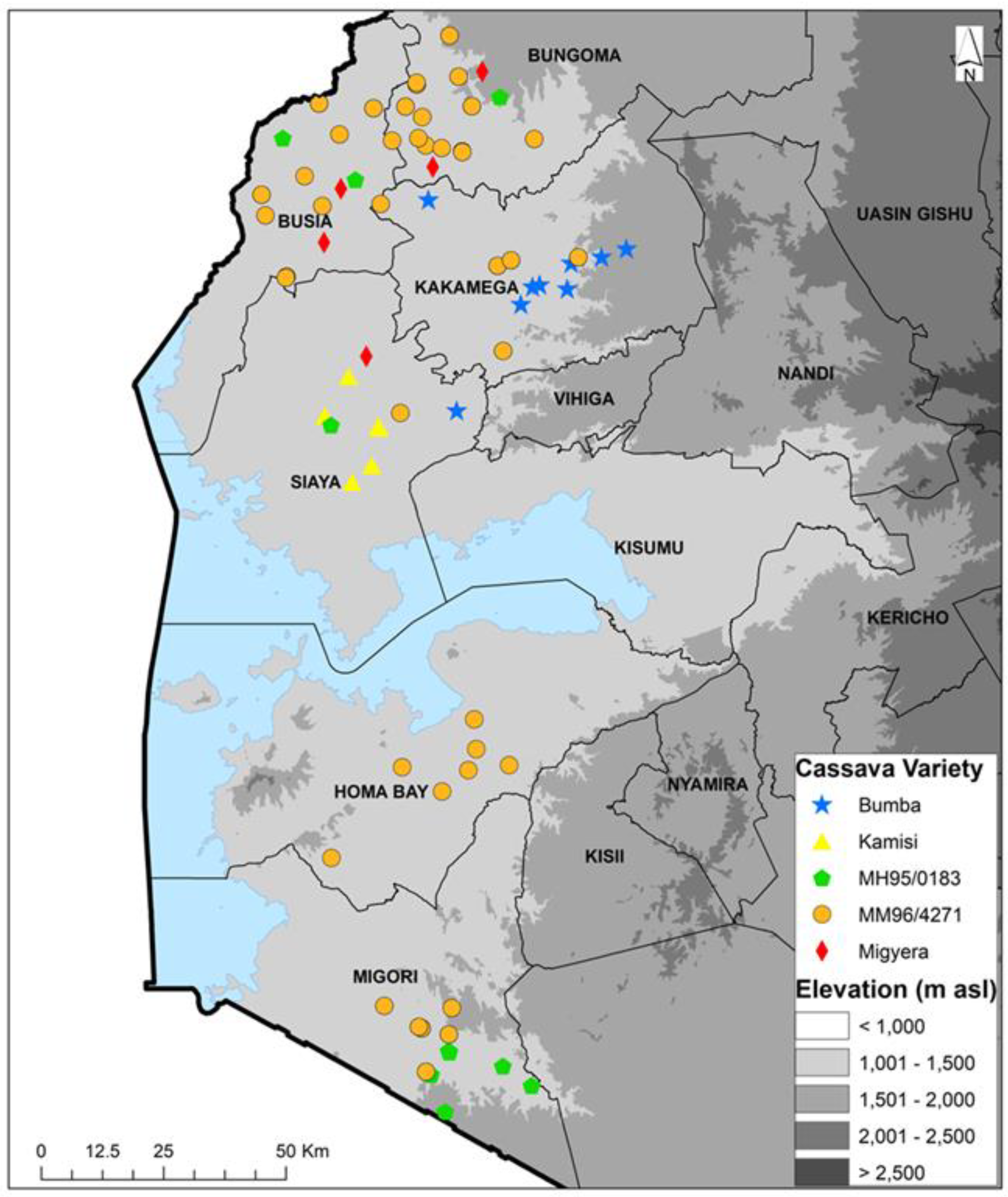
Figure 2.
Geographic distribution of cassava mosaic disease and cassava brown streak disease in 2022 (A and B) and 2023 (C and D) in relation to Bemisia tabaci whitefly abundance across six counties in western Kenya.
Figure 2.
Geographic distribution of cassava mosaic disease and cassava brown streak disease in 2022 (A and B) and 2023 (C and D) in relation to Bemisia tabaci whitefly abundance across six counties in western Kenya.
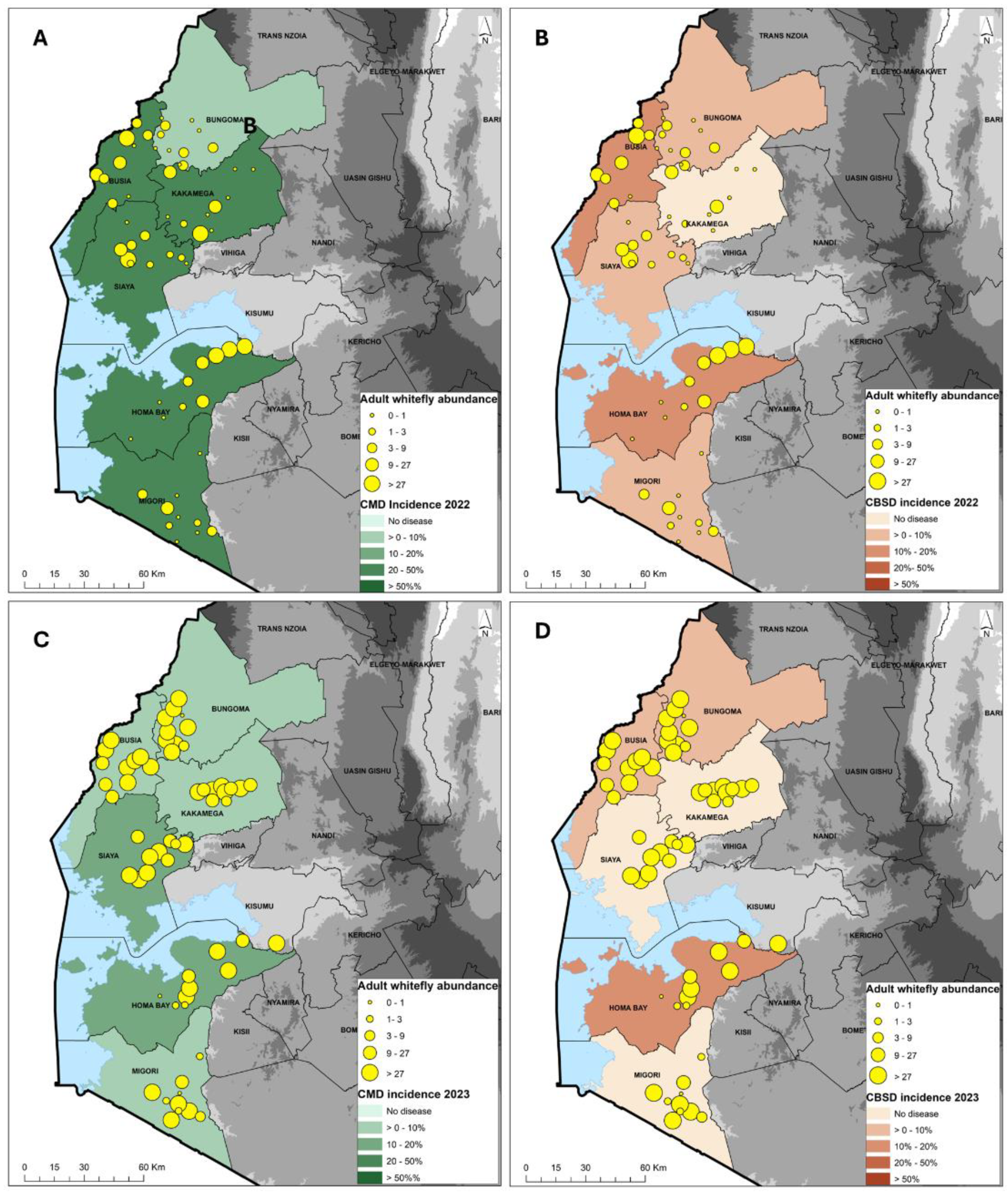
Figure 3.
Geographic distribution of cassava-colonizing Bemisia tabaci whiteflies in counties surveyed in western Kenya based on mtCOI sequencing [2017 (A), 2022 (B) and 2023 (C) and KASP SNP genotyping [2017 (D)].
Figure 3.
Geographic distribution of cassava-colonizing Bemisia tabaci whiteflies in counties surveyed in western Kenya based on mtCOI sequencing [2017 (A), 2022 (B) and 2023 (C) and KASP SNP genotyping [2017 (D)].
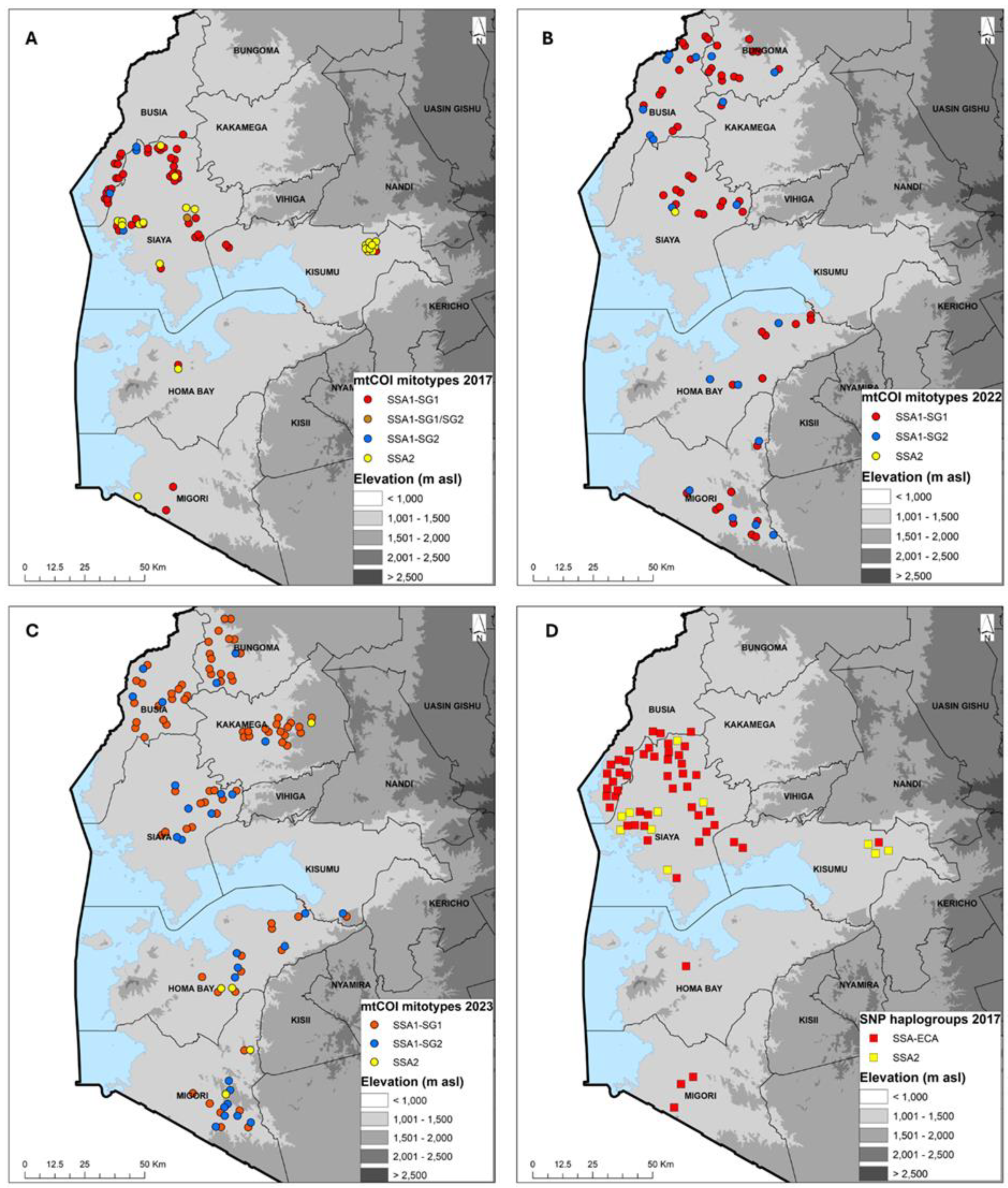
Figure 4.
Geographic distribution of cassava green mite (CGM) incidence in 2022 (A) and 2023 (B) across six counties in western Kenya.
Figure 4.
Geographic distribution of cassava green mite (CGM) incidence in 2022 (A) and 2023 (B) across six counties in western Kenya.
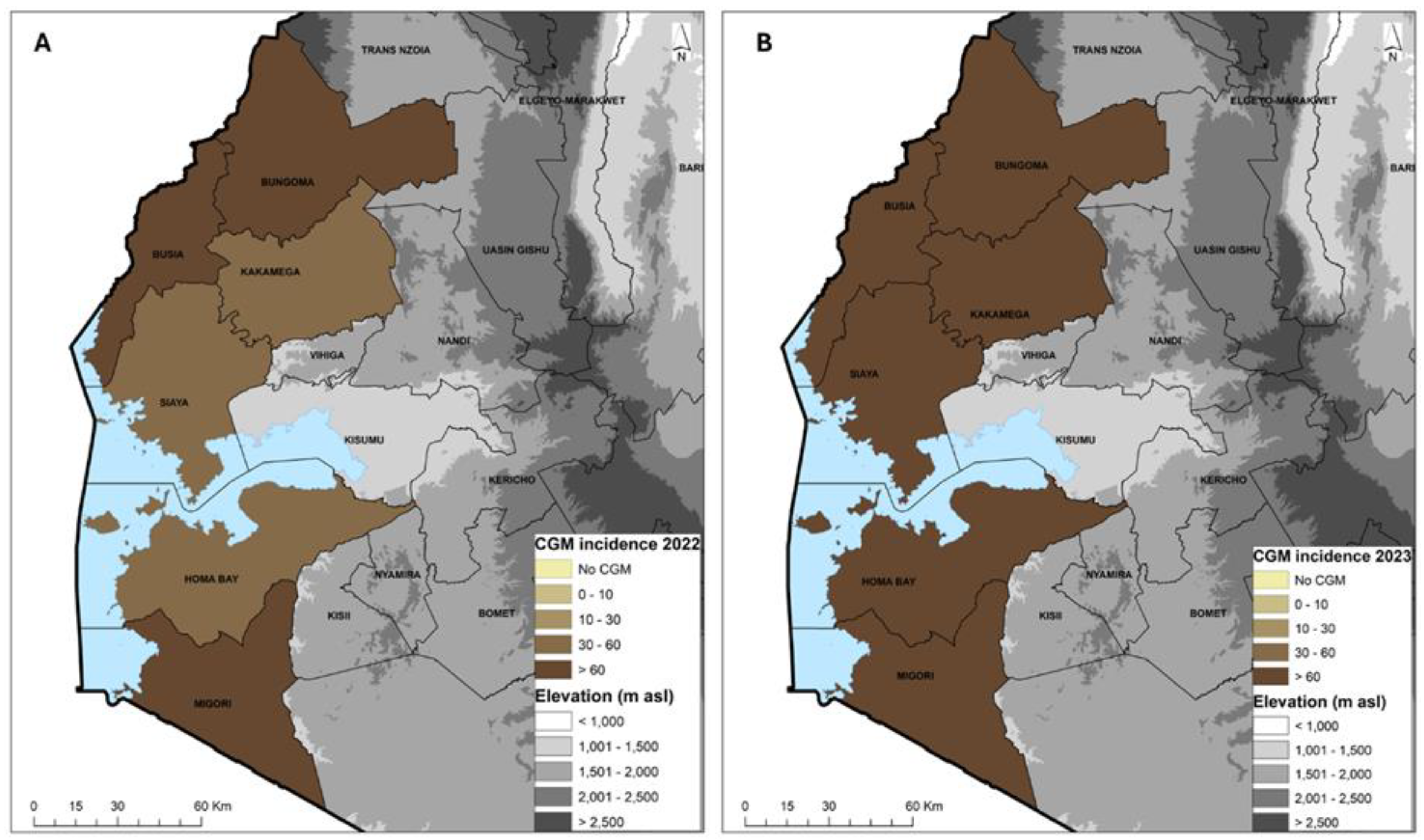

Table 1.
Incidence, prevalence, and severity of cassava virus diseases and abundance of the whitefly Bemisia tabaci for varieties surveyed in Western Kenya, October 2022.
Table 1.
Incidence, prevalence, and severity of cassava virus diseases and abundance of the whitefly Bemisia tabaci for varieties surveyed in Western Kenya, October 2022.
| County | Variety | Sites | B. tabaci adults | B. tabaci nymphs | Leaf CBSD Sev. Score | Leaf CBSD Inc. (%) | CMD Sev. Score | CMD Inc. (%) | CBSD Prev. (%) | CMD Prev. (%) |
| Bungoma | MH95/0183 | 1 | 0.4 | 2.8 | - | 0.0 | 2.8 | 13.3 | ||
| Migyera (TMS 30572) | 1 | 0 | 3.4 | - | 0.0 | 3.5 | 6.7 | |||
| MM96/4271 (NASE 14) | 7 | 3.8 | 11.8 | 2.0 | 0.5 | 2.5 | 3.8 | 10.0 | 70.0 | |
| MM98/5280 | 1 | 0 | 6.2 | - | 0.0 | 3.3 | 30.0 | |||
| Busia | Fumba Chai | 1 | 0.5 | 2.2 | - | 0.0 | 3.4 | 70.0 | ||
| Magana | 1 | 0.1 | 0 | 2.1 | 30.0 | 3.5 | 56.7 | |||
| MM96/4271 | 6 | 26.9 | 35.5 | 2.8 | 4.4 | 3.3 | 5.0 | 40.0 | 60.0 | |
| Red | 1 | 18.7 | 48.2 | 2.7 | 96.7 | - | 0.0 | |||
| Yellow | 1 | 6.9 | 7.8 | - | 0.0 | 3.7 | 80.0 | |||
| Homa Bay | Adhiambo Lera | 1 | 5.0 | 90.2 | 2.0 | 3.3 | 3.2 | 23.3 | ||
| MM96/2480 | 4 | 1334.9 | 727.6 | 3.0 | 0.8 | 2.9 | 25.0 | 40.0 | 70.0 | |
| MM96/4271 | 3 | 66.8 | 8.4 | 3.1 | 32.2 | - | 0.0 | |||
| Serere | 2 | 1.2 | 1.8 | - | 0.0 | 3.9 | 61.7 | |||
| Kakamega | Adhiambo Lera | 1 | 0 | 4.8 | - | 0.0 | 2.7 | 93.3 | ||
| Bumba | 4 | 10.2 | 168.8 | - | 0.0 | 3.1 | 69.2 | |||
| MM96/4271 | 1 | 72.2 | 248.8 | - | 0.0 | 2.8 | 30.0 | 0.0 | 70.0 | |
| MM96/5280 | 1 | 0.1 | 1.2 | - | 0.0 | - | 0.0 | |||
| MM96/7151 | 2 | 1.5 | 26.4 | - | 0.0 | - | 0.0 | |||
| Serere | 1 | 0 | 56.8 | - | 0.0 | 3.1 | 26.7 | |||
| Migori | Merry-go-round | 3 | 0.4 | 1.4 | - | 0.0 | 3.9 | 36.7 | ||
| MM95/0183 | 3 | 1.6 | 4.5 | 3.0 | 1.1 | 4.0 | 1.1 | |||
| MM96/0686 | 1 | 6.3 | 0 | - | 0.0 | 3.8 | 26.7 | 10.0 | 60.0 | |
| MM96/4271 | 2 | 9.9 | 5.1 | - | 0.0 | - | 0.0 | |||
| Sudhe | 1 | 0 | 0.6 | - | 0.0 | 3.8 | 100 | |||
| Siaya | Bumba | 1 | 2.1 | 18 | - | 0.0 | 3.1 | 26.7 | ||
| Kamisi | 2 | 34.6 | 51.1 | - | 0.0 | 3.5 | 46.7 | |||
| MH95/0183 | 1 | 1.1 | 0.2 | - | 0.0 | 4.0 | 3.3 | 20.0 | 80.0 | |
| Migyera | 1 | 3.4 | 13 | - | 0.0 | - | 0.0 | |||
| MM96/4271 | 1 | 0.7 | 4.2 | - | 0.0 | - | 0.0 | |||
| Nyakatanegi | 3 | 6.3 | 12.5 | 2.9 | 40.0 | 3.8 | 57.7 | |||
| Nyanjaga | 1 | 1.4 | 8.4 | - | 0.0 | 3.1 | 60.0 |
CBSD: cassava brown streak disease; CMD: cassava mosaic disease; Sev.: severity; Inc.: incidence; Prev.: prevalence; Av.: average; - no foliar symptoms observed.
Table 2.
Incidence, prevalence, and severity of cassava virus diseases and abundance of the whitefly Bemisia tabaci for varieties surveyed in Western Kenya, March 2023.
Table 2.
Incidence, prevalence, and severity of cassava virus diseases and abundance of the whitefly Bemisia tabaci for varieties surveyed in Western Kenya, March 2023.
| County | Variety | Sites | B. tabaci adults av. | B. tabaci nymphs av. | Leaf CBSD Sev. Score | Leaf CBSD Inc. (%) | CMD Sev. Score | CMD Inc. (%) | CBSD Prev. (%) | CMD Prev. (%) |
| Bungoma | Migyera | 1 | 93.1 | 60.0 | - | 0.0 | - | 0.0 | ||
| MM96/4271 | 8 | 176.5 | 92.3 | 2.1 | 6.3 | 2.7 | 3.0 | |||
| Nylon | 1 | 202.0 | 12.4 | - | 0.0 | 2.0 | 6.7 | 30.0 | 50.0 | |
| Busia | Matuja | 1 | 14.6 | 20.2 | - | 0.0 | 2.0 | 13.3 | ||
| MH95/0183 | 2 | 111.2 | 19.4 | - | 0.0 | 3.1 | 23.3 | |||
| Migyera | 2 | 110.0 | 44.0 | - | 0.0 | 2.5 | 8.3 | |||
| TMS I92/0067 | 1 | 123.3 | 99.2 | - | 0.0 | - | 0.0 | |||
| MM96/4271 | 4 | 181.1 | 122.1 | 2.5 | 20.8 | 3.0 | 0.8 | 20.0 | 70.0 | |
| Homa Bay | MM96/4271 | 4 | 41.4 | 74.4 | 2.1 | 25.0 | 2.5 | 1.6 | ||
| Nyakatanegi | 1 | 28.5 | 224.0 | 3.5 | 83.3 | 3.6 | 33.3 | |||
| Nyakichagi | 4 | 40.4 | 29.4 | - | 0.0 | 3.3 | 16.7 | |||
| Unknown | 1 | 69.4 | 324.0 | 3.0 | 13.3 | 3.6 | 90.0 | 40.0 | 80.0 | |
| Kakamega | Bumba | 4 | 20.6 | 62.3 | - | 0.0 | 2.6 | 5.8 | ||
| Fumba Chai | 1 | 56.1 | 234.0 | - | 0.0 | 3.2 | 20.0 | |||
| MM96/4271 | 3 | 95.5 | 294.0 | - | 0.0 | - | 0.0 | |||
| Unknown | 2 | 47.7 | 192.2 | - | 0.0 | 3.4 | 15.0 | 0.0 | 50.0 | |
| Migori | MH95/0183 | 3 | 20.7 | 30.7 | - | 0.0 | 3.5 | 8.8 | ||
| MH96/0686 | 1 | 1.1 | 0.0 | - | 0.0 | - | 0.0 | |||
| MM96/4271 | 4 | 53.1 | 51.3 | - | 0.0 | 2.9 | 8.3 | |||
| MM98/3567 | 1 | 282.1 | 183.0 | - | 0.0 | - | 0.0 | |||
| Nyanchagi | 1 | 9.0 | 10.8 | - | 0.0 | - | 0.0 | 0.0 | 40.0 | |
| Siaya | Adhiambo Lera | 1 | 65.3 | 98.2 | - | 0.0 | 3.5 | 86.7 | ||
| Kamisi | 4 | 72.9 | 64.6 | - | 0.0 | 3.2 | 5.8 | |||
| MM96/4271 | 1 | 89.1 | 114.8 | - | 0.0 | - | 0.0 | |||
| MM97/2480 | 1 | 67.9 | 298.0 | - | 0.0 | 3.0 | 13.3 | |||
| Nylon | 2 | 20.9 | 39.7 | - | 0.0 | 2.5 | 23.3 | |||
| Sudhe | 1 | 3.7 | 4 | - | 0.0 | 3.0 | 3.3 | 0.0 | 70.0 |
CBSD: cassava brown streak disease; CMD: cassava mosaic disease; Sev.: severity; Inc.: incidence; Prev.: prevalence; Av.: average; - no foliar symptoms observed.
Table 3.
Real-time RT-qPCR and PCR testing results for cassava brown streak ipomoviruses in cassava leaves collected from field plants in Western Kenya, October 2022.
Table 3.
Real-time RT-qPCR and PCR testing results for cassava brown streak ipomoviruses in cassava leaves collected from field plants in Western Kenya, October 2022.
| Real-time RT-PCR testing for CBSIs symptomatic samples | |||||
| County | Number of samples | CBSV positive | UCBSV positive | CBSIs negative | % symptomatic positive |
| Bungoma | 10 | 7 | 0 | 3 | 70.0 |
| Busia | 12 | 11 | 0 | 1 | 91.6 |
| Homa Bay | 12 | 7 | 6 | 2 | 83.3 |
| Kakamega | 0 | 0 | 0 | 0 | - |
| Migori | 1 | 1 | 0 | 0 | 100 |
| Siaya | 8 | 3 | 6 | 1 | 87.5 |
| Real-time RT-PCR testing for CBSIs asymptomatic samples | |||||
| County | Number of samples | CBSV positive | UCBSV positive | CBSIs negative | % asymptomatic positive |
| Bungoma | 90 | 10 | 0 | 80 | 11.0 |
| Busia | 87 | 27 | 3 | 57 | 34.5 |
| Homa Bay | 88 | 17 | 3 | 68 | 22.7 |
| Kakamega | 100 | 1 | 0 | 99 | 1.0 |
| Migori | 99 | 8 | 1 | 91 | 8.1 |
| Siaya | 92 | 13 | 5 | 75 | 18.5 |
Table 4.
Whitefly Bemisia tabaci and Bemisia afer distribution in Western Kenya 2017, 2022 and 2023 (mtCOI sequencing).
Table 4.
Whitefly Bemisia tabaci and Bemisia afer distribution in Western Kenya 2017, 2022 and 2023 (mtCOI sequencing).
| SSA1-SG1 | SSA1-SG2 | SSA1-SG1/SG2 | SSA2 | B. afer | |
| 2017 | 47/73 (64.4%) | 4/73 (5.5%) | 1/73(1.4%) | 21/73(28.8%) | 0/73 (0%) |
| 2022 | 52/73 (71.2%) | 20/73 (27.4%) | 0/73 (0%) | 1/73 (1.4%) | 0/73 (0%) |
| 2023 | 78/112 (69.6%) | 27/112 (24.1%) | 0/112(0%) | 5/112 (4.5%) | 2/112 (1.8%) |
Table 5.
Whitefly cassava Bemisia tabaci distribution in Western Kenya 2017, 2022 and 2023 (KASP SNP genotyping).
Table 5.
Whitefly cassava Bemisia tabaci distribution in Western Kenya 2017, 2022 and 2023 (KASP SNP genotyping).
| Year | SSA-ECA | SSA2 | Others |
| 2017 | 59/82 (72.0%) | 13/82 (15.8%) | 10/82 (12.2%) |
| 2022 | 103/111 (92.8%) | 2/111 (1.8%) | 6/111 (5.4%) |
| 2023 | 219/232 (94.4%) | 11/232 (4.7%) | 2/232 (0.9%) |
Table 6.
Comparison of cassava green mite severity and incidence across six counties in western Kenya in October 2022 and March 2023.
Table 6.
Comparison of cassava green mite severity and incidence across six counties in western Kenya in October 2022 and March 2023.
| County | October 2022 | March 2023 | ||||
| CGM Score | CGM incidence (%) | CGM prevalence (%) | CGM score | CGM incidence (%) | CGM prevalence (%) | |
| Bungoma | 2.4 | 68.7 | 100 | 2.6 | 79.7 | 100 |
| Busia | 2.5 | 68.3 | 100 | 2.8 | 91.3 | 100 |
| Homa Bay | 2.9 | 55.3 | 100 | 2.4 | 76.7 | 80 |
| Kakamega | 2.2 | 64.8 | 90 | 2.8 | 91.3 | 100 |
| Migori | 3.0 | 82.7 | 100 | 2.6 | 64.0 | 100 |
| Siaya | 2.9 | 49.6 | 80 | 2.8 | 69.3 | 90 |
| Average | 2.7 | 65.4 | 95 | 2.7 | 78.9 | 95 |
Table 7.
Comparison of cassava green mite severity and incidence in the four most commonly occurring varieties in Western Kenya in October 2022 and March 2023.
Table 7.
Comparison of cassava green mite severity and incidence in the four most commonly occurring varieties in Western Kenya in October 2022 and March 2023.
| Variety | October 2022 | March 2023 | ||
| CGM Score | CGM Incidence (%) | CGM Score | CGM Incidence (%) | |
| Bumba | 2.3 | 53.3 | 3.2 | 98.3 |
| MH95/0183 | 3.3 | 83.3 | 2.7 | 49.3 |
| MM96/4271 | 2.4 | 83.3 | 2.4 | 77.9 |
| Migyera | 2.8 | 53.3 | 3.2 | 88.8 |
Disclaimer/Publisher’s Note: The statements, opinions and data contained in all publications are solely those of the individual author(s) and contributor(s) and not of MDPI and/or the editor(s). MDPI and/or the editor(s) disclaim responsibility for any injury to people or property resulting from any ideas, methods, instructions or products referred to in the content. |
© 2024 by the authors. Licensee MDPI, Basel, Switzerland. This article is an open access article distributed under the terms and conditions of the Creative Commons Attribution (CC BY) license (http://creativecommons.org/licenses/by/4.0/).
Copyright: This open access article is published under a Creative Commons CC BY 4.0 license, which permit the free download, distribution, and reuse, provided that the author and preprint are cited in any reuse.


