

Submitted:
18 September 2025
Posted:
21 September 2025
You are already at the latest version
Abstract
Power-to-Gas is the process by which electrical energy is converted into chemical energy in gaseous form. Power-to-Gas primarily relies on electrolysis, producing hydrogen (Power-to-H2) from electricity and water. Electrolysis can be supplemented by a methanation step, allowing hydrogen to react with carbon dioxide to produce methane (Power-to-CH4). As these are still emerging technologies, the management of reliability, maintenance, and safety of these installations must address specific issues that are not yet well-documented. Jupiter 1000 is an industrial demonstrator of Power-to-Gas, commissioned in 2019 by GRTgaz, which became NaTran in 2025. The installations include two electrolysis technologies and one methanation technology. For the first time in France, the megawatt scale was reached for the production of hydrogen. One of the objectives of the project is to demonstrate the feasibility of this type of process and to share the initial feedback to support the development of the industrial Power-to-Gas sector. This paper presents the main lessons learned and results from Jupiter 1000 on reliability, maintenance, and safety for this type of installation. The conclusion outlines five key elements for the future of this sector.
Keywords:
power-to-gas
; hydrogen
; electrolysis
; reliability
; maintenance
; safety
1. Introduction
1.1. Context
Power-to-Gas is the process by which electrical energy is converted into chemical energy in the form of gas. Power-to-Gas primarily relies on electrolysis, producing hydrogen (Power-to-H2) from electricity and water. Electrolysis can be complemented by a methanation step, allowing hydrogen to react with carbon dioxide to produce methane (Power-to-CH4) [1,2,3]. Unlike electricity, the produced gas can be stored easily in large quantities and over the long term [4,5]. Power-to-Gas also allows for the decarbonization of industrial hydrogen, the production of low-carbon gas, and the creation of more synergy between the electrical and gas networks to address the challenges of energy transition [1,2,3,6,7]. While numerous Power-to-Gas projects have emerged around the world since the 2000s [8,9,10], France's multiannual energy program set the goal in 2017 to install 10 to 100 Power-to-Gas demonstrators with a minimum capacity of one megawatt by 2028 [11]. The first of these French demonstrators to be commissioned is Jupiter 1000 [12], which is presented in the next subsection. Recent literature highlights the critical importance of safety and reliability in Power-to-Gas technologies, especially as they become more integrated into energy systems [5,8,13]. However, as these technologies are still emerging, the management of reliability, maintenance, and safety of these installations must address specific issues that are not yet well-documented.
To better understand and mitigate these challenges, both theoretical modelling and empirical studies have been conducted, notably considering proton exchange membrane technologies [14,15,16]. For example, models have been developed to assess the reliability of integrated power-gas systems [17]. Both short-term and long-term reliability challenges have been investigated, including the impact of fluctuating renewable generation, and pipeline integrity, which necessitate robust maintenance strategies [18,19]. For electrolysers, monitoring operational variables are shown to be crucial for maintaining both reliability and safety [15,20]. Computational fluid dynamics (CFD) is also a powerful tool for designing safer and more reliable electrolysers by providing insights into flow, temperature, pressure, and gas distribution [21,22]. Safety and reliability reviews have been focused on mobility infrastructure [23,24,25] and reliability database dedicated to hydrogen equipment have been initiated [26]. Focusing on safety, theoretical and experimental approaches emphasize the importance of monitoring gas composition and pipeline integrity, managing the risks of explosive mixtures, and ensuring the integrity of components under hydrogen exposure [27,28,29].
Finally, industrial demonstrators operating under real-world conditions provide essential data and lessons that bridge the gap between laboratory research and practical application [12,30,31]. In particular, the Jupiter 1000 demonstrator, as France’s first megawatt-scale Power-to-Gas installation, provides valuable field feedback on safety, maintenance, and safety. This paper presents the main lessons learned and results from Jupiter 1000 on these critical issues. Considering this feedback, key issues for the development of the Power-to-Gas industrial sector are given in conclusion.
1.2. Jupiter 1000 Project
Jupiter 1000 is a multi-partner project launched in 2016 and led by GRTgaz, which became NaTran in 2025, and supported by the European Commission, the French Environment and Energy Management Agency (ADEME), the French State's Investments for Future Program, and the Provence Alpes Côte d'Azur region. Built in Fos-sur-Mer on a site of the Grand Port Maritime de Marseille, it was commissioned at the end of 2019 under the leadership of GRTgaz teams. For the first time in France, the megawatt scale was reached for a Power-to-H2 unit thanks to two electrolysis technologies (alkaline and proton exchange membrane) installed by McPhy Energy. The electricity used to produce hydrogen comes from a wind farm of the National Company of the Rhône (CNR). The "green" hydrogen is then compressed, mixed with the methane from the gas transmission network, and injected into a NaTran pipeline serving three industrial installations. Jupiter 1000 also includes a Power-to-CH4 unit thanks to a methanation process developed by Khimod, with the help of the French Alternative Energies and Atomic Energy Commission (CEA). The synthetic methane (or "e-methane") is produced using hydrogen from electrolysis and carbon dioxide from industrial fumes of a neighbour site, captured by a process from Leroux & Lotz. On the R&D side, the main partner is the CEA, which has conducted a series of tests on the performance of Power-to-Gas units [20]. Teréga and RTE (the French electricity transmission system operator) are also associated with the project. Co-financiers, they have contributed to the techno-economic studies. Finally, CMA CGM joined the project in 2022. An aerial view of Jupiter 1000 is given in Figure 1.
One of the project's objectives is to demonstrate the feasibility of this type of process and share the first feedback to promote the development of the Power-to-Gas industrial sector. This communication specifically presents the feedback and study results of Jupiter 1000 on the topics of reliability (Section 2), maintenance (Section 3), and safety (Section 4) for this type of installation. Based on this experience, a final section will discuss the main challenges and perspectives for the development of the sector.
2. Reliability
Since the commissioning of the Power-to-H2 installations of Jupiter 1000, more than 4 years ago, nearly fifty failures have been observed. As it is a demonstrator, the systems have been solicited very heterogeneously, at the pace of test campaigns. Thus, deducing failure rates as such would not be appropriate. However, we propose to present in Figure 2 a distribution of these failures by concerned systems, to expose the main sources of unreliability encountered throughout the project. Only failures with consequences on availability, safety, and/or the environment are considered here. For example, minor leaks or failures specific to supervision and test management have not been included. Moreover, this distribution is only relative to reliability (number of failures) without presuming the severity of the failures, particularly on availability and safety. Only Power-to-H2 installations are considered as the specific units for Power-to-CH4 (CO2 compression and storage, methanation, CH4 compression) have been put into operation only at the almost end of the project. Finally, it should be noted that Jupiter 1000 was designed to serve as an industrial demonstrator and that some design choices, such as using two electrolysis technologies, while beneficial for learning, posed reliability challenges.
Notably, most failures occurred in technologically mature systems, including compression (a membrane compressor), storage, and injection (mainly valves and safety valves) of hydrogen. Thus, although these systems were specifically designed for hydrogen, it is observed that some equipment is still not sufficiently tested for the very particular characteristics of this gas (see Section 4.1). The reliability of these systems is therefore an important issue for the development of the hydrogen sector. Gas analysis is also overrepresented among the failing systems, which is explained by the demonstrator role of Jupiter 1000, involving the need to monitor numerous parameters at many points (and therefore, with many items dedicated to gas analysis) and an intermittent operation that follows the pace of test campaigns (a mode of operation not well supported by gas analysers). Finally, it should be noted that systems specific to hydrogen production (water supply and treatment, electrolysers and electrolyte circuits, hydrogen treatment) are responsible for less than 30% of failures (or a third of failures, if gas analysis which specific to Jupiter 1000 is excluded). However, the reliability of electrolysers is often mentioned as one of the main obstacles to the sector's dynamics, notably in France (see, e.g., [32]).
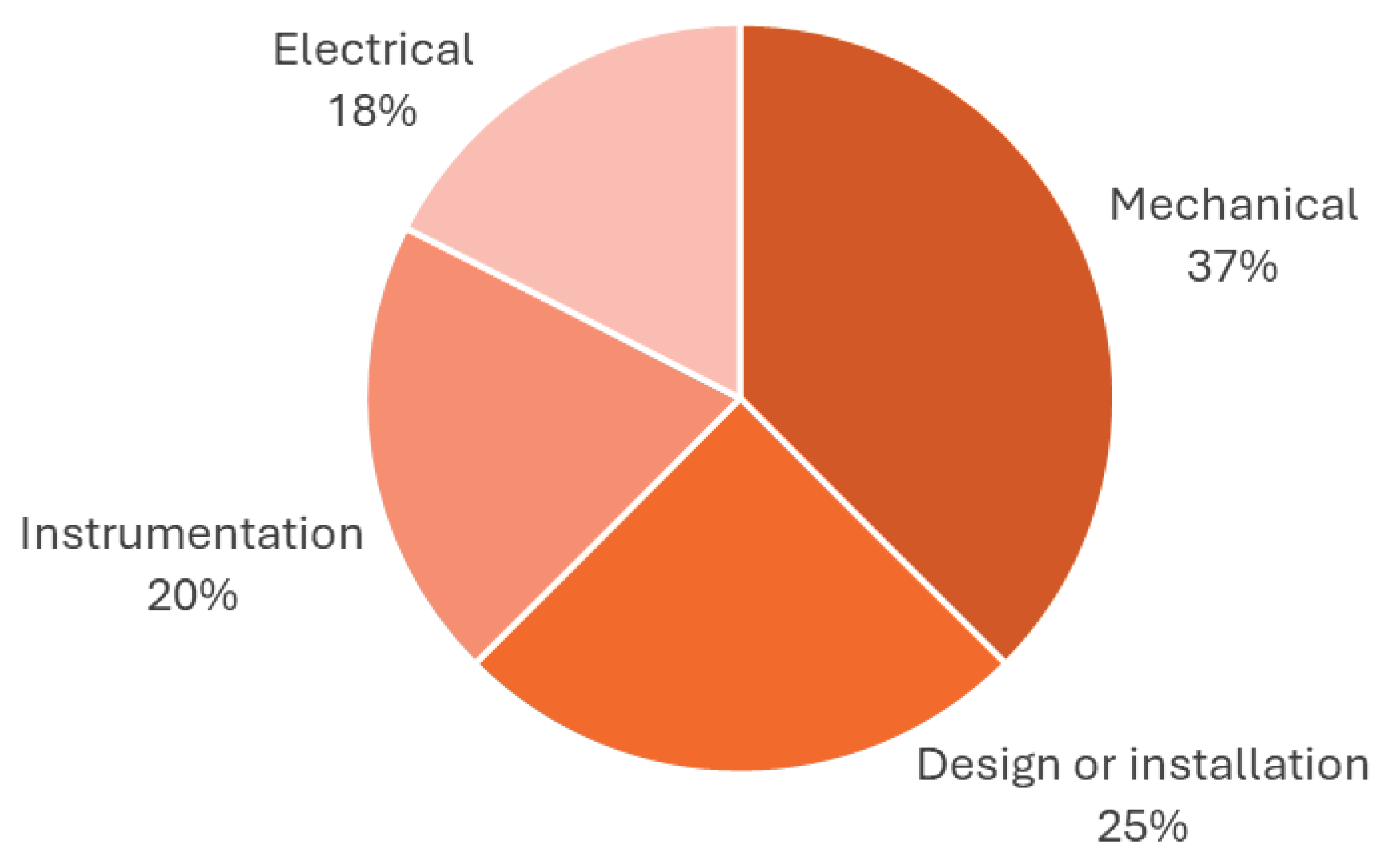
Figure 3 shows the distribution of failure causes (within the same scope as Figure 2). For each failure, only the primary cause was considered, identified based on maintenance reports and operator expertise. The leading causes of failure are mechanical. These mainly involve internal or external leaks from valves or safety valves, or mechanical issues with the hydrogen compressor. Nearly half of these failures are directly or indirectly related to the characteristics of hydrogen, particularly because this gas is highly prone to leakage (see Section 4.1).
Design or installation (including software and commissioning issues) account for a quarter of the failures. This proportion mainly reflects the relatively low maturity of the sector (especially in 2019, when Jupiter 1000 was commissioned). Moreover, as Jupiter 1000 is a demonstrator, it provided an opportunity for project partners and equipment suppliers to test certain components under initial industrial conditions and to carry out debugging before commercial commissioning. Notably, both electrolysers (of different technologies) were modified during the project (see Section 4.2). Finally, more than a third of the failures originated from instrumentation (including transmitters and automation systems) or electrical issues.
While some failures may have potential consequences for safety and/or the environment, the majority primarily affect availability (production). Reactive maintenance could help mitigate these consequences, but the following section shows that maintaining a Power-to-Gas installation also faces several challenges.
3. Maintenance
The feedback from Jupiter 1000 shows that the operation of a Power-to-Gas installation requires operational teams with multiple skills (in electricity, gas, pressure equipment, automation...). NaTran, being a historical player in the gas sector, was able to entrust the operation of Jupiter 1000 to operators with significant experience in the maintenance and operation of natural gas compression stations. Of course, these operators also received additional training, mostly developed by NaTran, particularly on handling systems dedicated to hydrogen. While the offer of dedicated training was relatively low before 2020, hundreds of training courses related to hydrogen are now listed in France [33].
The main difficulty encountered in ensuring the maintenance (especially corrective) of the installations was the lack of suppliers of equipment adapted to hydrogen and service companies with the required skills for their maintenance. Hydrogen remained a "niche market" for a long time before becoming the fastest-growing sector of the energy transition about 5 years ago (investments multiplied by more than three per year) [34]. This development is supported by public investments, in France (4 billion euros are dedicated to the deployment of on gigawatt of electrolysis between 2024 and 2026), in Europe (recognition of the hydrogen sector as an "Important Project of Common European Interest" since 2021), and elsewhere in the world. As of mid-2025, more than seventy countries have adopted a national hydrogen strategy or roadmap [35]. Then, industrial players offering solutions adapted to hydrogen are actually still too few (especially 5 years ago, at the launch of Jupiter 1000) and, for the most part, must manage strong development that limits their responsiveness. In many cases, suppliers themselves depend on subcontractors who also do not have the capacity to meet all demands. For example, during a leak of a water pipe supplying an electrolyser of Jupiter 1000, it took more than two months to obtain a replacement part (produced on demand, in Germany). Even when the equipment is produced in France, suppliers are still dependent on materials that often come from away, notably from China. Thus, following a failure of the Jupiter 1000 compressor, the replacement of the membrane (although manufactured in France) took several months.
The sector also faces a shortage of skilled personnel, including technicians and engineers. Moreover, the supply of positions being higher than the demand, trained personnel often change companies, and interlocutors can thus change several times a year. During the 5 years of operation of Jupiter 1000, it was several times necessary to call on former subcontractor employees to carry out certain operations that required expertise or a history that had already been "lost" due to these personnel movements.
It is worth noting that the Jupiter 1000 project also suffered from the consequences of the COVID-19 epidemic, which in 2020 prevented technicians from Eastern Europe or North America from coming on-site to carry out certain maintenance operations contracted a year earlier with their companies. This prompted NaTran to explore remote maintenance solutions, including the development of autonomous augmented reality helmets.
4. Safety
When discussing the safety of a Power-to-Gas installation, the first thing that generally comes to mind is potential hydrogen leaks. This issue is closely related to the characteristics of this gas and will be the subject of the first sub-section hereafter. The second sub-section will focus on managing the risks of electrolysers, one of the difficulties of which is the still relatively unknown dysfunctional behaviour of these new technologies. Finally, the third sub-section will present the other risks of a Power-to-Gas installation.
4.1. Managing Hydrogen Leaks
In normal temperature and pressure conditions, hydrogen is an invisible and odourless gas. It is highly flammable, with flammability limits in the air ranging from 4 to 75% (by volume); and it requires ten times less energy to ignite than natural gas [36]. Moreover, its flame is almost invisible (pale blue) and does not produce smoke when there is no interaction with the ground or particles [20]. The flame can nevertheless be visible in particular weather conditions, for example, if the air is very humid. The hydrogen flame has a high temperature (8% higher than natural gas) but radiates weakly (little heat emitted outside the flame), making it difficult to detect without specific equipment. Moreover, delayed ignition of an unignited hydrogen cloud can lead to deflagration or even detonation, with the explosion intensity increasing with hydrogen concentration and cloud size [24,29]. Finally, the emission of hydrogen (unignited) into the atmosphere is also not neutral for the climate [37].
The control of hydrogen leaks is therefore an important safety and environmental concern for a Power-to-Gas installation. Adequate leak detection systems [38] and systematic inspections [39] must be put in place, with particular attention to flanges, fittings, electrolysis units, and, in general, all confined spaces where hydrogen is present [20]. Six models of detectors, with various technologies, were tested on Jupiter 1000. These tests showed that even though performance differences are notable, there is no perfect solution. Indeed, each tested detector has advantages and disadvantages, but depending on the type of leak, its location, and environmental conditions, none of these devices detected 100% of the identified leaks. It is therefore recommended to combine the use of two or three detectors with complementary performances to better cover all potential leaks.
Moreover, hydrogen being small in size (about twice as small as methane) and low viscosity (about 20% lower than methane), it is particularly prone to leaks, including permeation. This is why leak tests carried out during installation should preferably be done with helium (a molecule whose size is closest to dihydrogen) or, failing that (notably for cost reasons), with hydrogenated nitrogen (with a few percent hydrogen, such as Nidron with 4.5% hydrogen).
In a pipeline or equipment, hydrogen can diffuse into metal parts in its atomic form, particularly at cavities or interfaces. Once inside, the atoms recombine, creating microcracks and reducing ductility (the ability of a material to deform without breaking), increasing the material's brittleness (hydrogen embrittlement) [39]. This can result in blisters on the metal surface (hydrogen blistering), cracks, or even cause material rupture (hydrogen attack). To avoid this type of phenomenon, it is preferable to use appropriate alloys that are less sensitive to hydrogen penetration [3] and to enhance inspection and monitoring [39]. Several dedicated tests have been carried out on Jupiter 1000, notably via wedge opening loading (WOL) type specimens subjected to a hydrogen flow mixed with methane [12]. The first results show that the steels currently used for natural gas are mostly suitable for hydrogen transmission under the envisaged operating conditions. However, some maintenance and monitoring programs may require some adaptations, particularly for new equipment specifically developed for hydrogen (e.g., with polymers). In parallel with Jupiter 1000, NaTran also developed a specific platform named FenHYx, which allows various equipment tests in the presence of pressurized hydrogen, notably to study the impact on materials, the mechanical resistance of steels, and corrosion phenomena.
A containment failure at the suction of a hydrogen compressor is particularly feared as it can lead to air suction (and thus a flammable mixture) that accumulates in a capacity (such as a tank supplied by the compressor), which could then generate an explosion [3]. Hence the need to measure the hydrogen and/or oxygen content at various points in the hydrogen chain (production, treatment, compression, storage...) to ensure that no flammable mixture is likely to occur.
But hydrogen also has some advantages in terms of safety. As a very light gas, it disperses quickly in the air, reducing the likelihood of ignition in an unconfined environment (and thus also the risks of explosion or detonation). This characteristic was confirmed by tests carried out on Jupiter 1000 [20]. Moreover, due to its low radiation, the propagation of a fire by thermal effect is also less likely.
4.2. Managing the Risks of Electrolysers
Electrolysers are subject to several degradation phenomena, notably affecting the electrodes and membranes, the main consequence of which is a decrease in energy efficiency ranging from 1% to just over 2% per year, depending on the technology [40]. Some degradations, particularly on the membrane, also have potential safety consequences, but these phenomena can fortunately be monitored by appropriate measures [15,20]. Other failures, notably of regulation systems, can also cause the formation of a hydrogen and oxygen mixture inside the electrolysers, in the electrolyte circuits, or in downstream capacities [20,41]. It is therefore important that the design of an electrolysis unit is based on a review of the degradation phenomena and a failure modes and effects analysis of the electrolysers, then integrates all the appropriate safety functions.
Specialists in both electrolysers (whose technologies are rapidly evolving) and safety studies are rare. When the risk studies for Jupiter 1000 were conducted during the design phase (from 2016 to 2018), specialized risk management firms lacked experience with such systems, and the electrolysis units were considered "black boxes," whose safety was assumed to be guaranteed by the suppliers. However, the suppliers also did not have the necessary expertise and hindsight for this. Thus, in the case of Jupiter 1000, it turned out that both electrolysers, of different technologies, had to be modified during the operational phase for safety reasons. For the proton exchange membrane electrolyser, the identified defect concerned the circulation circuits of electrolysis water. By design, hydrogen accumulation was unfortunately allowed in a capacity where oxygen was also present. This system had to be redesigned after a detailed risk analysis conducted by NaTran, with the support of McPhy. For the alkaline electrolyser, an electrolyte leak (aqueous potassium hydroxide solution) that occurred on the same system in Germany led to the preventive upgrade of the unit installed on Jupiter 1000. The cause of the incident was a "formation of deposits" that "gradually restricted the flow in the electrolyser channels" [42]. In both cases, these scenarios were not properly identified in the risk analyses conducted during the design phase.
4.3. Other Risks of Power-to-Gas
Oxygen (electrolysis produces eight times more oxygen, by mass, than hydrogen) is also not without danger. A phenomenon specific to oxygen is the ignition of non-metallic elements in equipment (grease, dust, seals...) that can be caused by simple heating (e.g., the fast opening of a valve).
In the case of Power-to-CH4, the handling of carbon dioxide also requires particular attention to potential leaks (which can notably be caused by corrosion). Indeed, carbon dioxide being denser than air, it can accumulate and create a toxic atmosphere. Synthetic methane presents the same types of risk as hydrogen, but with generally more favourable conditions (larger molecule and therefore less prone to leaks, higher ignition energy, smaller flammability range).
Several accidental scenarios, while not specific to Power-to-Gas, are nevertheless present in this type of installation and must therefore be managed appropriately. In particular, several risks are related to the operation of pressure equipment (a few tens of bars in electrolysers, up to hundreds of bars in storage), high-temperature fluids (notably in a methanation unit), and electrical equipment (electrolyser power supply).
In addition to regulatory compliance, thorough risk analyses, with engineers and operators with the appropriate skills, as well as the effective implementation of appropriate risk management measures, are required for the safe operation of a Power-to-Gas installation.
5. Conclusions and Perspectives
Hydrogen and, more generally, Power-to-Gas represent a decarbonization lever mentioned several times in the French national low-carbon strategy, whose ambitions are to "achieve carbon neutrality by 2050" and "reduce the carbon footprint of French consumption" [43]. This was followed by a national strategy for the development of decarbonized hydrogen in France, which emphasizes that "decarbonized hydrogen is one of the key solutions to achieve carbon neutrality" [44]. France has thus allocated more than 9 billion euros of public support for the development of the sector (including 4 billion for the production of renewable or low-carbon hydrogen) and has set one of the most ambitious goals in Europe, with 8 GW of electrolysis by 2035 [45]. In Europe, the REPowerEU plan by the European Commission also includes an "Hydrogen Accelerator" initiative to "increase the manufacturing capacity of electrolysers to 17.5 GW by 2025 to supply the EU industry with domestic production of 10 million tonnes of renewable hydrogen" [46]. To support the Europe’s energy transition and industrial decarbonization, more than thirty European gas transmission system operators (TSOs), including NaTran, have launched the European Hydrogen Backbone (EHB) initiative for the development of a vast network of 53,000 km of hydrogen pipelines by 2040, spanning 28 European countries [47]. Worldwide, installed electrolyser capacity reached 1.4 GW by the end of 2023 and could reach 5 GW by the end of 2024 [48]. More than half of the committed projects are in China. Announced projects suggests that capacity could grow to close to 520 GW by 2030, although only 4% has reached a final investment decision or is under construction [48]. In view of this very strong increase in the development of this sector, it is more appropriate than ever to include feedback such as that from Jupiter 1000 for future projects.
The commissioning and operation of Jupiter 1000 are rich in lessons. This feedback has highlighted that the roles of reliability and risk management are crucial in the sector's development, which also requires investments in reliability, maintenance, and safety. Recently, these issues have been identified as a barrier to scaling up installations over 100 MW [49], and as a result, some projects have already been revised downward [50]. Among the elements presented in this paper, we can particularly recall the following five key issues:
- Reindustrialization with suppliers of materials and services (including maintenance) adapted to hydrogen, with enough specialized engineers and technicians with adequate skills;
- Reliability of hydrogen-specific materials, electrolysers, compressors, and other mechanical systems;
- Creation of a specialty in reliability and risk management for hydrogen production, transmission, storage, and operation;
- Development of solutions for hydrogen safety, particularly for leak management;
- Continuing R&D efforts on hydrogen, especially to increase knowledge of hazardous phenomena, materials, monitoring, and detection.
As energy transmission network operators, RTE and NaTran (partners in the Jupiter 1000 project) conducted a joint study to evaluate "the challenges related to the development of hydrogen storage and transmission infrastructure and optimization levers for the electrical system" [51]. One of the main conclusions of this study is that "the primary interest of dedicated hydrogen transmission infrastructure will be to connect hydrogen basins with salt storages, allowing electrolysers to modulate their electricity consumption over time." This flexibility of electrolysers presents "significant benefits for the electrical system" that "far exceed the costs of the hydrogen storage and transmission infrastructure needed for this operation." Flexibility, however, is strongly conditioned by the availability of installations, hence by their reliability and maintenance. Jupiter 1000's feedback has shown that these elements are not yet optimal, and new studies involving network operators will now be conducted to better account for material, operational, and climatic uncertainties in optimizing and managing the risks of future multi-energy network infrastructure.
Acknowledgments
The Jupiter 1000 project was supported by the European Commission, the French Environment and Energy Management Agency (ADEME), the French State's Investments for Future Program, and the Provence Alpes Côte d'Azur region.
Conflicts of Interest
The authors declare no conflicts of interest.
Abbreviations
The following abbreviations are used in this manuscript:
| ADEME | French Environment and Energy Management Agency |
| CEA | French Alternative Energies and Atomic Energy Commission |
| CFD | Computational Fluid Dynamics |
| CH4 | Methane |
| CNR | National Company of the Rhône |
| CO2 | Carbon dioxide |
| EHB | European Hydrogen Backbone |
| EU | European Union |
| GW | Gigawatt |
| H2 | (Di)hydrogen |
| MW | Megawatt |
| PEM | Proton Exchange Membrane |
| R&D | Research and Development |
| RTE | Electricity Transmission System Operator (France) |
| TSO | Transmission System Operator |
| WOL | Wedge Opening Loading |
References
- Schiebahn, S.; Grube, T.; Robinius, M.; Tietze, V.; Kumar, B.; Stolten, D. Power to gas: Technological overview, systems analysis and economic assessment for a case study in Germany. Int J Hydrogen Energy 2015, 40, 4285–4294. [Google Scholar]
- Otz, M.; Lefebvre, J.; Koch, A.; Graf, F.; Bajohr, S.; Reimert, R.; Kolb, T. Renewable Power-to-Gas: A technological and economic review. Renew Energy 2016, 85, 1371–1390. [Google Scholar]
- Brissaud, F. BE6700 V1: Power-to-Gas. Technologies, Challenges and Outlook. Tech Ing 2023, V1, 1–25. [Google Scholar]
- Sterner, M.; Specht, M. Power-to-Gas and Power-to-X—The History and Results of Developing a New Storage Concept. Energies 2021, 14, 6822. [Google Scholar] [CrossRef]
- Faisal, S.; Gao, C. A Comprehensive Review of Integrated Energy Systems Considering Power-to-Gas Technology. Energies 2024, 17, 1234–1256. [Google Scholar]
- Perna, A.; Moretti, L.; Ficco, G.; Spazzafumo, G.; Canale, L.; Dell’Isola, M. SNG Generation via Power to Gas Technology: Plant Design and Annual Performance Assessment. Appl Sci 2020, 10, 456–470. [Google Scholar]
- Inkeri, E.; Tynjälä, T.; Karjunen, H. Significance of methanation reactor dynamics on the annual efficiency of power-to-gas system. Renew Energy 2021, 170, 1235–1246. [Google Scholar] [CrossRef]
- Gahleitner, G. Hydrogen from renewable electricity: An international review of power-to-gas pilot plants for stationary applications. Int J Hydrogen Energy 2013, 38, 2039–2061. [Google Scholar]
- Wulf, C.; Linssen, J.; Zapp, P. Review of Power-to-Gas Projects in Europe. Energy Procedia 2018, 155, 367–378. [Google Scholar]
- Barbaresi, A.; Morini, M.; Gambarotta, A. Review on the Status of the Research on Power-to-Gas Experimental Activities. Energies 2022, 15, 123–145. [Google Scholar] [CrossRef]
- Ministère de la transition écologique et solidaire. Programmation pluriannuelle de l’énergie. 2017.
- Brissaud, F.; Chaise, A.; Delphin, V.; Palluotto, L.; Gault, K.; Cren, J.; Seguin, V.; Lopez, C.; Bertin, M.; Ferrand, G.; Lemelletier, S. R&D activities on Jupiter 1000, a Power-to-Gas industrial demonstrator with electrolysis, methanation and gas injection to the gas transmission network. In Proceedings of the 28th World Gas Conference, Washington, USA, 23–27 May 2022. [Google Scholar]
- Zhou, Y.; He, C. A Review on Reliability of Integrated Electricity-Gas System. Energies 2022, 15, 2345–2360. [Google Scholar] [CrossRef]
- Sun, Y.; Mao, L.; He, K.; Liu, Z.; Lu, S. Imaging PEMFC performance heterogeneity by sensing external magnetic field. Cell Rep Phys Sci 2022, 3, 100876. [Google Scholar] [CrossRef]
- Norazahar, N.; Khan, F.; Rahmani, N.; Ahmad, A. Degradation modelling and reliability analysis of PEM electrolyzer. Int J Hydrogen Energy 2023, 48, 12345–12356. [Google Scholar] [CrossRef]
- Liu, J.; Le, W.; Zhang, X.; Gulizhaina, H.; Xuedi, C.; Lihua, H. Study on interdigital flow field structure and two-phase flow characteristics of PEM electrolyzer. Chem Eng Process Process Intensif 2024, 191, 109–120. [Google Scholar]
- Zeng, Z.; Ding, T.; Xu, Y.; Yang, Y.; Dong, Z. Reliability Evaluation for Integrated Power-Gas Systems With Power-to-Gas and Gas Storages. IEEE Trans Power Syst 2020, 35, 1234–1245. [Google Scholar] [CrossRef]
- Wang, S.; Hui, H.; Ding, Y.; Song, Y. Long-term reliability evaluation of integrated electricity and gas systems considering distributed hydrogen injections. Appl Energy 2024, 350, 120–135. [Google Scholar]
- Wang, S.; Hui, H.; Zhai, J. Short-Term Reliability Assessment of Integrated Power-Gas Systems With Hydrogen Injections Using Universal Generating Function. IEEE Trans Ind Appl 2023, 59, 456–470. [Google Scholar] [CrossRef]
- Brissaud, F.; Chaise, A.; Gault, K.; Soual, S. Lessons learned from Jupiter 1000, an industrial demonstrator of Power-to-Gas. Int J Hydrogen Energy 2024, 49, 5678–5690. [Google Scholar] [CrossRef]
- Upadhyay, M.; Kim, A.; Paramanantham, S.; Kim, H.; Lim, D.; Lee, S.; Moon, S.; Lim, H. Three-dimensional CFD simulation of proton exchange membrane water electrolyser: Performance assessment under different condition. Appl Energy 2022, 310, 118–130. [Google Scholar] [CrossRef]
- Ni, A.; Upadhyay, M.; Kumar, S.; Uwitonze, H.; Lim, H. Anode analysis and modelling hydrodynamic behaviour of the multiphase flow field in circular PEM water electrolyzer. Int J Hydrogen Energy 2023, 48, 2345–2356. [Google Scholar] [CrossRef]
- Kurtz, J.; Sprik, S.; Bradley, T. Review of transportation hydrogen infrastructure performance and reliability. Int J Hydrogen Energy 2019, 44, 1234–1245. [Google Scholar]
- Liu, K.; He, C.; Yu, Y.; Guo, C.; Lin, S.; Jiang, J. A study of hydrogen leak and explosion in different regions of a hydrogen refueling station. Int J Hydrogen Energy 2023, 48, 3456–3467. [Google Scholar] [CrossRef]
- Navajas, J.; Badia, E.; Eloy Candás, C.; Sala, R.; Kingston, J.; Sato, H.; Paltrinieri, N. A comprehensive analysis of hydrogen refuelling station incidents: Unveiling contributing factors. J Loss Prev Process Ind 2025, 78, 104–115. [Google Scholar]
- Groth, K.; Al-Douri, A.; West, M.; Hartmann, K.; Saur, G.; Buttner, W. Design and requirements of a hydrogen component reliability database (HyCReD). Int J Hydrogen Energy 2023, 48, 5678–5689. [Google Scholar]
- Bouledroua, O.; Hafsi, Z.; Djukic, M.B.; Elaoud, S. The synergistic effects of hydrogen embrittlement and transient gas flow conditions on integrity assessment of a precracked steel pipeline. Int J Hydrogen Energy 2020, 45, 1234–1245. [Google Scholar] [CrossRef]
- Campari, A.; Ustolin, F.; Alvaro, A.; Paltrinieri, N. A review on hydrogen embrittlement and risk-based inspection of hydrogen technologies. Int J Hydrogen Energy 2023, 48, 6789–6799. [Google Scholar] [CrossRef]
- Li, J.; Song, F.; Zhang, X. A Review on Hazards and Risks to Pipeline Operation under Transporting Hydrogen Energy and Hydrogen-mixed Natural Gas. Sci Technol Energy Transit 2024, 1, 45–56. [Google Scholar]
- Ren, Z.; Wang, J.; Yu, Z.; Zhang, C.; Gao, S.; Wang, P. Experimental studies and modeling of a 250-kW alkaline water electrolyzer for hydrogen production. J Power Sources 2022, 523, 231–242. [Google Scholar] [CrossRef]
- Rauls, E.; Hehemann, M.; Keller, R.; Scheepers, F.; Müller, M.; Stolten, D. Favorable Start-Up behavior of polymer electrolyte membrane water electrolyzers. Appl Energy 2023, 345, 123–134. [Google Scholar] [CrossRef]
- Académie des Sciences. L’hydrogène aujourd’hui et demain. 2024.
- France Hydrogène. L’hydrogène en France en 2024 : Une dynamique industrielle. 2024.
- BloombergNEF. Energy transition investment trends 2023. 2023.
- Center on Global Energy Policy. National Hydrogen Strategies & Roadmaps Tracker. 2025.
- Surla, K. J 6368 V2: Hydrogen. Tech Ing 2019, V2, 1–20. [Google Scholar]
- Ocko, I.; Hamburg, S. Climate consequences of hydrogen emissions. Atmos Chem Phys 2022, 22, 12345–12356. [Google Scholar] [CrossRef]
- Buttner, W. J.; Post, M. B.; Burgess, R.; Rivkin, C. An overview of hydrogen safety sensors and requirements. Int J Hydrogen Energy 2011, 36, 2462–2470. [Google Scholar] [CrossRef]
- Melaina, M. W.; Antonia, O.; Penev, M. Blending Hydrogen into Natural Gas Pipeline Networks: A Review of Key Issues. Natl Renew Energy Lab 2013, NREL/TP-5600-51995.
- Buttler, A.; Spliethoff, H. Current status of water electrolysis for energy storage, grid balancing and sector coupling via power-to-gas and power-to-liquids: a review. Renew Sust Energ 2018, 82, 2440–2454. [Google Scholar] [CrossRef]
- Soual, S.; Brissaud, F.; Lazrek, R. A Reliability, Durability and Safety Study of Alkaline and Polymer Electrolyte Membrane Electrolyzers. In Proceedings of the 31th European Safety and Reliability Conference, Angers, France, 19–23 September 2021. [Google Scholar]
- McPhy. Information update regarding the leakage of potassium hydroxide in Grenzach-Wyhlen, Germany. Press releases. 2021.
- Ministère de la transition écologique et solidaire. Stratégie national bas-carbone – La transition écologique et solidaire vers la neutralité carbone. 2020.
- French government. Stratégie nationale pour le développement de l’hydrogène décarbonée en France. 2023.
- French government. Stratégie nationale de l’hydrogène décarbonée 2025. 2025.
- European Commission. REPowerEU. 2022.
- European Hydrogen Backbone. EHB initiative to provide insights on infrastructure development by 2030. 2023.
- International Energy Agency. Global Hydrogen Review 2024. 2024.
- Godelier, M. Grand flou autour du mégaprojet d’hydrogène vert de TotalEnergies et Engie. La Tribune 2024. [Google Scholar]
- Godelier, M. Hydrogène vert : à la peine, le mégaprojet de TotalEnergies et Engie largement revu à la baisse. La Tribune 2024. [Google Scholar]
- GRTgaz, RTE. Enjeux du développement des infrastructures de stockage et de transport d’hydrogène associés au développement de l’électrolyse et leviers d’optimisation avec le système électrique. 2023.
Figure 1.
Aerial view of Jupiter 1000.
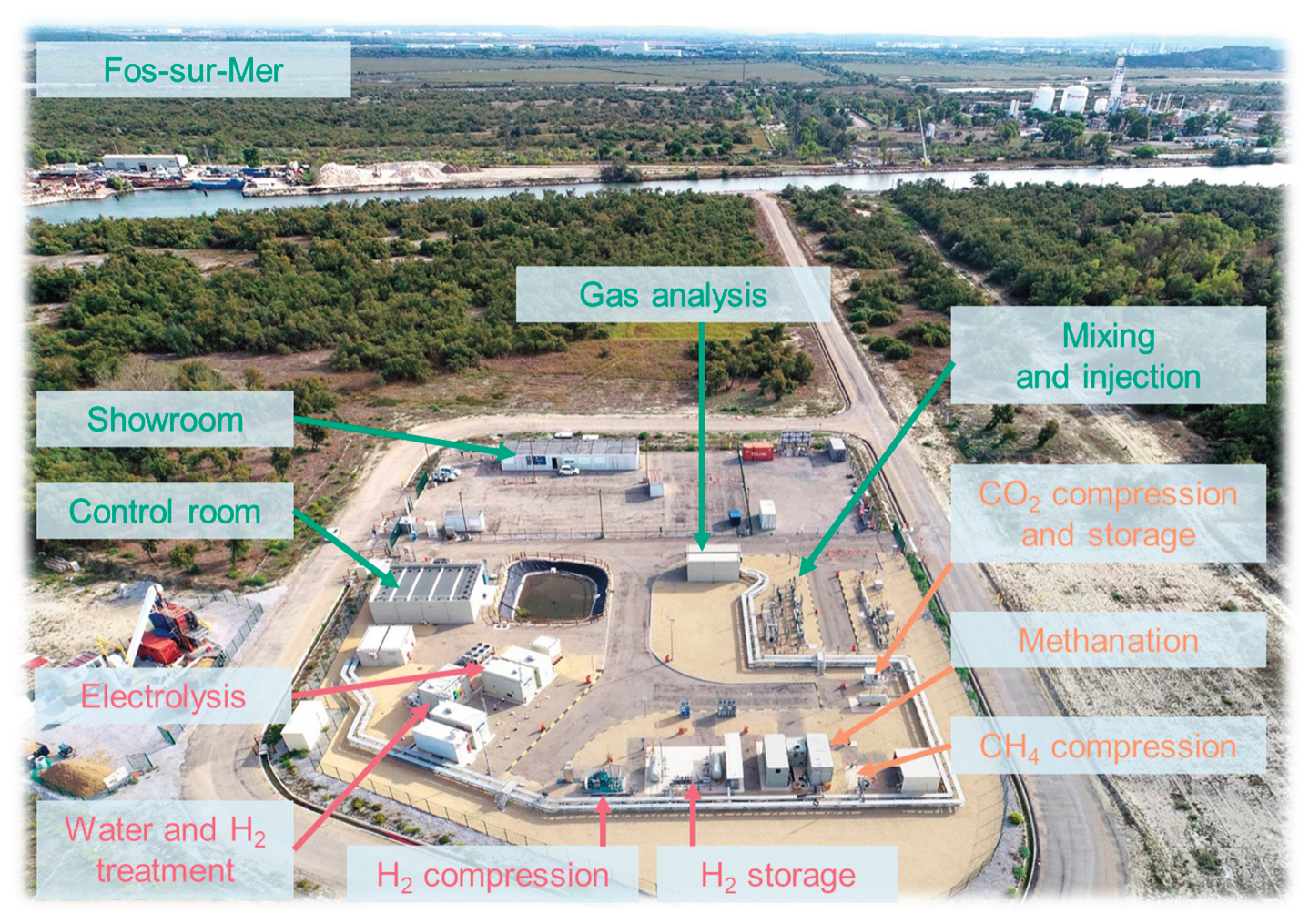
Figure 2.
Sources of failures observed on Jupiter 1000.
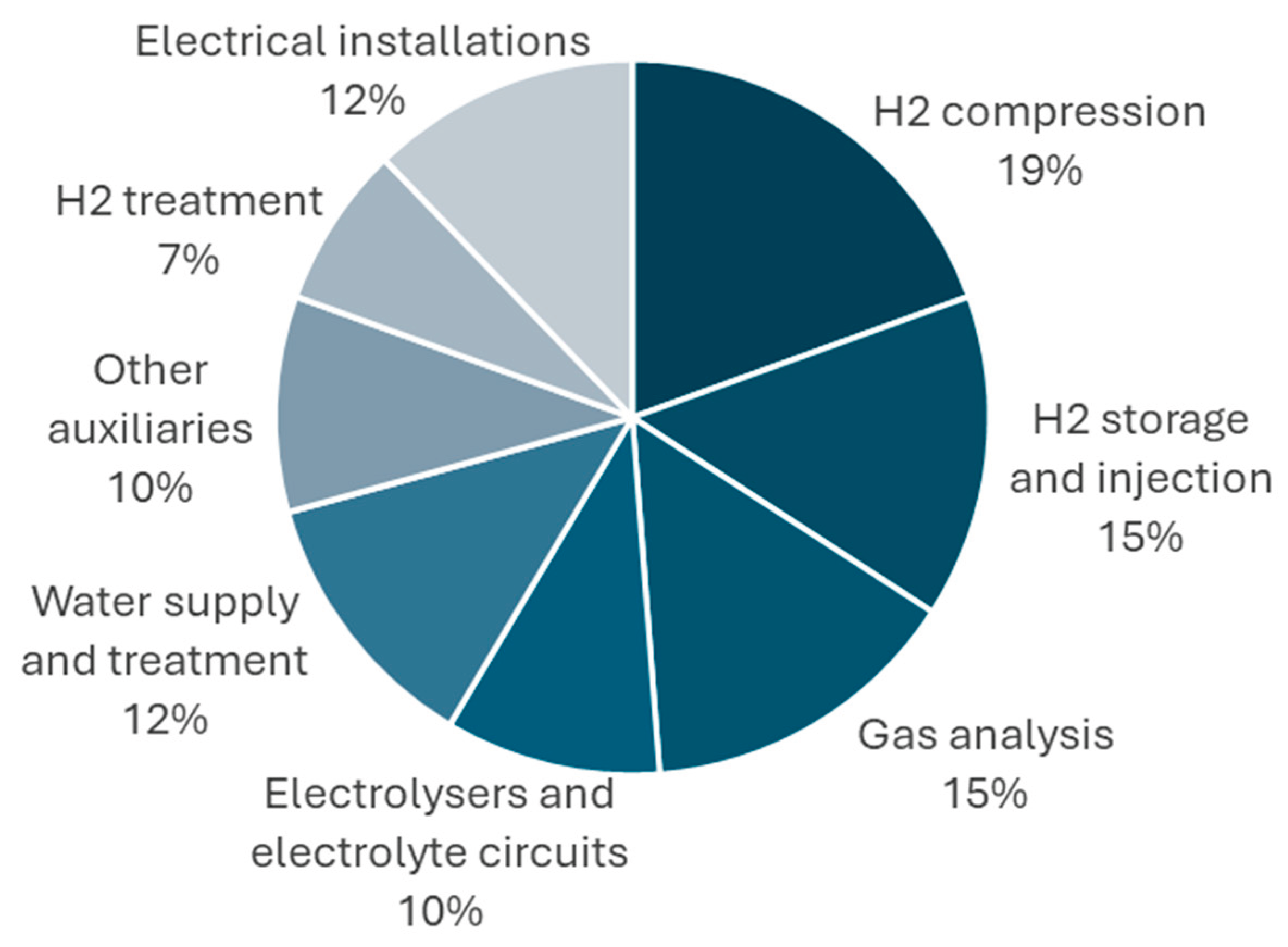
Figure 3.
Causes of failures observed on Jupiter 1000.
Disclaimer/Publisher’s Note: The statements, opinions and data contained in all publications are solely those of the individual author(s) and contributor(s) and not of MDPI and/or the editor(s). MDPI and/or the editor(s) disclaim responsibility for any injury to people or property resulting from any ideas, methods, instructions or products referred to in the content. |
© 2025 by the authors. Licensee MDPI, Basel, Switzerland. This article is an open access article distributed under the terms and conditions of the Creative Commons Attribution (CC BY) license (http://creativecommons.org/licenses/by/4.0/).
Copyright: This open access article is published under a Creative Commons CC BY 4.0 license, which permit the free download, distribution, and reuse, provided that the author and preprint are cited in any reuse.


