Preprint
Article

This version is not peer-reviewed.

Effects of Hybridization and Triploidization on Gene Expression in Rainbow Trout (Oncorhynchus mykiss)♀ × Brook Trout (Salvelinus fontinalis)♂ Hybrids

Submitted:

13 September 2025

Posted:

16 September 2025

You are already at the latest version

Abstract

The transcriptomic effects of hybridization and triploidization were investigated in the diploid and triploid rainbow trout, diploid brook trout and in the triploid hybrids of rainbow trout and brook trout. The examined fish were reared under identical conditions for about two and a half years after hatching. Expression of ten genes involved in cellular respiration (Atp5bp, Slc25a5), mitochondrial functioning (Mrpl28, Micu2), ribosome biogenesis (Rpl24, Rps24), proteasome-mediated protein turnover (Derl1, Psmc2) and protein chaperoning (Hsp90B1, Pdia4) were studied in liver and muscle tissues. Most of the analyzed genes displayed comparable expression levels across all the fish groups, with triploid hybrids showing expression patterns more similar to the purebred diploid trout. Compared to all other fish groups, purebred triploid rainbow trout exhibited significant upregulation of Slc25a5, Derl1, Rps24 and Rpl24 genes in liver and downregulation of Micu2 gene muscles. In turn, triploid hybrids showed marked upregulation of Atp5pb, Slc25a5, Rpl24, Rps24 and Pdia4 genes in muscle and downregulation of Hsp90B1 gene in both liver and muscle when compared to all the fish groups examined. Although protein synthesis- and energy-related genes were upregulated in the muscles of triploid hybrids, the recoded growth performance data did not indicate clear evidence of growth heterosis, suggesting that the potential benefits of increased heterozygosity in this cross may be counterbalanced by metabolic inefficiencies. Three- to fourfold downregulation of heat-shock protein genes was observed in both tissues of triploid hybrids compared with purebred diploid and triploid trout, indicating possible maladaptive genomic incompatibilities usually observed in salmonid fish hybrids that may reduce their heat tolerance under aquaculture conditions. The obtained results also revealed significant upregulation of genes linked to liver protein synthesis and energy production, along with muscle protein turnover in the triploid rainbow trout, supporting the hypothesis that the higher energy demands for maintaining proper protein concentrations in the larger cytoplasmic cell volume of triploid fishes may be met through enhanced protein metabolism.

Keywords: 
;  ;  ;  ;  

1. Introduction

Distant hybridization is a genetic breeding technique widely used in aquaculture to produce fish with enhanced or new traits that are more suitable for commercial production and better aligned with the customer preferences [1,2,3]. The integration of genomes from different species results in rapid changes to both, genotype and phenotype, often triggering hybrid heterosis [4,5,6]. As a result, distant fish crosses may exhibit higher growth rates, enhanced resistance to pathogens, increased tolerance to unfavorable environmental conditions, improved meat quality and more attractive appearance [7,8,9,10,11]. There is, nevertheless, a negative relationship between hybrid fitness and the accumulation of neutral or adaptive genetic differences between the parental genomes, making the crossing of different species not only an opportunity for trait superiority but also a challenge, as it usually leads to the hybrid breakdown [12,13,14].
Induced triploidization is another reproductive biotechnique utilized in aquaculture to address the challenges of precocious sexual maturation in fish [15] and reduced viability of distant fish hybrids [16]. In aquaculture, triploidization is artificially induced by exposing fertilized eggs to chemical or physical shocks (i.e., sub-lethal temperature or high hydrostatic pressure), which prevents the extrusion of the second polar body from the egg [17,18]. The nuclear genome of the resulting autotriploid embryos comprises three (3n) sets of chromosomes (two from the female and one from the male) [19]. The odd number of chromosomes in the triploid fish disturbs gonadal development and gamete production that usually result in the functional sterility what in turn eliminates the negative effects of sexual maturation on the growth rate, meat quality and overall fitness of the diploid individuals [20,21]. Production of the sterile triploids also allows for the mitigation of potential ecological risks posed by escaping of cultured fish from the farms or being introduced into natural watersheds for the recreational purposes [22,23].
Available studies indicate that in triploid hybrids, combination of two divergent genomes has generally a greater impact on the fish transcriptome than presence of additional set of chromosomes [24,25,26,27]. In the case of distant hybridization, one of the most pronounced outcomes observed in fish is the transcriptomic shock, characterized by a sudden and substantial shift in the genome-wide expression patterns [27,28,29,30]. Accumulating evidence indicates that the observed transcriptomic dysregulation in distant salmonid fish hybrids is mainly associated with significant under-expression of genes involved in energy metabolism, proteostasis and stress response [31,32,33,34]. On the other hand, the impact of triploidy on gene expression in fish is unexpectedly smaller than anticipated, as only a limited number of genes in the autotriploid fish exhibit differential expression compared to diploids [25,35,36,37,38,39,40]. Most of the upregulated genes in triploids are associated with energy metabolism, protein synthesis and stress response, likely as an adaptive mechanism counteracting their physiological disadvantages associated with limited aerobic energy budget and increased susceptibility to hypoxia and thermal stress [35,36,37,38,39,40]. In turn, the downregulated genes in autotriploid fish are linked with the cellular division processes, reflecting cell cycle disruptions caused by the presence of odd chromosome number in their nuclei [25,38].
The rainbow trout (Oncorhynchus mykiss) is the second most important salmonid species in aquaculture, with total production exceeding one million tons in 2022 [41]. Unfortunately, global production of the species has been significantly limited in recent decades due to its low resistance to viral haemorrhagic septicaemia (VHS) and infectious hematopoietic necrosis (IHN) [42]. Both diseases are currently widespread around the world, causing vast economic losses for the rainbow trout farms due to the lack of effective treatments [43,44,45]. Existing reports have demonstrated that certain charr species (Salvelinus sp.) exhibit resistance to the mentioned infections; however, their aquaculture production is more challenging and far less profitable than that of rainbow trout [46,47]. In this regard, triploid crosses between rainbow trout and brook trout (Salvelinus fontinalis) have lately garnered attention as a promising candidate for the commercial production in the fish farms affected by frequent outbreaks of VHS and IHN [48]. Preliminary studies indicated that mentioned 3n hybrids can inherit at least partial resistance to VHSV, showing delayed disease onset and lower cumulative mortality relative to pure rainbow trout [46]. However, it remains unclear how strongly this resistance is expressed in hybrids and whether it is consistently maintained.
The “Salmocross” project has been recently initiated in Poland to develop an efficient biotechnological method for production of triploid hybrids of rainbow trout and brook trout, along with optimizing their commercial rearing technology [49]. Despite the considerable potential of this hybrid for the aquaculture production, information on the influence of sub-genome reconciliation together with polyploidization on the transcriptome network and physiology is unavailable. The aim of this study was, therefore, to explore how distant hybridization and triploidization reshape the expression of genes central to energy metabolism, proteostasis and stress response in rainbow trout × brook trout crosses. For this purpose, the expression of ten genes involved in core metabolic and stress response processes previously identified in RNA-seq studies as among the most differentially expressed in salmonid hybrids was quantified using real-time PCR.

2. Results

2.1. Growth Performance of Examined Fish

After about 2 years and 6 months of rearing, the highest average body weight and length were observed in purebred rainbow trout, both triploid (3n RT, bw=689 ±77g, bl=38.3 ±1,7cm) and diploid (2n RT, bw=666 ±75g, bl=37 ±1,6cm). In contrast, the lowest growth parameters were recorded in purebred diploid brook trout (2n BT, bw=454 ±50g, bl=1.4cm) and triploid hybrids (3n RT×BT, bw=481, ±68g bl=35.2 ±1.5cm). Statistically significant differences (p<0.05) in both traits were found between the group of purebred rainbow trout (2n RT, 3n RT) and the group comprising diploid purebred brook trout together with triploid hybrids (2n BT, 3n RT×BT). No significant differences (p>0.05) were detected between diploid (2n RT) and triploid (3n RT) purebred rainbow trout, nor between purebred diploid brook trout (2n BT) and triploid hybrids (3n RT×BT) (Figure 1).

2.2. Ploidy and Hybridization Confirmation

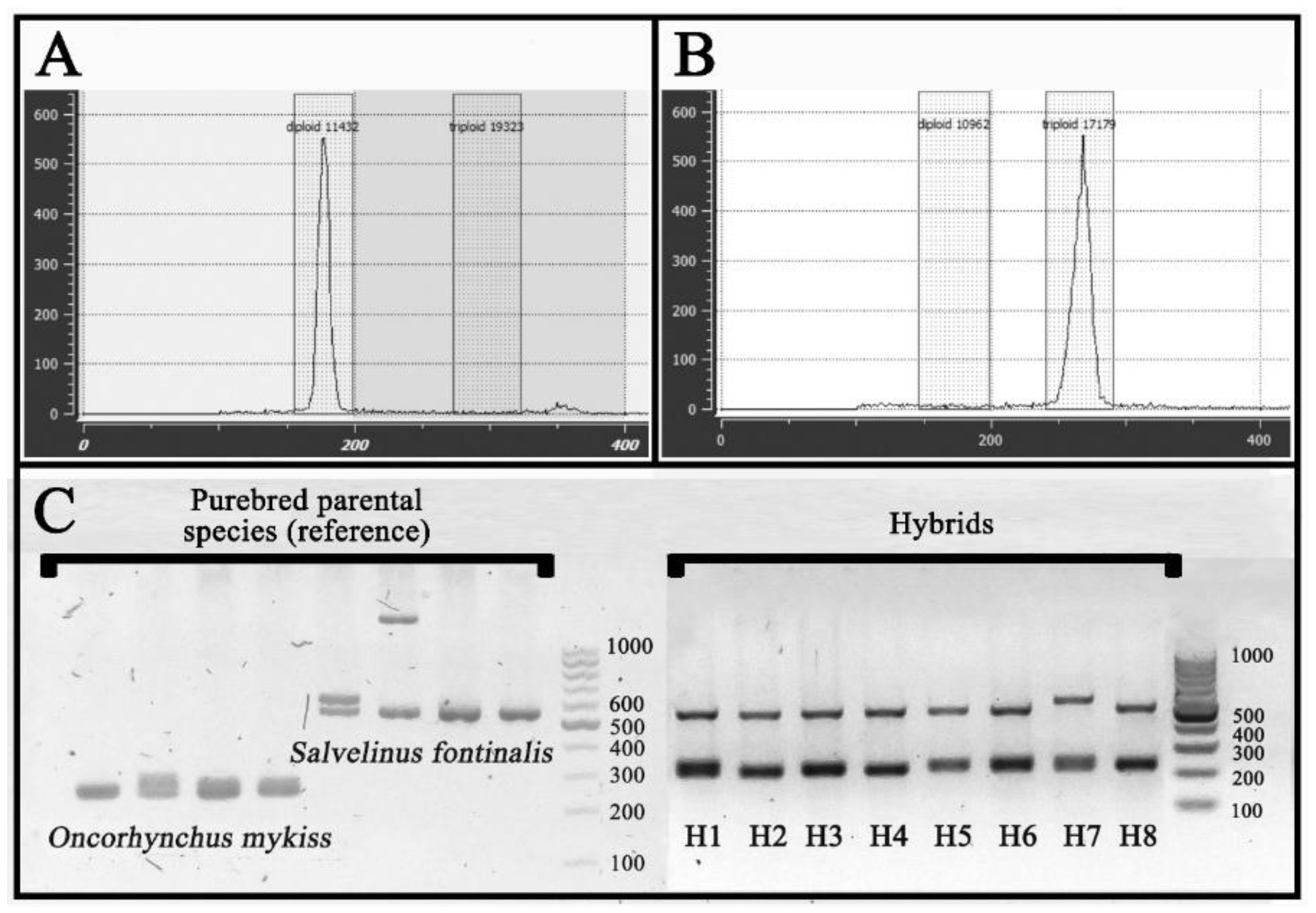
Performed flow cytometry analysis confirmed ploidy level of diploids (2n RT and 2n BT) and triploids (3n RT and 3n RT×BT) as assumed (Figure 2a,b). The amplification of OMM-1279 microsatellite DNA marker yielded products of length 200–300 base pair (bp) for rainbow trout and 550–1500 bp for brook trout (Figure 2c). The molecular screening conducted on all the sampled fish revealed genotypes originating from both parental species, confirming their hybrid status. Moreover, the carried-out PCR-based DNA genotyping affirmed the genetic sex of all the sampled fish to be females (Supplementary Figure S1).

2.2. Gene Expression Analysis

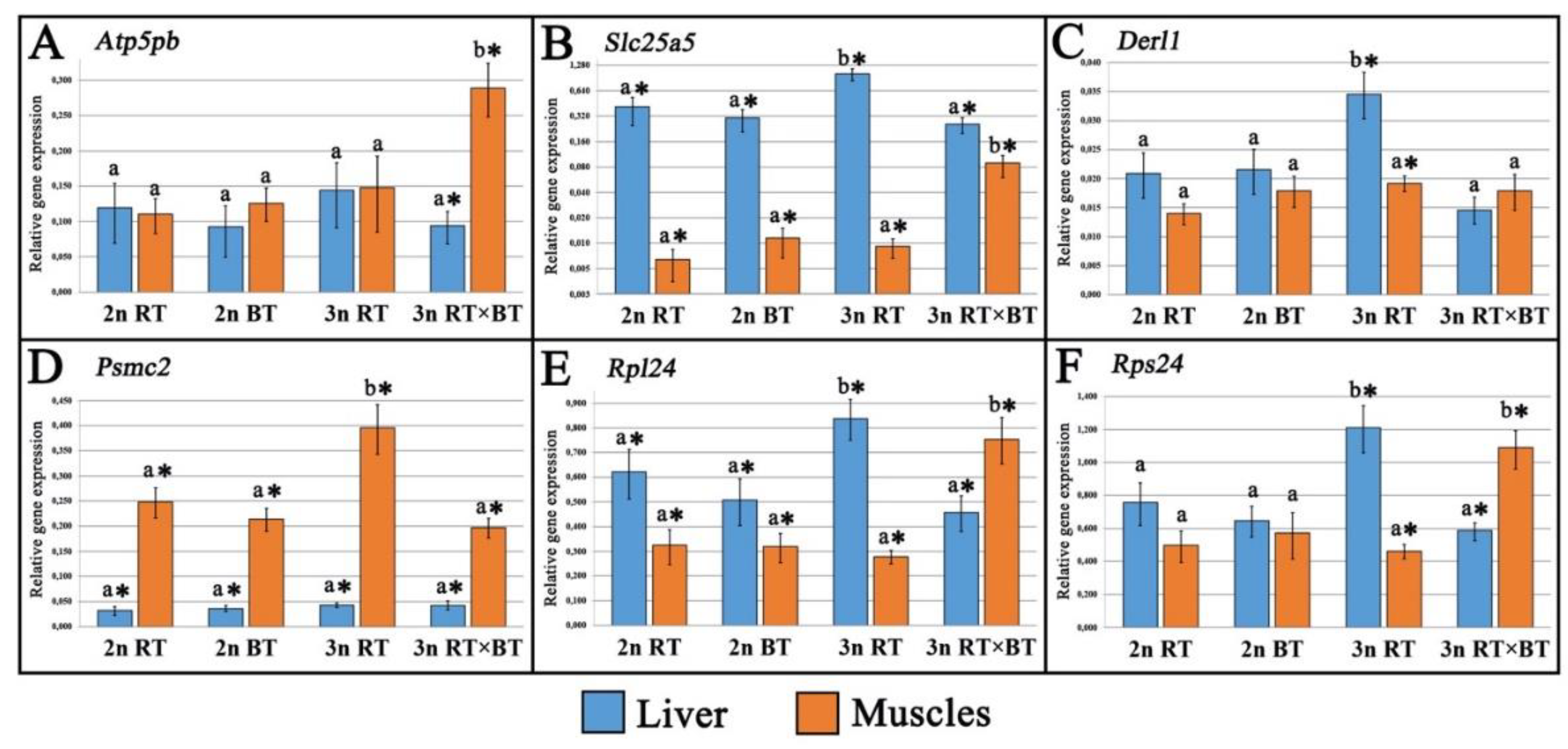
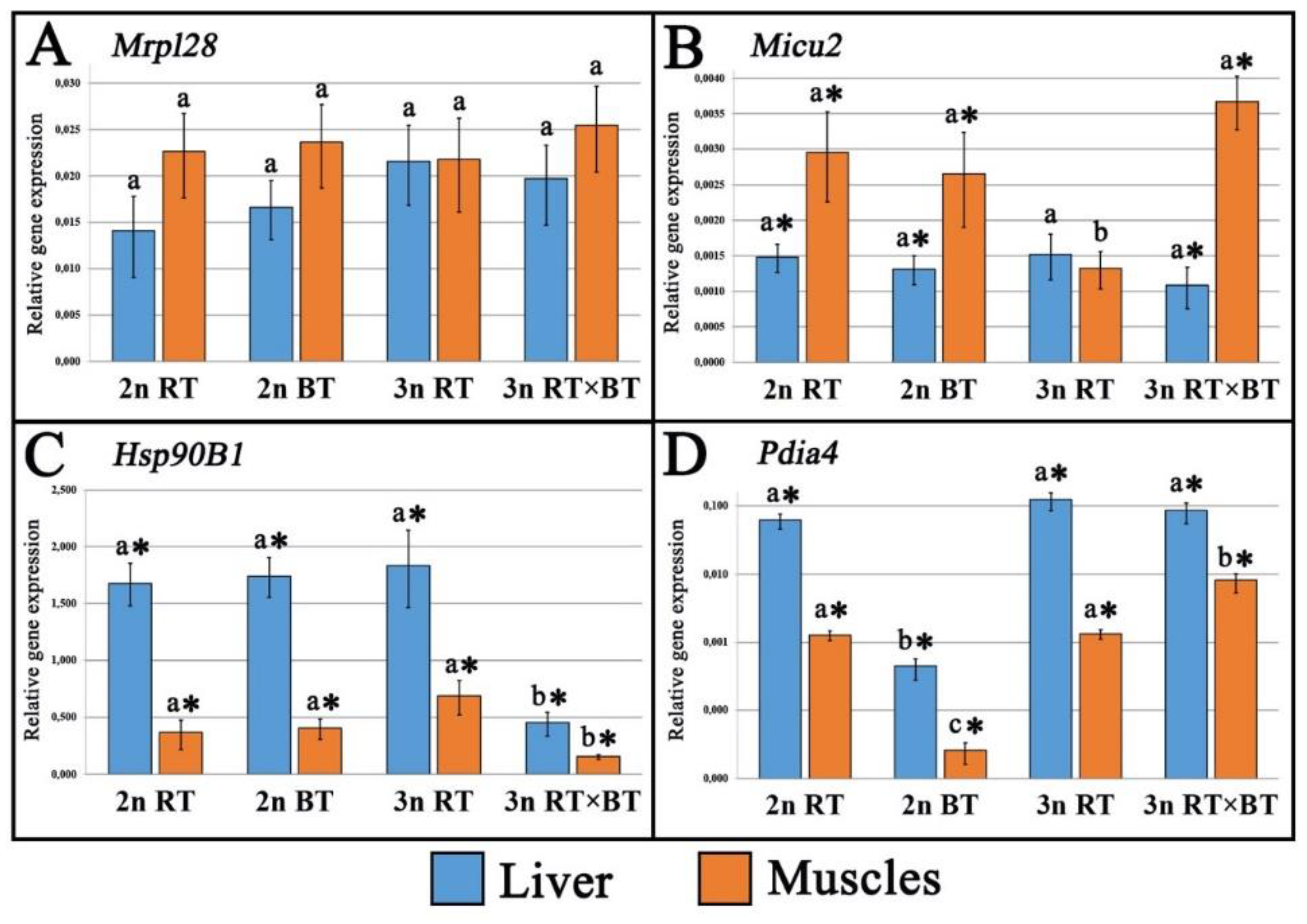
The mRNA expression for each investigated gene was detected in every tissue sampled from all fish (Figure 3 and Figure 4). In the liver tissue, significantly (p<0.05) higher mRNA transcription levels of Slc25a5, Derl1, Rps24 and Rpl24 genes were recorded for triploid purebred rainbow trout when compared to diploid rainbow and brook trout, as well as triploid hybrids (Figure 3b,c,e,f). Insignificant (p>0.05) differences in the gene expression levels among all studied fish groups were observed for Atp5pb, Psmc2, Mrpl28 and Micu2 genes in the liver. For the Pdia4 gene, significant (p<0.05) differences in transcription levels were observed only in diploid brook trout, where expression was approximately three times lower than in all other fish groups (Figure 3a,d and Figure 4a,b,d).
For muscle tissue, significant (p<0.05) upregulation in the mRNA transcription level was detected in triploid hybrids for majority of examined genes (Atp5pb, Slc25a5, Rpl24, Rps24 and Pdia4) with slightly (p>0.05) higher expression in triploid rainbow trout when compared to their diploid rainbow trout and brook trout (Figure 3a,b,e,f and Figure 3d). In the case of Psmc2 gene, the recorded expression levels significantly higher (p<0.05) in triploid rainbow trout, when compared to all other fish groups (Figure 3d). Among all analyzed genes significant (p<0.05) downregulation of expression level was detected for Micu2 gene in the triploid rainbow trout (Figure 4b). Lack of significant (p>0.05) differences in the gene expression levels between all studied fish groups were observed in Derl1 and Mrpl28 genes in the muscle tissue (Figure 3c and Figure 4a).
Three- to four-fold lower (p<0.05) expression levels of Hsp90B1 gene were detected in both tissues of triploid hybrids compared to diploid and triploid rainbow trout, as well as diploid brook trout. Compared to diploid rainbow trout and brook trout specimens slightly upregulated Hsp90B1 transcription levels were recorded in triploid rainbow trout, however; the observed differences were insignificant (p>0.05) in both tissues examined (Figure 4c).

3. Discussion

Interspecific hybridization and triploidization are recognized as an important reproductive biotechniques used in aquaculture [3,5,18,50]. Crossing different salmonid species enables the production of commercially desirable fish stocks, while induced triploidy improves their early survival and prevents precocious sexual maturation [16,51,52,53]. Along with the instant and severe genotype modification, associated with the loss and/or gain of novel genes and alleles, as well as establishment of new gene expression patterns, both techniques also lead to the phenotypic and physiological changes in the resulting fish progeny [54,55,56,57]. Nevertheless, interspecific hybridization generally has a stronger impact on the fish transcriptome than triploidization [24,25,26,27]. Interactions among divergent sets of genes, alleles, transcription factors and chromatin profiles originating from different sub-genomes result in fast and widespread transcriptomic dysregulation in distant fish crosses, with many genes showing substantial up- or down-regulation when compared to their purebred parental species [27,29,30,32,33,58]. Although triploidization leads to increased heterozygosity and gene dosage, its impact on the fish transcriptome is weaker, as only a limited number of genes in triploid fishes shows significant differences in expression level compared to diploids, which is attributed to the phenomenon of gene dosage compensation [35,36,37,38]. In the present study, the effects of hybridization and triploidization on expression patterns of ten selected genes involved in pathways related to cellular respiration and energy production, proteasome-mediated protein turnover, ribosome biogenesis, mitochondrial functioning, as well as protein chaperoning were examined in the liver and muscle tissues of triploid (3n) crosses between rainbow trout and brook trout that are promising for the commercial aquaculture production. Flow cytometry analysis and DNA genotyping confirmed that the examined fish were triploid hybrids between mentioned species (Figure 2a,b).
One of the key outcomes of the additional set of chromosomes in polyploids is the genome dosage effect, which involves an increase in gene expression proportionally to the number of its copies [59,60,61]. Unlike mammals, fishes adapt well to the genome alterations caused by ploidy changes because of their ability to functional re-diploidization [25,30,62,63,64]. The observed stabilization of genome expression in polyploid fishes towards a diploid state is achieved through gene dosage compensation, which relies on mechanisms of cell number reduction per tissue volume [65,66], chromatin remodeling [67], DNA methylation [63] and microRNA-mediated post-transcriptional regulations [68,69]. Available studies suggest that the dosage compensation in triploids involves proportional silencing of each gene copy, with all three remaining transcriptionally active in an additive pattern, typically resulting in genome-wide homeolog expression dominance (HED) and bias (HEB) towards the maternal genome [58,70,71,72,73]. In this study, most analyzed genes, i.e., Slc25a5, Derl1, Rpl24, Rps24 (in muscles), Psmc2, Micu2 (in the liver), Atp5bp, Mrpl28, Hsp90 and Pdia4 (in both tissues), exhibited dosage compensation in the purebred triploid rainbow trout with expression levels comparable to their diploid counterparts (Figure 3 and Figure 4). Among mentioned genes, the Atp5pb, Micu2, Pdia4 (in the liver tissue), Derl1 (in the muscles) as well as Mrpl28 and Psmc2 (in both liver and muscles) also displayed unchanged expression levels in the triploid rainbow × brook trout hybrids, when compared to the diploid rainbow trout and brook trout, likely indicating their essential role in maintaining key physiological functions necessary for the viability of the examined hybrids.
In polyploids, genome dosage compensation mechanisms do not always precisely match expression levels to that observed in diploids, as some genes exhibit significant upregulation or downregulation, which is referred to as positive and negative dosage compensation [63,74]. Intriguingly, all genes that displayed positive (Slc25a5, Rpl24, Rps24, Derl1 and Psmc2) or negative (Micu2) dosage compensation in the tissues of purebred triploid rainbow trout relative to their diploid counterparts also exhibited comparable expression levels between the examined triploid hybrids and the purebred diploid parental species (Figure 3b–f and Figure 4b). Given that diploid hybrids between rainbow and brook trout are inviable and die before yolk sac resorption [53], it can be speculated that the induction of triploidization in the examined hybrids may alleviate the severity of transcriptomic shock caused by merging genomes from different species. Indeed, accumulating number of studies indicate that whole-genome duplications following hybridization can weaken the post-zygotic reproductive constraints, enhancing viability and fitness of the allopolyploid fishes [75,76,77,78,79]. Available research indicates that the observed reduction in transcriptomic dysregulation in allopolyploid fishes primarily stems from increased gene expression flexibility, driven by variable dosage compensation, which involves the silencing of cis-regulatory elements and the enhancement of trans-regulatory genome mechanisms [26,27,63,80]. As triploid fish hybrids examined in this study inherit two chromosome sets from rainbow trout (2n) and one from brook trout (1n), their increased viability observed is most probably associated with the transcriptional dominance of the maternal sub-genome. Numerous studies have revealed that allotriploid fishes retain a larger portion of the maternal genome, including maternal-specific genes together with profiles of genome methylation and transposable element density, which reduces incompatibilities between nuclear and mitochondrial genomes in hybrid offspring, alleviating the severity of potential cytonuclear conflicts that could impair core cellular physiological processes [58,72,81,82,83,84,85].
The first generation of fish hybrids typically exhibits enhanced trait parameters, a phenomenon known as heterosis or transgressive inheritance [1,2,78]. The observed trait superiority in distal fish crosses over purebred parental species is usually linked with enhanced growth parameters [86,87,88], innate immune response [89,90] and resistance to unfavorable environmental conditions [91,92,93]. Available studies indicate that the heterosis effect in allopolyploid fishes is mainly attributed to their increased heterozygosity together with gene redundancy, incomplete dosage compensation and maternal/paternal dominance effects [24,63,80,94]. Multiple transcriptomic studies have linked the upregulation of genes associated with protein synthesis and energy metabolism to the growth heterosis in allopolyploid fishes [24,25,58,95]. Similarly, significant upregulation of genes involved in protein synthesis (Rpl24, Rps24 and Pdia4) and energy-production (Atp5pb, Slc25a5 and Micu2) was detected in the muscles of examined the triploid hybrids between rainbow and brook trout, potentially indicating heterosis effect linked to growth and metabolic efficiency (Figure 3a,b,e,f and Figure 4b,d). However, recorded in this study morphological data did not show clear sign of growth heterosis in the examined triploid hybrids (Figure 1), suggesting that the potential benefits of increased heterozygosity in this cross may be counterbalanced by metabolic inefficiencies. The comparable growth performance of the examined triploid hybrids to diploid purebred brook trout might indicate that maternal rainbow trout’s sub-genome dominance at the transcriptional level leads to their improved viability but not translates into enhanced growth. It is also important to note that extensive research on allotriploid and autotriploid salmonid fishes has highlighted the critical role of the maternal genome's origin in shaping traits complex among hybrid families [20,70,71,96,97,98]. Therefore, further research on elucidation how the maternal origin of the genome influences growth rate, resistance to environmental stress and pathogens, survivability, as well as deformity rates in the triploid hybrids of rainbow trout × brook trout examined here, offers viable opportunity to gain valuable information for the future improvement of their aquaculture production.
Allopolyploidization is known to impose significant stress on organisms by causing molecular, chromosomal and cellular changes that disrupt key processes essential for genomic stability, protein synthesis and metabolic regulation [21,24,30,99,100]. In the case of autotriploid fishes, their normal development is hypothesized to depend on the upregulation of stress-response genes, which likely act as a compensatory mechanism to mitigate physiological (e.g., oxidative stress) and environmental (e.g., hypoxia, hyperthermia) challenges arising from their limited aerobic energy budget and reduced capacity to store energy reserves [21,65,66,70,101,102]. The Hsp90B1 and Pdia4 genes analyzed in this study are central to cellular protein homeostasis, ensuring their proper folding, stabilization after synthesis, as well as repair during thermal and oxidative stress [103,104,105]. Consistent with previous research, a slight but statistically insignificant upregulation of both genes was also observed in the examined triploid (3n) purebred rainbow trout compared to diploid individuals (Figure 3c,d) [9,35,37,38,39,40]. Conversely, a three- to four-fold downregulation of Hsp90B1 gene expression was observed in the liver and muscles of the examined triploid hybrids compared to purebred diploid and triploid rainbow trout (Figure 4c). These findings align with other studies on allopolyploid salmonid fishes that have reported significant downregulation of stress-response genes, particularly those involved in protein folding and structural maintenance. It is believed that this downregulation results from improper gene expression regulation or negative epistatic effects due to maladaptive genome incompatibilities between the parental species [28,32,33,34,106,107]. Nevertheless, the observed Hsp90B1 suppression could also reflect tissue-specific developmental timing, with expression peaks occurring earlier or later than the sampled stages of ontogenetic development, or altered mRNA stability in hybrids. In the case of allotriploid fishes, it may represent an adaptive response to allotriploidization, that relies on reallocating energy from protein chaperoning to other essential functions such as osmoregulation, immune defense and cellular repair [103,108,109]. Despite the triploid hybrids examined in this study developed under optimal aquaculture conditions comparable to purebred diploid rainbow trout, the recorded suppression of Hsp90B1 gene could potentially impair their tolerance to suboptimal high temperatures, particularly during early ontogenetic development. Nevertheless, no research has yet been performed to assessed the impact of the recorded underexpression of heat shock proteins on the viability of the examined triploid hybrids under suboptimal high temperatures, particularly during early ontogenetic development.
Despite the expectation that larger cells may have lower mass-specific metabolic rates [102,110,111], several studies revealed that autotriploid fishes often exhibit similar or even higher metabolic rates along with increased postprandial energy demands for protein processing when compared to diploids [21,65,112,113]. It is hypothesized that this phenomenon results from higher translation rates in polyploid cells, compensating for their increased cytoplasmic volume to maintain proper protein concentrations [114,115,116,117,118]. In this study, significant upregulation of genes involved in ribosome biogenesis (Rpl24 and Rps24) and endoplasmic reticulum–associated protein degradation (Derl1) in the liver, together with increased expression of the protein turnover gene (Psmc2) in the muscles of the purebred triploid rainbow trout was recorded (Figure 3b,c,e,f, and Figure 4b), likely indicating enhanced liver protein synthesis, along with muscle protein turnover [119,120,121]. Additionally, higher expression of the energy production gene Slc25a5 in the liver, accompanied by a marked suppression of the mitochondrial function gene Micu2 in muscles, suggests a shift in energy allocation toward liver metabolism in the examined purebred triploid rainbow trout [110,115,122,123,124]. However, the increased expression of the Psmc2 gene may be also linked to an enhanced rate of hypertrophic muscle growth observed in triploid fish [21,65,125]. Previous research on triploid brook trout has revealed approximately one-third faster ammonia excretion and lower crude protein retention compared to diploids, suggesting that the increased liver energy demands for protein processing in triploids may be met through muscle protein metabolism [113]. These metabolic constraints, stemming from the elevated energy costs of protein synthesis and turnover, as well as ammonia detoxification, may be additional contributors to the reduced stress tolerance of autotriploid fishes under high temperatures, hypoxia, or exhaustive exercise. If true, adjusting triploid diets to include higher levels of lipids or carbohydrates might enhance energy storage and reduce protein waste, thereby improving their aquaculture efficiency. However, further studies are required to validate this very tentative hypothesis.

4. Materials and Methods

4.1. Ethics

This study was carried out in strict accordance with the recommendations in the Polish ACT of 15 January 2015 on the Protection of Animals Used for Scientific or Educational Purposes (Journal of Laws 2015, item 266). The experimental protocol used in this study was approved by the Local Ethical Committee for Experiments on Animals in Bydgoszcz, Poland (Permission no. 9/2022). This article does not contain any studies with human participants performed by any of the authors.

4.2. Fish Origin and Maintenance

The fish examined in this study were produced using rainbow trout (Oncorhynchus mykiss) and brook trout (Salvelinus fontinalis) gamete donors from the broodstocks kept at the Department of Salmonid Research (DSR) of the Inland Fisheries Institute (IFI) in Olsztyn, Rutki (Poland) (54°19'51.1"N 18°20'15.1"E). Purebred diploid (2nRT) and triploid (3nRT) stocks of rainbow trout examined in the current study were obtained through the fertilization of the eggs with milt from the sex-reversed females, i.e., neo-males (XX). Diploid purebred brook trout (2nBT) specimens were obtained from the mixed-sex stock that was produced through routine species reproduction. In turn, triploid hybrids between rainbow trout and brook trout (3n RT×BT) were obtained through the controlled crossing of rainbow trout females and brook trout males.
Three- and four-year-old spawners used as gamete donors were reared in ponds with a capacity of 10–30 m3 and a water flow 5 dm3/s. The mean water temperature was 10°C and oxygenation level exceeded 80% of maximal oxygen concentration at a given temperature. The fish were fed with commercial broodstock feed (Aller Bronze 3 mm and Aller Silver 3 mm, Aller Aqua, Poland) three or four times daily in amounts ranging from 0.5 to 1.5% fish biomass depending on water temperature [126]. Fish feeding was stopped two weeks before the spawning period. Prior to the gamete stripping, selected spawners were anesthetized with MS-222 (50 mg/dm3, Sigma-Aldrich, Spain). Eggs were individually collected from five random rainbow trout and brook trout females as well as inseminated with milt obtained from two rainbow trout neo-males and two brook trout males. Before fertilization, spermatozoa quality was assessed by directly observing milt activated with sperm activating medium (SAM) (1 mM CaCl2, 20 mM Tris, 30 mM glycine, 125 mM NaCl pH 9.0) [127] under an optical microscope (Nikon Eclipse E 2000) at a total magnification of 100×.
The protocol for the triploidization of rainbow trout eggs fertilized with homologous and heterologous sperm involved a five minute high hydrostatic pressure (HHP) shock of 9500 psi that was applied 350 degree minutes (CTMs) after the egg activation [128]. The HHP shock was generated using the TRC-APV electric/hydraulic device (TRC Hydraulics Inc. in Dieppe, Canada) and an aqua pressure vessel constructed by technician staff at the Fish Farm “Pstrąg Tarnowo”. All batches of eggs; purebred diploid (2n) and triploid (3n) rainbow trout, as well as triploid (3n) crosses of rainbow trout and brook trout were incubated at a temperature of 7.0 ±0.5°C, with oxygen levels maintained at 10.8 ±0.5 mg/L and the pH at 7.5 ±0.1, in the separate vertical incubators with egg trays.
Hatched fish were reared under identical conditions in tanks and ponds supplied with water from the Radunia River (a mean temperature of 10°C and oxygenation levels above 80%) for about two years and six months (82 weeks). After yolk-sac resorption, the fry was stocked into 0.3 m3 plastic tanks with a water flow rate of 1 liter per second (l/s). When the fish attained a mean body weight of 5 and 100 g/indiv., they were transferred to 1 m3 and 3 m3 tanks, respectively, with a flow rate of 4 l/s. After reaching 300 g/indiv., they were reared in 10–30 m3 concrete rectangular ponds with a flow rate of 6 l/s. The fish were fed commercial feed formulated for salmonids (Aller Aqua Company, Poland) three to four times daily in accordance with rainbow trout feeding recommendations at specific temperatures [129]. During the rearing phase, fish were fed manually until they attained a mean body weight of 10 g, after which automatic timer feeders (FIAP 1520, Fiap Company, Germany) were used. Feeding ceased during periods when the water temperature exceeded 20°C.
After about two years and six months of rearing, forty randomly selected fish from each experimental stocks were weighed by a Radwag C315.60.C2.M warehouse scale (±1 g) and measured by scale (±1 mm) for total body mass (bm) and length (bl). Then, eight individuals from each experimental group were chosen for transcriptomic analyses. All selected fish had a confirmed ploidy level and were molecularly verified as females to ensure the reliability of the study material and eliminate potential sex-biased variability in the expression of analyzed genes. Before sampling, the fish were humanely sacrificed by cutting spiral cord. Liver and muscle tissues (approximately 0.5 cm3) were immediately collected, submerged into RNAlater™ solution (Thermo Fisher Scientific, Waltham, MA, USA), incubated at 4°C for 24 hours and finally stored at -24°C until further analyses.

4.3. Ploidy, Genetic Sex and Hybridization Verification

The ploidy level of the examined fish was confirmed with CyFlow® Ploidy Analyzer (Sysmex Partec GmbH, Germany) equipped with a CyViewTM software v1.8.0.82. For this purpose, adipose fins were sampled from each fish and then immediately processed with a CyStainTM UV Precise T kit (Sysmex Partec GmbH, Germany). Before analysis, about 10 mg of fin material was minced, incubated for 5 min in Extraction Buffer solution, and then stained with DAPI Staining Buffer.
To verify the genetic sex and hybrid status of the of the examined fish, PCR-based DNA genotyping was carried out. For this purpose, small pelvic or pectoral fin clips were collected from each sampled fish, preserved in 96% ethanol and stored at a temperature of 4°C until genetic material extraction. Fin clips previously collected from other random four rainbow trout and brook trout individuals were used as a reference. Genomic DNA was isolated from collected fin clips using the standard Chelex-100 method [130]. The quality and amount of the isolated genomic DNA was checked by the NanoDrop™ One spectrophotometer (Thermo Scientific). The genetic sex of the sampled fish was verified by the PCR duplex amplification of the Y-chromosome linked DNA marker (sdY) and 18S rDNA as a positive control [131]. In turn, hybrid status of obtained progeny resulted from crossing rainbow trout and brook trout was verified by application OMM-1279 microsatellite DNA marker [132]. The PCR amplifications were carried out using 10 ng of the isolated DNA template in a reaction mixture of 12.5 μl total volume composed by the 1×GoTaq® Hot Start Green Master Mix (Promega), as well as 0.4 μM of each SdY and 0.1 μM of each 18S rDNA primers (genetic sex screening) or 0.3 μM of each OMM-1279 primers (hybrid status verification). PCR amplifications were performed with a Mastercycler® X50s (Eppendorf, Germany, Hamburg) under the following conditions: an initial denaturation at 96°C for 4 min, followed by 35 cycles at 94°C for 30 s, annealing at 60°C for 45 s, elongation at 72°C for 45 s and a final elongation step at 72°C for 10 min. The resulting products of the PCR amplifications were separated in a 2.0% agarose gel (Sigma-Aldrich, St. Louis, USA) stained with ethidium bromide (0.05 mg/ml) and then visualized by a UV trans-illuminator (Vilber Laurmat ECX-20.M, Eberhardzell, Germany).

4.4. RNA Extraction, cDNA Synthesis, and Real-Time PCR Analysis

Total RNA from preserved tissues was extracted using the Bead-Beat Total RNA Mini kit (A&A Biotechnology, Gdańsk, Poland), following the manufacturer’s instructions. Residual DNA in the extracted RNA samples was removed using the Clean-Up Concentrator kit (A&A Biotechnology, Gdańsk, Poland). RNA concentration and purity were measured with a NanoDrop One spectrophotometer (Thermo Fisher Scientific, Waltham, MA, USA) and RNA integrity was assessed by 1% agarose gel electrophoresis. The obtained RNA samples were immediately processed further.
Purified total RNA samples of satisfactory quality were used to synthesize cDNA using the RevertAid First Strand cDNA Synthesis Kit (Thermo Fisher Scientific, Waltham, MA, USA). The reaction mixtures were prepared in a total volume of 20 μL, composed of 1X Reaction Buffer, 5 μM of Random Hexamer primer, 1 μM of dNTP Mix, 20U of RiboLock RNase Inhibitor, 20U of RevertAid M-MuLV RT reverse transcriptase and 1 μg of RNA sample. The reverse transcription reactions were carried out on a Mastercycler® X50a (Epppendorf, Germany). The samples were incubated for 5 min at 25°C, followed by 60 min at 42°C, and terminated by heating at 70°C for 5 min. The obtained cDNA samples were diluted 1:10 in DEPC-treated water and stored at -20°C for further processing.
Transcriptomic analyses included ten target genes involved in five critical biological processes important for viability and fitness of salmonid fish hybrids, namely: (1) cellular respiration and energy production (ATP synthase peripheral stalk-membrane subunit b and ADP/ATP translocase 2), (2) proteasome-mediated protein turnover (derlin1 and 26S proteasome regulatory subunit 7), (3) ribosome biogenesis (60S Ribosomal Protein L24 and 40S ribosomal protein S24), (4) mitochondrial functions (mitochondrial ribosomal protein L28 and mitochondrial calcium uptake protein 2) and (5) protein chaperoning (heat shock protein 90 β family member 1 and protein disulfide-isomerase A4). The primer sequences for the analyzed genes were designed based on genetic information deposited for rainbow trout in the GenBank (release 101) and Ensembl (release 109) databases or derived from the available literature (Table 1). All available isoforms and splice variants of the analyzed genes were taken into consideration before primer construction. To eliminate, inter-specific sequence variation as a source for differential estimates of gene expression the conserved gene regions between rainbow trout and brook trout were identified and taken into consideration. The primers were designed with default parameters, including the primer location on the exon-exon junction and a qPCR product length of approximately 100–200 bp and checked for complementarity with genomes of both species using the Primer Blast Designing Tool online software (NCBI). All the primers were also amplified in rainbow trout and brook trout, sequenced using a 3730xl DNA Analyzer (Applied Biosystems, Carlsbad, CA, USA) and subjected to BLAST analysis against the GenBank nucleotide data to confirm that all primers amplify the correct gene transcript targets.
Real-Time PCR analysis was carried out using designed primers for the target genes, choosing β-actin (Actb) (F: GCCGGCCGCGACCTCACAGACTAC, R: CGGCCGTGGTGGTGAAGCTGTAGC) and elongation factor 1-alpha (Elf1a) (F: TTAAGCAACCATGGGAAAGG, R: TACCTGCCGGTCTCAAACTT) as the house-keeping genes due to their proven stable expression level across different tissues [39,135,136,137]. Moreover, numerous studies indicate that the mentioned reference genes show a 1:1 dosage effect between triploid and diploid fishes and maintain stable expression levels in hybrids between rainbow trout and other salmonids, making them suitable as internal controls for relative mRNA transcription analyses in the fish examined in this study [87,95,138,139,140]. The qPCR was performed by a Cielo 6 Real-Time PCR System (Azure Biosystems, Italy) using the PowerTrack SYBR Green Master Mix (Applied Biosystems, California, USA). Reaction efficiencies were estimated from the slopes of the standard curves made of 10-fold serial cDNA dilutions starting from about 20 ng/μL. The optimal reaction conditions for both assays displayed an efficiency between 90 and 110%. The qPCR reaction mixtures were prepared in a total volume of 10 μL, consisting of 1X PowerTrack SYBR Green Master Mix, 0.5–0.8 μM (target genes) and 0.15 μM (housekeeping gene) of each primer, as well as 5 ng of cDNA. The Real-Time PCRs were run in triplicates with the following thermal cycling conditions: an initial polymerase activation step at 95°C for 5 min, followed by 35 cycles of 95°C for 30 s (denaturation), 20 s at 60°C (primer annealing) and 72°C for 15 s (elongation). During each run, negative controls using pure water and non-transcribed RNA were used to exclude reagents and samples contamination. The analysis of the melting curve (60–95°C) at the end of each run concluded the protocol. Fluorescence data were collected after the elongation step and in 0.1°C steps on the melting curve. The relative expression was calculated based on the difference between Ct values for reference and target genes using the Livak and Schmittgen’s [141] equation. The expression levels (Ct values) of the reference genes were normalized using the geNorm software [142].

4.5. Statistical Analysis

Statistical analyses of the fish body weight and length together with obtained fold change expression values for target genes relative to the normalized expression levels of reference genes (ß-actin and Elf1a) were carried out using Statistica software v.10.0 (StatSoft Inc., Tulsa, USA). Prior to analysis, the normality of data distribution and homogeneity of variances were assessed using the Shapiro–Wilk test and Levene’s test, respectively. A two-way ANOVA was performed, with fish group (2nRT, 2nBT, 3nRT and 3nRT×BT) and tissue (liver and muscles) as fixed factors. Tukey’s HSD post hoc test was used to determine significant differences (p<0.05) between fish groups and tissues.

5. Conclusions

This study provides preliminary insights into the transcriptomic effects of hybridization and triploidization in the triploid hybrids between rainbow and brook trout. Most of the analyzed here genes displayed dosage compensation in tissues of the triploid rainbow trout. In the triploid hybrids, stabilization of both positively and negatively compensated genes was recorded what suggests that combination of hybridization and triploidization might alleviate transcriptomic shock in the examined fish cross. Nevertheless, the recorded results did not indicate that the examined triploid hybrids confer a growth advantage over rainbow or brook trout, suggesting that any potential benefits of increased heterozygosity in this cross may be offset by metabolic inefficiencies. Genes encoding heat shock proteins were reduced by three- to four-fold in both tissues of the examined triploid crosses compared to diploid and triploid rainbow trout, possibly diminishing their thermal resilience under aquaculture conditions. Moreover, upregulation of genes linked to the hepatic protein synthesis and energy metabolism, along with enhanced muscle protein turnover in the triploid rainbow trout, reinforcing the idea that increased protein metabolism may compensate for the elevated energy demands required to sustain adequate protein levels in the enlarged cytoplasmic volume of the triploid cells. Further research elucidating how the maternal genome influences growth rate, resistance to environmental stress and pathogens, survivability and deformity rates in triploid hybrids of rainbow trout × brook trout, may provide valuable insights for enhancing their future aquaculture production.

Supplementary Materials

The following supporting information can be downloaded at: https://www.mdpi.com/article/doi/s1.

Author Contributions

Conceptualization, M.K., K.O. and T.W.; Methodology, M.K., K.O.; Software, M.K.; Formal Analysis, M.K.; Visualization, M.K.; Investigation, M.K., K.O.; resources R.R.; writing—review and editing, M.K., K.O.; supervision, K.O. All authors have read and agreed to the published version of the manuscript.

Funding

This research was supported by the statutory funding provided by the Ministry of Science and Higher Education in Poland (Grant number: 531-O301-D029-25) and by the European Union under the European Maritime and Fisheries Fund for 2014-2020 (Grant number: 00003-6521-OR1500002/17, acronym “SALMOCROSS”).

Institutional Review Board Statement

The study was approved by the Local Ethics Committee for Animal Experimentation of the University of Warmia and Mazury in Bydgoszcz (decision No. 9/2022), and it was carried out in strict accordance with the recommendations in the Polish ACT of 15 January 2015 on the Protection of Animals Used for Scientific or Educational Purposes, Journal of Laws 2015, item 266.

Informed Consent Statement

Not applicable.

Data Availability Statement

The raw data supporting the conclusions of this article will be made available by the authors upon request.

Conflicts of Interest

The authors declare no conflicts of interest.

References

  1. Bartley, D.M.; Rana, K.; Immink, A.J. The use of inter-specific hybrids in aquaculture and fisheries. Rev. Fish Biol. Fish. 2000, 10, 325–337. [CrossRef]
  2. Rahman, M.A.; Lee, S.G.; Yusoff, F.M.; Rafiquzzaman, S.M. Hybridization and its application in aquaculture. In: Sex control in aquaculture; pp. 163–178, 2018.
  3. Wang, S.; Tang, C.; Tao, M.; Qin, Q.; Zhang, C.; Luo, K.; …; Liu, S. Establishment and application of distant hybridization technology in fish. Sci. China Life Sci. 2018, 62, 22–45.
  4. Houston, R.D.; Bean, T.P.; Macqueen, D.J.; Gundappa, M.K.; Jin, Y.H.; Jenkins, T.L.; …; Robledo, D. Harnessing genomics to fast-track genetic improvement in aquaculture. Nat. Rev. Genet. 2020, 21(7), 389–409.
  5. Liu, S. (Ed.). Fish distant hybridization. Singapore: Springer, 2022.
  6. Ren, L.; Gao, X.; Cui, J.; Zhang, C.; Dai, H.; Luo, M.; …; Liu, S. Symmetric subgenomes and balanced homoeolog expression stabilize the establishment of allopolyploidy in cyprinid fish. BMC Biol. 2022a, 20(1), 200.
  7. Şahin, Ş.A.; Başçınar, N.; Kocabaş, M.; Tufan, B.; Köse, S.; Okumuş, İ. Evaluation of meat yield, proximate composition and fatty acid profile of cultured brook trout (Salvelinus fontinalis Mitchill, 1814) and Black Sea Trout (Salmo trutta labrax Pallas, 1811) in comparison with their hybrid. Tur. J. Fish. Aquat. Sci. 2011, 11(2), 261–271.
  8. Arias, C.R.; Cai, W.; Peatman, E.; Bullard, S.A. Catfish hybrid Ictalurus punctatus × I. furcatus exhibits higher resistance to columnaris disease than the parental species. Dis. Aquat. Organ. 2012, 100(1), 77–81. [CrossRef]
  9. Fraser, T.W.; Lerøy, H.; Hansen, T.J.; Skjæraasen, J.E.; Tronci, V.; Pedrosa, C.P.; …; Nilsen, T.O. Triploid Atlantic salmon and triploid Atlantic salmon × brown trout hybrids have better freshwater and early seawater growth than diploid counterparts. Aquaculture 2021, 540, 736698.
  10. Adams, M.B.; Maynard, B.T.; Rigby, M.; Wynne, J.W.; Taylor, R.S. Reciprocal hybrids of Atlantic salmon (Salmo salar) x brown trout (S. trutta) confirm a heterotic response to experimentally induced amoebic gill disease (AGD). Aquaculture 2023, 572, 739535. [CrossRef]
  11. Pourkhazaei, F.; Keivany, Y.; Dorafshan, S.; Heyrati, F.P.; Holtz, W.; Brenig, B.; Komrakova, M. Expression of growth and immunity genes during early developmental stages of rainbow trout (Oncorhynchus mykiss) and brown trout (Salmo trutta) hybrids. Aquaculture 2025, 606, 742595. [CrossRef]
  12. Johnson, N. Hybrid incompatibility genes: remnants of a genomic battlefield? Trends Genet. 2010, 26(7), 317–325. [CrossRef]
  13. Maheshwari, S.; Barbash, D.A. The genetics of hybrid incompatibilities. Annu. Rev. Genet. 2011, 45(1), 331–355.
  14. Burton, R.S.; Pereira, R.J.; Barreto, F.S. Cytonuclear genomic interactions and hybrid breakdown. Annu. Rev. Ecol. Evol. Syst. 2013, 44(1), 281–302. [CrossRef]
  15. Piferrer, F.; Beaumont, A.; Falguière, J.C.; Flajšhans, M.; Haffray, P.; Colombo, L. Polyploid fish and shellfish: production, biology and applications to aquaculture for performance improvement and genetic containment. Aquaculture 2009, 293(3–4), 125–156. [CrossRef]
  16. Blanc, J.M.; Vallée, F.; Maunas, P.; Fouriot, J.P. Maternal variation in juvenile survival and growth of triploid hybrids between female rainbow trout and male brown trout and brook charr. Aquac. Res. 2005a, 36(2), 120–129. [CrossRef]
  17. Pandian, T.A.; Koteeswaran, R. Ploidy induction and sex control in fish. Hydrobiologia 1998, 384, 167–243. [CrossRef]
  18. Zhou, L.; Gui, J. Natural and artificial polyploids in aquaculture. Aquac. Fish. 2017, 2(3), 103–111. [CrossRef]
  19. Arai, K. Fujimoto, T. Genomic constitution and atypical reproduction in polyploid and unisexual lineages of the Misgurnus loach, a teleost fish. Cytogenet. Genome Res. 2013, 140(2-4), 226–240. [CrossRef]
  20. Blanc, J.M., Poisson, H., Vallée, F. Covariation between diploid and triploid progenies from common breeders in rainbow trout, Oncorhynchus mykiss (Walbaum). Aquac. Res. 2001, 32(7), 507–516. [CrossRef]
  21. Maxime, V. The physiology of triploid fish: cur2t knowledge and comparisons with diploid fish. Fish Fish. 2008, 9(1), 67–78.
  22. Cotter, D.; O'Donovan, V.; O'Maoiléidigh, N.; Rogan, G.; Roche, N.; Wilkins, N.P. An evaluation of the use of triploid Atlantic salmon (Salmo salar L.) in minimising the impact of escaped farmed salmon on wild populations. Aquaculture 2000, 186(1–2), 61–75. [CrossRef]
  23. Fraser, T.W.; Fjelldal, P.G.; Hansen, T.; Mayer, I. Welfare considerations of triploid fish. Rev. Fish. Sci. 2012, 20(4), 192–211. [CrossRef]
  24. Ren, L.; Li, W.; Tao, M.; Qin, Q.; Luo, J.; Chai, J.; …; Liu, S. Homoeologue expression insights into the basis of growth heterosis at the intersection of ploidy and hybridity in Cyprinidae. Sci. Rep. 2016, 6(1), 27040.
  25. Ren, L.; Tang, C.; Li, W.; Cui, J.; Tan, X.; Xiong, Y.; …; Liu, S. Determination of dosage compensation and comparison of gene expression in a triploid hybrid fish. BMC Genomics 2017, 18, 1–14.
  26. Ren, L.; Li, W.; Qin, Q.; Dai, H.; Han, F.; Xiao, J.; …; Liu, S. The subgenomes show asymmetric expression of alleles in hybrid lineages of Megalobrama amblycephala × Culter alburnus. Genome Res. 2019a, 29(11), 1805–1815.
  27. Li, W.; Liu, J.; Tan, H.; Luo, L.; Cui, J.; Hu, J.; …; Liu, S. Asymmetric expression patterns reveal a strong maternal effect and dosage compensation in polyploid hybrid fish. BMC Genomics 2018, 19, 1–14.
  28. Renaut, S.; Nolte, A.W.; Bernatchez, L. Gene expression divergence and hybrid misexpression between lake whitefish species pairs (Coregonus spp., Salmonidae). Mol. Biol. Evol. 2009, 26(4), 925–936. [CrossRef]
  29. Xiao, L.; Wang, D.; Guo, Y.; Tang, Z.; Liu, Q.; Li, S.; …; Lin, H. Comparative transcriptome analysis of diploid and triploid hybrid groupers (Epinephelus coioides♀× E. lanceolatus♂) reveals the mechanism of abnormal gonadal development in triploid hybrids. Genomics 2019a, 111(3), 251–259.
  30. Huang, J.; Yang, M.; Liu, J.; Tang, H.; Fan, X.; Zhang, W.; …; Luo, J. Transcriptome analysis of high mortality phenomena in polyploid fish embryos: an allotriploid embryo case study in hybrid grouper (Epinephelus fuscoguttatus ♀ × Epinephelus lanceolatus ♂). Aquaculture 2023, 571, 739446.
  31. Mavarez, J.; Audet, C.; Bernatchez, L. Major disruption of gene expression in hybrids between young sympatric anadromous and resident populations of brook charr (Salvelinus fontinalis Mitchill). J. Evol. Biol. 2009, 22(8), 1708–1720. [CrossRef]
  32. Renaut, S.; Bernatchez, L. Transcriptome-wide signature of hybrid breakdown associated with intrinsic reproductive isolation in lake whitefish species pairs (Coregonus spp., Salmonidae). Heredity 2011, 106(6), 1003–1011. [CrossRef]
  33. Dion-Côté, A.M.; Renaut, S.; Normandeau, E.; Bernatchez, L. RNA-seq reveals transcriptomic shock involving transposable elements reactivation in hybrids of young lake whitefish species. Mol. Biol. Evol. 2014, 31(5), 1188–1199. [CrossRef]
  34. McKenzie, J.L.; Araújo, H.A.; Smith, J.L.; Schluter, D.; Devlin, R.H. Incomplete reproductive isolation and strong transcriptomic response to hybridization between sympatric sister species of salmon. Proc. R. Soc. B 2021, 288(1950), 20203020. [CrossRef]
  35. Ching, B.; Jamieson, S.; Heath, J.W.; Heath, D.D.; Hubberstey, A. Transcriptional differences between triploid and diploid Chinook salmon (Oncorhynchus tshawytscha) during live Vibrio anguillarum challenge. Heredity 2010, 104(2), 224–234. [CrossRef]
  36. Chatchaiphan, S.; Srisapoome, P.; Kim, J.H.; Devlin, R.H.; Na-Nakorn, U. De novo transcriptome characterization and growth-related gene expression profiling of diploid and triploid bighead catfish (Clarias macrocephalus Günther, 1864). Mar. Biotechnol. 2017, 19, 36–48. [CrossRef]
  37. Christensen, K.A.; Sakhrani, D.; Rondeau, E.B.; Richards, J.; Koop, B.F.; Devlin, R.H. Effect of triploidy on liver gene expression in coho salmon (Oncorhynchus kisutch) under different metabolic states. BMC Genomics 2019, 20, 1–14. [CrossRef]
  38. Odei, D.K.; Hagen, Ø.; Peruzzi, S.; Falk-Petersen, I.B.; Fernandes, J.M. Transcriptome sequencing and histology reveal dosage compensation in the liver of triploid pre-smolt Atlantic salmon. Sci. Rep. 2020, 10(1), 16836. [CrossRef]
  39. Meiler, K.A.; Cleveland, B.; Radler, L.; Kumar, V. Oxidative stress-related gene expression in diploid and triploid rainbow trout (Oncorhynchus mykiss) fed diets with organic and inorganic zinc. Aquaculture 2021, 533, 736149. [CrossRef]
  40. Panasiak, L.; Kuciński, M.; Hliwa, P.; Pomianowski, K.; Ocalewicz, K. Telomerase activity in somatic tissues and ovaries of diploid and triploid rainbow trout (Oncorhynchus mykiss) females. Cells 2023, 12(13), 1772. [CrossRef]
  41. FAO. The State of World Fisheries and Aquaculture 2024 – Blue Transformation in action. Rome. 2024.
  42. Crane, M.; Hyatt, A. Viruses of fish: an overview of significant pathogens. Viruses 2011, 3(11), 2025. [CrossRef]
  43. Ødegård, J.; Baranski, M.; Gjerde, B.; Gjedrem, T. Methodology for genetic evaluation of disease resistance in aquaculture species: challenges and future prospects. Aquaculture Res. 2011, 42, 103–114. [CrossRef]
  44. Yáñez, J.M.; Houston, R.D.; Newman, S. Genetics and genomics of disease resistance in salmonid species. Front. Genet. 2014, 5, 415. [CrossRef]
  45. Bishop, S.C.; Woolliams, J.A. Genomics and disease resistance studies in livestock. Livest. Sci. 2014, 166, 190–198. [CrossRef]
  46. Dorson, M.; Chevassus, B.; Torhy, C. Comparative susceptibility of three species of char and of rainbow trout × char triploid hybrids to several pathogenic salmonid viruses. Dis. Aquat. Organ. 1991, 11(3), 217–224. [CrossRef]
  47. Donaldson, E.M. Manipulation of reproduction in farmed fish. Anim. Reprod. Sci. 1996, 42(1–4), 381–392. [CrossRef]
  48. Kuciński, M.; Trzeciak, P.; Pirtań, Z.; Jóźwiak, W.; Ocalewicz, K. The phenotype, sex ratio and gonadal development in triploid hybrids of rainbow trout (Oncorhynchus mykiss ♀) and brook trout (Salvelinus fontinalis ♂). Anim. Reprod. Sci. 2025, 272, 107659. [CrossRef]
  49. Salmocross. An innovative research and implementation project in the aquaculture. https://salmocross.pl/en Accessed 21 June 2025.
  50. Piferrer, F.; Beaumont, A.; Falguière, J.C.; Flajšhans, M.; Haffray, P.; Colombo, L. Polyploid fish and shellfish: production, biology and applications to aquaculture for performance improvement and genetic containment. Aquaculture 2009, 293(3–4), 125–156. [CrossRef]
  51. Scheerer, P.D.; Thorgaard, G.H. Increased survival in salmonid hybrids by induced triploidy. Can. J. Fish. Aquat. Sci. 1983, 40(11), 2040–2044. [CrossRef]
  52. Thorgaard, G.H. Ploidy manipulation and performance. Aquaculture 1986, 57(1–4), 57–64.
  53. Gray, A.K.; Evans, M.A.; Thorgaard, G.H. Viability and development of diploid and triploid salmonid hybrids. Aquaculture 1993, 112(2–3), 125–142. [CrossRef]
  54. Mallet, J. Hybrid speciation. Nature 2007, 446(7133), 279–283.
  55. Van de Peer, Y.; Maere, S.; Meyer, A. The evolutionary significance of ancient genome duplications. Nat. Rev. Genet. 2009, 10(10), 725–732. [CrossRef]
  56. Larsen, P.A.; Marchán-Rivadeneira, M.R.; Baker, R.J. Natural hybridization generates mammalian lineage with species characteristics. Proc. Natl. Acad. Sci. U.S.A. 2010, 107(25), 11447–11452. [CrossRef]
  57. Chen, J.; Luo, M.; Li, S.; Tao, M.; Ye, X.; Duan, W.; …; Liu, S. A comparative study of distant hybridization in plants and animals. Sci. China Life Sci. 2018, 61, 285–309.
  58. Ren, L.; Yan, X.; Cao, L.; Li, J.; Zhang, X.; Gao, X.; …; Liu, S. Combined effects of dosage compensation and incomplete dominance on gene expression in triploid cyprinids. DNA Res. 2019b, 26(6), 485–494.
  59. Galitski, T.; Saldanha, A.J.; Styles, C.A.; Lander, E.S.; Fink, G.R. Ploidy regulation of gene expression. Science 1999, 285(5425), 251–254.
  60. Birchler, J.A.; Bhadra, U.; Bhadra, M.P.; Auger, D.L. Dosage-dependent gene regulation in multicellular eukaryotes: implications for dosage compensation, aneuploid syndromes, and quantitative traits. Dev. Biol. 2001, 234(2), 275–288. [CrossRef]
  61. Feldman, M.; Levy, A.A.; Fahima, T.; Korol, A. Genomic asymmetry in allopolyploid plants: wheat as a model. J. Exp. Bot. 2012, 63(14), 5045–5059. [CrossRef]
  62. Leggatt, R.A.; Iwama, G.K. Occurrence of polyploidy in the fishes. Rev. Fish Biol. Fish. 2003, 13, 237–246. [CrossRef]
  63. Matos, I.; Machado, M.P.; Schartl, M.; Coelho, M.M. Gene expression dosage regulation in an allopolyploid fish. PLoS One 2015, 10(3), e0116309. [CrossRef]
  64. Pala, I.; Coelho, M.M.; Schartl, M. Dosage compensation by gene-copy silencing in a triploid hybrid fish. Curr. Biol. 2008, 18(17), 1344–1348. [CrossRef]
  65. Benfey, T.J. The physiology and behavior of triploid fishes. Rev. Fish. Sci. 1999, 7(1), 39–67. [CrossRef]
  66. van de Pol, I.L.; Flik, G.; Verberk, W.C. Triploidy in zebrafish larvae: Effects on gene expression, cell size and cell number, growth, development and swimming performance. PLOS One 2020, 15(3), e0229468. [CrossRef]
  67. Lucchesi, J.C.; Kelly, W.G.; Panning, B. Chromatin remodeling in dosage compensation. Annu. Rev. Genet. 2005, 39(1), 615–651. [CrossRef]
  68. Kelley, R.L.; Kuroda, M.I. Noncoding RNA genes in dosage compensation and imprinting. Cell 2000, 103(1), 9–12. [CrossRef]
  69. Wei, J.W.; Huang, K.; Yang, C.; Kang, C.S. Non-coding RNAs as regulators in epigenetics. Oncol. Rep. 2017, 37(1), 3–9.
  70. Johnson, R.M.; Shrimpton, J.M.; Cho, G.K.; Heath, D.D. Dosage effects on heritability and maternal effects in diploid and triploid Chinook salmon (Oncorhynchus tshawytscha). Heredity 2007, 98(5), 303–310. [CrossRef]
  71. Harvey, A.C.; Fjelldal, P.G.; Solberg, M.F.; Hansen, T.; Glover, K.A. Ploidy elicits a whole-genome dosage effect: growth of triploid Atlantic salmon is linked to the genetic origin of the second maternal chromosome set. BMC Genet. 2017, 18, 1–12. [CrossRef]
  72. Xu, M.R.X.; Liao, Z.Y.; Brock, J.R.; Du, K.; Li, G.Y.; Chen, Z.Q.; …; Zhang, H.H. Maternal dominance contributes to sub-genome differentiation in allopolyploid fishes. Nat. Commun. 2023, 14(1), 8357.
  73. Yang, C.; Dai, C.; Liu, Q.; Zhu, Y.; Huang, X.; Xu, X.; …; Liu, S. Different ploidy-level hybrids derived from female common carp × male topmouth culter. Aquaculture 2025, 594, 741366.
  74. Shrimpton, J.M.; Sentlinger, A.M.; Heath, J.W.; Devlin, R.H.; Heath, D.D. Biochemical and molecular differences in diploid and triploid ocean-type Chinook salmon (Oncorhynchus tshawytscha) smolts. Fish Physiol. Biochem. 2007, 33, 259–268. [CrossRef]
  75. Hegarty, M.J.; Barker, G.L.; Wilson, I.D.; Abbott, R.J.; Edwards, K.J.; Hiscock, S.J. Transcriptome shock after interspecific hybridization in Senecio is ameliorated by genome duplication. Curr. Biol. 2006, 16(16), 1652–1659. [CrossRef]
  76. Van de Peer, Y.; Mizrachi, E.; Marchal, K. The evolutionary significance of polyploidy. Nat. Rev. Genet. 2017, 18(7), 411–424. [CrossRef]
  77. Wang, Y.; Wang, X.; Paterson, A.H. Genome and gene duplications and gene expression divergence: a view from plants. Ann. N. Y. Acad. Sci. 2012, 1256(1), 1–14. [CrossRef]
  78. Wang, S.; Chen, Y. Fine-tuning the expression of duplicate genes by translational regulation in Arabidopsis and maize. Front. Plant Sci. 2019, 10, 534. [CrossRef]
  79. Meeus, S.; Šemberová, K.; De Storme, N.; Geelen, D.; Vallejo-Marín, M. Effect of whole-genome duplication on the evolutionary rescue of sterile hybrid monkeyflowers. Plant Commun. 2020, 1(6). [CrossRef]
  80. Ren, L.; Zhang, H.; Luo, M.; Gao, X.; Cui, J.; Zhang, X.; Liu, S. Heterosis of growth trait regulated by DNA methylation and miRNA in allotriploid fish. Epigenet. Chromatin 2022a, 15(1), 19. [CrossRef]
  81. Schnable, J.C.; Springer, N.M.; Freeling, M. Differentiation of the maize subgenomes by genome dominance and both ancient and ongoing gene loss. Proc. Natl. Acad. Sci. U.S.A. 2011, 108(10), 4069–4074. [CrossRef]
  82. Bird, K.A.; VanBuren, R.; Puzey, J.R.; Edger, P.P. The causes and consequences of subgenome dominance in hybrids and recent polyploids. New Phytol. 2018, 220(1), 87–93. [CrossRef]
  83. Emery, M.; Willis, M.M.S.; Hao, Y.; Barry, K.; Oakgrove, K.; Peng, Y.; …; Conant, G.C. Preferential retention of genes from one parental genome after polyploidy illustrates the nature and scope of the genomic conflicts induced by hybridization. PLoS Genet. 2018, 14(3), e1007267.
  84. Sloan, D.B.; Warren, J.M.; Williams, A.M.; Wu, Z.; Abdel-Ghany, S.E.; Chicco, A.J.; Havird, J.C. Cytonuclear integration and co-evolution. Nat. Rev. Genet. 2018, 19(10), 635–648.
  85. Alger, E.I.; Edger, P.P. One subgenome to rule them all: underlying mechanisms of subgenome dominance. Curr. Opin. Plant Biol. 2020, 54, 108–113. [CrossRef]
  86. He, W.; Xie, L.; Li, T.; Liu, S.; Xiao, J.; Hu, J.; …; Liu, Y. The formation of diploid and triploid hybrids of female grass carp × male blunt snout bream and their 5S rDNA analysis. BMC Genet. 2013, 14, 1–10.
  87. Yu, F.; Xiao, J.; Liang, X.; Liu, S.; Zhou, G.; Luo, K.; …; Zhu, Z. Rapid growth and sterility of growth hormone gene transgenic triploid carp. Chin. Sci. Bull. 2011, 56, 1679–1684.
  88. Hu, J.; Liu, S.; Xiao, J.; Zhou, Y.; You, C.; He, W.; …; Liu, Y. Characteristics of diploid and triploid hybrids derived from female Megalobrama amblycephala Yih × male Xenocypris davidi Bleeker. Aquaculture 2012, 364, 157–164.
  89. Xiao, J.; Fu, Y.; Wu, H.; Chen, X.; Liu, S.; Feng, H. MAVS of triploid hybrid of red crucian carp and allotetraploid possesses the improved antiviral activity compared with the counterparts of its parents. Fish Shellfish Immunol. 2019b, 89, 18–26. [CrossRef]
  90. Ignatz, E.H.; Braden, L.M.; Benfey, T.J.; Caballero-Solares, A.; Hori, T.S.; Runighan, C.D.; …; Rise, M.L. Impact of rearing temperature on the innate antiviral immune response of growth hormone transgenic female triploid Atlantic salmon (Salmo salar). Fish Shellfish Immunol. 2020, 97, 656–668.
  91. Groszmann, M.; Gonzalez-Bayon, R.; Lyons, R.L.; Greaves, I.K.; Kazan, K.; Peacock, W.J.; Dennis, E.S. Hormone-regulated defense and stress response networks contribute to heterosis in Arabidopsis F1 hybrids. Proc. Natl. Acad. Sci. U.S.A. 2015, 112(46), E6397–E6406. [CrossRef]
  92. Li, D.; Zeng, R.; Li, Y.; Zhao, M.; Chao, J.; Li, Y.; …; Liang, C. Gene expression analysis and SNP/InDel discovery to investigate yield heterosis of two rubber tree F1 hybrids. Sci. Rep. 2016, 6(1), 24984.
  93. Liu, X.; Liang, H.; Li, Z.; Liang, Y.; Lu, C.; Li, C.; …; Hu, G. Performances of the hybrid between CyCa nucleocytoplasmic hybrid fish and scattered mirror carp in different culture environments. Sci. Rep. 2017, 7(1), 46329.
  94. Birchler, J.A. Heterosis: the genetic basis of hybrid vigour. Nat. Plants 2015, 1(3), 1–2. [CrossRef]
  95. Zhong, H.; Zhou, Y.; Liu, S.; Tao, M.; Long, Y.; Liu, Z.; …; Liu, Y. Elevated expressions of GH/IGF axis genes in triploid crucian carp. Gen. Comp. Endocrinol. 2012, 178(2), 291–300.
  96. Blanc, J.M.; Maunas, P.; Vallée, F. Effect of triploidy on paternal and maternal variance components in brown trout, Salmo trutta L. Aquac. Res. 2005b, 36(10), 1026–1033. [CrossRef]
  97. Friars, G.W.; McMillan, I.; Quinton, V.M.; O'Flynn, F.M.; McGeachy, S.A.; Benfey, T.J. Family differences in relative growth of diploid and triploid Atlantic salmon (Salmo salar L.). Aquaculture 2001, 192(1), 23–29. [CrossRef]
  98. Weber, G.M.; Wiens, G.D.; Welch, T.J.; Hostuttler, M.A.; Leeds, T.D. Comparison of disease resistance between diploid, induced-triploid, and intercross-triploid rainbow trout including trout selected for resistance to Flavobacterium psychrophilum. Aquaculture 2013, 410, 66–71. [CrossRef]
  99. Polonis, M.; Fujimoto, T.; Dobosz, S.; Zalewski, T.; Ocalewicz, K. Genome incompatibility between rainbow trout (Oncorhynchus mykiss) and sea trout (Salmo trutta) and induction of the interspecies gynogenesis. J. Appl. Genet. 2018, 59, 91–97. [CrossRef]
  100. Cui, J.; Zhang, H.; Gao, X.; Zhang, X.; Luo, M.; Ren, L.; Liu, S. Correlations of expression of nuclear and mitochondrial genes in triploid fish. G3 2022, 12(9), jkac197. [CrossRef]
  101. Shrimpton, J.M.; Heath, J.W.; Devlin, R.H.; Heath, D.D. Effect of triploidy on growth and ionoregulatory performance in ocean-type Chinook salmon: A quantitative genetics approach. Aquaculture 2012, 362, 248–254. [CrossRef]
  102. Kozłowski, J.; Konarzewski, M.; Gawelczyk, A.T. Cell size as a link between noncoding DNA and metabolic rate scaling. Proc. Natl. Acad. Sci. U.S.A. 2003, 100(24), 14080–14085. [CrossRef]
  103. Fink, A.L. Chaperone-mediated protein folding. Physiol. Rev. 1999, 79(2), 425–449. [CrossRef]
  104. Wali, A.; Balkhi, M.H. Heat shock proteins, importance and expression in fishes. Eur. J. Biotechnol. Biosci. 2016, 4, 29–35.
  105. Mohanty, B.P.; Mahanty, A.; Mitra, T.; Parija, S.C.; Mohanty, S. Heat shock proteins in stress in teleosts. In: Asea, A.; Kaur, P. (eds) Regulation of Heat Shock Protein Responses. Heat Shock Proteins, 2018, vol. 13. Springer, Cham.
  106. Zheng, L.; Tanaka, H.; Abe, S. Proteomic analysis of inviable salmonid hybrids between female masu salmon Oncorhynchus masou masou and male rainbow trout Oncorhynchus mykiss during early embryogenesis. J. Fish Biol. 2011, 78(5), 1508–1528. [CrossRef]
  107. Zheng, L.; Senda, Y.; Abe, S. Perturbation in protein expression of the sterile salmonid hybrids between female brook trout Salvelinus fontinalis and male masu salmon Oncorhynchus masou during early spermatogenesis. Anim. Rep. Sci. 2013, 138(3–4), 292–304. [CrossRef]
  108. Bonzi, L.C.; Monroe, A.A.; Lehmann, R.; Berumen, M.L.; Ravasi, T.; Schunter, C. The time course of molecular acclimation to seawater in a euryhaline fish. Sci. Rep. 2021, 11(1), 18127. [CrossRef]
  109. Jeyachandran, S.; Chellapandian, H.; Park, K.; Kwak, I.S. A review on the involvement of heat shock proteins (extrinsic chaperones) in response to stress conditions in aquatic organisms. Antioxidants 2023, 12(7), 1444. [CrossRef]
  110. Hulbert, A.J.; Else, P.L. Mechanisms underlying the cost of living in animals. Annu. Rev. Physiol. 2000, 62(1), 207–235. [CrossRef]
  111. Czarnoleski, M.; Ejsmont-Karabin, J.; Angilletta, M.J. Jr; Kozlowski, J. Colder rotifers grow larger but only in oxygenated waters. Ecosphere 2015, 6(9), 1–5.
  112. O'Donnell, K.M.; MacRae, K.L.; Verhille, C.E.; Sacobie, C.F.; Benfey, T.J. Standard metabolic rate of juvenile triploid brook charr, Salvelinus fontinalis. Aquaculture 2017, 479, 85–90. [CrossRef]
  113. Daigle, N.J.; Sacobie, C.F.; Verhille, C.E.; Benfey, T.J. Triploidy affects postprandial ammonia excretion but not specific dynamic action in 1+ brook charr, Salvelinus fontinalis. Aquaculture 2021, 536, 736503. [CrossRef]
  114. Dill, K.A.; Ghosh, K.; Schmit, J.D. Physical limits of cells and proteomes. Proc. Natl. Acad. Sci. 2011, 108(44), 17876–17882. [CrossRef]
  115. Marguerat, S.; Bähler, J. Coordinating genome expression with cell size. Trends Genet. 2012, 28 (11), 560–565. [CrossRef]
  116. Marguerat, S.; Schmidt, A.; Codlin, S.; Chen, W.; Aebersold, R.; Bähler, J. Quantitative analysis of fission yeast transcriptomes and proteomes in proliferating and quiescent cells. Cell 2012, 151(3), 671–683. [CrossRef]
  117. Dolfi, S.C.; Chan, L.L.Y.; Qiu, J.; Tedeschi, P.M.; Bertino, J.R.; Hirshfield, K.M.; …; Vazquez, A. The metabolic demands of cancer cells are coupled to their size and protein synthesis rates. Cancer Metab. 2013, 1, 1–13.
  118. Doyle, J.J.; Coate, J.E. Polyploidy, the nucleotype, and novelty: the impact of genome doubling on the biology of the cell. Int. J. Plant Sci. 2019, 180(1), 1–52. [CrossRef]
  119. Tanaka, K. The proteasome: overview of structure and functions. Proc. Jpn. Acad. Ser. B 2009, 85(1), 12–36. [CrossRef]
  120. Christianson, J.C.; Ye, Y. Cleaning up in the endoplasmic reticulum: ubiquitin in charge. Nat. Struct. Mol. Biol. 2014, 21(4), 325–335. [CrossRef]
  121. Baßler, J.; Hurt, E. Eukaryotic ribosome assembly. Annu. Rev. Biochem. 2019, 88(1), 281–306. [CrossRef]
  122. Perocchi, F.; Gohil, V.M.; Girgis, H.S.; Bao, X.R.; McCombs, J.E.; Palmer, A.E.; Mootha, V.K. MICU1 encodes a mitochondrial EF hand protein required for Ca²⁺ uptake. Nature 2010, 467(7313), 291–296. [CrossRef]
  123. Patron, M.; Checchetto, V.; Raffaello, A.; Teardo, E.; Reane, D.V.; Mantoan, M.; …; Rizzuto, R. MICU1 and MICU2 finely tune the mitochondrial Ca²⁺ uniporter by exerting opposite effects on MCU activity. Mol. Cell 2014, 53(5), 726–737.
  124. Shah, S.I.; Ullah, G. The function of mitochondrial calcium uniporter at the whole-cell and single mitochondrion levels in WT, MICU1 KO, and MICU2 KO cells. Cells 2020, 9(6), 1520. [CrossRef]
  125. Olsvik, P.A.; Vikeså, V.; Lie, K.K.; Hevrøy, E.M. Transcriptional responses to temperature and low oxygen stress in Atlantic salmon studied with next-generation sequencing technology. BMC Genomics 2013, 14, 1–21. [CrossRef]
  126. Hardy, R.W. Rainbow trout, Oncorhynchus mykiss. In: Nutrient Requirements and Feeding of Finfish for Aquaculture; CABI Publishing: Wallingford, UK, 2002; pp. 184–202.
  127. Billard, R. Utilisation d'un système tris-glycocolle pour tamponner le dilueur d'insémination pour truite. Bull. Fr. Piscic. 1977, (264), 102–112. [CrossRef]
  128. Jagiełło, K.; Dobosz, S.; Zalewski, T.; Polonis, M.; Ocalewicz, K. Developmental competence of eggs produced by rainbow trout doubled haploids (DHs) and generation of the clonal lines. Reprod. Domest. Anim. 2018, 53(5), 1176–1183. [CrossRef]
  129. From, J.; Rasmussen, G. A growth model, gastric evacuation, and body composition in rainbow trout, Salmo gairdneri Richardson, 1836. Dana 1984, 3(6), 11.
  130. Walsh, P.S.; Metzger, D.A.; Higuchi, R. Chelex 100 as a medium for simple extraction of DNA for PCR-based typing from forensic material. Biotechniques 2013, 54(3), 134–139. [CrossRef]
  131. Yano, A.; Nicol, B.; Jouanno, E.; Quillet, E.; Fostier, A.; Guyomard, R.; Guiguen, Y. The sexually dimorphic on the Y-chromosome gene (sdY) is a conserved male-specific Y-chromosome sequence in many salmonids. Evol. Appl. 2013, 6(3), 486–496.
  132. Rexroad III, C.E.; Palti, Y. Development of ninety-seven polymorphic microsatellite markers for rainbow trout. Trans. Am. Fish. Soc. 2003, 132(6), 1214–1221. [CrossRef]
  133. Bonnet, E.; Fostier, A.; Bobe, J. Microarray-based analysis of fish egg quality after natural or controlled ovulation. BMC Genomics 2007, 8, 1–17. [CrossRef]
  134. Ren, Y.; Men, X.; Yu, Y.; Li, B.; Zhou, Y.; Zhao, C. Effects of transportation stress on antioxidation, immunity capacity and hypoxia tolerance of rainbow trout (Oncorhynchus mykiss). Aquac. Rep. 2022b, 22, 100940. [CrossRef]
  135. Manor, M.L.; Weber, G.M.; Cleveland, B.M.; Yao, J.; Kenney, P.B. Expression of genes associated with fatty acid metabolism during maturation in diploid and triploid female rainbow trout. Aquaculture 2015, 435, 178–186. [CrossRef]
  136. Carrizo, V.; Valenzuela, C.A.; Zuloaga, R.; Aros, C.; Altamirano, C.; Valdés, J.A.; Molina, A. Effect of cortisol on the immune-like response of rainbow trout (Oncorhynchus mykiss) myotubes challenged with Piscirickettsia salmonis. Vet. Immunol. Immunopathol. 2021, 237, 110240. [CrossRef]
  137. Han, B.; Meng, Y.; Tian, H.; Li, C.; Li, Y.; Gongbao, C.; …; Ma, R. Effects of acute hypoxic stress on physiological and hepatic metabolic responses of triploid rainbow trout (Oncorhynchus mykiss). Front. Physiol. 2022, 13, 921709.
  138. Zhou, Y.; Zhong, H.; Liu, S.; Yu, F.; Hu, J.; Zhang, C.; …; Liu, Y. Elevated expression of Piwi and piRNAs in ovaries of triploid crucian carp. Mol. Cell. Endocrinol. 2014, 38(1–2), 1–9.
  139. Xu, K.; Wen, M.; Duan, W.; Ren, L.; Hu, F.; Xiao, J.; …; Liu, S. Comparative analysis of testis transcriptomes from triploid and fertile diploid cyprinid fish. Biol. Reprod. 2015, 92(4), 1–12.
  140. Ostberg, C. O.; Chase, D. M.; Hauser, L. Hybridization between yellowstone cutthroat trout and rainbow trout alters the expression of muscle growth-related genes and their relationships with growth patterns. PLoS One 2015, 10(10), e0141373. [CrossRef]
  141. Livak, K.J.; Schmittgen, T.D. Analysis of relative gene expression data using real-time quantitative PCR and the 2−ΔΔCT method. Methods 2001, 25(4), 402–408. [CrossRef]
  142. Vandesompele, J.; De Preter, K.; Pattyn, F.; Poppe, B.; Van Roy, N.; De Paepe, A.; Speleman, F. Accurate normalization of real-time quantitative RT-PCR data by geometric averaging of multiple internal control genes. Genome Biol. 2002, 3, 1–12.
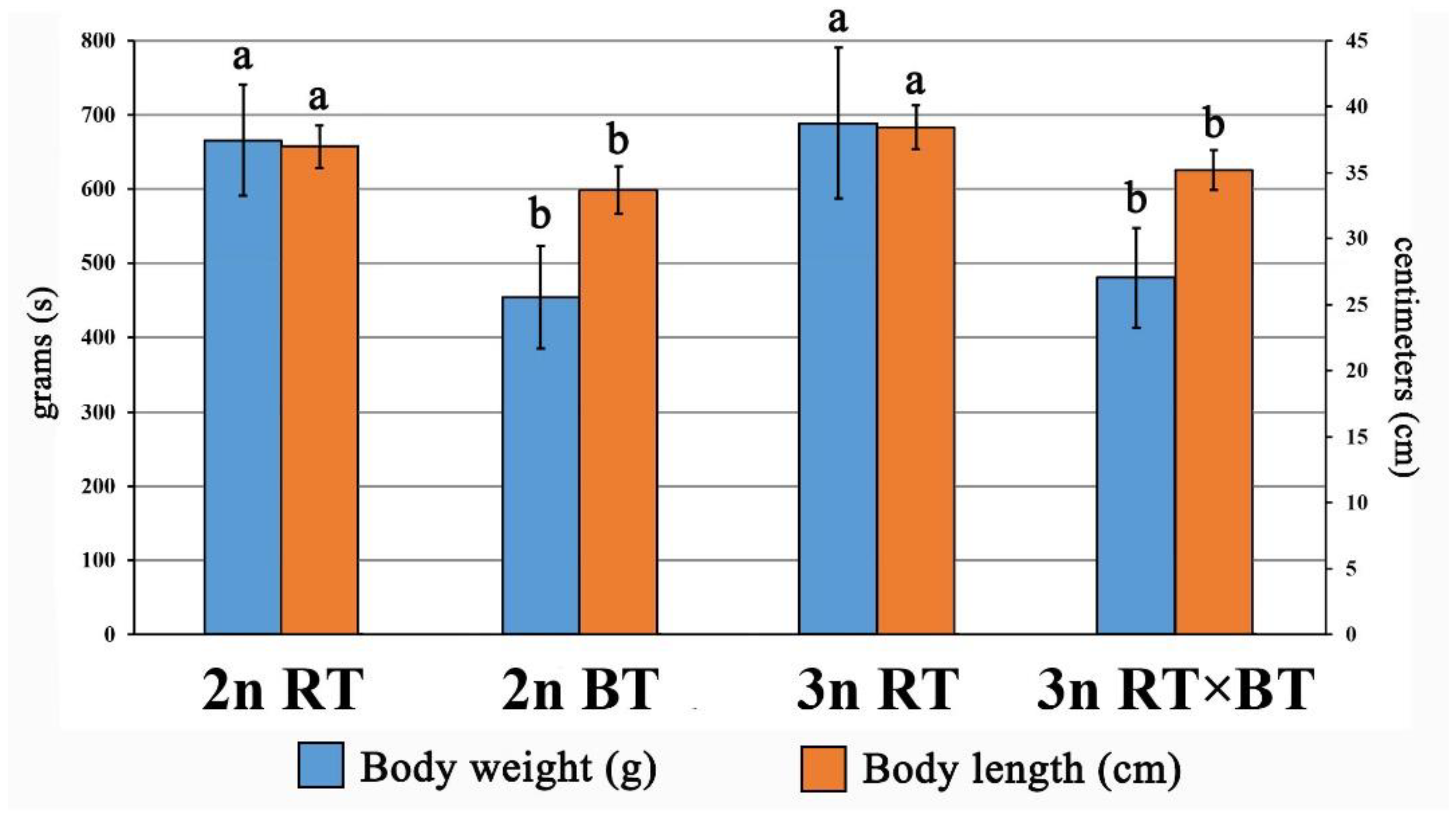
Figure 1. Average body weight and length recorded for diploid (2n RT) and triploid rainbow trout (3n RT), diploid brook trout (2n BT), as well as triploid hybrids between rainbow trout × brook trout (3n RT×BT) examined under the present study after about two years and six months of rearing under identical aquaculture conditions.
Preprints 176610 g001
Figure 2. Results of ploidy verification and hybrid status confirmation of the fish used in the current study. Flow cytometry profiles of cellular DNA content of (A) the diploid (2n) and (B) the triploid (3n) individuals sampled. (C) genotyping results of the triploid rainbow trout × brook trout (Salvelinus fontinalis) hybrids and purebred parental species (reference) by PCR amplification of OMM-1279 microsatellite DNA marker. DNA weight marker: 100 bp DNA ladder (A&A Biotechnology s.c., Poland).
Preprints 176610 g002
Figure 3. Relative expression levels of (a) ATP synthase peripheral stalk-membrane subunit b (Atp5pb), (b) ADP/ATP translocase 2 (Slc25a5), (c) Derlin1 (Derl1), (d) 26S proteasome regulatory subunit 7 (Psmc2) (e) 60S Ribosomal Protein L24, (Rpl24) and (f) 40S ribosomal protein S24 (Rps24) in the liver and muscle tissues sampled from diploid (2n RT) and triploid rainbow trout (3n RT), diploid brook trout (2n BT), as well as triploid hybrids between rainbow trout × brook trout (3n RT×BT) examined under the present study. Distinctive letters indicate statistically significant (p<0.05) differences in the recorded gene expression levels between examined fish groups within each tissue type. Asterisks indicate statistically significant (p<0.05) differences in the gene expression levels between tissues within fish group. Values are presented as fold changes relative to the reference genes (β-actin and elongation factor 1-alpha). The measure of variation is derived from the respective SEM of the Ct values. Data is shown as the mean with standard deviation.
Preprints 176610 g003
Figure 4. Relative expression levels of (a) Mitochondrial ribosomal protein L28 (Mrpl28), (b) Mitochondrial calcium uptake protein 2 (Micu2), (c) Heat shock protein 90 β family member 1 (Hsp90B1), (d) Protein disulfide-isomerase A4 (Pdia4) in the liver and muscle tissues sampled from diploid (2n RT) and triploid rainbow trout (3n RT), diploid brook trout (2n BT), as well as triploid hybrids between rainbow trout × brook trout (3n RT×BT) examined under the present study. Distinctive letters indicate statistically significant (p<0.05) differences in the recorded gene expression levels between examined fish groups within each tissue type. Asterisks indicate statistically significant (p<0.05) differences in the gene expression levels between tissues within fish group. Values are presented as fold changes relative to the reference genes (β-actin and elongation factor 1-alpha). The measure of variation is derived from the respective SEM of the Ct values. Data is shown as the mean with standard deviation.
Preprints 176610 g004
Table 1. Forward (F) and reverse (R) primer sequences used for the real-time PCR analysis of ten selected genes in the present study.
Gene Primer Sequences Amplicon size (bp) References
ATP synthase peripheral stalk-membrane subunit b (Atp5pb) F: AAGAAGGAGCAGTGGAGGGC
R: CACCATGTGGACCCTCTCCC
108 ENSOMYG00000009141,
XM_021616957.2
ADP/ATP translocase 2 (Slc25a5) F: GGATTCTCCGTGTCGGTCCA
R: GGACGGTATCGAAGGGGTAGG
178 ENSOMYG00000025595,
XM_021561140.2
Derlin1 (Derl1) F: AACTGATTGGGAACCTGGTGGG
R: GTGGCGCTCCAAACCCAGAC
153 ENSOMYG00000057377,
XM_036935651.1
26S proteasome regulatory subunit 7 (Psmc2) F: ATCAGGGTCATCGGCTCAGA
R: GCCCCTCCAATAGCGTCAAT
137 [124]
60S Ribosomal Protein L24 (Rpl24) F: CAAGAAGGGCCAGTCTGAAG
R: CAGGCTTCTGGTTCCTCTTG
119 [133]
40S ribosomal protein S24 (Rps24) F: AAACCGGCTGCTTCAGAGGAA
R: GCCACCACCAAACTGTGTCC
160 ENSOMYG00000047442,
XM_036986845.1
Mitochondrial ribosomal protein L28 (Mrpl28) F: CCAGGATGGCCTATGGGGAG
R: GTCTAGTGCGCGAGCCGTTA
175 ENSOMYG00000021960,
XM_021587405.2
Mitochondrial calcium uptake protein 2 (Micu2) F: GACAGTGCCTAAGGAAGGTATCA
R: ACCATTCCTGCCAAAGAAGAAGG
97 ENSOMYG00000009310,
XM_021617766.2
Heat shock protein 90 β family member 1 (Hsp90B1) F: TTGCGTGGAACTAAGGTGA
R: CCAATGAACTGAGAGTGCT
104 [134]
Protein disulfide-isomerase A4 (Pdia4) F: ATGAGAAAGCTTCACACACGCT
R: CACCAGTGGCAGGATGTGTTTC
92 ENSOMYG00000007216,
XM_021620393.2
Disclaimer/Publisher’s Note: The statements, opinions and data contained in all publications are solely those of the individual author(s) and contributor(s) and not of MDPI and/or the editor(s). MDPI and/or the editor(s) disclaim responsibility for any injury to people or property resulting from any ideas, methods, instructions or products referred to in the content.
Copyright: This open access article is published under a Creative Commons CC BY 4.0 license, which permit the free download, distribution, and reuse, provided that the author and preprint are cited in any reuse.
Prerpints.org logo

Preprints.org is a free preprint server supported by MDPI in Basel, Switzerland.

Subscribe

Disclaimer

Terms of Use

Privacy Policy

Privacy Settings

© 2025 MDPI (Basel, Switzerland) unless otherwise stated