Preprint
Article

This version is not peer-reviewed.

Phytochemical Compounds from Various Grades of Sumatra Benzoin Resin

Submitted:

08 September 2025

Posted:

10 September 2025

You are already at the latest version

Abstract

Sumatra benzoin (Styrax paralleloneurum) is a significant non-timber forest product originating from North Sumatra. Benzoin resin is widely used in perfumes, medicines, and cosmetics. However, scientific studies on phytochemical composition based on resin grades are limited. This study aimed to analyze the phytochemical compounds of benzoin oil extracted from three different resin grades. The resin was collected directly from benzoin trees in Humbang Hasundutan Regency. It was then extracted using 96% ethanol and analyzed by GC-MS method. The results showed that the highest quality resin produced higher oil yield (73.08%) with a longer extraction time. This indicates that resin quality influences extraction efficiency and composition. Chemical analysis identified key active compounds, such as cinnamic acid, benzoic acid, eugenol, vanillin, and various esters and aromatic hydrocarbons. High grade resin contains higher levels of volatile compounds such as D-limonene, endo-borneol, and β-caryophyllene. These are essential for aromatic and therapeutic activities. In contrast, lower quality resins are dominated by carboxylic acids. Cinnamic acid is prominent in all grades, reinforcing its potential as an active agent in natural-based cosmetic and pharmaceutical formulations. This research provides a scientific foundation for standardizing benzoin resin quality. It also supports its strategic utilization in natural bioactive-based industries.

Keywords: 
;  ;  ;  ;  ;  ;  

1. Introduction

Sumatra benzoin (Styrax paralleloneurum, synonym S. sumatrana), also locally known as Toba benzoin, is a major non-timber forest product from resin-producing trees endemic to Lake Toba region of North Sumatra, Indonesia (Harada et al., 2022; Kholibrina & Aswandi, 2021a). It holds cultural, medicinal, and economic significance and is widely traded both locally and internationally, with production of up to eight tons of raw resin annually (Harada et al., 2022). Although it is used in incense, medicine, and perfume, there is limited research on the phytochemical composition of Sumatra benzoin resin, particularly regarding the quality of resin grade (Aswandi & Kholibrina, 2020; Burger et al., 2016; Fernandez et al., 2003).
Essential oils from plant resins contain complex mixtures of small, volatile aromatic compounds produced by plants. Over 3,000 essential oils are known, but approximately 300 are utilized for their bioactive properties, including antibacterial, antioxidant, and anti-inflammatory effects (Anwar et al., 2022; Ariani et al., 2022, 2023; Aryani et al., 2023; Aswandi et al., 2024; Hamad et al., 2017; Kuspradini et al., 2019). Benzoin resin thus offers strong potential for bioprospecting, particularly in the cosmetics and biopharmaceutical industries (Burger et al., 2016; Fernandez et al., 2003; He et al., 2023; Kholibrina & Aswandi, 2021a). This aligns with the growing demand for natural health products.
While numerous studies have examined essential oils from species such as Cinnamomum camphora (Bhandari et al., 2022; Jiang et al., 2016; Lee et al., 2022; H. Zhang et al., 2022), there has been no systematic research on the chemical characterization of Sumatra benzoin oil based on resin grade (Fernandez et al., 2003). The novelty of our research lies in the first comprehensive identification and comparison of the phytochemical content of Sumatran benzoin resins across different grading classes, specifically those obtained directly from the Styrax trees. This novel approach is a key step in value-added product development. Understanding these grade-dependent variations in bioactive compound profiles will enhance quality control and standardization in the benzoin trade, supporting innovation in downstream applications, particularly in functional cosmetics and biopharmaceutical formulations.
In this study, benzoin oil was extracted from different grades of resins using standardized methods and analyzed using Gas Chromatography–Mass Spectrometry (GC-MS). The objective of the study is to determine the chemical composition across resin grades and assess their potential biological and functional properties. This study thereby contributes to both scientific knowledge and sustainable economic utilization of this valuable forest commodity.

2. Results and Discussion

2.1. Resin Hasvesting and Grading

Benzoin resin is synthesized in the inner epithelial layer of the bark of the Sumatran benzoin tree; therefore, bark tapping is the optimal method for resin extraction (Aswandi & Kholibrina, 2020; Kholibrina & Aswandi, 2021a). Benzoin resin is extracted by piercing the bark to open a space between the inner bark and the woody part of the trunk. After a certain period, usually within 3 months of tapping, the resin will completely fill the space (Figure 1). Once the resin has dried, farmers harvest it by prying off the bark and the resin that is attached to it. Once sufficiently dry, the resin is separated from the bark. This first harvest yields the highest-grade resin (Grade A), with larger resin pieces (3–5 cm), denser, and cleaner in colour (Figure 1). At the scars left by the bark prying during the first harvest, resin will drip and then harden after 1–2 months. Resin harvested from the surface of the trunk is classified as Grade B, which is smaller (2–3 cm), tends to be softer and has a light yellow–reddish brown colour. Furthermore, the lowest quality resin is obtained from waste generated during the cleaning of the trunk bark. It includes thin pieces, low-quality fragments, flakes, or the smallest particles that resemble dust. This resin is classified as Grade C (Figure 1).
Based on tapping conducted on five sample benzoin trees with a diameter of between 30 cm and using 12 tapping points per tree at the research location in Pollung District, Humbang Hasundutan Regency, an average total resin production of 1485.6 ± 33.54 grams per tree was obtained. The resulting resin was then classified into three quality categories: Grade A, 514.0 ± 21.73 g/tree (34.62%); Grade B, 571.2 ± 10.15 g/tree (38.44%); and Grade C, 400.4 ± 13.06 g/tree (26.96%). The largest percentage was obtained from Grade B resin, which reflects medium quality but in dominant amounts, followed by Grade A (high-quality resin) and Grade C (lower-quality resin). These results indicate that although tapping produces variations in resin quality, the amount of high and medium-quality resin still dominates the total production. This proportion is important to know because it influences the economic value of resin, the potential for developing grade-based downstream products, and strategies for utilizing and conserving non-timber forest resources such as benzoin resin.

2.2. Benzoin Oil Extraction

The results of benzoin resin extraction using 96% ethanol under 150 rpm shaking show significant differences in oil yield and extraction efficiency across resin quality grades (Table 1).
Table 1 shows that Grade A yields the most oil, both absolutely (375.4 g) and relatively (73.08% of raw material). Although Grade B contains more raw resin than Grade A, it yields less oil at 46.44% of the starting material. Grade C produces the least oil, both in grams and percentage (28.18%). Thus, higher resin quality (Grade A) delivers greater extractable oil, demonstrating that resin grade directly affects extraction yield and efficiency.
However, Grade A resin required the longest extraction time (an average of 58.2 minutes) to produce the highest yield. Meanwhile, Grade B resin required a shorter time (40.4 minutes) and produced a lower yield. Grade C had the shortest extraction time (29.2 minutes) and the lowest extraction yield. This suggests a direct relationship: as extraction time increases, oil yield also tends to increase (Bakhshabadi et al., 2025). Longer extraction times appear to allow more oil to be extracted from the resin, especially from high-quality resins. This could be related to the density and complexity of the Grade A resin structure, which requires more time for the solvent to penetrate and dissolve its components.
Interestingly, Grade B had the highest amount of raw material, yet its extraction yield was lower than that of Grade A. This suggests that the quantity of resin is not the primary factor, but rather the chemical composition of each grade that determines the extraction yield (López-Álvarez et al., 2023). In this case, quality is more important than quantity in the benzoin oil extraction process. This should be a crucial consideration in selecting raw materials for industrial-scale production.

2.3. Analysis of Phytochemical Component

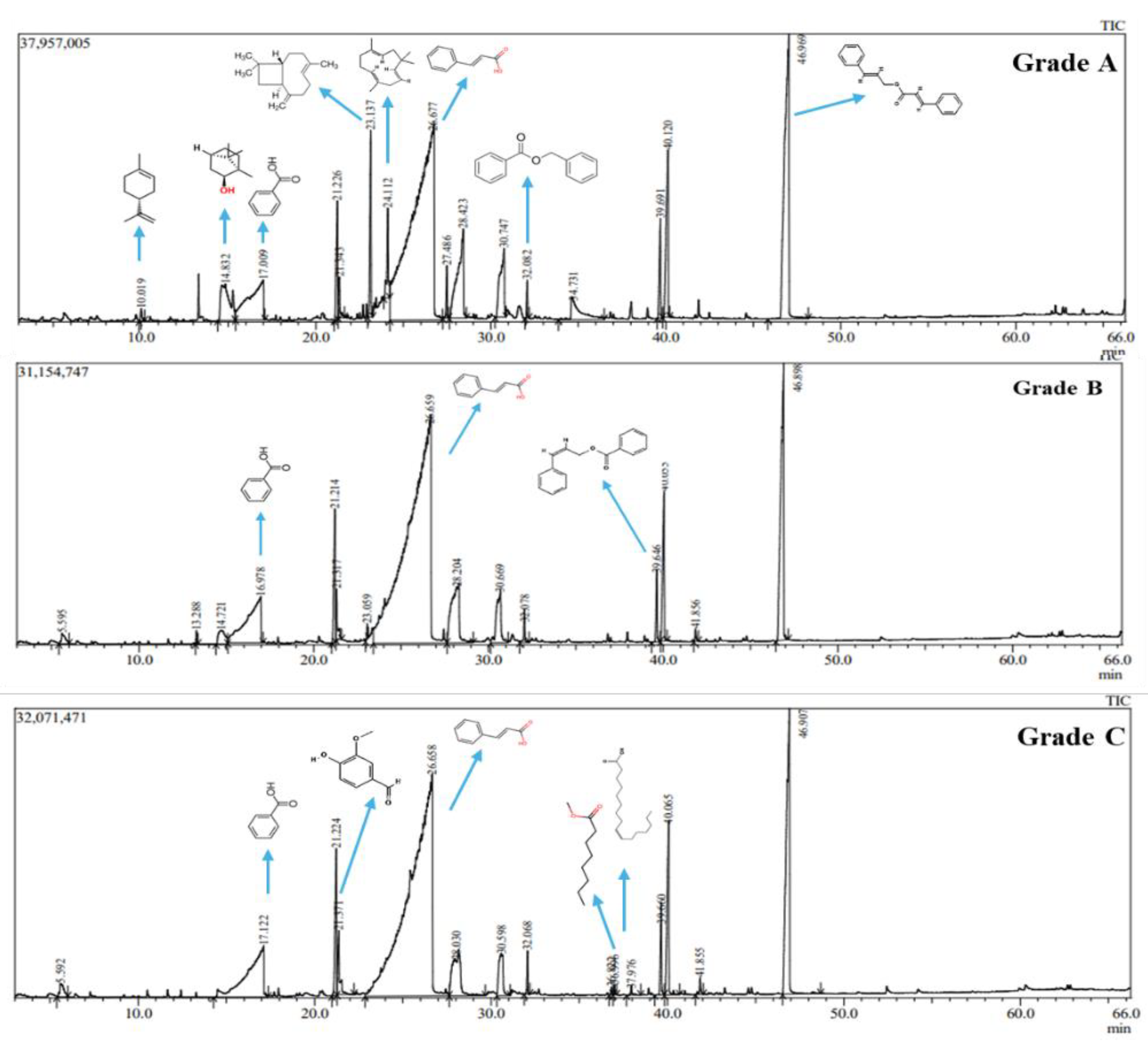
Phytochemical screening using the GC-MS method reveals that various grades of Benzoin Toba resin contain major compounds, including cinnamic acid, cinnamyl cinnamate, methyl cinnamate, benzoic acid, eugenol, vanillin, and β-caryophyllene (Figure 2) with different levels, which contribute to the aroma, preservative qualities, and therapeutic applications of the resin. Additionally, different concentrations were also identified in minor compounds, such as benzyl benzoate, caryophyllene alcohol, caryophyllene oxide, (Z)-cinnamyl benzoate, D-limonene, endo-borneol, (+)-2-bornanone (camphor), humulene, 3,5-bis(1,1-dimethylethyl) ester, and N-hexadecanoic acid (Figure 2), provide supporting characteristics that influence the overall resin quality and application.
Table 2 shows that benzoin resin contains a diverse range of chemical compounds, including hydrocarbons, alcohols, ketones, carboxylic acids, phenols, aldehydes, esters, and oxides. This variety highlights the chemical complexity of benzoin resin and its potential for varied properties and benefits.
The GC-MS analysis results for benzoin resin grades are summarized in Table 2.
Table 2 shows that carboxylic acids such as cinnamic acid and benzoic acid dominate all grades. The highest content is found in Grades B and C, where cinnamic acid reaches approximately 60-63%. Benzoic acid content increases from Grade A to Grade C. Phenolic compounds such as eugenol remain relatively stable in all three grades but decrease slightly in Grade C (4.40%). Aldehydes, such as vanillin, are also quite consistent across all grades, with a content of around 3.7-4.2%. Aromatic compounds, such as cinnamic acid, eugenol, and vanillin, exhibit high and consistent contents. This confirms that benzoin resin has strong aroma and bioactive characteristics in all grades.
Simple hydrocarbons, such as D-Limonene, β-Caryophyllene, and Humulene, were only detected in Grades A and B and not found in Grade C, indicating that these fast-evaporating compounds are more common in higher-quality resins and are lost or released in lower-quality or smaller resin pieces. Similarly, the group of alcohol compounds, including endo-borneol and caryophyllenyl alcohol, also decreases significantly from Grade A to Grade B and is absent in Grade C, indicating a higher alcohol content in higher grade resins. These hydrocarbon and alcohol compounds, which evaporate easily, are highest in Grade A and contribute to the best aroma and potential health benefits, making these resins more valuable for cosmetics and medicines.
Ester compound groups such as benzyl benzoate, methyl cinnamate, and cinnamyl cinnamate were also found in significant quantities in all grades, with a relatively stable percentage, although it decreased slightly in Grade B and increased again in Grade C. Minor compounds such as camphor (Ketone), caryophyllene oxide (Oxide), and other acids were only found in several grades with low concentrations.
These differences in chemical composition are important for guiding resin utilization based on grade, for example, Grade A is for high-value-added products, while Grades B and C may be suitable for other applications that do not require a high volatile compound content. Various grades of Sumatran Benzoin also exhibit a more complex range of aromatic and bioactive compounds than Siamese Benzoin (Fernandez et al., 2003). Sumatran Benzoin contains high levels of cinnamic acid, with concentrations reaching 62.98% in grade C. Sumatran Benzoin also contains compounds such as cinnamyl cinnamate and benzoic acid, which enhance its effectiveness as an active ingredient in pharmaceuticals and cosmetics (del Olmo et al., 2017; Gunia-Krzyżak et al., 2018). Compounds such as eugenol, vanillin, and methyl cinnamate impart distinctive aromatic qualities to flavours and perfumes (García-Bofill et al., 2019) Components such as endo-borneol and β-caryophyllene enhance the therapeutic potential (Chung et al., 2019; Tang et al., 2025), especially in Grade A resins. Due to its high concentration of cinnamic acid, Toba Benzoin is particularly suitable for the pharmaceutical and natural cosmetics industries.
Siam Benzoin has a simple and diverse aroma, primarily determined by benzyl benzoate, which constitutes over 76% of its content (Fernandez et al., 2003). This compound is widely used as a fixative in perfumes and as an antiparasitic in topical pharmaceutical preparations (Kılıç Süloğlu et al., 2022). The low cinnamic acid content, combined with acetophenone and benzaldehyde, makes Siam Benzoin highly suitable for use in aromatic products.
Table 3 shows differences in the chemical composition of benzoin oil extracted from the resin of three quality grades. Specifically, Grade A oil contains higher concentrations of major aroma compounds compared to Grades B and C, while Grade C displays the lowest levels of these compounds. The data show that the oil's composition varies significantly between grades. This variation, in turn, influences its chemical characteristics and potential uses.
Table 3 shows that the carboxylic acid component is the largest fraction in all three grades, with the highest percentages found in Grade B (71.10%) and Grade C (71.00%), while Grade A is slightly lower (55.58%). This indicates that Grade B and C resins have a more dominant carboxylic acid content, which can affect the oil's acidic properties and chemical reactivity. In industry, carboxylic acid is used as a raw material for the manufacture of drugs, food, and cosmetics; however, its use must be cautious because, in concentrated form, it is corrosive and has a pungent odour (Meredith et al., 2000; Samanta et al., 2011).
Furthermore, the ester content in Grade A is the highest (22.8%), followed by a decrease in Grade B (20.01%) and Grade C (17.37%). Esters are important compounds in determining the aroma and properties of the oil; therefore, a decrease in ester content in lower grades may impact the quality of the aroma and its potential applications (Ceccoli et al., 2024; SÁ et al., 2017). Grade A shows the presence of hydrocarbon compounds (4.27%), alcohol (4.66%), and oxide (2.40%), which are quite significant, while these compounds are almost undetectable or very low in Grades B and C. These volatile compounds are crucial for the aroma and biological activity of benzoin oil (Burger et al., 2016; Fernandez et al., 2003; Sadgrove et al., 2022), which gives the highest resin grade an advantage in this aspect.
Phenolic and aldehyde contents were relatively stable across all grades, although Grade A had a slightly higher phenol content (6.10%) than Grade B (4.40%) and Grade C (5.91%). Aldehydes were in a similar range for all three grades (approximately 3.79–4.18%). These compounds contribute to the distinctive aroma and potential pharmacological activity (Kisiriko et al., 2021; Y. Zhang et al., 2022). Ketones were detected only in very small amounts (0.12%) in Grade C, and were not found in Grades A or B, indicating that ketones are not a major component and do not play a significant role in the differences in oil quality between grades.
Differences in the chemical composition of benzoin oil from the three resin grades indicate that Grade A has a higher content of volatile compounds, such as hydrocarbons, alcohols, and oxides, which contribute to its superior aroma and potential bioactivity (Burger et al., 2016; Sadgrove et al., 2022). In contrast, Grades B and C are dominated by carboxylic compounds with lower ester contents, which can affect the overall characteristics of the oil (Groza et al., 2024; Meredith et al., 2000). This information is crucial for determining the application of benzoin oil based on grade, particularly for the development of cosmetic and pharmaceutical products that require specific chemical profiles.
Table 4 shows the aromatic and bioactivity profiles of the phytochemical compounds contained in benzoin oil.
The aromatic compounds in Table 4 play a vital role in various industries, including food, perfume, cosmetics, and pharmaceuticals due to their unique aroma characteristics and diverse biological activities. Compounds such as D-limonene, vanillin, eugenol, and methyl cinnamate are widely used in food and beverage products due to their distinctive sweet, fresh, and fruity aromas (Daniel et al., 2009; Huang et al., 2009; Kafali et al., 2024; Lin et al., 2024; Nisar et al., 2021; Ulanowska & Olas, 2021; Wang et al., 2024; Zari et al., 2021). D-limonene, with its citrus aroma, and eugenol, with its clove-like aroma, not only impart flavour but also offer benefits such as antioxidant, anti-inflammatory, and antibacterial properties (Anandakumar et al., 2021; Lin et al., 2024). Vanillin, with its characteristic sweet vanilla aroma, is used not only in flavours and perfumes but also possesses antioxidant and antimicrobial properties that support its use in natural cosmetics (Kafali et al., 2024; Wang et al., 2024). On the other hand, compounds such as camphor and endo-borneol have refreshing aromas and biological effects such as analgesic and anti-inflammatory, which make them important in therapeutic applications, particularly in ointments and balms (Fazmiya et al., 2022; Hu et al., 2024; Lee et al., 2022; Singh & Jawaid, 2012; Tang et al., 2025). In the fragrance industry, compounds such as camphor, endo-borneol, cinnamyl cinnamate, and caryophyllene oxide impart distinctive, strong aromas—ranging from woody to balsamic—and act as fixatives to prolong the longevity of perfume on the skin (Bhatia et al., 2007b; Fazmiya et al., 2022; Gyrdymova & Rubtsova, 2022; Kholibrina & Aswandi, 2021b; Lee et al., 2022).
One compound that stands out is cinnamic acid, both in terms of its applications and its therapeutic potential. Cinnamic acid is an aromatic compound with a mild, sweet-balsamic aroma profile. This compound is used in flavours for its ability to add depth to the sweet-spicy flavours, and in cosmetics as an active agent for skin lightening and UV protection (Gunia-Krzyżak et al., 2018). In the medical field, cinnamic acid exhibits various important biological activities, including anti-inflammatory, antimicrobial, anticancer, antidiabetic, and antioxidant properties (Freitas et al., 2024; Ruwizhi & Aderibigbe, 2020a). Pharmacological studies have demonstrated that cinnamic acid derivatives can inhibit pro-inflammatory enzymes and induce apoptosis in cancer cells, rendering them a promising candidate for the development of natural compound-based drugs.
In the cosmetic and medical fields, compounds such as benzoic acid, palmitic acid, benzyl benzoate, and cinnamic acid function as active ingredients and natural preservatives due to their antimicrobial and anti-inflammatory activities. The advantage of these compounds and their derivatives lie in their ability to bridge the gap between aesthetic (aroma) and biological (therapeutic) functions, making them highly attractive in the formulation of holistic and functional cosmetics. Some compounds, such as β-caryophyllene, demonstrate further therapeutic potential through their interaction with the body's endocannabinoid system, opening up opportunities for use in modern herbal medicine formulation (Francomano et al., 2019; Gyrdymova & Rubtsova, 2022). Beyond their pleasant aroma, these biological activities make these aromatic compounds not only additives but also functional components in various consumer products.

3. Materials and Methods

3.1. Materials

The benzoin residue used in this study was specifically collected directly from the community benzoin forest in Pollung, Humbang Hasundutan Regency, Province of North Sumatra of Indonesia. Five sample trees were harvested, each with an average diameter of 30 cm and a height of 20 meters. From each sample tree, three grades of resin were collected from 12 tapping points based on the harvest period and the resin's physical characteristics: Grade A, Grade B, and Grade C.
Grade A resin, produced from the first harvest, is larger (3–5 cm), denser, and has a cleaner colour. Resin from the second harvest, taken from the trunk surface, is classified as Grade B. It is smaller (2–3 cm), softer, and has a light yellow-reddish brown colour. Grade C resin, which comes from bark cleaning residue, consists of thin pieces, low-quality fragments, flakes, or the smallest dust-like particles. After cleaning, each sample was weighed to determine its raw weight. Table 5 presents the design for collecting benzoin resin samples.

3.2. Methods

Each grade of resin from each sample tree (a total of 15 samples) was extracted using 96% ethanol solvent with a ratio of 1:2 (1 gram of benzoin resin to 2 ml of ethanol). During the extraction process, the solution was shaken at 150 rpm. The time required for all the resin to disintegrate and dissolve was recorded. The solution was then thickened using a rotary evaporator, allowing most of the solvent to be removed. Each resin sample that had been extracted into benzoin oil was weighed. The design of the benzoin resin extraction test is outlined in Table 6.

3.3. Analysis Methods

Gas chromatography-mass spectrometry (GC-MS-QP2010) was used to detect benzoin oil components in the injected samples. The obtained samples were then identified for their phytochemical compounds using a Shimazu GC-MS device at the Integrated Laboratory for Bioproducts (i-Lab) BRIN in Cibinong. Since the target compound is an aromatic compound, the column used was Rtx-1 (30m x 0.25mm, thickness 0.25um), with a column temperature of 40-250oC, a temperature rise rate of 20oC/min, a detector temperature of 260oC with a carrier gas of nitrogen at a column rate of 0.72 ml/min and a flow rate of 37.7 ml/min. Identification of phytochemical compounds was carried out by searching the standard spectrum library and the NIST literature. The area of content percentage of each component was calculated using the peak area normalization method.

4. Conclusions

This research demonstrates that the grade of benzoin Sumatra resin has a significant influence on the chemical composition and application potential of the resulting oil. Higher resin quality (Grade A) has a higher content of volatile compounds, alcohols, esters, and oxides, making it suitable for high-value-added applications, particularly in the cosmetics and pharmaceutical industries. Lower resin qualities (Grades B and C) are richer in carboxylic acids such as cinnamic and benzoic acid, which have important biological activities but are better suited for formulations that do not emphasize complex aromas. One key finding is the dominance of cinnamic acid in all grades, making it a key compound in benzoin Sumatra oil, which serves as a functional agent with antioxidant, anti-inflammatory, and antimicrobial properties. The varying phytochemical composition between grades offers opportunities for product development based on resin quality, enhancing the efficiency of natural resource utilization, and promoting the development of high-value natural products. This research lays the groundwork for standardizing benzoin Sumatra resin in the industry and for the sustainable enhancement of the economic value of non-timber forest products.

Supplementary Materials

The following supporting information can be downloaded at: https://www.mdpi.com/article/doi/s1, Figure S1: title; Table S1: title; Video S1: title.

Author Contributions

Conceptualization and methodology, C.R.K. and A.A.; validation, formal analysis, and investigation, C.R.K., A.A., and L.K.P.; writing—original draft preparation, C.R.K., A.A., L.K.P., N., R.Y., D.M.B., M.N.I; writing—review and editing, C.R.K., A.A., L.K.P., N., R.Y., P.H.S. D.M.B., H.H. M.N.I., and A.B.S; visualization, A.A.; supervision, A.A.; project administration, A.A. and C.R.K. All authors have read and agreed to the published version of the manuscript.

Funding

Not applicable.

Institutional Review Board Statement

Not applicable.

Informed Consent Statement

Not applicable.

Data Availability Statement

Not applicable.

Acknowledgments

The authors thank the support of Regents of Humbang Hasundutan, Province of North Sumatra, Indonesia. We also gratefully acknowledge the use of BRIN's e-LSA for conducting the phytochemical analysis.

Conflicts of Interest

The authors declare no conflict of interest.

References

  1. Anandakumar, P. , Kamaraj, S., & Vanitha, M. Journal of Food Biochemistry 2021, 45. [Google Scholar] [CrossRef]
  2. Anwar, Y. , Pasaribu, G., & Nazari, M. Review on Bioactive Potential of Indonesian Forest Essential Oils. Pharmacognosy Journal 2022, 14, 873–879. [Google Scholar] [CrossRef]
  3. Aparna, V. , Dileep, K. V., Mandal, P. K., Karthe, P., Sadasivan, C., & Haridas, M. Anti-Inflammatory Property of n -Hexadecanoic Acid: Structural Evidence and Kinetic Assessment. Chemical Biology & Drug Design. [CrossRef]
  4. Ariani, S. R. D. , Mulyani, S., Susilowati, E., Susanti VH, E., Prakoso, S. D. B., & Wijaya, F. N. A. Chemical composition, antibacterial, and antioxidant activities of turmeric, javanese ginger, and pale turmeric essential oils that growing in Indonesia. Journal of Essential Oil-Bearing Plants, 1386. [Google Scholar] [CrossRef]
  5. Ariani, S. R. D. , Purniasari, L., Basyiroh, U., & Evangelista, E. Chemical Composition, Antibacterial and Antioxidant Activities of Essential Oils from Peels of Four Citrus Species Growing in Indonesia. Journal of Essential Oil-Bearing Plants. [CrossRef]
  6. Aryani, F. , Kusuma, I. W., Meliana, Y., Sari, N. M., & Kuspradini, H. Potential antibacterial and antioxidant activities of ten essential oils from East Kalimantan, Indonesia. Biodiversitas. [CrossRef]
  7. Aswandi, A. , & Kholibrina, C. R. The grading classification for Styrax sumatrana resins based on physico chemical characteristics using two-step cluster analysis. IOP Conference Series: Materials Science and Engineering, 0120. [Google Scholar] [CrossRef]
  8. Aswandi, A. , Kholibrina, C. R., & Kuspradini, H. (2024). Essential Oils for Cosmetics Application. In Biomass-Based Cosmetics: Research Trends and Future Outlook (pp. 151–173). [CrossRef]
  9. Bakhshabadi, H. , Ganje, M., Gharekhani, M., Mohammadi-Moghaddam, T., Aulestia, C., & Morshedi, A. A Review of New Methods for Extracting Oil from Plants to Enhance the Efficiency and Physicochemical Properties of the Extracted Oils. Processes. [CrossRef]
  10. Bhandari, U. , Kumar, A., Lohani, H., & Chauhan, N. Chemical Composition of Essential Oil of Camphor Tree ( Cinnamomum camphora ) Leaves Grown in Doon Valley of Uttarakhand. Journal of Essential Oil Bearing Plants. [CrossRef]
  11. Bhatia, S. P. , Letizia, C. S., & Api, A. M. Fragrance material review on β-caryophyllene alcohol. Food and Chemical Toxicology. [CrossRef]
  12. Bhatia, S. P. , Wellington, G. A., Cocchiara, J., Lalko, J., Letizia, C. S., & Api, A. M. Fragrance material review on cinnamyl benzoate. Food and Chemical Toxicology 2007, 45, S58–S61. [Google Scholar] [CrossRef]
  13. Bhatia, S. P. , Wellington, G. A., Cocchiara, J., Lalko, J., Letizia, C. S., & Api, A. M. Fragrance material review on cinnamyl cinnamate. Food and Chemical Toxicology 2007, 45, S66–S69. [Google Scholar] [CrossRef]
  14. Burger, P. , Casale, A., Kerdudo, A., Michel, T., Laville, R., Chagnaud, F., & Fernandez, X. New insights in the chemical composition of benzoin balsams. Food Chemistry 2016, 210, 613–622. [Google Scholar] [CrossRef]
  15. Ceccoli, R. D. , Bianchi, D. A., Zocchi, S. B., & Rial, D. V. Mapping the field of aroma ester biosynthesis: A review and bibliometric analysis. Process Biochemistry. [CrossRef]
  16. Chung, K.-S. , Hong, J. Y., Lee, J.-H., Lee, H.-J., Park, J. Y., Choi, J.-H., Park, H.-J., Hong, J., & Lee, K.-T. β-Caryophyllene in the Essential Oil from Chrysanthemum Boreale Induces G1 Phase Cell Cycle Arrest in Human Lung Cancer Cells. Molecules 2019, 24, 3754. [Google Scholar] [CrossRef]
  17. Claire Fuller, L. , & Sunderkötter, C. Scabies therapy update: Should 25% benzyl benzoate emulsion be reconsidered as a first-line agent in classical scabies? British Journal of Dermatology 2024, 190, 459–460. [Google Scholar] [CrossRef]
  18. Dalavaye, N. , Nicholas, M., Pillai, M., Erridge, S., & Sodergren, M. H. The Clinical Translation of α-humulene – A Scoping Review. Planta Medica. [CrossRef]
  19. Daniel, A. N. , Sartoretto, S. M., Schmidt, G., Caparroz-Assef, S. M., Bersani-Amado, C. A., & Cuman, R. K. N. Anti-inflammatory and antinociceptive activities of eugenol essential oil in experimental animal models. Revista Brasileira de Farmacognosia. [CrossRef]
  20. del Olmo, A. , Calzada, J., & Nuñez, M. Benzoic acid and its derivatives as naturally occurring compounds in foods and as additives: Uses, exposure, and controversy. Critical Reviews in Food Science and Nutrition, 3103. [Google Scholar] [CrossRef]
  21. Elwekeel, A. , Hassan, M., Almutairi, E., AlHammad, M., Alwhbi, F., Abdel-Bakky, M., Amin, E., & Mohamed, E. Anti-Inflammatory, Anti-Oxidant, GC-MS Profiling and Molecular Docking Analyses of Non-Polar Extracts from Five Salsola Species. Separations 2023, 10, 72. [Google Scholar] [CrossRef]
  22. Fazmiya, M. J. A. , Sultana, A., Rahman, K., Heyat, M. B. Bin, Sumbul, Akhtar, F., Khan, S., & Appiah, S. C. Y. Current Insights on Bioactive Molecules, Antioxidant, Anti-Inflammatory, and Other Pharmacological Activities of Cinnamomum camphora Linn. Oxidative Medicine and Cellular Longevity. [CrossRef]
  23. Fernandez, X. , Lizzani-Cuvelier, L., Loiseau, A.-M., Périchet, C., & Delbecque, C. Volatile constituents of benzoin gums: Siam and Sumatra. Part 1. Flavour and Fragrance Journal. [CrossRef]
  24. Fidyt, K. , Fiedorowicz, A., Strządała, L., & Szumny, A. β -caryophyllene and β -caryophyllene oxide—natural compounds of anticancer and analgesic properties. Cancer Medicine 2016, 5, 3007–3017. [Google Scholar] [CrossRef]
  25. Francomano, F. , Caruso, A., Barbarossa, A., Fazio, A., La Torre, C., Ceramella, J., Mallamaci, R., Saturnino, C., Iacopetta, D., & Sinicropi, M. S. β-Caryophyllene: A Sesquiterpene with Countless Biological Properties. Applied Sciences 2019, 9, 5420. [Google Scholar] [CrossRef]
  26. Freitas, M. , Ribeiro, D., Janela, J. S., Varela, C. L., Costa, S. C., da Silva, E. T., Fernandes, E., & Roleira, F. M. F. Plant-derived and dietary phenolic cinnamic acid derivatives: Anti-inflammatory properties. Food Chemistry, 1400. [Google Scholar] [CrossRef]
  27. García-Bofill, M. , Sutton, P. W., Guillén, M., & Álvaro, G. Enzymatic synthesis of vanillin catalysed by an eugenol oxidase. Applied Catalysis A: General, 1171. [Google Scholar] [CrossRef]
  28. Groza, N. V. , Yarkova, T. A., Gessler, N. N., & Rozumiy, A. V. Synthesis of Benzoic Acid Esters and Their Antimicrobial Activity. Pharmaceutical Chemistry Journal 2024, 58, 625–630. [Google Scholar] [CrossRef]
  29. Gunia-Krzyżak, A. , Słoczyńska, K., Popiół, J., Koczurkiewicz, P., Marona, H., & Pękala, E. Cinnamic acid derivatives in cosmetics: current use and future prospects. International Journal of Cosmetic Science. [CrossRef]
  30. Gupta, V. , Tyagi, S., & Tripathi, R. Hexadecanoic acid methyl ester, a potent hepatoprotective compound in leaves of Pistia stratiotes L. The Applied Biology & Chemistry Journal. [CrossRef]
  31. Gyrdymova, Y. V. , & Rubtsova, S. A. Caryophyllene and caryophyllene oxide: a variety of chemical transformations and biological activities. Chemical Papers. [CrossRef]
  32. Hamad, A. , Mahardika, M. G. P., Yuliani, I., & Hartanti, D. Chemical constituents and antimicrobial activities of essential oils of Syzygium polyanthum and Syzygium aromaticum. Rasayan Journal of Chemistry. [CrossRef]
  33. Harada, K. , Wiyono, & Munthe, L. Production and commercialization of benzoin resin: Exploring the value of benzoin resin for local livelihoods in North Sumatra, Indonesia. Trees, Forests and People, 0017. [Google Scholar] [CrossRef]
  34. He, Q. , Sun, Y., Chen, X., Feng, J., & Liu, Y. Benzoin Resin: An Overview on Its Production Process, Phytochemistry, Traditional Use and Quality Control. Plants. [CrossRef]
  35. Hu, X. , Yan, Y., Liu, W., Liu, J., Fan, T., Deng, H., & Cai, Y. Advances and perspectives on pharmacological activities and mechanisms of the monoterpene borneol. Phytomedicine 2024, 132, 155848. [Google Scholar] [CrossRef]
  36. Huang, Q.-S. , Zhu, Y.-J., Li, H.-L., Zhuang, J.-X., Zhang, C.-L., Zhou, J.-J., Li, W.-G., & Chen, Q.-X. Inhibitory Effects of Methyl trans -Cinnamate on Mushroom Tyrosinase and Its Antimicrobial Activities. Journal of Agricultural and Food Chemistry, 2569. [Google Scholar] [CrossRef]
  37. Jiang, H. , Wang, J., Song, L., Cao, X., Yao, X., Tang, F., & Yue, Y. GC×GC-TOFMS Analysis of Essential Oils Composition from Leaves, Twigs and Seeds of Cinnamomum camphora L. Presl and Their Insecticidal and Repellent Activities. Molecules 2016, 21, 423. [Google Scholar] [CrossRef]
  38. Kafali, M. , Finos, M. A., & Tsoupras, A. Vanillin and Its Derivatives: A Critical Review of Their Anti-Inflammatory, Anti-Infective, Wound-Healing, Neuroprotective, and Anti-Cancer Health-Promoting Benefits. Nutraceuticals. [CrossRef]
  39. Kholibrina, C. R. , & Aswandi, A. Increasing added-value of styrax resin through post-harvesting techniques improvement and essential oil based product innovation. IOP Conference Series: Earth and Environmental Science. [CrossRef]
  40. Kholibrina, C. R. , & Aswandi, A. The Consumer Preferences for New Sumatran Camphor Essential Oil-based Products using a Conjoint Analysis Approach. IOP Conference Series: Earth and Environmental Science. [CrossRef]
  41. Kisiriko, M. , Anastasiadi, M., Terry, L. A., Yasri, A., Beale, M. H., & Ward, J. L. Phenolics from Medicinal and Aromatic Plants: Characterisation and Potential as Biostimulants and Bioprotectants. Molecules. [CrossRef]
  42. Kılıç Süloğlu, A. , Koçkaya, E. A., & Selmanoğlu, G. Toxicity of benzyl benzoate as a food additive and pharmaceutical agent. Toxicology and Industrial Health 2022, 38, 221–233. [Google Scholar] [CrossRef] [PubMed]
  43. Kuspradini, H. , Putri, A. S., & Egra, S. Short communication: In vitro antibacterial activity of essential oils from twelve aromatic plants from East Kalimantan, Indonesia. Biodiversitas, 2042. [Google Scholar] [CrossRef]
  44. Lajarin-Reinares, M. , Martinez-Esteve, E., Pena-Rodríguez, E., Cañellas-Santos, M., Bulut, S., Karabelas, K., Clauss, A., Nieto, C., Mallandrich, M., & Fernandez-Campos, F. The Efficacy and Biopharmaceutical Properties of a Fixed-Dose Combination of Disulfiram and Benzyl Benzoate. International Journal of Molecular Sciences, 0969. [Google Scholar] [CrossRef]
  45. Lee, S.-H. , Kim, D.-S., Park, S.-H., & Park, H. Phytochemistry and Applications of Cinnamomum camphora Essential Oils. Molecules 2022, 27, 2695. [Google Scholar] [CrossRef]
  46. Lin, H. , Li, Z., Sun, Y., Zhang, Y., Wang, S., Zhang, Q., Cai, T., Xiang, W., Zeng, C., & Tang, J. D-Limonene: Promising and Sustainable Natural Bioactive Compound. Applied Sciences 2024, 14, 4605. [Google Scholar] [CrossRef]
  47. López-Álvarez, Ó. , Zas, R., & Marey-Perez, M. Resin tapping: A review of the main factors modulating pine resin yield. Industrial Crops and Products, 1171. [Google Scholar] [CrossRef]
  48. Mendes de Lacerda Leite, G. , de Oliveira Barbosa, M., Pereira Lopes, M. J., de Araújo Delmondes, G., Bezerra, D. S., Araújo, I. M., Carvalho de Alencar, C. D., Melo Coutinho, H. D., Peixoto, L. R., Barbosa-Filho, J. M., Bezerra Felipe, C. F., Barbosa, R., Alencar de Menezes, I. R., & Kerntof, M. R. Pharmacological and toxicological activities of α-humulene and its isomers: A systematic review. Trends in Food Science & Technology. [CrossRef]
  49. Meredith, W. , Kelland, S.-J., & Jones, D. M. Influence of biodegradation on crude oil acidity and carboxylic acid composition. Organic Geochemistry 2000, 31, 1059–1073. [Google Scholar] [CrossRef]
  50. Nisar, M. F. , Khadim, M., Rafiq, M., Chen, J., Yang, Y., & Wan, C. C. Pharmacological Properties and Health Benefits of Eugenol: A Comprehensive Review. Oxidative Medicine and Cellular Longevity. [CrossRef]
  51. Purushothaman, R. , Vishnuram, G., & Ramanathan, T. Antiinflammatory efficacy of n-Hexadecanoic acid from a mangrove plant Excoecaria agallocha L. through in silico, in vitro and in vivo. Pharmacological Research - Natural Products, 0203. [Google Scholar] [CrossRef]
  52. Ruwizhi, N. , & Aderibigbe, B. A. Cinnamic Acid Derivatives and Their Biological Efficacy. International Journal of Molecular Sciences 2020, 21, 5712. [Google Scholar] [CrossRef]
  53. Ruwizhi, N. , & Aderibigbe, B. A. Cinnamic Acid Derivatives and Their Biological Efficacy. International Journal of Molecular Sciences 2020, 21, 5712. [Google Scholar] [CrossRef]
  54. SÁ, A. G. A. , Meneses, A. C. de, Araújo, P. H. H. de, & Oliveira, D. de. A review on enzymatic synthesis of aromatic esters used as flavor ingredients for food, cosmetics and pharmaceuticals industries. Trends in Food Science & Technology. [CrossRef]
  55. Sadgrove, N. , Padilla-González, G., & Phumthum, M. Fundamental Chemistry of Essential Oils and Volatile Organic Compounds, Methods of Analysis and Authentication. Plants. [CrossRef]
  56. Samanta, A. , Ojha, K., & Mandal, A. Interactions between Acidic Crude Oil and Alkali and Their Effects on Enhanced Oil Recovery. Energy & Fuels, 1649. [Google Scholar] [CrossRef]
  57. Scandiffio, R. , Geddo, F., Cottone, E., Querio, G., Antoniotti, S., Gallo, M. P., Maffei, M. E., & Bovolin, P. Protective Effects of (E)-β-Caryophyllene (BCP) in Chronic Inflammation. Nutrients. [CrossRef]
  58. Singh, R. , & Jawaid, T. Cinnamomum camphora (Kapur): Review. Pharmacognosy Journal. [CrossRef]
  59. Tang, M. , Zhong, W., Guo, L., Zeng, H., & Pang, Y. Role of borneol as enhancer in drug formulation: A review. Chinese Herbal Medicines. [CrossRef]
  60. Ulanowska, M. , & Olas, B. Biological Properties and Prospects for the Application of Eugenol—A Review. International Journal of Molecular Sciences. [CrossRef]
  61. Velika, B. , & Kron, I. Antioxidant properties of benzoic acid derivatives against Superoxide radical. Free Radicals and Antioxidants 2012, 2, 62–67. [Google Scholar] [CrossRef]
  62. Wang, J. , An, W., Wang, Z., Zhao, Y., Han, B., Tao, H., Wang, J., & Wang, X. Vanillin Has Potent Antibacterial, Antioxidant, and Anti-Inflammatory Activities In Vitro and in Mouse Colitis Induced by Multidrug-Resistant Escherichia coli. Antioxidants. [CrossRef]
  63. Zari, A. T. , Zari, T. A., & Hakeem, K. R. Anticancer properties of eugenol: A review. Molecules. [CrossRef]
  64. Zhang, H. , Huang, T., Liao, X., Zhou, Y., Chen, S., Chen, J., & Xiong, W. Extraction of Camphor Tree Essential Oil by Steam Distillation and Supercritical CO2 Extraction. Molecules 2022, 27, 5385. [Google Scholar] [CrossRef]
  65. Zhang, Y. , Cai, P., Cheng, G., & Zhang, Y. A Brief Review of Phenolic Compounds Identified from Plants: Their Extraction, Analysis, and Biological Activity. Natural Product Communications. [CrossRef]
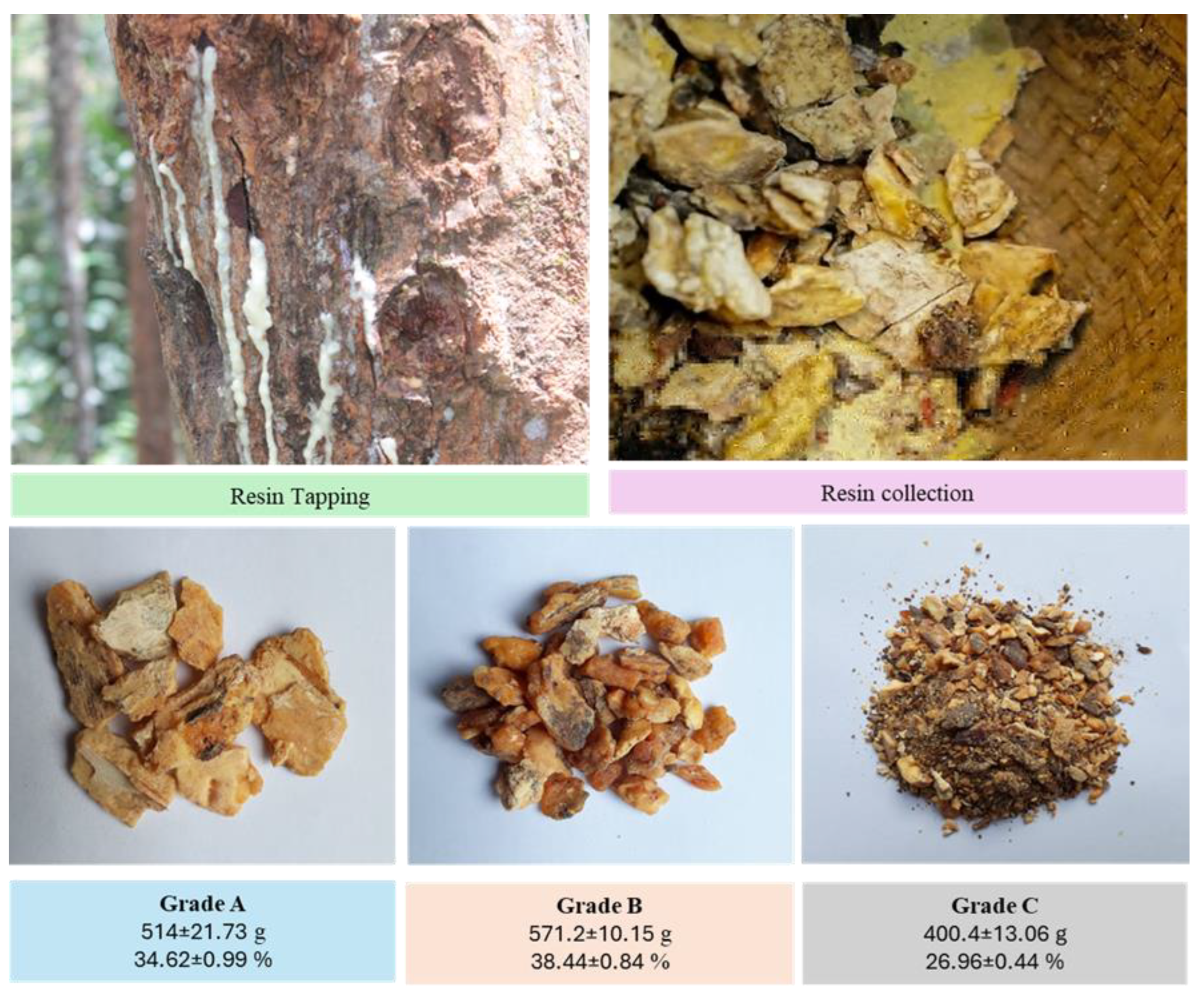
Figure 1. Resin tapping and grading of Sumatra benzoin resin.
Preprints 175776 g001
Figure 2. GC-MS of benzoin oil various resin grades.
Preprints 175776 g002
Table 1. Experimental results of extraction of benzoin resin.
Material Benzoin resin (g) Benzoin oil (g) Time (minutes) Extraction Rate (%)
Grade A 514.0 ± 21.73 375.4 ± 20.95 58.2 ± 7.11 73.08 ± 4.44
Grade B 571.2 ± 10.15 265.4 ± 24.14 40.4 ± 5.16 46.44 ± 3.77
Grade C 400.4 ± 13.06 112.8 ± 16.83 29.2 ± 5.08 28.18 ± 4.39
Extraction was carried out using 96% ethanol as a solvent and shaking at 150 rpm for the duration. The experiment was repeated five times, and the average value was taken.
Table 2. Phytochemical content of Benzoin Toba from various grades.
No Formula Categories Compound CAS Area of Content %
Grade A Grade B Grade C
1 C₁₀H₁₆ Hydrocarbon D-Limonene 5989-27-5 0.23 - -
2 C₁₀H₁₈O Alcohol Endo-Borneol 507-70-0 4.02 1.18 -
3 C₁₀H₁₆O Ketone (+)-2-Bornanone (camphor) 464-49-3 - 0.12 -
4 C₇H₆O₂ Carboxylic acid Benzoic acid 65-85-0 6.78 8.02 9.96
5 C₁₀H₁₂O₂ Phenol Eugenol 97-53-0 6.10 5.91 4.40
6 C₈H₈O₃ Aldehyde Vanillin 121-33-5 4.18 3.79 3.81
7 C₁₅H₂₄ Hydrocarbon β-Caryophyllene 87-44-5 2.53 0.14 -
8 C₁₅H₂₄ Hydrocarbon Humulene 6753-98-6 1.51 - -
9 C₉H₈O₂ Carboxylic acid Cinnamic acid 140-10-3 48.80 62.98 60.88
10 C₁₅H₂₆O Alcohol Caryophyllenyl alcohol 56747-96-7 0.64 - -
11 C₁₄H₁₂O₂ Ester Benzyl benzoate 120-51-4 0.41 0.50 0.50
12 C₁₅H₂₄O Oxide Caryophyllene oxide 1139-30-6 2.40 -
13 C₁₅H₂₂O₂ Carboxylic acid 3,5-Bis(1,1-dimethylethyl) benzoic acid 16225-26-6 - - 0.10
14 C₁₈H₃₆O₂ Ester Hexadecanoic acid, methyl ester 158274-92-1 - - 0.10
15 C₁₆H₃₂O₂ Carboxylic acid n-Hexadecanoic acid 57-10-3 - - 0.16
16 C₁₆H₁₄O₂ Ester (Z)-Cinnamyl benzoate 117204-78-1 1.59 1.02 1.31
17 C₁₀H₁₀O₂ Ester Methyl cinnamate 103-26-4 5.91 5.30 6.24
18 C₁₈H₁₆O₂ Ester Cinnamyl cinnamate 122-69-0 14.89 10.55 11.86
Table 3. The chemical composition and area content of benzoin oil from three grades of resin.
Composition Compound Area of Content %
Grade A Grade B Grade C
Hydrocarbon D-Limonene, β-Caryophyllene, Humulene 4.27 - 0.14
Alcohol Endo-Borneol, Caryophyllenyl alcohol 4.66 - 1.18
Ketone (+)-2-Bornanone (camphor) - - 0.12
Phenol Eugenol 6.10 4.40 5.91
Aldehyde Vanillin 4.18 3.81 3.79
Carboxylic acid Benzoic acid, Cinnamic acid, 3,5-Bis(1,1-dimethylethyl) benzoic acid, n-Hexadecanoic acid 55.58 71.10 71.00
Oxide Caryophyllene oxide, 2.40 - -
Ester Benzyl benzoate, Hexadecanoic acid, methyl ester, (Z)-Cinnamyl benzoate, Methyl cinnamate, Cinnamyl cinnamate 22.8 20.01 17.37
Table 4. Aromatic and bioactivity profiles of phytochemical compounds in benzoin oil.
Compound Aroma Profile Bioactivity Application
Flavour Fragrance Cosmetic Medicine
D-Limonene citrusy, sweet Antioxidant, anti-inflammatory, anticancer, antibacterial, and natural solvent of topical drugs (Anandakumar et al., 2021; Lin et al., 2024)
Endo-Borneol Soft, woody, balsamic camphor. Antibacterial, antiviral, anti-inflammatory, relieves pain and fever (Hu et al., 2024) -
(+)-2-Bornanone (camphor) Sharp, refreshing, minty camphor Topical analgesic, antiseptic, anti-inflammatory, rubefacient - improves blood circulation (Fazmiya et al., 2022; Lee et al., 2022; Singh & Jawaid, 2012) -
Benzoic acid It has no distinctive aroma, slightly sweet. Antimicrobial, antifungal, cosmetic and food preservative (del Olmo et al., 2017; Groza et al., 2024) -
Eugenol Spicy, warm, clove-like Antiseptic, analgesic, anti-inflammatory, anticancer, often used in dentistry (Nisar et al., 2021; Ulanowska & Olas, 2021) - -
Vanillin Sweet, creamy, classic vanilla Antioxidant, antimicrobial, neuroprotective, used in food and cosmetics (Kafali et al., 2024; Wang et al., 2024) -
β-Caryophyllene Woody, spicy, dry Anti-inflammatory, analgesic, interaction with CB2 (cannabinoid) receptors, anticancer (Francomano et al., 2019; Scandiffio et al., 2020) -
Humulene earthy, woody, slightly spicy Anti-inflammatory, antibacterial, potential as an anticancer (Dalavaye et al., 2024; Mendes de Lacerda Leite et al., 2021) - - -
Cinnamic acid Sweet, balsamic, cinnamon-like Antibacterial, anti-inflammatory, antidiabetic, treating cancer, sunscreen and skin lightening product (Freitas et al., 2024; Ruwizhi & Aderibigbe, 2020a, 2020b) -
Caryophyllenyl alcohol Woody, slightly floral Antimicrobial, anti-inflammatory, sedative effects (Bhatia et al., 2008) - -
Benzyl benzoate Slightly floral-balsamic Antiparasitic (scabies, lice), solvent in perfumes and lotions, anti-inflammatory (Claire Fuller & Sunderkötter, 2024; Lajarin-Reinares et al., 2022) - -
Caryophyllene oxide Woody, spicy, fresh Antifungal, antioxidant, potential anticancer (Fidyt et al., 2016; Gyrdymova & Rubtsova, 2022) - -
3,5-Bis(1,1-dimethyl-ethyl) benzoic acid Not typical, neutral Antioxidant, protective against oxidative stress (Velika & Kron, 2012) - -
Hexadecanoic acid, methyl ester Slightly waxy or fatty Anti-inflammatory, emollient, hepatoprotective, UV protective (Elwekeel et al., 2023; Gupta et al., 2023) - - -
n-Hexadecanoic acid fatty, waxy. Antimicrobial, anti-inflammatory, natural emollient (Aparna et al., 2012; Purushothaman et al., 2025) - -
(Z)-Cinnamyl benzoate Floral, balsamic, sweet Mild antimicrobial, used as a fragrance ingredient (Bhatia et al., 2007a) - -
Methyl cinnamate Sweet, fruity, like strawberries Antimicrobial, antifungal, anti-inflammatory (Huang et al., 2009) -
Cinnamyl cinnamate Warm, balsamic, sweet, spicy Antioxidant, antimicrobial, fixative in perfume (Bhatia et al., 2007b) - -
Table 5. Benzoin resin sampling design.
Tree Sampling Resin collected (gram)
Grade A Grade B Grade C Total
P1
P2
P3
P4
P5
Table 6. Experimental design of extraction of benzoin resin.
Material Resin Weight (g)
M1
Extraction Time
(minutes)
Oil Weight (g)
M2
Extraction Rate (%)
(M2/M1)*100%
Grade A
A1
A2
A3
A4
A5
Grade B
B1
B2
B3
B4
B5
Grade C
C1
C2
C3
C4
C5
Disclaimer/Publisher’s Note: The statements, opinions and data contained in all publications are solely those of the individual author(s) and contributor(s) and not of MDPI and/or the editor(s). MDPI and/or the editor(s) disclaim responsibility for any injury to people or property resulting from any ideas, methods, instructions or products referred to in the content.
Copyright: This open access article is published under a Creative Commons CC BY 4.0 license, which permit the free download, distribution, and reuse, provided that the author and preprint are cited in any reuse.
Prerpints.org logo

Preprints.org is a free preprint server supported by MDPI in Basel, Switzerland.

Subscribe

Disclaimer

Terms of Use

Privacy Policy

Privacy Settings

© 2025 MDPI (Basel, Switzerland) unless otherwise stated