

Submitted:
01 September 2025
Posted:
02 September 2025
You are already at the latest version
Abstract
Cultivated carrot (Daucus carota L. subsp. sativus) is a globally important crop, valued both economically and nutritionally for its high content of beta-carotene, vitamins, and other bioactive compounds. Advances in molecular genetics and genomics have significantly contributed to carrot breeding, enhancing traits such as yield, stress tolerance, disease resistance, pigment content (carotenoids and anthocyanins), and nutritional quality. This study provides a comprehensive scientometric analysis of genetic research on carrots, mapping trends, and identifying main research themes and methodological developments from 1960 to 2023. Through bibliometric analysis of 398 publications indexed in Web of Science, using keyword co-occurrence networks, author collaboration patterns, and temporal trend analysis. Three distinct research phases were identified: an initial exploratory phase (1964-1989), a growth phase driven by molecular marker development (1990-2009), and a modern acceleration phase (2010-2023) characterized by next-generation sequencing and genome-wide association studies. Research focus was predominantly on Plant Biology (68%), followed by Conservation (16%) and Plant Breeding (11%). The integration of omics technologies has provided new insights into abiotic stress tolerance, carotenoid and anthocyanin biosynthesis, and genetic diversity. Despite significant advancements, challenges remain in integrating genomic resources into breeding programs and ensuring genetic diversity conservation. Future research should emphasize genome-assisted breeding strategies and functional genomics for sustainable carrot production under climate change.
Keywords:
scientometric analysis
; plant breeding
; genetic diversity
; molecular markers
; germplasm conservation
; genomic resources
1. Introduction
The cultivated carrot (Daucus carota subsp. sativus), a member of the Apiaceae family, stands out as one of the most economically important and nutritionally valuable root vegetables worldwide. This crop is a major dietary source of β-carotene, a precursor of vitamin A, alongside other essential nutrients, including dietary fiber, vitamin K1, potassium, and antioxidants [1]. The global relevance of carrots extends beyond nutrition, impacting agricultural economies and food security, with cultivation spanning temperate to subtropical climates [2].
Despite the extensive research conducted on carrot genetics over the past decades, a comprehensive analysis of research trends and methodological evolution in this field remains lacking. Carrots are cultivated in almost all countries, both on small and large scales. China presently accounts for almost 45% of the worldwide carrot market and leads the globe in both production (18.2 million tons annually) [3] and consumption.
The United States, Ukraine, Uzbekistan, and Russia are also among the largest carrot producers, worldwide. Over the past five decades (1967-2017), global carrot production (combined with turnip) has expanded dramatically by 5.5-fold, rising from 7.3 to 40.3 million tons. This remarkable growth reflects both a 2.9-fold increase in cultivated area (from 0.39 to 1.15 million hectares) and nearly doubled productivity (from 20.3 to 38.4 tons per hectare) [4], demonstrating the success of both agricultural expansion and genetic improvement efforts.
The rapid expansion of carrot cultivation has prompted extensive research to improve agronomic traits, such as yield, pest and disease resistance, abiotic stress tolerance, and enhanced nutritional quality [5,6]. Modern breeding techniques, combined with advances in genomics, have significantly accelerated carrot improvement. The sequencing of the carrot genome, a landmark achievement in 2016, provided a comprehensive understanding of the genetic basis of important traits, including root color and disease resistance, facilitating precision breeding [5,7].
Molecular markers, particularly single nucleotide polymorphisms (SNPs) and simple sequence repeats (SSRs), have played a crucial role in characterizing the genetic diversity and population structure of carrot germplasm. Recent studies using high-throughput genotyping have identified genetic loci associated with key agronomic traits, thereby optimizing selection strategies for breeding programs [8,9]. Understanding this genetic variation is crucial for leveraging the extensive diversity found in wild relatives of carrot, which offer untapped reservoirs of beneficial alleles for breeding purposes [10,11].
The development of carrot varieties with enhanced nutritional and functional properties is a growing research focus, driven by increasing consumer awareness and demand for health-promoting foods. Biofortification efforts, targeting higher levels of carotenoids and anthocyanins, have made significant progress, and recent studies have identified key metabolic pathways and regulatory genes involved in pigment biosynthesis [5,12,13].
Similarly, candidate structural and regulatory genes have been identified for the biosynthesis of other important phytonutrients, such as non-anthocyanin phenolics, polyacetylenes, terpenes, and carbohydrates [14,15]. Additionally, advances in transcriptomics and metabolomics have deepened our understanding of the molecular mechanisms underlying stress responses, offering new avenues for developing climate-resilient plants [16].
Abiotic stress tolerance, particularly to drought and salinity, remains a critical area of research, as climate change poses significant threats to carrot production. Recent genomic and physiological studies have identified candidate genes and pathways associated with stress adaptation, highlighting potential targets for genetic improvement [17,18]. Genome-wide studies on members of AP2/ERF, NAC, bZIP, and MYB transcription factors [19,20,21,22] are among the main targets for breeding abiotic stress tolerance in carrot. Furthermore, integrating omics technologies, such as proteomics, transcriptomics and metabolomics, has provided holistic insights into the complex stress response networks in carrots, paving the way for the development of cultivars with wide adaptation or high phenotypic stability [16,23].
Despite these advancements, challenges persist, such as the efficient integration of genomic resources into traditional breeding programs and the sustainable conservation of genetic diversity. Germplasm banks play a pivotal role in preserving the biodiversity of carrot and related taxa, facilitating the identification and utilization of novel traits from wild and domesticated Daucus species [24,25]. Worldwide, carrot germplasm collections maintained ex situ are substantial, with over 13,400 accessions preserved across 62 institutions. Most of the stored genetic material comes from cultivated germplasm. However, growing awareness of the significance of wild relatives in crop improvement has resulted in a rising number of Daucus wild accessions being safeguarded in gene banks [26].
The application of cutting-edge genomic tools and the integration of multi-omics approaches are transforming carrot research and breeding. However, the rapid evolution of methodologies and the increasing volume of research publications necessitate a systematic analysis to identify patterns, gaps, and future directions. This study provides the first comprehensive scientometric analysis of genetic research on carrots, mapping trends, key topics, and methodological approaches from 1960 to 2023. By systematically mapping six decades of scientific progress, this work aims to guide future research priorities, foster international collaboration, and ensure the sustainable development of this economically important crop.
2. Materials and Methods
2.1. Data Collection and Filtering
The dataset for this study was gathered using an automated search within the Web of Science (WoS) database (https://www.webofknowledge.com), specifically chosen for its multidisciplinary scope and widespread use in scientometric research [27]. The search spanned from 1960 to 2023 and included the keywords "Daucus carota" AND "genetics" to refine the results. To ensure the relevance of the retrieved studies, only peer-reviewed journal articles and a minimum of four book chapters from globally-recognized publishers, written in English and directly related to carrot genetics, were considered. English-language articles were prioritized due to their higher likelihood of citations in global scientific literature. Publications in other languages, conference proceedings, and duplicates were excluded. The initial filtering process involved reviewing article titles, abstracts, and keywords to confirm their focus on carrot genetics. When necessary, full texts were consulted to validate inclusion criteria. From an initial pool of 4,338 papers, only 398 met the stringent criteria of this study and were subsequently included in the analysis.
The selected studies were organized into an electronic spreadsheet using Microsoft Excel (the supplementary dataset is hosted on Figshare (DOI: 10.6084/m9.figshare.29886833)). The dataset was divided into three main categories: (i) raw, unfiltered data; (ii) refined entries that met the selection criteria; and (iii) classified articles based on specific analytical parameters. The extracted information included publication details such as authorship, journal, year of publication, research domain, affiliation, keywords, and digital object identifier (DOI).
2.2. Qualitative and Quantitative Classification
To assess the evolution of carrot genetics research, a chronological analysis was conducted by counting the number of publications for each year to evaluate annual publication trends. Descriptive and graphical analyses were performed to visualize fluctuations in scientific output. Additionally, the study identified key authors, research institutions, and prominent journals contributing to the field.
The classification structure of the articles was organized into four main categories, and their respective subcategories (in parentheses), as follows: Plant Biology (Morphophysiology, Taxonomy, Reproductive Biology, Classical Cytogenetics, Molecular Cytogenetics, and Molecular), Conservation (Origin, Evolution, and Domestication; Population Genetics/Population Genomics; Ethnobotany; Phylogeny and Phylogeography), Plant Breeding (Pre-Breeding, Breeding, and Molecular Breeding), and Plant Pathology (Molecular); studies that presented characteristics of more than one of the main areas were grouped together (e.g. Plant Biology & Conservation). Papers incorporating high-throughput techniques were grouped under omics approaches, encompassing genomics, transcriptomics, proteomics, and metabolomics.
2.3. Data Analysis
Analyses were conducted in VOSviewer (version 1.6.20) on Web of Science records exported as “Full Record and Cited References” in plain-text format. The keyword co-occurrence network was derived from 1,298 unique keywords using a six-occurrence threshold, which retained 50 terms. In the author co-authorship network, publications listing more than 25 authors were excluded to mitigate hyperauthorship; a minimum of eight documents per author was required, and 64 of the 1,708 authors met this criterion. The organizational network comprised 400 institutions with a seven-document cutoff, yielding 11 institutions above the threshold. The country-level network covered 48 countries with an eight-document minimum, of which 16 qualified. All maps used full counting, association-strength normalization, the VOS layout, and modularity-based clustering; node size represents the number of documents, edge thickness reflects total link strength, and labels were harmonized with a thesaurus to merge naming variants without affecting the underlying counts.
Descriptive statistical methods, including frequency distribution and summarization, were applied to evaluate publication trends. Data visualization was conducted using R [28] with the tidyverse package [29]. The results provide an overview of research activity, key contributors, and methodological approaches used in carrot genetics over the study period.
3. Results
3.1. Temporal Trends
An increasing trend in genetic research on carrots can be observed (Figure 1), with three distinct phases that reflect major technological and conceptual shifts in the field: an initial period of low activity (1964-1989), a growth phase driven by the advent of polymerase chain reaction (PCR) and sequence-based molecular markers (1990–2009), and a recent acceleration with next-generation sequencing (2010–2023). Most studies predominantly focus on plant biology (67%), followed by conservation (15%), plant breeding (11%), and plant pathology (7%), highlighting sustained efforts in genetic diversity characterization and crop improvement. Molecular approaches, particularly SNPs and SSRs, have been widely adopted to explore genetic diversity, population structure, and marker-trait associations. The increasing integration of omics approaches, including genomics, transcriptomics, and metabolomics, has significantly contributed to deepening our understanding of the molecular mechanisms involved in responses to abiotic stresses, as well as in the biosynthetic processes of pigments such as carotenoids and anthocyanins. Despite remarkable progress, challenges persist in effectively bridging genomics with practical breeding applications and ensuring the long-term conservation of genetic resources for future sustainability.
The distribution of publications across time (Figure 1) reveals a clear upward trajectory in research activity related to population genetics in carrots. From 1964 to the late 1980s, publication output was sporadic and remained consistently below the average of 9.17 papers per year, indicating a period of very limited availability of genomic, cytogenetic, and molecular tools to support genetic research studies.
As a result, most publications from this period relied on lengthy classical genetic and breeding approaches, further complicated by carrot’s biennial life cycle. These involved directed sexual inter-crosses and progeny testing through segregation analysis of phenotypic ratios to infer aspects such as inheritance, maternal effects, and the number of genes controlling a given trait. Such studies required deep knowledge of carrot reproductive biology, practical skills in making sexual crosses and managing progenies, and several years of field trials and phenotypic evaluations. Consequently, publications during this phase were occasional.
A notable increase in publication frequency began in the early 1990s, coinciding with a broader global rise in the use of molecular tools and advancements in genetic analysis techniques. This period marks a shift from isolated studies to a more sustained research production, with publication counts regularly exceeding the historical average. The beginning of this period coincides with the development of important PCR-based markers that were rapidly adopted by plant scientists, including carrot researchers and breeders, likely contributing to the increased publication rate observed in the following years.
These PCR-based markers included Random Amplified Polymorphic DNA (RAPD) and Amplified Fragment Length Polymorphism (AFLP). Both are anonymous, meaning that no prior sequence information is needed. They are multi-locus, providing information at multiple loci in the genome, and dominant markers, detecting only the presence or absence of a specific allele. In contrast, co-dominant markers can distinguish between homozygous and heterozygous genotypes. Another marker type in this group is SSR, which is sequence-based, single-locus, and co-dominant. Due to their higher specificity, reproducibility, and co-dominance, SSRs progressively replaced RAPDs and AFLPs in many plant species as DNA and RNA sequence availability increased. During this period, these three marker types, along with variations derived from them, were widely used in carrot genetic research for studies on genetic diversity, population structure, phylogeny, and linkage analysis.
Additionally, restriction fragment length polymorphism (RFLP) markers and southern blot analyses were also extensively used to estimating gene copy number, and confirming transgene insertions in transgenic experiments, and for linkage mapping. Other types of markers that combine locus-specific sequence information followed by PCR (e.g., Sequence Characterized Amplified Region; SCAR) or PCR and digestion with restriction enzymes (e.g., Cleaved Amplified Polymorphic Sequence; CAPS) were also used for analyzing carrot loci of interest.
After a relative stability in the early 2000s, a second wave of growth begins post-2007, where the publication rate steadily increases and consistently remains above the average. This period coincides with the development of ‘next generation sequencing’ (NGS) platforms. The most notable feature of the plot is the sharp rise in publications from 2019 onwards, culminating in the highest point of the dataset. This scenario suggests an intensification of research efforts in recent years, likely driven by technological advances, particularly the continuous development of various NGS platforms since 2005, which have substantially increased the number of reads per run and reduced the cost per marker, making these technologies more accessible to researchers working with carrots.
Overall, the trend highlights a three-phase development: an initial exploratory phase (1964–1989), a growth phase marked by methodological maturation (1990–2009), and a modern acceleration phase (2010–2023) characterized by sustained and increasing research activity. This progression reflects the evolving scientific priorities and technological capabilities shaping the field of carrot population genetics, phylogenetics, genomics, linkage and association mapping, and gene cloning.
3.2. Keyword Co-Occurrence
As shown in Figure 2, the VOSviewer keyword co-occurrence map displays terms prioritized by higher occurrence weight and thematic relevance, producing coherent clusters that summarize the field’s principal research fronts.
The prominent node for Arabidopsis thaliana (Figure 2) arises because functional annotation in carrot often relies on orthology to genes first described in Arabidopsis, and because KeyWords Plus derives from titles of cited references, where Arabidopsis papers are frequent. Its prominence therefore reflects a methodological dependence on a model species rather than a shift away from carrot-specific research. When the analysis is restricted to Author Keywords only, the carrot-specific core remains and the Arabidopsis thaliana node contracts, confirming the primary focus on Daucus carota.
The remaining clusters capture the major research fronts in carrot: pigment biosynthesis and accumulation linked to β-carotene and anthocyanins; domestication and resistance; population genetics and recombination; organelle and phylogeographic work involving chloroplast and mitochondrial markers; and tissue culture and embryogenesis. Daucus carota sits at the center, connecting these themes.
3.3. Thematic Distribution
The thematic distribution of population genetics studies on carrots, categorized into five primary research areas, is presented in Figure 3. A notable observation is the overwhelming dominance of Plant Biology, which accounts for 68% of the studies. This suggests that the majority of research in this field is anchored in understanding fundamental biological processes of carrots, including their genetic diversity, population structure, and evolutionary dynamics, underscoring the foundational role of basic biological inquiry in advancing carrot genetics.
Conservation represents the second-largest category, comprising 15% of the studies. This proportion indicates a substantial effort put into preserving genetic resources, likely driven by the need to safeguard genetic diversity against environmental changes and agricultural intensification. The prominence of this category aligns with global efforts to conserve plant genetic resources and maintain crop resilience. The studies emphasize the importance of regions such as the Mediterranean, North Africa, and Central Asia as centers of diversity, and use integrated approaches combining morphology and molecular markers to understand population structure, domestication history, and gene flow among populations.
Plant Breeding occupies 11% of the research landscape. This category includes studies focused on enhancing yield, quality, and stress tolerance-related traits, as well as those addressing marker-trait associations, introgression, heritability, and environmental adaptability. The category highlights the translation of genetic insights into agricultural innovation.
There is a strong focus on traits such as root shape and size; carotenoids, anthocyanins, and sugar content; and resistance to diseases and pests. Modern approaches, such as MAS and genomic selection, Cytoplasmic Male Sterility-based hybridization, the use of NGS technologies, and automated image analysis, are also frequently employed, reflecting the integration of traditional methods with molecular tools to develop improved carrot cultivars.
The combination of Plant Biology and Conservation constitutes only 1% of the studies. This minimal overlap points to a potential gap in the literature, where a comprehensive understanding of how biological processes and concepts aid conservation strategies is lacking. Plant Pathology accounts for 6% of the publications. Given the agricultural and economic importance of carrots, research in this area is likely motivated by the necessity to develop cultivars capable of withstanding pathogen attacks, thereby reducing yield losses and ensuring crop quality. These studies have focused primarily on the identification of genomic regions associated with resistance to pests and pathogens, for example, through linkage mapping of traits with simple inheritance and the identification of QTLs related to resistance to root-knot nematode (Meloidogyne javanica), in addition to addressing various aspects of resistance to insects, phytoplasmas, and fungi. The subclassification of population genetics studies is presented in Figure 4.
This subclassification shows a predominance of the Molecular Genetics category (249 studies), followed by Population Genetics (26), Pre-breeding (15), and Reproductive Biology (26). Other categories include Phylogeny (14) and Molecular Cytogenetics (12). Less represented areas are Phylogeography (5), Classical Cytogenetics (5), Origin/Evolution/Domestication (7), and Classical (6). This predominance reflects the growing incorporation of molecular techniques, such as DNA sequencing and the use of genetic markers, in elucidating the genetic structure, variability, and evolutionary history of the species, while the underrepresentation of other categories indicates areas that remain underexplored.
3.4. Organizational, Co-Authorship Network and Journals
The co-authorship network, which reveals collaboration patterns among researchers, is shown in Figure 5. A total of 153 authors formed 15 clusters. The largest cluster (23 authors) is centered on Philipp Simon, followed by clusters around Massimo Iorizzo, Kazimierz Michalik, and Kazimierz Niemirowicz-Szczytt. This network indicates the formation of research groups that have consolidated carrot genetics studies at the global level.
In addition to cluster size, the VOSviewer map displays the average year of publication for each author node, illustrating the temporal dynamics of collaboration. Authors represented in yellow tones are associated with more recent publications, whereas those in blue tones are linked to earlier periods. This gradient highlights the transition from pioneer groups active in the 1990s and early 2000s to newer collaborations established after 2015. The temporal pattern shows that leadership has shifted gradually, with some groups maintaining continuity while others have emerged more recently, reflecting evolving research priorities and institutional investments.
The organizational network (Figure 6) highlights the institutions contributing to carrot genetics research. Major contributors include the USDA (United States Department of Agriculture), the University of Wisconsin-Madison, and Polish institutions such as Warsaw University of Life Sciences and the Plant Breeding and Acclimatization Institute (IHAR). The prominence of these organizations reflects the central role of the USA and Poland in carrot genetics research.
The journal distribution (Figure 7) shows where carrot genetics research has been published. The journals with the highest frequency are Theoretical and Applied Genetics, Euphytica, Plant Breeding, Molecular Breeding, Frontiers in Plant Science, and Genetic Resources and Crop Evolution. The concentration of articles in these journals demonstrates the alignment of carrot research with leading outlets in plant breeding, genetics, and applied crop science.
Table 1 presents the most highly cited publications in carrot genetics, listing first authors and citation counts.
The analysis of publication journals indicates that studies on carrot genetics are distributed across 149 different journals, highlighting the multidisciplinary nature of the field. Among these, Theoretical and Applied Genetics stands out as the main publication outlet, with 27 published articles, reflecting its central role in advancing genetic research. Next, Plant Molecular Biology hosts 14 publications, demonstrating a strong focus on molecular approaches. Plant Cell Reports contributes with 11 articles, underscoring its importance for studies in plant cell biology and genetic methodologies. Several journals, including Frontiers in Plant Science, Plant Physiology, Planta, and PLOS ONE, each contain 10 publications, reinforcing the diversity of platforms that accommodate research in this area. Euphytica and Plant and Cell Physiology each account for 8 articles, while Genetic Resources and Crop Evolution features 7 publications. This distribution shows that, although some journals concentrate a significant volume of studies, scientific production on carrot genetics is widely disseminated across various specialized journals.
3.5. Frequency of Use Of Tools
As shown in Figure 8A, the frequency classes used to categorize methodological tools in carrot genetics are unevenly distributed across the dataset.
According to Figure 8A, items classified as “Rare” account for 66.96% of occurrences, whereas only 3.48% fall into the “Very High” category. The “Low,” “Moderate,” and “High” classes comprise 16.52%, 6.09%, and 6.96%, respectively. As shown in Figure 8B, the most frequent tools are PCR (62 occurrences); Southern blot and Agrobacterium-mediated transformation (AMT) (52 each); RT-PCR (31); Northern blot (30); primers (22); SSR (23); AFLP (20); SNP genotyping (19); and QTL analyses (18). These counts document the central use of PCR-derived methods and classical molecular markers in studies of genetic variability in Daucus carota.
Within the full set of 385 articles, 63 (16.36%) employed at least one omics approach, whereas 322 (83.64%) did not. Among omics studies, Genomics (32; 50.79%) and Transcriptomics (27; 42.86%) predominate, followed by combined Genomics and Transcriptomics (3; 4.76%), Metabolomics (1; 1.59%), and combined Proteomics and Transcriptomics (1; 1.59%).
4. Discussion
The temporal evolution of publications on carrot genetics reveals three distinct phases, each reflecting broader methodological and technological advances. Early studies during the 1960s–1980s were limited in number, often constrained by the available tools for genetic analysis. A sharp increase in output is observed after 2010, coinciding with the widespread adoption of next-generation sequencing (NGS) technologies, which revolutionized the scale and depth of genetic inquiry.
Notably, the sequencing and publication of the carrot genome in 2016 [5] provided a landmark resource that has since supported multiple omics-based strategies in carrot research, accelerating discovery and diversifying research approaches. However, it is important to note that similar publication growth trends have been observed in other crops, suggesting that the increase is not exclusively related to carrot research. For instance, the first draft genome of cassava (Manihot esculenta) was published in 2014 [34], with subsequent improvements culminating in haplotype-resolved assemblies in 2023, while sugarcane (Saccharum spp.), due to its extreme polyploidy, had only partial assemblies published in 2017 and 2018, and its first chromosome-level reference genome was completed much later, in 2024. [35] observed, through a scientometric analysis, an increase in publications on cassava genetics, along with a rise in omics-based studies over the last decade. These milestones highlight a broader pattern in crop genomics, where advances in sequencing technologies have triggered parallel expansions of scientific output across multiple species, making it difficult to attribute publication increases in carrot genetics to a single event alone.
The co-occurrence analysis of keywords demonstrates how research themes in carrot genetics have been shaped by both fundamental and applied goals. Core concepts such as “diversity”, “genetic resources”, and “germplasm” cluster around conservation and crop improvement, while terms including “SNP”, “QTL”, and “marker-assisted selection (MAS)” reflect methodological emphases. The growing presence of terms related to “genome”, “transcriptome”, and “omics” illustrates the increasing adoption of high-throughput approaches, while the persistence of classical descriptors indicates continuity with earlier work. Together, these patterns highlight the critical balance between maintaining long-standing research priorities and embracing technological innovation, driving a more comprehensive understanding of carrot genetics.
The growing presence of terms related to “genome”, “transcriptome”, and “omics” illustrates the increasing adoption of high-throughput approaches, while the persistence of classical descriptors indicates continuity with earlier work. Together, these patterns highlight the balance between maintaining long-standing research priorities and embracing technological innovation.
The thematic distribution confirms the central role of Plant Biology (67%), where most studies emphasize genetic diversity, structure, and evolutionary dynamics. Conservation (15%) aligns with global priorities in preserving crop genetic resources and resilience, frequently focusing on Mediterranean, North African, and Central Asian centers of diversity, and often applying integrated morphological–molecular approaches to assess population structure, domestication, and gene flow.
Plant Breeding (11%) reflects the translation of genetic insights into applied improvement, spanning variability, heritability, marker–trait associations, QTL mapping, and MAS. Focal traits include root morphology, carotenoids, anthocyanins, sugars, and stress resistance, addressed through genomic selection, CMS-based hybridization, and increasingly through automated image analysis.
Plant Pathology (6%) demonstrates targeted emphasis on genetic bases of resistance, including loci and QTLs for nematode, insect, phytoplasma, and fungal responses, underscoring the importance of protecting yield and quality. The sparse overlap between Plant Biology and Conservation (1%) suggests that mechanistic insights from molecular studies could be more directly leveraged to inform conservation priorities. Future research should actively seek to bridge this gap by integrating molecular genetic approaches with ecological and conservation strategies to develop more effective and sustainable conservation programs for Daucus carota genetic resources.
A more detailed subclassification (Figure 4) reveals the predominance of Molecular Genetics (249 studies), indicating the expanding use of molecular techniques to investigate genetic structure and evolutionary history. By contrast, relatively few studies in Phylogeography, Classical Cytogenetics, and Origin/Evolution/Domestication point to opportunities for broader, integrative work that combines molecular depth with spatial and historical perspectives.
An example of this trajectory is fundamental research on the genetic control of nutritional quality traits, namely carotenoid and anthocyanin concentrations in the carrot root. Numerous studies since the early 2000s have progressed from QTL mapping of pigment traits, to identifying candidate structural and regulatory genes, to characterizing causal mutations responsible for phenotypic variants in carotenoids [5,36,37,38] and anthocyanins [39,40,41,42,43,44,45,46].
This body of knowledge has enabled effective marker-assisted selection and genomic selection in carrot breeding programs targeting pigment content and composition.
Conservation research (16%) underscores concerns about genetic erosion, phylogeny, and domestication processes [47,48,49,50,51,52]. The conservation of D. carota diversity is crucial for sustaining breeding programs and ensuring resilience to environmental changes. Studies such as [53] highlighted the importance of characterizing genetic variation in cultivated carrots, while [54] reinforced the need to incorporate geographically diverse germplasm. Phylogenetic analyses [55] have clarified evolutionary relationships and identified reservoirs of diversity in wild relatives, supporting conservation strategies. Investigations into domestication [25,32,56] provided insights into the genetic signatures of adaptation and selection, demonstrating the balance required between conservation and crop improvement.
Population Genetics (29 studies) emerges as an essential yet comparatively underrepresented component of carrot research, addressing the genetic structure and adaptation of both wild and cultivated populations [56]. The relatively small number of studies in this area may reflect several challenges. First, population genetics requires broad and representative sampling, often across wide geographic ranges, together with extensive computational modeling and robust statistical analyses, which can be more complex than gene-focused approaches. Second, collecting such datasets is logistically demanding and costly, particularly for wild relatives and landraces that remain insufficiently explored. Finally, while cultivated carrots have benefited from substantial sequencing efforts, wild populations are still underrepresented, limiting comprehensive assessments of evolutionary and adaptive processes. Addressing these gaps is crucial, as population genetics provides insights into how carrots adapt to environmental pressures—knowledge that can guide the breeding of more resilient varieties.
Plant Breeding, though a smaller proportion (11%), has contributed significantly to the development of high-carotenoid cultivars and to the improvement of resistance to biotic and abiotic stresses [5,25]. Studies on genetic variability, heritability, vernalization, and color inheritance [57,58] have informed selection and adaptation strategies. Earlier research on cytoplasmic factors (Nothnagel 1992 [59]) established the foundation for modern hybrid breeding, including the use of cytoplasmic male sterility (CMS), which continues to underpin hybrid development. Together, these studies illustrate steady progress in breeding targeted traits, ensuring improved yield and adaptability.
Although Plant Pathology accounts for only 6% of studies, it remains crucial for safeguarding carrot productivity. Research on resistance loci and disease interactions has advanced the understanding of nematode, fungal, and phytoplasma resistance [23,60,61].
Schönegger et al. (2023 [62]) documented the diversity of carrot-associated viruses, while [63] identified insect vectors critical for virus transmission. These insights underscore the importance of integrating genetic mapping, virology, and entomology to strengthen disease management.
The increasing reliance on molecular approaches reflects advances in genotyping and functional analysis. Early studies using isozymes and linkage maps [64] paved the way for the adoption of RFLP, RAPD, AFLP, and SSR markers, later replaced by SNP-based genotyping and high-throughput sequencing. These tools have progressively improved the resolution of genetic studies and have been applied to traits ranging from metabolic pathways to stress responses.
Recent expansions into functional genomics and metabolomics [14,15,65] have broadened the understanding of metabolite biosynthesis, including terpenes, polyacetylenes, sugars, phenolics, anthocyanins, and carotenoids. Complementary work on herbicide resistance [66] and somatic hybridization [67] illustrates the potential of biotechnological tools for expanding breeding options. The integration of multi-omics approaches, including proteomics and epigenomics, is expected to further elucidate the complexity of carrot genetic regulation.
The co-authorship network demonstrates both the consolidation of long-standing groups and the emergence of new collaborations. Earlier contributors, represented in blue tones on the map, established pioneering studies in the 1990s and early 2000s, while yellow tones mark newer groups that have grown rapidly since 2015. Leaders such as Philipp Simon have retained central positions, while researchers like Massimo Iorizzo reflect the infusion of genomic and bioinformatic expertise.
At the country and institutional level, a clear core–periphery structure is evident: the United States maintains the largest output and the broadest collaborations, linked strongly to European partners (Poland, Italy, Germany, France, United Kingdom) and to China, with additional ties to Canada and India. Europe itself forms a dense collaborative hub, while Argentina links Latin America to this core. By contrast, countries such as Brazil, South Korea, Turkey, and Denmark remain peripheral, reflecting occasional or specialized involvement.
Journal distribution shows that carrot genetics research is anchored in mainstream plant breeding and genetics journals, especially Theoretical and Applied Genetics, Euphytica, Plant Breeding, Molecular Breeding, and Frontiers in Plant Science. This indicates strong integration with broader plant science communities.
Although Table 1 lists first authors only, leadership within highly cited work is also reflected by senior collaborators. Notably, P. W. Simon appears as a coauthor on three of the five most cited papers, consistent with a coordinating role in multi-institution projects and with his centrality in the co-authorship network.
Finally, the methodological analysis confirms the central role of PCR-based methods and classical molecular markers, while highlighting the relatively low adoption of omics approaches. The predominance of Genomics and Transcriptomics, with limited contributions from Metabolomics and Proteomics, suggests that multi-omics strategies remain underdeveloped. Broadening these integrative approaches could substantially strengthen genotype–phenotype connections and accelerate breeding progress.
Despite these significant advancements, challenges persist, particularly in the efficient integration of genomic resources into traditional breeding programs and ensuring the long-term conservation of genetic diversity. Bridging the gap between cutting-edge genomic discoveries and practical breeding applications remains a key hurdle. This requires not only continued development of genomic tools but also innovative strategies for data interpretation and implementation in breeding pipelines. Furthermore, while germplasm banks play a pivotal role, ongoing efforts are needed to characterize and utilize the vast genetic diversity, especially from wild relatives, to enhance crop resilience against evolving environmental pressures and emerging diseases.
5. Conclusion
In summary, this scientometric analysis, based exclusively on articles indexed in the Web of Science, reveals a consistent and accelerating growth in carrot genetics research, largely driven by the adoption of modern molecular tools. This study provides a critical overview of six decades of scientific progress, highlighting key research areas and methodological shifts. Nevertheless, the results underscore the persistent need for stronger integration between advanced molecular techniques and classical methodologies. Such integration is crucial not only to reinforce conservation studies and address existing gaps in population genetics and plant pathology but also to expand the practical applications in breeding programs. Ultimately, this holistic approach will be instrumental for the development of resilient, productive, and nutritionally enhanced carrot cultivars, directly addressing contemporary challenges in agriculture and global food security.
Credit authorship contribution statement
MVBMS: Writing – original draft, Methodology, Data curation, Conceptualization. MES: Methodology, Data curation. GRB: Methodology, Data curation. LZM: Writing – review & editing, Investigation. PFC: Writing – review & editing CA: Writing – review & editing ERK: Writing – review & editing. ACPG: Writing – review & editing.
Declaration of competing interest
The authors declare that they have no known competing financial interests or personal relationships that could have appeared to influence the work reported in this paper.
Funding
This research received no external funding. The financial support for publication was provided by the Minas Gerais State University (Edital PROPPG Nº 02/2025—PROPUBLIC/UEMG).
Supplementary Materials
Supplementary material associated with this article, including the complete bibliometric dataset used to generate the figures, is available on Figshare (DOI: 10.6084/m9.figshare.29886833), as specified in the Methodology section.
Data Availability Statement
The datasets generated during and/or analyzed during the current study are openly accessible, and additional information can be obtained from the corresponding author upon reasonable request.
Acknowledgments
MES thanks UEMG for the scholarship (Edital 11/2022).
References
- Arscott, S.A.; Tanumihardjo, S.A. Carrots of many colors provide basic nutrition and bioavailable phytochemicals acting as a functional food. Compr. Rev. Food Sci. Food Saf. 2010, 9, 223–239. [Google Scholar] [CrossRef]
- Paparella, A.; Kongala, P.R.; Serio, A.; Rossi, C.; Shaltiel-Harpaza, L.; Husaini, A.M.; Ibdah, M. Challenges and Opportunities in the Sustainable Improvement of Carrot Production. Plants 2024, 13, 2092. [Google Scholar] [CrossRef]
- FAOSTAT. Food and Agriculture Organization of the United Nations. FAOSTAT Database. 2025. https://www.fao.org/faostat/en/#data/QCL.
- Kalia, P.; Singh, B.; Shivashankar, B.; Patel, V.; Selvakumar, R. Carrot: Breeding and genomics. Veg. Sci. 2023, 50, 221–230. [Google Scholar] [CrossRef]
- Iorizzo, M.; Ellison, S.; Senalik, D.; Zeng, P.; Satapoomin, P.; Huang, J.; Bowman, M.; Lovene, M.; Sanseverino, W.; Cavagnaro, P.; Yildiz, M.; Macko-Podgórni, A.; Moranska, E.; Grzebelus, E.; Grzebelus, D.; Asrafi, H.; Zheng, M.Z.; Cheng, S.; Colher, D.; Van Deynze, A.; Simão, F. A high-quality carrot genome assembly provides new insights into carotenoid accumulation and asterid genome evolution. Nat. Genet. 2016, 48, 657–666. [Google Scholar] [CrossRef]
- Turner, S.D.; Maurizio, P.L.; Valdar, W.; Yandell, B.S.; Simon, P.W. Dissecting the genetic architecture of shoot growth in carrot (Daucus carota L.) using a diallel mating design. Theor. Appl. Genet. 2020, 133, 473–488. [Google Scholar]
- Wang, Y.-H.; Liu, P.-Z.; Liu, H.; Zhang, R.-R.; Liang, Y.; Xu, Z.-S.; Li, X.-J.; Luo, Q.; Tan, G.-F.; Wang, G.-L.; Xiong, A.-S. Telomere-to-telomere carrot (Daucus carota) genome assembly reveals carotenoid characteristics. Horticulturae Research 2023, 10, uhad103. [Google Scholar] [CrossRef] [PubMed]
- Brainard, S.H.; Ellison, S.L.; Simon, P.W.; Dawson, J.C.; Goldman, I.L. Genetic characterization of carrot root shape and size using genome-wide association analysis and genomic-estimated breeding values. Theor. Appl. Genet. 2022, 135, 605–622. [Google Scholar] [CrossRef] [PubMed]
- Rolling, W.R.; Ellison, S.; Coe, K.; Iorizzo, M.; Dawson, J.; Senalik, D.; Simon, P.W. Combining genome-wide association and genomic prediction to unravel the genetic architecture of carotenoid accumulation in carrot. Plant Genome 2025, 18, e20560. [Google Scholar] [PubMed]
- Swarup, S.; Cargill, E.J.; Crosby, K.; Flagel, L.; Kniskern, J.; Glenn, K.C. Genetic diversity is indispensable for plant breeding to improve crops. Crop Sci. 2021, 61, 839–852. [Google Scholar]
- Salgotra, R.K.; Chauhan, B.S. Genetic diversity, conservation, and utilization of plant genetic resources. Genes (Basel) 2023, 14, 174. [Google Scholar] [CrossRef]
- Rodriguez-Concepcion, M.; Stange, C. Biosynthesis of carotenoids in carrot: An underground story comes to light. Arch. Biochem. Biophys. 2013, 539, 110–116. [Google Scholar] [CrossRef]
- Cavagnaro, P.F.; Iorizzo, M. Carrot anthocyanins: diversity, genetics and genomics. In: Simon, P.W.; Iorizzo, M.; Grzebelus, D.; Baranski, R. (Eds.). The Carrot Genome. Compendium of Plant Genomes, Vol. 60. Springer, Cham. 2019, pp. 261–277.
- Cavagnaro, P.F. Genetics and genomics of carrot sugars and polyacetylenes. In: Simon, P.W.; Iorizzo, M.; Grzebelus, D.; Baranski, R. (Eds.). The Carrot Genome. Compendium of Plant Genomes, Vol. 60. Springer, Cham. 2019, pp. 295–315.
- Cavagnaro, P.F.; Dunemann, F.; Selvakumar, R.; Iorizzo, M.; Simon, P.W. Genetics, genomics, and molecular breeding for health-enhancing compounds in carrot. In: Kole, C. (Ed.). Compendium of Crop Genome Designing for Nutraceuticals. Springer Nature, Switzerland. 2023, pp. 1365–1435.
- Que, F.; Hou, X.L.; Wang, G.L.; Xu, Z. -S.; Tan, G.F.; Li, T.; Wang, Y.H.; Khadr, A.; Xiong, A.S. Advances in research on the carrot, an important root vegetable in the Apiaceae family. Hortic. Res. 2019, 6, 69. [Google Scholar] [PubMed]
- Junaid, M.D.; Öztürk, Z.N.; Gökçe, A.F. Exploitation of tolerance to drought stress in carrot (Daucus carota L.): An overview. Stress Biol. 2023, 3, 55. [Google Scholar] [CrossRef] [PubMed]
- Cholin, S.S.; Kulkarni, C.C.; Grzebelus, D.; Jakaraddi, R.; Hundekar, A.; Chandan, B.M.; Archana, T.S.; Krishnaja, N.R.; Prabhuling, G.; Ondrasek, G.; Cão, A.; Jakaraddi, R.; Simão, F. Deciphering carotenoid and flowering pathway gene variations in eastern and western carrots (Daucus carota L.). Genes 2024, 15, 1462. [Google Scholar] [CrossRef]
- Li, M.Y.; Xu, Z.S.; Huang, Y.; Tian, C.; Wang, F.; Xiong, A.S. Genome-wide analysis of AP2/ERF transcription factors in carrot (Daucus carota L.) reveals evolution and expression profiles under abiotic stress. Mol. Genet. Genom. 2015, 290, 2049–2061. [Google Scholar]
- Hao, J.N.; Wang, Y.H.; Duan, A.Q.; Liu, J.X.; Feng, K.; Xiong, A.S. NAC family transcription factors in carrot: Genomic and transcriptomic analysis and responses to abiotic stresses. DNA Cell Biol. 2020, 39, 816–827. [Google Scholar] [CrossRef]
- Que, F.; Wang, G.L.; Huang, Y.; Xu, Z.S.; Wang, F.; Xiong, A.S. Genomic identification of group A bZIP transcription factors and their responses to abiotic stress in carrot. Genet. Mol. Res. 2015, 14, 13274–13288. [Google Scholar] [CrossRef]
- Duan, A.Q.; Tan, S.S.; Deng, Y.J.; Xu, Z.S.; Xiong, A.S. Genome-wide identification and evolution analysis of R2R3-MYB gene family reveals S6 subfamily R2R3-MYB transcription factors involved in anthocyanin biosynthesis in carrot. Int. J. Mol. Sci. 2022, 23, 11859. [Google Scholar] [CrossRef]
- Liang, C.; Zhao, D.; Ou, C.; Zhao, Z.; Zhuang, F.; Liu, X. Transcriptome analysis reveals the molecular mechanisms of carrot adaptation to Alternaria leaf. Int. J. Mol. Sci. 2024, 25, 13106. [Google Scholar] [CrossRef]
- Baranski, R.; Maksylewicz-Kaul, A.; Nothnagel, T.; Cavagnaro, P.F.; Simon, P.W.; Grzebelus, D. Genetic diversity of carrot (Daucus carota L.) cultivars revealed by analysis of SSR loci. Genet. Resour. Crop Evol. 2012, 59, 163–170. [Google Scholar]
- Coe, K.; Bostan, H.; Rolling, W.; Turner-Hissong, S.; Macko-Podgórni, A.; Senalik, D.; Liu, S.; Seth, R.; Curuba, J.; Mengist, F.M.; Grzebelus, D.; Van Deynze, A.; Dawson, J.; Ellison, S.; Simon, P. Population genomics identifies genetic signatures of carrot domestication and improvement and uncovers the origin of high-carotenoid orange carrots. Nat. Plants 2023, 9, 1643–1658. [Google Scholar] [CrossRef]
- Allender, C. Genetic resources for carrot improvement. In: Simon, P.; Iorizzo, M.; Grzebelus, D.; Baranski, R. (Eds.). The Carrot Genome. Compendium of Plant Genomes. Springer, Cham. 2019, pp. 119–136.
- Birkle, C.; Pendlebury, D.A.; Schnell, J.; Adams, J. Web of Science as a data source for research on scientific and scholarly activity. Quant. Sci. Stud. 2020, 1, 363–376. [Google Scholar] [CrossRef]
- R Core Team. R: A Language and Environment for Statistical Computing. R Foundation for Statistical Computing, Vienna, Austria. 2024. https://www.r-project.org/.
- Wickham, H. Tidyverse: Easily install and load the 'Tidyverse'. R package version 1.3.0. 2019.
- Kumar, S.; Dhingra, A.; Daniell, H. Plastid-expressed betaine aldehyde dehydrogenase gene in carrot cultured cells, roots, and leaves confers enhanced salt tolerance. Plant Physiol. 2004, 136, 2843–2854. [Google Scholar] [CrossRef] [PubMed]
- Iorizzo, M.; Senalik, D.A.; Grzebelus, D.; Bowman, M.; Cavagnaro, P.F.; Matvienko, M.; Ashrafi, H.; Van Deynze, A.; Simon, P.W. De novo assembly and characterization of the carrot transcriptome reveals novel genes, new markers, and genetic diversity. BMC Genomics 2011, 12, 389. [Google Scholar] [CrossRef]
- Iorizzo, M.; Senalik, D.A.; Ellison, S.L.; Grzebelus, D.; Cavagnaro, P.F.; Allender, C.; Brunet, J.; Spooner, D.M.; Van Deynze, A.; Simon, P.W. Genetic structure and domestication of carrot (Daucus carota subsp. sativus) (Apiaceae). Am. J. Bot. 2013, 100, 930–938. [Google Scholar] [CrossRef] [PubMed]
- Clotault, J.; Peltier, D.; Berruyer, R.; Thomas, M.; Briard, M.; Geoffriau, E. Expression of carotenoid biosynthesis genes during carrot root development. J. Exp. Bot. 2008, 59, 3563–3573. [Google Scholar] [CrossRef]
- Wang, W.; Feng, B.; Xiao, J.; Xia, Z.; Zhou, X.; Li, P.; Zhang, W.; Wang, Y.; Møller, B.L.; Zhang, P.; Luo, M.C.; Xiao, G.; Liu, J.; Yang, J.; Chen, S.; Rabinowicz, P.D.; Chen, X.; Zhang, H.B.; Ceballos, H.; Lou, Q.; Zou, M.; Carvalho, L.J.C.B.; Zeng, C.; Xia, J.; Sun, S.; Fu, Y.; Wang, H.; Lu, C.; Ruan, M.; Zhou, S.; Wu, Z.; Liu, H.; Kannangara, R.M.; Jørgensen, K.; Neale, R.L.; Bonde, M.; Heinz, N.; Zhu, W.; Wang, S.; Zhang, Y.; Pan, K.; Wen, M.; Ma, P.A.; Li, Z.; Hu, M.; Liao, W.; Hu, W.; Zhang, S.; Pei, J.; Guo, A.; Guo, J.; Zhang, J.; Zhang, Z.; Ye, J.; Ou, W.; Ma, Y.; Liu, X.; Tallon, L.J.; Galens, K.; Ott, S.; Huang, J.; Xue, J.; An, F.; Yao, Q.; Lu, X.; Fregene, M.; López-Lavalle, L.A.B.; Wu, J.; You, F.M.; Chen, M.; Hu, S.; Wu, G.; Zhong, S.; Ling, P.; Chen, Y.; Wang, Q.; Liu, G.; Liu, B.; Li, K.; Peng, M. Cassava genome from a wild ancestor to cultivated varieties. Nat. Commun. 2014, 5, 1–9. [Google Scholar] [CrossRef]
- Silva, V.C.; Brito, G.R.d.; Nascimento, W.F.d.; Vieira, E.A.; Navaes, F.M.; Siqueira, M.V.B.M. Cassava (Manihot esculenta Crantz): Evolution and Perspectives in Genetic Studies. Agronomy 2025, 15, 1897. [Google Scholar] [CrossRef]
- Just, B.J.; Santos, C.A.; Yandell, B.S.; Simon, P.W. Major QTL for carrot color are positionally associated with carotenoid biosynthetic genes and interact epistatically in a domesticated × wild carrot cross. Theor. Appl. Genet. 2009, 119, 1155–1169. [Google Scholar] [CrossRef]
- Ellison, S.; Senalik, D.; Bostan, H.; Iorizzo, M.; Simon, P. Fine mapping, transcriptome analysis, and marker development for Y2, the gene that conditions beta-carotene accumulation in carrot (Daucus carota L.). G3 (Bethesda) 2017, 7, 2665–2675. [Google Scholar] [CrossRef]
- Ellison, S.L.; Luby, C.H.; Corak, K.E.; Coe, K.M.; Senalik, D.; Iorizzo, M.; Goldman, I.L.; Simon, P.W.; Dawson, J.C. Carotenoid presence is associated with the Or gene in domesticated carrot. Genetics 2018, 210, 1497–1508. [Google Scholar] [CrossRef]
- Yildiz, M.; Willis, D.K.; Cavagnaro, P.F.; Iorizzo, M.; Abak, K.; Simon, P.W. Expression and mapping of anthocyanin biosynthesis genes in carrot. Theor. Appl. Genet. 2013, 126, 1689–1702. [Google Scholar] [CrossRef]
- Cavagnaro, P.F.; Iorizzo, M.; Yildiz, M.; Senalik, D.; Parsons, J.; Ellison, S.; Simon, P.W. A gene-derived SNP-based high resolution linkage map of carrot including the location of QTL conditioning root and leaf anthocyanin pigmentation. BMC Genomics 2014, 15, 1118. [Google Scholar] [CrossRef]
- Iorizzo, M.; Cavagnaro, P.F.; Bostan, H.; Zhao, Y.; Zhang, J.; Yildiz, M.; Simon, P.W. A cluster of MYB transcription factors regulate anthocyanin biosynthesis in carrot (Daucus carota L.) root and leaf. Front. Plant Sci. 2019, 9, 1927. [Google Scholar] [CrossRef] [PubMed]
- Bannoud, F.; Ellison, S.; Paolinelli, M.; Horejsi, T.; Senalik, D.; Fanzone, M.; Iorizzo, M.; Simon, P.W.; Cavagnaro, P.F. Dissecting the genetic control of root and leaf tissue-specific anthocyanin pigmentation in carrot (Daucus carota L.). Theor. Appl. Genet. 2019, 132, 2485–2507. [Google Scholar] [CrossRef] [PubMed]
- Bannoud, F.; Carvajal, S.; Ellison, S.; Senalik, D.; Talquenca, S.G.; Iorizzo, M.; Simon, P.W.; Cavagnaro, P.F. Genetic and transcription profile analysis of tissue-specific anthocyanin pigmentation in carrot root phloem. Genes 2021, 12, 1464. [Google Scholar] [CrossRef]
- Xu, Z.S.; Yang, Q.Q.; Feng, K.; Xiong, A.S. Changing carrot color: Insertions in DcMYB7 alter the regulation of anthocyanin biosynthesis and modification. Plant Physiol. 2019, 181, 195–207. [Google Scholar] [CrossRef]
- Xu, Z.S.; Yang, Q.Q.; Feng, K.; Yu, X.; Xiong, A.S. DcMYB113, a root-specific R2R3-MYB, conditions anthocyanin biosynthesis and modification in carrot. Plant Biotechnol. J. 2020, 18, 1585–1597. [Google Scholar] [CrossRef] [PubMed]
- Curaba, J.; Bostan, H.; Cavagnaro, P.F.; Senalik, D.; Mengist, M.F.; Zhao, Y.; Simon, P.W.; Iorizzo, M. Identification of an SCPL gene controlling anthocyanin acylation in carrot (Daucus carota L.) root. Front. Plant Sci. 2020, 10, 1770. [Google Scholar] [CrossRef]
- Renna, M.; Serio, F.; Signore, A.; Santamaria, P. The yellow–purple Polignano carrot (Daucus carota L.): a multicoloured landrace from the Puglia region (Southern Italy) at risk of genetic erosion. Genet. Resour. Crop Evol. 2014, 61, 1611–1619. [Google Scholar] [CrossRef]
- Arbizu, C.; Ruess, H.; Senalik, D.; Simon, P.W.; Spooner, D.M. Phylogenomics of the carrot genus (Daucus, Apiaceae). Am. J. Bot. 2014, 101, 1666–1685. [Google Scholar] [CrossRef]
- Arbizu, C.; Simon, P.; Martínez-Flores, F.; Ruess, H.; Crespo, M.; Spooner, D. Integrated molecular and morphological studies of the Daucus guttatus complex (Apiaceae). Syst. Bot. 41, 479–492. [CrossRef]
- Arbizu, C.I.; Ellison, S.L.; Senalik, D.; Simon, P.W.; Spooner, D.M. Genotyping-by-sequencing provides the discriminating power to investigate the subspecies of Daucus carota (Apiaceae). BMC Evol. Biol. 16, 234. [CrossRef]
- Arbizu, C.I.; Tas, P.M.; Simon, P.W.; Spooner, D.M. Phylogenetic prediction of Alternaria leaf blight resistance in wild and cultivated species of carrots (Daucus, Apiaceae). Crop Sci. 2017, 57, 2645–2653. [Google Scholar] [CrossRef]
- Macko-Podgórni, A.; Machaj, G.; Stelmach, K.; Senalik, D.; Grzebelus, E.; Iorizzo, M.; Simon, P.W.; Grzebelus, D. Characterization of a genomic region under selection in cultivated carrot (Daucus carota subsp. sativus) reveals a candidate domestication gene. Front. Plant Sci. 2017, 8, 12. [Google Scholar] [CrossRef]
- Stelmach, K.; Macko-Podgórni, A.; Allender, C.; Grzebelus, D. Genetic diversity structure of western-type carrots. BMC Plant Biol. 2021, 21, 413. [Google Scholar] [CrossRef]
- Manisha; Padmini, K.; Veere Gowda, R.; Dhananjaya, M.V. Genetic diversity study in tropical carrot (Daucus carota L.). J. Hortic. Sci. 2022, 17, 1. [Google Scholar] [CrossRef]
- Spooner, D.M.; Ruess, H.; Simon, P.; Senalik, D. Mitochondrial DNA sequence phylogeny of Daucus. Syst. Bot. 2020, 45, 403–408. [Google Scholar] [CrossRef]
- Rong, J.; Lammers, Y.; Strasburg, J.L.; Schidlo, N.S.; Ariyurek, Y.; de Jong, T.M.; Klinkhamer, P.G.L.; Smulders, M.; Vrieling, K. New insights into domestication of carrot from root transcriptome analyses. BMC Genomics 2014, 15, 895. [Google Scholar] [CrossRef] [PubMed]
- Singh, S.; Ahmed, N.; Ranjan, J.K.; Srivatava, K.; Kumar, D.; Yousuf, S. Assessment of genetic variability, character association, heritability and path analysis in European carrot (Daucus carota var. sativa). Indian J. Agric. Sci. 2019, 89, 1140–1144. [Google Scholar] [CrossRef]
- Wohlfeiler, J.; Alessandro, M.S.; Cavagnaro, P.F.; Garmarini, C.R. Multiallelic digenic control of vernalization requirement in carrot (Daucus carota L.). Euphytica 2019, 215, 37. [Google Scholar] [CrossRef]
- Nothnagel, T. Results in the development of alloplasmic carrots (Daucus carota sativus Hoffm). Plant Breed. 2006, 109, 67–74. [Google Scholar] [CrossRef]
- Boiteux, L.; Belter, J.; Roberts, P.; Simon, P.W. RAPD linkage map of the genomic region encompassing the root-knot nematode (Meloidogyne javanica) resistance locus in carrot. Theor. Appl. Genet. 2000, 100, 439–446. [Google Scholar] [CrossRef]
- Boedo, C.; Berruyer, R.; Lecomte, M.; Bersihand, S.; Briard, M.; Le Clerc, V.; Simoneau, P.; Poupard, P. Evaluation of different methods for the characterization of carrot resistance to the alternaria leaf blight pathogen (Alternaria dauci) revealed two qualitatively different resistances. Plant Pathol. 2010, 59, 368–375. [Google Scholar] [CrossRef]
- Schönegger, D.; Marais, A.; Babalola, B.M.; Faure, C.; Lefebvre, M.; Svanella-Dumas, L.; Brázdová, S.; Candresse, T. Carrot populations in France and Spain host a complex virome rich in previously uncharacterized viruses. PLoS ONE 2023, 18, e0290108. [Google Scholar] [CrossRef]
- Shushan, A.; Luria, N.; Lachman, O.; Sela, N.; Laskar, O.; Belausov, E.; Smith, E.; Dombrovsky, A. Characterization of a novel psyllid-transmitted waikavirus in carrots. Virus Res. 2023, 335, 199192. [Google Scholar] [CrossRef]
- Schulz, B.; Westphal, L.; Wricke, G. Linkage groups of isozymes, RFLP and RAPD markers in carrot (Daucus carota L. sativus). Euphytica 1994, 74, 67–76. [Google Scholar] [CrossRef]
- Yahyaa, M.; Ibdah, M.; Marzouk, S.; Ibdah, M. Profiling of the terpene metabolome in carrot fruits of wild (Daucus carota L. ssp. carota) accessions and characterization of a geraniol synthase. J. Agric. Food Chem. 2018, 66, 2378–2386. [Google Scholar]
- Caretto, S.; Giardina, M.C.; Nicolodi, C.; Mariotti, D. Chlorsulfuron resistance in Daucus carota cell lines and plants: involvement of gene amplification. Theor. Appl. Genet. 1994, 88, 520–524. [Google Scholar] [CrossRef]
- Kisaka, H.; Kameya, T. Production of somatic hybrids between Daucus carota L. and Nicotiana tabacum. Theor. Appl. Genet. 1994, 88, 75–80. [Google Scholar] [CrossRef] [PubMed]
Figure 1.
Temporal distribution of publications on carrot genetics from 1964 to 2023.
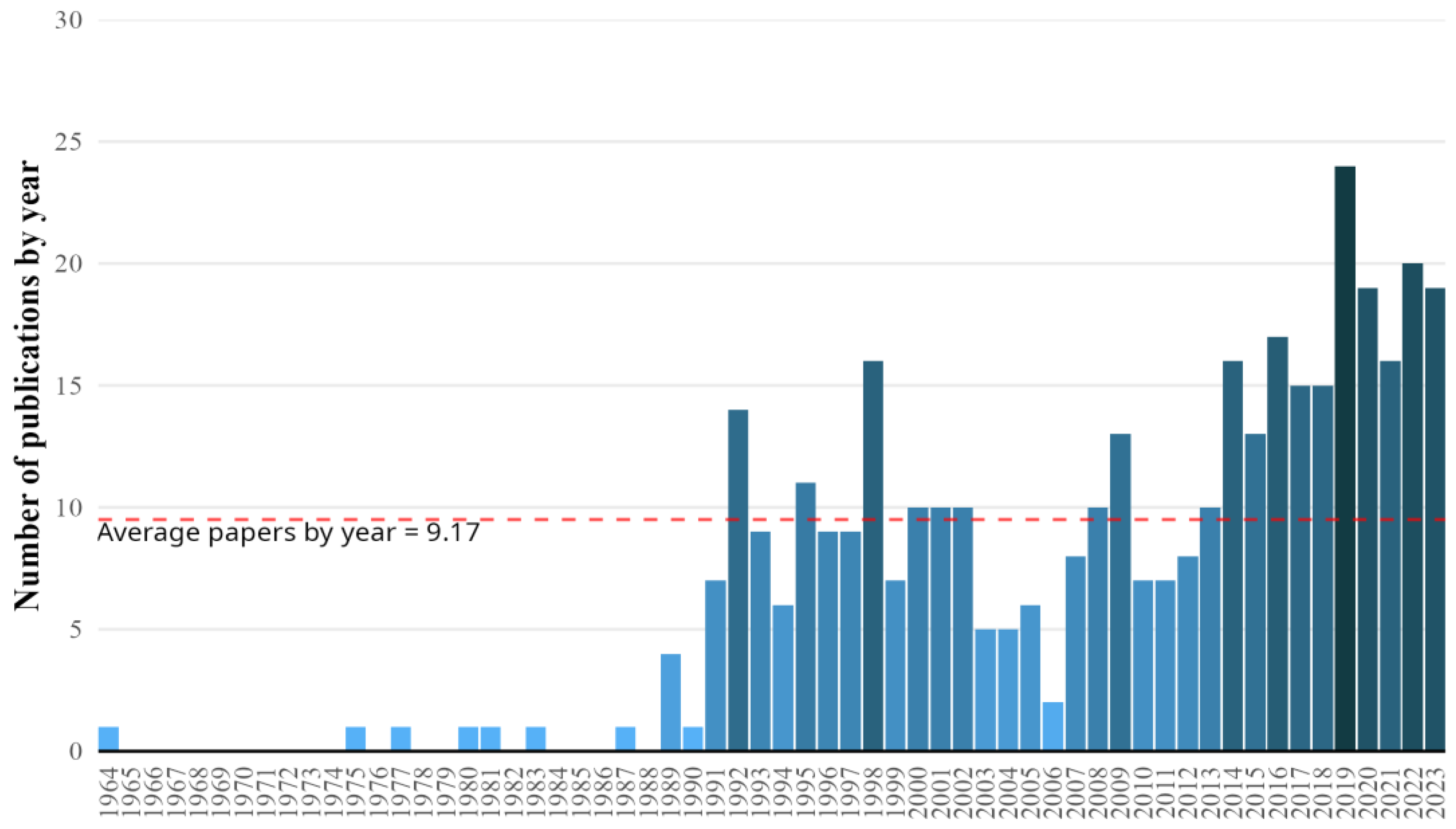
Figure 2.
Keyword co-occurrence network for publications on carrot genetics (1964–2023). Data include Author Keywords and KeyWords Plus. Synonyms were merged with a thesaurus (for example, carrot, carrots, Daucus carota). Node size represents term frequency. Edge thickness indicates total link strength. Colors denote clusters identified by VOSviewer.
Figure 2.
Keyword co-occurrence network for publications on carrot genetics (1964–2023). Data include Author Keywords and KeyWords Plus. Synonyms were merged with a thesaurus (for example, carrot, carrots, Daucus carota). Node size represents term frequency. Edge thickness indicates total link strength. Colors denote clusters identified by VOSviewer.
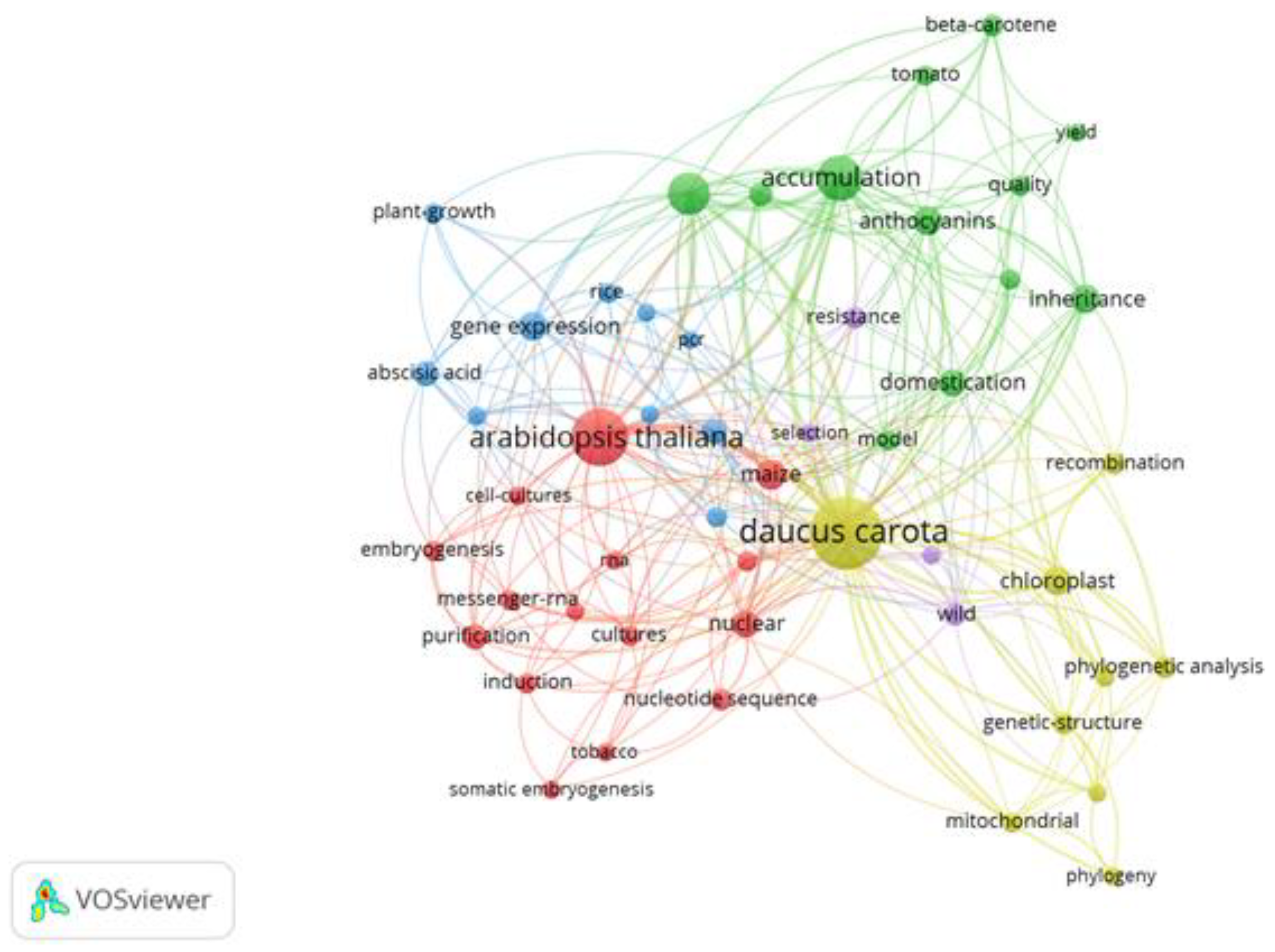
Figure 3.
Thematic distribution of genetics studies on carrots.
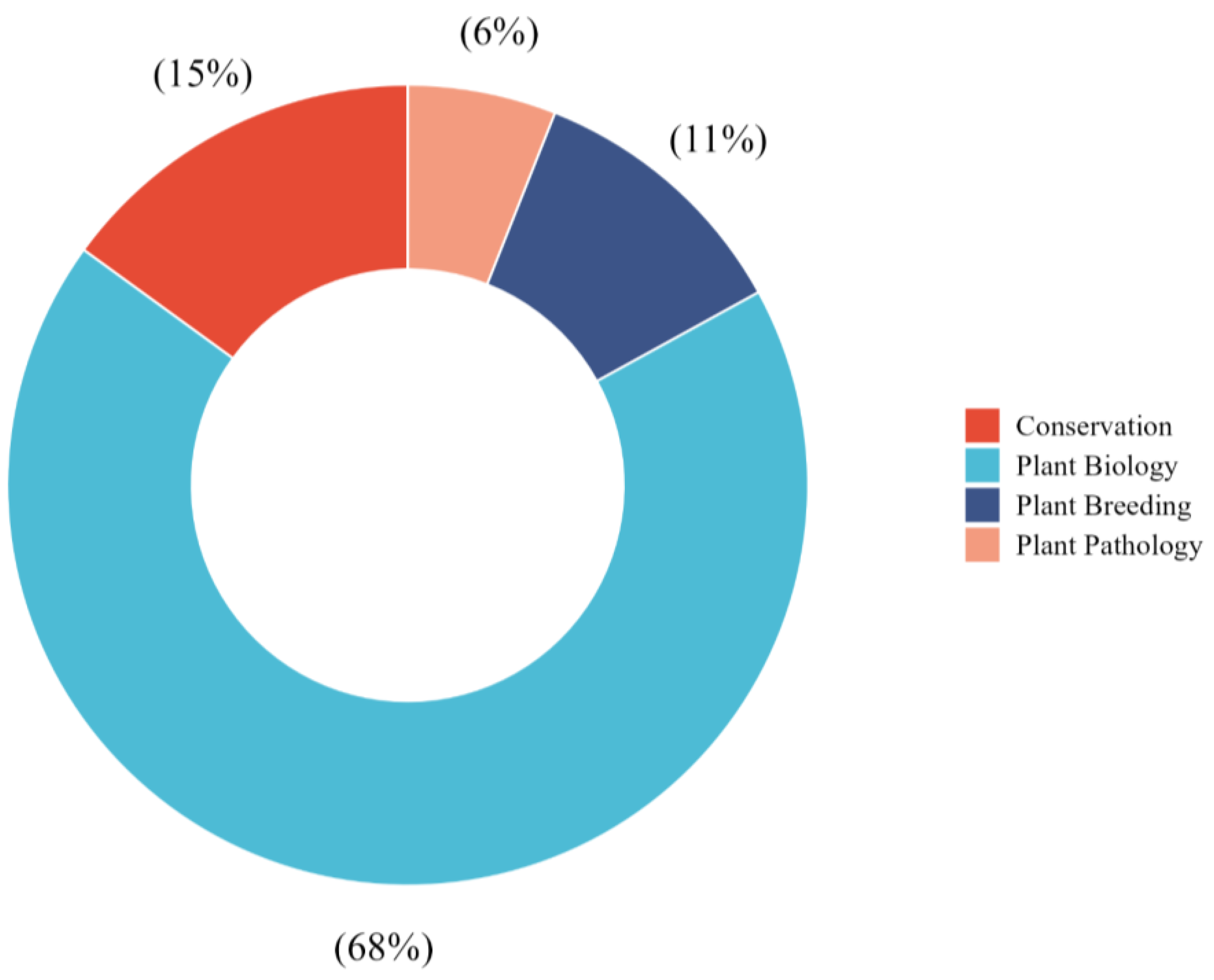
Figure 4.
Subclassification of carrot genetics studies.

Figure 5.
Co-authorship network for the carrot-genetics corpus used in this study. Nodes are authors, node size is proportional to publication count, and edge thickness reflects co-authorship strength. Colors indicate clusters detected by VOSviewer. The overlay color encodes the average publication year as shown in the scale. Author names were harmonized to reduce variants.
Figure 5.
Co-authorship network for the carrot-genetics corpus used in this study. Nodes are authors, node size is proportional to publication count, and edge thickness reflects co-authorship strength. Colors indicate clusters detected by VOSviewer. The overlay color encodes the average publication year as shown in the scale. Author names were harmonized to reduce variants.
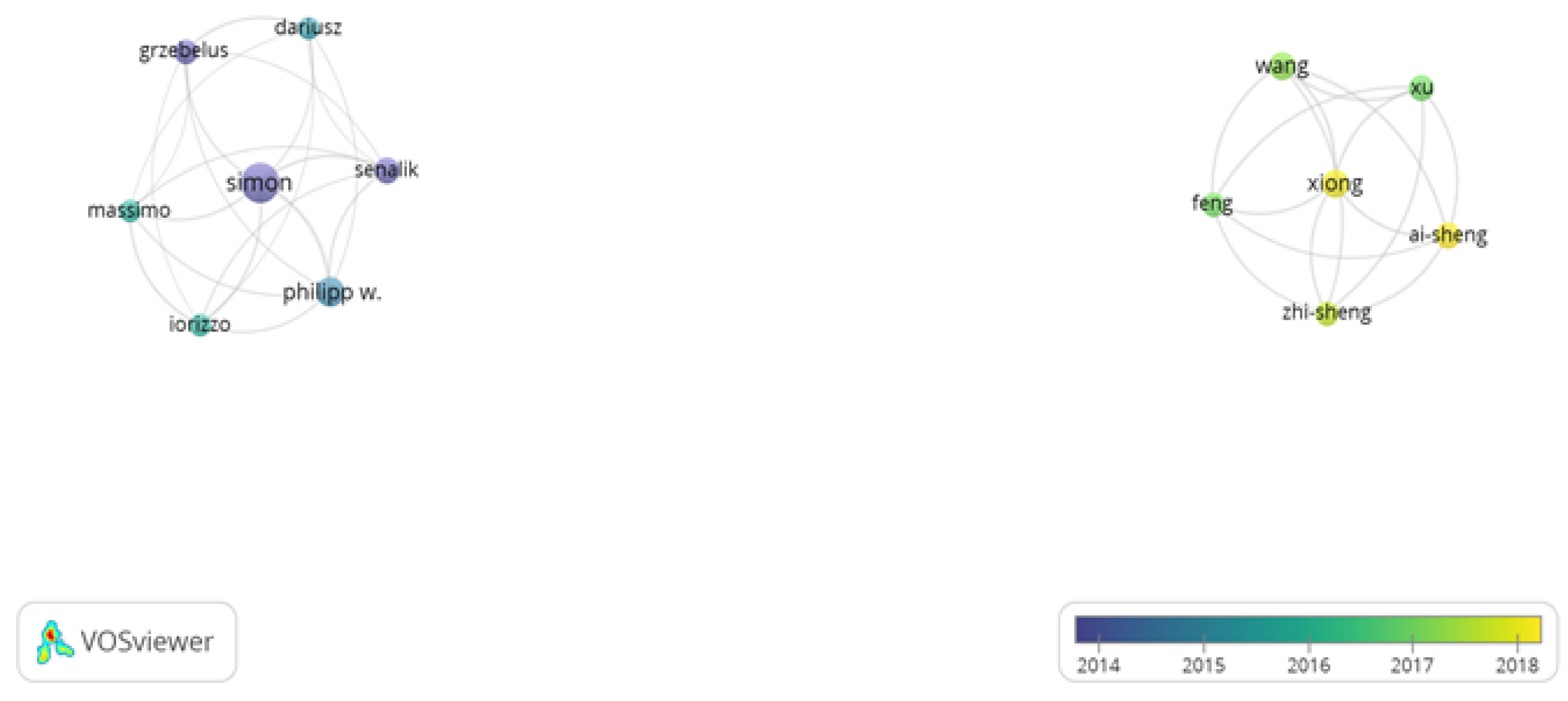
Figure 6.
International co-authorship network by country, visualized in VOSviewer. Node size represents the number of documents; edge thickness denotes total link strength (number of co-authored papers). Colors indicate collaboration clusters, and internode distances reflect relatedness in the VOS layout (closer = stronger/more frequent collaboration). Country names were harmonized for consistency; only countries meeting the inclusion threshold are displayed.
Figure 6.
International co-authorship network by country, visualized in VOSviewer. Node size represents the number of documents; edge thickness denotes total link strength (number of co-authored papers). Colors indicate collaboration clusters, and internode distances reflect relatedness in the VOS layout (closer = stronger/more frequent collaboration). Country names were harmonized for consistency; only countries meeting the inclusion threshold are displayed.
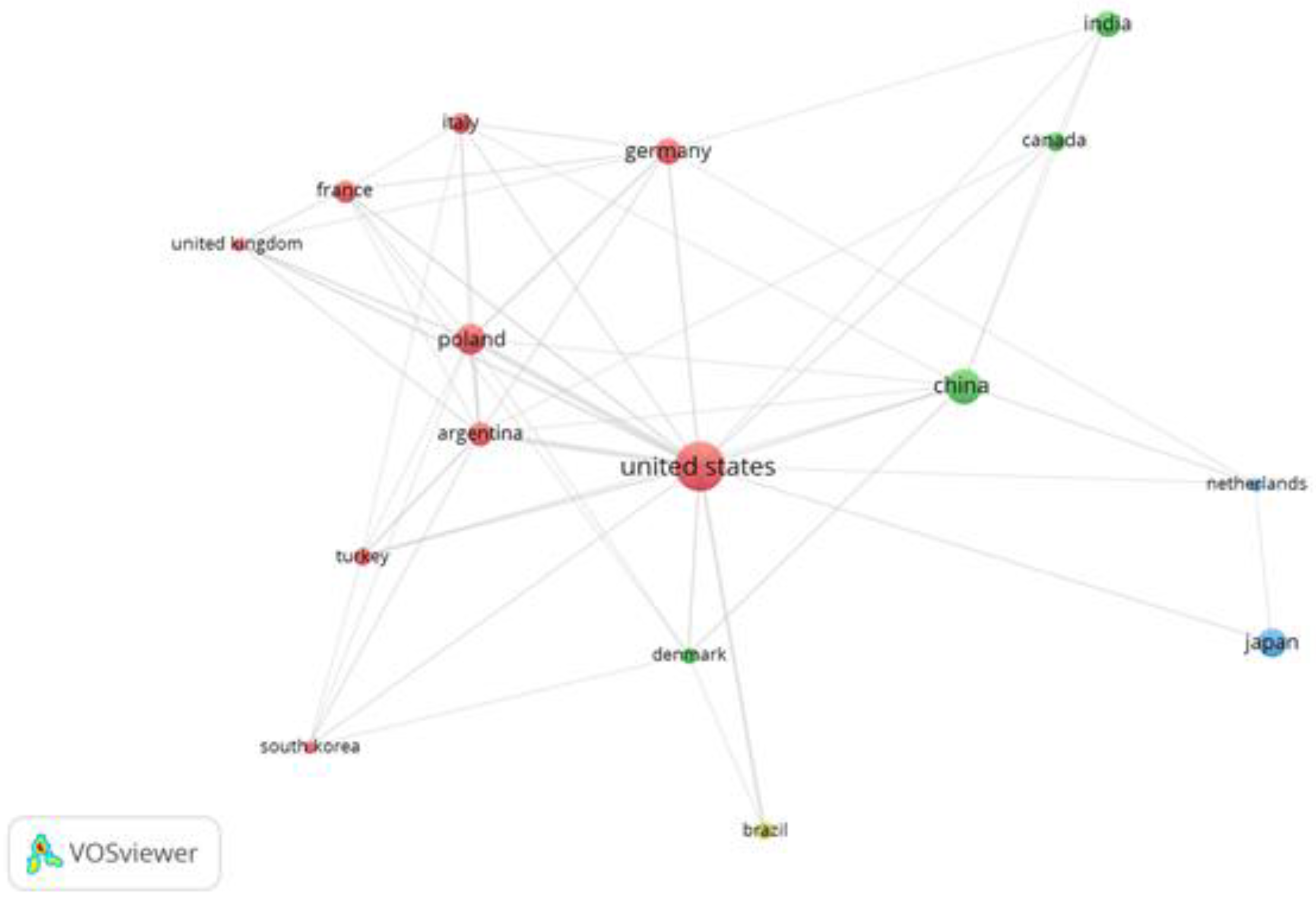
Figure 7.
Organizational co-authorship network visualized in VOSviewer. Node size represents the number of documents (Weights = Documents); edge thickness denotes total link strength (co-authorship intensity). Colors indicate collaboration clusters, and spatial proximity reflects association strength in the VOS layout. Organization names were harmonized and abbreviated via a thesaurus (e.g., UW-Madison, USDA ARS, NC State) to avoid duplicates.
Figure 7.
Organizational co-authorship network visualized in VOSviewer. Node size represents the number of documents (Weights = Documents); edge thickness denotes total link strength (co-authorship intensity). Colors indicate collaboration clusters, and spatial proximity reflects association strength in the VOS layout. Organization names were harmonized and abbreviated via a thesaurus (e.g., UW-Madison, USDA ARS, NC State) to avoid duplicates.
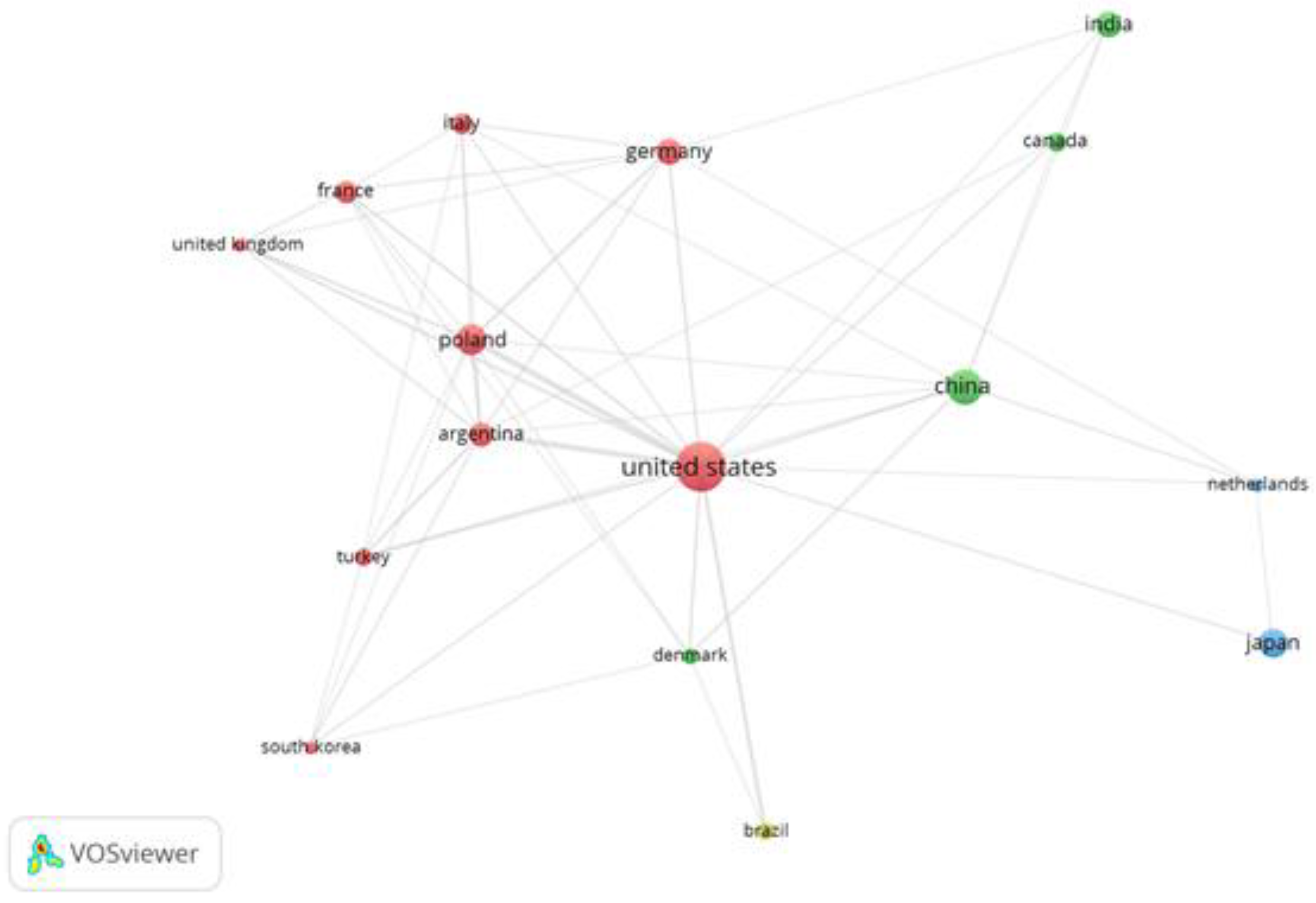
Figure 8.
(A) Frequency distribution of methodological approaches used in carrot genetic studies. (B) The ten most frequently used genetic tools.
Figure 8.
(A) Frequency distribution of methodological approaches used in carrot genetic studies. (B) The ten most frequently used genetic tools.
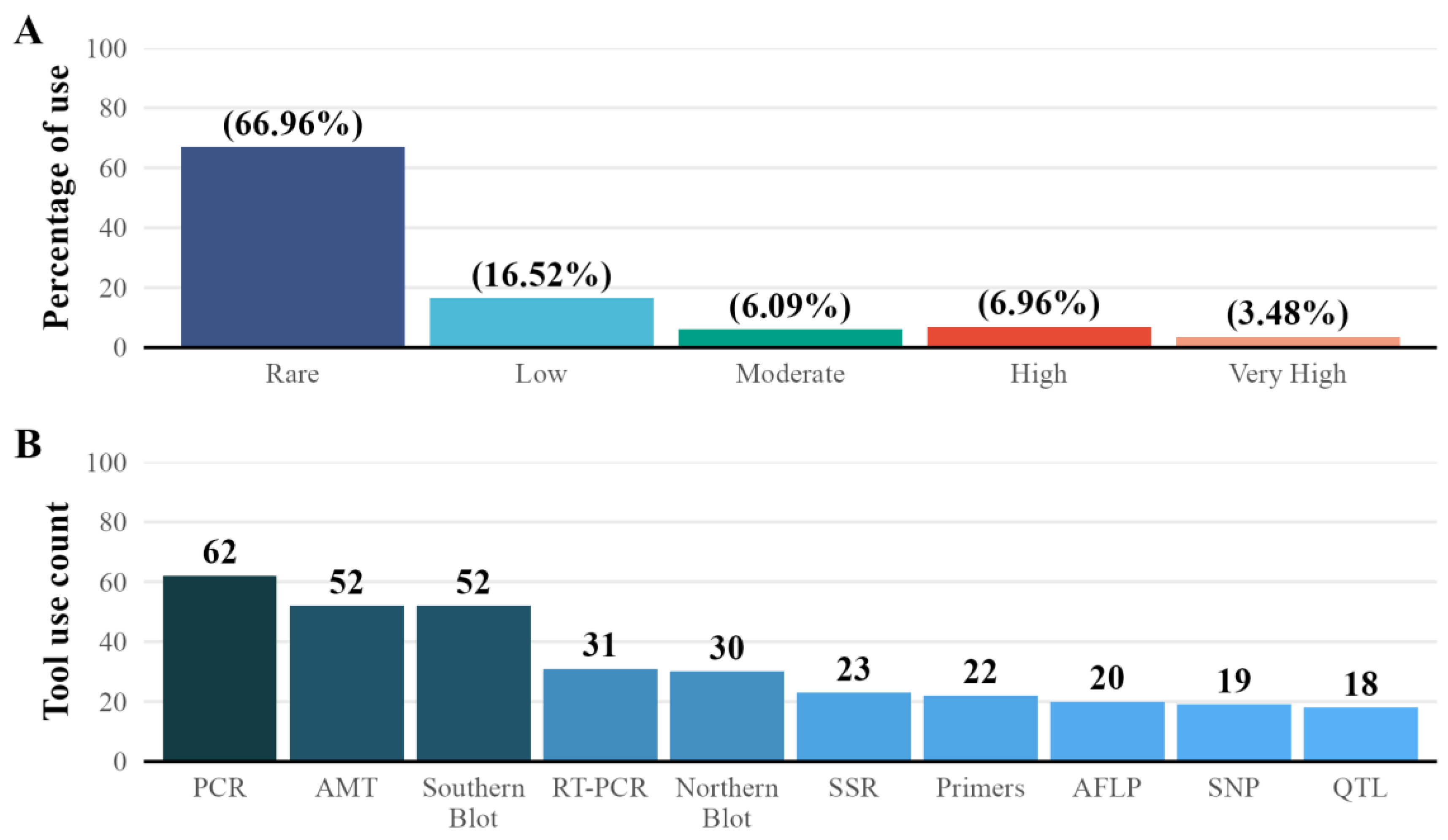

Table 1.
Five most cited articles on carrot genetics extracted from the Web of Science database for the period 1960-2023.
Table 1.
Five most cited articles on carrot genetics extracted from the Web of Science database for the period 1960-2023.
| First author | DOI | Journal | Citations* | Main contribution | Year |
| Iorizzo, Massimo [5] | 10.1038/ng.3565 | Nature Genetics | 381 | High-quality genome assembly and insights into carotenoid accumulation, as well as asterid evolution | 2016 |
| Kumar, S [30] |
10.1104/pp.104.045187 | Plant Physiology | 340 | Overexpression of a betaine aldehyde dehydrogenase improved salt tolerance | 2004 |
| Iorizzo, Massimo [31] |
10.1186/1471-2164-12-389 | BMC Genomics | 179 | A transcriptome assembly of carrot | 2011 |
| Iorizzo, Massimo [32] |
10.3732/ajb.1300055 | American Journal of Botany | 164 | Genetic structure and domestication of carrot | 2013 |
| Clotault, Jeremy [33] |
10.1093/jxb/ern210 | Journal of Experimental Botany | 163 | Transcriptional regulation of carotenoid biosynthesis in carrot root development | 2008 |
*Number of citations from Web of Science.
Disclaimer/Publisher’s Note: The statements, opinions and data contained in all publications are solely those of the individual author(s) and contributor(s) and not of MDPI and/or the editor(s). MDPI and/or the editor(s) disclaim responsibility for any injury to people or property resulting from any ideas, methods, instructions or products referred to in the content. |
© 2025 by the authors. Licensee MDPI, Basel, Switzerland. This article is an open access article distributed under the terms and conditions of the Creative Commons Attribution (CC BY) license (http://creativecommons.org/licenses/by/4.0/).
Copyright: This open access article is published under a Creative Commons CC BY 4.0 license, which permit the free download, distribution, and reuse, provided that the author and preprint are cited in any reuse.


