

Submitted:
19 August 2025
Posted:
22 August 2025
You are already at the latest version
Abstract
Owl incubation behavior, as an aspect of their ecology, remains poorly understood. To date, no studies have documented the incubation patterns of the Great Grey Owl, and existing knowledge of its breeding behavior remains limited. In the present study, we used video recordings under aviary conditions at the Poznań Zoological Garden to quantitatively assess incubation attentiveness in the Great Grey Owl, enabling us to reliably document and distinguish parental behaviors in this species. The aim of this study is to provide a detailed characterization of incubation behavior in the Great Grey Owl by quantifying several aspects of nest attentiveness (incubation attentiveness, nest ventilation time, egg-turning frequency, and the influence of ambient temperature on incubation behavior. These variables were analyzed in relation to two reproductive outcomes: nests containing infertile eggs and nests that resulted in successful hatching. Overall, we did not find significant differences between these cases in terms of incubation duration (number of days) or egg-turning frequency. However, we observed that incubation attentiveness was significantly higher during the incubation of infertile eggs, despite the total number of incubation days remaining unchanged. We also found that ambient temperature influenced incubation behavior, with females adjusting their attentiveness in response to changing weather conditions, suggesting active thermoregulation. Our findings indicate that incubation in Great Grey Owls is largely instinctive—likely shaped by evolutionary processes—and not significantly altered by captivity conditions.
Keywords:
great grey owl
; Stix nebulosa
; incubation
; incubation attentiveness
; nest ventilation time
; egg-turning frequency
; infertile eggs
; successful hatching
1. Introduction
Various avian incubation strategies have evolved based on a trade-off between current reproductive investment and future parental condition [1,2,3,4]. One of the main benefits of increased incubation attentiveness — that is, the proportion of time spent incubating the eggs — is improved hatching success and the quality of the hatchlings [5,6,7]. Failure to maintain optimal conditions (keeping the egg temperature within a suitable range) may lead to developmental disturbances, hatching failure, or embryo mortality [5,7,8]. Since incubation is an energetically demanding process, parents must behave in a way that allows them to meet their own nutritional needs while simultaneously ensuring appropriate conditions for the developing embryos [9,10,11].
Therefore, incubation and off-nest behaviors may be influenced by various environmental and temporal factors. This is particularly important in species in which only one parent incubates the eggs, as is the case with the Great Grey Owl [11,12]. For instance, ambient temperature can affect incubation behavior both directly — by acting on the incubating bird — and indirectly, by altering egg and nest temperatures and bird metabolism. The time of day may also influence incubation dynamics through changes in light intensity, predator activity, or ambient temperature. As a result, incubation patterns may vary over the course of the breeding season [8,13,14].
Owl incubation behavior, as an aspect of their ecology, remains poorly understood, despite recent technological advancements that have significantly facilitated the monitoring of avian incubation behavior [15,16,17,18]. Understanding, among other aspects, the dynamics of this process contributes to a deeper comprehension of the biological and ecological strategies that underpin species continuity in these animals [12,19].
To date, no studies have documented the incubation patterns of the Great Grey Owl, and existing knowledge of its breeding behavior remains limited. Available information pertains primarily to the timing of breeding onset, the approximate duration of egg incubation, clutch size, and the length of the post-hatching parental care period [20,21,22,23,24,25,26,27,28,29,30,31,32,33,34].
Studies conducted on owls and other animal species kept in captivity—such as in zoological gardens or rehabilitation centers—allow for the collection of detailed data on various aspects of their ecology in a more efficient and controlled manner than observations carried out in the wild [35,36,37,38]. However, it should be emphasized that results obtained under such conditions are limited by the distinct environmental parameters of captivity. Therefore, they primarily serve as a supplement to knowledge acquired through field research conducted in the species’ natural habitats [39,40,41,42,43,44].
On the other hand, an increasing number of bird species are currently threatened due to intensive human activity. As a result, conservation efforts based on ex situ breeding—including in aviary and captive conditions—are gaining importance. This situation highlights the need to deepen our understanding of incubation processes in birds kept under such conditions and to develop the ability to apply this knowledge in active species conservation programs [45,46,47,48,49]. In the present study, we used video recordings to quantitatively assess incubation attentiveness in the Great Grey Owl, enabling us to reliably document and distinguish parental behaviors in this species.
The aim of this study is to provide a detailed characterization of incubation behavior in the Great Grey Owl by quantifying several aspects of nest attentiveness. Specifically, we measured the following parameters: incubation attentiveness, nest ventilation time, egg-turning frequency, and the influence of ambient temperature on incubation behavior. These variables were analyzed in relation to two reproductive outcomes: nests containing infertile eggs and nests that resulted in successful hatching. Prolonged incubation is often associated with infertile clutches, potentially reflecting either adaptive or maladaptive behavioral responses. By comparing incubation behaviors across these two outcomes, this study seeks to enhance our understanding of the reproductive ecology of the Great Grey Owl and to contribute to broader insights into incubation strategies among owl species.
2. Materials and Methods
2.1. Study Area
The study was conducted at the Poznań Zoological Garden in 2008 and 2009. The observed birds were wild-born. The breeding pair consisted of a 7-year-old female and a 10-year-old male, both originating from the Helsinki Zoo. In 1999, both individuals were transferred to an outdoor aviary with a total area of 350 m². The pair initiated breeding attempts in 2000; however, successful reproduction occurred only in 2007, when a single chick hatched. This event marked the first documented case of successful breeding of the Great Grey Owl in a Polish zoological garden. Approximately 60% of the area of the Poznań Zoological Garden is forested; consequently, the aviary housing the birds was located in a woodland environment. Food—captive-bred house mice (Mus musculus)—and water were provided daily ad libitum. Despite constant access to food, the owls also hunted small rodents that entered the aviary, including the bank vole (Myodes glareolus) and the yellow-necked mouse (Apodemus flavicollis), as confirmed by pellet analysis. An artificial nest with a diameter of approximately 1.5 m was installed in one corner of the aviary, under a roofed section, at a height of about 6 m.
2.2. Video Surveillance and Analysis
The behavior of the Great Grey Owl pair was recorded using a video camera. The camera was mounted approximately 1 m above the nest and provided color video footage. It was equipped with infrared LEDs (ES-104), allowing for continuous 24-hour monitoring, including night-time observations (Samsung, model OV-913C)[15,16,17,45,49].
The entire incubation period—from the laying of the first egg to the hatching of the chicks—was recorded. In the 2008 season, the recording spanned from April 12 to May 20, and in the 2009 season, from April 13 to May 20. Video data were analyzed by reviewing the footage using AVS Media Player software, and systematically recording observed behaviors in numerical form (i.e., frequency and duration)[17,45].
2.3. Incubation Attentiveness, Egg Ventilation and Egg-Turning
Incubation attentiveness was quantified as the amount of time the female spent on the eggs during each observed hour of video footage (e.g., 05:00–06:00), throughout the entire incubation period [50,51,52].
Egg ventilation time was defined as the duration during which the incubated eggs were not in contact with the female’s body and were thus exposed to direct environmental conditions, including ambient temperature [1,2]. Egg-turning frequency was defined as the total number of egg turns observed during the entire incubation period, expressed as the mean number of turns per hour per egg [53].
2.4. Number and Time of Nest Departures
The number and duration of nest departures were defined as periods during which neither the female nor any adult bird was present on the nest or in its immediate vicinity (i.e., within the nest level in the aviary setting). These nest recesses constitute a subset of the total egg ventilation time [52].
2.5. Relationship Between Ambient Temperature and Egg-Turning Frequency and Ventilation Time
The effect of ambient temperature on egg-turning frequency and ventilation time was also compared between the two breeding seasons. For this purpose, temperature data from the Institute of Meteorology and Water Management in Poznań – Ławica branch were used. Temperature measurements were recorded three times per hour throughout the day. The mean ambient temperature was 12.11±3.45°C in 2008 and 12.72±3.87°C in 2009. The difference in ambient temperature between the breeding seasons was not statistically significant (t₄₆ = -0.582; P = 0.563). Additionally, for further analysis, the average temperature for each hour across the entire observation period was calculated.
2.6. Frequency of Male Food Deliveries and Female Feeding During Incubation
Frequency of male food deliveries to the nest was defined as the total number of visits by the male delivering food to the nest during the observation period, expressed as the mean number of food deliveries per day. Frequency of female feedings by the male was defined as the number of food items accepted by the female from the male during the incubation period, expressed as the mean number of feeding events per day [22,23].
2.7. Statistical Analyse
To characterize the relationships between the studied elements of incubation behavior, Pearson’s correlation coefficient and Student’s t-test were applied. Statistical analyses were conducted using the SPSS 25 PL software package, following recommended methods of statistical analysis [54].
3. Results
We analyzed 1.848 hours of video footage documenting the incubation behavior of a pair of Great Grey Owls. The total observation time was 917 hours in 2008 and 877 hours in 2009, recorded over 39 and 38 days, respectively (Table 1).
On average, the female Great Grey Owl spent 87.8% of the time incubating eggs across both breeding seasons (Table 1). The overall mean incubation attentiveness was 00:53:15±00:06:28 per hour during the day (hh:mm:ss), ranging from 0:03:44 to 02:18:00 (Figure 1). Whereas, mean egg ventilation time was 00:06:45±00:06:22 per hour, with a range of 0 to 0:56:16 minutes per hour. The mean number of female departures from the nest was 3.57±1.93 per day, and the mean duration of nest emptiness was 00:26:17±00:36:18 (hh:mm:ss) per day, ranging from 00:00:00 to 02:15:48 (Table 1). Moreover, the average egg-turning frequency was 1.60 ± 0.86 times per hour, with a range of 0 to 5 in both breeding seasons. The male Great Grey Owl delivered food to the nest an average of 2.13±1.53 times per day, while the female consumed food brought by the male an average of 0.85±0.89 times per day during both breeding seasons.
3.1. Breeding History
During the 2008 breeding season, the female Great Grey Owl laid her first egg on 12 April, during the early morning hours (01:00–02:00), marking the onset of incubation (Day 1)(Figure 1A). Subsequent eggs were laid at intervals of 2–4 days: the second egg on 16 April (17:00–18:00; Day 4), the third on 19 April (05:00–06:00; Day 7), and the fourth on 21 April (15:00–16:00; Day 9)(Figure 1A). All four eggs were infertile and were crushed during incubation, presumably due to the physical pressure of the incubating female. The crushing occurred as follows: first egg – 4 May (after 23 days of incubation), second egg – 9 May (after 24 days), third egg – 14 May (after 25 days), and fourth egg – 20 May (after 28 days and 6 hours)(Figure 1A). After each incident, the female consumed the eggshells.
In the following season (2009), the clutch again consisted of four eggs. The first was laid on 13 April (17:00–18:00)(Figure 1B), followed by the second on 16 April (05:00–06:00; Day 3 of incubation), the third on 18 April (15:00–16:00; Day 5), and the fourth on 21 April (00:00–01:00; Day 8)(Figure 1B). The first three eggs were infertile and were likewise crushed during incubation. The female removed them by consuming the shells. The events occurred as follows: first egg – 30 April (after 18 days of incubation), second egg – 5 May (after 20 days), and third egg – 10 May (after 23 days)(Figure 1B). In contrast to the previous year, the fourth egg was fertile. Based on 24-hour nest monitoring, hatching occurred after 29 days and 6 hours of incubation—on 20 May. The hatching process began on 19 May between 09:00 and 10:00, with the chick observed the next day (20 May) between 05:00 and 06:00 (Figure 1B).
3.2. Incubation Attentiveness, Egg Ventilation and Egg-Turning
In 2008, females averaged 0:53:51±0:05:17 of incubation per hour (hh:mm:ss)(range: 0:05:05-02:18:00), and 0:06:09±0:05:04 of egg ventilation (range: 0:00:00-0:37:16)(Figure 1C).
In 2009, average hourly incubation time was 0:52:37±0:07:26 (range: 0:03:44-01:57:13), and ventilation time was 0:07:23±0:07:26 (range: 0:00:00-0:56:16)(Figure 1D). In both years, females showed increased incubation activity in the early morning, around noon, and late in the evening (Figure 1C,D).
Incubation attentiveness (minutes per hour) was statistically significantly higher for infertile eggs (t₁₇₉₂ = 3.987, P = 0.0001; Figure 1), whereas egg ventilation time was significantly longer during the incubation of clutches that resulted in the hatching of a single chick (t₁₇₉₂ = 4.077, P = 0.0001).
3.3. Number and Time of Nest Departures
In 2008, a female Great Grey Owl left the nest an average of 3.36±1.83 times per day (range: 1–9 times; Figure 3). In 2009, the average number of nest departures was 3.79±2.06 times per day (range: 0–12 times; Figure 3). No statistically significant differences were found in the frequency of nest departures by females during the incubation of infertile eggs compared to successful hatching (t₇₅ = –0.972; P = 0.334).
In 2008, the average daily duration during which the nest was left unattended was 00:21:22±00:14:22, ranging from 00:04:06 to 01:05:28. In 2009, the average duration was 00:31:19±00:49:47, with a range from 00:00:18 to 05:01:29. The difference in nest absence time during the incubation period between breeding seasons was not statistically significant (t₇₅ = –1.199; P = 0.234).
The outlier points visible in Figure 1C,D, Figure 2, and Figure 3 between 03:00–04:00 and 19:00–20:00 represent the female’s response (interruption of incubation and nest departure) to the presence of a red fox (Vulpes vulpes) and a pine marten (Martes martes) near the aviary, attracted by the scent of uneaten prey remains left by the observed Great Grey Owl pair.
3.4. Relationship Between Ambient Temperature and Egg-Turning Frequency and Ventilation Time
During the 2008 breeding season, ambient temperatures ranged from +2°C to +25°C, and from –1°C to +25°C in 2009. Changes in ambient temperature had a direct effect on both the frequency of egg turning and the duration of egg ventilation time . As temperature increased, the frequency of egg turning decreased (2008: r = –0.148, N = 917, P = 0.0001, Figure 4A; 2009: r = –0.118, N = 877, P = 0.0001, Figure 4B), while the duration of egg ventilation time increased (2008: r = 0.659, N = 917, P = 0.015, Figure 5A; 2009: r = 0.082, N = 877, P = 0.015, Figure 5B).
3.5. Frequency of Male Food Deliveries and Female Feeding During Incubation
In the 2008 breeding season, a total of 107 male food deliveries to the nest were recorded. The mean (± s.d) number of deliveries per day was 2.74±1.87, with a range from 0 to 10 visits per day. During the incubation period, the female received food from the male on 50 occasions, with a daily average of 1.23±1.10 feedings (range: 0–4 times per day). A positive and statistically significant correlation was found between the number of male food deliveries to the nest and the number of feedings received by the female (r = 0.701, N = 39, P < 0.0001).
In 2009, 58 food deliveries by the male to the nest were recorded, with a mean daily frequency of 1.53±1.20 (range: 0–5 times per day). The female accepted food from the male 18 times during incubation, with an average of 0.47 ± 0.69 feedings per day (range: 0–3 times per day). A statistically significant positive correlation was also found between the number of male food deliveries and the number of female feedings (r = 0.552, N = 38, P < 0.0001).
The frequency of male food deliveries during incubation differed significantly between the two breeding seasons. A statistically significant difference was found in the number of male food visits between years (t₇₅= 3.112, P = 0.003). A similar significant difference was observed in the number of feedings received by the female from the male (t₇₅ = 3.986, P = 0.0001).
4. Discussion
Reproductive success in birds depends on many factors, among which effective incubation of the laid eggs is one of the most critical [1,2,9]. Increasing egg mass is generally associated with a prolonged incubation period and greater energetic investment required for reproduction, including foraging, territory or nest defense, and maintenance of body condition—particularly the female’s fat reserves [1,2,8,55]. In natural conditions, the Great Grey Owl typically initiates breeding in mid-April. The incubation period lasts 28–30 days, with incubation attendance reaching 98–99% of the time [1,21,22,26,31].
Comparable results obtained under captive conditions suggest that these behaviours are largely innate and that environmental conditions in captivity exert little to no influence on their expression.
Prolonged incubation of infertile eggs is a rare phenomenon, although it has been documented in several bird species, including two owl species: the Barn Owl (Tyto alba) and the Long-eared Owl (Asio otus) [56,57,58]. It has been suggested that prolonged incubation may represent an adaptive mechanism providing a safety margin for chicks whose embryonic development takes longer than average [58,59,60].
One factor potentially favoring prolonged incubation is the overall spread of hatching within a clutch [50,59]. Species with large clutches and asynchronous hatching may be more likely to extend the incubation period than species in which all chicks hatch within a short time window [58,59,61,62,63]. Furthermore, asynchronously hatching species may face greater difficulty in determining when to terminate incubation of unhatched eggs, owing to naturally higher intraspecific variation in the incubation period of viable eggs [50,58,59,63].
Prolonged incubation is also expected to occur more frequently in species where incubation is performed solely by one parent while the other (usually the male) provides food, compared to species in which incubation duties are shared. In the former case, the incubating bird does not face a trade-off between attending the eggs and foraging [11,12,55,61,62,63]. The mechanisms by which birds detect infertile or dead eggs remain unclear, as do the cues that trigger the cessation of incubation. Consequently, it remains unknown whether prolonged incubation is preceded or accompanied by other atypical behaviors that could act as proximate triggers [50,58,59,63].
In the case of the studied Great Grey Owl, despite the fact that most eggs were infertile (no dead embryos were found), no prolonged incubation was observed [45]. Instead, during the incubation period, the female progressively crushed the eggs under her own body weight. We consider this behavior to be accidental rather than intentional. It was likely associated with eggshell fragility resulting from a nutritionally poor diet [5,6,36,42,45,50]. A low-diversity prey base may have led to deficiencies affecting the eggshell calcification process, resulting in thinner and mechanically weaker shells. As incubation progressed and eggs lost water, the shells became increasingly susceptible to mechanical failure, ultimately leading to their destruction [13,42,45].
But our results indicate a prolonged incubation time of infertile eggs, expressed in minutes per hour [45]. However, the interpretation of this finding is challenging due to the lack of studies that would allow for direct comparison. Therefore, at this stage of research, it cannot be conclusively stated that prolonged incubation of infertile eggs represents a typical response of a breeding female Great Grey Owl [1,2,50,51,58,59,63].
The length of the incubation period depends, among other factors, on the rate of embryo development within the egg [50,51,64], which is largely determined by active temperature regulation aimed at preventing overheating or cooling [7,8,13,64]. Optimal thermal conditions are maintained through ventilation strategies employed by incubating birds, including shading of eggs, sprinkling them with water, and panting by adults during incubation or the influence of ambient temperature, observed throughout all stages of embryonic development [5,14,65].
Accurate quantification of ventilation time is challenging, as some behaviours interpreted as cooling may result from stochastic events unrelated to parental activity, such as escape from the nest or predator pressure [13,50,51,52]. While ventilation primarily serves to prevent overheating, little is known about egg tolerance to prolonged cooling, particularly in open-cup nests [50,52,64,65].
In this study, we found that egg ventilation time was significantly longer in clutches from which only one chick hatched. This may indicate that, in Great Grey Owl, eggs containing a developing embryo require more intensive and prolonged ventilation than infertile eggs, likely due to ongoing physiological changes during embryonic growth. However, this interpretation should be approached with caution, as there is no conclusive evidence for a direct effect of ventilation time on hatching success [5,12,13,50,51,63,64,65]. It can be assumed that the ventilation time observed in the studied birds reflected a physiological response adapted to the prevailing environmental conditions, as evidenced by the demonstrated relationship between egg ventilation time and ambient temperature.
Another factor influencing proper embryo development is egg turning, which ensures even heating and cooling, facilitates gas exchange, and prevents the embryo from adhering to the eggshell throughout the entire incubation period [1,12,17,45,48].
Studies indicate that the number of egg turns depends on the length of the incubation period, the mass of the eggs laid, and, in particular, on the protein content [5,7,51,53]. Species in which the proportional content of protein – as a structural component of the egg – is high relative to other egg constituents tend to exhibit a relatively higher turning frequency. This is because protein undergoes the most rapid biochemical changes during incubation [50,51,53,59,66].
In the case of the studied Great Grey Owls, it is not possible to determine whether a similar relationship occurs, as there are no published data on the proportional composition of egg fractions for this species [1,2].
In our study, we found no statistically significant differences in egg-turning frequency. We suggest that this behaviour may represent an adaptive response of the female to changing environmental conditions, with egg status (viable vs. non-viable) having no apparent effect on its occurrence.
The influence of ambient temperature on egg-turning frequency and ventilation during incubation is a well-documented phenomenon in many bird species. Weather conditions directly affect the behavior of the incubating individual, triggering responses that enable the maintenance of optimal incubation conditions [8,11,51,53,65].
Previous studies have shown that environmental temperature affects not only the rate of embryo development, but also parental behaviors, including the frequency of egg turning and the intensity of egg ventilation, which may serve as a compensatory strategy under thermally unfavorable conditions [11,64,65,66,67].
Field observation data suggest that, under variable climatic conditions, birds adjust both the rhythm of egg turning and the method of heating the eggs, compensating for fluctuations in external temperature. Under lower temperatures, they turn the eggs more frequently but ventilate them for shorter periods, which promotes even heating and minimises the risk of thermal fluctuations within the egg [8,53,64,65,66,67,68,69].
This phenomenon has been described, among others, in gulls (Laridae), waders (Charadriiformes), and passerines (Passeriformes), where modifications of incubation behavior allow the maintenance of stable embryo development conditions despite significant fluctuations in air temperature [70,71].
In our study, we observed similar patterns — an increase in ambient temperature resulted in less frequent egg turning by the female and a longer exposure of the eggs to atmospheric conditions. These results indicate that the female’s behaviour was innate and independent of the fertilization status of the eggs.
The results confirmed that egg incubation is carried out exclusively by the female, whereas the male delivers food to the nest and feeds his partner [20,21,22,23,26,34,35]. Observations of a pair of Great Grey Owls in Finland showed that, during incubation, the female leaves the nest between one and five times per night, while the male delivers food to the nest three to four times per day [20,21,22,23,34]. In this respect, the behaviour of the studied pair in captivity was consistent with that of birds living in the wild. The findings further indicate that the frequency of food delivery and female feeding were strongly correlated, and that both the number of male visits to the nest with food and the number of feedings differed significantly between seasons. The male delivered food and fed the female more intensively in the breeding season that resulted in successful hatching of a chick.
It is possible that this behaviour was influenced by the fact that, in one year, the clutch was infertile, whereas in the following year it resulted in breeding success. However, a clear interpretation of these differences is difficult, as the possibility of random variation or the presence of an artefact cannot be excluded.
Moreover, under controlled captive conditions, the incubation process of the studied Great Grey Owls would proceed without disturbances, and that the limited living space would provide the individuals with relative safety. However, our observations revealed that the owls exhibited behavioural responses to the presence of potential predators appearing near the aviary, such as the red fox and the pine marten.
These findings indicate that, even under controlled conditions, individuals retain the ability to defend their “home range”, adjusting the intensity of their response according to the type and magnitude of the perceived threat.
Incubation behaviors appear to be innate and do not undergo significant weakening or spontaneous disappearance even after many years in captivity [45,73]. Studies on various aspects of the biology of birds kept in captivity indicate that their behaviors largely correspond to those observed in individuals living in the wild [45,72,73,74]. However, the lack of comparative data makes it impossible to determine the extent to which the incubation behaviors of the studied Great Grey Owls differ from those of individuals of this species under natural conditions.
5. Conclusions
Our study provides the first detailed description of the incubation behavior of Great Grey Owls during both unsuccessful (infertile) and successful hatching events. Overall, we found no significant differences between these cases in terms of incubation duration (number of days) or egg-turning frequency. However, incubation attentiveness (measured as minutes per hour) was significantly higher when females incubated infertile eggs, even though the total incubation period was the same. It remains unclear whether such prolonged attentiveness toward infertile eggs also occurs in wild populations, as comparable field data are lacking. We also found that ambient temperature influenced incubation behavior, with females adjusting their attentiveness in response to changing weather conditions, suggesting active thermoregulation. Our findings indicate that incubation in Great Grey Owls is largely instinctive—likely shaped by evolutionary processes—and is not substantially altered by captivity conditions.
Author Contributions
Conceptualization, Z.K.; methodology, Z.K.; software, Z.K.; validation, Z.K.; formal analysis, Z.K.; investigation, Z.K.; resources, Z.K.; data curation, Z.K.; writing—original draft preparation, Z.K. and H.M.; writing—review and editing, Z.K. and H.M.; visualization, Z.K. and H.M.; supervision, Z.K. and H.M.; project administration, Z.K. and H.M.; funding acquisition, Z.K. and H.M. All authors have read and agreed to the published version of the manuscript.
Funding
This research received no external funding
Institutional Review Board Statement
The research was conducted under Polish regulations respecting the keeping of animals in captivity and research protocols included in the Animal Protection Act (Dz. U. 1997 Nr 111 poz. 724), with the approval of the Polish National Ethics Committee for Animal Experiments (resolution No. 12/2022), and in accordance with ARRIVE guidelines (https:// arriv eguid elines. org).
Informed Consent Statement
Not applicable.
Data Availability Statement
All data, tables, and figures are original. Details on data availability can be obtained from the corresponding author upon reasonable request.
Acknowledgments
The authors thank the Directorate of the Poznań Zoo for enabling the conduct of this research.
Conflicts of Interest
The authors declare no conflicts of interest.
References
- Deeming, D.C. (Ed.) Avian incubation: behaviour, environment, and evolution; Oxford University Press: Oxford, UK, 2002. [Google Scholar]
- Reynolds, S.J.; Deeming, D.C. (Eds.) Nests, Eggs, and Incubation; Oxford University Press: Oxford, UK, 2015. [Google Scholar]
- Wojczulanis-Jakubas, K.; Jakubas, D.; Kośmicka, A. Body mass and physiological variables of incubating males and females in the European Storm Petrel (Hydrobates P. pelagicus). The Wilson J. Ornithol. 2016, 128, 487–493. [Google Scholar] [CrossRef]
- Birkhead, T.R.; Thompson, J.E.; Biggins, J.D.; Montgomerie, R. The evolution of egg shape in birds: selection during the incubation period. Ibis 2019, 161, 605–618. [Google Scholar] [CrossRef]
- Williams, T.D.; Groothuis, T.G.G. Egg quality, embryonic development, and post-hatching phenotype: an integrated perspective. In Nests, Eggs, and Incubation. Deeming, D.C, Reynolds, S.J., Eds.; Oxford University Press: Oxford, UK, 2015; pp. 113–126. [Google Scholar]
- Birchard, G.F.; Deeming, D.C. Egg allometry: influences of phylogeny and the altricial-precocial continuum. In Nests, Eggs, and Incubation. Deeming, D.C, Reynolds, S.J., Eds.; Oxford University Press: Oxford, UK, 2015; pp. 97–112. [Google Scholar]
- Hepp, G.R.; DuRant, S.E.; Hopkins, W.A. Influence of incubation temperature on offspring phenotype and fitness in birds. In Nests, Eggs, and Incubation. Deeming, D.C, Reynolds, S.J., Eds.; Oxford University Press: Oxford, UK, 2015; pp. 171–178. [Google Scholar]
- Conwey, C.J.; Martin, T.E. Effects of ambient temperature on avian incubation behavior. Behav. Ecol. 2000, 11, 178–188. [Google Scholar] [CrossRef]
- Nager, R.G. The challenges of making eggs. Ardea 2006, 94, 323–346. [Google Scholar]
- Mainwaring, M.C.; Hartley, I.R. The energetic costs of nest building in birds. Avian Biol. Resea. 2013, 6, 12–17. [Google Scholar] [CrossRef]
- Nord, A.; Williams, J.B. The energetic costs of incubation. In Nests, Eggs, and Incubation. Deeming, D.C, Reynolds, S.J., Eds.; Oxford University Press: Oxford, UK, 2015; pp. 152–170. [Google Scholar]
- Marasco, V.; Spencer, K.A. Improvements in our understanding of behaviour during incubation. In Nests, Eggs, and Incubation. Deeming, D.C, Reynolds, S.J., Eds.; Oxford University Press: Oxford, UK, 2015; pp. 142–151. [Google Scholar]
- Grant, G.S. Avian incubation. Egg temperature, nest humidity and behavioral thermoregulation in hot environment. Orn. Monogr. 1982, 30, 1–75. [Google Scholar] [CrossRef]
- Ward, D. Incubation temperatures and behavior of Crowned, Black-winged, and Lesser Black-winged Plovers. Auk 1990, 107, 10–17. [Google Scholar]
- Cooper, B.C.; Mills, H. New software for quantifying incubation behavior from time-series recordings. J. Field Ornithol. 2005, 76, 352–356. [Google Scholar] [CrossRef]
- Bolton, M.; Butcher, N.; Sharpe, F.; Stevens, D.; Fisher, G. Remote monitoring of nests using digital camera technology. J. Field Ornithol. 2007, 78, 213–220. [Google Scholar] [CrossRef]
- Smith, J.A.; Cooper, C.B.; Reynolds, S.J. Advances in techniques to study incubation. In Nests, Eggs, and Incubation. Deeming, D.C, Reynolds, S.J., Eds.; Oxford University Press: Oxford, UK, 2015; pp. 179–195. [Google Scholar]
- Fogarty, T.D.; Elmore, R.D.; Fuhlendorf, D.S.; Loss, R.S. Influence of olfactory and visual cover on nest site selection and nest success for grassland-nesting birds. Ecology and Evolution. 2017, 7, 6247–6258. [Google Scholar] [CrossRef]
- Newton, I. (Ed.) Population limitation in birds; Academic Press: London, UK, 1998. [Google Scholar]
- Pulliainen, E.; Loisa, K. Breeding biology and food of the Great Grey Owl, Strix nebulosa, in a north-eastern Finnish forest, Lapland. Aquilo Ser. Zool. 1977, 17, 23–33. [Google Scholar]
- Hilden, O.; Helo, P. The Great Grey Owl Strix nebulosa - a bird of the northern taiga. Ornis Fenn. 1981, 58, 159–166. [Google Scholar]
- Mikkola, H. (Eds.) Der Bartkauz Strix nebulosa; Die Neue Brehm-Bucherei 538: 1 -124. A. Ziemsen Verlag: Wittenberg-Lutherstadt, German, 1981.
- Mikkola, H. (Ed.) Owls of Europe; T & A.D Poyser Ltd.: London, UK, 1983. [Google Scholar]
- Korpimäki, E. Niche relationships and life-history tactics of the three sympatric Strix owl species in Finland. Ornis Scan. 1986, 17, 126–132. [Google Scholar] [CrossRef]
- Bull, L.E.; Mark, G.M.; Henjum, G.M.; Rohweder, S.R. Home range and dispersal of Great Gray Owl in Northeastern Oregon. J. Raptor Res. 1988, 22, 101–106. [Google Scholar]
- Bull, L.E. , Mark, G.M., Henjum, G.M., Rohweder, S.R. Nestling and foraging habitat of Great Gray Owl. J. Raptor Res. 1988, 22, 107–115. [Google Scholar]
- Franklin, A. Breeding biology of the Great Gray Owl in Southeastern Idaho and Northwestern Wyoming. Condor. 1988, 90, 689–696. [Google Scholar] [CrossRef]
- Bull, L.E.; Henjum, G.M. Ecology of the Great Gray Owl. Gen. Tech. Rep. PNW-GTR 265. Department of Agriculture, Forest Service, Pacific Northwest Research Station: Portland, OR: USA. 1990; pp. 39. [CrossRef]
- Mikkola, H.; Estafiev, A.A.; Kotchanov, S.K. Great Grey Owl Strix nebulosa. In The EBBC Atlas of European Breeding Birds: Their Distribution and Abundance; Hagemeijer, E.J.M., Blair, M.T., Eds.; T&AD Poyser: London, UK, 1997; pp. 414–415. [Google Scholar]
- Sulkava, S.; Kuhtala, K. . The Great Gray Owl (Strix nebulosa) in the changing forest environment of northern Europe. J. Raptor Res. 1997, 31, 151–159. [Google Scholar]
- Stefansson, O. Great Grey Owl Strix nebulosa. In Methods of Research and Protection of Owls; Mikusek, R., Ed.; FWIE: Kraków, Poland, 2005; pp. 134–137. [Google Scholar]
- Keller, M.; Chodkiewicz, T.; Woźniak, B. Great Grey Owl Strix nebulosa – a new breeding species in Poland. Ornis Pol. 2011, 52, 150–158. [Google Scholar] [CrossRef]
- Solheim, R.; Stefansson, O. Life span, dispersal and age of nesting Great Grey Owls Strix nebulosa lapponica in Sweden. Ornis Svec. 2016, 26, 125–134. [Google Scholar] [CrossRef]
- Bull, E.L.; Duncan, R.J. Great Gray Owl (Strix nebulosa), version 1.0. In Birds of the World; Billerman, S.M., Ed.; Cornell Lab of Ornithology: Ithaca, NY, USA, 2020. [Google Scholar] [CrossRef]
- Cieślak, M.; Kwieciński, Z. Moult and Breeding of Captive Northern Hawk Owls Surnia ulula. Ardea. 2009, 97, 571–579. [Google Scholar] [CrossRef]
- Dickens, M.J.; Bentley, G.E. Stress, captivity, and reproduction in a wild bird species. Horm Behav. 2014, 66, 685–693. [Google Scholar] [CrossRef]
- Riyahi, S.; Björklund, M.; Mateos-Gonzalez, F.; Sena, J.C. Personality and urbanization: behavioural traits and DRD4 SNP830 polymorphisms in great tits in Barcelona city. J. Ethol. 2017, 35, 101–108. [Google Scholar] [CrossRef]
- Kwieciński, Z.; Tryjanowski, P.; Zduniak, P. Intersexual patterns of the digestive tract and body size are opposed in a large bird. Sci. Rep. 2024, 14, 15039. [Google Scholar] [CrossRef] [PubMed]
- O’Regan, H.J; Kitchener, A.C. The effects of captivity on the morphology of captive, domesticated and feral mammals. Mammal Rev. 2005, 35, 215–230. [Google Scholar] [CrossRef]
- Kwieciński, Z.; Tryjanowski, P. Differences in digestive efficiency of the white stork Ciconia ciconia under experimental conditions. Folia Biol. 2009, 57, 193–198. [Google Scholar] [CrossRef]
- Herborn, K.A.; Macleod, R.; Miles, W.T.S.; Schofield, A.N.B.; Alexander, L; Arnold, K.E. Personality in captivity reflects personality in the wild. Animal Behav. 2010, 79, 835–843. [CrossRef]
- Rosin, M.Z.; Kwieciński, Z. Digestibility of prey by the White Stork (Ciconia ciconia) under experimental conditions. Ornis Fenn. 2011, 88, 40–50. [Google Scholar] [CrossRef]
- Angelier, F.; Parenteau, C.; Trouve, C.; Angelier, N. Does the stress response predict the ability of wild birds to adjust to short-term captivity? A study of the rock pigeon (Columbia livia). R. Soc. Open Sci. 2016, 3, 160840. [Google Scholar] [CrossRef]
- Kwieciński, Z.; Rosin, Z.; M., Dylewski, Ł.; Skórka, P. Sexual differences in food preferences in the white stork: An experimental study. Sci. Nat. 2017, 104, 39. [CrossRef]
- Kwieciński, Z. , Krawczyk, A.; Ćwiertnia, P. Effect of ambient temperature on selected aspects of incubation behaviour in the Golden Eagle Aquila chrysaetos under aviary conditions. Ornis Pol. 2009, 50, 1–8. [Google Scholar]
- Schaub, M.; Zink, R.; Beissmann, H.; François Sarrazin, F.; Arlettaz, R. When to end releases in reintroduction programs: demographic rates and population viability analysis of bearded vultures in the Alps. J. App Ecol. 2009, 46, 92–100. [Google Scholar] [CrossRef]
- Hausknecht, R.; Jacobs, S.; Müller, J.; Zink, R.; Frey, H.; Solheim, R.; Vrezec, A.; Kristin, A.; Mihok, J.; Kergalve, I.; Saurola, P.; Kuehn, R. Phylogeographic analysis and genetic cluster recognition for the conservation of Ural Owls (Strix uralensis) in Europe. J Ornithol. 2013, 155, 121–134. [Google Scholar] [CrossRef]
- Deeming, D.C.; Jarrett, N.S. Applications of incubation science to aviculture and conservation. In Nests, Eggs, and Incubation. Deeming, D.C, Reynolds, S.J., Eds.; Oxford University Press: Oxford, UK, 2015; pp. 196–207. [Google Scholar]
- Rosenberger, J.; Lukaszewicz, E.; Kowalczyk, A.; Deeming, D.C.; Rzonca, Z. Nesting behaviour of Capercaillie (Tetrao urogallus) females kept in aviaries. Ornis Fenn. 2016, 93, 137–145. [Google Scholar] [CrossRef]
- Skutch, A.F. 1962. The constancy of incubation. Wilson Bull. 1962, 74, 115–152. [Google Scholar]
- Deeming, D.C. Behavior patterns during incubation. In Avian incubation: behaviour, environment, and evolution. Deeming, D.C, Ed.; Oxford University Press: Oxford, UK, 2002; pp. 63–87. [Google Scholar] [CrossRef]
- Kirkham, C.B.S.; Davis, S.K. Incubation and nesting behaviour of the Chestnut-collared Longspur. J Ornithol. 2013, 154, 795–801. [Google Scholar] [CrossRef]
- Deeming, C.D. Patterns and significance of egg turning. In Avian incubation: behaviour, environment, and evolution. Deeming, D.C, Ed.; Oxford University Press: Oxford, UK, 2002; pp. 161–178. [Google Scholar] [CrossRef]
- Zar, J.H. (Ed.) Biostatistical analysis; Prantice Hall: New Jersey, USA, 1999. [Google Scholar]
- Hałupka, K. Incubation feeding in Meadow Pipit Anhus pratensis affects female time budget. J. Avian Biol. 1994, 25, 251–253. [Google Scholar] [CrossRef]
- Kloskowski, J. Prolonged incubation of unhatchable eggs in Red-necked Grebes (Podiceps grisegena). J. Ornithol. 1999, 140, 101–104. [Google Scholar] [CrossRef]
- Marks, J.S. Prolonged in Cubation by a Long-eared Owl. J. Field Ornithol. 1983, 54, 14. https://digitalcommons.usf.edu/jfo/vol54/iss2/14.
- Margalida, A.A.; Arroya, B.E.; Bortolotti, G.R.; Bertran, J. Prolonged incubation in raptors: adaptive or nonadaptive behavior? J. Raptor Res. 2006, 40, 159–163. [Google Scholar] [CrossRef]
- Drent, R. Incubation. In Avian Biology Vol 5. Farner, D.S., King J.R, Eds.; Academic Press: New York, USA, 1975; pp. 333–420. [Google Scholar]
- Wuczyński, A. Prolonged Incubation and Early Clutch Reduction of White Storks (Ciconia ciconia). The Wilson J. Ornithol. 2012, 124, 362–366. [Google Scholar] [CrossRef]
- Sutcliffe, S. Prolonged Incubation Behavior in Common Loons. Wilson Bull. 1982, 94, 20. https://digitalcommons.usf.edu/wilson_bulletin/vol94/iss3/20.
- Holcomb, L.C. Prolonged incubation behaviour of Red-winged Blackbird incubating several egg sizes. Behaviour. 1970, 74-83. https://www.jstor.org/stable/4533320.
- Afik, D.; Ward, D. Incubation of Dead Eggs. The Auk. 1989, 106, 32. [Google Scholar]
- Weeb, D.R. Thermal tolerance of avian embryos: A review. Condor. 1987, 89, 874–898. [Google Scholar] [CrossRef]
- Bergstom, P.W. Incubation temperatures of Wilson’s Plovers and Killdeers. Condor. 1989, 91, 634–641. [Google Scholar] [CrossRef]
- Carey, C.; Rahn, H.; Parisi, P. 1980. Calories, water, lipid and yolk in avian eggs. Condor. 1980, 82, 335–343. [Google Scholar] [CrossRef]
- Boersma, P.D.; Wheelwright, N.T. Egg neglect in the Procellariiformes: reproductive adaptations in the Fork-tailed Storm-Petrel. Condor. 1979, 81, 157–165. [Google Scholar] [CrossRef]
- Deeming, D. C et al. Factors affecting thermal insulation of songbird nests as measured using temperature loggers. Physiol. Biochem. Zool. 2020, 93, 488–504. [Google Scholar] [CrossRef] [PubMed]
- DuRant, S.E.; Hopkins, W.A.; Hepp, G.R.; Walters, J.R. Ecological, evolutionary, and conservation implications of incubation temperature-dependent phenotypes in birds. Biol. Reviews, 2013, 88, 499–509. [Google Scholar] [CrossRef]
- Haftorn, S. Incubating female passerines do not let the egg temperature fall below the ‘physiological zero temperature’ during their absences from the nest. Ornis Scan. 1988, 19, 97–110. [Google Scholar] [CrossRef]
- Cooper, C.B.; Voss, M.A. Avian incubation patterns reflect temporal changes in developing clutches. PLOS ONE, 2013, 8, e65521. [Google Scholar] [CrossRef]
- Forsman, D. Ageing and moult in Western Palearctic Hawk Owls Surnia u. ulula L. Ornis Fenn. 1980, 57, 173–175. [Google Scholar]
- Payne, R.B. 1972. Mechanisms and control of moults. In Avian Biology Vol 2. Farner, D.S., King J.R, Eds.; Academic Press: New York, USA, 1972; pp. 103–155. [Google Scholar]
- Pyle, P. Flight-feather moult patterns and age in North American Owls. Monogr. Field Ornithol. 1997, 2. [Google Scholar]
Figure 1.
Variation in incubation attentiveness by a female Great Grey Owl (mean min/h ± s.d.): (A) Incubation time of infertile eggs during each monitoring day (white circles); (B) Incubation time of eggs that successfully hatched during each monitoring day (black circles); (C) Incubation time of infertile eggs per hour (white circles); (D) Incubation time of eggs that successfully hatched per hour (black circles). Green circles indicate the day of egg laying. Red circles represent infertile eggs. Orange circle marks the day of successful hatching.
Figure 1.
Variation in incubation attentiveness by a female Great Grey Owl (mean min/h ± s.d.): (A) Incubation time of infertile eggs during each monitoring day (white circles); (B) Incubation time of eggs that successfully hatched during each monitoring day (black circles); (C) Incubation time of infertile eggs per hour (white circles); (D) Incubation time of eggs that successfully hatched per hour (black circles). Green circles indicate the day of egg laying. Red circles represent infertile eggs. Orange circle marks the day of successful hatching.
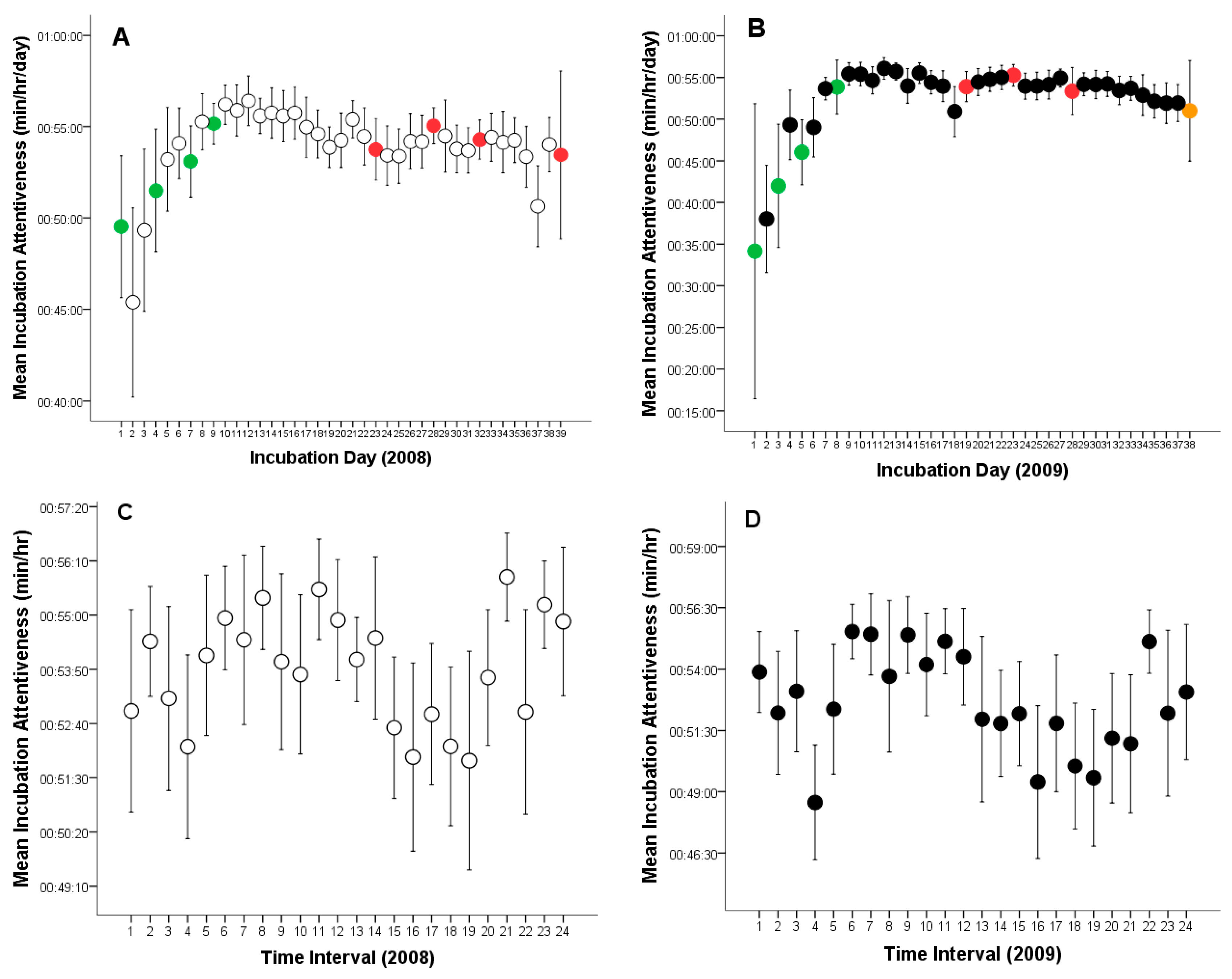
Figure 2.
Average (± SD) rate of egg turning per hour by a female Great Grey Owl during incubation: (A) in 2008 (infertile eggs); (B) in 2009 (successful hatching).
Figure 2.
Average (± SD) rate of egg turning per hour by a female Great Grey Owl during incubation: (A) in 2008 (infertile eggs); (B) in 2009 (successful hatching).
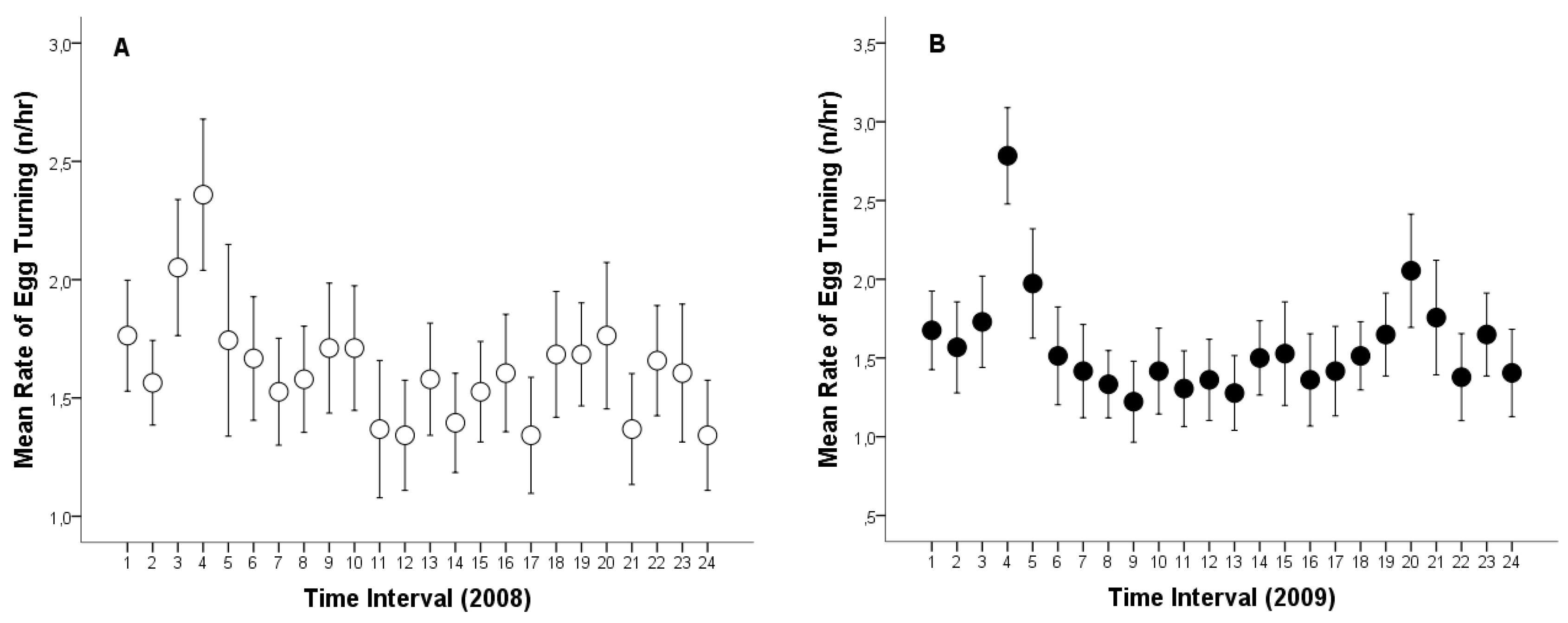
Figure 3.
Number of nest departures during different hours of the incubation day by a female Great Grey Owl. White circles indicate data from 2008 (infertile eggs), and black circles indicate data from 2009 (successful hatching).
Figure 3.
Number of nest departures during different hours of the incubation day by a female Great Grey Owl. White circles indicate data from 2008 (infertile eggs), and black circles indicate data from 2009 (successful hatching).
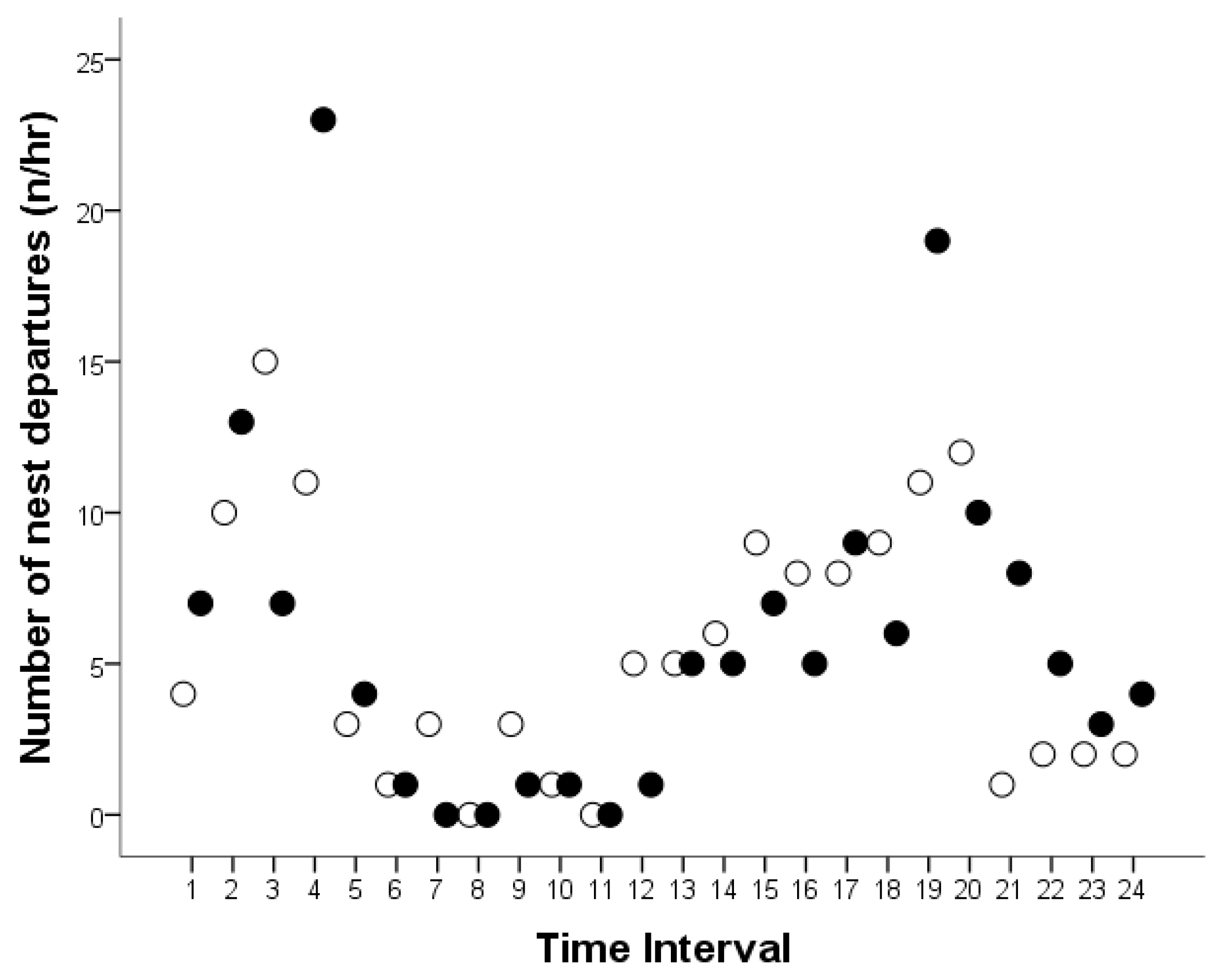
Figure 4.
Relationship between ambient temperature (°C) and the number of egg turns by a female Great Grey Owl during incubation: (A) in 2008 (infertile eggs); (B) in 2009 (successful hatching).
Figure 4.
Relationship between ambient temperature (°C) and the number of egg turns by a female Great Grey Owl during incubation: (A) in 2008 (infertile eggs); (B) in 2009 (successful hatching).
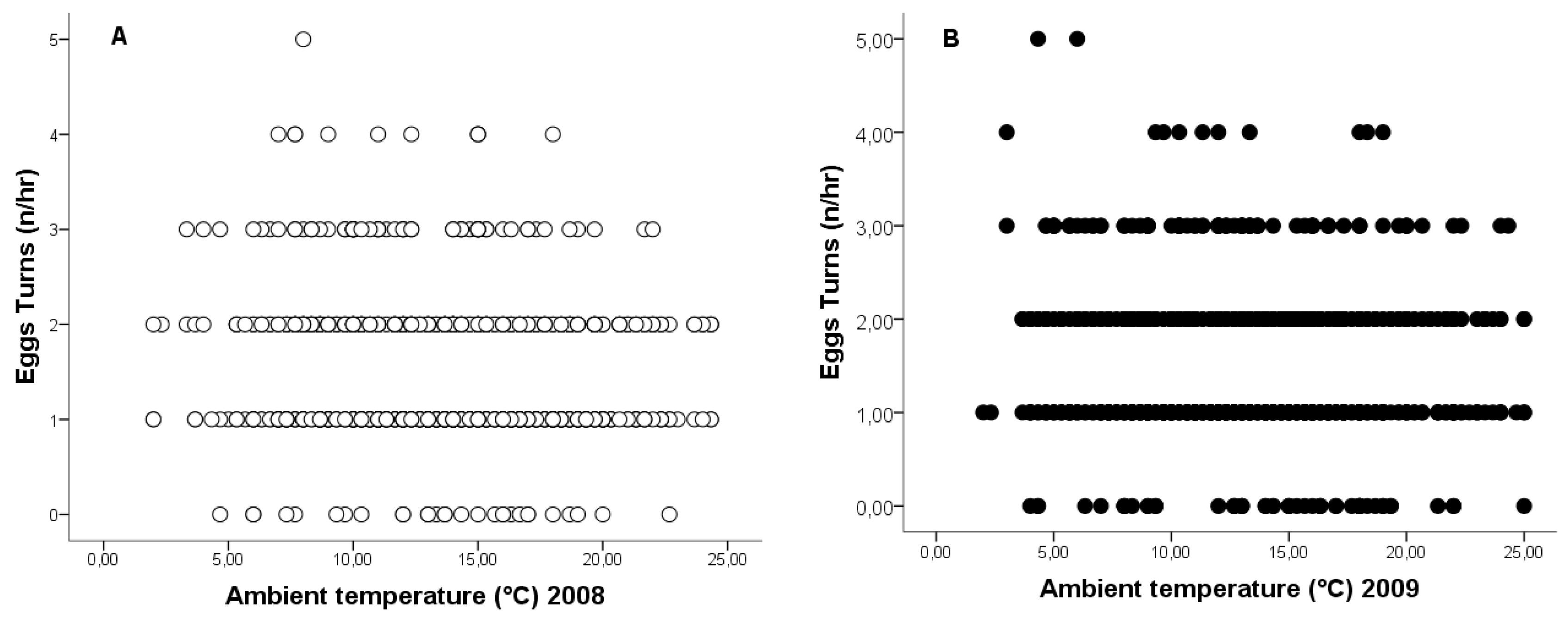
Figure 5.
Relationship between ambient temperature (°C) and egg ventilation time by a female Great Grey Owl during incubation: (A) in 2008 (infertile eggs); (B) in 2009 (successful hatching).
Figure 5.
Relationship between ambient temperature (°C) and egg ventilation time by a female Great Grey Owl during incubation: (A) in 2008 (infertile eggs); (B) in 2009 (successful hatching).
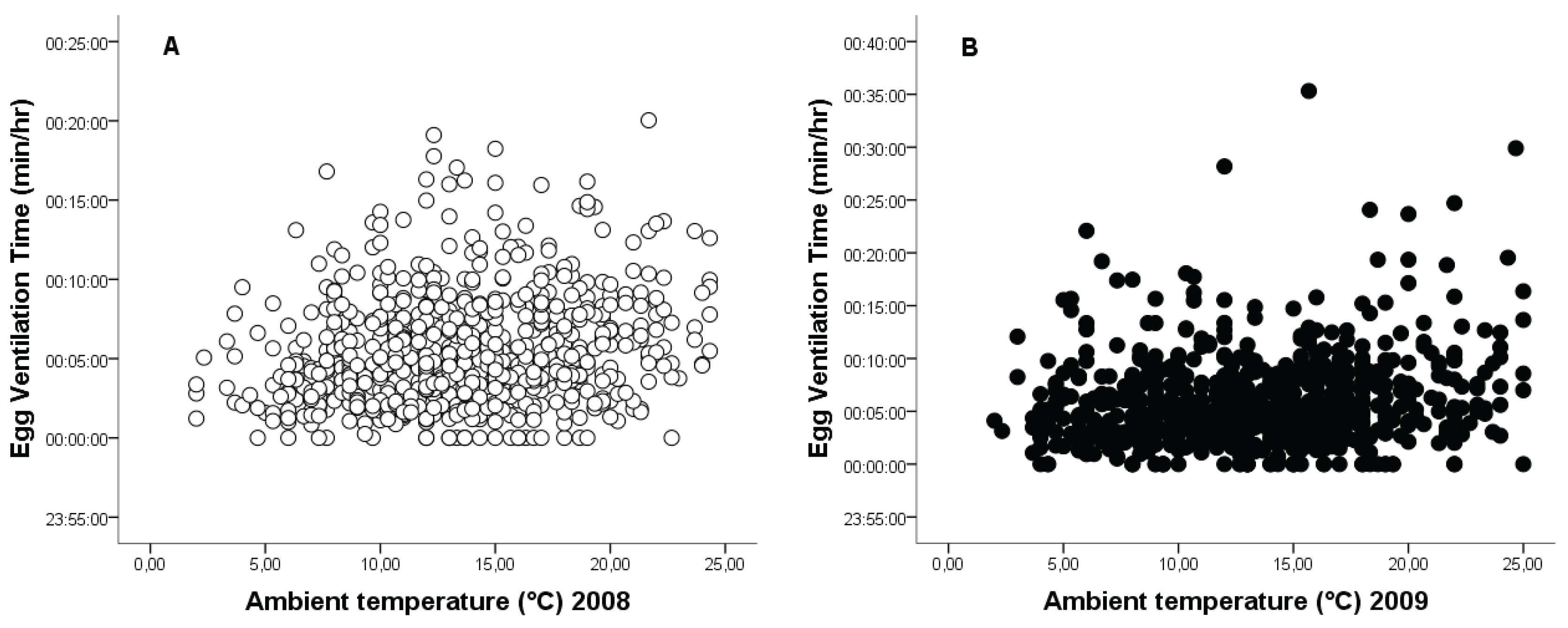

Table 1.
Nest attentiveness and timing of nest departures by a female Great Grey Owl during the breeding period.
Table 1.
Nest attentiveness and timing of nest departures by a female Great Grey Owl during the breeding period.
| Behaviour | Infertile Eggs1 | Successful Hatching2 |
|---|---|---|
| Total Time of observation3 | 917:00:00 (100%) | 877:00:00 (100%) |
| Incubation Attentiveness | 822:55:42 (90%) | 769:14:12 (86%) |
| Egg Ventilation Time | 94:04:18 (10%) | 107:45:48 (14%) |
| In this: | ||
| Nest Departure Time | 13:53:19 (15%) | 19:31:52 (18%) |
1 Year 2008. 2 Year 2009. 3 Time in hh:mm:ss.
Disclaimer/Publisher’s Note: The statements, opinions and data contained in all publications are solely those of the individual author(s) and contributor(s) and not of MDPI and/or the editor(s). MDPI and/or the editor(s) disclaim responsibility for any injury to people or property resulting from any ideas, methods, instructions or products referred to in the content. |
© 2025 by the authors. Licensee MDPI, Basel, Switzerland. This article is an open access article distributed under the terms and conditions of the Creative Commons Attribution (CC BY) license (http://creativecommons.org/licenses/by/4.0/).
Copyright: This open access article is published under a Creative Commons CC BY 4.0 license, which permit the free download, distribution, and reuse, provided that the author and preprint are cited in any reuse.


