

Submitted:
05 August 2025
Posted:
06 August 2025
You are already at the latest version
Abstract
Cooperative breeding, or helping behavior, has long been recognized in birds. An ignored dichotomy, however, separates helping found in many individuals of some long-lived, sedentary species, from helping occasionally found in isolated breeding pairs of some short-lived, long-distance migrant species. Both types of helping are called “cooperative breeding” in the literature. However, recognizing a dichotomy of “frequent” versus “infrequent” cooperative breeding would help justify study of infrequent helping as a distinct discipline. Cooperative breeding in Wilson’s Warblers is infrequent, and among unique behaviors found during this study were: 1) solicitations by helper males, which abort host male attacks, and apparently initiate territorial acceptance, 2) an absence of sexual aggression between helper males and fertile host females, 3) attacks by helper males on intruding males during host female nest building, 4) helper males singing with impunity when host males were absent from territories, but being attacked when host males were present, and 7) a single male simultaneously serving as a helper in four adjacent host territories. Infrequent helping essentially has been ignored in studies and summaries of cooperative breeding. However, recognizing and studying infrequent helping as a distinct behavioral process could reveal interactions between helping and population ecology. Thus, infrequent cooperative breeding detected in a breeding population could indicate that the population is healthy. SIMPLE SUMMARY Cooperative breeding, where more individuals than just a parental pair, contribute to raising young, happens in many bird species. Most studies have investigated long-lived, non-migratory species, many of which get brood help from genetically-related relatives. Additionally, however, cooperative breeding can happen infrequently in isolated pairs of short-lived, migratory species. Helpers in these cases have no indirect kinship relationships with the birds they help. Their benefits in helping can come from direct genetics, having sired some young in host nests, or from direct behavioral benefits, such as inheriting future territories. In this study, I documented several unique behaviors associated with infrequent helping. These include solicitation, a behavior through which male helpers may gain acceptance into host territories, defense of host territories by helper males, helper singing when host males are absent, but not when present, and a single male simultaneously being a helper in four adjacent territories. Infrequent cooperative breeding most often may be found in healthy breeding populations, where most or all prime breeding territories are occupied. However, infrequent helping has not been studied with regards to its possible relationship with population ecology.
Keywords:
cooperative breeding
; alloparental care
; inclusive fitness
; reciprocity
; Cardellina pusilla
; helping behavior
; sedentary species
; migratory species
; polyandry
; host pairs
1. Introduction
Cooperative breeding, or helping behavior, in birds has a complicated history, starting with Skutch’s seminal publication “Helpers at the nest” [1]. As studies progressed, much was learned regarding helping based on genetic relatedness, either indirect involving extended families [2,3], or direct, involving polyandry or polygynandry [4]. Insights into helping, based on indirect genetic benefits, have been greatly aided by an understanding of inclusive fitness theory, originally developed by Hamilton [5]. More recently, cooperative breeding increasingly has been shown to be based on behavioral drivers, in addition to genetics [6,7,8]. These studies have benefitted from increasingly sophisticated molecular genetics, which has shown that many helpers are not genetically related to the offspring they help [6]. The most complicated helping relationships have been found to include combinations of direct and indirect genetic benefits to helpers and hosts, as well as behavioral and ecological benefits [9,10,11,12].
Co-existing with studies of complex species- or population-wide associations of cooperative breeding, as indicated above, are occasional reports of individuals, most often males, of various short-lived, long-range migratory species, joining mated pairs to help raise the latter’s young (e.g., [13,14,15]). These helping associations usually last for only a single breeding season, and migration, vagility, and/or death usually destroy the host/helper relationships. Accounts of helping in these short-lived, migratory species describe behaviors that conform to Brown’s relatively simple, early definition of cooperative breeding [16], which states: “A system of breeding that is characterized by the normal presence of helpers at some or all nests.”
In spite of an increasingly sophisticated understanding of what constitutes cooperative breeding, there apparently has been no need to differentially call cooperative breeding, occasionally found in short-lived, migratory, bird species, anything different from cooperative breeding frequently found in longer-lived, sedentary bird species. Thus, for example, the Florida Scrub Jay (Aphelocoma coerulescens [18] and the Ovenbird (Seiurus aurocapillus [14] both are called cooperative breeders in the literature, and based on Brown’s early definition [16]. This circumstance exists in spite of the jay having helping occurring in multiple pairs and extended families within breeding populations, while helping in the Ovenbird occurs only rarely in isolated pairs. Also, within North American woodpeckers (family Picidae), a similar behavioral dichotomy of species exists, although both woodpecker groups are called cooperative breeders. The Picidae contains two species, well-known, and well-studied, for cooperative breeding, the Acorn Woodpecker (Melanerpes formicivorus, [3], and the Red-cockaded Woodpecker (Dryobates borealis [19]. Additionally, however, the Picidae, contains three species of Sapsuckers (Sphyrapicus spp.) in which cooperative breeding only is occasionally reported in isolated pairs [20]. It is relevant that the Acorn and Red-cockaded Woodpeckers both are non-migratory, as are most other North-American woodpeckers, while western North American sapsucker populations are elevational migrants, returning to their high-elevation breeding grounds only in the summer. This migratory habit prevents the sapsuckers from forming extended family groups, contrary to the two non-migratory woodpecker species [3,18].
As might be anticipated, in summary accounts of cooperative breeding in birds, helping that regularly happens among many breeding pairs and within extended families of some long-lived, sedentary species, and helping that happens only rarely in isolated pairs of some short-lived migratory species, do not mix. Occasional helpers, justifiably, are treated as “bad relations” in summary analyses, and are excluded from tabulations. Riehl, for example, limits her analyses to “regular” cooperative breeders [6], and Ben Mocha et al. [21] define helping species only as those in which alloparental care occurs in >5% of breeding pairs. Ben Mocha et al.’s methodology, for separating cooperative breeders from those not, does exclude some short-lived, migratory species as helpers, but not all. As a result, we are left with a mixed bag of species for such short-lived migratory species, some of which are considered cooperative breeders and others not. All such species probably should be classified the same, as “occasional,” or “infrequent,” cooperative breeders, as opposed to “regular” or “frequent” helpers.
Clearly, the methodology of Ben Mocha et al. [21], while perhaps working well for long-lived, sedentary bird species, is unsuitable for separating short-lived migratory species into helper versus non-helper species. Helping behavior in long-lived, sedentary species, and in short-lived, migratory species, are based on different suites of behavior. Many long-lived, sedentary species can form extended family groups, a process aided by natal philopatry [22], and helping based on familial relations can extend over many generations. Even when long-term helping is not genetically based, however, it can involve extended behavioral relationships, such as territorial inheritance, and experience in brood care and territorial defense [8,23]. Short-lived, long-distance migrants, on the other hand, have limited chances to form extended family groups, or to acquire breeding or territorial skills over multiple years. Older birds die off sooner, and there is little if any natal philopatry [22]. Helping that does happen occasionally in isolated pairs of short-lived migratory species occurs for reasons that can differ among species. For example, males of some species might have interest in helping raise young that they may have sired through polyandry [13,16]. Alternatively, males of other species might help to enhance their chances of inheriting a territory or a mate [8]. Also, helping can happen to gain experience in brood care or territorial behavior [23,24], or as a remaining behavioral response in a helper that lost its own brood [25]. In any case, however, helping in short-lived, migratory species happens for reasons that are different from reasons that it happens in long-lived sedentary species.
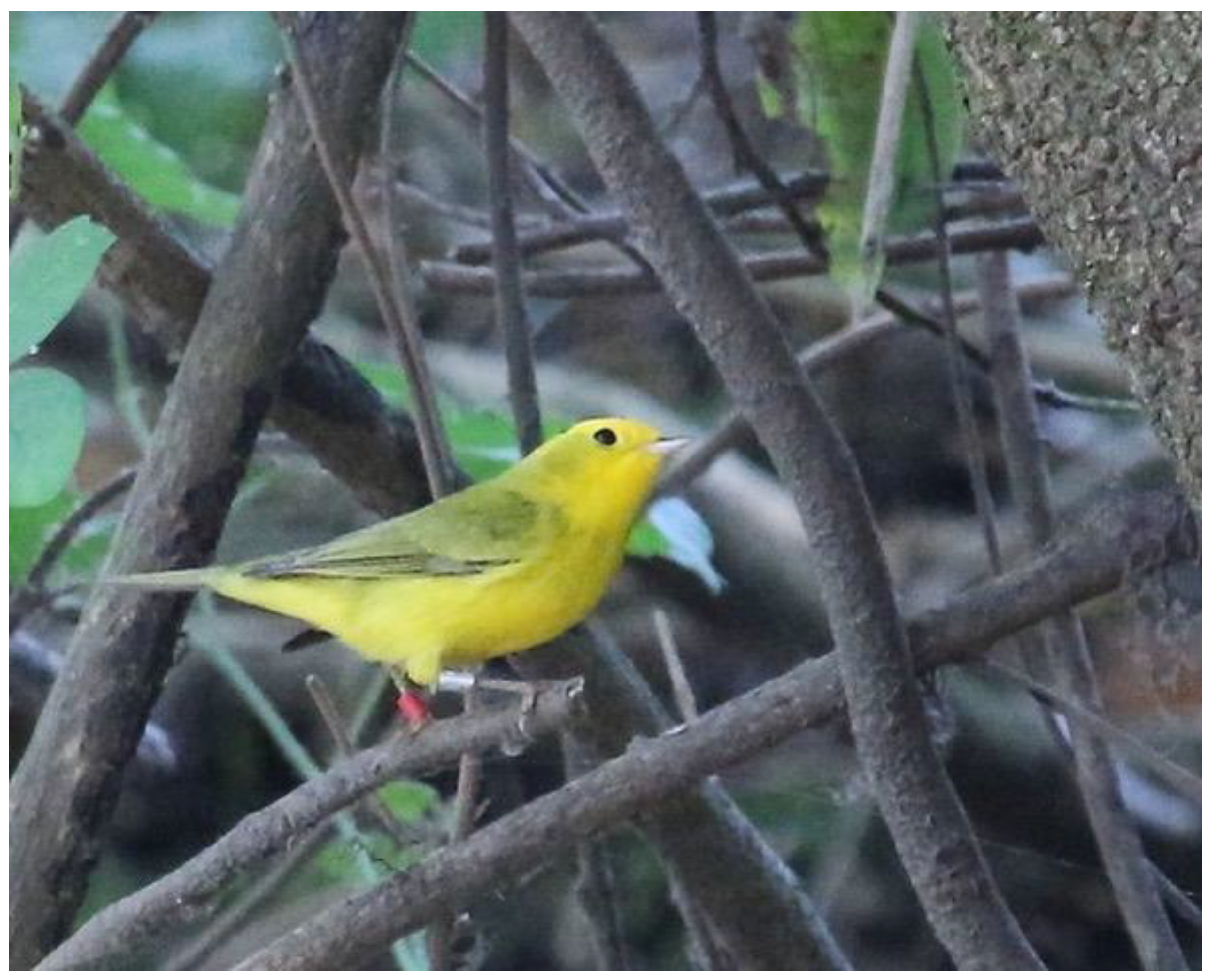
While excluding short-lived migratory species from extended studies and summaries of cooperative breeding is logical, what may go unacknowledged is that cooperative breeding, occurring only occasionally in short-lived migratory species, still is valid natural behavior. As such, it arguably merits study in its own right. It may only lack a name to separate it from “real” cooperative breeding, and lack the willingness of workers in the field to recognize its value in being studied. To promote this “ornithological orphan,” I propose that the term “Infrequent cooperative breeding” be applied to helping happening only occasionally in isolated pairs of short-lived migratory species. Also, since the term is so well-established in the literature, cooperative breeding characteristically found in long-lived, sedentary species or populations, could simply remain as “cooperative breeding.” Other possibilities, however, would be to call it “frequent,” “inherent,” “population-wide,” “regular,” “characteristic,” or even “real” cooperative breeding, although I would not favor the last term for regular usage. A bifurcation of terms, hoeever, would hopefully address problems in separating infrequent cooperative breeding from the better-known type of helping behavior. Introducing a new term, and a new behavioral category, also might free up an area of study that has been neglected, and that has the potential to produce unique findings into cooperative breeding in general. In this study of Wilson’s Warblers (Cardellina pusilla, Figure 1), which is part of a broader, multi-year study, I describe unique behaviors and relationships associated with infrequent cooperative breeding in the species. Hopefully, this study, and these findings, will serve as a vanguard for additional studies and findings based on infrequent cooperative breeding in short-lived migratory bird species.
2. Methods
2.1. Study Area
I conducted this study in the Tilden Nature Area of Tilden Regional Park, a facility of the East Bay Regional Park District in the San Francisco Bay Area, U.S.A. The study area was approximately 4.7 ha, with dimensions of about 0.18 x 0.26 km, and included Wilson’s Warbler breeding habitat in riparian areas dominated by willows along Wildcat Creek, as well as in more xeric upslope areas of Oak-bay woodland. A more detailed description of the study area can be found in a prior publication [26]
2.2. Procedures
Findings of this study were largely based on observations during nest building events by female Wilson’s Warblers. The importance of observations during nest building was that females were fertile at that stage, and thus many foreign males were drawn to intrude, presumably seeking extra-pair copulations (EPCs) [27]. The behaviors of those intruders, and their interactions with resident males and females, and with territorial helpers, thus could be observed.
I based many of the findings in this study on observations made in 1998 in a single Wilson’s Warbler breeding territory, that of a resident male color-banded (s)B/W, and coded 9825, and its unbanded resident female mate. In their breeding territory, I frequently detected another male, which I color-banded Bk/O(s), and coded 9830. I designated 9830 as a territorial helper, based on several atypical behavioral criteria. Mainly, 9830 usually was not attacked and chased away from the territory by resident male 9825, as intruding males typically were [26]. Since 9830 was color-banded, its “immunity” from resident male attack, and thus its status as a helper, could be confirmed multiple times. Other atypical behaviors associated with the helper male subsequently were determined by observing interactions with the resident male and female, and with territorial intruders. I used the atypical behaviors observed in 9830 to detect unbanded helper males in other breeding territories. The resident males and females in whose territories helper males became established I designated as “host males and females,” and their territories as “host territories.” Since much relevant information in this study was based on observing helper male 9830 and its host pair, 9825 and its mate, for simplicity I designated the helper male, 9830, with the acronym “HP,” the host male 9825 with the acronym “RM,” and its unbanded host female mate with the acronym “RF.” I also designated the territory in which HP became established, and usually was seen, i.e., the breeding territory of RM and RF, as the “principal host territory” or “principal territory,” and adjacent territories, where HP also became established, and sometimes was seen, as “satellite host territories,” or “satellite territories.” These adjacent satellite territories were occupied by three color-banded resident males, coded 9809, 9823, and 9826. I sighted HP much less frequently in the three satellite territories than I did in the principal breeding territory of RM and/RF.
RM and RF initiated five nesting attempts in 1998, and I monitored nest-building during the first two attempts. I conducted five monitor sessions, lasting from one to two-and-a-half hours, during each of the two nest building attempts. Nest building during the two attempts spanned from 17 to 22 April and from 28 to 30 April, 1998. The first completed nest was depredated during early egg laying, and this necessitated the second nesting attempt.
Additional to information gained from observing HP, RM, and RF, I based information about helper males on observations made in other parts of the study area during different years. These additional observations involved three color-banded host males, coded 9924, 0104, and 0218, their mates, and three helper males that I detected residing in the territories of the three host pairs.
I compared findings for Wilson’s Warblers made in this study with findings of helping behavior found in other species of small, short-lived migratory birds, with an emphasis on comparisons with four other species of wood warbler (Parulidae). Comparative analyses thus excluded helping behavior found in a broad range of both migratory and sedentary bird species [7], as well as helping in many non-avian animal taxa [17].
3. Results
3.1. Behavior of a Single Color-Banded Territorial Helper HP and Its Host Pair RM and RF
History of Arrival, Nesting, and Establishment of Helper Male, HE, in the Breeding Territory of RM and RF. –During the early stages of nest building by the resident pair, RM and RF, on 11 April, 1998, I observed RM aggressively fly toward another male Wilson’s Warbler that had entered the pair’s territory. Rather than rapidly flee from RM’s attack, however, which was customary intruder behavior, the attacked male adopted a soliciting posture, with drooped wings and spread tail. This solicitation behavior appeared to abort RM’s attack, and the attacked male did not flee. I subsequently saw an unbanded male Wilson’s Warbler in close proximity to both RM and RF in the host pair’s territory, and concluded this male may have been the same male that had solicited to RM on 11 April,. On 14 April I color-banded the male, as Bk/O(s), in the territory of RM and RF, and designated the newly-banded male 9830, and subsequently HP. I continued to frequently see HP in close proximity of the host pair, and observed several unique behaviors in HP, which were not characteristic of males that often intruded into resident pair territories [28]. I concluded that HP had been accepted as a helper in the host territory. RF initiated nest building on 17 April, 1998, and I monitored that nest-building through completion over four days. That first nest was depredated in the egg stage, RF initiated building a second nest on 28 April, and I monitored that second nest building through completion over three days.
3.2. Behaviors Related to Attacks by RM on HP, and to Attacks by HP on Intruding Males
HP usually was accepted and tolerated in the territory of RM and RF, while RM characteristically attacked and drove away intruding males other than HP. Furthermore, HP sometimes also attacked intruding males. I saw HP in RM’s territory 42 times during 10 monitor sessions, or a mean 4.2 times per monitor session, but saw RM attack HP only twice, indicating relative immunity from attack by RM. It is relevant that HP sometimes was as close as two m from RM, making it unlikely that RM was not aware of HP. The paucity (twice), with which HP was attacked is compared with the frequency (>50 times) with which foreign males other than HP were seen to be attacked. Also, although the number of intruding males I specifically saw to be attacked by HP was only 7, while the number I specifically saw to be attacked by RM was 44, the fact that a second male in RM’s territory, i.e., HP, attacked intruding males at all indicates unique behavior, and a unique status as a helper, for HP.
3.3. Behaviors Related to HP Interactions with RF
Further evidence that HP was an accepted helper, and not just an intruder, in the host territory of RM and RF, was seen in its relationship of HP with RF. RF was frequently (>20 times) seen to be attacked, chased, or solicited to by intruding foreign males. However, I never saw RF being attacked, chased, or solicited to by HP. This absence of HP aggressive behavior toward RF occurred, in spite of frequent close proximity of the two birds. Additionally, I never saw RF solicit to HP. Non-solicitation by RF toward HP contrasts with solicitation toward foreign males that I occasionally did see in some other resident females. In most of those cases, solicitations were followed by both resident females and intruding males flying into dense undergrowth, suggesting that EPCs may have followed (WMG). I also never saw any sexual interactions between HP and resident females in any of the three satellite territories adjacent to the principal territory of RM and RF.
3.4. Behaviors Related to HP Singing
Singing behaviors of HP, compared with singing by RM and intruders, also were indicative of a helper status for HP. While RM frequently sang in its territory, I only saw HP sing twice. One time RM apparently was absent from its territory when HP sang, and HP was not seen to be attacked by RM. The second time I saw HP sing it may have done so in response to intense intrusion by foreign males. RM was present, and immediately attacked HP, in addition to also attacking several intruding males. The loud singing of HP in RM’s territory differed from singing sometimes heard from intruding males, which was very subdued in volume, and which may have been directed toward RF (WMG).
3.5. Helper Behavior in Satellite Territories
While I mainly observed HP helper behavior in the principal host territory of RM and RF, I also confirmed color-banded HP in the three adjacent satellite host territories. Over ten monitor sessions I observed HP in those satellite territories ten times, for an average of one observation/hr. Behavior of HP in the satellite territories was similar to that seen in the principal territory of RM and RF, in terms of interactions with resident males, resident females, and with intruding males. Thus, I saw HP attacked only once by a resident male in a satellite territory, HP guarded the satellite territories by attacking intruding males, and HP was not seen to interact sexually with resident females in the satellite territories. Also, I once saw color-banded HP solicit to a resident male in one of the satellite territories. I speculate that such solicitation may have helped HP to gain acceptance as a helper in the satellite territory, just as it also may have helped HP gain acceptance by RM in the principal host territory. The only apparent difference between events occurring in the satellite territories, compared with events in the principal territory, was that I sighted HP much less frequently in the satellite territories than I did in the principal territory; that is, a mean of 1.0 time (10/10) per monitor session, compared with a mean 4.2 times (65/13) per monitor session
3.6. Helper Behavior Related to Brood Care
While I was able to monitor building of the second nest of RF, I was unable to locate the nest’s exact location. I thus was unable to monitor subsequent nestling care, to see if HP cared for the nestlings. On multiple occasions, however, I later saw HP feeding fledglings in an area adjacent to the territory of RM and RF. In addition to the adjacent location, the timing of this fledgling care was congruent with fledgling care by RM and RF. I thus conclude that the fledglings being cared for by HP likely were from the brood of RM and RF. Regardless, however, my sighting of HP feeding fledglings confirms that helper male Wilson’s Warblers do participate in brood care.
3.7. Observations Based on Total Helper Males in the Study Area Frequency of Territorial Helpers, and of Hosting Pairs, in the Study Population
I detected just four helper males in my study area, including HP, respectively in 1998, 1999, 2001, and 2002. Wilson’s Warbler helpers thus were relatively rare, with the four different helper males detected during just 4.5 % (20/265) of nest-building monitor sessions. I found only 10.6% (7/66) of breeding pairs hosting a helper male during nest building monitor sessions, and three of those seven territorial pairs did so only occasionally in satellite territories. Thus only 6.1% (4/66) of breeding pairs hosted helper males during nest building in principal breeding territories.
3.8. Singing by Helper Males in Host Territories
I observed HP being chased by RM when it sang while RM was present in its host territory in 1998, but not being chased when RM was absent. Similarly, I observed two of the three other detected helper males, one in 1999 and the other in 2002, sing in their host territories, when their host males were absent. In neither case was the helper male chased away.
3.9. Apparent Attempt to Expel a Helper Male from a Host Territory
A single observation on 4 June, 2002, suggests that conditions presumably allowing resident male acceptance of helper males sometimes can be violated by the helpers. On that date, I observed a continuing attack, for at least one hour, by a host male on a helper male in the host male’s territory. The reason for the extended attack is not known. However, both the host male and an unidentified second male had been singing repeatedly in close proximity in a distant corner of the host territory of 3 June, 2002. I speculate that the second singing male was the helper, and its singing was not tolerated by the host male. In any case, the extended chase observed appears to indicate that attempted expulsion of helpers can occur, and that such expulsion might not be easy, and might be costly to host males, in terms of time and energy expended.
4. Discussion
4.1. Relevant Findings Related to Infrequent Cooperative Breeding
Even given extensive theoretical and empirical work on avian helping in general, little is known about infrequent cooperative breeding, as I here have described it. Results for Wilson’s Warblers found in this study, and discussed below, may provide some unique insights into infrequent avian helping behavior, and especially as that behavior may happen in parulids.
- (1)
- Findings Related to Helping During Nest Building - Helping behavior in birds is stated to occur in the nest construction, incubation, nestling, and fledgling breeding stages [29]. However, most reports of infrequent helping behavior in parulids have been based on observations made during nestling care [13,14,15,16]. In this study, although I observed helping behavior by one helper male during fledgling care, all other helping behavior I observed was during host female nest building. Helping during nest building is of special interest, since host females are fertile at that stage [27], and there is an enhanced potential for helper male/host female sexual interactions. This study found no evidence of helper male/host female sexual interactions. There also is an enhanced potential for host male/helper male aggressive interactions, based on host males protecting paternity. This study found no evidence of host male/helper male interactions that might be assigned to protection of paternity. However, this study, a few times, did document host males attacking helpers when the helpers sang in the presence of the host males. No such attacks occurred when host males were absent from their territories, however, and helper males then appeared to sing with impunity. Finally, observations made during nest building allowed detection of interactions between helper males and intruding males. This study confirmed that helpers sometimes actively drove out intruders, apparently seeking EPCs with nest building host females. I am not aware of a prior study of helping behavior that primarily was based on observations made during nest building.
- (2)
- Helper Male Solicitation – A helper male entering a host territory during nest building, when females are fertile, is superficially problematic. Most intruding Wilson’s Warbler males were vigorously attacked and driven away by resident males [27]. Thus, how helper males gain access to resident male territories, especially when resident females are fertile, is said to have perplexed researchers since Skutch’s early studies of helping behavior [13]. However, this study shows that helper male Wilson’s Warblers do gain acceptance in host territories, even during nest-building when females are fertile. To my knowledge, there is no prior empirical or speculative evidence showing or hypothesizing how this might happen. In this study, I observed an intruding Wilson’s Warbler male, when attacked by the resident males in two different breeding territories, solicit to those attacking males, rather than fleeing. In both cases, the resident males immediately ceased their attacks, and flew away. I observed one such solicitation in the principal host territory of RM and RF, and the other in a satellite host territory. The resident females in both territories were nest building at the time, and thus were fertile. I subsequently observed that a helper male had become established in each territory. I confirmed that the soliciting male, and the helper male that then became established in the satellite territory, were the same male, color-banded HP. The male seen to solicit in the principal territory was unbanded at the time. However, a helper male subsequently became established in the territory, and I banded it Bk/O(s), coded it 9830, and called it HP. It seems likely that the unbanded soliciting bird, and the subsequent helper, were the same bird, that is, HP. Based on the two observations of solicitation, I speculate that solicitation by prospective helpers is at least one behavior, and possibly the only behavior, allowing intruding males to become accepted as helpers in host territories. I know of no other study providing observations on how helper males might become established in host territories.
- (3)
- Defense of Host Pair Territories by Helper Males – I recorded helper male HP attacking, and chasing intruding males out of the territory of host pair RM and RF. I also observed HP attacking intruders in one of the three satellite territories. I also observed territorial defense behavior by two of the three other helper males detected in this study. I am not aware of other observations of helper males defending host territories, or fertile host females, against intruding males.
- (4)
- Multiple Territory Helping - A male bird that becomes a helper in a host territory presumably might remain attached to that single territory, and to no other territory. In this study I documented a helper male, HP, additionally flying into three adjacent breeding territories, and becoming accepted as a helper there. I am not aware of prior reports of a single helper male simultaneously becoming established in multiple host breeding territories.
- (5)
- Helper Male Singing - In this study, three helper males observed to sing when host males were present, were vigorously attacked by the host males, as would be common intruders. However, the same three helper males sang with impunity when the resident males were temporarily absent, one the result of a banding operation, and the other two for reasons unknown. Thus, helper singing in a host territory may present both positive and negative consequences for the host and helper males, depending on when it occurs. When a host male is absent, helper singing may guard a territory from intrusion, and possible attempted takeover or by foreign males. This might allow a host male more time to pursue EPCs, with reduced risk of a foreign male takeover of its territory, or of EPC with its mate. However, a helper male singing when a host male is present could present a threat of territorial takeover by the helper. I had some evidence suggesting that the host male I observed chasing a likely helper, for at least an hour, resulted from the helper having sung in the host territory when the host male was present. I had heard two males singing repeatedly in a distant corner of the host territory the day before the chase, although I did not confirm their identities. In any case, however, the extended chase indicated the difficulty and energy expenditure that apparently is associated with trying to expel a helper from a host territory. I am not aware of similar observations, based on helper singing, from other studies.
- (6)
- Frequency of Wilson’s Warbler Helping Behavior– This study found helping behavior in just 6.1% of principal breeding territories in my study population, although I also found helping in an additional 4.5% of satellite territories. I detected just four different helpers during the study. These figures indicate that helping is relatively infrequent in Wilson’s Warblers. This paucity of helpers also was found in other studied North American parulid species, and in some species helping is even more infrequent than in Wilson’s Warblers. Thus, Tarof and Stutchbury [13] found cooperative breeding in just 1.5% (1/60) of monitored Hooded Warbler (Setophaga citrina) pairs, and Peak and Kendrick (2013) found helping in just 0.25% (1/400) monitored nests of Golden-cheeked Warblers (S. chrysoparia).
4.2. From Which of Two Behavioral Subpopulation Do Helper Male Wilson’s Warblers Derive?
In an earlier publication [30] I describe two behavioral subpopulations of Wilson’s Warblers: territorials that return from migration and establish breeding territories, and non-territorials that return about a month later and never establish breeding territories. Non-territoriality persists even when suitable habitat seems available, and even when established territories, and the resident females therein, become available [30]. It might be asked “From which of the two behavioral subpopulations do helper males derive?” Non-territorial males never display ccrtain behaviors characteristic of territorials, such as defense of a defined space, nor persistent singing within a territory [30], whereas helper males do display such behaviors. I therefore speculate that helper male Wilson’s Warblers derive from aspiring territorial males that earlier did not fare well in competition for prime breeding territories, rather than derive from later-returning non-territorial males.
4.3. Possible Reasons for Infrequent Helping in Wilson’s Warblers Kinship Based on Inclusive Fitness
This classical reason for helping behavior, found in many animal species, including bird species, involves individuals united indirectly through inclusive fitness [3,5,17]. Helpers gain indirect benefits based on shared genes with individuals that they help. In birds, this genetically-based reason for helping mainly is found in non-migratory, permanent-resident species, often tropical or subtopical, with relatively long lifespans [2,3,17,18]. Kinship and inclusive fitness might be effectively excluded as causative for helping in most short-lived, migratory passerines and other small avian species. Being short-lived, there would be limited adaptive benefit to devoting even a single year to raising young not directly related. Even more relevant, however, is the fact that most first-year migrants have no natal philopatry [22], and would not settle in territories of their parents. However, there may be exceptions. Beason and Trout [31] found multiple male and female Bobolinks (Dolichonyx oryzivorus) helping at nests, and they hypothesized that those helpers could have been genetically-related to hosts. There was no evidence, however, that young returned to the exact breeding sites of their parents, and thus no evidence supporting selection based on indirect kinship. An alternate, and perhaps more likely, hypothesis was that helper Bobolinks had experienced failed nests, and were physiologically still motivated to feed young [25].
Another observation of helping at parental nests in a small migratory bird species was seen in Barn Swallows (Hirudo rustica) [32]. However, it was determined that these helpers were young from earlier broods, and not related migrants returning to their parents’ nest sites. Also, helping behavior in Chimney Swifts (Chaetzzra pelagica) [33] was found not to involve related helpers returning to their parental nest sites. In brief, I found no documented case where young of a small, short-lived, long-range migratory species returned to their natal sites and helped raise parental young in extended family groups.
Wilson’s Warblers, like many small passerines, have relatively brief lifespans [27], and there was no evidence for natal philopatry based on observed returns of juvenile birds in this study. Also, Wilson’s Warbler males seldom retain the same female mates on their territories year to year [27], and this was the case with RM and RF. So even if HP had returned to its natal territory, it would have been genetically related to just half of its siring parents. Based on several lines of reasoning, it is unlikely that kinship, and inclusive fitness, explain helping behavior observed in Wilson’s Warblers.
4.4. Polyandry
A second possible reason for Wilson’s Warbler helping behavior is polyandry, involving direct, rather than indirect, genetic benefits. Some offspring in helped nests might have been sired by helper males that copulated with the host females. It would be adaptive for helper males to have their genes passed on, and helping with brood care, and other nesting activities, could promote that outcome. Indeed, polyandry was proposed as the most likely reason for helping in four other documented cooperative-breeding wood warblers, the Hooded Warbler [13], the Ovenbird [14], the Golden-cheeked Warbler[15], and the Black-and-White Warbler (Mniotilta varia [16]). In their study of Hooded Warblers, Tarof and Stutchbury [13] proposed that associated evidence for polyandry, and thus for shared brood care, may have been a high rate of about 40% extra-pair paternity in the species. In their study of Ovenbirds, King et al. [14] proposed that an underlying reason for polyandry, and shared brood care, may have been a male-biased sex ratio in the study area. In Collin’s [16] comprehensive study of Black-and-white Warblers, she observed EPCs happening between host females and multiple extra-pair males, and those extra-pair males subsequently became helpers at nests of the host females. Peak and Kendrick [15] similarly observed EPC between one extra-pair male Golden-cheeked Warbler and a mated female, and the extra-pair male subsequently became a helper at the female’s nest. These associated observations of EPCs and subsequent helping strongly suggest polyandry is a root cause for helping in some wood warbler species. The studies proposing polyandry-generated helping behavior do not all hypothesize, however, how helper males may gain access in host territories to obtain EPCs. Regarding brood care, however, territorial defense by resident males may be relaxed when resident females no longer are fertile [13,31]. Also, host pairs also may benefit from extra brood care by helper males, regardless of prior possible EPC. Polyandry cannot be ruled out as at least contributory to helping in Wilson’s Warblers. However, two findings from this study argue against this. HP was accepted as a helper in three satellite territories, in addition to its principal host territory. It seems unlikely that paternity guarding by resident males in all four host territories, and selectivity for extra-pair mates by the host females, would have been so lax as to have allowed EPCs to happen in all four territories. More importantly, perhaps, helper HP was seen to have no relations with the host females in any of the four host territories, either in attacking or soliciting to the females. Also, none of the four females was seen to solicit to HP. These observations contrast with those of Collins [16] who observed multiple EPCs between resident female Black-and-white Warblers, and males that subsequently became helpers. I conclude that genetic relatedness of helper offspring, and thus polyandry, likely was not a reason for Wilson’s Warbler helping behavior in this study.
4.5. Mutualism and Reciprocity
A third possible reason explaining infrequent helping behavior in Wilson’s Warbler males, observed in this study, is grounded in behavior, rather than genetics. Among the 213 worldwide cooperatively-breeding avian species, for which there was sufficient information, Riehl [7] determined that 45% (95/213) were species which only hosted genetically unrelated helpers, or which hosted both related and unrelated helpers. This means that nearly half of all cooperatively breeding species hosted at least some subordinates whose helping was based, at least in part, on behavioral relationships. Thus, although direct and indirect genetic relatedness explains much avian helping, molecular genetics has revealed a sizeable percentage of helping occurs among unrelated individuals, and thus helping based on direct behavioral benefits. Behavioral reasons for helping can be included under the umbrella terms “mutualism” and “reciprocity” [8,34], i.e., mutual cooperation and behavioral benefits gained for benefits provided. Mutualism and reciprocity are reflected in Kokko et al.’s “Pay-to-stay” hypothesis [35].
Kingma [8] explored the balance of indirect kinship versus direct behavioral benefits of helping, and root causes for behavioral benefits, for a wide range of avian species. Among other findings, he determined that a shortage of breeding territories resulted in a greater frequency of helping, and a greater percentage of that helping being based on behavioral benefits, rather than on kin discrimination. Kingma [8] also found that the percentage of individuals subsequently inheriting breeding position was positively correlated with their previous helping effort in a host territory. A major direct benefit to helpers stated by Kingma [8] would be a better chance for future territorial inheritance. However, experience in breeding behavior, such as in brood care and territorial defense, also have been considered likely future behavioral benefits for helpers [23,24]. Concurrently, benefits to territorial pairs from hosting helpers likely are assistance with brood care and territorial defense. Downing et al. [36] also showed that an additional direct behavioral benefit for hosting helpers, in some species at least, was increased host longevity, a possible result of reduced effort needed for brood care.
Given field observations made in this study, direct behavioral explanations for helping, based on mutualism and reciprocity, appear to most likely explain helping behaviors in Wilson’s Warblers. Helping based on indirect (kinship) genetics appears to be unlikely, as does helping based on direct genetic benefits and polyandry. This latter finding differs from that for four other parulid species, in which helping behavior appears best explained by polyandry [13,14,15,16]
Even accepting that mutualism and reciprocity best explain infrequent helping behavior in Wilson’s Warblers, much remains unknown about the behavior. Male Wilson’s Warblers, returning from migration, appear to have several possible “choices.” They can return later than do territorial males, and become non-territorials [30]. Possible benefits of this behavioral path are group-assisted extra-pair copulations [30], or non-territorial nesting (WMG). Alternatively, male Wilson’s Warblers can return earlier and compete for prime breeding territories. If a male does this, but fails to secure a good territory, further adaptive scenarios may be limited. Failed territorial males could become non-territorials [30], although I had no evidence that any do. Alternatively, they could adopt a sub-prime breeding territory, with an uncertainty of attracting a female to it. Finally, they could become helpers. In becoming helpers, they could obtain experience in territorial defense and brood care [23,24]; experience that might serve them to better be territorial in future years, or in the same year should their host male expire. These possibilities may have lower adaptive values, compared with having originally secured a prime breeding territory. But they could be the best possibilities open to some males.
4.6. Infrequent Helping and Population Ecology
It might be of practical and theoretical interest to know how ecological relationships could affect the occurrence of infrequent helping in a bird population. In this Wilson’s Warbler breeding population, I noticed a decline in the number of breeding pairs over the course of the study, although I did not quantify the apparent decline. However, if such a decline did occur, as I think it did, this would have coincided with a decline in the number of helping relationships documented during later years of this study. Although the study extended from 1997 through 2010, with very few observations made in 2000 and 2005, all helping observed was in 1998, 1999, 2001, and 2002. A decline in the breeding population after 2002 logically should have coincided with an increase in the number of suitable breeding territories opening up to males in the study area. Such an increase in suitable breeding territories, in turn, might have led to a decrease in the number of males “forced” to become helpers. These observations appear to be congruent, in reverse, with findings of Kingma [8], who determined that a shortage of breeding territories resulted in a greater frequency of helping behavior. Given these relationships, it seems possible that infrequent helping in a given bird populatiion could be more a function of population ecology, than a function of behavior characteristic of the species involved. Also, infrequent cooperative breeding could be more common than realized in migratory territorial birds, whose prime breeding territories are saturated. It follows that infrequent cooperative breeding could be indicative of a healthy breeding population in birds, and vice versa. However, before speculating on such an ecological relationship in a given bird population, it initially would be important to determine whether or not cooperative breeding was a behavioral trait, characteristic of the species in general.
Author Contributions
William M. Gilbert is totally responsible for conceptualization, data collection, analysis of data, funding, investigation, project administration, visualization, writing of original draft, and review and editing of subsequent drafts.
Funding
This study was self-funded, and there is no outside funding to report.
Data Availability Statement
All data and information relevant to this study is contained within the text of the paper.
Acknowledgments
I thank KiChung Kwon and Adele Carroll for assistance in field observations. I thank the Environmental Education Center (EEC) staff at the Tilden Park Nature Area for cooperation during many years of field observation. I especially thank Alan Kaplan, formerly with the EEC, who took interest in my field research, and provided many independent observations of Wilson's and Orange-crowned Warblers in the study area. Mist netting and banding were carried out with U.S.G.S. banding permit #22521.
Conflicts of Interest
The author declares no conflicts of interest.
References
- Skutch, A. F. 1935. Helpers at the nest. Auk 52:257-273.
- Woolfenden, G. E. 1975. Florida Scrub Jay helpers at the nest. The Auk, 92(2):1-15. [CrossRef]
- Koenig, W. D., and R. L. Mumme. 1987. Population Ecology of the Cooperatively-breeding Acorn Wookpecker. . Princeton: Princeton University Press.
- Burke, T., N. B. Davies, M. W. Bruford, and B. J. Hatchwell. 1989. Parental care and nesting behaviour of polyandrous dunnocks (Prunella modularis) related to paternity by DNA fingerprinting. Nature 338(6212):249-251. [CrossRef]
- Hamilton, W. D. 1964. The genetical evolution of social behaviour. Journal of Theoretical Biology 7:17-52. [CrossRef]
- Riehl, C. 2011. Living with strangers: direct benefits favour non-kin cooperation in a community-nesting bird. Proceedings of the Royal Society B 278:1728-1735. https://doi:10.1098/rspb.2010.1752.
- Riehl, C. 2013. Evolutionary routes to non-kin cooperative breeding in birds. Proceedings of the Royal Society B 280:2013.2245. [CrossRef]
- Kingma, S. A. 2017. Direct benefits explain interspecific variation in helping behavior among cooperatively breeding birds. Nature Communications 8(1): 1094. [CrossRef]
- Cockburn, A, 1998. Evolution of helping behavior in cooperatively breeding birds. Annual Review of Ecology and Systematics 29(1)141-177.
- Cockburn, A. R. A. Mulder, D. J. Green, and M. C. Double. 2003. Divorce, dispersal, and incest avoidance in the Superb Fairy-wren, Malurus cyaneus. Journal of Animal Ecology 72(2):189-202. [CrossRef]
- Earl, A.D., Carter, G.G., Berlinger, A.G., Korir, E., Shah, S.S., Watetu, W.N. and Rubenstein, D.R., 2025. A cryptic role for reciprocal helping in a cooperatively breeding bird. Nature May 7:1-8. [CrossRef]
- Camerlenghi, E., A. McQueen, K. Delhey, C. N. Cook, S. A. Kingma, D. R. Farine, and A. Peters. 2022. Cooperative breeding and the emergencc of multilevel societies in birds. Ecology Letters 25(4):766-777. [CrossRef]
- Tarof, S. A., and B. J. Stutchbury. 1996. A case of cooperative breeding in the Hooded Warbler. Wilson Bulletin 108:382-384, digitalcommons.usf.edu/wilson_bulletin/vol108/iss2/20.
- King, D. L., T. B. Champlin, and P. J. Champlin. 2000. An observation of cooperative breeding in the Ovenbird. Wilson Bulletin 112:287-288. [CrossRef]
- Peak, R.G. and Kendrick, S.W., 2013. Cooperative breeding in the golden-cheeked warbler (Setophaga chrysoparia). The Southwestern Naturalist, 58(4):486-488. [CrossRef]
- Collins, M. L 2004. Area utilization, evidence of cooperative breeding, sex ratio bias, and nest-site selection in Black-and-white Warblers (Mniotilta varia). Master’s thesis, Ottawa: National Library of Canada.
- Brown, J. L. 1987. Helping and communal breeding in birds: ecology and evolution. Princeton, Princeton University Press. xvii + 355 pp.
- Woolfenden, G. E. and J. W. Fitzpatrick. (1990). "Florida Scrub Jays: a synopsis after 18 years of study." In Cooperative breeding in birds: long-term studies of ecology and behavior., edited by P. B. Stacey and W. D. Koenig, 240-266. Cambridge, U.K: Cambridge Univ. Press.
- Walters, J.R., Copeyon, C.K. and Carter Iii, J.H., 1992. Test of the ecological basis of cooperative breeding in red-cockaded woodpeckers. The Auk: 90-97.
- Trombino, C., 2000. Helping behavior within sapsuckers (Sphyrapicus spp.). The Wilson Bulletin, 112(2):.273-275. [CrossRef]
- Ben Mocha, Y., Scemama de Gialluly, S., Griesser, M. and Markman, S., 2023. What is cooperative breeding in mammals and birds? Removing definitional barriers for comparative research. Biological Reviews, 98(6):1845-1861. https://doi: 10.1111/brv.12986.s2.
- Weatherhead, P. J., and M. R. L. Forbes. 1994. Natal philopatry in passerine birds: genetic or ecological influences? Behavioral Ecology 5:426-433.
- Emlen, S. T., and S. L. Vehrencamp. 1983. Cooperative breeding strategies among birds. Pp. 93-120. In: A. H Bush and J. A. Clark, Eds., Perspectives in Ornithology, Cambridge, Cambridge University Press.
- Hatchwell, B. J., A. F. Russel, M. K. Fowlie, and D. J. Ross. 1999. Reproductive success and nest site selection in a cooperative breeder: effect of experience and a direct benefit of helping. The Auk 116:355-363. [CrossRef]
- Shy, W. M. 1992. Interspecific feeding among birds: a review. Journal of Field Ornithology 53: 370-393.
- Gilbert, W. M. 2022. Late breeding season definitive prebasic molt in males, and late breeding season brood care by females, central California Wilson’s Warblers. Ecology and Evolution 12(3)/e8689.. [CrossRef]
- Ammon, E. M., and W M. Gilbert. 2020. Wilson’s Warbler (Carlellina pusilla), version 1.0, in: Birds of the World (R. G. Rodewald, Editor). Ithica: Cornell Laboratory of Ornithology.
- Gilbert, W. M. 2024a. Territorial intrusions by resident male Wilson’s Warblers: breeding stages they intrude and distances they travel. Western North American Naturalist 83(4):472-483. [CrossRef]
- Stacey, P. B. and W. D. Koenig (eds)., 1990. Cooperative breeding in birds: long term studies of ecology and behaviour. Cambridge: Cambridge University Press.
- Gilbert, W. M. 2024b. Territorial and non-territorial subpopulations of Wilson’s Warblers return to central California breeding grounds in two migratory waves. Ecology and Evolution 14(12)/e70672. [CrossRef]
- Beason, R. C., and L. L. Trout. 1984. Cooperative breeding in the Bobolink. Wilson Bulletin 96(4):709-710.
- Myers, G.R. and D. W. Waller. 1977. Helpers at the nest in Barn Swallows. The Auk, 94(3):31.
- Dexter, R.W. 1952. Extra-parental cooperation in the nesting of Chimney Swifts. The Wilson Bulletin, 64(3):133-139.
- Clutton-Brock, T. 2002. Breeding together: Kin selection and mutualism in cooperative vertebrates. Science 296(5565):69-72. [CrossRef]
- Kokko, H.. R. A. Johnstone, and J. Wright. 2002. The evolution of parental and alloparental effort in cooperatively breeding groups: When should helpers pay to stay? Behavioral Ecology 13:291-300.
- Downing, P. A., A. S. Griffin, and C. K. Cornwallis. 2021. Hard-working helpers contribute to long breeder lifespans in cooperative birds. Philosophical Transactions of the Royal Society B 376(1823):20190742. [CrossRef]
Figure 1.
Wilson’s Warblers.
Disclaimer/Publisher’s Note: The statements, opinions and data contained in all publications are solely those of the individual author(s) and contributor(s) and not of MDPI and/or the editor(s). MDPI and/or the editor(s) disclaim responsibility for any injury to people or property resulting from any ideas, methods, instructions or products referred to in the content. |
© 2025 by the authors. Licensee MDPI, Basel, Switzerland. This article is an open access article distributed under the terms and conditions of the Creative Commons Attribution (CC BY) license (http://creativecommons.org/licenses/by/4.0/).
Copyright: This open access article is published under a Creative Commons CC BY 4.0 license, which permit the free download, distribution, and reuse, provided that the author and preprint are cited in any reuse.


