

Submitted:
01 October 2025
Posted:
03 November 2025
You are already at the latest version
Abstract
The recolonization of the wolf (Canis lupus italicus) in Italy represents conservation success, but it has led to increased conflicts with livestock farming. These conflicts may undermine traditional pastoral practices, which are important for maintaining rural landscapes and associated biodiversity. In 2023, the European wolf population ex-ceeded 20,300 individuals, with an estimated 65,000 livestock losses reported annually across the EU. This study assesses the effectiveness of an acoustic anti-wolf collar to complement existing protective measures, including fencing, human surveillance, and guardian dogs. A field trial was conducted from June to August 2024 in the municipal-ity of Bova Marina in the metropolitan city of Reggio Calabria, Italy, using three groups of 50 Aspromonte goats. The groups were managed by: (1) a shepherd only (SO), (2) a shepherd with guardian dogs (SGD), and (3) a shepherd with guardian dogs and the anti-wolf collar (SGDC). The collar emitting modulated frequency intervals based on natural harmonic sounds, intended to deter wolves, was mounted on goats. Monitoring, by camera traps, enabled a comparative analysis of predation events. The preliminary findings suggest that the use of the anti-wolf collar may contribute to a reduction in predation and be a useful addition to strategies aimed at promoting coex-istence between wolves and pastoral activities.
Keywords:
goat predation
; sheep predation
; wolf livestock conflict
; non-lethal deterrence
; field pilot
; bioacustic
; livestock protection
; ecological impact
; Southern Italy
1. Introduction
In recent decades, the progressive recolonization of the wolf (Canis lupus italicus) along the Apennine and Pre-Alpine regions of Italy has been recognized as a conservation success. However, this recovery has also intensified conflicts with extensive and semi-extensive livestock farming systems, primarily due to increased predation on free-ranging livestock [1,2]. These interactions compromise not only the economic viability of livestock enterprises but also the resilience of local socio-ecological systems and the continuity of traditional pastoral practices, which are integral to the cultural identity and ecological integrity of mountain landscapes [3].
Extensive and semi-extensive livestock systems warrant protection, as they can contribute positively to biodiversity conservation when managed appropriately, and they hold substantial socio-cultural value. Nevertheless, the demographic and spatial expansion of wolf populations has introduced new management challenges, particularly in relation to livestock protection and the development of effective coexistence strategies between large carnivores and rural communities [4].
Across the EU, wolf range expansion has coincided with higher livestock depredation. In a baseline period 2012–2016, member-state reporting averaged ≈19,500 sheep killed per year (sample of EU countries). In 2020–2022, broader reporting across species indicates ≈65,000 livestock killed annually. In Italy, the sheep-and-goat sector contracted sharply: active ovicaprine farms fell by ~20% between 2019 and 2023, reaching 112,385 by December 2023—nearly 20,000 fewer in just one year [5,6].
Canis lupus is currently classified as vulnerable on the IUCN Red List (2023), and its protection is supported by robust international and European legislative frameworks that recognize its critical ecological role [7]. The Bern Convention (1979) and CITES regulate habitat protection and wildlife trade, respectively [8,9]. At the European level, the Habitats Directive (92/43/EEC) [10] promotes the conservation of the species, while EU funding mechanisms—particularly the LIFE Program—support concrete conservation and conflict mitigation initiatives [11,12].
Livestock protection is most effective when built as an integrated, context-specific system. Core tools include fencing (fixed, mobile, and especially electrified), continuous human presence (e.g., shepherding/range riding), and livestock-guarding or herding dogs. Electric or reinforced fences are highly effective in sensitive phases (lambing, night corrals) but only when construction and maintenance standards are sustained [13].
Active human presence remains a strong deterrent by enabling immediate response and tight stock control; where continuous presence is impractical, operators increasingly pair scheduled checks with trained livestock-guarding dogs (LGDs). Properly socialized LGDs—such as the Italian Maremmano-Abruzzese—reduce depredation primarily through behavioral disruption (barking, patrolling, scent-marking, body blocking) and by creating a “landscape of fear” that alters predator space-use rather than eliminating predators [14].
To frame deterrents conceptually, ethology distinguishes primary (chronic, non-contingent) versus secondary (reactive, cue-triggered) anti-predator defenses. Primary defenses include traits or habits like crypsis or nocturnality; secondary defenses include vigilance, alarm calls, flight, or freezing in response to odors, sounds, or motion cues [15].
Applied to conflict mitigation, Shivik et al. categorize artificial tools as aversive repellents (e.g., chemical/olfactory or shock-based) versus behavior-contingent disruptive devices (e.g., radio-activated guards, responsive lights/sirens). Field trials in Wisconsin showed that behavior-contingent devices reduced carcass use relative to fladry controls. Fladry can work, but effectiveness typically wanes after weeks to a few months if animals habituate [16].
North American work by Dalniel Kinka and Julie Young adds operational guidance: LGDs consistently cut losses across settings; effectiveness improves with training, stock bonding, and coverage; and deterrents that adapt to animal behavior (e.g., radio-triggered/human-activated systems, robotics) persist longer than static devices [17].
Many prey species (e.g., Capreolus capreolus, Cervus elaphus, Dama dama) exhibit behavioral and physiological adaptations for predator detection and avoidance, particularly through olfactory cues. Exposure to carnivore-derived substances (urine, feces, scent gland secretions, or fur) can suppress non-defensive behaviors (e.g., feeding, grooming) and prompt relocation to perceived safer areas—offering potential applications in agro-pastoral protection [18].
In the field of bioacoustics, Götz and Janik (2013) [19] evaluated Acoustic Deterrent Devices (ADDs) for protecting aquaculture from pinniped predation, identifying challenges such as habituation, environmental noise interference, and potential auditory harm to both target and non-target species.
In Europe, experimental efforts have led to the development of portable deterrent prototypes, including the anti-wolf collar patented by Pietro Orlando (Patent No. 202019000003221, issued 22/02/2022 by the Italian Ministry of Economic Development – Patent and Trademark Office). This solar-powered, durable acoustic device emits modulated frequencies and represents a promising innovation for reducing predation and fostering coexistence between humans and wildlife.
Scientific literature increasingly supports the use of non-lethal technologies to mitigate conflicts between large carnivores and human activities, particularly in livestock farming [20,21]. A range of deterrents—acoustic, visual, electric, and chemical—have been tested with varying degrees of success depending on ecological and social context. However, the use of acoustic collars specifically targeting predators remains underexplored, especially in Mediterranean ecosystems.
Designing acoustic deterrents requires matching signals to each species’ hearing. Gray wolves perceive high frequencies (documented responses ≥20–30 kHz and, by canid analogy, up to ~45 kHz), while domestic dogs typically hear ~63 Hz–45–47 kHz. In contrast, common livestock hear less of the ultrasonic band: sheep ≈100 Hz–30 kHz, goats ≈78 Hz–37 kHz, and cattle ≈23 Hz–35–37 kHz. These differences enable targeted, high-frequency cues that are salient to wolves (and to dogs) but less audible to most livestock—provided output levels are controlled, and habituation is managed. Note that audibility ≠ aversion: field tests show some large mammals (including wolves) do not consistently avoid all ultrasonic signals; effectiveness improves with modulation (changing pitch or loudness over time) and with context-appropriate deployment [22].

Table 1.
Comparative Auditory Capabilities and Functional Adaptations in Wolves, Dogs, and Livestock: Implications for Acoustic-Based Management Strategies.
Table 1.
Comparative Auditory Capabilities and Functional Adaptations in Wolves, Dogs, and Livestock: Implications for Acoustic-Based Management Strategies.
| Feature / Parameter |
Wolf (Canis lupus) | Dog (Canis lupus familiaris) |
Livestock (sheep, goats, cattle, horses) |
|---|---|---|---|
| Hearing range (Hz) | ~150–45,000 Hz (up to ~80,000 Hz in some sources) | ~67–45,000 Hz | ~23–40,000 Hz, depending on species |
| Peak sensitivity (Hz) | ~2,000–8,000 Hz (behaviorally); ~40,000–80,000 Hz (physiologically) | ~2,000–8,000 Hz (behaviorally); ~1,000–20,000 Hz | ~8,000–10,000 Hz (sheep/goats: ~10 kHz; cattle: ~8 kHz); ~1,000–8,000 Hz |
| Ultrasound detection | Excellent; highly sensitive to ultrasonic range (up to 80 kHz) | High; upper limit ~60 kHz | Poor above ~20 kHz; limited response near 30–40 kHz |
| Sensitivity level | Very high; adapted for long-distance detection and hunting | High, but variable across breed, age, and training | Moderate; suited to mid-frequency group alertness |
| Communication frequencies | ~150–780 Hz (howls) with higher harmonics | Wide repertoire: barking, whining, growling | Mostly low-frequency vocalizations: bleats, moos, neighs |
| Functional implication | Detection of prey, predators, and conspecific calls; social communication | Responsive to human cues and high-frequency commands | Adapted for herd alertness; limited reliance on high-frequency acoustic signals |
| Adaptation | Wild hunter: optimized for survival, navigation, and territorial vocalizations | Domestic adaptation: tuned to canine–human communication | Domesticated herd species: optimized for inter-individual contact and predator detection |
2. Materials and Methods
2.1. Study Area
The field trial evaluating the effectiveness of the wolf deterrent collar was conducted from June to August 2024 at the Orlando Pietro farm, located in Contrada Vutumà, Bova Marina (Reggio Calabria), southern Italy, at an elevation of 200 meters above sea level (37°57′01″ N, 15°56′37″ E) [23]. This site lies within a designated disadvantaged area under national and European Union rural development frameworks and is situated in the hilly Mediterranean landscape of the Grecanic zone of Calabria [24]. The region experiences a typical Mediterranean climate, characterized by hot, arid summers and mild, wet winters. Annual average temperatures range from 9 °C to 31 °C, with mean annual precipitation of approximately 545 mm, predominantly occurring during the winter months. Seasonal variations in climatic parameters such as wind speed and relative humidity may influence the operational efficacy of acoustic deterrent systems (Appendix A, Table A1 for detailed climatic data).
2.2. Experimental Design
The trial was conducted on a cohort of 150 goats of Aspromonte (Capra dell’Aspromonte), an autochthonous breed well adapted to the mountainous and semi-arid environments of the southern Apennines, known for its hardiness and aptitude for extensive grazing. The animals were stratified into three homogeneous groups of 50 individuals each, balanced by age class—9 juveniles (<1 year), 10 primiparous and secondiparous (1–3 years), and 31 multiparous (>3 years); by sex (2 males and 48 females); and by physiological status—8 non-pregnant, 10 pregnant, and 30 lactating individuals. This stratification was designed to control for potential behavioural and physiological variability that could influence experimental outcomes. Each group was assigned to a separate 10-hectare paddock to ensure mutual isolation and was allowed to graze simultaneously during the months of June, July, and August 2024. Animal management adhered strictly to current animal welfare regulations, ensuring minimal stress. All individuals were identified in the National Database (B.D.N.) using ear tags and ruminal boluses registered to Azienda Agricola Orlando Pietro [25].
The three experimental groups were subjected to distinct grazing management strategies:
SO: Grazing under the supervision of an experienced herder only.
SGD: Grazing with an experienced herder and livestock guardian dogs (Canis lupus familiaris, Maremmano-Abruzzese breed), recognized for their effectiveness in predator deterrence.
SGDC: Grazing with a herder, guardian dogs, and the application of an acoustic wolf-deterrent collar.
These management strategies were compared to evaluate their relative effectiveness in mitigating wolf predation, providing a basis for assessing the impact of integrated livestock protection measures.
2.3. Wolf-Deterrent Collar
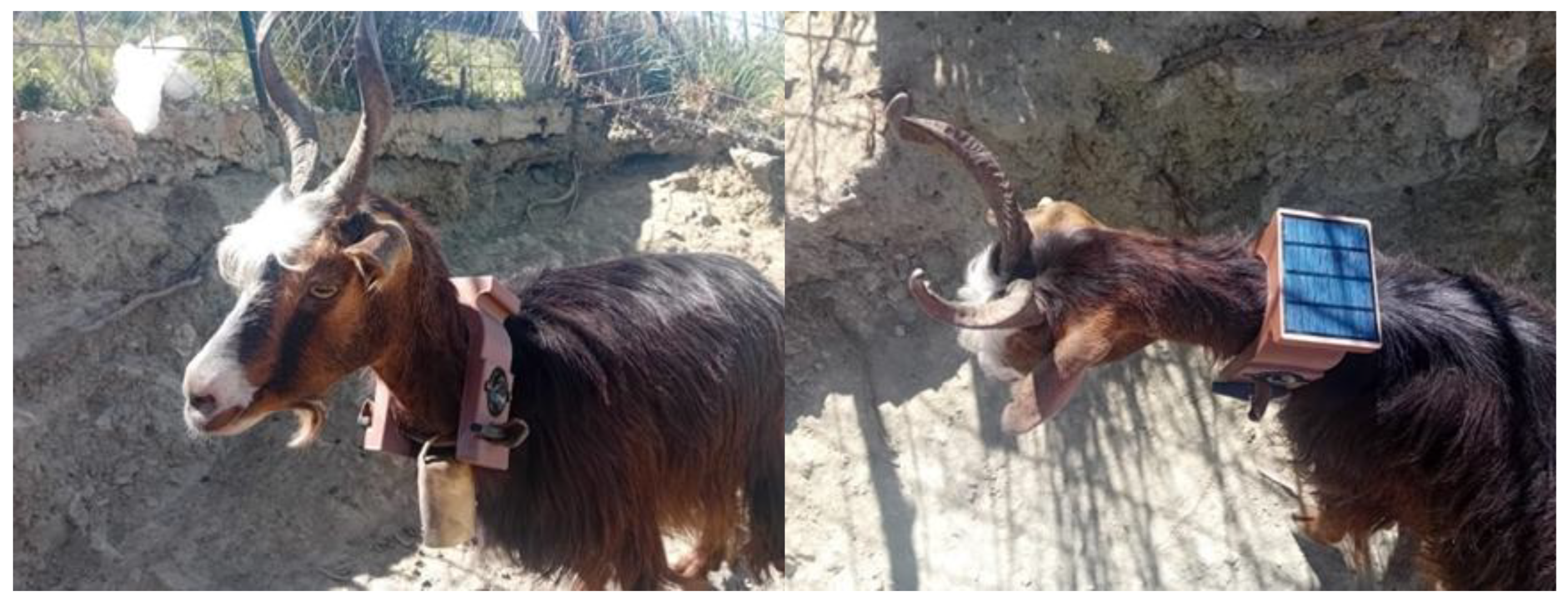
The prototype wolf-deterrent collar (Figure 1) was developed using additive manufacturing (3D printing) techniques, employing a high-performance technical plastic filament characterized by elevated mechanical and thermal resistance. A wood-like coloration was selected for its low thermal conductivity, minimizing the risk of overheating under direct solar exposure. The collar was ergonomically designed through digital modelling to accommodate three primary functional components: (i) two piezoelectric speakers (POFET model, 30 Vp-p, 2.5 Hz–60 kHz), (ii) a Kemo M048N frequency generator module, adjustable between 7 and 40 kHz, capable of producing a maximum estimated sound pressure level of 110 dB at a distance of 1 meter, and (iii) a 12V (1.5 W) photovoltaic panel connected to a 150 Ah rechargeable lithium-ion battery. This configuration ensures operational autonomy for up to four days in the absence of direct sunlight (see Table 2 for technical specifications).
The entire system was integrated into a collar structure designed to meet IP65 standards for environmental protection, while maintaining lightweight and dynamic functionality suitable for use in extensive livestock systems.
The device emits short phrases of modulated tones built from natural harmonic intervals documented in the local bagpipe tradition. Supplementary materials: (Video S1: Wolf-Bagpipe https://youtu.be/wVHFM7lb7kM ). These phrases sweep through a set of discrete fundamentals between 105 Hz and 1,200 Hz, using gentle amplitude (loudness) and frequency (pitch) modulation to create organic, non-monotonic cues. The specific fundamentals (ascending) are: 105, 204, 219.766, 247.237, 274.707, 298, 302.178, 329.649, 386, 412.061, 439.473, 439.532, 471, 494.473, 549.415, 551, 604.357, 628, 659.298, 702, 773, 841, 847, 906, 969, 1,030, 1,088, 1,145, and 1,200 Hz [26]. These non-periodically sequenced, harmonically grounded intervals are broadcast by the wolf-deterrent collar to increase salience and reduce habituation.
Under open-field conditions with minimal physical obstructions, the acoustic range of the deterrent collar was estimated to span between 50 and 100 meters, corresponding to a coverage area of approximately 7,850 to 31,400 m2. This variability is influenced by local topographic and meteorological conditions, consistent with findings by Götz and Janik (2013) on terrestrial acoustic signal propagation [19]. The collar’s design and cost-efficiency make it a viable and economically accessible solution for small-scale livestock farms operating in mountainous regions with elevated predation pressure. As such, it supports the development of sustainable coexistence strategies between extensive livestock production and wildlife conservation.
2.4. Retrospective and Progressive Data Comparison and Analysis
To evaluate the impact of wolf predation on goat farming, a retrospective analysis was conducted at Azienda Agricola Orlando Pietro between 2020 and 2024, to document the historical occurrence of wolf attacks in the area. Concurrently, the study assessed the effectiveness of the wolf-deterrent acoustic collar by comparing predation rates across three experimental groups (SO, SGC, and SGDC) during the field trial, thereby quantifying the device’s ability to reduce predation events. In parallel, health and welfare indicators of the collared goats were continuously monitored to detect any potential adverse effects associated with the device’s use.
Throughout the experimental period, each group was systematically monitored through direct visual inspections and ethological observations to document wolf–goat interactions. Observers recorded complete predation sequences, including stealthy approaches along vegetative cover, prolonged herd surveillance from a distance, and pursuit behaviors targeting isolated or vulnerable individuals. Both successful and unsuccessful predation attempts were meticulously documented, generating a comprehensive behavioral dataset.
The behavioral and predation data were then analyzed to assess the relative effectiveness of the acoustic collar compared with traditional livestock protection measures. This comparative assessment followed the methodological framework proposed by Boitani (2003) and commonly applied in human–predator conflict studies [27].
2.5. Camera Trapping
To confirm and monitor predator presence in the study area, two digital camera traps were installed approximately 100 meters from the livestock shelter (Figure 2), strategically positioned to maximize the likelihood of capturing high-resolution images and videos of wildlife. The camera traps were positioned within the boundaries of the plots in order to monitor the three study areas.
The camera traps (CT1 and CT2) used were Spypoint Flex-M Trail models, equipped with pre-activated SIM cards enabling real-time data transmission and continuous capture technology for constant monitoring [28]. These devices feature a detection radius of 27 meters and a trigger speed of 0.4 seconds, effectively documenting animal movement without disturbing natural behavior [29]. Camera traps operate in colour during the day and switch to black-and-white mode at night, using low-impact infrared illumination, and are securely mounted to trees with straps to ensure stability and security behavior [30].
2.6. Milk Production
Milk production was monitored during late lactation over a fixed two-month window (1 June–31 July 2024). Animals were stratified into three homogeneous groups of 50 individuals each: Smart Guard Dog Collar (SGDC), Shepherding with Guard Dogs (SGD), and Shepherding Only (SO). Each group was balanced by age class (9 juveniles <1 year, 10 primiparous or secondiparous 1–3 years, 31 multiparous >3 years), sex (2 males, 48 females), and physiological status (8 non-pregnant, 10 pregnant, 30 lactating). Milking occurred once daily following the farm’s routine. Group-level milk volume was measured at each milking with calibrated meters (±1 percent accuracy) and logged immediately after collection. For each group, average daily milk yield was computed as the mean of the daily volumes over the 62-day monitoring period. Husbandry, feeding, and watering were kept constant across groups [31].
3. Results
3.1. Predation Events in the Three Trail Groups
During the three-month experimental phase, substantial differences emerged between the treatment groups (Table 3):
SO Group (Experienced Herder Only):
A total of 72 wolf attacks were recorded across the monitored groups, resulting in five confirmed goat fatalities, corresponding to a predation success rate of 7%. Predation events predominantly occurred under meteorological conditions favorable to wolf activity, such as low visibility, moderate humidity, and light to moderate wind. Despite the presence of a herder, most lethal attacks were not successfully deterred. Field observations and carcass retrievals confirmed the impact of these events, with two fresh carcasses documented (Figure 4a) and three decomposed remains recovered (Figure 4b), further substantiating the extent of predation pressure.
SGD Group (Herder + Guardian Dogs):
In the group protected by both a herder and livestock guardian dogs (Maremma-Abruzzese and Sila breeds), a total of 53 wolf attacks were recorded—representing a 26.39% reduction in attack frequency compared to the SO group. Despite the high number of attempted predation events, only one goat was killed, resulting in a predation mortality rate of 2%. These findings suggest that while guardian dogs significantly reduced the success rate of wolf attacks, they did not eliminate predation entirely.
SGDC Group (Herder + Guardian Dogs + Anti-Wolf Collar):
The group managed with a combined deterrent strategy—comprising an experienced herder, livestock guardian dogs, and an anti-wolf acoustic collar fitted to a sentinel goat (Figure 6)—recorded zero predation events during the trial period, despite consistent wolf presence confirmed by camera trap footage. Notably, in July 2024, a wolf was observed retreating from the herd in response to the combined deterrent effect of the collar and dogs. Supplementary materials: VideoS2(https://youtube.com/shorts/1L9QRykJnqo ).
Figure 5.
Adult female goat (approximately 3 years old) of the Aspromonte breed equipped with an anti-wolf collar at the study site of the Orlando Pietro livestock farm (Southern Calabria). This animal was selected for the trial as part of group SGDC during the monitoring period (June–August 2025) to evaluate the collar’s effectiveness in deterring wolves under semi-extensive grazing conditions.
Figure 5.
Adult female goat (approximately 3 years old) of the Aspromonte breed equipped with an anti-wolf collar at the study site of the Orlando Pietro livestock farm (Southern Calabria). This animal was selected for the trial as part of group SGDC during the monitoring period (June–August 2025) to evaluate the collar’s effectiveness in deterring wolves under semi-extensive grazing conditions.
3.2. Retrospective Analysis of Predation Losses (2020–2024).
Historical records from Azienda Agricola Orlando Pietro between 2020 and 2024 revealed a substantial impact of wolf predation on livestock. Over this five-year period, a total of 148 goats were confirmed lost due to wolf attacks. The annual predation rate fluctuated, reaching a peak of 26.82% in 2024 (Table 4).
3.3. Camera Trap Monitoring of Wolf Activity
The two camera traps recorded 54 images (CT1) and 42 images (CT2) of wolves, confirming persistent and regular predator activity across the monitored area (Table 4).
The even distribution of wolf detections between FP1 and FP2 suggests that wolves frequented all three grazing areas corresponding to the experimental groups (SO, SGD, and SGDC) (Table 4, Figure 3). Data presented in the table indicate that the groups equipped with acoustic collars, in combination with herder and livestock guardian dogs (SGDC), experienced significantly fewer predation events (0–1 attacks) compared to the SO and SGD groups, which recorded 11–25 attacks during the same period.
3.4. Milk Production
Across June–July, the SGDC group showed higher milk production, with an average daily group yield of 30 liters, which was 15% greater than the 26 liters recorded for both the SO and SGD groups. In August, milk yields in every group entered the terminal phase of lactation and fell to near zero by month’s end.
4. Discussion
4.1. Efficacy of Combined Protective Strategies
It is expected that a combination of traditional protection strategies and the benefit of the acoustic collar not only enhances herd protection through predator deterrence but also, the well-being of the herd and improvement in milk yield via stress reduction.
In the control group (SO), which relied solely on human supervision, the highest rates of predation and livestock mortality were recorded. These findings align with previous research indicating that human presence alone is often insufficient to deter wolf attacks, particularly in topographically complex environments that facilitate predator ambush and escape.
In contrast, the second group (SGD), where herds were guarded by an experienced herder supported by livestock guardian dogs, experienced a 26.39% reduction in wolf attacks and a significant decrease in predation-related mortality to 1.49%. These results support existing literature on the effectiveness of guardian dogs in mitigating conflicts with large carnivores. However, the persistence of sporadic predation events suggests that dogs alone may not provide complete protection, especially under sustained predation pressure.
The highest level of protection was observed in the third group (SGDC), which combined an experienced herder, guardian dogs, and a sentinel goat equipped with an anti-wolf acoustic collar. No predation events were recorded in this group despite confirmed wolf activity. The collar’s acoustic deterrent appears to work synergistically with the defensive behavior of guardian dogs, enhancing overall herd protection.
The device’s effective coverage range of anti-wolf collar contributed to the absence of predation across all SGDC farms during the monitoring period (June–July 2025). Further longitudinal studies with larger sample sizes are needed to validate its long-term efficacy across diverse ecological and management contexts.
The collar’s modulated, natural-harmonic sound patterns may help slow habituation—a common limitation of repetitive acoustic stimuli—but current evidence is limited to a single ~3-month field trial and does not demonstrate prevention of habituation. These patterns are also designed to minimize stress in domestic livestock, consistent with research on ethologically compatible auditory cues.
Based on field observations, dogs show no reaction to noise, suggesting that it does not cause them fear
Camera trap data confirmed continuous wolf presence across all experimental groups, underscoring the high and persistent predation pressure. These findings highlight the urgent need for effective livestock protection strategies, as mortality rates can reach critical thresholds without adequate preventive measures.
Beyond reducing predation, the SGDC group, according to the shepherds this group also showed improved productive performance, with an average daily milk yield of 30 L—15.38% higher than the 26 L recorded in the SO and SGD groups. This increase is plausibly linked to reduced stress levels due to the absence of predation, consistent with studies connecting lower environmental stress to enhanced milk production and animal welfare in small ruminants [32]. Also, neither signs of acoustic-induced stress were observed in the livestock nor the dogs, such as escape attempts, altered feeding, or disrupted social interactions, behaviours that, according to other studies, indicate negative impact on animal welfare [33].
4.2. Environmental Influences on Acoustic Deterrent Performance
The propagation of sound in atmospheric environments is governed by several physical parameters, including relative humidity, temperature, atmospheric pressure, and wind dynamics [34,35]. Among these, relative humidity plays a particularly critical role in modulating the absorption of high-frequency sound. Elevated humidity levels reduce acoustic attenuation—especially within the 2–8 kHz frequency range commonly employed in wildlife deterrent systems—thereby extending the effective transmission range of acoustic signals [19,36]. This effect is especially advantageous during nocturnal periods and in autumnal conditions, when ambient humidity tends to be higher.
Wind conditions also exert a significant influence on sound propagation. Favorable wind directions can enhance signal transmission by refracting sound waves along the wind path, whereas adverse or turbulent wind conditions may deflect sound trajectories or diminish sound pressure levels, thereby reducing the efficacy of deterrent systems [37].
Temperature gradients, particularly vertical thermal inversions—frequently occurring during evening and nighttime in mountainous regions—can further enhance lateral sound propagation through refraction, effectively expanding the acoustic coverage area [38]. These findings highlight the necessity of incorporating local topographic and meteorological variability into the design, calibration, and spatial deployment of acoustic deterrent devices. In complex terrains such as hilly or mountainous landscapes, where atmospheric dynamics are highly variable, site-specific acoustic performance assessments and adaptive calibration protocols are essential to ensure consistent operational effectiveness [19].
These environmental factors are particularly relevant for interpreting the results of this study and for assessing the potential application of the collars in different regions. Variations in humidity, wind, and temperature regimes may lead to differences in deterrent effectiveness, indicating that results obtained under Mediterranean conditions cannot be directly extrapolated to drier continental or alpine contexts. Therefore, site-specific trials and calibration are essential to validate the broader applicability of acoustic collars and to ensure consistent performance across diverse ecological and climatic scenarios.
4.3. Perspectives and Work in Progress
As part of an ongoing pilot study aimed at testing innovative non-lethal tools for predator deterrence, three ovicaprine farms located within the Aspromonte National Park, in the province of Reggio Calabria (Southern Italy), were selected for the deployment of anti-wolf collars. Each farm—Romeo Carmelo (Bova), Romeo Giuseppe (Bova/Roghudi), and Stelitano Domenico (Bova Marina/Bova)—was equipped with three acoustic Anti-predation collars on June 3rd, 2025. All farms were in the transhumance period during the monitoring phase and managed approximately 150 goats and 150 sheep each.
From June 3rd to the present (late October 2025), no predation events or livestock losses attributable to wolves have been reported. While preliminary, these results indicate a potential deterrent effect of the device against wolf attacks in extensive grazing systems. Continued monitoring and an expanded sample size will be necessary to confirm these findings and evaluate long-term effectiveness under diverse ecological and management conditions.
Moreover, this deterrent supports the practice of transhumance, recognized by UNESCO (2019) as intangible cultural heritage, representing not only an ancient tradition but also a sustainable land management model [39]. Its value lies in combining biodiversity conservation with the maintenance of traditional knowledge and cultural landscapes, offering significant insights for developing pastoral practices compatible with environmental protection and coexistence with wildlife.
For future studies, an environmental impact assessment of the anti-wolf collar is proposed across all scientific fields to safeguard the environment and ensure sustainable development [40], and to validate this deterrent in contexts beyond the Mediterranean region.
5. Conclusions
Preliminary results from a field trial testing collars that emit high-frequency modulated natural harmonic sounds (ranging from 105 Hz to 1200 Hz) to deter wolves have shown promising outcomes. When used in combination with traditional protection methods—such as a herder and guardian dogs—the wolf-deterrent collar contributed to an almost complete elimination of livestock predation.
Given the significant threat that wolf predation poses to livestock, these findings warrant further investigation. Expanding the scope of research to include diverse habitats and different livestock species is essential to validate the collar’s effectiveness under varied ecological and management conditions.
In conclusion, the integration of acoustic deterrent technology with traditional herding practices presents a compelling strategy for mitigating wolf-livestock conflicts. Scaling up these trials could pave the way for more sustainable and welfare-conscious livestock protection systems worldwide.
Supplementary Materials
The following supporting information can be downloaded at the website of this paper posted on Preprints.org, Video S1: Wolf-Bagpipe https://youtu.be/wVHFM7lb7kM, Video S2: Wolf Repelled by Anti-Wolf Collar: Successful Deterrence in Action. https://youtube.com/shorts/1L9QRykJnqo ; Video S3: Wolf Predation on Livestock in Southern Calabria: Two Wolves Attack a Grazing Animal. https://youtu.be/PsHvPBckAJ0
Ethical Considerations
All animal-related activities were carried out in full compliance with relevant national regulations and the ethical standards of the institutions involved. During the monitoring phase, no procedures causing harm or distress to animals were performed. The pilot project adhered to all legal requirements concerning the protection of animal welfare and the proper management of livestock.
Acknowledgments
The authors would like to thank all those who contributed to this study. Special thanks go to the local farmers and shepherds involved in the fieldwork. We sincerely thank the farmers, Carmelo Romeo, Giuseppe Romeo and Domenico Stelitano for their active participation and collaboration during the transhumance period. This study was supported by the Aalborg Zoo Conservation Foundation (AZCF: Grant number 07-2025).
Conflicts of Interest
The authors declare no conflicts of interest.
Abbreviations
The following abbreviations are used in this manuscript:
| CT1 | Camera Traps 1 |
| CT2 | Camera Traps 2 |
| SO | Group Experienced Herder Only |
| SGD | Group Herder and Guardian Dogs |
| SGDC | Group Herder + Guardian Dogs + Anti-Wolf Collar |
Appendix A
Appendix A.1
Table A1.
Summary of key climatic parameters in the study area of Bova Marina (RC), southern Italy [42].
Table A1.
Summary of key climatic parameters in the study area of Bova Marina (RC), southern Italy [42].
| Parameter | Value / Range | Notes |
|---|---|---|
| Elevation | 200 m a.s.l. | According to Italian Geographic Military Institute (2023) |
| Coordinates | 37°57′01″ N, 15°56′37″ E | WGS84 system |
| Climate type | Mediterranean | Hot, dry summers; mild, wet winters |
| Annual mean temperature | 9 °C to 31 °C | Peaks ~34 °C in summer, rarely <6 °C in winter |
| Annual precipitation | ≈ 545 mm | Mostly concentrated in winter months |
| Warm season | mid-June to mid-September | Daily mean temperatures >28 °C |
| Cool season | late November to early April | Mean temperatures <18 °C |
| Peak solar radiation | July | Clear/partly cloudy skies ~96% of the time |
| Average wind speed | 13–21 km/h | Seasonal variability can affect sound propagation |
| Relative humidity | Variable | Seasonally dependent; relevant for acoustic systems |
References
- Mech, D.L.; Boitani, L. Wolves. Behavior, Ecology, and Conservation. University of Chicago Press, Chicago, 2003, 317–340.
- Marucco, F.; Pletscher, D.H.; Boitani, L.; Schwartz, M.K.; Pilgrim, K.L.; Lebreton, J.D. Wolf survival and population trend using non-invasive capture–recapture techniques in the Western Alps. J. Appl. Ecol. 2009, 46, 1003–1010. [Google Scholar] [CrossRef]
- Ciucci, P.; Boitani, L. Wolf and dog depredation on livestock in central Italy. Wildl. Soc. Bull. 1998, 26(3), 504–514. [Google Scholar]
- Linnell, J.D.C.; Cretois, B. Research for AGRI Committee-The revival of wolves and other large predators and its impact on farmers and their livelihood in rural regions of Europe; European Parliament, Policy Department for Structural and Cohesion Policies: Brussels, Belgium, 2018. [Google Scholar]
- European Commission. State of Nature in the EU: Results from Reporting under the Nature Directives 2013–2018; European Commission: Luxembourg, 2023. [Google Scholar]
- ISMEA. Report on Italian Animal Husbandry 2023; Institute of Services for the Agricultural Food Market: Rome, Italy, 2024. [Google Scholar]
- Ripple, W.J.; Estes, J.A.; Beschta, R.L.; Wilmers, C.C.; Ritchie, E.G.; Hebblewhite, M.; Schmitz, O.J. Status and ecological effects of the world’s largest carnivores. Science 2014, 343, 1241484. [Google Scholar] [CrossRef] [PubMed]
- Council of Europe. Convention on the Conservation of European Wildlife and Natural Habitats. Convention n. 104, Bern, Switzerland, 19 September 1979; Council of Europe: Strasbourg, France, 1979. [Google Scholar]
- UNEP-WCMC. CITES Trade Database – Canis lupus; United Nations Environment Programme – World Conservation Monitoring Centre: Cambridge, UK, 2023. [Google Scholar]
- European Commission. Natura 2000 and the Habitats Directive. Available online: https://environment.ec.europa.eu/topics/nature-and-biodiversity/natura-2000_en (accessed on 27 July 2025).
- European Council. Report on large carnivore populations and their management in Europe; European Council: Brussels, Belgium, 2022. [Google Scholar]
- European Parliament. EU funding for biodiversity and wildlife conservation: State of play; European Parliament: Brussels, Belgium, 2023. [Google Scholar]
- van Eeden, L.M.; Eklund, A.; Miller, J.R.B.; López-Bao, J.V.; Chapron, G.; Cejtin, M.R.; et al. Carnivore conservation needs evidence-based livestock protection. PLoS Biol., 2018, 16(9): e2005577.
- van Eeden, L.M.; Crowther, M.S.; Dickman, C.R.; Macdonald, D.W.; Ripple, W.J.; Ritchie, E.G.; Newsome, T.M. Managing conflict between large carnivores and livestock: A review of selected evidence. Conserv. Biol., 2017, 32(1), 26–34.
- Kavaliers, M.; Choleris, E. Antipredator responses and defensive behavior: ecological and ethological approaches for the neurosciences. Neurosc. Biobehav. Rev., 2001, 25(7–8), 577-586.
- Shivik, J.A.; Treves, A.; Callahan, P. Nonlethal techniques for managing predation: Primary and secondary repellents. Conserv. Biol. 2003, 17, 1531–1537. [Google Scholar] [CrossRef]
- Kinka, D.; Young, J.K. Evaluating domestic sheep survival with different breeds of livestock guardian dogs. Rangeland Ecology & Management, 2019, 72(6), 923–932.
- Apfelbach, R.; Blanchard, C.D.; Blanchard, R.J.; Hayes, R.A.; McGregor, I.S. The effects of predator odors on mammalian prey species: A review of field and laboratory studies. Neurosci. Biobehav. Rev. 2005, 29, 1123–1144. [Google Scholar] [CrossRef] [PubMed]
- Götz, T.; Janik, V.M. Acoustic deterrent devices to prevent pinniped depredation: Efficiency, conservation concerns and possible solutions. Mar. Ecol. Prog. Ser. 2013, 492, 285–302. [Google Scholar] [CrossRef]
- Treves, A.; Karanth, K.U. Human-carnivore conflict and perspectives on carnivore management worldwide. Conserv. Biol. 2003, 17, 1491–1499. [Google Scholar] [CrossRef]
- Davidson-Nelson, S.; Gehring, T.M. Testing fladry as a non-lethal management tool for wolves in Michigan. Hum.-Wildl. Interact., 2010, 4, 87–94. [Google Scholar]
- Terrade, A.; L.; Prosnier, C.; Vion, Y.; Locatelli, N.; Mathevon, D. Reby. High-frequency hearing sensitivity does not systematically imply aversion to ultrasounds in large terrestrial mammals. Bioacoustics, 2024, 33(5), 448-559.
- Military Geographic Institute. Topographic map and geographic coordinates of the Italian territory. Military Geographic Institute Italy, 2023.
- Ministry of Agricultural, Food and Forestry Policies. List of disadvantaged areas and areas subject to natural or specific constraints pursuant to Regulation (EU) N° 1305/2013. Available online: https://www.politicheagricole.it/ (accessed on 27 July 2025).
- European Commission. Council Regulation (EC) No 21/2004 of 17 December 2003 on the identification and registration of animals kept for farming purposes. Official Journal of the European Union, L 5, 8 January 2004, pp. 8–17. Office of the European Union: Luxembourg, 2009.
- Di Giorgio, S. Nella mente della zampogna. Riflessioni sull’esperienza del traguardare. Rubbettino, Catanzaro, Italia, 2025.
- Boitani, L. Wolf conservation and recovery. Carnivore Conserv., 2003, 317–340.
- Salvatori, V.; Mertens, A. Damage prevention methods in Europe: Experiences from LIFE Nature projects. Hystrix Ital. J. Mammal. 2012, 23, 73–79. [Google Scholar]
- Kays, R.; Tilak, S.; Kranstauber, B.; Jansen, P.A.; Carbone, C.; Rowcliffe, M.; He, Z. Camera traps as sensor networks for monitoring animal communities. Int. J. Res. Rev. Wirel. Sens. Netw. 2011, 1, 50–63. [Google Scholar]
- O’Connell, A.F.; Nichols, J.D.; Karanth, K.U. Camera traps in animal ecology: Methods and analyses; Springer: New York, NY, USA, 2011. [Google Scholar]
- Salama, A.A.K.; Such, X.; Caja, g.; Rovai, M.; Casals, R.; Albanell, E.; Marı, M.P.; Martı, A. Effects of Once Versus Twice Daily Milking Throughout Lactation on Milk Yield and Milk Composition in Dairy Goats. J. Dairy Sci. 2003, 86, 1673–1680. [Google Scholar] [CrossRef] [PubMed]
- Dwyer, C.M. Welfare of sheep: Providing for welfare in an extensive environment. Small Rumin. Res., 2009, 86, 14–21. [Google Scholar] [CrossRef]
- Grandin, T. Animal welfare and society concerns finding the missing link between animal behavior and welfare. Meat Science 2014, 98, 461–469. [Google Scholar] [CrossRef] [PubMed]
- Bass, H.E.; Sutherland, L.C.; Zuckerwar, A.J.; Blackstock, D.T.; Hester, D.M. Atmospheric absorption of sound: Update. J. Acoust. Soc. Am., 1995, 97, 680–683. [Google Scholar] [CrossRef]
- Embleton, T.F.W. Tutorial on sound propagation outdoors. J. Acoust. Soc. Am., 1996, 100, 31–48. [Google Scholar] [CrossRef]
- Salomons, E.M. Computational Atmospheric Acoustics; Kluwer Academic Publishers: Dordrecht, The Netherlands, 2001. [Google Scholar]
- Ostashev, V.E.; Wilson, D.K. Acoustics in Moving Inhomogeneous Media; CRC Press: Boca Raton, FL, USA, 2015. [Google Scholar]
- Attenborough, K.; Van Renterghem, T. Predicting Outdoor Sound. CRC Press: London, 2021, pp. 251-350.
- UNESCO. Transhumance, the seasonal droving of livestock along migratory routes in the Mediterranean and in the Alps. Available online: https://ich.unesco.org/en/RL/transhumance-the-seasonal-droving-of-livestock-along-migratory-routes-in-the-mediterranean-and-in-the-alps-01470.
- European Commission. Guidance on the application of the Environmental Impact Assessment Directive. Available online: https://ec.europa.eu/environment/eia/eia-guidelines/guidance_en.htm (accessed on 27 July 2025).
Figure 1.
Wolf-deterrent Collar Prototype.

Figure 2.
Georeferenced Topographic Map of the Orlando Pietro Study Site with Camera Traps and Livestock Infrastructure.
Figure 2.
Georeferenced Topographic Map of the Orlando Pietro Study Site with Camera Traps and Livestock Infrastructure.
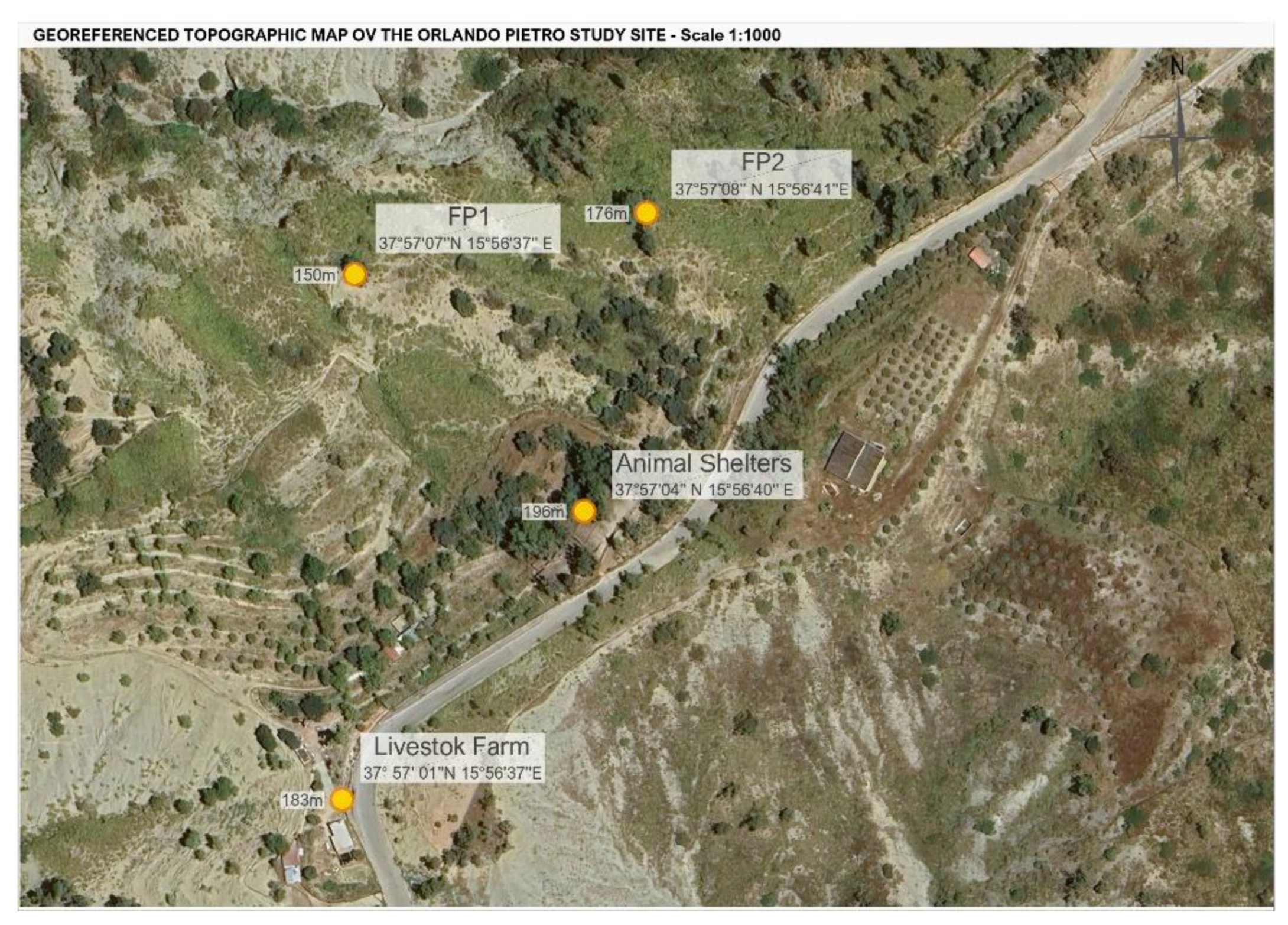
Figure 4.
(a) Goat carcass from the SO group found on the ground immediately after predation; photograph taken on 13 June 2024, showing the initial condition of the body immediately after death. (b) Goat carcass in an advanced stage of decomposition, photographed on 30 July 2024, highlighting progressive tissue degradation and decomposition activity.
Figure 4.
(a) Goat carcass from the SO group found on the ground immediately after predation; photograph taken on 13 June 2024, showing the initial condition of the body immediately after death. (b) Goat carcass in an advanced stage of decomposition, photographed on 30 July 2024, highlighting progressive tissue degradation and decomposition activity.
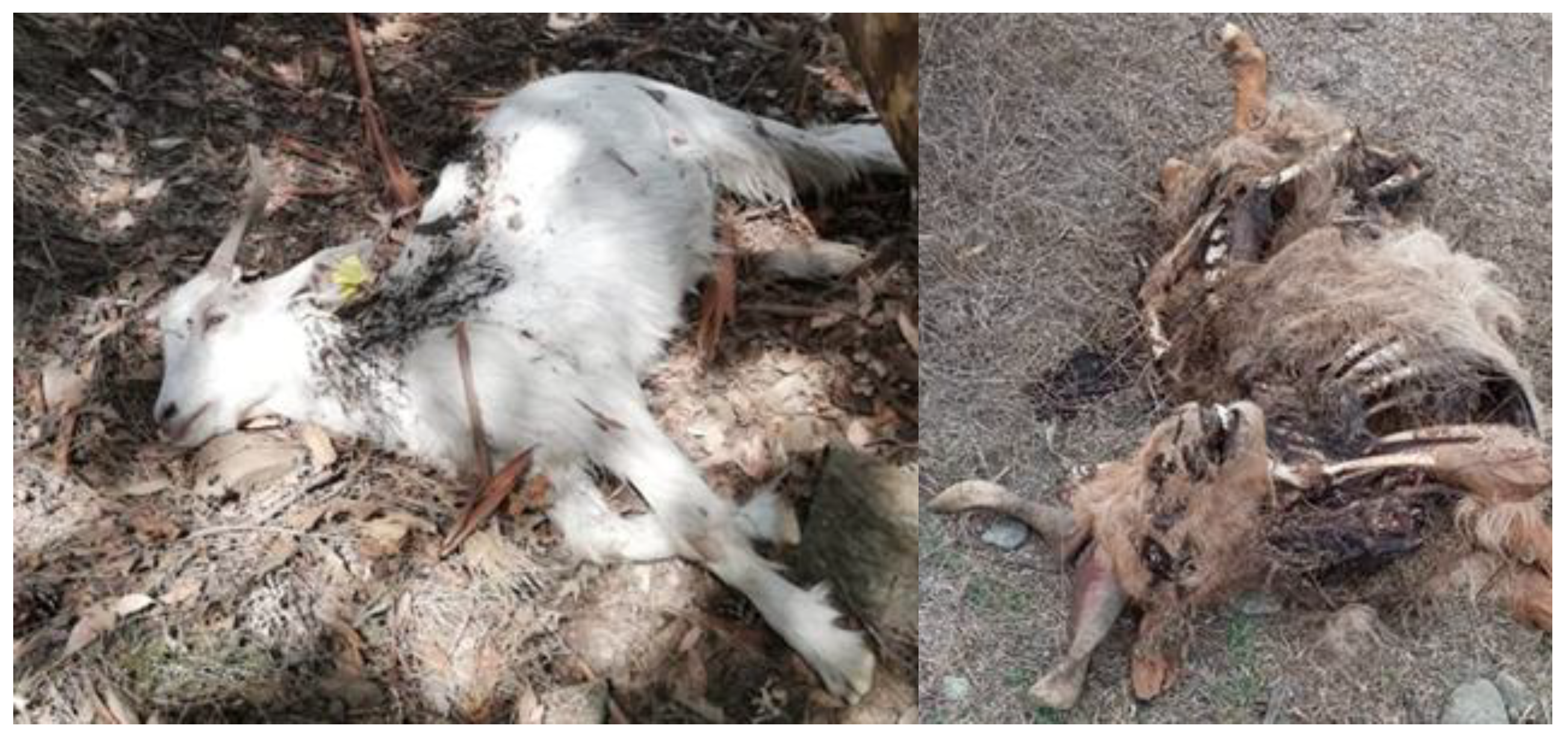
Figure 3.
Two Wolves Captured by Camera Trap FP2 While Attacking Livestock Within the Study Area on the Night of 13/06/2024. Supplementary materials: VideoS3 (https://youtu.be/PsHvPBckAJ0).
Figure 3.
Two Wolves Captured by Camera Trap FP2 While Attacking Livestock Within the Study Area on the Night of 13/06/2024. Supplementary materials: VideoS3 (https://youtu.be/PsHvPBckAJ0).
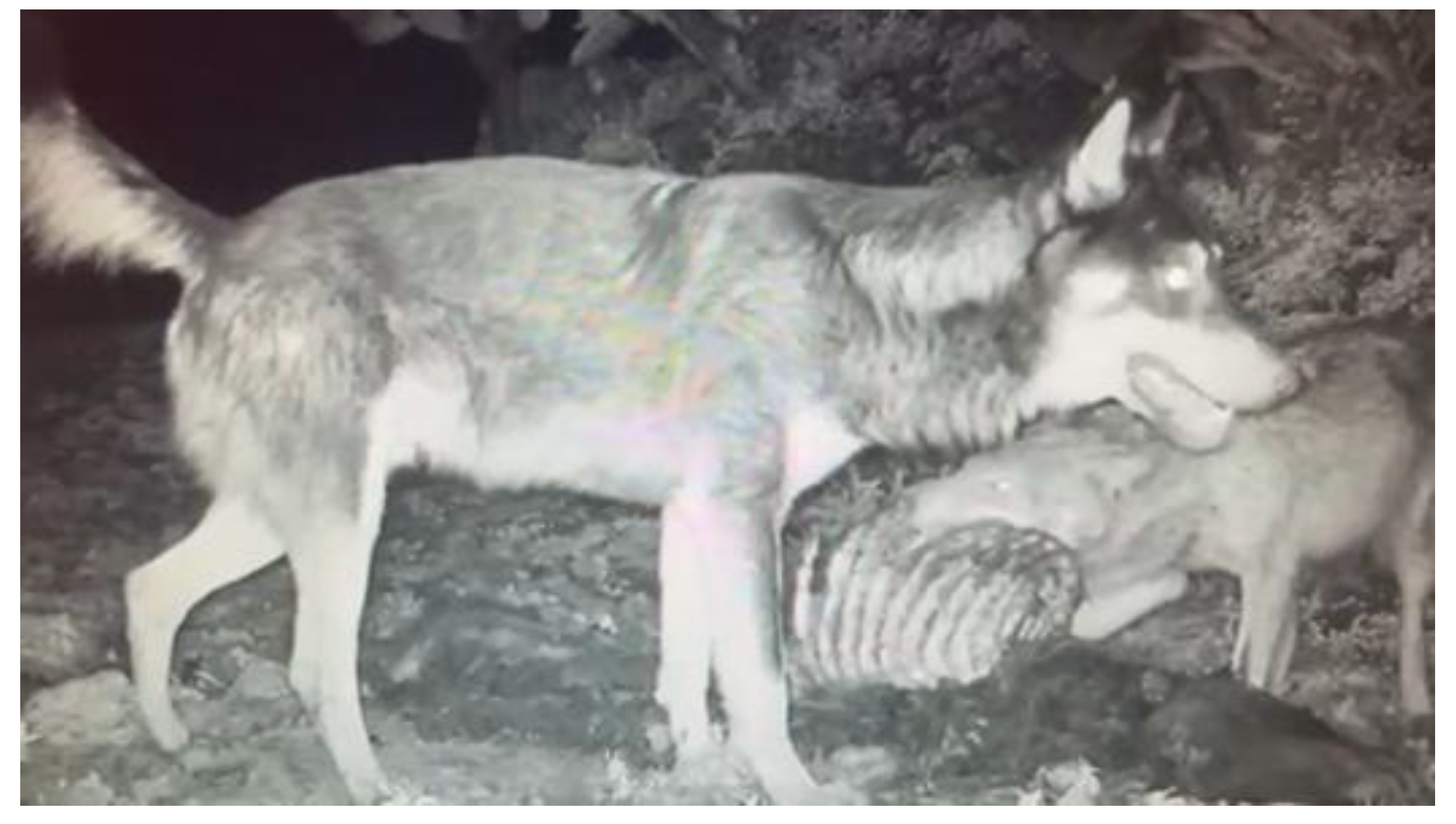
Table 2.
Technical and Functional Specifications of the Wolf-Deterrent Collar.
| Components | Technical and Functional Specifications |
|---|---|
| Collar Material | Technical plastic filaments (high thermal and mechanical resistance, low conductivity) |
| Manufacturing Technology | 3D printing |
| Speakers | 2 piezoelectric POFET, 30 Vp-p, range 2.5 Hz–60 kHz, 14.07 watts |
| Generator Module | Kemo M048N, adjustable 7–40 kHz, max intensity 110 dB |
| Operating Frequency | 2.5 Hz–40 kHz |
| Power Supply Module | 12 V solar panel (1.5 W) + 150 Ah rechargeable lithium-ion battery |
| Energy Autonomy | 12 hours per day, up to 4 days without solar irradiation |
| Effective Range | Approximate useful radius of 50–100 meters, corresponding to 7,850–31,400 m2 (variable based on topography, morphology, and climate) |
| Emission System | Modulated intervals of frequencies based on natural harmonic sounds |
Table 3.
Monthly data on wolf attacks and prey recorded for the three experimental groups (SO, SGD, SGDC), and number of predator photos captured by two camera traps (CT1 and CT2) during the monitoring period (June–August 2024).
Table 3.
Monthly data on wolf attacks and prey recorded for the three experimental groups (SO, SGD, SGDC), and number of predator photos captured by two camera traps (CT1 and CT2) during the monitoring period (June–August 2024).
| Group | Livestock Category |
Month | Attacks | Prey | CT1(photos) | CT2 (photos) | Total | Observations |
|---|---|---|---|---|---|---|---|---|
| SO | Goats | June | 21 | 5 | 6 | 5 | 11 | Constant nocturnal presence |
| SO | Goats | July | 24 | – | 4 | 6 | 10 | Filmed episode |
| SO | Goats | August | 27 | – | 8 | 3 | 11 | Constant nocturnal presence |
| SGD | Goats | June | 11 | 1 | 5 | 4 | 9 | Wolf passages |
| SGD | Goats | July | 17 | – | 7 | 6 | 13 | Increased activity at dusk |
| SGD | Goats | August | 25 | – | 6 | 4 | 10 | Observed pair movement |
| SGDC | Goats | June | 0 | 0 | 7 | 4 | 11 | Constant nocturnal presence |
| SGDC | Goats | July | 1 | – | 6 | 5 | 11 | Presence confirmed by video |
| SGDC | Goats | August | 0 | – | 5 | 5 | 10 | Observed pair movement |
Table 4.
Annual numbers of goats in the stock, wolf predations, and predation percentage at Azienda Agricola Orlando Pietro (2020–2024).
Table 4.
Annual numbers of goats in the stock, wolf predations, and predation percentage at Azienda Agricola Orlando Pietro (2020–2024).
| Year | Goats on Farm | Goats Predated by Wolf | Percentage | Total Stock |
|---|---|---|---|---|
| 2020 | 97 | 16 | 16% | 81 |
| 2021 | 101 | 11 | 10% | 98 |
| 2022 | 137 | 27 | 19% | 110 |
| 2023 | 236 | 39 | 16% | 197 |
| 2024 | 205 | 55 | 26% | 150 |
Disclaimer/Publisher’s Note: The statements, opinions and data contained in all publications are solely those of the individual author(s) and contributor(s) and not of MDPI and/or the editor(s). MDPI and/or the editor(s) disclaim responsibility for any injury to people or property resulting from any ideas, methods, instructions or products referred to in the content. |
© 2025 by the authors. Licensee MDPI, Basel, Switzerland. This article is an open access article distributed under the terms and conditions of the Creative Commons Attribution (CC BY) license (http://creativecommons.org/licenses/by/4.0/).
Copyright: This open access article is published under a Creative Commons CC BY 4.0 license, which permit the free download, distribution, and reuse, provided that the author and preprint are cited in any reuse.


