
Submitted:
16 June 2025
Posted:
23 June 2025
You are already at the latest version
Abstract
We present a field-theoretic framework in which constraint-enforced entropy minimization governs the evolution of quantum, geometric, and gauge structures. Collapse onto constraint manifolds is defined as a variational projection, yielding Morse-type resolution structures and regularity conditions without relying on symmetry assumptions. This short note outlines how Sobolev-type admissibility and stratified structure arise directly from entropy minimization over field space.
Keywords:
entropy minimization
; constraint manifold
; collapse operator
; morse theory
; stratified topology
; sobolev admissibility
; variational projection
; field regularity
; constraint geometry
; information-theoretic dynamics
; asymmetric collapse. functional analysis in physics
; irreversible projection
; emergent structure
; quantum field constraint
1. Constraint Manifold and Collapse Operator
Let F denote the space of physically admissible field configurations, typically smooth mappings f:M→R^n over a manifold M. We define a constraint manifold C⊂F as the subspace of configurations satisfying physically or geometrically consistent boundary or regularity conditions. These conditions are not externally imposed, but emerge via a generalized entropy functional S(f,c), with f∈F, c∈C.
We define a collapse operator
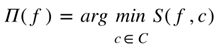 which selects, for a given unconstrained field f, a configuration c∈C that minimizes entropy mismatch. This operator enforces a collapse dynamic, interpreted as a resolution mechanism, by which unstable or off-shell field states are projected into stable, constraint-compatible forms.
One representative form of the entropy functional is
 where ρf, ρc represent probability or energy densities associated with configurations f and c, and μ is a background measure on M. This formulation captures the information-theoretic deviation between arbitrary and admissible field states.
2. Entropy Topology and Morse Structure
The entropy functional defines a geometric landscape over the constraint manifold C, where variational stability is encoded in the curvature of S(f,c). Critical points of the collapse operator correspond to solutions satisfying
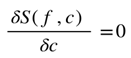 with stability governed by the second variation
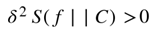
This condition implies the existence of isolated minima, akin to Morse-type critical points, which act as structural attractors for the collapse dynamic. These attractors represent discrete, stable field configurations emerging from entropy-reducing evolution.
This behavior naturally induces a stratified topology over C, where solutions cluster into discrete layers according to their entropy depth. These strata may correspond to observable physical structures such as energy eigenstates, curvature configurations, or gauge-invariant solutions.
3. Sobolev-Type Admissibility
Rather than assuming smoothness or differentiability conditions a priori, this framework derives them as a consequence of entropy minimization. Such configurations with discontinuities or divergences result in S(f,c)→∞, making them inadmissible under the collapse operator. Only fields with sufficient regularity, bounded variation, or compact support can participate in the entropy-guided projection.
This behavior resembles Sobolev admissibility, where function classes are filtered by smoothness and integrability properties. The constraint manifold C⊂F thus inherits a naturally regularized functional topology, not from assumption, but from the entropy metric’s exclusion of non-convergent fields.
4. Summary and Outlook
This framework defines collapse as a variational projection onto entropy-minimizing constraint manifolds. Its key features include a collapse operator Π:F→C governing dynamic resolution through entropy minimization. Morse-type structure and stratification of admissible fields via second variation of the entropy functional. Emergent smoothness criteria analogous to Sobolev constraints, without external imposition. This formulation remains agnostic to specific field dynamics or symmetry assumptions. Instead, it proposes a geometric-informational mechanism by which structure and regularity emerge from constraint-enforced entropy flow. Future work will explore extensions to curved manifolds, gauge field emergence, and experimental implications in Casimir and interferometric systems.
References
- Jaynes, E.T. Information Theory and Statistical Mechanics . Physical Review 1957, 106, 620–630. [Google Scholar] [CrossRef]
- Morse, M. (1934). The Calculus of Variations in the Large. American Mathematical Society Colloquium Publications, Vol. 18.
- Villani, C. (2009). Optimal Transport: Old and New. Springer. [CrossRef]
- Gromov, M. (2007). Metric Structures for Riemannian and Non-Riemannian Spaces. Birkhäuser.
- Padmanabhan, T. Thermodynamical Aspects of Gravity: New insights. Reports on Progress in Physics 2010, 73, 046901. [Google Scholar] [CrossRef]
- Lott, J.; Villani, C. Ricci curvature for metric-measure spaces via optimal transport. Annals of Mathematics 2009, 169, 903–991. [Google Scholar] [CrossRef]
Disclaimer/Publisher’s Note: The statements, opinions and data contained in all publications are solely those of the individual author(s) and contributor(s) and not of MDPI and/or the editor(s). MDPI and/or the editor(s) disclaim responsibility for any injury to people or property resulting from any ideas, methods, instructions or products referred to in the content. |
© 2025 by the authors. Licensee MDPI, Basel, Switzerland. This article is an open access article distributed under the terms and conditions of the Creative Commons Attribution (CC BY) license (http://creativecommons.org/licenses/by/4.0/).
Copyright: This open access article is published under a Creative Commons CC BY 4.0 license, which permit the free download, distribution, and reuse, provided that the author and preprint are cited in any reuse.


